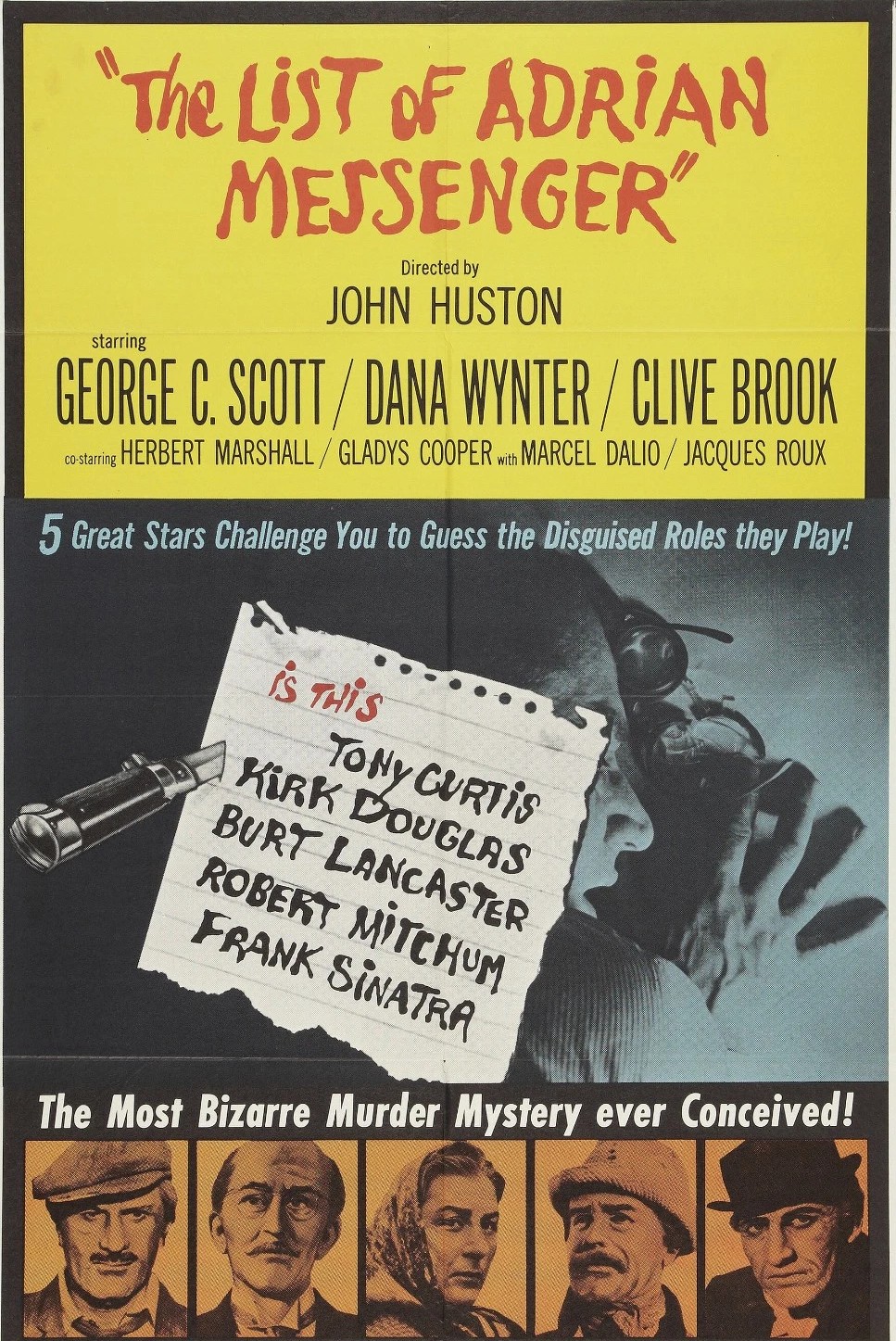
The List of Adrian Messenger (1963) ***

The gimmick of stars in disguise isn’t enough to spark this routine whodunit and the extended sequences of fox-hunting might deter the contemporary viewer but oddly enough something else of considerable interest is going on and enough to keep you hooked.

Given it’s an actor’s screen persona that tempts you to their movies, how are you going to respond when that’s gone AWOL? Actually, you get a more intriguing performance. Covered in slabs of make-up Kirk Douglas makes out like a latter-day Alec Guinness or Peter Sellers, essaying a number of quite different characters. So the jutting chin, the fierce eyes and the aggressive tone are all gone and in its place he shows he can act. His vicar is especially appealing.
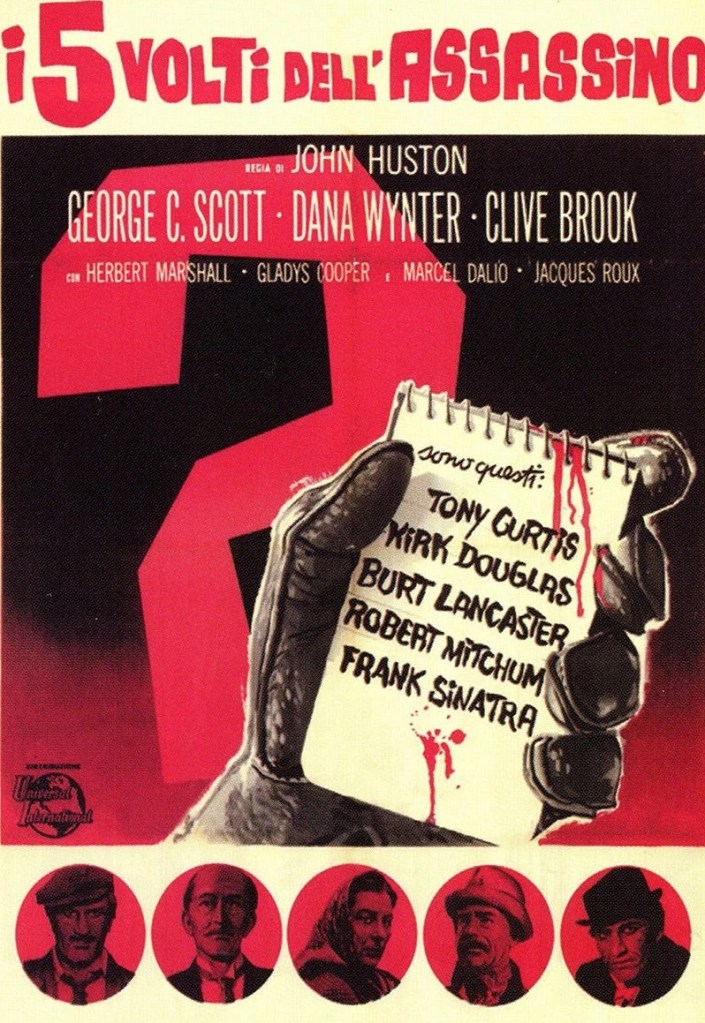
But the same holds true of George C. Scott even though he’s not in disguise. Director John Huston, much as he did with his trio of star names in The Misfits (1961), gets Scott to tone down his screen idiosyncrasies. So the growl is tempered, the flaring eyebrows in cold storage for much of the time, and his jutting chin and aggression set to one side as he depicts a different character to his usual.

The Academy usually hands out Oscars to people who over-act or have some affliction to overcome, and they seem to wilfully ignore it when actors show how well they can act outside their comfort zone.

The story is the usual combination of clever deduction, red herrings and set pieces. Former spy Anthony Gethryn (George C. Scott) is hired by the titular character (John Merivale) to find out if a bunch of people on his list are still alive. Messenger himself is soon bumped off in a plane explosion but not before he leaves a garbled clue with sole survivor of the sabotage Raoul Le Borg (Jacques Roux). Gethryn soon discovers everyone on the list is dead. This may have something to do with the Second World War or it may be that the killer wants to cover up something now before potential scandal can ruin a promising future.

Meanwhile, the killer keeps bumping people off. And just to keep Gethryn from getting distracted by possible romance by Lady Bruttenholm (Dana Wynter) Le Borg pounces on her.
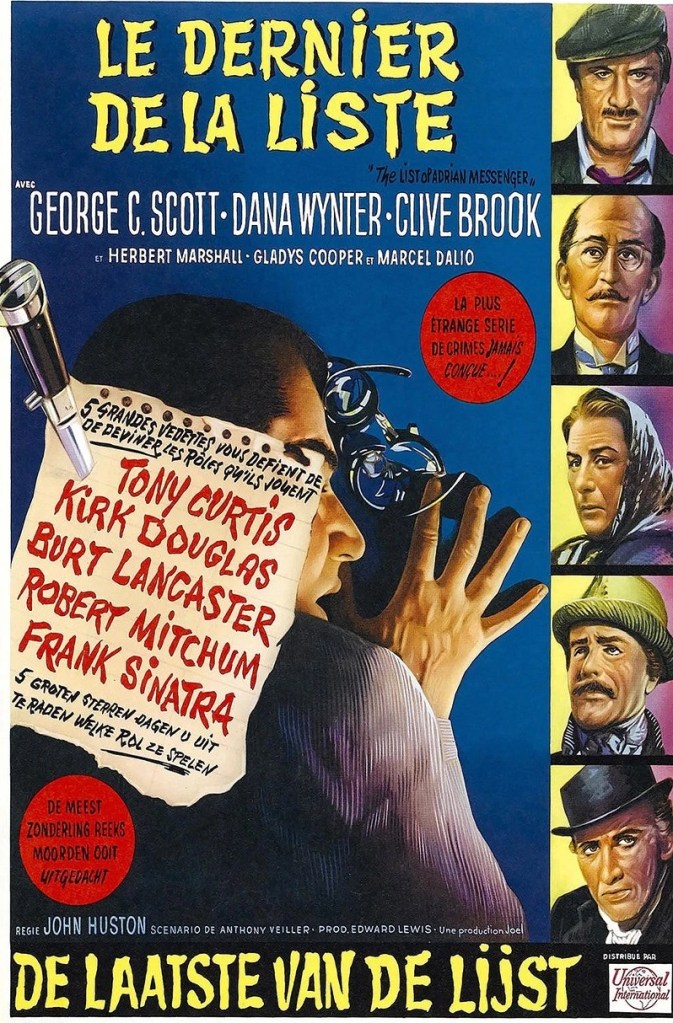
By this point the director was pursuing his dreams of becoming landed gentry with a stately home in Ireland and very keen on all the trimmings including fox-hunting which probably accounts for the length of time accorded the sport.

Kirk Douglas, who’s company produced the picture, thought – either to fire up public interest or to help along a fairly straightforward tale – he would ask a few of his movie star buddies to bury themselves in make-up and play bit parts. Whether audiences spent all their time when they should have been concentrating on Gethryn’s detection on carrying out their own sleuthing trying to detect which of the supporting characters might actually be Tony Curtis, Frank Sinatra, Robert Mitchum or Burt Lancaster is anybody’s guess. It does have to be pointed out that some of the make-up is unconvincing, some faces looking as though they’ve come out of a box.

Despite all this, I enjoyed seeing George C. Scott (Patton, 1970) and Kirk Douglas (Cast a Giant Shadow, 1966) playing decidedly against type and showing how easy it is to act if you’re not always having to adopt a screen persona.

John Huston looks as if he’s having a ball. Written by Anthony Veiller (Night of the Iguana, 1964) and Alec Coppel (Vertigo, 1958) from the book by Philip MacDonald.

A watchable curiosity.
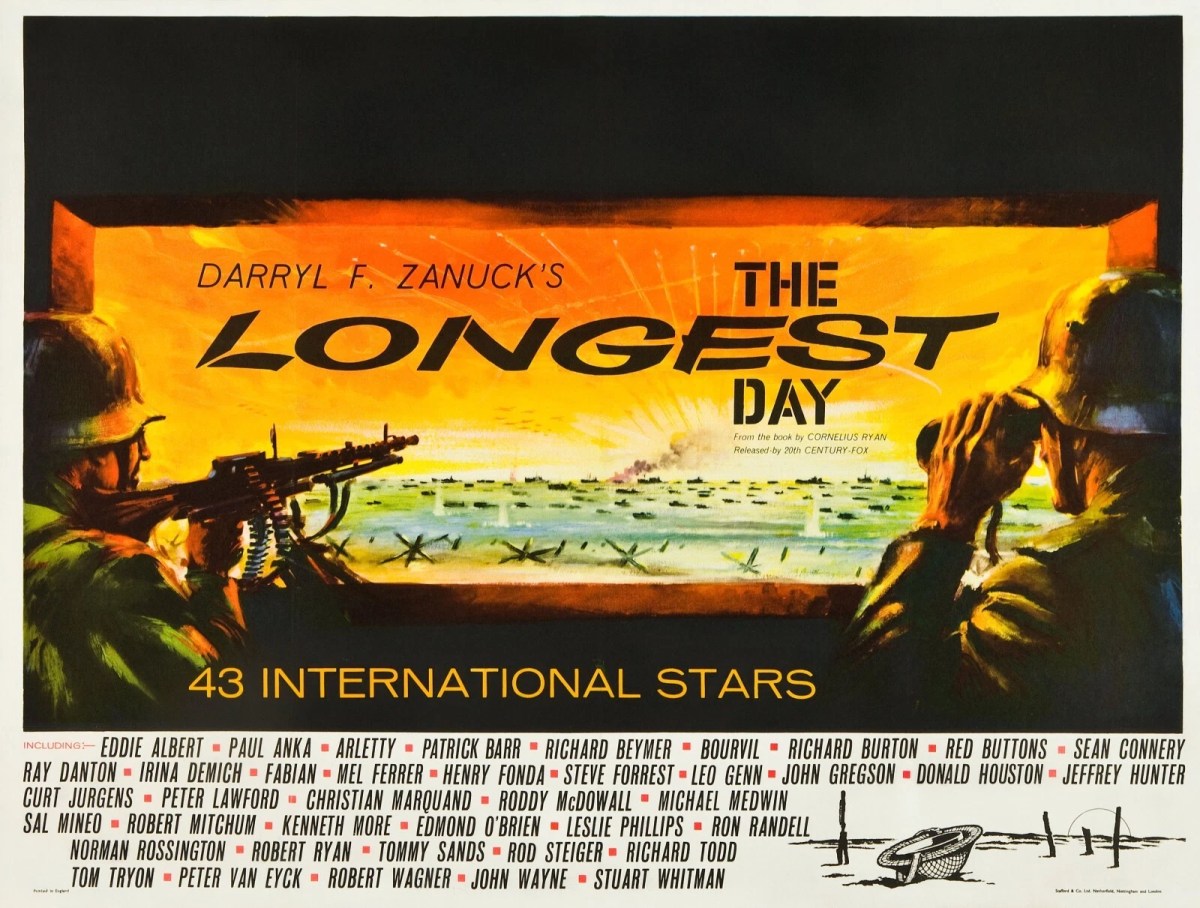
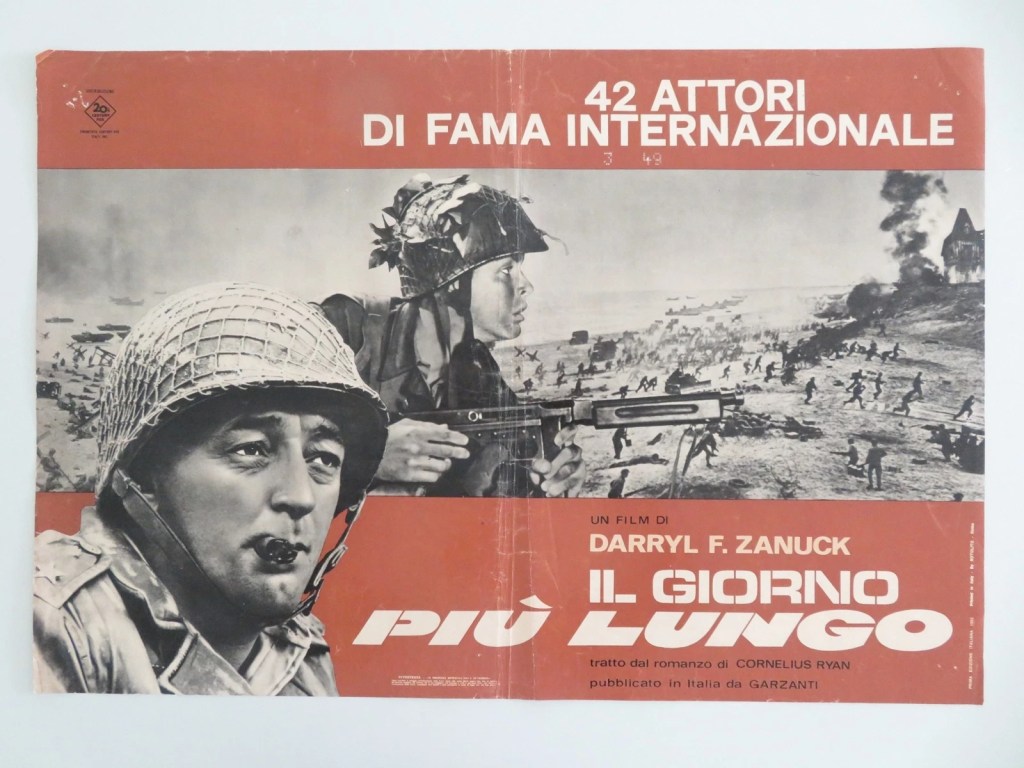
The Longest Day (1962) *****

When critics applauded the inspired use of a reaction shot via Omar Sharif to convey the horror of a massacre on the Mocow streets in Doctor Zhivago (1965), they omitted to mention that the technique had been used to similar stunning effect – and twice – in The Longest Day. The first comes when the camera cuts to Red Buttons dangling from a parachute down a building witnessing a massacre in the square below. The second, oddly enough, in virtually the same locale, when John Wayne arrives and views the aftermath.

Emotion was generally not considered a requisite of this epic war picture about the D-Day landings. The general consensus these days is that at best it’s a docudrama or at worst a star-a-minute mess with a dozen storylines vying for supremacy. In fact, it’s neither, but a surefooted and even-handed depiction of a complex battle, concentrating as much on the backroom staff as the soldiers in the line of fire.

Except for German complacency, the Allied forces would have faced fiercer opposition. The German troops had no air cover except for two planes and the Panzers had been pulled back in reserve. High-ranking officers had high-tailed it out of German HQ to enjoy a night on the town. Yes, the Germans expected the invasion to come from Calais rather than Normandy, but once their mistake became obvious, they did little to counter the attack, spending too much time arguing with each other and being too frightened to wake Hitler from his beauty sleep to trigger the tanks and planes.

Producer Darryl F. Zanuck covered his back by enrolling 40 stars for his venture. While most had varying marquee appeal, he had drawn on leading actors and actresses from countries other than Britain and the USA. And there was clearly a calculated decision to make audiences wait for the two major stars, John Wayne and Robert Mitchum, to put in an appearance. It’s a good 15 minutes before we spot Wayne, that time spent setting up the event from British, French, German and American perspectives.

Unusually for major stars, Wayne and Mitchum are not averse to carrying exposition, something generally left to the supporting cast, Wayne in particular spelling out the pitfalls of his particular parachute drop situation. Incidentally, two of the best sequences took a good less time to show – as later explained in feature-length detail in A Bridge Too Far – the dangers inherent in parachuting into enemy territory and trying to capture and hold vital bridges.

The picture could easily have been titled A Gamble Too Far because Zanuck was betting the future of Twentieth Century Fox, facing a financial burnout, on its box office outcome.

While covering the planning for the landings in sweeping terms, the movie concentrates on three major actions – Omaha Beach and the scaling of the impenetrable Pointe du Hoc featuring the Americans headed up by Brig General Norman Cota (Robert Mitchum), a British commando raid led by Major John Howard (Richard Todd) on the Pegasus Bridge and the parachute drop led by Lt Col Benjamin Vandervoort (John Wayne).   

By today’s standards the bloodletting is non-existent but the brutality of combat hits hard. Flight Officer David Campbell (Richard Burton) heads up the victims, knowing he is going to die but trying to keep up his spirits. French peasant Janine (Irina Demick) distracts German soldiers with her beauty. Lord Lovat (Peter Lawford) goes into battle accompanied by bagpipes and beachmaster Capt Maud (Kenneth More) tries to keep troops moving on the beach.. Comic interludes are provided by Private Flanagan (Sean Connery) and his buddy and German Sgt Kaffekanne (Gert Frobe).

Many of the commanders that would feature in later World War Two pictures –  Lt Gene Omar Bradley (Patton, 1970) and Brig General James Gavin and General Sir Bernard Montgomery (A Bridge Too Far, 1977), played respectively by Arthur Hill, Robert Ryan, and Trevor Reid. German General Rommel had already had his shot at Hollywood fame through The Desert Fox (1951) and Desert Rats (1953) and was the American nemesis in Patton.

Given the amount of rubbernecking by the audience, it’s worth noting the number of actor in small parts who eventually made good including Sean Connery (Dr No had just appeared by the time The Longest Day opened in the U.K.), Christian Marquand (The Corrupt Ones/The Peking Medallion, 1967), George Segal (Bridge at Remagen, 1969), Tom Tryon (The Cardinal, 1964) and Robert Wagner (Banning, 1967).

You could do an entire review just listing who played who. But in spreading the field and covering French and German activities alike Zanuck brings a wider understanding of the proceedings.

Five directors were involved and unlike most anthology pictures where individual styles clash, here everyone follows the same playbook. Ken Annakin (Battle of the Bulge, 1965), Andrew Marton (Africa, Texas Style, 1967), Gerd Oswald (Agent for H.A.R.M, 1966), Bernhard Wicki (The Visit, 1964) and Darryl F. Zanuck all took a turn at the helm.

While author Cornelius Ryan (A Bridge Too Far) was credited with the screenplay he received help in the shape of Frenchman Romain Gary (Birds in Peru, 1968) , American novelist James Jones who wrote From Here to Eternity, and British screenwriters  David Seddon and Jack Pursall (The Blue Max, 1966). Remains an awesome experience, one I’d just love to see in 70mm

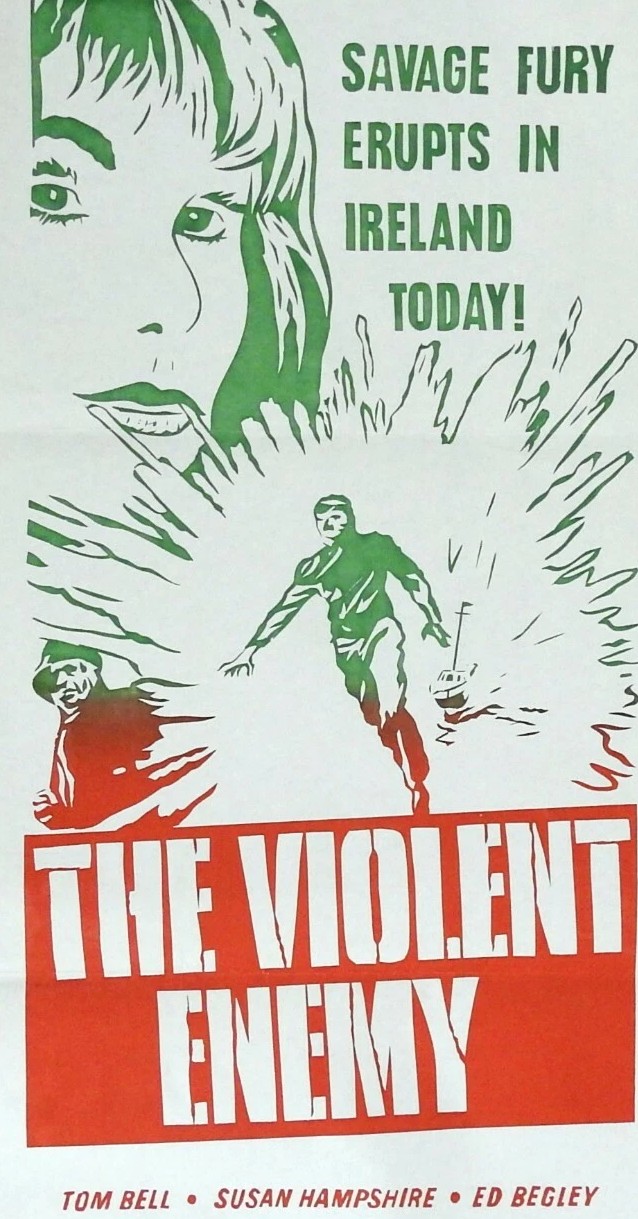
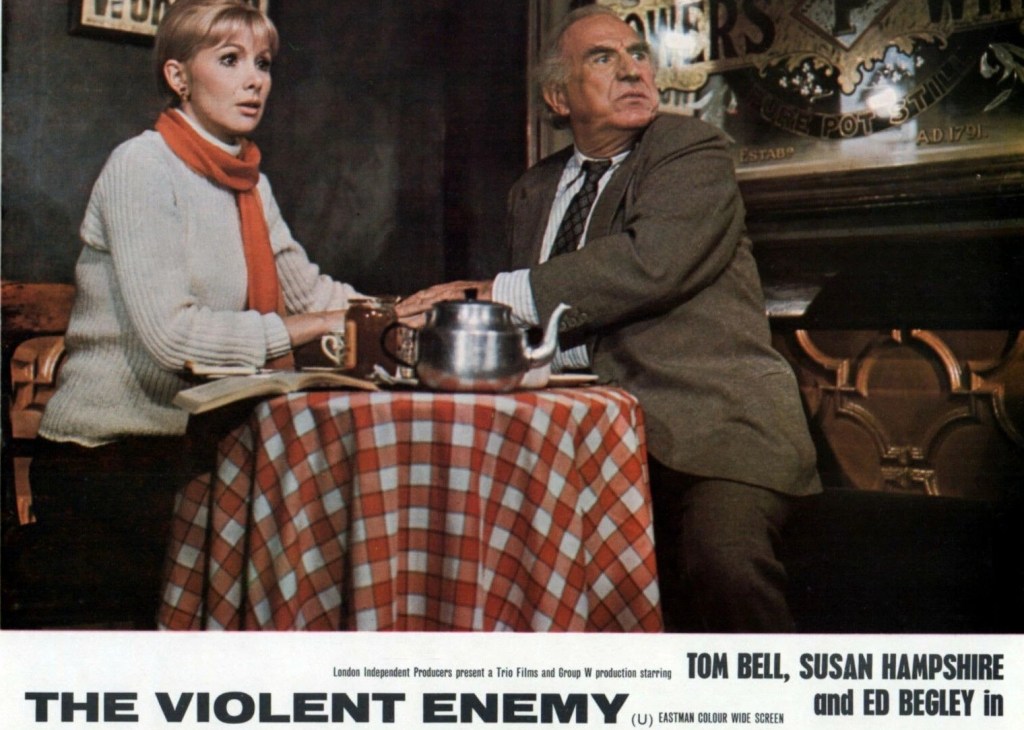
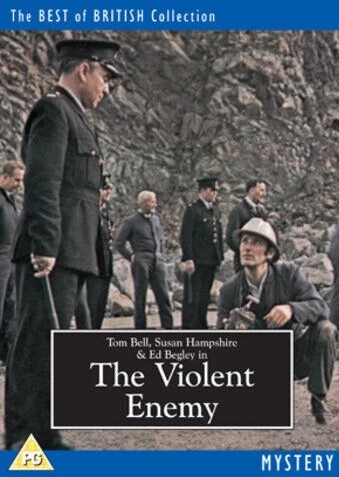
The Violent Enemy (1967) ****

Surprisingly even-handed and thoughtful with more twists than The Housemaid. Rising star Tom Bell makes a bid to fill the spot in the British movie hierarchy vacated by Michael Caine who had gone to greater things while Susan Hampshire is trying to escape the screen persona foisted upon her by Walt Disney in such innocuous fare as The Fighting Prince of Donegal (1967). Australian director Don Sharp was hoping to add some gravitas to a portfolio that included The Face of Fu Manchu (1965) and Our Man in Marrakesh (1966). To some extent, all three achieve their aims.

Irish terrorist Sean Rogan, learning he has been refused parole and has another seven years of a 15-year sentence to serve, breaks out of jail, assisted by Hannah (Susan Hampshire), scion of an IRA legend. Twist number one, back in Ireland, Sean tells his boss Colum O’More (Ed Begley) that he’s going to go straight. Ireland having no extradition treaty with the United Kingdom for political prisoners he’s safe. Twist number two, Colum threatens to dump him over the border to Northern Ireland where he could be arrested.

O’More wants Sean, an explosives specialist, to blow up an electronics plant that services British armament factories and in doing so restore pride in a fading political force. Sean agrees to plan the job but not carry it out, leaving it to underling Austin (Jon Laurimore). Sean also, surprisingly, has scruples, wanting to limit the charge so that it doesn’t affect people living in caravans below the factory. Meanwhile, Inspector Sullivan (Philip O’Flynn) turns up with a killer piece of information. He tells Hannah, who’s grown sweet on Sean, that the escapee was deliberately misled – his parole had been granted. Hannah refuses to pass this along, her loyalty to the cause greater than her feelings for Sean.

As the deadline approaches for the sabotage, it becomes apparent Austin has a different project in mind. Instead of blowing up the plant he’s going to use the blackout caused by the dynamite to rob the factory, forcing Sean to come along so he can be rendered unconscious and take the fall.

The final twist is that Sean foils the robbers.

Apart from the sabotage and the heist there’s a lot to savor here. Old hands are deserting the cause to enjoy prosperity. The idea of ruining local livelihoods by terminating the plant is anathema to some. Many are just tired of fighting a war that’s not been won. Others, like Sean, believe they have done their bit and are entitled to peace and quiet.

Die-hards like Colum are easily duped by the unscrupulous – one of the best scenes the shock on his face when he realizes he’s been took and he lacks the authority to stop what might be deemed organizational malpractice – while Austin takes advantage of the money-making opportunity that supposed fealty to the cause creates. Hannah, too, has to change her attitude. Sean’s spent enough time in prison to appreciate what he’s lost.

There’s little remorse but equally there’s little tub-thumping and the movie largely steers clear of the political issues and sentimentality. There’s nothing glamorous or romantic in this Ireland, no glorious scenery, just dreich wet streets, and the flag isn’t tied to the mast but  employed to package the loot. The heist is well done and there’s an unusual climax. Possibly the most imaginative section is the flight after the initial escape with Sean disguised as a chauffeur driving a Rolls-Royce. It’s probably a plus point that nobody attempts an Irish accent that they’d mess up anyway.

Possibly because of the subject matter, the movie flopped. Neither Tom Bell nor Susan Hampshire ascended to the higher echelons though Don Sharp returned to Ireland for Hennessey (1975) and went on to direct Bear Island (1978). Written by Edmund Ward (Goodbye Gemini, 1970) from an early novel by Jack Higgins (The Eagle Has Landed, 1976 ) who both revisited the Troubles for Mike Hodges A Prayer for the Dying (1987) with Mickey Rourke.

In between the action beats plenty to mull over.

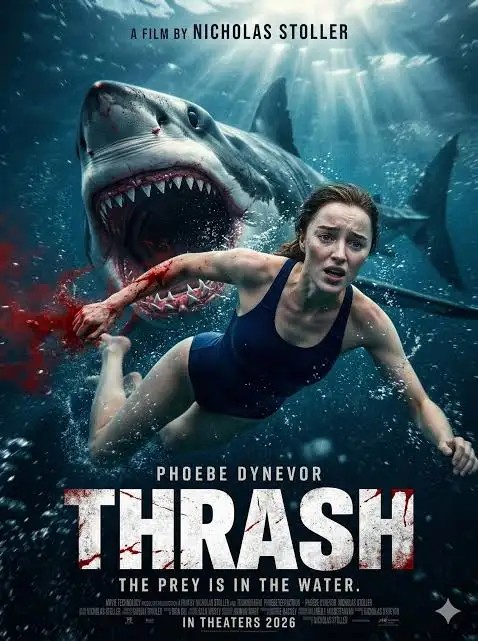
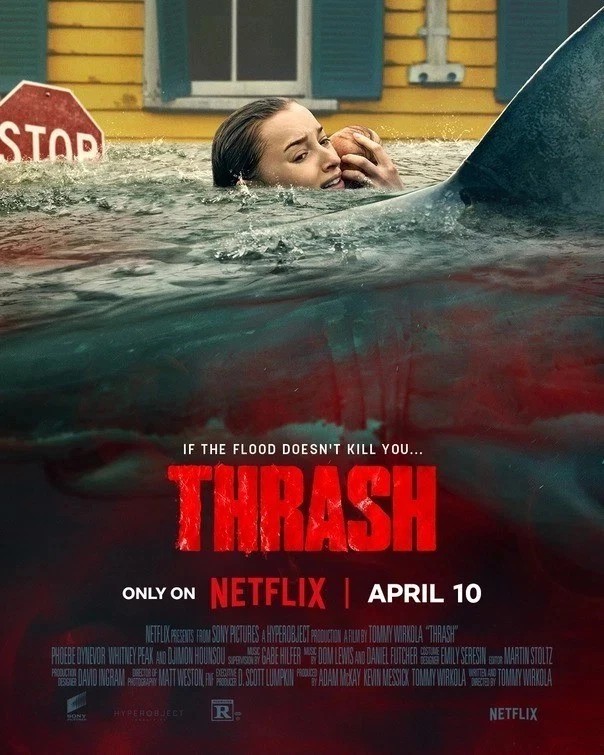
Thrash (2026) ** or **** (depending) – Seen on Netflix

Those of you who thought Netflix would be better served by abandoning its overblown self-indulgent Oscar bait in favor of B-pictures have had their prayers answered. Both hilariously bad and hilariously good with plenty gore but not a scare in sight. Questions will be asked about how many CGI sharks were harmed in the making.

While there are plenty of opportunities to rack up the tension with a bundle of sequences calling out for the Steven Spielberg treatment, writer-director Tommy Wirkola doesn’t take up a single one. That’s not to say there aren’t moments of greatness if not pure genius. When teenager Dee (Alyla Browne) is called upon to act as midwife for heavily pregnant unnamed New Yorker (Phoebe Dynovor), the poor lass is instructed to look “down there” and work out by how many inches the older woman is dilated. Plus you can’t get more woke than the pregnant lady achieving a genuine water birth, although, as you can imagine, the bloody aftermath attracts a bunch of sharks.

Did I forget to mention the sharks racing ashore in the wake of a storm surge, homing in on  a meat wagon that has broken in two and spilled its cargo of blood. I suppose the newborn child is to make up for all the parentless kids. I counted four – Dee and three foster kids. While Dee just takes it out on the sharks, the fostered trio take revenge on their greedy foster dad by kicking him into the water as shark food.

Wirkola does adopt the Spielberg playbook to destroy some sharks through an explosion and kill another with a harpoon gun and employs the Jurassic World technique of one predator being gobbled up by an even bigger predator. And I guess shark hunter Dr Edwards (Djimon Hounsou) can easily top Robert Shaw’s U.S.S. Indianapolis speech – he became obsessed with sharks once he saw the fear they instilled in a hippo. Yep, you heard that right. Did I mention that the good doctor is on the trail of Nellie the pregnant Great White Shark. “Sharks don’t eat kids,” claims the bad dad.

None of the grown-ups, not even our pregnant New Yorker, is worth a button as adults. She’s foolish enough to get herself trapped in a car by driving into a fallen-down tree when told to go the other way. Then she thinks that a pregnant woman wins out every time over a teenager scared witless. It’s the teenager that in the middle of the flood has to slide down a car roof  and teeter along the top of a fence to rescue the New Yorker trapped in flood waters in her car by a tree branch. It’s quite a hairy moment for the teenager and you wonder just how the heck is the heavily pregnant woman going to get to safety what with the water six feet deep and the marauding sharks and all that teetering and climbing. Hey-ho, she gets a free pass. One minute she’s in the car, the next she’s climbing through a window.

And she’s as entitled as all-get-out. It’s Dee who has to clamber onto the storm-soaked roof and improvise the word “help” out of curtains. And it’s lucky that Dee, as pointed out in a flashback, is such an ace shot. Judging from the one time she took aim at her dad with a toy gun that was more than enough of a demonstration as to how lethal she would be pinpointing a shark from a range of 20 metres.

But I can’t help thinking what Spielberg would have made of the scene when thanks to the force of the water the  New Yorker’s bed starts rising to the ceiling or when the house collapses beneath her. My guess is both sequences would have last more than a minute.

Alyla Browne (Furiosa: A Mad Max Saga, 2024) steals the show, not least because she has the wits to look terrified rather than coolly heroic. Phoebe Dynovor (Anniversary, 2025) has a pretty thankless task trying to win sympathy from such an unsympathetic character. It looked to me that the ending hinted at a sequel, so you have been warned.

Tommy Wirkola (Violent Night, 2022) would have done better if he’d either taken it more seriously or gone down the opposite route.  

I’m probably not the only one either who thinks Netflix could have been more honest with the title and omitted the first letter “h”.

Either a cult in the making or pure rubbish.

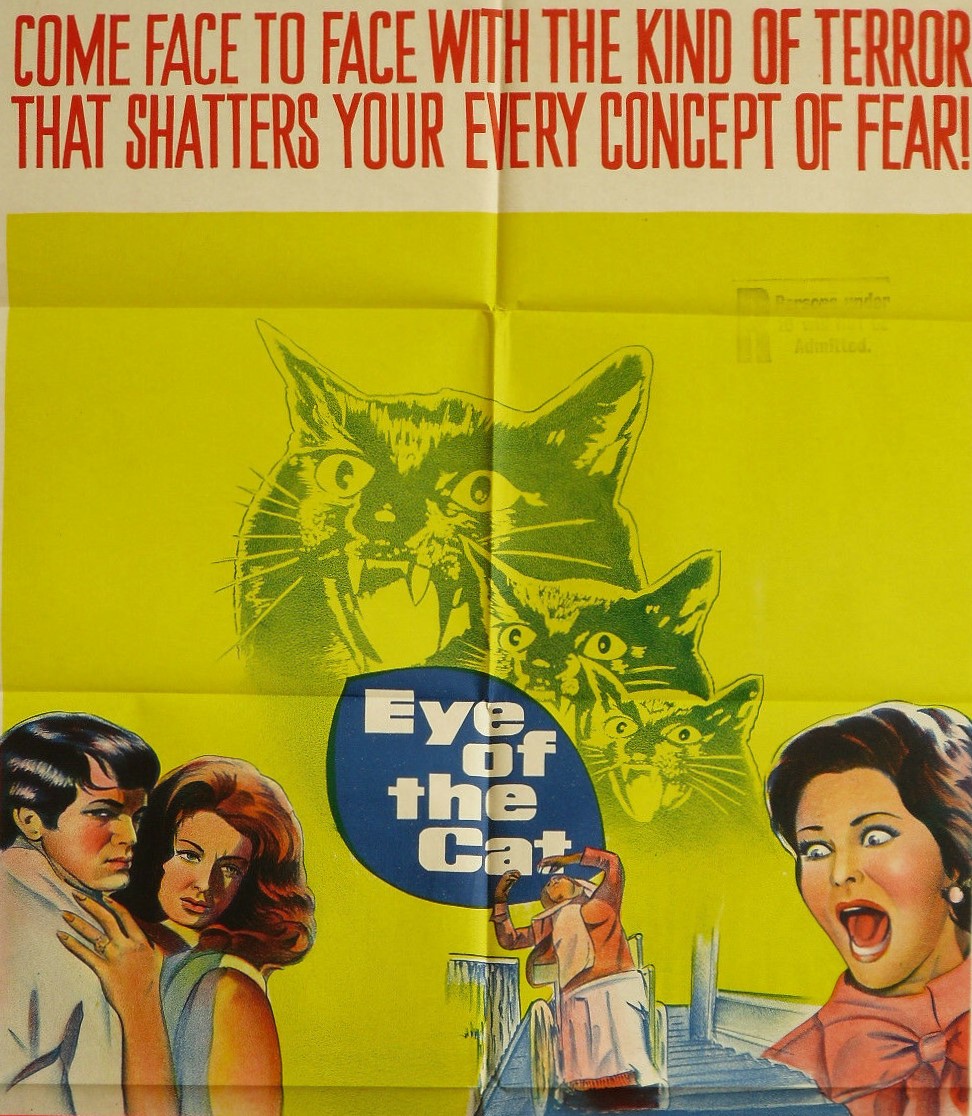
Eye of the Cat (1969) ***

If I hadn’t watched The Woman Who Wouldn’t Die (1965) I wouldn’t have been so well up on the intrigue of the modern film noir so I guessed where this was going pretty quickly but that did not detract from the enjoyment of watching it reach its stylish denouement. A perfect antidote to the cute cats as personified by Disney in The Three Lives of Thomasina (1963) and That Darn Cat! (1965). 

Realizing that wealthy client Danny (Eleanor Parker), suffering from emphysema, might only need a nudge or two to hasten her death, hairdresser Kassia (Gayle Hunnicutt) enrolls the sick woman’s wayward nephew Wylie (Michael Sarrazin) in a plot to kill her off and inherit her money. There are two obstacles, possibly three.  Danny has a houseful of cats, close to a hundred at the last count, and Wylie, after a childhood feline encounter, is terrified of the four-legged creatures. Upset at his previous behavior, Wylie has been cut out of the old lady’s will and needs reinstated pronto. The last element is that Wylie has a younger brother, Luke (Tim Henry) who acts as Danny’s gofer, who may take exception to the scheme.

Needless to say, the otherwise imperious Danny is so delighted at the return of the prodigal nephew that she demands her lawyer Bendetto (Linden Chiles) amend the will immediately. She sleeps in an oxygen tent and simply switching off her supply will be enough. But, of course, it would be foolhardy to murder her before the will is signed, sealed and delivered. Unfortunately, Wylie is a high-spirited selfish young man and comes close to offing her unintentionally.

While Wylie takes up residence in Danny’s vast house, Kassia is kept in the cellar and there is a suspicion that he will blackmail her into having sex with him since she sees their relationship as strictly business. Wylie has a whole string of abandoned girlfriends and seems to have capacity for preying on the most vulnerable if “Poor Dear” (Jennifer Leak), the nickname he assigns one is anything to go by.

Meanwhile, Wylie’s childhood fears return. He doesn’t need to see a cat, or even smell it, just sensing its presence is enough. His terrified reaction makes him want to abandon the scheme, despite the amount he might inherit. Desperate to prevent him from leaving, Danny agrees to get rid of her army of cats. Unfortunately, Luke is not as assiduous as he ought to be and a couple escape the round-up.

As the deadline for her demise nears, the tension is ratched up, seeds of suspicion sown among the conspirators, complications with the will and of course the cats hidden from Wylie’s view – but not ours. A fabulous scene with a runaway wheelchair nearly puts paid to the entire endeavor.

The under-rated Michael Sarrazin (In Search of Gregory, 1969), given a more complex character than before, switches through the gears of terror, charm and predation. Gayle Hunnicutt  (P.J./New Face in Hell, 1968) is a less obvious femme fatale, relying far more on brain than obvious physical attributes. And what a delight to see 1950s box office queen Eleanor Parker (Warning Shot, 1967) handling a much larger role than was normal at this point in her career. Tim Henry made his movie debut. You might also spot Laurence Naismith (Jason and the Argonauts, 1963) and one of Judy Garland’s husbands Mark Herron (Girl in Gold Boots, 1968).

From the atmospheric credit sequence featuring silhouettes of cats through a rash of twists and turns director David Lowell Rich (A Lovely Way to Die, 1968) guides this unusual thriller with considerable expertise, knowing just when to add another layer to the suspense, and drawing excellent performances from the two principals. The original screenplay is by a master of the macabre Joseph Stefano of Psycho (1960) fame.

This chiller will keep you guessing.

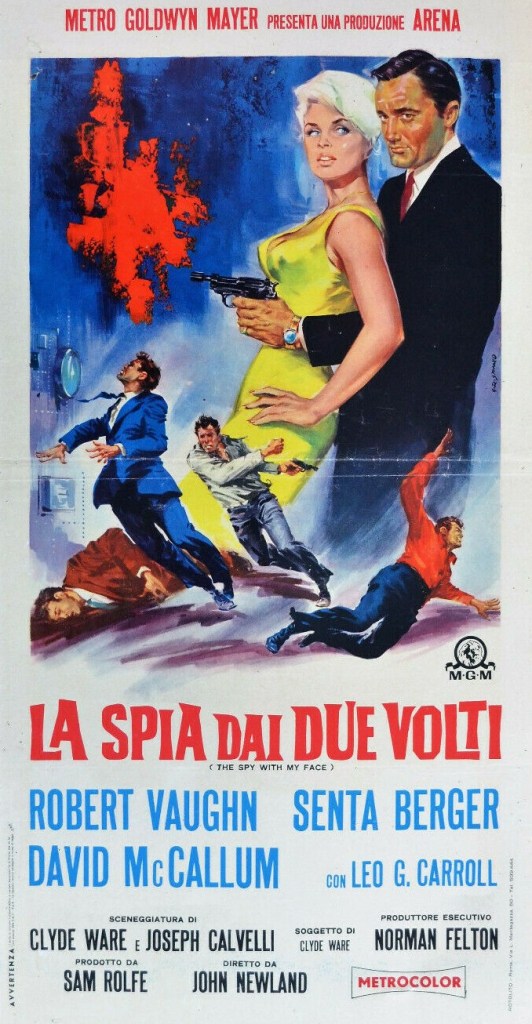
The Spy with My Face (1965) ****

Far more enjoyable than I had expected and definitely benefitting from being seen on a small screen – I suspect the effects would show up the worse for wear on the big screen. Certainly, a decent enough plot and Napoleon Solo (Robert Vaughn) as the main Man from U.N.C.L.E. dominating proceedings.  Despite being an expanded version of an episode, The Double Affair from the television series, it doesn’t betray its origins. Female master spies were thin on the ground until Thunderball (1965) and Deadlier than the Male (1967) and here Serena (Senta Berger) masterminding a T.H.R.U.S.H operation to steal a nuclear weapon, steals a march on both. The action is counterpointed by some nice humor.  

While Solo and crew are busy attacking an Australian base of arch-nemesis T.H.R.U.S.H.,  Serena is putting the final plans together to infiltrate U.N.C.L.E. by using a doppelganger of Solo, cosmetic surgery creating an exact double. Solo’s sidekick Ilya Kuryakin (David MacCallum), portrayed as a cold fish – “I’ve got my computer to keep me warm” – is attacked leaving HQ by gas-spraying robots.  

Women here are a good bit more realistic than in Bond. Let down by Solo, his girlfriend Sandy (Sharon Farrell), an airline hostess, proceeds to get drunk. When they go out to dinner, a bandaged man (the double) is at the next booth and when Solo is called to the telephone Serena is there on his return, prompting the jealous Sandy to dump her dinner all over him. In best secret agent style, of course, Solo reckons he can have his cake an eat it, hoping to dupe Serena at the same time as seducing her. However, he is suspicious of her motives – “whenever I go to strange places with strange women I get hit over the head by strange men.”

In Serena’s apartment, suspicion continues, Solo takes his gun into the shower. However, when he answers the door, it’s to his double, and Solo is gassed. Sly sexual elements are brought into play – the double isn’t quite correct, failing the kiss test. While Solo is transported to the Alps where T.H.R.U.S.H plans to hijack a secret nuclear device, the double enters U.N.C.L.E. HQ where he will receive a new password relating to the weapon.

Meanwhile, it transpires the double’s disguise is convincing – the still jealous Sandy pours a pot of coffee over him and later kicks him. And not foolproof enough – nonetheless he wears the wrong aftershave. The real Solo is intrepid enough, finding a clever method of delaying a countdown, and a good bit more alert when captured than when not.

The set pieces are well-done, considerable tension built up at various points, the assault on the T.H.R.U.S.H. premises, while lower-grade than James Bond, considerably more realistic with Solo in Special Forces-type camouflage and hiding in the trunk. The climactic fist fight between the rival Solos is convincing and there is an excellent motorcycle chase. Fortunately, the movie steers clear of gadgets and gizmos, presumably for budgetary reasons, and the only let down is a vault which looks as if it is constructed of bits and pieces of leftovers.

I was particularly fond of a quip by Kitteridge (Donald Harron), U.N.C.L.E’s Australian associate. In response to a query from the big boss, Alexander Waverly (Leo G. Carroll), about whether his beard was real, Kitteridge answers “No, sir, it’s fake, I’ve got the real one in my pocket.”

The movie is surprisingly adept at treading a fine line between serious action and playfulness. The notion that the entire conspiracy can be undone by female jealousy or the wrong scent adds an interesting layer to the proceedings. And even the computer-loving Kuryakin finds time for romantic distraction. Serena is something of a secret weapon herself, far from an obvious espionage villainess, and keeps both Solo and the audience in the dark about her real intentions.

Director John Newland, more at home in television, steps up to the plate with a brisk tale that still has time for surprising subtlety. Robert Vaughn (The Venetian Affair, 1966) strides through the concoction effortlessly. The ever-alluring Senta Berger (Bang! Bang! You’re Dead, 1966) creates an intriguing character. Demands of the plot mean that David MacCallum (Sol Madrid, 1968) is somewhat underused. Sharon Farrell (A Lovely Way to Die, 1968) sparkles in a supporting role. Look out for Bardot lookalike Jennifer Billingsley (The Young Lovers, 1964), Harold Gould (The Sting, 1973) and Michele Carey (El Dorado, 1967). Joseph Calvelli (Death of a Gunfighter, 1969) and Clyde Ware (No Drums, No Bugles, 1972) devised the screenplay.

You can see why MGM went back to the U.N.C.L.E. well so often to plunder movies for foreig release.

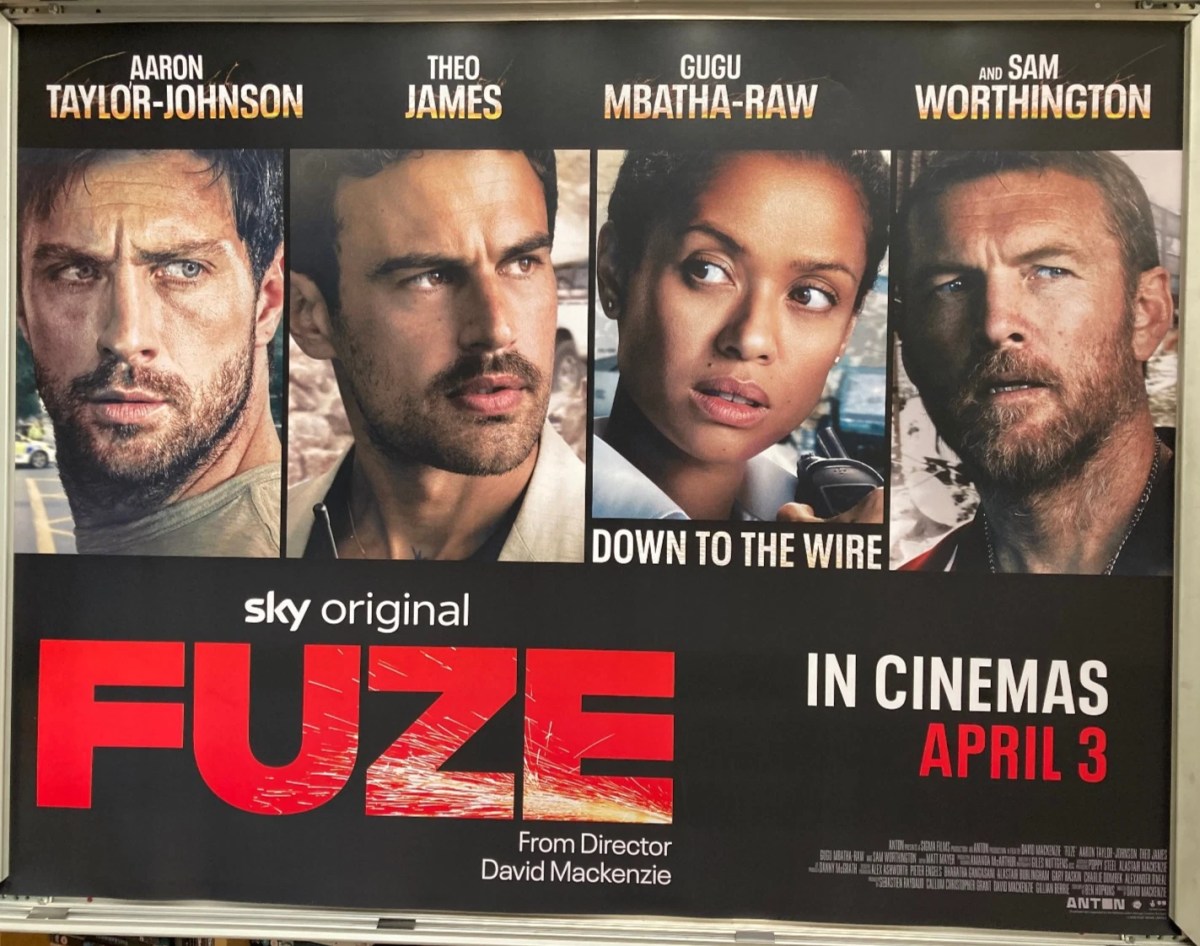
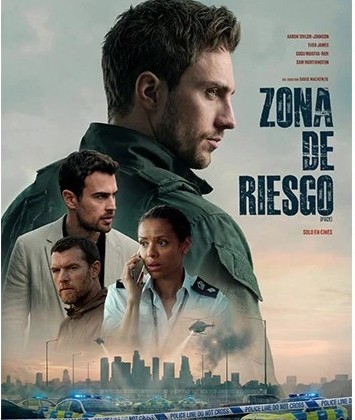
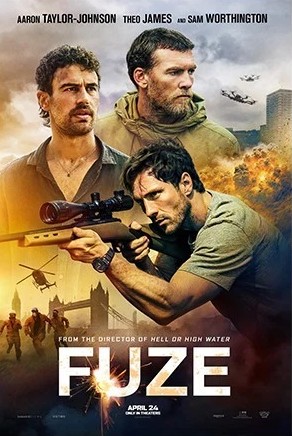
Fuze (2026) *** – Seen at the Cinema

We often complain that movies are dumbing down, but audiences aren’t as stupid as you would think, which is why it takes half the film before this one catches fire. Can’t be a coincidence that on the very day when an unexploded bomb is discovered in London that a major bank robbery is taking place within the vicinity that’s been closed-off. Or that the finger is going to point at maverick bomb disposal expert Will (Aaron Taylor-Johnson). So while Sky has invested some bucks in having the streets and parks crawling with people and cops, it’s skimmed on the screenplay. And recruiting three potential James Bonds isn’t enough to make a difference.

My antenna were up long before an eagle-eyed subordinate noticed a few anomalies on the bomb, not enough rust for a start to qualify for a leftover from World War Two. So it’s not until the double-crossing of the second half begins that the movie takes off. Even then, we’re alerted to the possibility of double-crossing because one of the thieves, Karalis (Theo James), is clearly doubted by the unnamed robbery leader (Sam Worthington).

The robbery is well-executed though nothing we’ve not seen before except for the use of drones to spirit the haul (jewels and cash only to limit the weight) away over the rooftops. The chase would be more convincing if the pursuing cops had decided not to go any further up the sewer tunnel where some bad guys were hidden. And if the surveillance team had noticed the obvious heat signature indicating the use of power when the electricity cables had been cut by the authorities to assist the bomb disposal. However, the dust from the explosion is eerily similar to 9/11, huge cloud of dust rising over the city streets.

So the big twist is in the double cross. Karalis has stashed a package away on a rooftop chimney so he’s up to something alright. What I didn’t expect was for another gang to burst in on the robbers and steal the loot. Or that the fella who funded the robbery is going to become suspicious of Karalis, not so surprising when he discovers the jewels are fake. While Karalis is hauled away in the boot of a car, fate only too obvious, the robbers escape. Mr Anonymous escapes and gives chase and ambushes the bad-guy thieves. But before he can get away with the bounty a conveniently-placed sniper mows him down.

And then it all comes together and I have to say in somewhat surprising fashion, though the main twist is left to the very last scene. Karalis and Will are in cahoots and Will, having done a stint in Afghanistan, is well-placed for sniper duties. There’s a third member of the team, whom the camera has picked out often enough in the mayhem for audience suspicions to rise, immigrant Raheem who turns out to have been Will’s translator in Afghanistan.

The cops, led by Ms Anonymous (Gugu Mbatha-Raw), haven’t been too sharp all the way through so it’s pretty easy for the clever crooks to evade pursuit, though you would have thought an all-borders alert at airports would not have been so easily avoided by the simple device of hopping on a different plane than the ones the cops were expecting.  

If you want to know how fleeting fame can be look no further than Sam Worthington, at one time the next big thing after Terminator Salvation (2009) and the original Avatar (2009) but even though he’s starred in the billion-dollar sequels to Avatar he’s only third banana here. Aaron-Taylor Jonson (Kraven the Hunter, 2024) and Theo James (The Monkey, 2025) are both apparently (though that might be down to good publicity experts working a compliant media) contenders for the vacant James bond crown and in the light of that both acquit themselves well in the action field.

Directed by David Mackenzie (Hell and High Water, 2016) from a script by Ben Hopkins (Inside, 2023).

On  a slack week at the cinema, this was an acceptable watch and maybe it will remain so when it rolls up on a television screen near you in a couple of weeks’ time. Apple and Amazon have set a high bar for a streamer with the release of F1:The Movie and Project Hail Mary and if old stagers like Sky want to keep up they’ll have to up their game.

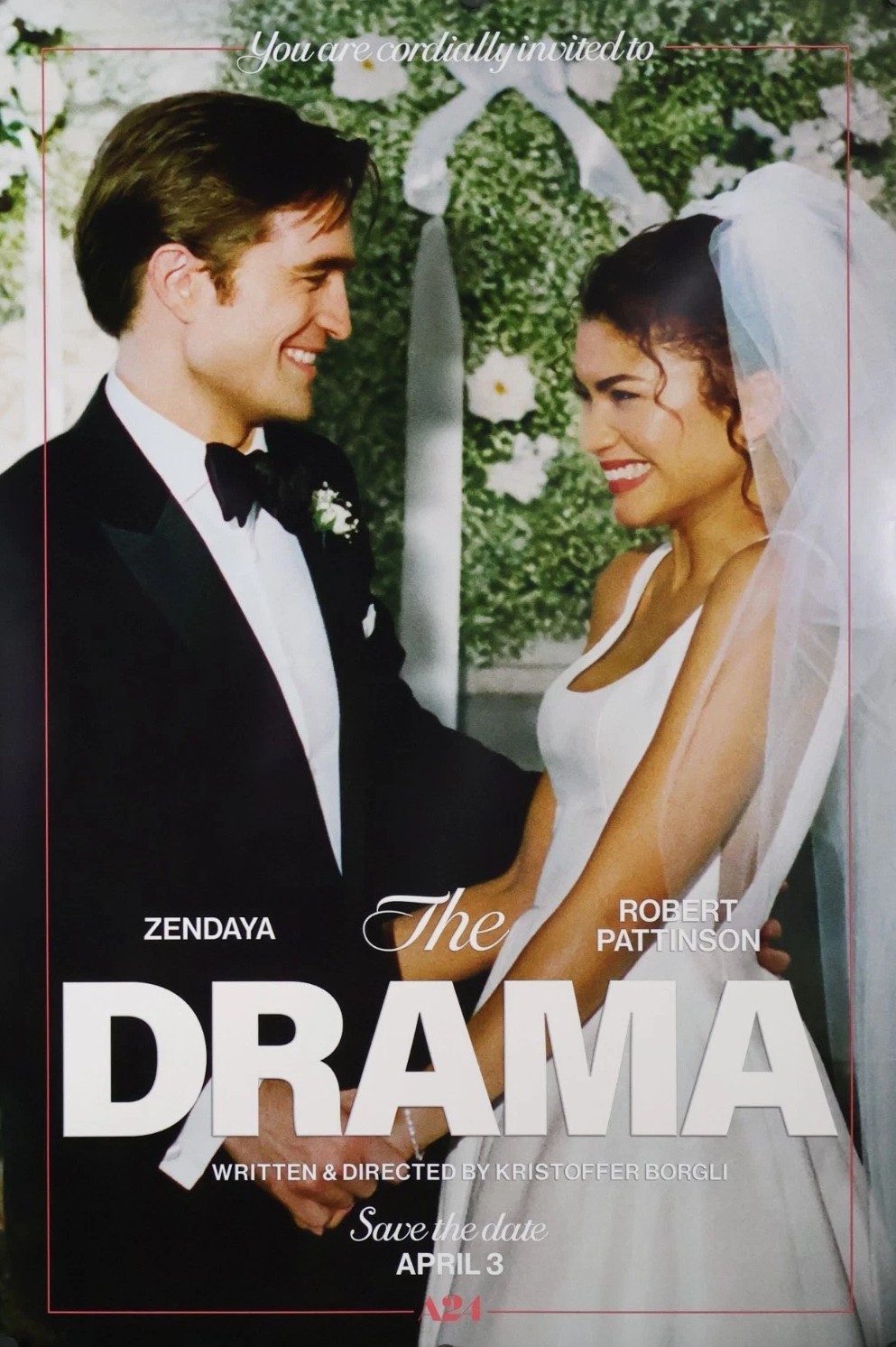
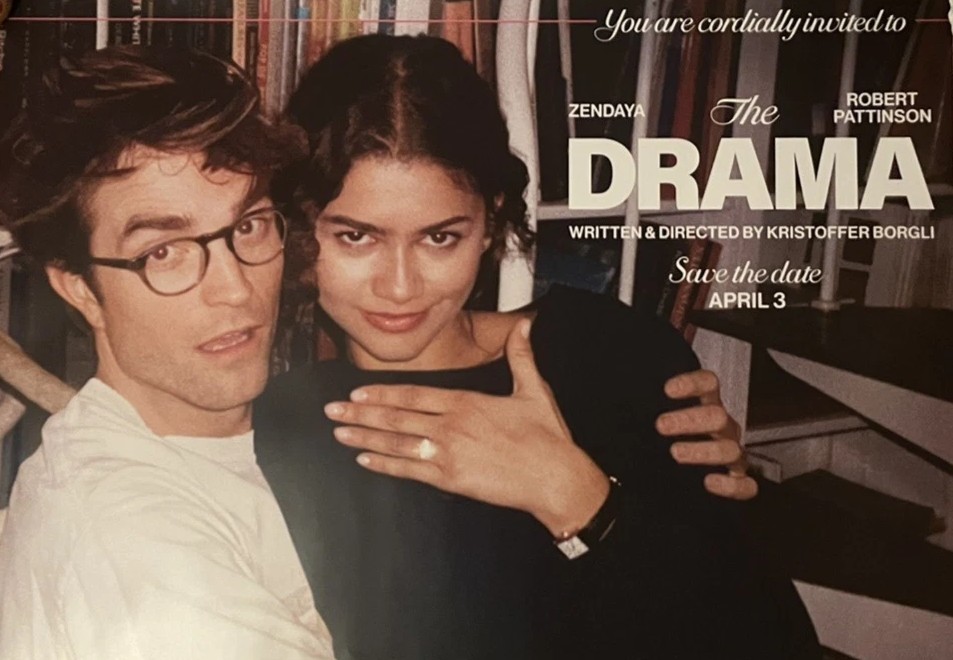
The Drama (2026) * – Seen at the Cinema

Today’s stars – and that’s an ever-decreasing category – seem to want to get into the kind of edgy material that used to be the province of the arthouse. They might even cut their fees to get a beloved project off the ground. I couldn’t remotely begin to understand what was going through the minds of Zendaya (Challengers, 2024)  and Robert Pattinson (Die My Love, 2025) to make them think this had any value whatsoever. It skirts the only important subject in the whole picture, trying to fashion a rom-com-gone-bad in order to come up with, after an inordinate amount of time, a happy ending.

The premise, probably understandable in these suspicious times is: what secret is your partner hiding? Could they be bigamists? Have they changed gender? Have they been in prison? Nope, it’s much worse than that.

Emma (Zendaya) confesses that as a 15-year-old she was so fascinated by guns that she intended to slaughter her schoolmates. She didn’t go through with it because on the appointed day someone else had stolen her potential thunder. So what you might expect is that we backtrack and dig into the reasons why. But apart from a superficial stab at what turns an ordinary girl into a serial murderer and the notion that thousands of people would fall into the same category if they could ever get up the courage to do so.

Instead, this information is set against a rom-com backdrop and is used as narrative ammunition to derail her upcoming wedding to soft-hearted museum curator Charlie (Robert Pattinson). Po-faced pals Rachel (Alana Haim) and Mike (Mamadou Athie) get into an almighty snit over this, never mind that they have been guilty of heinous acts themselves. Bear in mind that Emma never actually injured anyone. But this pair who (Mike) used their previous girlfriend as a human shield against a ferocious dog and (Rachel) locked a mentally handicapped child in a cupboard in a remote house in the wood and ran away and didn’t fess up when a search party was formed.

Nobody thinks to send Rachel for counselling to ensure that whatever issues drove her to murder have been resolved. Instead, all concerned get agitated, and start examining Emma’s past and current life to see if she is going to go off on one. She’s certainly tougher than her wuss of a boyfriend, no problem sacking the DJ on the eve of the wedding or removing Rachel from a project.

Just to make sure Emma gets some audience sympathy she’s deaf in one ear and Charlie, on the edge of a mental breakdown, makes an unwise move on Misha (Hailey Gates), a member of his staff, which permits her boyfriend to give Charlie, literally, a bloody nose at the actual wedding.  

You would hardly believe after all this nonsense and out of the detritus of the calamitous wedding that writer-director Kristoffer Borgli (Dream Scenario, 2023) manages to fashion a happy ending. This is witless stuff. And Hollywood at its hypocritical worst. I couldn’t begin to count how many people Pattinson has killed in his various movies and Zendaya in Dune has begun to express her violent tendencies. What’s that except glorifying violence and yet they still turn up in movies pontificating against violence.

There’s not a single likeable character. Charlie does his floppy-haired best and, supposedly, has such charm that he can get away with reading the same literary book as Emma – that’s the lame meet-cute – only to admit he hasn’t read a single word. Liar, liar, pants on fire appears to be a line that’s never entered Emma’s vocabulary, no doubt because, at 28, she’s never been in love (that in itself would be worth a piece of psychological digging).

This is one of the laziest attempts to provide contemporary stars with the “edge” they appear to so desperately seek as they try to emulate the Hollywood legends who genuinely did tackle important issues.

A mess.

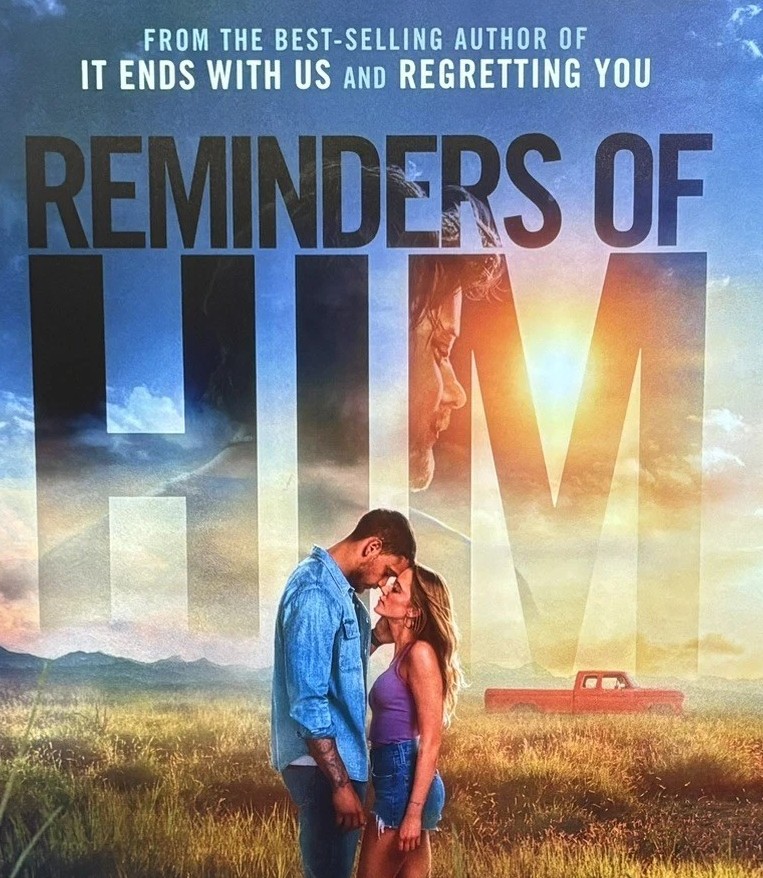
Reminders of Him (2026) **** – Seen at the Cinema

Author Colleen Hoover pulls a fast one on admirers of It Ends with Us (2024) and Regretting You (2025). Audiences had come to expect sophisticated romances that played to feminist mores. While there’s certainly romance involved, it’s more about ex-con Kenna (Maika Monroe) trying to re-connect with the daughter Diem (Zoe Kosovic) she lost after being imprisoned. The situation is complicated because she was jailed for killing her fiancé Scotty (Rudy Pankow) in a car accident while under the influence. You can picture the scene: “Hi, Diem, meet your mother…she killed your father.”

I liked this film instantly because within five scenes it had set out its dramatic stall. Kenna gets out of a taxi taking her to Laramie, Wyoming, to rip out of the ground a makeshift cross marking where Scotty died. She can’t get a job because she ticks the “previous conviction” box in a job application. She is sent to a discount store to try there but a flashback reveals the meet-cute with Scotty who was driving an orange-painted truck. Another man, Ledger (Tyriq Withers) owner of a local bar, takes Diem for school. In the bar she flirts with Ledger until noting his truck she realizes this is her dead fiance’s best friend, whom she’d never met, because during her short courtship with Scotty, Ledger was off trying to make his career in football.

Kenna’s realistic enough but driven by a sliver of romanticism that ends in a relationship with Diem. There’s nothing but obstacles in the way, Ledger for one, who has occasion to physically remove her from temptation, which curdles their growing relationship. The still-grieving grandparents Grace (Lauren Graham) and Patrick (Bradley Whitford) fear Kenna might kidnap the girl and that eventually drives a wedge between them and Ledger, to whom they had grown incredibly close.

Everything about this is slow-burn. And there’s not an ounce of tear-jerking either. Kenna does not cry herself to sleep, doesn’t stand hidden under a tree or peek through a hedge or hover at a school gate trying to catch a glimpse of Diem. She doesn’t complain life’s unfair. Lacking a bed in her miserly accommodation, she sleeps on the couch, and is reduced to bagging groceries for a living.

There’s none of the usual misery memoir beats, nor does it take some miraculous piece of derring-do (saving Diem from drowning or a fire or from being knocked down in the street or – screenwriters have come up with worse – preventing her being kidnapped by someone else) to achieve a breakthrough. Nor is she baited in the street nor run out of town by people furious that she killed the well-liked Scotty.

Slow and contemplative would hardly be the best tone for a contemporary romance, and that takes a long time to get going thanks to the various complications. Resolution is provided with  something of a get-out-of-jail-free car. As well as the DUI, Kenna was convicted for leaving the scene of the accident while (unknownst to her) her fiancé was still alive. The accident had occurred in a remote area and she had walked such a distance to get help and was herself in poor shape after the crash that she fell asleep in a barn only to discover Scotty had survived the accident only to die later.

In the old days you’d have called this a woman’s picture, but that category seems to have been taken over the excessively emotional Hamnet or Wuthering Heights, so it’s fairer to just class it as a more than decent picture for adults.

Both Maika Monroe (Longlegs, 2024) and Tariq Withers (Him, 2025) underplay to the benefit of the movie and there are interesting roles for Lauren Graham (Bad Santa, 2003), Bradley Whitford (The Handmaid’s Tale, 2018-2025) and Monika Myers in her debut. Directed with commendable restraint by Vanessa Caswill (Love at First Sight, 2023) from a screenplay by Hoover and producer Lauren Levine.

Like Regretting You, it’s not going to be a blockbuster, but quietly rewarding just the same.

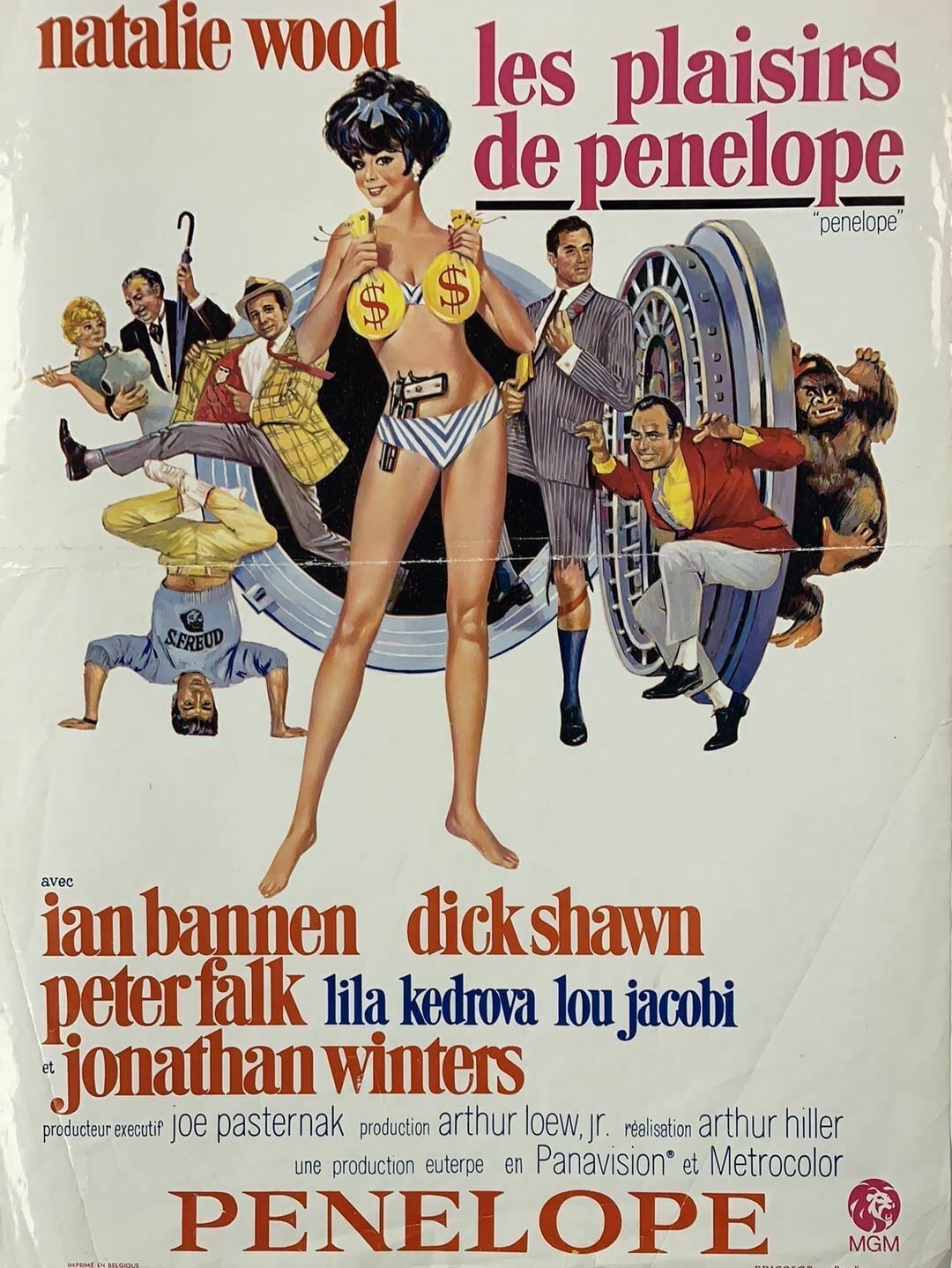
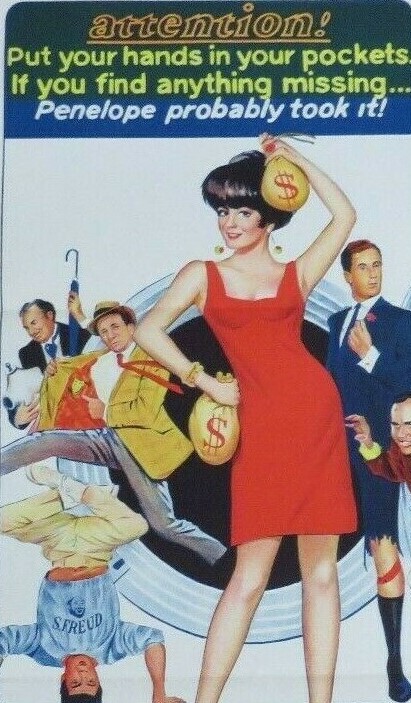
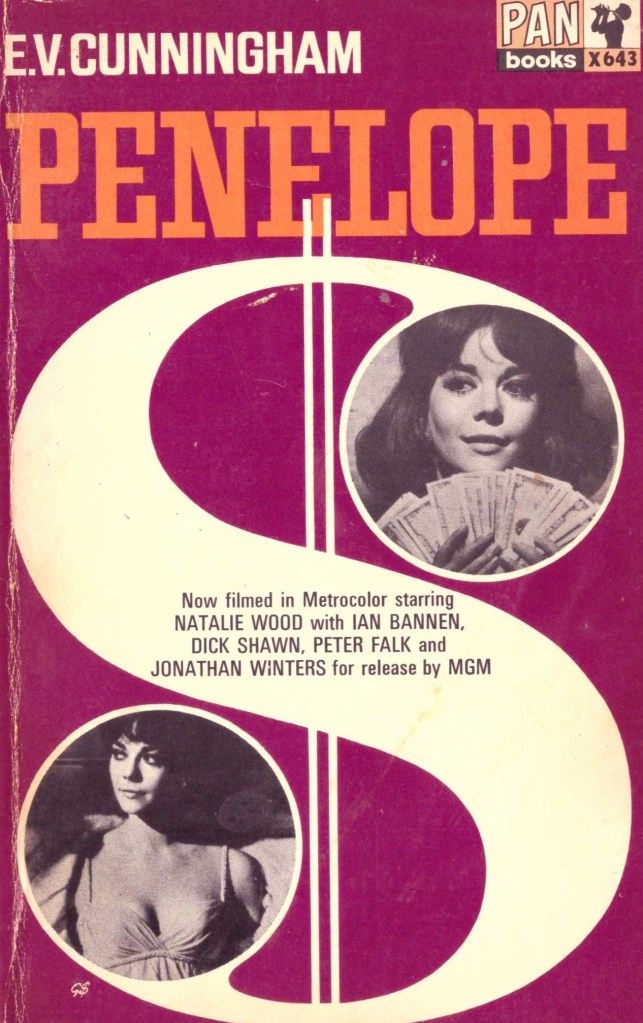
Penelope (1966) ***

Comedic twist on the heist movie with Natalie Wood (This Property Is Condemned, 1966) as a kleptomaniac. Given its origins in a tight little thriller by E.V. Cunningham, pseudonym of Howard Fast (Mirage, 1965), it’s an awful loose construction that seems to run around with little idea of where it wants to go. Wood, of course, is a delightfully kooky heroine who takes revenge on anyone who has ignored or slighted her by stealing their possessions.

The picture begins with her boldest coup. Cleverly disguised as an old woman, she robs the newest Park Avenue bank owned by overbearing husband James (Ian Bannen). This prompts the best comedy in the movie, a man with a violin case (Lewis Charles) being apprehended by police, the doors automatically locking after a clerk falls on the alarm button, James trapped in the revolving doors losing his trousers in the process.

In flashback, we learn that she turned to thievery after a rape attempt by Professor Klobb (Jonathan Winter), her college tutor, and while half-naked managed to make off with his watch fob. She stole a set of earrings from Mildred (Norma Crane) after suspecting she is having an affair with James. “Stealing makes me cheerful,” she tells her psychiatrist, Dr Mannix (Dick Shawn) and while admitting to dishonesty denies being a compulsive thief. After the bank robbery she even manages to relieve investigating officer Lt Bixby (Peter Falk) of his wallet.

Nobody suspects her, certainly not her husband who could not conceive of his wife having the brains to carry out such an audacious plan. Bixby is a bit more on the ball, but not much. Clues that would have snared her in seconds if seen by any half-decent cop are missed by this bunch. And generally that is the problem, the outcome is so weighted in Penelope’s favor. The plot then goes all around the houses to include as many oddballs as possible – boutique owners Sadaba (Lila Kedrova) and Ducky (Lou Jacobi), Major Higgins (Arthur Malet) and suspect Honeysuckle Rose (Arlene Golonka). Naturally, when she does confess – to save the innocent Honeysuckle – nobody believes her in part because everyone has fallen in love with her. Bixby, just as smitten, nonetheless makes a decent stab at the investigation.

Howard Fast under the pseudonym of E.V. Cunningham wrote a series of thrillers with a woman’s name as the title. He was on a roll in the 1960s providing the source material for Spartacus (1960), The Man in the Middle (1964), Cheyenne Autumn (1964), Sylvia (1965), Mirage (1965) and Jigsaw (1968).

Taken as pure confection it has its attractions. It’s certainly frothy at the edges and there are a number of funny lines especially with her psychiatrist and the slapstick approach does hit the target every now and then. The icing on the cake is top class while the cake itself has little of substance. It strikes a satirical note on occasion especially with the Greenwich Village cellar sequence. It doesn’t go anywhere near what might be driving this woman towards such potential calamity – that she gets away with it is only down to her charm. There has probably never been such a pair of rose-tinted spectacles as worn by Penelope, even though her every action is driven by revenge.

Without Natalie Wood it would have sunk without trace but her vivacious screen persona is imminently watchable and the constant wardrobe changes (courtesy of Edith Head) and glossy treatment gets it over the finishing line. It’s one of those star-driven vehicles at which Golden Age Hollywood was once so adept but which fails to translate so well to a later era. Ian Bannen (Station Six Sahara, 1963) is in his element as a grumpy husband, though you would wonder what initially she saw in him, and Peter Falk (Robin and the 7 Hoods, 1965) delivers another memorable performance.  Dick Shawn (A Very Special Favor, 1965) is the pick of the supporting cast though screen personalities like Lila Kedrova (Torn Curtain, 1966), Jonathan Winters (The Loved One, 1965) and Lou Jacobi (Irma la Douce, 1963) are not easily ignored.  Johnny Williams a.k.a John Williams wrote the score.

Director Arthur Hiller (Tobruk, 1967) delivers as much of the goods as are possible within the zany framework. Veteran Oscar-winner George Wells (Three Bites of the Apple, 1967) wrote the screenplay but it’s a far cry from the far more interesting source material and I would have to wonder what kind of sensibility – even at that time – could invent a comedy rape (not in the book, I hasten to add).

Discover WordPress

A daily selection of the best content published on WordPress, collected for you by humans who love to read.

The Atavist Magazine

by Brian Hannan

WordPress.com Blog

News, Tips & Website Tutorials