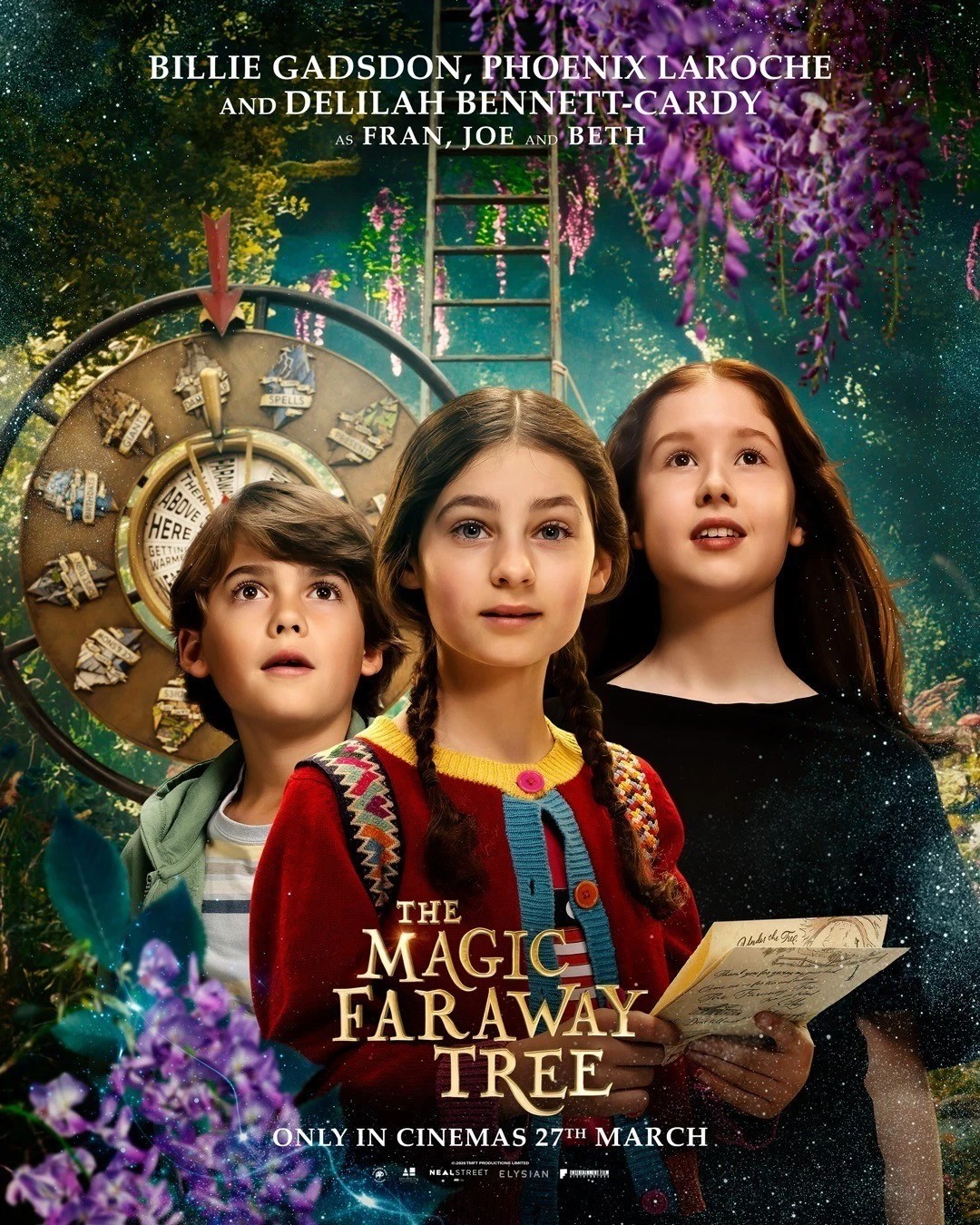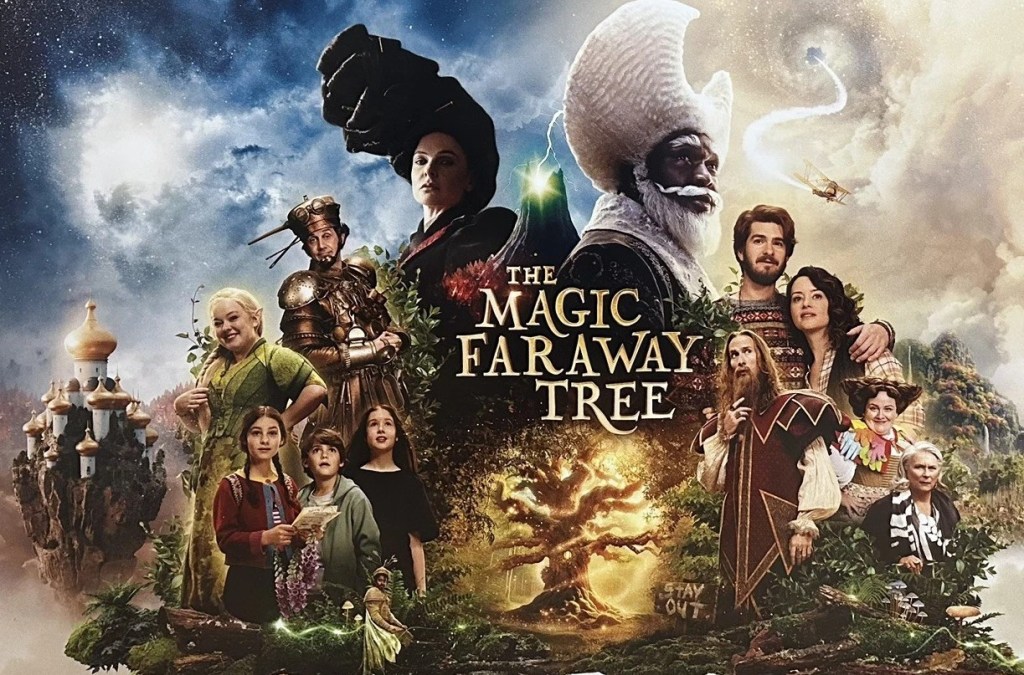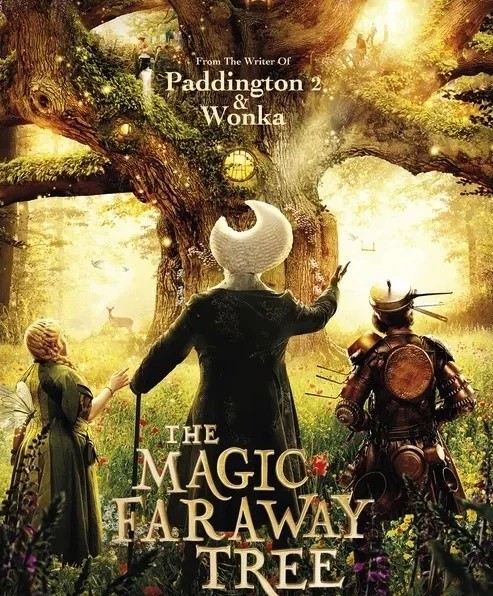
The Magic Faraway Tree (2026) *** – Seen at the Cinema

Watching just one movie on my weekly jaunt to the cinema seems such a dereliction of duty that occasionally I’ll throw in a picture which was not at all high – or completely absent – from my must-see list. The presence of either Andrew Garfield (After the Hunt, 2025) or Claire Foy (H is for Hawk, 2025) would not have been enough to draw me in otherwise, especially as this was being sold as a children’s story and I knew from a trailer I’d seen ages ago that they weren’t popping up in the guise of fairies and elves, the usual inhabitants I had imagined of any magical world dreamed up by the likes of Enid Blyton.

I have to confess I was astonished to see Blyton’s name attached to this as I thought she had been cancelled a long time ago for having the temerity to set her stories in middle-class households. Though I had read The Famous Five and The Secret Seven as a child, I hadn’t been aware she had written a series set in the titular tree. Though I imagine her adult characters would not be inventing intelligent fridges nor determining to make a living by selling home-made pasta sauce, nor would social media play any part in the lives of the children. So whenever the original stories were set, they’ve undergone radical surgery.

I’m not sure how the target audience would take to the moralizing aspect i.e. that social media is bad, but that’s only if you assume that the target audience is children rather than the adults paying for the tickets who would most likely chime with those views. That’s notwithstanding the fact that mother-of-three Polly (Claire Foy) has been dabbling with intrusive technology, though she’s principled enough to quit when she realizes just how invasive.

So minus a job and with stay-at-home husband Tim (Andrew Garfield) not contributing to the family coffers they embark on what seems at first a disastrous foray into “The Good Life”, living in a barn with no electricity or central heating and the children in open revolt at the lack of Wi-Fi. Eventually, the titular tree puts in an appearance and all the magic of childhood comes rolling back as the children, led by Fran (Billie Gadsen), discover its unusual properties and investigate a world that’s half-Lord of the Rings and half-Avatar peopled by fairies and odd creatures and villains living in the sky. There’s a nod to Toy Story, the idea that children too quickly abandon the joys of childhood.

It’s not all magic, or to put it another way, the magic sometimes backfires as when the children get to make a wish and discover they can’t undo the wish. But the invention is good fun – Moonface (Nonso Anozie), the Know-It-Alls and schoolteacher-from-Hell Dame Snap (Rebeca Ferguson) complete with ominous snaggle tooth. There’s the innocent-leaning-towards-the-vulnerable Silky (Nicola Coughlin), stroppy eldest child Beth (Delilah Bennett-Cardy), an airplane that stops flying when it gets tired and up in the clouds the kind of performers you’d find on a talent show and the greatest array of candy/sweets you could ever create what with marshmallow trees and sherbet flying saucers that actually fly.

There’s not much to the story, except believing in magic, and the climax is too earthbound to interest kids. Occasionally, the contemporary intrudes – Beth attacking Silky for defining herself by her beauty. But it’s just as well Beth is the lippy one, as it’s her ability to challenge that gets them out of scrapes, although her snarkiness is responsible for the family’s biggest problem.

Given this is gentle stuff, there are surprisingly potent emotional moments, though most revolve around Beth. She discovers that electricity comes in the form of a bicycle ridden by her exhausted father, that her snippiness does wound and that she is capable of destroying dreams.

In fact Delilah Bennett-Cardy is the standout with her expressive face and sharp retorts. Rebecca Ferguson (Dune: Part Two, 2024) wins out among the adults. Andrew Garfield is a goofy dad in the vein of Lionel Jeffries, Claire Foy the practical one.

The roster of television refugees includes Nicola Coughlin from Bridgerton (2020-2026), Jennifer Saunders from Absolutely Fabulous (1992-2012), Mark Heap from Friday Night Dinner (2011-2020) and Jessica Gunning (Baby Reindeer, 2024).

Ben Gregor (Fatherhood, 2018) directs with Simon Farnaby taking the plaudits/brickbats for modernizing Enid Blyton much as he did for tweaking Roald Dahl for Wonka (2023).

Much more enjoyable than I expected. Opening in the U.S. in August, so worth looking out for as counter-programming to the chunk of animation sequels heading your way.

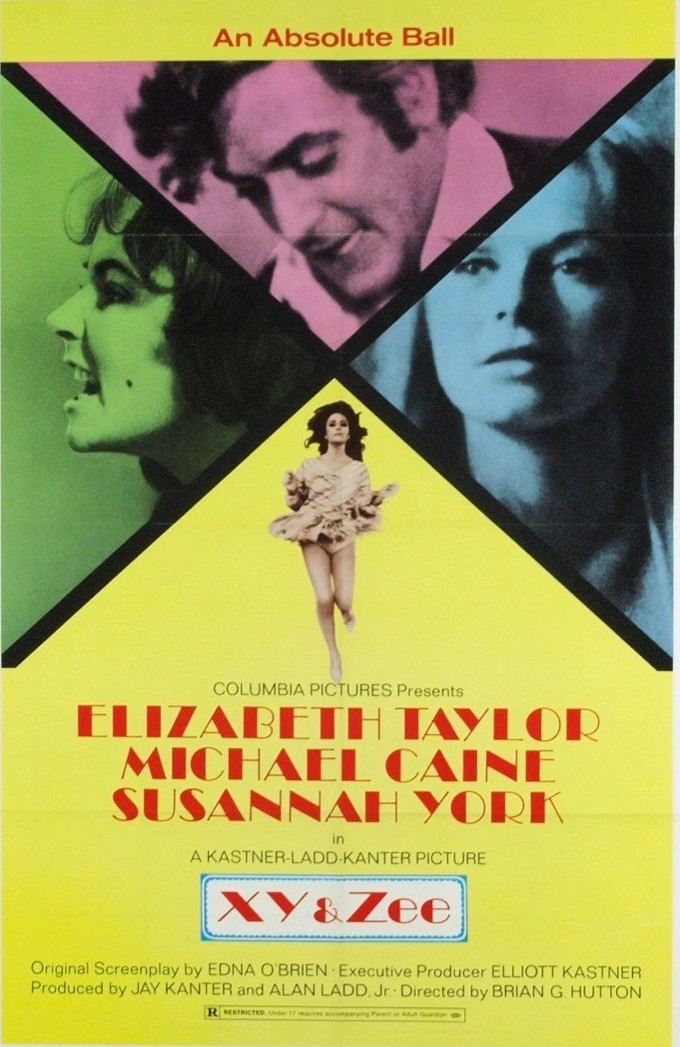
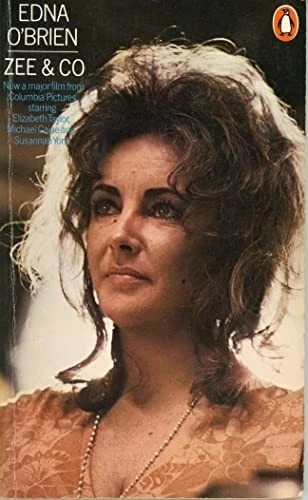
Zee & Co / X Y & Zee (1972) ****

I’ve seen Elizabeth Tayor glide along the floor, I’ve seen her stomp and stamp, I’ve seen her bellow and hiss, but, except at the outset of her career, I’ve never seen her indulge in anything vaguely athletic. So it’s a bold opening here to witness the actress playing table tennis with some venom, virtually dancing from one foot to the other, bouncing in triumph when she wins. Who the heck is this reincarnation?

The movie’s acquired a different dimension since original release, a pathos that emphasizes the actress’s vulnerability. In the 1960s she was considered the most beautiful woman in the world yet she married a man who had a wandering eye. She would accompany him to film sets so she could keep an eye on him and keep other women at a distance. Can you imagine the impact on her psychological make-up to know that she was not enough for handsome charismatic husband Richard Burton?

That’s much the same situation the childless Zee (Elizabeth Taylor) finds herself in, married to handsome wealthy architect Robert (Michael Caine) who acquires other women art the drop of a hat. He’s got three on the go here. When she arouses him, he still enjoys passionate sex with his wife, he has a thing going with his secretary and he home in on widowed mother-of-to Stella (Susannah York). He encourages the idea of an open marriage. Though it’s unclear how much she actually indulges, she’s capable of stimulating his jealousy through her imaginative tales of seduction.

While he’s sleek and slim, she’s showing the signs of wear, plastered in make-up and desperate to fit into dresses at least a size too small.

While this doesn’t enter the no-holds-barred marital hell of Who’s Afraid of Virginia Woolf, it’s mostly ugly. He’s a chauvinist pig, a bully, given to tantrums. While, verbally, she can give as good as him, she’s mostly kept dangling on a string, spending “his money” her only satisfaction, and although they live the good life of fancy house, parties and expensive restaurants, the only reason they are not divorced is it would be an inconvenience.

Clearly, his usual targets are “ladies of leisure” but Stella runs her own design business. Robert has the instincts of all predators, targeting the needy. However, Stella is different, appearing to offer the serenity missing from his life. Where he started looking for just another fling, he finds himself falling in love. It’s not entirely clear whether he intends to split form his wife or is merely setting up Stella in an apartment, but he buys and flat and they decorate it, though there’s no sign of her to boys living there.

Zee is accustomed to sabotaging his wanderings. She knows how to hit him where it hurts. She manages to trace him when he’s off enjoying a dirty weekend and fires him up by telling she’s crashed his beloved Rolls-Royce – whether she has or not is unclear, but it does the trick of spoiling his weekend.

And she’s got her own antenna, seeking out the weakness in the mistress whom she befriends well enough so that Stella confesses her dark secret. These days, that would take on a completely different complexion, and would be dealt with in a more sympathetic dramatic fashion. Stella was expelled for falling in love with a nun at her school, so clearly the victim of grooming. Zee exploits this, seducing the younger woman, ensuring Robert knows the secret, destroying his plans for a more idyllic future.

So on the one hand director Brian G. Hutton, moving away from his action comfort zone of Where Eagles Dare (1968) and Kelly’s Heroes (1970), has fashioned on of those crisp double-edged marital dramas where each partner strives for dominance but on the other has created a highly sympathetic portrait of men and women trying to offset their own frailties.

If you’ve only seen Michael Caine employ that steely-eyed mean street for a succession of tough good guys and villains as exemplified by The Italian Job (1969) and Get Carter (1971) you’re in for a treat. This is Caine’s fury in full force, though that is undercut by charm and vulnerability. But it’s Elizabeth Taylor (Butterfield 8, 1960) who has the more rounded character, seductive, mothering, calculating, equally vulnerable. Susannah York (The Killing of Sister George, 1969) has an equally challenging role, maintaining a calm and carefree exterior while seething underneath with desires she dare not admit.

In other hands, this could easily be handled in an exploitational manner, a love triangle, plenty sex with hints of domination, and lesbianism. But Hutton resists the temptation and it takes some time before we less in Who’s Afraid of Virginia Woolf territory than something like The Housemaid where the downtrodden individual turns out to hold the ace.

Written by Edna O’Brien (Three into Two Won’t Go, 1969) from her own novel, the screenplay is stagey at times, but the force of the screen personalities involved makes that irrelevant.  

I caught it on Talking Pictures TV and it’ll be repeated there soon.

Thoughtful, stylish, scabrous and intriguing.

Behind the Scenes: The Trade Magazines in the 1960s – Part Two – “Box Office”

Where the weekly Variety devoted maybe a quarter of its pages in the 1960s to the film industry, the weekly U.S. trade magazine Box Office (it didn’t also run a daily) wrote about nothing but. And not just what we term the “film business” – the making and marketing of films – but also the business of running a cinema with all the detail that entails.

In 1920, aged just 18, Ben Shlyen founded The Reel Journal in Kansas City and changed the title in 1933 to Box Office. Where the front cover of Variety showed you how diverse it was going to be, the front cover of Box Office revealed that it had only one focus. Its covers didn’t feature industry news. Instead it was devoted to significant figures on the exhibition side or to photos of new cinemas or a still from a new film. It operated nine regional offices and one section of the magazine was changed every week to incorporate news from each of those regions.

First page of the 4-page bound insert for “Thoroughly Modern Millie.”

Rather than its news pages driving the industry, it was its editorials. It took a stance on anything affecting the business, censorship, product shortages, exhibitor initiatives, studio flaws and new technological developments.

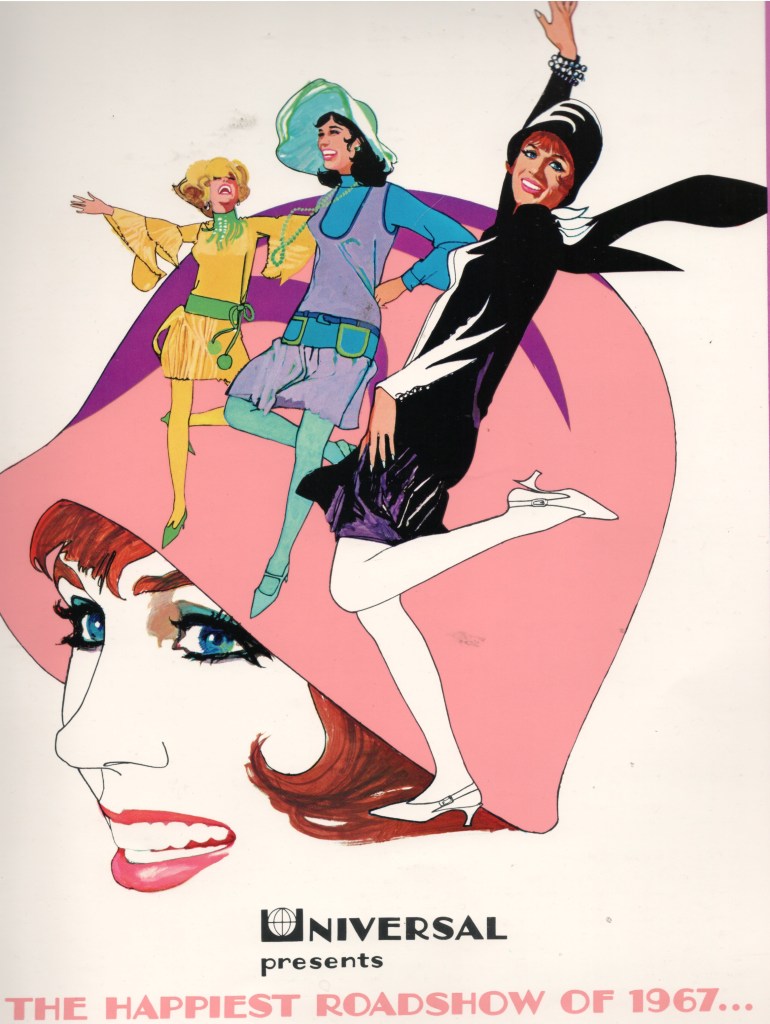
It had two distinct advantages over Variety in that it was printed on glossy paper and could incorporate full-color inserts which were generally printed on even heavier stock and glossier paper. Sometimes the easiest way for a smaller distributor to get their message across to the exhibitor was to stick a complete Pressbook/Campaign Manual in the middle of an issue – the issue of March 3, 1967 contained 16-page full-color Pressbook for The Devil’s 8 complete with double-page ad.

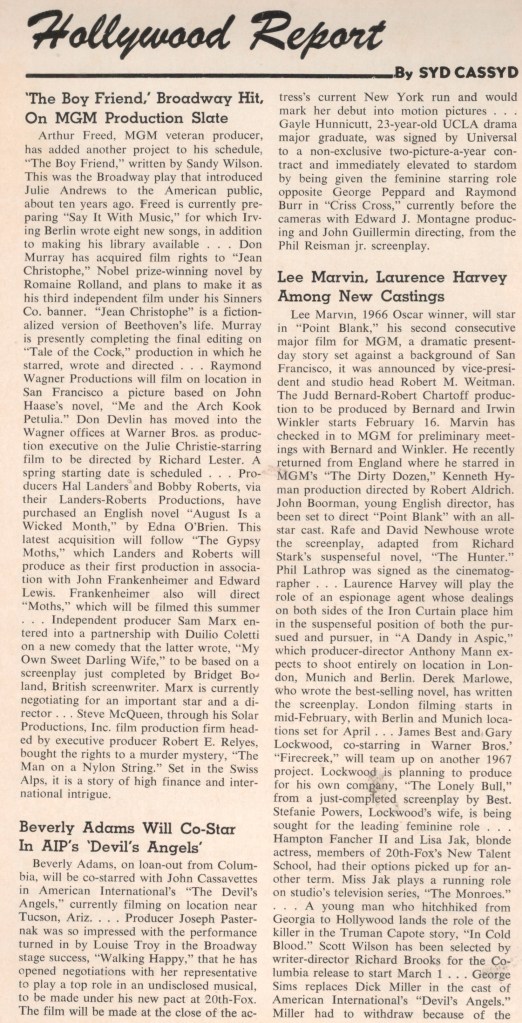
Box Office was divided into several sections. News came, of course, at the start but as much as it contained information on new movies and studio goings-on, it might also report on a new pension plan for cinema managers or sales taxes or investment in new cinemas (a record $120 million went into new construction in 1967). A page called “Hollywood Report” updated readers on new films and casting.

The regional section would comprise as much as eight or twelve pages. The section known as “C” for example had columns devoted to Kansas City and Chicago with other articles reporting on Denver, Omaha, Massachusetts and so on.

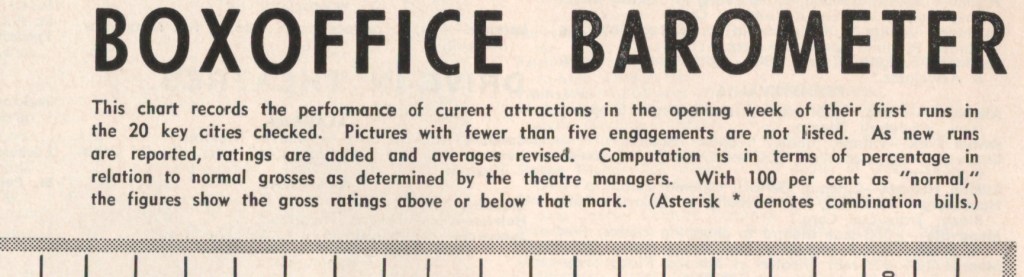
The magazine took a markedly different approach to reporting box office than Variety. Instead of concentrating on gross, the magazine ran a “Boxoffice Barometer” which showed how movies performed in relation to a cinema’s weekly average. This was done in terms of percentages. With the figure of 100 being the norm, After the Fox, for example, was rated as 450 in Cincinnati but only 90 in San Francisco. This helped exhibitors in various towns work out which result most reflected their business.

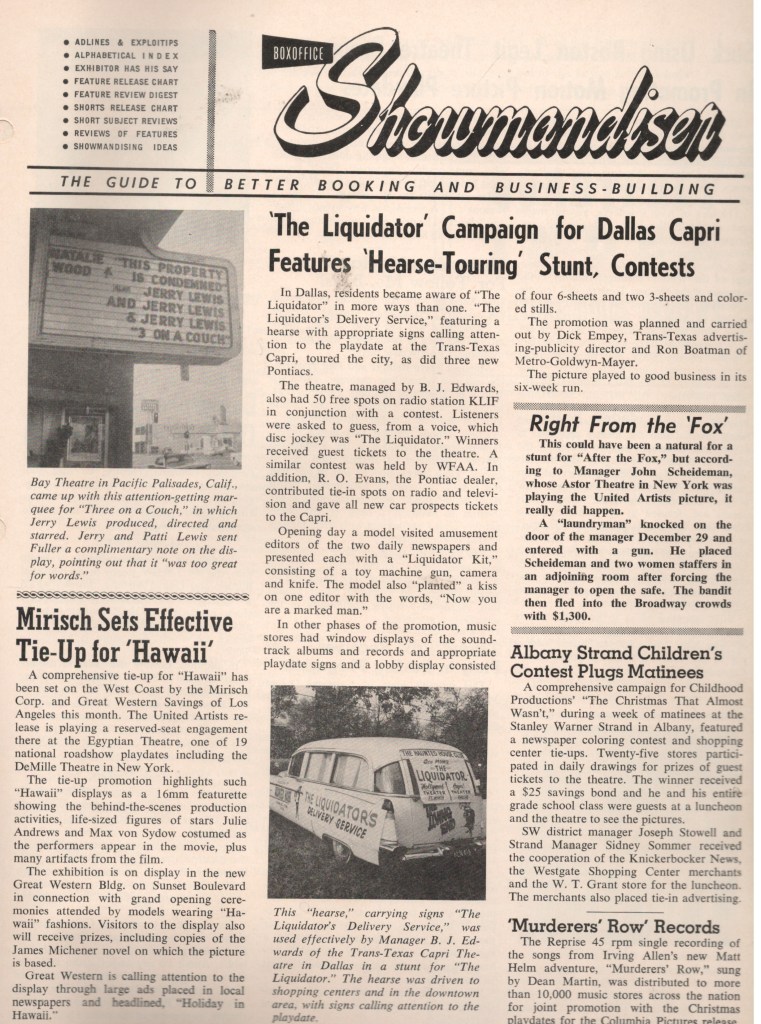
Another important section was “Showmanship” which celebrated the marketing ideas and stunts dreamed up by exhibitors and studios. These often featured window displays in stores, special marquees or lobbies and tie-ins with media or radio. Its review pages also carried hints on marketing. And there was a weekly chart showing all the films currently available from all studios, major and minor. And once a fortnight exhibitors could let rip over the quality and/or success/failure of films in its “Exhibitor Has His Say” feature.

But it also focused on the nuts and bolts of running a cinema in its “The Modern Theatre” section. This might include articles on new cinemas or major refurbishments; provide tips for projectionists on depth of focus and how to oil projectors; come up with new ideas on concession sales or how to make bigger profits from popcorn; how to plan a drive-in theatre, how new income tax rules could affect your business; and information of the latest pieces of equipment.

Box Office magazine wasn’t as readily available to laymen such as myself. I don’t recall it being available in newsagents in central London. I’m not sure if at that point in its development it was interested in the foreign market. So I was first introduced to the magazine from buying various issues on memorabilia auction sites.

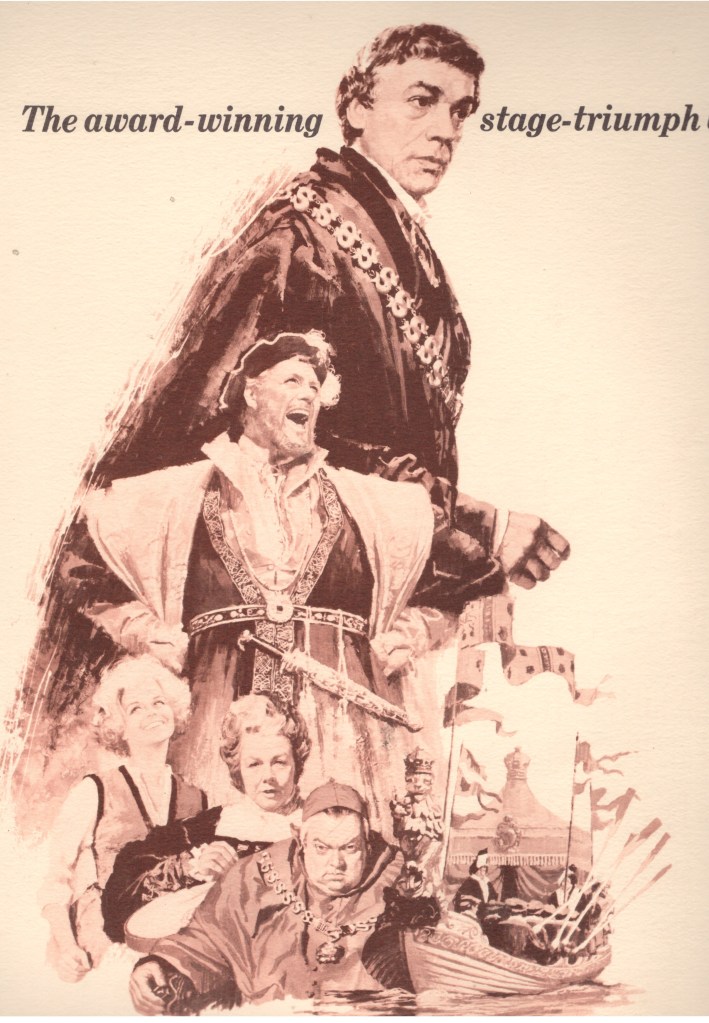
Second page of a 4-page bound insert for “A Man for All Seasons.”

It was the bound inserts that had me hooked. Where posters in the 1960s were printed on paper and Pressbooks were printed on glossier stock, the inserts were phenomenal and unique. You wouldn’t find these appearing in a normal ad campaign in ordinary newspapers. While mostly they were four pages long, I have some in my collection that top 16 pages.

There were two bound inserts in the issue of January 16, 1967. The first for Thoroughly Modern Millie was at least 400 gsm – four times the thickness of ordinary copier paper – full color and glossy as all get out. This was clearly specifically designed for the magazine and promoted the movie’s world premiere on March 22 at the Criterion in New York.

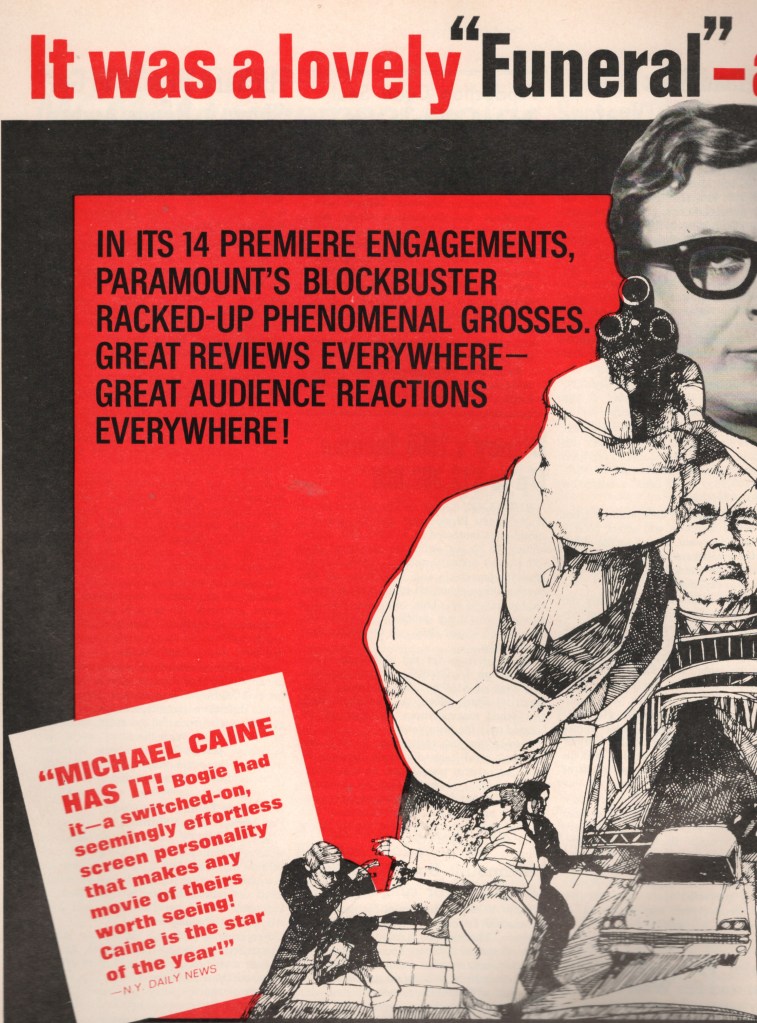
First page of a double-page spread using spot colour.

The other was for A Man for All Seasons, also four pages and also in full color. While the paper stock was as heavy, the design was more stylish, printed on card, the kind you used to get on businesses that wanted to impress you with the quality of their stationery. Pre-dating that year’s Oscars, the advert promoted the film being awarded the New York Film Critics Award and that the film  was playing “exclusive reserved seat engagements” in New York, Los Angeles and Toronto.

Most ordinary adverts were in black-and-white or spot color and often promoted movies you or I have never heard of but were doing good business somewhere. However, as if to demonstrate the overall quality of the product, it also carried a full-color advertisement for Kodak’s Eastman Color System with a photo that involved various shades of color in an intricate format.

Because of the inserts I have more cherished copies of this magazine than I do of Variety.

It is still going today as Box Office Pro.

Behind the Scenes: The Trade Magazines in the 1960s – Part One – “Variety”

Perhaps the most famous logo in the history of newspapers. Unusually, I had a very slight connection to the magazine. When I was a journalist I worked for Reed Business Publishing which took over Variety in 1987 through its U.S. subsidiary Cahners and much later a colleague of mine Neil Stiles took over as publisher. When I lived in London, I’d make a detour on the way home once a week to pick up a copy of the weekly edition from a newsagent in Charing Cross Road or failing that in Old Compton St. So I’ve been familiar with the magazine for around 40 years. A decade or so back when I was a bit flush I treated myself to an annual subscription to its archive and trawled all the way back to its beginnings in 1905. Anyone who’s read any of my books will see how often I use the magazine for reference.

Obviously, movies weren’t on the editorial agenda when Sime Silverman founded the publication – the iconic logo hasn’t changed much in a century. As the title said, it covered everything within the entertainment industry and when movies grew in importance they acquired their own section with its own front page inside.

The strapline above the logo shows just how wide a market “Variety” tapped into.

From the outset, Variety targeted those actively involved in the business and as the movie section expanded that meant movie executives, financiers, actors and directors. I’ve no idea how Silverman managed to persuade stage theatres to allow him to publish their weekly takes, but when that included cinemas, the idea of box office as news was born.

Generations of film scholars were grateful for a magazine that focused on the bottom line of the rentals rather than the glossier grossses which tended to be misleading in terms of profit.

Initially it was a weekly magazine, but then set up a smaller daily magazine headquartered in Hollywood which primarily reported on movie news. The two eventually ran side by the side, the weekly being the one that ended up at my London newsagent.

Variety was exceptionally unusual for a magazine in that it invented its own language known as “slanguage.” For example, “boffo” and “whammo” related to box office (often truncated to B.O.) that was on the big side; when someone was fired or quit a job they “ankled;” while “Cincinnati” was reduced to “Cincy.” “Hix” would “nix” the “pix” meaning people in the countryside didn’t go much for whatever movies had turned up locally. Projects were “greenlit.” A “hardtop” was an indoor movie theater while an “ozoner” referred to a drive-in. If you “inked a deal” it meant you signed up for something.

Articles tended to be long and sometimes ran over to another page.

It wasn’t very much bothered with the exhibitor side of the business though it was initially most useful to that sector for not just reviewing every picture released but passing judgement on its box office prospects. This saved cinemas, which might require eight or ten movies in a given week, from having to spend so much time in a screening theatre.

But it was very catholic in its coverage. If you look just above the logo on the front page I’ve reproduced from 1967 you’ll notice it sets out quite a substantial stall of interest – films, video (in those days that meant television not VHS), TV films (as opposed to movies made for the cinema), radio, music and stage. So, virtually, the entire field of entertainment. It also had a healthy section on books.

And it made a point of not favoring one particular element of the business. So on its front page, you’d find stories on each of the sectors it covered. However, by the 1960s, the front section of the magazine was devoted to movies and Variety was delighted to trumpet box office figures in news stories rather than just leaving it to the studios to highlight through adverts. Except that the magazine was exceptionally large in terms of page size, it wasn’t a great advertising vehicle. There was no color available unlike some of its competitors. The printing was more grainy than glossy.

However, it did become the market leader in box office figures. In the 1960s it published the weekly box office returns for hundreds of cinemas in the largest cities in the country, adding its own editorial comments on the performances of various films. (This also allowed cinemas further down the food chain to temper or raise expectations).Its headlines in this section often generated excitement, the oxygen any industry needed. When the blockbuster business began in the 1970s it was Variety that led the way in box office reporting, causing other mainstream media to follow suit.

And it was via Variety that studios started pitching their movies for Oscars, taking out advert after advert proclaiming the glories of a particular movie, triggering the marketing tsunami that occurs now in the run-up to the ceremony.

Weekly box was registered as gross, i.e. what the movie took in at each cinema. But Variety had another trump card to play. Once a year, it contacted the studios to ask them to provide not the cumulative gross for each release but the rental, i.e. the amount of dough returned to the studio after the cinema had taken its cut. That provided a more realistic basis for assessing how movies had actually performed in relation to their budgets.

And reporting in general was not PR-driven. Variety was as likely to lambast the industry or its stars for under-performing as much as for setting box office records. It reported on downturns as much as upturns. It saw in advance when and where trouble was looming. You got the impression that the journalists understood the business rather than writing about it as star-struck hacks.

In future years, when Variety became an intrinsic part of the Cannes Film Festival, its issue devoted to that event could top 300 pages, a good chunk of it filled with adverts from smaller companies promoting films seeking a distributor or punting films that had yet to be made. Often, these ads were nothing more than bait-and-switch, promising pictures with bankable stars that were little more than dreams in the imagination of a minor executive.

But the magazine had one significant flaw. In effect, entirely unintentionally because I said it stated it content plans upfront, it was pulling a fast one. When you picked up your copy, it felt like you were in for a hefty read. The weekly edition could often span 100 pages. But if you were in the film industry less than a quarter of the content would be relevant to you, the rest was devoted to the other areas shown on the masthead.

The magazine is still in business today although with the online element more prominent.

Death Rides A Horse (1967/1969) ****

Although Once Upon a Time in the West (1969) is my all-time favorite western and although the first X-certificate movie I sneaked into as a teenager was The Good, the Bad and the Ugly (1966/1968), I never had much interest in spaghetti westerns. For a start, by the time I started my serious cinemagoing – bear in mind I grew up in towns without picture houses – the spaghetti western sub-genre was long gone.

So I was surprised to find how stylish and intriguing this little number was. People had odd ideas about style: they think it’s about capturing a vista at sunset or the way a director moves the camera or some effect gained from the cinematography. But there are other, as important, aspects. And two, perhaps the smallest of the effective ingredients, are on show here.

The first comes with the opening shot. Some cowboys are braving torrential rain. Now movie rain doesn’t behave the same way as real rain. It’s directed and its force depends on something else beyond nature. It’s too consistent in the way that real rain isn’t. So to convince us that these dudes are enduring a storm, director Giulio Petroni has set up on the very edge of the screen a lamp that moves, twisting one way and the other as the wind shifts direction, flaring up and flickering down depending on the position it holds. That little thing was what it took to convince me this was a storm.

The second thing was the editing. Again, critics intend to focus on some unusual aspect. Fast-cutting, for example, as in The Wild Bunch (1969) or cutting between a match and a sunrise (Lawrence of Arabia, 1962)) or from one pillow to another in separate households (Zee & Co, X Y & Zee, 1972). But actually the biggest benefit of good editing is to keep the story moving and not waste time

So here we cut from our blue-eyed anti-hero Bill (John Philip Law) being told to meet a bad guy in his office. Next thing, Bill is entering a darkened room. Automatically, you think this is a trap, that he’s going into villainous saloon owner Cavanaugh’s (Anthony Dawson) office. Instead, he confronts the other anti-hero, criminal Ryan (Lee Van Cleef), just released from prison after 15 years. And without any dialog to otherwise explain the situation, we understand immediately from previous interaction that Bill has been hired by the bad guy to kill Ryan.

There’s countless examples of this kind of editing where action sets the tone rather than dialog, although in the latter regard some of the lines are filled with edge.

Bill and Ryan really should be working as a team. They both want revenge on the same gang of outlaws, Bill because, as a child, he witnessed the gang murder his family and rape his mother and sister, and Ryan because he was fitted up for the robbery the gang committed. But both want the sole satisfaction of carrying out the revenge.

Ryan is something of a mentor to the greenhorn, a skilled gunslinger without the smarts necessary to hold his own. Ryan constantly shows Bill how much he still has to learn about looking after himself and the teaching comes with sharp consequence, Bill left horseless on two occasions and having to tramp miles into the nearest town.

So they get in each other’s way. Bill kills Cavanaugh without realizing that the only reason the businessman is still alive is that Ryan wants reparation from him of $15,000 – $1,000 for each of the years he spent in prison. And now he saddles Bill with that debt.

Ryan knows exactly who he’s hunting down but Bill has to do it the hard way, following a series of clues, personal elements of the masked guys who slaughtered his family, someone who wears distinctive spurs, another with a tattoo on his chest and so on.

This proves a particularly good twist on the older guy-younger guy narrative device so often used in Hollywood. The rivalry rarely cools, Bill taking simple revenge on Ryan at any opportunity.

Eventually, they do agree to work together after Bill works out that Ryan was one of the gang, except that the older man arrived too late to take part in the massacre but just in time to save Bill from being consumed by a raging fire.

The last twist is saved for the climax.

United Artists waited until Sergio Leone’s “Dollars” trilogy had opened the box office doors in America before pushing this out in 1969 (hence the odd dating). Lee Van Cleeef essays a more considered version of his Man in Black persona from For a few Dollars More (1965/1967). John Philip Law (Barbarella, 1969) would never work out, unlike George Peppard, say, that the intensity of his gaze and the blueness of his eyes distracted from his acting.

Put me in mind to check out some of the other spaghetti westerns directed by Guilio Petroni such as A Sky Full of Stars for a Roof (1968). Written by Luciano Vincenzoni (The Good, the Bad and the Ugly).

Well worth a look.

The List of Adrian Messenger (1963) ***

The gimmick of stars in disguise isn’t enough to spark this routine whodunit and the extended sequences of fox-hunting might deter the contemporary viewer but oddly enough something else of considerable interest is going on and enough to keep you hooked.

Given it’s an actor’s screen persona that tempts you to their movies, how are you going to respond when that’s gone AWOL? Actually, you get a more intriguing performance. Covered in slabs of make-up Kirk Douglas makes out like a latter-day Alec Guinness or Peter Sellers, essaying a number of quite different characters. So the jutting chin, the fierce eyes and the aggressive tone are all gone and in its place he shows he can act. His vicar is especially appealing.

But the same holds true of George C. Scott even though he’s not in disguise. Director John Huston, much as he did with his trio of star names in The Misfits (1961), gets Scott to tone down his screen idiosyncrasies. So the growl is tempered, the flaring eyebrows in cold storage for much of the time, and his jutting chin and aggression set to one side as he depicts a different character to his usual.

The Academy usually hands out Oscars to people who over-act or have some affliction to overcome, and they seem to wilfully ignore it when actors show how well they can act outside their comfort zone.

The story is the usual combination of clever deduction, red herrings and set pieces. Former spy Anthony Gethryn (George C. Scott) is hired by the titular character (John Merivale) to find out if a bunch of people on his list are still alive. Messenger himself is soon bumped off in a plane explosion but not before he leaves a garbled clue with sole survivor of the sabotage Raoul Le Borg (Jacques Roux). Gethryn soon discovers everyone on the list is dead. This may have something to do with the Second World War or it may be that the killer wants to cover up something now before potential scandal can ruin a promising future.

Meanwhile, the killer keeps bumping people off. And just to keep Gethryn from getting distracted by possible romance by Lady Bruttenholm (Dana Wynter) Le Borg pounces on her.

By this point the director was pursuing his dreams of becoming landed gentry with a stately home in Ireland and very keen on all the trimmings including fox-hunting which probably accounts for the length of time accorded the sport.

Kirk Douglas, who’s company produced the picture, thought – either to fire up public interest or to help along a fairly straightforward tale – he would ask a few of his movie star buddies to bury themselves in make-up and play bit parts. Whether audiences spent all their time when they should have been concentrating on Gethryn’s detection on carrying out their own sleuthing trying to detect which of the supporting characters might actually be Tony Curtis, Frank Sinatra, Robert Mitchum or Burt Lancaster is anybody’s guess. It does have to be pointed out that some of the make-up is unconvincing, some faces looking as though they’ve come out of a box.

Despite all this, I enjoyed seeing George C. Scott (Patton, 1970) and Kirk Douglas (Cast a Giant Shadow, 1966) playing decidedly against type and showing how easy it is to act if you’re not always having to adopt a screen persona.

John Huston looks as if he’s having a ball. Written by Anthony Veiller (Night of the Iguana, 1964) and Alec Coppel (Vertigo, 1958) from the book by Philip MacDonald.

A watchable curiosity.

Behind the Scenes: Box Office Report, London March 2 1968

It’s impossible to imagine these days the impact of the roadshow. Yes, we’ve got Imax and the premium pricing that goes with it, and yes advance bookings can be awesome – witness Oppenheimer (2023) and the upcoming Dune: Part Three which has sold out signs up eight months in advance. But by 1960s standards these – in terms of length of run – couldn’t hold a candle to roadshow.

Take this week in London’s West End  – The Sound of Music at the 1,712-seat Dominion cinema was coming up for its third full year (152 weeks and counting). David Lean’s Doctor Zhivago at the 1330-seat Empire was “rock steady” at £7,781 in its 95th week. Because few people were just turning up on the off chance at the door, box office, thanks to advance booking, tended to hold steady.

Fred Zinnemann’s Oscar-winning A Man for All Seasons reported a “substantial gain” in its 45th week to £4,754 at the 600-seat Odeon Haymarket; musical Camelot starring Richard Harris and Vanessa Redgrave in its 14th week at the 1,565-seat Warner increased to £6,904 over the previous week and British crooner Tommy Steele in musical Half a Sixpence went up to a “smash” £10,434 in its ninth outing at the 1,350 Astoria. Julie Andrews as Thoroughly Modern Millie at the 735-seat Odeon St Martin’s Lane was also on the up – to £6,675 in the 19th week and Julie Christie in Far From the Madding Crowd “advanced” to £4,984 at the 1,394 Metropole.  Holding steady were Robert Shaw as Custer of the West, presented at the 1,127 Casino Cinerama, racking up a total of £6,561, and Joseph Strick’s controversial censor-baiting Ulysses with £1,991 in its 38th week at the 556-seat Academy arthouse .

These days new films expect to show a steady or marked decrease after opening, so the idea of movies improving their box office late in a run might come as a surprise to seasoned observers.

Arthouses often enjoyed long runs. The double bill of Claude Lelouche’s Oscar-winner (Best Foreign Film) A Man and a Woman and Agnes Varda’s Le Bonheur at the 544-seat Berkely was in its 32nd week. Luis Bunuel’s Belle de Jour at the 546-seat Curzon registered its 15th week. Sexploitation also tended to do well at the smaller West End houses – 15th week for Massacre for an Orgy at the 252-seat Cameo Moulin, 11th for Seventeen/Sex Quartet at the 486-seat Continentale, ninth for Her Private Hell at the 399-seat Cameo Royal.

Among the non-roadshow pictures Spencer Tracy-Katharine Hepburn-Sidney Poitier drama Guess Who’s Coming to Dinner was “having a great run” at the 1,750-seat Leicester Sq Theatre with £8,734 in the third week. At the same stage of its run Paul Newman World War Two comedy The Secret War of Harry Frigg was not faring so well at the 1,994-seat Odeon Leicester Sq, “drifting” to £5,856. Lee Marvin in John Boorman’s existential thriller Point Blank had another good week – its ninth – with £1,615 at the 412-seat Ritz while Rod Taylor heading up The Mercenaries “eased” to £5,920 at the 1,186-seat Pavilion.

In its second week surfing bonanza Endless Summer “continued to shine with a handsome” £1,868 at the 660-seat Cameo Victoria while Disney’s The Jungle Book, after 14 weeks, continued to climb to £2,850 at the 556-seat Studio One. While Up the Junction with Suzy Kendall “continued to make a weighty return” with £3,433 in its fourth week at the 595-seat Rialto, Carol White as Poor Cow “moved lower” to £1,217 in its seventh week at the 414-seat Prince Charles. George Peppard as The New Face in Hell enjoyed a “very good” £3,414 in its first four days at the 1,159-seat Carlton.

In the London suburbs both Rank and ABC operated a two-tier general release system with films opening one week in North London and the next week in South London. In the north, ABC reported that Bette Davis chiller The Anniversary had “figures in the upper bracket” while the double bill of espionage endeavor Assignment K with Stephen Boyd and Camilla Sparv teamed with Eli Wallach as The Tiger Makes Out were “just about average.” South of the river, Valley of the Dolls was in a “strong position” in Rank cinemas while Smashing Time with Rita Tushingham “homed in on the right side of par.”

However, the long-runners had an adverse effect on the release cycle. With some of the major roadshow houses out of commission thanks to very extensive and still profitable runs, newcomers often jockeyed for position. Disney musical The Happiest Millionaire starring Tommy Steele had to wait five months after its New York premiere to find a berth in London’s West End. Given it had opened at the biggest cinema in the whole of the USA, smashing records at the 6,000-seat Radio City Music Hall, it was something of a comedown to find the only cinema available was one of London West End’s smallest, the 600-seat Odeon Haymarket where it was scheduled to launch on April 4. Disney softened the blow by pointing out that Mary Poppins had enjoyed a successful run there.

Other new movies due out included David Niven demonic thriller Eye of the Devil opening at the Ritz on March 3 and Burt Lancaster in western The Scalphunters at the Pavilion two weeks later.

SOURCE: Bill Altria, “Box Office Business,” Kine Weekly, March 2, 1968, p10.

The Longest Day (1962) *****

When critics applauded the inspired use of a reaction shot via Omar Sharif to convey the horror of a massacre on the Mocow streets in Doctor Zhivago (1965), they omitted to mention that the technique had been used to similar stunning effect – and twice – in The Longest Day. The first comes when the camera cuts to Red Buttons dangling from a parachute down a building witnessing a massacre in the square below. The second, oddly enough, in virtually the same locale, when John Wayne arrives and views the aftermath.

Emotion was generally not considered a requisite of this epic war picture about the D-Day landings. The general consensus these days is that at best it’s a docudrama or at worst a star-a-minute mess with a dozen storylines vying for supremacy. In fact, it’s neither, but a surefooted and even-handed depiction of a complex battle, concentrating as much on the backroom staff as the soldiers in the line of fire.

Except for German complacency, the Allied forces would have faced fiercer opposition. The German troops had no air cover except for two planes and the Panzers had been pulled back in reserve. High-ranking officers had high-tailed it out of German HQ to enjoy a night on the town. Yes, the Germans expected the invasion to come from Calais rather than Normandy, but once their mistake became obvious, they did little to counter the attack, spending too much time arguing with each other and being too frightened to wake Hitler from his beauty sleep to trigger the tanks and planes.

Producer Darryl F. Zanuck covered his back by enrolling 40 stars for his venture. While most had varying marquee appeal, he had drawn on leading actors and actresses from countries other than Britain and the USA. And there was clearly a calculated decision to make audiences wait for the two major stars, John Wayne and Robert Mitchum, to put in an appearance. It’s a good 15 minutes before we spot Wayne, that time spent setting up the event from British, French, German and American perspectives.

Unusually for major stars, Wayne and Mitchum are not averse to carrying exposition, something generally left to the supporting cast, Wayne in particular spelling out the pitfalls of his particular parachute drop situation. Incidentally, two of the best sequences took a good less time to show – as later explained in feature-length detail in A Bridge Too Far – the dangers inherent in parachuting into enemy territory and trying to capture and hold vital bridges.

The picture could easily have been titled A Gamble Too Far because Zanuck was betting the future of Twentieth Century Fox, facing a financial burnout, on its box office outcome.

While covering the planning for the landings in sweeping terms, the movie concentrates on three major actions – Omaha Beach and the scaling of the impenetrable Pointe du Hoc featuring the Americans headed up by Brig General Norman Cota (Robert Mitchum), a British commando raid led by Major John Howard (Richard Todd) on the Pegasus Bridge and the parachute drop led by Lt Col Benjamin Vandervoort (John Wayne).   

By today’s standards the bloodletting is non-existent but the brutality of combat hits hard. Flight Officer David Campbell (Richard Burton) heads up the victims, knowing he is going to die but trying to keep up his spirits. French peasant Janine (Irina Demick) distracts German soldiers with her beauty. Lord Lovat (Peter Lawford) goes into battle accompanied by bagpipes and beachmaster Capt Maud (Kenneth More) tries to keep troops moving on the beach.. Comic interludes are provided by Private Flanagan (Sean Connery) and his buddy and German Sgt Kaffekanne (Gert Frobe).

Many of the commanders that would feature in later World War Two pictures –  Lt Gene Omar Bradley (Patton, 1970) and Brig General James Gavin and General Sir Bernard Montgomery (A Bridge Too Far, 1977), played respectively by Arthur Hill, Robert Ryan, and Trevor Reid. German General Rommel had already had his shot at Hollywood fame through The Desert Fox (1951) and Desert Rats (1953) and was the American nemesis in Patton.

Given the amount of rubbernecking by the audience, it’s worth noting the number of actor in small parts who eventually made good including Sean Connery (Dr No had just appeared by the time The Longest Day opened in the U.K.), Christian Marquand (The Corrupt Ones/The Peking Medallion, 1967), George Segal (Bridge at Remagen, 1969), Tom Tryon (The Cardinal, 1964) and Robert Wagner (Banning, 1967).

You could do an entire review just listing who played who. But in spreading the field and covering French and German activities alike Zanuck brings a wider understanding of the proceedings.

Five directors were involved and unlike most anthology pictures where individual styles clash, here everyone follows the same playbook. Ken Annakin (Battle of the Bulge, 1965), Andrew Marton (Africa, Texas Style, 1967), Gerd Oswald (Agent for H.A.R.M, 1966), Bernhard Wicki (The Visit, 1964) and Darryl F. Zanuck all took a turn at the helm.

While author Cornelius Ryan (A Bridge Too Far) was credited with the screenplay he received help in the shape of Frenchman Romain Gary (Birds in Peru, 1968) , American novelist James Jones who wrote From Here to Eternity, and British screenwriters  David Seddon and Jack Pursall (The Blue Max, 1966). Remains an awesome experience, one I’d just love to see in 70mm

Behind the Scenes: Coppola, Lucas, Speielberg, “The Last Kings of Hollywood”

There’s no connection between Robert Wise, Mike Nichols and David Lean, responsible for the three biggest  movies of the 1960s, respectively The Sound of Music (1965), The Graduate (1967) and Doctor Zhivago (1965). No ostensible link these days between uber directors James Cameron and Christopher Nolan. Yet the three directorial gods of the 1970s – makers of the three biggest films of that decade namely The Godfather (1972), Jaws (1975) and Star Wars (1977) – lived out of each other’s pockets for a considerable period, relied on each other for support, encouragement and even finance, and while aiming to create a new path for the independent director ended up inventing the blockbuster which, ironically, made directors even more dependent on studios.

Paul Fischer’s new book The Last Kings of Hollywood, The Battle for the Soul of American Cinema delves into the background that saw Francis Ford Coppola bankroll George Lucas and Steven Spielberg and George Lucas work together, examining the ruptures, fallouts and lingering resentments that fueled their incredible rise.

All three were the hot kids in the cinematic sense. Coppola and Lucas were held up to generations of film school students for what they had achieved in film school, Spielberg’s juvenile attempts at movie making were incredibly accomplished.

Coppola was “something of a legend” after studying at Hofstra University in New York, “he’d won awards for his directing and all but remodeled the college’s entire drama department after himself. At UCLA film school he’d made all the best films” and then skipped out without graduating to work on Roger Corman pictures, learning by work rather than by attending lectures. Lucas’s student film THX 1138 was hailed as the best student film ever made. As a sophomore in high school, Spielberg made his calling card, Firelight.

Coppola was the visionary entrepreneur, persuading Warner Brothers to cough up the best part of $7 million for the director to set up his own independent operation American Zoetrope in San Francisco, distant from the prying and interfering eyes of Hollywood. All he had to show for the dough for the feature film version of THX 1138 (1971), which was a flop.

At USC, Lucas befriended John Milius and encouraged him to adapt Joseph Conrad’s novel Heart of Darkness into a Vietnam film that became Apocalypse Now and originally was being written for Lucas to direct. Lucas and Coppola fell out when the latter took over the film, even after Lucas had made a deal with Columbia. Screenwriter Robert Towne watched four hours of dailies from The Godfather and not only told the beleaguered director “this is without question the best footage I’ve ever seen” but suggested the film needed another scene between Brando and Pacino, the one where the father tells the son “Barzini will move against you first.”

After American Graffiti (1973) was rejected by United Artists, Universal was interested but only if  Coppola lent his name to it. After The Godfather, Coppola could have afford to finance it himself – the budget was only $777,000. But his wife Eleanor didn’t like the script so he passed and lost out on a fortune. Harrison Ford, who legend says was making a living as a carpenter, was actually doing better dealing dope.

Coppola had an affair with his babysitter Melissa Matheson, who turned into a screenwriter though after the failure of The Black Stallion (1979) had given up until Spielberg approached her to write E.T. (1982), having rejected John Sayles original script except for two ideas, the tip of the alien’s finger glowing and the notion of the alien left behind.

Other figures like Martin Scorsese and Brian DePalma are brought into the compelling narrative that touches upon every major creative player of the era. Many of the gang were present for the first showing of Star Wars, in Lucas’s plush screening room – Spielberg, Milius, DePalma, Gloria Katz and Willard Huyck who’d written American Graffiti, Hal Barwood and Matthew Robbins who’d written The Sugarland Express (1974). Scorsese had an excuse not to attend perhaps out of fear of “hating the film and having to break George’s heart.” The communal response was not what Lucas expected.  

“The silence afterward made George uneasy.” DePalma was the most vocal, not just making fun of the movie but of its essential ingredients such as the concept of The Force and the stormtroopers. But his tirade did spur Lucas into introducing the film with the same kind of text that used to crawl up the screen at the start of a Flash Gordon episode. Spielberg was encouraging, but not in public, only after taking Lucas aside.

As well as the special effects making the film and conjuring up a script that worked, Star Wars triggered huge rows between Lucas and his wife Marcia over the editing. This is probably the first book about the making of the movies where time is spent on editing, and its importance to the finished film. “Marcia shaped scenes around the characters’ emotions…George, on the other hand, was motivated by a mixture of cerebral logic and a subject sense of rhythm.”

Fischer covers the making of every important film in the early careers of the trio plus Scorsese and DePalma and a few others in a way that’s totally absorbing by mixing together the behind-the-scenes information and technical aspects with gossip about their love lives, drug habits and creative development. We get Spielberg laughing out loud when he first hears John Williams’ idea for the score of Jaws, that Coppola hid his affair with Matheson for a decade, how Spielberg turned his original ideas for what eventually became E.T. into Poltergeist (1982), whose idea it was to add the climactic twist to Carrie (1976), how Kathleen Kennedy became a dominant producer in a misogynistic business, at the Oscars we see The Godfather producer Robert Evans and Coppola standing side by side “hating each other’s guts.”

While you may have read dozens of articles or books about all movies like The Godfather, Jaws, Taxi Driver (1976), Carrie, Star Wars and Apocalypse Now (1979), what they lack is context. These movies did not appear out of nowhere. As well as camaraderie there was creative rivalry, peer pressure and its partner peer acceptance. Although everyone made big bucks, money was never the driving force. Film was. They ate and slept movies and all they wanted to do was make another, better, one.

The only part of Fischer’s argument I disagree with is the notion that somehow these directors were bucking the system when, in fact, in displacing the old system they replaced it with a new one that didn’t necessarily mean a better one. The blockbuster, the idea of the summer “tent-pole” grew out of not just what profits these movies made but set up the concept of sequels – two for The Godfather, three for Jaws, four for Raiders of the Lost Ark, ten for Star Wars, not to mention side hustles like computer games and television series. While Lucas has cashed in his lucrative chips, Coppola and Spielberg are still making movies.

It’s a long time since I’ve enjoyed a book as much.

The Last Kings of Hollywood, The Battle for the Soul of American Cinema by Paul Fischer is out now, from Faber & Faber in the U.K. and Celador in the U.S.

The Violent Enemy (1967) ****

Surprisingly even-handed and thoughtful with more twists than The Housemaid. Rising star Tom Bell makes a bid to fill the spot in the British movie hierarchy vacated by Michael Caine who had gone to greater things while Susan Hampshire is trying to escape the screen persona foisted upon her by Walt Disney in such innocuous fare as The Fighting Prince of Donegal (1967). Australian director Don Sharp was hoping to add some gravitas to a portfolio that included The Face of Fu Manchu (1965) and Our Man in Marrakesh (1966). To some extent, all three achieve their aims.

Irish terrorist Sean Rogan, learning he has been refused parole and has another seven years of a 15-year sentence to serve, breaks out of jail, assisted by Hannah (Susan Hampshire), scion of an IRA legend. Twist number one, back in Ireland, Sean tells his boss Colum O’More (Ed Begley) that he’s going to go straight. Ireland having no extradition treaty with the United Kingdom for political prisoners he’s safe. Twist number two, Colum threatens to dump him over the border to Northern Ireland where he could be arrested.

O’More wants Sean, an explosives specialist, to blow up an electronics plant that services British armament factories and in doing so restore pride in a fading political force. Sean agrees to plan the job but not carry it out, leaving it to underling Austin (Jon Laurimore). Sean also, surprisingly, has scruples, wanting to limit the charge so that it doesn’t affect people living in caravans below the factory. Meanwhile, Inspector Sullivan (Philip O’Flynn) turns up with a killer piece of information. He tells Hannah, who’s grown sweet on Sean, that the escapee was deliberately misled – his parole had been granted. Hannah refuses to pass this along, her loyalty to the cause greater than her feelings for Sean.

As the deadline approaches for the sabotage, it becomes apparent Austin has a different project in mind. Instead of blowing up the plant he’s going to use the blackout caused by the dynamite to rob the factory, forcing Sean to come along so he can be rendered unconscious and take the fall.

The final twist is that Sean foils the robbers.

Apart from the sabotage and the heist there’s a lot to savor here. Old hands are deserting the cause to enjoy prosperity. The idea of ruining local livelihoods by terminating the plant is anathema to some. Many are just tired of fighting a war that’s not been won. Others, like Sean, believe they have done their bit and are entitled to peace and quiet.

Die-hards like Colum are easily duped by the unscrupulous – one of the best scenes the shock on his face when he realizes he’s been took and he lacks the authority to stop what might be deemed organizational malpractice – while Austin takes advantage of the money-making opportunity that supposed fealty to the cause creates. Hannah, too, has to change her attitude. Sean’s spent enough time in prison to appreciate what he’s lost.

There’s little remorse but equally there’s little tub-thumping and the movie largely steers clear of the political issues and sentimentality. There’s nothing glamorous or romantic in this Ireland, no glorious scenery, just dreich wet streets, and the flag isn’t tied to the mast but  employed to package the loot. The heist is well done and there’s an unusual climax. Possibly the most imaginative section is the flight after the initial escape with Sean disguised as a chauffeur driving a Rolls-Royce. It’s probably a plus point that nobody attempts an Irish accent that they’d mess up anyway.

Possibly because of the subject matter, the movie flopped. Neither Tom Bell nor Susan Hampshire ascended to the higher echelons though Don Sharp returned to Ireland for Hennessey (1975) and went on to direct Bear Island (1978). Written by Edmund Ward (Goodbye Gemini, 1970) from an early novel by Jack Higgins (The Eagle Has Landed, 1976 ) who both revisited the Troubles for Mike Hodges A Prayer for the Dying (1987) with Mickey Rourke.

In between the action beats plenty to mull over.

Discover WordPress

A daily selection of the best content published on WordPress, collected for you by humans who love to read.

The Atavist Magazine

by Brian Hannan

WordPress.com News

The latest news on WordPress.com and the WordPress community.