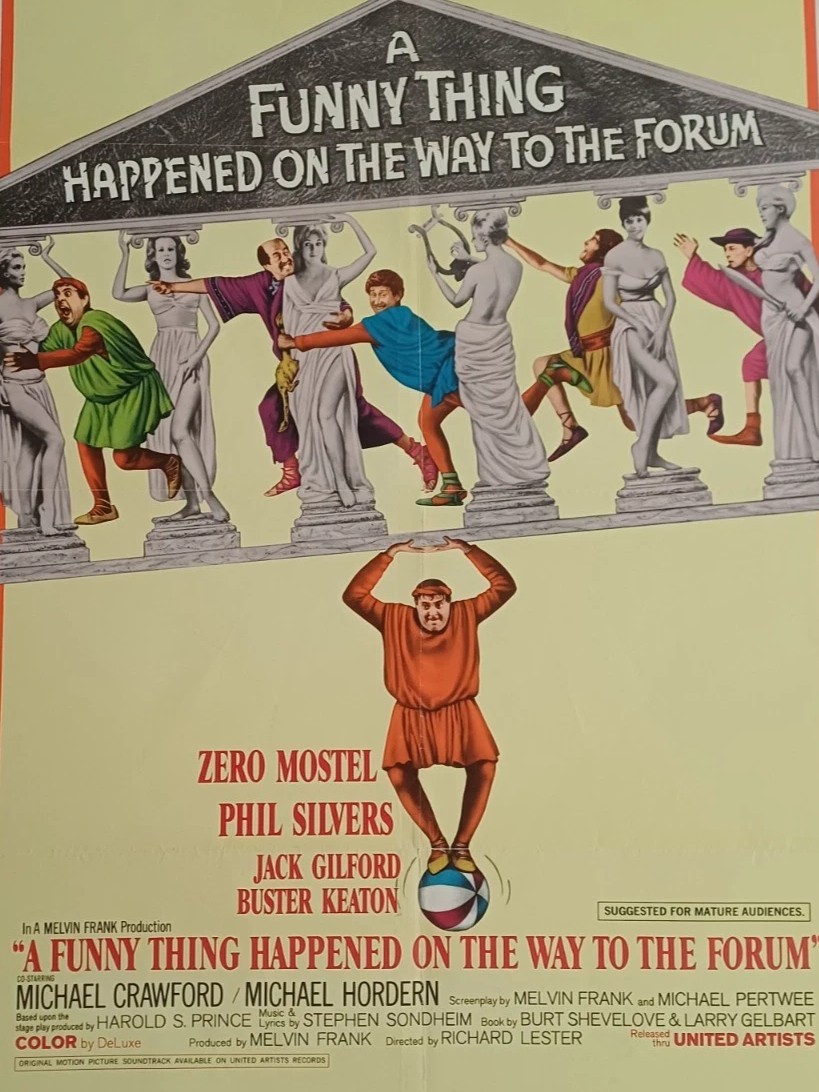
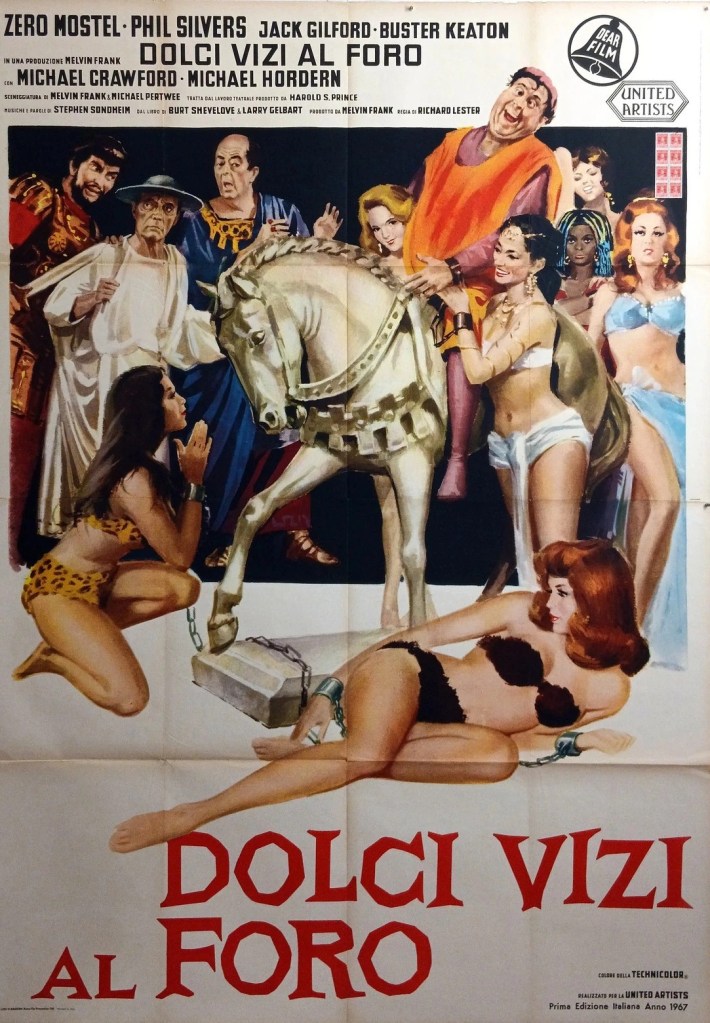
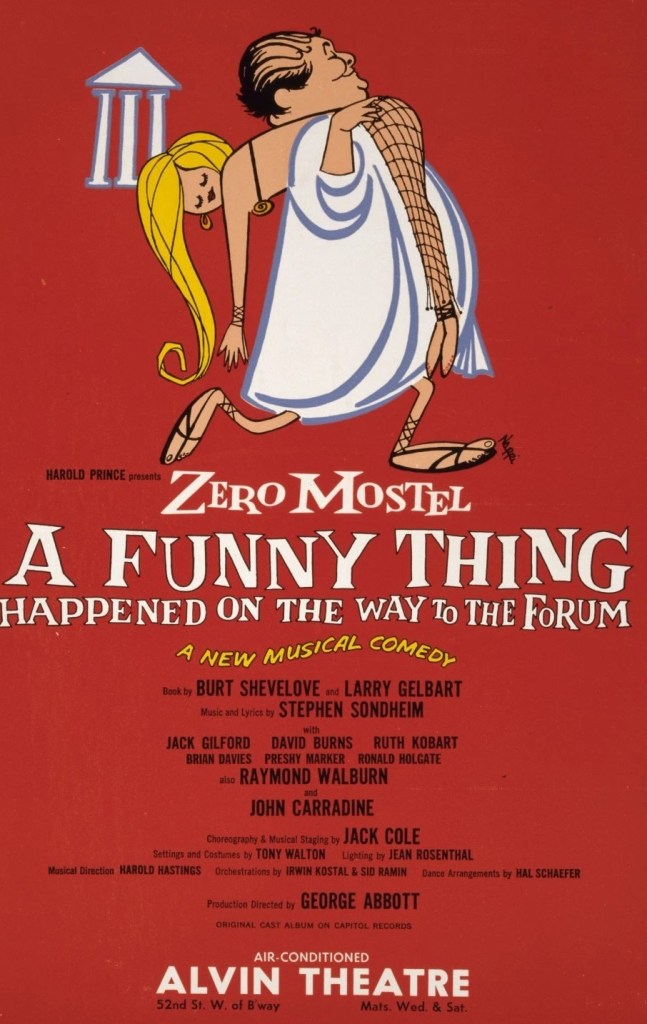
A Funny Thing Happened on the Way to the Forum (1966) ***

The funniest thing that happened on the way to turning this hit Broadway musical into a Hollywood movie was that composer Stephen Sondheim (Sweeney Todd, 2007), now denoted a legend, was considered such a poor marquee attraction that the producers cut half the songs of the original production, turning the result into more of a comedy with intermittent songs rather than a full-blown musical in the Rodgers and Hammerstein tradition.

Sondheim had an unusual theatrical development, starting out purely as a writer of lyrics – for West Side Story (filmed 1961) and Gypsy (filmed in 1964). He took on the dual roles of composer and lyricist for this one, which made its Broadway debut in 1962 and ran for three years.

You wouldn’t have Zero Mostel, a year before The Producers (1967), down as much of a marquee name either – he hadn’t appeared in a movie in 15 years, and then in only a bit part. But Broadway has its own method of producing stars and he had become a stage headline act and really there were few contenders for the role of a fat middle-aged Roman hustler.

Contemporary audiences will appreciate the actor breaking the fourth wall and talking directly to the audience, but while it was highly unusual at the time, it had the effect of putting the audience on his side. You might not associate Richard Lester (Petulia, 1968) with musicals but that would only be if you excluded A Hard Day’s Night (1964) and Help! (1965) from his portfolio, though admittedly those would hardly be classed as traditional song-and-dance efforts.

The picture was larded with other top comedic names, Phil Silvers of Sgt Bilko TV fame and legendary silent comic Buster Keaton. It didn’t hinder the movie’s prospects that with the phalanxes of nubile young women on show it might have been considered an audition for actresses aiming no higher than the sobriquet of Bond Babe.

What’s perhaps most unusual of all is that this is a sex farce, not a medium at which Hollywood was renowned. Screwball romantic comedy, yes, farce set in a brothel, no. Luckily, it delivers on all fronts. If you want a hint of what Sondheim could bring to the party, there are seven songs to choose from. If you reckon Zero Mostel provides a distinct brand of comedy you would be proved correct. If you were here for the cheesecake it was in abundance. And if you went looking for laffs there was no shortage, pratfalls included.

The story is slight, if complicated. Slave Pseudolus (Zero Mostel) wants his freedom, young swain Hero (Michael Crawford) wants to win the heart of Philia (Annette Andre). All sorts of obstacles get in the way. Since Philia, a virgin slave, has already been sold to a great warrior Gloriosus (Leon Greene), Pseudolus must convince him that the girl has been exposed to a deadly plague and must be hidden away. He is eventually distracted by an orgy and persuaded that the girl is dead. However, when Gloriosus determines to cut out her dead heart, she is suddenly very much alive.

In the tradition of Shakespearean comedy, there are oodles of mistaken identity and the while the narrative twists itself into various contortions to accommodate the sub-plots, naturally, it all ends happily, Philia turns out to be not a slave at all, and Pseudolus walks off with his freedom and Amazonian temptress Gymnasia (Inga Neilsen) to boot.

It’s all very good-natured fun, bordering on the licentious, but steering well clear of the meretricious and anything so off-putting as nudity or sex.

Having conquered Broadway, Zero Mostel now conquers Hollywood, doubling down on his fame next year with Mel Brook’s The Producers. Unlike The Devils (1971), any sign of campness is tamped down, helped along by serious players like Michael Hordern (Where Eagles Dare, 1968) taking their roles seriously. Phil Silvers and Buster Keaton keep the show on the road. Future British television and Broadway musical star Michael Crawford (The Jokers, 1967) shows his promise. In small parts you might spot Ingrid Pitt (Countess Dracula, 1971) and Jon Pertwee, the third Doctor Who.

I didn’t go away humming any of the songs, but they were pleasurable enough and for Sondheim lovers more than enough.

Director Richard Lester proves himself adept at this kind of comedy. Written by Melvin Frank (Buona Sera, Mrs Campbell, 1968) and Michael Pertwee (Make Mine Mink, 1960) from the Broadway production by Sondheim, Burt Shevelove (The Wrong Box, 1966) and Larry Gelbart (The Notorious Landlady, 1962) which took its impetus from the work of Roman writer Plautus.

Good fun.

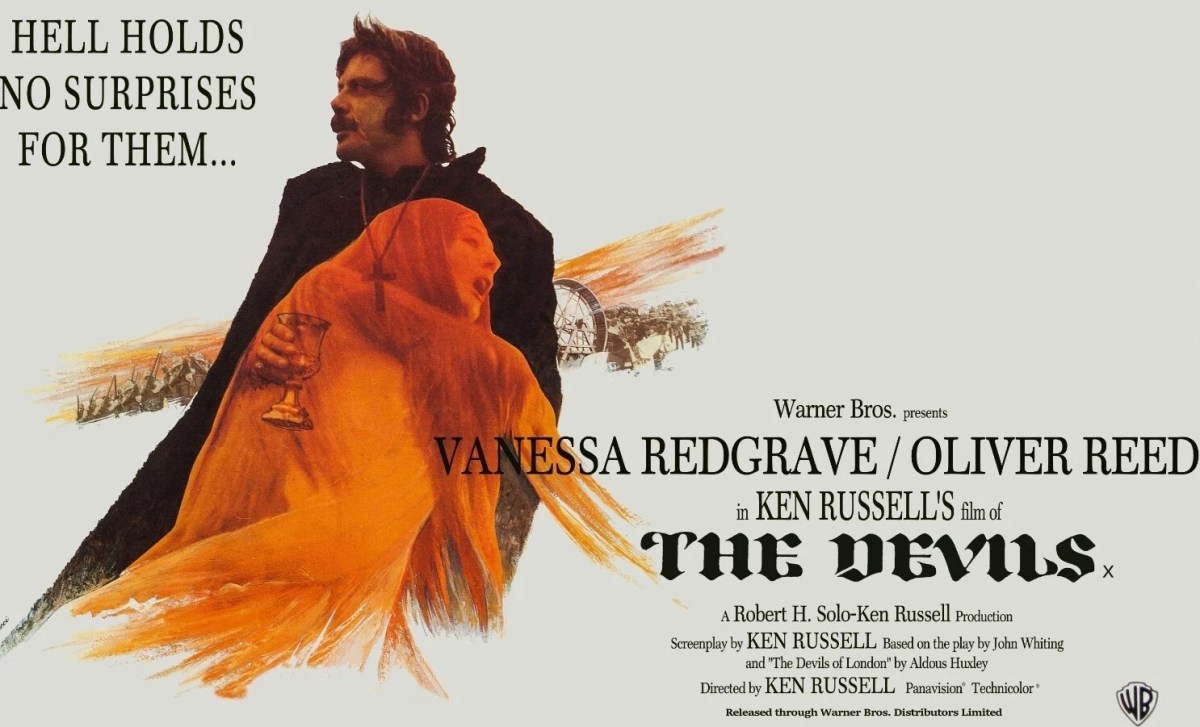
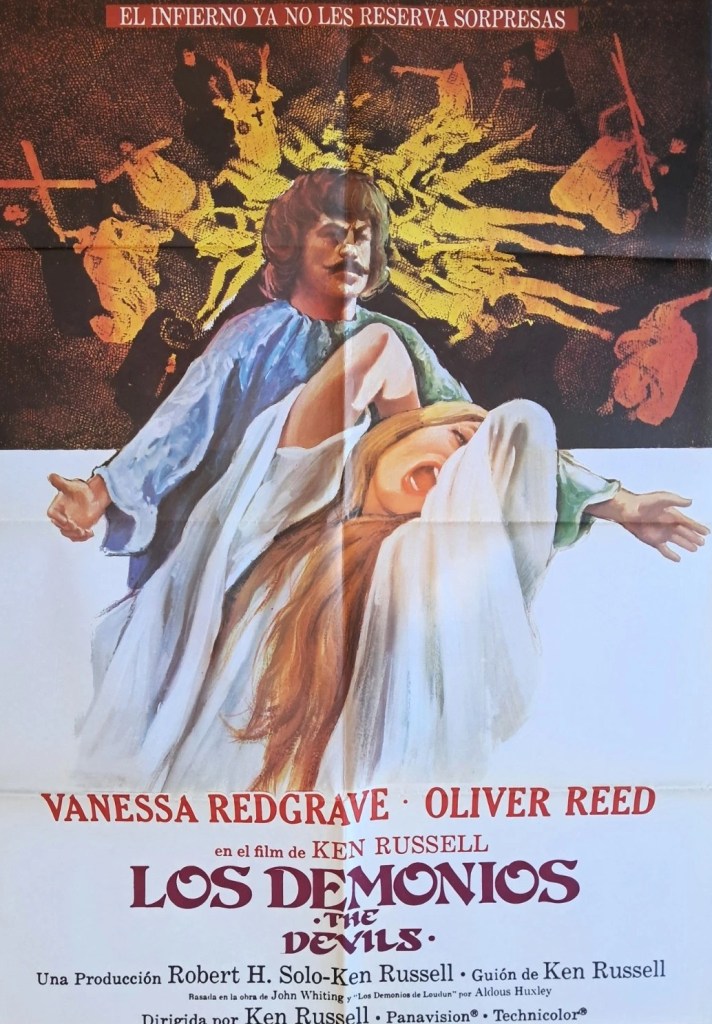
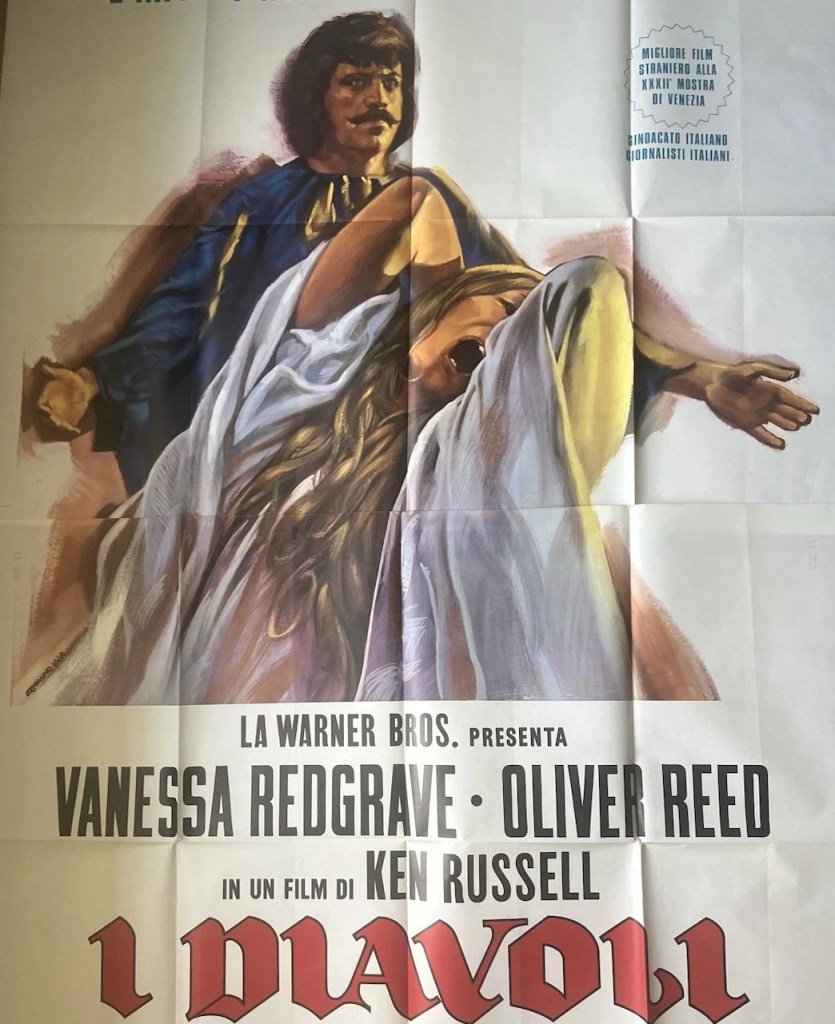
The Devils (1971) *

It’s a conspiracy! The British Film Institute and critic Mark Kermode are on a mission to force the public to reconsider this epic travesty. They have managed to convince Warner Brothers to reissue the film in cinemas in October 2026. The only problem is – this is the second time they’ve tried this maneuver. And it was no more successful last time round – two decades ago in a limited release in arthouses – and despite a lavish follow-up DVD packed full of extras and an expensive illustrated brochure.

Knowing this was the second attempt to regenerate interest in this shambolic enterprise from Ken Russell (Billion Dollar Brain, 1967) – who will no doubt be tabbed a “visionary” director this time round – I thought I’d dig out the DVD featuring the original 1971 release cut in the genuine hope that I might be able to add a little spark to the promotional hoopla for the forthcoming cinematic reissue.

The problem is – it’s still awful. And not in healthy cult fashion or as a slam-dunk for the So Bad It’s Good category. It’s just awful every which way but loose. And it commits the worst error of the awful picture – it’s plain boring. And that’s a shame because the tale is an interesting one. How the French church and state connived to get rid of an irritant challenging their authority by placing false charges of satanic possession against the nuns of the small town of Loudon.

It would certainly have helped had not every single person in a position of power not just looked like an idiot and if Russell had cast the parts with actors of authority, say rising star John Hurt in the role of the exorcist or John Gielgud as the conspiratorial Cardinal Richeliu, a character who as we know from The Three Musketeers was always up to no good. Instead, we’ve got actors way out of even their modest league who make an unintentional mockery of their parts.

Anyone complaining about the modern vernacular of Christopher Nolan’s The Odyssey (2026) would have a field day here with a cornucopia of accents so it sounds more like a  Carry On picture. In fact, Carry On Ken would have been a more apt title.

Vanessa Redgrave (Blow-Up, 1966) had, unfortunately, gone down the Oscar-bait route of hoping that exaggerations of physical affliction will inform her acting. Instead, with her head twisted at ninety degrees, it looks like she’s intent on comedy. And when that only leaves Oliver Reed (Hannibal Brooks, 1968) to hold your picture together you are in dire straits.

Had the director concentrated on the obvious points, that the clergy was corrupt and liable to indulge in sex with any willing participant in the usual male power-abuse scenario, and that nobody went into a nunnery by choice but were sent there by families who could not provide a dowry or who were incapable of themselves finding a husband to support them, then you might have had the beginnings of a good picture.

But Russell is just intent on indulgence. So the nuns behave as if they were being directed by Jess Franco in a Women-in-Prison movie and strip off their clothes and consort with each other. Chief nun Sister Jeanne (Vanessa Redgrave) doesn’t need to wait for a fake exorcist to pass by, she’s already knee-deep in sexual fantasies about Father Grandier (Oliver Reed) who is trying to impregnate as many women as possible.

The American censor had the good sense to cut out the worst sexual extravagances, the British censor was much more lenient though oddly enough David Lean owed the liberal censor a debt of gratitude for when Glasgow City Council, exerting their right as did many other local authorities, banned this atrocity it left roadshow venue ABC2 short of a program so it decided to keep running Ryan’s Daughter.

“Based on  true story” has never been more abused. Back in the day it would certainly have challenged a moral order where the Church of any denomination was not yet known for hiding a flock of pedophiles. But any student of history – and in those days, like it or not, that would be all of us given how important that subject was to the school curriculum – would not have been surprised to discover that kings and cardinals were not above unethical maneuver.

I’m not saying this movie required a Hollywood-style heroic figure, but it certainly didn’t deserve these cartoon cut-outs. The campness of the presentation, the excess and overload, only serves to stultify what would otherwise be an examination of how easy it was back in the 17th century for the authorities to bring down any challenger – but, heck, we knew that.

I saw the original version on my DVD. Theoretically,  it was welcomed at Cannes this year, but although it certainly made the kind of controversial splash often associated with the Festival, it didn’t seem to me that critics were united in their praise.

If you are familiar with the Russell oeuvre this has more in keeping with The Lair of the White Worm (1988) rather than a genuine cinematic – and restrained – achievement like Altered States (1980).

If Warner Bros has any sense, they will pitch this as a Halloween picture for the cinematic reissue.

There will be hype, so you have been warned.

Hannibal (1960) ***

Inconvenient truth never bothered Hollywood scriptwriters when it came to history and here the prospect of solving the “Great Hannibal Mystery” proved irresistible. For in 218 B.C. this invader from Carthage (modern-day Tunisia) had crossed the Alps, battered the Roman army into submission and had Rome at his mercy. But one of the greatest generals of all time did not attack Rome. Why? Love was the answer, according to the filmmakers, following the Romeo and Juliet template.  

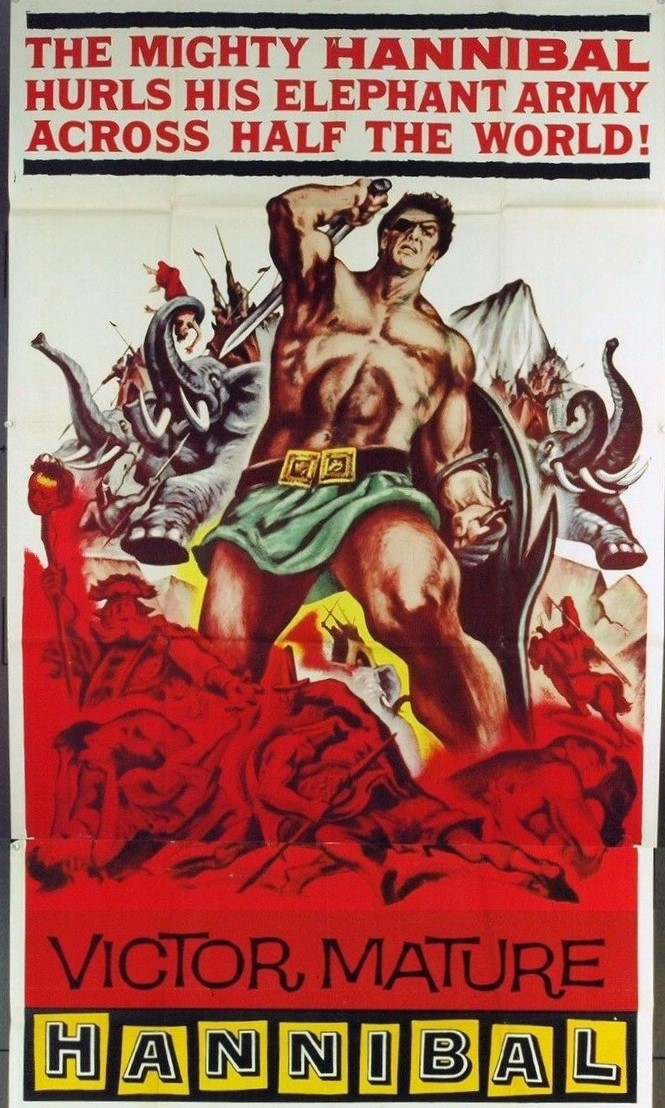
I have to admit I didn’t have that on my mind. I was seduced by the poster, the involvement of cult director Edgar G. Ulmer (The Black Cat, 1934), the prospect of an action-packed adventure with marauding elephants and the fact that although familiar with the name Hannibal I had no idea who he was and why he crossed the Alps when surely it would have easier to take a ship from Tunisia to Italy. But I guess star Victor Mature (Samson and Delilah, 1949) was also duped into thinking that if an American nobody like Steve Reeves (Hercules, 1958) could make it big in Italy then so could surely the original Hollywood Mr. Muscles. Mixing the new-look sword-and-sandals genre with the old-style historical epic appeared a potential winner. But I should have guessed that the lean running time of 103 minutes meant an “epic” was out of the question.

The British Trade Descriptions Act would have a field day with the way the posters promoted the elephants. The much-vaunted “army” is scarcely seen in battle and the great beasts looked more cuddly than anything, striding along linked trunk-to-tail.

The picture does take a good while to warm up although the movie begins with a sense of the epic, otherwise how to explain the 15 minutes before Hannibal hoves into view, the preceding period of invaders crossing the Alps short of dramatic incident beyond a couple of men falling to their deaths and the elephants becoming a bit restive. Endless lines of soldiers, in this case stretching into the snowbound horizon, almost becomes a motif, too much valuable time wasted on too many marches.  

Hannibal turns out to be a clever commander, wanting to conquer Rome more by fear than battle, reckoning that if the Italians believed he possessed an unstoppable force they would rush to the negotiating table rather than engage in open battle and risk the destruction of their cities. He sends the captured niece Sylvia (Rita Gam) of Senator Fabius (Gabriele Ferzetti) back to her uncle with frightening tales. This doesn’t fool Fabius who views the woman as a traitor and realizes the pitfalls of surrender. Hannibal and Sylvia getting it together causes discord not just in Rome but in the Carthaginian camp, the delay in attacking the city put down to their romantic dalliance.   

The initial battle scenes come up short, presented primarily in montage, little snippets of fighting here and there, rather than opposing forces facing each other, no sign either of elephants striking terror into the hearts of their opponents. But the later battle more than recompenses. One of the greatest assets of historical and war pictures is the detail given over to strategy. And if filmed properly, you can see plans executed. Hannibal demonstrates his genius by drawing the main Roman phalanxes into a trap, attacking them from both sides and forcing them back towards a river from which there is no escape. Superbly filmed, it’s a bloody conflict (for movies of the period), arms hacked off, faces and bodies weeping with blood. There’s a tragic end to the romance.

Oh, and by the way, Hannibal loses an eye – but it’s not in battle but from conjunctivitis.

I should point out, having done my own digging, but there was a sounder reason than love for Hannibal not advancing on Rome. Simply put, he lacked the machinery to do it. The only way to conquer a city was by siege and to achieve that you needed siege machines which Hannibal lacked. But no matter how much he later tried to draw the Roman armies into the open, he was denied that opportunity by the wily Fabius who, instead, waged a war of attrition.

Hannibal was, in fact, an irritant to Rome for a decade, so this tale is heavily truncated. Although the tale of the strong man brought to his knees by passion is a Hollywood trope – look no further than Samson and Delilah – the lovers fail to strike the necessary sparks, in part because initially Hannibal views Sylvia merely as a tool to achieve a political end and in part because their time together is too limited. This is no grand passion in the vein of Doctor Zhivago (1965).

And that’s a shame because despite (or perhaps because of) his muscles, Victor Mature was no slouch in the romantic sweepstakes, having dallied in the past with the like of Janet Leigh (Safari, 1956), Susan Hayward (Demetrius and the Gladiators, 1954) and Jane Russell (Las Vegas Story, 1952). Here, Mature is better as a leader than a lover. The svelte Rita Gam (The Thief, 1952) – first wife of director Sidney Lumet –  was the opposite of the more voluptuous Italian screen queens of the Sophia Loren/Gina Lollobrigida variety and her career had not really taken off, only eight films prior to Hannibal and only two in the next decade. Paradoxically, she is better battling her uncle and accepting her fate than a woman in the grip of passion.

Gabriele Ferzetti (Once Upon a Time in the West, 1968) makes the most of a complex character. Look out for Rik Battaglia (Sodom and Gomorrah, 1962) as Hannibal’s brother and, as Fabius’s son, Terence Hill (God Forgives…I Don’t, 1967) and in a smaller role his future sidekick Bud Spencer.   

Directorial credit was split between Ulmer and Carlo Ludovico Bragaglia  (Amazons of Rome, 1961) with Mortimer Braus (The Son of Dr Jekyll, 1951), Sandro Continenza (The Inglorious Bastards, 1978) and Ottavia Poggi (Queen of the Nile, 1961) involved in the screenplay.

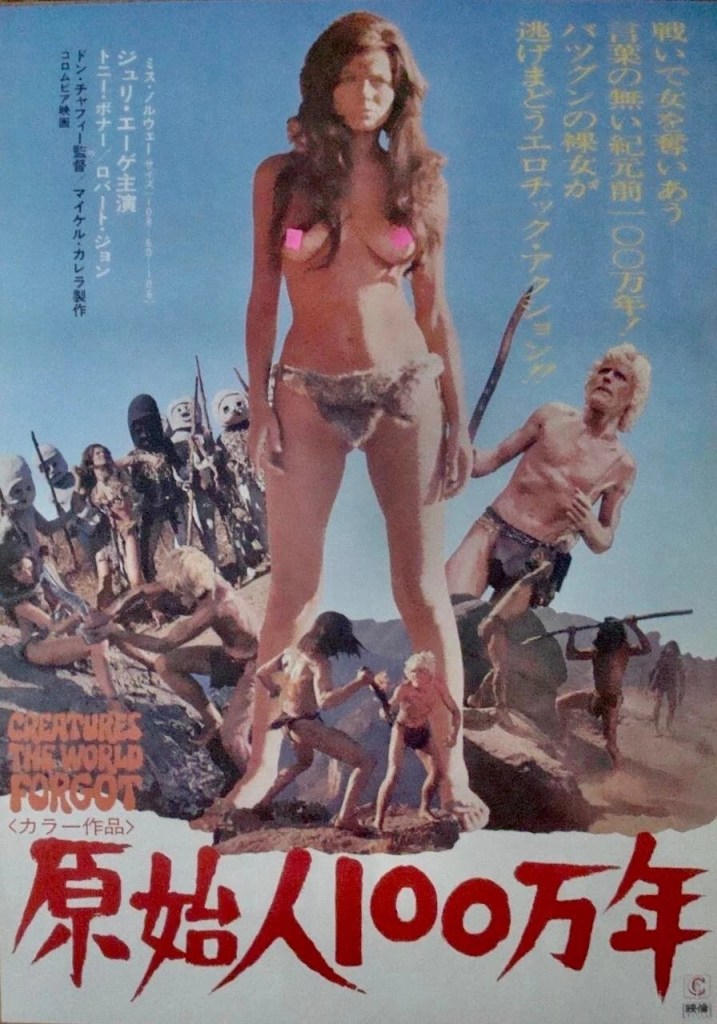
Creatures The World Forgot (1971) ***

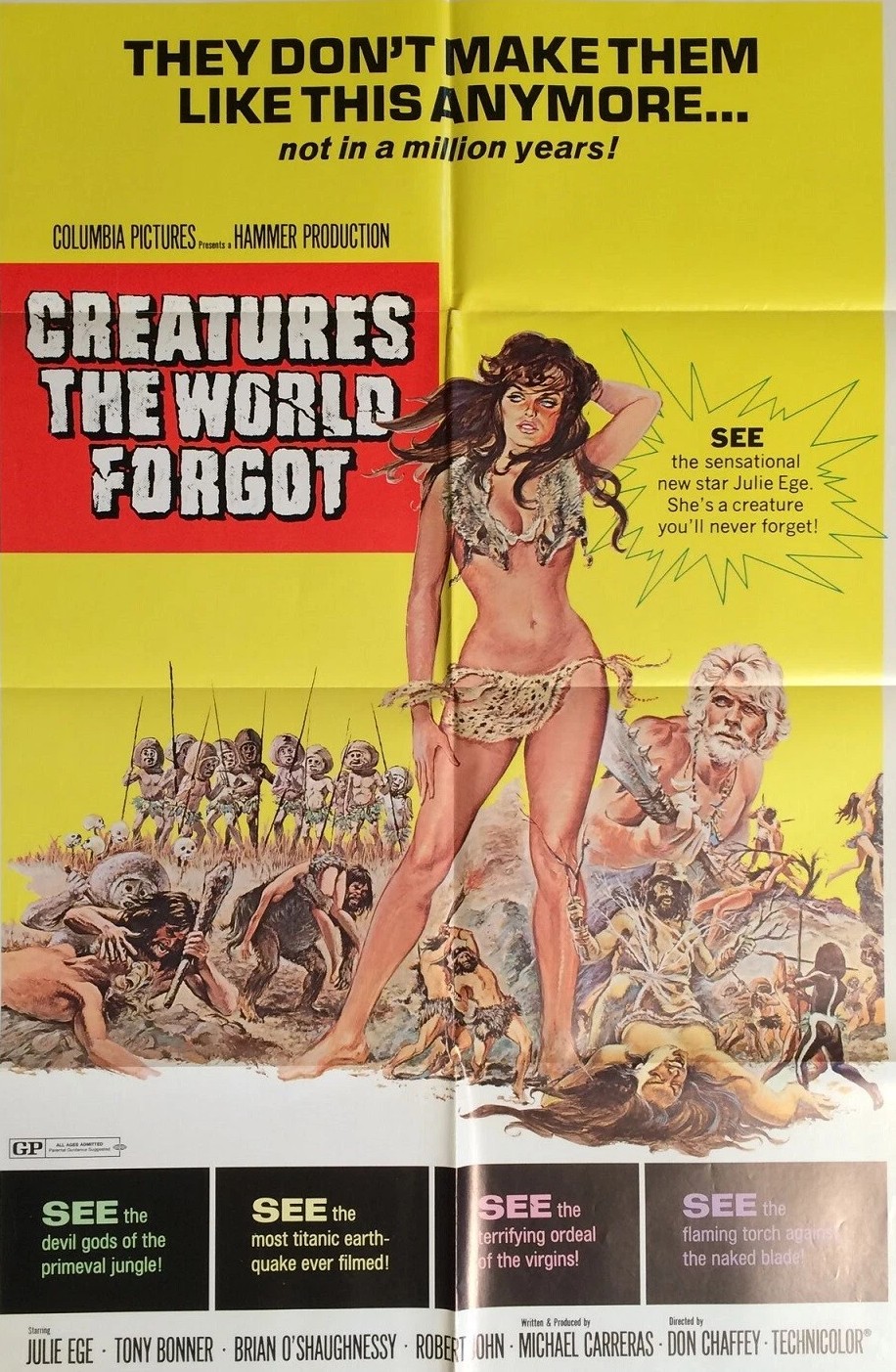
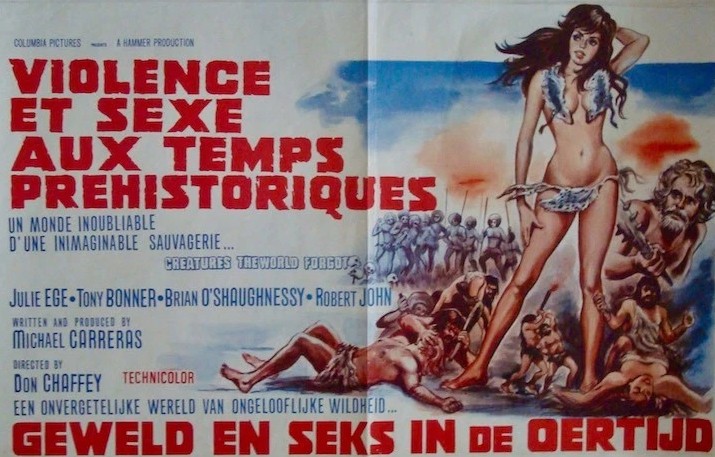
Remove the minimal salacious elements (“Violence and Sex in Prehistoric Times” was the come-on for French audiences). Ignore the fact that there are few creatures to speak of (a bear, some warthogs and gazelles aren’t exactly going to terrify the audience). Set aside that denoted star Julie Ege (Every Home Should Have One, 1971) doesn’t appear until about halfway through.

Don’t bother, either, looking for that apparently indispensable item of female prehistoric attire – the fur bikini. Not a T Rex in sight and none of the Ray Harryhausen stop-motion animation that lit up previous forays into this world.  And you’re left with a surprisingly satisfying study of the ethnology of ancient civilizations.

There’s no dialog, nor subtitles for that matter to elucidate what’s going on, communication limited to grunts or, as likely, fists. Fighting – men vs men and women vs women – appears the most common pleasure. Although there’s also some primitive dancing. You’ve got a witch doctor but no idea what makes her so powerful.

The volcanic eruption that kicks off the narrative, forcing one tribe to search for another home, leading to unwelcome incursions into another tribe’s territory, is the least successful element although the subsequent earthquake is well done.

Outside of conflict and travel, what you’re left with is an interesting (if possibly inaccurate) taste of prehistoric life. Fall down a sand dune and you’ll die because you can’t scramble back up. Take on any horned beast and it’s likely their horns will tear you apart. If you can’t kill a gazelle, you’re going to have to make do with scorpions, snakes and rats. You certainly can’t alleviate your diet by growing anything, the land too poor and the notion of farming yet to revolutionize the world. Occasionally, you can protect yourself by dropping weighted spears from trees on your enemy.

The narrative roams around as much as the tribe. We kick off with a battle for power after a leader dies. Someone gives birth to twins, one easily recognizable by a scar on his chest. So then we jump to them as warring teenagers, fighting each other as much as trying to gain their father’s attention. The dark-haired one (Robert John) has more of the sheer physicality required to survive, the blond one (Tony Bonner) has more upstairs, capable of lassoing a porcupine for the sheer pleasure of developing his skills.

Then they’re grown up, and the blond one can trap warthogs using a net while the other, with less accurate spear-throwing, can’t catch anything. Eventually, they are battling over a deaf mute, who would ordinarily be killed at birth but survives due to the timely intervention of lightning, which is taken as a sign. Seduction isn’t on the cards either, and the dark-haired one attempts to rape the deaf mute (Marcia Fox).

She escapes but needs rescued from another tribe. That leads to the major action of the picture, a big battle in caves. The blond kills the enemy chief and takes as his reward the chief’s daughter (Julie Ege). That enrages the dark one who kidnaps the girl, planning to burn her on a pyre. The ending is pretty confusing, involving a python and the dark arts.

But take away the physical distractions of a Raquel Welch bursting out of a fur bikini and various monsters causing chaos and still there’s enough, almost in docu style, to maintain the interest.

Director Don Chaffey (One Million Years B.C., 1966) appears liberated by the focus being on ordinary mortals rather than sex symbols or Harryhausen. There’s a feeling of “what would David Lean do” when confronted with stark landscape or desert and here the composition is particularly good. Putting the focus on day-to-day survival provides all the narrative drive required. Beyond fairly basic characterization, there’s little to distinguish the characters.

You get the impression that if you edited out all the commotion and rivalry you might be left with an even better picture in the vein of those documentaries Hollywood used to churn out about foreign civilizations. This isn’t darkest Africa or darkest anywhere, the sun’s too strong an influence for that.

This was the final film in Hammer’s prehistoric quartet, whose main aim appeared to be to elevate the work of Harryhausen or give a rising female star a push into becoming a sex symbol, posters of whom could alleviate the drab lives of teenagers worldwide. While Harryhausen burnished his credentials, apart from Raquel Welch, neither Martine Beswick (Prehistoric Women/Slave Girls, 1967) nor Victoria Vetri (When Dinosaurs Ruled the Earth, 1970) made the grade on the marquee. Written by producer and Hammer head honcho Michael Carreras (The Lost Continent, 1968).

You might be surprised to find how engrossing a prehistoric movie can be minus the fur bikini or Harryhausen.

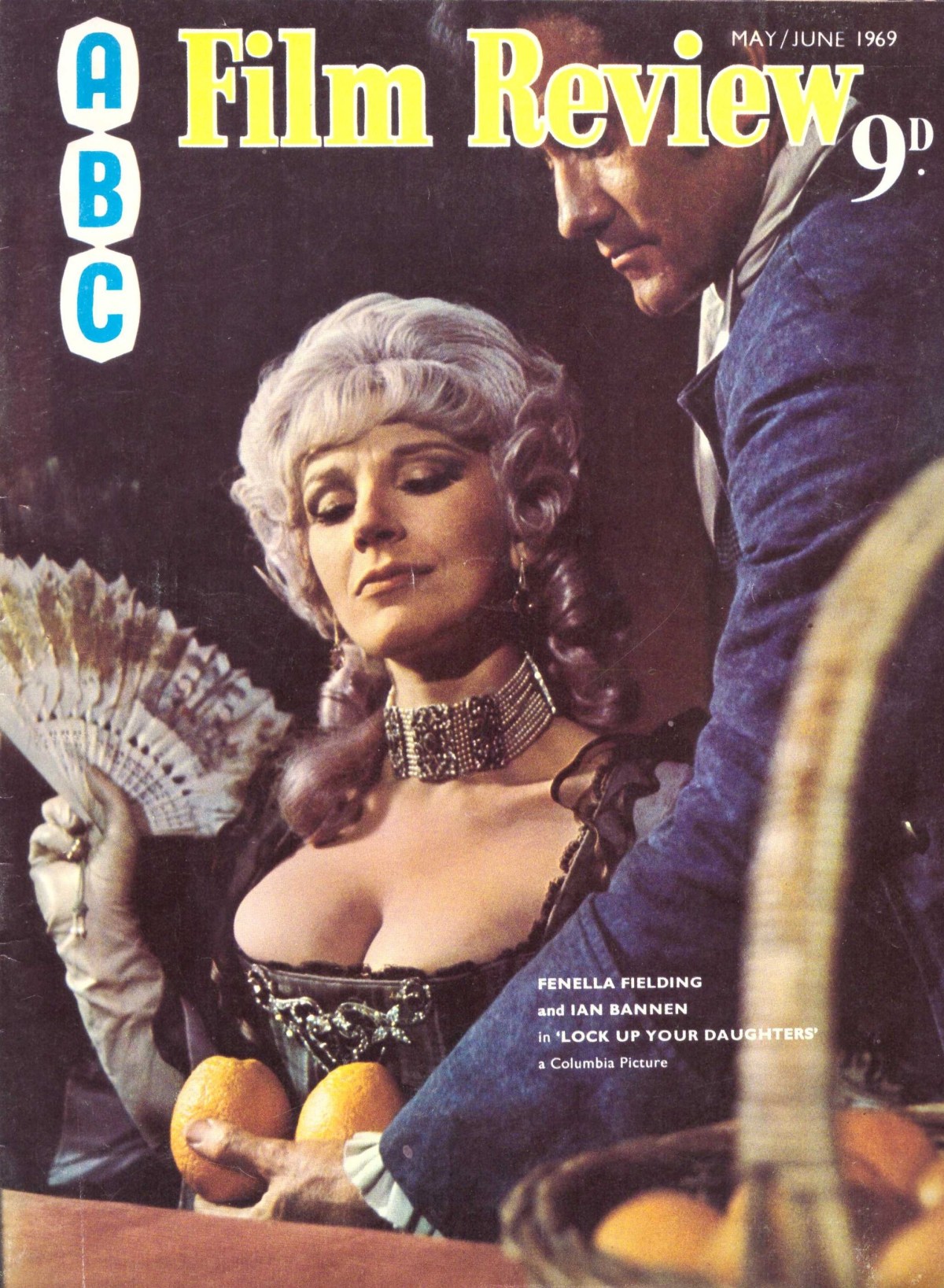
Lock Up Your Daughters (1969) **

Worth seeing for all the wrong reasons, prime example being Christopher Plummer with a false nose and almost unrecognizable as an eighteenth century periwigged English dandy in a pure squalor of a coastal town. The best reason is the very realistic background, all mud, missing teeth, drunkenness, cockfighting, poverty, debtors strung up in baskets – not the usual bucolic image of Olde England. But everything gets bogged down in an indecipherable plot. Robert Altman mastered the multi-character narrative in such gems as Nashville (1975) but here debut director Peter Coe most demonstrably did not.

This started life as a modestly successful London West End stage musical and probably for budgetary reasons the songs were discarded. All that’s left is plot. And plot and plot. All to do with sex as it happens. Husbands exist only to be cuckolded. Cleavage is obligatory for women. Young women lusting after sex have been brought up in contradictory fashion to view it as dirty. And no eighteenth century tale is complete without a regimen of long-lost daughters and sons.

Guess who?

It starts promisingly enough in early morning with a town crier (Arthur Mullard) filling us in on the predilections and problems of various prominent citizens, most notably Lord Foppington (Christopher Plummer), the foppest of the fops, gearing up for an arranged marriage to Hoyden (Vanessa Howard). As a virgin not wanting to come to his wedding night bereft of the necessary skills, he employs strumpet Nell (Georgia Brown) to bring him up to speed.

Meanwhile, it’s “lock up your daughters” time as a ship’s crew, at sea for ten months, given two days leave, start charging through the town, fondling and kissing any woman of any age who happens to stand still for a moment. Among this randy bunch are Ramble (Ian Bannen), Shaftoe (Tom Bell) and Lusty (Jim Dale). Ramble is given the eye by married Lady Eager (Fenella Fielding), Shaftoe takes a fancy to Hilaret (Susannah York) while old flame Nell is targeted by Lusty (Jim Dale). Mrs Squeezum (Glynis Johns) seeks sex anywhere and there’s maid Cloris (Elaine Taylor) also seeking physical fulfilment.

Of course, the whole purpose of the narrative is to thwart true and illicit love, husbands and fathers returning at inconvenient times. And had the storyline stuck to the tried-and-tested formula devised very successfully for Tom Jones (1963) and The Amorous Adventures of Moll Flanders (1965) it might well have worked. But the instinct to make meaningful comment by way of satire takes the story in very unlikely directions, an extended court scene with a barmy judge the worst of such excesses, though a food fight comes close.

It’s meant to play as a farce, the men climbing (literally) in and out of bedrooms, the town’s apparently only ladder put to continuous use. But what would work on stage sadly falls down here, and not just because the occasional song might have come as light relief. There is an element of the female confusion over sex, natural instinct going against education, and so ill-informed that at the slightest chaste kiss they are likely to cry rape, but that’s as close as the movie gets to anything that makes sense.  A movie that needed a sense of pace just becomes one scene tumbling into another.

Christopher Plummer (Nobody Runs Forever/The High Commissioner, 1968) makes by far his worst screen choice. He’s so concealed in his clothing that movement is inhibited and most of his acting relies on overworked eyeballs. Susannah York (Sands of the Kalahari, 1965) is pretty much lost in the shuffle. Ian Bannen (Penelope, 1966) is the pick, largely because he is required not to play villain, grump or idiot, and his Scottish charm and confidence works very well. Tom Bell (The Long Day’s Dying, 1967) is not cut out for comedy whereas Jim Dale (Carry On Doctor, 1967) who very much is does not get enough.  

The movie wastes the talents of a terrific supporting cast headed by former British box office queen Glynis Johns (The Chapman Report, 1962) plus Roy Dotrice (A Twist of Sand, 1968), Vanessa Howard (Some Girls Do, 1969), Elaine Taylor (Casino Royale, 1967), Roy Kinnear (The Three Musketeers, 1973), Kathleen Harrison (Operation Snafu, 1961), Fenella Fielding (Arrivedeci, Baby, 1966) and singer Georgia Brown (A Study in Terror, 1965).

Keith Waterhouse and Willis Hall (Billy Liar, 1963) wrote the screenplay based on, as well as the original musical, a number of sources drawn from the works of Henry Fielding (author of Tom Jones) and John Vanbrugh. Peter Coe never directed another movie.

Hard to find – and probably deservedly so unless you’re of the So Bad It’s Good fraternity.

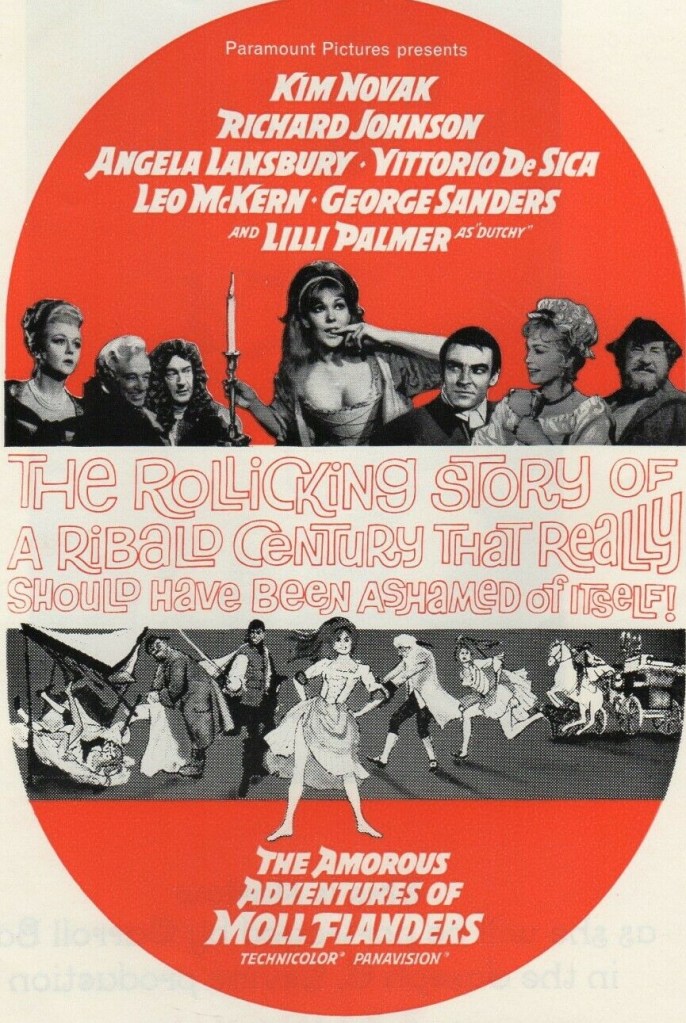
The Amorous Adventures of Moll Flanders (1965) ***

The Husband-Hunting Adventures of Moll Flanders” might have been a more accurate title and if you were seeking a template for a multi-character eighteenth-century Olde English picture majoring on sexual shenanigans here would be a very good place to start. Of course, Tom Jones (1963) was the precursor but told the story from the male perspective and here it is from the more vulnerable female point-of-view. Despite the hilarity and the sexual proclivities on show, it remains abundantly clear that marriage remains a refuge, where the those without a title can gain either security or status by contrast, such a contract is viewed as a means of further enrichment for the already wealthy.

So orphan housemaid Moll Flanders (Kim Novak) has a difficult time persuading the elder brother (Daniel Massey) of her wealthy employer to marry her. Instead, he takes her as his mistress, leaving her no option but to marry the drunken fool of a younger brother (Derren Nesbitt) and instantly regretting her decision. When he drowns, you would have thought that would solve her problems. But this was the eighteenth century and a widow with no fortune (and therefore power) of her own can easily be tossed out penniless.

A widowed banker (George Sanders) might be a prospect especially as she has the wits to prevent him being entirely robbed by highwayman Jemmy (Richard Johnson). Plans to marry him thwarted, she takes a job for food and lodgings with Lady Blystone (Angela Lansbury) and her husband, an impoverished Count (Vittorio De Sica), who are constantly pursued by debt collectors. Meanwhile Jemmy has taken the decision to marry a rich woman and become a kept man.

But this set of characters becomes enmeshed, so the tale unfolds in classic fashion. Assuming Moll to be moneyed, Jemmy masquerades as the owner of three ships. Nothing, of course, works out for anybody, certainly not those pretending to be something they are not while aspiring to wealth beyond their reach, but it all concludes in propitious fashion as the actions of the various principals become embroiled.

While certainly having an inclination towards the amorous, Moll wishes for that within the context of true love, rather than selling her physical wares to the highest bidder. So for a picture sold on immorality – the “rollicking ribaldry” of the poster – there is an unsung moral standpoint. Finding safe passage into affluence proves very tricky indeed. And what appears at first glance to be merely a picaresque episodic tale turns out to be very well structured indeed. And those looking for cleavage will find it here in abundance, as if some kind of rationing had been imposed on clothing, or that it was matters of economy that dictated that the area around the bosom be left unclothed. Being the lusted-after heroine it falls to Moll Flanders to shed even more of her attire from time to time.

You are more likely to laugh out loud at the moments of offbeat humour – a flotilla of ducks heading in Moll’s direction when she cries for help in a lake, the Count while acting as a butler demanding a tip – but it is more of a gentle satire. There is some of the expected bedroom farce but, mercifully, no recourse to a food fight. It is handsomely-mounted and meets the highest expectations of the costume drama.

Kim Novak (Of Human Bondage, 1964) easily passed the English-accent-test and carries the picture with ease. Richard Johnson (Deadlier than the Male, 1967) reveals a rakish side so far hidden in his more dramatic works to date. And there is a fine supporting cast including George Sanders (The Quiller Memorandum, 1966), Angela Lansbury (Harlow, 1965), Vittorio De Sica (The Shoes of the Fisherman, 1968), Lili Palmer (The Counterfeit Traitor, 1962) as Jemmy’s mistress, Leo McKern (Assignment K, 1968) as Jemmy’s sidekick going by the name of Squint, Daniel Massey (Star!, 1968) and Derren Nesbitt (Nobody Runs Forever/The High Commissioner, 1968). In bit parts look out for Cecil Parker (Guns at Batasi, 1964), Dandy Nichols later of Till Death Us Do Part television fame and Carry On regular Peter Butterworth.

All directed with some style by Terence Young (Mayerling, 1968) and adapted from the lengthy Daniel Defoe novel by Denis Cannan (A High Wind in Jamaica, 1965) and Roland Kibbee (Valdez Is Coming, 1971).

An old-fashioned romp with, if you can bothered to look, a moral center.

The Lion in Winter (1968) ****

Template for The Godfather (1972) and Succession. King Henry II (Peter O’Toole) has to choose an heir from Richard (Anthony Hopkins), Geoffrey (John Castle) and John (Nigel Terry). Helping set the Machiavellian tone are Henry’s wife Eleanor (Katharine Hepburn), his mistress Alais (Jane Merrow) and French King Philip II (Timothy Dalton). Cue  plotting, confrontation, double-crossing, rage and lust.

Some other complications: the queen is actually a prisoner, the result of organising a failed coup against her husband, the sons participating in this attempt to overthrow their father, and with Henry willing to sacrifice his mistress in order to achieve an alliance with Philip, relations are less than cordial all round. Eldest son Richard, strong and aggressive, would be the obvious choice, and should be the only choice I would guess by law, but Henry prefers the youngest son John, who is weak, while the middle son Geoffrey is the most savvy (see if you can guess how easily these characters fit The Godfather scenario, or Succession for that matter). Geoffrey reckons that even if passed over for the top job, he will rule from behind the scenes as John’s chancellor.

This is not your normal historical picture with battles, romance and, let’s be honest, costumes, taking central stage. And there’s little in the way of rousing speeches. Virtually all the dialog is plotting. And, like Succession, there are elements of vitriol and pure comedy. In five crisp opening scenes we know everything we need to know. The King brings his family together for Xmas, the Queen freed for the occasion, to decide the succession. Richard is shown in hand-to-hand combat, the wily John leading a cavalry attack, the whiny John pouting and complaining, Alais realizing just how much a pawn she is in the game as Henry explains she is to be married off to Richard.

And if you are not the chosen one, your only chance of gaining the throne is by the back door, by having a powerful ally in your pocket, one whose armies would threaten the King,  which is where Philip comes into the equation as potential kingmaker. Let the intrigue begin, especially as those who ought to be little more than bystanders – the women – have ideas of their own. “I’m the only pawn,” says Alais, “that makes me dangerous.” Despite her current status, Eleanor still owns the French province of Aquitaine and taunts her husband by revealing that she slept with his father.

The plot twists and turns as new alliances are formed between the conspiring individuals. The overbearing Henry will certainly remind you of Logan Roy, “When I bellow, bellow back.” And there is a Hitchcockian element in that we, the audience, know far more than the participants and wait for them to fall into traps. Richard is revealed as homosexual, having had an affair with Philip.

The dialogue is superb, brittle, witty, and it could have been all bombast and rage except that emotion carries the day. Henry clearly could not have wished for a better Queen than Eleanor, more than capable of standing up to him, more capable than any of his sons, and he probably wishes she was by his side rather than confined, as by law, to prison. Eleanor still retains romantic notions towards him, even as she forces him to kiss his mistress in front of her – only the audience sees the truth revealed in her eyes, not Henry who is too busy kissing. The uber-male Richard complains to Philip that he never told him he loved him.

Maternal and paternal bonds ebb and flow and throughout it all is the dereliction caused by power. A father will lose the love of the children he rejects. Or, realizing they are more powerful together than as individuals, they could turn against him. The mother faces the same fate – she risks losing the love of the ones she does not back.

Unlike Alfred the Great, the monarchs have stately castles, so the backdrops are more commanding, but once an early battle is out of the way, it is down to the nitty-gritty of plot and counter-plot. A truly satisfying intelligent historical drama.

Peter O’Toole (Lawrence of Arabia, 1962) had played Henry II before in Becket (1964) and is in terrific form. Katharine Hepburn (Guess Who’s Coming to Dinner, 1967) won her second successive Oscar – and her third overall – in a tremendous performance that revealed the inner troubles of a powerful woman, Anthony Hopkins (When Eight Bells Toll, 1971) gave an insight into his talent with his first major role.

John Castle (Blow Up, 1966), Nigel Terry (Excalibur, 1981), Jane Merrow (Assignment K, 1968) and future James Bond Timothy Dalton, in his movie debut, provide sterling support, Dalton and Castle especially good as a sneaky, conniving pair.

This was an odd choice for a roadshow – at just over two hours considerably
shorter than most of the genre. But the 600-seat Odeon Haymarket in London’s West End
was an ideal venue for building word-of-mouth and it ran for over a year.

Modern audiences might bristle at the idea of woman as commodity, but women in those days were the makeweights in alliances of powerful men, though the fact that they bristle at the notion as well evens up proceedings, Eleanor in particular happy to jeopardize Henry’s ambitions in favor of her own, Alais warning Henry to beware of the woman scorned.

Director Anthony Harvey (Dutchman, 1966 ) was deservedly Oscar-nominated. James Goldman (Robin and Marian, 1976) won the Oscar for his screenplay based on his Broadway play which had not been in fact a runaway Broadway hit, only lasting 92 performances, less than three months. John Barry (Zulu, 1963) was the other Oscar-winner for his superb score.  

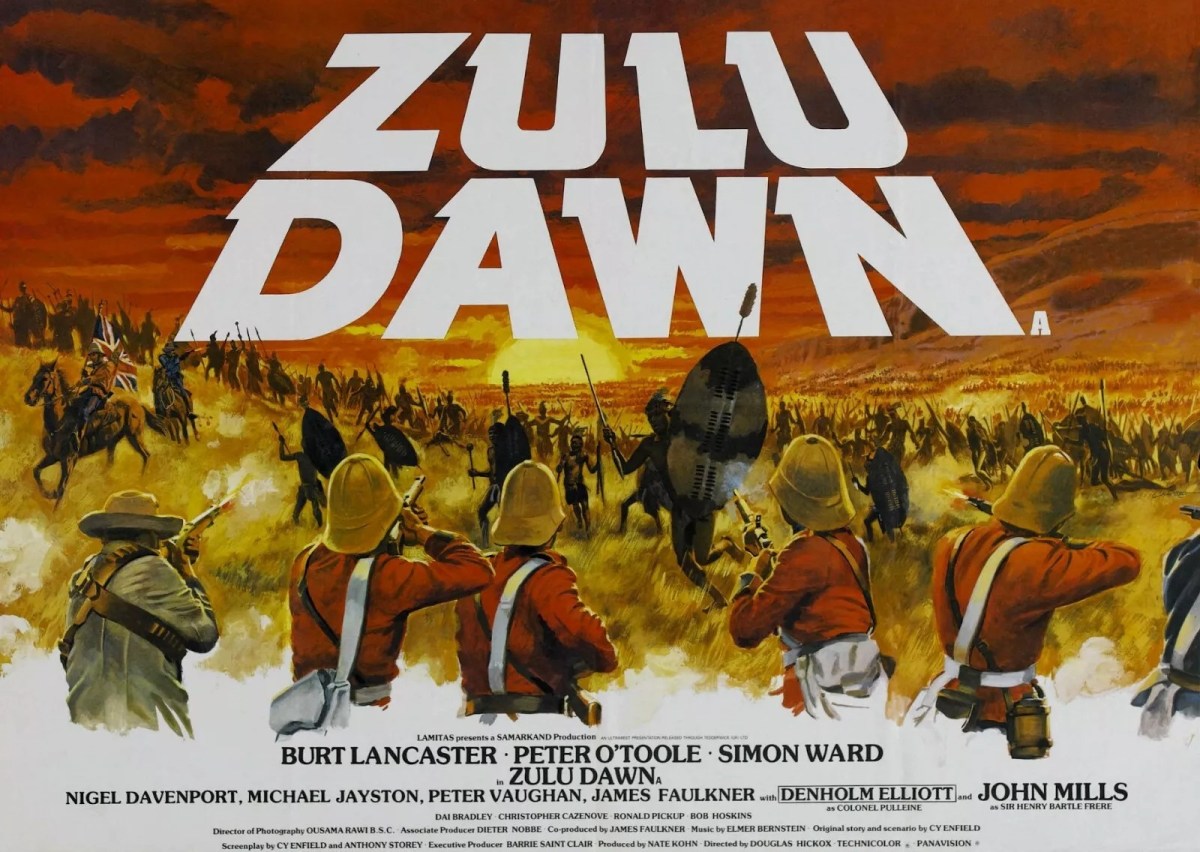
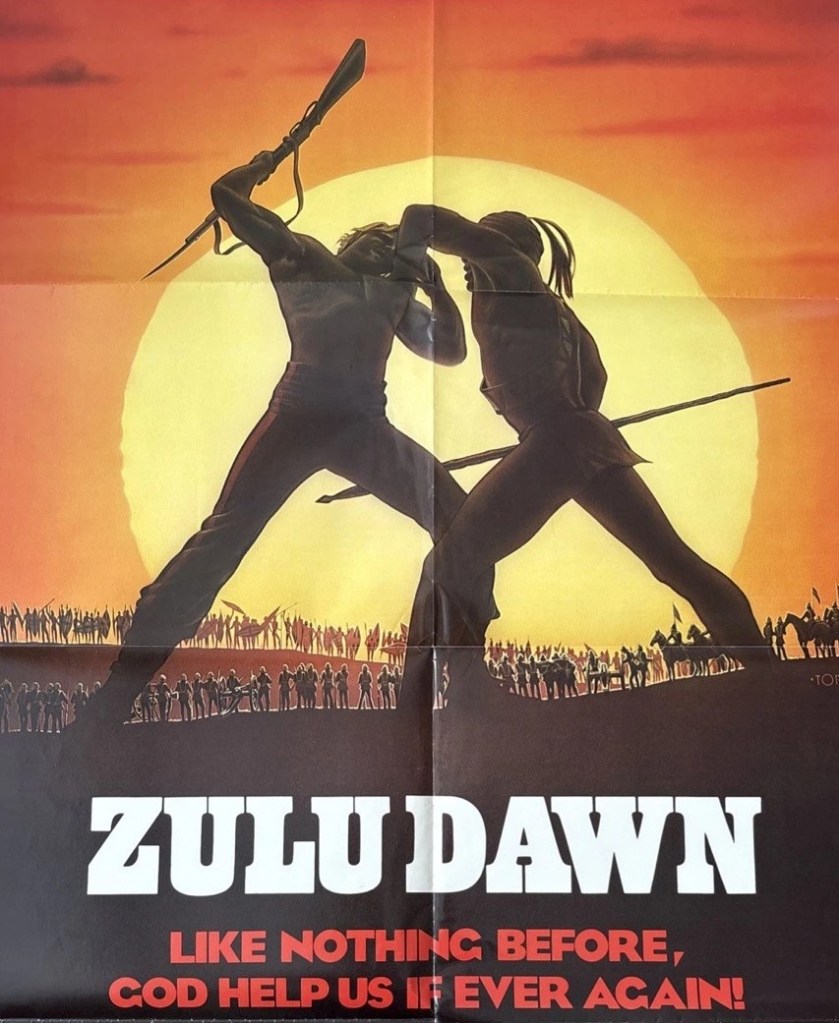
Zulu Dawn (1979) ****

You’d wonder why anyone would want to make a film about this calamitous military disaster, the Battle of Isandlwana in 1879. Yet, such subjects have always attracted Hollywood, especially if some kind of triumph can be snatched from defeat – Dunkirk (1958 and 2017) – or some charismatic figure of the order of General Custer is involved – They Died With Their Boots On (1941), Custer of the West (1967).   Or you can make something mythical such as The Charge of the Light Brigade (1936) and with the assistance of the screen presence of Errol Flynn tilt it towards glory or you can take the same subject (the 1968 version) and make merry with satire should you wish to poke fun at the British Empire.

The latter could easily have been the starting point for Zulu Dawn, a prequel to the majestic Zulu (1964). However, although the Brits were outthought, out-maneuvered and outnumbered, the errors made on the battlefield were generally not through hubris or commanders competing for glory. And you would have to assume that no matter what the British Army could do, in terms of size it was minute compared to the Zulus, and even armed with rifles and artillery was hardly going to withstand a sustained attack.

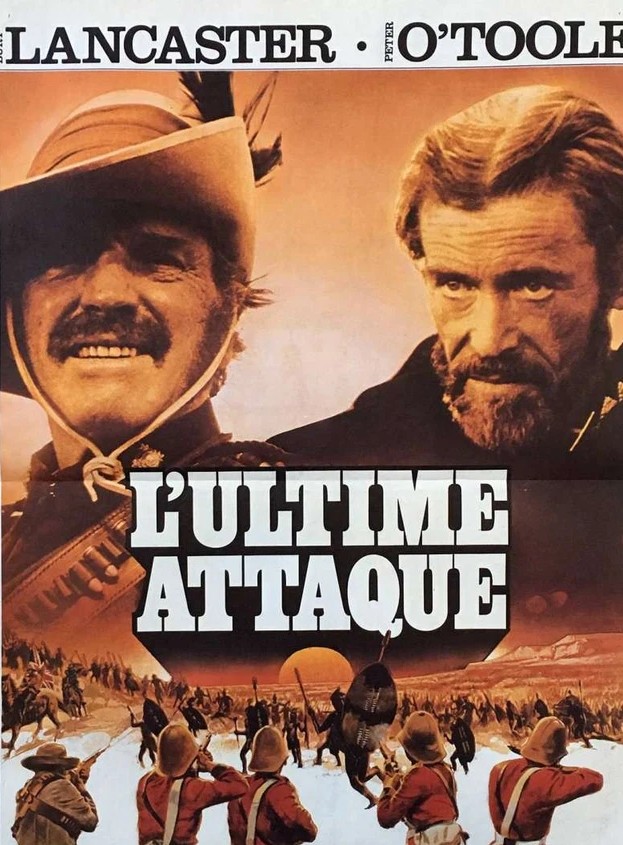
So it’s fairly solid stuff, buoyed up by decent performances, though Burt Lancaster playing an Irishman seems tacked on to increase marquee appeal. The final shot of the eyes of Peter O’Toole would easily stand in the annals of war pictures as one of the best testaments to the horror of defeat and impending humiliation.

There is certainly some unsavory business at the start as British commander Lord Chelmsford (Peter O’Toole) and diplomat Sir Henry Bartle Frere (John Mills) unwittingly poke the lion of Zulu King Cetawayo whose rising strength they perceive as a threat to the British colonies in the southern regions of Africa. Chelmsford makes the mistake of invading Zululand.

Hoping to pin down the enemy to the traditional pitched battle on territory that would give him an advantage, he finds he’s chasing ghosts. They can’t locate the Zulus until the enemy wants to be found. And in an echo of the later Lawrence of Arabia, Cetawayo does the impossible and leads his troops on what was considered an unlikely line of attack.

The British strategy of lining up troops in two lines and shooting alternately certainly reduces the oncoming force, but four times the amount of firepower would still have had trouble preventing the onslaught. Critically, in search of more favorable ground, Chelmsford splits his forces, but, again, even had the British been one unit, it would have made little difference.

I’m not sure how true is the portrayal of the officious quartermaster Bloomfield (Peter Vaughn) who, even in the heat of battle, demands soldiers form an orderly queue to receive a supply of bullets, and that may just be a potshot at overbearing bureaucracy.

The narrative flits from various characters, dashing cavalry types like Col Durnford (Burt Lancaster) and Lt Vereker (Simon Ward), commanders Chelmsford and Col Pulleine (Denholm Elliott), those representing different points of view such as Col Hamilton-Brown (Nigel Davenport) and Col Crealock (Michael Jayston), and lowly grunts in the form of Colour Sergeant Williams (Bob Hoskins) and Boy Pullen (Phil Daniels).

There’s certainly a sense of the higher-ups still enjoying the pleasures of life, wine served at dinner, plated service, but the lesser ranks still have largely an easy time of it, when they are not marching spending most of the time in idleness. It’s a very civil environment. Commands aren’t barked out. “I say, would you mind…” is the tone.

But it’s the marching that’s the killer. The heat’s not as bad as in Crimea and there’s no disease decimating the ranks but they still have to do a lot of walking on uneven terrain. There’s enough difference of opinion at all levels of the Army to keep tensions high.

And there’s more of a focus on the brutality of war – Lt Vereker laments the death of a Zulu child, you can easily be killed by your own troops and truth is viciously beaten out captives (who, as it happens, have been sent to become captives and mislead the Brits.) I was wondering if audiences had come to expect a scene with native girls dancing half-naked, as had occurred in the sequel, and the censor turned a blind eye to.

Peter O’Toole (The Lion in Winter, 1968) has the best role, especially when he counts the cost of defeat. Burt Lancaster (Valdez Is Coming, 1971) offers some star power but little else and the rest of the cast is virtually a roll-call of Who’s Who in British acting.

Luckily, the picture is more than even-handed and while not pillorying the Army and the Establishment in the manner of The Charge of the Light Brigade (1968) plays fair with the circumstances and exalts Zulu victory as much as British defeat.

Directed by Douglas Hickox (Les Bicyclettes de Belsize, 1968) with perhaps overmuch concentration on marching. Zulu director Cy Endfield had shot his bolt by this point and wasn’t invited back except in the capacity of screenwriter along with Anthony Storey making his movie debut.

Much better than I expected.

If you fancy checking out how it compares to Zulu (1964), you can check out my review on the Blog.

You can catch Zulu Dawn on the big screen beginning week of March 19 at a variety of cinemas including Odeon and Picturehouse in the UK and in other countries thanks to Munro Films. Here’s the link to the showings.

https://www.munrofilmservices.co.uk/movie/zulu-dawn

Witchfinder General / The Conqueror Worm (1968) ****

For 250 years Europe and America was in the grip of a man-made plague. Ever since Pope Innocent VIII declared war on supposed witches in 1584, tens of thousands were arrested, tortured and hung or burned to death. Although Arthur Miller’s play The Crucible is considered the last word on the subject, in fact it treats very lightly the physical degradation visited upon victims and the corruption that was at the heart of the disaster. And sure, cinema has poked its nose into the area of possession, most recently with the supposed final act of the The Conjuring series, and while items like The Immaculate (2024) and The Handmaid’s Tale series focus on female subjugation, none of these exposes the full horror of witchcraft accusation.

The British censor bristled at the violence depicted in this film, and the picture was censored to a degree, while movie critics howled at the film’s “sadism.” Yet though the film is a raw depiction of the terrors inflicted on the innocent – male and female – by a corrupt male hierarchy, it scarcely touches the surface of the tsunami of wanton killing and terror.

So this serves as a welcome reminder of that awful age. While romantic leads Richard (Ian Ogilvy) and Sarah (Hilary Dwyer) are insipid, Matthew Hopkins (Vincent Price), the self-appointed Witchfinder General, and his gang of thugs led by John Stearne (Robert Russell) are not, and the enormous delight they take in torturing the innocent is what drives the picture. Set in an England in 1645 riven by civil war, where the forces of law and order are in disarray, Hopkins takes delight in profiting from the lack of opposition to his reign of terror.

While Vincent Price (The Oblong Box, 1969) manages to resist the temptation to be overblown and his subdued performance carries ominous weight, it’s the unusual approach of  director Matthew Reeves (The Sorcerers, 1967) that makes this a standout. He’s not making a horror picture, but a historical one. Not just are their nods to a specific time period, he bypasses the Gothic, the movie taking place mostly in daylight rather than nighttime, and his visual composition stands comparison with the best of the 1960s roadshows rather than standard Hammer or AIP offerings.

Hopkins delegates the actual torture to his underlings, retaining for himself the more subtle pleasure of blackmailing women into providing him with sex and walking off with a fat purse from local dignitaries for his troubles.

When he descends on any town or village, there will be a price to pay in human ruin. He picks on the village of  Brandstone in Sussex and begins to torture local priest John Lowes (Rupert Davies), driving him to exhaustion by endlessly racing him up and down a room before his accomplices can get down to the serious business of plunging long needles into his naked body. Virtually all the weapons in the witch hunter’s armory are of the Catch 22 category. Nothing you do will present as innocent and then you are headed for the gallows or lowered alive into a bonfire.

Luckily for Lowes, his niece Sarah is sweet on Roundhead officer Richard, applauded for his courage in battle, and he attempts to come to her rescue. Unfortunately for her, he is called back to duty before he can save anybody and it’s only by sacrificing herself to Hopkins that Sarah believes she can save her uncle. That turns out to be the worst of the calumnies Hopkins visits upon the innocent, as once he has had his fun he just condemns the old man anyway, and the daughter to boot. And although audiences might wince at the torture it was only fraction of the pain inflicted on the victims who might well end up confessing to witchcraft just to get the agony over with. In my hometown of Paisley, seven witches were executed a few years after Salem on the accusations of an 11-year-old girl – The Renfrewshire Witch Trials has just been published on Amazon should you be interested – which shows the absolute contrivance of the authorities in ruthlessly hunting out victims on the slightest pretense.

It’s a shame that neither Ian Ogilvy (The Sorcerers) nor Hilary Dwyer (The Oblong Box) are equipped to show the depths of despair of their characters, but in some sense this is not their story, except as examples of victims, and the tale really belongs to the venal butchers who took advantage of a climate of fear. These days, it shows up almost as a quasi-documentary and that’s to its benefit.

Written by the director and Tom Baker (The Sorcerers) based on the bestseller by Ronald Bassett. For its U.S. release, AIP snuck in a poem by Edgar Allan Poe which explains the U.S. title The Conqueror Worm.

Interest in this movie is unfairly attributed to the cult status it acquired after the premature death of the director – this was the last of his three films – but in fact it sits easily in the well-wrought historical movies of the period, handsomely mounted and unflinching.

Alfred the Great (1969) ****

The Prince Who Wanted To Be A Priest. The King Who Didn’t Want To Fight. The Husband Who Raped His Wife.

Not exactly taglines in the grand tradition of Gladiator (1999), but a succinct analysis of a Film That Wanted To Be A Roadshow. This is almost an anti-epic, a down-n-dirty historical movie far removed from El Cid (1961), Lawrence of Arabia (1962) and The Fall of the Roman Empire (1964). And one element that has to be taken into consideration when making a historical picture set in Britain in AD 871, if you are aiming for realism, is the rain. The battles in the three movies mentioned, as with virtually every historical movie of the decade, took place in bright sunshine on hard ground, not in the rain on mud-soaked fields. Director Clive Donner lacks the genius of an Akira Kurosawa who turned rain into a glorious image in Seven Samurai (1954) or even Ridley Scott whose first battle in Gladiator took place in a snowstorm. But he does make a battleground reflect the grim reality.

Alfred (David Hemmings) was fifth in line to the throne – and just to a small region of England called Wessex – and as was common practice all set, quite happily, for a career in the priesthood. So it was not surprising, envisioning religion as a mark of civilization, and the priesthood guaranteeing an education, that he was loathe to become a warrior just because his brother King Ethelred (Alan Dobie) was a useless leader. The price of taking on the warrior’s mantle and, after his brother’s death, of ascending to the throne is that Alfred must not only cast away his priestly ambition but his chastity in order to get married to unify rival kingdoms and produce an heir. So there’s a good deal of the religious quandary of El Cid and the sexual ambivalence of Lawrence of Arabia.

So repelled by what he is forced to do, that on his wedding night Alfred rapes new wife Aelhswith (Prunella Ransome) and when the marauding Vikings win a decisive battle and the price of peace is the wife taken in hostage Alfred offers no great protestation. So Alfred is hardly an appealing character. His wife hates him so much that she conceals her pregnancy from him. If you were an Englishman you might well prefer the straightforward lustful Viking leader Guthrun (Michael York) whose men are not restrained by Christianity – “it’s a strange religion,” he mulls, “ that wars with everything your flesh and your blood cries out for” – who makes a better fist of wooing Aelswith, whom he could as easily rape, than Alfred.  

Eventually, of course, Alfred gets it together, rallies a bunch of outlaws and steals back wife and son (now four years old). However, there is no romantic reunion. Instead, he plans to imprison her for life, “the whore shall rot in silence.” Nonetheless, Alfred has acquired some tactical skills, adopting the old Roman infantry tactic of forming his troops up in a phalanx behind a wall of shields. His battlefield address is to promise ordinary people a set of laws that will give them equality with the wealthy and powerful.

Given there are no castles and this is indeed the Dark Ages as far as costume and interior design is concerned and that therefore the camera cannot, for respite, be turned onto some glorious image, Clive Donner (Here We Go Round the Mulberry Bush, 1968) concentrates on character rather than scenery. There are a couple of inspired touches. For a start, in permitting various characters to offer prayers to God, he introduces a number of soliloquies which take us to the heart of troubled souls, and then he does a clever split-screen number to effect a transition. You can’t blame him for British weather and the battles are well-staged. He does show the courage of his convictions in making the film concentrate on conflicted character rather than going along the easier heroic route of underdog rallying people to a cause.

David Hemmings (Blow-Up, 1966) is both the film’s strength and weakness. He is excellent at capturing the torment, the soul divided, and the inherent arrogance as well as the preference for peace instead of war. But in terms of his leadership skills he is on a par with Orlando Bloom in Kingdom of Heaven (2005). That part was originally intended for Russell Crowe and Peter O’Toole was first choice for Alfred and you can’t help thinking both would have been a substantial improvement. On the other hand, Alfred was just 22 when he became king and for someone intent on the priesthood there would be no need for him to develop his physique or political skills. So this is a far cry from your typical Hollywood hero and in that regard the casting makes perfect sense and Hemmings a bold actor to take on such an unlikeable character.

Prunella Ransome (Man in the Wilderness, 1971) does well in her first leading role, suggesting both vulnerability and independence and while virtually imprisoned by both Alfred and Guthrun remaining principled. Michael York (Justine, 1969) was a definite rising star at this point and plays the Viking with considerably more gusto than his tendency towards passive characters would suggest.  

There’s virtually a legion of excellent supporting players in Colin Blakely (The Vengeance of She, 1968), Alan Dobie (The Comedy Man, 1964), Ian McKellen (Lords of the Rings and X-Men), Peter Vaughan (A Twist of Sand, 1968), Vivien Merchant (Accident, 1967),  Barry Evans (Here We Go Round the Mulberry Bush, 1968), Sinead Cusack (Hoffman, 1970), Christopher Timothy (All Creatures Great and Small, 1978-1990) and Robin Askwith (Confessions of a Window Cleaner, 1974).

Oscar-winner James R. Webb (How the West Was Won, 1963) was an improbable name to be attached to a British screenplay. But this was a pet project he had been trying to get made since 1964. Ken Taylor (Web of Evidence, 1959) was brought in to lend a hand.

Not being a student of English history but familiar with the ways of the movie business, I am sure the picture has many historical inaccuracies, but it does present one of the most complex individuals ever to feature in a historical film of the period, when audiences preferred their heroes more black-and-white. So it is a significant achievement in the canon.

Discover WordPress

A daily selection of the best content published on WordPress, collected for you by humans who love to read.

The Atavist Magazine

by Brian Hannan

WordPress.com Blog

News, Tips & Website Tutorials