Heavens Above! (1963) ***

Surprisingly topical – food banks a key element – social satire. And a surprising box office smash – among the top 12 films of the year – in Britain, although the Boulting Brothers (I’m Alright Jack, 1959), often viewed as inheriting the Ealing mantle, had both commercial and critical form.  

In a case of mistaken identity, simplistic prison chaplain Rev Smallwood (Peter Sellers) is sent to rich parish Orbiston Parva, virtually endowed by the Delpard family, owners of the Tranquillax business nearby. Smallwood, an advocate of the meek inheriting the earth and making it his mission to ensure the rich can enter the kingdom of Heaven other than through a needle, convinces Lady Delpard (Isabel Jeans) to spread her wealth. This takes the form of the Good Neighbour Fellowship, whereby she sets up a food bank whose popularity soon endangers the town’s retailers and merchants, the public, naturally enough, preferring to do their shopping at the free church outlet than spend money on a butcher or baker (possibly candlestick makers escaped the impact).

Meanwhile, to show he is up to scratch in the poverty ranks, Smallwood invites into his palatial manse the Smith family who are being evicted from their plot of ground to make way for an expansion of the Tranquillax factory. Despite ruffling feathers in the ministry, Smallwood can’t be turfed out, since religious law dictates he effectively owns the manse. However, once shops have to close for lack of trade and factories, for lack of goods being sold, make thousands redundant, Smallwood’s do-gooding backfires.

While Harry Smith (Eric Sykes) is an archetypal welfare swindler (taking home £90 a week) and inclined to siphon off items from the food bank for his own entrepreneurial purposes as well as stealing lead from the church roof, the rest of his enormous brood, led by the redoubtable Rene (Irene Handl) are converted to the joys of Christianity, enough so much so that baptism and marriage (between the couple) beckon.

Most of the humour is gentle, the biggest laughs – Smallwood inadvertently eating dog biscuits, a dog peeing on his leg, choirboy reading a dirty book, the butler initiating a miraculous intervention – are straight out of the Charlie Chaplin joke book. And the timing for many lines appears out of kilter, as though the laughs were not intended.

British films around this time often received rave reviews from U.S. critics which ensured reasonable business at the arthouses while not striking a box office chord with the general public. there.

Apart from Smallwood, his assistant Matthew (Brock Peters) and the converted Lady Despard you are hard put to find any Chistians. As one character observes “not enough decent Christians to feed one lion.” And the townspeople are generally shown as scroungers of one kind of another with the Smiths typical sex-obsessed chip-guzzling working class. The business owners, bishops, aristocrats and assorted politicians are similarly pilloried for greed and inefficiency so you could say the Boultings are being fair straight down the line.

The best scene, and the one that makes the most out of a comic situation, is when the real Rev Smallwood (Ian Camrichael) turns up, is treated as an imposter and locked up for displaying psychotic tendencies. And there’s a clever, even more topical ending, involving space exploration, which equally cleverly mimics an earlier scene. Actually, there are two scenes that echo earlier activities, and both are intelligently used.

The satire retains some of its bite. There are even more rich people around now who hold onto their wealth and there are more poor people in clear need of help, assistance that would extend far beyond food banks, a relatively recent phenomenon. You can be sure selfish big business will be as self-interested.

Peter Sellers, complete with regional accent, in pre-Pink Panther mode shows dramatic skills that he would rarely be allowed to exhibit until much later in his career and although I think he should have been permitted more leeway in his lines he doesn’t deliver them as though he is milking a joke which means dramatic intent is not diluted. He is perfectly believable as the quietly-spoken forgiving vicar surrounded by more grasping colleagues who appear to have forgotten the basics of Christianity, his immediate boss, for example, on holiday in Monte Carlo.

British television comedian Eric Sykes (The Liquidator, 1965), barely recognisable after abandoning his trademark stance and voice, is the standout as the conniver-in-chief. Brock Peters (The Pawnbroker, 1964) is effective as the bin lorry driving protégé and Isabel Jeans (A Breath of Scandal, 1960) a delight as Smallwood’s slightly dotty benefactor – her look as she realizes he has scoffed the dog biscuits worth a couple of laughs. The others, good as they are, are called upon to play little more than stock characters: Cecil Parker (The Comedy Man, 1964), Ian Carmichael (The Amorous Mr Prawn, 1962) and Irene Handl (The Wrong Box, 1966). Look out for Roy Kinnear (Lock Up Your Daughters!, 1969), the first Doctor Who William Hartnell and the future Miss Marple Joan Hickson.

Ably directed by Roy and John Boulting who easily hit all their targets, the screenplay is by Frank Harvey (I’m Alright, Jack), John Boulting and critic Malcolm Muggeridge.  

Hotel Paradiso (1966) ****

Few stars made such a deft job of switching their screen persona. If, in the 1960s (or later) you associated Alec Guinness with dramas such as Lawrence of Arabia (1962) or Doctor Zhivago (1965) and were very familiar with that droll drawl of a voice, you would be astonished the discover that he could wear a comedy hat – minus the droll drawl – to similar effect. My first surprise here was that this Alec Guinness was vocally unrecognizable. Not only was he charming but had a romantic streak.

Then you’ve got Gina Lollobrigida who could also mix drama (Woman of Straw, 1964) with comedy (Come September, 1961) but who could also hold back her screen persona, limiting the zest and eliminating the coquettishness.

And for good measure, what’s director Peter Glenville doing here? Seven out of the eight movies he helmed were dramas and heavyweight ones at that in the vein of Becket (1964) and The Comedians (1967), top-heavy with stars of the caliber of Peter O’Toole, Richard Burton and Elizabeth Taylor. You wouldn’t have him down for a comedy, let alone a French farce. But Glenville had translated the 1894 Georges Feydeau farce for the London West End stage in 1956 – it also reached Broadway – and the production he directed starred Guinness (Bert Lahr on Broadway).

I’m generally immune to farce. Either the characters are idiots or the action is idiotic. Here the two main characters, Marcele (Gina Lollobrigida) and Benedict (Alec Guinness), in the same predicament, attract audience sympathy. Both are married to domineering partners and would just like a bit of fun, so ;plan to spend time in the titular hotel where rooms are rented by the hour. But they are equals, it’s not like Benedict is a fawning numbskull being run rings round by a haughty Marcele.

In the hands of a master farceur like Feydeau the plot, such as it is, works like a dream. The plot of course is to get a number of people into the same building and find reasons for them to want to avoid each other. Usually, such avoidance is triggered by sexual malfeasance.

So the last people the tentative lovers expect to run into (and have to avoid) is Marcele’s husband Henri (Robert Morley) – there on business, he’s a drain specialist – or Benedict’s friend Martin (Douglas Byng) with four daughters in tow, or, for that matter, Marcele’s forward maid Victoire (Ann Beach) there for an assignation with Henri’s nephew Maxime (Derek Fowlds), who, of course, equally fear discovery.

Adding to the ensuring chaos are an incompetent bellboy and an unwelcome police inspector (Leonard Rossiter). One of the joys of this piece is the polish of the plotting. It’s not dependent so much on the obvious avoidance techniques, but on other more tangible elements such as hot water bottles, chairs, tea, hats, and ghosts (the hotel is believed to be haunted). Many of the best laffs are based purely on character. Henri is so arrogant that, ending up in the wrong room, he assumes it’s the result of a thief that his usual items have gone missing and that the thief is so dumb that he’s left his hair on a hairbrush. There’s an in-joke in just watching the usually immoveable object that constitutes Robert Morley being forced to run at a pace.

There’s even a contemporary element – someone present commenting on proceedings – who turns out to be Georges Feydeau himself whose observations of the human frailties on show provide him with the makings of a hit play.

Stepping outside their usual screen personas, Guinness and Lollobrigida spark so well off each other it’s a surprise no one thought to team them again. Robert Morley (Topkapi, 1964) is, as always, pure comedy gold.

It’s a wonder, too, that Peter Glenville didn’t follow up with another movie comedy. There’s more inventiveness and visual dexterity here than in anything else he directed. You always had the impression in his dramas that he was desperate to “make a point” while here, relieved of such a necessity, he can indulge in frivolity. Jean-Claude Carriere (La Piscine/ The Swimming Pool, 1969) lent a hand to the screenplay.

An unexpected delight.

The Projected Man (1966) ***

You might well have ruminated on the notion that laser had been invented simply for the purposes of terrorizing James Bond. So, here, long before Star Trek got into the game with its teleporting machine, is the ubiquitous laser being employed to move a human from place to place. Though Brits would just head for the nearest available Police Box a la Doctor Who should they wish to shift from place to place, not to mention from planet to planet.

Standard science hooey is stoked by office politics and internal sabotage by department boss Dr Blanchard (Norman Woolands), somehow open to threats of blackmail, and rivalry between colleagues Dr Paul Steiner (Bryant Halliday) and Dr Chris Mitchell (Paul Allen) for the affections of Dr Patricia Hill (Mary Peach).

In any case, the experiments don’t always go according to plan, a transmitted mouse only lasts a few minutes and a watch goes backwards. The whole project looks like being scuppered after the equipment catches fire during a demonstration for renowned visiting Swiss scientist Professor Lembach (Gerard Heinz).

Steiner recruits his secretary Sheila for one last attempt, which just goes to show you hardly need a PhD to take part in top-secret ground-breaking work, in defiance of orders to shut down the laboratory. Mitchell and Hill, who’ve been cozying up, arrive in time to see Steiner disappear. Good news though when he does reappear it’s to prevent, however unintentionally, a burglary, but killing, however unintentionally, the perpetrators. You might think, given one side of his face is destroyed, that they died of fright but instead he’s got some secret superpower where he can kill with a touch.

Given this occurs halfway through we’ve got plenty of time left for Steiner to go on a killing spree and target all the people who were working against him. But such murders leave a trail and a cop, Inspector Davis (Derek Farr), starts to connect the killings. In an interesting twist, it’s not a contender for MCU world for Steiner – he needs energy to survive so heads to a power plant for a top-up ignoring attempts by the lovebirds to tempt him back to the lab to have a go at reversing the experiment.

By now Steiner exudes such energy that he’s, literally, bullet-proof. Still, eventually he’s tempted back to the lab. But he doesn’t want to be turned back into his old self and sets about destroying the lab. Unfortunately, the laser is reactivated and hits him again and this time he disappears for good.

This is the kind of low-budget operation that can’t afford to show a laser beam so the scientific razzamatazz is limited to flashing lights. But there’s some decent plotting and an attempt to show the sadder side of the monster, a la King Kong and Frankenstein. However, an audience is more interested in a monster on the rampage.

Competent acting throughout since the cast aren’t given much to play with. British star Mary Peach (No Love for Johnnie, 1961) won top-billing over American Bryant Halliday (Devil Doll, 1964). A directorial curiosity since it’s the only movie for Ian Curteis, later better known for teleplays such as Churchill and the Generals (1979) and The Falklands Play (2002).

Written by John Croydon (First Man into Space, 1959), Peter Bryan (The Blood Beast Terror, 1968) and Frank Quattrochi in his movie debut.

Budget restrictions don’t harm this one’s entertainment value.

No Love for Johnnie (1960) ****

While hardly an excoriating view of British politics and lacking in the kind of high stakes narrative favored by the Americans in this sub-genre such as Advise and Consent (1961) or The Best Man (1964), it’s still an absorbing tale with a superb performance by Peter Finch, whose screen persona exudes power.

And while there’s plenty about the inside track, how the backroom deals are done, and the backstabbing, and the indifference of the politicians to those who elected them, it covers well the obsession with power.

If this is about power, it’s also about what lack of power does to a person. Politics is a pyramid game and even the most deluded politician believes that, with the right backing and a bit of luck, they can rise to the top. When they discover they are mere cannon fodder and recoil at the idea of spending all their time dealing with complaining constituents, they are prone to disillusion and seething disaffection.

Although the poster might suggests that  re-elected MP Johnnie Byrne is a poor soul in the romantic stakes, his wife Alice (Rosalie Crutchley), who seems more attuned to the needs of the populace,  having abandoned him just after he’s won an election, and friendly neighbor Mary (Billie Whitelaw) pushing him away when he answers the phone in the middle of a clinch – “save your kisses for the Prime Minister,” she snaps – it’s clear that domesticity takes a poor second place to politics.

He’s extremely disappointed to be passed over for a place in the Cabinet, even the more minor position of a Junior Minister, that leaves him prey to the kind of grumbling back benchers intent on fomenting rebellion. But the rebels are generally all flawed individuals, more inclined to stoke controversy to get noticed or as a way of nursing disappointment at being relegated to the back seats of power.

Byrne isn’t a particularly attractive proposition. You wouldn’t want to be one of his constituents no matter what promises he makes to be re-elected. In those days people could just turn up at Parliament and request to see their MP and a flunkey would carry literally a note to the MP which would state the nature of the request. If it was about housing he would inform the flunkey to tell the constituent he was unavailable when in fact he’s sitting having tea in the cozy House of Commons café overlooking the River Thames.

Housing was as hot an issue then as it is now, too many people living in overcrowded insanitary apartments, paying high rents to unscrupulous landlords. But getting to the top of the local Council housing list was a massive problem. While, privately, Johnnie realizes that pushing open that particular door is virtually impossible, even for an MP, he can’t be bothered to give his constituents the time of day.

But he is sufficiently embittered to join the rebels and lead the way in poking holes at the Government’s policies. But then he meets a young artist/model Pauline (Mary Peach) and falls for her. I find it a bit implausible that such an ambitious man, having determined to make a name for himself by being a thorn in his Party’s foot, would miss a vital debate, especially one where he was the key figure, would skip it for a bout of sex with his lover.

Still, ironically enough, that works in his favor, and that may have been his intent. For the Prime Minister (Geoffrey Keen) assumes Johnnie has seen the error of his ways, his failure to appear for said critical debate taking the wind out of the incipient rebellion, and rewards him with a Junior post.

There’s an irony, too, in that Alice, deemed way too left-wing in her Communist pursuits for the left-wing Labour Party, is noted as having been an obstacle to Johnnie’s rise. But now that she’s out of the way, he can move up.

Getting promoted clearly won’t shift Johnnie out his apathy towards his constituents, but then, why should he, when he believes he has moved out of their reach by being ensconced in the Prime Minister’s inner circle, even if only on the fringes of that.

Peter Finch (I Thank a Fool, 1961) has the charisma and the glower to carry this off. The supporting cast is littered with rising stars such as Mary Peach (A Gathering of Eagles, 1963), Donald Pleasance (Soldier Blue, 1970) and Billie Whitelaw (Twisted Nerve, 1968) and even Oliver Reed (Hannibal Brooks, 1968).

Director Ralph Thomas was better known for comedy (the Doctor movie series) and thrillers (Some Girls Do, 1969) but he was equally adept at drama and here he turns an unflinching eye. Mention should be made of his wife, Betty Box, who was a major British producer at a time when both in Hollywood and in Britain excluded females from such a role.

Written by Nicholas Phipps (Doctor in Distress, 1963) and Canadian novelist Mordecai Richler (The Luck of Ginger Coffey, 1964) from the novel by Wilfred Fienburgh.

Like the best of this sub-genre exposes shady dealings in politics.

The World of Henry Orient (1964) ***

This is what happens when you have a Hayley Mills comedy without Hayley Mills – where she’s stuck between the mischievousness of a child and on the cusp of growing up – and a Peter Sellers comedy which doesn’t contain much Peter Sellers. And while what’s left is on the whole endearing in that innocent fashion you could still easily achieve in this Hollywood era, it still comes over, to a contemporary audience, as though there’s something missing and the usual Sellers antics are not sufficient to fill in the gaps.

For the record, Henry Orient (Peter Sellers) is a pompous self-absorbed concert pianist carrying on an affair with married woman Stella (Paula Prentiss), who’s so new to the adultery business it makes her skittish, only meeting up with her lover in Central Park in case, perchance, a suspicious husband is scoping out Orient’s apartment.
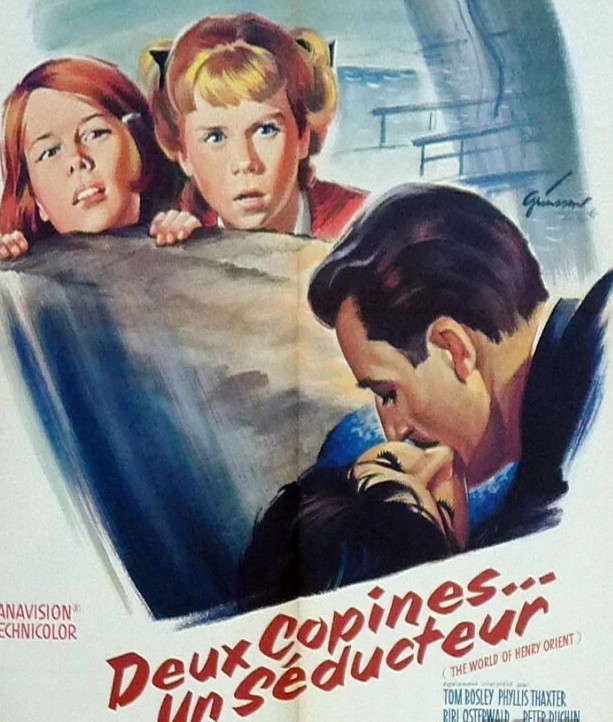
He believes a pair of pubescent teenage girls, the more outgoing Val (Tippy Walker), old enough to be seeing a psychiatrist on a daily basis, and the more reticent Gil (Merrie Spaeth), are spying on him because, well, they are, or at least they did, once, by chance when they were galloping around Central Park. So when they turn up in the audience at one of his concerts and bump into him, literally, in the street, paranoia gets the better of him.

While it’s true that Val has developed a crush on the pianist, the real extent of the girls’ growing up involves little more than romantic fantasies majoring on unlikely adventure and conversations about shaving their legs. We’re not talking about slapping on the make-up and wearing daring attire. Primarily, Orient appears as the adjunct to the lives of a pair of girls who have parental issues, Gil minus a divorced father (her fantasies mostly revolve around her dad coming back) and Val minus both parents, who though still married, have abandoned her while they travel around the world.

Most of the time we’re with the girls being kids, leaping over rocks and fire hydrants and the occasional small child on a tricycle, or duping grown-ups into thinking they have taken desperately ill in the street.

Unfortunately, all that drives the story is over-plotting. Orient and Val’s mum Isabel (Angela Lansbury), also of the adulterous persuasion, fall for each other only for the girls to uncover the affair, sending Orient fleeing the country, and triggering various kinds of parental-child reconciliation, before the girls get on with the proper business of growing up and boys and fashion.
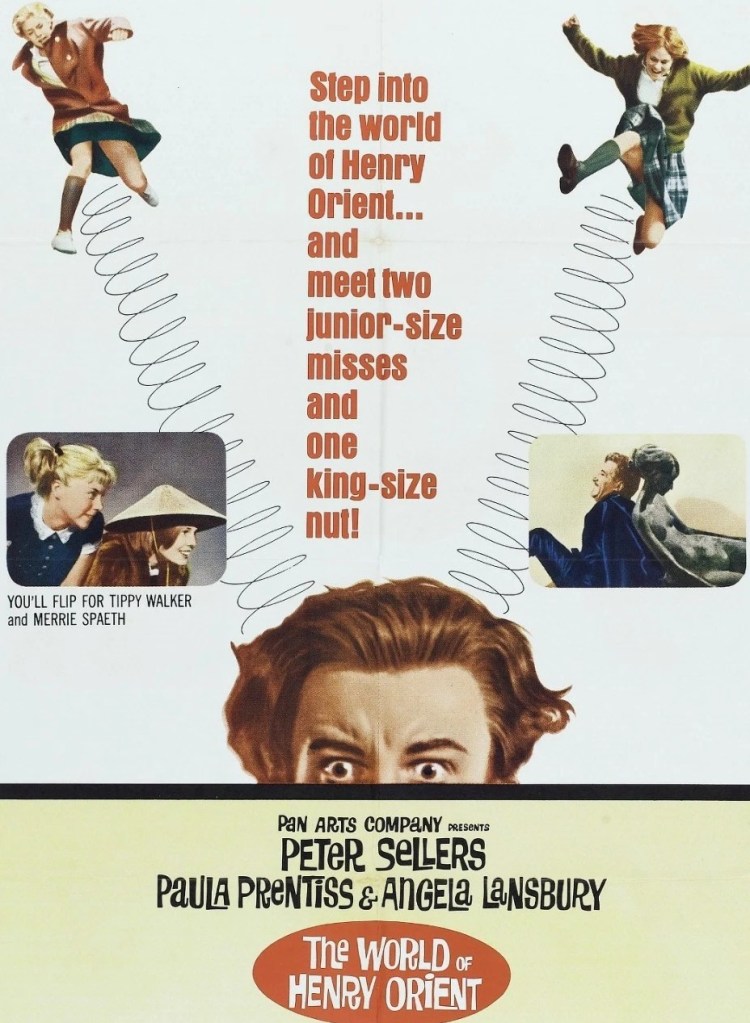
Peter Sellers does his best, but this isn’t Pink Panther territory and he’s forgotten the rule about working with animals and children and there’s little any comedian has in his locker that can compete with cuteness. Tippy Walker made only two more movies though one was the lead in counter-culture drama Jennifer (1971). Merrie Spaeth dumped Hollywood and went into politics. Neither of the girls was a particularly good actress and the movie just relies on their personalities. You might be more inclined to wonder why Paula Prentiss (Man’s Favorite Sport, 1964) and Angela Lansbury (The Manchurian Candidate, 1962) were wasted in small parts.

Possibly the most interesting name here is director George Roy Hill (Butch Cassidy and the Sundance Kid, 1969) making his movie debut. Written by Nunnally Johnson (The Dirty Dozen, 1967) and his daughter Nora, based on her novel.

An oddity, and harmless enough, but not one you’re going to be demanding needs reassessment.

The Lost World (1960) ***

A pair of pink knee-length boots, courtesy of adventuress Jennifer (Jill St John), are among the wondrous sights awaiting our band of intrepid explorers. She’s not the only curiosity, Professor Challenger (Claude Rains) is certainly the most obstreperous of archaeologists, aristocrat Hoxton (Michael Rennie) must have a screw loose to keep on resisting the charms of Jennifer, while Gomez (Fernando Lamas) brings along his guitar to (literally) strike a chord at appropriate moments. But it’s a fun ride – cannibals, volcano, giant phosphorescent spiders, carnivorous plants, and dinosaurs.

There are secrets, too. Hoxton has been here – a lost plateau in the middle of the Amazon – before and abandoned an earlier exploration in favour of hunting for the mythical diamonds of El Dorado, Gomez wants to kill Hoxton, Jennifer plans to hook a duke, and Professor Summerlee (Richard Haydn) wants more than anything else to prove Challenger wrong.

A bit of poetic licence here by the illustrator, Jill St John’s pants staying intact throughout.

And of course, in the way of dinosaur pictures, having battled to find the damned creatures, intrepidity goes out the window and the explorers spend all their time running away from the dinosaurs, seeking a hidden way down from the plateau, while being hunted by cannibals. Any time you see a ledge you know there’s something terrible above – battling monsters with long tails capable of swishing you downwards – or below, not just a sea of lava but a giant sea beast. The only element that’s missing is the booby-traps. Unfortunately, all the spunk goes out of the otherwise spunky Jennifer when faced with monsters and she turns into the quivering screaming cliché.

But the script is on point, feelings indicated by action rather than dialog. Having learned of Hoxton’s past, Jennifer spurns him by refusing a cigarette and a moment later taking one of her own, Gomez sneaks glances at a mysterious locket. With so much action there’s little time for romance so mainly by looks and the occasional rescue sparks fly between Jennifer and newspaperman Ed (David Hedison) and between Jennifer’s brother David (Ray Stricklyn) and the native girl (Vitina Marcus). And to alleviate the drab scenery there’s always Jennifer in a new bright outfit and, for comic effect, her poodle.

Given that writer-producer-director Irwin Allen (Voyage to the Bottom of the Sea, 1961) was unable to hire the likes of Ray Harryhausen (Jason and the Argonauts, 1963) for the special effects or even find the budget to utilize the drawings of Willis O’Brien (King Kong, 1933) who had been responsible for the stop-motion techniques in the original silent version of The Lost World (1925), the monsters come across on the small screen as acceptable enough. The infusion of sub-plots keeps the project ticking along.

Allen made significant changes to the original – introducing the diamonds, making Challenger rather than following in the footsteps of a previous explorer having previously visited the plateau but lost his proof, swapping the heroine’s pet monkey for a pet poodle, turning the heroine into a gold-digger, substituting as plateau inhabitants natives for ape men, and adding the heroine’s wardrobe. The spicing up of the story helps divert the tale in certain places from the dinosaurs, so the tension is not just waiting for the next attack.

Oddly enough, the film strikes a very contemporary note with regards to the current contentious issue of invasion of privacy. Challenger hits out at pestering journalists for what he views as the invasion of his privacy. Later on he says, “invasion of privacy gives man the right to kill,” but that bold statement relates to the explorers breaching the lost sanctuary, “we are the invaders.”  

It’s still pretty enjoyable stuff especially allowing for the budget limitations. None of the actors is called upon to do much, which is what you would expect, although Claude Rains is a surprise and Jill St John a delight. Michael Rennie  (Hotel, 1967), primarily there for his stiff-upper-lip, is provided with a neat reversal, the supposed hero with feet of clay. Claude Rains (Casablanca, 1942) is the standout as the feisty bombastic professor not above battering annoying newspapermen with his umbrella.

In an early role, Jill St John (The Liquidator, 1965) provides not just sultry evidence of her physical charms, but carries a terrific almost playful screen presence, though she’s better as the tough gal in a man’s world of the earlier section of the movie than the damsel in distress of the last part. Former Latin movie heartthrob Fernando Lamas (100 Rifles, 1969) is the only other one with a decent part, participating in the expedition to find his lost brother. Vitina Marcus (Taras Bulba, 1963) has a small but pivotal role. David Hedison (Live and Let Die, 1973) and Ray Stricklyn (Track of Thunder, 1967) are outshone by their respective amours. Jay Costa (Escape from Zahrain, 1962) is a pantomime villain.

Charles Bennett (City in the Sea, 1965) helped Irwin Allen flesh out the screenplay.

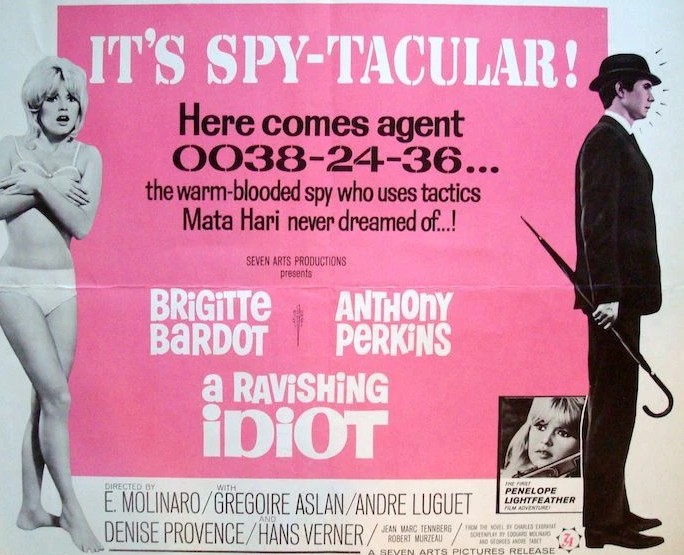
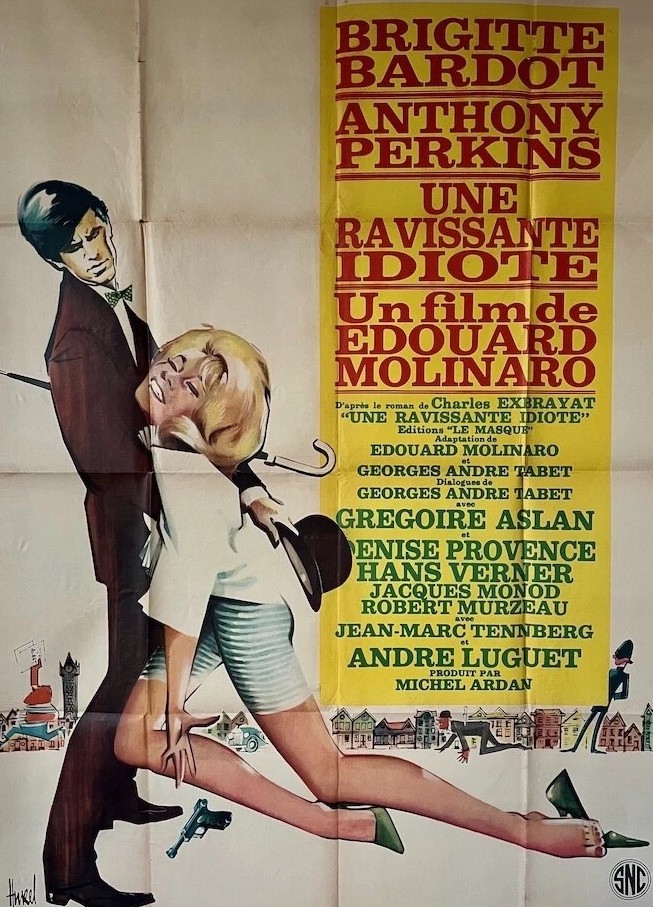
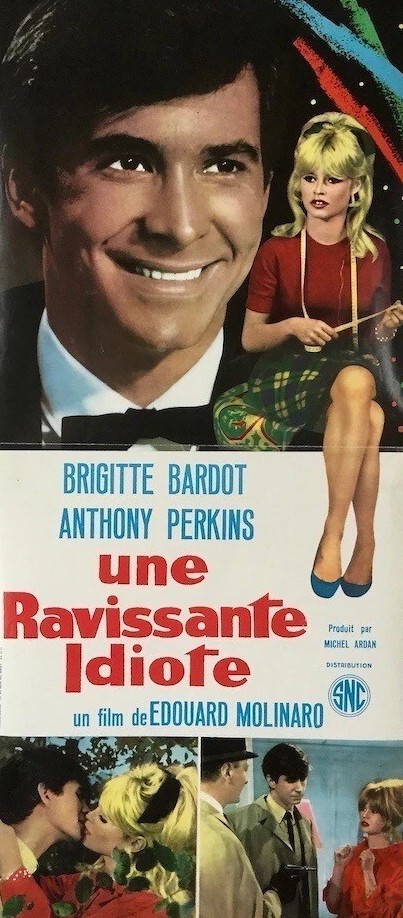
The Ravishing Idiot / Agent 38-22-36 (1964) ****

Hadn’t been aware that Brigitte Bardot (Viva Maria!, 1966) had made a spy picture. The original English title doesn’t indicate that. Given co-star Anthony Perkins (Psycho, 1960) had previously shown no predilection for comedy and that this was shaping up to be an espionage spoof, my heart sank.

Except for Jacques Tati – and he was only welcome in the arthouse – French comedies of this period did not translate, the antics of a Bourvil or Louis De Funes limited in their attraction. Spy spoofs suffered from over-playing or gormless characters.

So it is with some astonishment that I can report this French-made English-set number is an utter delight, full of terrific sight gags, buckets of charm and a storyline so daft it turns out to be seamless. There’s not one but two ravishing idiots – if you accept how the female gaze might look upon Anthony Perkins – and several other idiots who might not fall into the ravishing department.

Harry Compton (Anthony Perkins) is so smitten with seamstress-cum-model Penelope Lightfeather (Brigitte Bardot) that he over-runs his lunch break to catch a glimpse of her in a restaurant. Consequently, he is sacked from his job at a bank. Penelope is demoted to  seamstress for being too truthful when modelling a dress for wealthy client Lady Barbara Dumfrey (Denise Provence).

Meanwhile, Barbara’s husband, Sir Reginald (Andre Luguet), a first-class upper-class dolt, is being set up as bait to catch the head of the Russian spy network in London. He has been entrusted with a fake report which MI5 hopes will lead them to the top Russian spy whose code name could be Aunt Fanny.

Meanwhile meanwhile, Harry turns out to be a Russian spy. He is given the job of stealing the fake plans. After Penelope reveals she is a member of the Communist Party, he enrols her in his scheming. Unfortunately, she will have to be denounced afterwards.  Meanwhile meanwhile meanwhile, Barbara, believing the plans are some kind of birthday gift, has opened the safe to all her friends to show where they are hidden, not imagining that her household may contain a traitor. Indiscreet that she is, she’s even told Penelope the code to the safe.

It only remains for all the incompetents to express their idiocy in the widest possible manner. Naturally, misconceptions abound. An assassin is drugged by his elderly victim because she thinks he’s crazy. Penelope accuses the assassin, a cop, of being as useless a cop as Harry is of being a spy.

The visual gags are inspired, beginning with a credit sequence of bowler hats. The meet cute is under a table. Chaos ensues when a dog steals Penelope’s shoes. Getting a table in a restaurant is a version of musical chairs. When the door to the secret safe swings open Harry shuts it. A hovercraft version of a vacuum cleaner goes haywire. Bowties fall in ice buckets, dresses to the floor. Duffer Dumfrey leaves the spies alone in the room with the safe.

But there’s no wink to the audience. Nobody is playing it for laughs and therefore they come easily. Two twists at the end make sense of the title.

Brigitte Bardot displays a fine knack for comedy. Anthony Perkins makes the jump from awkward maladroit to charming.

Directed by Edourd Molinari (La Cage aux Folles, 1978) with a screenplay by Francois Billetdoux (La Gamberge, 1962) and Andre and Georges Tabet (Don’t Look Now..We’re Being Shot At, 1966) from the novel by Charles Exbrayat.

An effortless confection.

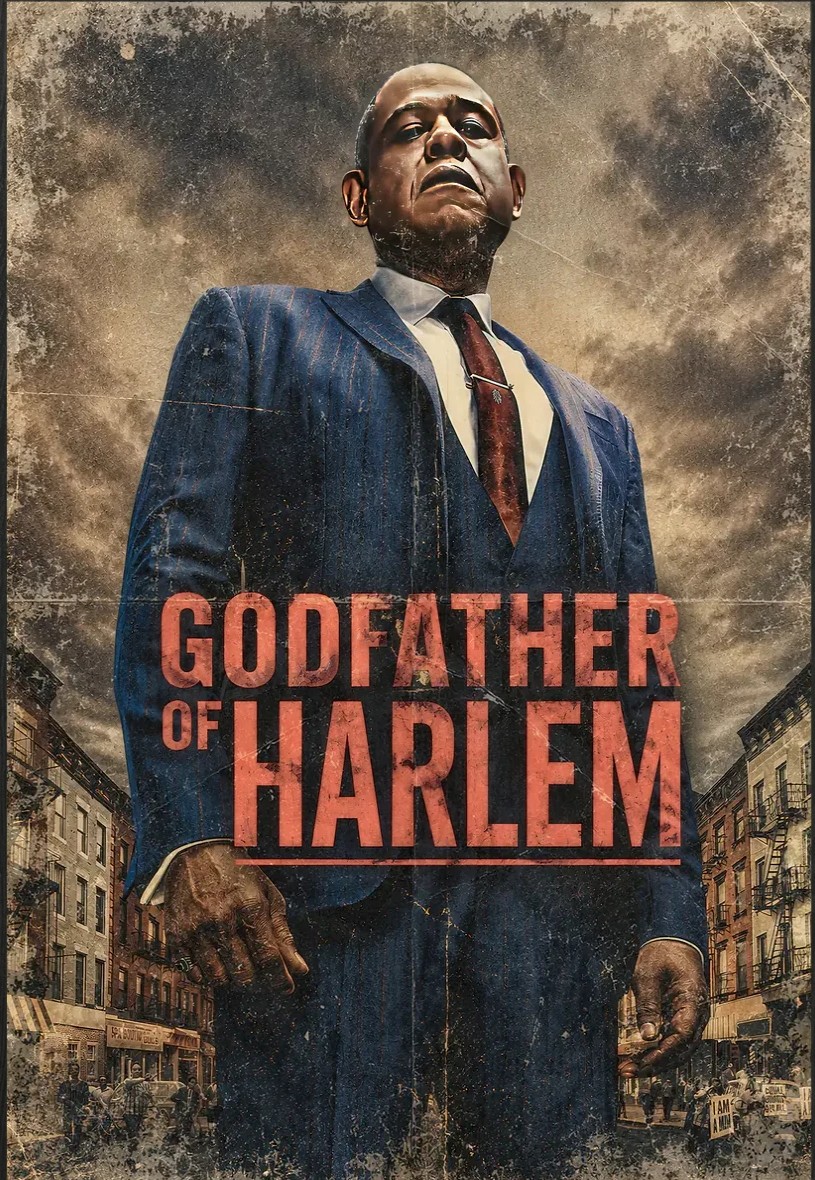
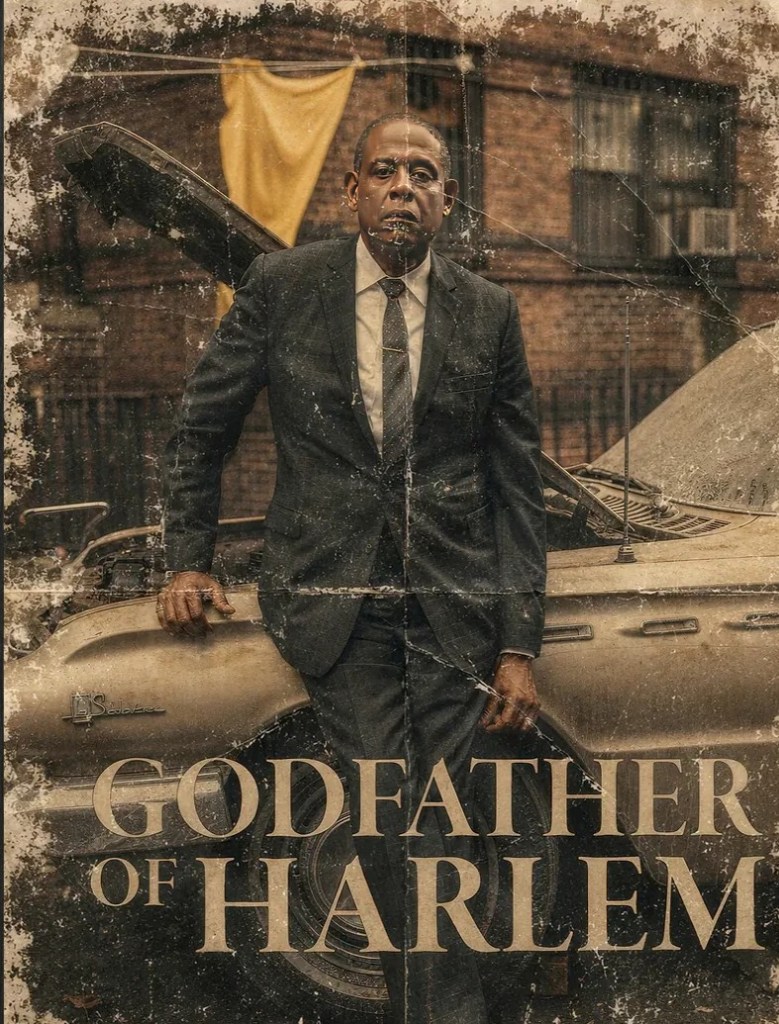
Godfather of Harlem – Season One (2019) *****

Harlem gangster kingpin Bumpy Johnson barely lasted five minutes of Ridley Scott’s masterpiece American Gangster (2007), just long enough to show the various elements of his complex character, his ruthlessness, his generosity and his awareness of a fast-changing world. To compensate, here’s a television mini-series devoted to his life, that, like the Scott epic, spreads out beyond mere shooting and killing and takes in endemic racism and politics.

As well as Johnson (Forest Whitaker) various real-life characters are knitted into the fabric: firebrand Malcolm X (Nigel Thatch), Congressman Adam Clayton Powell Jr (Giancarlo Esposito), Mafia bosses Vincent ‘Chin’ Gigante (Vincent D’Onofrio) and Frank Costello (Paul Sorvino), boxer Cassius Clay/Mohammed Ali (Deric Augustine), another Mafia thug Joey ‘Bananas’ Bonnano (Chazz Palminteri), heiress Amy Vanderbilt (Joanne Kelly) and Mafia snitch Joseph Valachi (Richard Petrocelli) – subject of an entire film The Valachi Papers (1972) played by Charles Bronson.

Initially, I had been less keen on this tale and was on the point of giving up after a couple of episodes, but it proved a slow-burn and once the narrative extended out into the wider world of politics I was hooked.

The story begins in 1963 with Bumpy Johnson released from Alcatraz after a ten-year stretch and trying to recover his power base in Harlem which has been encroached upon by Vincent Gigante who shows little sign of letting go. At its heart, traditionally, this would focus on the battle between Bumpy and Gigante over who controls Harlem, both restrained from all-out war by dictate of the Five Families who rule Mafia New York.

But it’s the narrative tentacles that soon take over. Bumpy, intending to go straight romantically-speaking and not play around any more, rebuffs former lover Amy Vanderbilt, even to the extent of turning down the $300,000 loan he requires for survival if it means dropping his pants for her. Ironically, though his wife Mayme (Ilfenesh Hadera), while playing the jealousy card and appearing to do her sexy best to keep him interested solely in her, is actually enjoying an affair with a young boxer.

Powell, desperate for headlines, makes the case that the cops are always pulling in Black gangsters over the numbers racket while ignoring all the Italians involved in the same illegal activity. Malcolm X, Bumpy’s longtime buddy, is planning to overthrow the pacific nature of the Islamic cause and turn it into a violent representation of the Civil Rights cause.

Even Black recording studios refuse to produce civil rights records in case it brings down the wrath of the ruling White community.

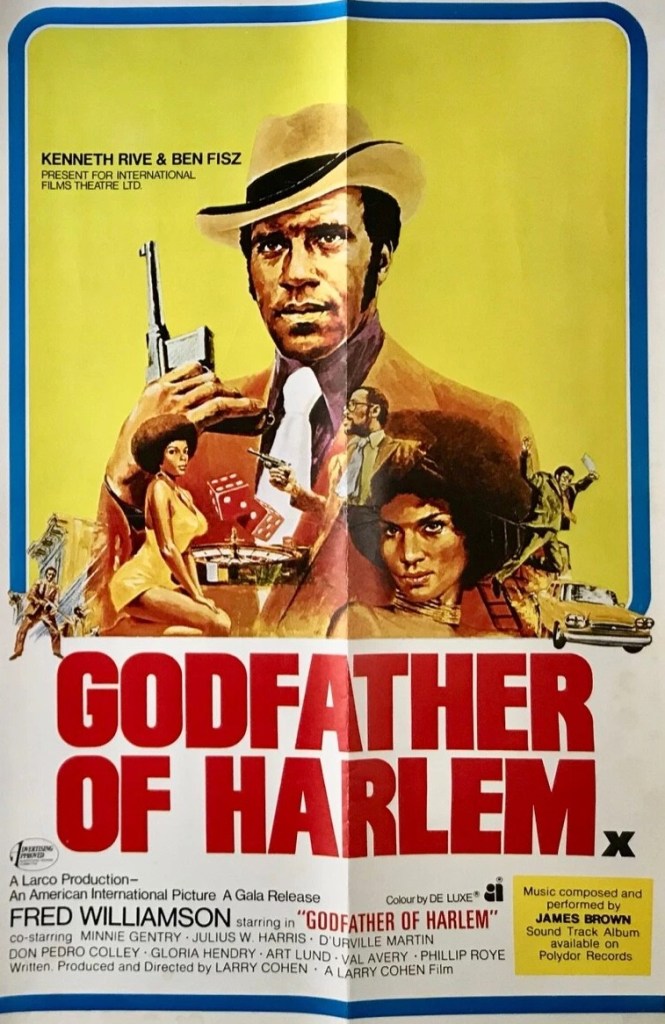
Not to be confused with this 1973 Blaxploitation number which started life as ‘Black Caesar’ until some clever clogs thought to take advantage of ‘The Godfather’ boom.

And just to add some more spark to this tinderbox, Bumpy’s daughter Elise (Antoinette Crowe-Legacy) is a heroin addict who, in her recovery, begins working for Malcolm X, though she’s not above snitching on him to the leader of the Islamic movement. Gigante’s daughter Stella (Lucy Fry) has taken as a lover Black musician Teddy Greene (Kelvin Harrison Jr), an arrangement that infuriates her father to the extent that he plans to rub out Teddy. Though, if he just let matters play out, he could rely on the cops to disrupt that relationship. Any Black man caught in a clinch with a White woman is assumed to be a pimp and the girl a prostitute, so it’s standard practice to chuck them both in prison. Gigante confesses to a priest that he killed Joey Bananas’ son. And while despised by Gigante, Bumpy is friendly enough with Frank Costello to meet up for games of chess.

And if that’s not enough to keep the narrative wheels well and truly greased, there are some terrific power play subplots. Gigante wants Cassius Clay, then just a contender for the heavyweight crown, to throw a fight and Bumpy backs the boxer as much out of the chance to annoy his rival as in sympathy for the pugilist.

Bumpy goes into partnership with Joey Bananas, again to thwart Gigante, only to find himself outsmarted when Gigante rigs the numbers racket so that Bumpy is faced with a debt of $300,000 that he doesn’t have. He tries to erase the debt by wiping out Valachi but that fails so he’s facing ruin.

In passing, we learn how the numbers racket actually works. The winning number is the last three digits of the amount taken at the box office at a racecourse. One of Gigante’s thugs compromises the gay accountant in charge of doing the adding up at the racecourse and gets him to change the number to Bumpy’s detriment. Normally, there’s no point rigging the number, and the Mafia plays hardball with anyone interfering with their system, but this time the whole of Harlem has bet on a number that has particular significance. So Gigante makes sure this number comes up so that Bumpy’s number is up.

The dramas and crises are evenly meted out and there’s scarcely a character who at some point is not struggling with a major personal dilemma. This has the kind of plotting that Taylor Sheridan excels at, setting up characters facing not just the usual problems of dealing with rivals but with characters facing family issues.

This season ends with the assassination of JFK which, ironically, helps the Mafia, the FBI’s major investigation of the criminal gangs being sidelined in the aftermath of the Presidential killing, and, equally ironically, pulls the plug on Bumpy’s plan to safeguard his own survival.

Great cast in superb form especially Oscar-winner Forest Whitaker (The Last King of Scotland, 2007) and Vincent D’Onofrio (The Eyes of Tammy Faye, 2021). Nigel Thatch is especially convincing as the soft-spoken firebrand – he had played Malcolm X before in Selma (2104) – while Giancarlo Esposito (Maxxine, 2024) has a ball as a tricksy but charming character.

Perhaps as surprising is the focus on the women who in gangster pictures are generally relegated to the roles of molls. Here, all defy the males in their lives. Ilfenesh Hadera (Highest 2 Lowest, 2025), as Bumpy’s wife Mayme, stands up to her husband with her upfront involvement in the civil rights movement while Antoinette Crowe-Legacy (Passing, 2021) as his daughter Elise not only joins the Nation of Islam but threatens to blow apart the family by revealing a major secret, and Lucy Fry (I Live Here Now, 2025) as Gigante’s daughter resorts to violence to take revenge on her father.

Hugely enjoyable – and thought-provoking.

I’m hooked. Catch it on Amazon Prime.

The Devil’s Advocate (1997) *****

Ripe is not the word. Crank this up to 11, race on past full-tilt boogie and you’ll still need more in the tank to get anywhere near to how mad, bad (in a good way) and enormously entertaining is this trip into the murk. Not been such fun being bad on screen since Basic Instinct (1992).

You thought it was tough enough for Tom Cruise in The Firm (1993) trying to extricate himself from the job-of-a-lifetime handling business for the Mafia. That’s nothing to finding yourself hired by the Devil.

And all because – and what’s wrong with that – you can get any sleazeball off the terrible crimes they have committed. Principle be damned when it gets in the way of winning. It’s hardly enough to scorn your client afterwards when you know he’s guilty and going to keep on committing heinous crimes until a poorer defense attorney can’t keep him out of jail. As well as that skill, he’s a genius at jury selection, finding flaws others miss.

After getting a child abuser off, top lawyer Kevin Lomax (Keanu Reeves), who’s never lost a case, is headhunted by a glitzy New York company, so swimming in loot that he’s parked in an enormous upscale apartment where wife Mary Ann (Charlize Theron) can spend her time drinking cocktails, hanging out with other glam wives and dedicate herself to deciding what color to paint the walls of their dwelling.

He’s pretty glad to get away from all that Florida sunshine and doom-laden mum (Judith Ivey), a hellfire Christian who pretty much sees damnation in just taking a breath, never mind hiving off to the Babylon of New York.   Naturally, you’re talking long, long hours and a wife who’s beginning to feel neglected and worried that there’s just too many sexy women hanging around Kevin’s charismatic boss John Milton (Al Pacino), especially redhaired Christabella (Connie Nielsen) who might swing both ways and to whom hubby is inching dangerously close.

Never mind the drama played out in the courtroom, Kevin’s sudden arrival out of nowhere and the notion he might be the boss’s protégé sets tensions flaring in the firm especially with managing director Eddie Barzoom (Jeffrey Jones) who gets the notion his job is on a shoogly peg.

Virtually all of this is played out as if we’re in F1, so a bucket of shouting and finger pointing and for all his smarts it’s clear Kevin is dumb enough to get seduced by all the high-living. So let’s cut to the great scenes, of which there are many.

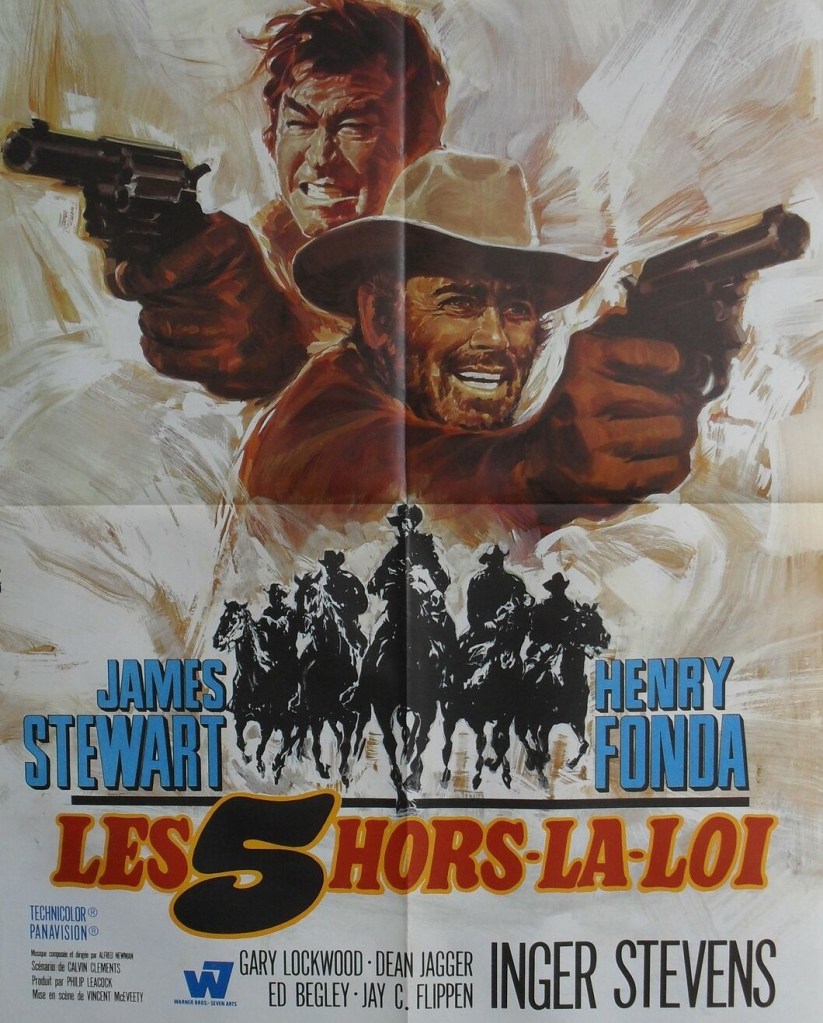
Yep, the universal poster has arrived. Just change the title into your own language.

Anyone who tries to betray Milton comes to a sticky end. Making love to his wife, Kevin fantasizes that he’s having sex with Christabella. A naked baby plays with bloody intestines. Mary Ann stands up naked in a church. Milton dipping a finger into holy water in a church sets it boiling. How does Kevin discover that another client on trying for murder is lying – it’s a matter of circumcision. The walls of Milton’s apartment come alive, ensuring a harmless fresco can turn into an orgy. Kevin’s mum isn’t quite the saint she pretends. His father isn’t who he’s been brought up to believe.

Mary Ann starts losing her marbles, gets visions, sees women turn ferocious and the naked baby is actually playing with removed ovaries, because she is infertile and pretty soon bonkers enough to get committed and pretty soon so over-the-top that she’s going to go the extra damnable mile.

Somehow in all this malarkey, you’re not particularly surprised to discover that Milton is actually Kevin’s father, though he’s been spreading his seed far and wide and it’s taken quite a while before he’s found any of his offspring capable of inheriting his empire. But you might balk at the notion that Milton wants to guarantee the continuity of his line through the small matter of incest.

Three twists at the end ensure the picture ends on the same bonkers high note that it began.

Al Pacino was on a hell of a roll. He’d become something of an elder statesman, helping bring through younger rising stars – Johnny Depp in Donnie Brasco (1997), Russell Crowe in The Insider (1999) and Cameron Diaz and Jamie Foxx in Any Given Sunday (1999). He relishes this performance, sly, knowing, subtle, even sexy (though charismatic is probably a better description), a master of seduction,  and giving vent in long speeches as he argues that God has abandoned Earth.

You wouldn’t think Keanu Reeves had it in him to go toe-to-toe with such an accomplished actor, but he does, and anyone who just thinks of him as the largely monosyllabic John Wick who lets violence do his talking had better think again. Charlize Theron (The Odyssey, 2026) is pretty good, too. This brought Connie Neilsen (Gladiator, 1999) to Hollywood’s attention.

Directed with zest by Taylor Hackford (An Officer and a Gentleman, 1982) from a screenplay by Tony Gilroy (the Bourne series) and Jonathan Lemkin (Shooter, 2007) from the book by Andrew Neidelmann.

Hypnotic.

You can catch it on Amazon Prime.

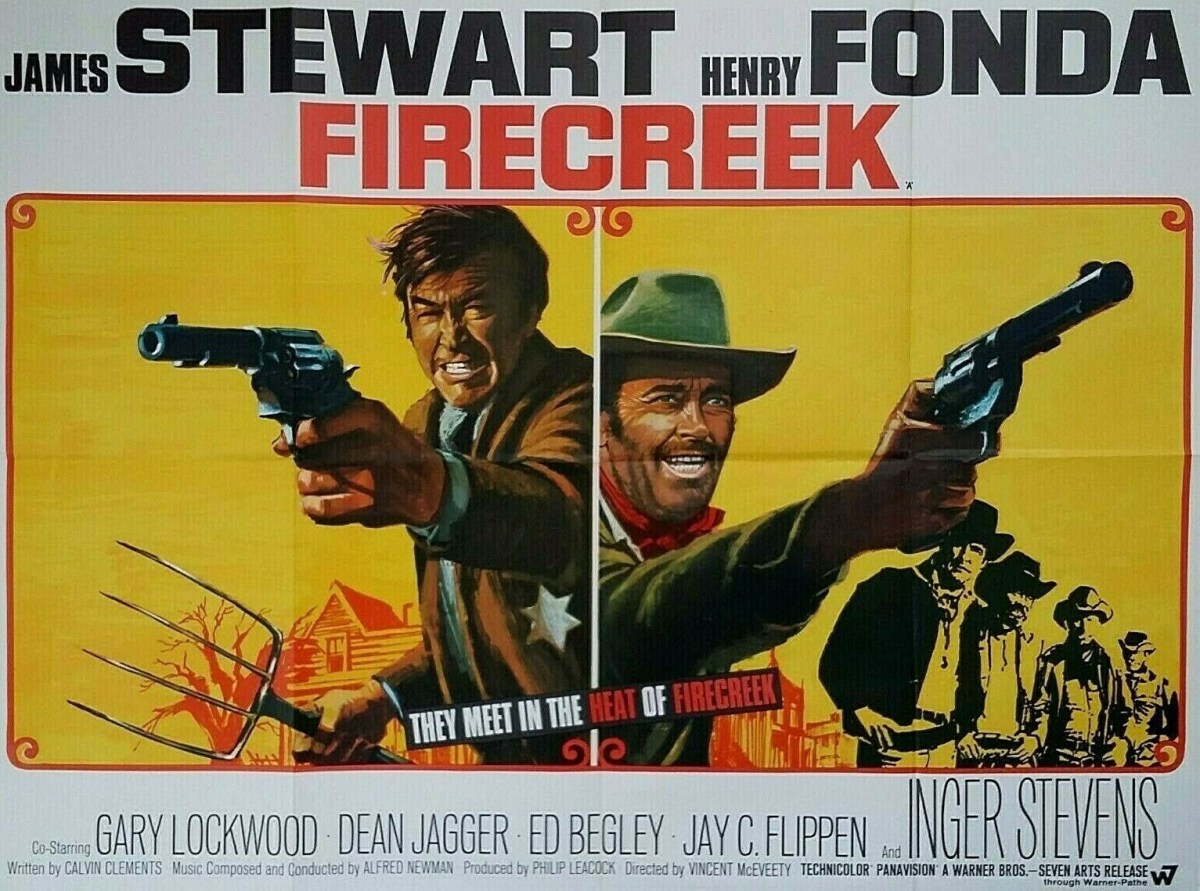
Firecreek (1968) ****

Unfairly overlooked intelligent western with terrific performances from the two male stars and thematically prefiguring both Once Upon a Time in the West (1969) and The Wild Bunch (1969). Granted it appears slow but it’s the slow-burn kind of slow that works exceptionally well. Too often under-stated means under-rated while subtlety rarely attracts critical plaudits. And if you see the role of the screenwriter as probing personality and uncovering self-delusion rather than merely devising pithy lines then this is one for you.

Johnny (James Stewart) is a two-bit (“honorary”) sheriff  in a two-bit town stuffed full of losers. Into his patch comes a gang of hired killers fresh from range wars led by the wounded Bob (Henry Fonda) and including cocksure trigger-happy Earl (Gary Lockwood), mean Norman (Jack Elam) and dumb Drew (James Best). With Bob side-lined with his injury, it’s not long before the gang kicks off, Earl half-drowning a man, smashing up the saloon and nearly killing a pompous preacher (Ed Begley) while Norman attempts to rape Native American squaw Meli (Barbara Luna). They think a few dollars will repair the damage and nullify hurt feelings.

But for the most part tensions just simmer, it looking like the outlaws are temporary visitors, Johnny using diplomacy to settle matters, and none of the townspeople inclined to get into a shooting match. And there’s a rich seam of characters who even when they skirt cliché seem to offer if not necessarily something new but not shop-worn either and with emotional depth.

Headstrong teenager Leah (Brooke Bundy) is attracted to dangerous Earl even though he would as soon rape as romance her, level-headed Evelyn (Inger Stevens) finds solace in a man she knows is a killer and midwife Dulcie (Louise Latham) is so dry her language could cut you with a knife. Johnny’s too trusting wife Henrietta (Jacqueline Scott)  bewails “why did we settle for less than we wanted,” storekeeper Whittier (Dean Jagger) would be a knife-whittling charming elder statesmen except for his habit of going for the jugular,  and hero-worshipping stable boy Arthur (Robert Porter), too old to be just cute and verging on a calamity, “couldn’t tell you what day it was.” And there’s a hint that the upstanding Johnny ain’t quite so perfect, the question of Meli’s white child left dangling in the air.

It’s the kind of “cemetery” town where people end up when they’ve nowhere else to go, the inhabitants discomfited “because today didn’t turn out like yesterday.” Johnny’s the worst offender, stopping here on his way to a better life further west because all he “saw here was land nobody wanted and ground that nobody would be challenging me for.” The only person who will stand up for law and order is the witless Arthur who unwittingly triggers trouble. The townspeople mirror the villagers in The Magnificent Seven (1960) who require the assistance of mercenaries before they can stand on their own two feet except in this case nobody is rushing to the rescue.

The initial stand-offs between Johnny and Bob are under-stated, serving to stoke up tension, and the twist is that it’s Bob who tries to avert a showdown, feeling sorry for the sheriff, knowing he will be no match for a proven gunslinger, while the climax provides a surprising savior. In fact, Bob is the most self-aware of all the characters. He tells Evelyn “you are living even more in the past than I am” and that “I don’t have your temperament to accept another empty day.” And even though he doubts the quality of his gang, he can’t give them up, or the power of being in charge. “I’ve been alone, didn’t like it…I can’t gamble with being a nobody, I’ve been that, doesn’t work for me.”

Among the ton of great touches are Johnny’s badge, made by his kids, title misspelled, the climax in a dust whirlwind, the pompous preacher whose bluster can’t save him, and the most terrible wake you will ever witness.

It’s quite astonishing that a film with such a high quotient of characters – except Johnny at the end – lacking redeeming features could work so well. Director Vincent McEveety was the epitome of a journeyman, best known for television and Disney (Herbie Goes Bananas, 1977) go-to guy. This was his debut feature – if you exclude Blade Rider, Revenge of the Indian Nations (1966) stitched together from episodes of television’s Branded – and it sank at the box office despite the presence of Stewart and Fonda, admittedly at the tail end of their marquee power.

Outside of the wake and the climax, the best scenes are under-played. McEveety lets the words do the talking, a good choice given the exemplary writing (as indicated above) and three principal actors who can be relied upon to ignore the temptations of over-acting. He handles the action well and there’s a growing sense of terror as the townspeople realize what their cowardice has let them in for.

There’s a nod here and there to High Noon (1952) with the town full of cowards but from today’s perspective it’s as a precursor that the movie is perhaps more interesting. Henry Fonda’s (The Best Man, 1964) performance, complete with pitiless stare and thick stubble, seems a rehearsal for Once Upon Time in the West (1969) while his gang, like The Wild Bunch (1969), complete with squabbling outlaws and leadership challenge, are “running out of borders.”  You might notice how Fonda’s death here – the movement to the side when shot, the shock in his eyes – while markedly less operatic closely resembles a similar scene in Once Upon a Time in the West. And if you want further reference to Sergio Leone’s epic, how about a nearby town called Sweetwater.

You might think you’ve seen this James Stewart (The Rare Breed, 1966) performance  before but it’s a subtle variation on the hapless character of Mr Hobbs Takes a Vacation (1962) and far removed from the take-charge characters of this decade. This is man who has fooled himself into thinking he is something he is not, a man of the west in name only.

Inger Stevens (House of Cards) again delivers, like the other townspeople acting tough to hide the weak interior. There’s a terrific supporting cast. Gary Lockwood (2001: A Space Odyssey) is given more rein than anybody else outside of Ed Begley (Warning Shot, 1967). Look out also for Dean Jagger (Elmer Gantry, 1960), Richard Porter (Mackenna’s Gold, 1969), Jay C. Flippen (Hellfighters, 1968), Louise Latham (Marnie, 1964), James Best (Shenandoah, 1965), Brooke Bundy (The Gay Deceivers, 1969) making her movie debut, Barbara Luna (Che!, 1969) and Jack Elam (Once Upon a Time in the West).

Credit for the intelligent screenplay goes to Calvin Clements (Kansas City Bomber, 1972), also making his first picture.

Discover WordPress

A daily selection of the best content published on WordPress, collected for you by humans who love to read.

The Atavist Magazine

by Brian Hannan

WordPress.com Blog

News, Tips & Website Tutorials