De Gaulle: Resistance (2026) ***** – Seen at the Cinema

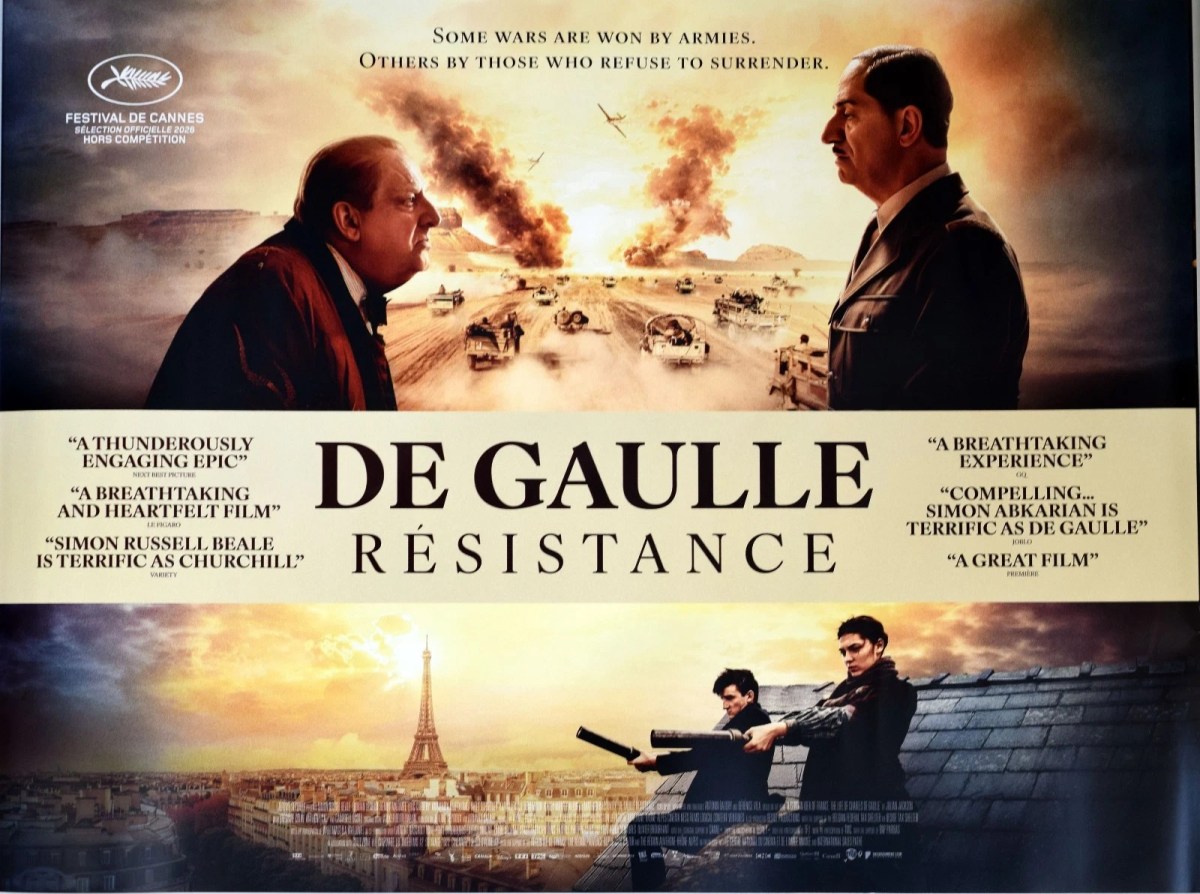
As far as the Brits and Americans were concerned the North African campaign of World War Two consisted of the former’s Field Marshal Montgomery knocking hell out of German General Rommel at El Alamein and the latter’s General Patton demolishing Panzer divisions at will. The fact that the British victory would not have occurred except for one largely forgotten battle has been completely ignored. The Brits were holed up in Tobruk with even less chance of escaping the combined German and Italian armies than at Dunkirk, no fleets of small boats likely to come to the rescue in the Mediterranean.

It took an incredible stand-off at a tiny desert post called Bir Hakeim to buy the British enough time to escape to Tobruk and regroup and eventually conquer Rommel at El Alamein.

Who inhabited this outpost and sacrificed thousands of lives? The nascent Free French Army of around 4,000 men, commanded by veteran General Koenig (Benoit Magimel,) with neither tanks nor airplanes holding out against the vastly superior forces of Rommel fully equipped with both tanks and airplanes.

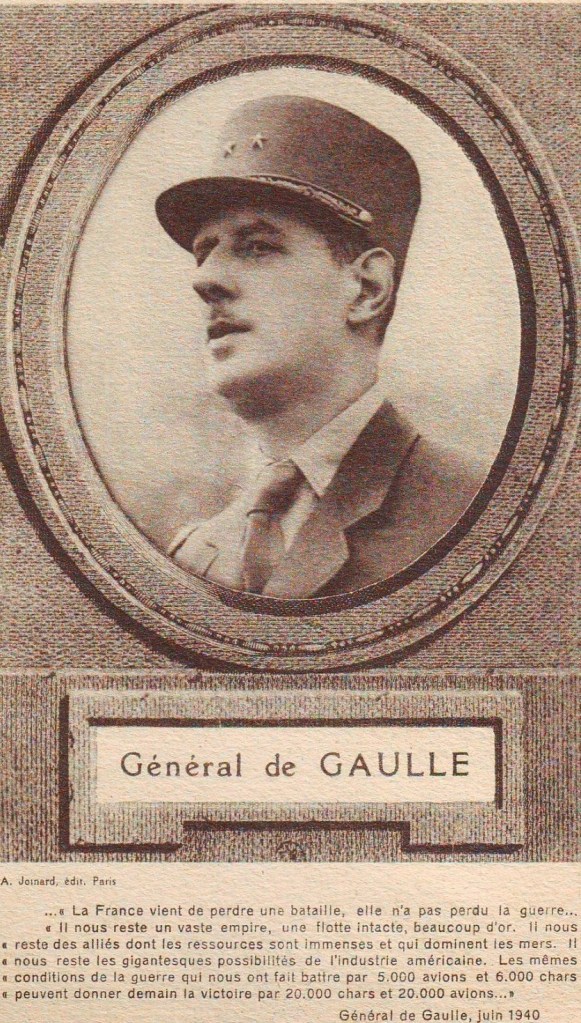
Just one of the many nuggets in this totally absorbing film about the titular French general, exiled in London, who became the voice of French Resistance after Marshall Petain had surrendered to the invaders and set up the collaborative Vichy government.

It was a heck of a feat for De Gaulle because even in France nobody had a clue who he was. At the start of the war he was an insignificant colonel way down the pecking order and I doubt if any of the French people knew of his courageous counter-attack against the Germans. The Brits had even less of a clue about him and his arrogance certainly didn’t endear him to the British upper classes who were running the country.

Support for him among the various French officials living in London was negligible and for a good while he looked like a raving madman with his insistence that France had not surrendered. After the war, he was famously a thorn in the British side, and from this film you can see why as he was subjected to personal humiliation and betrayal by his supposed Allies. But he did have panache, chutzpah, and that was something Churchill, an old soldier himself, admired.

He launched what appeared the most bizarre offensive against the Germans, aiming to set off a tinderbox of revolt among the French colonies in Africa, beginning with Chad and Cameroon, hoping that such insurrection would spread to Dakar and Algiers on the North African coast and thus make it easier for the Allies to attempt a landing. Given that his forces on the ground numbered between one and six, this was either strategic genius or the work of a deluded lunatic.

Luckily, the colonies, thousands of miles away from the Germans, could ignore Petain and raise up the French flag in defense. The plan fell to pieces, however, when De Gaulle shot himself in the foot by refusing to allow the British Navy to attack Dakar since it was being held by French troops and he didn’t want to kill his own countrymen, as the British had done when it destroyed the French fleet to avoid it falling into German hands.

At various points, De Gaulle is stabbed in the back by Churchill and his own group in England, betrayed, exiled even in his exile, routinely treated as a nobody. He should have salvaged his reputation at Bir Hakeim, given the murderous action permitted the Brits to escape Tobruk, and while he was feted in the streets and praised in the British newspapers, he was still distrusted by the Allies and when Algiers was liberated it was collaborator Admiral Darlan (Mathieu Kassovitz) who was put in charge of all the French forces in Africa.

Luckily, there was a deus ex machine to hand, a young man called Fernand (Florian Lesieur), who appeared to interrupt general proceedings in the movie from time to time and whose sole role, it would appear, was to prove that there was resistance on the ground in Paris although at that point it merely took the form of demonstrations. Fernand was in many ways an echo of De Gaulle. When he first called upon Parisians to rise up in civil disobedience, only a handful responded. Later, he, too, entered exile, in Algiers. Fortunately, he was at hand to assassinate the French commander, leaving the way open for De Gaulle to regain command.

You’ll have to wait till Part Two of this epic epic (we’re talking nearly six hours in total)  to discover what happened next.

You’ll find me in that audience. We’re familiar with Churchill’s struggles in World War Two, but although I knew De Gaulle was the self-proclaimed leader of the Free French, I had no idea who he was and what he actually did. In truth, the image most fixed in my mind about the man who later became the French President was that he was the guy who ducked to avoid an assassin’s bullet but that was merely a fiction – The Day of the Jackal.

A ton of this is just politics, but it’s the nerve-shredding politics of trying to hold your ground when you’re being hammered on all sides.

Simon Abkarin (Casino Royale, 2006)  is superb in the title role, given the opportunity to express all sides of the General’s character – petulance, arrogance, cunning, loyalty, stoicism, determination, willpower, self-belief – and the moments when he realizes he is condemning his valiant Free French troops to death by insisting they do not attempt to escape Bir Hakeim, but fight a rearguard action to the bitter end (or until the British evacuated Tobruk), is immensely moving.

Simon Russell Beale (The Magic Faraway Tree, 2026) portrays the hard-drinking British leader, perplexed by De Gaulle’s behavior that threatens to ruin his relationship with the President Roosevelt (Campbell Scott). Florian Lesieur (Cassandre, 2024) has to touch on as many emotions as Abkarin. With Abkarin and Lesieur hogging the dramatic high notes, there’s not much room for another breakout performance but I suspect we’re going to see more of Anamaria Vartolomei (The Count of Monte Cristo, 2024)  who plays Livia, the Jewish friend of Fernand.

Superbly directed by Antonin Baudry in only his second movie after The Wolf’s Call (2019). As much as we are looking in the direction of young bucks who can turn a million-dollar budget into sheer gold in horror pictures like Backrooms (2026), we should also be acknowledging someone who can handle a bigger-budgeted effort with such aplomb. He co-wrote the screenplay with Berenice Vale in her movie debut based on a book by Julian T. Jackson.

Exceptional. Highly recommended.

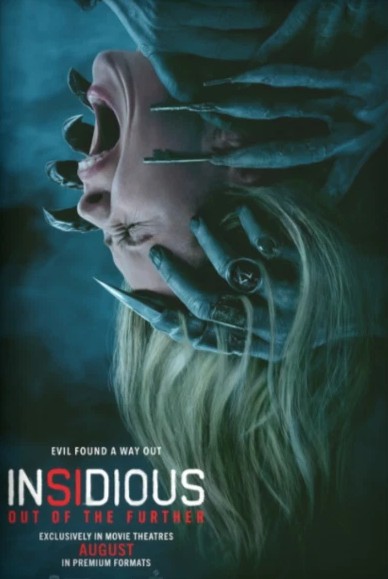
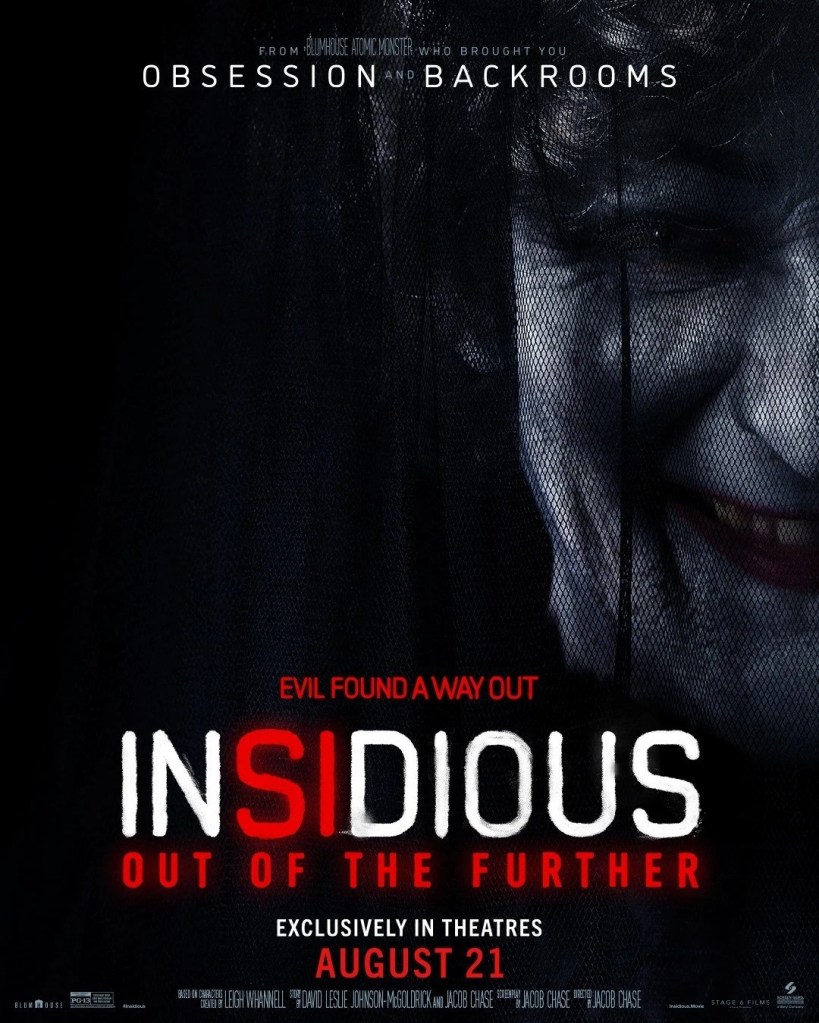
Insidious: Out of The Further (2026) **** – Seen at the Cinema

I can hardly keep up with the endless permutations of the MCU never mind keeping up with the various iterations and side hustles of horror series such as The Conjuring and this. So I tend to come at these fresh, as if they are an entirely new movie and I don’t have to spare a thought for how this ties in with what’s gone before. It was only when it was over I realized I had been tensed up the entire time, my heart constantly in my mouth, such was the dexterity with which the material was handled.

And while this isn’t in the same league as this year’s horror breakouts Backrooms and Obsession, it follows a similar line in that threat rather than gore is the keyword. Perhaps the one stroke of genius is to set parts of this in a dentist’s surgery, a place where our incipient fear never goes away, probably the only medical professional whose attentions we desperately try to avoid, whether that’s because, regardless of any soothing words, treatment is accompanied by pain, or whether, mouth willingly or reluctantly open, we are inviting invasion.

Momentarily in the middle of the picture it gets stuck in low gear as exposition takes center stage and we transition from haunted house to what was previously known as the “astral plane” but here is known as “The Further”, a kind of limbo where the dead, with the right guide, can return to Earth. And they’re not planning, having regained life, to subsist on blood so that’s a mercy, and they’re not, either, the sexy teenagers who abound in the genre. They’re old and decrepit, might require tanks of oxygen to survive.

Single mom Gemma Hall (Amelia Eve) still lives in the house where her mother went mad and seemingly committed suicide in conspicuously violent fashion 20 years before. The neighbourhood is beginning to be occupied by odd types, three old crones wheeling oxygen tanks. Gemma is beset by nightmares, one of which echoes the Backrooms notion of crawling further and further into intimidating confined space, entered not through a mysterious door in a wall as with Backrooms, but in something as un-mysterious as the makeshift den concocted by daughter Maya (Island Austin).

There’s another door in the proceedings, the Red Door that formed the title of the previous episode, but to be honest, I couldn’t recall its purpose in the prequel, and fact, here, it turns out (cue another IP involving other doors denoted by other colors) not to be the only one.

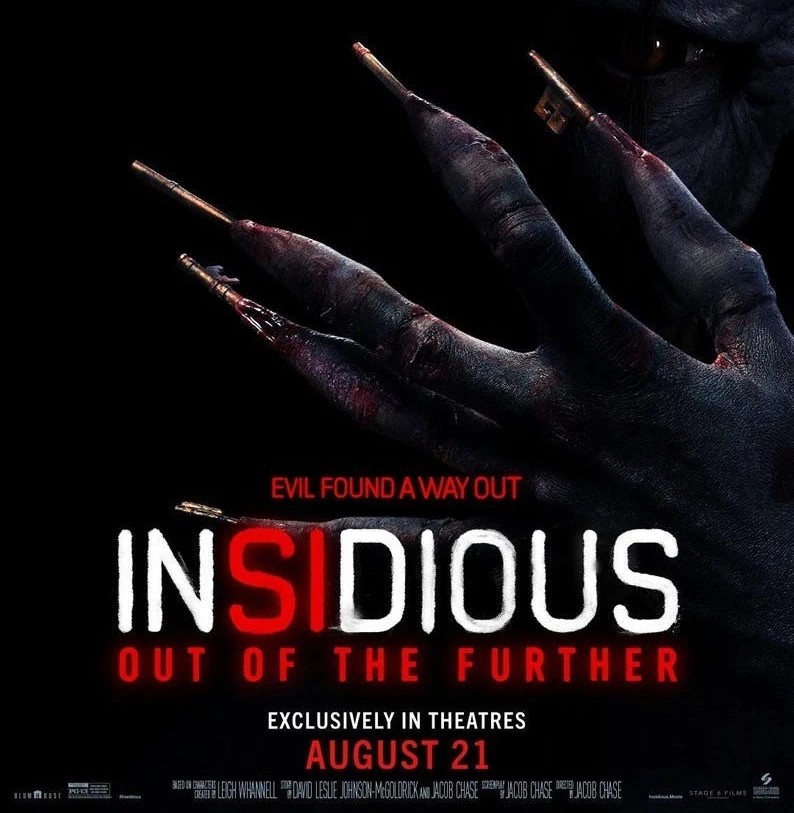
One awful crone turns up at the surgery and from his mouth Gemma draws a long string of human hair and various other bits of gunge from his decrepit teeth before discovering he has two sets of gnashers. Gradually, she realizes she is a conduit to this other world, with the help of tattooist-cum-mystic Claire (Maisie Richardson-Sellers).

The exposition, always a bit dodgy, leads her to believe that she can enter The Further and get back out of it without much ado, but that’s a misconception and in quick succession three generations of Halls are caught up in the scary proceedings with the steel-fingered monster leading a gang of trapped people back to life. Gemma’s boyfriend Nick (Brandon Perea), a cop, is on hand mainly to prove that you can’t trust a man to do a woman’s job.

All told, I found this riveting stuff, especially the nightmares that turned into supernatural reality and the gradual encroaching on the normal by every shade of abnormality. There were a number of standout sequences, including the long crawl behind the sofa, the excavation of the terrible mouth and the onslaught of creatures from The Further.

Sometimes in  horror films, just as the main criteria of presenters of cookery shows is too ooh and aah convincingly, all the heroine has to do is provide a varied register of screams but like the main characters in Backrooms and Obsessions, Amelia Eve (The Blind, 2023) is several levels  above the basic.

Director and co-writer Jacob Chase (Come Play, 2023) helps make this a banner year for horror.

Stomach-clutching.

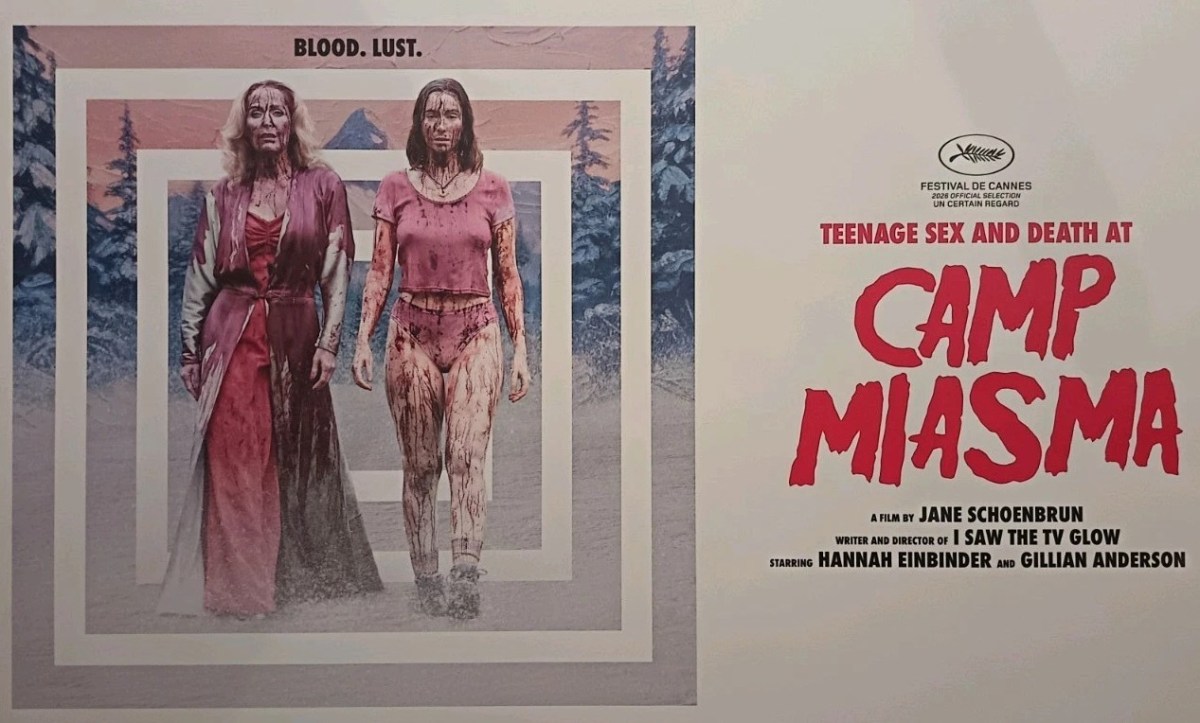
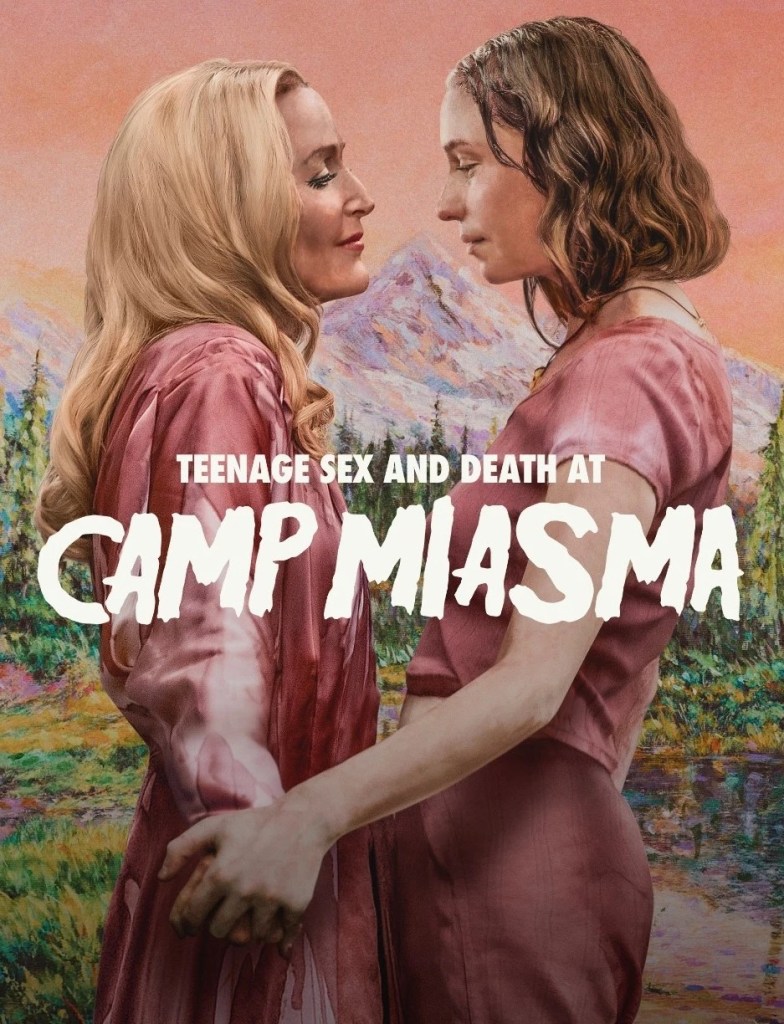
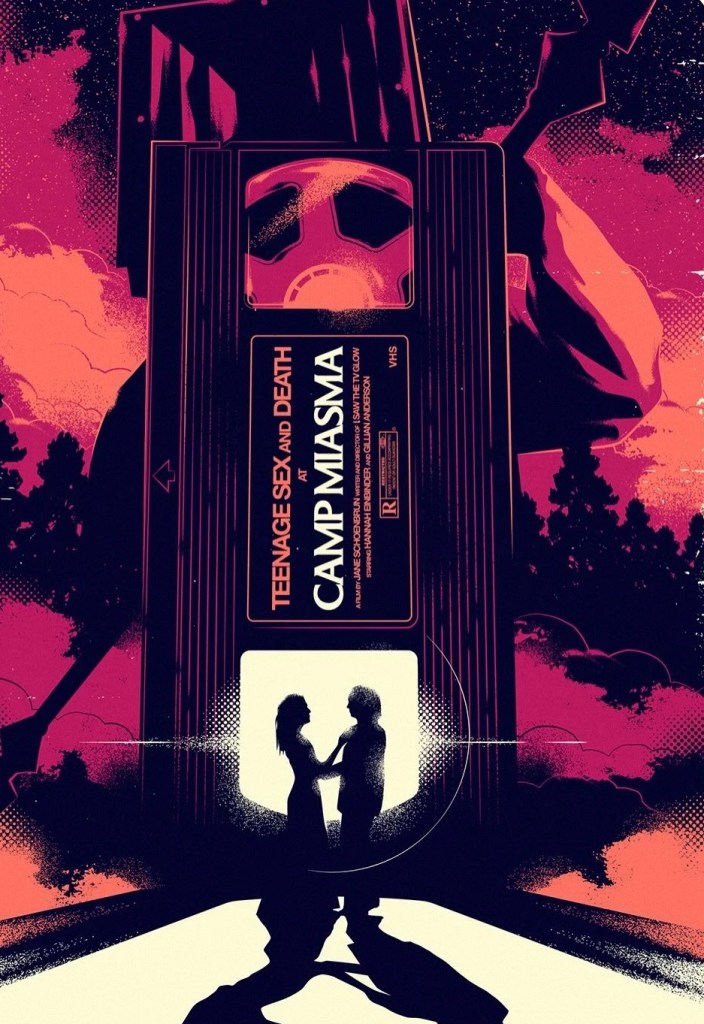
Teenage Sex and Death at Camp Miasma (2026) * – Seen at the Cinema

Pretentious rubbish. An almighty bore masquerading as a) a spoof on slash horror films and b) having something important to say while c) not coming anywhere close to achieving either. Another of the dumb propositions foisted upon us by the connivance of the film festival industry to chuck at the general public movies that hoity-toity festival progammers and audiences believe deserve wider attention.

The most annoying element of this is that the subtext is merely a variation of the Dracula hypothesis that women are sexually drawn to dangerous men who can drive them into ecstasies of fear and penetrate them with sharp weapons. Here, this is spelled out in more detail, “the heroine” only able to achieve orgasm through terror and after running terrified with her breasts bouncing around and her erect nipples visible through translucent material.

And if you can work out how anyone can walk around with a slab of metal stuck to their head, you’re better than me. Oh, and to keep the woke element happy, the killer transforms from male to female.

And while we’re at the barking mad end of the horror subgenre let’s ensure that it’s the monster who’s creating the movies from his lair deep under a lake and that everyone who appears in the movies are his creations.

This is in the Anora (2024) league for repetition. Where that was sex, sex, sex, until we got the point, and way after we had got the point, this is blood, blood, blood, gushing literally like fountains or explosions from what’s left of a body once the monster, known as Little Death (which as you’ll no doubt be aware is a sly nod to “le petit mort”, the French description of orgasm), has finished chopping off select body parts.

Too much of this film is bits of the Camp Miasma series of films, initially big hits but then fading to direct-to-video flops, and which contain little more than variations of blood, blood, blood and people being impaled or chopped up.

If there is any emotional element it’s frigid lesbian Kris (Hannah Einbinder), technically in a polyamory relationship but that’s only because she permits her female bisexual partner to regularly have sex  with a male, finally managing to overcome her inhibitions, helped along by Billy (Gillian Anderson), the original star of the Camp Miasma picture who bowed out after the first episode, and now lives on an abandoned tourist attraction based on the original or the original set (I couldn’t work out which).

In between making eyes at Gillian and watching the old movies in a cinema at Camp Miasma, the full-of-herself Kris is pitching her barmy notion for a horror picture where all the characters are figments of the monster’s imagination. Actually, the movie business section is the only bit that works, although Kris fails to note the negative response from potential stars.

Given that blood is the dominant color scheme, it’s not surprising that Kris and Billy end up soaked in blood and wandering, in surreal splendour, around a service station where, with equal surreality, kids are more interested in shooting each other with water guns than any stray adults who haven’t bothered to change out of their blood-soaked Halloween costumes.

This has come at us with the glow of critical approval, but, actually beyond the very repetitive obvious and some smartass intellectual dialog, this is an over-inflated mess.

I felt sorry for Hannah Einbinder (Seekers of Infinite Love, 2026) who clearly can act but less so for X-Files star Gillian Anderson who draws too much on Sunset Boulevard (1950). Written and directed Jane Schoenbrun (I Saw The TV Glow, 2024) who should stop believing her own publicity.

Truly awful.

Mutiny (2026) **** – Seen at the Cinema

Hooray! The Stath is back. After the turgid Shelter (2026) and the disappointing A Working Man (2025), and while this doesn’t reach the heights of The Beekeeper (2024), it’s a more than serviceable action thriller that will keep his fans – such as moi – happy. Though you’d need Alistair MacLean, “the king of the action thriller” (though I say so myself – see my latest book),  to pump some novelty into a seagoing action piece.

This does have one other novelty for a Statham thriller in that it hands him a female buddy, a companion in arms I hasten to add rather than a lame love interest. I’m guessing that should this turn into a global hit, a sequel will be on the cards, where he is called into to help said lady who will transition into a damsel in distress, especially given she’s a single mom, a category which seems irresistible to screenwriters.

But, basically, Statham does what he does best, which is to crack heads, strangle, stab and shoot bad guys, solve a mystery and right whatever wrongs have been committed. On the strict confines of a cargo ship, there aren’t so many places to hide, not that our Jason is the hiding sort, so it’s a barrage of non-stop action as either the bad guys come after him or he goes after the bad guys. There’s some novelty too in the killing. As well as the standard weapons, our hero makes use of a ship’s hook and a handy harpoon, not to mention a Rolex watch.

I have to warn you the title is a bit of misnomer, but it serves its purpose, which is to warn of an armed uprising on board a ship.

Cole Reed (Jason Statham) ain’t a marine. He’s bodyguard to billionaire shipping magnate Tibu Campallo (Ramon Tikaram) who has just retired when he’s killed in Bangkok in an ambush organized by Jaran Daniles (Simon Kluth) for reasons that are unclear except that Tibu is on the point of selling his business. Naturally, corruption being what it is these days, Cole is figured for the murder.

A clue leads him to sneak aboard the Artemis, one of Campallo’s gigantic vessels. He hides out in a lifeboat, the modern kind that offers easy concealment not an antique of Titanic vintage. Also, on board, reluctantly, and at very short notice is replacement Third Mate Angie Ellis (Annabelle Wallis).

Cole’s investigations lead him to a hidden cargo of trafficked people. Angie finds the same but when she reports back to Captain Marko Madsen (Roland Moller) she quickly realizes he’s in on the game. So she skedaddles and eventually teams up with Cole, though they are at various times separated so that Cole can do what he does best which is to escape from impossible situations while it’s left to Angie to manage a wound and incapacitate various crew members on the bridge, from which she can send out a distress signal.

The signal is picked up by a passing U.S. naval vessel commanded by Capt Adam Spencer (Adrian Lester). You think the Yanks are going to get there and rescue Cole and the people, but there’s a twist, the trafficked people are due to be offloaded mid-ocean to another gang. So although Cole has already thinned out the competition, the new arrivals bulk it back up.

It’s preposterous to expect anything new in the action thriller game, even Die Hard (1988) simply played a new angle but was hardly more than a twist on various westerns and anything else where people needed rescued. So as long as the plot doesn’t drift into the maudlin like Shelter, and as long as the action races along, that’s about all you need, as well as an actor who’s a believable action hero.

Plus a director who knows his stuff. Jean-Francois Richet is of that ilk, having directed, most recently, Plane (2023) which follows a similar narrative, as well as superb pictures about criminals, The Emperor of Paris (2018) and especially the two Mesrine (2008) movies. He sticks to the knitting and that’s all you need. There’s a couple of twists to the tale, but that’s standard in today’s thrillers. Annabelle Wallis (Mercy, 2026) kicks ass with the best of them.

Written by Lindsay Michel. In his debut, and J.P. Davis (Plane).

Statham back on form which bodes well for The Beekeeper 2 out in the New Year.

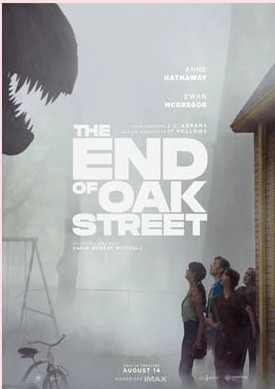
The End of Oak St (2026) ** – Seen at the Cinema

Truly terrible. When your standout scene is two dinosaurs humping each other or having their snouts covered in ice cream or a slithosaurus slithering through a house your picture is in dire trouble. Basically, it’s like a random selection of Steven Spielberg offcuts – the dazzling overhead light from Close Encounters of the Third Kind (1977), the kids cycling in E.T (1982), the heaps of dinosaur pooh from Jurassic Park (1993). Plus being trapped in a car and feral threats in the kitchen, also from Jurassic Park.

This feels like a sci fi B-movie from the 1950s when the plot comprises preposterous nonsense. I laughed out loud when I listened to the stars, clearly barely able to contain themselves when they had to do the exposition. A wormhole or a ripple in the universe had either transported a small town back 200 million years to the prehistoric period or the reverse, transported the prehistoric period complete with jungle and swamps to 1982.

And someone’s being trimming the budget. Once the dinosaurs go on the attack there’s barely a dozen people around for them to prey on, you’d have expected an entire feast awaiting them on the streets.

The cast are required to do little more than run and scream and the screenwriter little more than find ways of the cast getting in the way of the dinosaurs rather than doing their level best to hide. And there’s one of those dumb twists at the end to provide us with a happy ending, so that one of the stars, whose been munched by a dinosaur, can be reunited with his family.

The wormhole bounces around a bit, from house to house, garden to garden, for some reason. It’s this big wobbly ball and minus any of the sensible mumbo-jumbo analysis or assessment of other big-budget sci fi pictures this relies on someone deducing that if they jump into this big wobbly ball they’ll end up back where they came from.

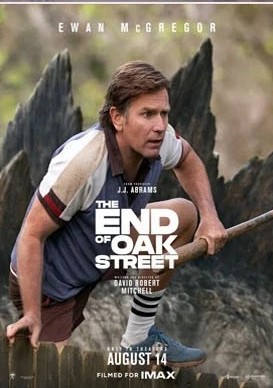
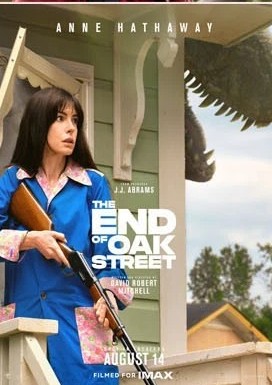
Anne Hathaway has blown all the esteem she’s earned from this year’s The Devil Wears Prada 2 and The Odyssey and unless it was her heart’s desire to make the kind of picture that is cannon fodder for Netflix or Amazon rather than 20th Century Fox it’s an awful decision. This is Ewan McGregor’s first picture since the low-budget Mother Couch (2023) and it’s not done him any favors unless a casting director is looking for someone who can run and scream and both at the same time.

Trying to fill out the story we have dissatisfied couple Denise (Anne Hathaway) and Greg (Ewan McGregor). She’s a budding writer, but her novel reveals that she’s desperate to leave husband and two kids. He’s lost his job but hasn’t told his wife, making ends meet by making  pizza deliveries and he’s prone to secret nips of whisky.

Daughter Audrey (Maisy Stella) is a big fan of Carl Sagan and astronomy and can chip in with nonsensical mumbo-jumbo should the need arrive. Son Brian (Christian Convery) is being bullied by a bigger boy, but that’s because he broke the arm of the bigger boy’s younger brother, so not quite as straight-on a victim as he appears. And there’s a dog, improbably called Starbucks, which both goes missing and turns up as the narrative requires.

Apart from the slithosaurus and the dinosaurs shagging each other there’s nothing new here. The premise is as barmy as One Night Only (2026), so maybe studios believe they’ve dumbed down the movies sufficiently for audiences to accept the dumbest of plots.

Nobody comes out of this well, least of all uber-producer J.J. Abrams (Star Wars – Episode VII: The Force Awakens, 2015). Lazy rip-offs did not seem to fit into his portfolio.

Writer-director David Robert Mitchell made a splash with It Follows (2014) but doesn’t carry this off.

The best you can say is that maybe it will be candidate for the So-Bad-It’s-good subgenre.

Laughable.

The Odyssey (2026) ***** – Seen at the Cinema, Twice in the One Day

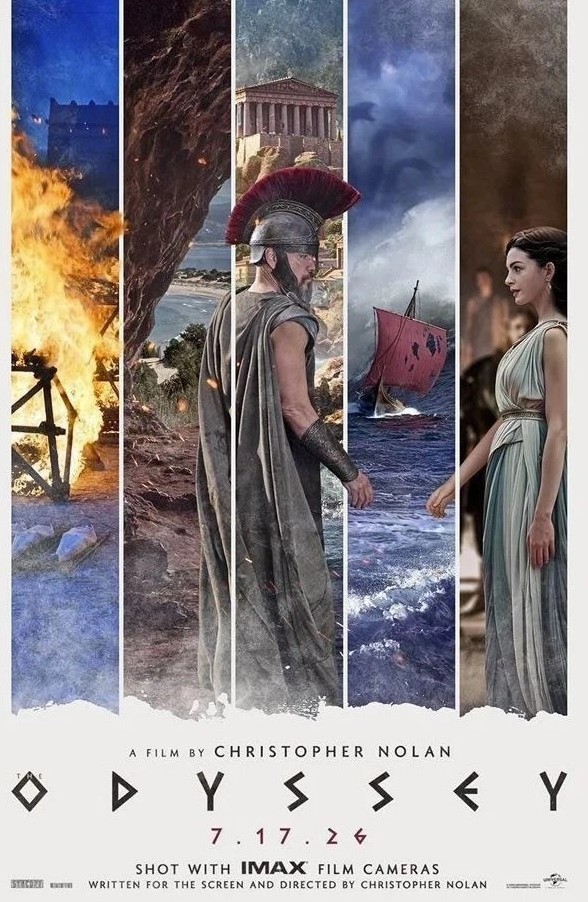
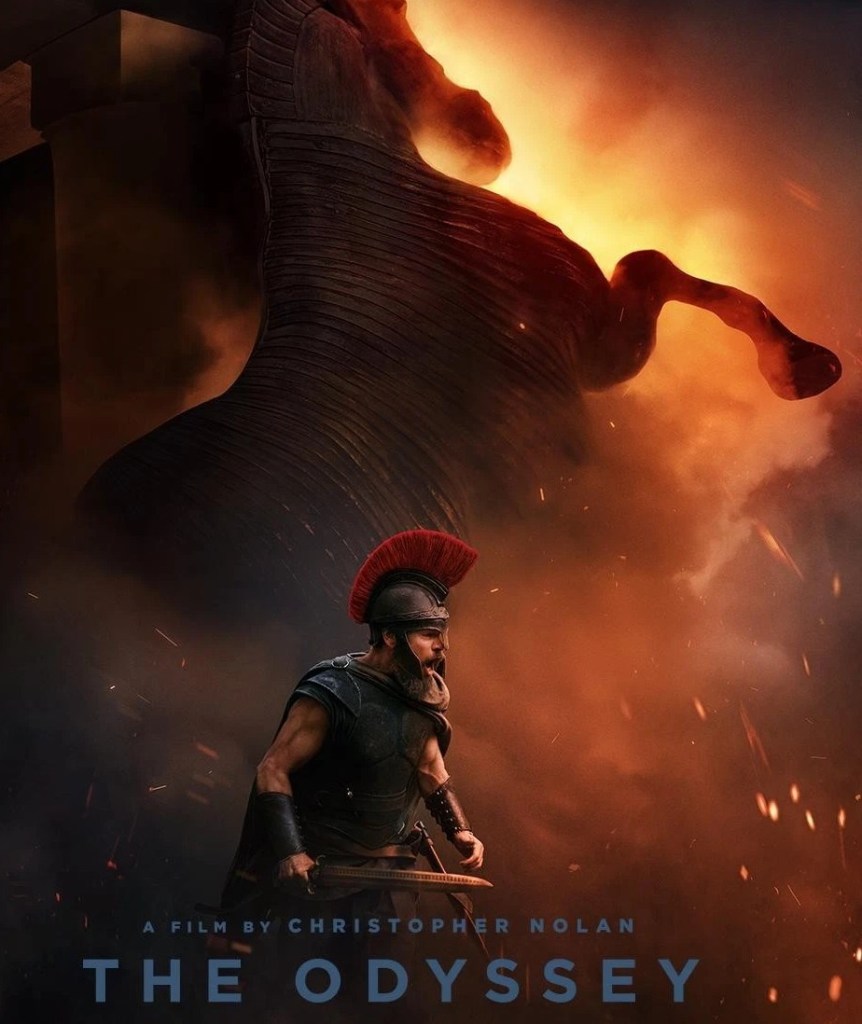
What sets Christopher Nolan aside is not the visual dexterity, imagination or the confidence of his reach, it’s his intelligence. Once you come to the tortuous end, having perhaps shifted time or point of view several times, and wondered at all the amazing stunts or worlds he has opened up, you are left with something utterly human. Emotion that leaves characters bereft. Here, he turns on its head the greatest deception ever practised in war – the Wooden Horse of Troy. Instead of, as since time immemorial everyone has done, praising the trick and Odysseus the ultimate trickster, he chooses another route in his ruthless examination of the artifice. In sneaking the horse into the besieged city, Odysseus has broken the most basic rule of Civilization. A stranger must be given hospitality. And the visitor must leave his weapons at the door. In this picture it’s known as The Code of Zeus, but it’s what held ancient Greek Civilization together, that trust in one another. Strangers were welcomed and once inside a foreign abode they did not seek to carry out violence.

On top of that, the hero realizes what a hero actually is. Once the warrior in him is let loose, the havoc is unjustified. That PTSD and war guilt would probably be enough for any contemporary audience, yet the confession of Odysseus turns out to be the re-wooing of his wife Penelope, telling her he is not at all, after two decades apart, the man that he once was.

There are few directors who can genuinely claim to be auteurs. Usually, they are not screenwriters so are stealing someone else’s original invention. While Nolan relies heavily on the writings of the legendary Homer, he not only Nolanesques everything, the screenwriter in him takes care to ensure that the groundwork is quietly laid for what will spark emotional tumult later on.

There are four exceptionally clever examples of this. Odysseus’s old dog is on the point of death. When Odysseus strokes him, in recognition the dog wags his tail. At this point Odysseus is in disguise – two decades separating him from an infant son now grown up – and it’s how his heir Telemachus recognizes him. Emotional beat no 1. The younger Odysseus has been gored in the ankle by a boar. When he returns, still in disguise, his nurse recognizes him from the scar. Emotional beat no 2. Odysseus has a bow that only he is strong enough to use. Once it’s ready, he’s in the habit of pulling on the bowstring so it gives a distinctive twang. It’s that twang that makes wife Penelope, in a state of desperation, realize that her husband has come home. Emotional beat no 3.

But the best is the mystery sewn into the lining of the script. Everyone lives in a state of fear. They are preparing for invasion by the unknown. “People from the sea” are reputed to be on their way, who knows from where, nobody knows who they are. When the solution is found it’s an overriding emotional beat no 4 – Odysseus himself is one of the people from the sea, the Greeks who landed on the shores of Troy and set siege to the city and eventually burned and pillaged it.

For all the monsters and witches and slaughter, there is incredible restraint. There’s no nudity. There’s no rape shown or even visually implied. But when Odysseus speaks of the horror of war, we know to include that element.. While it’s certainly stated on several occasions that women, either killed as innocent bystanders or left behind and prey to any passing male predator, they have ways of defending themselves. The witch Circe can turn men into pigs. The sorceress Calypso uses lotus leaves to keep her lover sedated. Penelope keeps her suitors at bay with a clever ruse. Agammemnon’s wife can’t be bothered with any of that, she simply cuts her husband’s throat on his triumphant return.

I’m not so familiar with the Greek myths. I’ve not read Henry Treece since childhood. So I can’t tell you what Nolan has adapted, eliminated or added. But I can tell you it all adds up. All the legends I expected are here – the one-eyed Cyclops, the whirlpool Scylla, Charybdis, Circe, the lotus eaters, the underworld, Troy. I don’t recall the giant soldiers so they may or may not be figments of the director’s imagination. For heroes, the Odysseus gang do a lot of running away as they head for home. And for all that he is hailed as the cleverest of the Greek generals, Odysseus is a mite dumb at time, incapable of reading the room on the boat, unwisely irritating monsters.

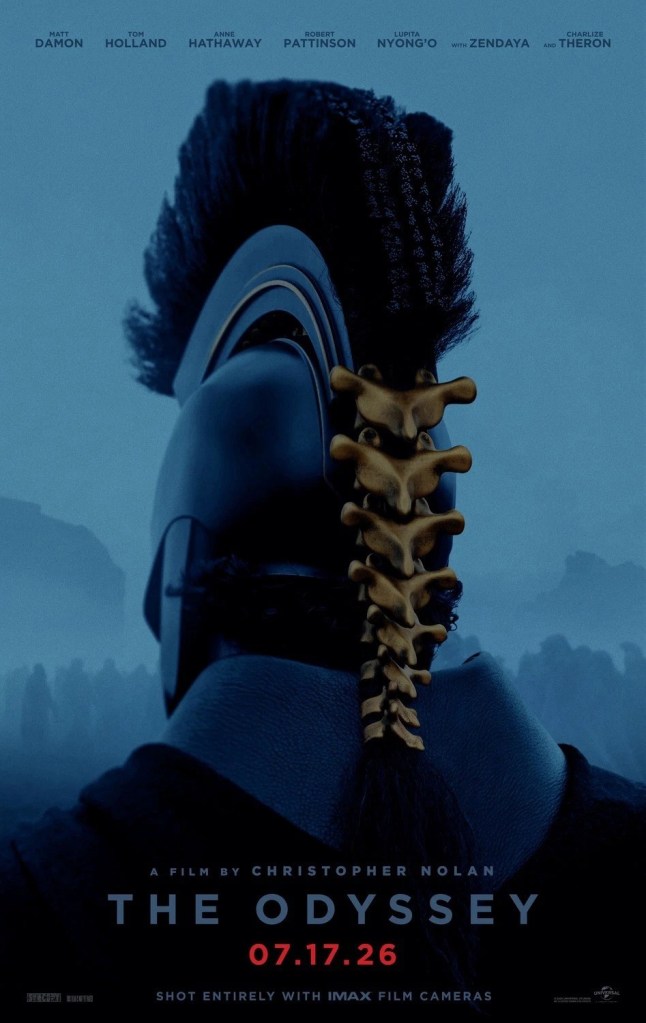
Matt Damon (The Martian, 2025) is terrific as Odysseus, and while redoubtable in action, is tasked with carrying the emotional thrust, the fatigue and guilt of war, the knowledge that his actions could bring down Civilization. Anne Hathaway (The Devil Wears Prada 2, 2026) is surprisingly good as his wife, the totem for the women left to suffer. Of the rest, Robert Pattinson (The Batman, 2022) is easily the pick as the glowering surly cowardly suitor. Samantha Morton (Minority Report, 2022) is gleefully venomous as Circe. I’m not entirely sure what Zendaya (Challengers, 2024), as ghostly goddess Athena, is doing in the mix and Charlize Theron (The Old Guard, 2020) as Calypso is mostly there for the exposition and it sometimes feels as if that’s the sole purpose of Tom Holland (Spiderman: No Way Home, 2021) as Telemachus.

Jon Bernthal (The Accountant 2, 2025) and John Leguizamo (Tin Soldier, 2025) stand out for the wrong reasons. They sound as if they’ve strayed in from a Martin Scorsese gangster picture.

Back in the days before VHS, DVD and streaming, you couldn’t watch a picture over and over. But occasionally, I’d be so taken with a movie that, in the days of continuous performance (you might not know what that is but when you go to the movies these days it’s for a separate performance, everyone kicked out after the showing) I would stay on and watch it again.

First time I did that it was for Terence Malick’s hypnotic Badlands (1973) – Martin Sheen, Sissy Spacek, Erik Satie – when it turned up in the UK as the support to It’s Alive and there have been countless other examples. So, on my weekly Monday outing to the cinema, I decided I’d take in this picture again rather than grumble at whatever The Evil Dead Burns brought to the table.

When you watch a movie a second time, you’re not held in your seat by the narrative. You know what’s going to happen. You can marvel at all the rest, the writing, the camera movement, the special effects, the acting. I’ll probably go back next week.

Truly awesome.

Backrooms (2026) ***** – Seen at the Cinema

Cinema is my oasis of calm. I go once a week on the same day (Monday), on my own, usually sit two rows from the front so I’m not interrupted by heads or popcorn or whispering, and sit in darkness for three or four hours, occasionally longer. It’s usually a seamless procession from car park to cinema. For a number of reasons, I hadn’t managed my weekly visit for a couple of weeks so I had a lot of catching–up to do so much so that a quadruple bill was on the cards. What could possibly go wrong to disturb my tranquillity.

For a start, my regular car park was shut for maintenance. So instead of a 10-minute walk from car park to cinema I had a 25-minute trudge. Access to the cinema proved more difficult than usual. The escalator was out of action and for some reason the people who make escalators make them with bigger steps so it’s always an awkward climb. Things didn’t look any better when I settled down for my first screening. There was no sound. We were shunted out and into another movie. I can’t even be bothered to tell you how bad it.

So my day required immediate redemption. I wasn’t so sure about Backrooms given I didn’t have the same ecstatic reaction to Obsession as others.

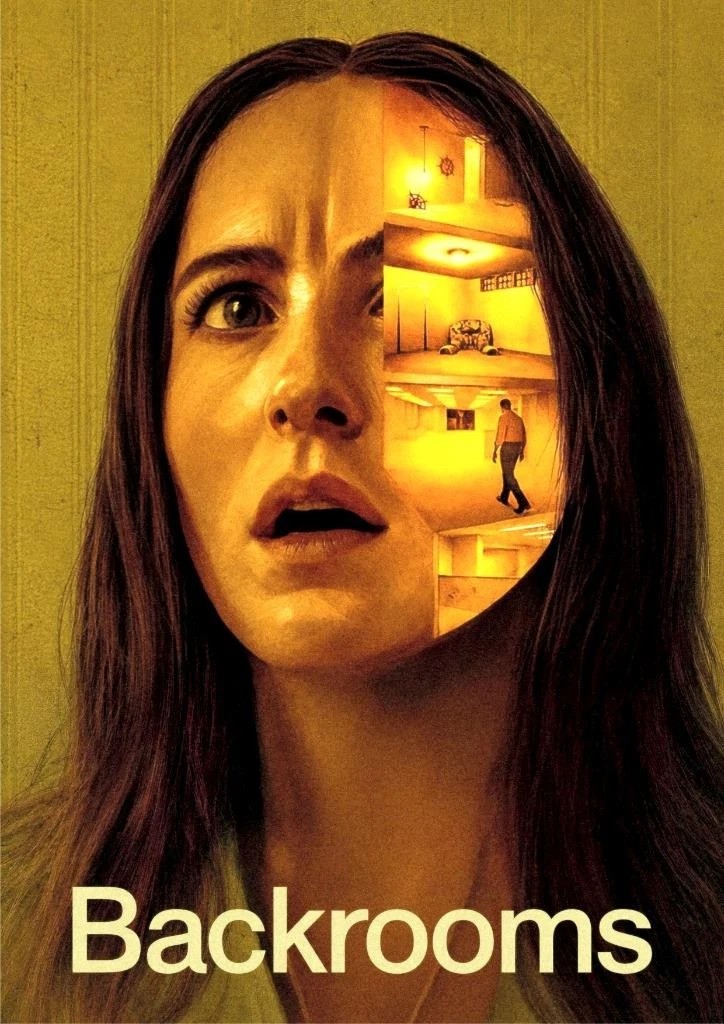
What is so astonishing about Backrooms is the tone. It’s not like other horror films built on a soundtrack of screams and visually propelled by jump starts and gore. The two main characters are, in the main, solid and observant. Failed architect and full-time misogynist Clark (Chiwetel Ejiofor) runs a struggling furniture store. He’s separated and apt to blame others for his situation, inclined to brush aside his heavy drinking and anti-feminism.

Mary (Renate Reinsve) is his therapist with a cruel past, her mother demented and paranoid. She often appears distant even in company, separated from the real world.

Trying to find out why his electricity bills are so high, Clark passes through a wall in his basement and finds another, peculiar, world, occupied primarily by pieces of furniture, in places stacked to the ceiling, or sinking at an angle into the floor as if the floor was sand, or disappearing into the ceiling. There are a host of corridors and doorways, some horizontal, some vertical, some sloping.

Using his architectural skills, Clark scopes out the labyrinthine space. He takes his findings to Mary who thinks he’s gone off his rocker. Clark enrols his two assistants to help him investigate the space further. But they come to a bad end. Shadows lurk, someone strong pulls on the end of a rope.

Eventually, Mary investigates her missing client and discovers this parallel world where people appear as only part of what they are, as if the maze remembers them in a different way.

There are some nods to horror but mostly this is psychological sci fi. It’s the unexplainable. Even scientists can’t explain it, relying on the experiences of those who returned to build up their knowledge of the other world.

But because director Kane Parsons in his debut is so restrained this has more of the hypnotic air of Last Year at Marienbad (1960) than anything in contemporary horror or sci fi. In the Alain Resnais film repeated dialog and repeated visuals did most of the work, but here it’s the endlessness, the implacability of the otherworld. Even the otherworldliness is understated, inanimate objects creating the disjointed mood. It’s like Planet of the Apes (1968) where escapee Charlton Heston discovers at the climax that he hasn’t escaped at all. Or Seconds (1966) where Rock Hudson can’t even escape.

One of the problems facing any sci fi or horror picture is the necessity to maintain the logic of the situation. Too often, a director or screenwriter, chasing another thrill, just slips out of the world they have created. That doesn’t happen here. This remains implacably, ruthlessly, logical so, although we have travelled through this strange world, we are no clearer at the end as to how it came into being or its purpose or how to avoid its trap.

There are no heroes and no heroics. Depending on your personality, the back rooms might provide succor. Or they might not.

It’s rare that you’d find two Oscar-nominated actors turning up in a low-budget horror picture. The impassive Renate Reinsve (Sentimental Value, 2025) comes off better than the more emotional Chiwetel Ejiofor (12 Years a Slave, 2014) but there’s not much between them. I’m sure the film’s unexpected box office success will stir demand for a sequel, but I hope not, for as it stands it’s every bit as outstanding a venture as the best of sci fi. Written by the director and Will Soodik, also making his movie debut.

If only Steven Spielberg had shown an ounce of this originality in Disclosure Day.

All hail Kane Parsons.

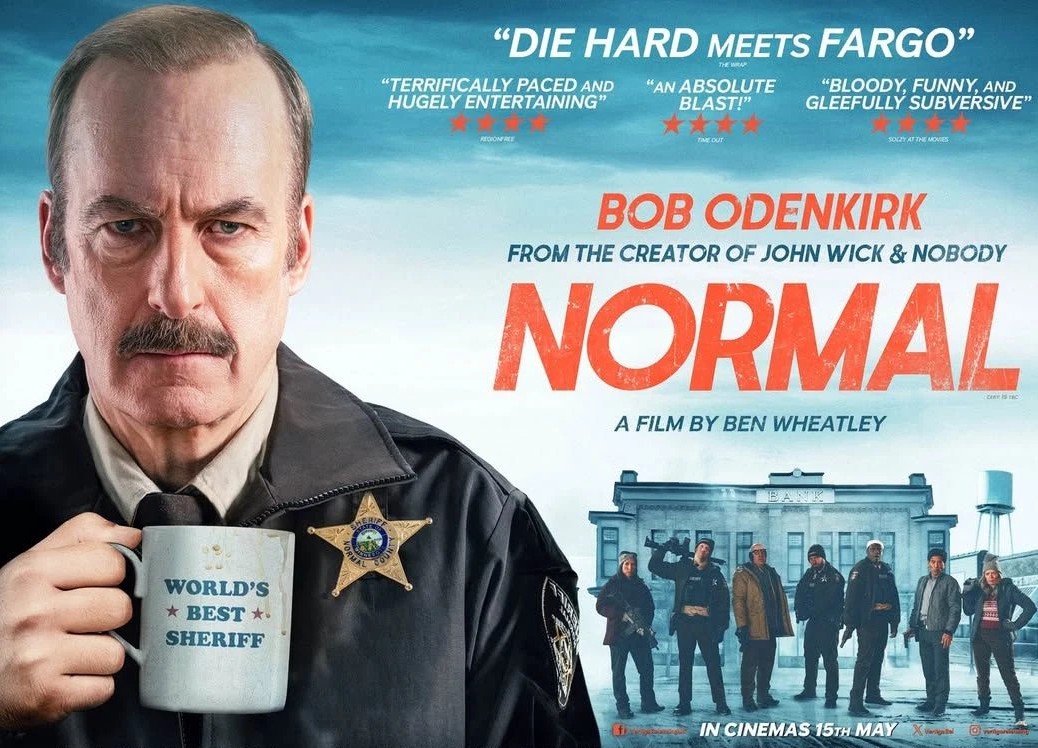
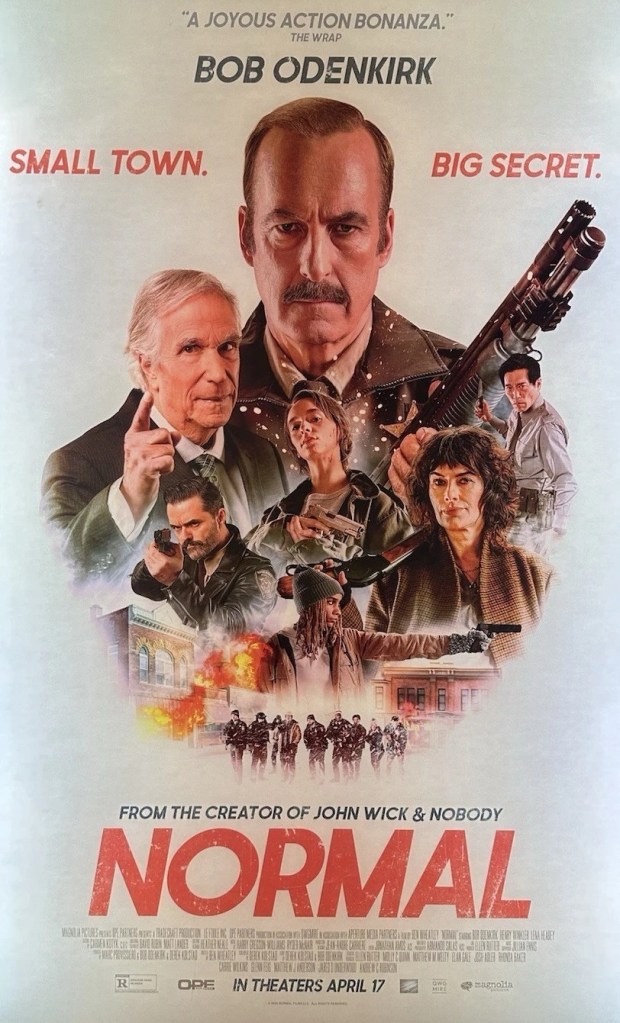
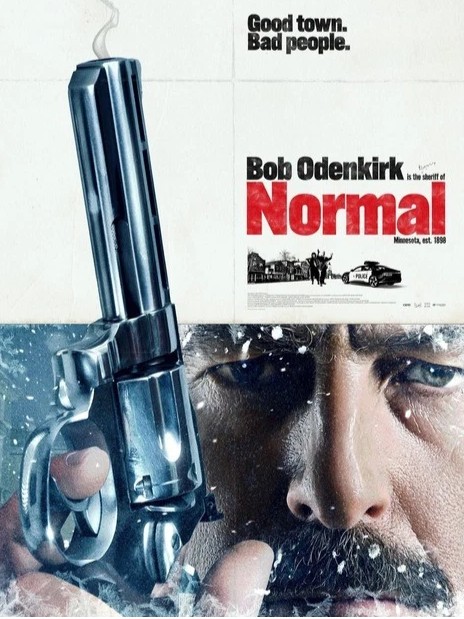
Normal (2026) **** or ** (depending) – Seen at the Cinema

Say hello to the Algorithm Apocalypse. Or as we used to call it – a trainwreck of a movie. This would be a prime candidate for the Inaugural Thrash Memorial Award. Marketed as a “Sky Original” that’s somewhat misleading since it is closer to a Sky Cliché, although admittedly that doesn’t have quite the same ring.

A veritable off-piste cocktail of John Wick, True Romance, Assault on Precinct 13, and a crime version of  Invasion of the Body Snatchers, trade the Yakuza for the Mafia and all those films where the good cop has a nose for skulduggery.

Somewhat alleviated by a substantial side of quirkiness. We’ve got a moose on the loose, kindly bank robbers, a sheriff’s badge lifted from a corpse, an informal moustache appreciation society, problems telling pink from mauve, price gouging, and a diatribe against banks and billionaires ruining small business and small town main streets.

Cut to the violence, and there’s machine guns, pistols, shotguns and worse – flares and sticks of dynamite – and people are killed by nails, knitting needles and falling signs, and that’s before snowplows get in on the act.

Substitute sheriff Ulysses (Bob Odenkirk) takes on a temporary stint in Normal. Separated from his wife, he’s “dark inside” courtesy of shooting in cold blood a sex abuser. Not sure I quite fall in with his suspicions about the death of the man he replaced, who had the kind of extremely florid complexion you would associate with a heart attack.

Anyways, this is very much a humdrum small town with no crime to speak of and therefore a police force that verges on the acceptably incompetent until bank robbers Lori (Reena Jolley) and Keith (Brendan Fletcher), not realizing the bank doesn’t deal in much actual cash these days, demand to see the vault. Its opening alone is enough for the bank manager to kill himself, which is just as well because most likely he’d have been mown down in a hail of bullets delivered by…wait for it…the cops.

Yep, the town has a terrible secret. It’s the bagman for the Yakuza, gazillions in gold and cash stashed in the bank vault, and the whole town in on the deal, including the old lady who runs the knitting emporium and the middle-aged female barperson being set up for likely romance with the sheriff. But both are gun-toting evil wenches.

It would be one man against the mob except for Ulysses recruiting the bank robbers and the dead sheriff’s suicidal daughter Alex (Jess McLeod). So once we’re done with mystery it’s Anora all over again except with violence replacing sex. Once the Yakuza top brass fly in from Tokyo, it looks like Algorith Apocalypse is going to go nuclear except Ulysses has come up with a clever plan to settle the situation. Except it doesn’t.

I always wondered with the death of VHS and DVD and no television programs picking up the slack, how we’re ever going to find cult items. This will disappear in a year from Sky. Then where will it go? Nowhere. It’ll just vanish. You’ll never see it again. And even people who think this has cult written all over it will never be able to find enough showings of it in the future to stir the pot.

Some interesting pedigrees here – Bob Odenkirk (Nobody, 2021) proves a reliable stand-in for Liam Neeson or Jason Statham without the persona, Henry Winkler (Night Shift, 1982) shines in a supporting role and if you wondered what happened to Lena Headey after Game of Thrones (2011-2019) here’s your answer. John Wick creator Derek Kolstad doubles as writer and producer so I’m reckoning, excepting the rising gore count, there wasn’t much room left for director Ben Wheatley (Meg 2: The Trench, 2023) to put his own particular stamp on proceedings.

This comes over as a collision of two styles – a gentle quirky tale in the Fargo line that probably would have made a better mini-series and an action picture desperate for any narrative port in the storm where it could put in and without much elbow grease find a reason to embark on an orgy of violence.

Best described as the shoot-‘em-up’s shoot-‘em-up with an even higher corpse quotient than Thrash

Somewhere between awful and highly entertaining.

Legends (2026) **** – Seen on Netflix

It’s astonishing that Netflix with the gazillions at their disposal can be guaranteed to generate surprise at their ability to turn out two more-than-halfway-decent series in a week. As you might expect, given this genre is their trump card, it’s another true crime venture. And in the exceptionally capable hands of Scottish writer Neil Forsyth (The Gold, 20234) it’s a cracker.

Not so unusually it’s set in the underworld arena of the British drugs trade. But, very unusually, despite the gazillions of minutes devoted to this part of the sordid genre, it takes us somewhere new. Back in time, to the 1990s. Miles away from the usual world-weary cops and instead into Customs and Excise. Miles away, too, from South East Asian, Eastern European or South American gangs, heading for the unfamiliar domain of the Turkish-dominated section of London.

You can tell when Netflix sticks out a new release under the radar. It only comes with one poster instead of several poster images. So I’m making do with the book on which it is based. Don’t ask me if the Guy named as the author is the same Guy as in the series because the television Guy comes absent a surname.

Recruitment consultants would dearly love to be able to emulate the approach of maverick customs boss Don (Steve Coogan) in selecting an undercover team to infiltrate a heroin operation. Anyone who so much as asks any questions at all is deemed surplus to requirements.

By undercover standards, the team is minute. Don in charge, gruff Guy (Tom Burke) is sent into London, Kate (Hayley Squires) and Bailey (Aml Ameen) to Liverpool with Erin (Jasmine Blackborrow) manning the desk, chasing up intel (in a pre-internet world) and keeping the woke quotient down.

Don’s boss Blake (Douglas Hodge) pops up every now and then to placate the Home Secretary (Alex Jennings) who is jumpy at allocating so much dough to a mission he’s kept in the dark about. Half the time of course the undercover agents are living on their wits, hoping they can remember every aspect of their fake lives – one mistake and on something as inconsequential as football minutiae and someone will torch your wife and child.

We don’t quite know what scars Don bears from his previous undercover outings, but while their weight condemns him to a solitary life, they come in useful when detecting whether his new charges are going to implode. Excitement and the whiff of danger seem to over-ride the prospect of personal cost.

Not surprisingly, victims come into focus. But exactly which victim does take you by surprise, especially in the face of their reaction. We watch a squaddie become hooked on heroin and when he dies the anguish on his father’s face, even half-hidden behind his spectacles, is very moving. The kicker is the dad is a heroin-dealer.

There’s various Succession tropes, as an Irish duo try to muscle in on the territory of Liverpool gangland boss Carter (Tom Hughes) and underling Zeki (Joshua Samuels) making an unwise move against the Turkish drugs leader.

In among this is a bunch of the playing of hunches and dogged detective work, the hidden clue, the unexpected missing link – you’ve acquired the code to get into a drugs stronghold, not realizing you required a different one to get out. Anytime Don is hampered by bureaucracy he takes the nuclear option and some idiot gets his ear chewed out by Blake.

What makes it work most of all is that the bulk of these characters are new to us. Their motivations remain obscure, the backgrounds rarely in focus, but when they are they can shift in the opposite direction.

The acting is first class. I never rated Steve Coogan (Saipan, 2025) before but I do now. Plummy voice is erased, tendency to overact gone and in its place a tortured human being with a mind that races along like a zipwire. Tom Burke (Black Bag, 2025) combines Steve McQueen charm with Lee Marvin menace. Douglas Hodge (We Live in Time, 2024) has taken on the Trevor Howard mantle of the character most likely to explode in fury.

But most of the plaudits should go to showrunner Neil Forsyth.

Keep it up, Netflix.

Should I Marry A Murderer? (2026) **** – Seen on Netflix

A great title for the most compelling true crime television tale since Staircase (2004). And for much the same reason. The main character is tricky. We are accustomed to fictional characters being economical, flexible or downright evasive when dealing with the truth and it seems that trend has spread out to non-fiction.

The odd thing is that this should be a straightforward, if tense, narrative. And it only turns into something else entirely thanks to the central character.

Sandy (left) and Robert.

The story beings in 2017 when charity cyclist Tony Parsons goes missing. For some reason – in the dead of night – he’s been traversing the remote twisting narrow roads near the Bridge of Orchy in the Scottish Highlands. Despite a massive manhunt he’s never found.

Fast forward to 2020 and forensic pathologist Dr Caroline Muirhead. She’s in that neck of the woods seeking romance having met on Tinder farm worker and hunter Sandy McKellar, who lives on the private Auch Estate with twin Robert. When not skinning deer they enjoy a party lifestyle. It’s a speedy courtship. After a few months she’s engaged and in the way of many a fiancé wonders if her potential partner harbors any secrets. She’s thinking an ex-wife, maybe a couple of kids squirreled away.

She’s not expecting him to fess up to having mown down Parsons while drunk and then burying the body. Later adding, the victim was still alive, if only briefly, after being knocked down. Fear of drink driving charges clearly were behind the burying.

So now we should be into the straightforward, thrilling, part. How does our heroine impart this information to the cops? Will they even believe her? She’s no idea where the body is buried. Bear in mind, too, she’s still in love with Sandy and can’t get her head round the fact that her handsome kind six-foot Highlander could be guilty of such a deed.

So then we get to the clever bit. She gets him to indicate roughly where the body might be buried – the twins used a digger so a fair amount of earth would have been shifted – and then, inspired, she finds way to roughly mark the spot with an empty drinks can.

But then we get entangled as she gets caught up in her emotions. Instead of running a mile from a callous murderer, she continues to live with him. Sandy is pulled in for questioning but without a body the case is going nowhere. The car that knocked him down is also long gone. The police carry out a lot of spadework and there’s elements of excitement when the cops prowl around the twins’ cottage armed to the teeth like they are breaking into a terrorist stronghold.

Vital evidence.

Caroline’s parents and the cops can’t work why she hasn’t run a mile. Sandy has no idea who’s fingered him so naturally he welcomes the solace she offers. She can’t explain to camera – and it’s mostly her talking to camera – why she can’t give him up. She’s just come out of an abusive relationship but no idea the previous boyfriend was in Sandy’s league.

Whether it’s fear of Sandy finding out or fear of losing him, she begins to unravel, so much so that she jeopardizes the eventual trial when, as the star witness for the prosecution, she fails to turn up on the opening day. She’s clearly such a liability that the prosecution cut and run, dropping the murder charge in favor of a lesser charge, still a prison sentence but a lot less severe.

And still we never find out what was in her mind. It’s enigma to the nth scale. Certainly, she vulnerable. But despite solving the case and bringing the killers to justice, she’s never hailed as the heroine because the rest of her behavior remains so baffling.

Naturally, this plays like a thriller, with plenty twists along the way, so it’s an easy watch in that regard. But it’s a very difficult watch in another sense, in that plainly someone is taking advantage of a vulnerable woman who wants to tell the story her way and perhaps, as she sees it, clear her name.

Just like Staircase or the recent Michael, you wonder what else might come out if the film-makers were more rigorous in pursuit and not so hogtied to the central character.

She mixes up so much making the right decisions with taking the wrong ones that you half expect there’s going to be a terrible tragic ending.

Certainly riveting stuff and what Netflix does best.

Discover WordPress

A daily selection of the best content published on WordPress, collected for you by humans who love to read.

The Atavist Magazine

by Brian Hannan

WordPress.com Blog

News, Tips & Website Tutorials