Behind the Scenes: All-Time Top 40

Waterloo (1970) holds on to the top spot but the Alistair MacLean revival gathers pace. The Satan Bug (1965) makes the biggest surge, shooting up to second spot, with Ice Station Zebra (1968) in fourth spot past The Guns of Navarone (1961) which drops slightly to sixth.

I’ve extended this from a Top 30 to a Top 40 so there are a goodly number of new entries. The previous rankings are from December 2025.

  1. (1)Waterloo (1970). No doubting the effect of Ridley Scott’s Napoleon in increasing interest in this famous flop that had Rod Steiger’s French emperor squaring off against Christopher Plummer.
  2. (5) The Satan Bug (1965). The problems facing director John Sturges in adapting the Alistair MacLean pandemic classic for the big screen.
  3. (2) In Harm’s Way (1965). Otto Preminger takes off the gloves to expose problems in the American military around Pearl Harbor. John Wayne and Kirk douglas head an all-star cat.
  4. (7) Ice Station Zebra (1968). A complete cast overhaul and ground-breaking  special effects are at the core of this filming of another Alistair MacLean tale. Second Alistair MacLean outing for John Sturges.
  5. (3)  Man’s Favorite Sport (1964). Howard Hawks back in the gender wars with Rock Hudson being taken down a peg by Paula Prentiss.
  6. (4) The Guns of Navarone (1961). Alistair MacLean created the template for the men-on-a-mission war picture. Gregory Peck, David Niven and Anthony Quinn topline. Nominated for five Oscars including Best Picture, Best Director (J. Lee Thompson) and Screenplay (Carl Foreman) and enough jeopardy throughout the filming to qualify for a movie of its own.
  7. (8) Barbarella (1968). Jane Fonda was fourth choice after Brigitte Bardot, Sophia Loren and Ira von Furstenberg. Should never have been directed by Roger Vadim who was out of favor with Paramount. One of the first movies to be given a global simultaneous release.
  8. (6) Battle of the Bulge (1965). There were going to be two versions, so the race was on to get this one to the public first. A Cinerama number.
  9. (10) Mackenna’s Gold (1969). Tortuous route to the screen for Carl Foreman-produced roadshow western, filmed in 70mm Cinerama, with an all-star cast including Omar Sharif, Gregory Peck and Telly Savalas.
  10. (15) The Misfits (1961). Robert Mitchum turned down the male lead. Clark Gable failed the medical, both Montgomery Clift and Marilyn Monroe had drug problems. It went 40 days over schedule and half a million over budget.
  11. (24) The Wicker Man (1973) at the Box Office. A flop on initial release, U.S. release delayed, it took a long long time before the movie achieved both cult status and came out of the red.
  12. (9) Cast a Giant Shadow (1965). Producer Melville Shavelson wrote a book about his experiences and this and other material relating the arduous task of bringing the Kirk Douglas-starrer to the screen are told here.
  13. (12) The Sons of Katie Elder (1965). First envisioned nearly a decade before, Henry Hathaway western finally hit the screen with John Wayne and Dean Martin.
  14. (14) The Trouble with Angels (1966). Less than angelic Hayley Mills sparring with convent boss Rosalind Russell. Directed by one-time star Ida Lupino.
  15. (11) The Girl on a Motorcycle / Naked under Leather (1968). Cult classic starring Marianne Faithful and Alain Delon had a rocky road to release, especially in the U.S. where the censor was not happy.
  16. (12) The Sons of Katie Elder (1965). First envisioned nearly a decade before, Henry Hathaway western finally hit the screen with John Wayne and Dean Martin.
  17. (13). Tora! Tora! Tora! (1970). Richard Fleischer dispenses with the all-star cast in favor of even-handed verisimilitude.
  18. (16) The Bridge at Remagen (1969). British director John Guillerman hits trouble filming World War Two picture starring George Segal and Robert Vaughn.
  19. (17) For a Few Dollars More (1965). Sergio Leone sequel to first spaghetti western brings in Lee van Cleef to pair with Clint Eastwood.
  20. (20) Bandolero! (1968). Director Andrew V. McLaglen teams up with James Stewart, Dean Martin and Raquel Welch to fight Mexican bandits.
  21. (20) The Collector (1963). William Wyler’s creepy adaptation of John Fowles’ creepy bestseller with Terence Stamp and Samatha Eggar.
  22. (13) Sink the Bismarck! (1960). Documentary-style British World War Two classic with Kenneth More exhibiting the stiffest of stiff-upper-lips.
  23. (18) Bandolero! (1968). Director Andrew V. McLaglen teams up with James Stewart, Dean Martin and Raquel Welch to fight Mexican bandits.
  24. (19) The Train (1964). John Frankenheimer replaced Arthur Penn in the directorial chair to steer home unusual over-budget World War Two picture with Burt Lancaster trying to steal art treasures from under the nose of German Paul Schofield.
  25. (17) How The West Was Won (1962). First non-travelog Cinerama picture, all-star cast and all-star team of directors tackling multi-generational western and all sorts of logistical problems.
  26. (New entry) The Way West (1967). Burt Lancaster, James Stewart and Gary Cooper were the original cast. Charlton Heston turned it down. Robert Mitchum couldn’t make up his mind. Director Andrew V. McLaglen claimed it had been savaged by the studio.
  27. (New Entry) The Stalking Moon (1968). Should never have been made, according to existing legislation, even with Gregory Peck’s participation long delayed in part due to original director George Stevens pulling out.
  28. (New Entry) “Barbieheimer” Recalls the Old Double Bill. The perfect double bill aimed to attract different segments of the audience.
  29. (New Entry) Judgement at Nuremberg (1961). Laurence Olivier was first choice to play the role taken by Burt Lancaster. United Artists was not at all keen on the proposition. Innovative use of the camera. Judy Garland and Montgomery Clift overcame personal problems while Marlene Dietrich was acquainted with one of men on trial.
  30. (New Entry) The Thomas Crown Affair (1968). Sean Connery, Jack Lemmon and Brigitte Bardot turned it down. Director Norman Jewison thought Steve McQueen “completely wrong” for the part.
  31. (New Entry) The Cincinnati Kid (1965). Sam Peckinpah was fired. Spencer Tracy quit. Sharon Tate declined.
  32. (New Entry) The Appointment (1969). Booed at the Cannes Film Festival. Denied a release in the U.S., even with Omar Sharif as star and after being heavily edited by MGM. Only shown on American TV. The biggest financial flop of Sidney Lumet’s career.
  33. (New entry) The Birds (1963). Hitchcock sets an apocalyptic tone as Rod Taylor and Tippi Hedren are trapped by feral flocks.
  34. (New entry). Number One (1969). Charlton Heston as ageing pro football player desperately trying to hold onto to fame and its trimmings. Directed by Tom Gries.
  35. (New entry) Hollywood Bloodbath. Why 200 movies were scrapped or shelved.
  36. (New entry) Breathless / A Bout de Souffle (1960). The French New Wave made its name on the back of Jean-Luc Godard’s thriller starring Jean-Paul Belmondo and Jean Seberg.
  37. (New entry) The Top 40 Movies at the 1950s Box Office.
  38. (New entry) The Man in the Middle / The Winston Affair (1964). Robert Mitchum is the titular guy in trouble.
  39. (New entry) Yul Brynner vs Kirk Douglas on Spartacus (1961). The battle to bring the Roman rebel to the screen.
  40. (New Entry) Puppet on a Chain (1970). More Alistair MacLean thrills. This time in Amsterdam and that boat chase.

All-Time Top 100

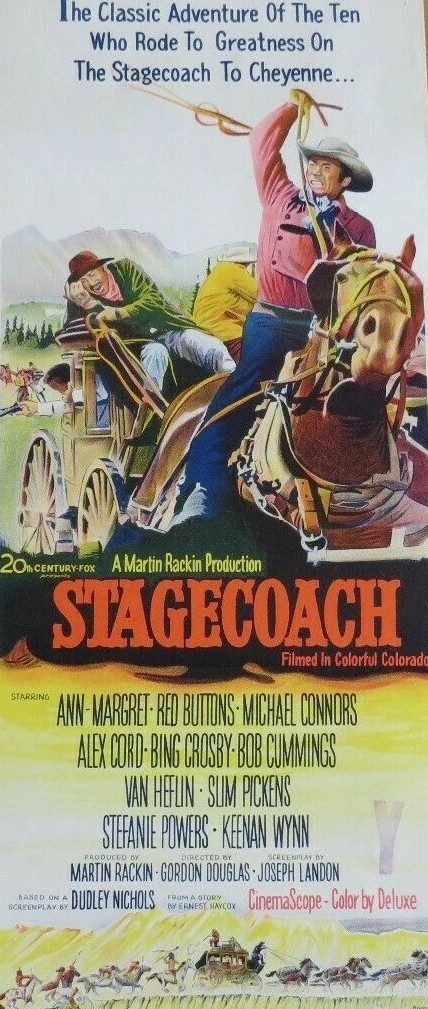
After three years atop the All-Time List, Ann-Margret in The Swinger (1966) has been dethroned. And replaced by Ann-Marget in Stagecoach (1966), the remake of the John Ford western. The Swinger, I should add, hasn’t dropped by much, just down two places. Suzy Kendall as the spy Fraulein Doktor (1969) has shot up from sixth to second position.

In case it’s not obvious I should point out that the movies making the All-Time Chart are not necessarily my favorites, but yours, the movies most viewed since The Blog began six years ago. Since this little exercise is undertaken twice a year the rankings are compared to the previous standings in the all-time list from December last year.

New entries making a surprisingly high appearances including the controversial BBC television series Blackeyes (1989) – straight in at No 16 – while chase picture Vanishing Point (1971), action picture Operation Crossbow (1965) and twisty thriller Buddwing/Mister Buddwing (1966) all enter the top 30 with a bullet. Other notable new entries – thrillers The Gray Man (2022) and Stiletto, low-budget westerns Five Savage Men (1971) and Hot Spur (1969) and big-budget 100 Rifles (1969), Hayley Mills as Pollyanna (1960) and Charlton Heston in Planet of the Apes (1968)

Dean Martin is the most popular actor with five entries – all of them westerns – Five Card Stud (1968), 4 for Texas (1964), Bandolero! (1968), Rough Night in Jericho (1967) and The Sons of Katie Elder (1965). On four apiece are Raquel Welch, George Peppard, Hayley Mills and Charlton Heston

Welch made her splash in spy adventure Fathom (1967), westerns Bandolero! and 100 Rifles (1969) and  crime drama Lady in Cement (1968). Peppard was seen in war picture Operation Crossbow (1965), Rough Night in Jericho and under-rated thrillers Pendulum (1969) and House of Cards (1968).

Mills made her mark in The Family Way (1966), The Trouble with Angels (1966), The Chalk Garden (1964) and Pollyanna (1960). Charlton Heston headlined Planet of the Apes (1968), The War Lord (1965), Diamond Head (1962) and The Hawaiians/Master of the Islands (1970).

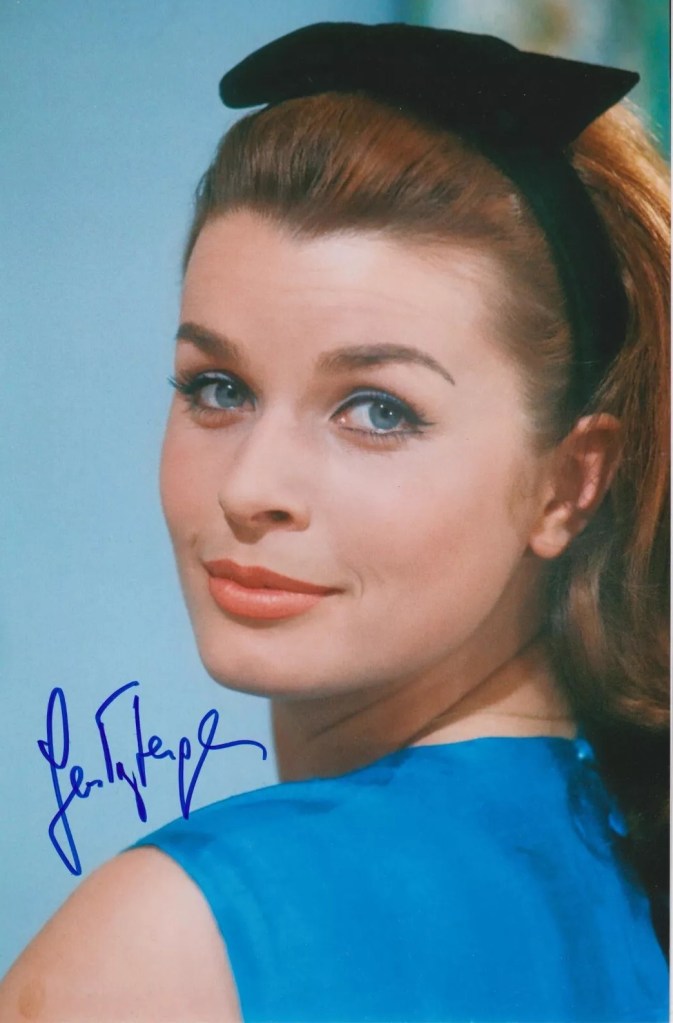
Chalking up three entries were John Wayne, Senta Berger (pictured above), Elke Sommer, Omar Sharif,  James Stewart, Inger Stevens, Claudia Cardinale, Gregory Peck and Alain Delon.

The figures in brackets represent the positions in December 2025 and New Entry is self-explanatory. .

  1. (3) Stagecoach (1966). Under-rated remake of the John Ford western. But it’s Ann-Margret who steals the show ahead of Alex Cord in the role that brought John Wayne stardom. 
  2. (6) Fraulein Doktor (1969). Grisly realistic battle scenes and a superb score from Ennio Morricone help this Suzy Kendall vehicle as a World War One German spy going head-to-head with Brit Kenneth More and taking time out for romantic dalliance with Capucine.
  3. (1) The Swinger (1966). Despite shaking her booty as only she knows how, Ann-Margret brings a sprinkling of innocence to this sex comedy. 
  4. (2) Anora (2024). Mikey Madison’s sex worker woos a Russian in Oscar-winner.
  5. (4) In Harm’s Way (1965). Under-rated John Wayne World War Two number. Co-starring Kirk Douglas, Patricia Neal, Tom Tryon and Paula Prentiss, director Otto Preminger surveys Pearl Harbor and after.
  6. (9) Age of Consent (1969). Helen Mirren frolics nude in her debut as the freewheeling damsel drawn to disillusioned painter James Mason.
  7. (7) Squad 36 / Bastion 36 (2025). Corruption and interdepartmental rivalry fuel this French flic directed by Olivier Marchal.
  8. (8) Once Upon a Time in the West (1969). Along with The Searchers (1956) now considered the most influential western of all time. Sergio Leone rounds up Claudia Cardinale, Henry Fonda and Charles Bronson and that fabulous Morricone score.
  9. (16) The Appointment (1969). Inhibited lawyer Omar Sharif discovers the secrets of wife Anouk Aimee in under-rated and little-seen Italian-set drama from Sidney Lumet.
  10. (11) Our Man in Marrakesh / Bang! Bang! You’re Dead (1966). Humorous spy offering with Tony Randall and Senta Berger.
  11. (50) The Flight of the Phoenix (1965). When James Stewart, Richard Attenborough, Peter Finch and Hardy Kruger crash in the desert they come up with an ingenious plan to escape. Robert Aldrich directs.
  12. (10) A Dandy in Aspic (1968). Cold War thriller with Laurence Harvey as a double agent who wants out. Mia Farrow co-stars.  
  13. (48) Jason and the Argonauts (1963). Ray Harryhausen steals the show in cracking fantasy.
  14. (18) The Family Way (1966). Hayley Mills comes of age in this very adult drama. Co-starring her father John Mills and Hywel Bennett.
  15. (6) The Last Showgirl (2024). Pamela Anderson proves she can act and how in this touching portrayal of a fading Las Vegas dancer.
  16. (New Entry) Blackeyes (1989). Gina Bellman takes the titular role in British playwright Dennis Potter’s mind-bending tale with timelines and perspective all mixed up in an intoxicating brew.
  17. (25) Five Card Stud (1968). Gambler Dean Martin faces off against preacher Robert Mitchum and a serial killer in Henry Hathaway western also featuring Inger Stevens.
  18. (20) Young Cassidy (1965). Julie Christie came out of this best, winning her role in Doctor Zhivago as a result. Rod Taylor as Irish playwright Sean O’Casey.
  19. (31) They Came to Rob Las Vegas (1968). Gary Lockwood and Elke Sommer head up a heist thriller.
  20. (13) Baby Love (1969). Controversy was the initial selling point but now it’s morphed into a morality tale as orphaned Linda Hayden tries to fit into an upper-class London household.
  21. (33) Operation Crossbow (1965). George Peppard and Sophia Loren head up an all-star cast in World War Two in a daring mission into Occupied France. Director Michael Anderson takes a documentary-style approach. .
  22. (New entry) Vanishing Point (1971). Barry Newman tears across the country in fast-moving existential cult thriller. Directed by Richard C. Sarafian.
  23. (29) Fathom (1967). When not dodging the villains in an entertaining thriller, Raquel Welch models a string of bikinis as a skydiver caught up in spy malarkey.
  24. (39) The Double Man (1967). Yul Brynner is the target for a kidnapping plot in complex spy thriller co-starring Britt Ekland.
  25. (23) Istanbul Express (1968). Gene Barry plays a weird numbers game in spy thriller that sets him up against Senta Berger
  26. (New Entry) Buddwing / Mister Buddwing (1966). James Garner suffers memory loss in twisty thriller. Jean Simmons, Suzanne Pleshette and Katharine Ross are complications.
  27. (54) The Red Tent (1969). Sean Connery adds his weight to a rescue mission for an airship crashed in the Arctic. Based on a true story. Claudia Cardinale and Peter Finch co-star.
  28. (22) Signpost to Murder (1964). Joanne Woodward trapped in a millhouse with escaped lunatic Stuart Whitman in twisty thriller.
  29. (12) Fireball XL5. The famous British television series (1962-1963) from Gerry and Sylvia Anderson, now colorized. “My heart will be a fireball…”
  30. (17) Pressure Point (1962). Nazi extremist Bobby Darin causes chaos for psychiatrist Sidney Poitier. Stunning dream sequences.
  31. (21) The Sisters (1969). Incest rears its head as Nathalie Delon and Susan Strasberg ignore husbands and lovers in favor of each other. 
  32. (86) Mirage (1965). Compelling thriller with Gregory Peck convinced he’s suffering from amnesia.
  33. (65) Deadlier than the Male (1967). Richard Johnson as Bulldog Drummond in the clutches of femme fatales Elke Sommer and Sylva Koscina.
  34. (46) Once a Thief (1965). Ann-Margret again, in a less sexy incarnation, as a working mother whose ex-jailbird thief Alain Delon takes a detour back into crime.
  35. (37) Assignment K (1967). Stephen Boyd in spy caper tangles romantically with Camilla Sparv and is on the receiving end of some tough thugs.
  36. (52) Dark of the Sun / The Mercenaries (1968). Rod Taylor’s guns-for-hire break out the action in war-torn Africa. Jim Brown and Yvette Mimieux co-star.
  37. (58) Invitation to a Gunfighter (1964). Yul Brynner cleans up the town in under-rated western. Janice Rule adds interest.
  38. (38) Sands of the Kalahari (1965). Stanley Baker, Stuart Whitman and Susannah York are stranded in the desert. Instead of working together, it’s every person for themselves.
  39. (New Entry) The Gray Man (2022). Global assassin manhunt directed by the Russo Brothers features Ryan Gosling and Chris Evans.
  40. (14) The Chapman Report (1962). Jane Fonda, Claire Bloom and Shelley Winters lead this investigation into contemporary sexual mores.
  41. (19) Pharoah (1966). Polish epic set in Egypt sees the country’s ruler at odds with the religious hierarchy.
  42. (40) The Chalk Garden (1964). Wild child Hayley Mills, trying to break out of her Disney straitjacket, duels with governess Deborah Kerr.
  43. (42) Gunn (1967). Blake Edwards turns hit television series into a movie with star Craig Stevens.
  44. (44) 4 for Texas (1963). Only Frank Sinatra and Dean Martin survive from the Rat Pack, but Ursula Andress and Anita Ekberg more than compensate in Robert Aldrich fun western.
  45. (41) Diamond Head (1962). Over-ambitious hypocritical landowner Charlton Heston comes unstuck in love, politics and business in Hawaii. George Chakiris, Yvette Mimieux and France Nuyen turn up the heat.
  46. (New entry) The Animals/Five Savage Men (1971). Apache Henry Silva comes to the aid of Michele Carey after she is raped by five men.
  47. (30) Pendulum (1968). Fast-rising cop George Peppard accused of murdering unfaithful wife Jean Seberg
  48. (66) The Undefeated (1969). John Wayne and Rock Hudson duke it out in superb Civil War western directed by Andrew V. McLaglen.
  49. (New Entry) The Chase (1966). Marlon Brando is the beleaguered sheriff in Arthur Penn’s drama set in the Deep South and co-starring Jane Fonda and Robert Redford.
  50. (43) A Fine Pair (1968). Rock Hudson and Claudia Cardinale join forces for a heist picture.
  51. (18) Jessica (1962). Angie Dickinson doesn’t mean to cause trouble but as a young widow arriving in a small Italian town she causes friction, so much so the local wives for on a sex strike.
  52. (27) The Demon / Il Demonio (1963). Extraordinary performance by Daliah Lavi in Italian drama as she produces the performance of her career.
  53. (34) The Sins of Rachel Cade (1961) Angie Dickinson (again) as African missionary falling foul of the natives and Commissioner Peter Finch. Roger Moore (again) in an early role.
  54. (35) The Girl on a Motorcycle / Naked under Leather (1968). How much you saw of star Marianne Faithfull depended on where you saw it. The U.S. censor came down heavily on the titular fantasizing heroine, the British censor more liberal. Alain Delon co-stars.
  55. (67) Ten Little Indians (1965). Agatha Christie whodunnit. Hugh O’Brian and Shirley Eaton are among the suspects.
  56. (New entry) Stiletto (1969). Mafia assassin Alex Cord wants out. The syndicate won’t let him.
  57. (62) House of Cards (1968). Ex-boxer George Peppard gets tangled up in an international fascist conspiracy and with Ingrid Stevens. Orson Welles has a cameo.
  58. (58) The Trouble with Angels (1966). Hayley Mills has the nuns on the run as she causes chaos at a convent school run by Rosalind Russell.
  59. (59) Genghis Khan (1965). Omar Sharif as the titular warrior up against Stephen Boyd. Co-starring James Masion and Francoise Dorleac. Robert Morley is hilariously miscast as the Chinese Emperor.
  60. (36) The Battle of the Villa Florita (1965). Maureen O’Hara runs off to Italy to join lover Rossano Brazzi. When her kids follow, trouble ensues,
  61. (45) Farewell, Friend / Adieu L’Ami (1968). A star is born – at least in France, the States was a good few years behind in recognizing the marquee attractions of Charles Bronson. Alain Delon co-stars in twisty French heist thriller featuring Olga Georges-Picot and Brigitte Fossey.
  62. (74) Bandolero! (1968). James Stewart and brother Dean Martin team up with Raquel Welch to evade George Kennedy’s posse in another Andrew V. McLaglen under-rated western.
  63. (89) Two for the Road (1967). Audrey Hepburn and Albert Finney try to get their marriage off the rocks by retracing their romantic steps when younger.
  64. (32) Vendetta for the Saint (1969). Prior to James Bond, Roger Moor was better known as television’s The Saint. Two television episodes combined sees our hero tackle the Mafia.
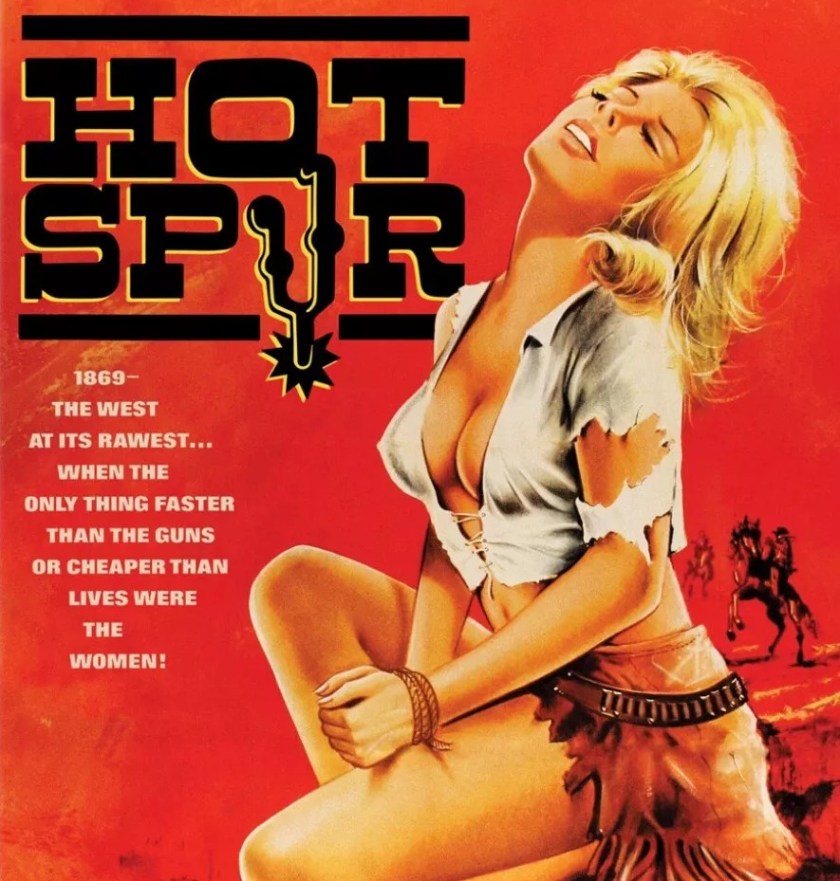
  65. (New entry) Hot Spur (1968). Kidnap, rape, revenge, director Lee Frost takes full advantage of the opportunities these provide.
  66. (26) Go Naked in the World (1961). Gina Lollobrigida finds that love for a wealthy playboy clashes with her profession (the oldest). Look out for highly emotional turn from the usually taciturn Ernest Borgnine.
  67. (28) Claudelle Inglish (1961). Diane McBain seeks revenge for being stood up at the altar in the Deep South.
  68. (98) Mackenna’s Gold (1969). J. Lee Thompson big-budget western treasure hunt starring Gregory Peck, Omar Sharif, Telly Savalas, Camilla Sparv, Eli Wallach, lee J Cobb, Edward G Robinson, Julie Newmar and Eli Wallach.
  69. (New entry) Marooned (1969). Gregory Peck and Gene Hackman are the astronauts trapped in space. Directed by John Sturges.
  70. (New entry) Pollyanna (1960). Hayley Mills makes her Disney debut in remake of much-loved tale, supported by a cast of actors who are either Oscar-winners or nominees.
  71. (57) Anatomy of a Fall (2024). Critically-acclaimed artie thriller starring Oscar-nominated Sandra Huller. The screenplay took the Oscar as well.
  72. (53) Moment to Moment (1966). Hitchcockian thriller set in Hitchcock country – the South of France – as unfaithful Jean Seberg is on the hook for the murder of her lover.  Also featuring Honor Blackman. 
  73. (61) Mickey One (1965). Cult Arthur Penn thriller with Warren Beatty as comedian on the run.
  74. (24) Thank You Very Much/ A Touch of Love (1969). Sandy Dennis dazzles as an academic single mother in London impregnated by Ian McKellen.
  75. (95) Titanic (1997). I saw this on reissue in 3D and was knocked out all over again.
  76. (72) La Belle Noiseuse (1991). Emmanuelle Beart is the mostly naked model taking painter Michel Piccoli to his artistic limits.
  77. (64) Rough Night in Jericho (1967). Corrupt lawman Dean Martin tangles with George Peppard in under-rated western Jean Simmons is the woman who comes between them.
  78. (56) The Sons of Katie Elder (1965). John Wayne and Dean Martin join forces to find out what happened to their mother in top-notch Henry Hathaway western.
  79. (49) The Golden Claws of the Cat Girl (1968). Cults don’t come any sexier than Daniele Gaubert as a French cat burglar.
  80. (New entry) 100 Rifles (1968). Mexican rebels Raquel Welch, Jim Brown and Burt Reynolds take on the government. Welch models a wet shirt.
  81. (75) Lady in Cement (1969). Raquel Welch models more bikinis as the gangster’s moll taken on as a client by private eye Frank Sinatra in his second outing as Tony Rome.
  82. (69) 633 Squadron (1964). You remember the soaring score more than the performances of Cliff Robertson and George Chakiris in World War Two aerial mission.
  83. (77) Lost Command (1966). Algerian War picture sets Anthony Quinn and Alain Delon against George Segal.
  84. (73) The Venetian Affair (1966). Robert Vaughn investigates spate of suicide bombs. Elke Sommer provides the glamor.
  85. (60) Horizon: An American Saga – Chapter 1 (2024). Kevin Costner’s majestic western that became one of the biggest flops of the year was underrated in my opinion.
  86. (New entry) Happy Ending (1969). Jean Simmons in May-December romance.
  87. (55) The Best House in London (1969). David Hemmings heads up a moralistic tale of rescuing sex workers in Victorian London.
  88. (New entry) Charade (1963). Cary Grant and Audrey Hepburn form a classic alliance in entertaining mystery.
  89. (New entry) Shoes of the Fisherman (1968). The election of the new Pope features Anthony Quinn, Laurence Olivier, Oskar Werner in 70mm roadshow directed by Michael Anderson.
  90. (New entry) Suspect / The Risk (1960). A cure for plague falls into the wrong hands in typical British B-movie.
  91. (95) Lonely Are the Brave (1962). Prison escape picture featuring cowboy Kirk Douglas who can’t cope with the modern world. Walter Matthau co-stars.
  92. (83) The Hawaiians / Master of the Islands (1962). Charlton Heston picks up where Hawaii (1966) left off and it’s chock full of corruption, racism and misogyny.
  93. (New entry) Sergeant Ryker (1968). Distributors take advantage of Lee Marvin’s sudden success to push out on the movie circuit a made-for-television drama.
  94. (New entry) Wonderwall (1968). Jane Birkin, psychedelia and a George Harrison score are the attractions in this cult oddity.
  95. (70) Black Butterflies (2022). Twisty French mini-series majoring on sex and murder in enjoyable film noir throwback.
  96. (51) Prehistoric Women / Slave Girls (1967). Martine Beswick attempts to steal the Raquel Welch crown as Hammer tries to repeat the success of One Million Years B.C
  97. (New entry) Circle of Deception (1960). Bradford Dillman is sent on a secret World War Two mission – in the hope that he will be captured by the Germans.
  98. (63) Can Heironymus Merkin Ever Forget Mercy Humpe and Find True Happiness? Fellini would turn in his grave at the self-indulgence of singer Anthony Newley who manages to lament that women falling at his feet cause him so much strife. Joan Collins co-stars.
  99. (New Entry) Planet of the Apes (1968). Charlton Heston is terrorized in Franklin J.Schaffner’s groundbreaking sci fi.
  100. (87) The War Lord (1965). Very realistic historical drama directed by Franklin J. Schaffner with Charlton Heston defending his land from invaders.

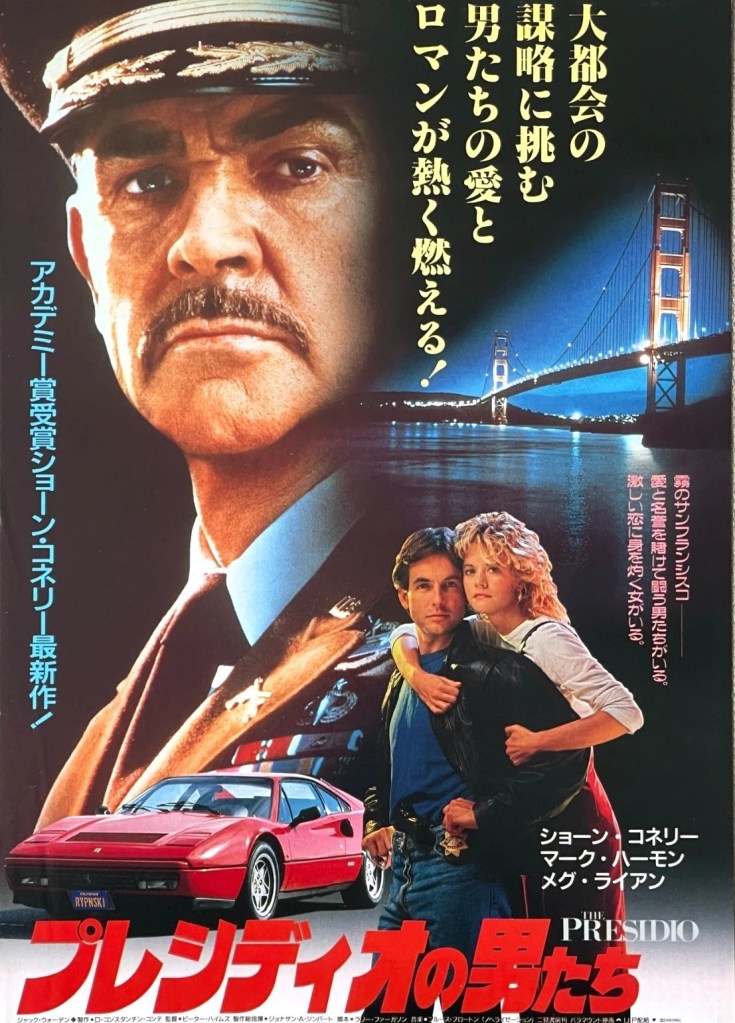
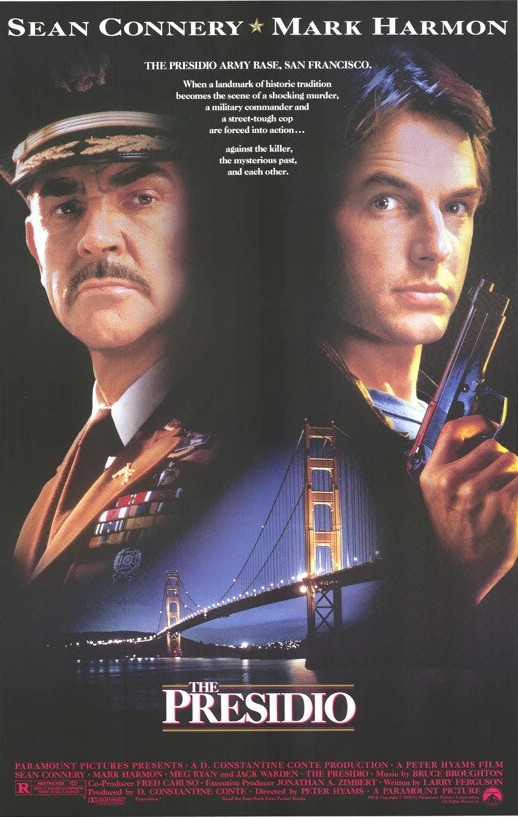
The Presidio (1988) ***

Blame the young whelp. Hollywood had form when it came to piggybacking a rising star on the back of an older established star. Go back to Montgomery Clift and John Wayne in Red River (1948) and you can see why it’s such a potent route to success. Young bucks like James Caan in another John Wayne number El Dorado (1967) fared less well. Tom Cruise got the hang of it, riding on the coattails of Paul Newman in The Color of Money (1986) and Dustin Hoffman for Rain Man (1988). Sean Connery was even known to help out – consider his mentoring of the characters played by Kevin Costner in The Untouchables (1987) or Wesley Snipes in Rising Sun (1993).

But sometimes it just doesn’t work. And that’s the main flaw here in an otherwise involving crime drama featuring unwilling partners that has the requisite car chases, a variety of smart moves, and a hefty load of emotional complication. Military cop Lt Col Alan Caldwell (Sean Connery) has daughter issues, daughter Donna (Meg Ryan) has daddy issues and commitment issues, while civilian cop Jay Austin (Mark Harmon) has authority issues.

Caldwell and Austin are forced to work together after a murder on San Francisco military base The Presidio.

Austin is altogether too volatile, too apt to go off at the mouth, and more important (in acting terms) hasn’t learned to rein it in, to reveal all through the eyes and bite off what snappy dialog comes his way rather than throwing stuff around and slamming doors and such. To complicate matters Austin and Caldwell have a past. To complicate matters even more – or to put it another way spice up proceedings – Austin and Donna get it together after a pretty neat meet-cute.

While in some ways Donna is cute, mostly she’s feisty, determined to put both dad and lover in their places. Both Caldwell and Austin have a top-class solo scene – the colonel when he turns the tables on a barroom bully, Harmon when he sweet-talks a secretary into providing vital information. The more experienced Caldwell tends to be one step ahead in terms of figuring out what’s going on. But in terms of the running, jumping and standing still stuff, it’s mostly Harmon who is dumped with the action, Caldwell the altogether cooler cat.

While Connery was coming off an Oscar for The Untouchables, I have to confess I’d never heard of Harmon. Turns out his rising stardom was on the back of a couple of television series –  Flamingo Road (1980-1982) and St Elsewhere (1983-1986) plus a turn as Ted Bundy in the mini series The Deliberate Stranger (1986). In terms of movies, he’d been top-billed in the lackluster thriller Let’s Get Harry (1986) and Carl Reiner surprise comedy hit Summer School (1987) which took in $15.7 million in rentals and placed 27th for the year, ahead of Kevin Costner in No Way Out and Bruce Willis in Blind Date.

Harmon was the replacement for Don Johnson who was on duty in Miami Vice. Whether Johnson would have been capable of taking on Connery is open to question. Harmon clearly struggled and Meg Ryan (Top Gun, 1986) ran away with what Connery left on the acting table.

This was an interesting role for Connery, not just coming to terms with his daughter but also with betrayal, and the climactic scene in a cemetery is a career highlight.

Back to the tale: under-rated director Peter Hyams (Capricorn One, 1978) keeps the action coming and in between ensures emotional tension holds sway. Apart from Harmon, what lets it down is the story – the real story I mean not the various personnel sorting out their private lives. It’s not that the conspiracy the pair uncover isn’t interesting, it’s just not interesting enough and I guessed from the minute he was introduced who the bad guy was.

But the dialog is meaty enough and Meg Ryan shows more promise and of course by this stage Connery is such an assured performer that he’s not going to put a foot wrong. I’m not sure that filming a car chase in the darkness on the city’s steep inclines was a good idea, apart from the white sparks zinging out of the darkness. A later Connery venture The Rock (1996) did it much better. Written by Larry Ferguson (The Highlander, 1986).

If you can ignore Harmon, a good evening’s watch.

NOTE: The movie didn’t do so well at the U.S. box office – just $10 million in rentals, but it took in nearly half as much again in Japan so my guess the Connery name in the global markets helped recouped the cost. But this was the beginning of the famous “long tail” when movies made a lot more after initial release and this was a case in point. Although it only placed 50th on Variety’s annual box office chart, it made the Top Ten for the year on video.

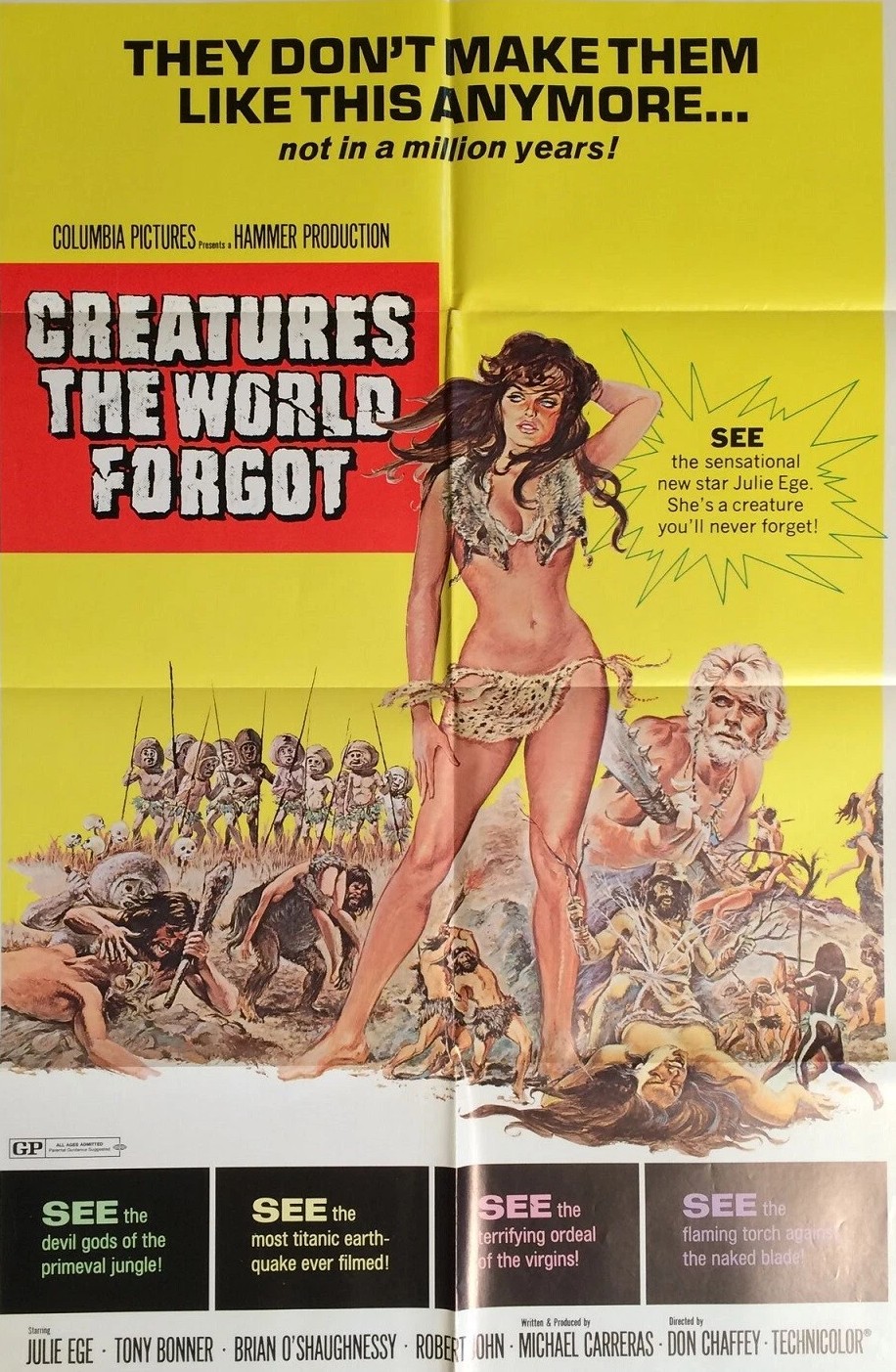
Creatures The World Forgot (1971) ***

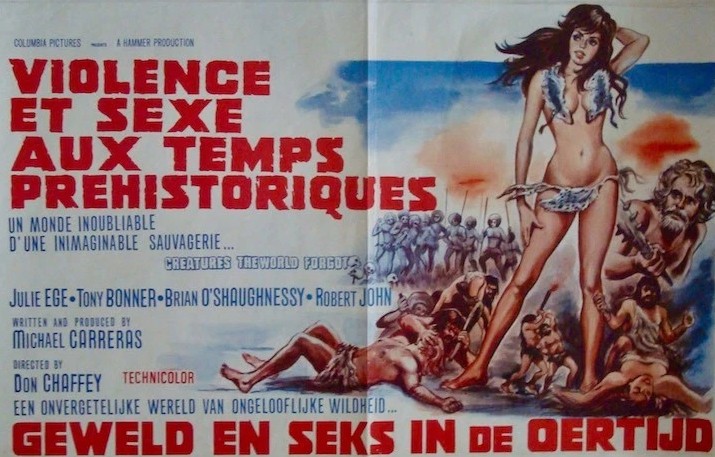
Remove the minimal salacious elements (“Violence and Sex in Prehistoric Times” was the come-on for French audiences). Ignore the fact that there are few creatures to speak of (a bear, some warthogs and gazelles aren’t exactly going to terrify the audience). Set aside that denoted star Julie Ege (Every Home Should Have One, 1971) doesn’t appear until about halfway through.

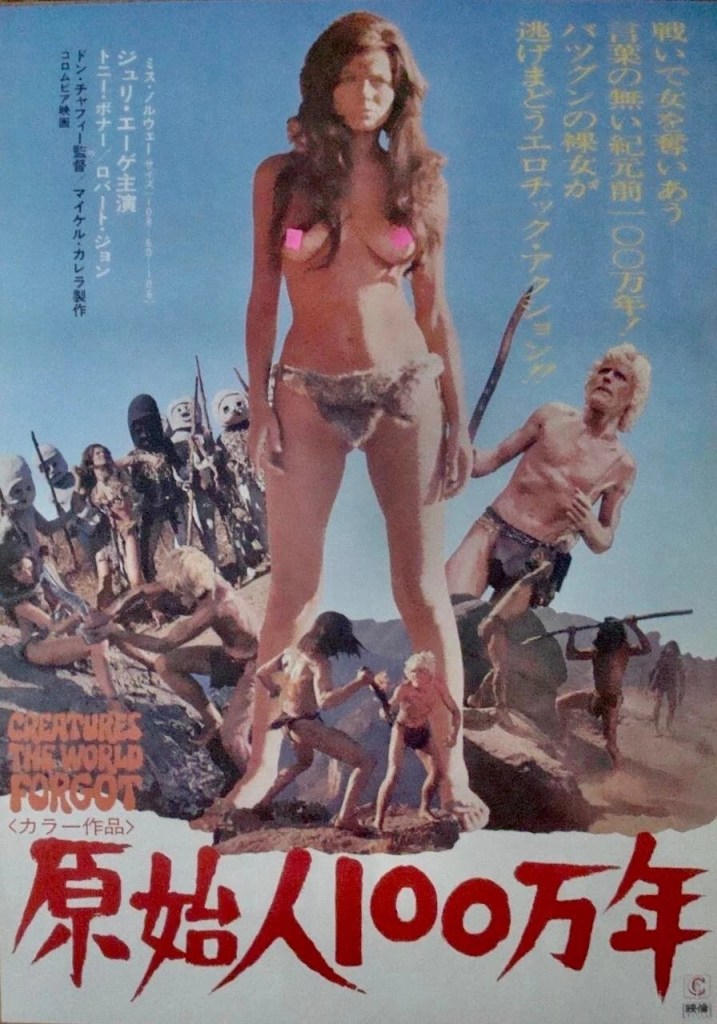
Don’t bother, either, looking for that apparently indispensable item of female prehistoric attire – the fur bikini. Not a T Rex in sight and none of the Ray Harryhausen stop-motion animation that lit up previous forays into this world.  And you’re left with a surprisingly satisfying study of the ethnology of ancient civilizations.

There’s no dialog, nor subtitles for that matter to elucidate what’s going on, communication limited to grunts or, as likely, fists. Fighting – men vs men and women vs women – appears the most common pleasure. Although there’s also some primitive dancing. You’ve got a witch doctor but no idea what makes her so powerful.

The volcanic eruption that kicks off the narrative, forcing one tribe to search for another home, leading to unwelcome incursions into another tribe’s territory, is the least successful element although the subsequent earthquake is well done.

Outside of conflict and travel, what you’re left with is an interesting (if possibly inaccurate) taste of prehistoric life. Fall down a sand dune and you’ll die because you can’t scramble back up. Take on any horned beast and it’s likely their horns will tear you apart. If you can’t kill a gazelle, you’re going to have to make do with scorpions, snakes and rats. You certainly can’t alleviate your diet by growing anything, the land too poor and the notion of farming yet to revolutionize the world. Occasionally, you can protect yourself by dropping weighted spears from trees on your enemy.

The narrative roams around as much as the tribe. We kick off with a battle for power after a leader dies. Someone gives birth to twins, one easily recognizable by a scar on his chest. So then we jump to them as warring teenagers, fighting each other as much as trying to gain their father’s attention. The dark-haired one (Robert John) has more of the sheer physicality required to survive, the blond one (Tony Bonner) has more upstairs, capable of lassoing a porcupine for the sheer pleasure of developing his skills.

Then they’re grown up, and the blond one can trap warthogs using a net while the other, with less accurate spear-throwing, can’t catch anything. Eventually, they are battling over a deaf mute, who would ordinarily be killed at birth but survives due to the timely intervention of lightning, which is taken as a sign. Seduction isn’t on the cards either, and the dark-haired one attempts to rape the deaf mute (Marcia Fox).

She escapes but needs rescued from another tribe. That leads to the major action of the picture, a big battle in caves. The blond kills the enemy chief and takes as his reward the chief’s daughter (Julie Ege). That enrages the dark one who kidnaps the girl, planning to burn her on a pyre. The ending is pretty confusing, involving a python and the dark arts.

But take away the physical distractions of a Raquel Welch bursting out of a fur bikini and various monsters causing chaos and still there’s enough, almost in docu style, to maintain the interest.

Director Don Chaffey (One Million Years B.C., 1966) appears liberated by the focus being on ordinary mortals rather than sex symbols or Harryhausen. There’s a feeling of “what would David Lean do” when confronted with stark landscape or desert and here the composition is particularly good. Putting the focus on day-to-day survival provides all the narrative drive required. Beyond fairly basic characterization, there’s little to distinguish the characters.

You get the impression that if you edited out all the commotion and rivalry you might be left with an even better picture in the vein of those documentaries Hollywood used to churn out about foreign civilizations. This isn’t darkest Africa or darkest anywhere, the sun’s too strong an influence for that.

This was the final film in Hammer’s prehistoric quartet, whose main aim appeared to be to elevate the work of Harryhausen or give a rising female star a push into becoming a sex symbol, posters of whom could alleviate the drab lives of teenagers worldwide. While Harryhausen burnished his credentials, apart from Raquel Welch, neither Martine Beswick (Prehistoric Women/Slave Girls, 1967) nor Victoria Vetri (When Dinosaurs Ruled the Earth, 1970) made the grade on the marquee. Written by producer and Hammer head honcho Michael Carreras (The Lost Continent, 1968).

You might be surprised to find how engrossing a prehistoric movie can be minus the fur bikini or Harryhausen.

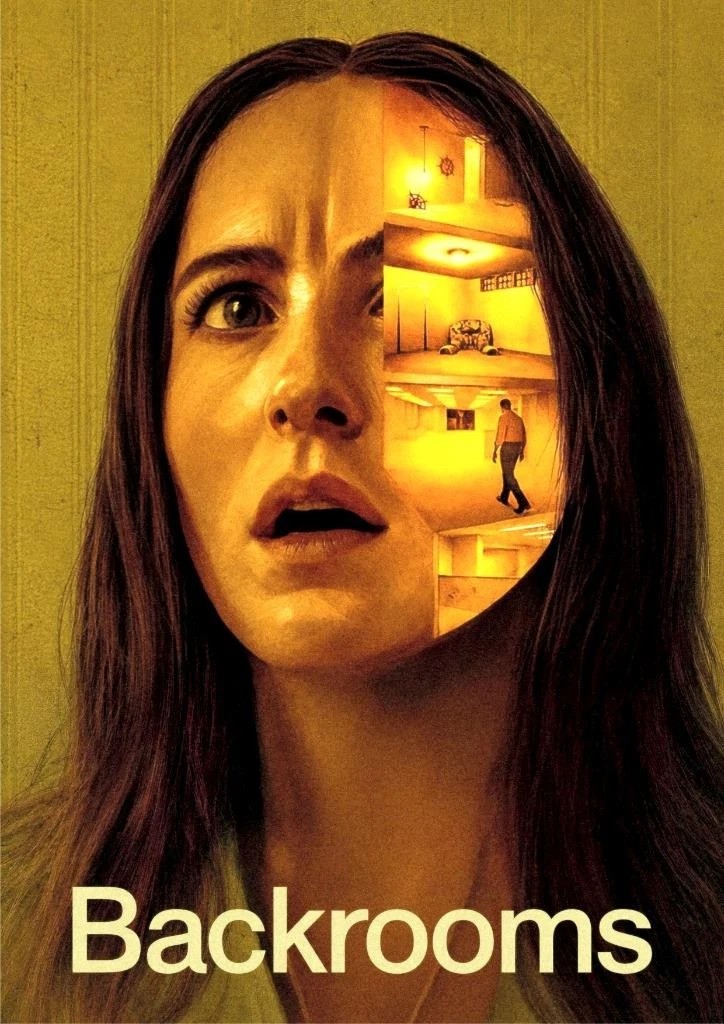
Backrooms (2026) ***** – Seen at the Cinema

Cinema is my oasis of calm. I go once a week on the same day (Monday), on my own, usually sit two rows from the front so I’m not interrupted by heads or popcorn or whispering, and sit in darkness for three or four hours, occasionally longer. It’s usually a seamless procession from car park to cinema. For a number of reasons, I hadn’t managed my weekly visit for a couple of weeks so I had a lot of catching–up to do so much so that a quadruple bill was on the cards. What could possibly go wrong to disturb my tranquillity.

For a start, my regular car park was shut for maintenance. So instead of a 10-minute walk from car park to cinema I had a 25-minute trudge. Access to the cinema proved more difficult than usual. The escalator was out of action and for some reason the people who make escalators make them with bigger steps so it’s always an awkward climb. Things didn’t look any better when I settled down for my first screening. There was no sound. We were shunted out and into another movie. I can’t even be bothered to tell you how bad it.

So my day required immediate redemption. I wasn’t so sure about Backrooms given I didn’t have the same ecstatic reaction to Obsession as others.

What is so astonishing about Backrooms is the tone. It’s not like other horror films built on a soundtrack of screams and visually propelled by jump starts and gore. The two main characters are, in the main, solid and observant. Failed architect and full-time misogynist Clark (Chiwetel Ejiofor) runs a struggling furniture store. He’s separated and apt to blame others for his situation, inclined to brush aside his heavy drinking and anti-feminism.

Mary (Renate Reinsve) is his therapist with a cruel past, her mother demented and paranoid. She often appears distant even in company, separated from the real world.

Trying to find out why his electricity bills are so high, Clark passes through a wall in his basement and finds another, peculiar, world, occupied primarily by pieces of furniture, in places stacked to the ceiling, or sinking at an angle into the floor as if the floor was sand, or disappearing into the ceiling. There are a host of corridors and doorways, some horizontal, some vertical, some sloping.

Using his architectural skills, Clark scopes out the labyrinthine space. He takes his findings to Mary who thinks he’s gone off his rocker. Clark enrols his two assistants to help him investigate the space further. But they come to a bad end. Shadows lurk, someone strong pulls on the end of a rope.

Eventually, Mary investigates her missing client and discovers this parallel world where people appear as only part of what they are, as if the maze remembers them in a different way.

There are some nods to horror but mostly this is psychological sci fi. It’s the unexplainable. Even scientists can’t explain it, relying on the experiences of those who returned to build up their knowledge of the other world.

But because director Kane Parsons in his debut is so restrained this has more of the hypnotic air of Last Year at Marienbad (1960) than anything in contemporary horror or sci fi. In the Alain Resnais film repeated dialog and repeated visuals did most of the work, but here it’s the endlessness, the implacability of the otherworld. Even the otherworldliness is understated, inanimate objects creating the disjointed mood. It’s like Planet of the Apes (1968) where escapee Charlton Heston discovers at the climax that he hasn’t escaped at all. Or Seconds (1966) where Rock Hudson can’t even escape.

One of the problems facing any sci fi or horror picture is the necessity to maintain the logic of the situation. Too often, a director or screenwriter, chasing another thrill, just slips out of the world they have created. That doesn’t happen here. This remains implacably, ruthlessly, logical so, although we have travelled through this strange world, we are no clearer at the end as to how it came into being or its purpose or how to avoid its trap.

There are no heroes and no heroics. Depending on your personality, the back rooms might provide succor. Or they might not.

It’s rare that you’d find two Oscar-nominated actors turning up in a low-budget horror picture. The impassive Renate Reinsve (Sentimental Value, 2025) comes off better than the more emotional Chiwetel Ejiofor (12 Years a Slave, 2014) but there’s not much between them. I’m sure the film’s unexpected box office success will stir demand for a sequel, but I hope not, for as it stands it’s every bit as outstanding a venture as the best of sci fi. Written by the director and Will Soodik, also making his movie debut.

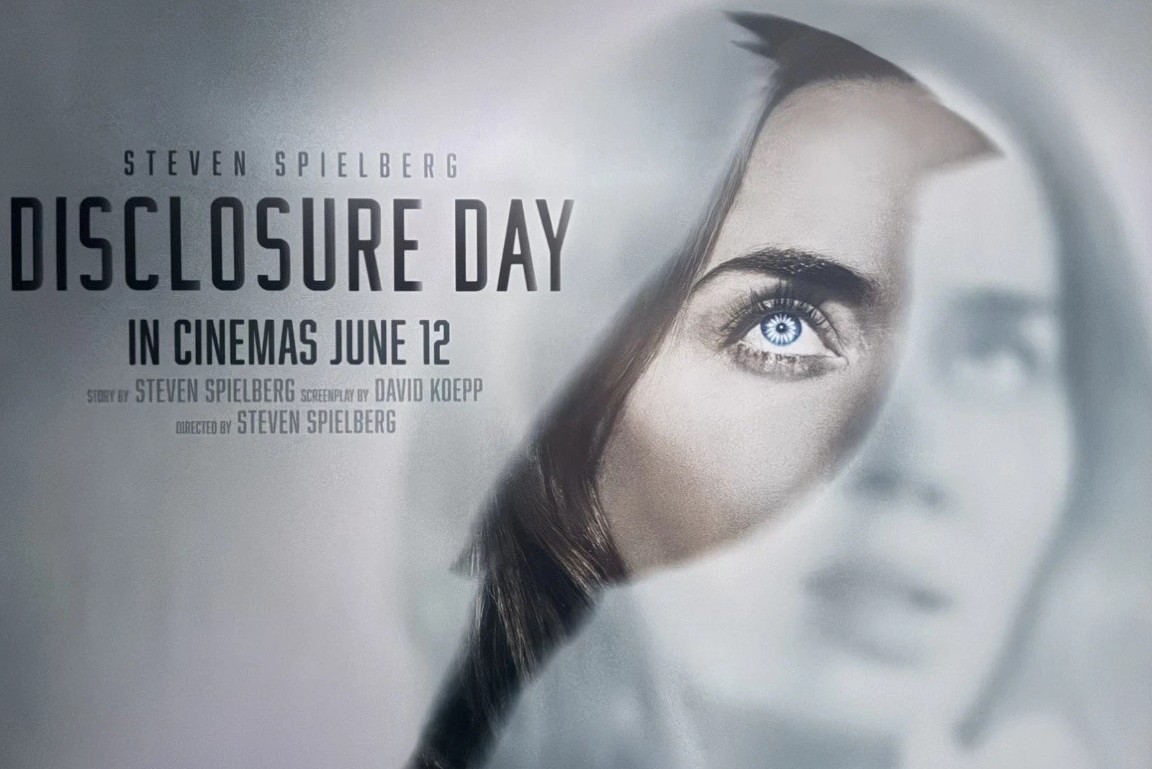
If only Steven Spielberg had shown an ounce of this originality in Disclosure Day.

All hail Kane Parsons.

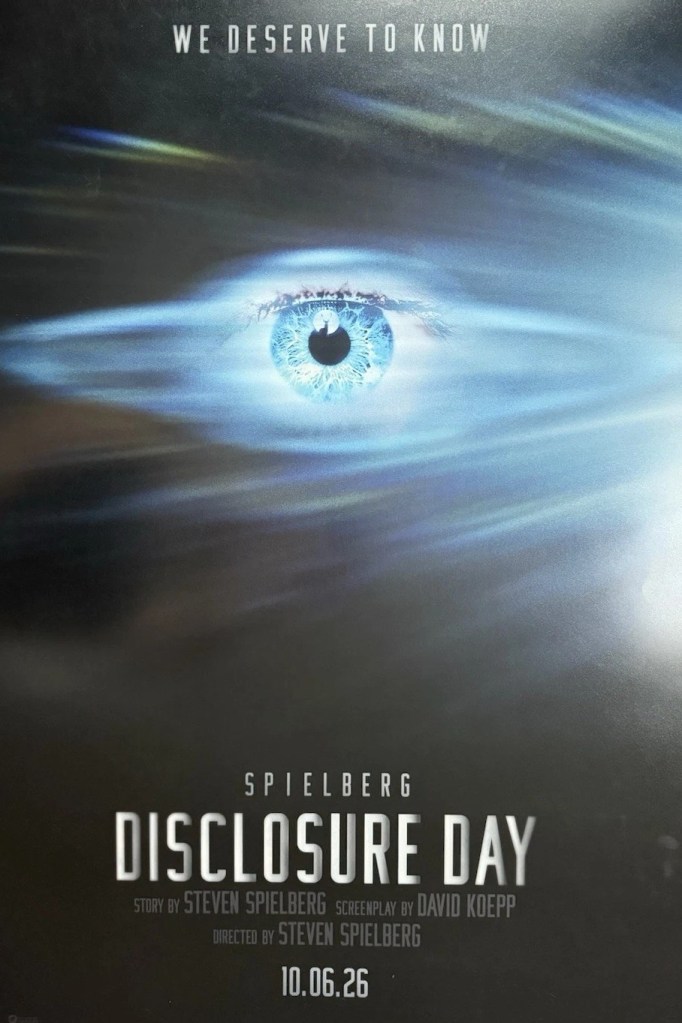
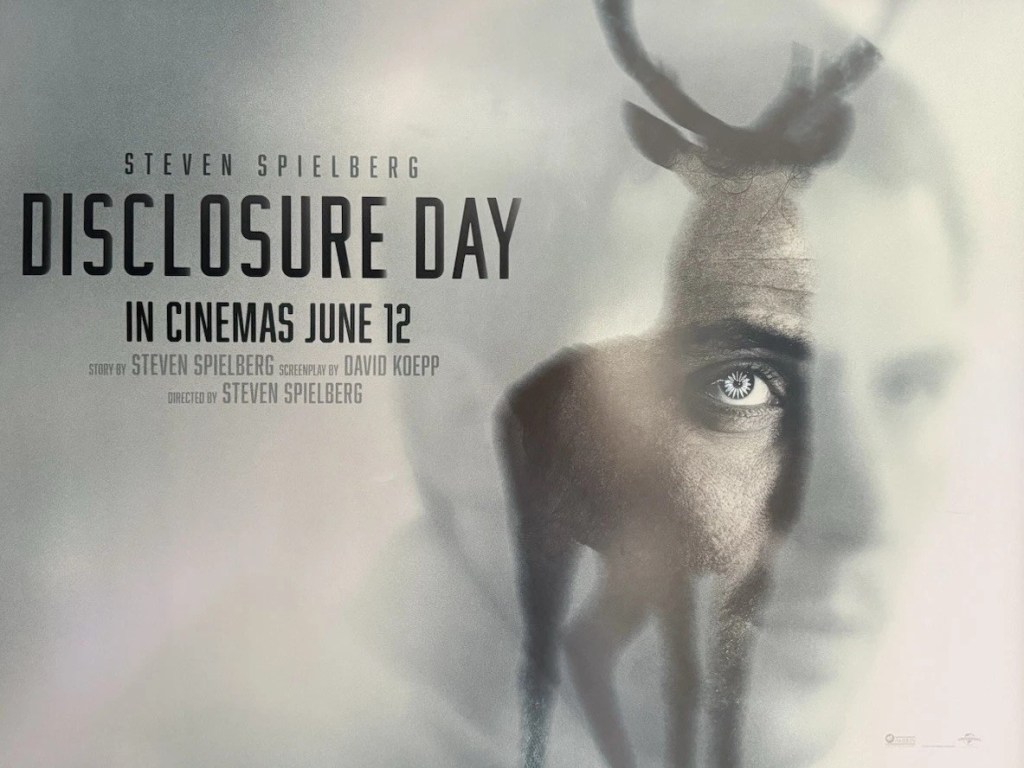
Disclosure Day (2026) *** – Seen at the Cinema

Thanks goodness other directors stepped up to the summer box office plate otherwise Hollywood would be left wringing its hands at this workmanlike, sanctimonious, effort. Like the recent Star Wars number, you get the impression the Steven Spielberg IP has long gone off the boil with the exception of sojourns into the prehistoric. He has not had a box office hit in years – The Fabelmans (2022) and West Side Story (2021) bit the dust along with The Post (2017) while Ready Player One (2018) only just made its money back.

Maybe it’s simply age (he’s pushing 80), but he’s lost that special magic that made him one of the all-time greats, the idea that he create something new, awesomely visual, rather than that he’s turned into an earnest lecturer.

Luckily, some other unexpected contenders – Project Hail Mary, Michael, Obsession, Backrooms – have stepped up the box office plate and Toy Story 5 is way ahead of initial projections while we we’ve still got another instalment of Minions and Spiderman to come, though judging from the trailers I’m less confident of Supergirl and The Odyssey delivering, though the latter may hit it big upfront judging from Imax advance bookings

This is a retread of Close Encounters of the Third Kind (1977), with the same male-female characters – weatherperson  Margaret (Emily Blunt) and ex-jailbird scientist Daniel (Josh O’Connor) – in search of something unknown, as though they are conduits to an alien world, one that serves up the same soup of aliens being wondrous beings, not to be illicitly tampered with. However, to peg all this on the Roswell “conspiracy” and to deck out almost every scene with men in black and men in black driving black cars seems an immense miscalculation.

The plot is full of holes, too, if you don’t mind me saying. How on earth did the rebels manage to snag a living alien from under the noses of the uber-security security forces of the quasi-government facility, or, even worse, have they made off with a baby creature and grown it themselves.

In social media world sure everyone is going to drop what they are doing and go past their bus stops or remain in situ to watch on their mobile phones “disclosure day” when an alien appears on their screen, but in the cinema world my guess is that audiences, like me, were staggered that after well nigh two-and-a-half-hours of a shaggy dog story this was all Mr. Spielberg could come up with.

Sure, there’s a bit of a chase scene here and there, and some form of telekinesis and people holding the kind of brick – that old-style mobile phones use to be made off – that has some kind of magical power, enough that Daniel’s girlfriend Jane (Eve Hewson) can be used as a conduit for Noah’s (Colin Firth) evil intentions, which is mainly to prevent “disclosure day.”

None of the supposed supernatural powers on show here are much to write home about, and there’s none of the wonder of Close Encounters and E.T. (1982), or even the more violent sci fi of Minority Report (2022) and War of the Worlds (2005) where aliens, whether artificially induced or not, are not on their best behavior. There’s not a single scene that you could say has the distinctive Spielberg stamp, rather a ramshackle screenplay that throws together a lot of different tangents in the hope, somehow, that they’ll all miraculously come together.

The only characters given any characterization are rootless Margaret and ex-novitiate Jane. Margaret is always on the look-out for something better, quite happy to wander from city to city to do so, the kind of ambitious also-ran who thinks they have a chance of grabbing the golden ring even if it means adding the occasional sexy shimmy to her weather-reading chores. Jane, Lord help us, is landed with the worst characterization I can remember, laden down with the idea that we might have to share the God-made universe with someone other than human beings. How on earth that 1950s idea made it into a contemporary movie is anybody’s guess and remember that Paul Schrader was yanked off screenwriting duties on Close Encounters for making it overtly religious.

Luckily, Emily Blunt (The Devil Wears Prada 2, 2026) more than holds the picture together and there’s certainly something touching in the way, using her sudden special powers, she puts troubled people at their ease. Daniel is there as a plot conduit, tasked with little more than exposition.

Noah and rebel leader Hugo (Colman Domingo) come across like the grown-ups, one trying to keep the spook in the box, the other trying to let it out.

There’s probably enough going on to keep you hooked, but the big reveal is a big disappointment.

Steven Spielberg does not save summer.  

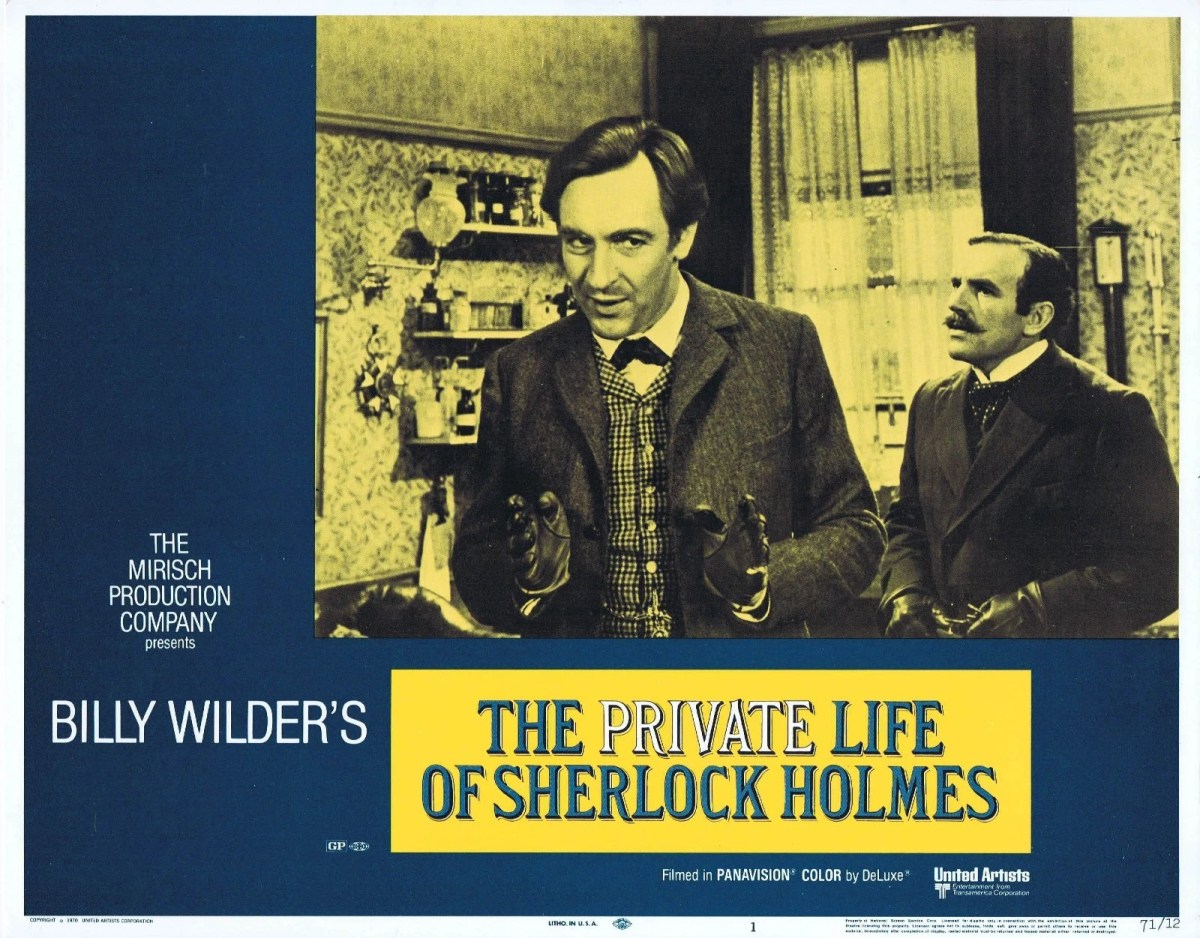
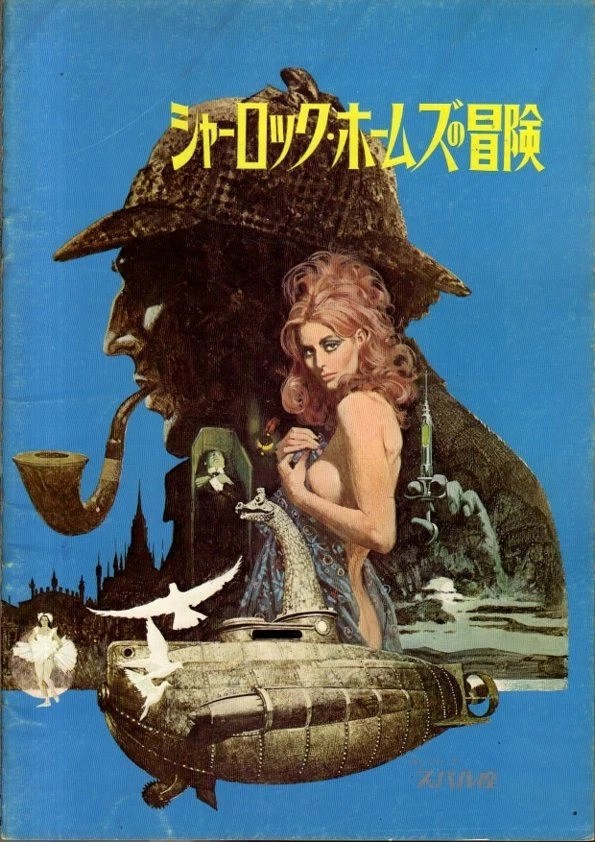
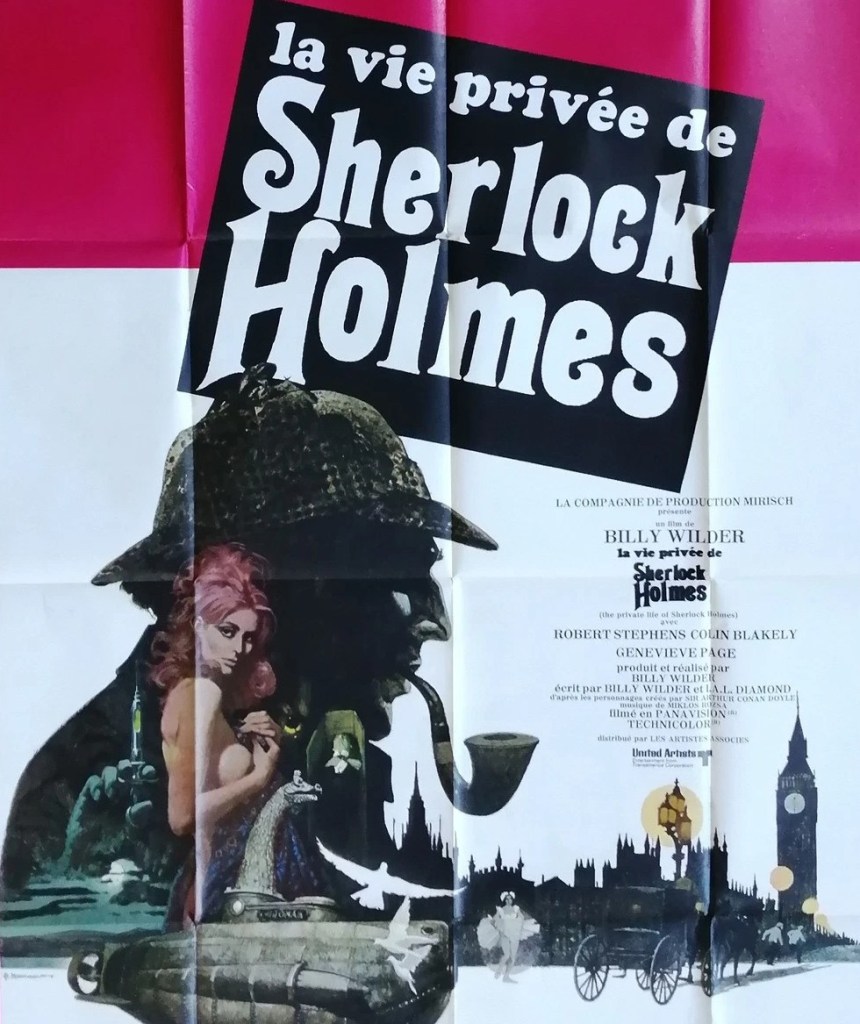
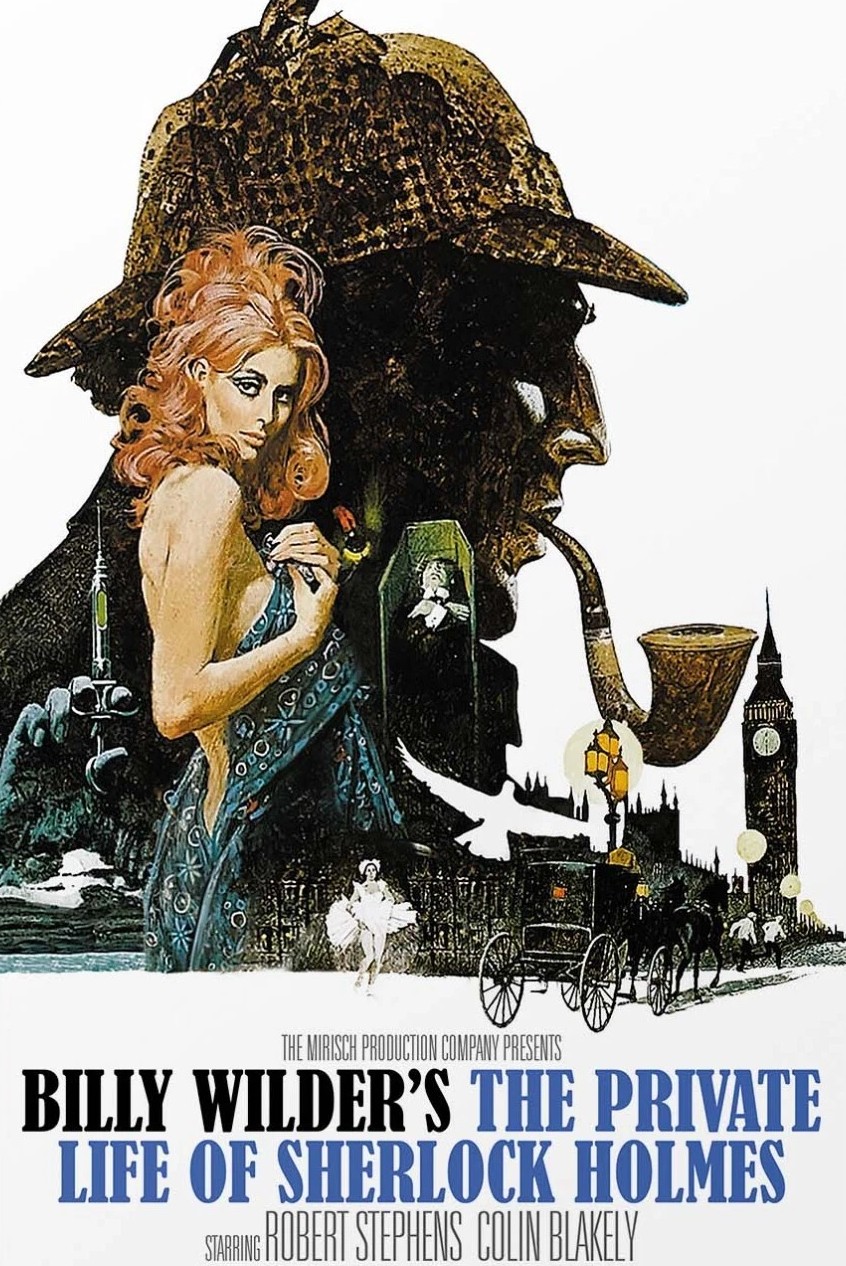
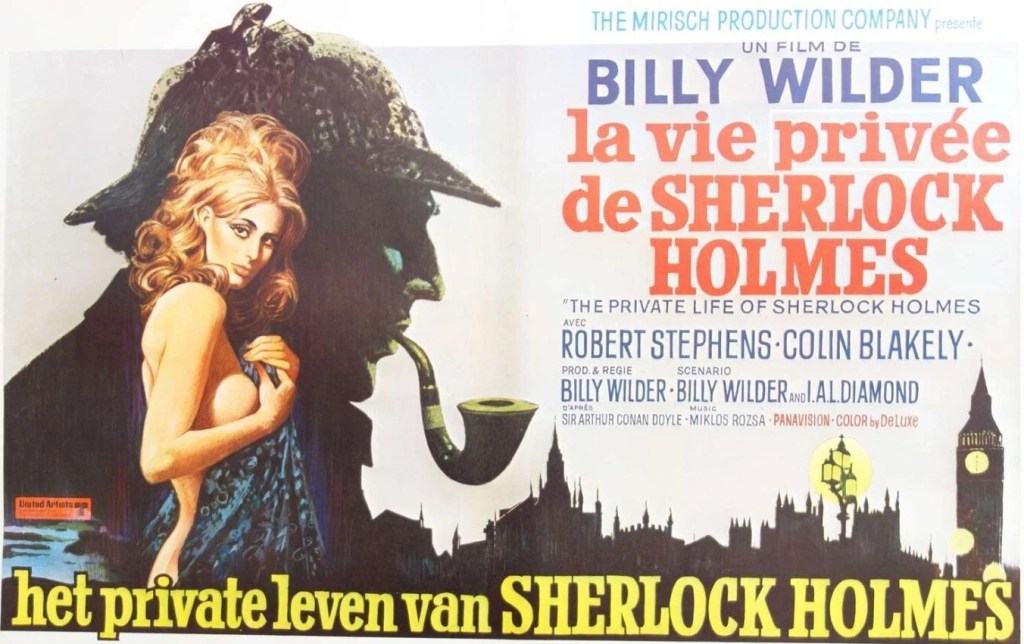
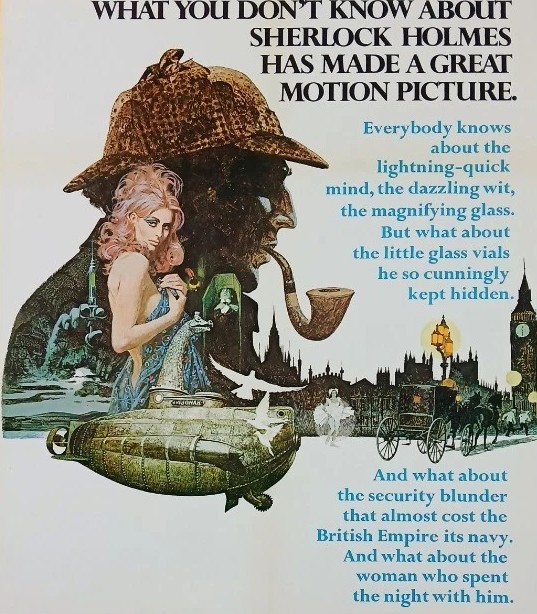
Behind the Scenes: “The Private Life of Sherlock Holmes” (1970)

Although Billy Wilder had written a script based on The Life of Sherlock Holmes (in fact he had three versions of the project running in his head, initially conceiving of the movie – twice – as a musical) by the time it came round to seeking funding in the early 1960s  he was not originally considered as its director. Mirisch was looking to contain the budget to around the region of $2 million, which would rule out any big star. However, at this early stage of the production, there were issues with the Conan Doyle Estate which was in the process of firing up other movies based on Sherlock Holmes, A Study in Terror (1965) being the most recent and also had another Conan Doyle property The Adventures of Gerard (1969) in mind.

A Study in Terror had been the brainchild of producer Henry Lester (who was also behind The Adventures of Gerard) and perhaps to general astonishment these days Mirisch had  agreed Lester would be allowed to make more Sherlock Holmes pictures as long as they remained very low-budget, on the assumption, presumably, that the marketplace would treat them as programmers rather than genuine competition.

However, Mirisch and UA retained the upper hand as regards the Conan Doyle Estate and “could cut him (Lester) off at such time as we have made definite plans to proceed.”

There was another proviso to the deal. The Estate would agree to forbid any further television productions unless Mirisch decided it wished to go down the small screen route itself. It was odd that Mirisch had eased Billy Wilder out of the frame given the mini-major had enjoyed considerable success with the director on Some Like it Hot (1959) and The Apartment (1960), a commercial partnership that would extend to The Fortune Cookie (1966).

Instead, Mirisch lined up British director Bryan Forbes who would be contracted to write a screenplay based on the Wilder idea. The sum offered – $10,000 – was considered too low, but it was intended as enticement, to bring Forbes into the frame as director. If Forbes refused to bite, “the only other name suggested and agreed upon was that of John Schlesinger.”  Although David Lean was mooted, UA were not in favour. Mirisch didn’t want to risk paying for a screenplay before there was a director in position.

The offer of the Sherlock Holmes picture was seen as a sop to Forbes. Mirisch had canned The Egyptologists, a project which Forbes believed had been greenlit. And why would he not when he was being paid $100,000 for the screenplay. In bringing the project to an untimely close Mirisch hoped to limit its financial exposure to two-thirds of that  fee.

Should Forbes balk at Sherlock Holmes, he was to be offered The Mutiny of Madame Yes, whose initial budget was set at $1.5 million, plus half a million for star Shirley Maclaine. Another Eady Plan project, this was aimed to go before the cameras the following year. If Forbes declined, then Mirisch would try Norman Jewison with Clive Donner and Guy Hamilton counted as “additional possibilities.”

As for Billy Wilder he had much bigger fish to fry. He was seeking a budget of $7.5 million to adapt into a film the Franz Lehar play The Count of Luxembourg to pair Walter Matthau and Brigitte Bardot. Should Matthau pass, Wilder would try for Cary Grant (whose retirement had not yet been announced) or Rex Harrison. Both sides played negotiation hardball. UA currently in the hole for $21 million for The Greatest Story Ever Told (1965) and Mirisch, having pumped $13 million into the yet-to-be-release Hawaii (1966), didn’t want to commit to another unwieldy expensive project.

So Mirisch insisted the project advance on a “step basis” allowing UA to reject the project after seeing the screenplay. Wilder countered by insisting that if it went into turnaround he, rather than the studio, would have the right to hawk it elsewhere (generally, studios tried to recover their costs if a movie was picked up by another studio). But Wilder was also in placatory mood and even if UA rejected this idea he was willing to work with the studio on a Julie Andrews project called My Sister and I.

However, UA and Mirisch were all show. “After Billy left the meeting,” read the minutes, “it was agreed we would not proceed with The Count of Luxembourg since we did not want to give Billy the right to take it elsewhere if United Artists did not agree to proceed.” Harold Mirisch was detailed to give Billy the bad news, but use a different excuse.

Initial casting had mooted Frenchman Louise Jourdan (Made in Paris, 1966) as the detective with Peter O’Toole or Peter Sellers as Dr Watson. Jourdan had worked, anonymously as it happened, for Wilder before, providing the uncredited voice for the narrator of Irma La Douce (1963).

By 1967, the Sherlock Holmes business was heating up. MGM was planning an adaptation of Broadway musical Baker Street and Paramount had on the cards The Man who Was Sherlock Holmes. Mirisch was also ramping up production, with $20 million invested in five properties, its busiest period ever.

Although Walter Matthau had been mooted for a supporting role, presumably Mycroft Holmes (the part ultimately played by Christopher Lee), wilder had decided the new picture would have no stars, to keep down the mushrooming budget – the eleven-month shoot would cost $10 million – and so that audiences would not come to the film with preconceived ideas. A future Holmes, Nicol Williamson (The Seven Per Cent Solution) was considered but rejected in favor of Robert Stephens (The Prime of Miss Jean Brodie, 1969) and Colin Blakely (Alfred the Great, 1968). All three effectively qualified as unknowns though by the time the movie appeared, Stephens, by default, had a stronger marquee name.

Although it was know that Rex Harrison (My Fair Lady, 1964) was desperate to play Sherlock, wilder stuck to his guns and opted for the lesser-known names. James Robertson Justice (Mayerling, 1968) and George Sanders (The Best House in London, 1969) were originally tapped for the role of Mycroft but were replaced by Christopher Lee (The Devil Rides Out, 1968).

There was extensive location work including several sequences set in Scotland. Baker Street was reconstructed on the Pinewood lot, where filming began on May 5, 1969.

Problems began after Mirisch viewed the first cut which ran to an epic three hours and 20 minutes. After a disastrous preview, Walter Mirisch kicked Wilder off the picture and carved one-third out of the picture, restructuring it, removing several episodes where Holmes solves various crimes and focusing on the Russian ballerina subplot and then the Belgian woman looking for her missing husband which takes Holmes to Loch Ness.

Naturally, the deletions altered the entire tone of the picture but as it stood it resembled little more that half a dozen 30-minute episodes, the kind of thing audiences could get for nothing on television.

United Artists did its best to make a big splash. It opened in November 1970 at the Radio City Music Hall in New York, the biggest and most prestigious house in the U.S., and that was to be followed by a Xmas release. However, the result at the Music Hall were deemed “dame” – just $150,000 from the 6,000-seat auditorium. Elsewhere it faltered, a “dim” $9,000 from five houses in Baltimore, a “pale” $5,000 in Boston, a “dismal”  $3,500 in Cleveland and a “light” $5,000 in Kansas City. It came nowhere near covering its costs.

A gala royal premiere at the Odeon Leicester Square – the biggest and most prestigious cinema in London’s West End – did little to bring in the public and it opened to a distinctly underwhelming £7,000.

SOURCES: United Artists Archive, Wisconsin Center for Film & Theater Research; Walter Mirisch,  I Thought We Were Making Movies, Not History (University of Wisconsin Press);  “Billy Wilder Return from Great Silence,” Variety, May 19, 1965; “New Sherlock Holmes Pix,” Variety, January 21, 1967; Box office – Variety November 1970-January 1971.

The Private Life of Sherlock Holmes (1970) **

The word is that you can’t blame director (and producer and co-writer) Billy Wilder for this disaster because it was taken out of his hands by studio United Artists and drastically re-cut. But when you learn that Wilder’s version ran three hours and counting and even in the shortened version looks a preposterously bad bet, you can see why UA felt the need to take charge.

Wilder had been the poster boy for sexual identity after the frolics of Tony Curtis and Jack Lemmon as cross-dressing musicians hankering after Marilyn Monroe in Some Like it Hot (1959). Whether Sherlock Holmes was a closet gay would have been a minor footnote to the author’s massive fanbase, and to put it so upfront looks, especially for a contemporary audience, like a massive misstep.

The first part of the movie largely consists of Dr Watson (Colin Blakely) being accused of over-mythification of Sherlock Holmes (Robert Stephens). Turns out (according to the Wilder version) that Holmes is a couple of inches shorter than Watson (his narrator in the Conan Doyle stories) had claimed and never wore the deerstalker. Blimey, lock that man up. Shock horror! Holmes’s other predilection, a regular injection of cocaine (I’ve no idea what a seven per cent solution would be in today’s money) is no invention, however.

But whether Holmes is attracted to the opposite sex forms the focus of the first section of this (even at just over two hours) unwieldy movie. A famous Russian ballerina Madame Petrova (Tamara Toumanova) wants to make him the father of her child. The only way Holmes can get out of this predicament is to pretend to be gay.

Eventually, after exhausting this joke (!), we get the proper mystery. Mysterious Belgian Gabrielle (Genevieve Page), just fished out of the Thames by a passing cab driver, turns up soaking wet at 221B Baker St and (eventually) Holmes is inveigled to find her missing husband.

In other circumstances this would have probably been a relatively straightforward case for the ace detective although there would have been, of necessity, ample opportunity for him to demonstrate his special set of skills. But this being of a more lumbering project, the investigation involves monks, midgets and the Loch Ness Monster. Yes, you heard right.

That should have killed off the project at the start. Like whether Holmes is gay or not, the Loch Ness Monster is another minor footnote. Apart from being a tourist attraction and keeping the conspiracy theorists going and competing with Roswell for public attention, it’s the dumbest of notions, even if, as the audience will expect, that it’s not the real monster (if there is such a thing) but a Macguffin of considerable dimensions.

I might have been happy to go along with a narrative that ran close to spoof except I didn’t take to either of the principal actors. I’ve no idea what made Billy Wilder believe that Robert Stephens (The Prime of Miss Jean Brodie, 1969) would make a good Holmes. I’m not one of those traditionalists who believe a specific actor was the quintessential Holmes, but it’s a part that’s far easier to get wrong than get right. And I think Stephens with his wafting loose style got his characterization spectacularly wrong.

Colin Blakely (Alfred the Great, 1968) is one of those actors who generally knows how important it is to rein it in, because if the ham in him is given an inch he will most certainly take a mile and he’s so over-the-top you think he’s going to disappear over the nearest horizon.

This was a huge flop and no wonder. And Billy Wilder, given he wears the three hats vital to a film’s creativity, must take the blame. It’s a rubbish story badly done. Like any other great director, we tend to remember Wilder’s successes – Hollywood drama Sunset Boulevard (1950), media excoriation Ace in the Hole (1951), POW camp thriller Stalag 17 (1953), comedy The Seven Year Itch (1955), Some Like it Hot and sexual satire The Apartment (1960) – and we tend to forget that he often, especially in the 1960s, fell flat on his face. One Two Three (1961) and Kiss Me Stupid (1964) were colossal miscalculations, the result as much of miscasting as of script.

This stands as even worse than that pair. Wilder had got way too big for his boots and at a point where a studio had to cut him down to size. But even the truncated version isn’t much cop. And the only thing that keeps it from attracting a one-star review is that it’s better than Orgy of the Dead (1965).

Steer clear.

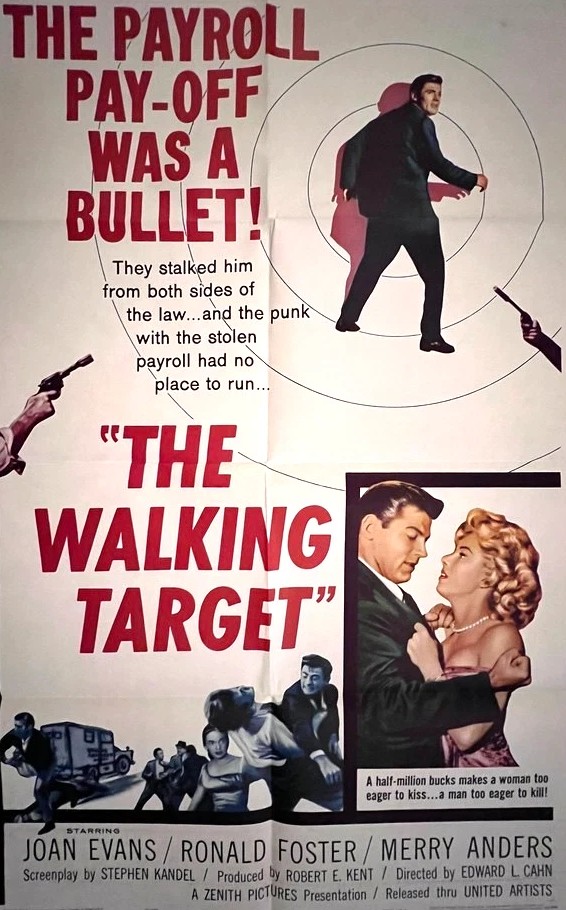
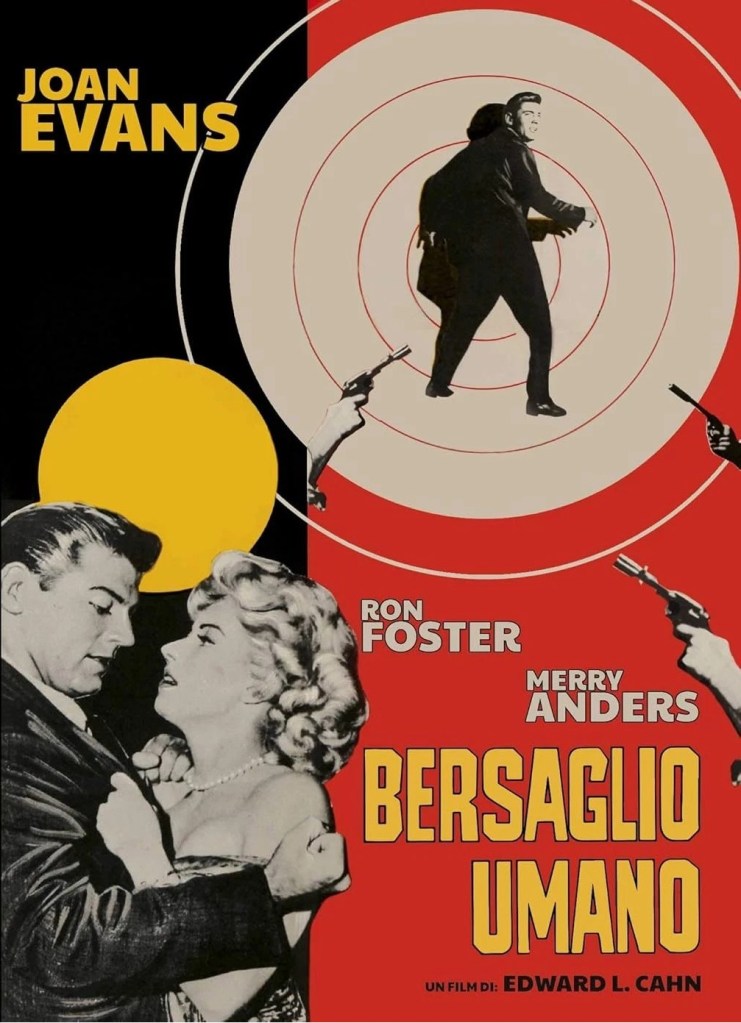
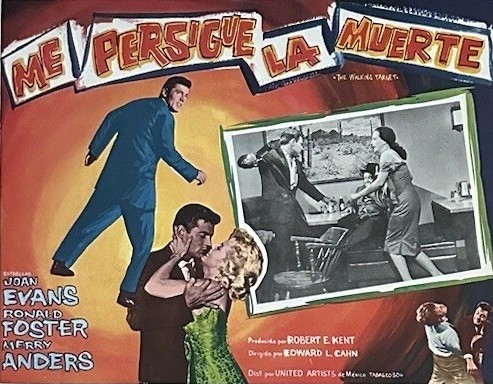
The Walking Target (1960) ***

The Double Cross Olympics. Or the Twist After Twist After Twist World Championships. Either way you’re in for a rattling good time. This is a hard-boiled B-movie the way Hollywood makes them, so there’s virtually no one involved who’s on the side of good.

Nick Harvin (Ron Foster) leaves prison after serving a five-year sentence for stealing $260,000. The money’s never been recovered so, in the words of the warden, he’s a “walking target,” fair game for anyone seeking a share or all of the loot – “they can smell that green round corners.”

Step up blonde girlfriend Sue (Merry Anders) and best buddy Dave Prince (Robert Christopher), whose credentials in the loving and friendship department are in doubt given neither visited him in jail. Also on his tail – the media, hoping to put him back on the front page where he belongs and Detective Max Brodney (Harp Maguire) a pair of cops hoping to put him back inside where he belongs. The cop tells it straight, “You’re a louse, you’re smarter but you’re still a louse.”

Nick envisions a future that’s “fat and rich” while Dave reckons he’ll be able to “coast forever.” Nick drops a bombshell. He’s planning to give a one-third share of the dough to the wife Gail (Joan Evans) of one of his two partners in the heist, both dead. Although there’s another reason he needs Gail. The money was stashed in her car’s undercarriage and she’s long ago left town.

Meanwhile, Dave begins the two-timing game. He’s worse than Sue. She’s only making sweet with Dave behind her lover’s back. But Dave has also stitched up Nick by selling him out to a big time crook Hoffman (Barry Kroeger).

Nick can’t even hide out. Newspapermen have caught up with him and he’s splashed all over the front pages. The cops and the crooks are on his tail. Nick high-tails it to Gold City, where Gail runs a diner. He’s got a soft spot for Gail, she threw him over for her mechanic husband Sam because she reckoned Sam was a safer bet, not realizing he was dumb enough to get snookered into a robbery.

So here’s the real twist. Nick manages to sweet talk Gail. When she turns down his offer of a share of the loot, he tells her he’s going to give it all back. Being the trusting sort, and maybe thinking she would have been better off with someone who wasn’t as dumb as Sam, Gail takes him to her car and watches him pull out the hidden cash.

So, of course, he’s just playing her for a sap. Yeah, maybe he feels guilty about Sam and yeah maybe he does still have a soft spot for Gail, but he’s a thief and what chance is there that he’s going to turn into a good guy and return the stolen money.

Before Gail gets the opportunity to realize he’s playing her for a sap, in burst the crooks, whacking nick around and promising to do worse to Gail unless he hands over the money. In the confusion, Brodney appears, and takes one for the team, but not before the thugs have got their come-uppance.

Yep, there is one last twist, one I certainly wasn’t expecting. Nick is going to go straight after all.

How do you like that? Of all the mean narrative tricks, the bad guy turns into a good guy.

This must have a made a cracking supporting feature. All the characters, including Gail, can squeeze the last bit of juice out of a line. There’s nothing but snap and zing. Plenty temper, car chases, fisticuffs and shoot-outs. And did I mention it was aiming for the gold ring in the double-crossing league.

Great cast of B-movie troopers in Ron Foster (Cage of Evil, 1960), Joan Evans (Roseanna McCoy, 1949),  Merry Anders (House of the Damned, 1963) and Harp Maguire (Incident in an Alley, 1962). Directed by Edward L. Cahn (Incident in an Alley) from a script by Stephen Kandel (Chamber of Horrors, 1966).

At a lean 75 minutes it’s story, story, story and belt along at a terrific pace.

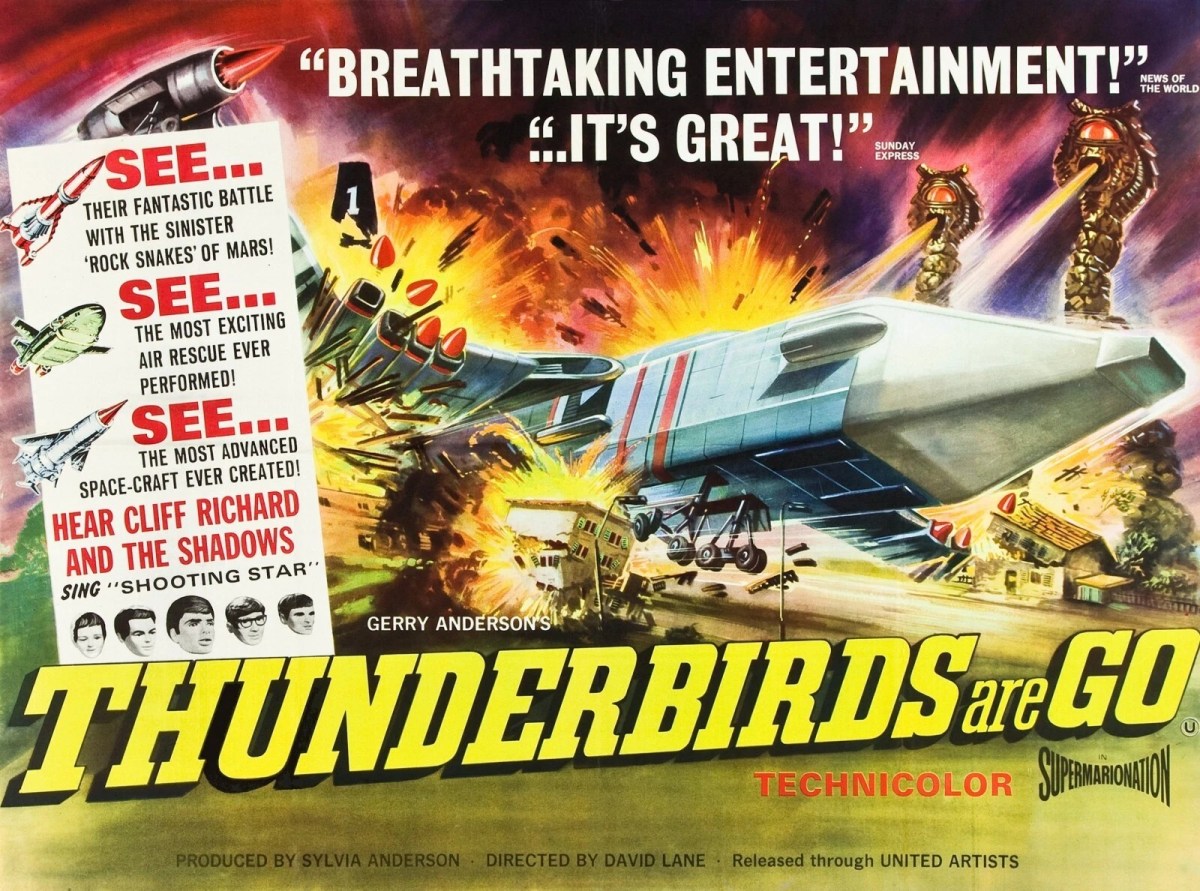
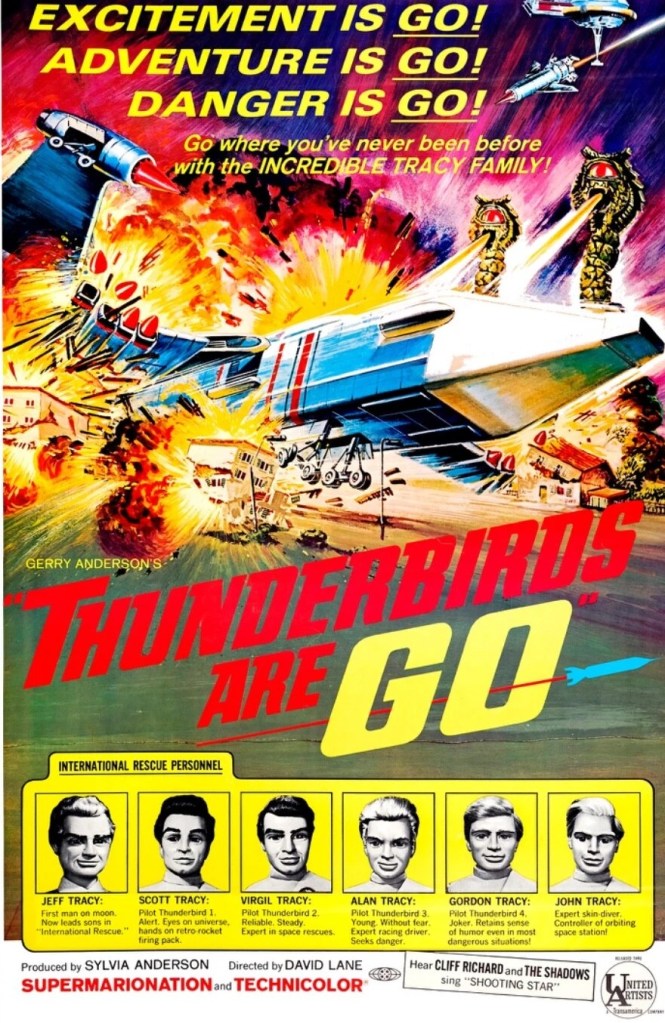
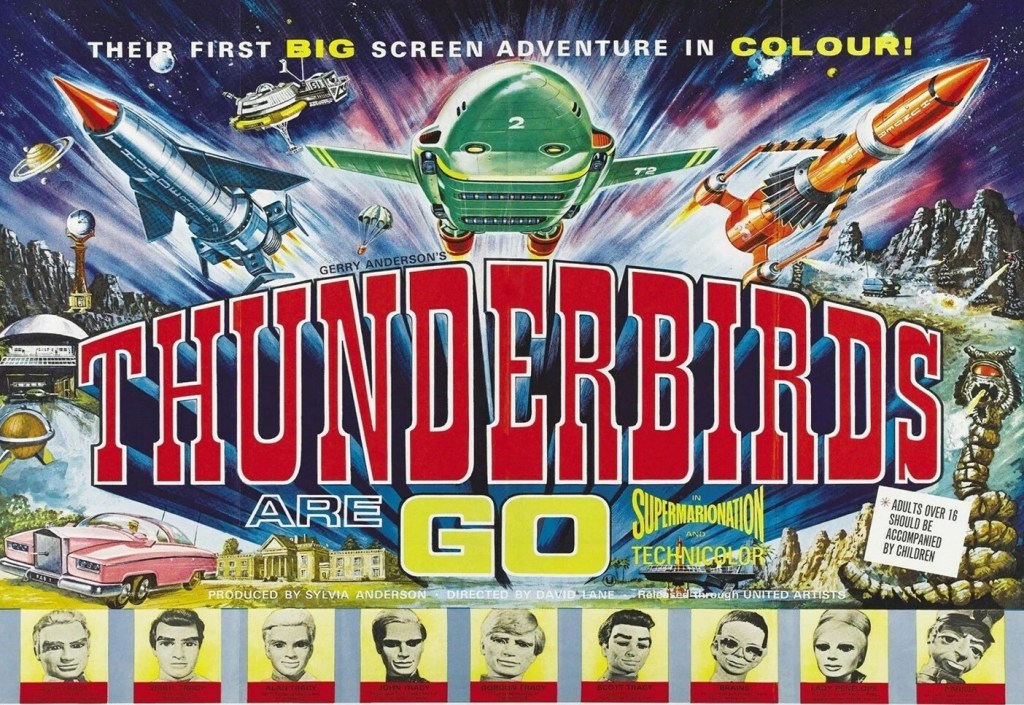
Thunderbirds Are Go (1966) ****

Nostalgia – and reappraisal – rule. Every bit as worthy a contender for a Father’s Day crown as the more favored likes of The Great Escape, 1963), The Dirty Dozen (1967) and Die Hard (1988). One of the reasons why Britain wasn’t in the thrall of DC and Marvel was that we had grown up with Dr Who and the Gerry and Sylvia Anderson portfolio of sci fi marionettes – Fireball XL5, Supercar, Stingray, Thunderbirds, Joe 90 and Captain Scarlet.

And while most of the nostalgia for the period goes the way of Ray Harryhausen, the Andersons’ achievements not so much with their puppetry but the miniaturization should not be underestimated.

It wouldn’t be too much of a call, for example, to guess that Stanley Kubrick learned a lot about the joy of spaceships coming together or moving around from Thunderbirds Are Go where a good chunk of the action is watching spaceships shift around one way or another. To top it all, and another one in the eye of Mr. Kubrick, the Andersons beat him to the psychedelia, a dream sequence set upon a “Swinging Star” and involving puppet versions of Cliff Richard and the Shadows, still a big noise in the pop world at the time despite the arrival of The Beatles and The Rolling Stones. Their appearance would be the equivalent to  Bruce Willis, for example, doing a guest turn in Friends.

With a bigger budget, the Andersons made two crucial changes from the TV series on which this was based. They managed to erase all sight of the puppet strings and they stopped them walking around so much which always made them look most like just puppets.

This is space as we should adore it. None of the manky, worn-down, dirty cargo ships that litter modern sci fi epics. Not only is every ship gleaming but they are also colorful, not to mention color-coded. When they move it’s with the majesty that Kubrick used to great effect in 2001: A Space Odyssey (1968). And as Kubrick also proved, when it came to space, you didn’t need much in the way of characterization or narrative. He follows the same rule as monster pictures, focus on the big beasts as much as possible.

But Kubrick, in his wildest dreams, could never imagine as sultry a character as blonde goddess Lady Penelope, and though she’s on the side of the angels as cunning as any femme fatale. Equally iconic is her pink Rolls Royce and the chauffeur Parker which his obedient “Yes, m’ lady.” Not to mention the glorious catchphrase “eff ay bee” – in other words FAB, the catchphrase for a generation. There’s another catchphrase that only means something to Londoners who would hear this warning every day on the Underground – “mind the doors.”

The narrative is relatively thin. Zero-X is trying to fly to Mars but the flight is sabotaged and crash-lands. When a second flight is planned, this time International Rescue (the Thunderbirds team in case you are unaware) is on standby with Lady Penelope employed to seek out the saboteur.

This flight does succeed but on Mars encounters venomous snake-like rocks and scarpers quickly only to hit trouble on re-entry to Earth that requires Thunderbirds to the rescue. There are some modest attempts at characterization, Zero-X doesn’t like the idea of needing help, and the youngest of the Tracy family is frightened of failing.

I’ve never seen this before. I probably thought I was above such childish things when it first came out and it was only when I spotted it on Amazon Prime that I thought to give it go, remembering how much I had enjoyed the revamped Fireball XL5.

I sat enthralled. The first section has no sign of the International Rescue team and just like those mesmerizing minutes watching Kubrick’s spaceship revolve in space this simply involved putting together the constituent parts of the Zero-X rocket ship prior to launch.

You had to hand it to these sci-fi whizzes. You only needed one fella in the control room. Each of the Thunderbirds required only a solo pilot. You could be whisked electronically from a seat in the waiting area to the spaceship and arrive there on the same seat or go along some kind of travelator. These guys had thought of everything.

Directed by David Lane and written by the Andersons with Sylvia doubling up to provide the voice of Lady Penelope

With the removal of the strings and every miniaturization so stunning, this would look great on the big screen. The 60th anni would be December this year so here’s a call-out to an enterprising cinema.

NOTE: today is British Father’s Day.  It may not be Father’s Day where you are.

Discover WordPress

A daily selection of the best content published on WordPress, collected for you by humans who love to read.

The Atavist Magazine

by Brian Hannan

WordPress.com News

The latest news on WordPress.com and the WordPress community.