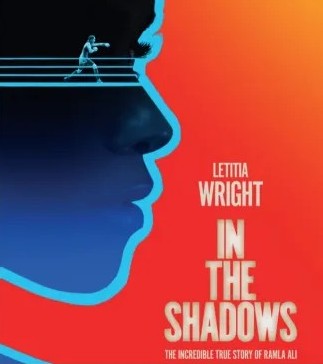
In the Shadows (2026) *** – Seen at the Cinema

Sometimes you just get bushwhacked at the cinema. Turn up for one of these Secret Screenings at your local multiplex and you’ve no idea what’s going to be shown. I’d never even heard of this picture, much less seen a trailer (and it’s due for release on Oct 30) and never heard of the main character, a female Muslim refugee in Britain who turns into a world champion boxer and represents her country of origin, Somalia, at the Olympics.

In truth, the tale would have been much better told as a documentary because a) it is at least 20 minutes too long b) often relapses into airy fairy artistic shots and c) ain’t half as dramatic as the material could be. There’s a Chariots of Fire moment when our boxer beats the odds with a clever use, but otherwise it doesn’t seem to get beneath the skin of the main characters.
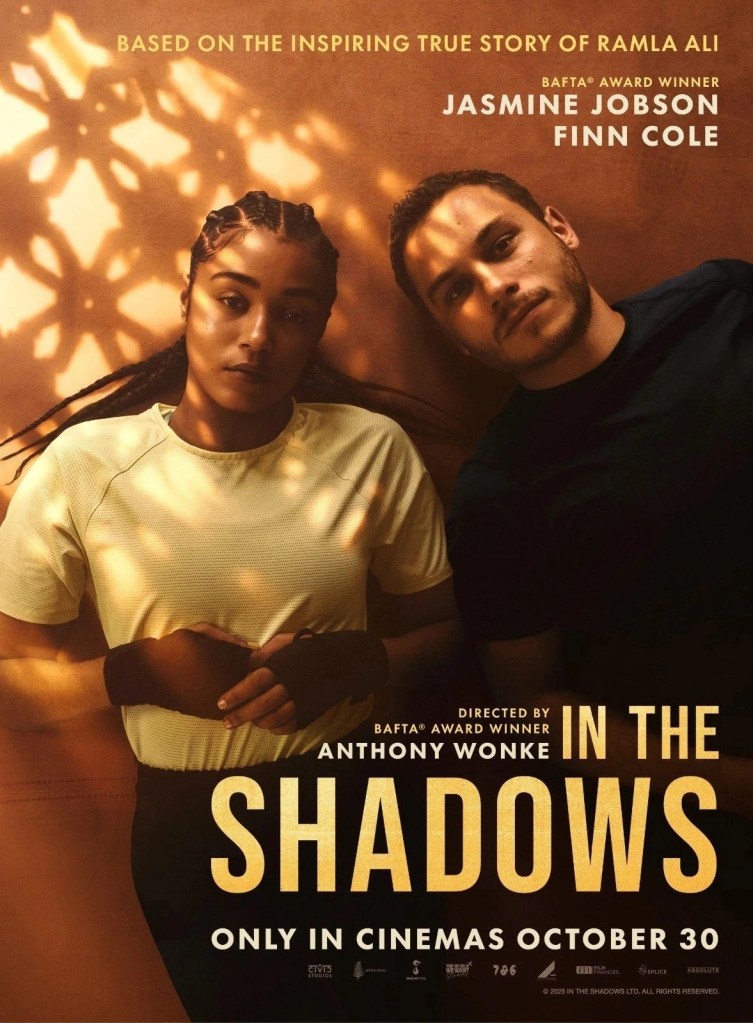
Ramla Ali (Jasmine Jobson) takes up boxing to lose weight. Her parents are kept in the dark because they’ll most likely object and are intent on marrying her off to a nice Muslim boy. She’s taken on at a gym by coach Clinton (Gershwyn Eustache Jr) and also meets Richard (Finn Cole) who takes a shine to her, though romance is off the table given he is white and non-Muslim. Interestingly, she’s not as dedicated to the sport as Clinton would like, in part because she’s ducking and diving to avoid her parents and strict older brother, but also in part because…we don’t know why. Eventually, however, she starts to get bouts and wins enough to come to the attention of the Team GB Olympics Boxing team. But she doesn’t make the grade there because…we don’t know why.

Anyways, Richard decides to convert to Islam and marries her, much to the fury of her family. And then in a Chariots of Fire moment she decides to set up a one-person boxing team for Somalia to compete in the Olympics which is where the film ends, family and community finally coming round. She doesn’t win an Olympic medal it has to be said so it’s not as triumphant as it might be. In fact, it’s not triumphant at all, how her career pans out ends up in the credits.

There are two main problems. Firstly, it’s too long and therefore too slow with too much time spent on artistic compositions that don’t have any impact on the narrative. But, more importantly, because Ramla comes across as a Jekyll and Hyde character. In the big wide world she can more than handle herself, ready with a barbed quip to deter anyone taking her for granted. But in her home she’s a mouse, never challenging parents or strict brother, just sneaking out in the early mornings and evenings to go training. Eventually, she’s rumbled because one of her fights is shown on television, to family outrage.

Films about female boxers have generally tanked at the box office and this looks as if it’s scarcely going to get a release in this country. Nobody wanted to see Sydney Sweeney as Christy (2025) or Michelle Rodriguez in Girlfight (2001) although Clint Eastwood made a bundle on Hilary Swank as the Million Dollar Baby (2004), which also scooped Oscars for Eastwood and Swank. So it’s a tough call to find a story that resonates enough to become a fulfilling drama.

And Ramla Ali wasn’t in fact the world’s first female Muslim boxing champ – that honor went to Australian Bianca Bam Bam Emir, born in Lebanon.

It’s definitely attempting to win the inspirational gold and in pure biopic terms that’s fine but as a proper drama comes up short.

Jasmine Jobson (Bird, 2024) is okay but her part is underwritten as is that of Finn Cole (Last Breath, 2025). Gershwyn Eustache Jr (The Man in My Basement, 2025) has the meatiest part.

Director Anthony Wonke is best known for documentaries so can be forgiven for padding this out with artistic flourishes. Written by Ursula Rani Sarma (A Beautiful Imperfection, 2024).

You’ll probably be able to catch this on streaming sometime soon.
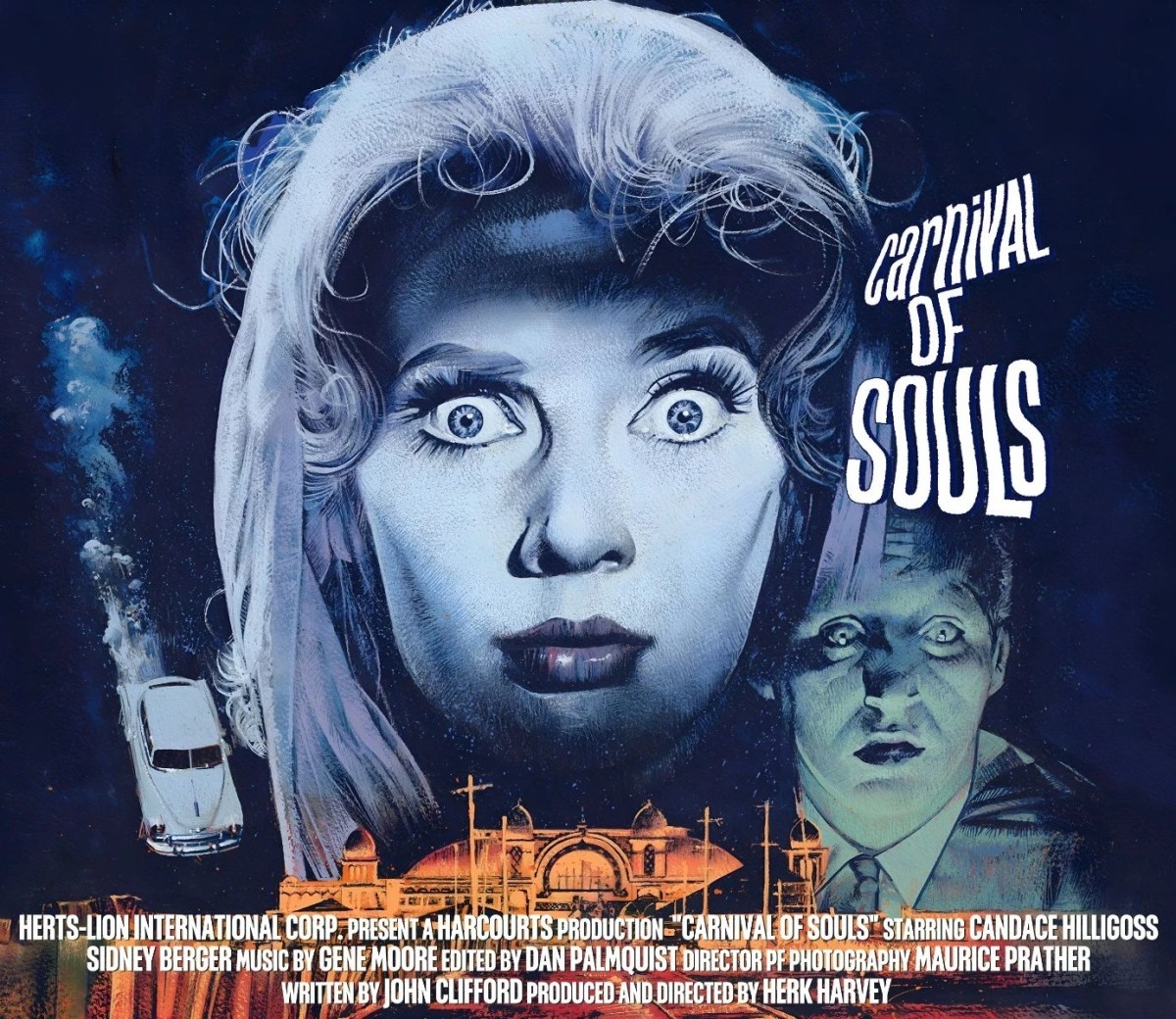
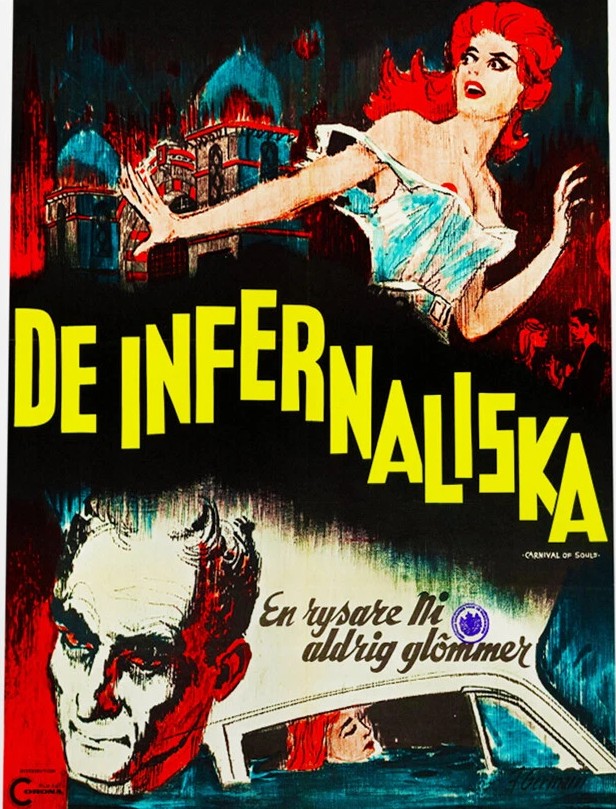
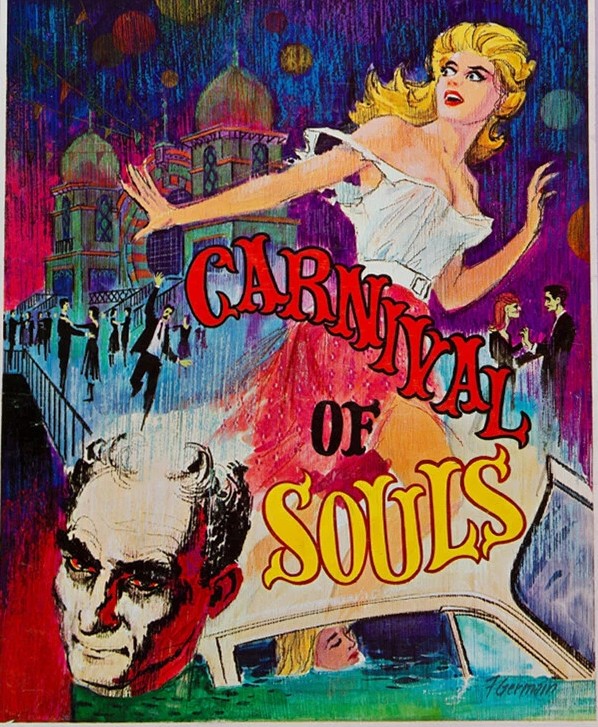
Carnival of Souls (1962) ***

You can see where this is going from the outset but that doesn’t stop it being a brooding entertainment, the kind of cinematic compulsion that invokes the likes of Alain Resnais Last Year at Marienbad (1961) and has enough in the cuckoo tank to be keep us engrossed. You can see why it’s become a cult number with shades of The Twilight Zone and in keeping the main character trapped in the camera headlights conjuring up Hitchcock.

Professional church organist Mary (Candace Hilligoss) should have drowned after a drag race went wrong. Instead, she emerges from the river, the only survivor of the cash, and heads off to a new job. She’s not the type of woman given to fancy, she plays the organ as a profession, not because she immerses herself in music. She’s chastised for not showing enough soul in her playing. But she’s haunted by her imagination, a ghoul appears in her car passenger window, and she imagines an abandoned building, previously home to a carnival, is full of dancing ghouls.

When she plays the organ in the church in her new job in a new town her hands stray to eerie keys. Strange men appear at her door. The world appears out of kilter. Half the time she’s in a trance or believes she’s passing through the world unseen and unheard.

Frightened of being alone she briefly takes up with a creepy neighbor. But him and virtually everyone else she meets seem to turn into ghouls and eventually she finds herself back at the carnival, welcomed to join the dancing ghouls, who chase her and when the next day the cops try to trace her movements outside the carnival her footsteps disappear. Back at the river, however, the crashed car is dredged up and Mary is one of the passengers.

It wasn’t considered desperately scary when it first appeared and even less so now, but it is hypnotic. When you see virtually everything through a character’s eyes, as Hitchcock did with Vertigo (1958), you are corralled into their world view and there’s no escape. You don’t know what’s real any more than Mary does.

Interestingly, this gets along fine without that major trope of the horror picture – the scream. And not just any old scream but the female scream. Although there’s no doubt Mary is very disturbed by what transpires she’s not driven so wild with fear that she resorts to screaming her head off all the time.

The fact that this is a low-budget number works in the movie’s favor. There’s no reason to rack terror up by artificial means as we can see the shock and confusion writ large on Mary’s face. If the director needs to ramp anything up, he merely focuses on her eyes. Much of what takes place appears removed from reality as far as Mary is concerned and even the dancing ghouls are initially seen in long shot. Just about the creepiest scene is when Mary imagines that her organ playing is making the ghouls dance faster.

This didn’t result in Candace Hilligoss receiving any career recognition. In fact, for her next picture The Curse of the Living Corpse (1964) she was demoted to supporting player and that pretty much spelled the end of her movie career. Carnival of Souls turned out to be a career cul de sac for director Herk Harvey who otherwise only had The Reluctant Witch (1971) on his CV. John Clifford, who co-wrote the piece with Hervey, didn’t have another movie in him.

But you can see why it’s thrived on cult.

You can catch this on YouTube.

Clayface (2026) **** – Seen at the Cinema

Carrying the DC Comics imprint was the worst thing that could have happened to this picture. Had it come out under the Blumhouse moniker, it might have been better received. As it is, my guess is the target audience was just confused, accounting for it falling short of expected weekend box office targets. You say DC Comics and everyone is expecting a superhero, these days in various shades of grey. So, in that regard, at least, this comes well up to scratch.

But it appears not to be part of any DC universe, a rare stand-alone which can’t call on a guest appearance from Superman or Batman to trick it out. I’ve never heard of this comic book character, but then, don’t come to me for a quiz on multiverses.

The surprising thing is how well it works. Sure, maybe it’s a combo of Frankenstein, House of Wax, the Hulk, and any other movie where an experiment went wrong, but at least it’s touching and the main character is exceptionally reflective for a superhero. The superpower element is a shade confusing, however, given he’s got double the dose of the usual superpower. For a start, you can’t kill him, which is enough to set him off, John Wick-style, on bloody revenge. But he can also shape-shift, if that’s what you call it, and assume the body of people he’s killed or about to. Though, naturally, in the kind of underworld into which he descends, a gangster faced with two versions of the same person is likely to put a bullet through both of them.

So we have an actor Matt Hagen (Tom Rhys Harries), on the verge of the big big-time having just been nominated for his first Oscar, who makes the mistake of celebrating with the wrong gal, Mia (Joana Ribeiro), who turns out to be a gangster’s moll of gangster Markos Szabo (David Dencik) who doesn’t take kindly to his girlfriend’s one night stand. So he decides to take revenge. What could be the worst affliction a pretty boy actor could face? Why to lose his looks. He is so badly sliced and diced he is unemployable (though you would have thought ideal to play a villain).

When the police prove impotent, Matt launches a civil suit. He loses. Then discovers he’s been duped out of his fortune by his sleazy lawyer (Eddie Marsan). By chance, he happens upon a scientist Caitlyn Corr (Naomi Ackie) who’s also been duped out of a prospective fortune. She’s discovered a treatment for rejuvenating cells. He volunteers to become a human trial. To his astonishment, the treatment works. With a completely new face he’s able to walk all over the people in the movie business who dumped him, stealing the thunder at a red carpet premiere.

Only thing is, as you might imagine, there’s a downside of Hulk proportions. The treatment only works if he can stay on an even keel emotionally. If he gets angry, his face betrays him, it starts to slip out of joint, melting like wax. So he helps himself to a massive booster which does the rejuvenating but leaves him open to melting away.

On the other hand, Caitlyn, in a kind of rip-off of Ghost (1990), can get through to him, her touch instantly calming him down and restoring his looks. She’s not available, though, already having a fiancé, incorruptible cop John Borelli (Max Minghella). So not only are we into unwieldy triangle country, Matt has become scared about who he has become, and what he can do. Unlike John Wick or The Equalizer or any other do-gooding superhero, he suffers from remorse.

So, for probably the first time in the superhero world, discounting the romantic travails of your local Spiderman, we have a very reflective, human character, caught up in a world not of his making, unable to control his hatred, unable to express his longing for Caitlyn, and trying desperately to keep in check his instinct to off the boyfriend getting in the way of true love.

Yes, the facial SFX effects are pretty good, and you’ll be averting your eyes at various points, but what is more effective is the emotion,

Except that it’s helping out the wider acting community, I’m not sure why DC Comics has filled this with foreign actors. Tom Rhys Harries (in his first leading movie role) is Welsh, Naomi Ackie (Mickey 17, 2025), British, as are Eddie Marsan (Back to Black, 2024) and Max Minghella (The Handmaid’s Tale, 2017-2025). David Dencik (No Time to Die, 2021) is Swedish and Joana Ribeiro (Dreaming of Lions, 2024) Portuguese.

You can see the hand of horror maestro Mike Flanagan (Carrie, 2026) – who co-wrote the screenplay with Hossein Amini (McMafia, 2018) – in the writing. There’s a depth of character and situation you don’t usually find in horror.

Directed by James Watkins (Speak No Evil, 2024) who doesn’t allow the facial horror to take over from the internal horror.

Enjoyed this a lot more than I expected.

The Ceremony (1963) ***

Actors taking the hyphenated route were quite a fad in the 1960s. Mostly, primarily for tax purposes, they turned themselves into actor-producers. But some went all-out for artistic glory, saddling themselves with the task of directing the movies in which they starred, by this point in the decade John Wayne (The Alamo, 1960) and Marlon Brando (One-Eyed Jacks, 1961) the most celebrated examples. Despite lacking that pair’s box office pulling power, Laurence Harvey (Butterfield 8, 1960) threw his hat into the ring with this often compelling, atmospheric, but occasionally pretentious, offering.

Irishman Sean McKenna (Laurence Harvey) is in prison in Tangiers – “a city of money” – for one crime he did commit (bank robbery) and one he did not (shooting a guard dead during the robbery). Although facing an imminent death penalty for the murder, he refuses to name the killer. Local prosecutor Le Coq (Ross Martin)  is intent on making him an example while the prison warden (John Ireland) pleads for clemency, especially as it is suspected the inmate is innocent.

Astonishing to imagine now but this went out on general release in Britain
as the lead film in a double bill with “Lilies of the Field.”

Meanwhile, McKenna’s girlfriend Catherine (Sarah Miles) and his brother Dominic (Robert Walker Jr) plan an audacious escape. The brother is not altogether altruistic. His price is half the hidden loot and Catherine, that part of the deal sealed when she submits to sex with him.

Dominic gains entry to the prison disguised as a priest, swapping clothes with his brother, so that when sirens sound to announce potential intrusion by Dominic’s sidekick Nicky (Lee Patterson), Sean can simply walk out unharmed. However, when Seans learns of the price to be paid he doesn’t thank Catherine for her noble sacrifice but turns against both. Dominic, now on the run and chased by the police, is virtually burned alive when his car explodes.

My apologies but in order to properly discuss this picture I’m going to have to take you through to the end. So SPOILER ALERT.

Dominic is so badly burnt in fact that he is unrecognizable and the police (decades before DNA would disprove such an assumption) believe he is actually his brother. Dominic is faced with  “the ceremony” – an ironic tittle if ever there was one – in which he is strapped to a wooden throne and shot by firing squad. Despite his brother’s betrayal, and the fact that his death would set Sean free, Sean decides it would better to “prevent the unjust killing of an innocent man” and gives himself up, too late, as it happens, to spare Dominic, but allowing Sean, in a Pieta-style gesture, to carry the corpse into the prison courtyard and announce “my brother died for me.”

Not quite the ending you would expect, not least because religious allegory has been distinctly missing from the proceedings unless you count the somewhat dotty Father O’Brian (Jack MacGowran) who spends most of his time delivering soliloquies unless you count cars, cows and mules as potential conversationalists.

You get the impression the ending was what attracted the director to the tale, and though it is quite a stunning climax, cinematically as well as thematically, Harvey has, like so many debutants, determined to make a big point. “There’s a little bit of God in everyone,” pronounces Fr O’Brian with a saintly air, which would beg the question of when the Good Lord channelled his inner bank-robber.

For all the film’s flaws there are several pluses. The atmosphere “of chilly hell” (to steal a quote about another book) is well done, footsteps echo off stone floors and cobbles, nobody in this black-and-white feature is seen without a dose of noir lighting, resulting in long shadows and aerial shots of tiny figures swarming. While everyone else over-acts for no apparent reason except directorial inexperience, when Sarah Miles (Term of Trial, 1962) overacts, lips constantly a-quiver, words delivered in gasps, she has every right to, since her character has succumbed to the most evil kind of temptation for the best sort of reason.

The only other interesting character, beyond the stock ones populating the prison, is lonely landlord Ramades (Carlos Casaravilla) who has outlived his four lives and whose rooms abut the prison and where Catherine takes refuge while the escape is going on. He senses her tension, but mistakes the cause, assuming she is here to wait for the shots announcing her husband’s death as a means of “sharing his punishment,” quite a piece of psychological insight for an ordinary guy. And there’s also a creepiness about the whole scene, a sense that she might have to give herself to him as well in order to prevent him wandering too far from the bedroom where he might discover Dominic putting into action a crucial part of the escape plan.

Among the flaws: no real tension, especially in terms of the escape, not enough directorial understanding that much more could be gained from greater focus on Catherine’s dilemma, the obvious lack of a body in the burning car, the fact that the Irishman shows no signs of an Irish accent, the priest’s scenes which provoke hilarity more than reverence, and as much as it is a strength the ending appears out of nowhere.

Robert Walker Jr (The Happening, 1967) is too much of a lightweight for this role, but John Ireland (55 Days at Peking, 1963) and Ross Martin (Experiment in Terror, 1962) excel. Look out for Fernando Rey (The French Connection, 1970).

Valiant effort by Harvey who only directed one other time, on his last film Welcome to Arrow Beach / Yellow-Head Summer (1973), plus a stint filling in for Anthony Mann who died during the filming of A Dandy in Aspic (1968). For The Ceremony Harvey was a quadruple hyphenate –  actor-producer-writer-director – for he also contributed enough dialogue to claim a screen credit along with Ben Barzman (The Blue Max, 1966) who adapted the novel by Frederic Grendel.

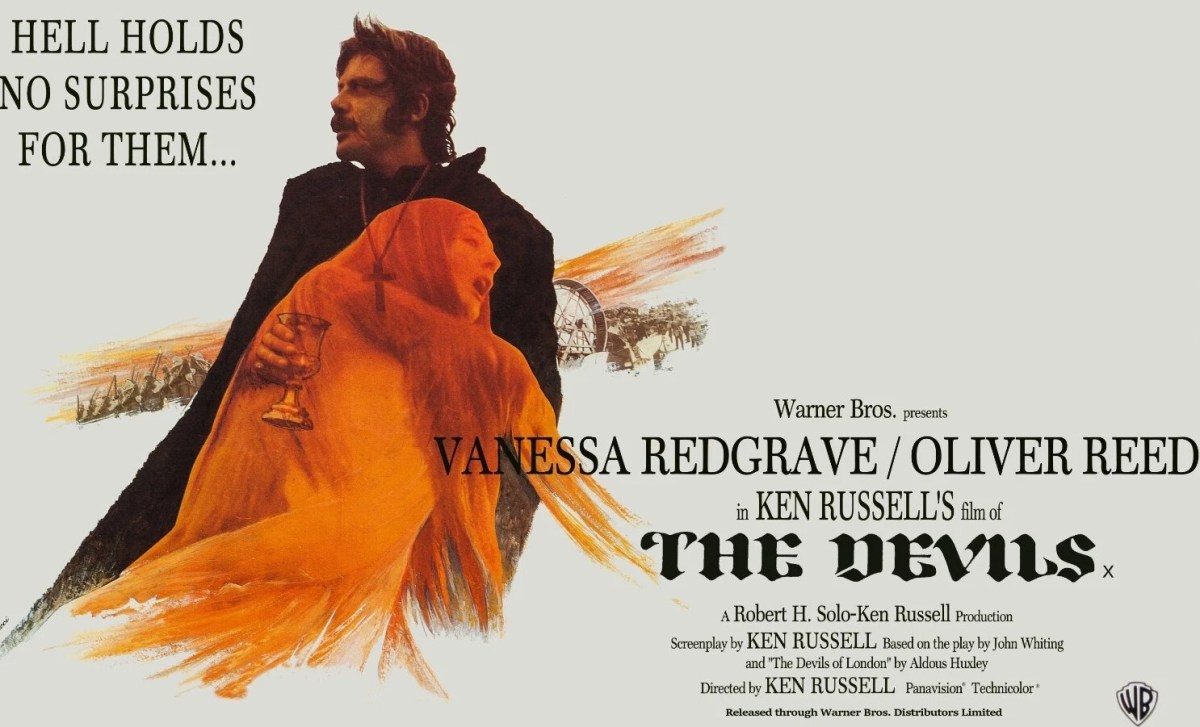
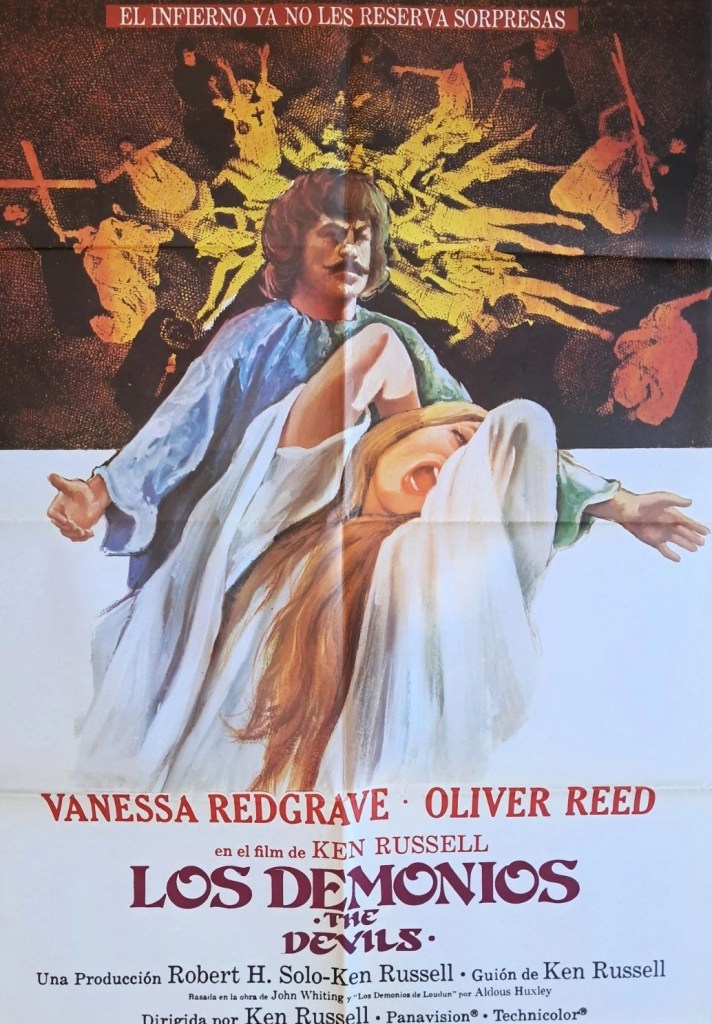
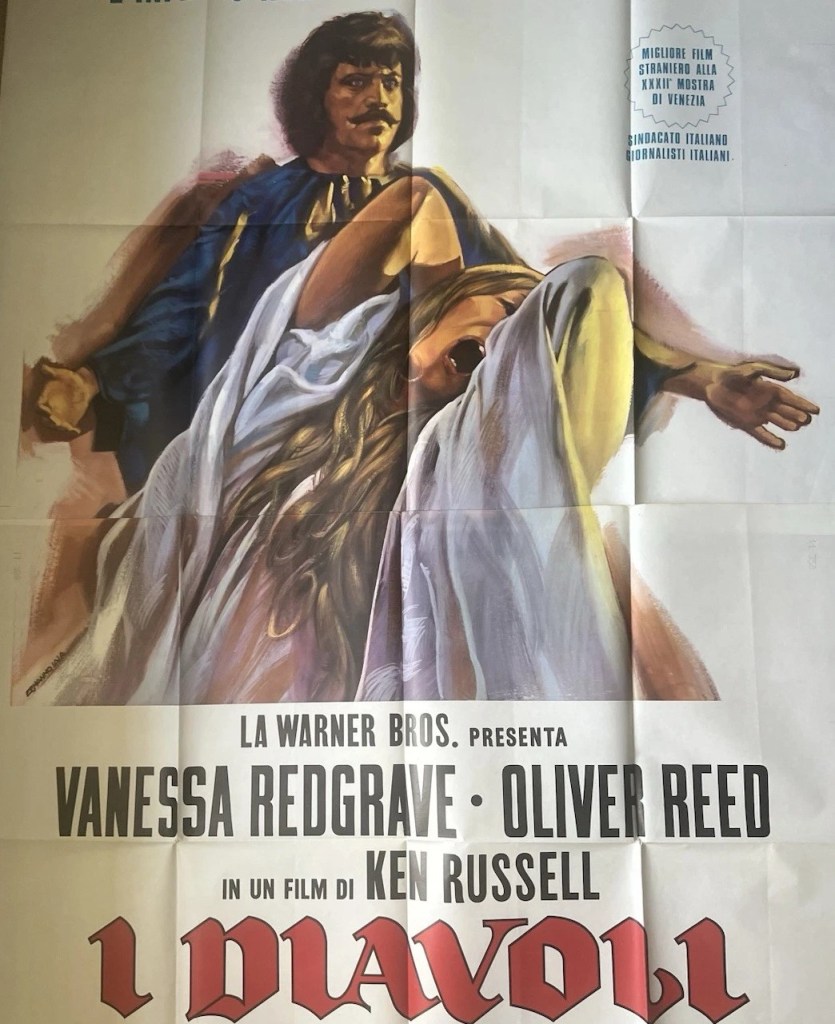
The Devils (1971) *

Now that The Devils has been reissued in the United States to excellent reviews and box office – $2.8 million and counting – I wondered if I should recant on my review of a few moths ago. But then I decided I had got it right first time out.

The British Film Institute and critic Mark Kermode are on a mission to force the public to reconsider this epic travesty. Warner Brothers has been convinced it’s worth a revival. The only problem is this is the second time they’ve tried this maneuver. And it was no more successful last time round – two decades ago in a limited release in arthouses – and despite a lavish follow-up DVD packed full of extras and an expensive illustrated brochure.

Knowing this was the second attempt to regenerate interest in this shambolic enterprise from Ken Russell (Billion Dollar Brain, 1967) – who will no doubt be tabbed a “visionary” director this time round – I thought I’d dig out the DVD featuring the original 1971 release cut in the genuine hope that I might be able to add a little spark to the promotional hoopla for the forthcoming cinematic reissue.

The problem is – it’s still awful. And not in healthy cult fashion or as a slam-dunk for the So Bad It’s Good category. It’s just awful every which way but loose. And it commits the worst error of the awful picture – it’s plain boring. And that’s a shame because the tale is an interesting one. How the French church and state connived to get rid of an irritant challenging their authority by placing false charges of satanic possession against the nuns of the small town of Loudon.

It would certainly have helped had not every single person in a position of power not just looked like an idiot and if Russell had cast the parts with actors of authority, say rising star John Hurt in the role of the exorcist or John Gielgud as the conspiratorial Cardinal Richeliu, a character who as we know from The Three Musketeers was always up to no good. Instead, we’ve got actors way out of even their modest league who make an unintentional mockery of their parts.

Anyone complaining about the modern vernacular of Christopher Nolan’s The Odyssey (2026) would have a field day here with a cornucopia of accents so it sounds more like a  Carry On picture. In fact, Carry On Ken would have been a more apt title.

Vanessa Redgrave (Blow-Up, 1966) had, unfortunately, gone down the Oscar-bait route of hoping that exaggerations of physical affliction will inform her acting. Instead, with her head twisted at ninety degrees, it looks like she’s intent on comedy. And when that only leaves Oliver Reed (Hannibal Brooks, 1968) to hold your picture together you are in dire straits.

Had the director concentrated on the obvious points, that the clergy was corrupt and liable to indulge in sex with any willing participant in the usual male power-abuse scenario, and that nobody went into a nunnery by choice but were sent there by families who could not provide a dowry or who were incapable of themselves finding a husband to support them, then you might have had the beginnings of a good picture.

But Russell is just intent on indulgence. So the nuns behave as if they were being directed by Jess Franco in a Women-in-Prison movie and strip off their clothes and consort with each other. Chief nun Sister Jeanne (Vanessa Redgrave) doesn’t need to wait for a fake exorcist to pass by, she’s already knee-deep in sexual fantasies about Father Grandier (Oliver Reed) who is trying to impregnate as many women as possible.

“Based on  true story” has never been more abused. Back in the day it would certainly have challenged a moral order where the Church of any denomination was not yet known for hiding a flock of pedophiles. But any student of history – and in those days, like it or not, that would be all of us given how important that subject was to the school curriculum – would not have been surprised to discover that kings and cardinals were not above unethical maneuver.

I’m not saying this movie required a Hollywood-style heroic figure, but it certainly didn’t deserve these cartoon cut-outs. The campness of the presentation, the excess and overload, only serves to stultify what would otherwise be an examination of how easy it was back in the 17th century for the authorities to bring down any challenger – but, heck, we knew that.

If you are familiar with the Russell oeuvre this has more in keeping with The Lair of the White Worm (1988) rather than a genuine cinematic – and restrained – achievement like Altered States (1980).

There will be hype, so you have been warned.

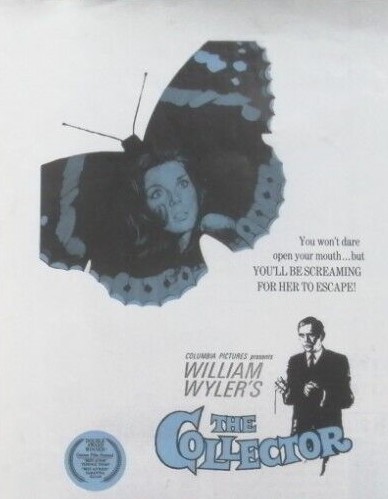
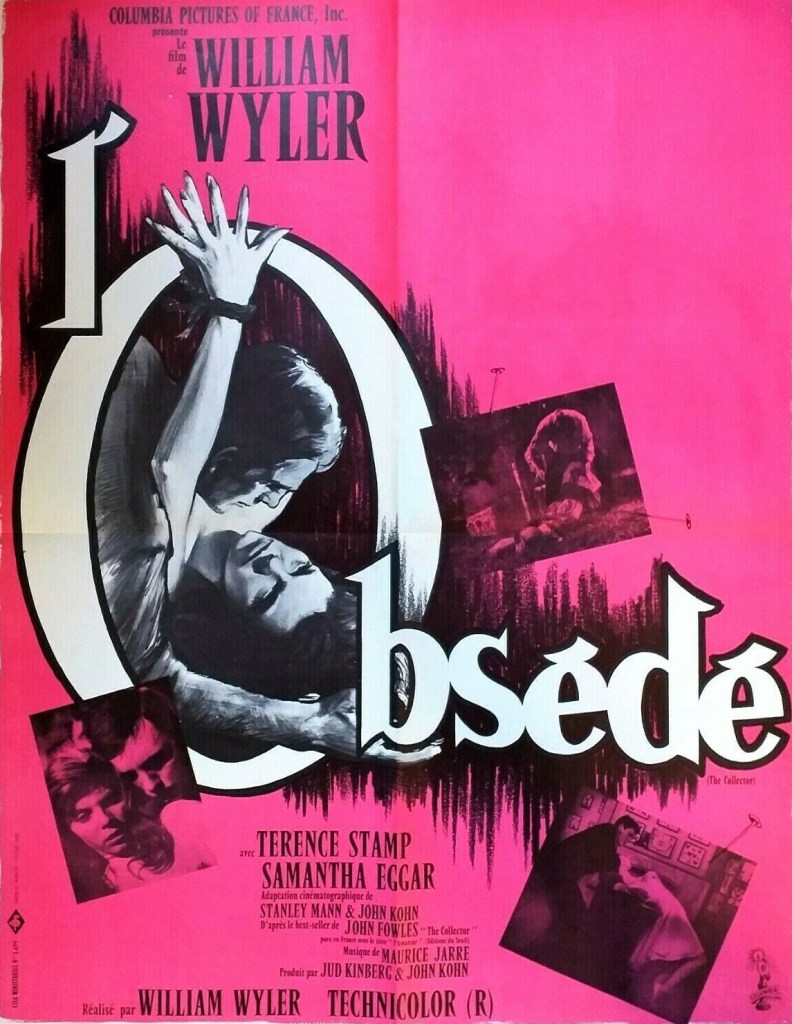
The Collector (1965) *****

William Wyler’s paean to Incels strike such a contemporary note it’s hard to believe it was made over 60 years ago. An insightful study of male entitlement, female submission and    novice serial killer that showcased two emerging British stars, this is as much about the psychological make-up of the victim as the captor.

Following a lottery win (see Note), lonely bank clerk Freddie (Terence Stamp) kidnaps the woman of his dreams, flame-haired art student Miranda (Samantha Eggar) in the hope that once she gets to know him she will fall in love. He has found a large cellar beside the secluded mansion he bought with his winnings. But this is no dank dungeon with a prisoner chained to the walls, but a comfortable abode with lighting, heating, clothing, food, and art materials. However, it is locked.

In turn angry, puzzled and submissive, Miranda tries to work out what she needs to do to achieve her liberty without realising that no matter what she does she will never fulfil his dreams. Despite his shyness, it wouldn’t be hard in other circumstances to fall for a guy as good-looking as this, if only for an affair. She is sexually experienced, but has just been rejected by an older man (Kenneth More), and love on the rebound is hardly uncommon.  

Unfortunately, Freddie lives such a soulless, empty, existence, no interests beyond an obsession with butterflies, of which he has amassed a collection large enough to supply a complete museum, that the chances of finding common ground are remote and the circumstances of their meeting pretty much douse the potential for any spark.

At first, once she has expended her anger at her incarceration, she is grateful not to be murdered or raped – even pleads that if he is going to take her by force sexually not to drug her – and soon her mind turns to ways of escape, especially once he invites her into the big house, allows her to bathe, cooks her a meal and shows the world she could enjoy as his willing partner.

With every step, Freddie dares to dream more, that his insane idea will come to fruition, that a beautiful princess will love the lowly commoner. And as much as this focuses on male domination, it is also an examination of female independence, Miranda being in the foreground of that generation to espouse personal freedom, not viewing marriage as an ultimate destination, but seeking a fulfilling career with love almost a perk on the side.

Even without going to extent of kidnapping a woman, males of the period still expected a female to cater to their every whim, wife-beating hardly considered a crime, and, ironically, it would be a rare woman who would not enjoy the worship a more ordinary Freddie planned to bestow on his beloved.

It being set in the England of a particular period, Freddie blames the gulf between them on “class,” that where or to whom you are born creating an unattainable barrier between young men and young women, despite considerable evidence to the contrary. But, of course, to the thwarted, there is always someone to blame.

You will be very familiar with the cinematic tale of the imprisoned female attempting to escape by wiles and ingenuity, but even so, this will take you by surprise, in part because the idea of being forcibly detained was a rare event back then, so Miranda does not spend her time trying to chisel through loose cement using a stolen fork or other ideas along the same lines. That she has even managed to negotiate the length of her prison term makes her initial custody tolerable, especially as, in terms of material things, she wants for nothing.

Unfortunately, although Freddie is immune to normal feelings, he is alert to the slightest nuance, and would feel it an insult to his intelligence should she just play along and pretend to fall in love with as a means of engineering her escape. That the audience is probably more aware of this than Miranda makes the tension virtually unbearable.

This is a duel of the highest caliber between captor and detainee. At several moments it looks as if the tide will turn. A terrific scene with overflowing bath water fails to make a nosy neighbor suspicious. She even at one point manages to whack her assailant over the head with a shovel and attempt a genuine escape. You are left to wonder if making a sexual sacrifice, even taking the initiative with a virgin, will make the necessary difference. But one look into those implacable eyes would have told you exactly where you stood without having to wait until you were dragged by the hair across the lawn in a rainstorm.  

Audiences more familiar with the director through late-career roadshows like Ben-Hur (1959) and Funny Girl (1967) or the earlier rom-com Roman Holiday (1953) would be forgiven for forgetting how adept Wyler was at racking up the tension from his early thrillers or dealing with unattainable love (Wuthering Heights, 1939) or entitlement (Jezebel, 1938). He evokes such a claustrophobic atmosphere, ingrained with pure Englishness, and plays with ironies of character beauty – Freddie’s eyes and cheekbones, that should have attracted women by the score, instead lending him devilish menace while Miranda’s sensational looks that would have most men begging for just a minute of her company prove insufficient to enslave this particular creature.

That there is genuine sexual tension, not just whether he will end up raping her, but whether she might see his more attractive version of himself and come to give him what he wants without being repulsed, brings a surprising sexual tension. You wouldn’t say there was chemistry between the characters in the normal sense, but the situation is electrifying.

This was a career high for Terence Stamp (Term of Trial, 1962), minus many of the acting foibles and vocal tics that peppered his later work, and the same went for Samantha Eggar (Walk, Don’t Run, 1966). But the performances are of such a high quality, especially when you think she has breached his defences sufficiently, that at times it is an unbearable watch. John Kohn (Caprice, 1967) and Stanley Mann (The Naked Runner, 1967) based their screenplay on the bestselling – and highly praised – novel by John Fowles, author of later cult work The Magus.

This would have stood the test of time anyway as a pure thriller but since it digs into what has now become a counter-culture it carries even greater significance today.

NOTE: He didn’t win the lottery. That didn’t exist then. Instead he won on the “Football Pools,” but that concept – it began in 1923 –  is so hard to explain to non-British people that I took the easy way out. However, the “pools” was a gambling phenomenon of the times, the entry fee so low, at its peak played by 14 million people in the UK every week in the hope of winning a jackpot akin to lottery cash. In essence, you had to guess out of all the soccer games being played on a Saturday (all games in those days kicked off at 3pm on a Saturday) how many would end in draws.

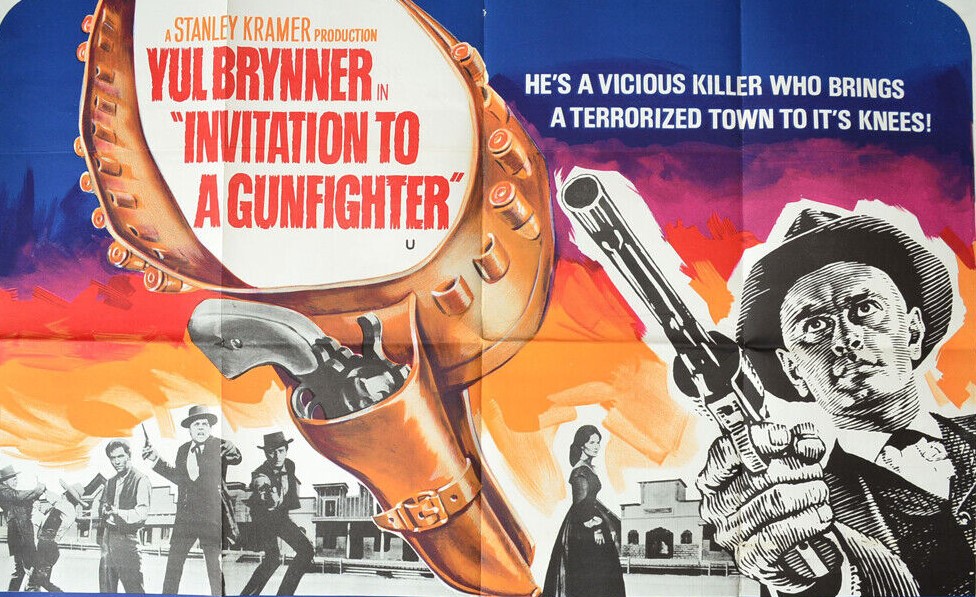
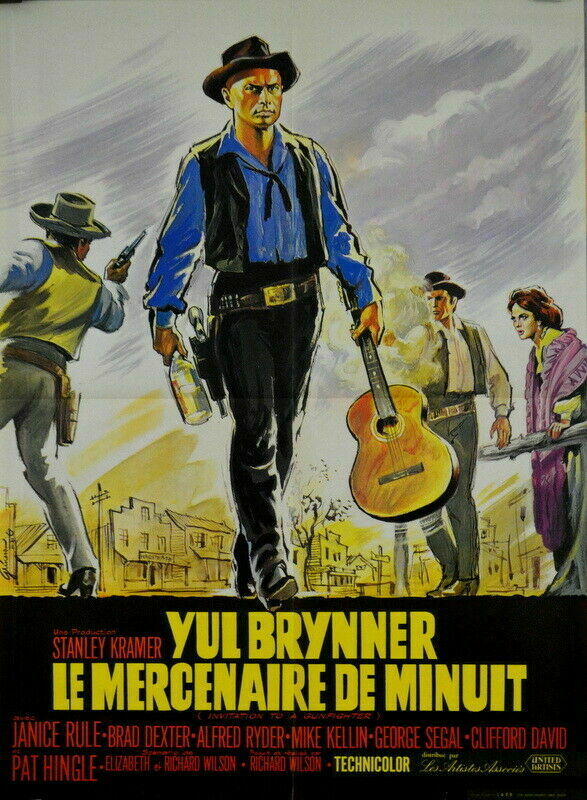
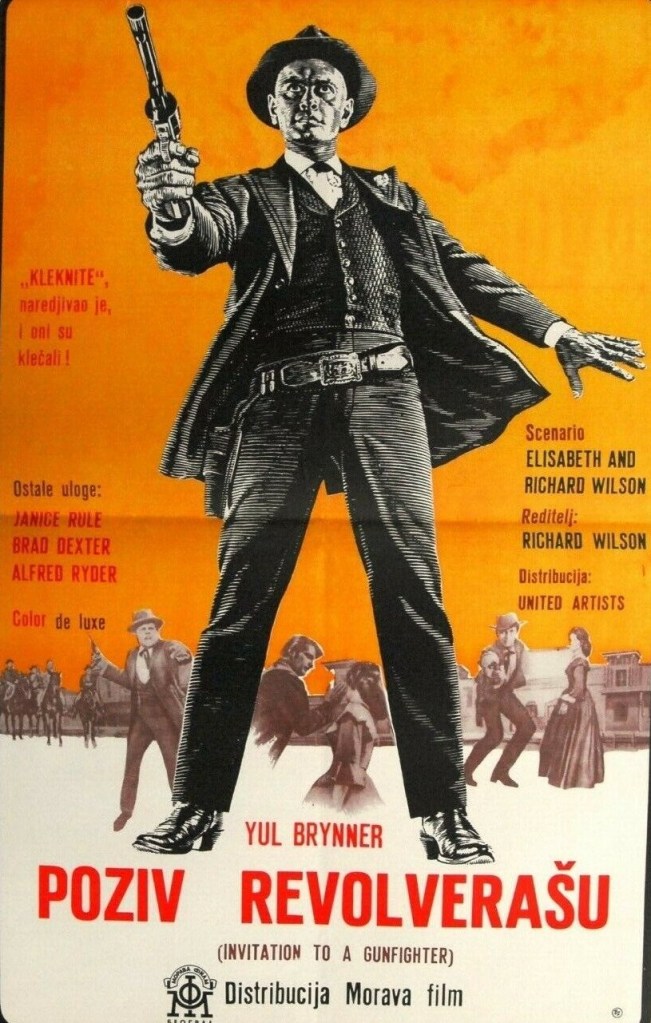
Invitation to a Gunfighter (1964) ****

If ever a movie was in sore need of reappraisal it’s Richard Wilson’s western, which encountered both audience and critical indifference on initial release. If you’ve heard of Wilson at all it will, hopefully, either be down to his connection with Orson Welles or from his crime duo Capone (1959) with Rod Steiger and Pay or Die (1960) with Ernest Borgnine.  On the other hand, you may be more familiar with the name from the Ma and Pa Kettle series in the 1950s or perhaps raunchy comedy Three in the Attic (1968). Or because he was an unlikely contender for the triple-hyphenate position (writer-producer-director) held on the Hollywood scene by the likes of Billy Wilder and less-heralded figures such as John Lemont ( The Frightened City, 1961).

 Wilson was not first choice to direct since the western had been on the Stanley Kramer company slate since 1957 when it was planned for Paul Stanley before it moved in 1961 into Hubert Cornfield’s orbit with a script by James Lee Barratt and then repossessed by Kramer when Rod Steiger was briefly attached. The film, backed financially by Kramer, barely rates a paragraph in the director’s autobiography in which he describes the picture as “an adult western with a somewhat complicated plot.” There’s no getting past the fact that the plot is complicated, but it’s not the plot but the characters that held me in thrall.

Kramer thought the film contained elements of High Noon (1952). But for me the starting point was surely The Magnificent Seven (1960) and not just because Yul Brynner played a gunfighter complete with black outfit and cigar. It wasn’t Brynner’s look in the previous western that brought me to that conclusion, but the scene where the gunfighters sit around talking about where their career has taken them – to precisely nowhere: no wives, no family, no home.

Invitation to a Gunfighter makes more sense as an adult sequel to The Magnificent Seven than any of that movie’s other retreads. Imagine that Brynner, despite the boost to his esteem from beating the Mexican bandits, had not shaken off what we would most likely classify these days as a malaise or a depression. He is trying to make sense of a life that has proved unfulfilled. His options are salvation or suicide. At some point he will come up against a quicker gun, so it is suicide to continue in this profession.

But this gunfighter is also close kin to Clint Eastwood’s man with no name, the mercenary who takes full advantage of his power in lawless towns, and especially to the later embodiment of such a character in High Plains Drifter (1973). (Perhaps Eastwood got the idea of renaming the town ‘Hell’ and painting it red from the scene where Brynner, fed up with the hypocrisy of the righteous townspeople, goes on a drunken wrecking spree.) However, the hired gun Brynner is far from anonymous.

His name is so rich – Jules Gaspard D’Estaing – that the locals curtail it to the more peremptory Jewel. And he is cultured, plays the spinet (a kind of harpsichord) and the guitar, sings, quotes poetry and cleans up at poker. He is sweet to old ladies, but that is in the guise of righting wrongs. And he is defender of the under-privileged, in this case downtrodden Mexicans. He was himself the son of a slave. The most compelling aspect of this picture is that despite knowing so much about him he remains mysterious.

Brynner wasn’t the two-fisted kind of action hero, but more the guy who could disarm the opposition with a mean stare, and charm women with his brooding good looks. As mentioned, the plot is complicated so to get the best out of the picture you need to kind of set that to one side.

Simply put, Confederate soldier Matt (George Segal), returning from the Civil War, finds his farm has been appropriated and his sweetheart Ruth Adams (Janice Rule) has married someone else, the one-armed Crane Adams (Clifford David). D’Estaing is brought in to get rid of Matt whose principled stand is causing a nuisance to the immoral town.

So the story, rather than the plot, is the interaction between these four. Crane Adams clearly wants any opportunity to kill off his rival. Equally, Matt wants to win Ruth back. D’Estaing finds himself unexpectedly drawn to the sad, pensive Ruth, abandoning his planned stagecoach trip to Santa Fe on catching a glimpse of her, only hired when the townsfolk discover his occupation. D’Estaing has a fantasy of taking her away from all this, the pair of them riding off together, and there is no doubt Ruth is tempted as he implants himself in their household and shows himself to have everything her husband, or Matt for that matter, lacks.

Perhaps the best thing about the movie is that nothing is clear cut. Our sympathy shifts from D’Estaing to Matt to Ruth. Even when D’Estaing brings the town’s hierarchy to heel, there is no guarantee that will be enough to win over Ruth. And if he cannot have her, what does he have? The Eastwood loner never seems to care about emotional involvement, he just takes what he wants, but D’Estaing is more sensitive and does not want a one-sided relationship based solely on power.

For the movie to work at all, Ruth needs to engage our sympathies. Having clearly been somewhat mercenary herself in discarding Matt in favor of Crane Adams (presumably not originally disabled), she needs to come across as a woman who is not just going to jump at the next best thing. In this regard Janice Rule is especially good, far better than in more showy roles in Alvarez Kelly (1966) and The Chase (1966). Never given the opportunity to verbalize her emotions, nonetheless in scene after scene her quiet anguish is shown on her face.

Yul Brynner (Villa Rides, 1968) has a peach of a part and does it more than justice. Often derided or ignored for his acting, this shows him at the peak of his powers, portraying a contradictory and conflicted character, arrogance tempered by depression. George Segal (The Quiller Memorandum, 1966), a rising star at this point, has his meatiest role to date. In supporting roles are Pat Hingle, Brad Dexter (The Magnificent Seven), Strother Martin (Cool Hand Luke, 1967), Clifton James (Live and Let Die, 1973) and famed cinematographer John A. Alonzo (Chinatown, 1974).

Five names are attached to the screenplay: Richard and Elizabeth Wilson, Hal Goodman and Larry Klein credited for the story which they had originated as 1957 television drama directed by Arthur Penn, and Alvin Sapinsley for the adaptation.

I certainly saw a different picture to the “offbeat but confusing western” viewed by Variety’s critic and possibly, for once, because the passage of time has allowed this film to be seen in a new light. Rather than a morality play in the vein of High Noon, I recognized saw it as a character study of a gunfighter knocking on heaven’s door.

The Pink Panther (1964) ***

You would have to be a fan of farce and slapstick to appreciate much of the debut of the celebrated Pink Panther franchise. I enjoy slapstick, though this is limited here to mishaps with items of furniture, but farce tends to pass me by (although I laughed myself silly at One Man, Two Guv’nors on stage). And you should be aware that this is really a dry run for the Clouseau character later hilariously perfected by Peter Sellers.

The premise is clever. Bumbling detective Clouseau (Peters Sellers, minus the pronounced French accent that appeared later) is on the trail of ace cat burglar The Phantom (David Niven), unaware that his wife Simone (Capucine) is not only in cahoots with the jewel thief but his lover. The trail leads to Switzerland where the robber plans to steal the titular diamond owned by The Princess (Claudia Cardinale). The Phantom, aka Sir Charles Lytton, attempts to get to know her better by stealing and then rescuing her dog.

Danny Kaye or Peter Sellers?

Meanwhile, to add to the confusion, Lytton’s conman nephew George (Robert Wagner) has arrived in town, and soon attempts to purloin his uncle’s mistress and on realising Lytton’s true identity stals his equipment with the intention of turning thief himself.

Lytton has the tendency to take a suite adjoining the Clouseau bedroom complete with linking doors to make it easier to make hay with Simone while the complaisant detective is lured elsewhere.

Cue a series of bedroom farces of the kind where Lytton attempting to make love to a drunken Princess in the lounge of his suite does not realise his nephew is in the bedroom and Simone expecting the uncle and finding the junior. And the classic of Simone, pursued by both men in her own room, having to hide them, on her husband’s return, in bed, cupboard, shower and bath.  

There’s a fancy dress party where competing gorillas target the famed jewel and Clouseau, clunking around in armour, knocks into or knocks down anything in sight. And finding one of his men, dressed as a zebra, drinking on duty, harangues him with the threat of having his stripes (best joke by far).

But the bulk of the laugh out loud comedy originates from the inspector’s tussles with inanimate objects, doors, even approached cautiously, appearing to be capable of springing surprises.

The original cast – Ava Gardner in the Capucine role and Peter Ustinov as Clouseau.

Unfortunately, the first Pink Panther outing was not designed with Sellers expressly in mind and so the plot, necessitating accommodating the other stars via romantic interlude, does not play to his strengths. You get the impression of Sellers improvising his way into stealing every scene he is in with his brilliant physical comedy as there’s only limited value in his role as the duped husband.

After the sequel A Shot in the Dark (1964) where Sellers took center stage Blake Edwards would go all-out slapstick in his next venture The Great Race (1965) but here there’s neither sufficient Keatonesque or Chaplinesque buffoonery or Laurel and Hardy antics to maintain the comedic momentum.

David Niven (Bedtime Story, 1964) is perfectly serviceable as the master criminal especially as it calls mostly for his legendary charm, though he brings his double take quickly up to speed. Claudia Cardinale (Once Upon a Time in the West, 1968) is surprisingly good in a light-hearted role while Robert Wagner (The Biggest Bundle of Them All, 1968), a rising star at this point, comes over as slippery ingenue. Capucine (The 7th Dawn, 1964) has the most difficult part since she is in effect playing two roles, faithful wife and wanton lover.

Despite priceless roles in Ealing comedies and various attempts to embrace the Hollywood dynamic, this was the picture that turned Peter Sellers (Heavens Above!, 1963) into a bona fide star. It says a lot for the director that, having found a comedy genius on his hands, he did his best to accommodate him without allowing him to over-dominate what was in effect a carefully-orchestrated piece.

In small roles you will find John Le Mesurier (The Liquidator, 1965) and Brenda de Banzie (A Matter of Innocence, 1967) and the chanteuse in the ski chalet you might be interested to know was Fran Jeffries (Sex and the Single Girl, 1964).  And of course the memorable theme tune, as celebrated as the movie itself, was composed by Henry Mancini (Hatari!, 1962).  The film also spawned the famous cartoon series. Edwards wrote the screenplay with Maurice Richlin (Pillow Talk, 1959).

You could do worse than splurge on a five-disc box set.

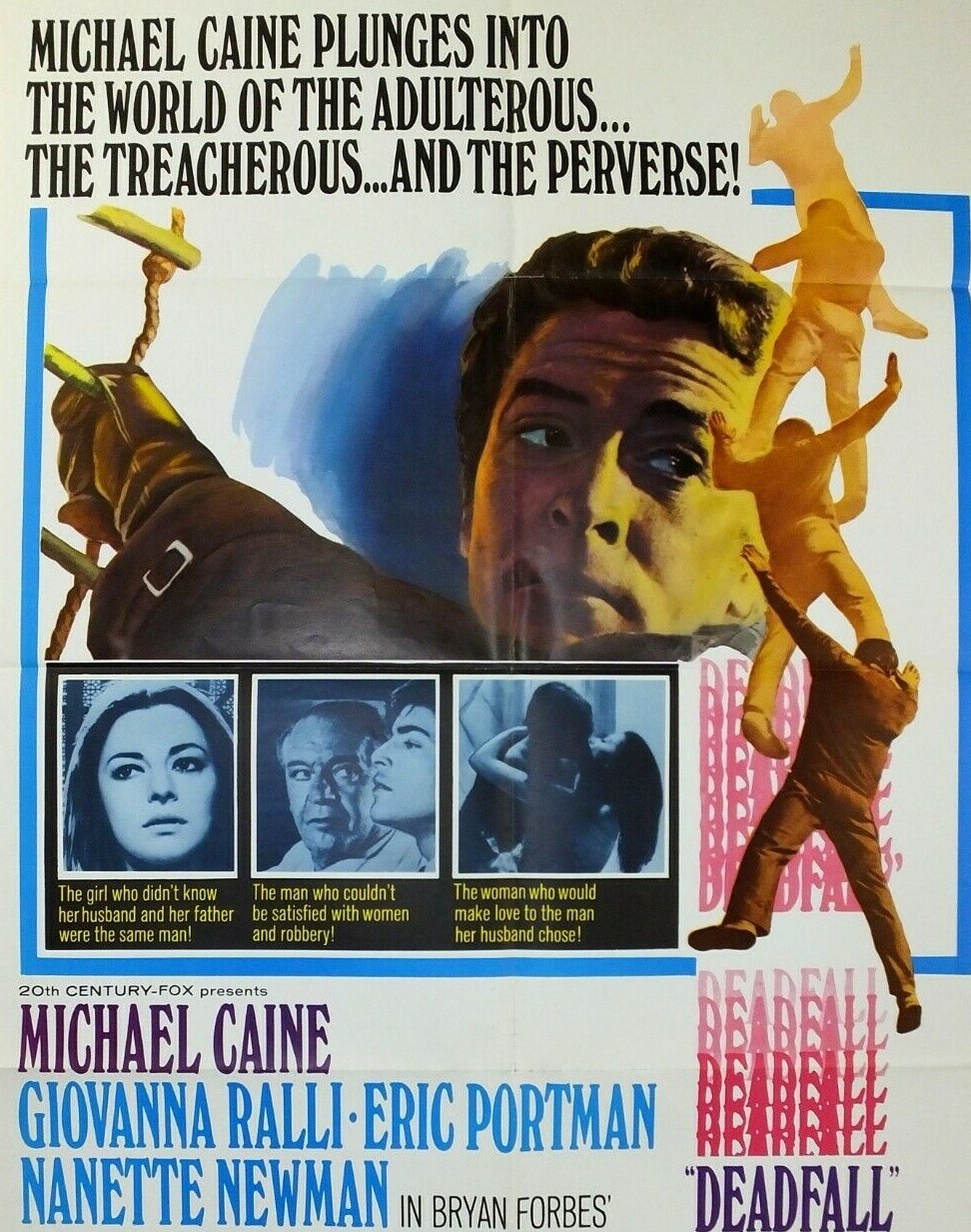
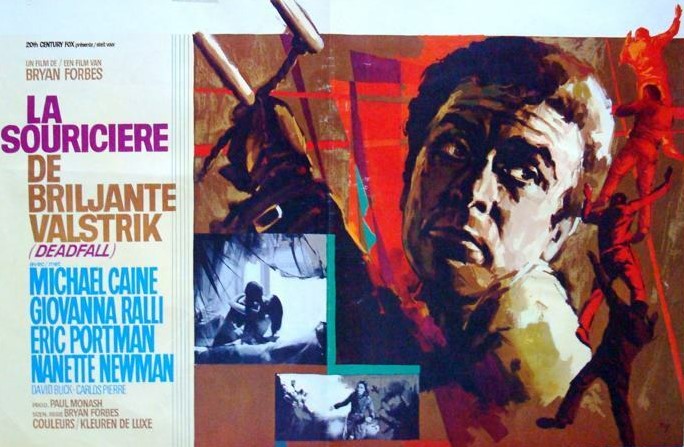
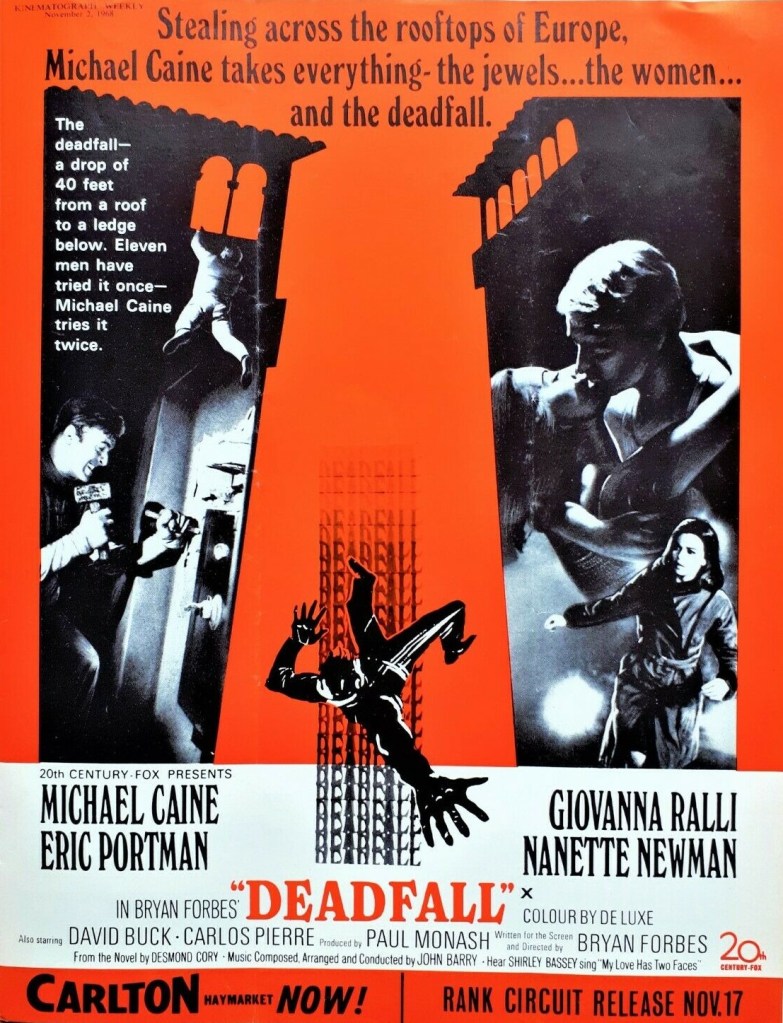
Deadfall (1968) **

“The Big Reveal” comes too late to save this heist-cum-melodrama. It can’t make up its mind whether it wants to join the canon of superlative 1960s caper pictures – in which case it needed to make a greater effort on the cat burglary front – or whether it’s an odd addition to the menage a trois category, in which case it needed characters you could actually believe. Worst of all, it contains one of the great artistic follies, a robbery carried out in time with an  orchestra playing one of the great John Barry compositions, “Romance for a Guitar and Orchestra.”

The only problem, there’s no dramatic reason for this. Since the concert is miles away from the robbery, it’s not as if the music drowns out the shenanigans. Director Bryan Forbes (King Rat, 1965) shoots himself in the foot. It’s too clever a device by half, even if the music is intended as a counterpoint to the  robbery’s more dramatic themes or the silence which had become a trope.

Cat burglar Henry (Michael Caine) forms a business partnership with elderly safecracker Moreau (Eric Portman) and falls for his wife Fe (Giovanna Ralli). The husband-wife relationship is off to begin with, he preferring males, and the wife admitting she doesn’t always find men attractive, though quite what she is hinting at is never made clear. The target is millionaire Salinas (David Buck), whom Henry is investigating to the point of pretending to be an alcoholic so he can get to know Salinas in a sanatorium.

Any other movie would get straight to the point – draw up plans and get on with it. But here, for no real reason except delay, Moreau wants them to do a trial run,  a safecracking job on the mansion of the kind of couple who drive off in a posh car to attend a concert. The effort put into the planning isn’t really up to scratch, not when compared to the likes of Topkapi (1964) – to which every heist film of the era was measured – or Gambit (1966) or even the less well-known The Happy Thieves (1960) or Seven Thieves (1960).

Apart from some cat burglary skills the whole episode is perfunctory, guard dogs knocked out by drugs. The background music, the aforementioned John Barry opus, just about kills off any prospect of tension. It only sparks into life when Moreau admits the safe is beyond him and Henry has to prise it out of the wall and cart it to the waiting car.

The second heist would have been far more interesting had we known from the start that Salinas welcomes burglary attempts, seeing it as some kind of duel of wits with malfeasants.

In between the two robberies there is time enough – too much time in fact – for Henry and Fe to get it together, for Fe to run off and then return only to learn in The Big Reveal the kind of despicable man her husband is. The movie can’t even deal with the incestuous sub-plot and just lets it hang there. But by that stage you couldn’t care less. Fe isn’t the type of femme fatale to bother crossing the road for, the romance seems too prescribed and the downbeat ending makes no sense.

I’m only giving this any points at all really because it stars Michael Caine (Hurry Sundown, 1967) and features a lengthy slice of John Barry music. Caine has been in enough duds for sure, but this doesn’t have the ring of one of his doing-it-for-the-money numbers or a stab at the Hollywood big-budget scene. Caine is good enough and Eric Portman (The Bedford Incident, 1965) is an interesting study. But it just doesn’t gel, not just let down by Giovanna Ralli (The Caper of the Golden Bulls, 1967) but by the pretentious direction and dramatic miscalculation of Bryan Forbes.

Forbes’ wife Nanette Newman (The Wrong Box, 1966) makes a puzzling appearance in a small role with no dramatic credibility. Leonard Rossiter (Deadlier than the Male, 1967) provides another cameo. For many the high spot will be to see John Barry in the flesh, conducting the orchestra playing his composition.

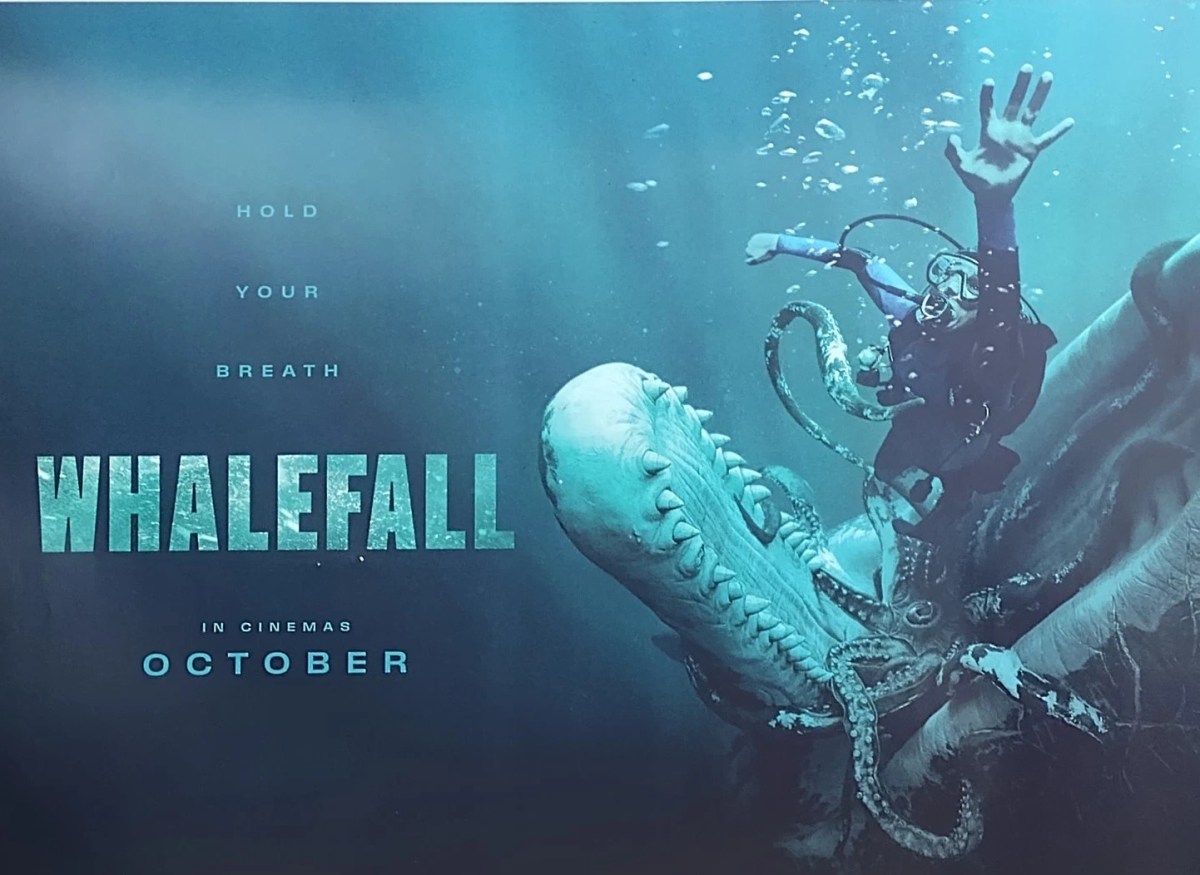
Whalefall (2026) **** – Seen at the Cinema

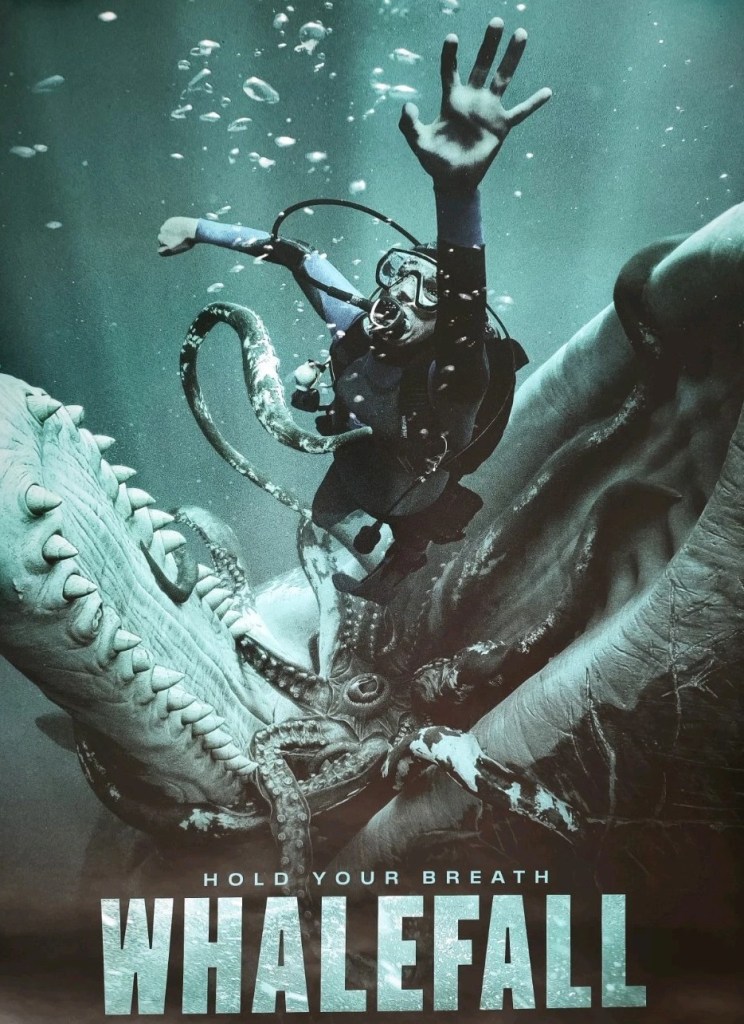
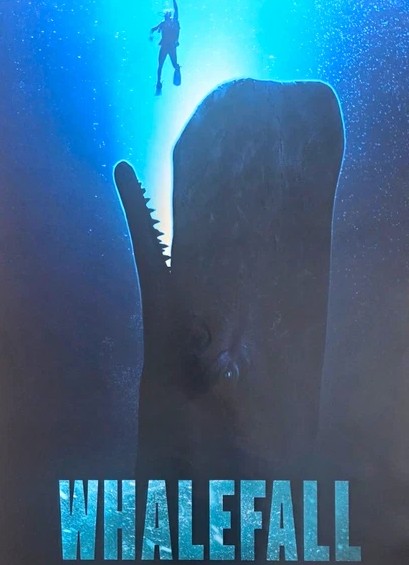
Sea beast smorgasbord – whale, squid, orcas. Even the tinier specimens like a jellyfish and a sea urchin have their own vicious defences. A whale of a ride though without an anatomy book to hand I’d be hard put to tell you what’s going on. A big-budget B-picture, heavy on the thrills and edge-of-the-seat tension but suffers from the need to put on airs and graces and lecture us on ecology and the final piece of mumbo-jumbo lacks the satisfying clarity of, say, Ryan Gosling’s scientific explanations in Project Hail Mary (2026).

After a terrific hour of immersion in the belly of the whale, which involves tangling with the aforementioned squid and sea urchin and being sucked into the hard-core digestive part of the mammal, the ending suddenly switches to the maudlin, with our hero being given advice by his dead father and somehow, apparently, communing with the whale. And it’s okay, also apparently, to blow a whale to smithereens because in ecological terms a dead whale provides a mountain of nutrients for other sea creatures and whatever grows on the seabed in what is known as a “whalefall.”

But until then it’s pure pedal-to-the-metal. For reasons that don’t make much sense college student Jay (Austin Abrams) decides to go hunting for his father’s remains, even though they had a very difficult relationship, a year after Mitt (Josh Brolin) committed suicide by dropping into the sea with the metal equivalent of a block of cement attached. Kitted out in scuba gear, Jay no sooner has reached the trench where he reckons his dad fell than he gets snagged by a squid whose tentacles are sticking out of the mouth of a sperm whale and he’s dragged inside.

Turns out, if I’m reading this right, a whale has two stomach sections, the first where his prey just sit like in a waiting room, and the second where the prey is consumed into the digestion system. So landing initially in the first section, the squid decides he might as well enjoy a bit of lunch before he meets his maker. Jay is almost crushed to death and the squid it transpires also has a very small mouth with very sharp teeth.

He only escapes because the squid is the first to be swallowed into the digestive system. But Jay is next and the most of his time battling for a way out of the maze of the whale’s stomach. There’s virtually no dialog, obviously, and mostly all Jay can do is scream and gasp for breath and watch as his oxygen supply runs down. He nearly escapes through the whale’s mouth as it surfaces for air and to provide tourists with the opportunity for selfies but soon slithers back down.

The whale, it turns out, is not entirely immune. While its size might deter smaller mammals it has little defense against a shoal of ravenous orcas which take chunks out its tail and body. There’s some hocus pocus that I couldn’t get a handle on that permitted Jay to make his escape, some kind of chemical lesson that created an explosion.

I could have done without the father-son relationship because it became too much a part of the later narrative. It didn’t matter how Jay ended up in the whale’s stomach, to be honest, and, as I said, we didn’t need pontificating about ocean ecology.

But the central section, the trap, is terrific. Unusually, Austin Adams, as he proved in Resident Evil (2026), can carry a film where he’s the entire narrative conduit and there’s not much interaction between characters, much of the picture relying on his reactions to a given situation. Josh Brolin (Weapons, 2025) seems to have inherited all those grizzled old guy roles that used to fall to the likes of Nick Nolte. I haven’t seen Elizabeth Shue (she was Oscar-nominated for Leaving Las Vegas, 1995)  in a long time. This is her first movie  in three years and the last one I remembered her in was the Death Wish (2018) remake.

Directed by Brian Duffield (Cocaine Bear, 2023) who wrote the screenplay with Daniel Kraus, author of the source novel.

I tell you I was on the edge of my seat all the time Jay was in the belly of the beast, but, unfortunately the tension dissipated once he started imagining his dead father giving him instruction.

Discover WordPress

A daily selection of the best content published on WordPress, collected for you by humans who love to read.

The Atavist Magazine

by Brian Hannan

WordPress.com Blog

News, Tips & Website Tutorials