You would have to be a fan of farce and slapstick to appreciate much of the debut of the celebrated Pink Panther franchise. I enjoy slapstick, though this is limited here to mishaps with items of furniture, but farce tends to pass me by (although I laughed myself silly at One Man, Two Guv’nors on stage). And you should be aware that this is really a dry run for the Clouseau character later hilariously perfected by Peter Sellers.
The premise is clever. Bumbling detective Clouseau (Peters Sellers, minus the pronounced French accent that appeared later) is on the trail of ace cat burglar The Phantom (David Niven), unaware that his wife Simone (Capucine) is not only in cahoots with the jewel thief but his lover. The trail leads to Switzerland where the robber plans to steal the titular diamond owned by The Princess (Claudia Cardinale). The Phantom, aka Sir Charles Lytton, attempts to get to know her better by stealing and then rescuing her dog.
Danny Kaye or Peter Sellers?
Meanwhile, to add to the confusion, Lytton’s conman nephew George (Robert Wagner) has arrived in town, and soon attempts to purloin his uncle’s mistress and on realising Lytton’s true identity stals his equipment with the intention of turning thief himself.
Lytton has the tendency to take a suite adjoining the Clouseau bedroom complete with linking doors to make it easier to make hay with Simone while the complaisant detective is lured elsewhere.
Cue a series of bedroom farces of the kind where Lytton attempting to make love to a drunken Princess in the lounge of his suite does not realise his nephew is in the bedroom and Simone expecting the uncle and finding the junior. And the classic of Simone, pursued by both men in her own room, having to hide them, on her husband’s return, in bed, cupboard, shower and bath.
There’s a fancy dress party where competing gorillas target the famed jewel and Clouseau, clunking around in armour, knocks into or knocks down anything in sight. And finding one of his men, dressed as a zebra, drinking on duty, harangues him with the threat of having his stripes (best joke by far).
But the bulk of the laugh out loud comedy originates from the inspector’s tussles with inanimate objects, doors, even approached cautiously, appearing to be capable of springing surprises.
The original cast – Ava Gardner in the Capucine role and Peter Ustinov as Clouseau.
Unfortunately, the first Pink Panther outing was not designed with Sellers expressly in mind and so the plot, necessitating accommodating the other stars via romantic interlude, does not play to his strengths. You get the impression of Sellers improvising his way into stealing every scene he is in with his brilliant physical comedy as there’s only limited value in his role as the duped husband.
After the sequel A Shot in the Dark (1964) where Sellers took center stage Blake Edwards would go all-out slapstick in his next venture The Great Race (1965) but here there’s neither sufficient Keatonesque or Chaplinesque buffoonery or Laurel and Hardy antics to maintain the comedic momentum.
David Niven (Bedtime Story, 1964) is perfectly serviceable as the master criminal especially as it calls mostly for his legendary charm, though he brings his double take quickly up to speed. Claudia Cardinale (Once Upon a Time in the West, 1968) is surprisingly good in a light-hearted role while Robert Wagner (The Biggest Bundle of Them All, 1968), a rising star at this point, comes over as slippery ingenue. Capucine (The 7th Dawn, 1964) has the most difficult part since she is in effect playing two roles, faithful wife and wanton lover.
Despite priceless roles in Ealing comedies and various attempts to embrace the Hollywood dynamic, this was the picture that turned Peter Sellers (Heavens Above!, 1963) into a bona fide star. It says a lot for the director that, having found a comedy genius on his hands, he did his best to accommodate him without allowing him to over-dominate what was in effect a carefully-orchestrated piece.
In small roles you will find John Le Mesurier (The Liquidator, 1965) and Brenda de Banzie (A Matter of Innocence, 1967) and the chanteuse in the ski chalet you might be interested to know was Fran Jeffries (Sex and the Single Girl, 1964). And of course the memorable theme tune, as celebrated as the movie itself, was composed by Henry Mancini (Hatari!, 1962). The film also spawned the famous cartoon series. Edwards wrote the screenplay with Maurice Richlin (Pillow Talk, 1959).
You could do worse than splurge on a five-disc box set.
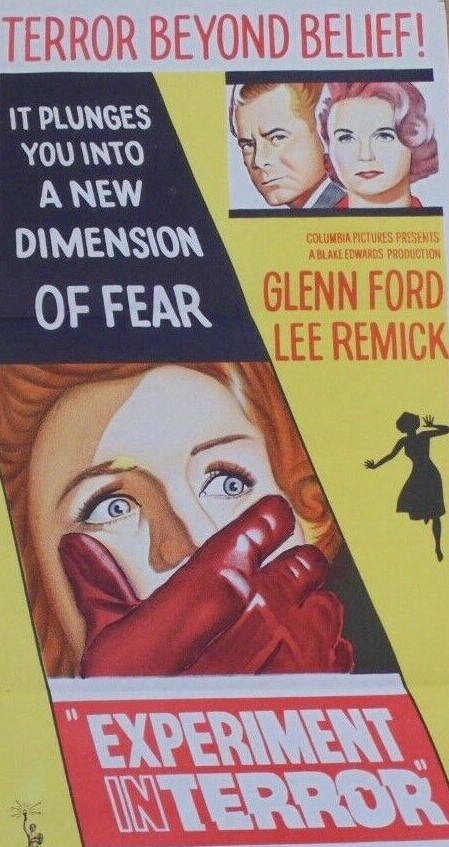
For a modern audience any film that contains mention of “Twin Peaks” and “Tarantino” either shows amazing prescience and/or an indication of what is to come. This classy thriller does not disappoint. Part police procedural, part portrait of a killer, part clever heist and part women in peril, it has you wondering why director Blake Edwards did not stick to the genre. Set in San Francisco in an era when the F.B.I. was generally considered a good thing rather than the paranoia-inducing entity it would become a decade later.
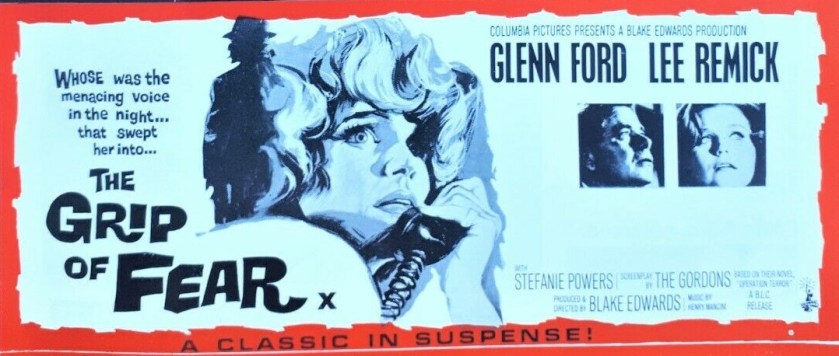
Bank teller Kelly Sherwood (Lee Remick) is terrorized by an unknown assailant into helping him carry out a audacious $100,000 heist. F.B.I. agent Ripley (Glenn Ford), aware of the prospective theft, is drawn into the diabolical web as is Sherwood’s younger sister Toby (Stefanie Powers). The only clue to the thief is his asthmatic voice. Levels of forensic detection set a new bar with the F.B.I. employing telephone, personal and even aerial surveillance, commandeering of television cameras to scan a crowd, and analyzing a telephone conversation to identify the criminal.
Released in Britain as “The Grip of Fear,” exhibitors tried to pull a fast one on the public by using as the support “Operation Mad Ball,” a Jack Lemmon number from 1957, in a bid to convince moviegoers that this program would repeat the successful pairing of Remick and Lemmon in “Days of Wine and Roses.”
There are red herrings aplenty. Tension is racked up so adroitly that any character entering the frame automatically arouses suspicion. Edwards takes a leaf out of the Hitchcock suspense book by finding constant ways to remind Kelly – and the audience – just what is at stake, Ripley promising her a “reign of terror” and not, as you might expect, lying to her about the threat she faces.
As Ripley digs further into the robber’s past, he uncovers not only a catalogue of crime including rape and three murders, but also an unusual personality. Yes, as you might expect, a control freak, but also a guy capable of affection and of lavishing thousands of dollars on those worse off than himself. And, of course, he is exceptionally good at planning crime, outwitting the F.B.I., and picking the kind of vulnerable victim susceptible to intimidation. Every time, the F.B.I. thinks it is closing in, he remains one step ahead. Eventually, the F.B.I. has amassed so many clues, including his identity, a photograph and previous lovers, that you think it’s impossible for him to escape – until he does.
Kelly is so on edge, in following instructions, that she picks up the wrong man in a bar, the police so antsy they mistake a drunk for the assailant. Drenched in atmosphere and rich in subsidiary characters, there’s scarcely a dull moment, from a mannequin repairer (Nancy Ashton) with a roomful of dangling inert bodies, a karate class with (ironically) a woman well able to defend herself, to a small boy desperate to see a G-man’s weapon, an informant (Ned Glass) with a penchant (as did director Edwards) for silent comedies, and a bank manager who promises Kelly a promotion even if she has to steal the money.
On top of this there are some genuine creepy moments that up-end our expectations. What Ripley doesn’t tell Kelly is that she’s also bait and clearly has little concern that she might end up collateral damage – anticipating at the very least she will have a nervous breakdown when it’s over, if, in fact, she survives – in his bid to snare the criminal. A terrified kidnapped Toby strips down to underwear in front a man we know is a rapist. And the movie touches on the woman-who-loves-a-killer motif, a theme very much in the contemporary vein.
Blake Edwards (Breakfast at Tiffany’s, 1961) delivers a directorial tour de force. The criminal is hidden for most the picture, drip-fed to the audience in glimpses, his mouth here, his back there, other times in disguise. Edwards establishes the F.B.I. as such a “very efficient organization” using the most up-to-date methods and involving a vast number of staff plus police that it seems impossible to fail – until it does. And there is an absolutely brilliant six-minute sequence at the outset, milking the best of film noir lighting, when the criminal surprises Kelly in her garage and spells out in detail her vulnerability and the basics of his plan. By keeping the criminal in the shade, and what little available light there is covering her face, Edwards makes the most of Lee Remick’s eyes – every bit as iconic as Audrey Hepburn’s outfits in Breakfast at Tiffany’s – and her acting skill.
Remick (Sanctuary, 1961) is superb, trapped by emotion as much as terror, placing her trust in an F.B.I. that lets her down time and again. This is an edgier role for Glenn Ford (Fate Is the Hunter, 1964) as he steps up from the trustworthy guy-next-door to reveal a more ruthless streak. Stefanie Powers (The Warning Shot, 1967) does well in a small role and there is sterling support from Ross Martin (The Ceremony, 1963), Patricia Huston (Synanon, 1965) and Clifton James (Live and Let Die, 1973). Gordon and Mildred Gordon wrote the screenplay based on their novel Operation Terror.
“Twin Peaks” in case you are wondering is the district in which Kelly lives. There’s a sign towards the end for Tarantino’s World-Famous Cocktails.
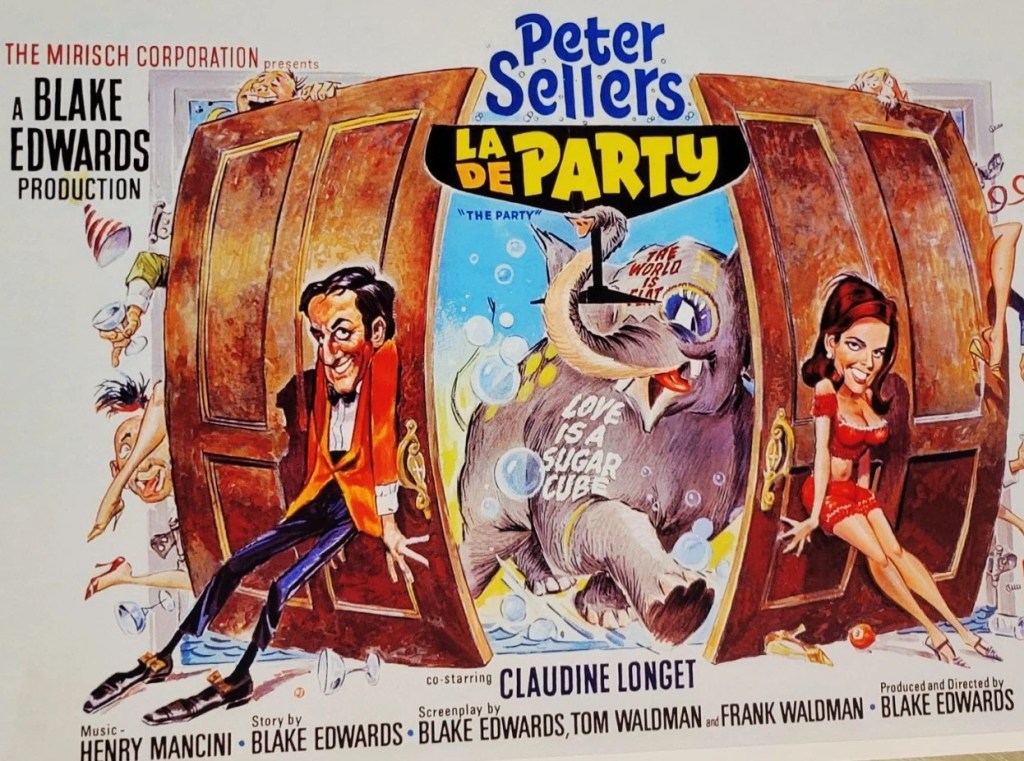
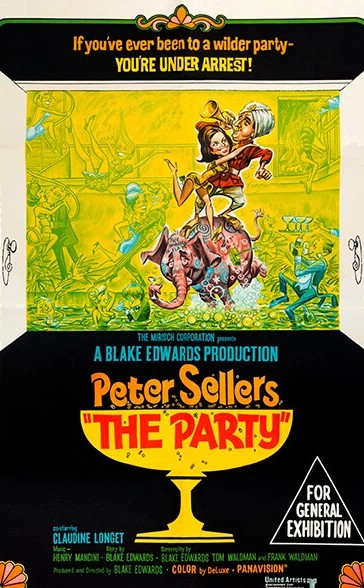
Had director Blake Edwards (The Pink Panther, 1963) stuck to his guns and followed his instinct and gone down the silent film route, this would have emerged in better shape. Blame star Peter Sellers (The Pink Panther) for deciding “brownface” had worked so well in The Millionairess (1960) that it was ripe for a repeat and that dialog was essential to the audience empathizing with his character.
On reflection, the fish-out-of-water concept would have been more acceptable with a character originating from anywhere but India which would have still permitted the star to adopt one of the zany voices that were his trademark.
The script was originally 58 pages long which would have delivered a finished product running just short of an hour. The extra time would have been made up by the actor’s improvisation.
His character probably didn’t need to be actor either to find himself at bigwig’s party in Los Angeles. When Sellers is at his inventive best this just purrs along. Some of the ideas are priceless – trying to retrieve a shoe from a pond, meddling with a electronics system, getting his tie stuck in an unlikely spot, spraying all with water. But when he opens his voice, it drags.
Part of the problem is that Hrundi V. Bakshi (Peter Sellers) lacks lines with any zap. He just mumbles along, repeating the same humorless drivel. And while other characters make fools of themselves through dialog, that’s rarely with incisive wit either, the audience just laughing at their inflated opinions of themselves.
Bakshi is an incompetent Indian actor who manages to blow up the expensive set on costume epic Son of Gunga Din movie set at the height of the British Raj. He should have been blacklisted, but instead elementary error sees him invited to the party of studio boss General Clutterbuck (J. Edward McKinley) where he encounters a drunken starlet, an alcoholic waiter determined to steal the slapstick high ground, pompous western star “Wyoming Bill” (Denny Miller) and French singer Michele Monet (Claudine Longet) trying to avoid the advances of movie producer Divot (Gavin MacLeod).
Although this was reputedly shot in sequence, the running order doesn’t really matter. Set Peter Sellers in his pomp down in any situation and chaos will ensure. Wigs will come off, shoes will rocket around a room, anything on a plate, bowl or tray will fall off, anyone in the vicinity will be drenched or battered. Tempers will rise until they are nicely cooking and set to explode.
Quite where a Russian ballet troupe and a painted elephant fit into this is anyone’s guess except that both were intended as cues for further hilarity. When guests aren’t tumbling into the pool they’re soaked in soap suds. Naturally, Bakshi’s ineptitude triggers gentle romance with Michele.
This would certainly have built up a good head of steam if seen in a cinema with an audience. But the cinema audience would have encountered the same problem as anyone watching it at home. For every sequence that hits a comedic bulls-eye, others just fall flat. When the movie relies on the star’s charm rather than his ineptitude it falls apart.
It’s almost a highlights reel and my guess is that if it was cut back to the original one-hour length we might well have a classic on our hands. As it is, padded out, it doesn’t come close.
While at one time it acquired cult status my guess is that the contemporary audience won’t find enough to compensate for the offensive Brownface.
Certainly there are moments of genius, the shoe sequence and the electronics section are huge fun. But too much just doesn’t work.
You might end up fast forwarding every time Sellers opens his mouth. He is a master at finding fun in the inanimate, less impressive when dealing with people. Didn’t do anything for Claudine Longet, no more movies after this. And that was not surprising. Everyone was just a stooge to Sellers.
I apologize for falling back on that old analogy of the curate’s egg – good in parts – but that pretty much defines it.
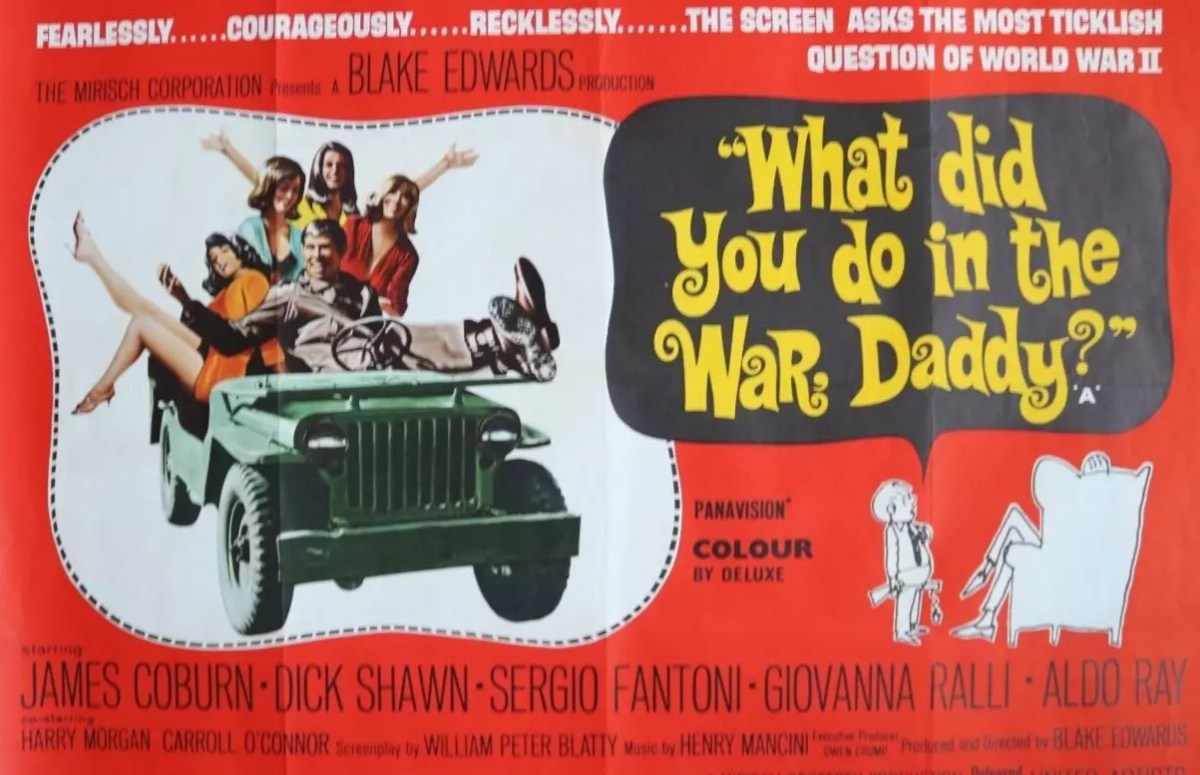
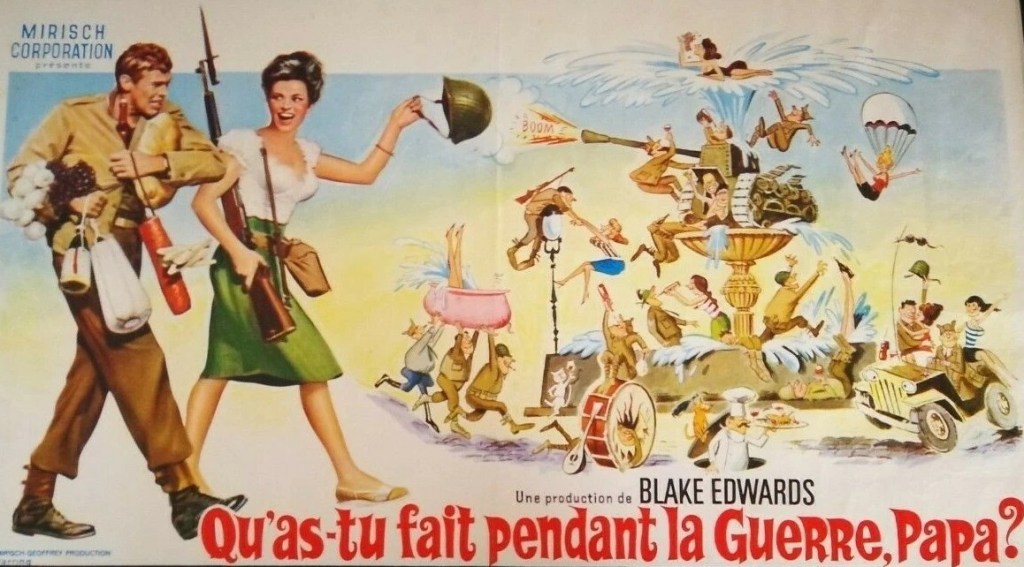
How on earth did James Coburn get mixed up in this mess? I’m assuming that having suddenly been elevated from supporting actor to top billing as a result of Our Man Flint (1966) he took the first job that came along that reflected his ideas about salary. Director Blake Edwards was, to some extent, at something of a loose end. United Artists had passed on The Great Race (1965) and another project with the director had fallen by the wayside. Apparently, this movie was the result of a question asked by his son. During World War Two, Edwards had served in the U.S. Coastguard which meant he did not see active service though did suffer a back injury. Writer William Peter Blatty (A Shot in the Dark, 1964) was too young for World War Two and though he joined the US Air Force he didn’t see active service either, being employed in the psychological warfare division.
So this exercise wasn’t going to be based on personal experience. The mid-1960s wouldn’t exactly lend itself to poking fun at war, although Vietnam was fair game.
You might have thought Coburn, on reading the script, would have realized he’s not much in the movie for the first 20 minutes or so and then is at the mercy of a bundle of subplots.
During the invasion of Sicily in 1943, stickler for discipline Captain Cash (Dick Shawn) is handed command of a disorganized unit headed by Lt Christian (James Coburn) and instructed to take a strategic village from the Germans. Turns out the enemy is long gone and the resident Italian soldiers, commanded by Capt Oppo (Sergio Fantoni), are only too happy to surrender as long as they can continue to enjoy la dolce vita which in this case involves an annual wine festival. Most of the early part of the picture revolves around getting Cash to loosen up, and after imbibing copious amounts of liquor and being seduced by the mayor’s daughter Gina (Giovanni Ralli) he relents.
There are only two obstacles to the merry party. Oppo objects to his girlfriend Gina being used as a makeweight to make Cash see things the Italian way and Cash’s boss General Bolt (Carroll O’Connor) asks to see proof of their success. So, since not a shot has been fired and they can’t boast of a camp full of Italian POWs, they decide to invent the proof and start filming phoney footage. Bolt reckons they need support and sends up reinforcements. Which is just as well because the Germans, either realizing what they’ve been missing or being nudged back into action, decide to reappear. And given the slovenly chaotic opposition it’s not hard for them to re-take control of the town which results in Cash hiding out in drag.
Theoretically, it’s a reasonable idea. There’s been no shortage of swindlers or con-men or black marketeers in war movies – think James Garner in The Great Escape (1963) and The Americanization of Emily (1964) – and various armies have been filled with shysters ranging from Sgt Bilko to the shifty recruits in British films up to all sorts of wheezes or doing their best to stay out of the line of fire.
But once the point has been made that it’s better to make love not war and drink as much wine as possible and become friends with the enemy, the point is made over and over again. There isn’t a single joke that isn’t belaboured and not many laffs to begin with. Going over-the-top is fine for slapstick like The Great Race but it doesn’t work here.
James Coburn has too little to do and Dick Shawn (A Very Special Favor, 1965) too much. Giovanni Ralli (Deadfall, 1968) and Sergio Fantoni (Hornet’s Nest, 1970 ) are wasted. Carroll O’Connor (Warning Shot, 1966) is the pick of a supporting cast that includes Aldo Ray (The Power, 1968) and Harry Morgan (The Mountain Road, 1960) but that’s only because he has a clever reversal of a role as a general who wants to be treated as an individual.
I should point out this has something of a cult following but I won’t be joining the fan club.
A pratfall still works wonders. An open door or window, anything that happens to be on the floor, or for that matter any object of any description – billiard cues, for example – within easy reach offers the opportunity for havoc – and a steady stream of laffs. Which is just as well, because this complicated farce, which might get a few extra brownie points today for its satire on serial killers, doesn’t do the movie any favors.
Inspector Clouseau (Peter Sellers) has acquired a more pronounced French accent than since his last incursion in The Pink Panther (1963) but it’s nothing like as excruciatingly hilarious as would be in later episodes. He still falls in love at the drop of a hat though this time the object of his affection is maid Maria (Elke Sommer) who, unfortunately, happens to be the prime murder suspect. She should be in jail but she is constantly released. Clouseau should be sacked for incompetence, but he is constantly reinstated.
The repertory team of his frustrated boss Dreyfus (Herbert Lom) and karate teacher (Burt Kwouk) interrupt proceedings from time to time but don’t really add to the laugh quotient. A bit more effective is the satire on French bureaucracy, a running gag on the need for an official permit, for example, before you could think of selling balloons on the street or trying to earn a buck as a street artist.
I won’t go into the plot since it’s a series of baffling murders and you could argue that Peter Sellers needs neither plot nor love interest. All he needs is an open door beckoning.
I was astonished how often I laughed out loud at something I knew was coming. The minute someone walked through a door you knew Clouseau would be the other side of it waiting to be buffeted. Any open window and he’d be through it and likely as not water would await.
He doesn’t just get tangled up in words but ask him to replace a billiard cue and you’d think billiard cues had declared war on him. He’s forgetful to the point of forgetting to switch off his cigarette lighter and naturally ignores the signs that he’s set his coat on fire.
For those more censorious times, there’s a foray into a nudist colony which is primarily an exercise in the various ways that private parts can be hidden from the camera while suggesting the salacious opposite. Clothed or unclothed you can rely on Clouseau to fall down. The only hilarious scene that doesn’t involve him falling down is when Maria miraculously appears in his office and when an attached key tears a whole in his trousers.
The various twists – Dreyfus is the assassin stalking Clouseau – and the lax French attitude to adultery keep the plot going and when the narrative slackens you can always stick a bomb into the mix.
From the outset, there is plenty opportunity for farce, the wrong people entering the wrong doors, continuous mix-up, plenty occasions for the innocent person to be caught red-handed clutching the murder weapon.
It almost looks as though the two aspects of the picture are clashing. Director Blake Edwards (The Pink Panther) appears to be helming a farce within which Inspector Clouseau is encased. You might think there’s a limit to the number of pratfalls you can stick in a picture, but my answer is “try me”.
With Peter Sellers so dominant, the only way the supporting cast could compete was by over-acting (Herbert Lom) or under-acting (all the rest). Elke Sommer (The Prize, 1963) needs do little more than look winsome.
Written by Edwards and William Peter Blatty (Gunn, 1967) based on the play by Harry Kurnitz.
Occasionally drags but lifted by the genius of Sellers.
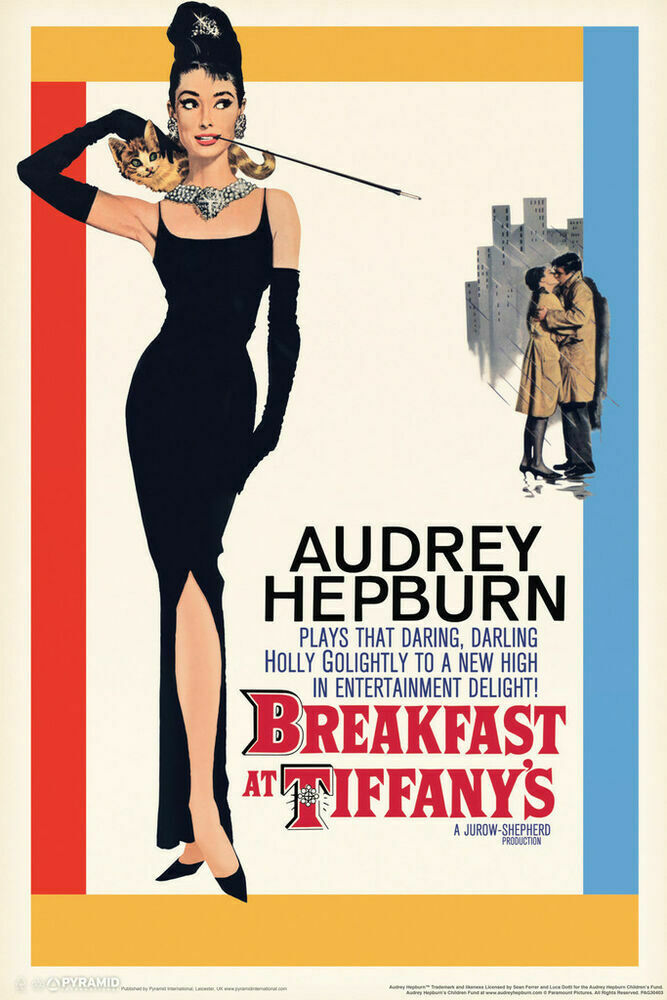
Reassessment sixty years on – and on the big screen, too – presents a darker picture bursting to get out of the confines of Hollywood gloss. Holly Golightly (Audrey Hepburn) is one of the most iconic characters ever to hit the screen. Her little black dress, hats, English drawl and elongated cigarette often get in the way of accepting the character within, the former hillbilly wild child who refuses to be owned or caged, her demand for independence constrained by her desire to marry into wealth for the supposed freedom that will bring, demands which clearly place a strain on her mental health.
Although only hinted at then, and more obvious now, she is willing to sell her body in a bid to save her soul. Paul Varjak (George Peppard), a gigolo, being kept, in some style I should add, with a walk-in wardrobe full of suits, by the nameless wealthy married woman Emily (Patricia Neal), is her male equivalent, a published writer whose promise does not pay the bills. The constructs both have created to hide from the realities of life are soon exposed.
There is much to adore here, not least Golightly’s ravishing outfits, her kookiness and endearing haplessness faced with an ordinary chore such as cooking, and a central section, where the couple try to buy something at Tiffanys on a budget of $10, introduce Holly to New York public library and boost items from a dime store, which fits neatly into the rom-com tradition.
Golightly’s income, which she can scarcely manage given her extravagant fashion expense, depends on a weekly $100 for delivering coded messages to gangster Sally in Sing Sing prison, and taking $50 for powder room expenses from every male who takes her out to dinner, not to mention the various sundries for which her wide range of companions will foot the bill.
Her sophisticated veneer fails to convince those whom she most needs to convince. Agent O.J. Berman (Martin Balsam) recognizes her as a phoney while potential marriage targets like Rusty Trawler (Stanley Adams) and Jose (Jose da Silva Pereira) either look elsewhere or see danger in association.
The appearance of her former husband Doc (Buddy Ebsen) casts light on a grim past, married at fourteen, expected to look after an existing family and her brother, and underscores the legend of her transformation. But the “mean reds” from which she suffers seem like ongoing depression, as life stubbornly refuses to conform to her dreams. Her inability to adopt to normality is dressed up as an early form of feminism, independence at its core, at a time when the vast bulk of women were dependent on men for financial and emotional security. Her strategy to gain such independence is of course dependent on duping independent unsuitable men into funding her lifestyle.
Of course, you could not get away with a film that concentrated on the coarser elements of her existence and few moviegoers would queue up for such a cinematic experience so it is a tribute to the skill of director Blake Edwards (Operation Petticoat, 1959), at that time primarily known for comedy, to find a way into the Truman Capote bestseller, adapted for the screen by George Axelrod (The Seven Year Itch, 1955), that does not compromise the material just to impose a Hollywood gloss. In other hands, the darker aspects of her relationships might have been completely extinguished in the pursuit of a fabulous character who wears fabulous clothes.
Audrey Hepburn (Two for the Road, 1967) is sensational in the role, truly captivating, endearing and fragile in equal measure, an extrovert suffering from self-doubt, but with manipulation a specialty, her inspired quirks lighting up the screen as much as the Givenchy little black dress. It’s her pivotal role of the decade, her characters thereafter splitting into the two sides of her Golightly persona, kooks with a bent for fashion, or conflicted women dealing with inner turmoil.
It’s a shame to say that, in making his movie debut, George Peppard probably pulled off his best performance, before he succumbed to the surliness that often appeared core to his acting. And there were some fine cameos. Buddy Ebsen revived his career and went on to become a television icon in The Beverley Hillbillies. The same held true for Patricia Neal in her first film in four years, paving the way for an Oscar-winning turn in Hud (1963). Martin Balsam (Psycho, 1960) produced another memorable character while John McGiver (Midnight Cowboy, 1969) possibly stole the supporting cast show with his turn as the Tiffany’s salesman.
On the downside, however, was the racist slant. Never mind that Mickey Rooney was a terrible choice to play a Japanese neighbor, his performance was an insult to the Japanese, the worst kind of stereotype.
The other plus of course was the theme song, “Moon River,” by Henry Mancini and Johnny mercer, which has become a classic, and in the film representing the wistful yearning elements of her character.
Director Blake Edwards shouldn’t have been anywhere near Wild Rovers in November 1970 when filming of the western kicked off in Arizona. He should have been making a musical – his second successive one following Darling Lili (1970).
Versatility had become something of a watchword for Edwards who had segued apparently effortlessly from the gentle romance of Breakfast at Tiffany’s (1961) to thriller Experiment in Terror/Grip of Fear (1962) to alcoholic drama Days of Wine and Roses (1962) to wild comedy The Pink Panther (1963) to slapstick The Great Race (1965) – in 70mm roadshow no less – to the satirical WhatDid You Do in the War, Daddy (1966). So Hollywood wasn’t enormously surprised when he decided it was time he tackled a musical, Darling Lili, especially when it starred “sure thing” Julie Andrews.
And before the figures for Darling Lili came in, and everyone thought they were onto a winner, small surprise that he was in the front line to direct She Loves Me, the movie adaptation of a 1963 Broadway musical that was the second musical reincarnation – the first being The Good Old Summertime (1949) with Judy Garland – of romantic comedy The Shop around the Corner (1940) starring James Stewart.
But in 1969 – before Darling Lili slumped at the box office – a takeover of MGM by Kirk Kerkorian was imminent and in anticipation of some drastic action studio executives canned its three biggest projects, Fred Zinnemann’s Man’s Fate, the $10m She Loves Me – also to star Julie Andrews (now Edwards’ wife) – and the $12m-$15m Tai Pan. Edwards sued for $4.6 million.
Edwards had other fish to fry – his company Cinema Video Communications had purchased the latest Harold Robbins’ novel The Betsy plus The Peacemaker, the first novel by war historian Cornelius Ryan (The Longest Day). Edwards had plans to film Svengali with Jack Lemmon and Julie Andrews and Kingsley Amis’s novel The Green Man with Richard Burton.
Despite having informed MGM that he would not accept any substitute for She Loves Me, he capitulated when the studio agreed to back his pet project, a buddy western with a serious theme, Wild Rovers. Paul Newman was initially sounded out with the younger character looking a good fit for Michael Witney, expected to be the breakout star of Darling Lili.
William Holden was picky about his projects. He complained that most scripts he received were “aimed at exploitation or titillation.” Though he had not had a hit since the start of the previous decade with The World of Suzie Wong (1960), his global investments had paid off and he was happier spending seven months of the year on his 1,260-acre ranch in Kenya. He was impressed enough with the Blake Edwards script for Wild Rovers and, possibly optimistic about its commercial prospects, to defer part of his salary against a percentage of the gross (he had made a fortune from his percentage on Bridge on the River Kwai). Apart from Wild Rovers, the only movie which had caught his attention was The Revengers co-starring Mary Ure (after it was delayed due to his illness, she pulled out).
Even so, MGM held Edwards on a tight rein financially. While trying to extricate itself from a sticky corner, it had no wish to find itself in the kind of lack of budgetary restraint that had afflicted Darling Lili. And to some extent, Edwards had to prove he was more fiscally responsible. The budget for the below-the-line cast was restricted to $1.5 million. There was considerable physical commitment to the project from the two stars, training for six weeks so the scene taming the wild horse could be completed without stunt men.
MGM had high hopes for the western, backing it with a substantial promotion campaign. In the trades there were three-page ads and a separate advert paying homage to the studio’s “writer cats.” The studio had weathered the Kerkorian storm and the massive write-offs at the end of the previous decade. The mood was buoyant. The first quarter of 1971, bolstered by an unexpectedly good showing by Ryan’s Daughter (1970). While not hitting the highs of Doctor Zhivago (1965) it had done much better than the industry predicted, especially after being savaged by critics. It looked as if MGM had turned a corner. In the first three months of 1971 the studio made $2.5 million profit and was confident that summer offerings Shaft, The Last Run and Wild Rovers would maintain the good run.
After the box office fallouts of recent years, it looked as though the entire industry was on the verge of bouncing back. Released by other studios around the same time as Wild Rovers were the likes of Klute, The Anderson Tapes, Summer of ’42, Willard, and Carnal Knowledge
The reviews weren’t promising. Variety tabbed it “uneven”, only one of the top five New York critics gave it a favorable review. An opportunity to gain some critical headway was spurned when the studio pulled the movie from the annual Atlanta Film Festival in favor of an appearance by the two stars on the Dick Cavett Show.
The version released ran 110 minutes. There was no critical outcry at the film being savagely edited by the studio – nobody cared sufficiently about the picture to be up in arms about it.
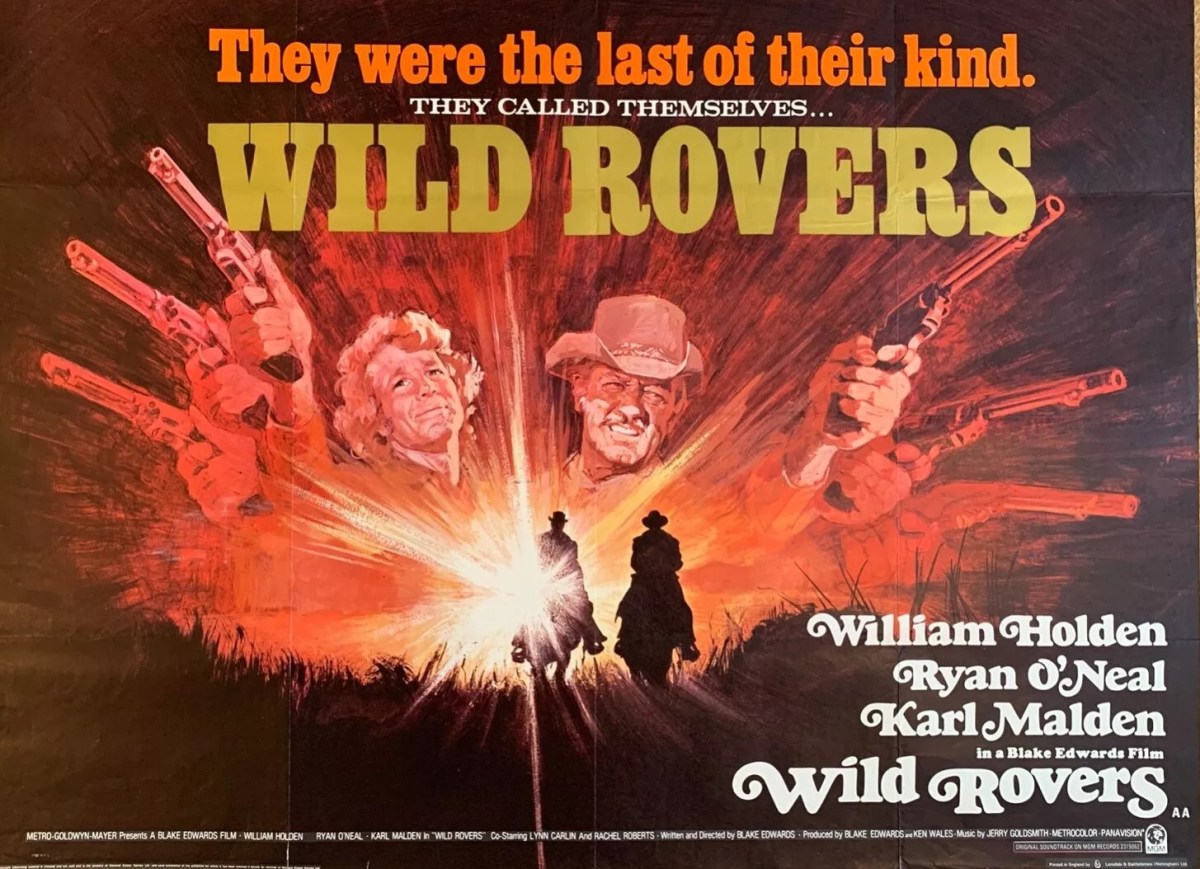
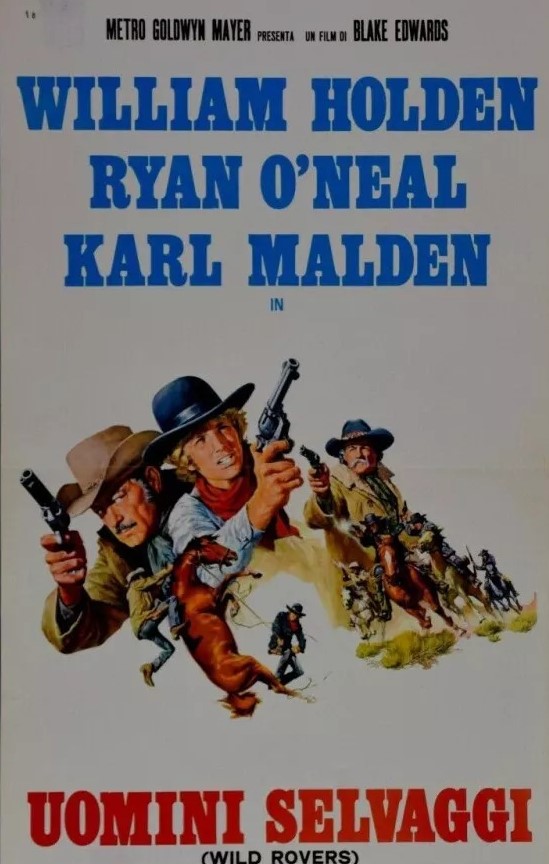
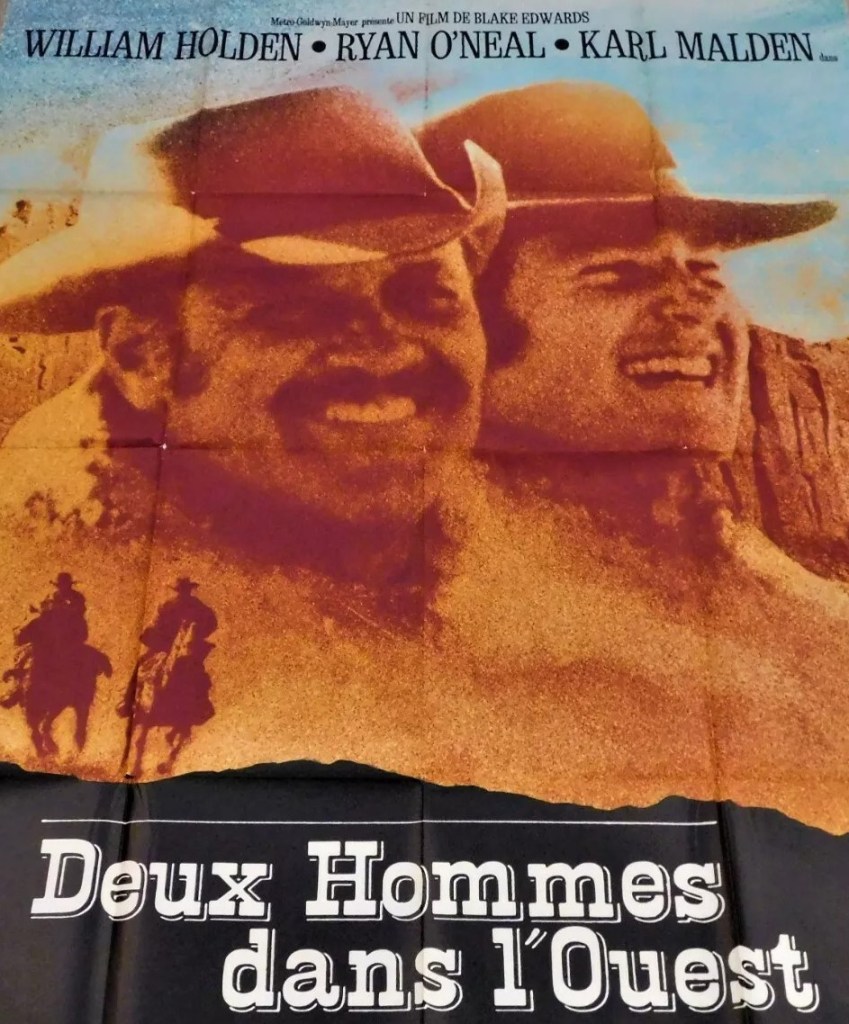
Worse, the marketing campaign was widely derided. The image of William Holden and Ryan O’Neal astride the same horse, the youngster grinning, leaning into the older man’s back, gave off, unintentionally, homo-erotic undertones. Audience dismissal of the advert only became clear to MGM at the end of the movie’s first six days at the first run Grauman’s Chinese in Los Angeles which registered less than $20,000 at the box office. Shocked at the low result, MGM “scrapped its entire pre-release and opening campaign” shifting the emphasis from the “man-to-man image” to “guns, horses and adventure” suggesting an old-fashioned shoot-em-‘up.
The new advertisement was accompanied by anonymous quotes, comparing Holden and O’Neal to Clark Gable and Spencer Tracy – though as Variety acidly noted, without identifying which was which – and describing the shootout as “so electrifying your impulse is…to run for cover.” Phantom quotes had been used before by Avco Embassy for De Sica’s war drama Sunflower (1970) starring Sophia Loren and Marcello Mastroianni. But while Hollywood was fond of editing reviews to find an often-misleading quote, studios generally drew the line at making them up.
The New York release in a trio of first run houses coincided with the showcase outing of Love Story (1970). That movie had played for months in first run and this was the first time it was generally available. Love Story, the hit of the decade so far, would open in 80 suburban cinemas on the same day in June, 1971, as Wild Rovers. In the era before “Barbieheimer”, there was still an expectation of cross-over, that the fans of a new star coming good like Ryan O’Neal would automatically seek out his latest picture. And it may have been that the advertising campaign was specifically designed to ensure his fans did not go to the western expecting another romantic drama.
They weren’t tempted at all. Love Story cleaned up – a gross of $1.25 million from 80 outlets and another $750,000 the following week. Compared to that, Wild Rovers scarcely got out of the gate – a “less than roaring” $20,600 from the three. At the 1,096-seat Astor it was on a par with the fourth week of Escape from the Planet of the Apes (1971) which had just completed its run there.
There was a little solace elsewhere. Its $15,000 in Baltimore was deemed “tall” and $12,500 in Boston “slick” but more reflective of the general interest was a “dim” $65,000 from eight theaters in Detroit, a “mild” $7,500 in Denver and “moderate” $8,500 in Minneapolis. By the end of the year it had amassed $1.8 million in rentals, languishing in 59th place.
MGM took a different tack in Europe. It wasn’t unusual for movies released in 35mm in America to be shown in 70mm roadshow in Europe – The Dirty Dozen (1967), Where Eagles Dare (1968) and The Wild Bunch (1969) enjoyed up to a year in roadshow before fanning out into general release, getting two substantial bites of the commercial apple. The latter two had done better abroad than at home, in large part due to the roadshow release which turned a movie into an event rather than a routine outing. So MGM sent Wild Rovers out in roadshow. At 110 minutes, even puffed out with a 15-minute interval, it was a mighty slim offering for roadshow.
In London, half the critics came out against it, but only a quarter were favorable, the others having “no opinion.” The consensus was that it would “not survive the rough critical handling.” It opened on October 21, 1971, at the ABC2 in London’s West End. And lasted two weeks, whipped off the screen after generating an opening week of $6,200 and a sophomore of $4,100, replaced by The Last Run starring George C. Scott, another flop. MGM persevered with the roadshow. It played for five weeks at the Coliseum in my home town of Glasgow.
In the U.S. it shifted quickly to television, part of the CBS program, finishing a lowly 85th for the year in the tabulations of the movies attracting the biggest television audiences.
SOURCES: “Metro’s Loves Me As A Substitute for Former Say It With Music,” Variety, August 6, 1969, p3; Army Archerd, “Hollywood Sound Track,” Variety, October 20, 1970, p6; Army Archerd, “Hollywood Cross Cuts,” Variety, August 5, 1970, p23; “Holden Pushes for Conservation,” Variety, August 12, 1970, p25; Army Archerd, “Hollywood Sound Track,” Variety, November 4, 1970, p20; “Hollywood Production Pulse,” Variety, November 18, 1970, p54; Advert, Box Office, March 28, 1971, p3-5; “Profitable Quarter for MGM,” Kine Weekly, April 24, 1971, p3; Advert, Variety, May 17, 1971, p23-25; Advert, Variety, May 19, 1971, p12; Review, Variety, June 23, 1971, p20; “Col Delivers Atlanta Festival,” Variety, June 23, 1971, p6; “New York Critics,” Variety, June 30, 1971, p7; “Metro Scraps Rovers Campaign,” Variety, June 30, 1971, p27; “London Critics,” Variety, November 17, 1971, p62; “Big Rental Films of 1971,” Variety, January 5, 1972, p9. Box office figures from Variety June 30-August 18, 1971, and November 10-17, 1971.
An unlikely candidate for redemption. Savaged by studio MGM, thoroughly trashed by critics, and ignored by audiences. MGM, having just called time on Fred Zinneman’s big-budget Man’s Fate and alarmed by the budgetary excesses on Ryan’s Daughter (1970), wasn’t in the mood for a three-hour elegiac western about nothing much. Reputedly, there was a first version that went out at two hours seventeen minutes, but the trade critics reviewed the version that went out on general release and came in 30 minutes shorter.
Scorn was the most common reaction. It seemed excessively indulgent to allow director Blake Edwards (The Great Race, 1965) anywhere near a western when his forte was gentle or slapstick comedy and the one time he had ventured out of his comfort zone – for musical Darling Lili (1970) – he had turned in a commercial and critical disaster. The first poster for Wild Rovers, the stars cuddled up on a single horse, suggesting home-erotic overtones, was widely derided.
Hollywood was fearful of pictures without a female prominent in the cast. And while William Holden had revived his career with The Wild Bunch (1969), there wasn’t exactly a long queue for his services, not after the disaster that was The Christmas Tree (1969). By the time he had another hit, five years later, it was in a supporting role in Towering Inferno (1974).
There were question marks also over co-star Ryan O’Neal. Despite the commercial success of Love Story (1970), and an Oscar nomination to boot, it seemed insane to opt for what was in some regards a buddy picture sorely lacking in the crackling dialog and hip approach to the nascent genre that made Butch Cassidy and the Sundance Kid (1969) such a success.
This is a very small story on a not-much-bigger canvas. Sure the scenery is splendidly shot, but close-ups are scant, most of the movie filmed in long shot, faces covered by beards and hats pulled down. Unless you were familiar with his distinctive voice, you wouldn’t, for example, recognize Karl Malden. We’re back in the cowboy realism of Will Penny (1968) but where that narrative helped Charlton Heston by transforming him into a stand-up good guy coming to the aid of a widow and subtle romance thrown in, this just about has the dumbest plot ever conceived.
What makes this work is that the characters ring true, no matter how dumb they appear. These are generally people at the end of the line, or at the beginning of one and realizing it’s going nowhere, or with their small patch in danger of being overrun.
The local sheriff holes up in the whorehouse, there’s a range war brewing – sheep farmers invading valuable pastures – a cowboy could be killed in a flash, not from a rampant gunfighter, but from a spooked horse trampling him to death, the upstanding turn out to be corrupt.
Fifty-year-old Ross Bodine (William Holden), no wife or family to berth him, has hooked up with Frank Post (Ryan O’Neal), half his age. They live on a ranch, eating and sleeping in a communal bunkhouse, and when one of their colleagues suddenly accidentally dies, they take to brooding on the unachievable future, one that seems to be drifting fast away from the older man, still a brass ring within potential grasp for the younger.
They decide to rob a bank. But not in the normal fashion of bursting in with guns blazing in the middle of the day. Instead, they do it at night, Frank holding bank manager’s wife Sada (Lynn Carlin) hostage while her husband Joe Billings (James Olsen) fills Bodine’s pockets to the tune of $36,000. They should get away with it. By daybreak they should have put an enormous distance between themselves and any pursuers and once over the state line would be out of the jurisdiction of local sheriff or marshal. Probably, they’d throw a chunk of it away in gambling, women and booze but they still reckon on having enough left to stake themselves to a small ranch, hiring a manager to do the dirty work.
Not wanting to leave their employers out of pocket, Bodine hands the bank manager back £3,000 to return to ranch owner Walter Buckman (Karl Malden). But the money is diverted along the way by Sada. So Buckman attaches sons Paul (Joe Don Baker) and John (Tom Skerritt) to the posse with the instructions not to turn back at the state border. Walter remains behind waiting for the sheepmen to trespass.
Except for the elegiac scenery, the tone appears uneven at the start, and you might think this is going down comedy lines, what with our heroes being drenched with buckets of ordure and generally being knocked around slapstick fashion. But it quickly settles and you realize you’re watching a couple of losers every bit as believable as the pair in Midnight Cowboy (1969). They’ve got nowhere to go and in making the most of what they have liable to make a hash of it. They don’t win saloon brawls, are on the wrong end of a shoot-em-up, squeal like a pig, to coin a phrase, when called upon to be manly and stoical when a bullet needs dug out of a wound, stare into space after making love because they can sense the inevitable. I found myself warming to them much more than I expected.
Frank may be a mean shot and a heck of a gambler but he’s a little boy at heart, picking up a stray puppy while on ransom duty. There’s a fabulous scene – and my guess what attracted Holden to the picture – when Ross talks to his friend about their friendship. Hell, you think, that’s sailing close to the wind, don’t tell me these guys are getting all emotional. Until you realize the only time Ross could ever speak so openly is if his pal is beyond hearing. Because he’s dead.
Beautifully shot, as I mentioned, boldly envisioned with the emphasis on long shot, and in the end more moving than I expected. I’ve no idea what kind of masterpiece lurked in the lost three-hour version, but MGM may have done Edwards a service because this edited version hits the mark.
Written and directed by Edwards. Both Holden and O’Neal, who was generally panned, have never been better. Host of new talent in the wings includes Tom Skerritt (Top Gun, 1986), Joe Don Baker (Walking Tall, 1973), James Olsen (The Andromeda Strain, 1971), Moses Gunn (Shaft, 1971), and Victor French (Little House on the Prairie, 1974-1977). Unexpected appearances from British pair Rachel Roberts (Doctors Wives, 1971) and Charles Gray (The Devil Rides Out, 1968).
Check this one out. Reassessment urgently required.
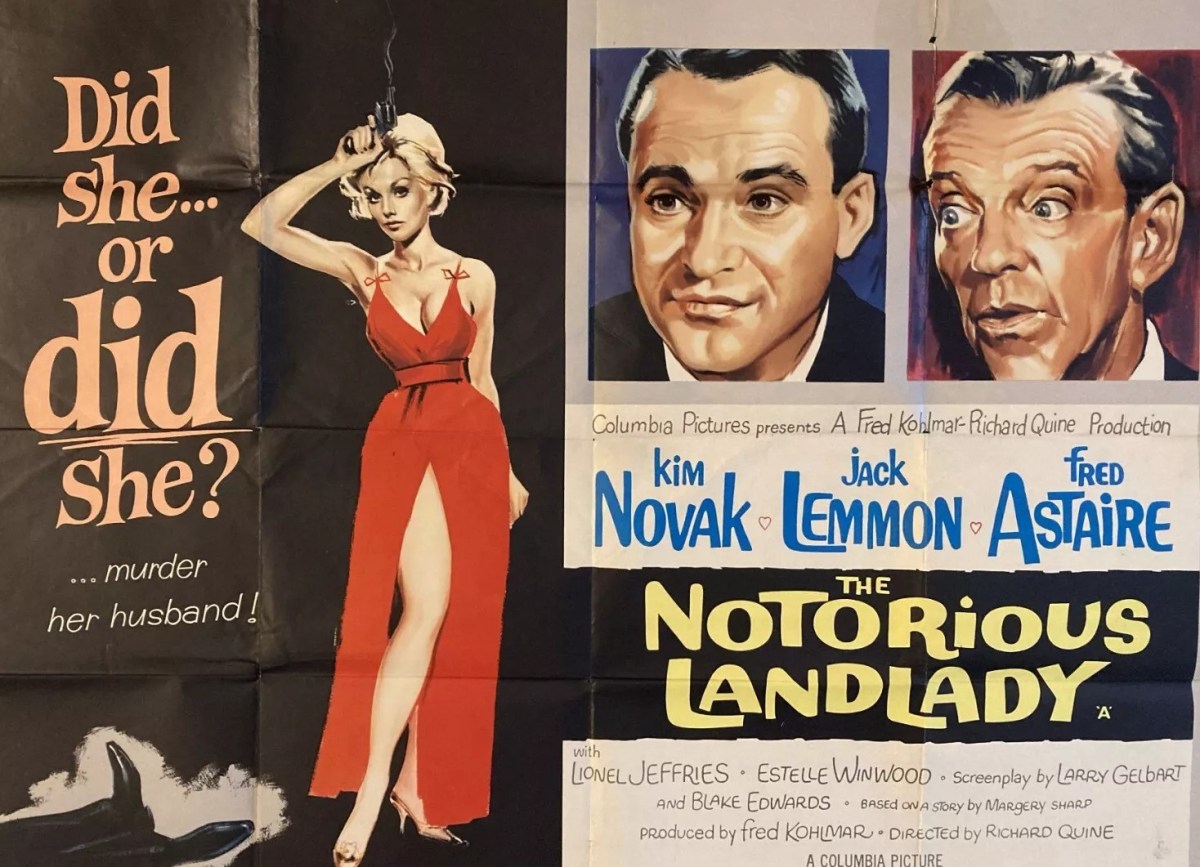
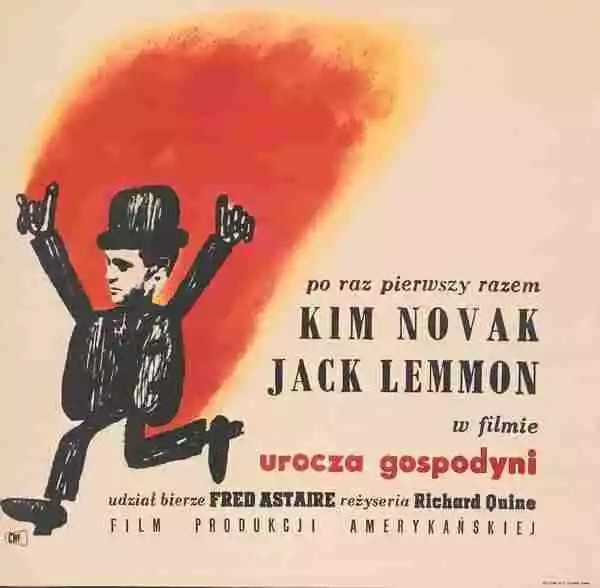
Botched job. Not an all-out stinker. Something that should easily have worked – and didn’t. Thanks to the principals involved. Biggest finger of blame points at Jack Lemmon (How To Murder Your Wife, 1965), who jitters and jabbers, arms waving, eyeballs swivelling, classic example of over-mugging the pudding.
But Kim Novak (Strangers When We Meet, 1960) is as bad for the opposite reason. She’s completely insipid. Sure, she’s meant to be playing someone frightened out of her wits but she could as easily be worrying about how to lay the table for all the energy we get.
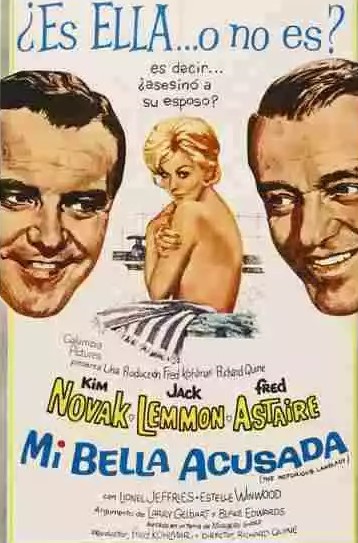
Director Richard Quine (Strangers When We Meet) hardly gets off scot-free for allowing this to happen as well as quite bizarre shifts in tone from a fog-wreathed London straight out of Sherlock Holmes, to a denouement with Novak naked in the bath – Lemmon averts his eyes but the camera and hence the audience doesn’t – and a climax straight out of the Keystone Cops. I know Quine had a fling with Novak but it looks like he’s trying to share her physical charms with all and sundry, scarcely a scene goes by where’s she’s not in her underwear, night-time apparel, soaking wet one way or another or wearing revealing outfits. The “Notorious Cleavage” might have been a better title.
As I say, this should have worked. The story is straightforward enough, a mystery, red herrings aplenty, mysterious lurking figures, enough twists to give it edge.
Diplomat William Gridley (Jack Lemmon), newly arrived from the States, comes to view an apartment to rent in Mayfair only to find landlady Mrs Hardwicke (Kim Novak) most unwelcoming. Unfortunately for her, it’s love at first sight for him, so she can do no wrong. Which is unfortunate for him, for she is suspected of murdering her husband. That doesn’t sit well with Gridley’s boss Ambruster (Fred Astaire) who feels staff should be completely above board and not risk the good name of the U.S. by consorting with film noir style damsels.
Ambruster is already in cahoots with Inspector Oliphant (Lionel Jeffries) and it’s not long before Gridley is enrolled to act in an undercover capacity, sneaking into her bedroom, finding a gun in a drawer and overhearing suspicious phone calls all the while continuing to romance her. Meanwhile, he’s woken up in the middle of the night with her playing an organ. He’s such a clumsy clot he manages to set fire to a garage, which attracts front page headlines and puts his career in jeopardy.
Anyway, various red herrings later and Ambruster somewhat mollified after falling for Hardwicke’s charms himself, we discover that her husband isn’t missing after all, but when he turns up, she shoots him dead and so ends up in court charged with his murder. His death, while convenient, is treated as accidental.
But the fun’s only just beginning. What could have been a shade close to film noir or the kind of romantic thriller Hitchcock turned out in his sleep, now takes a quite bizarre turn. It transpires that her husband, a thief, has hidden stolen jewels in a candelabra which, because she’s short of cash, she has sold to a pawnshop. This emerges in the aforementioned bathtub contretemps. But Hardwicke is being blackmailed by the witness whose evidence cleared her. Said witness has made off with the jewels and now plans to kill off the real witness. So they all end up at a retirement village in, where else, Penzance. Gridley has to save the real witness from being run off the edge of a cliff in a wheelchair while Hardwicke and the fake witness would have had a real old catfight if either of them could have managed to land a punch, instead of hitting the ground or falling backwards into bushes, so the entire climax suddenly takes a distinct comedic turn.
There’s not even a decent performance from Fred Astaire (The Midas Run, 1969) or Lionel Jeffries (First Men in the Moon, 1964) to lift proceedings. In fact, the best performance comes from villain Miles Hardwicke (Maxwell Reed) who rejoices in lines like, “ I like you better when you’re frightened.”
Written by Larry Gelbart (The Wrong Box, 1966) and Blake Edwards (The Great Race, 1965), which would make you think comedy, and that this was a spoof in the wrong directorial hands, except that Edwards was responsible for Experiment in Terror / Grip of Fear (1962) so knew how to extract thrills.
And not just any old cinema, but the 87-year-old Fine Arts in Los Angeles, I guess the second oldest movie house still standing there, with admission a princely 50 cents and the whole place done out in a gaudy red. I was taking time out from a research mission to the Academy of Motion Pictures Arts and Sciences’ (the Oscar people) equally famous Margaret Herrick Library, where I was digging up stuff for my next book about the films of Alistair MacLean.
And where I discovered to my unimaginable delight they they had my books on their shelves. I’ll never win an Oscar and bestsellerdom will continue to evade me, but for a writer of books on movies, there can be no greater honor than to have your works on the shelves of Hollywood’s most important library. Since data protection will prevent me from discovering who has checked out my books, I can safely imagine that it was bound to be Harrison Ford, Greta Gerwig, Christopher Nolan and/or Steven Spielberg.
Anyway, enough of that self-congratulatory nonsense and on with the show. If you’ve any memory of this picture – jaunty jalopies battling it out at the start of the 20th century when suffragettes were raising hell – it’ll be for the slapstick. The upfront feminism most likely passed you by. A savvier female you would be hard put to find, especially one that susses out exactly that when a male falls in with her views it’s just to get her into bed. So, from the contemporary perspective, this is a far harder-nosed picture than the fluffy narrative suggests.
Setting aside the famous pie-throwing homage to silent film pie-throwing (and every circus clown act since Doomsday) and a couple of sequences that outlive their welcome and the odd decision to find a plotline that can accommodate Jack Lemmon going down the (almost) identical twin route, this is pretty much sheer delight.
Characters could not be more black-and-white – in visual terms as well – than rival mechanical whizzes The Great Leslie (Tony Curtis) and Professor Fate (Jack Lemmon) except for the much more rounded (in character terms) interloper Maggie Dubois (Natalie Wood) as a reporter. Not content with being a legend in his own lunctime, the mad professor follows the Gore Vidal tack of being upset by any rival’s successes. However, he’s such an incompetent saboteur he doesn’t realize he’s merely the feed for a number of superb visual gags.
The Great Leslie, smile resounding with the Colgate audible zing, doesn’t have much to do except expound the principles of fair play and occasionally demonstrate his fencing skills when the plot turns sideways. Maggie is the ace inveigler, and when that doesn’t work resorts to handcuffs to ensure she will not be moved or someone else will be stuck fast. Standard bearer for female equality, she manages to put all the arguments without sounding dull, especially as, verbally, she is dealing with a keen dueller. And when she’s not switching sides, she’s rooting for the good guy.
The plot could have come out of a dishwasher but roughly equates to a round-the-world road race with most countries conveniently missed out, ending up in Paris with a stop-off somewhere in Germany. The deliberately cartoonish feel shouldn’t work at all, especially for a contemporary audience, but then we all laughed at Dumb and Dumber and plenty comedies with even less of a one-note touch. Thankfully, there was no such thing as deconstructed comedy in those days so everyone enters the spirit of the thing. And it’s quite refreshing to watch stuff being blown up and falling apart not for overblown thriller or comicbook reasons.
I wasn’t taken with the overlong sequence in the saloon – extended singing and brawl (heck, what else are saloons for) – and wasn’t so hot on the legendary pie section either and certainly the notion that Professor Fate could be such a doppelganger for a dumb German prince that the powers behind the throne plan to substitute one for the other seems to belong in the furthest reaches of the Far Fetched Highway.
But there are so many gags and the characters, no matter how cartoonish at times, seem true to themselves, and with Maggie on hand to constantly upset the misogynistic applecart it seems a tad picky to be so picky. I was astonished that the audience I watched it with, primarily much younger than I, were so tickled.
Tony Curtis (The Boston Strangler, 1968) and Jack Lemmon (How to Murder Your Wife, 1965) repeat the magic of Some Like it Hot (1959) thanks to the strong directorial hand of Blake Edwards (The Pink Panther, 1963). Natalie Wood (Bob and Carol and Ted and Alice, 1969) shines. Rare comedy role from Peter Falk (Penelope, 1966). Excellent support from Keenan Wynn (Warning Shot, 1966). Edwards co-wrote the script with Arthur A. Ross (Brubaker, 1980).