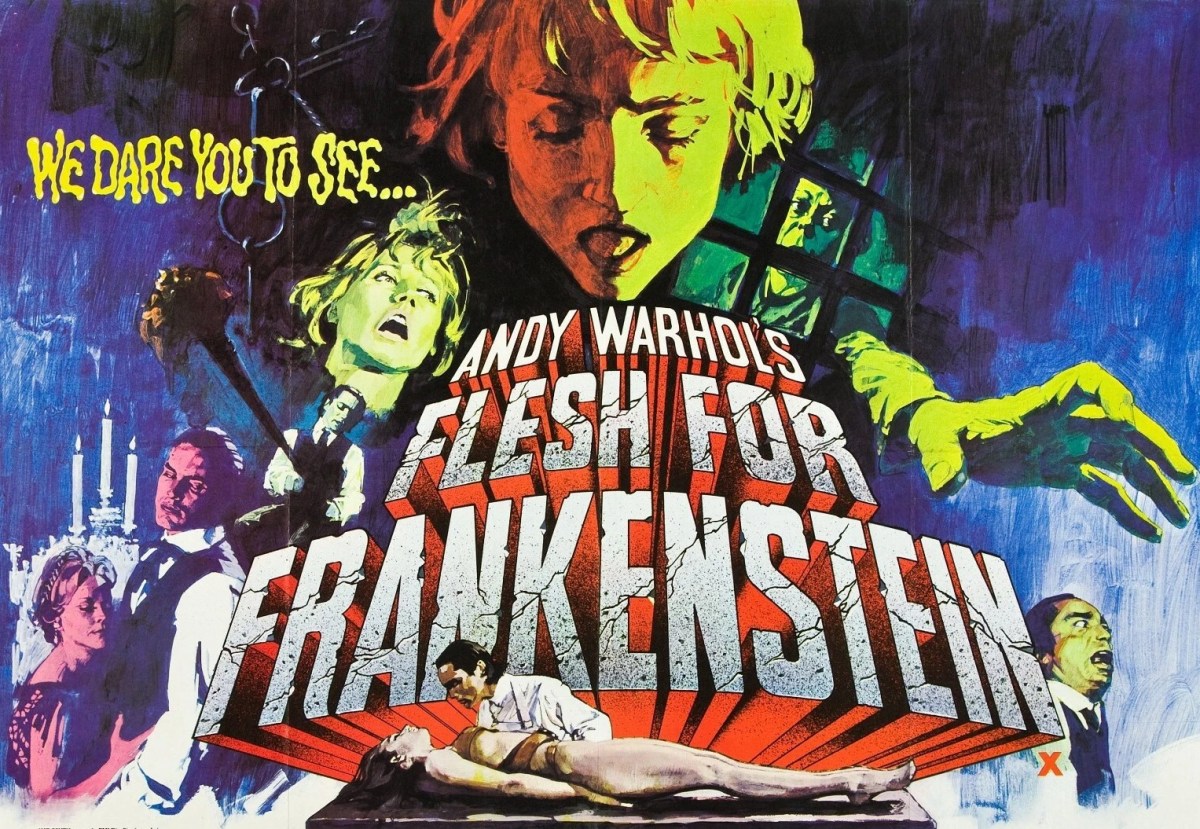
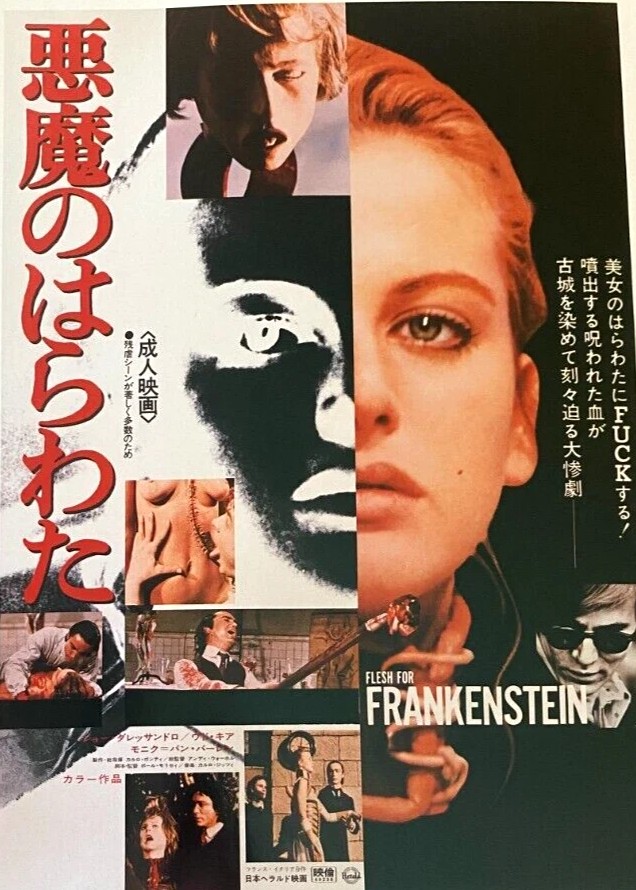
What with Jessie Buckley putting on her best Joker-style smile in Maggie Gyllenhaal’s Looney Tunes version of The Bride (2026) and Oscar Isaac going as high-tech as the 19th century would allow in Guillermo del Toro’s excellent Frankenstein (2025), Paul Morrissey’s Flesh for Frankenstein now appears tame in comparison though at the time its sexuality and gore came in for severe criticism. I’m guessing it’s the campiness that finds it rated so highly among the contemporary critics, but, apart from some poor acting, there’s little in this piece that would bring it down in your estimation or provide it with a free pass.
In terms of the thematic, there are connections to David Cronenberg’s Crash (1996), and in terms of trivia (although the version I saw lacked this) it was originally shot in 3D (though without, as was usually the way with such items, tons of things thrown into the viewer’s eyes) and included an early example of the imagination of SFX genius Carlo Rambaldi (Alien, 1979).
While you might recoil at the good doctor’s right-wing tendencies and his determination to bring to life a superior species, the rest of it is surprisingly good. There’s a determined stateliness to the camerawork and the score by Claudio Gizzi (he only did another two) is as far removed from the over-the-top menace that infected Hammer and AIP versions as you can get.
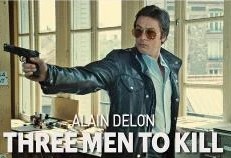
I wasn’t a card-carrying member of the avant-garde back in the day any more than I am now so didn’t rush out to see this on its first appearance and probably wouldn’t have been tempted to watch it at all except that the presence of Dalila di Lazzaro from Three Men to Kill (1980) piqued my interest. In truth, she has a small part as the female of the species in the monster department.
Here, Baron Frankenstein (Udo Kier) is aiming for the double whammy of not just creating male and female monsters but of getting them to procreate and provide him with a new master race. He’s handy with a set of garden shears, lopping off heads to suit his experiment, and stitching, molding cadavers to suit his purpose, and he clearly takes perverse delight in plunging his hands – and shades of David Cronenberg’s Crash (1996) – and other parts of his body into the innards for sexual satisfaction.
If I’ve read this correctly, we’re also in incest territory, his children the offspring of his sister. Or it may well be that she’s employed for her non-existent maternal skills rather than having played a part in their birth. It’s hard to see why he wants any more creations in his own image since the kids are as creepy as they come, voyeurs to the core, guillotining dolls, making off with any spare body parts, and with a malignancy that sets the tone for a stunning last scene.
His sister Katrin (Monique Van Vooren) has a degree in hypocrisy, taking a moral high tone with villagers she catches having sex while recruiting lusty local stud Nicholas (Joe D’Allesandro) for her own bed. The Baron’s assistant Otto (Arno Jurging) is from the Marty Feldman (Young Frankenstein, 1975) school of eye-popping. The only flaw in Frankenstein’s plan is he hasn’t taken into account sexual preference, since Nicholas’s buddy Sacha (Srdjan Zelenovic),selected to supply a head and brain for his male monster, is more interested in men than women, so despite the best efforts of the female monster (Dalila di Lazzaro) his experiment is doomed to failure.
Most movies in this subgenre exist in a moral vacuum, beyond someone taking vengeance on the horror-meister, but here Sacha not only has no interest in sex but he’s so appalled at what he has become thanks to Frankenstein that he wants to die and is so scandalized by the baroness’s attempts to seduce him that he suffocates her.
For the most part, this is restrained, although over-acting is endemic, and the science as convincing as in the Del Toro version. The gore and sex would scarcely trouble a contemporary audience.
The climax is just superb. With corpses littering the floor, including that of the Baron and his creations, and Nicholas hanging from the ceiling, the kids each pick up a scalpel and begin to lower the captive, leaving the audience to guess the rest.
Any inherent campiness passed me by and I suspect that impact has faded with time. What we’re left with is an intriguing well-directed entry into the canon.
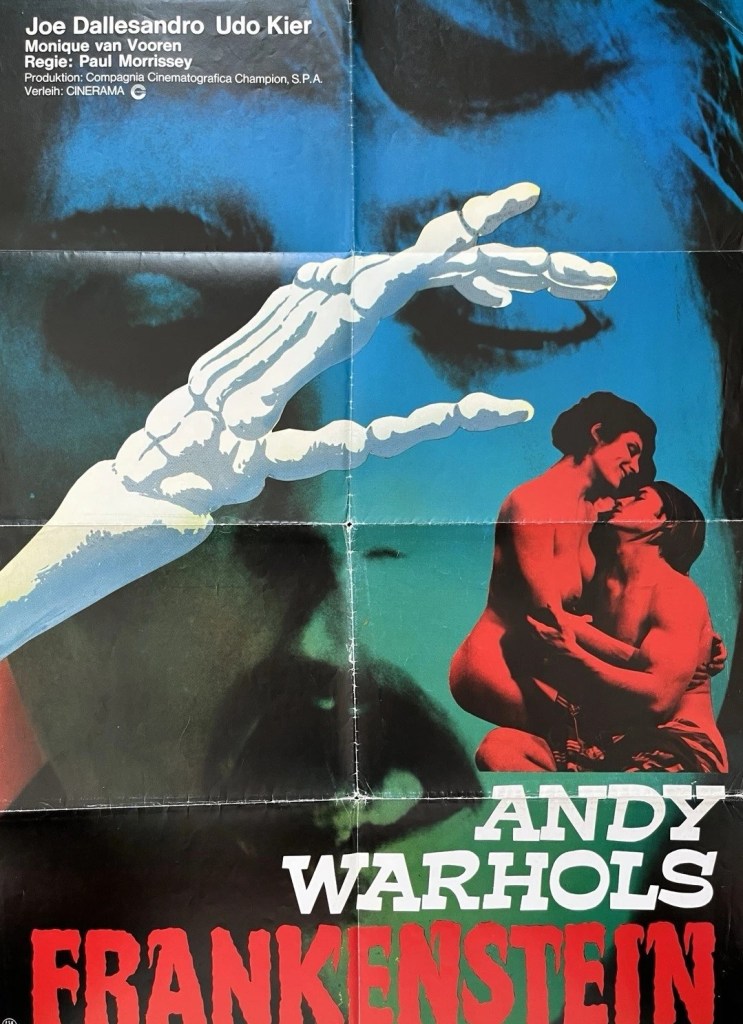
Not sure why Joe Dallesandro (Lonesome Cowboys, 1968) takes top billing, aside from his beefcake potential and the central role he played in the Andy Warhol Factory, given he has a small part. Like Klaus Kinski, Udo Kier (The Salzburg Connection, 1972) has a cult following, and the freedom to overact as much as he likes.
Beside lending his name to the venture for publicity purposes, Andy Warhol played no part. The direction by Paul Morrissey (Heat, 1972) has, I thought, considerable distinction especially the camera movement and the music. He wrote the screenplay.
Surprisingly good.