10 Rillington Place (1971) ****

We tend to view Anthony Hopkins as the bold game-changer when he switched from respectable upmarket leading man to Hannibal the Erudite Cannibal in The Silence of the Lambs, paving the way for a plethora of other stars to throw off the shackles of their screen personas. But, in fact, it was another Englishman, Richard Attenborough, equally well-known for exuding principle (and raffish charm when playing a con man in Only When I Larf, 1968), who broke that particular mold.

At the time, the impetus for the picture was the miscarriage of justice which saw innocent Timothy Evans hanged for the crimes of serial killer John Christie, a name that belongs in the British murderer premier league along with the likes of Dr Crippen and Jack the Ripper. The Ludovic   Kennedy book on which the film was based was by now a decade old, but it had taken that long for the British censor to clear the subject for filming and to find a star who was not already a well-known screen villain and prevent the film tipping over into sensationalism.

So although Timothy Evans (John Hurt) is the unwitting dupe, the focus is more on the cunning of the killer Christie (Richard Attenborough) who manipulates the class system. Nobody would contemplate the notion of a well-spoken upright middle-class war hero being capable of the lurid killings. And the idea of repeat victims in a Britain still rejoicing in its notions of “fair play” was equally abhorrent.

So while we don’t quite get to the nub of why Christie was so obsessed with murder, he remains a fascinating character rather than a demonic villain. And this is grubby, not tourist, post-War London where poverty is endemic and workshy ill-educated rogues are apt to be taken advantage  of and easily caught.

That Christie evaded suspicion, never mind capture, for so long – his crime spree began during the London Blitz of the Second World War – was a credit to his presentation of himself as much as police disinterest or ineptitude and public disbelief at the scale of the killings. That Christie remained free for so long was because Evans was such an idiot, caught out in countless lies and eventually confessing to the crimes. You can see the connection between Christie and Hannibal Lecter (in his control of fellow prisoners) in the hold they have over the less well-educated and easily-led.

Christie, literally, got away with murder simply because, to police eyes, Evans was a more obvious villain. The narrative obscures the worst part of his tendencies, implied necrophilia and sex with unconscious women. In another life he might well have been presented as the down-on- his-luck old codger who only required a break to right himself.

The wonder of Attenborough’s performance is that he doesn’t exude menace. Even as he’s trapping victims he comes over as trustworthy. His creepiness only grows on the audience once they are invited to see the part of him that his victims do not.

It’s a testament to Attenborough’s conviction in the part that you never notice how much he loathes the character. He only took on the role as part of a campaign to prevent the return of capital punishment. Critics clearly disapproved and their plaudits were reserved for John Hurt (Sinful Davey, 1969) in the more showy role. These days, thanks to Hannibal Lecter, audiences are more inclined to be more considerate towards actors playing irredeemable characters.

Director Richard Fleischer had been here twice before with Compulsion (1959) and The Boston Strangler (1968) and to his credit that he approached it in a low-key fashion eschewing the verbal gymnastics of Orson Welles of the former and the false nose of Tony Curtis and split screen of the latter. John Hurt is excellent and Judy Geeson (Three into Two Won’t Go, 1969) has a small part.

Most films about serial killers at this point in sub-genre’s history tended to follow an investigation or a courtroom drama – Psycho (1960) while initially focusing on victim and thence the killer quickly turned into an investigation. But this is primarily concerned with the actions of the murderer, who unravels as the movie proceeds, and is brought to justice when the general finger of suspicion, rather than the result of a detailed investigation, points to him.

Richard Attenborough created the template for the outwardly-respectable killer. Interestingly, Attenborough had previously played the more typical killer, the immediately loathsome gang-leader Pinkie in Brighton Rock (1948). Written by Clive Exton (Isadora, 1968).

Well worth it to soak up the creepiness that gently begins to subsume the character.

The Party (1968) ***

Had director Blake Edwards (The Pink Panther, 1963) stuck to his guns and followed his instinct and gone down the silent film route, this would have emerged in better shape. Blame star Peter Sellers (The Pink Panther) for deciding “brownface” had worked so well in The Millionairess (1960) that it was ripe for a repeat and that dialog was essential to the audience empathizing with his character.

On reflection, the fish-out-of-water concept would have been more acceptable with a character originating from anywhere but India which would have still permitted the star to adopt one of the zany voices that were his trademark.

The script was originally 58 pages long which would have delivered a finished product running just short of an hour. The extra time would have been made up by the actor’s improvisation.

His character probably didn’t need to be actor either to find himself at bigwig’s party in Los Angeles. When Sellers is at his inventive best this just purrs along. Some of the ideas are priceless – trying to retrieve a shoe from a pond, meddling with a electronics system, getting his tie stuck in an unlikely spot, spraying all with water.  But when he opens his voice, it drags.

Part of the problem is that Hrundi V. Bakshi (Peter Sellers) lacks lines with any zap. He just mumbles along, repeating the same humorless drivel. And while other characters make fools of themselves through dialog, that’s rarely with incisive wit either, the audience just laughing at their inflated opinions of themselves.

Bakshi is an incompetent Indian actor who manages to blow up the expensive set on costume epic Son of Gunga Din movie set at the height of the British Raj. He should have been blacklisted, but instead elementary error sees him invited to the party of studio boss General Clutterbuck (J. Edward McKinley) where he encounters a drunken starlet, an alcoholic waiter determined to steal the slapstick high ground, pompous western star “Wyoming Bill” (Denny Miller) and French singer Michele Monet (Claudine Longet) trying to avoid the advances of movie producer Divot (Gavin MacLeod).

Although this was reputedly shot in sequence, the running order doesn’t really matter. Set Peter Sellers in his pomp down in any situation and chaos will ensure. Wigs will come off, shoes will rocket around a room, anything on a plate, bowl or tray will fall off, anyone in the vicinity will be drenched or battered. Tempers will rise until they are nicely cooking and set to explode.

Quite where a Russian ballet troupe and a painted elephant fit into this is anyone’s guess except that both were intended as cues for further hilarity. When guests aren’t tumbling into the pool they’re soaked in soap suds. Naturally, Bakshi’s ineptitude triggers gentle romance with Michele.

This would certainly have built up a good head of steam if seen in a cinema with an audience. But the cinema audience would have encountered the same problem as anyone watching it at home. For every sequence that hits a comedic bulls-eye, others just fall flat. When the movie relies on the star’s charm rather than his ineptitude it falls apart.

It’s almost a highlights reel and my guess is that if it was cut back to the original one-hour length we might well have a classic on our hands. As it is, padded out, it doesn’t come close.

While at one time it acquired cult status my guess is that the contemporary audience won’t find enough to compensate for the offensive Brownface.

Certainly there are moments of genius, the shoe sequence and the electronics section are huge fun. But too much just doesn’t work.

You might end up fast forwarding every time Sellers opens his mouth. He is a master at finding fun in the inanimate, less impressive when dealing with people. Didn’t do anything for Claudine Longet, no more movies after this. And that was not surprising. Everyone was just a stooge to Sellers.

I apologize for falling back on that old analogy of the curate’s egg – good in parts – but that pretty much defines it.

Lawman (1971) *****

Virtually every film by British director Michael Winner was either despised or under-rated. Sure, he appeared at the wrong time, when critics were in the thrall of such stylists as Francis Ford Coppola, Martin Scorsese, Arthur Penn and Steven Spielberg, guys who couldn’t tell a story without adding something distinctive and individual. It didn’t help that Winner came across as cocky and arrogant and chewed on cigars as if he was Orson Welles. His copybook was eternally blotted after Death Wish (1974) and possibly before then for consorting with the likes of Charles Bronson who did not fit the critical palette in terms of a western hero.

So I’ve come out swinging big-style for this extraordinary number for its moral complexity and revisionism. It doesn’t exactly turn the genre on its head but it’s the most honest and realistic western you’ll come across and with rasping dialogue where every word counts. Sheriff Cotton Ryan (Robert Ryan) is a coward, bought and sold by local rancher Vincent Bronson (Lee J. Cobb). Old flame Laura (Sheree North) is willing to jump into bed with the titular lawman Jared Maddox (Burt Lancaster) to save her partner Hurd Price (J.D. Cannon) and just as likely to bed Maddox anyway out of pure lust. But then she’s just as likely to feel sorry for one Maddox’s captives, Vernon (Robert Duvall), and sneak him out a gun and endanger her old lover.

Price and Laura had such a miserable spread and are such poor farmers, hooked by a dream that needs more than dreaming to turn it into a reality, that any crops they raise only feed the weevils. On the other hand Bronson, unlike the ranchers in other westerns, doesn’t want to posse up and hunt down the lawman. His skill set errs on the side of negotiation, bribery and blackmail. The young gunslinger Crowe (Richard Jordan) doesn’t end up, as usual for the genre, as easy meat.

Whenever John Wayne set off to right a wrong he generally had the audience on his side. The injustice committed against him, or that was walking into, was clear.

There’s nothing clear about who murdered an old man in Maddox’s home town of Bannock. It was an accident, or the kind of accident you get when a bunch of drunken outlaws shoot up a town. No idea who fired the fatal bullet. It could anyone out of seven visitors. We don’t even find out anything about the victim. He’s little more than a MacGuffin.

And Maddox isn’t vengeance on a horse. He’s not out to kill anyone. He doesn’t know who to blame for the murder, his job is just to round up the suspects. However, the wanted don’t take too kindly to being on his wanted list and a couple of them, namely Vernon and Bronson’s son Jason (John Beck) are itching to put a bullet through the lawman’s head, by fair means or foul, via the traditional shootout in main street or as conveniently the bullet in the back or the trail ambush.

Maddox is implacable. “A lawman is a killer of men. That’s what the job calls for.” Even though he agrees his task is a murky one, and little chance of divining the actual killer, and even the possibility that for lack of such clarity the judge hearing the case will simply let everyone off, he’s still obsessed with doing what needs done, rounding up the suspects, killing them if need be if they oppose the rule of law.

The townspeople aren’t much help, up in arms at the prospect of a widow-maker in their midst, and not keen on the law being enforced when their own lawman takes such a different view. Cotton Tyan, at one point, was a good and feared lawman. But those days are long past. “Everyone remembers Fort Bliss,” he mutters ruefully before reeling off the list of his failures.

As I mentioned the dialog is superb. No room for banter or repartee here. Every word comes with a hammer behind it.

“I ain’t afraid of him,” remonstrates wannabe gunslinger Crowe. “You would be,” retorts Ryan, “if you had brains enough to spit.”

To prevent Hurd from leaving Laura pleads, “But Maddox promised nothing would happen to you.” Hurd snaps, “But what did you promise him?”

Saloon owner Lucas (Joseph Wiseman), with whom Maddox has history, challenges his approach. “You’re wrong here.” “Not from where I stand,” says Maddox. “You can’t see from where you stand.”

Although Winner is too fond of a recent technological innovation, the zoom shot, the rest of the filming, like the tale itself, is somber. There are some nice touches. We are introduced to Maddox as he towers above the camera. And it’s only when the camera changes angle that we realize the load on his packhorse is actually a corpse.

I’ve never seen a western where anyone, despite riding through endless barren plains, is covered in dust. But here, Maddox’s eyes have a patina of dust. Ryan uses a horseshoe as a paperweight. His town is largely crime free because it lacks a railhead. Like a Henry Hathaway western, we get a good idea of the makeup of the town from signs on buildings.

The action scenes are terrific. Killing a man’s horse in the wilderness is as good as killing the man. The only time Ryan chips in is to help arrest someone committing crime in his own town, and in that section he and Maddox work as a team communication through nods and gestures.

The ending, had it gone to plan, would have turned the genre on its head, Maddox deciding he’s done enough killing and planning to leave without making any further arrests. But that’s not good enough for Jason, who has something to prove and dies because of it.

Bronson, who’s done his best to avoid outright conflict, also dies, by his own hand, unable to deal with the death of his only remaining son.

Michael Winner (The Nightcomers, 1972) knows he’s dealing with a western icon in Burt Lancaster (The Professionals, 1966) and allows the actor to add another iconic character to his portfolio and trigger the more thoughtful screen persona he would evince in the next two in his “western trilogy” Valdez Is Coming (1971) and Ulzana’s Raid (1972), each successively nudging closer and closer to outright revisionism.

Inveterate tough guy Robert Ryan (The Wild Bunch, 1969) plays mostly against type as the worn-outlawman seeking an easy life. Sheree North (The Gypsy Moths, 1969) makes the most of an unglamorous, conflicted, role. Based on this performance, you wouldn’t figure Robert Duvall on turning into a quiet gangster’s lawyer the following year in The Godfather.

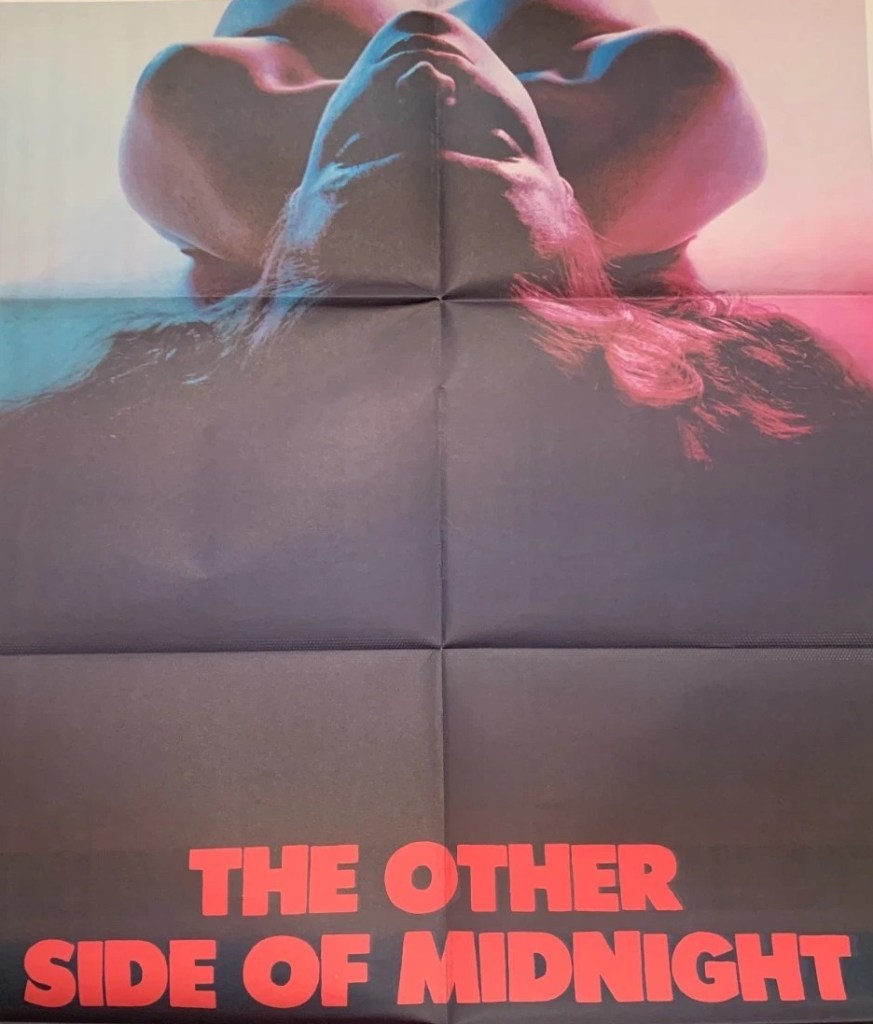
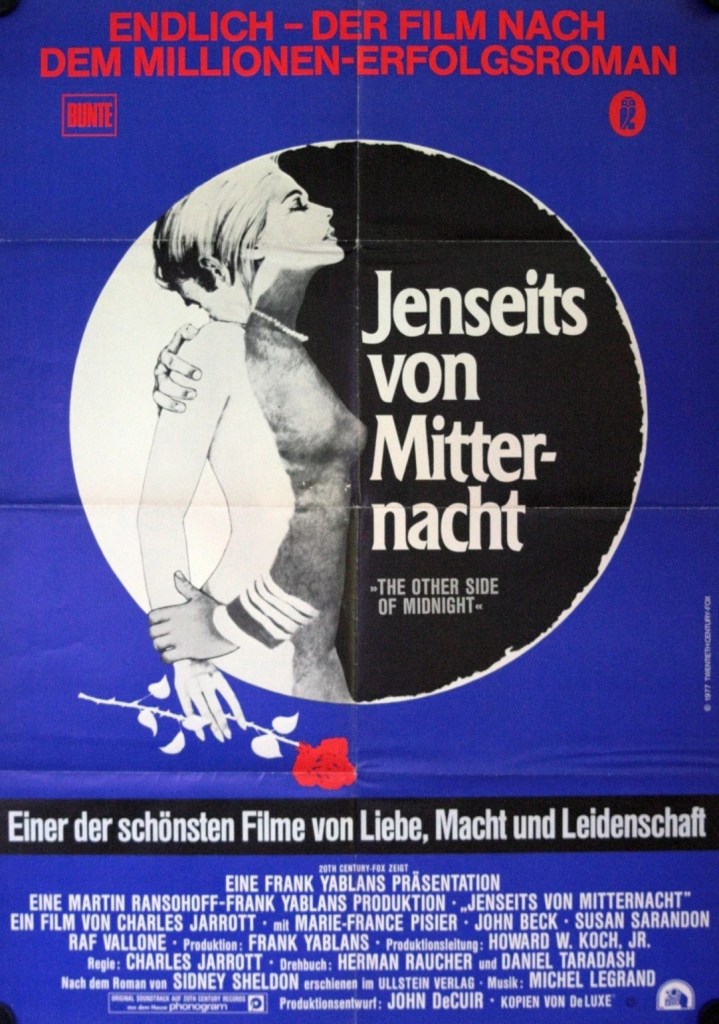
Making his big screen debut is Richard Jordan (Valdez Is Coming, 1971) and on his sophomore appearance is John Beck (The Other Side of Midnight, 1977).

What a debut by screenwriter Gerald Wilson (Chato’s Land, 1972).

Coming to this in reverse order after watching Lancaster in Valdez is Coming and Ulzana’s Raid (1972) and after reappraising Winner following The Nightcomers, I had no idea what to expect. Least of all that I would be so impressed I’d watch it twice straight through.

Superb.

Legends (2026) **** – Seen on Netflix

It’s astonishing that Netflix with the gazillions at their disposal can be guaranteed to generate surprise at their ability to turn out two more-than-halfway-decent series in a week. As you might expect, given this genre is their trump card, it’s another true crime venture. And in the exceptionally capable hands of Scottish writer Neil Forsyth (The Gold, 20234) it’s a cracker.

Not so unusually it’s set in the underworld arena of the British drugs trade. But, very unusually, despite the gazillions of minutes devoted to this part of the sordid genre, it takes us somewhere new. Back in time, to the 1990s. Miles away from the usual world-weary cops and instead into Customs and Excise. Miles away, too, from South East Asian, Eastern European or South American gangs, heading for the unfamiliar domain of the Turkish-dominated section of London.

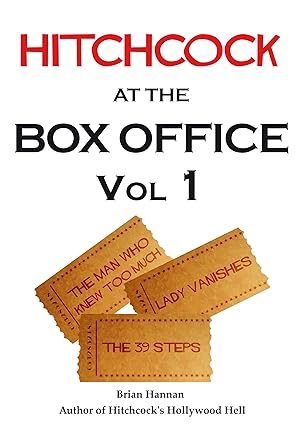
You can tell when Netflix sticks out a new release under the radar. It only comes with one poster instead of several poster images. So I’m making do with the book on which it is based. Don’t ask me if the Guy named as the author is the same Guy as in the series because the television Guy comes absent a surname.

Recruitment consultants would dearly love to be able to emulate the approach of maverick customs boss Don (Steve Coogan) in selecting an undercover team to infiltrate a heroin operation. Anyone who so much as asks any questions at all is deemed surplus to requirements.

By undercover standards, the team is minute. Don in charge, gruff Guy (Tom Burke) is sent into London, Kate (Hayley Squires) and Bailey (Aml Ameen) to Liverpool with Erin (Jasmine Blackborrow) manning the desk, chasing up intel (in a pre-internet world) and keeping the woke quotient down.

Don’s boss Blake (Douglas Hodge) pops up every now and then to placate the Home Secretary (Alex Jennings) who is jumpy at allocating so much dough to a mission he’s kept in the dark about. Half the time of course the undercover agents are living on their wits, hoping they can remember every aspect of their fake lives – one mistake and on something as inconsequential as football minutiae and someone will torch your wife and child.

We don’t quite know what scars Don bears from his previous undercover outings, but while their weight condemns him to a solitary life, they come in useful when detecting whether his new charges are going to implode. Excitement and the whiff of danger seem to over-ride the prospect of personal cost.

Not surprisingly, victims come into focus. But exactly which victim does take you by surprise, especially in the face of their reaction. We watch a squaddie become hooked on heroin and when he dies the anguish on his father’s face, even half-hidden behind his spectacles, is very moving. The kicker is the dad is a heroin-dealer.

There’s various Succession tropes, as an Irish duo try to muscle in on the territory of Liverpool gangland boss Carter (Tom Hughes) and underling Zeki (Joshua Samuels) making an unwise move against the Turkish drugs leader.

In among this is a bunch of the playing of hunches and dogged detective work, the hidden clue, the unexpected missing link – you’ve acquired the code to get into a drugs stronghold, not realizing you required a different one to get out. Anytime Don is hampered by bureaucracy he takes the nuclear option and some idiot gets his ear chewed out by Blake.

What makes it work most of all is that the bulk of these characters are new to us. Their motivations remain obscure, the backgrounds rarely in focus, but when they are they can shift in the opposite direction.

The acting is first class. I never rated Steve Coogan (Saipan, 2025) before but I do now. Plummy voice is erased, tendency to overact gone and in its place a tortured human being with a mind that races along like a zipwire. Tom Burke (Black Bag, 2025) combines Steve McQueen charm with Lee Marvin menace. Douglas Hodge (We Live in Time, 2024) has taken on the Trevor Howard mantle of the character most likely to explode in fury.

But most of the plaudits should go to showrunner Neil Forsyth.

Keep it up, Netflix.

The Martian (2015) *****

You might recall how annoyed I was several weeks ago by being asked to tolerate Chris Pratt stuck in a chair in Mercy (2026) talking to the camera for what seemed like a solid hour. It struck me then how few actors could manage a whole film one-handed – Tom Hanks in Cast Away (2000) the most obvious example. But, in the wake of Project Hail Mary (2026) I realized there was another contender, Matt Damon as the stranded astronaut in Ridley Scott’s The Martian.

And sure, he eventually gets some help in maintaining audience interest once he communicates with Earth and the spaceship. But here’s the kicker. Mostly what he’s doing is exposition. That’s the one thing a star avoids like the plague. It’s usually left to the supporting actors to set the scene, explain the ins-and-outs of a situation.

But here it’s all down to Damon. He spends his time talking to camera, identifying a problem, usually so scientific you’d need academic books beside you, and then solving it. So, yes, like Cast Away, he’s a bloke on a version of a desert island who’s got to find his way to safety through how own devices.

But even so. What kind of screen persona do you need not just to keep us interested but enthralled? When he sees the first shoots of potato appear, it carries a massive emotional kick. The role of the people on Earth is wonderment and cynicism – no way he can do that sort of thing. Which rachets up the tension and then our hero does the impossible.

There’s always a moment in these space movies where someone comes up with something that’s never been done before – slingshots using gravity, Apollo 13 (1995) littered with improvisation. These scientists are I guess exceptionally brainy to qualify as lunar astronauts but even so.

As I said, I was coming to this again after Project Hail Mary so I was attuned to the science, or the expectation of science and the need to keep the audience informed. But Mark Watney (Matt Damon) comes up with unbelievably-inspired elements of improvisation, some of course pure science but others pure common sense, like pointing the camera at letters to spell out words.

It’s a heck of a ride, especially as with being under Ridley Scott’s command, there’s not a darn alien in sight, no stomach-bursting squeamishness to maintain audience attention, no rampaging monster scuttling along a spaceship. This is Mars as arid as you have been led to believe. Yes, an occasional mountain range or dustbowl to evoke the West of John Ford, and storms coming out of nowhere, but generally speaking as placid and dull a domain as you could wish for.

So in visual terms not much to help out the star. Every movement he makes is fraught with danger. He can choose to freeze through a long night or switch on the heating and thus lose vital battery power.

Every now and then, to speed things up, Ridley Scott literally does just that, characters whizzing around like they’ve just emerged from a silent movie. But mostly it’s slow painstaking going.

Of course we need a big finale and Scott obliges. And every now and then he flicks an emotional switch back on Earth and Nasa boss  Teddy Sanders (Jeff Daniels) has to explain how the astronaut they held a memorial for is actually still alive, and the spaceship team have to come to terms with the fact that they abandoned not a corpse but a guy very much alive. There’s no room for humor, but occasionally some is squeezed in – Sanders having to apologize to the President for Watney’s profanity being globally broadcast.

Ridley Scott (Gladiator II, 2024) reins in the bombast and picks his way through a tricky scenario keeping the audience very much onside. Matt Damon (Oppenheimer, 2023)  , who has surely inherited the Tom Hanks “everyman” mantle, demonstrates the power of a screen persona, in making an audience hang on his every word, even though most of what he says is scientific mumbo-jumbo. Jessica Chastain (Mothers’ Instinct, 2024) is the pick of the supporting cast.

Written by Drew Goddard who is as sure-footed here as on Project Hail Mary, again adapting a bestseller by Andy Weir.

Well worth another look.

Jungle Street / Jungle Street Girls (1961) ***

More social document than thriller. Two elements make it stand out. Critics pointed to the likes of kitchen sink drama Saturday Night and Sunday Morning (1960) as exemplifying the British working class. Equally, when looking for a picture that identified the British criminal, critics and academics were more likely to point to Robbery (1967) and Get Carter (1971) where the villains demonstrated considerable intelligence, leadership and acumen.

Let’s get the social aspects out the way first. Petty thief Terry Collins (David McCallum) still lives with his parents. He argues with his father, is mollycoddled by his mother. There’s a fry-up for breakfast. The kitchen doubles as the dining area. Excitement is limited to winning the Pools (a football-based version of the current Lottery) and going to the cinema. His father (Thomas Collins) has worked all his life shifting sacks of potatoes (presumably in a market). But he’s not disillusioned with life. He’s brought up his family and can still spend time down in the pub.

Terry is a delusional gangster. But only a part-time one, making his living working in a garage, having chucked in his factory job. He thinks he can make a big score and run off to Europe to live the high life. He’s in love with stripper Sue (Jill Ireland) who doesn’t respond to his romancing. She’s taken to stripping because her lover Johnny (Kenneth Cope) is serving a one-year stretch for a jewel robbery. 

People always seem to be laughing at Terry and he reacts violently. But he’s not the rough-tough dominant male he aspires to be. Three times he gets whacked about the face, twice by criminal colleagues, once by Sue.

Inadvertently, he’s killed an old man while robbing him. So the police are on his tail. Johnny’s been released from prison, reclaiming Sue, and wants to know what happened to his share of the loot from the jewel heist in which Terry was his partner. To compensate, Terry offers to set up a robbery of the safe at the strip club whose routines he has studied.

Once the safe has been opened, he clatters Johnny over the head, and scarpers with the cash, makes for Sue, and is astonished when she refuses to accompany him. Eventually, the police catch up and another deluded petty criminal bites the dust.

Initially, of course, the audience sides with our young lad, understands his need to escape the boredom of ordinary life that awaits. But, gradually, he provides little to root for.

Given the regular sequences of girls stripping, the running time is even leaner than usual. The heist has some considerable moments of tension especially when the watchman, bound hand and foot, inches along the floor to the alarm button, and then when Terry appears trapped before jumping out a window.

There’s nothing glamorous about the strip club either, Sue having to constantly ward off the unwelcome advances of owner Jacko (John Chandos) and every other customer who thinks a stripper is morally lax. Even though she’s kept herself for Johnny, he doesn’t believe her. Some girls know how to play the system, a new stripper not giving in to Jacko until he’s spelled out the financial benefits.

The seediness of the lower depths is depicted well and it’s not hard to see how young men and young women are easily snookered into this kind of existence when the alternative is so mind-numbingly boring.

David McCallum (Sol Madrid/The Heroin Gang, 1968) and real-life wife Jill Ireland (Cold Sweat, 1970) are both convincing, exuding surprising emotional depth. Kenneth Cope (Randall and Hopkirk Deceased/My Partner the Ghost, TV series 1969-1970) is on hand to show the young ingenue what it means to be a proper tough guy.

Charles Saunders (Danger on My Side, 1962) directs from a script by Alexander Dore (The Wind of Change, 1961) and Guido Coen (Baby Love, 1969).

More interesting as a character study than as a thriller.

A Man Called Sledge (1970) ***

It’s a risky business for an established star to change their screen persona. The only reason they’ve achieved stardom is because there’s something appealing and even comforting about the persona they’ve adopted. Audiences queue up to see a screen favorite because they know what they’re getting. That still leaves room for chameleons like Dustin Hoffman, whose appeal is the exact opposite, moviegoers don’t know what they’re going to get from one movie to the next.

James Garner (Buddwing, 1966) had a curious screen persona. Sure, he was laid-back and his delivery involved a drawl but his persona, drawn from the scallywag Maverick (1957-1962), also included an element of the sneaky. He wasn’t always as straightforward or heroic (The Americanization of Emily, 1964) as you might expect, but that made him comfortably different.

But it’s one thing to make minor changes to your screen persona, it’s another to dump it completely. Even his combed-back hairstyle is gone as well as the rest of his screen persona as he leans into the sneaky part. He’s an outlaw. And not charming like Butch Cassidy and the Sundance Kid (1969) and not hawking around a code of honor like The Wild Bunch (1969) and not a bad guy doing good for whatever reason. His only one redemptive feature is that he’s fallen in love.

On the other hand, if you’re going to play a villain, you better be a smart one, capable of shooting your way out of tricky situations, clever enough to outfox the authorities and able to come up with a plan to steal $300,000 in gold dust from the biggest and most secure safe ever build in the strongest stronghold you could find.

In short order, we are introduced to Luther Sledge (James Garner) robbing a stage, meeting up with girlfriend Ria (Laura Antonelli) and being ambushed in a saloon by gamblers who don’t like losing. Making good his escape, he comes across the Old Man (John Marley) who suggests the unthinkable, stealing the gold. The obvious method would be taking the gold when it’s being transported from the gold mine to the safe.

But it travels with a heck of a guard, more or less a small army, drilled to perfection, armed to the teeth. So, Sledge resorts to the inside job routine. Only problem is the stronghold is actually a prison with 500 prisoners and the safe is inside the maximum security section. Even so, the Old Man, whose done time there, reckons he has listened often enough to the tumblers on the safe being turned that they won’t need to resort to dynamite and the like.

Sledge gets his buddy Erwin Ward (Dennis Weaver) to act as sheriff taking him in as a prisoner, then once inside he plans to free all the prisoners to create a diversion and tie down the guards.

As you might expect this is achieved with a little hitch here and there to ratchet up the tension. But then when we expect an army of guards in hot pursuit and a massive shootout or Sledge to come up with some other clever way of escaping, it turns into The Treasure of the Sierra Madre (1948) and the tension just drains away, hampered by a cute unbelievable ending where Sledge chooses love over gold.

Somehow the third act robs it of what it had going for it, a tough guy devoid of sentimentality, in the vein of the Lee Marvin of Point Blank (1967). You might as well have inserted an old lady or a kid and be done with it as the reason for Sledge to change his ways and, unfortunately, it just kills off interest in the character. Redemption isn’t what we came for. You can get that any day of the week at the movies. But, ruthlessness, that’s a different story and you’d be surprised how well that can play.

Maybe there’s some unseen Hollywood code. If you’re a proper star, you can only be a tough guy if you don’t kill people (i.e. Butch Cassidy though not The Sundance Kid) or if your toughness is in pursuit of bad guys (True Grit, 1969).

There are some other interesting elements. There’s a second ambush, a street shoot-out, a la The Wild Bunch. There’s a banjo-playing deputy sheriff and a keen-eyed Sheriff (Wayde Preston) who can suss out a wrong ‘un. Dead men earn their keep, either on horseback providing cover or lying on the ground where their pistols come in handy. A small town is emptied by people attending a funeral, masked faces and all.  

And there’s a good bit of sense – a Derringer has such a short range that a prison guard with the necessary keys for escape has to be passed cell by cell down a row until he can come within shooting distance for the gun to achieve its threat.

James Garner is indeed excellent in his new disguise, drawl gone, hair flopping all over the place, not a quip in sight. There’s not much room for anyone else though Claude Akins (Return of the Seven, 1966) deserves a nod. Italian Laura Antonelli (The Innocent, 1976) as the hooker in love sparkles though I’m guessing she was dubbed. John Marley (The Godfather, 1972) is a scene-stealing role does his best to steal the movie from Garner.

Actor Victor Morrow directed this, his sophomore effort. He had a hand in the screenplay, too. He parlayed the fame he’s achieved from long-running television series Combat (1962-1967) in attempting to shift him from being cast as the bad guy on the big screen but, unfortunately, he’s best remembered not for this but for his tragic ending, when he died on the set of Twilight Zone: The Movie (1983).

Which is a shame because this is a decent enough effort.

Engaging enough when in heist mode, less so when it disappears down the Sierra Madre rabbit hole.

Behind the Scenes: Selling Movies To The Exhibitors

We tend to view movie marketing as the business of selling movies to the general public. What we forget is that in order for a cinemagoer to attend a showing of an individual film in a particular cinema, that the movie has to be rented by said cinema and before that can happen someone has to convince the cinema manager to take on the picture.

The most common method of selling movies to exhibitors was via the Pressbook/Campaign Manual. But this had three drawbacks. In the first place cinemas were flooded with Pressbooks that might arrive in the post at the rate of 10-15 a week. The other downside was that such items were generally only useful once a cinema had signed on to screen a particular movie and manager would turn to the Pressbook for hints on publicizing the movie and for the advertising blocks required to run a campaign in a local newspaper. The final problem was that Pressbooks appeared fairly close to a film’s launch so not that helpful in driving up interest.

So the studios turned to the trade magazines. They might embark on a well-planned long-term campaign running upwards of a year. It would kick off with an advert announcing a movie was being made or close to completion – Universal placed a four-page bound insert for Isadora in June 1968, five months prior to the world premiere. Then it would produce some artwork that was close to the posters being prepared for public consumption.

Then it would generate more material that explained how confident the studio was in the picture, demonstrating that money that had been spent on promotion in newspapers, magazines and television, and various tie-ins. The back page of a four-page ad for The Green Berets (1968) was devoted to the promotional activities surrounding its immediate upcoming launch. The sameheld true for Barbarella (1968).

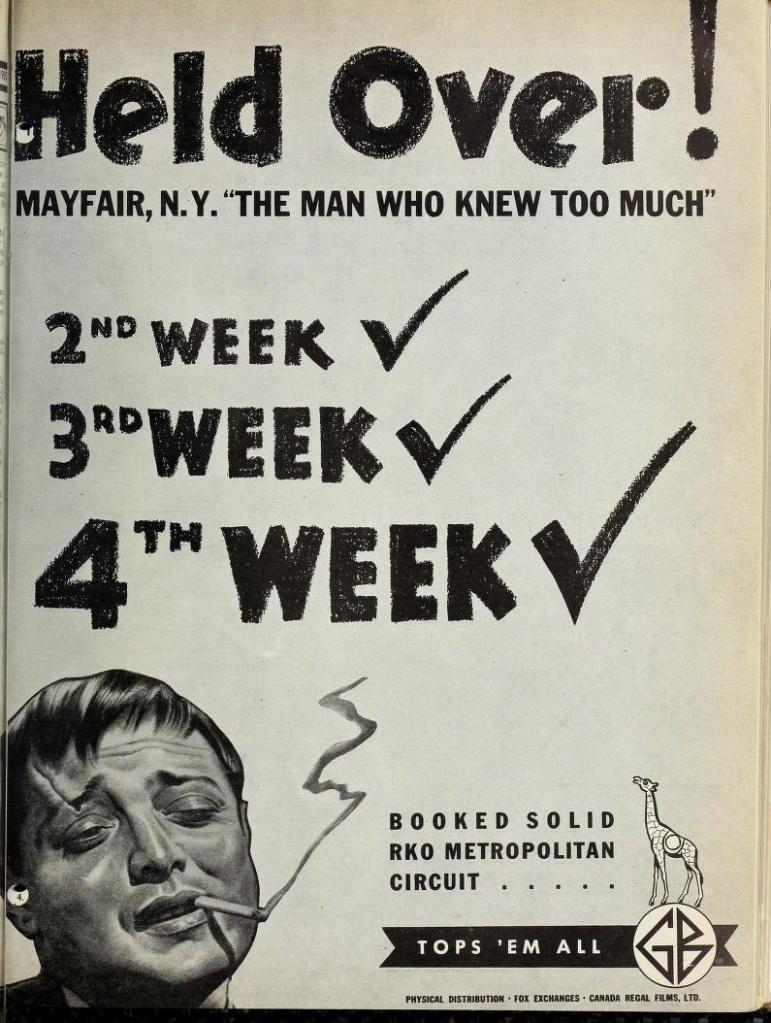
After that it would harness the fact that the film was opening simultaneously in an exclusive number of first run houses in the major cities or that it was scheduled for a huge number of cinemas again simultaneously. These were intended to show that other exhibitors had demonstrated faith in the product, suggesting you had better get in line quick. The final avenue was advertising the box office figures that usually suggested the film was breaking some record or another.

Not all campaigns took all of these steps. In fact, most selected just two or three of them. And they were not always presented in the same fashion. The box office ads tended to be just printed on the same kind of paper as usual, perhaps with color or spot-color (i.e. some part of the ad picked out in blue or red and the rest in black-and-white).

But the ads used in the general build-up would be of a more expensive material. These would employ thicker glossier paper. They would usually be specially designed. They might run to four- six- or eight-pages and they might have some version of a gatefold (not just opening horizontally but potentially vertically). These adverts were printed separately and then inserted into the magazine at the production stage so were known as “bound inserts” meaning they weren’t loose inside the pages but part of the magazine.

There was a major, immediate, bonus from going down this route. I’ve got a massive collection of trade magazines and I always know the moment I pick up an issue whether it contains a bound insert. Not only does the magazine feel heavier but it automatically opens at the insert.

Sometimes, smaller distributors just stuck an entire Pressbook inside a magazine – The Devil’s 8 (1969) a gangster version of The Dirty Dozen (1967) – was promoted in this fashion and the 8-page insert for Doctor Zhivago (1965) contained nothing but promotional ideas and details of tie-ins.

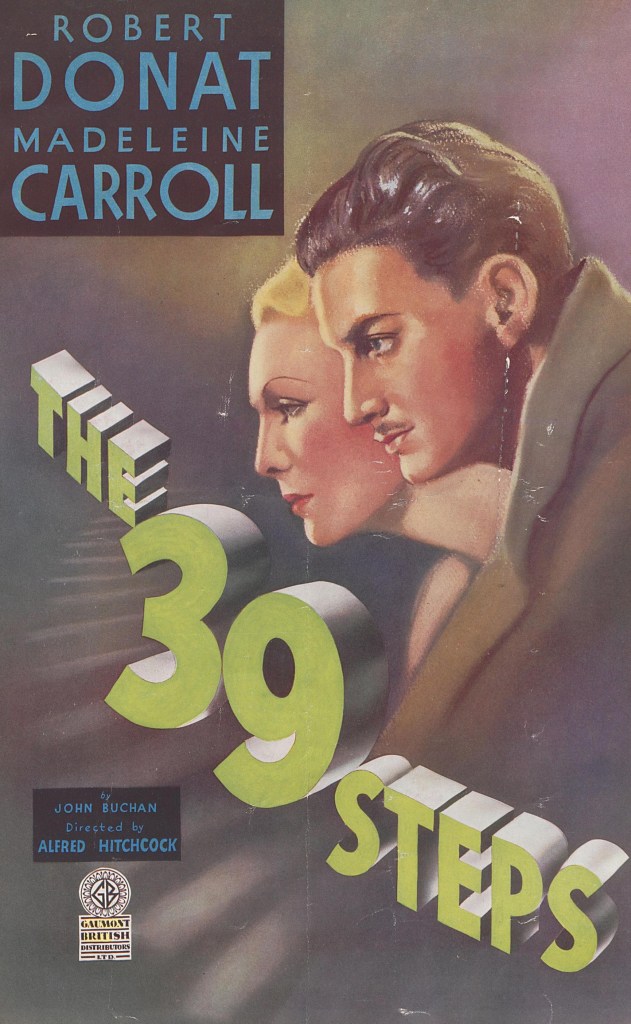
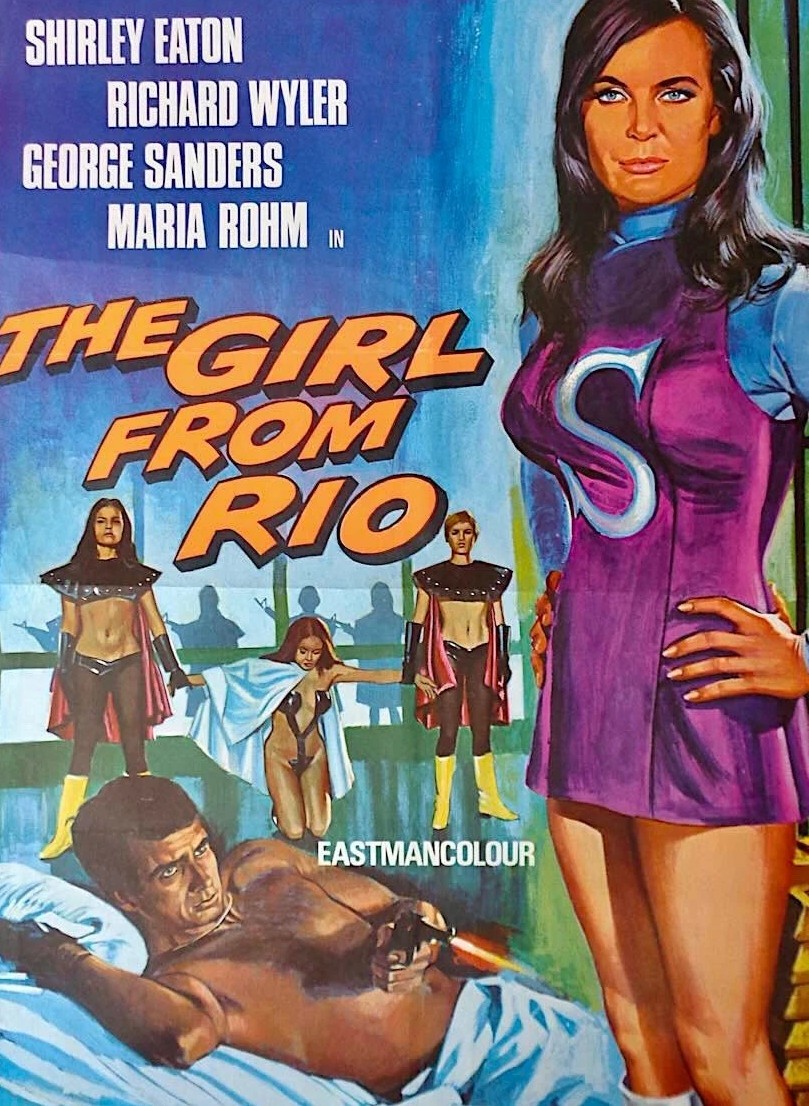
Sometimes adverts that appeared in the trades were try-outs for the kind of poster ideas being considered by the marketing department for public distribution, the illustrations shown here for Tony Rome (1968) and Who’s Afraid of Virginia Woolf (1966) a good example.

Other times studios got it into their heads that, just as had occurred in the Hollywood Golden Age, that the studio name was somehow an imprimatur for good business and that if you stuck with MGM, for example, you couldn’t go wrong and to prove its point it would cross-reference in one advert films as disparate as Doctor Zhivago, Blow-Up (1966) and Grand Prix (1966).

It was pretty obvious to keen observers that studios sometimes placed movies in cinemas with smaller seating capacities in the hope that demand would outstrip supply and consequently they could crow about the box office. Often, studios chose specific outlets deliberately as a guide to other cinemas which were similar. But, mostly, it was just to have something to give a movie a boost.

You might have needed an adding machine (calculators not a thing then) to calculate from figures presented just how well a film was doing, but even just presenting the box office was seen as a sign of studio confidence and exhibitors, presented with a set of box office figures in a trade advertisement, tended not to question their validity.

The one shown for The Sand Pebbles (1966) was also in the nature of a teaser – here’s what’s it done in selected openings, guess what it’ll do for you – whereas for Divorce, American Style (1967) the range was much wider, suggesting the movie would do just as well in cinemas around your way, whether playing in first run or simultaneously in suburban showcase.

Occasionally, there would be more strategic purpose involved. When, in 1965, Twentieth Century Fox got ahead of the game in terms of television promotion and wanted to show exhibitors they were committed to this kind of advance, that was what dominated their 4-page insert in Box Office magazine’s “anniversary issue.” The studio claimed it was “pioneering a new era” promising to use network television (i.e. the “Big Three” of CBS, ABC and NBC) on a year-round basis.

It had committed to purchasing 189 one-minute commercials that would cumulatively attract nearly 800 million “viewer impressions” in 191 cities nationwide. Just to make sure cinema owners exhibitors were in no doubt about the importance of this development in their favor, the studio pointed out it was “the kind of continuing deep-sell no other company in the industry offers exhibitors

Two or Three Things You Don’t Know About Me

Two or three things you don’t know about me. Firstly, I run a second-hand bookshop in Paisley, Scotland, called Abbey Books. Secondly, I have a massive collection of movie posters, pressbooks, magazines and what-have-you. And, thirdly, I’ve connected these interests in an exhibition of movie memorabilia on the walls and bookcases of the shop.

1950 window card.

You’ll probably have seen my various Behind the Scenes articles on Pressbooks relating to a particular movie and perhaps not realized I was able to write it because I had the Pressbook (also known as a Exhibitor’ Campaign Manual) to hand. I’ve also got a stack of trade magazines which contain very rare material – ads that never saw the light of day in consumer magazines or newspapers, many of them pop-up, gatefolds or fold-outs.

1965 insert poster.

My all-time favorite in that department is the four-page glossy pull-out teaser ad that ran in Box Office magazine in April 1977 that announced Close Encounters of the Third Kind would appear at Christmas 1977, unaware that by that point Star Wars would have rewritten the genre.

1955 quad poster.

I’ve got quads (both vertical and horizontal), half-sheets, insert posters, heralds, window cards, stills, pressbooks, double-page spread trade mag ads and souvenir programmes. Among my magazine selections are Box Office, Motion Picture Herald, Kine Weekly, ABC Film Review, Films & Filming, Focus on Film, Cinema Retro, Sight and Sound, Star Wars magazine and books, Lord of the Rings magazines and various MCU and DC comics and graphic novels.

1951 Pressbook for Jean Renoir acclaimed picture.

The exhibition covers the walls of the three rooms of the bookshop, so that’s around 12 walls of movie memorabilia. The oldest item is the Pressbook for Edward G. Robinson’s gangster picture Thunder in the City (1937). John Wayne in 1940 is represented by the insert poster for Dark Command and  window card for Seven Sinners with Marlene Dietrich. I’ve got a window card from For Whom the Bell Tolls (1943), the Pressbook for Love Happy (1949)  – Marilyn Monroe Meets The Marx Bros – and for the 1952 reissue of Hitchcock’s Rebecca, a half-sheet for The Rains of Ranchipur (1955) starring Lana Turner, and a quad for The Prisoner (1955) starring Alec Guinness.

Four-page herald from 1965.

You might want to check out the Pressbook for Sudden Fear (1952) starring Joan Crawford  or Lady in Cement (1968) with Frank Sinatra tangling with Raquel Welch or window cards for another Gary Cooper effort Casanova Brown (1944) or Lew Ayres in early John Sturges western The Capture (1950). Or pressbooks for Dillinger (1973), The Female Bunch (1971), the original movie version of Westworld (1973), Clint Eastwood in The Beguiled (1971) and The Headless Ghost (1959).

1968 quad poster

There also posters etc from Where Eagles Dare, She, War and Peace (1956), Bigger Than Life, Cat Ballou, That Darn Cat!, The Scalphunters, Marooned, Mackenna’s Gold, Lawrence of Arabia, Macao, Giant, Blindfold, Chinatown, Play Dirty, The Secret of Santa Vittoria, The Diary of Anne Frank, The Las Vegas Story, The Collector, Zulu Dawn, and so on and so on.

1951 Pressbook. Early film by John Sturges.

Among our selection of movie souvenir brochures are: The Guns of Navarone (1961), Lawrence of Arabia (1962), Isadora (1968), Paint Your Wagon (1969), El Cid (1961), The Agony and the Ecstasy (1965), Cleopatra (1963), Hawaii (1966), Cromwell (1970), Camelot (1967), Lord Jim (1965) and Far from the Madding Crowd (1967). I had imagined that souvenir brochures had disappeared at the end of the roadshow era but actually I have ones for The Horsemen (1971) and The Valachi Papers (1972).

1963 souvenir brochure.

Famous illustrators featured throughout the collection include Tom Chantrell, Robert McGinnis and Howard Terpning.

As far as I can see there are precious few movie memorabilia shops left anywhere in the world. Most items are now sold online or at auction. So here’s a very rare chance to see these old posters and memorabilia relating to favored movies or ones that trigger a memory.

1966 insert poster.

Pop in and see the exhibition. Everything is for sale.

Abbey Books, 21 Wellmeadow St, Paisley PA1 2EF. Opening hours – Tue-Sat 10.15am-17.15pm.

1956 window card.
1951 Pressbook.
1965 A3 pressbook.
1951 Pressbook.

Don’t wait.

Should I Marry A Murderer? (2026) **** – Seen on Netflix

A great title for the most compelling true crime television tale since Staircase (2004). And for much the same reason. The main character is tricky. We are accustomed to fictional characters being economical, flexible or downright evasive when dealing with the truth and it seems that trend has spread out to non-fiction.

The odd thing is that this should be a straightforward, if tense, narrative. And it only turns into something else entirely thanks to the central character.

Sandy (left) and Robert.

The story beings in 2017 when charity cyclist Tony Parsons goes missing. For some reason – in the dead of night – he’s been traversing the remote twisting narrow roads near the Bridge of Orchy in the Scottish Highlands. Despite a massive manhunt he’s never found.

Fast forward to 2020 and forensic pathologist Dr Caroline Muirhead. She’s in that neck of the woods seeking romance having met on Tinder farm worker and hunter Sandy McKellar, who lives on the private Auch Estate with twin Robert. When not skinning deer they enjoy a party lifestyle. It’s a speedy courtship. After a few months she’s engaged and in the way of many a fiancé wonders if her potential partner harbors any secrets. She’s thinking an ex-wife, maybe a couple of kids squirreled away.

She’s not expecting him to fess up to having mown down Parsons while drunk and then burying the body. Later adding, the victim was still alive, if only briefly, after being knocked down. Fear of drink driving charges clearly were behind the burying.

So now we should be into the straightforward, thrilling, part. How does our heroine impart this information to the cops? Will they even believe her? She’s no idea where the body is buried. Bear in mind, too, she’s still in love with Sandy and can’t get her head round the fact that her handsome kind six-foot Highlander could be guilty of such a deed.

So then we get to the clever bit. She gets him to indicate roughly where the body might be buried – the twins used a digger so a fair amount of earth would have been shifted – and then, inspired, she finds way to roughly mark the spot with an empty drinks can.

But then we get entangled as she gets caught up in her emotions. Instead of running a mile from a callous murderer, she continues to live with him. Sandy is pulled in for questioning but without a body the case is going nowhere. The car that knocked him down is also long gone. The police carry out a lot of spadework and there’s elements of excitement when the cops prowl around the twins’ cottage armed to the teeth like they are breaking into a terrorist stronghold.

Vital evidence.

Caroline’s parents and the cops can’t work why she hasn’t run a mile. Sandy has no idea who’s fingered him so naturally he welcomes the solace she offers. She can’t explain to camera – and it’s mostly her talking to camera – why she can’t give him up. She’s just come out of an abusive relationship but no idea the previous boyfriend was in Sandy’s league.

Whether it’s fear of Sandy finding out or fear of losing him, she begins to unravel, so much so that she jeopardizes the eventual trial when, as the star witness for the prosecution, she fails to turn up on the opening day. She’s clearly such a liability that the prosecution cut and run, dropping the murder charge in favor of a lesser charge, still a prison sentence but a lot less severe.

And still we never find out what was in her mind. It’s enigma to the nth scale. Certainly, she vulnerable. But despite solving the case and bringing the killers to justice, she’s never hailed as the heroine because the rest of her behavior remains so baffling.

Naturally, this plays like a thriller, with plenty twists along the way, so it’s an easy watch in that regard. But it’s a very difficult watch in another sense, in that plainly someone is taking advantage of a vulnerable woman who wants to tell the story her way and perhaps, as she sees it, clear her name.

Just like Staircase or the recent Michael, you wonder what else might come out if the film-makers were more rigorous in pursuit and not so hogtied to the central character.

She mixes up so much making the right decisions with taking the wrong ones that you half expect there’s going to be a terrible tragic ending.

Certainly riveting stuff and what Netflix does best.

Discover WordPress

A daily selection of the best content published on WordPress, collected for you by humans who love to read.

The Atavist Magazine

by Brian Hannan

WordPress.com News

The latest news on WordPress.com and the WordPress community.