Crossplot (1969) ***

Roger Moore – in his first movie in seven years – almost auditioning for James Bond with his lothario instinct, light touch for dialog, a nice side-line in double takes, and enough action to show that even in his early 40s he was still nimble enough. Not in the Charade (1963) or Arabesque (1966) league and over-reliant on the Swinging Sixties and other “Tourist Britain” clichés and a plot that takes far too long to get going, it takes all the actor’s charm to make it watchable.

After one of his staff Warren (Dudley Sutton) switches the photo of a model in his portfolio, ad-man Gary (Roger Moore) finds himself on the trail of Marla (Claudia Lange), a sometime fugitive hiding out on a houseboat. Meet-cute is prompted when she pushes him into the Thames. On leaving he is knocked out and framed on a dope charge and once he manages to get her into the photographic studio Warren attempts to throw her off the roof, the would-be killer himself eliminated by his boss Ruddock (Francis Matthews) who in a marvelous piece of quick-thinking throws his gun to Gary who instinctively catches it, further implicating himself.

After going all round the houses (including a stately home), evading pursuit via an antique car race and a wedding, Gary finally gets to the bottom of why Marla is in such danger – she overheard a conversation between her aunt Joe (Martha Hyer) and Ruddock. Only problem is – she can’t remember it. And it takes even more time for Gary to figure it out, (not realizing, how could he,  that the clue is in the title, in fact two clues in a crossword puzzle). You can imagine how it goes from then.

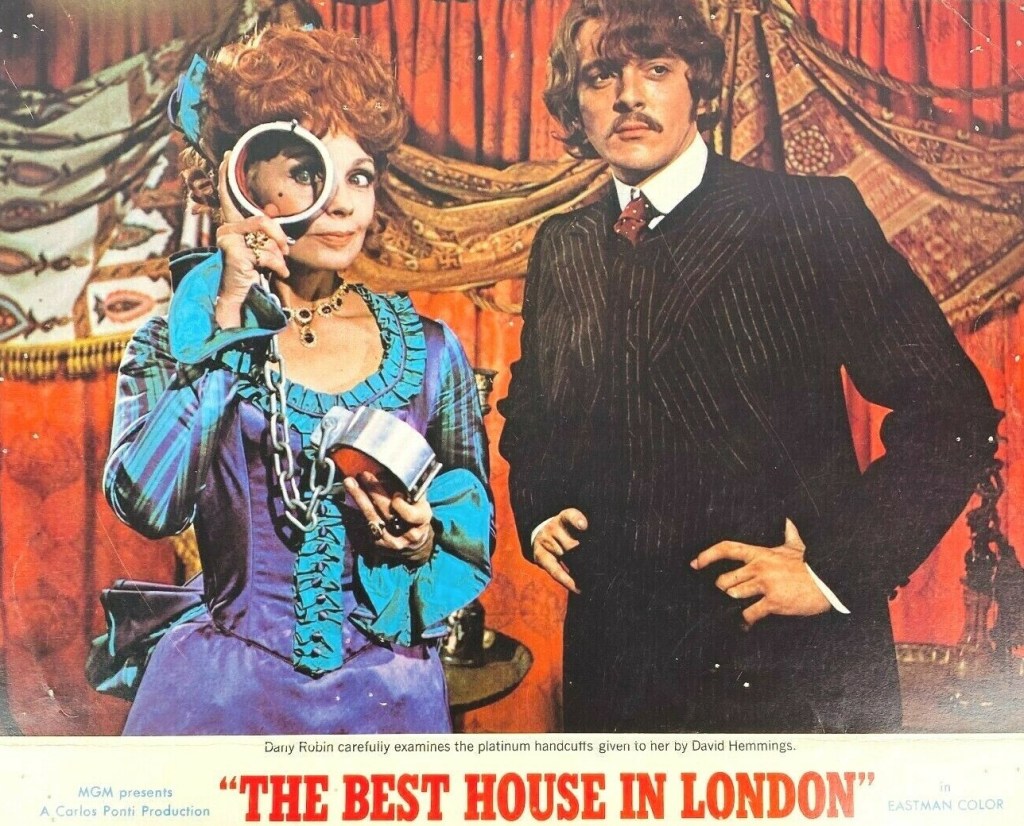
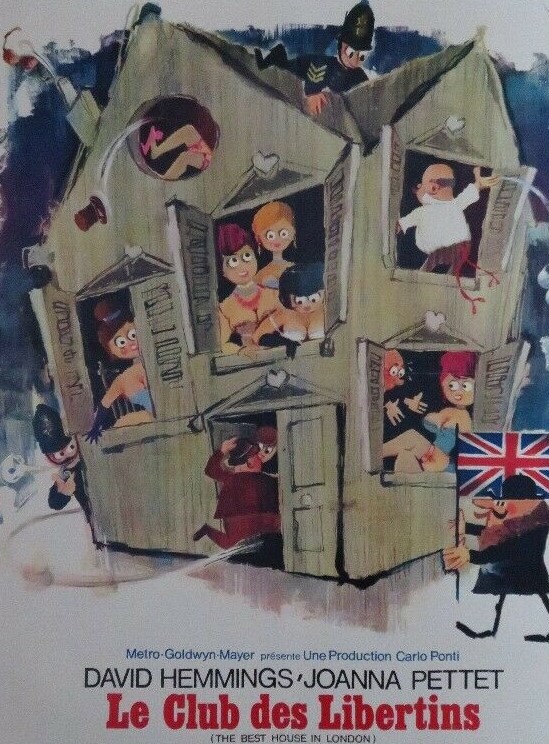
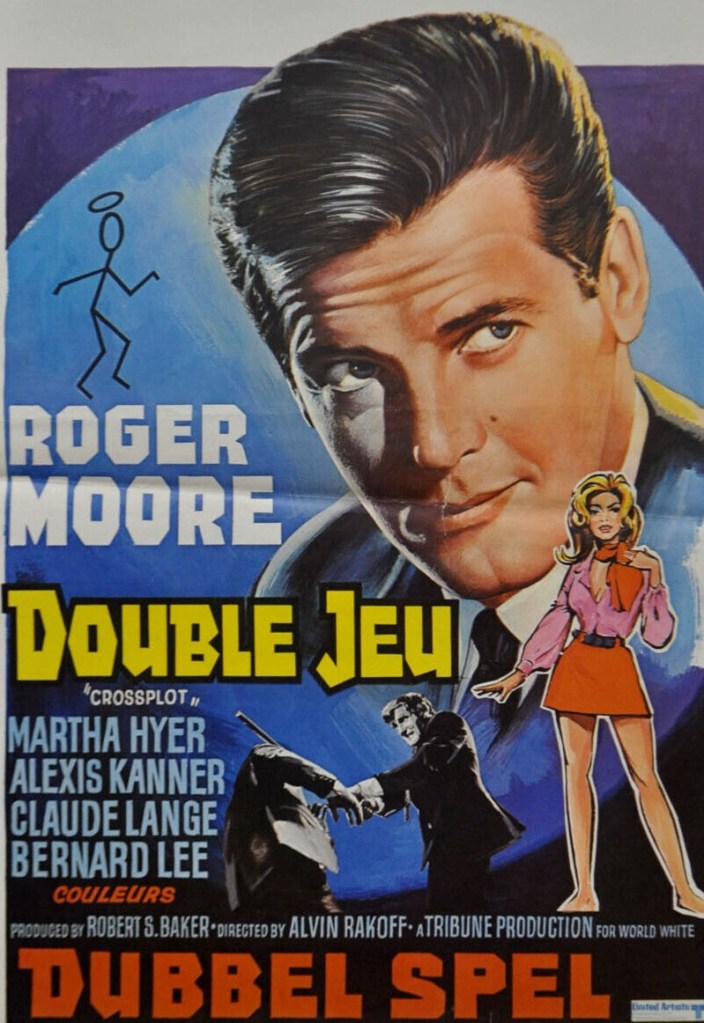
This poster takes the easy route by trying to sell the picture on the back of “The Saint.”

On the plus side is mostly Roger Moore. “I come from a long line of hippopotamuses,” isn’t the sort of line you can deliver without some skill. But Moore’s performance lifts what is for the most part  a shaggy dog story, and he’s game enough to do all the running and fighting required, even the heavy lifting (of his eyebrows), to keep the story moving. It’s far from as funny as it thinks and not as funny as it needs to be, but there are still some good stabs at humor, a pistol held to Gary’s head discovered to be a toy gun, Gary turning the tables in a shower on Marla, telling the bride that her groom is a bigamist, and a running joke about the Marla being perennially hungry.  

The politics barely touches on the conspiracy aspects that Hollywood would have pounced upon and made a better fist of, although the idea that Britain could be undermined by civil strife was not far off the mark for the times. It needed some smarter thinking, though, for that element to work.

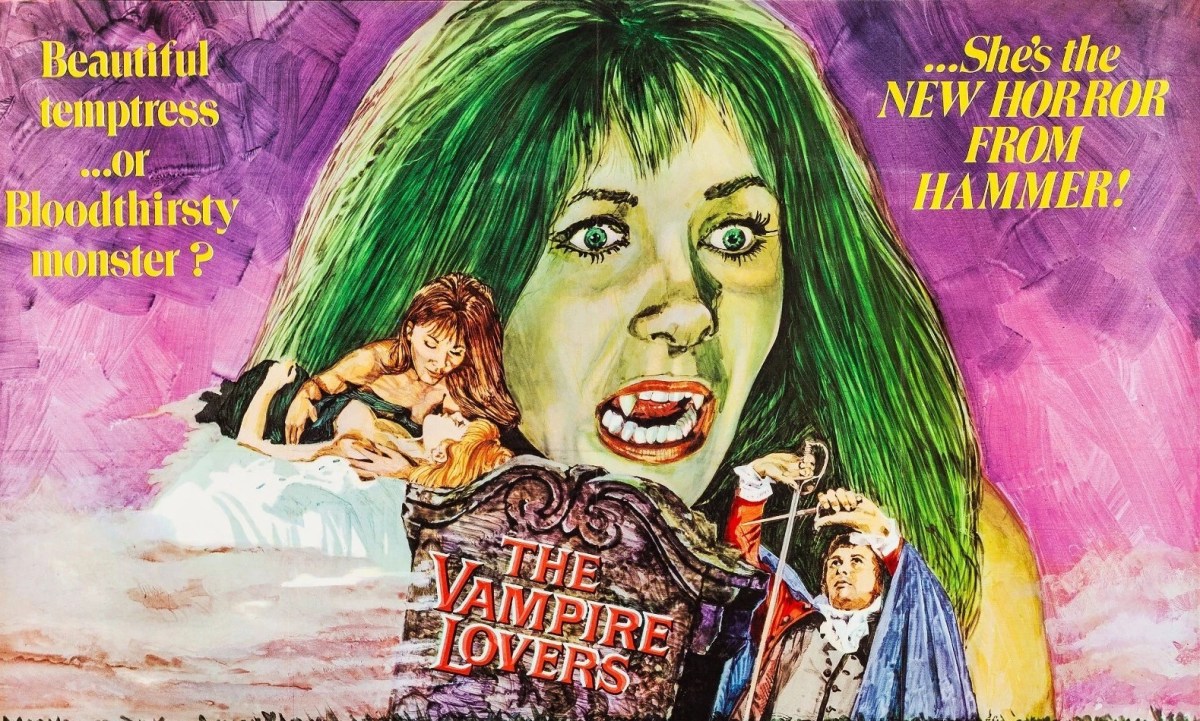
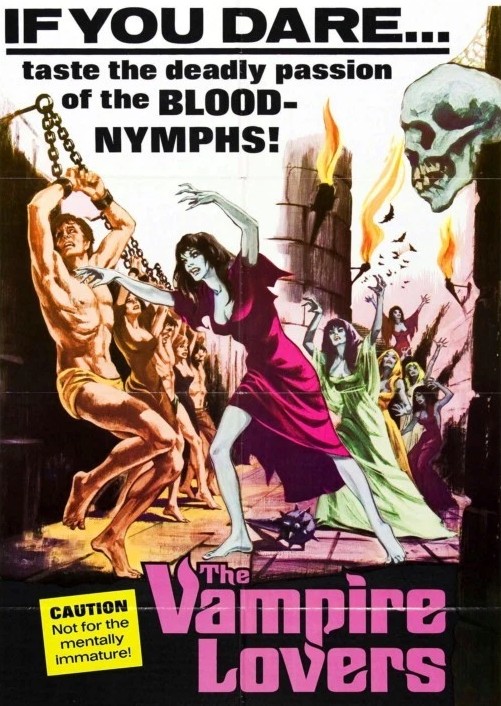
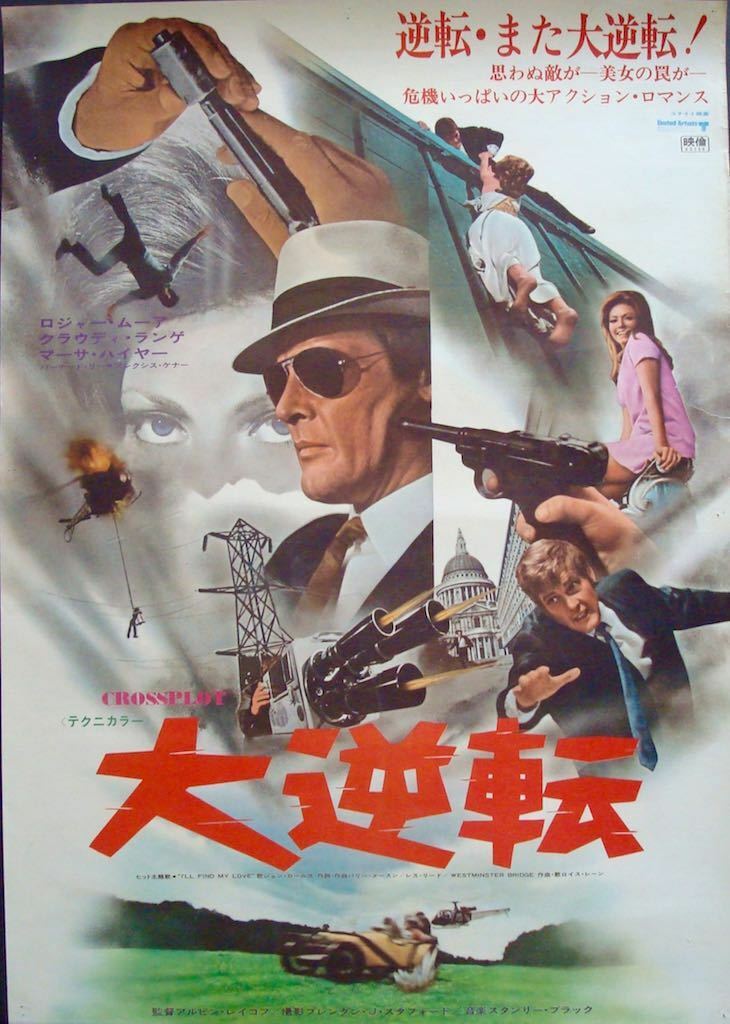
A much better attempt at selling a thriller with scenes from the film,
including the toy pistol pointed at Roger Moore’s head.

The rest of the cast are game enough. Claudie Lang (The Gatling Gun, 1968) is no Sophia Loren or Audrey Hepburn but nobody is pretending she is and she just about gets away with the dumb model approach. Martha Hyer (The Chase, 1966) delivers a glamorous villain and the suave Francis Matthews (Rasputin: The Mad Monk, 1966) her ideal match.

There’s quite a supporting cast: Veronica Carlsen (Dracula Has Risen from the Grave, 1968), Gabrielle Drake (Suburban Wives, 1972), Dave Prowse (Star Wars, 1977),  Bernard Lee (You Only Live Twice, 1967), Alexis Tanner (The Ernie Game, 1967), Ursula Howells (BBC’s The Forsyte Saga, 1967) and Dudley Sutton (Rotten to the Core, 1965).

If Alvin Rakoff (The Comedy Man, 1964) is in charge of the material he doesn’t have enough material to work with. He does enough to keep it on course but would have benefitted from a a tighter screenplay from Leigh Vance (The Frightened City, 1961). Both had done better in the past, but it is easy to be seduced by the romantic thriller format, almost a mini-genre in itself, assuming it is easier to pull off than it looks. The likes of Alfred Hitchcock (North by Northwest, 1959) and Stanley Donen (Charade) made it look easy but they had the advantage of big stars in Cary Grant and Audrey Hepburn who possessed the ability to make the lightest confection work.

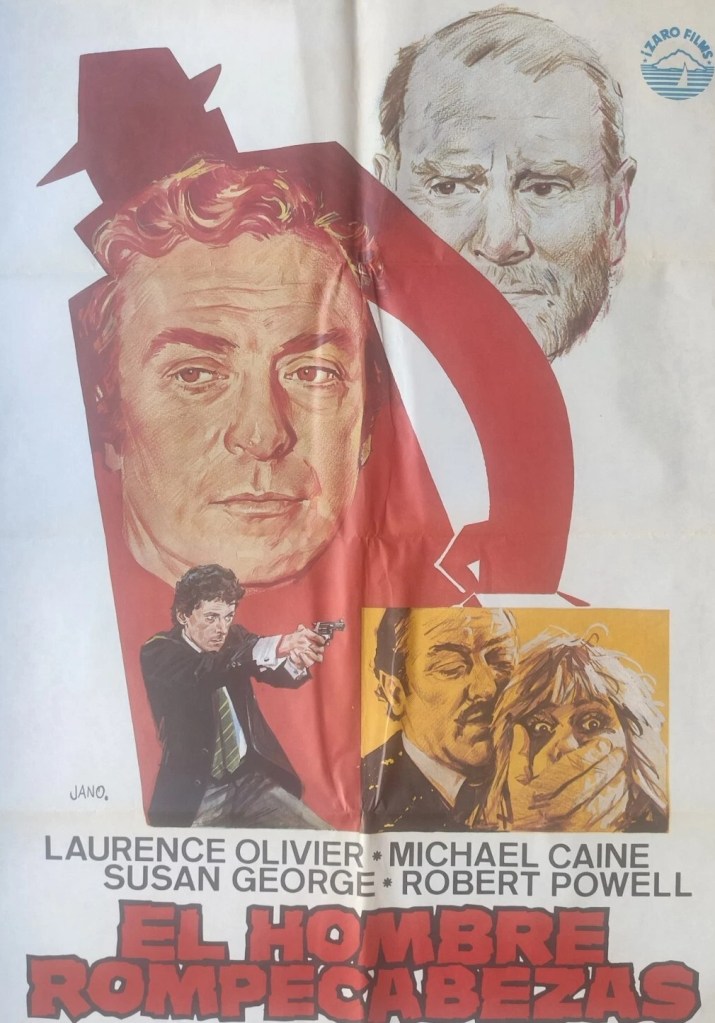
The Jigsaw Man (1983) ***

If you watched Michael Caine movies non-stop for 24 hours a day, it would take you two weeks to complete the haul. That’s how many pictures he made. So it would be no surprise if they were: a) not all top-notch and b) included a good few stinkers. But every now and then he had the habit of pulling out a plum, a critically-acclaimed number and/or a box office hit. His marquee attraction continued long after, by any other standards, his career as a top-billed star was over. And once he accepted that he was no longer the main reason audiences would come to see his pictures, he found himself in huge demand as a supporting actor (two Oscars in that department to his name), often second-billed and in late career some kind of lucky charm for Christopher Nolan who pegged him for distinguished parts.

This isn’t by any means a stinker and it’s somewhat lifted by the very human frailties of those involved. One character is vain about wearing a wig, another is more concerned about recovering his Cup Final tickets than a defector on the lam, there’s a golf-obsessed vicar, predatory males moving in on the wife and daughter the defector left behind, a car chase in a safari-style zoo (elephants looking on in bewilderment) and Laurence Olivier playing the debilitation of age extremely well.

The Russians send defector Philip Kimberley (Michael Caine), former head of the British secret service, back to Blighty with a new face and the plan to recover a secret film that he has stashed away somewhere, presumably as a bargaining tool. Since the microfilm contains the names of all KGB agents including moles in Britain, it sets him up as a target for said double agents fearing discovery. The Burgess-Philby-MacLean defections that sent British espionage into a spin would still have been of huge public interest at the time the movie was made, especially as “The Fourth Man,” Sir Anthony Blunt, who also moved in royal circles, had been denounced in 1979. But for anyone watching with scant knowledge of the espionage scandal, the movie gives a brief reminder using news footage.

However, Kimberley has a different agenda when he lands in Britain, giving his Russian handlers and the Brits the slip and sets out to sell the microfilm to the highest bidder to fund retirement in Switzerland. His wife, with whom current spy chief Admiral Sir Gerald Scath (Laurence Olivier) was in love, is now dead but his daughter Penelope  (Susan George), now grown-up, has changed her name to avoid media attention. Her beau Jamie Fraser (Robert Powell) is in reality a secret service agent charged with keeping tabs on her.

Although Kimberley has been trained in the martial arts, he’s long lost his tradecraft skills and though he puts a cop out of action he forgets to dispose of the policeman’s walkie-talkie which gives away his position.

Most of this is a chess game rather than a jigsaw, it’s not that difficult for the espionage experts to put the pieces together, especially after Kimberley is reunited with his daughter, who appears to happily set aside the deaths of two innocents caught up in the affair, blame for which is attributed to her father’s presence or his too heavy-handed karate chop.

Action is limited, a chase on foot, some clambering over rooftops, the aforementioned car chase, a couple of firearm exchanges, but mostly it’s Kimberley putting all the pieces in place until he gets what he wants.

There’s a clever trick at the start when Michael Caine’s voice emanates from clearly another man’s mouth before he goes under the scalpel for the face change.

Michael Caine (The Ipcress File, 1965), essentially plays three roles – the original surly alcoholic Englishman in Moscow, liable to embarrassing displays in public, the Russian character he adopts for the purposes of appearing an ordinary defector before anyone susses out his real identity, and the better-behaved Englishman trying to woo back his daughter and con the likes of the Admiral. You’ll guess one of the twists at the end but not the other.

Laurence Olivier (Khartoum, 1966) steals the show as the ageing bureaucrat. I know he was ill at the time of filming but, still, his decision to play his part without the normal Olivier vocal tics and sense of immediate screen authority, and play up his physical weakness and waning powers,ensures you keep your eyes on him during any scene he’s in.

Charles Gray (The Devil Rides Out, 1968) provides another of his languid effete portrayals characters with a steely interior. Susan George (The Straw Dogs, 1971) and Robert Powell (The 39 Steps, 1978) bring up the rear.

Director Terence Young (Mayerling, 1968), in his second last movie, shows some classy touches.  Written by Jo Eisenger (They Came to Rob Las Vegas, 1968) from the bestseller by Dorothea Bennett.

This is as good an example as any of Michael Caine’s wayward career. This fell into the flop category. His previous film Beyond the Limit/The Honorary Consul (1983) had also been a financial dud, though his acting won favor with Bafta (a nomination for Best Actor). But the one before that, Educating Rita (1983), had not only been a commercial success but won Caine an Oscar nomination. Deathtrap (1982) had been a so-so performer. But while Escape to Victory/Victory (1981) and The Hand (1981) had been clinkers, Dressed to Kill (1980) had been a huge success.

After The Jigsaw Man came three more duds before a return to form – and an Oscar win – for Hannah and Her Sisters (1986) and Mona Lisa (1986).

You can catch this on British streamer Talking Pictures TV.

Standard spy fare lifted by the acting

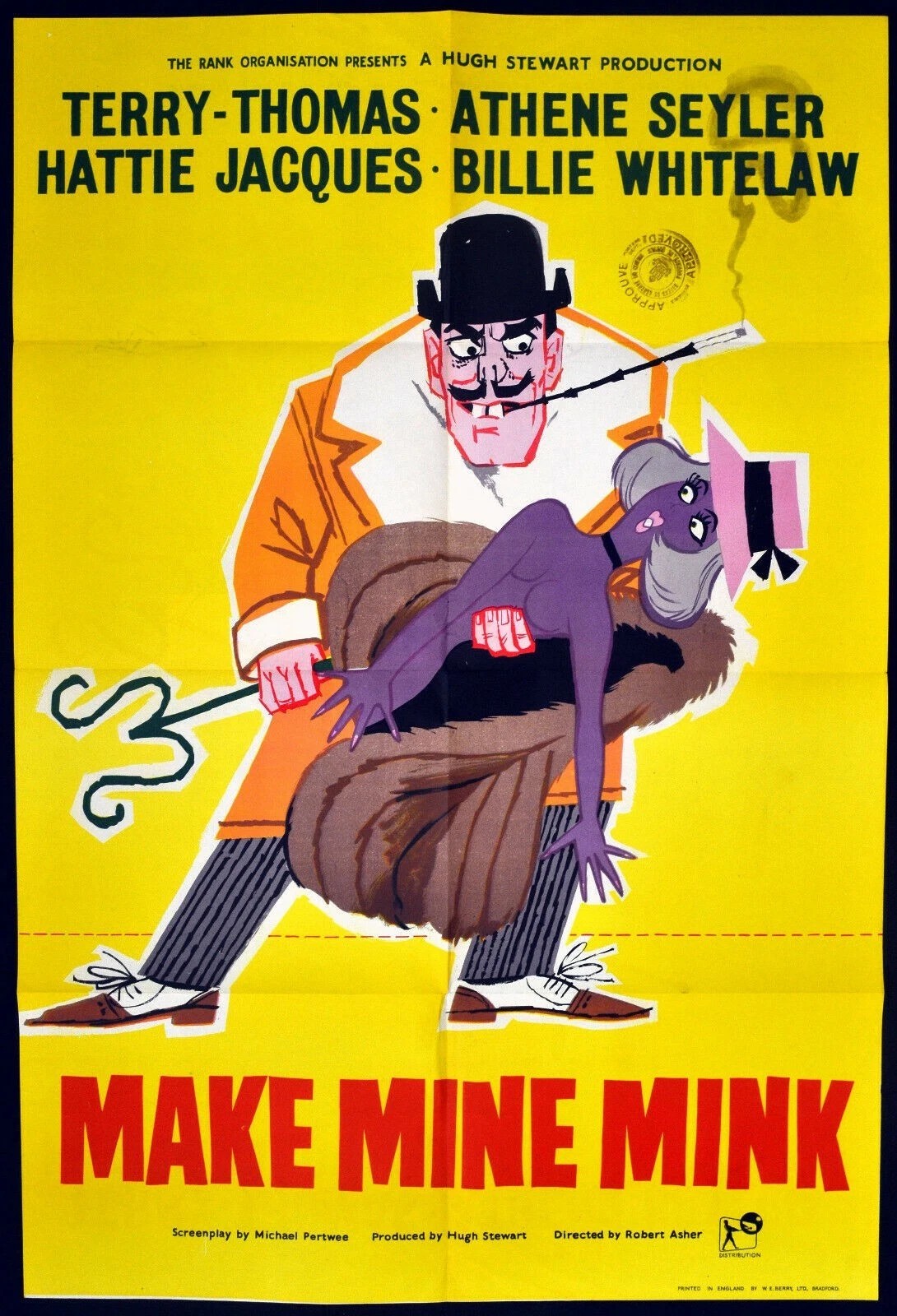
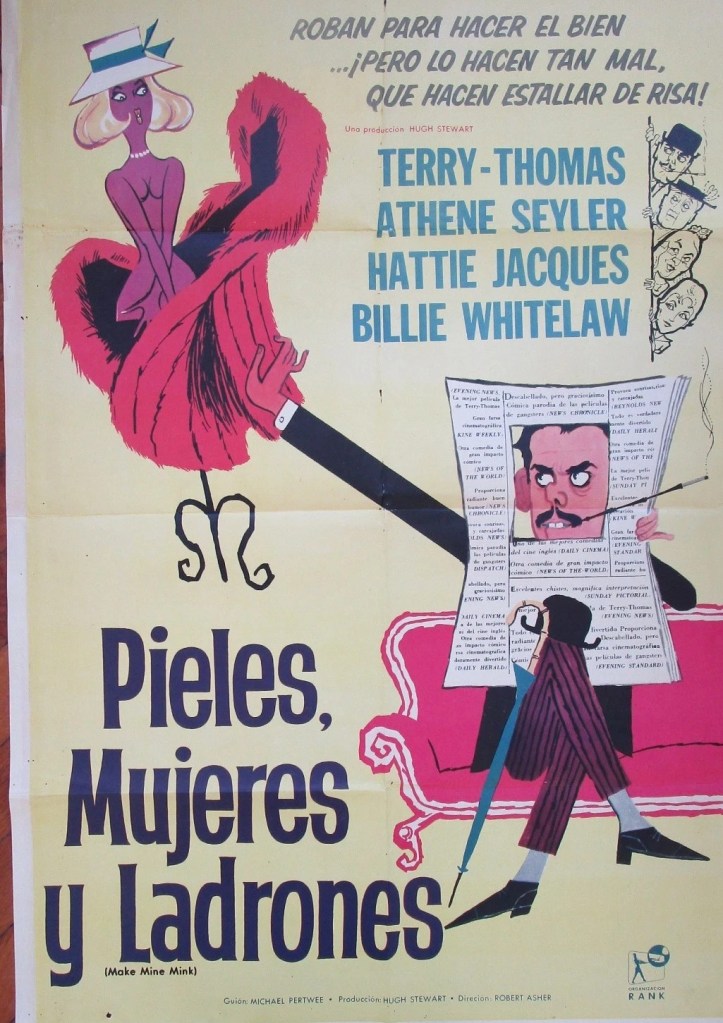
Make Mine Mink (1960) ****

Jaunty little picture full of gags and visual treats pivoting on amateur crooks finding life tough in professional waters. While Terry-Thomas proves once again that he can spin any movie on its head with his own brand of upper-class buffoonery and those very distinct nasal tones, it’s very much a team effort with every one of the gang making a contribution.

The down-on-their-luck lodgers of impoverished Dame Beatrice (Athene Seyler) turn to crime after successfully returning a stolen mink. In the impenetrable logic of such tales, the quartet decide that if they can with military precision carry out a robbery reversal they would be well placed to actually carry out a robbery. Anal retentive Major Rayne (Terry-Thomas) would be a one-man League of Gentlemen except he has to rely on a motley crew of females, the luckless Dame, etiquette tutor Nanette (Hattie Jacques) and generally neurotic nincompoop Pinkie (Elspeth Duxbury). Getting very much in their way is the Dame’s maid Lily (Billie Whitelaw), an ex-jailbird, who wants nothing to do with illegitimate schemes and is romancing, to boot, Scottish cop Jim (Jack Hedley).

Nanette spends all her time puncturing the major’s pomposity, Pinkie spends all her time requiring liquid courage, and the major spends all his time happily barking orders and maintaining strict military order. Most of the time the incompetent crooks get away with their crimes because their victims are equally dense.

There’s a marvellous daftness to proceedings. Dame Beatrice, whose efforts at parking her car have resulted in continuous prangs and scrapes, is only too delighted to visit the local cop shop with the proviso that she needn’t bring along her license because she hasn’t seen it in a long time. The flat-chested Pinkie’s disguise is an inflated bosom. Trying to get rid of their ill-gotten gains to a fence sends Major into uncomfortable territory where being out of his depth is an invitation to a welter of fabulous comedy.

Naturally, they are not proper crooks since their thievery is all in the aid of charity. For a time, when Lily finds out, they are forced to give up, but then opportunity beckons.

There’s no attempt at either the satire that seemed necessary to seed into comedic ventures at the time if one were to achieve any sort of critical acclaim nor the double entendres, saucy innuendo and sex jokes that appeared to more easily to attract an audience. This is good old-fashioned comedy and I found myself laughing out loud a lot, which, to my mind, is the definition of a good comedy.

Here, the characters seem to mesh so well, and the narrative scarcely troubles the imagination that virtually everything works right off the bat, including a homage to The Third Man and those gags where bombs refuse to work. The major’s misplaced confidence, Nanette’s crunching handshake and the whimpering Pinkie all burst out of the screen. Lily is luminous most of the time except when she has to tell off the gang.

Terry-Thomas is a delight. This proved something of a breakthrough role in Hollywood terms and soon he would be tangling with Tuesday Weld in Bachelor Flat (1961) and challenging Peter Sellers as the country’s best comedic export. Hattie Jacques is relieved of the stern matron roles of the Carry On films and there’s something both impish and innocent in her head girl demeanor to the extent of still wearing her school uniform. Terrific ingénue turn from Billie Whitelaw (Twisted Nerve, 1968) and a knowing veteran’s one from Athene Seyler (I Thank a Fool, 1962) purring along in Margaret Rutherford fashion. Elspeth Duxbury, in movie debut, makes the most of a peach of a role.

Directed by Robert Asher (The Intelligence Men, 1965) from a screenplay by Michael Pertwee (Mouse on the Moon, 1963) based upon the stage play Breath of Spring by Peter Coke.

Having complained about the music in The Invite (2026), I would like to point to Philip Green’s (Masquerade, 1965) music here as exactly the kind of score that helps complement the action and establish the moiod..

Hugely enjoyable eccentricity.

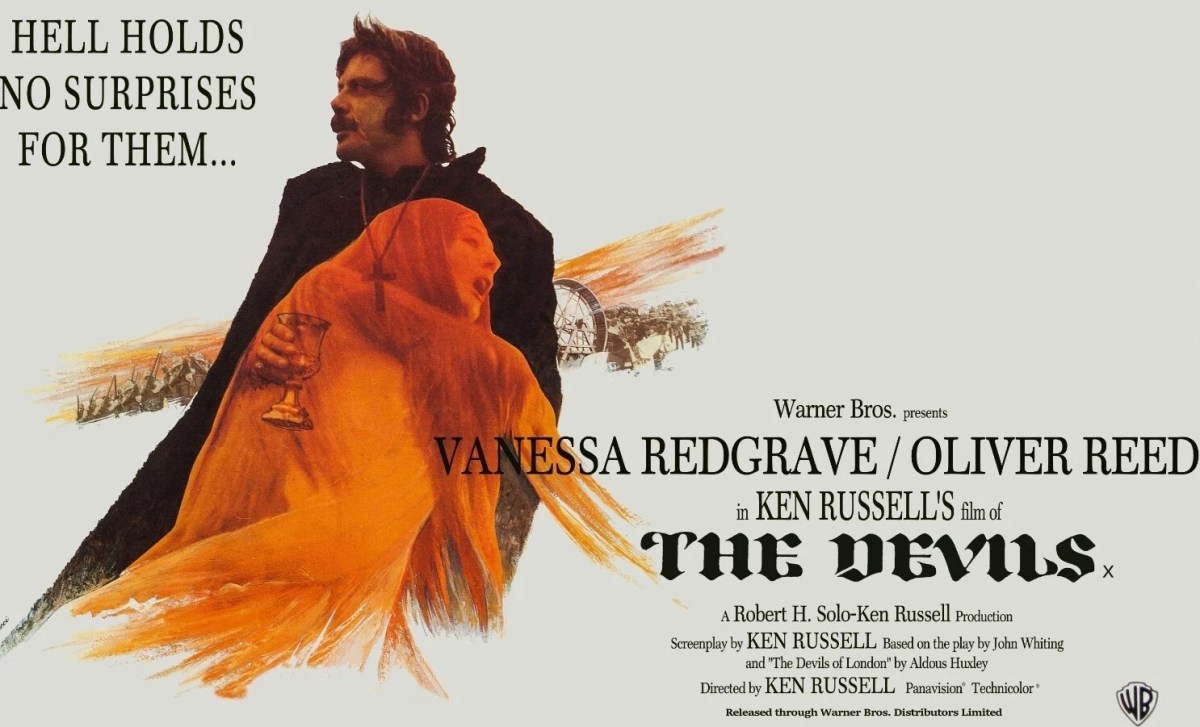
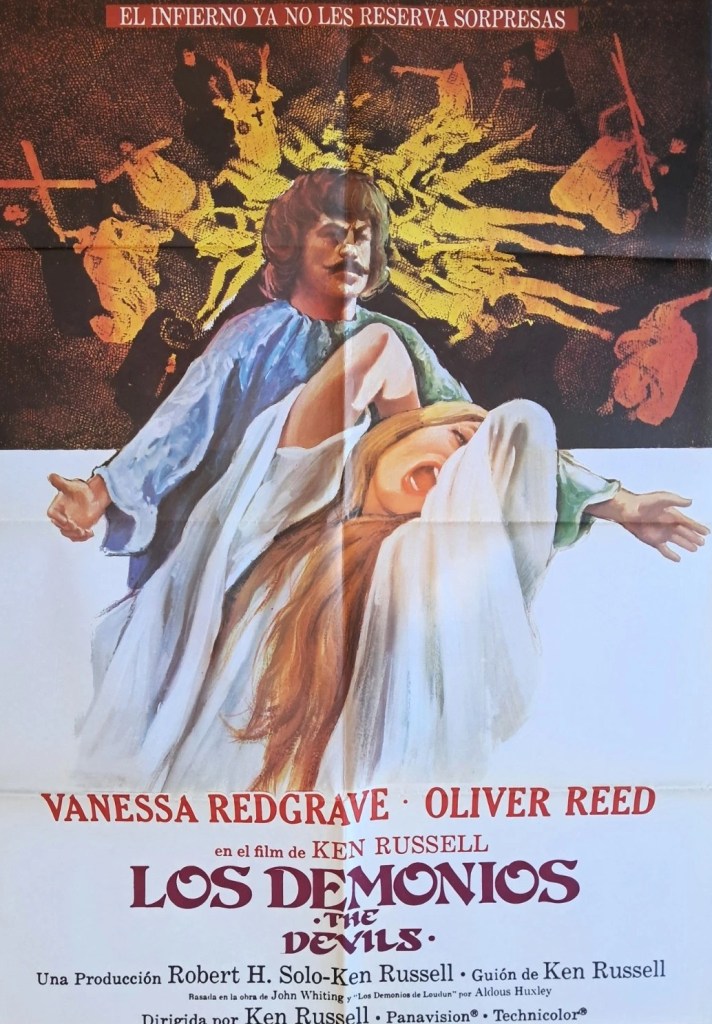
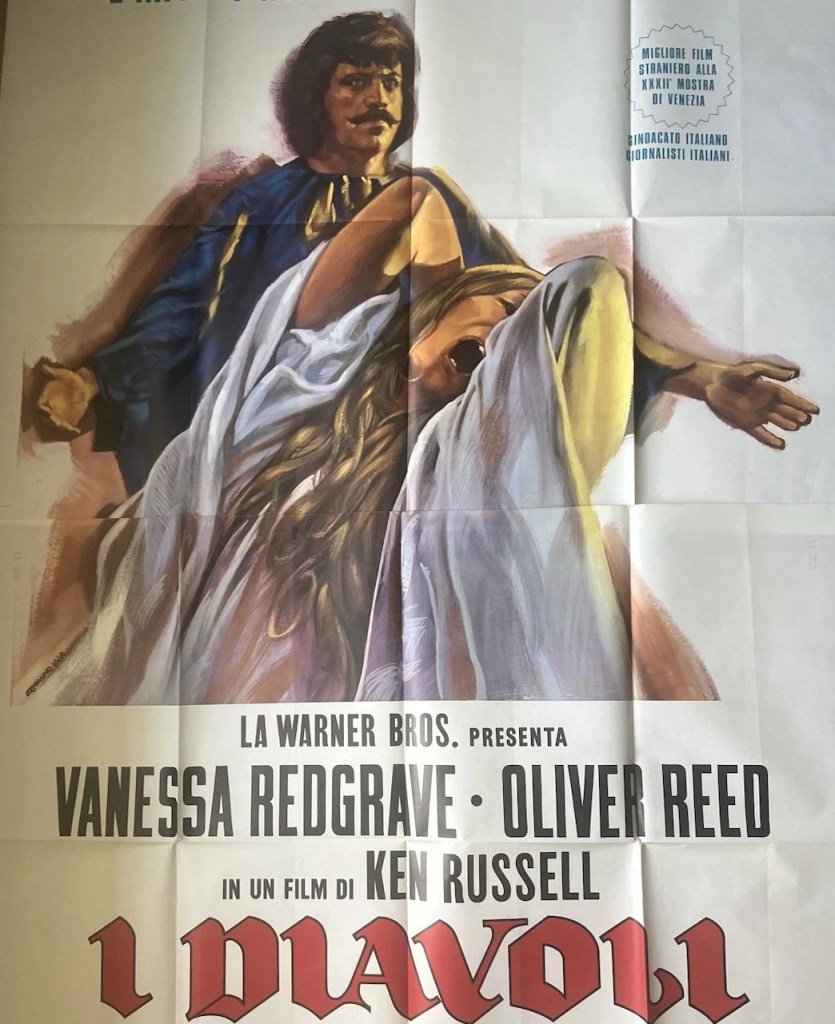
The Devils (1971) *

It’s a conspiracy! The British Film Institute and critic Mark Kermode are on a mission to force the public to reconsider this epic travesty. They have managed to convince Warner Brothers to reissue the film in cinemas in October 2026. The only problem is – this is the second time they’ve tried this maneuver. And it was no more successful last time round – two decades ago in a limited release in arthouses – and despite a lavish follow-up DVD packed full of extras and an expensive illustrated brochure.

Knowing this was the second attempt to regenerate interest in this shambolic enterprise from Ken Russell (Billion Dollar Brain, 1967) – who will no doubt be tabbed a “visionary” director this time round – I thought I’d dig out the DVD featuring the original 1971 release cut in the genuine hope that I might be able to add a little spark to the promotional hoopla for the forthcoming cinematic reissue.

The problem is – it’s still awful. And not in healthy cult fashion or as a slam-dunk for the So Bad It’s Good category. It’s just awful every which way but loose. And it commits the worst error of the awful picture – it’s plain boring. And that’s a shame because the tale is an interesting one. How the French church and state connived to get rid of an irritant challenging their authority by placing false charges of satanic possession against the nuns of the small town of Loudon.

It would certainly have helped had not every single person in a position of power not just looked like an idiot and if Russell had cast the parts with actors of authority, say rising star John Hurt in the role of the exorcist or John Gielgud as the conspiratorial Cardinal Richeliu, a character who as we know from The Three Musketeers was always up to no good. Instead, we’ve got actors way out of even their modest league who make an unintentional mockery of their parts.

Anyone complaining about the modern vernacular of Christopher Nolan’s The Odyssey (2026) would have a field day here with a cornucopia of accents so it sounds more like a  Carry On picture. In fact, Carry On Ken would have been a more apt title.

Vanessa Redgrave (Blow-Up, 1966) had, unfortunately, gone down the Oscar-bait route of hoping that exaggerations of physical affliction will inform her acting. Instead, with her head twisted at ninety degrees, it looks like she’s intent on comedy. And when that only leaves Oliver Reed (Hannibal Brooks, 1968) to hold your picture together you are in dire straits.

Had the director concentrated on the obvious points, that the clergy was corrupt and liable to indulge in sex with any willing participant in the usual male power-abuse scenario, and that nobody went into a nunnery by choice but were sent there by families who could not provide a dowry or who were incapable of themselves finding a husband to support them, then you might have had the beginnings of a good picture.

But Russell is just intent on indulgence. So the nuns behave as if they were being directed by Jess Franco in a Women-in-Prison movie and strip off their clothes and consort with each other. Chief nun Sister Jeanne (Vanessa Redgrave) doesn’t need to wait for a fake exorcist to pass by, she’s already knee-deep in sexual fantasies about Father Grandier (Oliver Reed) who is trying to impregnate as many women as possible.

The American censor had the good sense to cut out the worst sexual extravagances, the British censor was much more lenient though oddly enough David Lean owed the liberal censor a debt of gratitude for when Glasgow City Council, exerting their right as did many other local authorities, banned this atrocity it left roadshow venue ABC2 short of a program so it decided to keep running Ryan’s Daughter.

“Based on  true story” has never been more abused. Back in the day it would certainly have challenged a moral order where the Church of any denomination was not yet known for hiding a flock of pedophiles. But any student of history – and in those days, like it or not, that would be all of us given how important that subject was to the school curriculum – would not have been surprised to discover that kings and cardinals were not above unethical maneuver.

I’m not saying this movie required a Hollywood-style heroic figure, but it certainly didn’t deserve these cartoon cut-outs. The campness of the presentation, the excess and overload, only serves to stultify what would otherwise be an examination of how easy it was back in the 17th century for the authorities to bring down any challenger – but, heck, we knew that.

I saw the original version on my DVD. Theoretically,  it was welcomed at Cannes this year, but although it certainly made the kind of controversial splash often associated with the Festival, it didn’t seem to me that critics were united in their praise.

If you are familiar with the Russell oeuvre this has more in keeping with The Lair of the White Worm (1988) rather than a genuine cinematic – and restrained – achievement like Altered States (1980).

If Warner Bros has any sense, they will pitch this as a Halloween picture for the cinematic reissue.

There will be hype, so you have been warned.

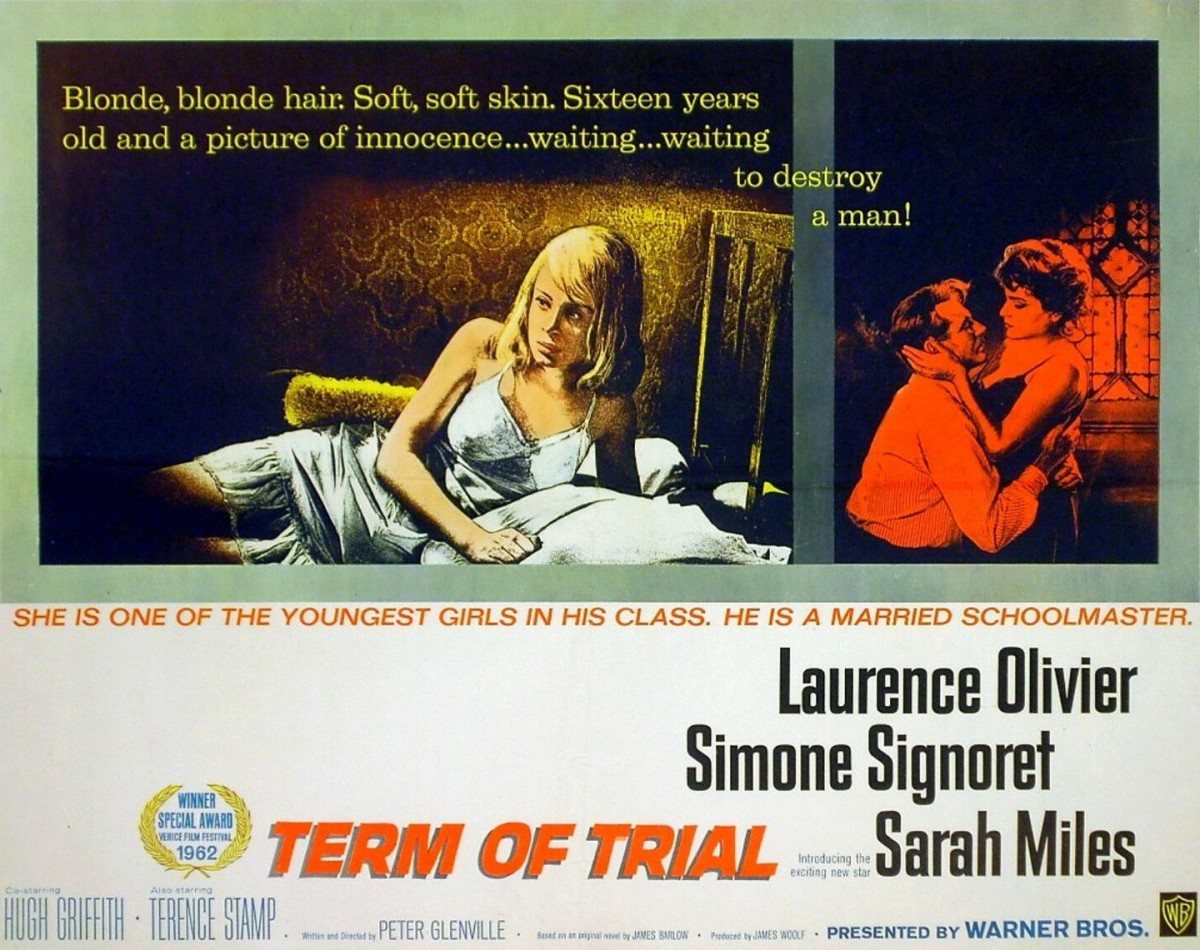
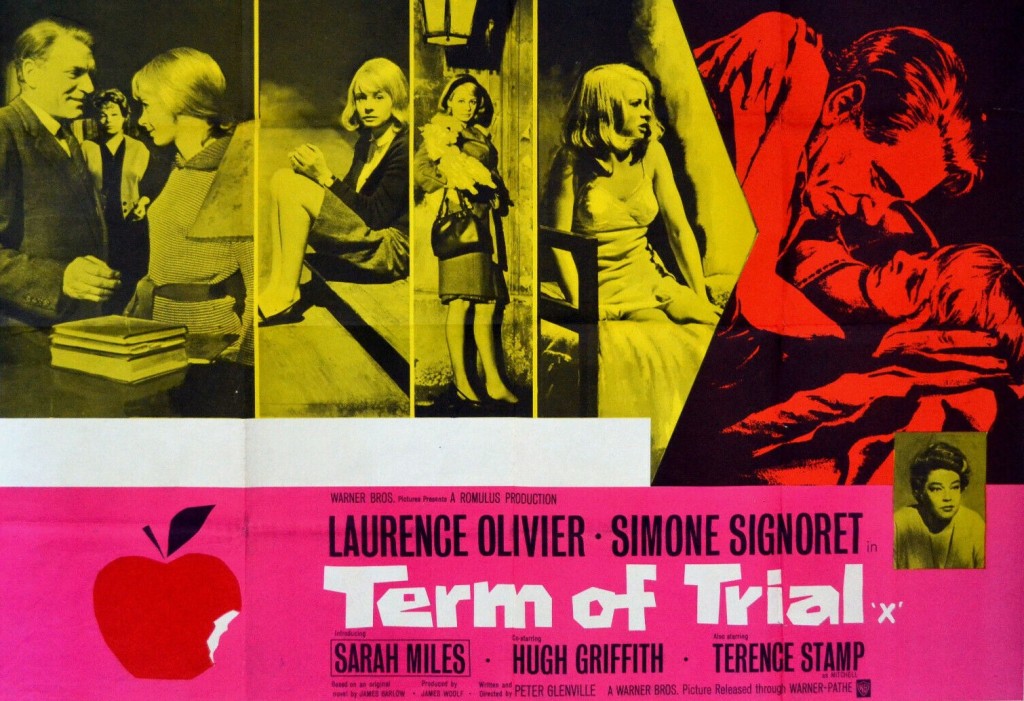
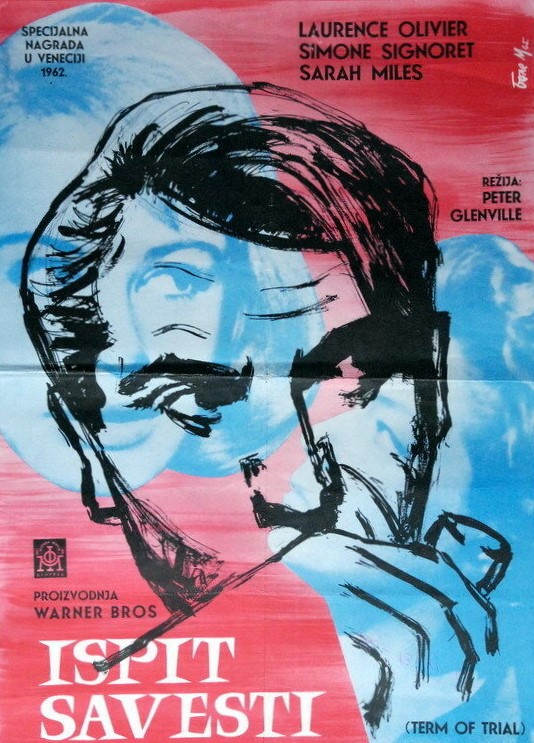
Term of Trial (1962) ***

Notable for the debuts of Sarah Miles (Ryan’s Daughter, 1970) and Terence Stamp (The Collector, 1963) and an ending that even in those misogynistic times was wince-inducing. The halcyon era of dull English schoolteachers being celebrated (Goodbye, Mr Chips, 1939) or finding redemption or even just managing to overcome pupil hostility (The Browning Version, 1951) were long gone, replaced by a more realistic view of the casual warfare endemic in education establishments, not quite in The Blackboard Jungle (1956) vein but running it close, with bullying, sexual abuse and ridicule running riot.

Self-pitying Graham Weir (Laurence Olivier) has failed to achieve his ambitions in part due to alcoholism, in part to antipathy to his conscientious objection during World War Two. And although he has a sexy French wife Anna (Simone Signoret) in the days when any Frenchwoman was deemed a goddess, she is embittered that the future he promised has not materialized. Like To Sir, with Love (1967) his classroom is filled with no-hopers so that he responds to the meek and innocent wishing for educational betterment.  

Weir’s only defence against endless indignity is a stiff upper lip and slugs of whisky. His lack of character contrasts with a young lad who takes revenge against constantly being chucked out of his house by his mother’s lover (Derren Nesbitt) by blowing up the man’s sports car.  

Spanning the twin cultures of religion and the razor, one falling out of favor, the other holding violent sway, opportunity to rise above kitchen-sink England lies with the self-confident such as thug Mitchell (Terence Stamp) who smokes in class, gives the teachers lip, takes photographs of girls in their underwear in the toilets, physically threatens classmates and when his target is bigger gets older men to give him a good thumping.  

A somewhat unlikely development is an end-of-term trip to Paris where the infatuated Shirley (Sarah Miles), who the good-hearted Weir has been giving free private tuition, ends up in the teacher’s bedroom and later accuses him of abuse. The impending court case and threat of imprisonment scupper Weir’s chances of promotion, make him consider suicide, and Anna to leave him.

The court scenes allow a number of famous character actors a moment of acting glory. Laurence Olivier (Bunny Lake Is Missing, 1965) must in part have been attracted to the role by a terrific court monologue. The movie is very downbeat in a country universally known never to enjoy an ounce of sunshine justifying the black-and-white movie rendition. If there is liveliness in the streets, cinemas, shops, it never translates into any of the main adult characters, all determined to uphold ancient values and endure constricted lives.

Exploiting audience expectation for verbal fireworks, the tension in Laurence Olivier’s finely judged performance comes from his untypical, unshowy delivery. You can almost hear him grinding his teeth. Simone Signoret (The Sleeping Car Murder, 1965) also acts against the grain, battening down her inherent sexuality, and her very presence speaks of lost hope, the fact that she was once attracted to Weir indicating he was once a very different prospect.

Sarah Miles excels as the wannabe seducer, that hesitant voice that would become her hallmark, struggling here to turn innocence into lure, expressing her adoration in heart-breaking simplicity, and yet aware that to catch Weir would require more than just the submission a guy like Mitchell requires. While hers is a stunning debut, I’m at a loss to see what marked out Terence Stamp’s typical surly teenager for speedier stardom.     

Oscar-winner Hugh Griffiths (The Counterfeit Traitor, 1962) is the pick of the supporting roles. A remarkable scene-stealer, a shift of his head, a flicker of his eyelashes is all he needs while sitting in the background to attract the camera from another character in the foreground. Look out for Barbara Ferris (Interlude, 1968), Derren Nesbit (Where Eagles Dare, 1968), Allan Cuthbertson (The 7th Dawn, 1964), Roland Culver (Thunderball, 1965) and Thora Hird (television’s Last of the Summer Wine, 1986-2003).  

Surprisingly un-stagey direction from Peter Glenville (Becket, 1964) who was far better known as a theater director in London and Broadway. Probably in those days if you were setting a movie outside sophisticated London you had to present a gloomy version of Britain so you can’t really blame him for that and Olivier was hardly a major box office attraction so a budget trimmed of color would be a requisite. Although the older characters display grim determination, the younger ones have not had the spirit knocked out of them in the Saturday Night and Sunday Morning (1960) manner and the location shots reveal a buzzy atmosphere.

Glenville also wrote the screenplay based on the bestseller by James Barlow.

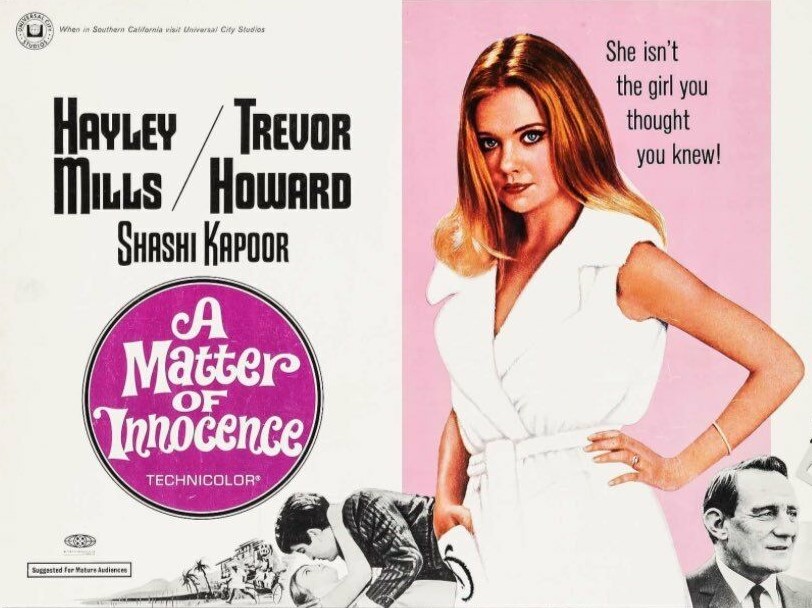
A Matter of Innocence / Pretty Polly (1967) ***

Dramatically undernourished coming-of-age tale over-reliant on “authentic” travelogue and continuing the transformation of Hayley Mills from child to adult star, although that change had been clearly wrought by her previous outing in  The Family Way (1966) which had contained her first nude scene. While there’s definitely way more sex here it’s all off-screen.

In Singapore, family black sheep Robert (Trevor Howard) tries to stifle romance blossoming between his ugly duckling niece Polly (Hayley Mill) and local king of the fixers Amaz (Shashi Kapoor), to quote from list of the clichés the screenplay happily summons up. Polly is the bespectacled, dowdy, shy travelling companion to snippy aunt (Brenda de Banzie) – Robert’s sister not wife – who resides in a magnificent suite in Raffles Hotel, consigning her niece to a hovel of a room. When said aunt drops dead in the swimming pool, Polly, wasting no time on mourning, is free to turn butterfly, channeling her inner Brigitte Bardot with bouffant hairstyle and tight red dress.

The genial Amaz is on hand as a guide, in sexual matters as well as tourist, until huffing-and-puffing plantation manager Robert threatens to intervene and smarmy American Critch (Peter Bayliss) attempts to sweep her off her feet. And that’s about it, plot-wise. The meandering story provides insights into different aspects of local culture –  Whicker’s World was the only globe-trotting television series available at the time so all this would probably have entranced moviegoers rather than, as now, bored them to death.

Perhaps what’s most interesting is what’s left unsaid or never dwelt upon, of the posh English girl having sex with a native of Singapore. In previous movies – Bhowani Junction et al – miscegenation would have been the sole plot point with Brits up in arms at the suggestion of it. Here, the only objection to Amaz is that he’s a bit of a Casanova, practised seducer in the main of older women. While Amaz falls in love, Polly is considerably more objective, viewing their relationship in terms of rite-of-passage, rather an un-British approach, more in keeping with the attitudes those bold females exhibited in pictures like The Group (1966).

Polly is a pretty cool-headed kid, with a good head for booze, not staggering in gutters or throwing up after imbibing too much, alert to the intentions of Critch and more than capable of putting her uncle in his place. Despite her delight at enjoying sex Polly is more independent than you might imagine and the film’s actually a character study of a woman refusing to be defined – or trapped – by love and its obvious consequence marriage and viewing this new freedom as merely the starting point of her life.

For Hayley Mills fans, of course, her career divides sharply into Disney and post-Disney. Few child stars ever manage to take the first steps to an adult career never mind sustain one, but the actress made a good stab at throwing off her previous precocious screen persona by taking on challenging roles that perhaps upset her core followers. But the film would have benefitted from a better storyline and minus the distracting tourist elements been a lot tighter.   

The career of Trevor Howard, long-time second male lead, was on a bit of an upswing after sterling roles in Von Ryan’s Express (1965) and The Long Duel (1967) and although he remained the scowler supreme he brings more vulnerability to this role. Bollywood heartthrob Shashi Kapoor had come to prominence as far as the English-speaking countries were concerned through arthouse director James Ivory’s The Householder (1963) and Shakespeare-Wallah (1966) but this was his mainstream debut. He certainly has a screen presence and enjoys the best character arc, going from the cynicism of sex to the innocence of love. I’m sure the title is intended to refer to Polly but she is innocent, in screen shorthand terms, for about two seconds. Pretty Polly, the title of the short story on which the film is based, was not usable in certain countries because the name was the trademark of a popular brand of hosiery.

This was the final film of Brenda de Banzie (The Man Who Knew Too Much, 1956) and the second for British television stalwart Patricia Routledge (Keeping Up Appearances, 1990-1995), while for Chinese star Kalen Liu (Welcome to Hard Times, 1967) it was both her second and last picture.

This was perhaps an odd choice for director Guy Green (A Patch of Blue, 1965) but he was mired in the on-again off-again saga of proposed MGM roadshow epic Forty Days of Musa Dagh and compared to those travails this may have been welcome light relief. Keith Waterhouse and Willis Hall (Lock Up Your Daughters, 1969) developed the screenplay from Noel Coward’s short story.

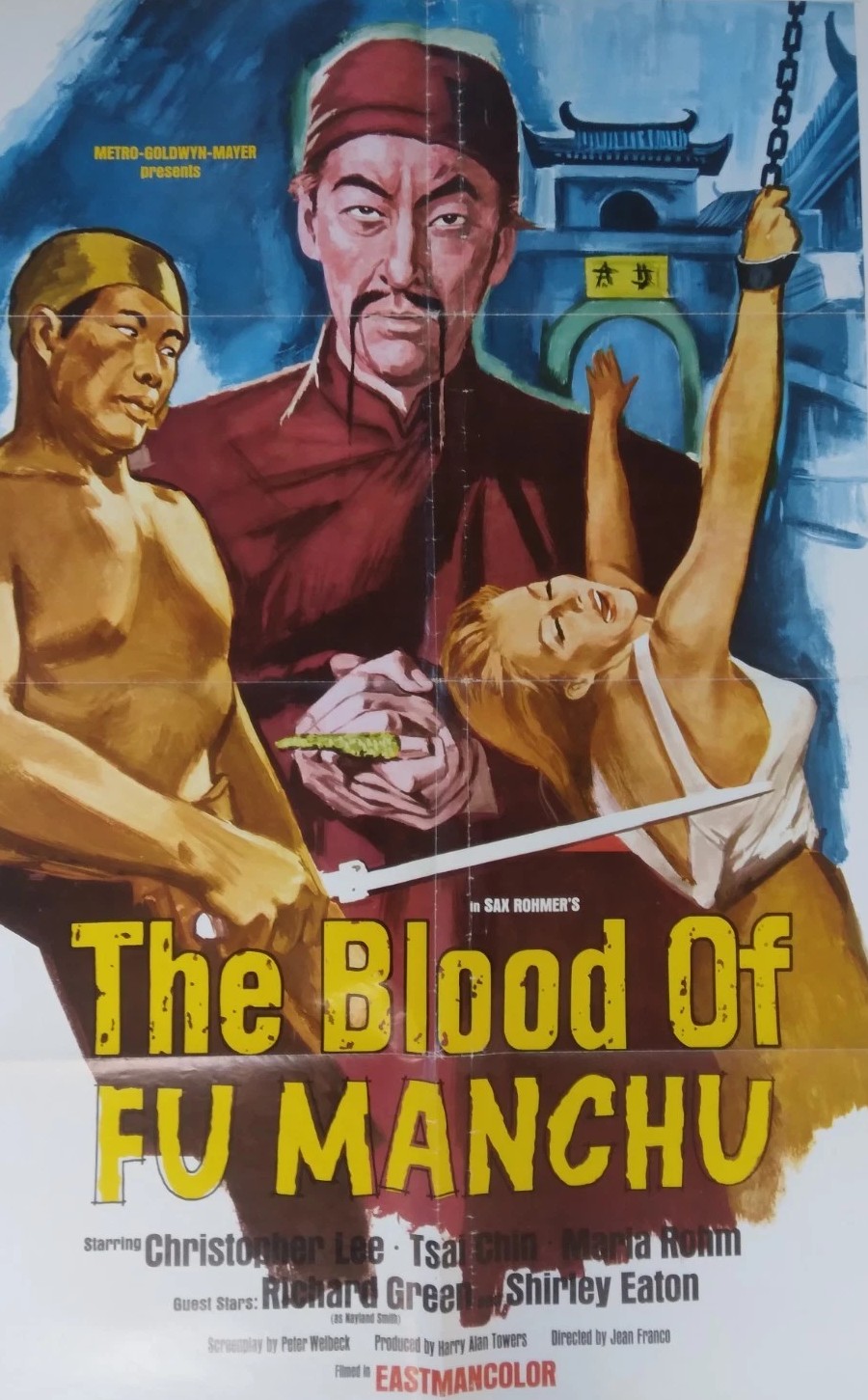
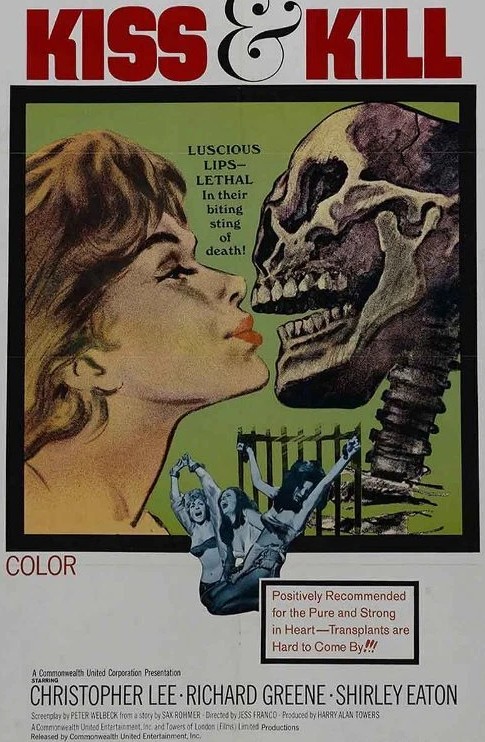
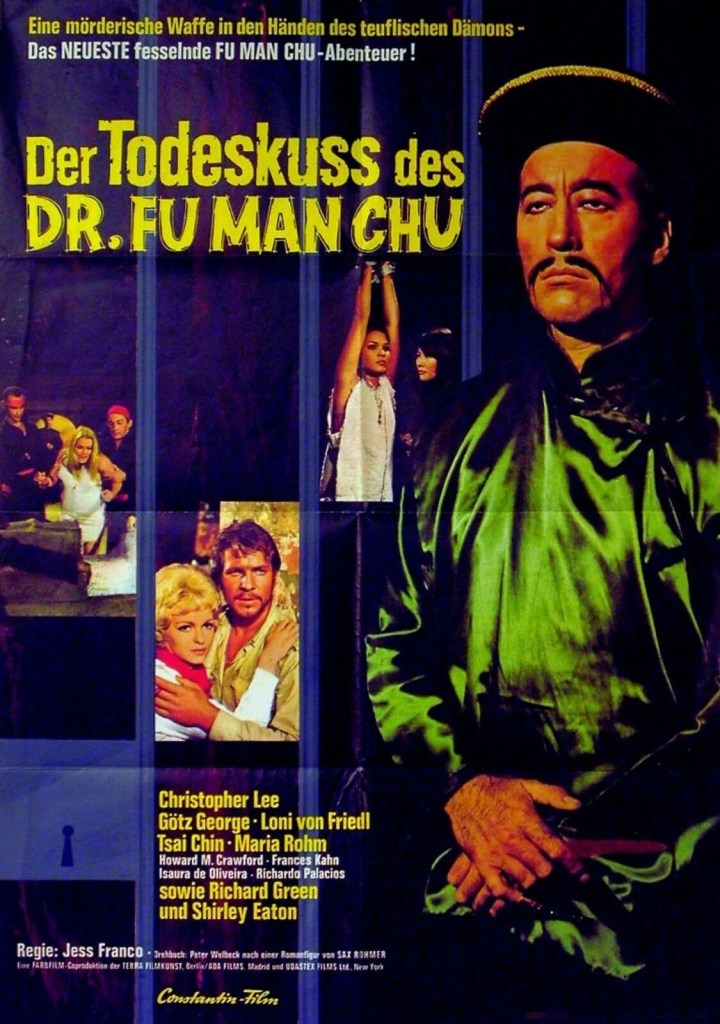
The Blood of Fu Manchu / Kiss & Kill (1968) **

Three stories in one, except only one tale remotely holds our interest. So what compelled producer Harry Alan Towers and director Jess Franco to sideline the titular character and devote more time to a young explorer Carl Janseon (Gotz George) and bandit Sancho Lopez (Ricardo Palacios). You could probably guess that the physical involvement of Fu Manchu (Christopher Lee) would be in any case limited once you grasped the crux of the narrative which saw ten girls sent out into the big wide world to kill his ten most hated enemies. You’ll probably be surprised to learn that he had only ten major enemies, but since one of them is his old nemesis Nayland Smith (Richard Greene), then you can be sure that that aspect is going to suck up a good deal of what time remains after the subplots concerning the explorer and the bandit.

 Which is a shame because neither explorer not bandit employ the kid of evil little grey cells that would allow them to come up with a plot that any of the James Bond villains would be proud of in their bids for global domination. Fu Manchu has located an ancient poison which is transmitted by women in the form of a kiss. It originates in certain snakes and although the women are “kissed” by the snakes, they are apparently impervious to its venom, so the first gender-specific poison in history.

And that’s about it. As usual Towers has rounded up a bevy of young beauties, no doubt sold on the idea that he’s going to turn them into the next big female star, as carriers of the deadly poison. Not all are so keen on the idea, but since he’s got them chained by the neck in a Brazilian cave that passes for his stronghold and with his daughter Lin Tang (Tsai Chin) to threaten them with torture, it’s not surprising they are complicit.

In any case the female assassins are one-trick ponies. The minute they accomplish their deed, they are bumped off. Smith is the first victim (apart from a prisoner selected to demonstrate the efficacy of the poison) but he doesn’t die immediately. Instead he is struck blind, although he is aware he hasn’t got long to live unless an antidote can be found.

Naturally, that puts him on the track of Fu Manchu and, of course, into sudden danger. The Fu Manchu-Nayland Smith had proved a decent cinematic tug-of-war for three previous episodes beginning with  The Face of Fu Manchu (1965), so it was somewhat surprising that tension was diminished by spending so much time playing up explorer and bandit, especially as the latter is determined to play out all the cliches, including laughing like a hyena.

There is some occasional visual humor such as when the bandits go on the rampage and the crew emerge from bandits bearing such prizes as a bishop’s mitre and when a governor, having imprisoned Jansen, suggests they while away their time with a game of chess.

It’s odd that part of the disappointment for certain viewers in this opus is the lack of trademark Jess Franco sleaze. There’s barely any nudity and although the girls are kept in prison (until released to wreak havoc) there’s none of the tawdriness of WIP epics such as his 99 Women (1969) which is replete with brutality and sex.

Despite the cultural appropriation, Christopher Lee (The Devil Rides Out, 1968) is, as ever, solid as Fu Manchu, speaking in clipped tones and towering over everyone else, though his main role appears to be to deliver exposition, explain the foul plot and its consequences and so on. It’s left up to Tsai Chin (You Only Live Twice, 1967) to carry the sadism.

Richard Greene (Sword of Sherwood Forest, 1960) does his best in a role of declining returns. You might spot among the cast Towers’ wife Maria Rohm (Five Golden Dragons, 1967) and Shirley Eaton (The Girl from Rio, 1969).

Of the women expecting a major career break, Loni von Friedl had scores of parts including Doppelganger/Journey to the Far Side of the Sun (1969). But Frances Khan only enjoyed three more roles and or Isaura de Olivera this was the beginning and end of her movie career.

Written as usual by Peter Welbeck (Five Golden Dragons) – aka Harry Alan Towers – and Franco based on the novels of Sax Rohmer.

Promising idea ruined.

Mouse on the Moon (1963) ***

The gentle comedy for which the British were famous prior to the more raucous offerings from the Carry On team always contained an element of satire. Sometimes that has bite, but as often not, and almost, in a continuation of the gentleness of the format, appears like an afterthought. However, it’s not hard to skewer incompetence or hypocrisy or the foolish grandeur of nations, regardless of size.

There’s no blunderbuss required here – not with such easy targets as the space race, politics and the Cold War – just a gentle poke here and there at ambition, grandiosity and grandstanding as the tiny (barely comprising 15 square miles) country of the Duchy of Grand Fenwick somewhere in central Europe shows up global giants Russia and the United States. Sensibly, this doesn’t try to place one character at the center of the morass. Instead, stupidity is spread far and wide, as various characters cede vanity to the next.

The central conceit is one of those barmy ones that any scientist could make plausible – think of growing potatoes on Mars in The Martian or the nimble invention at play in Project Hail Mary (2026). The chemical reactions of bad wine set off the kind of explosions that could provide a substitute for rocket fuel and send a spaceship to the moon.

But that the idea is given oxygen in the first place by the superpowers wanting to be seen to be bigger than anyone else and by maintaining their rivalry when there’s little need.

Grand Fenwick is not just the type of place where nothing works – palace plumbing erratic, parades catastrophic, politicians corrupt and we are treated to a battalion of incompetents from Grand Duchess Gloriana (Margaret Rutherford), apt to nod off at state functions, Prime Minister Mountjoy (Ron Moody) who places having a hot bath about the needs of the populace and whose niece Cynthia (June Ritichie) is an agitator for reform, his untrustworthy political rival Benter (Roddy McMillan), and British spy Bender (Terry-Thomas) for whom bumbling is an art form.

Romance is in there somewhere when Mountjoy’s ineffective son Vincent (Bernard Cribbins) falls for Cynthia. But mostly it’s a concoction that relies on everything going wrong at the right time and anything that goes right nonetheless manages to cause appropriate chaos.

Having secured a million bucks in funding from America to purportedly send a rocket, a useless one donated by the Russians in a riposte to American generosity, to the moon, Mountjoy intends to pocket the cash by ensuring the rocket blows up on launch. However, it takes off, propelled by the wine with Vincent and scientist Professor Kokintz (David Kossoff) on board, triggering a genuine space race involving the two superpowers, propaganda the prize for the winner.

Naturally, nothing goes the way you expect and the little guys outwit the big guys.

This was an early directorial venture from Richard Lester (Petulia, 1968) so that accounts for some of the bite. Given this is populated in the main by character actors, Lester allows them do their thing while ensuring that the comedy is as much reliant on satire as buffoonery. No need here for double entendres or slapstick, the original set-up works out just fine.

Margaret Rutherford  (Murder Ahoy, 1964) could have run away with this picture but her natural instinct to dominate is kept in check. Ron Moody (Oliver!, 1968) heads a cast of movie also-rans, some of whom made a successful transition to television like John Le Mesurier (Dad’s Army), Hugh Lloyd (Hugh and I) and Roddy McMillan (The Vital Spark). Terry-Thomas (Our Man in Marrakesh/Bang! Bang! You’re Dead, 1966) would have stolen the picture if given more scenes. Bernard Cribbins (Carry On Spying, 1964) offers another of his hapless characters while June Ritchie (The World Ten Times Over, 1963) adds a note of glamor.

This was a sequel to The Mouse That Roared (1959) and had to make do without original star, Peter Sellers, who had played three roles. Two of those roles were allocated to other players, with the third character axed. And where that film benefited from Sellers’ presence, this one definitely benefits from his absence.

Written by Michael Pertwee (Strange Bedfellows, 1965) from the bestseller by Leonard Wibberley.

Engaging.

Creatures The World Forgot (1971) ***

Remove the minimal salacious elements (“Violence and Sex in Prehistoric Times” was the come-on for French audiences). Ignore the fact that there are few creatures to speak of (a bear, some warthogs and gazelles aren’t exactly going to terrify the audience). Set aside that denoted star Julie Ege (Every Home Should Have One, 1971) doesn’t appear until about halfway through.

Don’t bother, either, looking for that apparently indispensable item of female prehistoric attire – the fur bikini. Not a T Rex in sight and none of the Ray Harryhausen stop-motion animation that lit up previous forays into this world.  And you’re left with a surprisingly satisfying study of the ethnology of ancient civilizations.

There’s no dialog, nor subtitles for that matter to elucidate what’s going on, communication limited to grunts or, as likely, fists. Fighting – men vs men and women vs women – appears the most common pleasure. Although there’s also some primitive dancing. You’ve got a witch doctor but no idea what makes her so powerful.

The volcanic eruption that kicks off the narrative, forcing one tribe to search for another home, leading to unwelcome incursions into another tribe’s territory, is the least successful element although the subsequent earthquake is well done.

Outside of conflict and travel, what you’re left with is an interesting (if possibly inaccurate) taste of prehistoric life. Fall down a sand dune and you’ll die because you can’t scramble back up. Take on any horned beast and it’s likely their horns will tear you apart. If you can’t kill a gazelle, you’re going to have to make do with scorpions, snakes and rats. You certainly can’t alleviate your diet by growing anything, the land too poor and the notion of farming yet to revolutionize the world. Occasionally, you can protect yourself by dropping weighted spears from trees on your enemy.

The narrative roams around as much as the tribe. We kick off with a battle for power after a leader dies. Someone gives birth to twins, one easily recognizable by a scar on his chest. So then we jump to them as warring teenagers, fighting each other as much as trying to gain their father’s attention. The dark-haired one (Robert John) has more of the sheer physicality required to survive, the blond one (Tony Bonner) has more upstairs, capable of lassoing a porcupine for the sheer pleasure of developing his skills.

Then they’re grown up, and the blond one can trap warthogs using a net while the other, with less accurate spear-throwing, can’t catch anything. Eventually, they are battling over a deaf mute, who would ordinarily be killed at birth but survives due to the timely intervention of lightning, which is taken as a sign. Seduction isn’t on the cards either, and the dark-haired one attempts to rape the deaf mute (Marcia Fox).

She escapes but needs rescued from another tribe. That leads to the major action of the picture, a big battle in caves. The blond kills the enemy chief and takes as his reward the chief’s daughter (Julie Ege). That enrages the dark one who kidnaps the girl, planning to burn her on a pyre. The ending is pretty confusing, involving a python and the dark arts.

But take away the physical distractions of a Raquel Welch bursting out of a fur bikini and various monsters causing chaos and still there’s enough, almost in docu style, to maintain the interest.

Director Don Chaffey (One Million Years B.C., 1966) appears liberated by the focus being on ordinary mortals rather than sex symbols or Harryhausen. There’s a feeling of “what would David Lean do” when confronted with stark landscape or desert and here the composition is particularly good. Putting the focus on day-to-day survival provides all the narrative drive required. Beyond fairly basic characterization, there’s little to distinguish the characters.

You get the impression that if you edited out all the commotion and rivalry you might be left with an even better picture in the vein of those documentaries Hollywood used to churn out about foreign civilizations. This isn’t darkest Africa or darkest anywhere, the sun’s too strong an influence for that.

This was the final film in Hammer’s prehistoric quartet, whose main aim appeared to be to elevate the work of Harryhausen or give a rising female star a push into becoming a sex symbol, posters of whom could alleviate the drab lives of teenagers worldwide. While Harryhausen burnished his credentials, apart from Raquel Welch, neither Martine Beswick (Prehistoric Women/Slave Girls, 1967) nor Victoria Vetri (When Dinosaurs Ruled the Earth, 1970) made the grade on the marquee. Written by producer and Hammer head honcho Michael Carreras (The Lost Continent, 1968).

You might be surprised to find how engrossing a prehistoric movie can be minus the fur bikini or Harryhausen.

Thunderbirds Are Go (1966) ****

Nostalgia – and reappraisal – rule. Every bit as worthy a contender for a Father’s Day crown as the more favored likes of The Great Escape, 1963), The Dirty Dozen (1967) and Die Hard (1988). One of the reasons why Britain wasn’t in the thrall of DC and Marvel was that we had grown up with Dr Who and the Gerry and Sylvia Anderson portfolio of sci fi marionettes – Fireball XL5, Supercar, Stingray, Thunderbirds, Joe 90 and Captain Scarlet.

And while most of the nostalgia for the period goes the way of Ray Harryhausen, the Andersons’ achievements not so much with their puppetry but the miniaturization should not be underestimated.

It wouldn’t be too much of a call, for example, to guess that Stanley Kubrick learned a lot about the joy of spaceships coming together or moving around from Thunderbirds Are Go where a good chunk of the action is watching spaceships shift around one way or another. To top it all, and another one in the eye of Mr. Kubrick, the Andersons beat him to the psychedelia, a dream sequence set upon a “Swinging Star” and involving puppet versions of Cliff Richard and the Shadows, still a big noise in the pop world at the time despite the arrival of The Beatles and The Rolling Stones. Their appearance would be the equivalent to  Bruce Willis, for example, doing a guest turn in Friends.

With a bigger budget, the Andersons made two crucial changes from the TV series on which this was based. They managed to erase all sight of the puppet strings and they stopped them walking around so much which always made them look most like just puppets.

This is space as we should adore it. None of the manky, worn-down, dirty cargo ships that litter modern sci fi epics. Not only is every ship gleaming but they are also colorful, not to mention color-coded. When they move it’s with the majesty that Kubrick used to great effect in 2001: A Space Odyssey (1968). And as Kubrick also proved, when it came to space, you didn’t need much in the way of characterization or narrative. He follows the same rule as monster pictures, focus on the big beasts as much as possible.

But Kubrick, in his wildest dreams, could never imagine as sultry a character as blonde goddess Lady Penelope, and though she’s on the side of the angels as cunning as any femme fatale. Equally iconic is her pink Rolls Royce and the chauffeur Parker which his obedient “Yes, m’ lady.” Not to mention the glorious catchphrase “eff ay bee” – in other words FAB, the catchphrase for a generation. There’s another catchphrase that only means something to Londoners who would hear this warning every day on the Underground – “mind the doors.”

The narrative is relatively thin. Zero-X is trying to fly to Mars but the flight is sabotaged and crash-lands. When a second flight is planned, this time International Rescue (the Thunderbirds team in case you are unaware) is on standby with Lady Penelope employed to seek out the saboteur.

This flight does succeed but on Mars encounters venomous snake-like rocks and scarpers quickly only to hit trouble on re-entry to Earth that requires Thunderbirds to the rescue. There are some modest attempts at characterization, Zero-X doesn’t like the idea of needing help, and the youngest of the Tracy family is frightened of failing.

I’ve never seen this before. I probably thought I was above such childish things when it first came out and it was only when I spotted it on Amazon Prime that I thought to give it go, remembering how much I had enjoyed the revamped Fireball XL5.

I sat enthralled. The first section has no sign of the International Rescue team and just like those mesmerizing minutes watching Kubrick’s spaceship revolve in space this simply involved putting together the constituent parts of the Zero-X rocket ship prior to launch.

You had to hand it to these sci-fi whizzes. You only needed one fella in the control room. Each of the Thunderbirds required only a solo pilot. You could be whisked electronically from a seat in the waiting area to the spaceship and arrive there on the same seat or go along some kind of travelator. These guys had thought of everything.

Directed by David Lane and written by the Andersons with Sylvia doubling up to provide the voice of Lady Penelope

With the removal of the strings and every miniaturization so stunning, this would look great on the big screen. The 60th anni would be December this year so here’s a call-out to an enterprising cinema.

NOTE: today is British Father’s Day.  It may not be Father’s Day where you are.

Discover WordPress

A daily selection of the best content published on WordPress, collected for you by humans who love to read.

The Atavist Magazine

by Brian Hannan

WordPress.com Blog

News, Tips & Website Tutorials