If you watched Michael Caine movies non-stop for 24 hours a day, it would take you two weeks to complete the haul. That’s how many pictures he made. So it would be no surprise if they were: a) not all top-notch and b) included a good few stinkers. But every now and then he had the habit of pulling out a plum, a critically-acclaimed number and/or a box office hit. His marquee attraction continued long after, by any other standards, his career as a top-billed star was over. And once he accepted that he was no longer the main reason audiences would come to see his pictures, he found himself in huge demand as a supporting actor (two Oscars in that department to his name), often second-billed and in late career some kind of lucky charm for Christopher Nolan who pegged him for distinguished parts.
This isn’t by any means a stinker and it’s somewhat lifted by the very human frailties of those involved. One character is vain about wearing a wig, another is more concerned about recovering his Cup Final tickets than a defector on the lam, there’s a golf-obsessed vicar, predatory males moving in on the wife and daughter the defector left behind, a car chase in a safari-style zoo (elephants looking on in bewilderment) and Laurence Olivier playing the debilitation of age extremely well.
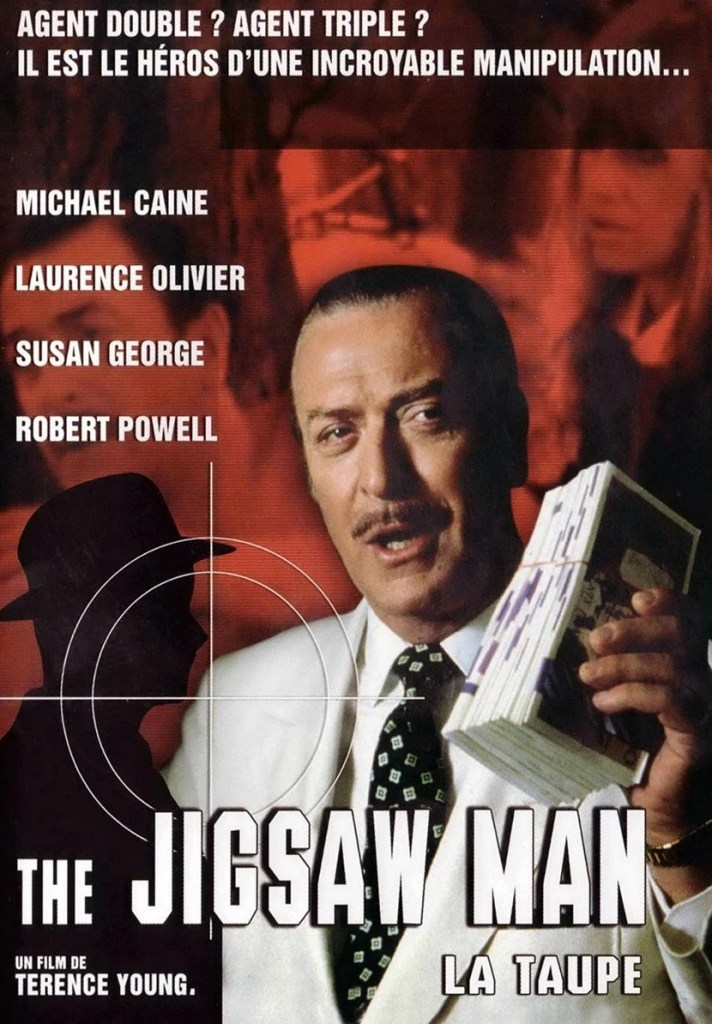
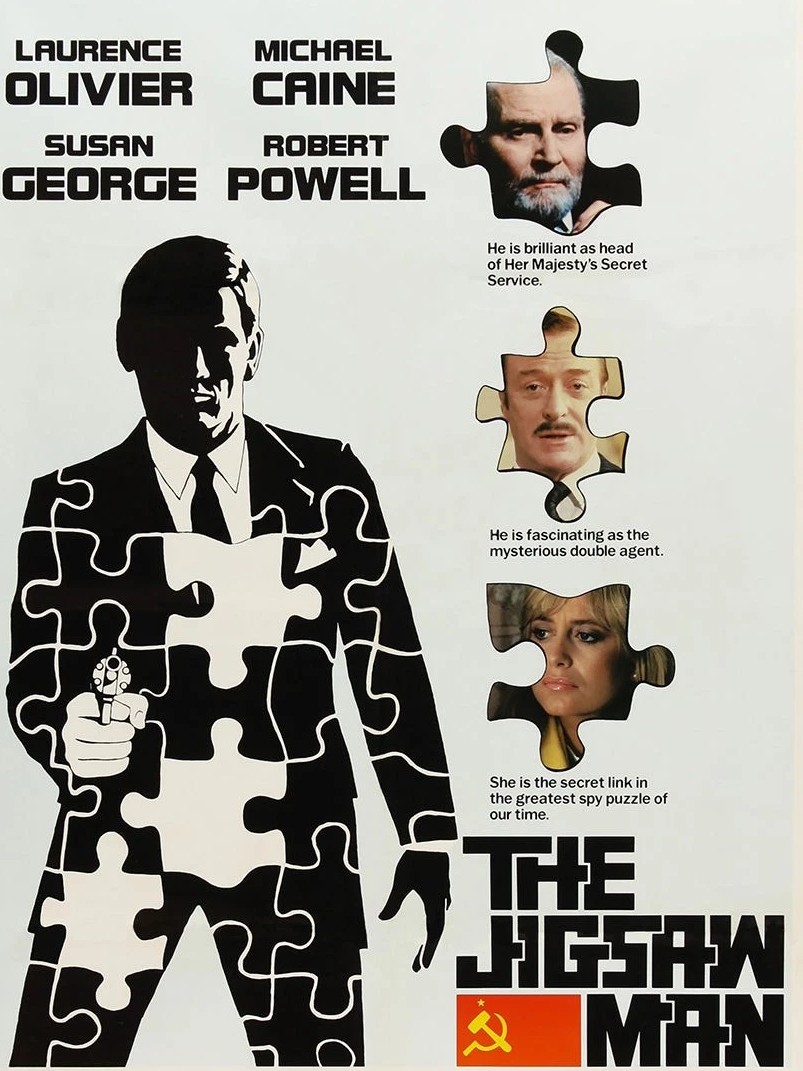
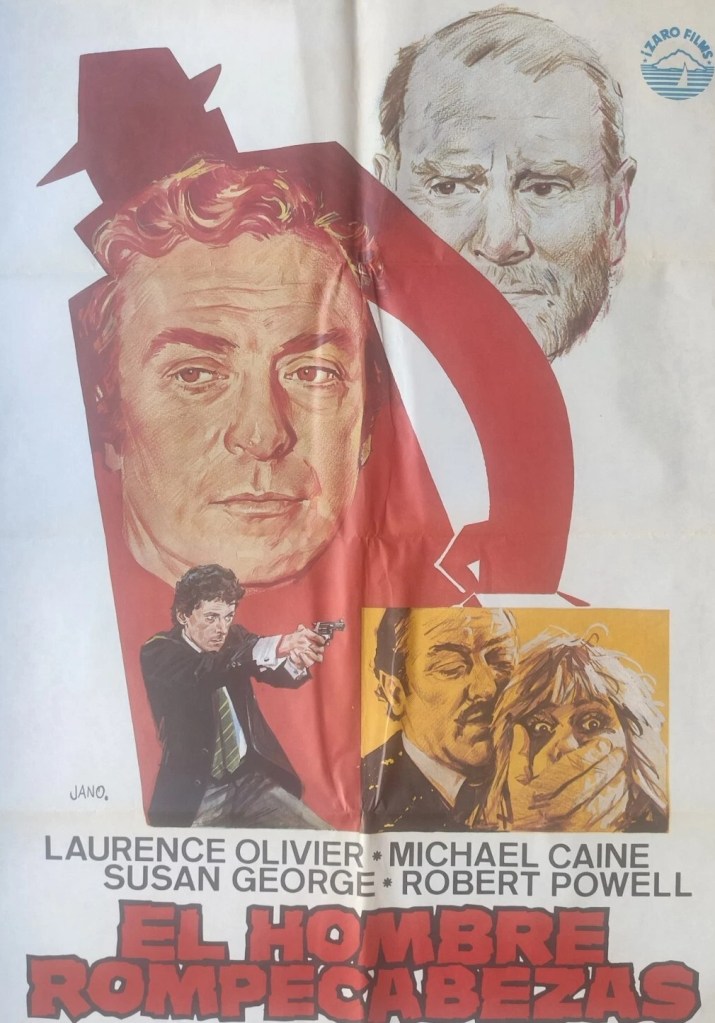
The Russians send defector Philip Kimberley (Michael Caine), former head of the British secret service, back to Blighty with a new face and the plan to recover a secret film that he has stashed away somewhere, presumably as a bargaining tool. Since the microfilm contains the names of all KGB agents including moles in Britain, it sets him up as a target for said double agents fearing discovery. The Burgess-Philby-MacLean defections that sent British espionage into a spin would still have been of huge public interest at the time the movie was made, especially as “The Fourth Man,” Sir Anthony Blunt, who also moved in royal circles, had been denounced in 1979. But for anyone watching with scant knowledge of the espionage scandal, the movie gives a brief reminder using news footage.
However, Kimberley has a different agenda when he lands in Britain, giving his Russian handlers and the Brits the slip and sets out to sell the microfilm to the highest bidder to fund retirement in Switzerland. His wife, with whom current spy chief Admiral Sir Gerald Scath (Laurence Olivier) was in love, is now dead but his daughter Penelope (Susan George), now grown-up, has changed her name to avoid media attention. Her beau Jamie Fraser (Robert Powell) is in reality a secret service agent charged with keeping tabs on her.
Although Kimberley has been trained in the martial arts, he’s long lost his tradecraft skills and though he puts a cop out of action he forgets to dispose of the policeman’s walkie-talkie which gives away his position.
Most of this is a chess game rather than a jigsaw, it’s not that difficult for the espionage experts to put the pieces together, especially after Kimberley is reunited with his daughter, who appears to happily set aside the deaths of two innocents caught up in the affair, blame for which is attributed to her father’s presence or his too heavy-handed karate chop.
Action is limited, a chase on foot, some clambering over rooftops, the aforementioned car chase, a couple of firearm exchanges, but mostly it’s Kimberley putting all the pieces in place until he gets what he wants.
There’s a clever trick at the start when Michael Caine’s voice emanates from clearly another man’s mouth before he goes under the scalpel for the face change.
Michael Caine (The Ipcress File, 1965), essentially plays three roles – the original surly alcoholic Englishman in Moscow, liable to embarrassing displays in public, the Russian character he adopts for the purposes of appearing an ordinary defector before anyone susses out his real identity, and the better-behaved Englishman trying to woo back his daughter and con the likes of the Admiral. You’ll guess one of the twists at the end but not the other.
Laurence Olivier (Khartoum, 1966) steals the show as the ageing bureaucrat. I know he was ill at the time of filming but, still, his decision to play his part without the normal Olivier vocal tics and sense of immediate screen authority, and play up his physical weakness and waning powers,ensures you keep your eyes on him during any scene he’s in.
Charles Gray (The Devil Rides Out, 1968) provides another of his languid effete portrayals characters with a steely interior. Susan George (The Straw Dogs, 1971) and Robert Powell (The 39 Steps, 1978) bring up the rear.
Director Terence Young (Mayerling, 1968), in his second last movie, shows some classy touches. Written by Jo Eisenger (They Came to Rob Las Vegas, 1968) from the bestseller by Dorothea Bennett.
This is as good an example as any of Michael Caine’s wayward career. This fell into the flop category. His previous film Beyond the Limit/The Honorary Consul (1983) had also been a financial dud, though his acting won favor with Bafta (a nomination for Best Actor). But the one before that, Educating Rita (1983), had not only been a commercial success but won Caine an Oscar nomination. Deathtrap (1982) had been a so-so performer. But while Escape to Victory/Victory (1981) and The Hand (1981) had been clinkers, Dressed to Kill (1980) had been a huge success.
After The Jigsaw Man came three more duds before a return to form – and an Oscar win – for Hannah and Her Sisters (1986) and Mona Lisa (1986).
You can catch this on British streamer Talking Pictures TV.
Standard spy fare lifted by the acting

