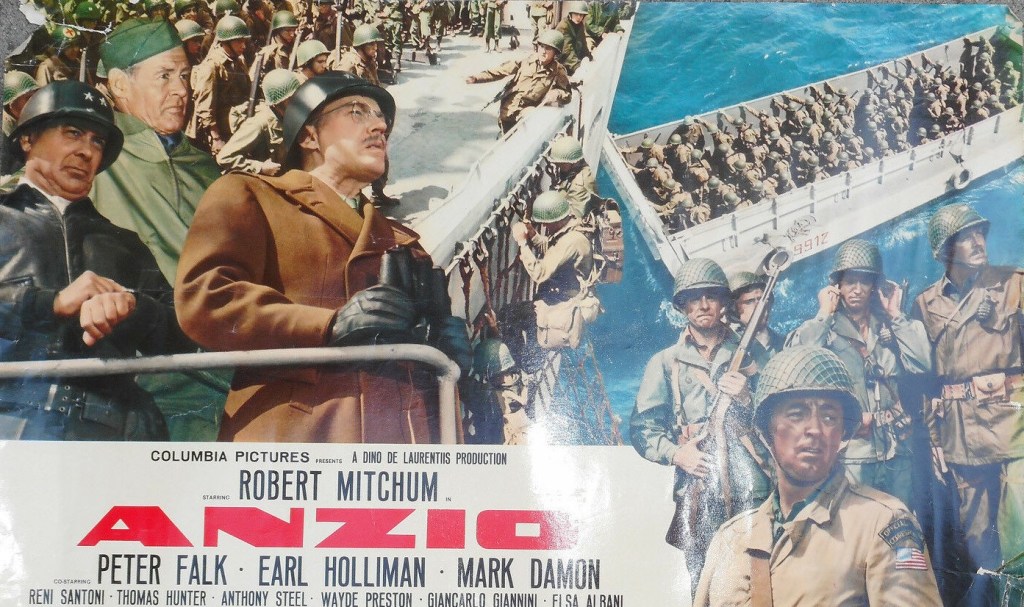
Seems you couldn’t make a movie about defeat in the 1960s, you had to find something in the story that sounded victorious. Although the Allied landings at Anzio in January 1944 eventually led to the liberation of Rome, the whole operation was a mess. So instead of concentrating on outnumbered American and British troops being pounded to pieces on the beaches, director Edward Dmytryk (Alvarez Kelly, 1966) opts for the men-on-a-mission angle.
Somewhat bizarre is the insertion of war correspondent Ennis (Robert Mitchum) into the story. Sure, because he’s not going to get busted for insubordination, he can challenge and/or lambast fictional commanding officers General Carson (Robert Ryan) and Major General Lasky (Arthur Kennedy) but it seems odd that he goes around spreading anti-war sentiment when the people escorting him are in serious danger of being killed. On the plus side are three sequences depicting the brutal reality of war in a way that no other picture of the period dared.
After landing unopposed Laskey decides not to risk moving forward, leaving his troops open to being trapped by advancing Germans even though Ennis, after commandeering a jeep, manages to reach Rome with encountering any opposition.
A Ranger battalion is sent to scout the surrounding countryside and the movie chooses to concentrate on a small platoon unit within that, headed by Sgt Stimmler (Earl Holliman) and including the fun-loving Corporal Rabinoff (Peter Falk), the kind of guy who spends the night before the landing entertaining three sex workers in the back of stolen ambulance who are of course desperate to learn the words to “Bye, Bye, Blackbird.”
After the Rangers are cut to pieces at the Battle of Cisterna, the unit escapes through a minefield, discovers a massive German construction site, holes up in house with three Italian women, is pinned down by snipers in a field of shell-holes and finally makes it back.
American troops being slaughtered at Cisterna is a helluva note as the movie switches tack from exposing leadership folly to just getting the platoon out of this mess. Pursued by a flame-throwing Panzer, they pick their way through a minefield using the quite clever device of lobbing onto it large chunks of stone and then walking across on the stones as if crossing a dangerous river.
Wanting to find out more about the mysterious construction work results in Ennis causing the death of one of the gang. When they hide out in the Italian house, eventually killing off investigating Germans, the naïve Ennis wants to take the women with them.
Bit of marketing sleight-of-hand. Slinging a whole bunch of faces at the bottom of a poster was shorthand for all-star cast, which this picture definitely lacked.
Trapped by snipers in open country, they are being picked off one by one with only clever tricks and sacrifice offering a way out. One of the notions is to throw a fake grenade the snipers’ way. The instant reaction to any soldier to an incoming grenade is to get the hell out of the way, turning themselves into a turkey shoot. But the only other way to entice the snipers to reveal themselves is for the soldiers to take turns in presenting themselves as targets.
One of the ongoing themes of the picture is Ennis refusing to bear arms, and although the trailer shows him blasting away with a machine gun that only occurs at this climax when he seizes the weapon from a dead German. Ennis is an odd character for a war picture. None of the soldiers can believe anyone would not just volunteer to participate in a bloody war but carry nothing to defend themselves with. It’s a bit tiresome to hear him being reminded that he doesn’t have to be here, and to turn down the offer or a rifle or a grenade.
And for a non-combatant he’s not exactly uninvolved in strategic matters. A couple of times, as if he’s the most entitled grunt you ever came across, he virtually assumes command, barking orders that the others obey. Admittedly, it’s his cleverness that gets them through the minefield, but it’s his stupidity that gets others killed and to have him pontificating at the end that men go to war “because they like it” is incredibly facile, although in keeping with the anti-Vietnam sentiments of the time (1968, that is, not 1944).
Rabinoff, the only other character about whom we learn anything, is unfortunately on the preposterous side.
While the movie is far from dire, and as I said, very realistic when in portraying war actuality, it’s not the picture I guess audiences expected. While the scene-stealing of Peter Falk (Penelope, 1966) gets in the way, Robert Mitchum (5 Card Stud, 1968) proves an interesting character, although he is also laden down by having to spout a bunch of dumb lines. Arthur Kennedy (Fantastic Voyage, 1966) is the pick, especially at the end facing up to the ignominy of being relieved of command.
This kind of movie is potentially a breakout for the supporting cast. But here, with the exception of Falk, the script lets them down, nobody given the kind of distinctive characterisation that elevated The Dirty Dozen (1967), for example, above the norm. Apart from Earl Holliman (The Power, 1968) and Italian Giancarlo Giannini (The Sisters, 1969) this was not a career-making movie. You can spot Mark Damon (Dead Men Don’t Count, 1968), Patrick Magee (A Clockwork Orange, 1971), Anthony Steel (The Story of O, 1975), Rene Santoni (Guns of the Magnificent Seven, 1969), Wolfgang Preiss (Von Ryan’s Express, 1965) and Robert Ryan (Battle of the Bulge, 1965).
Edward Dmytryk (Mirage, 1965) does a reasonable job with the materials to hand, and the minefield and sniper scenes are first class. Italian veteran Duilio Coletti (Under Ten Flags, 1960) directed the Italian version though I’ve no idea what that was, or if it differed in any way from the Dmytryk cut. Coletti also had a hand in fashioning the screenplay along with H.A.L. Craig (Fraulein Doktor, 1969), Frank De Felitta (Audrey Rose, 1977) and Giuseppe Mangione (Run, Psycho, Run, 1968).
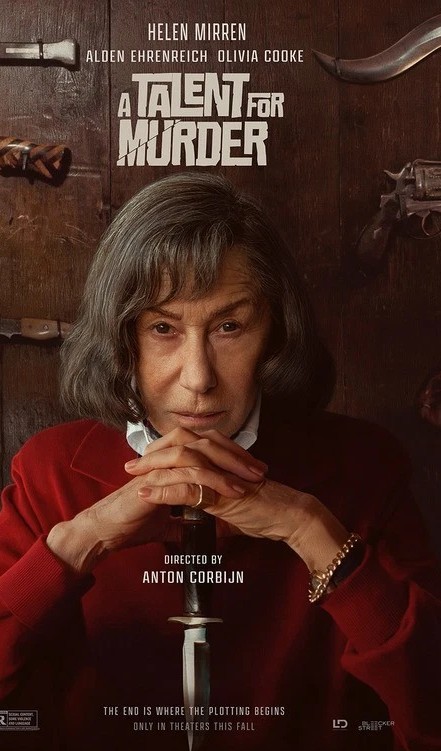
Why don’t we posit Sarah J. Maas as a vet or Ernest Hemingway as a vegetarian or F. Scott Fitzgerald sitting down to lunch in a crummy diner with Jay Gatsby. That’s the kind of reimagining we’re in for here. I’m assuming that the estate of Patricia Highsmith (Strangers on the Train, 1951, The Talented Mr Ripley, 1999 and the source of 42 other movies) have given this fandango their blessing in the hope of shifting more copies of her books.
There’s three narratives in here, any one of which would have made sense on their own, but running all three together results in a shambles, not alleviated by the get-out-of-jail-free twist at the end, but only made watchable by the performances of Oscar-winner Helen Mirren (Mobland TV series 2025-2026) and, to a lesser extent, in a dual role Aiden Ehrenreich (Weapons, 2025).
The trailer was bait-and-switch. I was led to believe that noted crime author Patricia Highsmith (Helen Mirren) was going to find a way to turn mild publishing executive Edward Ridgeway (Aiden Ehrenreich) into a killer. Someone, for example, along the lines of her most infamous creation, murderer Tom Ripley.
Edward is in Switzerland in 1995 because the author’s New York publisher wants her to write another Ripley novel – there are five already – because they are guaranteed best-sellers. She doesn’t want to because she’d rather turn her attention to novels that are more appreciated in Europe than America. For reasons that are unclear, his job is on the line.
She makes short work of ripping apart his credentials, but he gets to stay because – because “legendary” director Anton Corbijn (who hasn’t made a film in over a decade) took a liking for the bizarre screenplay by Joanna Murray Smith (who hasn’t got a film over the starting line in over three decades).
So we’re presented with three overlapping scenarios. In the first, Edward has to assume the fictional mantle of Ripley and effectively provide the plot, including all the evil bits, for the novel he wants her to write. So we have Ripley (also played by a sleeker-looking Ehrenreich) in Rome seducing easily-seduced heiress Clementine Balfour (Olivia Cooke) in order to marry her and kill off the two relatives who are obstacles to her fortune. The first murder is inventive, the second less so.
At the same time, the real Edward has met the real Clementine Balfour and in Ripley-like fashion has to make up a background that fits into her high-flying arty lifestyle and take on a Ripley-like dangerous demeanor in order to seduce a woman who tells him how to seduce her.
So, theoretically, we’re watching Edward turn into Ripley. Or, in the final twist, was he Ripley all along? And in Switzerland to take revenge on his creator, knifing her to death?
I’m not sure what literary category that falls into except a writer desperate to find a way of connecting what initially appear as two quite disparate tales – when in fact they are exceptionally similar – instead of concentrating on one of them, dispensing with Highsmith altogether and getting on with a Ripley-like tale of seduction and murder.
Except that then we’d be left with just Ehrenreich and Cooke and neither of their characters would make this movie fly. She’s just way too weak a character, in either of her roles. While he’s less so, he’s not that convincing as a killer.
More to the point, exclude Highsmith and there wouldn’t be much left. She’s such a mean twisted character she’s an absolute delight. Not only does she flood a guest bedroom with snails but she’s apt to cut a guest’s neck with a very sharp knife (one that he’s brought as a gift) while he’s sleeping. There’s no question she would excel in warping an innocent mind, finding the triggers to turn a mild person into a killer.
That’s what the director should have concentrated upon. He would’ve easily got away with making the Mirren character someone who resembles Highsmith, found another reason for the guest to visit, and then let loose the warped mind on the innocent one.
As it is, it’s a curate’s egg, good in the scenes containing Mirren, less so when she’s absent.
Mirren is excellent and well worth the price of admission. Ehrenreich makes a plausible-enough transition, but not enough to convince, but Olivia Cooke (House of the Dragon TV series 2022-2026) has very little material to play with except be the patsy.
Two films demonstrating the art of making a very good point in a not very good film.
I feel obliged to cut these pictures more slack than normal because of their subject matter and then considerably less slack because of their simplistic points of view.
The play on which this is based has already received nationwide screenings on the filmed-play circuit.
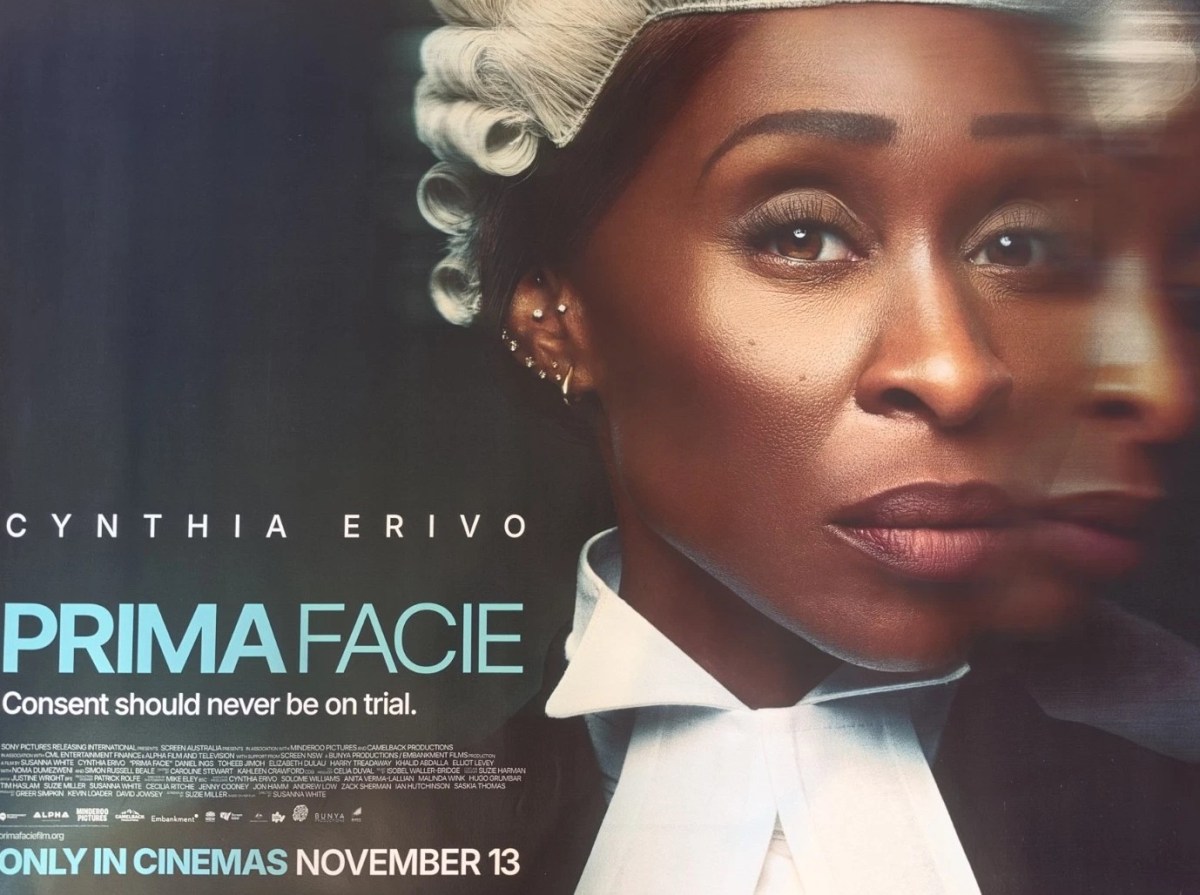
Prima Facie is the less simplistic in its conclusion because – as the Russell Brand court case has shown – the victims of sexual violence are often hung out to dry by the legal system. In this case the victim, ambitious young lawyer Tessa (Cynthia Erivo) – who, ironically, has managed to game the system and get rapists off – doesn’t get justice, once she’s been raped, against her perpetrator, fellow defense lawyer Julian (Daniel Ings).
But in a legal twist she’s allowed to state her case directly to the audience. And that makes the point that rape victims should not be judged on the peripherals of the attack but on the impact of the violence that they will never forget.
Unfortunately, we wait a heck of a long time for this outcome. The movie-making itself is often primitive. We’re assailed by sound and light effects that add little. It also assumes a very low bar of the audience. In case we didn’t know what a thoroughbred was, every time the word is mentioned we cut away to a rearing stallion or neighing one or both.
And for reasons that escaped me, despite being nominated for a top legal award and being poached by a very prestigious law firm, we’re for some reason led to believe that she’s having a hard time job-wise. From beginning life as a one-woman stage play, this has been fleshed out too much, and not in a good way.
What kind of daughter doesn’t know her mother prefers a sugar free fizzy drink? Who thinks, in any case, that the best present a high-earning daughter can bring her low-earning mother is a large bottle of a fizzy drink that’s not called Prosecco. Worse, when the mother gives a mild moan about this lack of observation, she’s the one taken to task.
The voice-overs also get in the way. Show not tell should be the mantra. We can do without the smugness as Tessa explains how clever she is in court. Outside of her testimony, the court scenes are just awful. Unbelievable. When she invokes the legal device of “voir dire” it sounds more like Keira Knightley in Pirates of the Caribbean (2003) when she invokes some ancient pirate law. And in any case, as far as I can make out, she doesn’t use it properly. It’s just a device to let the audience hear what the judge won’t let the jury hear.
There’s another major flaw in my estimation. Tessa never shows the slightest remorse for defending rapists, many of whom, it would appear, get off scot-free because she’s the kind of defense lawyer that can shred a witness (i.e. female rape victim) to pieces.
I never saw the one-woman play by Suzie Miller (who also wrote the screenplay) on which this is based but my guess is the film robs it of the intensity that brought acting awards to Jodie Comer. Director Susanna White (Our Kind of Traitor, 2016) should have known better and brought much more to the filmization than rely on the get-out-of-jail-free card at the end.
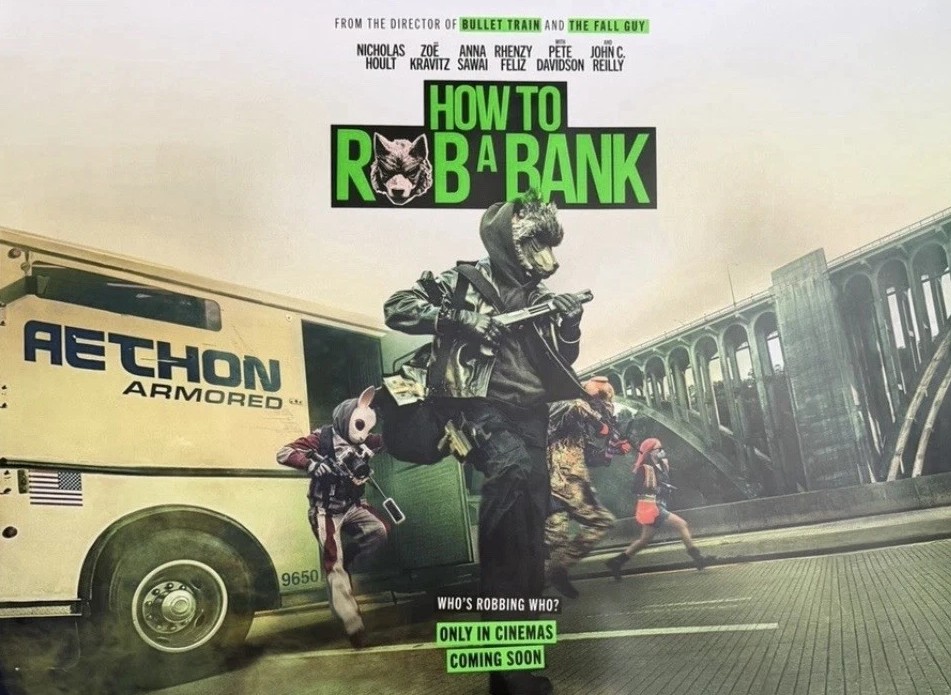
Evil bankers are the target of How To Rob A Bank. But like Donald Trump, they’re an easy – and lazy- target. The idea that if you steal money from banks and give it away to charitable causes and hope that social media response will help create a revolution is simplistic in the extreme. It’s the old mantra – rob anyone because insurance will pay. Yeah, until it’s you that’s robbed or your home burgled and then it doesn’t feel like indulging criminals is such a good idea.
Gang leader Ryan (Nicholas Hoult) has a score to settle with big banks. But a lot of this is flashy Insta or Facebook or Tiktok visuals. The more interesting characters are cop West (John C. Reilly) and reformed crook Reagan (Zoe Kravitz). But the director is having too much fun showing off to develop the characters beyond the most basic characterisation.
But whatever clever detection West and co-opted Reagan show, the cops are always presented as inferior to the crooks. You’d have thought, given the worldwide depression created after the last bank scare, the last thing any sensible person would want would be to bring down the banks, because, in an instant, people would not only lose their life savings but also their businesses and houses they have mortgaged.
If you want rich people to pay more in taxes to alleviate poverty that’s one thing, but to go after the people who make it possible through loans and mortgages for ordinary people to buy their own homes or set up their own businesses, seems absurd in the extreme.
This looks either like director David Leitch (The Fall Guy, 2024) or studio lost their nerve or set out to make a pointless point that would have been better served by a documentary on the banking crash. What was wrong with a bunch of clever bank robbers just being one step ahead of the FBI and the normal mental duel between criminal and cop?
Written by debutant Mark Bianculli.
The flashiness and the social media bombast get in the way of creating tension. This is far better made than Prima Facie but with a lot less to say.
It’s usually closer to December when I crave your indulgence to indulge me while I entreat you to fill your Xmas stockings with copies of the books about movies that I’ve written. Well, Xmas has come earlier this year because my publisher McFarland is running a sale. There’s a 35 per cent discount off all my books from now until Thursday December 3. Use Discount Code HOLIDAY26.
So here’s a little reminder of my books.
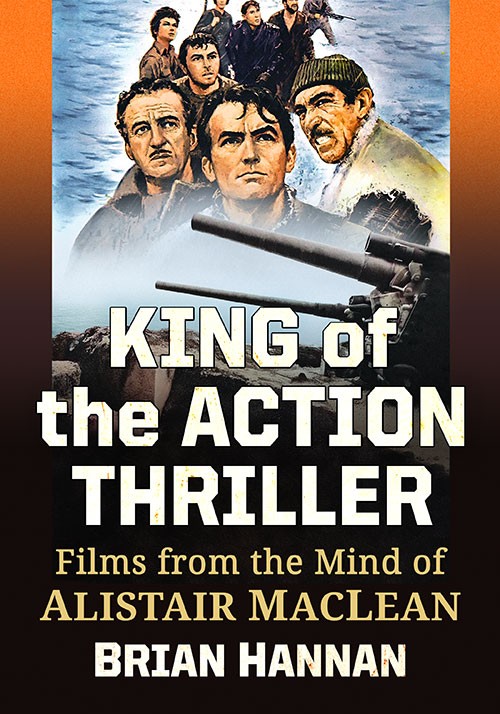
As I can tell from the substantial number of views generated by my “Behind the Scenes” articles on his movies, interest in thriller author Alistair MacLean remains at an all-time high. I had guessed as much when I embarked on my most recent book King of the Action Thriller, Films from the Mind of Alistair MacLean.
This covers the making of all of his films, made-for-television pictures and mini-series. I was helped enormously by access to the files of Elliott Kastner, producer of Where Eagles Dare and several others of his films. If you are an Alistair MacLean fan this is definitely one for your Xmas list.
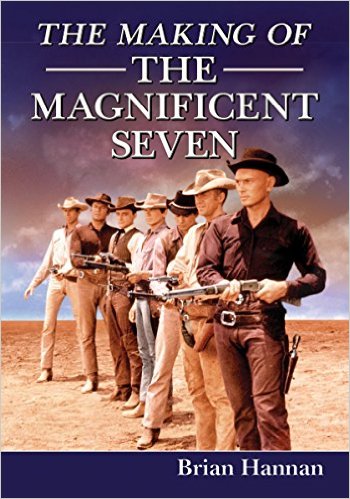
The most popular book I’ve written is The Making of The Magnificent Seven. This focuses not just on the original classic with an all-time all-star cast including Steve McQueen, Yul Brynner, Charles Bronson, James Coburn, Eli Wallach and Robert Vaughn but examines the sequels, remakes, television series and, would you believe it, a stage play, as well as the Japanese movie Seven Samurai (1954) on which it is based.
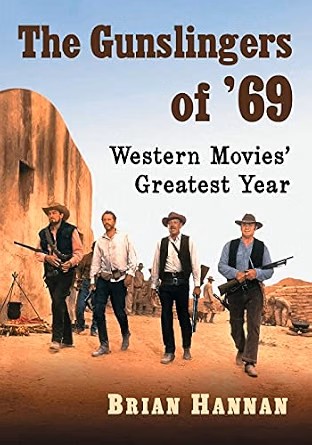
If you’re a western fan you might share my belief that 1969 was the greatest year for westerns. In The Gunslingers of ’69 I argued that in a year that included four solid-gold westerns in Sam Peckinpah’s The Wild Bunch, John Wayne’s Oscar-winning turn in True Grit, Sergio Leone’s operatic Once Upon a Time in the West with Ennio Morricone’s unforgettable score, and Paul Newman and Robert Redford inventing the buddy movie with Butch Cassidy and the Sundance Kid you couldn’t go far wrong in such a proposal.
Especially as the year also included Robert Redford (again) in Abe Polonsky’s Tell Them Willie Boy Is Here, Gregory Peck hunting and being hunted by The Stalking Moon, Raquel Welch and Jim Brown in 100 Rifles, James Garner comedy Support Your Local Sheriff, Gregory Peck (again) and Omar Sharif in 70mm roadshow Mackenna’s Gold, John Wayne (again) and Rock Hudson in The Undefeated.
And not forgetting smaller fry like Robert Mitchum pair The Good Guys and the Bad Guys and Young Billy Young, Kim Novak in The Great Bank Robbery, Richard Widmark in Death of a Gunfighter, Glenn Ford in both Heaven with a Gun and Smith!, Burt Reynolds as Sam Whiskey and a non-musical Elvis Presley as Charro!
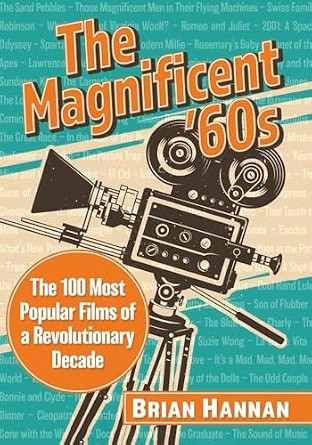
And if you’re keen on that decade, as you surely must be if you’re tuning into this Blog Site, then you might be interested in the book that spawned the blog – The Magnificent ‘60s, The 100 Most Popular Films of a Revolutionary Decade.
And if you’ve got a hankering after the revolutionary, check out my book on the history of reissues/revivals. It’s revolutionary because until I came along nobody gave much thought to why and when studios brought old films back out of the vaults. Mostly, it was to fill in the gaps in the annual programme, but it was also to take advantage of successful films or actors, and it had been going on since Hollywood learned how to make more money from movies they thought were long past their best.
The James Bond boom in the 1960s was responsible for changing the approach to reissues from bringing them back after six or seven years had passed to bringing them back as soon as possible. The approach changed from teaming two quite different films in order to attract the widest possible audience to pairing two films in a movie series or with the same star or Oscar-winners or from the same genre.
Then it grew into the Director’s Cut, the technical revamping older movies (which is where the 4K sales pitch came from) and the anniversary release so common these days. I dug so deeply into the history of this, beginning in 1914, that Coming Back to a Theater Near You, A History of Hollywood Reissues 1914-2014 clocked up 250,000 words.
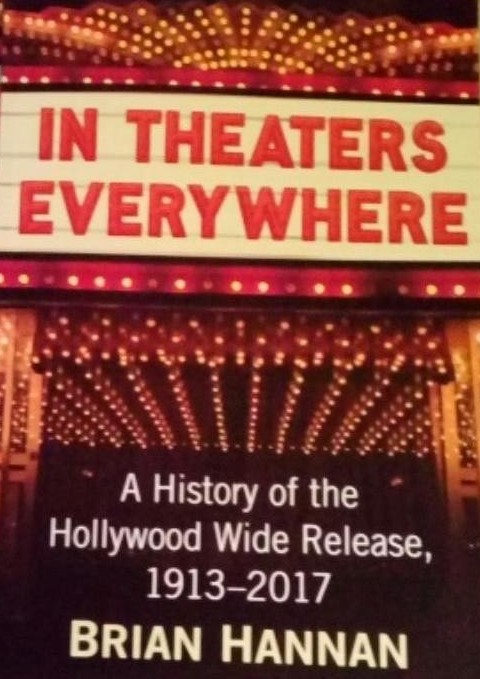
There’s a companion work In Theaters Everywhere, A History of the Hollywood Wide Release 1913-2017. Until I came along most film scholars believed the wide release was triggered by Joseph E. Levine’s release of Hercules in the late 1950s but I established it had been going on consistently since the beginning of Hollywood.
This is not just Xmas come early but an advance Black Friday deal.
You’re probably aware that Hollywood is already agog with the prospect of an almighty Xmas treat with the possibility of Dune Part III and Avengers: Doomsday completing a box office double whammy of “Barbieheimer” proportions. And that the next couple of months will also bring such attractions as Dwayne Johnson and Jack Black and Co in Jumanji: Open World, Hunger Games prequel Sunrise on the Reaping and in a clever piece of counter-programming Robert Eggers’ Werwulf.
But there are also other projects with considerable potential on the horizon – some pushed forward for Oscar consideration – suggesting that in terms of outlay and perhaps quality Hollywood is back on track. Since I’m the kind of guy who checks out what’s coming up, I’ve taken the trouble to lay out for you some of the movies that have received nothing like the attention of the abovementioned big guns but will certainly make my Monday cinema outings hopefully more enjoyable.
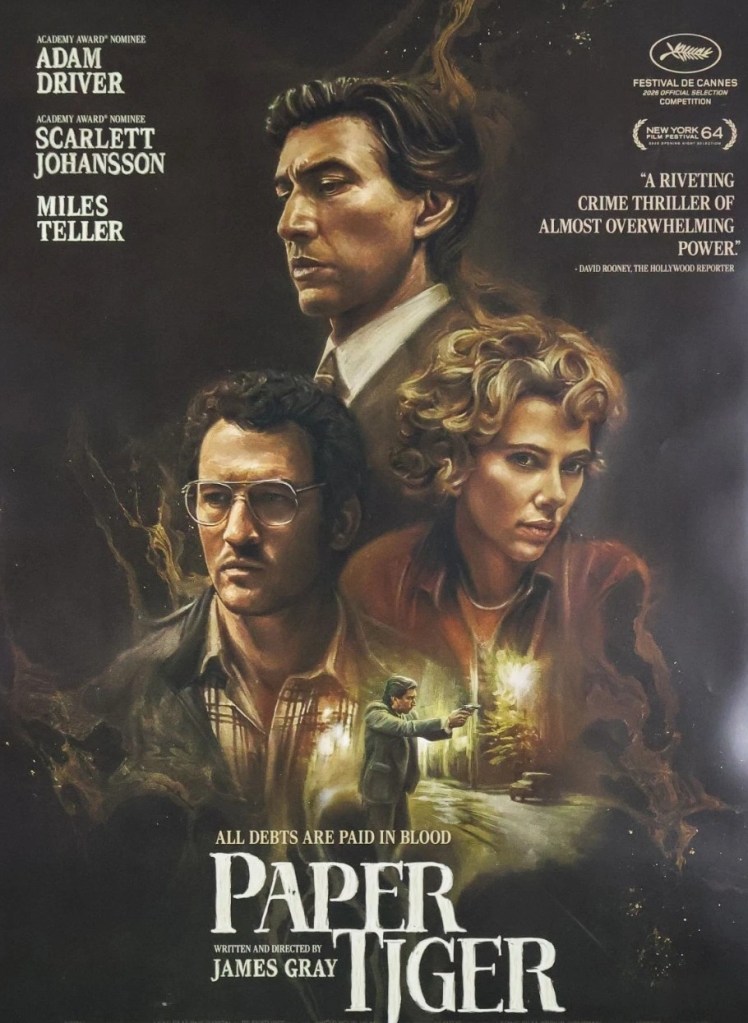
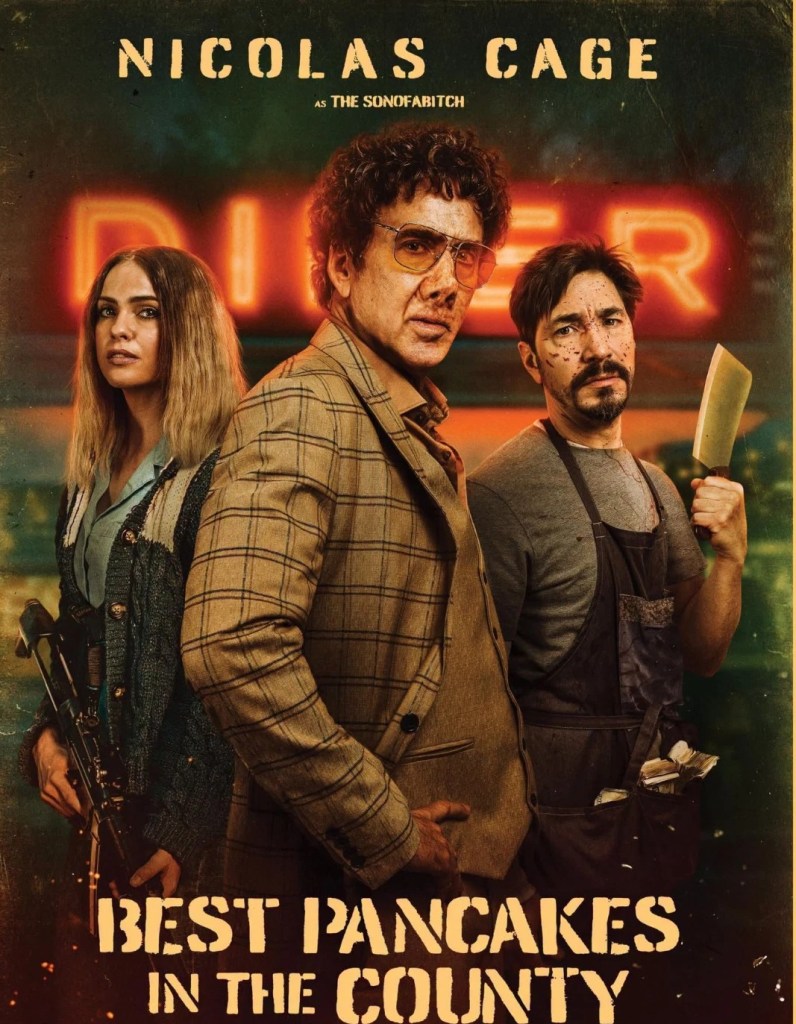
In the thriller department look out for James Gray’s Paper Tiger teaming Adam Driver and Scarlett Johansson, Channing Tatum in Josephine, Nicolas Cage in Best Pancakes in the County with David Harbour returning as a kick ass Santa Claus in Violent Night 2.
John Travolta stars in the Mafia take on the JFK assassination in November 1963, directed by double Oscar nominee Roland Joffe in his first movie in nearly a decade. Jena Malone stars in Pendulum and Carrie Coon and Lily James in The Liberation. And Jason Statham returns as The Beekeeper 2. Helen Mirren plays author Patricia Highsmith in A Talent for Murder.
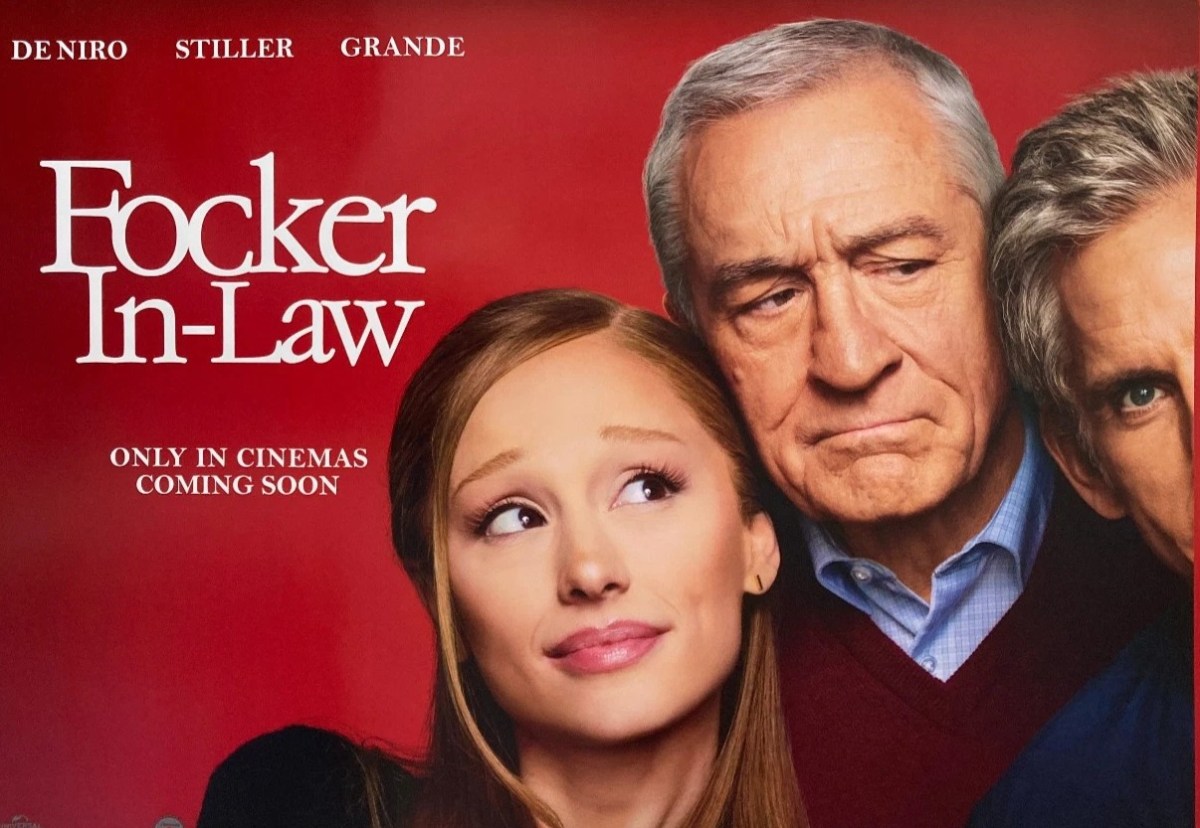
For comedies, welcome back Robert De Niro causing more havoc in Focker-in-Law with Ariana Grande and Ben Stiller along for the ride. Brad Pitt reprises his stand-in character from Quentin Tarantino’s Once upon a Time…in Hollywood (2019) but minus director and co-star Leonardo DiCaprio in The Further Mis-Adventures of Cliff Booth. Jenna Ortega is The Gallerist, Glen Powell is The Comeback King directed by Judd Apatow.
Heading up the biopics is Andrew Scott as dying actor Ian Carmichael playing Hamlet on stage in Elsinore. I’m looking forward to Nicolas Cage as American Football legend Madden and Alexandra Daddario as Hershey, the candy-making queen and Sandra Huller as Rose. The rise of Rupert Murdoch’s ground-breaking (for many of the wrong reasons) tabloid “The Sun” is covered in Ink, directed by Oscar-winner Sam Mendes with Jack O’Connell as editor Larry Lamb.
You wouldn’t have figured Anna Nicole Smith as worthy of a biopic but then I never thought anyone would be interested in how Sylvester Stallone managed to mantra his way to I Play Rocky (2026). Hurricanna focuses on Smith entering a disastrous relationship. Mr Irrelevant is about John Tuggles and the New York Giants. Andrew Garfield heads up Luca Guadagnino’s Artificial as Sam Altman struggling to maintain control of OpenAI.
It’s not going to challenge Sunrise on the Reaping or Dune Part III in the sci fi/fantasy stakes but Oscar-winner Olivia Colman, who went down a similarly offbeat route in Wicker (2026), headlines The Fox. Idris Elba stars in Above the Below and Naomi Scott in Eternal Return, which has a romantic bent. Children of Blood and Bone, directed by Gina Prince-Blythewood, is the long-awaited adaptation of the modern fantasy classic.
On the music front there’s films featuring George Michael and the Ramones, Julianne Moore in The Debut, Pedro Pascal as a violinist in Behemoth! and Alyssa Marvin in Run Amok.
There’s no shortage of animation. Up first is The Cat in the Hat followed in quick succession by The Angry Birds Movie 3, and Disney’s Hexed. Skydance Animation’s noir-sci fi mash-up Ray Gunn features a private eye battling aliens. There’s also Light Pillar, Space Cadet, A Fox under a Pink Moon, Ice Age Boiling Point, and Gods Don’t Give Gifts which slants towards horror.
The anniversary revival business is so ubiquitous these days that virtually any date is fair game. So it’s the 85th anni of Humphrey Bogart as Dashiell Hammett’s iconic tough-talking private eye The Maltese Falcon (1941) directed with considerable distinction by John Huston. There’s a 25th anniversary nod Buz Luhrmann’s Romeo + Juliet with Leonardo DiCaprio and Claire Danes as the tragic couple, as well as Russell Crowe as mentally-ill Nobel-winning scientist John Nash in the Oscar-winning A Beautiful Mind. It’s 20 years since the first showing of Christopher Nolan’s The Prestige with Christian Bale and Hugh Jackman as duelling magicians. There’s a 10th anniversary retread for The Angry Birds Movie. And Xmas wouldn’t be Xmas without It’s A Wonderful Life (1946) starring James Stewart.
And before you know it Narnia: The Magician’s Nephew is upon us and the 50th anniversary celebrations of Star Wars IV: A New Hope as you’ve never seen it before presented in 70mm Imax and every other premium format imaginable.
In previous years, I’ve always had a bad feeling in the run-up to Xmas, a time when studios traditionally dumped their lamest features or we were fed a diet of B-picture horror. Not this year.
I have two confessions to make. Firstly, I’ve never seen this picture. It appeared at a time when I lived in a town without a cinema. While this was virtually impossible in Scotland, a country with the highest cinemagoing audience per capita in Europe, I lived in a new town and the planners had decided we could all do without a cinema. So we were limited to a couple of outings a year, once to Glasgow to see a roadshow musical and once on our holidays to see something suitable for kids.
Secondly, I resisted seeing it for over half a century. James Bond spoofs were old hat by the time my cinemagoing habit kicked in. So I came this with some trepidation.
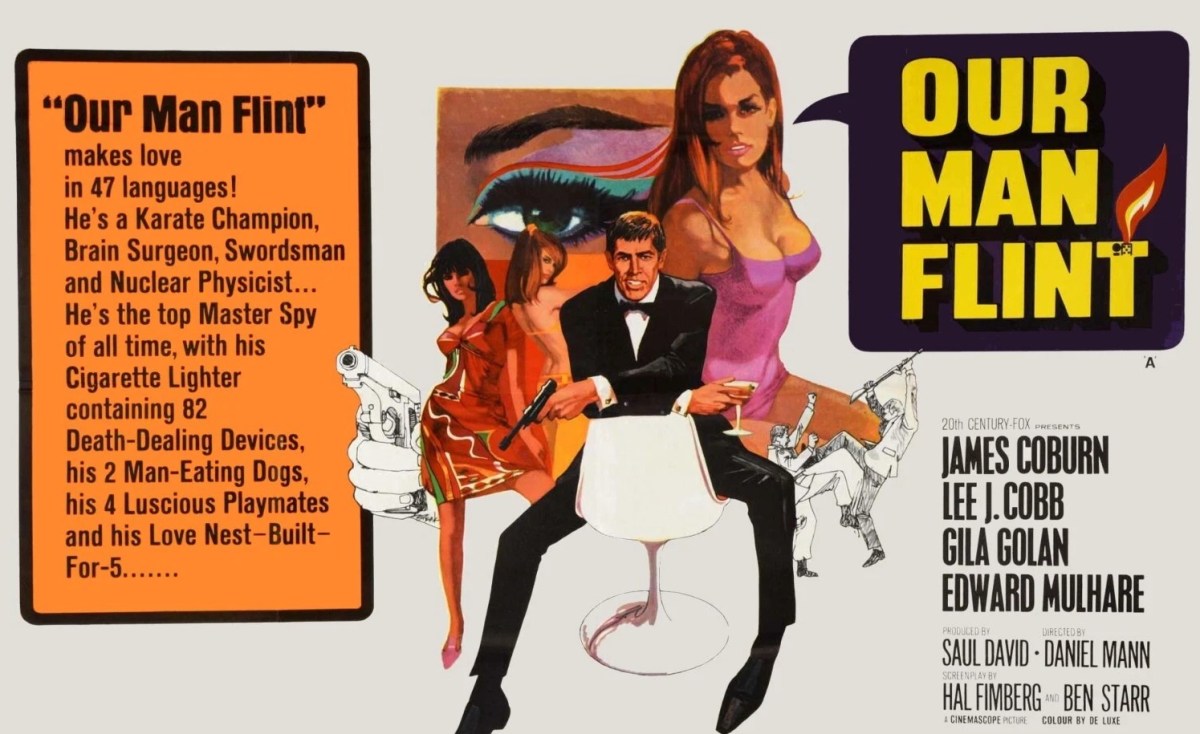
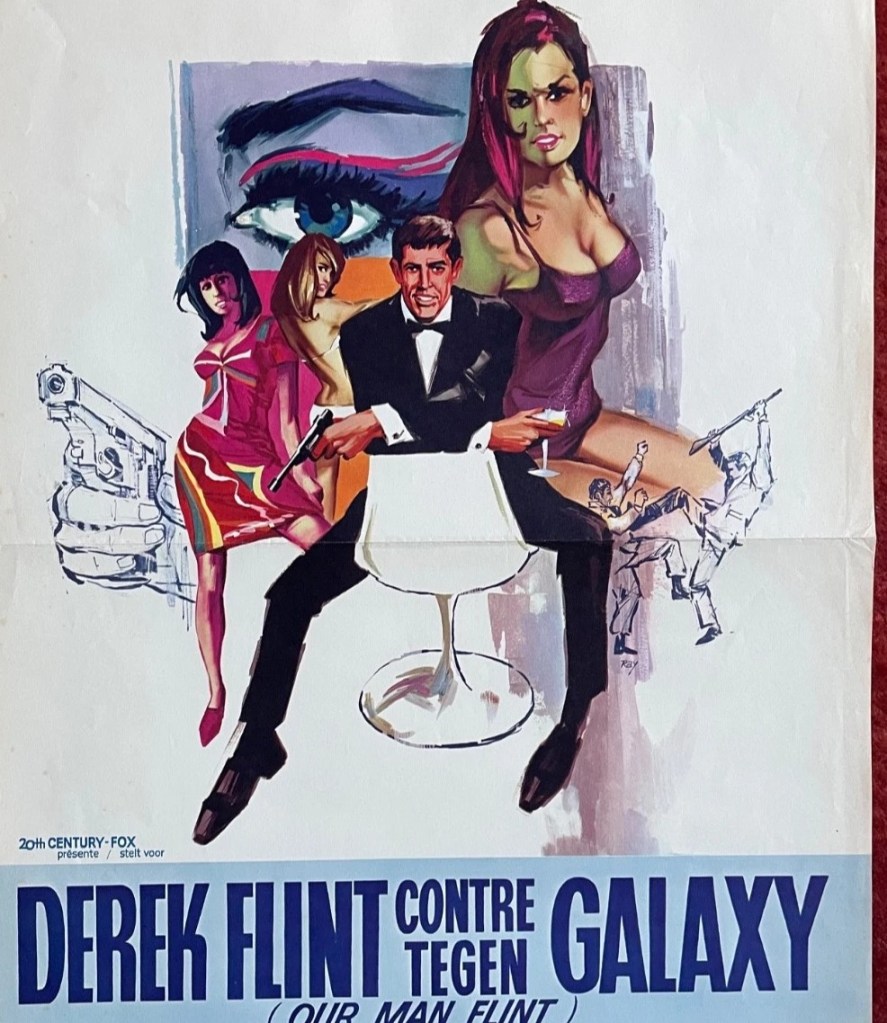
Instead, I enjoyed it hugely. Far removed from Bond-mania, it seemed to sit quite happily in its own espionage space. And it is as refreshing now as it must have been at the time for our hero to be so courteous to his playmates. And before Bulldog Drummond hove into view, who often came off second best against the highly intelligent female villains. Here the person leading the villainous campaign of destruction is a female, Gila (Gila Golan)..
Derek Flint (James Coburn) is such a maverick that his boss Cramden (Lee J. Cobb) won’t have anything to do with him although he’s clearly the best man to investigate who’s causing a succession of apparently natural disasters. He’ll only take on the job if he can do it all his way with the high-ups at his beck and call.
The invention is truly inspired. Flint has a wristwatch that scratches him awake at the appointed time. The flame on his cigarette lighter can be turned to oxy-acetylene levels. The thread on a shirt button becomes the kind of stethoscope that safe crackers use. His nose is so advanced in the detection of smells that from examination of a poison dart he works out that it is connected to a certain type of bouillabaisse made in Marseilles. He can go into such deep hibernation when required that it fools the villains into believing him dead.
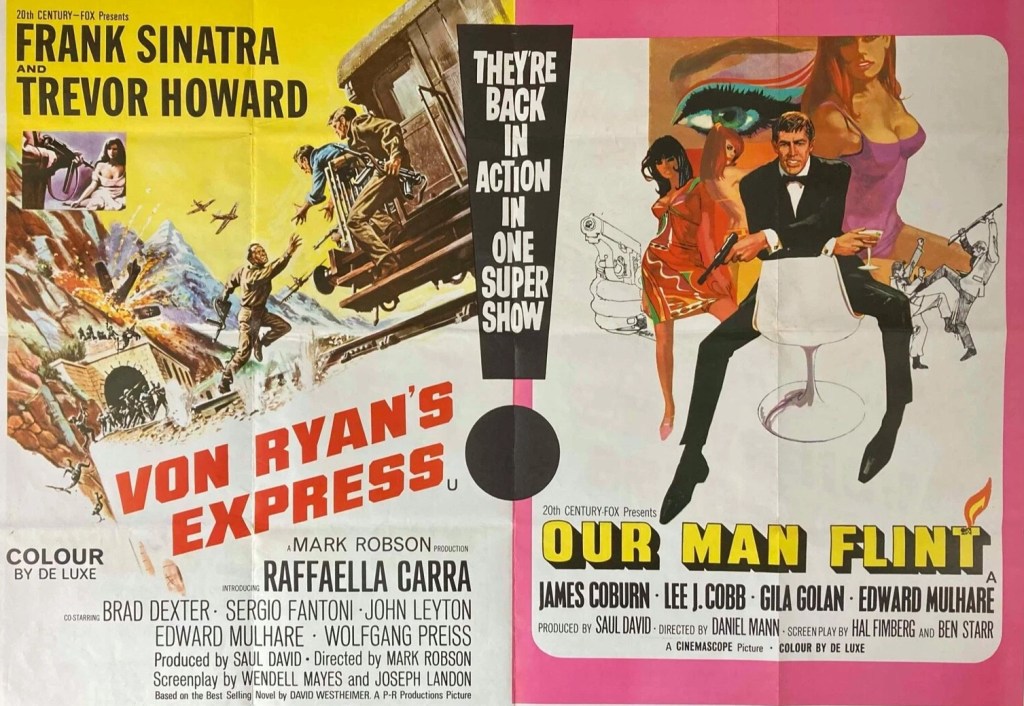
When roadshows and long-running hits clogged up first run, and played havoc with the food chain, smaller cinemas were fed a steady diet of reissue double bills.
He employs an advanced numeric code of his own making. Even the more down-to-earth elements are interesting. When the world’s leaders vote for the best super agent, their voting cards are tabulated through a computer. Instead of a secretary or housekeeper welcoming visitors to his house, it’s a dog whose teeth alight on the visitor’s hand and drags him through to his master.
The villains are equally inspired. When in an house in Marseilles Flint manages to open a highly secret safe but he’s locked inside, we discover the safe is contained inside a large portable room. The house he’s in can disappear into the ground. The strings on a harp are utilised to fire a poison arrow.
Know-it-alls are usually dull boffins relegated to walk-on parts, so it’s just terrific that Flint possesses amazing levels of all types of skills. Prior to any assignment, he doesn’t require a visit to Q’s lab, he disdains the kind of weaponry to which James Bond is accustomed, and relies instead on his own multi-functioning hand-made tools.
And there’s also a kind of double play going on. Flint thinks he has seduced Gila and she thinks she has seduced him. She believes she’s persuaded him to walk into a trap. But he deliberately walks into the trap. He thinks with all the tools in his possession that he’ll escape the trap. He’s wrong.
Given that by this point James Bond tales were growing more and more preposterous, the bad guys here, three doctors who run an oufit called Galaxy, fit nicely into that mode. But Gila is deemed unfit for purpose by her bosses and assigned to the Pleasure Unit on their remote island, which means she’s ready to team up with Flint for revenge, leaving the way clear for proper romance. All Flint needs to defeat the villains is his brain and more of his gadgets.
James Coburn (Dead Heat on the Merry Go Round, 1966) had previously been restricted to supporting roles in films like The Magnificent Seven (1960) and The Great Escape (1963). When elevated to second or third banana in Major Dundee (1965) and A High Wind in Jamaica (1965), they did nothing for his career. But he emerges from this a full-blown star, screen persona already in place, cool, fit, and with a smile that can be both charming and predatory.
Gila Golan (Ship of Fools, 1965) wasn’t so lucky and the highlight of her career thereafter was The Valley of Gwangi (1969). Director Daniel Mann (Butterfield 8, 1960) turns Lee J. Cobb’s screen persona on its head. Instead of filming him from below, with jutting chin personifying his robust dominance, he’s mostly filmed from above or at height-level and the actor subsumes his natural combustion to take it on the chin.
The concept was devised by Hal Fimberg on his screen debut. He only wrote one other picture, In like Flint (1967). Ben Starr (Texas Across the River, 1966) helped out.
You’re probably unaware of this but I’ve got a regular correspondent who has sent me over the years a stack of Behind the Scenes material that you’ll only ever come across if you check out the comments section underneath my reviews. I know him as “mlang1247.” He’s been kind enough to send me an extensive Behind the Scenes on “Rocky” so I thought I would co-opt him as a guest contributor.
According to a Nov 1976 interview with Stallone in the New York Times, the 1975 championship fight between Chuck Wepner and then reigning World Heavyweight Champion Muhammad Ali inspired him to write the Rocky screenplay. Stallone noted that as he watched the fight, he thought about “stifled ambition and broken dreams.”
After ruminating for several months, Stallone wrote a rough first draft of the screenplay in three and a half days. This was followed by two other drafts. Stallone, whose only leading role before Rocky was in the 1974 low-budget film The Lords of Flatbush, was determined to play the title role.
According to a Nov 1976 Los Angeles Herald-Examiner news item, although United Artists and several other companies were interested in the script, offering Stallone up to $275,000 for the rights, Stallone refused to sell unless he could play the lead. In a Nov 1996 Los Angeles Times article, producer Irwin Winkler recalled that he and his producing partner, Robert Chartoff, tried to convince UA to allow Stallone to star in the picture, but the company insisted that either Ryan O’Neal, James Caan or Burt Reynolds be given the role. An April 2001 Variety news item added that Robert Redford was also considered for the part. In November 1979 the New York Times reported that Bette Midler had turned down the role of “Adrian.”
According to a January 2006 Los Angeles Times news item, Los Angeles sportscaster and actor Gil Stratton, who was initially to play the “fight commentator,” instead took the role of a television reporter, but his scene was cut from the final film. Stallone’s brother, Frank Stallone, Jr., appeared in the film, as did his father, Frank, Sr. Although Hollywood Reporter production charts added George Jordan, Jack Gregory, Ben Freeman, Ronald McQueen and Dick Lane to the cast, their appearance in the final film has not been confirmed.
In the Los Angeles Times interview, Winkler said that in order to make the film with Stallone, he and Chartoff, who at the time had an exclusive producing deal at UA, then decided to exercise a provision in their contract allowing them to make any movie of their choice costing up to $1,500,000. UA then proposed a $2,000,000 budget for the film, which would allow the company to circumvent the producers’ deal and consequently make the film with a star of its own choosing.
In a heated meeting with Mike Medavoy, at the time the head of production at UA, Winkler and Chartoff agreed to make the picture for $1,000,000, while also guaranteeing its completion, thus assuring their complete control over the project. An October 1976 article in Women’s Wear Daily added that Stallone was awarded one percent of the gross for writing the film and two percent of the gross for acting in it.
In a March 1977 New York Times profile of director Avildsen, he explained that he was hired to direct Rocky because he had a good record for keeping low-budget films on track, agreed to the producers’ stipulations that Stallone star in the picture, and would hold the picture’s budget at $1,000,000 on a 28-day production schedule. Filming began on 9 January 1976 and the picture remained on Hollywood Reporter production charts until 5 March 1976. In order to adhere to the schedule, Avildsen staged numerous rehearsals and choreographed many of the scenes.
During the four weeks before the start of principal photography, Stallone and Carl Weathers, who played “Apollo Creed,” a character loosely based on Muhammed Ali, rehearsed the final fight while Avildsen shot Super 8 footage of them so that they could see their weak points. A March 1977 Los Angeles Times article noted that to prepare for his role in Rocky, Stallone trained with Jimmy Gambina every day for about five months before shooting the picture.
To economize, according to the New York Times article, Avildsen asked Stallone to change a scene in the original screenplay in which Rocky takes Adrian to a busy skating rink. To avoid spending money to hire the extras required for the scene, Avildsen decided that the skating rink would be closed, thus eliminating the need for extras, and creating one of the film’s most memorable scenes. Garrett Brown, who is credited with special camera effects for Rocky, employed one of the first feature-film-length uses of Steadicam, a stabilization equipment system that allows a photographer to walk around while using a hand-held movie or video camera.
Studio publicity material contained in the film’s production file at the AMPAS Library added that the Steadicam was hand-carried during the film’s climactic boxing sequence filmed at the Los Angeles Sports Arena. According to an April 1977 New York Times article, Brown was granted a patent for the Steadicam process in 1977.
In the original ending of Rocky, the boxing arena is empty when Rocky walks out. After receiving a word of consolation from a fellow fighter, Rocky takes Adrian’s hand and the two walk down the hallway together. According to an interview with Rocky’s editor, Richard Halsey, in the September 1977 issue of Millimeter magazine, after filming was completed, it was decided that the ending was too downbeat and needed to be reshot. To save money, Avildsen filmed the revised finale, in which Rocky yells for Adrian to join him in the ring, in close shots, with just a few extras around them.
“Gonna Fly,” more popularly referred to as “Gonna Fly Now,” the Rocky theme composed by Bill Conti, not only occupied the number one spot in Billboard magazine charts, but has been recorded by many artists, including Maynard Ferguson, James Darren, Steve Lawrence and Shirley Bassey. In an undated Hollywood Reporter article, Conti said that he used trumpets in the film’s opening sequences to get the audience’s attention and that the fight scenes were scored like a “Bachian” fugue.
A March 1977 article in Soundtrack magazine noted that lyricists Ayn Robbins and Carol Connors were unknown at the time Conti commissioned them to write the song’s lyrics. Before production was to begin, however, UA decided to use its own staff songwriters to write the lyrics. Conti interceded by suggesting that all the names be removed from the music submitted for the film so that the producers could listen impartially and pick the best. Connors and Robbins won the competition, and subsequently “Gonna Fly” won an ASCAP award and was nominated for an Academy Award for Best Music, Original Song. Since Rocky’s release, “Gonna Fly” has been used as a theme for many sports and inspirational events.
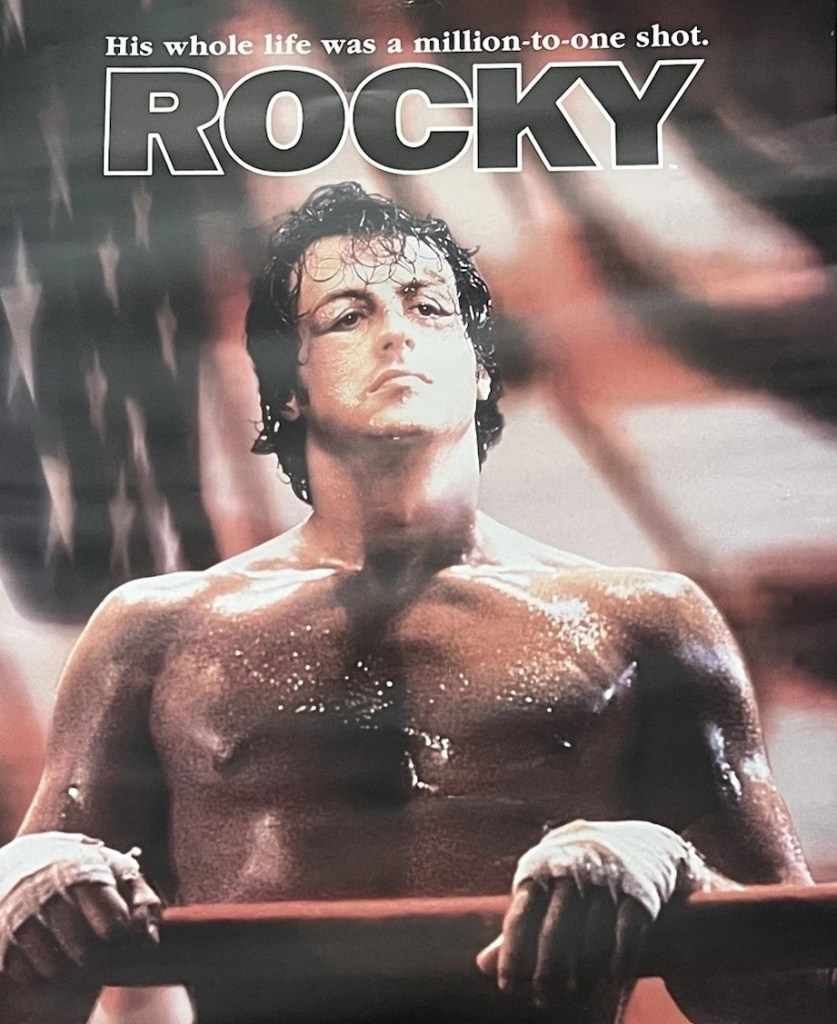
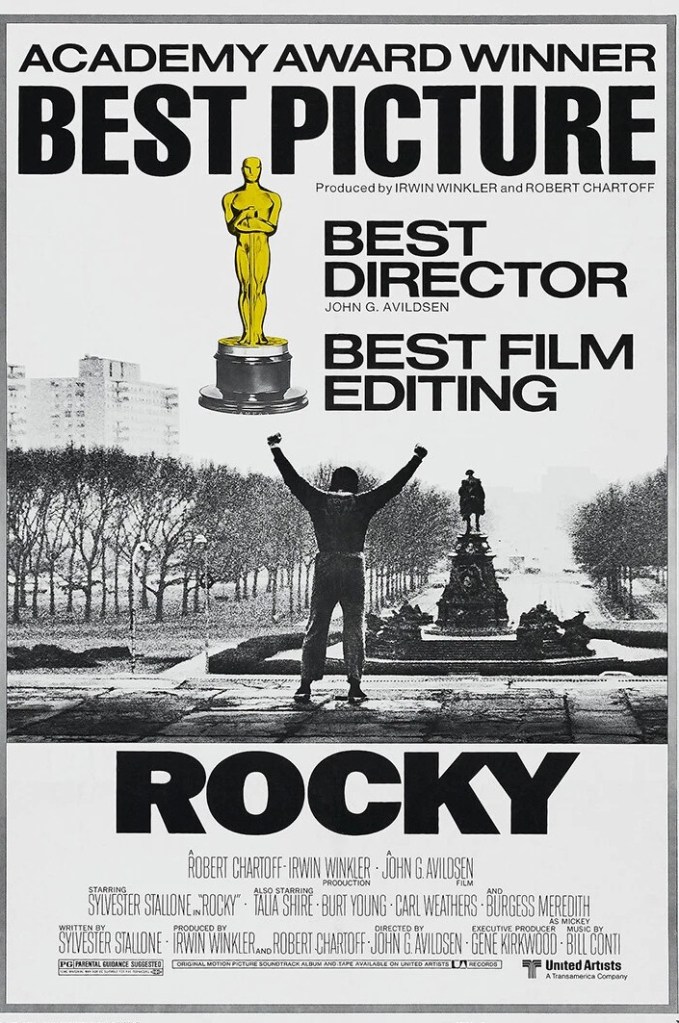
Once Rocky was completed, UA launched an extensive publicity campaign to promote the film, including key art featuring Rocky partially wrapped in an American flag, as he appears at the end of the fight with Creed. Daily Variety (16 November 1976) noted that “Rocky has virtually been declared a film classic even though it is still several days from opening” and a highly orchestrated media campaign had assured that articles would be placed in prominent magazines depicting the film as a “Cinderella story” by emphasizing Stallone’s refusal to sell the script, despite lucrative offers, unless he could play the lead.
The film’s executive producer Gene Kirkwood noted that sneak preview screenings were for “the right people,” such as “one well-known Hollywood gray eminence (Saturday Review critic Arthur Knight] who saw it without the final fight sequence but became a valuable public relations asset by calling the picture ‘the sleeper of the year’ in front of numerous lecture audiences.” After Rocky was screened for the staff of New West magazine, the resultant cover story sung its praises, assuring that the article would then be picked up by the magazine’s sister publication New York. Kirkwood also noted that Rocky was perceived as a “Frank Capra-type tale.”
The Variety reviewer commented on the underdog theme of Rocky, noting that “the very best way to enjoy [the film] was to simply relax and roll with the Walter Mitty…notion that the least of us still stands a chance of making it big.” An opposite view was expressed by Vincent Canby in the New York Times which described Rocky as an “absurdly oversold…sentimental little slum movie.”
The picture went on to become a huge hit, becoming the second highest-grossing film of 1977 (after Star Wars), and by December 2006, according to Hollywood Reporter, had grossed $225,000,000 worldwide and over $117,000,000 domestically. Rocky attained such acclaim that when Stallone donated a life-size statue of Rocky Balboa to the city of Philadelphia, where most of the film was shot, the statue was placed on a site near the steps of the Philadelphia Museum of Art, the steps Rocky ran up while in training, one of the film’s most iconographic scenes. The steps became a popular tourist attraction for Rocky fans, many of whom would run to the top to imitate the boxer’s triumphant pose.
In 2007 Rocky was ranked 57th on AFI’s 100 Years…100 Movies–10th Anniversary Edition list of the greatest American films, moving up from the 78th position it occupied on AFI’s 1997 list. In addition, the film ranked 4th in 2006 on AFI’s 100 Years–100 Cheers list; the character of Rocky was ranked 7th on AFI’s 100 Heroes and Villains list and Rocky’s memorable “Yo, Adrian!” line was included on AFI’s 100 Years–100 Quotes list.
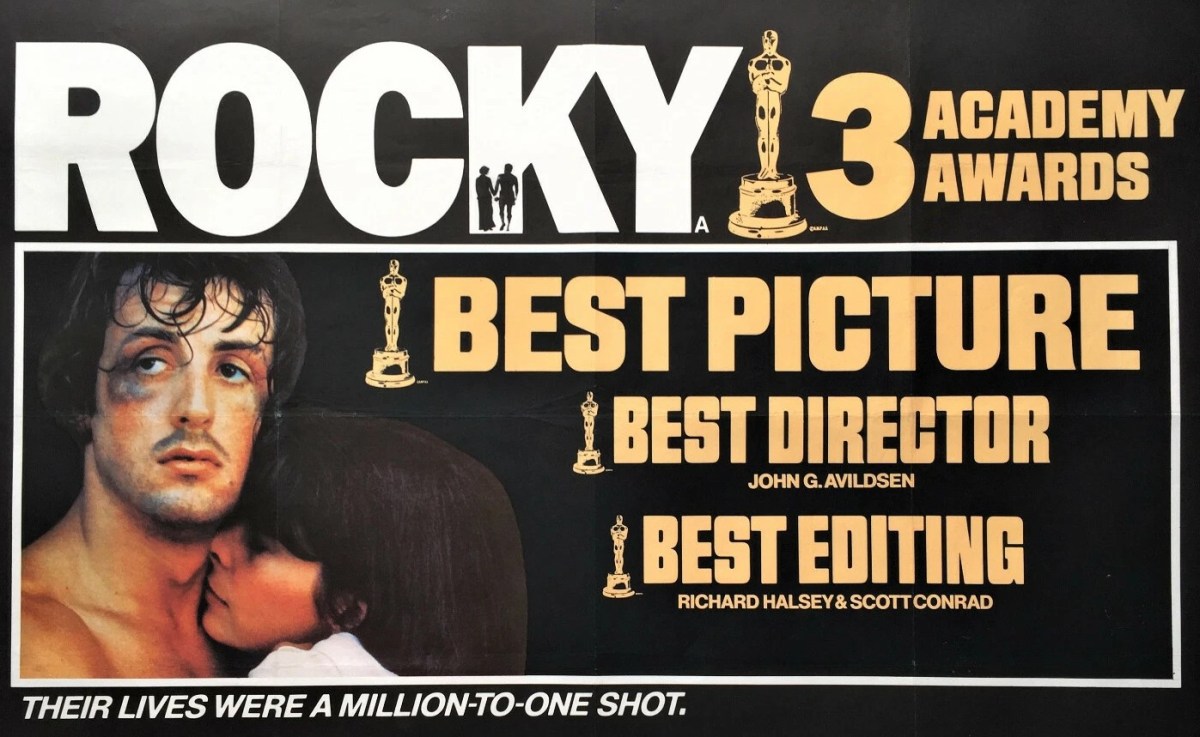
Rocky, which at the time of its release was considered a longshot to win any Academy Awards, won for Best Director, Best Film Editing and Best Picture, and was nominated in the following categories: Best Actor in a Leading Role (Stallone), Best Writing, Screenplay Written Directly for the Screen (Stallone), Best Actor in a Supporting Role (Burgess Meredith and Burt Young), Best Actress in Leading Role (Talia Shire), Best Sound and Best Song. Rocky garnered the following Golden Globe nominations: Best Motion Picture Actor-Drama, Best Motion Picture Actress-Drama, Best Director, Best Original Score and Best Screenplay.
The picture also won the DGA Award for Outstanding Directorial Achievement in Motion Pictures and was awarded a Golden Globe by the Hollywood Foreign Press Association for Best Motion Picture-Drama. Stallone was nominated for the Writers Guild Award for Best Drama Written Directly for the Screen, and Shire won the New York Critics’ and National Board of Review’s awards for Best Supporting Actress.
Following Rocky’s release, several lawsuits were filed against the film. In an undated Hollywood Reporter news item, local attorneys Herb Dowdell and Howard Rosoff, who owned twenty-five percent of the New Picture Co., filed a $19,000,000 lawsuit against Kirkwood, on the grounds that producers Chartoff and Winkler contracted with New Picture Co. and not Kirkwood for their services on the picture.
In response, Kirkwood claimed that in 1972, Dowdell, the founder of New Picture, gave the firm to him in exchange for twenty percent of the company’s stock, and that the company was defunct when he took it over. The outcome of that suit is unknown.
In 1977, John Roach and Ron Suppa, producers of Force Ten Productions, filed a $30,000,000 suit against Winkler and Chartoff, (Hollywood Reporter, April 1977) claiming it owned an exclusive option with Stallone to write and star in a film titled Hell’s Kitchen, which the company claimed was based on a theme about a “club prize fighter who would build a reputation…until a climactic fight which he would lose.”
Force Ten charged that Rocky was an outgrowth of Hell’s Kitchen, which had a working title of Paradise Alley. An Despite the suit, Universal financed Hell’s Kitchen, which was released in 1978 as Paradise Alley.
Former heavyweight boxer Chuck Wepner sued Stallone in 2003 for a share of the profits from the Rocky movies, claiming that the first in the series was based on Wepner’s life. In 2006 he settled for an undisclosed amount.
In the wake of Rocky’s success, A Party at Kitty and Stud’s, a soft-core porn film in which Stallone appeared in 1970, was released on videocassette under the title The Italian Stallion and promoted as “Sylvester Stallone Star of Rocky Goes X Rated.” Stallone (Variety, 21 June 1977) said that, to his knowledge, the film was never released theatrically, and he deplored the video release’s exploitation of him and Rocky.
Rocky spawned five sequels, even though, at the end of Rocky, Creed and Rocky agree not to have a re-match: Rocky II (1979) (in which Rocky defeats Apollo), Rocky III (1982) and Rocky IV (1985); all were directed and written by Stallone and featured the principal cast from Rocky.Rocky V, written by Stallone and directed by Avildsen, eliminated the character of Apollo, who died in Rocky IV, and added Sage Stallone, the son of Sylvester Stallone, as Rocky’s son “Rocky, Jr.” In Rocky Balboa (2006) written by Stallone and directed by Avildsen, Adrian has died, making Rocky a widower
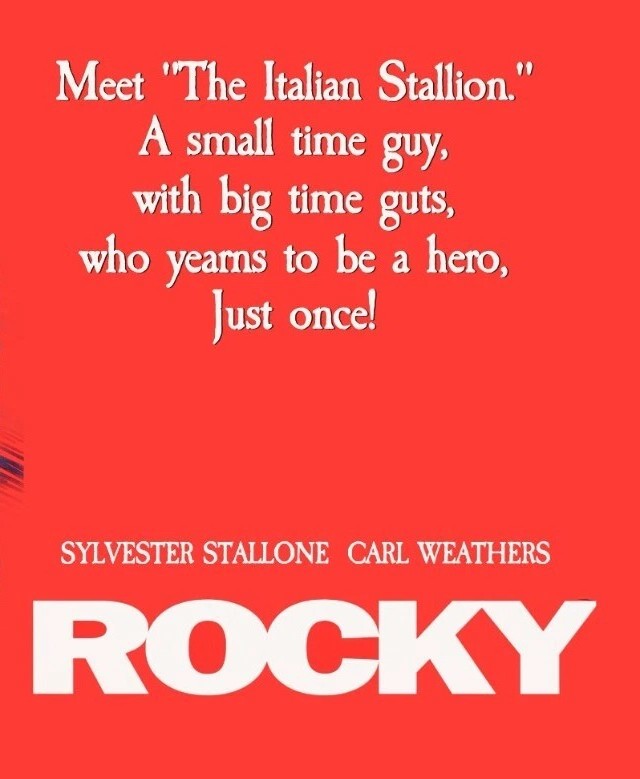
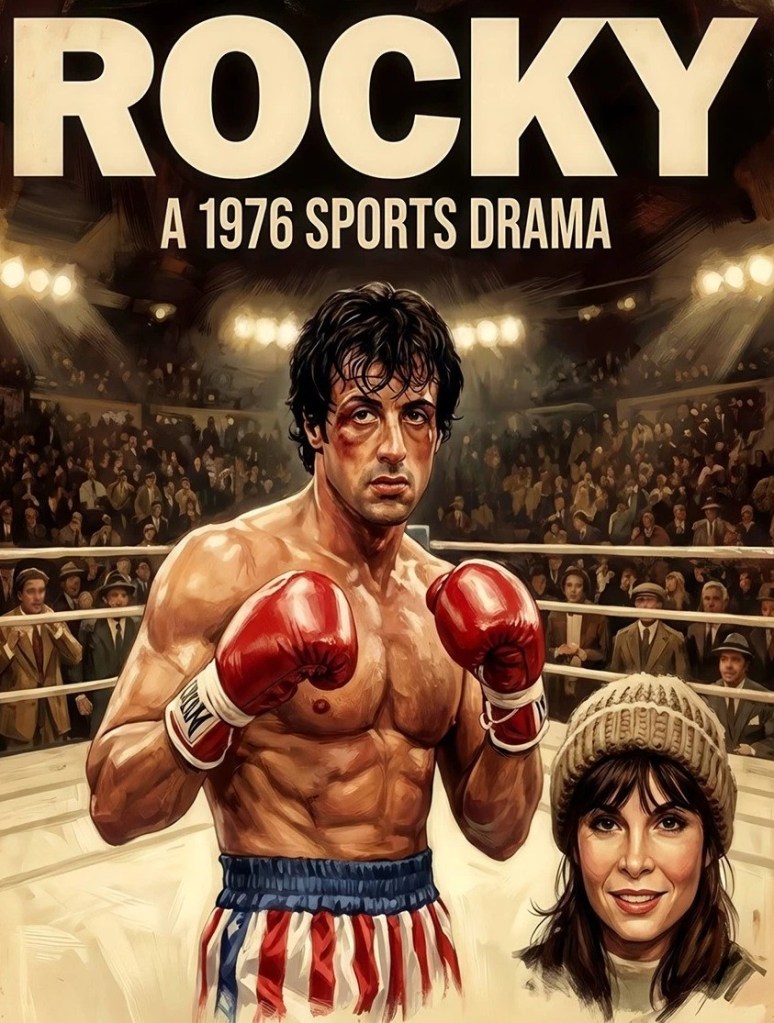
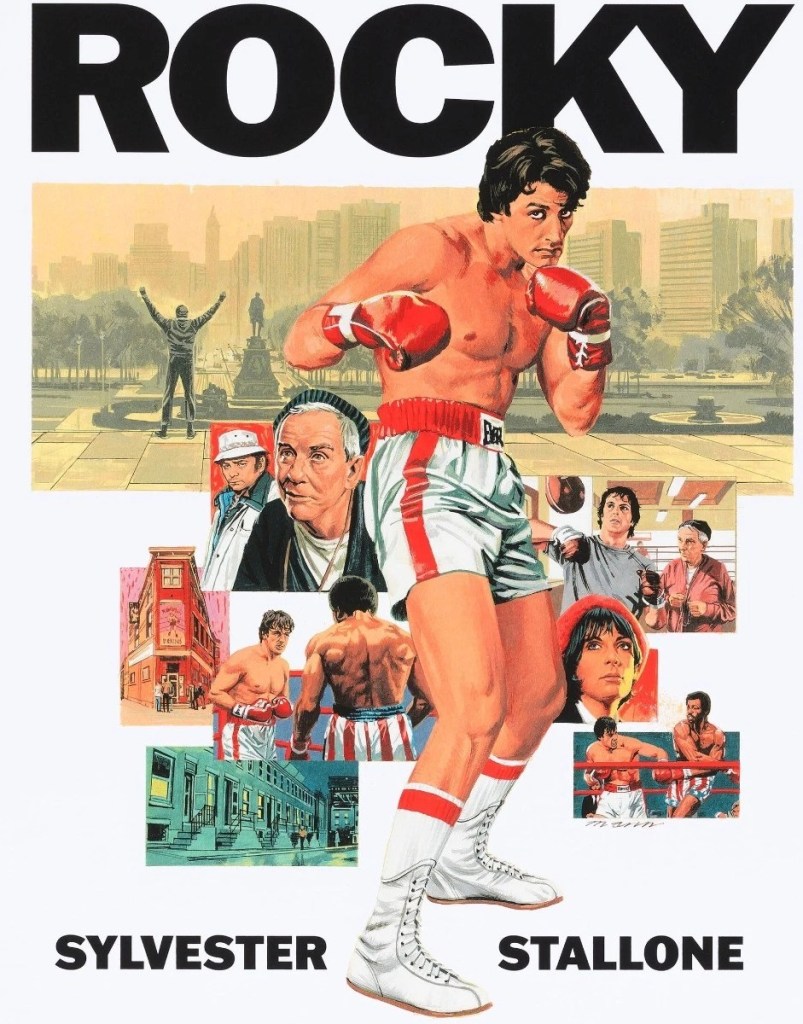
Yeah, couldn’t resist catching up on this after seeing its 50th anniversary tribute movie I Play Rocky (2026). It’s much darker than I remember and I can clearly see what attracted producers Irwin Winkler and Robert Chartoff to the screenplay. It’s not just a modern fairy tale where the little guy – in the American Way, apparently – is given his chance and not just a great boxing movie, but it’s about those struggling on the verge of becoming the dregs of society and about being left out and ignored.
Most times when Hollywood examines poverty, it’s about the unemployed or people with lives inhibited by some other obstacle, disability, alcohol, unfaithfulness, perhaps all three. But this is about those inhabiting some kind of twilight zone where the chance of falling through onto skid row are very high. At best, they’re making do. At worse, they wonder why their ambitions – which might be just as ordinary as falling in love – are being denied.
As much as it plays into The American Dream, the screenplay recognizes that darkness. You can see what Chartoff and Winkler saw when they read a piece in which each of the four principles gets to talk about loss, about being ignored, about being erased from The American Dream.
Perhaps the most famous of these is the “what about my prime” tirade by Rocky (Sylvester Stallone) when he nearly knocks a door off its hinges in his fury. But that was preceded by Rocky’s 76-year-old trainer Mickey (Burgess Meredith) and his outburst about, effectively, how with a little help he could have become a contender and instead is left with all the physical scars of his failure.
In some sense he represents the Ghost of Xmas Future, revealing to Rocky what he’ll become if he doesn’t buckle down and take the help that’s offered. The conclusion to that sequence is brilliantly done. In extreme long-shot and resisting the temptation (perhaps imposed by budget restrictions) of a single close-up we see the pair on a dark deserted street reconcile.
Rocky’s meek girlfriend pet-shop worker Adrian (Talia Shire) realizes her brother Paulie (Burt Young) has deliberately reinforced her negative feelings about herself so that he’ll gain a permanent housekeeper and to the audience’s surprise she kicks off the traces and gives him both barrels. Perhaps saddest of all is alcoholic lonely unmarried Paulie, who appears to have no redeeming features, but is clearly cursed with the same negative thoughts as his sister and can’t understand why he’s been cast aside.
So that’s mostly what this movie is about, not one guy/gal being given the opportunity to stand up for himself/herself, to move out of one of the lowest circles of hell, but through Rocky all achieve a more satisfying level of existence and begin to realize long-held ambition and not to be left out.
Luckily, the rest of the tale measures up and it just doesn’t settle to examining the grim reality of the American working poor. Mickey’s simple methods of improving Rocky’s boxing technique, Adrian throwing off years or self-restraint and self-doubt by just lunging into kissing Rocky when the opportunity arises, Paulie with a cigar and a woman at his side when he manages to score some sponsorship cash off (literally) the back of Rocky.
This works as well because it takes a long time to get going, doesn’t just jump straight in. So we see what Rocky lacks. He doesn’t have what it takes to be a big-time boxer – the fact that his nose isn’t broken tells you he’s never truly got into the heat of a fight – nor sufficient toughness of another kind to be an enforcer for a loan shark, nor even the kind of self-confidence that you’d expect a boxer to have when it came to women.
His personal development lends itself to cinema. The lonely pounding of the streets, the physical exertions of training, the exhausted crawl up the steps that turns into hope and fires up the local crowd. The exultation when he raises his hands aloft in triumph atop the steps is pure expression of self-belief.
The fight itself is bloodily terrific, the cocky Apollo Creed (Carl Weathers) who (literally) gets a come-uppance in the ring as Rocky expresses every ounce of ambition and hope.
Terrific performances all round. Stallone might appear at his best with the smart lines that woo Adrian or the hammering he takes in training or in the ring. But he’s at his best when the camera settles on his face and reveals the depth of his despair. He was the only one of the four principles not to be recognised by an Oscar nomination and Meredith actually won.
And you’d have to tip your hand to director John G. Avildsen (Joe, 1970) who made this work on a tiny budget. Not to mention composer Bill Conti. Sure the movie begins with the bold fanfare but mostly the theme tune is picked out on a piano that reinforces loss.
I was worried that Rocky wouldn’t turn out as well as I Play Rocky suggested.
As it happened, the night before I saw this I took in Heist (2001), written and directed by playwright David Mamet, and that suffers from the same irretrievable condition as this. Characters who can’t stop yakking and directors without a cinematic bone in their bodies. These are little more than filmed plays with the playwright stretching and stretching with his endless words to find the bon mot that moviegoers will be repeating for years and might enter the “greatest line” hit parade. In Heist it was “the thing.”
Here, there isn’t a line that’s memorable. “I don’t know what means” in I Play Rocky hit the mark for reasons audiences won’t even understand. Quentin Tarantino would know. He can write the memorable line.
If director Martin McDonagh (The Banshees of Inisherin, 2022) understood cinema he would have started with his hero picking a moth off a wall and shepherding it outside and then later, when it was raining, finding some way of preserving the moth from the rain. That’s how to introduce an interesting character, not just have him tell you. Show, not tell, is as much a mantra of the movies as in written fiction. Didn’t F. Scott Fitzgerald, or the character representing him, arguably the greatest American writer of the 20th century, not get an object lesson in this in Elia Kazan’s The Last Tycoon (1976).
I’m sorry to be a party-pooper given this has ridden in on a wave of praise and stars with a shedload of Oscar nominees, but this is a glorified yak-fest and a lazy one at that. Taking a pop at American foreign policy might endear you to the critics, but it’s just camouflage for a movie that has little to say and the determination to say it. Once we descended into JFK conspiracy theories it totally lost me.
I know quirky characters aren’t meant to be logical but explain to me a fellow who takes note of the Catholic dictat that suicide is a big no-no but ignores that other inconvenient rule Thou Shalt Not Kill and whose hit rate in that direction is over 60. Maybe we’re meant to feel sympathy for an assassin dying of cancer because he’s a successful hitman. To be honest I’d prefer the more unpretentious trope of hitman wanting to retire a la Stiletto (1969).
Chris (John Malkovich) must have an iron constitution because, despite never having been exposed to a very serious drug, he can tolerate a daily injection of morphine better than his junkie boss MJ (Steve Buscemi), an addict who still hasn’t built up an immunity to the stuff, falling asleep after injections.
I guessed right away that the presence of the two girls they meet at the airport wasn’t accidental. And the what’s-in-the-box trope has long lost its power after Seven (1995) took the crown after sticking a human head in it. And don’t get me started on the absurd Monument Valley scene. Whether this was homage to John Ford or just the writer couldn’t think of anything more ridiculous I couldn’t care less.
The most believable character was Margie (Parker Posey), the unfaithful alcoholic wife of Lee (Sam Rockwell), Chris’s longtime buddy and travelling companion and assassin (with a less significant, comparatively speaking, body count to his name) who has promised to off the hitman so that he doesn’t have to compromise his religion.
There is a horse by the way, though I didn’t count whether it qualified as “Horse No 9” and in the only bleak part of the black comedy is that after it takes a shine to Chris in the most maudlin fashion imaginable (even Disney wouldn’t have dared stoop so low), he’s responsible for accidentally killing it.
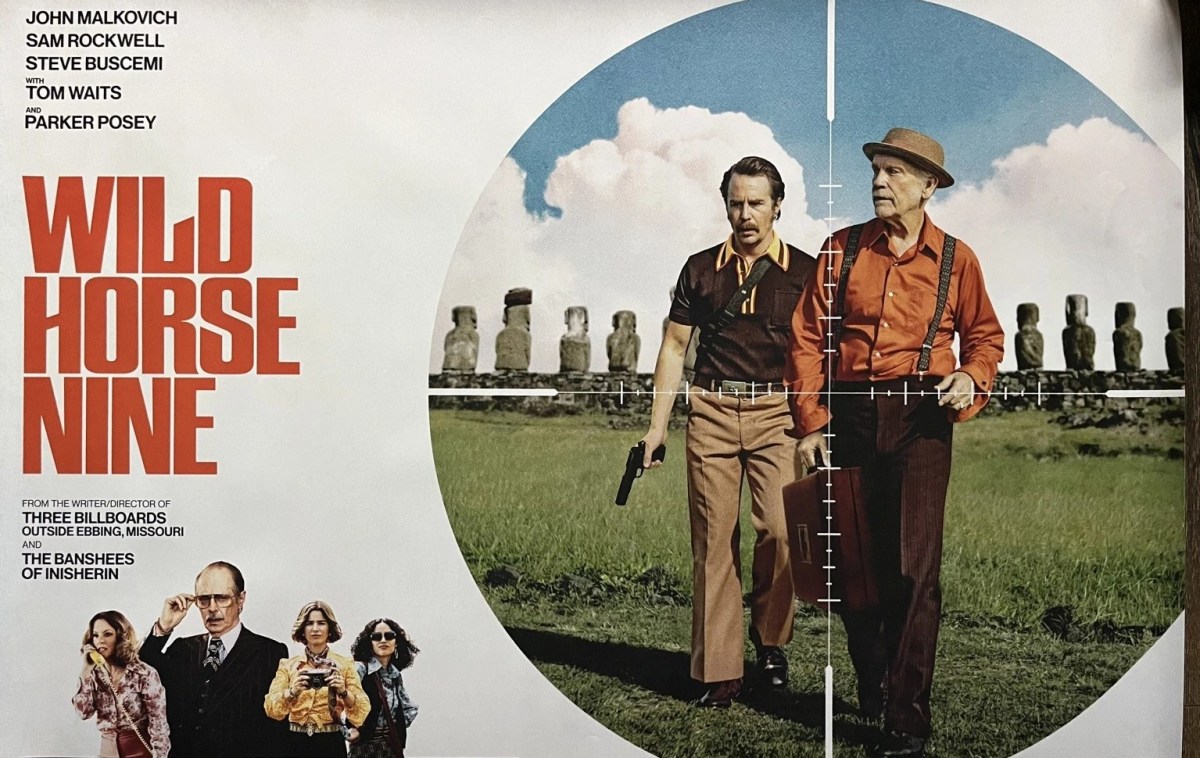
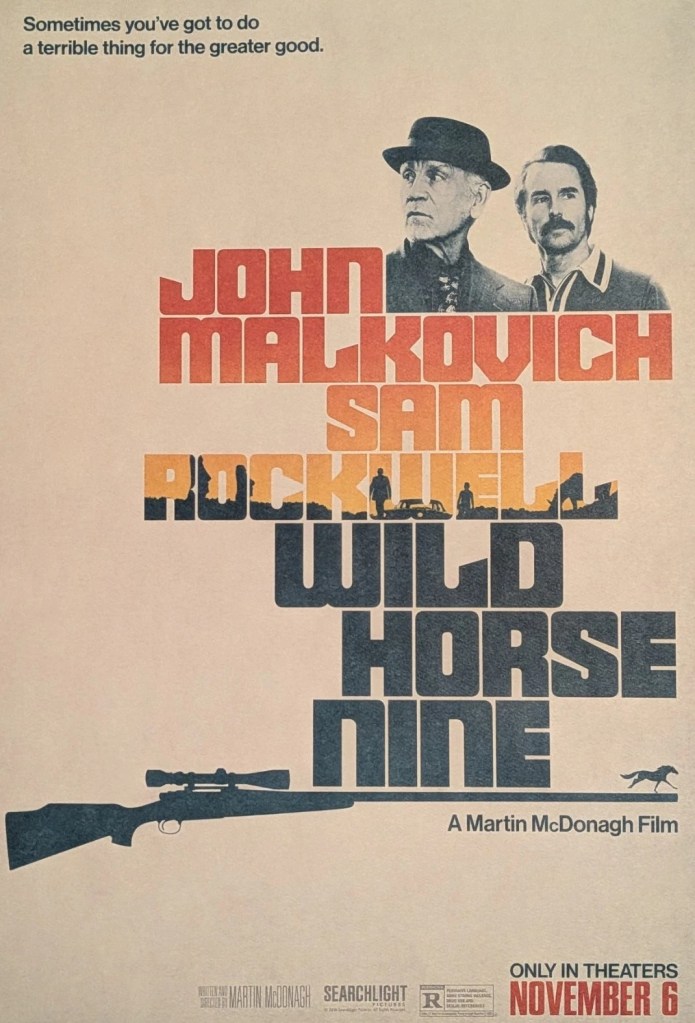
Despite a campaign gathering pace behind John Malkovich (In the Line of Fire, 1993) for a Oscar, I think he, along with Rockwell and Buscemi are miscast. Malkovich has been world-weary since he was born. There’s nothing new in his performance, but a more weighted more of the same. Sam Rockwell (Argylle, 2024) and Steve Buscemi (Reservoir Dogs, 1992) are just the same over-acting actors they’ve always been. Only Parker Posey (Dazed and Confused, 1993) steps away from her screen persona.
I’ve only enjoyed one film from Martin McDonagh and that was because Three Billboards Outside Ebbing, Missouri (2017) had a decent story.
Black comedy maybe, but the joke’s on the audience.
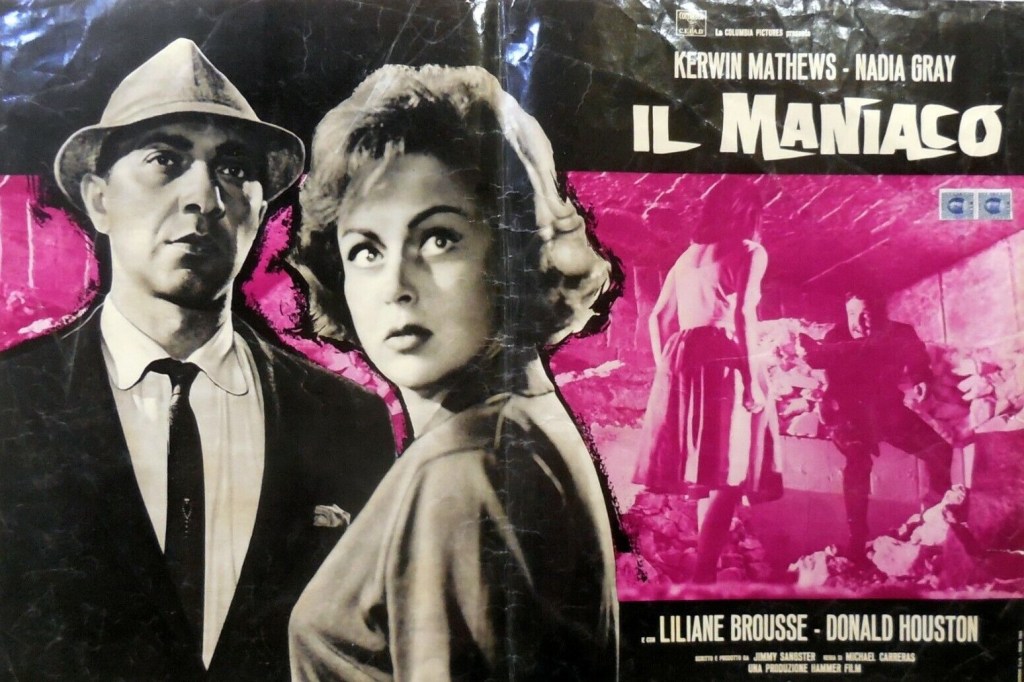
Such an ingenious thriller you just have to applaud. Opening with a close-up of a predatory eye, this scarcely draws breath as it dashes through a latter-day film noir maze, spawning out auditory and visual cues, beautiful woman luring the dupe, twisting the expected narrative round her little finger.
Artist Jeff (Kerwin Mathews), setting up his easel in the Camargue, hardly one of the most tourist-friendly spots in France, eyes up Annette (Liliane Brousse), the daughter of a hotelier Eve (Nadia Gray), but, in extremely opportunistic style, settles for the mother. In true noir fashion she is using him, seducing him into a scheme to free her husband George (Donald Houston), incarcerated in a mental asylum for torturing and killing with a blowtorch the aforementioned predator who raped Annette four years before.
Eve convinces Jeff that in return for his freedom the madman will effectively give his blessing to their affair. It’s a deal only a besotted dupe would fall for. George has an ally inside the asylum, assisting his escape, but when George turns up, and Jeff drives him to Marseilles, he leaves behind the corpse of his criminal associate in the boot. Jeff dumps the body in the river.
Cue the start of a series of strange events. A fired-up blowtorch is discovered in the garage where Georges committed his initial crime. Annette, jealous of her mother’s relationship with Jeff, plans to leave and go with her father.
And I’m sorry to say that in order to explain the attraction of this neat little picture I’m going to delve into SPOILER ALERT territory.
All the while of course you are wondering whether George will keep to his side of the bargain, especially as Eve starts to get antsy with Jeff, and the investigating police inspector seems overly suspicious. And it being this kind of picture you expect a twist.
But not one this clever.
George, blowtorch at the ready, traps Jeff in the garage. He has fished the corpse out of the river. He plans to burn the garage to the ground, leaving behind two dead bodies, assuming the police will imagine that in a further bout of psychotic behavior the murderer gave in to his desires and killed again, but in the process accidentally killed himself.
But that’s not the final twist.
One of the victims survives. But which one? He is so badly mutilated as to be rendered unrecognisable and lies in a hospital bed covered head to foot in bandages. Has Eve’s plan backfired? Has she accidentally killed her lover?
But that’s not the final twist.
Eve knows who the man in the bed is. It’s not her lover. Because Jeff is just the dupe. The body dumped in the river was George. All the time Eve was visiting her husband in the mental asylum she was carrying on an affair with one of the guards. The guard killed George after the escape, retrieved the body from the river, left it in the garage and planned to kill off his competition at the same time. If you’re going to be tabbed a maniac, you better behave like one.
It’s a shame you can’t see the shock on the face of poor Jeff because he is encased in bandages. And this isn’t just the clever villain unable to stop herself boasting about how clever she has been. This is Eve getting into the murder racket. She switches off his oxygen.
But that’s not the final twist.
Jeff ain’t dead. He wasn’t even on a life-support machine. He was just trussed up to tempt Eve in revealing herself. He had escaped the garage inferno and told the police what was going on. So you can guess the rest, but even then there’s one other ironic twist. Just like Jeff, the imposter George is as taken with the daughter as the mother.
The twists are so well done, the narrative so compelling, that would be enough to make a convincing case for entry into the category of cult. What makes an undeniable case is the directorial style. Sights and sounds drive the story as much as anything. The eerie bright light in the garage, the sound of blood dripping on the floor, the bold close-up of the eye, the advancing blow torch, setting it in a bleak rather than scenic area of France, are cinematic notions belonging to classic movies, not to a tawdry B-picture.
Although The Devil Rides Out (1968) is generally considered the top Hammer picture of the decade, I would argue this runs it a close second, and possibly even tops it. Taking time off from his studio job Michael Carreras (The Lost Continent, 1968), later Hammer’s managing director, delivers a little masterpiece working to an effortlessly clever original screenplay by future director Jimmy Sangster (The Horror of Frankenstein, 1970).
It’s enough that Kerwin Mathews (The 3 Worlds of Gulliver, 1960) is playing against his screen persona as upright hero. The biggest advantage in casting Nadia Gray (The Naked Runner, 1967) was that she was unknown and didn’t have the kind of onscreen presence that might have you doubting her motives from the start. Liliane Brousse (Paranoic, 1963), in her penultimate movie, is initially too much all-arched-eyebrow and pout, only coming into her own when she becomes dutiful daughter rather than wannabe seducer. The pretend George, real name Henri, Donald Houston (A Study in Terror, 1965), hidden beneath dark glasses most of the time, is a dab hand at a pretend psychopath.