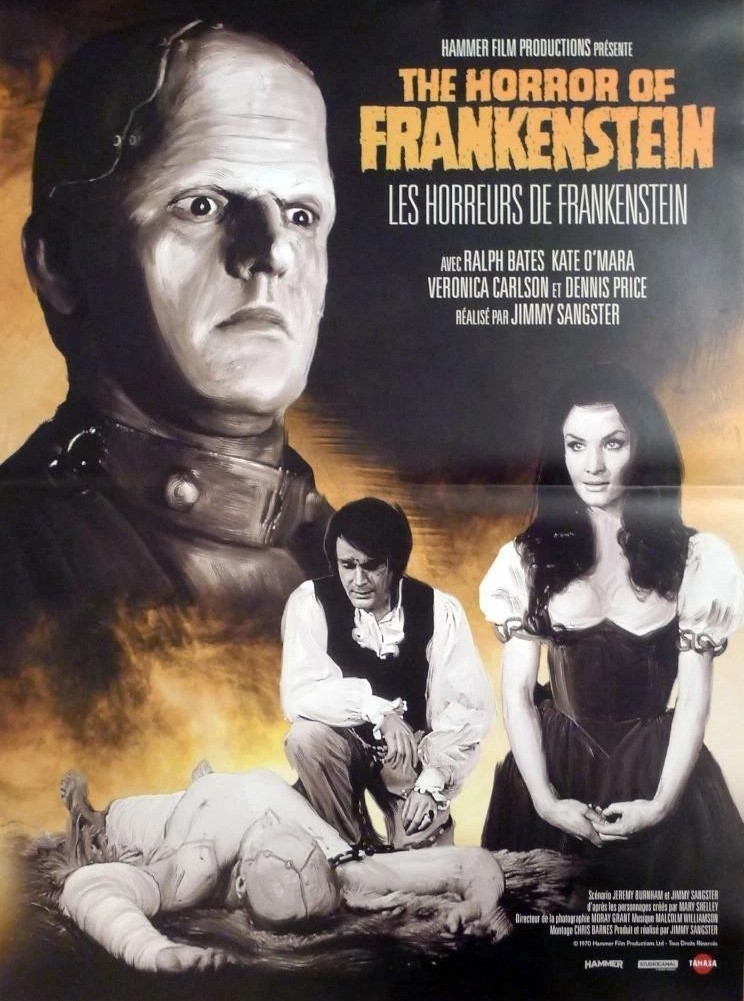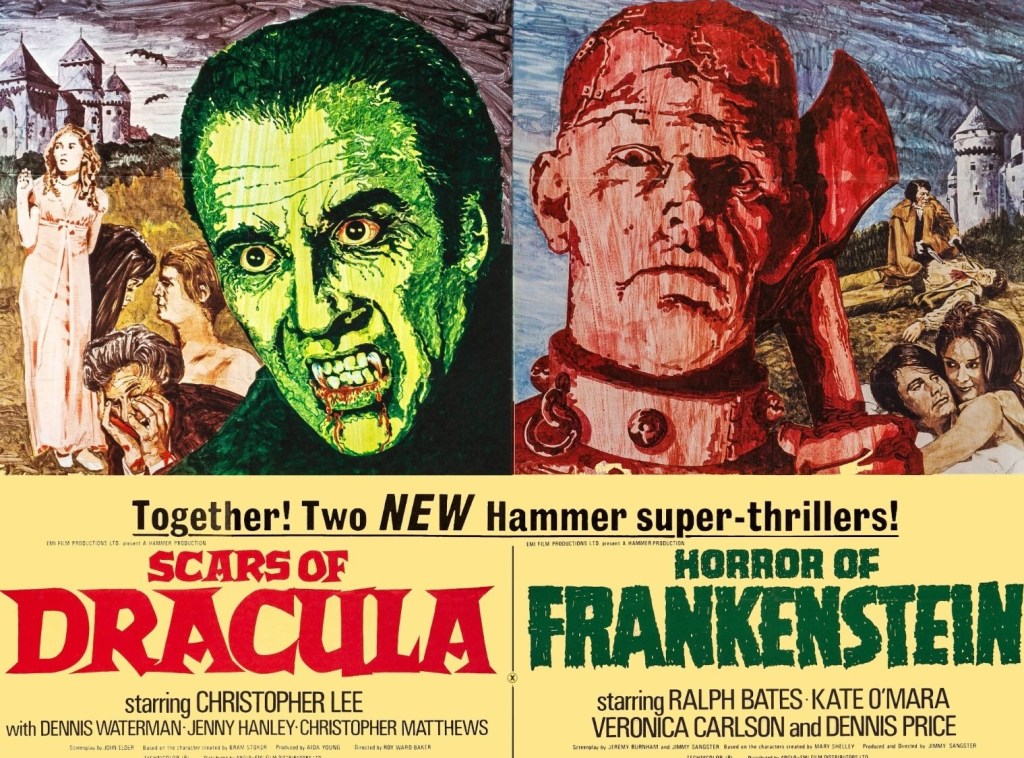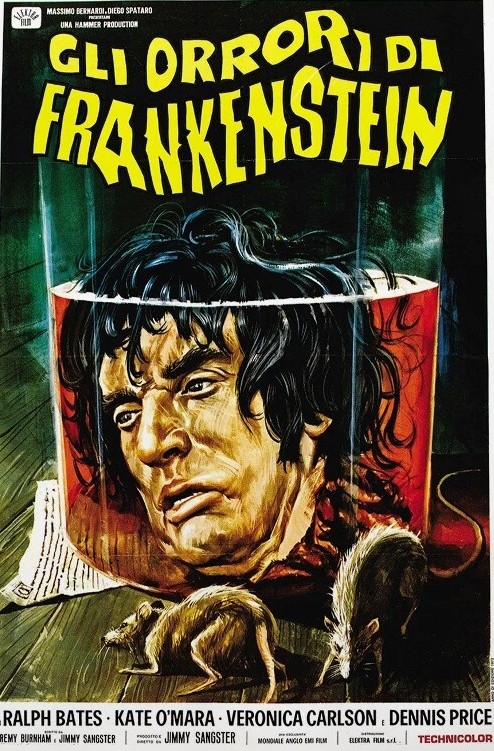
The Horror of Frankenstein (1970) ***

Fanboys these days wouldn’t accept the sudden shift in the series without some far-fetched backstory. But in those days audiences never seemed to question why the new iteration of Frankenstein was less than half the age of the previous one (Frankenstein Must Be Destroyed, 1969). Call this a remake or a reimagining or just trying to pull a fast one on a loyal moviegoer.

In fact, this goes pretty much back to basics – and beyond the addition of sex and gore it’s claimed in some quarters to be little more than a retread of The Curse of Frankenstein(1957) – and without Peter Cushing to provide chilling gravitas. Instead, Hammer have corralled in a younger rising star in Ralph Bates – who had made his movie debut in Taste the Blood of Dracula (1970) and would form part of the studio’s horror stock company for the next few years – and in keeping with his age taken us back to the teenage Frankenstein, besting schoolmasters with his arrogance and scientific brain, before dropping out of university to concentrate on experiments with human life.

By this point he’s bumped off his father to inherit the fortune he requires to kit out his castle with the most modern equipment, including the not-so-advanced vat of acid. This time out there’s no suspicious cops breathing down his neck. And while there also no compromised youngsters representing innocence, his medical colleague goes along so easily with the ghastly experiments that his innocence would be called into question.

The tale is exceptionally lean, with none of the moral complexity of its predecessor. Primarily, the focus is on the baron building his monster piece by piece with the help of corpses delivered by unctuous graverobber (Dennis Price) though in an unusual gender twist for the period it’s his wife (Joan Rice) who does the actual work of digging up the graves.

Theoretically, there’s some sexual tension between Frankenstein’s mistress, housemaid Alys (Kate O’Mara). and the high-born Elizabeth (Veronica Carlson) who takes up residence with him after she’s left destitute following the death of her father.

Elizabeth had turned down over a dozen marriage proposals while waiting for Frankenstein to get down on bended knee, but he shows little interest in her and seems to thoroughly enjoy humiliating her by allowing her to stay but only as an employee.

Anyone who gets in Victor’s way ends up in the vat or is thrown to the monster. The monster (Dave Prowse) is the best thing in it. He looks like a real person, huge, tall and strong, and doesn’t react well to being chained up, preferring to go on a murderous rampage. No time is spent enlisting audience sympathy for any of the characters.

There’s an excellent twist at the end where the monster ends up in the vat, therefore relieving the authorities of anyone to blame for the serial killing, and priming, I would have thought, a sequel with Bates – Cushing returned in 1974 with Prowse again as the monster, though this Cushing appears to have managed to escape from the burning house in Frankenstein Must Be Destroyed. Go figure.

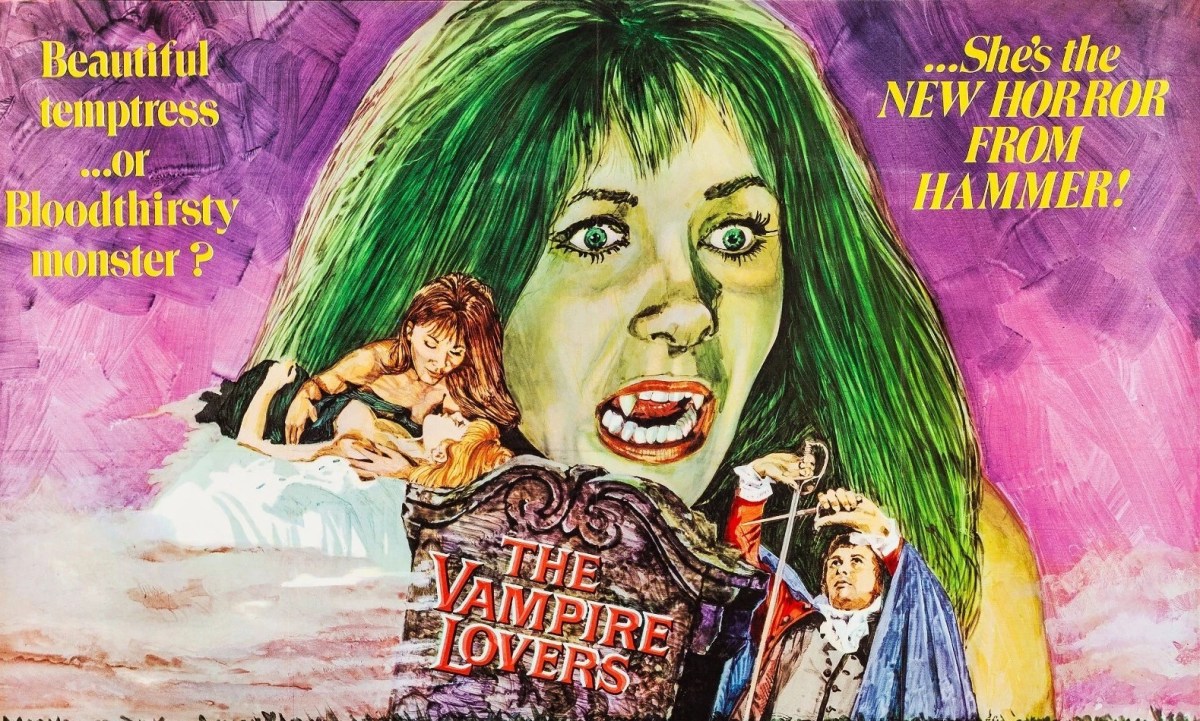
It was a big ask to expect Ralph Bates to step into the shoes of Peter Cushing. The movie is better viewed as Hammer’s attempt to revitalize its various horror franchises, and having dipped its toes into the world of the female vampire it would shortly invest in lesbian vampires and a sex-change Dr Jekyll (a concept light years ahead of its time).

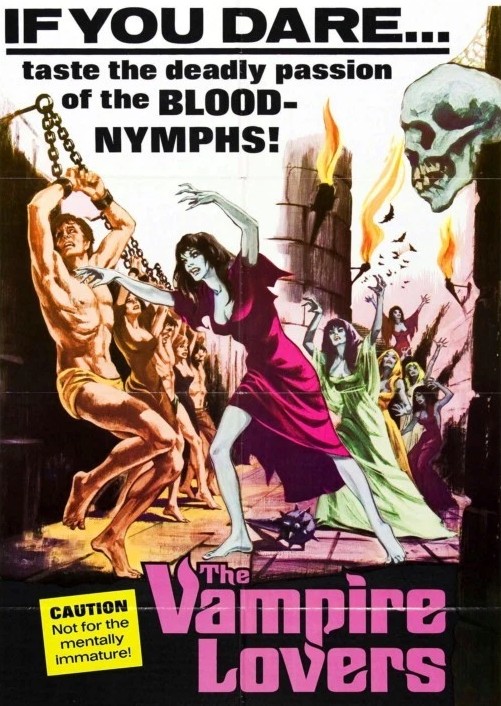
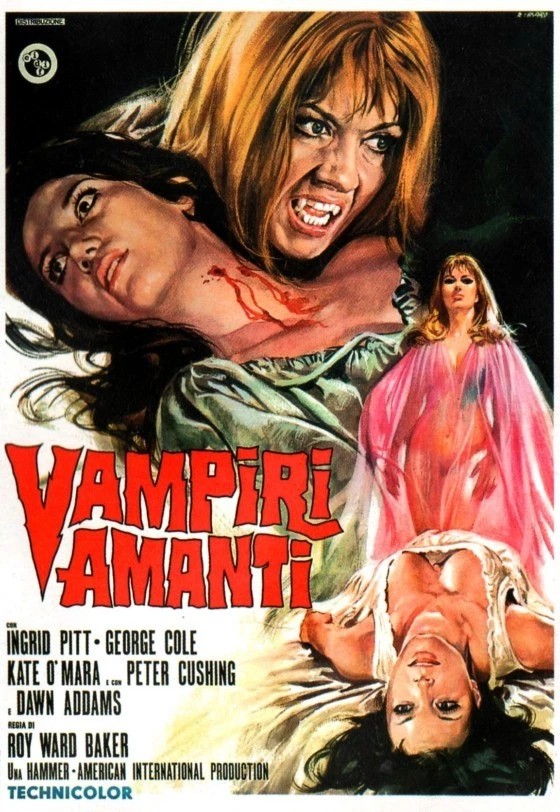
None of the women auditioning for the title of Hammer Scream Queen have much to offer beyond cleavage. Kate O’Mara (The Vampire Lovers, 1970) has the better part, given she has the sense to try her hand at blackmail, but she’s generally insipid. In acting terms, Veronica Carlson hasn’t improved on Frankenstein Must Be Destroyed. It doesn’t take much for  Dennis Price to steal the show.

So, mostly a series of  scientific experiments with a modest amount of gore and none of the nudity Hammer threw into the revamped female vampire series.

I was surprised to find I preferred Michael Carreras’ take on the legend in Frankenstein Must Be Destroyed rather than that of writer-director Jimmy Sangster (Lust for a Vampire, 1971) making his directorial debut but with a bigger reputation as a writer among the horror cognoscenti. Hammer continued playing its role in blooding rising stars -this time round its Jon Finch (Frenzy, 1972).

I’ve seen this described as a parody but I didn’t find much to laugh about.

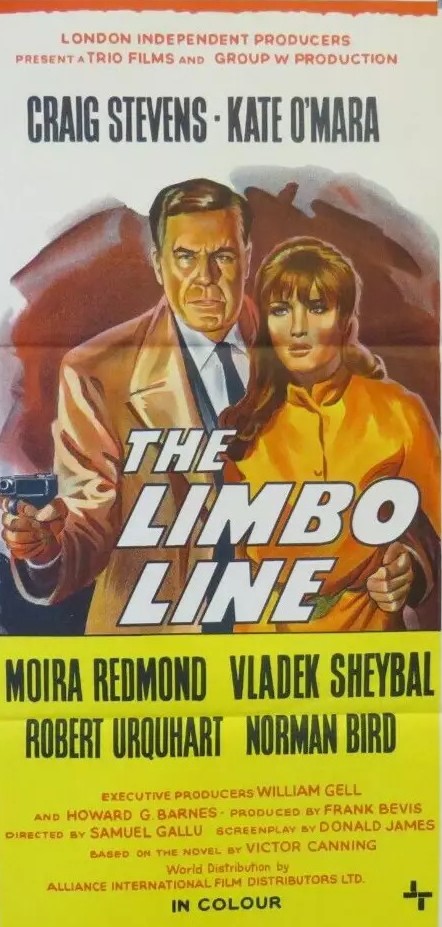
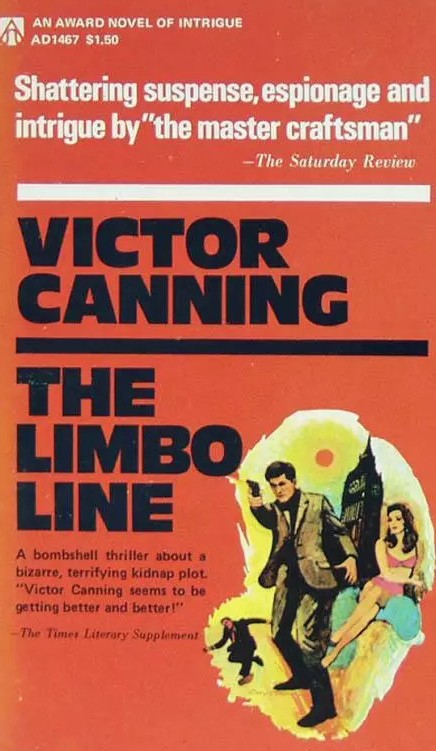
The Limbo Line (1968) ***

Should have been  a classic. The bleakest espionage tale of the decade ends up, unfortunately, in the wrong hands. Betrayal – personal and professional – underlines a sturdy enough narrative of defection, kidnap and rescue, infected with a spread of interesting characters far from the genre cliché.

We open with blonde Russian femme fatale Ludmilla (Moira Redmond), as sleek as they come, killing off her lover once she discovers his true intent. She works for the “Limbo Line,” an organization headed by Oleg (Vladek Sheybal) which whisks Russian defectors back to their home country. In romantic fashion, she inveigles herself into the lives of those who may be, for personal gain, about to take a wrong turn in the service of their country.

Richard Manston (Craig Stevens), meanwhile, is an operative of an undetermined secret unit, getting cosy with Russian ballerina Irina (Kate O’Mara), a defector, in the hope that she will become the next target for Oleg and thus lead him to his quarry. Responding to his amorous advances, she has no concept of this ulterior motives.

But he’s not the only one in the two-timing racket. Oleg lives high on the hog, a lifestyle financed by holding back remuneration due his operatives, who not only want better paid for the risks they are taking, but draw the line at murder. Ludmilla, meanwhile, uses intimacy with Oleg as a way of keeping tabs on him for her superiors.

Everyone, however, is operating under a new code of restraint. Arms limitation talks between the Superpowers currently taking place mean that neither side wants to be publicly seen to be working in the shadows. Hence, the no-holds-barred methods of both Manston and Oleg are frowned upon. Manston and Ludmilla have more in common than one would normally find in the spy movies of the period, the end justifying the means taking precedence over any personal interest in a lover.

The dangerous romantic elements would have been better dealt with in the hands of a more accomplished director. As it is, Samuel Gallu (Theatre of Death, 1967) has his hands full keeping track of a fast-moving tale as Irina is whisked by boat, bus and petrol tanker to Germany, hidden in such confined spaces the more cautious operatives fear she will die.

Nor, despite his fists, is Manston as good as you would expect from a heroic spy, battered to bits by his opposite number, himself imprisoned in the tanker, becoming a pawn to be sold to the highest bidder.

It’s in the tanker that Irina realizes her lover is deceitful, only using her as bait. Similarly, Oleg doesn’t realize he is every bit as dispensable to the ruthless Ludmilla who wishes to avoid public exposure and is only interesting in taking Irina back to Russia where she will be “re-educated.” Chivers (Norman Bird) looks like the nicer sidekick for Manston, the type to demonstrate fair play, except when he has to drown a suspect in a bath. He has the best line in the film, an ironic one at the climax.

The action, while overly complicated, is well done, none of the over-orchestrated fistfights taking place in odd locations. Chivers has a knack of turning up in the nick of time, but he’s the cleverer of the two.

An actress of greater skill than Kate O’Mara (Corruption, 1968) would have brought greater depth to the betrayed lover, but she does well enough to stay alert during the helter-skelter action. Craig Stevens (Gunn, 1967) was never going to be the right fit for a character required to show considerable remorse at his own actions.

The hard core of political reality, the constant betrayal of both innocent and guilty, the shifting sands of romance sit only on the surface and a better director would have brought them more into the foreground, eliciting better performances for deception incurred in the line of duty at the expense of the personal life.

It’s never a good sign when the bad guys are the more interesting characters and while you might expect Vladek Sheybal (Puppet on a Chain, 1970) to steal the show, he is usurped by Moira Redmond (Nightmare, 1964). A bigger budget would have also offered better reward, but even so Gallu comes up with more interesting camera angles than you might expect.  Based on the bestseller by Victor Canning (Masquerade, 1965), he was helped in the screenwriting department by television writer Donald James.

You watch this thinking what might have been.

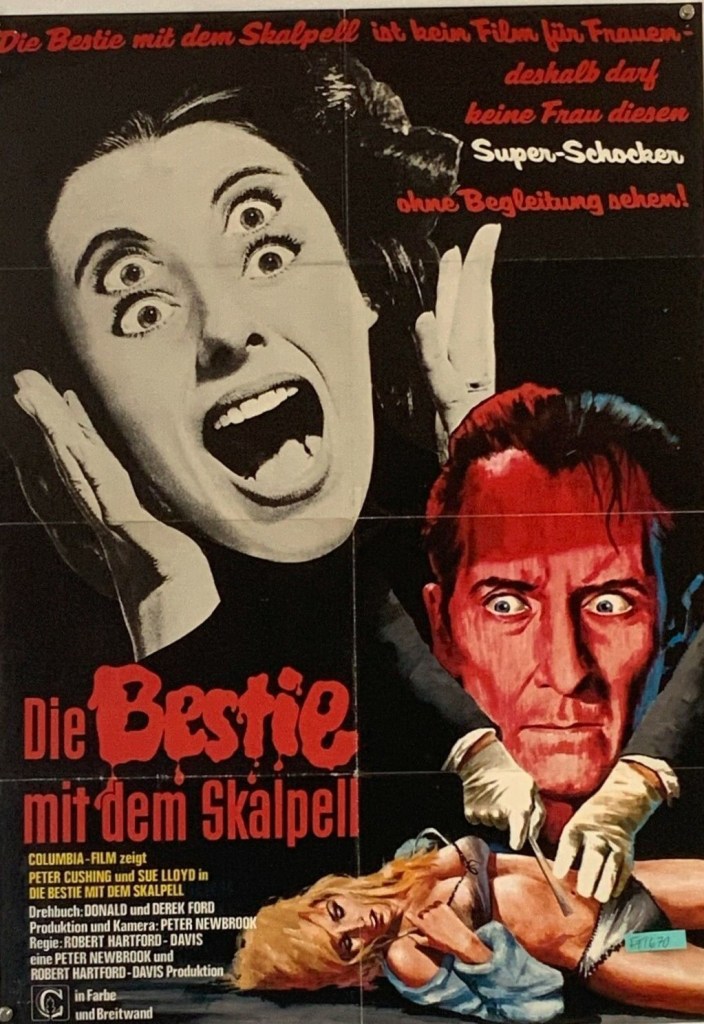
Corruption (1968) ***

Admit it, you always wanted to discover what went on behind Peter Cushing’s chilly British reserve. The man who appeared to be constantly tormenting that nice Dracula or donning a deerstalker to outwit countless villains or battling otherworldly creatures like the Daleks or just a dependable character who in the unconventional Sixties knew right from wrong.

Of course, our Peter had occasionally come unstuck, the duped bank manager in Cash on Demand (1961) but even as Baron Frankenstein he never revealed a demonic side even as he  created monsters who had a tendency to run wild, always civil to the last, stiff upper lip never quavering.

So it’s something of a surprise to see him cast in the first place as the older man lusting after a younger woman. Sir John Rowan (Peter Cushing) is a highly esteemed surgeon who has fallen for model-cum-flighty-piece Lynn (Sue Lloyd) and although he sticks out like a sore thumb at a typical Swinging Sixties party full of gyrating lithe young women he is happy to put up with it for the sake of his girlfriend.

But Lynn has a strong independent streak, she’s not the submissive lass who might have been content to swoon at the feet of such a highly intelligent man, and objects to his attempts at control and can’t resist the chance to show her allure to all and sundry by giving in to the temptation to pose for louche photographer Mike (Anthony Booth), and, as it happens, the assembled throng.

Sir John isn’t going to stand for such brazenness, starting a fight with Mike that ends in a dreadful accident, destroying half Lynn’s face. Naturally, plastic surgery being the coming thing and Sir John capable of turning his hand to anything he’s able to fix up her face good and proper.

Except it’s a temporary measure, something to do with the pituitary gland, and it turns Sir John into a serial killer. There’s no mystery to it, no detective scouting around trying to put together clues, the question soon becomes can Sir John keep it up and what psychological damage is inflicted on Lynn as she comes to the realization that the beauty she had taken for granted, setting aside the predations of age which are still some way off, could vanish in an instant leaving her shrieking in a mirror.

Things get out of hand when they head for the country and fresh victims and find themselves trapped in a home invasion by a gang as gormless and vindictive as the pair from The Penthouse. It doesn’t end the way you’d expect because there’s a twist in the tail that you might accept as par for the course in the unconventional cinematic Sixties or you might just put the producers down for wanting to have their cake and eat it.

Still, it’s good while it lasts. Cushing certainly reveals a different side to his screen persona, and I can’t remember ever seeing him truly in love or indulging in a passionate screen kiss, and certainly to see his murderous side emerge is quite a treat, no scientific excuse to mask his behavior.

And it’s equally good to see Sue Lloyd (The Ipcress File, 1965) in another of those roles where she displayed considerable independence.  As an added bonus future Hammer Queen Kate O’Mara (The Horror of Frankenstein, 1970), here cleavage well hidden, turns up as Lynn’s sister.  You might also spot Vanessa Howard (Some Girls Do, 1969) and Marianne Morris (Vampyres, 1974). Anthony Booth (Girl with a Pistol, 1968) was trying to shake off the shackles of BBC comedy Till Death Us Do Part

Robert Hartford-Davis (The Black Torment, 1964) does pretty well unsheathing the beast within the context of a vulnerable older man. Derek Ford wrote the screenplay with his brother Donald before he decided the sex film was his way to British film legend. The version released abroad contains more gore and sex than when the British censor had its wicked way.

Discover WordPress

A daily selection of the best content published on WordPress, collected for you by humans who love to read.

The Atavist Magazine

by Brian Hannan

WordPress.com News

The latest news on WordPress.com and the WordPress community.