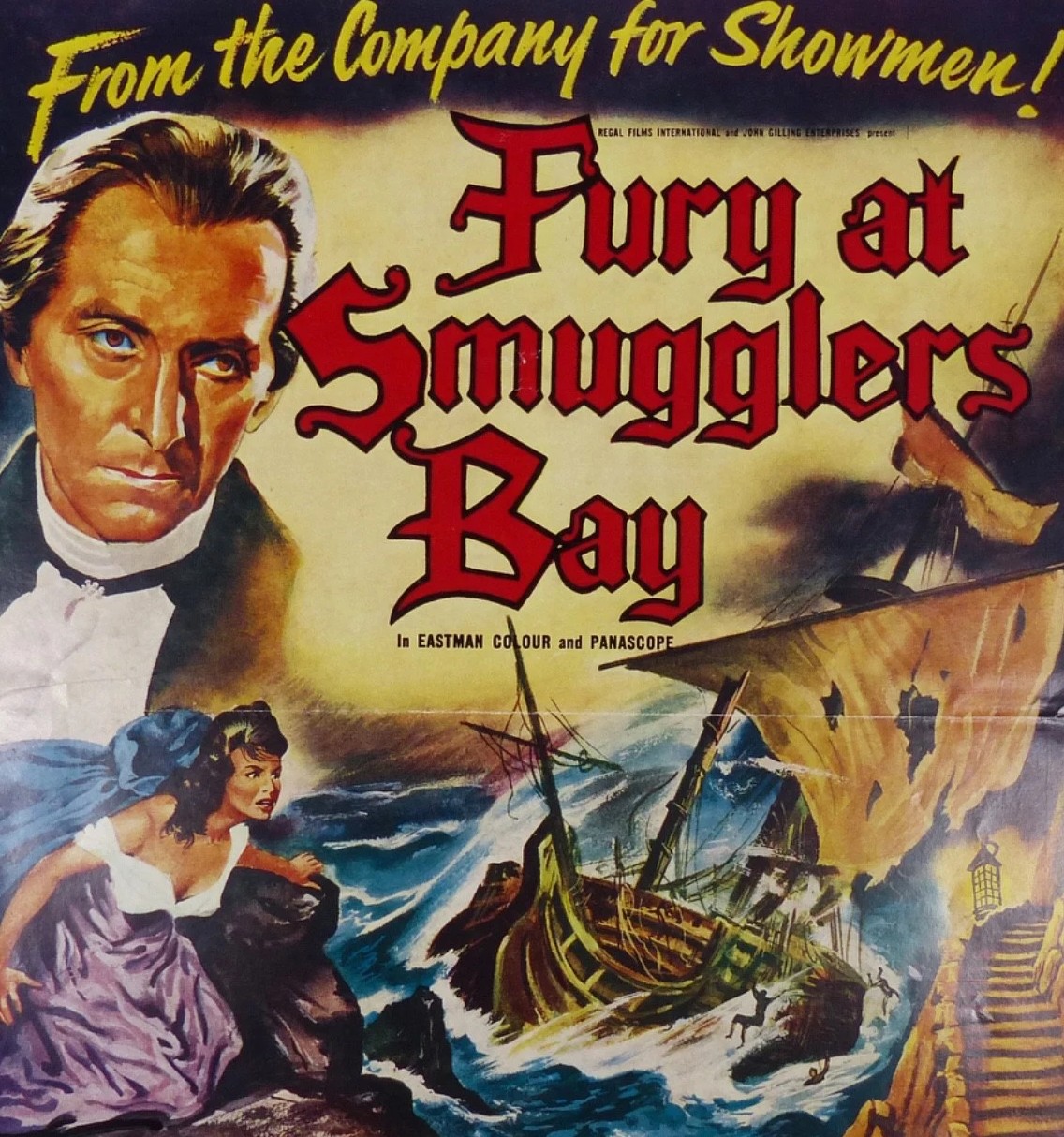
Surprising to find so much moral complexity when it seemed we would be restricted to discussing the difference between good bad smugglers and bad bad smugglers and good good bad guys and bad bad guys. Given the limited running time (it clocks in at 82 minutes) we’ve also just got about enough time to take in hypocrisy.
Compromise, too, for that matter. Squire’s son Christopher (John Fraser) is inclined to warn girlfriend smuggler’s daughter Louise (Michele Mercier) that his father Squire Trevenyan (Peter Cushing) is setting soldiers on the local smugglers. The local highwayman known as The Captain (William Franklyn) is considered something of a decent fellow because once he’s robbed travellers going along the road one way he’ll make sure they’re not robbed on their return.
Trevenyan finds the most convenient way to prevent his son marrying beneath himself is to imprison Louise’s father Francois (George Coulouris) on the grounds of receiving stolen goods – his sentence is deportation to Australia. He’s helped by his son having to run off to London after killing one of the smugglers in self-defense, the father assuming anyone witness to the struggle will side with the smuggler.
Aware that maybe the plot’s getting a bit too cute for anyone’s liking, director John Gilling makes the most of the thunderous seas, boats getting battered to bits in the storm, waves hammering the wheelhouse, men swept overboard from vessels losing their way because rudimentary lighthouses have been shattered by predatory smugglers (known as “wreckers”). Stunning Cornwall scenery also helps though beaches being littered with heavy-duty rocks rather than glistening sand tends to inhibit action sequences.
The wreckers are the bad bad smugglers, the ordinary locals, dealing with a bit of rum and tobacco to avoid the exciseman or helping themselves to loot from legitimate shipwrecks, are the good bad smugglers.
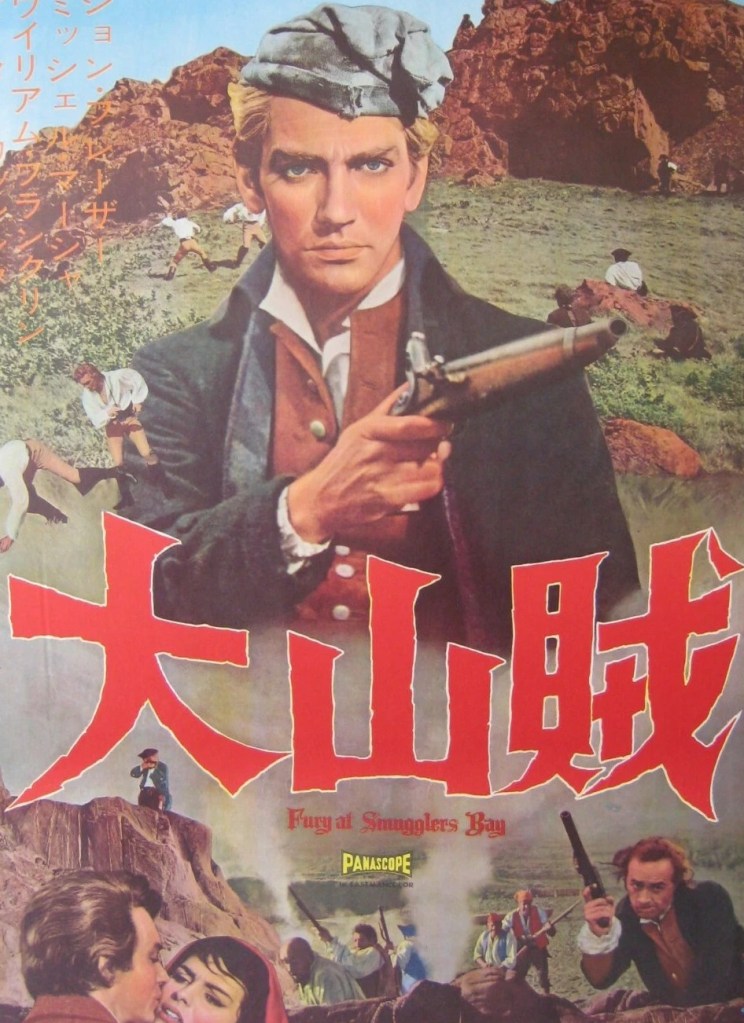
You can always depend on a good bad highwayman to defend an innocent girl against a bad bad smuggler. As you might expect the Squire is deliberately ineffectual since he’s being blackmailed by Black John (Bernard Lee), leader of the wreckers, because Christopher is the result of an indiscretion. So it’s left to the son to race back from London and set things to rights.
Although there’s a bit of fenceplay – there is one good duel between Christopher and The Captain – it’s not really a swashbuckler, a knife or pistol or musket the more likely weapon of choice, and since the director’s enamored of the silhouette against the darkening sky quite often what takes place is obscured.
Which helps the final section of the plot, as Christopher puts abroad that he’s dead while secretly signing up with Black John. This could have fitted into the Renown portfolio given the number of twists. Traps backfire. Ruses fail. Falling for the tale that his son is dead, Trevenyan puts the boy in mortal danger by sending troops to the beaches. Various rivals have to team up for the good of the cause.
By the time it turns into high adventure most of the moral complexities have been resolved.
The only problem is it’s the bad guys who steal the picture. While Peter Cushing (The Skull, 1965) continues his evolution as an actor of considerable scope, John Fraser (Tamahine, 1963) is a cardboard cut-out of a hero. But Bernard Lee, before assuming the mantle of M in the James Bond series, cuts loose as the bad bad guy while William Franklyn (The Big Day, 1960) does a dastardly good job of creating a charming good bad guy. For a bonus there’s rising French star Michele Mercier (You Can’t Win ‘Em All/Dubious Patriots, 1970).
Written and directed, with some panache, by John Gilling (The Pirates of Blood River, 1962).
Entertaining matinee fare with a soupcon of complexity.


One thought on “Fury at Smuggler’s Bay (1961) ***”