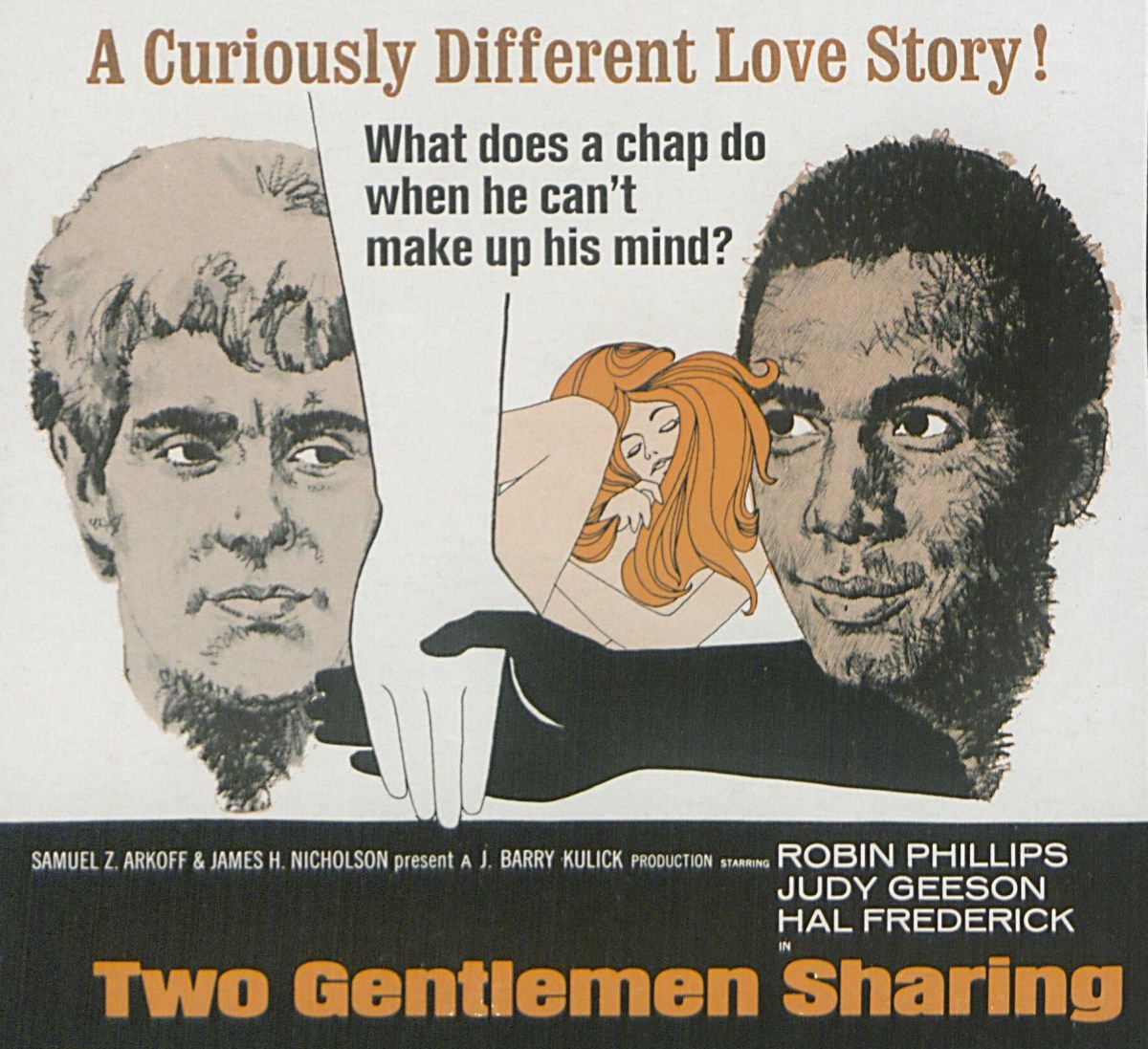
Shelved was a polite term for what happened to this picture. It was funded by Paramount but they didn’t like the look of the finished article. It could have gone straight into the bin, but it was reprieved, sold onto AIP which was looking to shift away from horror and biker movies into mainstream productions. But though it was made in Britain and therefore would qualify for both the Levy tax credit and the quota system, AIP couldn’t find a British distributor to take it on, not even after being selected as the official UK entry to the Venice Film Festival and impressing New York critics. It wasn’t shown on a British screen until 2017.
So what the heck was wrong with it? I had wrongly assumed that the title was a hint that the two gentlemen were gay, but that isn’t the case.
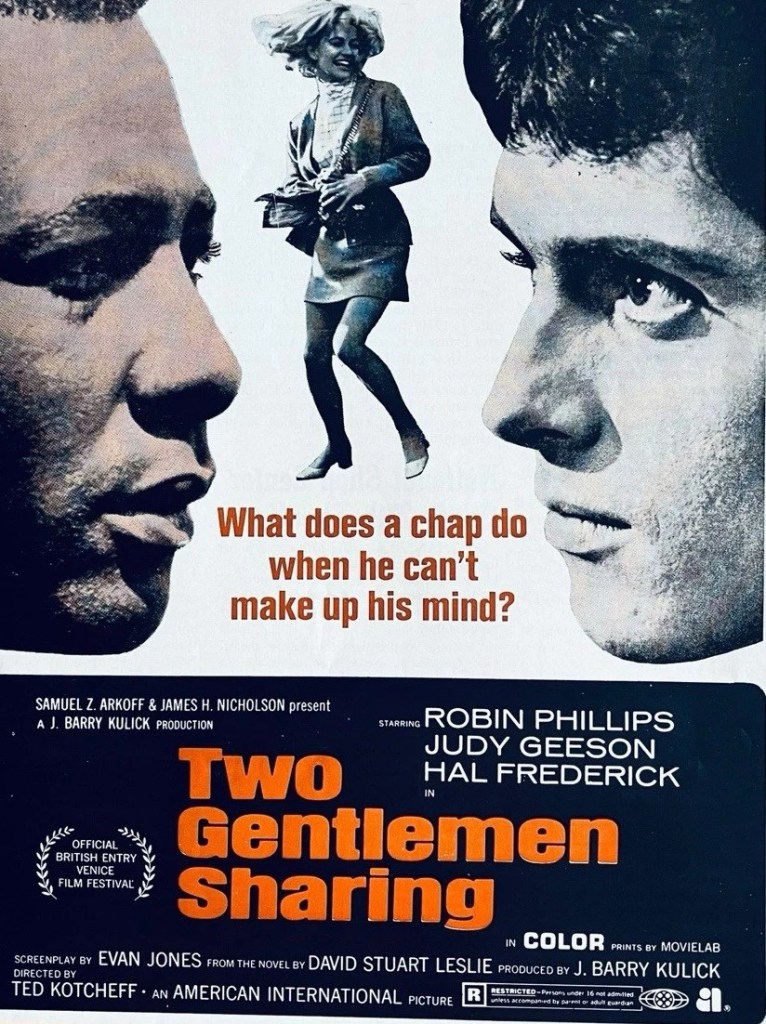
We open with a fellow with a plummy voice called Andrew Mackenzie (Hal Frederick) calling round London landlords looking for digs. He’s a solicitor, wears a bowler hat, was educated at Oxford University, even famously scored a century in a cricket match – and you can’t fit in any more than being a top-class cricketer. But doors which would open for anyone else with such a pedigree are closed to him.
Problem is – he’s Black. He’s of Jamaican descent. He’s not homeless, he’s got digs in Brixton, a noted Black community. Eventually, he finds accommodation in very posh Knightsbridge with ad man Roddy (Robin Philips).
Racism had been tackled in the movie world primarily through the aegis of Sidney Poitier. His three 1967 films – To Sir, With Love, In the Heat of the Night and Guess Who’s Coming to Dinner, had all concluded on the upbeat. The Black man was accorded acceptance and respect.
That doesn’t happen here. The N-word is in common use. Andrew ends up being tossed out of the apartment by his landlady for essentially conforming to the cliché of being a “sexual degenerate,” i.e. for making too much noise while having sex. Eventually, he decides he’ll never fit in in Britain and returns to Jamaica.
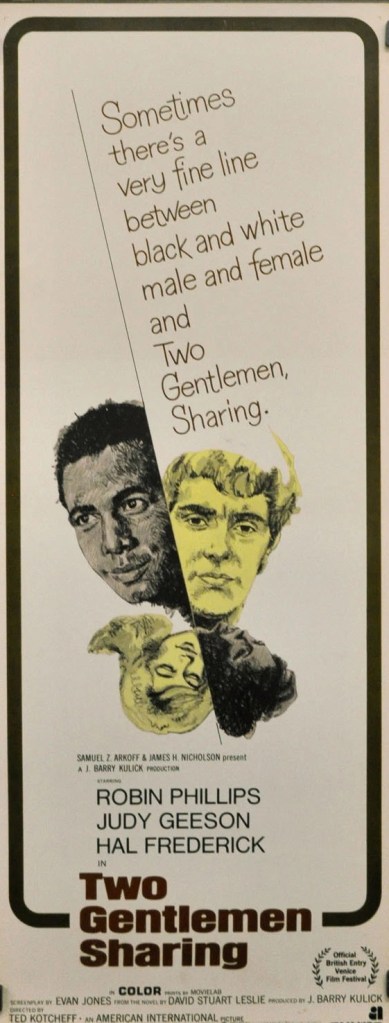
But while the film deals bluntly with issues of endemic racism in British culture, it also tackles the problems facing the more socially aware, who tie themselves in knots trying to prove they are not racists. Although on the face of it accepting his flatmate’s color, Roddy has problems with his own beliefs. He’s certainly jealous of Andrew’s supposed sexual prowess, to the point of clearly believing he will enjoy more sexual freedom should he hitch up with a Black woman, and at various points exhibits inappropriate behavior towards them.
He also can’t come to terms with the fact that his girlfriend Jane (Judy Geeson) is not only very popular with Black men but has been brought up by a Black man after her own White father died when she was very young. To prove his liberal credentials once and for all, Andrew hosts a massive party in the apartment, inviting a crowd of Blacks, but when his drunken overtures to Black women are rejected, the party ends in disaster.
The characters are well drawn. Andrew is no saint. He’s misogynistic for a start, determining that his girlfriend Caroline (Esther Anderson) should do all the cooking and household chores. He’s arrogant and selfish, often grumpy. In other words, as human as the next guy.
Roddy is insecure. His job has none of the glamor we associate with advertising. His biggest decisions concern how many chips to have on a plate being photographed for an advertisement. Although coming from a wealthy background, his parents are now so impoverished they live in the squalid basement of a stately home. He has no understanding of women, tending to make too many of the wrong assumptions. So, just another young fella having problems growing up.
You’d think – and Roddy certainly thinks – that in the ad world he’d have a bevy of young women at his beck and call as does his colleague Phil (Norman Rossington) who, despite clearly taking advantage of his position in terms of seduction opportunities, is more enlightened – he has a Black girlfriend.
The movie’s very fair in determining when characters feel out of place. While Andrew struggles in the White world, Roddy and to a certain extent Phil struggle in the Black social world, bounding about awkwardly at a “jump-up”, the name given to a dance featuring Black music.
Given the actors are all primarily newcomers, showing promise is the extent of the acting. Reportedly Hal Frederick’s (Sandokan, 1964) plummy British accent was dubbed, but it is adequate for the task in hand which is to explore the minefield of the often unexplored aspects of British racism at a time when large-scale immigration was limited to certain cities and when the country still believed in “fair play” or convinced itself it did.
Robin Phillips (Decline and Fall…of a Birdwatcher, 1968) has a more complex part, needy, weak, his unformed unappealing character turning up at the edges. Judy Geeson (Three into Two Won’t Go, 1969) is better and Norman Rossington (Tobruk, 1967) throws himself into a peach of a part. Esther Anderson (The Touchables, 1968) is appreciated.
Canadian director Ted Kotcheff (Life at the Top, 1965) pulls no punches and certainly there is no sign of sentimentality or that, somehow, everything will all come good in the end. Screenplay by debutant David Stuart Leslie from the bestseller by Evan Jones.
Worth seeing if only to ask why we were kept from seeing it for so long. You can catch it on Amazon Prime at the moment.