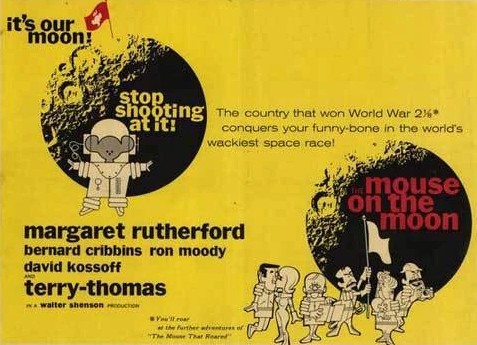
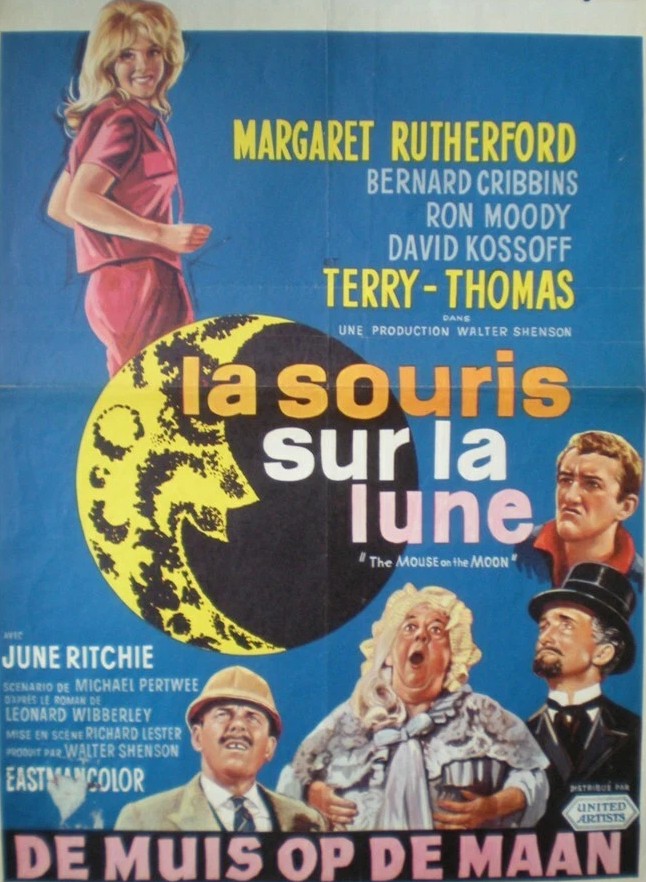
Mouse on the Moon (1963) ***

The gentle comedy for which the British were famous prior to the more raucous offerings from the Carry On team always contained an element of satire. Sometimes that has bite, but as often not, and almost, in a continuation of the gentleness of the format, appears like an afterthought. However, it’s not hard to skewer incompetence or hypocrisy or the foolish grandeur of nations, regardless of size.

There’s no blunderbuss required here – not with such easy targets as the space race, politics and the Cold War – just a gentle poke here and there at ambition, grandiosity and grandstanding as the tiny (barely comprising 15 square miles) country of the Duchy of Grand Fenwick somewhere in central Europe shows up global giants Russia and the United States. Sensibly, this doesn’t try to place one character at the center of the morass. Instead, stupidity is spread far and wide, as various characters cede vanity to the next.
The central conceit is one of those barmy ones that any scientist could make plausible – think of growing potatoes on Mars in The Martian or the nimble invention at play in Project Hail Mary (2026). The chemical reactions of bad wine set off the kind of explosions that could provide a substitute for rocket fuel and send a spaceship to the moon.

But that the idea is given oxygen in the first place by the superpowers wanting to be seen to be bigger than anyone else and by maintaining their rivalry when there’s little need.

Grand Fenwick is not just the type of place where nothing works – palace plumbing erratic, parades catastrophic, politicians corrupt and we are treated to a battalion of incompetents from Grand Duchess Gloriana (Margaret Rutherford), apt to nod off at state functions, Prime Minister Mountjoy (Ron Moody) who places having a hot bath about the needs of the populace and whose niece Cynthia (June Ritichie) is an agitator for reform, his untrustworthy political rival Benter (Roddy McMillan), and British spy Bender (Terry-Thomas) for whom bumbling is an art form.

Romance is in there somewhere when Mountjoy’s ineffective son Vincent (Bernard Cribbins) falls for Cynthia. But mostly it’s a concoction that relies on everything going wrong at the right time and anything that goes right nonetheless manages to cause appropriate chaos.
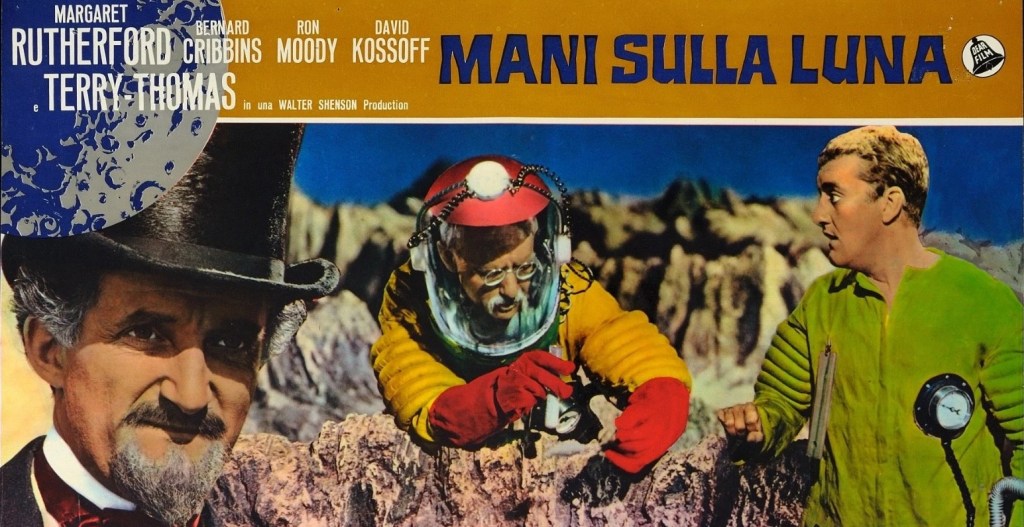
Having secured a million bucks in funding from America to purportedly send a rocket, a useless one donated by the Russians in a riposte to American generosity, to the moon, Mountjoy intends to pocket the cash by ensuring the rocket blows up on launch. However, it takes off, propelled by the wine with Vincent and scientist Professor Kokintz (David Kossoff) on board, triggering a genuine space race involving the two superpowers, propaganda the prize for the winner.

Naturally, nothing goes the way you expect and the little guys outwit the big guys.

This was an early directorial venture from Richard Lester (Petulia, 1968) so that accounts for some of the bite. Given this is populated in the main by character actors, Lester allows them do their thing while ensuring that the comedy is as much reliant on satire as buffoonery. No need here for double entendres or slapstick, the original set-up works out just fine.

Margaret Rutherford  (Murder Ahoy, 1964) could have run away with this picture but her natural instinct to dominate is kept in check. Ron Moody (Oliver!, 1968) heads a cast of movie also-rans, some of whom made a successful transition to television like John Le Mesurier (Dad’s Army), Hugh Lloyd (Hugh and I) and Roddy McMillan (The Vital Spark). Terry-Thomas (Our Man in Marrakesh/Bang! Bang! You’re Dead, 1966) would have stolen the picture if given more scenes. Bernard Cribbins (Carry On Spying, 1964) offers another of his hapless characters while June Ritchie (The World Ten Times Over, 1963) adds a note of glamor.

This was a sequel to The Mouse That Roared (1959) and had to make do without original star, Peter Sellers, who had played three roles. Two of those roles were allocated to other players, with the third character axed. And where that film benefited from Sellers’ presence, this one definitely benefits from his absence.

Written by Michael Pertwee (Strange Bedfellows, 1965) from the bestseller by Leonard Wibberley.

Engaging.
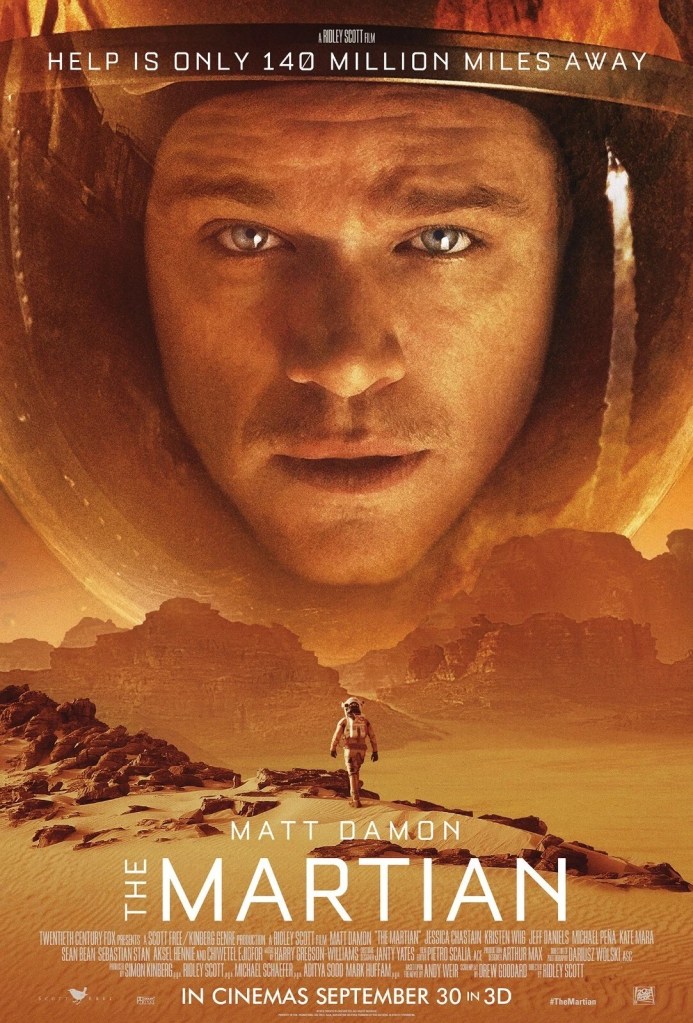
The Martian (2015) ***** – Seen at the Cinema (again!)

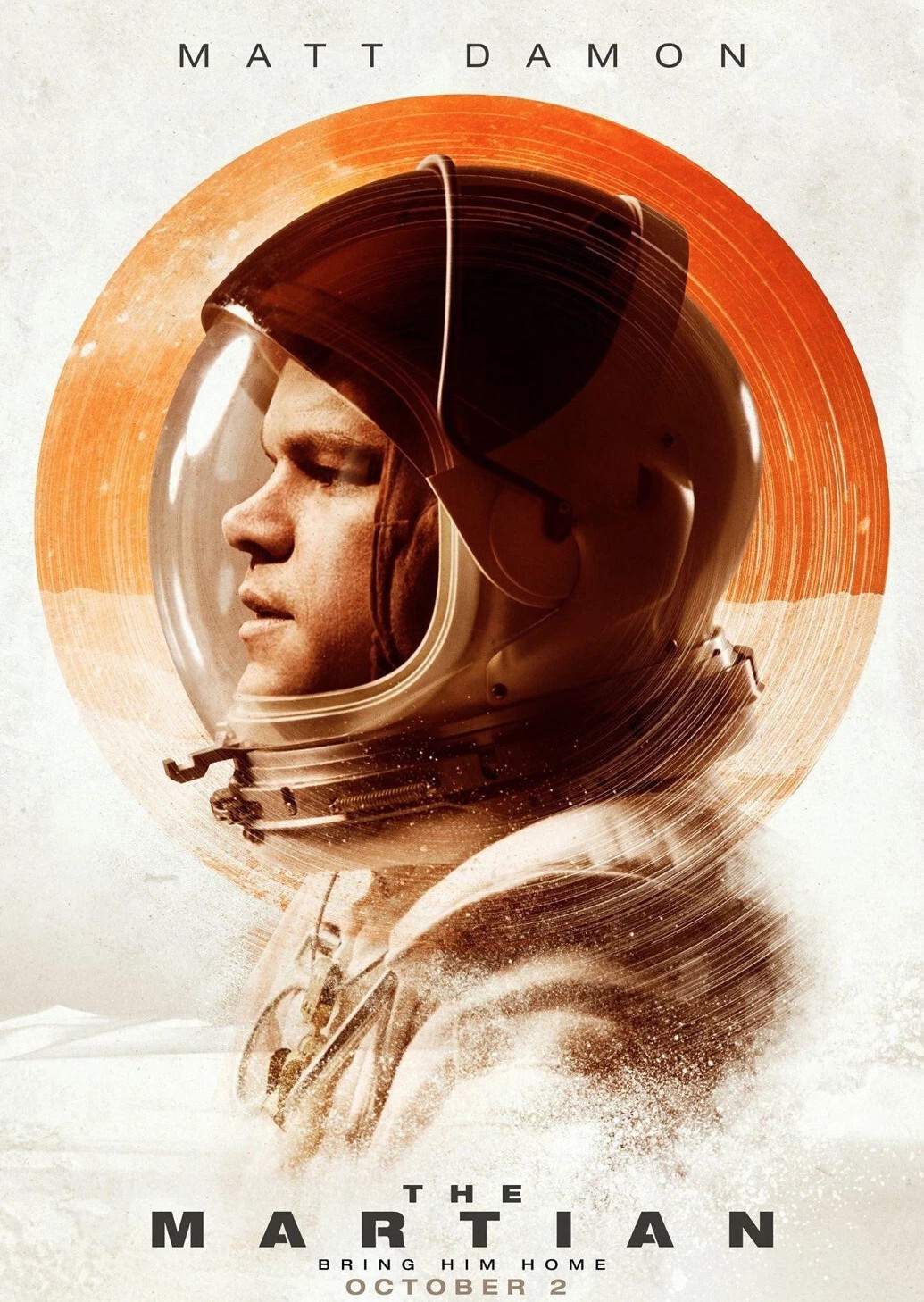
My guess is that the combination of the success of Project Hail Mary (2026), whose author Andy Weir also wrote this, and the imminent The Odyssey from Christopher Nolan which stars Matt Damon were the triggers for this big-screen reissue. These days, most reissues only play for one day, but this proved so popular it ran in two screens.

Although I reviewed it not so long ago that was on the back of a television screening and seeing it on the big screen reminded of just how brilliant it was – and it more than saved my Monday cinema outing after the abject The Invite. ao forgive me if I give this another plug.

You might recall how annoyed I was several weeks ago by being asked to tolerate Chris Pratt stuck in a chair in Mercy (2026) talking to the camera for what seemed like a solid hour. It struck me then how few actors could manage a whole film one-handed – Tom Hanks in Cast Away (2000) the most obvious example. But, in the wake of Project Hail Mary (2026) I realized there was another contender, Matt Damon as the stranded astronaut in Ridley Scott’s The Martian.

And sure, he eventually gets some help in maintaining audience interest once he communicates with Earth and the spaceship. But here’s the kicker. Mostly what he’s doing is exposition. That’s the one thing a star avoids like the plague. It’s usually left to the supporting actors to set the scene, explain the ins-and-outs of a situation.

But here it’s all down to Damon. He spends his time talking to camera, identifying a problem, usually so scientific you’d need academic books beside you, and then solving it. So, yes, like Cast Away, he’s a bloke on a version of a desert island who’s got to find his way to safety through how own devices.

But even so. What kind of screen persona do you need not just to keep us interested but enthralled? When he sees the first shoots of potato appear, it carries a massive emotional kick. The role of the people on Earth is wonderment and cynicism – no way he can do that sort of thing. Which rachets up the tension and then our hero does the impossible.

There’s always a moment in these space movies where someone comes up with something that’s never been done before – slingshots using gravity, Apollo 13 (1995) littered with improvisation. These scientists are I guess exceptionally brainy to qualify as lunar astronauts but even so.

As I said, I was coming to this again after Project Hail Mary so I was attuned to the science, or the expectation of science and the need to keep the audience informed. But Mark Watney (Matt Damon) comes up with unbelievably-inspired elements of improvisation, some of course pure science but others pure common sense, like pointing the camera at letters to spell out words.

It’s a heck of a ride, especially as with being under Ridley Scott’s command, there’s not a darn alien in sight, no stomach-bursting squeamishness to maintain audience attention, no rampaging monster scuttling along a spaceship. This is Mars as arid as you have been led to believe. Yes, an occasional mountain range or dustbowl to evoke the West of John Ford, and storms coming out of nowhere, but generally speaking as placid and dull a domain as you could wish for.

So in visual terms not much to help out the star. Every movement he makes is fraught with danger. He can choose to freeze through a long night or switch on the heating and thus lose vital battery power.

Every now and then, to speed things up, Ridley Scott literally does just that, characters whizzing around like they’ve just emerged from a silent movie. But mostly it’s slow painstaking going.

Of course we need a big finale and Scott obliges. And every now and then he flicks an emotional switch back on Earth and Nasa boss  Teddy Sanders (Jeff Daniels) has to explain how the astronaut they held a memorial for is actually still alive, and the spaceship team have to come to terms with the fact that they abandoned not a corpse but a guy very much alive. There’s no room for humor, but occasionally some is squeezed in – Sanders having to apologize to the President for Watney’s profanity being globally broadcast.

Ridley Scott (Gladiator II, 2024) reins in the bombast and picks his way through a tricky scenario keeping the audience very much onside. Matt Damon (Oppenheimer, 2023)  , who has surely inherited the Tom Hanks “everyman” mantle, demonstrates the power of a screen persona, in making an audience hang on his every word, even though most of what he says is scientific mumbo-jumbo. Jessica Chastain (Mothers’ Instinct, 2024) is the pick of the supporting cast.

Written by Drew Goddard who is as sure-footed here as on Project Hail Mary, again adapting a bestseller by Andy Weir.

Well worth another look.

The Sweet Ride (1968) ***

Unusual drama mainlining on Californian surf, sex, bikers, a mystery of Blow-Up (1966) dimensions and the best entrance since Ursula Andress in Dr No (1962). Displays a 1960s vibe with a 1950s pay-off as the “hitchhiker” of responsibility rears its ugly head.

A woman thrown out of a car narrowly escapes being run over. The cops jack in the investigation after television actress Vickie (Jacqueline Bisset) refuses to explain why she’s been badly beaten up.  And so we enter flashback mode to supposedly find out. She makes a glorious entrance, emerging from the sea, minus bikini top, into the lives of surfer Denny (Michael Sarrazin), jazz pianist Choo-Choo (Bob Denver) and ageing beach bum and tennis hustler Collie (Tony Franciosca). From the off, she’s enigmatic, gives a false address, won’t explain bruises on her arm, has something clandestine going on with television producer Caswell (Warren Stevens) and like Blow-Up we are only privy to snippets of information.

She’s half-in half-out of a relationship with Dennis, with Collie hovering on the periphery hoping to pick up the pieces to his sexual advantage. Contemporary issues clog the background, Choo-Choo tries a camp number complete with pink dog to avoid the draft, a neighbor threatens to shoot Parker for wandering around in shorts and habitually stealing his newspaper, epithets like “degenerates” are tossed around, Choo Choo’s girlfriend Thumper, while appearing in movies with titles like Suburban Lust Queen acts den mother, there’s not much actual exciting surfing, and a biker called Mr. Clean is somehow involved.

The romance plays out well, Vicky unsure, Denny convinced but without a livelihood to offer and unable to get a straight answer out of her. Choo-Choo gets the gig of his dreams in Las Vegas and there’s an rape scene, more unsettling because it’s committed by Denny with the bizarre justification of getting “just for once something on my terms.”  And there’s the equally disquieting sense that the only explanation for Vickie’s behavior is to tab her a nymphomaniac, walking out of an argument with a mysterious man in a beach house to drop her clothes for a bout of sex with Mr Clean.

I must have seen a different picture from everyone else. A good few critics at the time and reviewers since appear to think Vickie was also victim of a gangbang by the bikers, but I can’t see why. When he sees Vickie coming down from the beach house, Mr. Clean shouts “everybody split” and his buddies clear the beach. However, Mr. Clean, ironically, gives the best indication of her state of mind, explaining that Vickie “kept staring back at the house and moaning about how she wanted to die” while he enjoyed the best night of his life sex-wise.

Denny and Collie prove not to be the pussycats they appear, bearding the bikers in their den and beating up Mr. Clean while Denny goes on to deliver a hiding to Caswell. But what this film turns out to be is an examination of vulnerability, how easily those with a new sense of freedom are trapped. An examination of contemporary mores, perhaps, but in not resolving the mystery of Vickie ultimately fails to deliver, especially as it does not, from the outset, carry the kind of artistic credentials of Antonioni in Blow-Up.

Perhaps the mystery needs no resolution, it’s just same old-same old dressed up in the novelty of sexual freedom. There’s no idea of why Vickie was beaten up, and essentially abandoned on the road to become accident fodder, and no hint really of why she fell foul of someone so badly she needed disposed of, no notion that she was a threat to anyone. (Or, for that matter, no explanation of what happened to her bikini top and why, if she was so apparently free with her charms, she was so shy about being seen half-naked.) On the other hand, victim may well have been Vicky’s destiny from the get-go, that kind of innocence only waiting to be defiled.

In any 1960s contemporary picture there’s always the temptation to accept as truthful or reject as phony the lives shown. The idea that sexual freedom bestows actual freedom is usually the issue until consequence (i.e. old-fashioned Hollywood morality) comes into play. This is less heavy-handed than, for example, Easy Rider (1969) or Bob & Carol & Ted & Alice (1969). The characters make decisions to grow up or to stay locked in a world of easy sex, dope and money. There’s no grand finale, just a more realistic drifting apart, and it’s only Vickie who comes apart, although that process had begun long before she met the drifters.  

Jacqueline Bisset (The Detective, 1968), in her divinely posh British accent, comes over well as an attractive screen presence and complex character. In fact, she has a bigger part here than in Bullitt (1968) or The Detective (1968). If you wanted anyone to portray a soulful hippie you need look no further than tousle-haired Michael Sarrazin (In Search of Gregory, 1969) and normally if you required someone on the sly, despicable side, Tony Franciosca (Fathom, 1967) might well be your first port of call, but Franciosca proves the surprise here, classic wind-up merchant and predator who exhibits considerable vulnerability when he realizes he is losing the worship of the idealistic young.

Former British matinee idol Michael Wilding (A Girl Named Tamiko, 1962) and Norma Crane (Penelope, 1966) appear as Vickie’s parents.  Bob Denver (Who’s Minding the Mint, 1967) and Michele Carey (The Spy with My Face, 1965) are solid support. Director Harvey Hart (Fortune and Men’s Eyes, 1970) tries to cover too much ground and could have done with narrowing the focus. Future Bond screenwriter Tom Mankiewicz (son of Joseph L.) made his screenwriting debut adapting the book by William Murray.

The DVD is a bit on the pricey side, but if you just want to check it out, YouTube has a print.

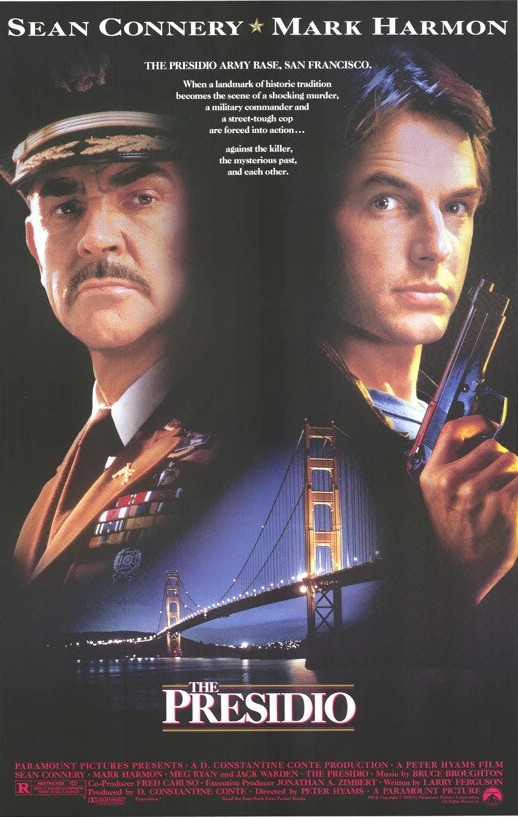
The Presidio (1988) ***

Blame the young whelp. Hollywood had form when it came to piggybacking a rising star on the back of an older established star. Go back to Montgomery Clift and John Wayne in Red River (1948) and you can see why it’s such a potent route to success. Young bucks like James Caan in another John Wayne number El Dorado (1967) fared less well. Tom Cruise got the hang of it, riding on the coattails of Paul Newman in The Color of Money (1986) and Dustin Hoffman for Rain Man (1988). Sean Connery was even known to help out – consider his mentoring of the characters played by Kevin Costner in The Untouchables (1987) or Wesley Snipes in Rising Sun (1993).

But sometimes it just doesn’t work. And that’s the main flaw here in an otherwise involving crime drama featuring unwilling partners that has the requisite car chases, a variety of smart moves, and a hefty load of emotional complication. Military cop Lt Col Alan Caldwell (Sean Connery) has daughter issues, daughter Donna (Meg Ryan) has daddy issues and commitment issues, while civilian cop Jay Austin (Mark Harmon) has authority issues.

Caldwell and Austin are forced to work together after a murder on San Francisco military base The Presidio.

Austin is altogether too volatile, too apt to go off at the mouth, and more important (in acting terms) hasn’t learned to rein it in, to reveal all through the eyes and bite off what snappy dialog comes his way rather than throwing stuff around and slamming doors and such. To complicate matters Austin and Caldwell have a past. To complicate matters even more – or to put it another way spice up proceedings – Austin and Donna get it together after a pretty neat meet-cute.

While in some ways Donna is cute, mostly she’s feisty, determined to put both dad and lover in their places. Both Caldwell and Austin have a top-class solo scene – the colonel when he turns the tables on a barroom bully, Harmon when he sweet-talks a secretary into providing vital information. The more experienced Caldwell tends to be one step ahead in terms of figuring out what’s going on. But in terms of the running, jumping and standing still stuff, it’s mostly Harmon who is dumped with the action, Caldwell the altogether cooler cat.

While Connery was coming off an Oscar for The Untouchables, I have to confess I’d never heard of Harmon. Turns out his rising stardom was on the back of a couple of television series –  Flamingo Road (1980-1982) and St Elsewhere (1983-1986) plus a turn as Ted Bundy in the mini series The Deliberate Stranger (1986). In terms of movies, he’d been top-billed in the lackluster thriller Let’s Get Harry (1986) and Carl Reiner surprise comedy hit Summer School (1987) which took in $15.7 million in rentals and placed 27th for the year, ahead of Kevin Costner in No Way Out and Bruce Willis in Blind Date.

Harmon was the replacement for Don Johnson who was on duty in Miami Vice. Whether Johnson would have been capable of taking on Connery is open to question. Harmon clearly struggled and Meg Ryan (Top Gun, 1986) ran away with what Connery left on the acting table.

This was an interesting role for Connery, not just coming to terms with his daughter but also with betrayal, and the climactic scene in a cemetery is a career highlight.

Back to the tale: under-rated director Peter Hyams (Capricorn One, 1978) keeps the action coming and in between ensures emotional tension holds sway. Apart from Harmon, what lets it down is the story – the real story I mean not the various personnel sorting out their private lives. It’s not that the conspiracy the pair uncover isn’t interesting, it’s just not interesting enough and I guessed from the minute he was introduced who the bad guy was.

But the dialog is meaty enough and Meg Ryan shows more promise and of course by this stage Connery is such an assured performer that he’s not going to put a foot wrong. I’m not sure that filming a car chase in the darkness on the city’s steep inclines was a good idea, apart from the white sparks zinging out of the darkness. A later Connery venture The Rock (1996) did it much better. Written by Larry Ferguson (The Highlander, 1986).

If you can ignore Harmon, a good evening’s watch.

NOTE: The movie didn’t do so well at the U.S. box office – just $10 million in rentals, but it took in nearly half as much again in Japan so my guess the Connery name in the global markets helped recouped the cost. But this was the beginning of the famous “long tail” when movies made a lot more after initial release and this was a case in point. Although it only placed 50th on Variety’s annual box office chart, it made the Top Ten for the year on video.

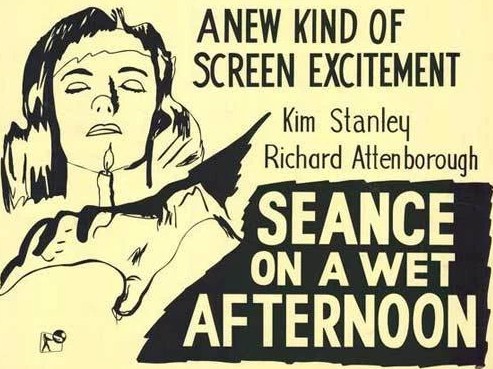
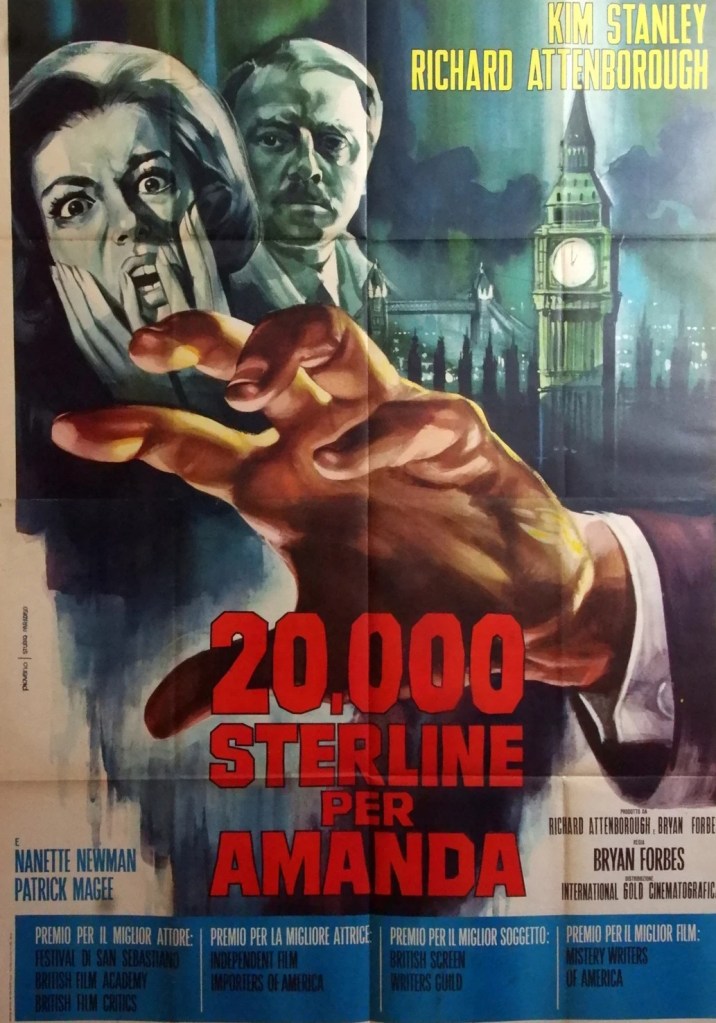
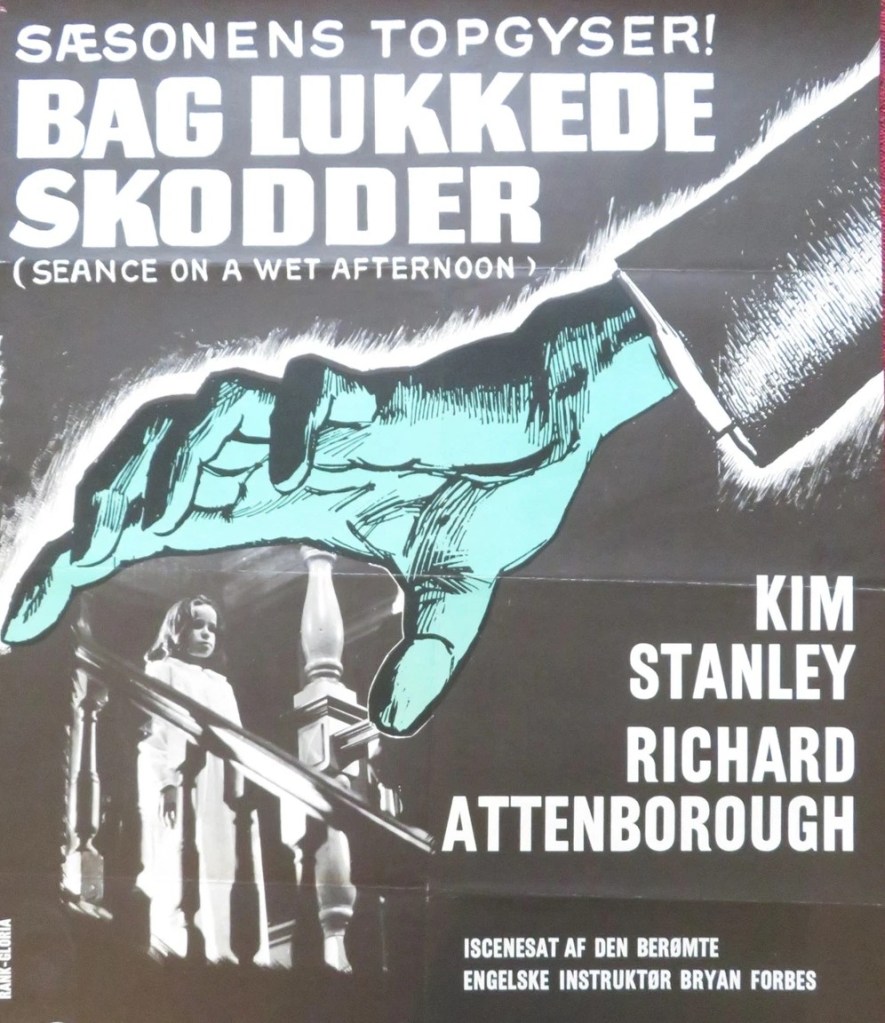
Seance on a Wet Afternoon (1964) ****

Highly atmospheric psychological gem that should appeal mightily to the current generation hooked on the new genre of scams – this one coming with a gut-wrenching twist. That it concerns a medium should add to the intrinsic appeal. And it turns on two terrific performances.

I have an unusual connection to this movie – and a whole bundle of others with music by John Barry. I heard the scores of this and the likes of King Rat (1965), The Chase (1966), Deadfall (1968) and The Lion in Winter (1968) long before I caught up with the movies. So I came at them with a kind of aural advance warning. The score John Barry wrote for this not only exemplifies the inherent creepiness but maximizes it.

Even before we get into any notion of criminality, you can see that this unlikely middle-aged marriage between the dominant Myra (Kim Stanley) and the weak Bill (Richard Attenborough) is unhealthy to say the least. She’s the kind of psychic who’s likely to swoon and get lost in ethereal otherworlds while hosting seances. He’s just trying to keep her from toppling over into insanity, driven by her conviction that she is conversing with their dead son.

In the kind of scam you could see someone coming up with today, she decides she’ll thrust herself into public consciousness by becoming the sort of psychic police tent to consult during kidnappings or murders. In this case it’s the kidnapping of  Amanda (Judith Donner), daughter of wealthy businessman Mr Clayton (Mark Eden). This might sound like the usual wishful thinking for publicity by an over-earnest psychic, but, in fact, it’s Bill, at his wife’s  behest, who’s carried out the kidnapping. To make it look kosher, the couple demand a ransom.

The lass is kept imprisoned in their house, in a room made up to look like a hospital with Myra playing the role of nurse. Mr Clayton is sceptical of the psychic’s claims but his wife (Nanette Newman) is duped.

Given that Bill generally looks impotent, the harried look of the weak hen-pecked husband, it’s quite astonishing how he rises to the occasion to collect the ransom money, dodging the cops on the underground. The plan comes undone, however, when Myra decides the dead Arthur wants a buddy in the afterlife, with Amanda the prime candidate and Bill called upon to step up to the murder plate.

So we’re knee-deep in tension. The key here is that our point-of-view is that of the couple rather than the child or the parents. Amanda is a bit more worldly-wise than Myra expects so she’s kept on her toes keeping the suspicious child in check. So you’ve got what would be a contemporary trope but unusual then of being forced to want the criminals to succeed. Everyone loves a psychic, even more these days after the whopping success of The Conjuring series, and everyone loves the downtrodden husband, so we’re hoping they can outwit the pompous wealthy businessman and fleece him of some dosh, awake the world to the powers of the medium and live happier ever after.

But that’s before Myra changes the plan and you’re wondering if Bill is going to be able to stand up to her. The cops come mighty close to smelling a rat, but the suckered wife appears to help their case.

The beauty of this is less in the plotting – but those twists would work as real zingers today – than in the playing. Critics were reaching for superlatives when two Daniel Day Lewis movies – Room with a View and My Beautiful Launderette – both opened on the same day in New York in 1985 and were astonished by the actor’s range. Richard Attenborough’s diffident mouse of a man in Séance on a Wet Afternoon appeared the same year as his bluff hard-nosed soldier in Guns at Batasi. The British Academy noticed, awarding him the Bafta Best Actor for the achievement.

He’s quite superb here, always on the verge of telling his wife what-for before sinking back into complaisant compliance. When we speak about edgy performances, we generally mean something else entirely, but this is an emotional edge that he’s always about to tip over into one way or the other.

American stage specialist Kim Stanley hardly made a movie, only one more this decade and none for another 16 years, but she carries this intense complicated character smothered by insecurities. Nanette Newman (The Wrong Box, 1966) is a believable mother. Mark Eden (The Pleasure Girls, 1965) crops up, as does Patrick Magee (The Skull, 1965) who tones down his trademark growl.

Written and directed by Bryan Forbes (King Rat) from the bestseller by Mark McShane.

The John Barry score not just sets the tone but helps carry the picture.

I understand plans are underway to remake this and I can see why

The Deadly Affair (1966) ***

Initially, much more of a character study than murder mystery or spy tale. And like the previous John Le Carre adaptation The Spy Who Came in from the Cold (1965) directed by an American, there Martin Ritt, here Sidney Lumet. Although as repressed as the main character in Lumet’s  The Pawnbroker (1964) and sharing with it remembrance of the Holocaust, master spy Charles Dobbs (name changed from George Smiley due to Paramount’s rights from the earlier film) is far more capable of expressing his feelings and taking action than the pawnbroker.

Dobbs sleeps in a separate bedroom, his wife Ann (Harriet Andersson) indulging in so many affairs she is considered a nymphomaniac. Although resigned to this behavior, he is nonetheless shocked when her latest amour turns out to be his old friend and colleague Dieter (Maximilian Schell) and even attempts to offer him advice, the politeness of the English at its best. “In any other country,” retorts Dieter, “we wouldn’t be on speaking terms.” This kind of betrayal Dobbs can manage, but the other kind, of a professional nature, has him rushing to the bathroom to throw up.

If you’ve come to admire the character of George Smiley (aka Dobbs) as played by Alec Guinness in BBC TV series Tinker, Tailor, Soldier, Spy (1979) and its sequel where he is generally a passive character you might get a shock when here the man springs into action.

Dobbs comes up against the Establishment when his boss (Max Adrian) refuses to investigate the suicide of a low-level agent Fennan (Robert Flemyng), a former Communist cleared of suspicion of being a double agent by Dobbs himself. Dobbs resigns in order to go his own way enlisting retired policeman Mendel (Harry Andrews), a pet lover and prone to falling asleep at inopportune moments. Although it is essentially a murder story, it’s Mendel who does most of the detecting, using his resources to track relevant pieces of information – typewriters, wake up calls, theatre tickets fall into his purview – and very much the old-school cop, not above a bit of burglary and beating up a suspect.

There are leaks within the secret service, Dobbs tailed, a blond man Harek (Les White) hovering into view long enough to tamper with witnesses, including dodgy car dealer Scarr (Roy Kinnear), a bubbly character with “two wives.”  Key to the investigation is Fennan’s wife Elsa (Simone Signoret), a Jewish refugee from the concentration camps, and committing the cardinal sin of not offering Dobbs a cup of tea when he comes to visit, though pouring herself one. “I’m a battlefield for your toy soldiers,” she proclaims, another in le Carre’s stream of innocents unwittingly caught up in the “game.”

This is dingy rather than tourist London, Battersea power station on the horizon, rain prominent, a murky Embankment, the Thames a river of sludge, dubious pubs in unsavory locations, except for a very English spurt of theatre (a plot point) involving characters with very jolly accents. In The Spy Who Came in from the Cold, the spy’s downfall is “minor human weakness” i.e. falling in love and so it is here, Dobbs’ mental health taking a beating by not just his wife’s unfaithfulness but by remaining faithful to her. Of course, he wouldn’t be the first man to have married out of his league and be unwilling to surrender his prize.

Lumet’s gaze is anything but sentimental. In fact, as much as Dobbs is a master of the spy game, he is a dunce at the game of love, and Lumet does not let him off lightly. Any man who commiserates with his wife’s lover on the grounds that he (said lover) will be hurt when the woman ultimately abandons him, is straight from idiot school.

So this is a far more complex, and human, reflection on the spy game, and it’s not so much about paying the price of being a spy, as occurred with Alec Leamas, than the folly of marrying the wrong woman. You can see how easily Dobbs was seduced by the insane prospect that a beautiful woman had fallen in love with him, rather than, as he must have been trained to do, examining her reasons.

Of course, it’s not unusual for detectives to have miserable home lives and end up as loners, but this was part of a trend (see The Quiller Memorandum, 1966) to see spies not as bed-hoppers of the James Bond variety but as human beings with normal failings. One oddity is that, in line with the Paramount dictat on names, Dobbs’ boss is called “The Adviser” rather than “Control” (although apparently there was such a title in le Carre’s version of the secret service prior to this book).

James Mason (Age of Consent, 1969) is excellent as brilliant spy/bewildered lover. Harry Andrews (The Hill, 1965) has a ball in a change from his normal taciturn characters. Oscar-winner Maximilian Schell (Topkapi, 1964) is equally convincing but I found Harriet Andersson (Through a Glass Darkly, 1961) too much one-note certainly compared to the riveting performance by Simone Signoret (Is Paris Burning? 1966).

You can spot a string of future stars in a supporting cast led by Lynn Redgrave (Georgy Girl, 1966), Corin Redgrave (The Girl with a Pistol, 1968) and Kenneth Haigh (A Lovely Way to Die, 1968) among older hands like Robert Flemyng (The Blood Beast Terror, 1968), Roy Kinnear (The Hill) and Max Aitken (Henry V, 1944).

Paul Dehn (The Spy Who Came in from the Cold) wrote the screenplay based on John le Carre’s novel Call for the Dead, which was written before the book which made the author famous.

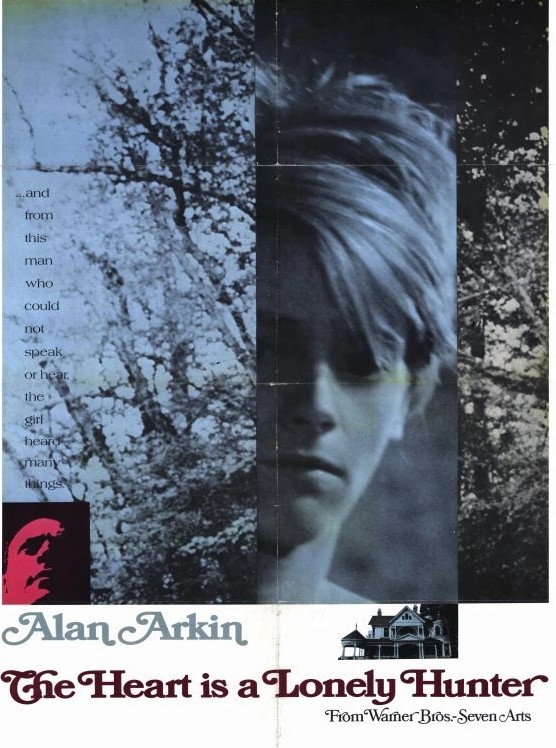
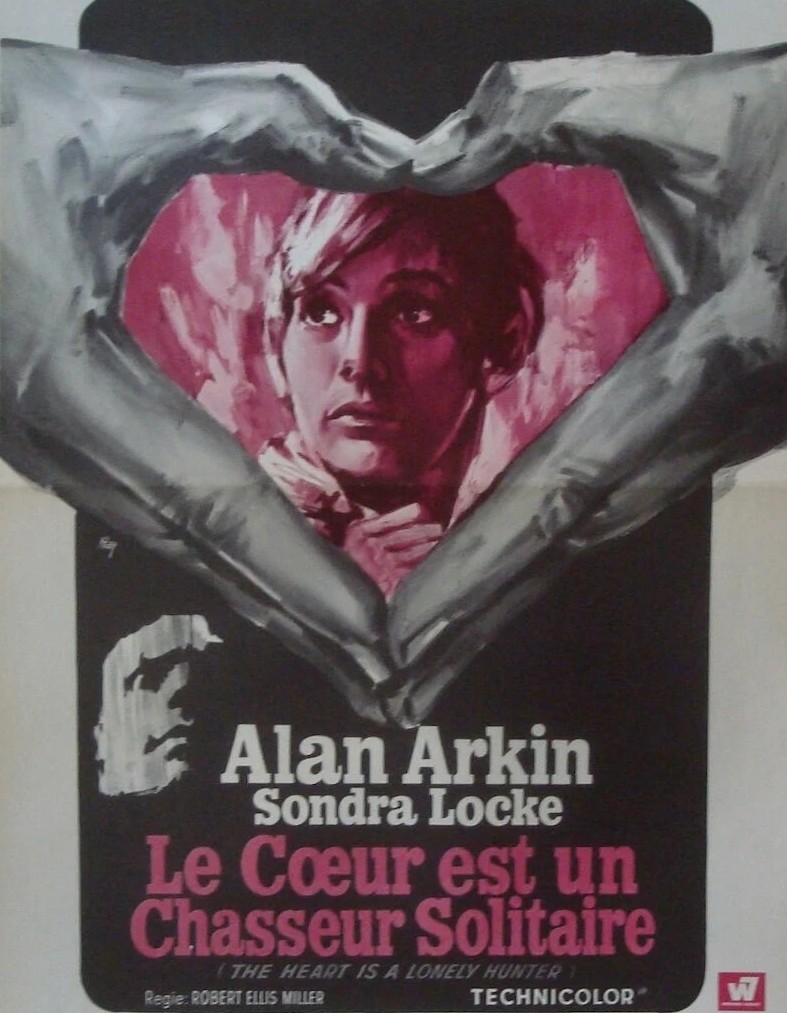
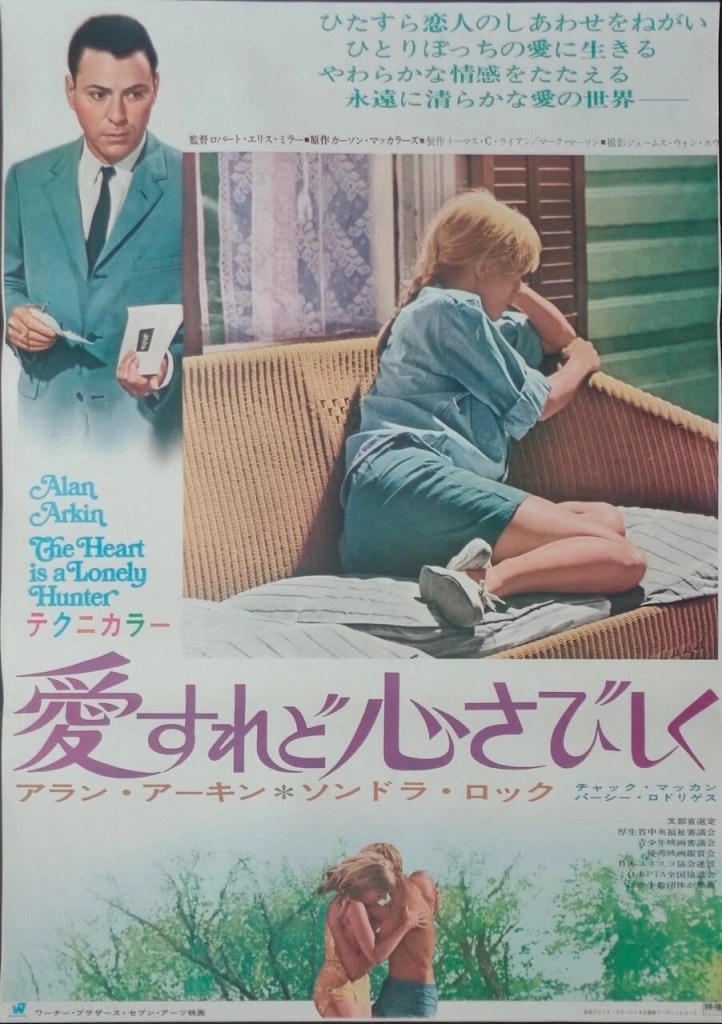
The Heart Is A Lonely Hunter (1969) ***

The American equivalent of the kitchen sink drama. Awash with the dispossessed, rejected, oppressed and underprivileged. You’re not going to be more of an outsider in the U.S. of the 1930s than to be a deaf mute or, worse, a mentally challenged deaf mute who can’t see a tasty cake in a baker’s shop without indulging in a bit of smash-and-grab.

By this point the Deep South had fallen out of favour. Adaptations of Tennessee Williams plays were now bombing at the box office – even the Burton-Taylor combo couldn’t rescue Boom! (1968) and a previous adaptation of the work of acclaimed novelist Carson McCullers (who wrote this), John Huston’s Reflections in a Golden Eye (1967), with Taylor again and Marlon Brando, had proved a commercial disappointment. Otto Preminger’s Hurry Sundown (1967) with Michael Caine and Jane Fonda did only marginally better.

While on paper it’s unremittingly bleak, in reality it’s loaded down with the mawkish and the sentimental, as the characters struggle to fit in, fail to establish lasting relationships or are abandoned. Given he is playing a character, John, who can’t talk, star Alan Arkin is forced to abandon those irritating vocal tics.

John, an engraver, has befriended Spiros (Chuck McCann), the deaf mute with the sweet tooth. When Spiros is institutionalized, John moves town to be near him, taking up residence in the Kelly household. As the result of a recent injury, Mr Kelly (Biff McGuire) is forced to take in a boarder, his teenage daughter Mick (Sandra Locke) giving up her bedroom to accommodate the stranger.

There’s not much of story, John acting as a narrative conduit around whom various situations and characters revolve. John mostly fails to win over the resentful Mick but befriends alcoholic drifter Jake (Stacy Keach) and African American cancer ridden Dr Copeland (Percy Rodriguez).

Copeland’s daughter’s husband has his leg amputated after being wrongly imprisoned. Mr Kelly ends up disabled, meaning Mick has to take a job to support the family rather than go to college. When she loses her virginity, you expect she’s going to end up pregnant, but, luckily she’s the only one whom fate favors. Unable to cope with the institute, Spiros rebuffs John’s friendship and, thoroughly depressed, gives up the ghost and dies. John commits suicide. We only later discover that Mick had fallen in love with his gentle nature.

So not what you’d call a feel-good picture. Nobody’s going to escape their situation. If anything, that’s only going to get worse. We’re talking two deaths here and another on the way, one fellow permanently disabled and a girl stuck in a cycle of poverty.

While I didn’t find it unrealistic or forced, I wasn’t as taken with it as I expected. It felt like a Charles Bukowski picture, minus the degradation, where the actors and director were given a free pass because they were putting the spotlight on an area of existence normally ignored by Hollywood. But it just felt too worthy. Beyond their indignities, none of the characters really took flight.

But don’t take my word for it. The Academy didn’t. Both Alan Arkin (The Russians Are Coming, The Russians Are Coming, 1966) and Sondra Locke, in her debut, were Oscar-nominated.

Prior to this, only a handful of pictures dealt with deafness. James Stewart, deaf in one ear in It’s A Wonderful Life (1946), Jane Wyman, winning an Oscar for Johnny Belinda (1948), and The Miracle Worker (1962), Anne Bancroft picking up an Oscar here, were the best known.

Robert Ellis Miller (Bachelor Girl Apartment/Any Wednesday, 1966) could have done better to steer clear of the obvious sentimentality. Written by Thomas C. Ryan (Hurry Sundown, 1967).

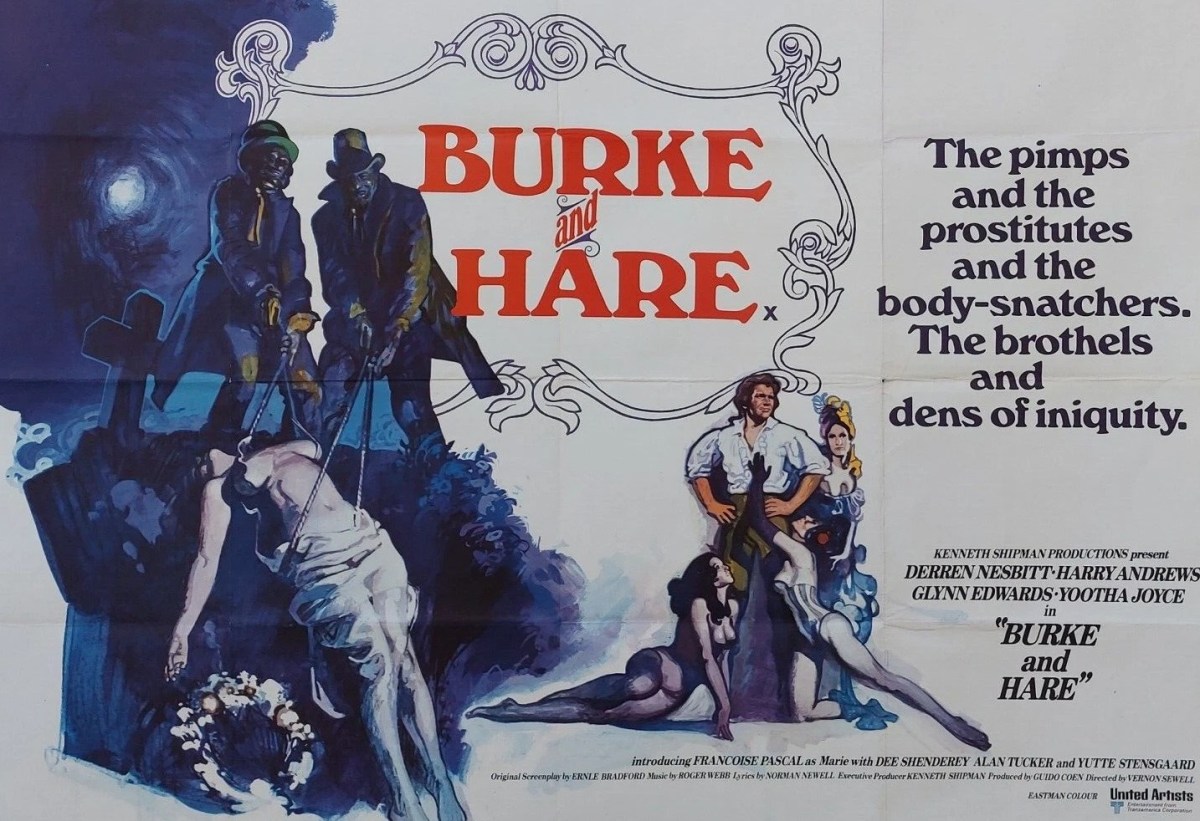
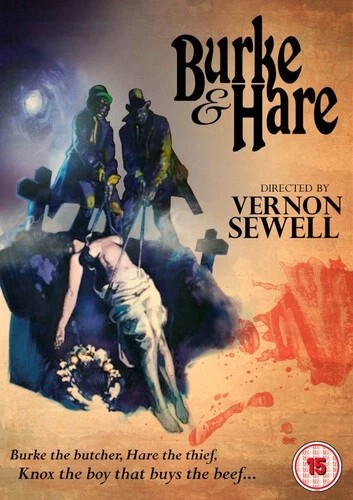
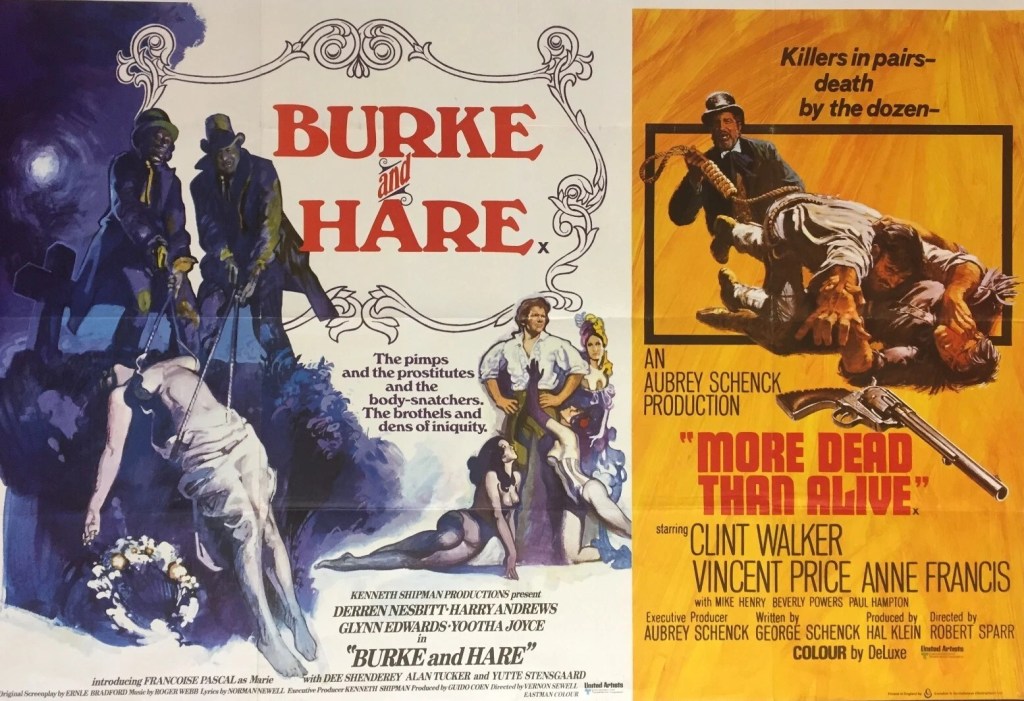
Burke and Hare (1972) **

There’s probably a thesis to be written about how Hammer subverted the traditional horror picture by inserting lashings of nudity. The studio’s female vampire trilogy, beginning with The Vampire Lovers (1970), was presumably made with an eye on attracting bigger box office rather than upending the status quo and taking the exceptionally feminist approach of making females the predators. Although in the first of the series, men were the eye candy, for the second and third it appeared to make more sense for the prey to be disrobed females, a double whammy, if you like, of female nudity.

That formula then appeared to be applied to any movie roughly in the horror genre, sometimes, as here, with just awful results. Young starlets who might previously have been expected to restrict their titillation to cleavage, were now going all-in. It helps if for no apparent narrative function you can set half the tale in a brothel and also ensure part of the attraction of such premises is voyeurism, peep-holes through which the clientele can view a couple having sex.

Two of the damsels on ample display were Francoise Pascal, hitherto one of those trapped into risque roles such as School for Sex (1969), and Yutte Stensgaard, who’s marquee value appeared to have been terminated despite all her nudity in Lust for a Vampire (1971) and now reduced to a supporting role.

Apologies for concentrating on the licentious, but the movie has little more to offer. Burke and Hare preceded Dr Jekyll as Edinburgh’s most famous villains, but it’s hard to get worked up about their activities. Audiences were inured to grave-robbing since without an steady  supply of body parts Frankenstein would have struggled to make his monsters.

The idea of people donating their bodies to medical science was hardly a hidden secret in the 1970s and the idea that you could build a movie exposing the hypocrisy of doctors seeking to use corpses for anatomy lesson seems far-fetched. There was no law against using corpses. As eminent surgeon Dr Knox (Harry Andrews) explains in supercilious tones it was not a crime to cut open a dead body.

It was more customary to pair one horror film with another but since the producers didn’t have another one to hand they latched onto a western.

So we are left with our graverobbing tag team of Burke (Derren Nesbitt) and Hare (Glynn Edwards) and various other low lifes in Edinburgh in the 1820s whose main preoccupation seems to managing a Scottish accent. There’s little that’s particularly gruesome about the graverobbing and given the victims are all dead a complete lack of gore. Even the one legitimate opportunity to add frisson, the extraction of a  heart by Dr Knox during a class, is ignored.

Graverobbing, however, doesn’t supply all the needs of Dr Knox, so our pair resort to murder. That has the specific advantage of delivering fresher corpses. Suffocation is the murderer’s tool, since already slashed bodies might suggest even to Dr Knox that the corpses had met a different kind of end.

Where does the brothel fit into all this you might wonder? Is Dr Knox a regular? ‘Fraid not. For our entrance to the brothel we have to rely on sketchily-drawn medical students. Sex worker Marie (Francoise Pascal) ends up on Dr Knox’s slab after an unwelcome encounter with Burke. At some point, a little bit of detective work takes over, as Marie’s medical student lover is not satisfied with the post mortem declaring she died of alcohol poisoning.

But since you hardly care about any of these characters, it’s more like a documentary with sex and nudity thrown in.

Derren Nesbitt (Where Eagles Dare, 1968) didn’t enhance his reputation but Glynn Edwards rolled out another of his sneaky characters that provided a lifetime of supporting roles.

Directed by Vernon Sewel; (Curse of the Crimson Altar, 1968) from a script by historian Ernle Bradford making his debut.

A bit better than Orgy of the Dead (1965) but not by much.

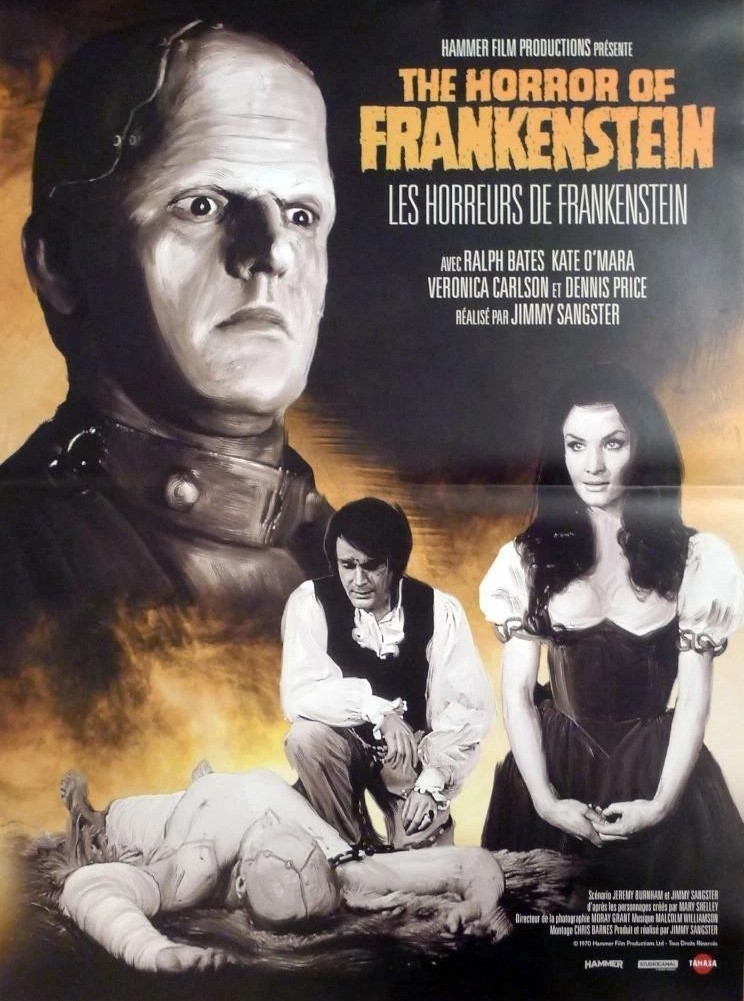
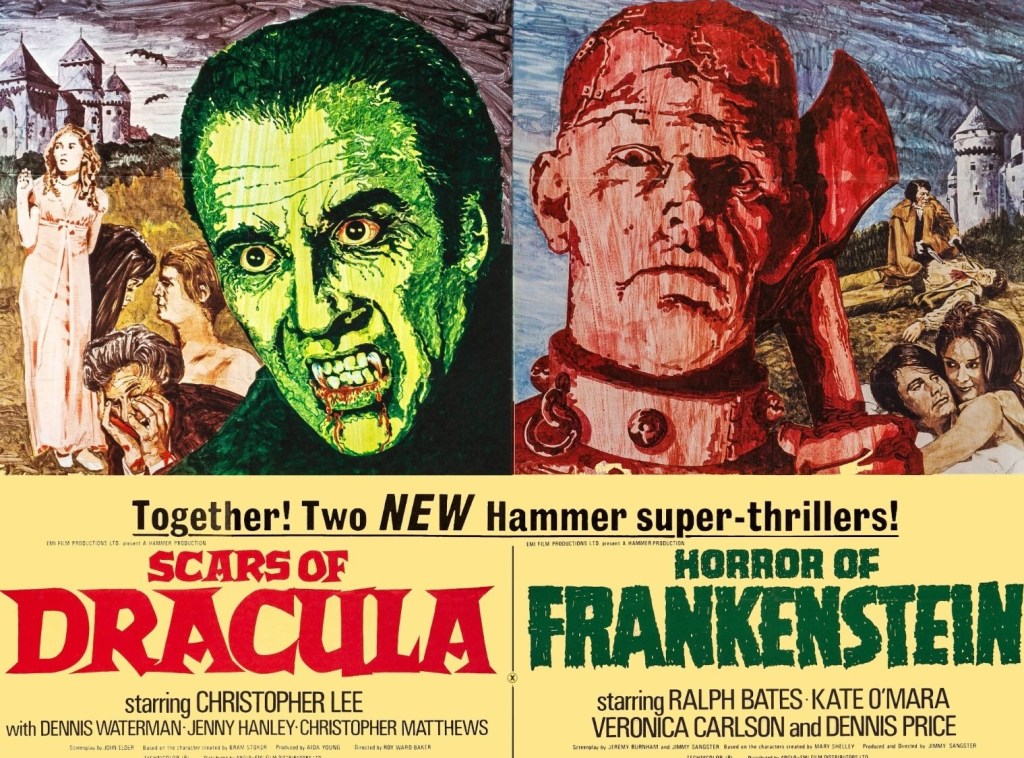
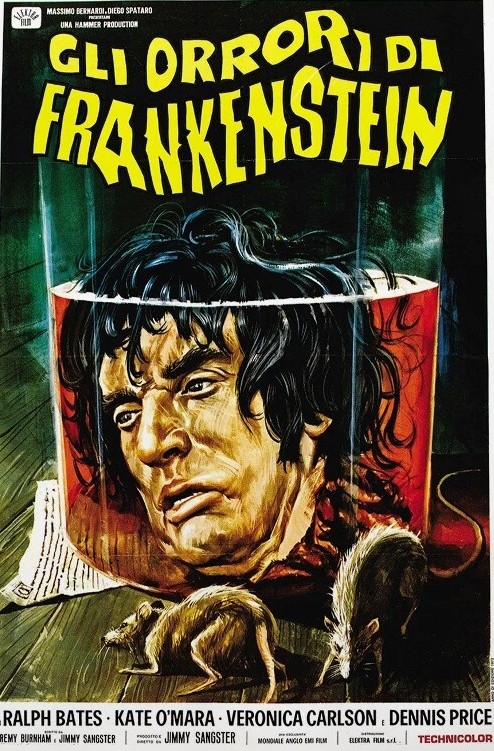
The Horror of Frankenstein (1970) ***

Fanboys these days wouldn’t accept the sudden shift in the series without some far-fetched backstory. But in those days audiences never seemed to question why the new iteration of Frankenstein was less than half the age of the previous one (Frankenstein Must Be Destroyed, 1969). Call this a remake or a reimagining or just trying to pull a fast one on a loyal moviegoer.

In fact, this goes pretty much back to basics – and beyond the addition of sex and gore it’s claimed in some quarters to be little more than a retread of The Curse of Frankenstein(1957) – and without Peter Cushing to provide chilling gravitas. Instead, Hammer have corralled in a younger rising star in Ralph Bates – who had made his movie debut in Taste the Blood of Dracula (1970) and would form part of the studio’s horror stock company for the next few years – and in keeping with his age taken us back to the teenage Frankenstein, besting schoolmasters with his arrogance and scientific brain, before dropping out of university to concentrate on experiments with human life.

By this point he’s bumped off his father to inherit the fortune he requires to kit out his castle with the most modern equipment, including the not-so-advanced vat of acid. This time out there’s no suspicious cops breathing down his neck. And while there also no compromised youngsters representing innocence, his medical colleague goes along so easily with the ghastly experiments that his innocence would be called into question.

The tale is exceptionally lean, with none of the moral complexity of its predecessor. Primarily, the focus is on the baron building his monster piece by piece with the help of corpses delivered by unctuous graverobber (Dennis Price) though in an unusual gender twist for the period it’s his wife (Joan Rice) who does the actual work of digging up the graves.

Theoretically, there’s some sexual tension between Frankenstein’s mistress, housemaid Alys (Kate O’Mara). and the high-born Elizabeth (Veronica Carlson) who takes up residence with him after she’s left destitute following the death of her father.

Elizabeth had turned down over a dozen marriage proposals while waiting for Frankenstein to get down on bended knee, but he shows little interest in her and seems to thoroughly enjoy humiliating her by allowing her to stay but only as an employee.

Anyone who gets in Victor’s way ends up in the vat or is thrown to the monster. The monster (Dave Prowse) is the best thing in it. He looks like a real person, huge, tall and strong, and doesn’t react well to being chained up, preferring to go on a murderous rampage. No time is spent enlisting audience sympathy for any of the characters.

There’s an excellent twist at the end where the monster ends up in the vat, therefore relieving the authorities of anyone to blame for the serial killing, and priming, I would have thought, a sequel with Bates – Cushing returned in 1974 with Prowse again as the monster, though this Cushing appears to have managed to escape from the burning house in Frankenstein Must Be Destroyed. Go figure.

It was a big ask to expect Ralph Bates to step into the shoes of Peter Cushing. The movie is better viewed as Hammer’s attempt to revitalize its various horror franchises, and having dipped its toes into the world of the female vampire it would shortly invest in lesbian vampires and a sex-change Dr Jekyll (a concept light years ahead of its time).

None of the women auditioning for the title of Hammer Scream Queen have much to offer beyond cleavage. Kate O’Mara (The Vampire Lovers, 1970) has the better part, given she has the sense to try her hand at blackmail, but she’s generally insipid. In acting terms, Veronica Carlson hasn’t improved on Frankenstein Must Be Destroyed. It doesn’t take much for  Dennis Price to steal the show.

So, mostly a series of  scientific experiments with a modest amount of gore and none of the nudity Hammer threw into the revamped female vampire series.

I was surprised to find I preferred Michael Carreras’ take on the legend in Frankenstein Must Be Destroyed rather than that of writer-director Jimmy Sangster (Lust for a Vampire, 1971) making his directorial debut but with a bigger reputation as a writer among the horror cognoscenti. Hammer continued playing its role in blooding rising stars -this time round its Jon Finch (Frenzy, 1972).

I’ve seen this described as a parody but I didn’t find much to laugh about.

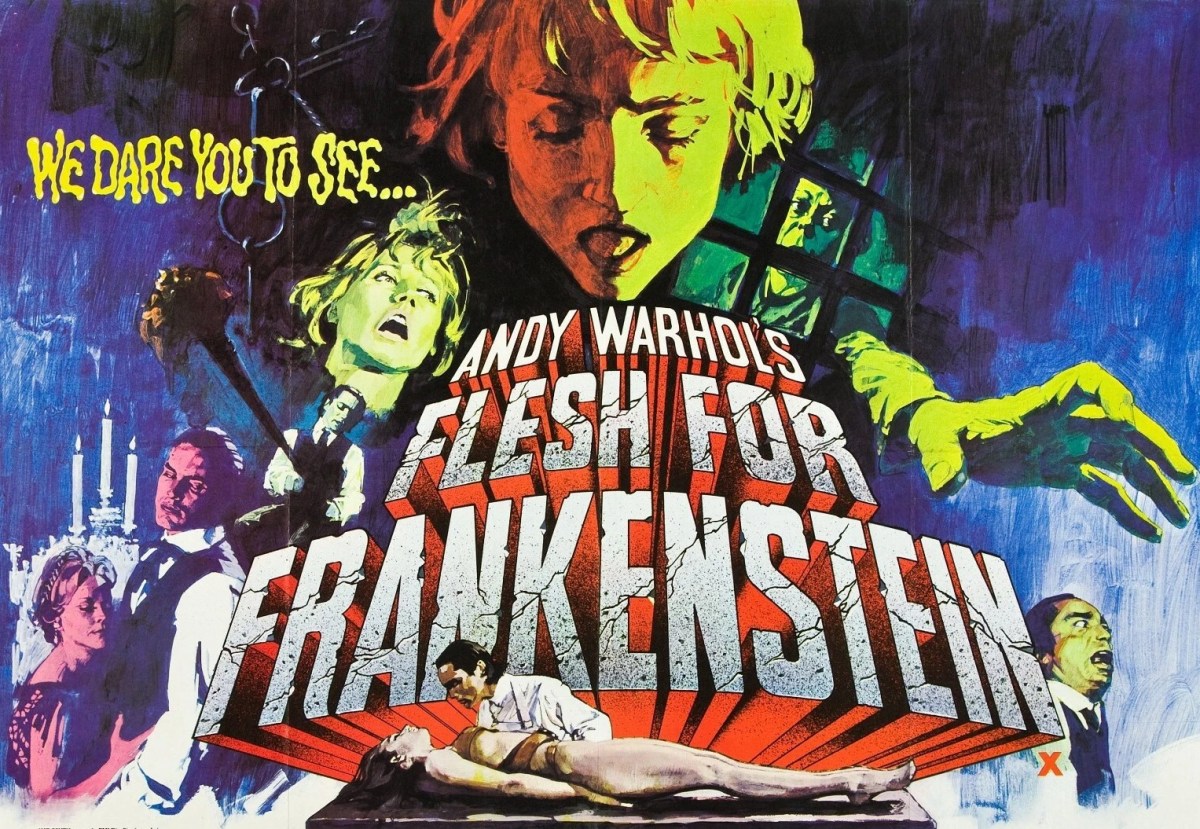
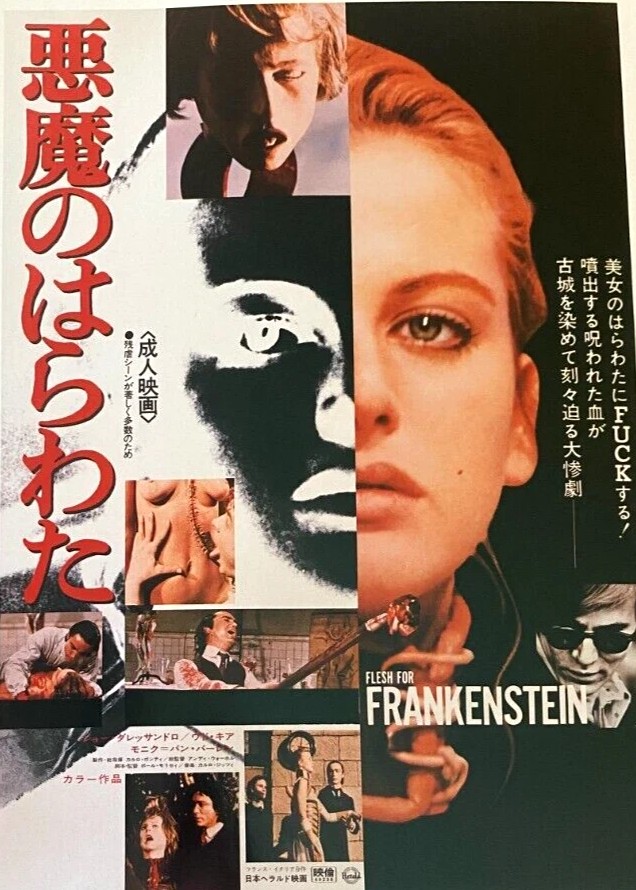
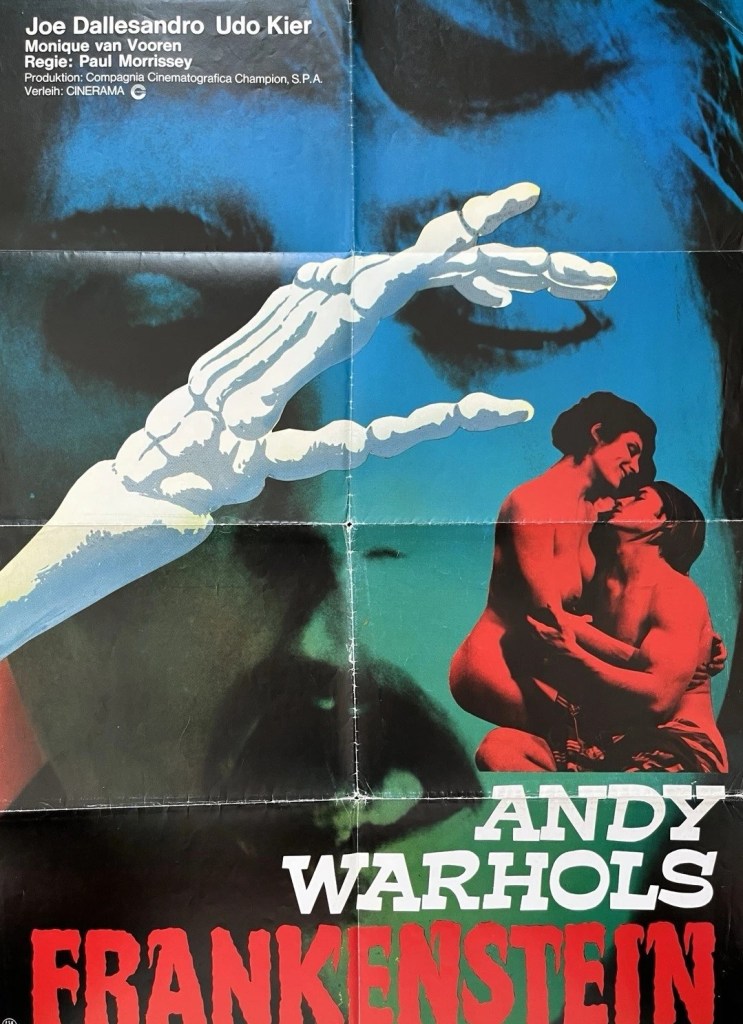
Flesh for Frankenstein (1973) ***

What with Jessie Buckley putting on her best Joker-style smile in Maggie Gyllenhaal’s Looney Tunes version of The Bride (2026) and Oscar Isaac going as high-tech as the 19th century would allow in Guillermo del Toro’s excellent Frankenstein (2025), Paul Morrissey’s Flesh for Frankenstein now appears tame in comparison though at the time its sexuality and gore came in for severe criticism. I’m guessing it’s the campiness that finds it rated so highly among the contemporary critics, but, apart from some poor acting, there’s little in this piece that would bring it down in your estimation or provide it with a free pass.

In terms of the thematic, there are connections to David Cronenberg’s Crash (1996), and in terms of trivia (although the version I saw lacked this) it was originally shot in 3D (though without, as was usually the way with such items, tons of things thrown into the viewer’s eyes) and included an early example of the imagination of SFX genius Carlo Rambaldi (Alien, 1979).

While you might recoil at the good doctor’s right-wing tendencies and his determination to bring to life a superior species, the rest of it is surprisingly good. There’s a determined stateliness to the camerawork and the score by Claudio Gizzi (he only did another two) is as far removed from the over-the-top menace that infected Hammer and AIP versions as you can get.

I wasn’t a card-carrying member of the avant-garde back in the day any more than I am now so didn’t rush out to see this on its first appearance and probably wouldn’t have been tempted to watch it at all except that the presence of Dalila di Lazzaro from Three Men to Kill (1980) piqued my interest. In truth, she has a small part as the female of the species in the monster department.

Here, Baron Frankenstein (Udo Kier) is aiming for the double whammy of not just creating male and female monsters but of getting them to procreate and provide him with a new master race. He’s handy with a set of garden shears, lopping off heads to suit his experiment, and stitching, molding cadavers to suit his purpose, and he clearly takes perverse delight in plunging his hands – and shades of David Cronenberg’s Crash (1996) – and other parts of his body into the innards for sexual satisfaction.

If I’ve read this correctly, we’re also in incest territory, his children the offspring of his sister. Or it may well be that she’s employed for her non-existent maternal skills rather than having played a part in their birth.  It’s hard to see why he wants any more creations in his own image since the kids are as creepy as they come, voyeurs to the core, guillotining dolls, making off with any spare body parts, and with a malignancy that sets the tone for a stunning last scene.

His sister Katrin (Monique Van Vooren) has a degree in hypocrisy, taking a moral high tone with villagers she catches having sex while recruiting lusty local stud Nicholas (Joe D’Allesandro) for her own bed. The Baron’s assistant Otto (Arno Jurging) is from the Marty Feldman (Young Frankenstein, 1975) school of eye-popping. The only flaw in Frankenstein’s plan is he hasn’t taken into account sexual preference, since Nicholas’s buddy Sacha (Srdjan Zelenovic),selected to supply a head and brain for his male monster, is more interested in men than women, so despite the best efforts of the female monster (Dalila di Lazzaro) his experiment is doomed to failure.

Most movies in this subgenre exist in a moral vacuum, beyond someone taking vengeance on the horror-meister, but here Sacha not only has no interest in sex but he’s so appalled at what he has become thanks to Frankenstein that he wants to die and is so scandalized by the baroness’s attempts to seduce him that he suffocates her.

For the most part, this is restrained, although over-acting is endemic, and the science as convincing as in the Del Toro version. The gore and sex would scarcely trouble a contemporary audience.

The climax is just superb. With corpses littering the floor, including that of the Baron and his creations, and Nicholas hanging from the ceiling, the kids each pick up a scalpel and begin to lower the captive, leaving the audience to guess the rest.

Any inherent campiness passed me by and I suspect that impact has faded with time. What we’re left with is an intriguing well-directed entry into the canon.

Not sure why Joe Dallesandro (Lonesome Cowboys, 1968) takes top billing,  aside from his beefcake potential and the central role he played in the Andy Warhol Factory, given he has a small part. Like Klaus Kinski, Udo Kier (The Salzburg Connection, 1972) has a cult following, and the freedom to overact as much as he likes.

Beside lending his name to the venture for publicity purposes, Andy Warhol played no part. The direction by Paul Morrissey (Heat, 1972) has, I thought, considerable distinction especially the camera movement and the music. He wrote the screenplay.

Surprisingly good.

Discover WordPress

A daily selection of the best content published on WordPress, collected for you by humans who love to read.

The Atavist Magazine

by Brian Hannan

WordPress.com Blog

News, Tips & Website Tutorials