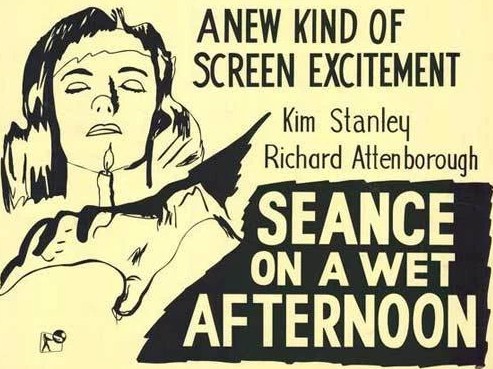
Highly atmospheric psychological gem that should appeal mightily to the current generation hooked on the new genre of scams – this one coming with a gut-wrenching twist. That it concerns a medium should add to the intrinsic appeal. And it turns on two terrific performances.
I have an unusual connection to this movie – and a whole bundle of others with music by John Barry. I heard the scores of this and the likes of King Rat (1965), The Chase (1966), Deadfall (1968) and The Lion in Winter (1968) long before I caught up with the movies. So I came at them with a kind of aural advance warning. The score John Barry wrote for this not only exemplifies the inherent creepiness but maximizes it.
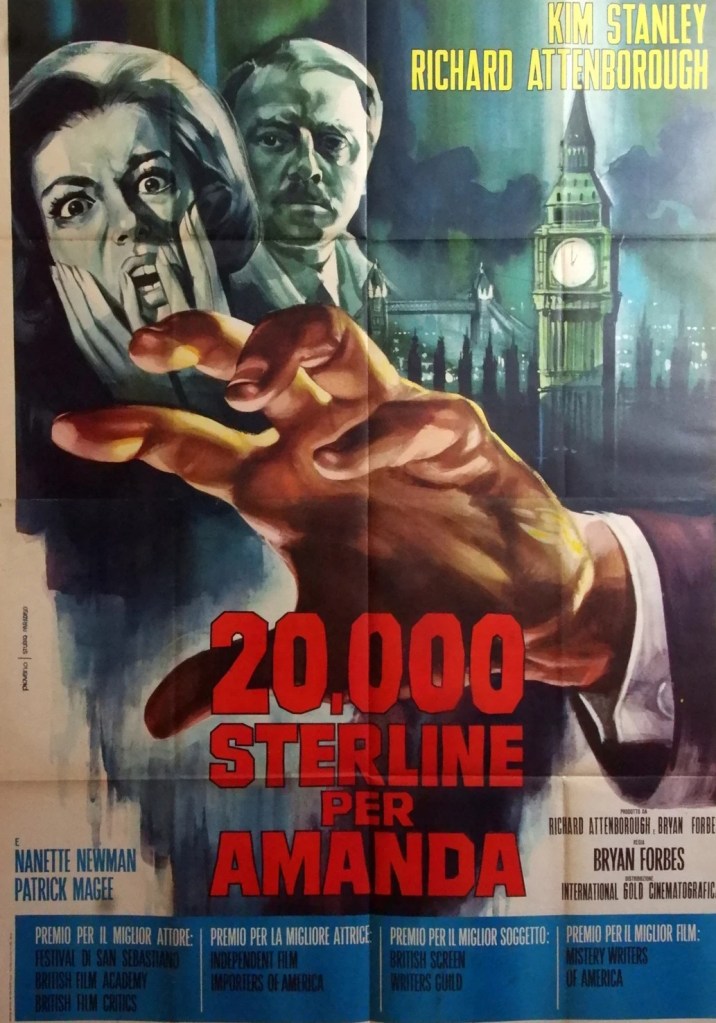
Even before we get into any notion of criminality, you can see that this unlikely middle-aged marriage between the dominant Myra (Kim Stanley) and the weak Bill (Richard Attenborough) is unhealthy to say the least. She’s the kind of psychic who’s likely to swoon and get lost in ethereal otherworlds while hosting seances. He’s just trying to keep her from toppling over into insanity, driven by her conviction that she is conversing with their dead son.
In the kind of scam you could see someone coming up with today, she decides she’ll thrust herself into public consciousness by becoming the sort of psychic police tent to consult during kidnappings or murders. In this case it’s the kidnapping of Amanda (Judith Donner), daughter of wealthy businessman Mr Clayton (Mark Eden). This might sound like the usual wishful thinking for publicity by an over-earnest psychic, but, in fact, it’s Bill, at his wife’s behest, who’s carried out the kidnapping. To make it look kosher, the couple demand a ransom.
The lass is kept imprisoned in their house, in a room made up to look like a hospital with Myra playing the role of nurse. Mr Clayton is sceptical of the psychic’s claims but his wife (Nanette Newman) is duped.
Given that Bill generally looks impotent, the harried look of the weak hen-pecked husband, it’s quite astonishing how he rises to the occasion to collect the ransom money, dodging the cops on the underground. The plan comes undone, however, when Myra decides the dead Arthur wants a buddy in the afterlife, with Amanda the prime candidate and Bill called upon to step up to the murder plate.
So we’re knee-deep in tension. The key here is that our point-of-view is that of the couple rather than the child or the parents. Amanda is a bit more worldly-wise than Myra expects so she’s kept on her toes keeping the suspicious child in check. So you’ve got what would be a contemporary trope but unusual then of being forced to want the criminals to succeed. Everyone loves a psychic, even more these days after the whopping success of The Conjuring series, and everyone loves the downtrodden husband, so we’re hoping they can outwit the pompous wealthy businessman and fleece him of some dosh, awake the world to the powers of the medium and live happier ever after.
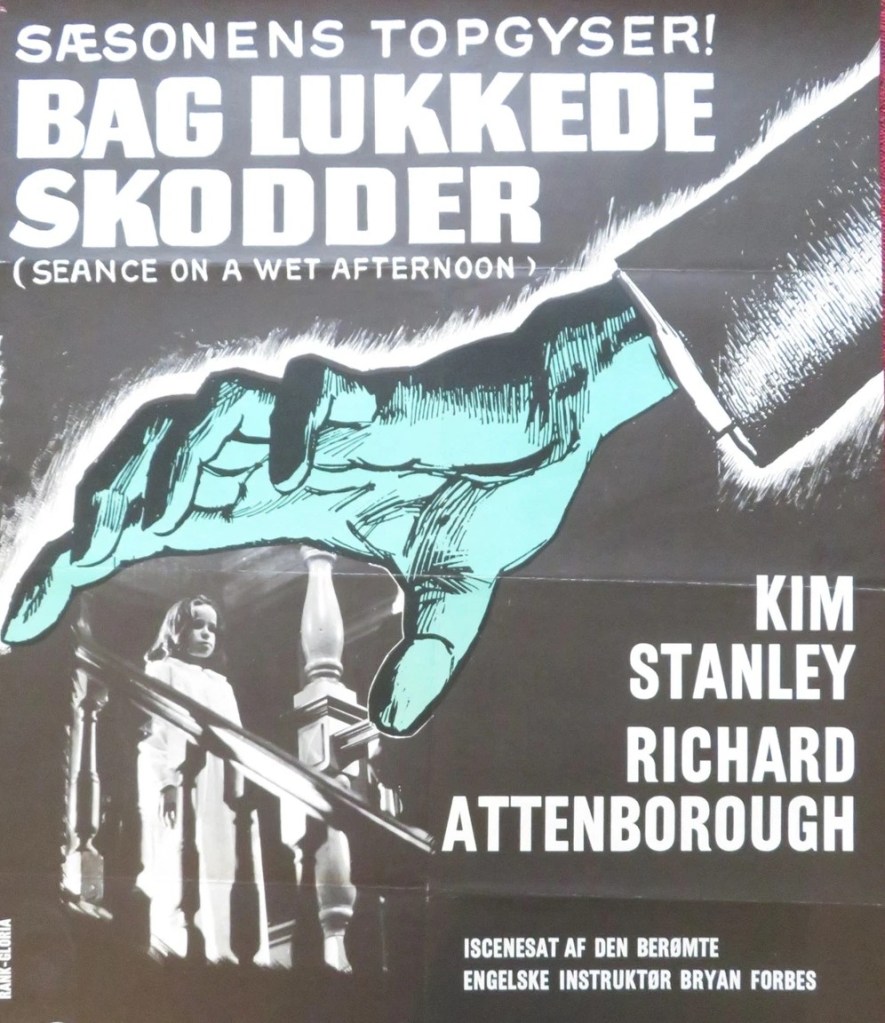
But that’s before Myra changes the plan and you’re wondering if Bill is going to be able to stand up to her. The cops come mighty close to smelling a rat, but the suckered wife appears to help their case.
The beauty of this is less in the plotting – but those twists would work as real zingers today – than in the playing. Critics were reaching for superlatives when two Daniel Day Lewis movies – Room with a View and My Beautiful Launderette – both opened on the same day in New York in 1985 and were astonished by the actor’s range. Richard Attenborough’s diffident mouse of a man in Séance on a Wet Afternoon appeared the same year as his bluff hard-nosed soldier in Guns at Batasi. The British Academy noticed, awarding him the Bafta Best Actor for the achievement.
He’s quite superb here, always on the verge of telling his wife what-for before sinking back into complaisant compliance. When we speak about edgy performances, we generally mean something else entirely, but this is an emotional edge that he’s always about to tip over into one way or the other.
American stage specialist Kim Stanley hardly made a movie, only one more this decade and none for another 16 years, but she carries this intense complicated character smothered by insecurities. Nanette Newman (The Wrong Box, 1966) is a believable mother. Mark Eden (The Pleasure Girls, 1965) crops up, as does Patrick Magee (The Skull, 1965) who tones down his trademark growl.
Written and directed by Bryan Forbes (King Rat) from the bestseller by Mark McShane.
The John Barry score not just sets the tone but helps carry the picture.
I understand plans are underway to remake this and I can see why

