A Funny Thing Happened on the Way to the Forum (1966) ***

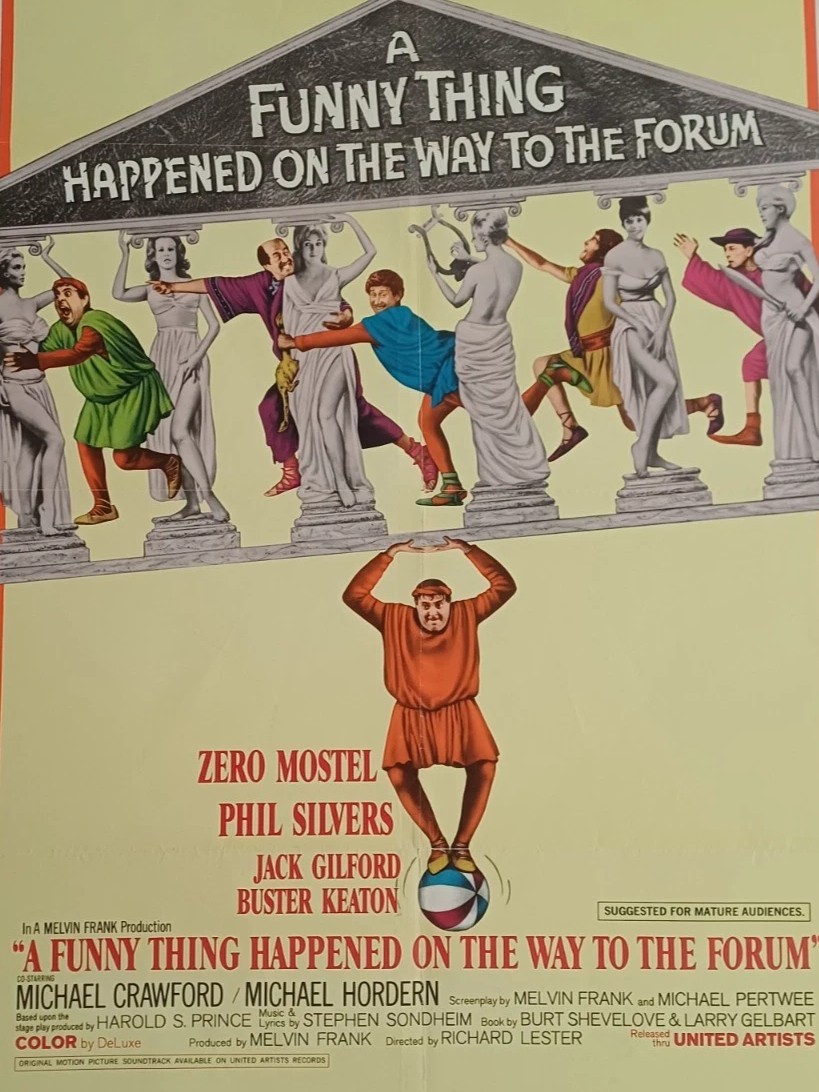
The funniest thing that happened on the way to turning this hit Broadway musical into a Hollywood movie was that composer Stephen Sondheim (Sweeney Todd, 2007), now denoted a legend, was considered such a poor marquee attraction that the producers cut half the songs of the original production, turning the result into more of a comedy with intermittent songs rather than a full-blown musical in the Rodgers and Hammerstein tradition.

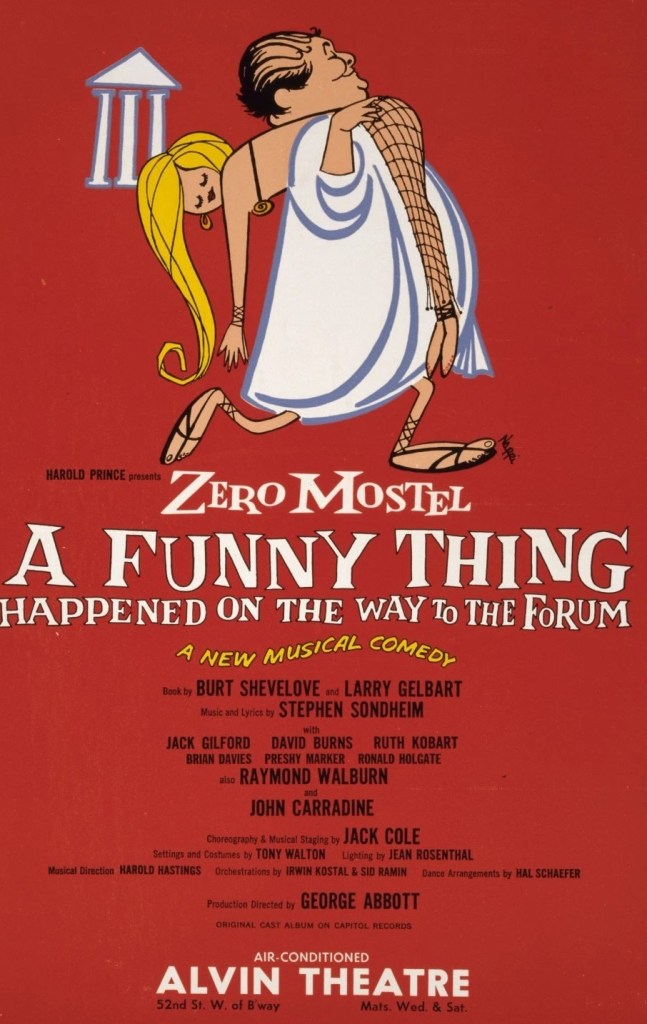
Sondheim had an unusual theatrical development, starting out purely as a writer of lyrics – for West Side Story (filmed 1961) and Gypsy (filmed in 1964). He took on the dual roles of composer and lyricist for this one, which made its Broadway debut in 1962 and ran for three years.
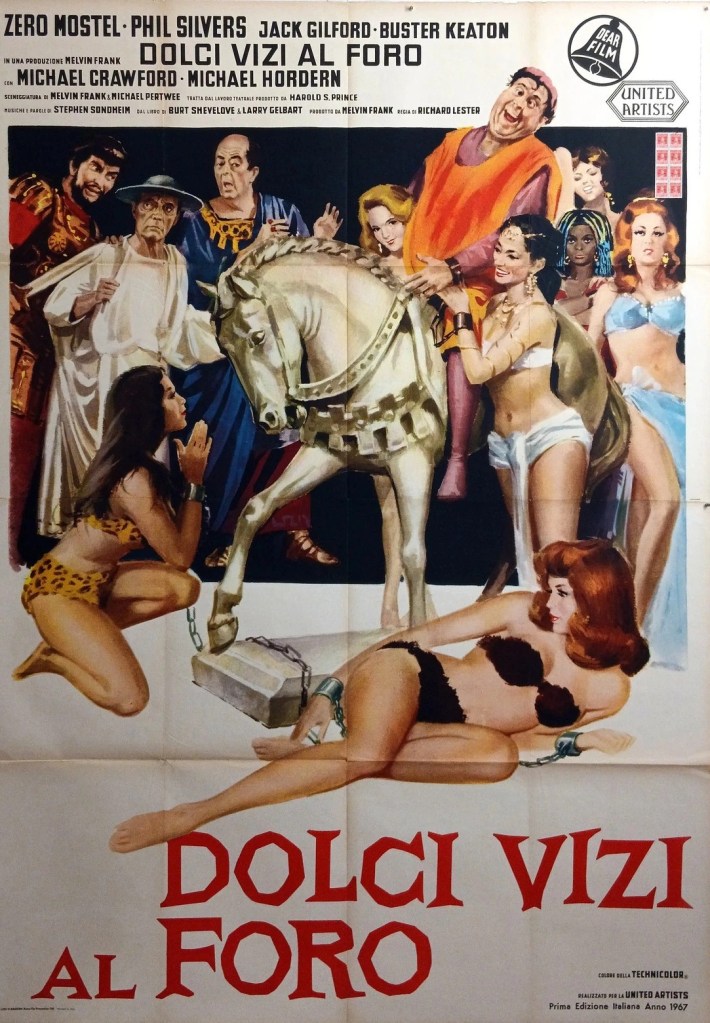
You wouldn’t have Zero Mostel, a year before The Producers (1967), down as much of a marquee name either – he hadn’t appeared in a movie in 15 years, and then in only a bit part. But Broadway has its own method of producing stars and he had become a stage headline act and really there were few contenders for the role of a fat middle-aged Roman hustler.

Contemporary audiences will appreciate the actor breaking the fourth wall and talking directly to the audience, but while it was highly unusual at the time, it had the effect of putting the audience on his side. You might not associate Richard Lester (Petulia, 1968) with musicals but that would only be if you excluded A Hard Day’s Night (1964) and Help! (1965) from his portfolio, though admittedly those would hardly be classed as traditional song-and-dance efforts.

The picture was larded with other top comedic names, Phil Silvers of Sgt Bilko TV fame and legendary silent comic Buster Keaton. It didn’t hinder the movie’s prospects that with the phalanxes of nubile young women on show it might have been considered an audition for actresses aiming no higher than the sobriquet of Bond Babe.

What’s perhaps most unusual of all is that this is a sex farce, not a medium at which Hollywood was renowned. Screwball romantic comedy, yes, farce set in a brothel, no. Luckily, it delivers on all fronts. If you want a hint of what Sondheim could bring to the party, there are seven songs to choose from. If you reckon Zero Mostel provides a distinct brand of comedy you would be proved correct. If you were here for the cheesecake it was in abundance. And if you went looking for laffs there was no shortage, pratfalls included.
The story is slight, if complicated. Slave Pseudolus (Zero Mostel) wants his freedom, young swain Hero (Michael Crawford) wants to win the heart of Philia (Annette Andre). All sorts of obstacles get in the way. Since Philia, a virgin slave, has already been sold to a great warrior Gloriosus (Leon Greene), Pseudolus must convince him that the girl has been exposed to a deadly plague and must be hidden away. He is eventually distracted by an orgy and persuaded that the girl is dead. However, when Gloriosus determines to cut out her dead heart, she is suddenly very much alive.

In the tradition of Shakespearean comedy, there are oodles of mistaken identity and the while the narrative twists itself into various contortions to accommodate the sub-plots, naturally, it all ends happily, Philia turns out to be not a slave at all, and Pseudolus walks off with his freedom and Amazonian temptress Gymnasia (Inga Neilsen) to boot.

It’s all very good-natured fun, bordering on the licentious, but steering well clear of the meretricious and anything so off-putting as nudity or sex.

Having conquered Broadway, Zero Mostel now conquers Hollywood, doubling down on his fame next year with Mel Brook’s The Producers. Unlike The Devils (1971), any sign of campness is tamped down, helped along by serious players like Michael Hordern (Where Eagles Dare, 1968) taking their roles seriously. Phil Silvers and Buster Keaton keep the show on the road. Future British television and Broadway musical star Michael Crawford (The Jokers, 1967) shows his promise. In small parts you might spot Ingrid Pitt (Countess Dracula, 1971) and Jon Pertwee, the third Doctor Who.

I didn’t go away humming any of the songs, but they were pleasurable enough and for Sondheim lovers more than enough.

Director Richard Lester proves himself adept at this kind of comedy. Written by Melvin Frank (Buona Sera, Mrs Campbell, 1968) and Michael Pertwee (Make Mine Mink, 1960) from the Broadway production by Sondheim, Burt Shevelove (The Wrong Box, 1966) and Larry Gelbart (The Notorious Landlady, 1962) which took its impetus from the work of Roman writer Plautus.

Good fun.
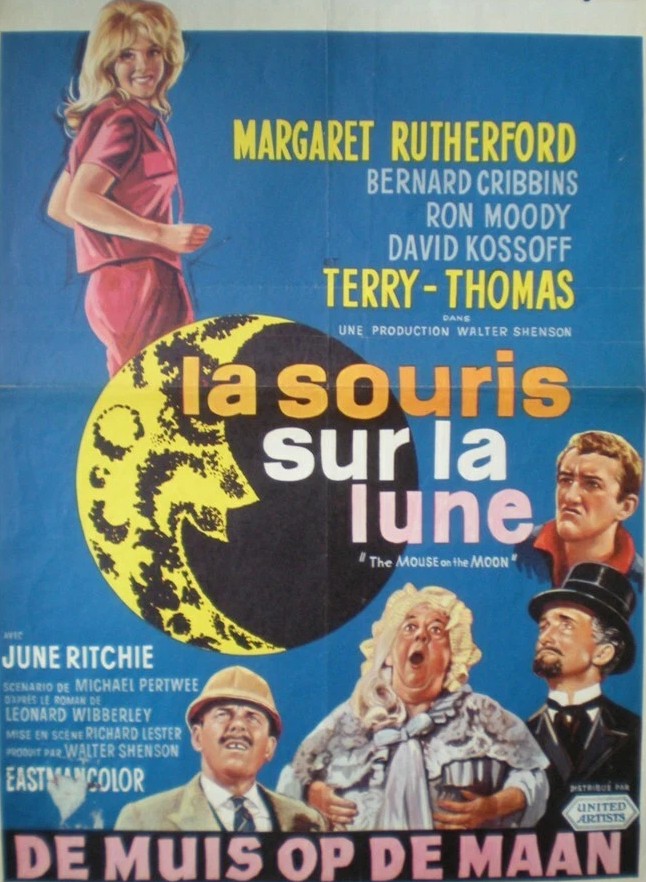
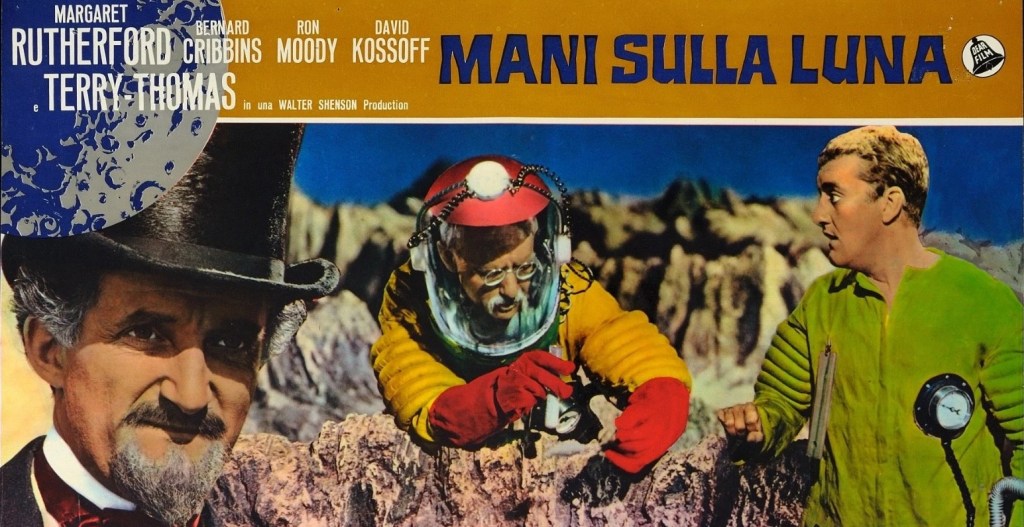
Mouse on the Moon (1963) ***

The gentle comedy for which the British were famous prior to the more raucous offerings from the Carry On team always contained an element of satire. Sometimes that has bite, but as often not, and almost, in a continuation of the gentleness of the format, appears like an afterthought. However, it’s not hard to skewer incompetence or hypocrisy or the foolish grandeur of nations, regardless of size.

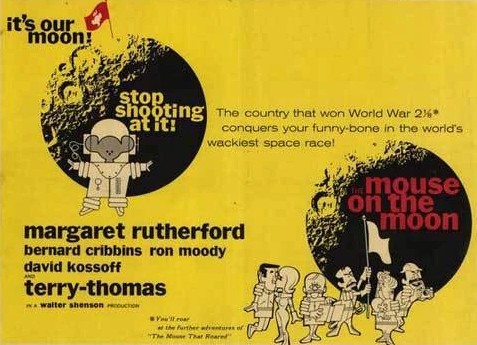
There’s no blunderbuss required here – not with such easy targets as the space race, politics and the Cold War – just a gentle poke here and there at ambition, grandiosity and grandstanding as the tiny (barely comprising 15 square miles) country of the Duchy of Grand Fenwick somewhere in central Europe shows up global giants Russia and the United States. Sensibly, this doesn’t try to place one character at the center of the morass. Instead, stupidity is spread far and wide, as various characters cede vanity to the next.

The central conceit is one of those barmy ones that any scientist could make plausible – think of growing potatoes on Mars in The Martian or the nimble invention at play in Project Hail Mary (2026). The chemical reactions of bad wine set off the kind of explosions that could provide a substitute for rocket fuel and send a spaceship to the moon.

But that the idea is given oxygen in the first place by the superpowers wanting to be seen to be bigger than anyone else and by maintaining their rivalry when there’s little need.

Grand Fenwick is not just the type of place where nothing works – palace plumbing erratic, parades catastrophic, politicians corrupt and we are treated to a battalion of incompetents from Grand Duchess Gloriana (Margaret Rutherford), apt to nod off at state functions, Prime Minister Mountjoy (Ron Moody) who places having a hot bath about the needs of the populace and whose niece Cynthia (June Ritichie) is an agitator for reform, his untrustworthy political rival Benter (Roddy McMillan), and British spy Bender (Terry-Thomas) for whom bumbling is an art form.

Romance is in there somewhere when Mountjoy’s ineffective son Vincent (Bernard Cribbins) falls for Cynthia. But mostly it’s a concoction that relies on everything going wrong at the right time and anything that goes right nonetheless manages to cause appropriate chaos.

Having secured a million bucks in funding from America to purportedly send a rocket, a useless one donated by the Russians in a riposte to American generosity, to the moon, Mountjoy intends to pocket the cash by ensuring the rocket blows up on launch. However, it takes off, propelled by the wine with Vincent and scientist Professor Kokintz (David Kossoff) on board, triggering a genuine space race involving the two superpowers, propaganda the prize for the winner.

Naturally, nothing goes the way you expect and the little guys outwit the big guys.

This was an early directorial venture from Richard Lester (Petulia, 1968) so that accounts for some of the bite. Given this is populated in the main by character actors, Lester allows them do their thing while ensuring that the comedy is as much reliant on satire as buffoonery. No need here for double entendres or slapstick, the original set-up works out just fine.

Margaret Rutherford  (Murder Ahoy, 1964) could have run away with this picture but her natural instinct to dominate is kept in check. Ron Moody (Oliver!, 1968) heads a cast of movie also-rans, some of whom made a successful transition to television like John Le Mesurier (Dad’s Army), Hugh Lloyd (Hugh and I) and Roddy McMillan (The Vital Spark). Terry-Thomas (Our Man in Marrakesh/Bang! Bang! You’re Dead, 1966) would have stolen the picture if given more scenes. Bernard Cribbins (Carry On Spying, 1964) offers another of his hapless characters while June Ritchie (The World Ten Times Over, 1963) adds a note of glamor.

This was a sequel to The Mouse That Roared (1959) and had to make do without original star, Peter Sellers, who had played three roles. Two of those roles were allocated to other players, with the third character axed. And where that film benefited from Sellers’ presence, this one definitely benefits from his absence.

Written by Michael Pertwee (Strange Bedfellows, 1965) from the bestseller by Leonard Wibberley.

Engaging.

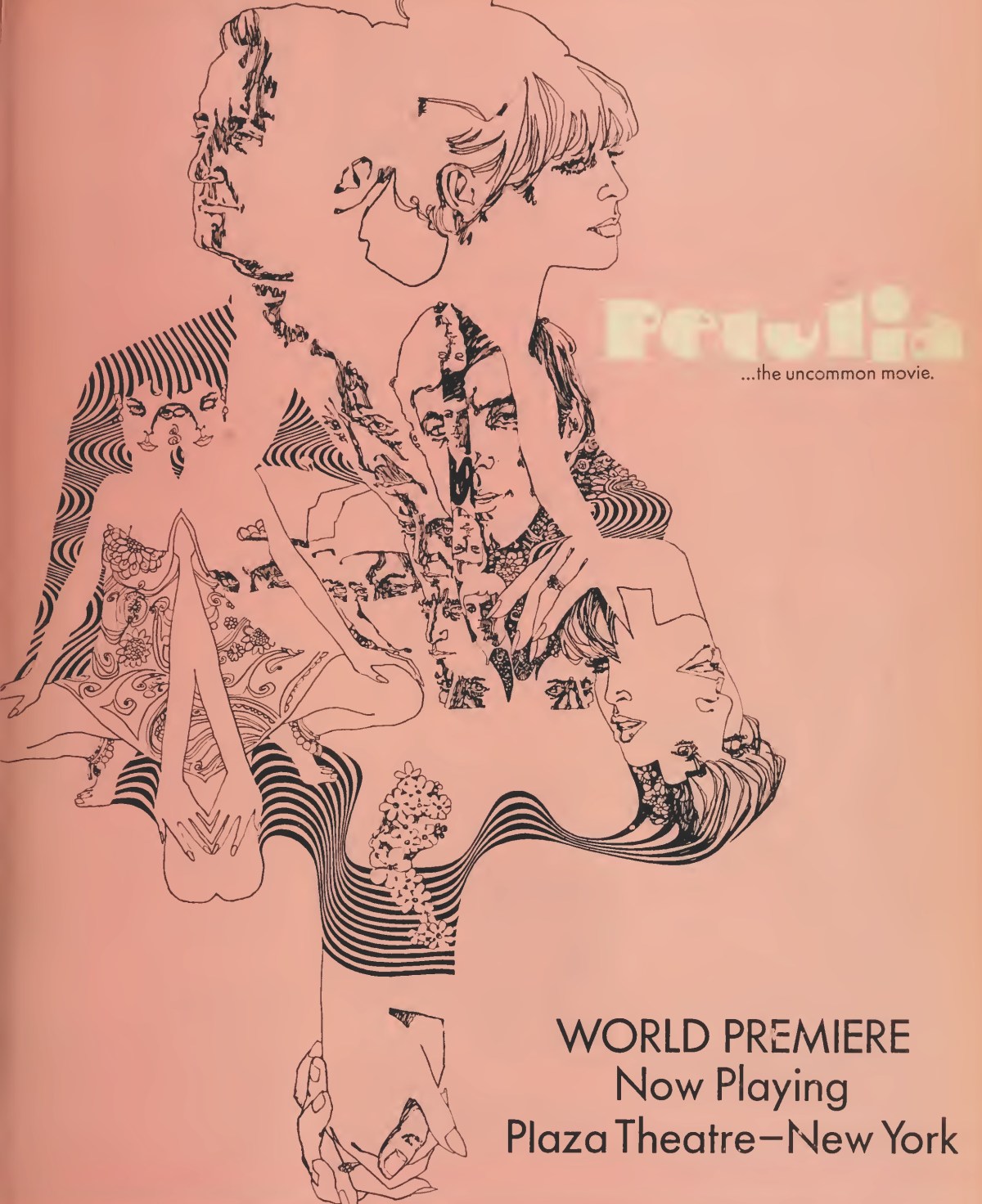
Petulia (1968) ****

A dislocated, fractured film about disjointed, fractured people. Takes a heck of a long time to work what’s going on because director Richard Lester in the elliptical style of the times tells us bits of the story a bit at a time and no guarantee anything is in logical order or that the characters tell the truth about themselves or their actions. And, unusually, outside of a western, all the men appear prone to violence.

Petulia (Julie Christie), a self-appointed “kookie” (in the vernacular of the times) and married for just six months to wealthy naval architect David (Richard Chamberlain), for no reason at all begins an affair with surgeon Archie (George C. Scott) that she encounters at a posh function. Archie, getting divorced for no reason at all except boredom from Polo (Shirley Knight), already has a girlfriend, all-round-sensible boutique-owner May (Pippa Scott). Petulia and Archie may or may not have consummated the affair, she certainly puts him off often enough. Petulia may or may not be the daughter and sister of prostitutes. You see where this is going? Unreliable narrator, par excellence.

A broken rib may be the result of stealing a tuba from a shop. She could have cracked her head open after a dizzy spell. A Mexican boy keeps turning up and, it has to be said, nuns. It’s all very avant-garde: an automated hotel where the key comes out of slot and the fob sets off flashing lights at the bedroom door, the televisions in hospital rooms are dummies, Janis Joplin is the singer in a band, characters viewed in longshot down corridors, up car park ramps, emerging from tunnels.

Eventually the demented jigsaw puzzle comes together but not after a tsunami of overlapping dialog, flash scenes and snippets that have nothing to do with the film. It’s San Francisco so there’s a scene in Alcatraz. But little is constant, every marriage seems on the verge of break-up, even the contented Wilma (Kathleen Weddoes), wife of another surgeon, wishes she had Archie’s courage in ending his marriage.

But Petulia is anything but free-spirited. She is trapped and doesn’t know how to get what she wants. She may be a tad unconventional and big-hearted and occasionally small-minded but once you get to the end of the film and find what she really wants the rest of her behavior makes sense. And although Archie is able to verbalize what he doesn’t want from marriage, the only option open to Petulia is one apparently mad action after another.

Although set in the Swinging Sixties, the male hierarchical system remains dominant. Archie’s ex-wife relies on him for money, David and his father (Joseph Cotten) hold sway over Petulia regardless of her bids for freedom. David is unsavory, his father is willing to provide a false alibi, another surgeon Barney (Arthur Hill) lets loose with a vicious rant and even the harmless soft spoken Archie lets loose on Polo.

Julie Christie (Doctor Zhivago, 1965) makes Petulia as irritating as she is endearing, the freedom she expects to embrace in the counterculture impossible to grasp, leaving her only with the vulnerability of the vanquished. George C. Scott (The Hustler, 1961) has forsaken his growling persona, the volcanic screen presence set to one side, to portray a more interesting character, bemused by Petulia but ultimately standing up for her.   

There’s an excellent supporting cast in Richard Chamberlain, still in the process of shucking off Dr Kildare (1961-1966), Arthur Hill (Moment to Moment, 1966), Shirley Knight (Flight from Ashiya, 1964) and Joseph Cotten (The Third Man, 1949).

Britisher Richard Lester (A Hard Day’s Night) was a director du jour who, while fulfilling the expectation of delivering cutting-edge techniques and casting a wry eye on contemporary mores, offered some surprisingly more homely family scenes and for a movie which is so much about the distance between characters many scenes of just touching, Petulia stroking Archie’s hands, Archie stroking is wife’s neck, even when the intimacy they seek is a forlorn hope. The incident with the tuba which would be a meet-cute to end all meet-cutes in other pictures turns into a cumbersome irrelevance. You get the impression that the chopping up of the time frames and the points of view reflects the characters’ feelings that they can impose their own reality on a situation. Lawrence B. Marcus (Justine, 1969) wrote the screenplay from the novel Me and the Arch Kook Petulia by John Hasse.

Check out a Behind the Scenes on this film’s Pressbook.

Discover WordPress

A daily selection of the best content published on WordPress, collected for you by humans who love to read.

The Atavist Magazine

by Brian Hannan

WordPress.com News

The latest news on WordPress.com and the WordPress community.