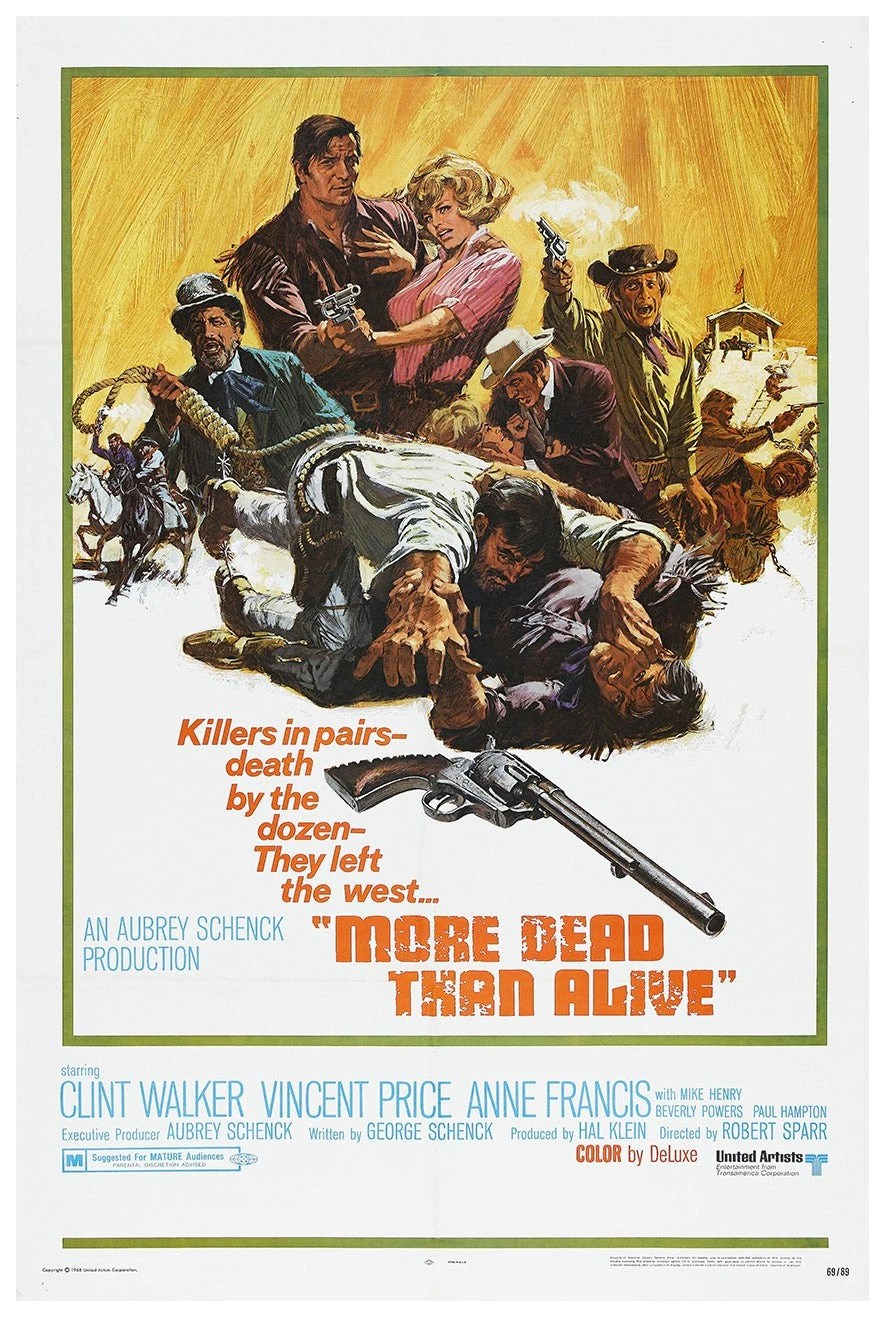
More Dead than Alive (1969) ****

You wonder why some actors never make it big. Clint Walker, with a hefty television career behind him, was one of the many graduates from The Dirty Dozen (1967). But whereas such disparate characters as Donald Sutherland (Mash, 1970), Charles Bronson (Farewell Friend, 1968), Jim Brown (100 Rifles, 1969) and even Telly Savalas (though mostly on the small screen) went on to become substantial marquee names, soft-spoken square-jawed gentle giant Clint Walker was left by the wayside. He still earned some top-billed credits, but these were all in low-budget programmers.

The odd thing is that had he come onto the scene a decade later when muscle-bound hunks like Sylvester Stallone and Arnold Schwarzenneger were all the rage he might have easily jumped to the top. Ironically, another muscleman Mike Henry (Tarzan and the Great River, 1967) pops up here, as if to prove to the newcomer that muscle no longer cuts it in Hollywood when slimmer stars like Paul Newman and Steve McQueen are all the rage and even denoted tough guys like Lee Marvin lack the heavyweight build.
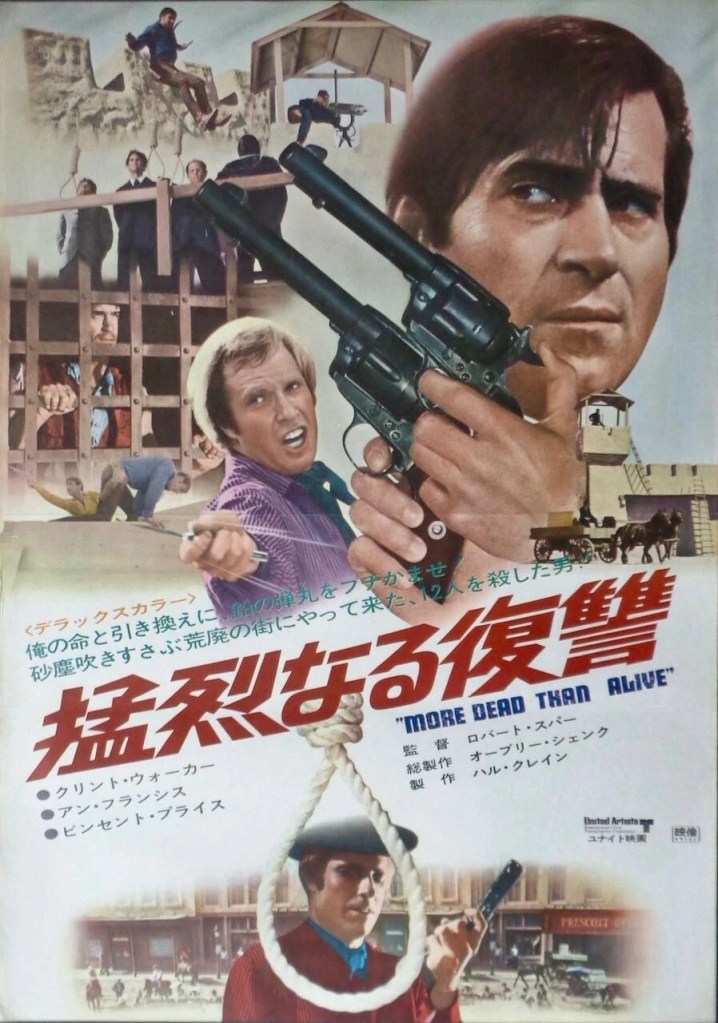
Like the climax to The Wild Bunch (1969), the opening section is a paeon to the glories of the Gatling Gun as it mows down a posse of prisoners trying to escape. Cain (Clint Walker) is one of the few jailbirds who simply hunkers down and refuses to consider running. Whether it’s this determination not to cause the guards any trouble or some unexpected softer approach on the part of the authorities, he is later set free after serving 18 years.

It’s only then we realize he’s actually “Killer Cain” with twelve notches (presumably one for every death) on his revolver. But he’s determine to go straight and refuses the opportunity offer by travelling showman Dan Ruffallo (Vincent Price) to even play the part of the bad guy. But his record goes against him when trying to find employment. So he takes on the job of delivery guy only to end up in the arms of some thugs from prison led by Luke Santee (Mike Henry) who has a score to settle. Having beaten him up, they decide not to finish him off, so they can enjoy the pleasure of beating him up over and over. Given Clint Eastwood has set the tone for the hero being badly beaten up and/or left for dead, the thumping Cain takes tends towards the excessive.

So if you’re trying to get a killer to disavow his plan to avoid violence, that’s not the best plan. When Cain escapes, you expect this to turn into a revenge western. Except it doesn’t. It’s an avoidance western, Cain trying to stay out of the way of any kind of shooting.

There are some interesting directorial aspects. It looks very much as if Robert Sparr, a television director making his movie debut, has absorbed the influences of the French New Wave. There are jump cuts all over the place. We cut from Cain looking forlorn at night to him standing in a queue in daylight looking for a job. We go from an outdoor encounter with Ruffalo to suddenly the pair of them sitting down inside.
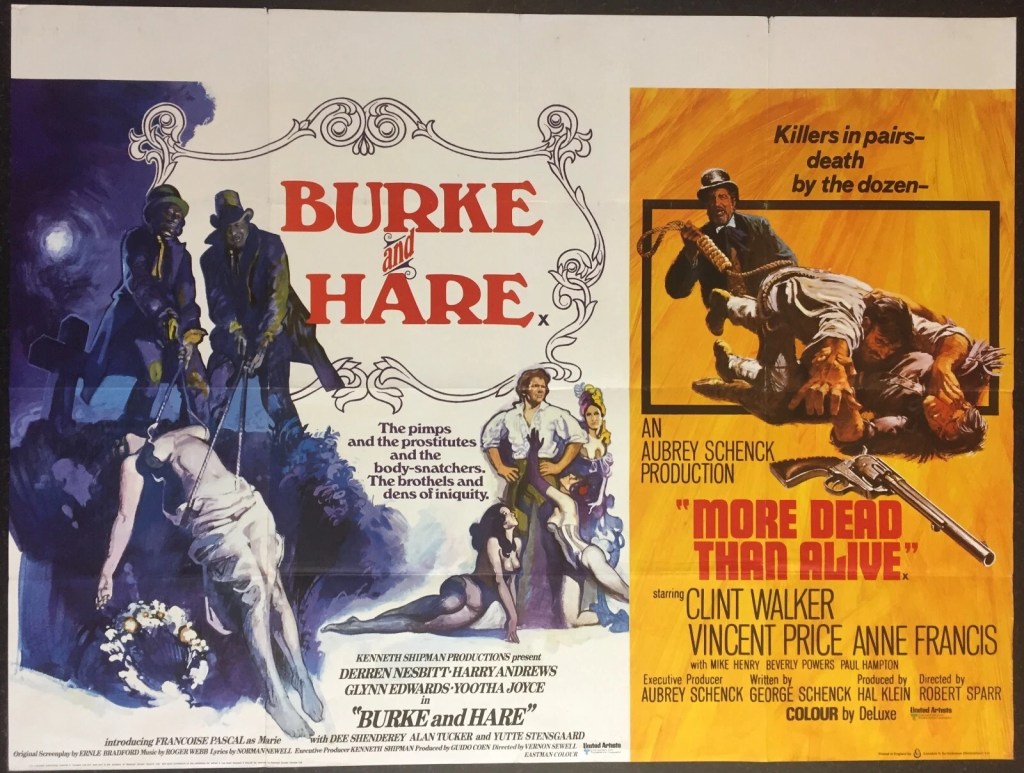
And as with like Butch Cassidy and the Sundance Kid and The Wild Bunch, both out the same year, the message is that the Old West is dying. Not only do we have primitive mechanized transport in the shape of a bicycle there’s also a rudimentary telephone while gunmen are more likely to prosper showing off their skills in a tent than being a gun for hire for ambitious ranchers and the like.

This is determinedly offbeat, not falling into the standard narrative traps for the genre. Cain, while trying to shed the murderous aspects of his previous life, eventually goes to work in the circus. That sets him down in the moral mire, taking advantage of his infamous reputation while at the same time not lifting a gun in anger and wooing artist Monica (Anne Francis).

However, no surprise this is under-rated. In part that’s because it doesn’t deliver on the early violent promise, the title very much a misnomer, so those expecting a spaghetti western leave disappointed while anyone looking for much else wouldn’t be attracted by the violence and the title. In fact, it’s a very thoughtful piece. Not entirely original because criminal-going-straight is standard stuff, usually quickly snookering the good guy-bad guy into mostly bad guy activity, regardless of his justification for doing so. But here, the killer manages to avoid further bloodshed despite  continuous provocation.

Apart from the moral aspect, it treads an interesting path between demystifying the Old West and mystifying it. Monica has come west to capture the Old West before it dies away. There’s a ghost town but the only gunslinging on show is staged. Cain is a major attraction because peace-loving law-abiding folks like nothing better than seeing a genuine killer up close.

The notches on his gun weren’t acquired in typical Hollywood hero style with a shootout in the main street and the good guy never drawing first. In fact, most of Cain’s killings fall into the dubious category.

Most westerns take place over a short period of time, just as long as it takes to set up the good guys and the bad guys with a bit of romance on the side. This takes place over a year and romance is very slow-burn so that artist Monica nips in and out of the narrative.

Having a record blunts Cain’s attempts to get a decent job, the only long-term work as a bouncer in a saloon until his pseudonym is blown. He joins the Wild West Show only to twice quit it, either when he is riled by intemperate gunman wannabe Billy (Billy Valence) or when he comes face to face with old lawman Carson. At the end he returns to earn enough cash to buy some livestock for a farm.

There are three significant deaths, two sudden, and all offer something unusual in that department. The ending is as unexpected as it is shocking.

Both Clint Walker (The Great Bank Robbery, 1969) and Vincent Price (Witchfinder General/The Conqueror Worm, 1968) deliver excellent subdued performances, the latter far removed from his usual horror line and the lugubrious tones kept in check. Anne Francis (The Satan Bug, 1965) has a rare big screen outing. Written by George Schenck (Barquero, 1970).

You would not call this – outside of the jump cuts – particularly stylistic, equally it avoids the visual traps of endless sunsets or panoramas and we’re not subjected to minutes wasted just watching cowboys ride somewhere. But it definitely is a cut above in terms of thematic complexity, in the ability to tell a story over a period of time, and to take the hero in an unexpected direction.

The Sweet Ride (1968) ***

Unusual drama mainlining on Californian surf, sex, bikers, a mystery of Blow-Up (1966) dimensions and the best entrance since Ursula Andress in Dr No (1962). Displays a 1960s vibe with a 1950s pay-off as the “hitchhiker” of responsibility rears its ugly head.

A woman thrown out of a car narrowly escapes being run over. The cops jack in the investigation after television actress Vickie (Jacqueline Bisset) refuses to explain why she’s been badly beaten up.  And so we enter flashback mode to supposedly find out. She makes a glorious entrance, emerging from the sea, minus bikini top, into the lives of surfer Denny (Michael Sarrazin), jazz pianist Choo-Choo (Bob Denver) and ageing beach bum and tennis hustler Collie (Tony Franciosca). From the off, she’s enigmatic, gives a false address, won’t explain bruises on her arm, has something clandestine going on with television producer Caswell (Warren Stevens) and like Blow-Up we are only privy to snippets of information.

She’s half-in half-out of a relationship with Dennis, with Collie hovering on the periphery hoping to pick up the pieces to his sexual advantage. Contemporary issues clog the background, Choo-Choo tries a camp number complete with pink dog to avoid the draft, a neighbor threatens to shoot Parker for wandering around in shorts and habitually stealing his newspaper, epithets like “degenerates” are tossed around, Choo Choo’s girlfriend Thumper, while appearing in movies with titles like Suburban Lust Queen acts den mother, there’s not much actual exciting surfing, and a biker called Mr. Clean is somehow involved.

The romance plays out well, Vicky unsure, Denny convinced but without a livelihood to offer and unable to get a straight answer out of her. Choo-Choo gets the gig of his dreams in Las Vegas and there’s an rape scene, more unsettling because it’s committed by Denny with the bizarre justification of getting “just for once something on my terms.”  And there’s the equally disquieting sense that the only explanation for Vickie’s behavior is to tab her a nymphomaniac, walking out of an argument with a mysterious man in a beach house to drop her clothes for a bout of sex with Mr Clean.

I must have seen a different picture from everyone else. A good few critics at the time and reviewers since appear to think Vickie was also victim of a gangbang by the bikers, but I can’t see why. When he sees Vickie coming down from the beach house, Mr. Clean shouts “everybody split” and his buddies clear the beach. However, Mr. Clean, ironically, gives the best indication of her state of mind, explaining that Vickie “kept staring back at the house and moaning about how she wanted to die” while he enjoyed the best night of his life sex-wise.

Denny and Collie prove not to be the pussycats they appear, bearding the bikers in their den and beating up Mr. Clean while Denny goes on to deliver a hiding to Caswell. But what this film turns out to be is an examination of vulnerability, how easily those with a new sense of freedom are trapped. An examination of contemporary mores, perhaps, but in not resolving the mystery of Vickie ultimately fails to deliver, especially as it does not, from the outset, carry the kind of artistic credentials of Antonioni in Blow-Up.

Perhaps the mystery needs no resolution, it’s just same old-same old dressed up in the novelty of sexual freedom. There’s no idea of why Vickie was beaten up, and essentially abandoned on the road to become accident fodder, and no hint really of why she fell foul of someone so badly she needed disposed of, no notion that she was a threat to anyone. (Or, for that matter, no explanation of what happened to her bikini top and why, if she was so apparently free with her charms, she was so shy about being seen half-naked.) On the other hand, victim may well have been Vicky’s destiny from the get-go, that kind of innocence only waiting to be defiled.

In any 1960s contemporary picture there’s always the temptation to accept as truthful or reject as phony the lives shown. The idea that sexual freedom bestows actual freedom is usually the issue until consequence (i.e. old-fashioned Hollywood morality) comes into play. This is less heavy-handed than, for example, Easy Rider (1969) or Bob & Carol & Ted & Alice (1969). The characters make decisions to grow up or to stay locked in a world of easy sex, dope and money. There’s no grand finale, just a more realistic drifting apart, and it’s only Vickie who comes apart, although that process had begun long before she met the drifters.  

Jacqueline Bisset (The Detective, 1968), in her divinely posh British accent, comes over well as an attractive screen presence and complex character. In fact, she has a bigger part here than in Bullitt (1968) or The Detective (1968). If you wanted anyone to portray a soulful hippie you need look no further than tousle-haired Michael Sarrazin (In Search of Gregory, 1969) and normally if you required someone on the sly, despicable side, Tony Franciosca (Fathom, 1967) might well be your first port of call, but Franciosca proves the surprise here, classic wind-up merchant and predator who exhibits considerable vulnerability when he realizes he is losing the worship of the idealistic young.

Former British matinee idol Michael Wilding (A Girl Named Tamiko, 1962) and Norma Crane (Penelope, 1966) appear as Vickie’s parents.  Bob Denver (Who’s Minding the Mint, 1967) and Michele Carey (The Spy with My Face, 1965) are solid support. Director Harvey Hart (Fortune and Men’s Eyes, 1970) tries to cover too much ground and could have done with narrowing the focus. Future Bond screenwriter Tom Mankiewicz (son of Joseph L.) made his screenwriting debut adapting the book by William Murray.

The DVD is a bit on the pricey side, but if you just want to check it out, YouTube has a print.

The Honey Pot (1967) ***

Shave 20-30 minutes from this and you would have had a taut thriller. You could start with the number of clever dicks who happen to notice that what’s going on bears a close resemblance to a play Volpone by Shakespeare contemporary Ben Johnson, even down to the anglicizing of the names of those fictional characters. And prune the number of detectives, three is two too many especially when there’s an actual genuine detective in the mix. And the shock ending is just…well…mince.

Otherwise, quite fun in a way. Wealthy Cecil Fox (Rex Harrison) hires sometime actor, sometime factotum, law graduate Marty McFly – oops William McFly – to help him pull off an elaborate joke, “people-baiting”, a modern version of “bear-beating” apparently. Fox pretends to be dying in order to bring three former lovers, all he presumes desperate to be named in his will, to his bedside in a grand palazzo in Venice. Upfront reason, some kind of revenge. Hidden reason, something darker obviously.

The trio are Texan Mrs Sheridan (Susan Hayward), movie star Merle (Edie Adams) and Princess Dominique (Capucine). Sheridan is accompanied by a nurse Sarah (Maggie Smith), the “voice of morality.” They all certainly seem to have a sense of humor. Two presenting Fox with gifts of clocks, the princess with an hour-glass filled with gold dust instead of sand, presumably with the notion that he can watch his life ticking away. Needless to say, this is like an reality TV show, Fox not having named an heir in his will, so they are all battling to be the heir, and as he points out, even the rich will succumb because there is no such thing as “enough money.”

Things do not go according to plan when Sheridan unexpectedly dies. Enter Inspector Rizzo (Adolfo Celi). Sarah suspects McFly because he used her as an alibi but disappeared for a time when she (for unexplained reasons) fell asleep in a posh restaurant (and nobody tried to wake her). Turning detective herself, she comes up with “proof positive.” Turns out the two remaining suspects had conspired to also give themselves an alibi, easily demolished by the kindly inspector. McFly, too, has been doing some digging.

But then comes another twist and everything you thought you knew flies out the window. Cue more investigation, more alibis and finally an Agatha Christie pay-off when the two amateur detectives and the real one confront everyone in the drawing room. By which time the twists are coming thick and fast.

Best thing about this is the playing. Although decidedly stagey, very little in the way of visual audacity, that works to the movie’s benefit, and not a bad choice to rely so heavily on the acting given the cast. With the exception of Edie Adams, Capucine and Celi, all were Oscar anointed. Two winners – Rex Harrison for My Fair Lady (1964) and Susan Hayward for I Want to Live (1958) – and between them another five nominations – and two future winners in Cliff Robertson for Charly (1968) and Maggie Smith for The Prime of Miss Jean Brodie (1969). The others were not out of their depth, Edie Adams (Made in Paris, 1966) clocking up Emmy nominations. Adolfo Celi (In Search of Gregory, 1969) a deuce of nominations from the Cannes Film Festival while even Capucine (The 7th Dawn, 1964) had been nominated for a Golden Globe.  

So director Joseph L. Mankiewicz (Cleopatra, 1964) makes the right decision to let his actors get on with. Rex Harrison is at his suave best, but with a malevolent undercurrent, and has most of the best – and zestiest – lines. Robertson, usually the hero, is sly and duplicitous. Susan Hayward was in her comfort zone, forthright and taking no prisoners, Capucine at her cold and haughty best. Smith and Celi were the revelations, the former losing the trademark drawl and the nurse’s mousiness as to some extent she exerts control, and Celi departing from the bombast and delivering a lower-keyed performance.

Doing double duty, Mankiewicz worked up the script from three sources: the original Volpone,  the play Mr Fox of Venice by Frederick Knott (Dial M for Murder) and a novel The Evil of the Day by Thomas Sterling. Next time the director went to the stage for inspiration he chose a better source for a mystery – Sleuth (1972).

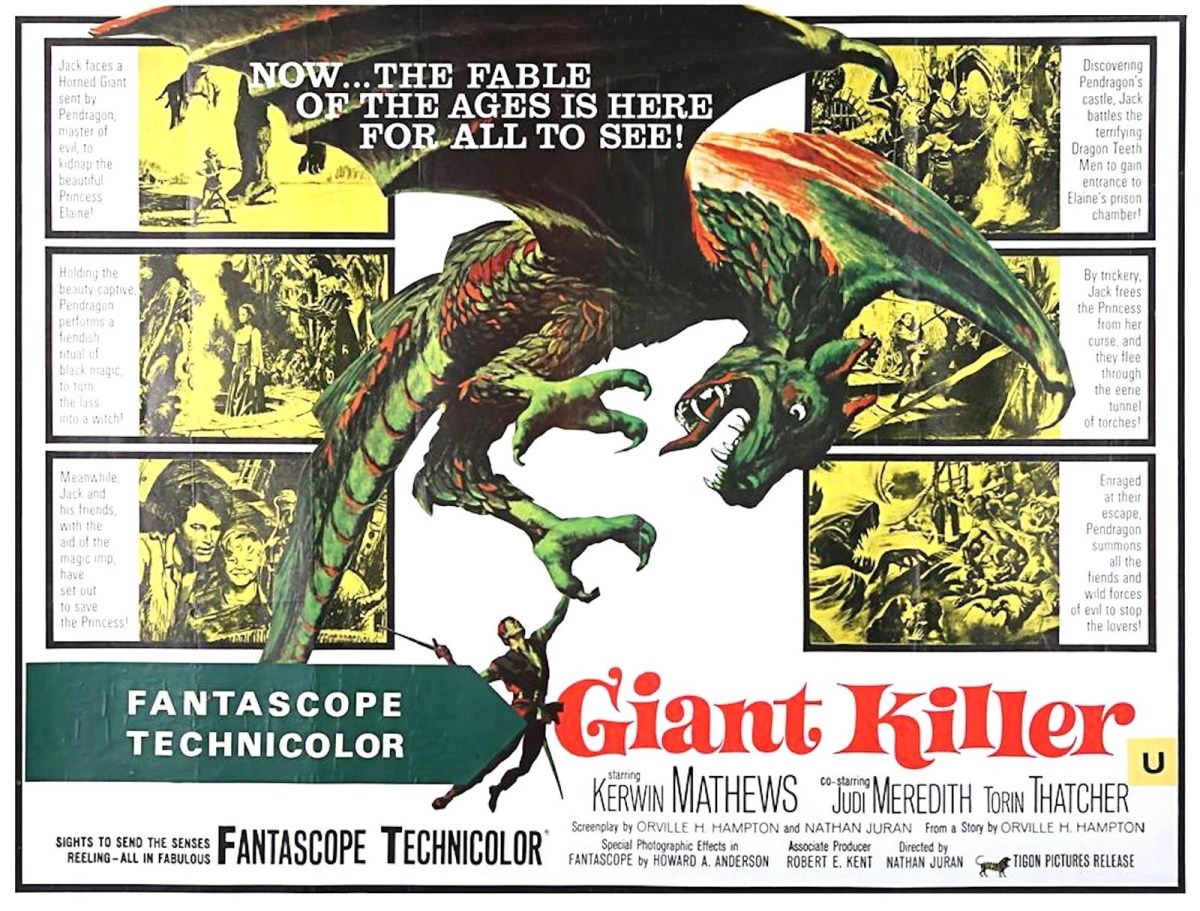
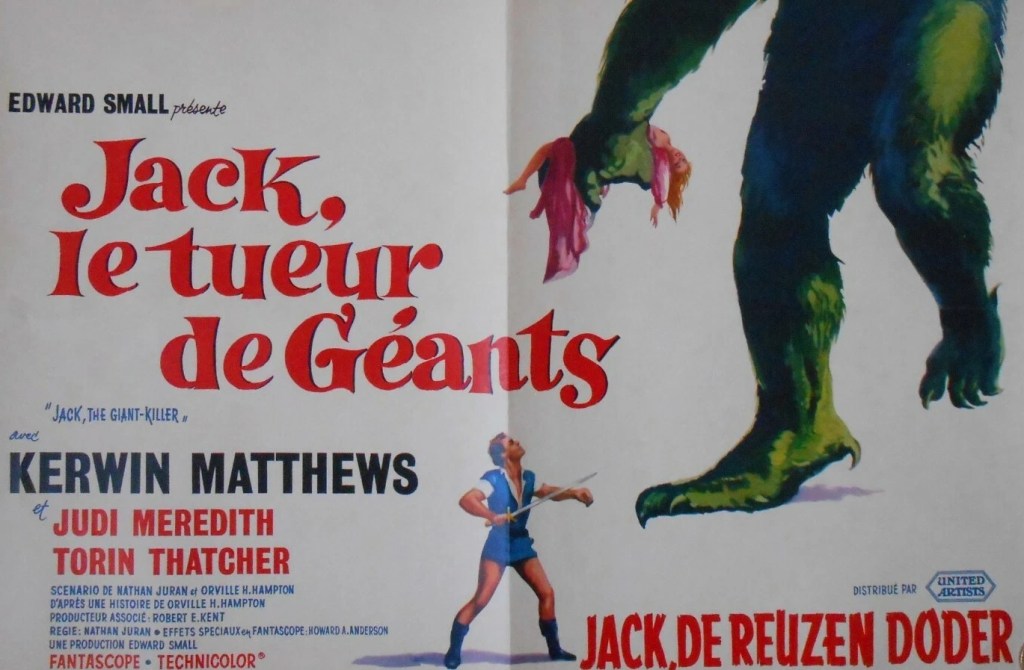
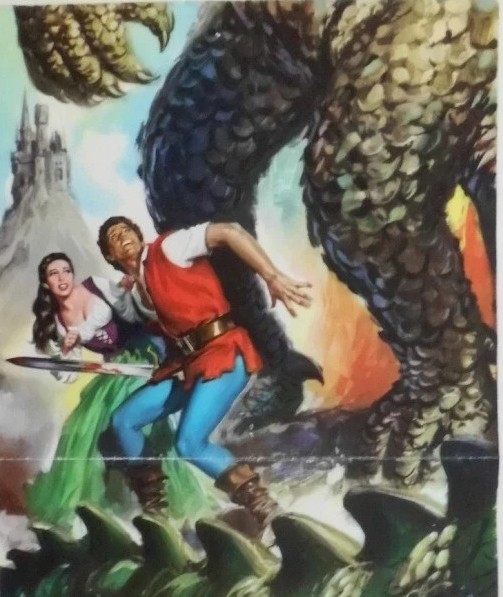
Jack the Giant Killer (1962) ***

Just to be clear, this is not, as I had automatically assumed, about Jack and the Beanstalk. Also, it’s worth pointing that the stop-motion animation is not, as I had equally automatically assumed, the work of Ray Harryhausen. It hadn’t occurred to me that anyone else could follow in Harryhausen’s footsteps, especially when this number has gathered together some of the other constituents of Harryhausen’s first gem, The Seven Voyages of Sinbad (1958), namely star Kerwin Matthews, co-star Torin Thatcher and director Nathan Juran 

This falls into the “See!” (don’t forget the exclamation mark!) category of moviemaking when the audience is expected to sit transfixed as strange creatures appear one after the other and in between is very much of the ho-hum variety.

To be sure, this is a very entertaining little piece with, as in the stop-motion formula, everything else taking second place to the variety of monsters – the titular giant, spectral figures, a dinosaur, a two-head monster, and a magician who can make things disappear. Given that the heroine doubles up as the villainess, this takes the narrative into unusual waters. And that’s before we come to the leprechaun-in-the-bottle.

It is just as well the special effects are up to scratch – for the time – because everything is played like a pantomime. The villain, Pendragon (Torin Thatcher), isn’t far short of issuing the occasional hiss and his face has a strange hue to put it mildly. But he’s a clever evil wizard and under the guise of playing tribute to King Mark (Dayton Lummis) presents his daughter Princes Elaine (Judi Meredith) with a large doll’s house from which emerges a tiny creature whose main appeal is that he can dance.

Come night, however, and after Pendragon has sneaked into the castle, the creature is released and turns into the rampaging titular giant who kidnaps the princess in his mighty claws. Farmer Jack (Kerwin Matthews) comes to the rescue and manages to tangle the giant in the workings of the mill and kills him.

You’d expect romance to bloom and initially it does, but you’d think the king would be more grateful than to nip romance in the bud by sending Elaine to France to hide out in a convent. (I should point out the tale is set in Cornwall, so France is just across the sea). But the ship doesn’t reach its destination. Skeletal witches attack. Elaine is captured once again. Jack and the ship’s captain’s son end up in the drink where they are rescued by a friendly Viking who has in his possession the imp-in-the-bottle who can grant wishes.

Pendragon’s scheming and magic ensures that Elaine is turned into a villainess and even when Jack rescues her for a second time her villainy ensures he’s the one who’s captured and the imp and bottle are chucked into the sea.

There’s a fair bit of the conjuring of bad spells – humans are turned into dogs and monkeys – and a fair bit of trying to break them but Pendragon always appears to have another spell up his sleeve and able to conjure up more creatures. Now it’s a two-headed giant confronting Jack who is then able to summon a sea monster to retaliate. But Pendragon can turn himself into a dragon.

There’s certainly an element of the Harryhausen in the clash of the monsters and the wanton destruction that appears to be their sole reason for existence. Naturally, it all ends happily and with all spells lifted romance can resurface.

I’m probably going to upset the Harryhausen cognoscenti by professing my admiration for the stop-motion animation work by Project Unlimited (The Time Machine, 1960). They might be a bit crude compared to Harryhausen but they certainly did the job.

This didn’t condemn Kerwin Matthews to fantasy and he moved immediately into thriller Maniac (1963). Judi Meredith wasn’t so fortunate and ended up as the female lead in low-budget thrillers like Dark Intruder (1965). Torin Thatcher (The Sandpiper, 1965) had a ball over-acting.

Nathan Juran (East of Sudan, 1964) sticks to the knitting. He wrote the screenplay with Orville H. Hampton (Riot on Sunset Strip, 1967).

Not going to tax your brain but good fun.

Behind the Scenes: The Day The World Changed – The Odeon Triple Opens in Glasgow

It was a seismic event for cinemagoers. Although the twinning of cinemas in the U.K. and Europe had already begun – lagging way behind the cineplexes of America – the opening of a triple cinema in Glasgow on 2 October 1970 (where I lived) was groundbreaking in more ways than one. It completely altered the distribution landscape. In one fell swoop it permitted one cinema center in a major British city to run both roadshows and general releases at the same time and to hold onto general releases for far longer than previously.

It wasn’t the first cinema expansion in Glasgow. In 1968, the ABC in Sauchiehall St had split into two. But that was for a different purpose. The second, smaller, cinema was established to offer ABC a city center home for roadshows. Although in the U.S. roadshows might be coming to the end of their viability that wasn’t the case in Europe. The revamped 70mm version of Gone with the Wind ran for 30 weeks at ABC2 while David Lean’s Ryan’s Daughter a couple of years later would trump that with a run of more than a year.

In the U.K. twinning and tripling had been tentative. In London’s West End, for example, there wasn’t a single twin or triple except at the tiny Cinecenta which had barely 600 seats spread over four screens and primarily operated as a second run or specialist house.

The Odeon in Glasgow – the biggest cinemagoing city by capita in the whole of Britain – was a much bolder initiative. At a cost of £450,000 – (the equivalent to $£6.3 million today) the Rank Organisation turned the existing single-cinema operation into the biggest triple in Europe with seating for 2,500 – not a bad reduction from the original capacity of 2,784. The remodeling took over a year.

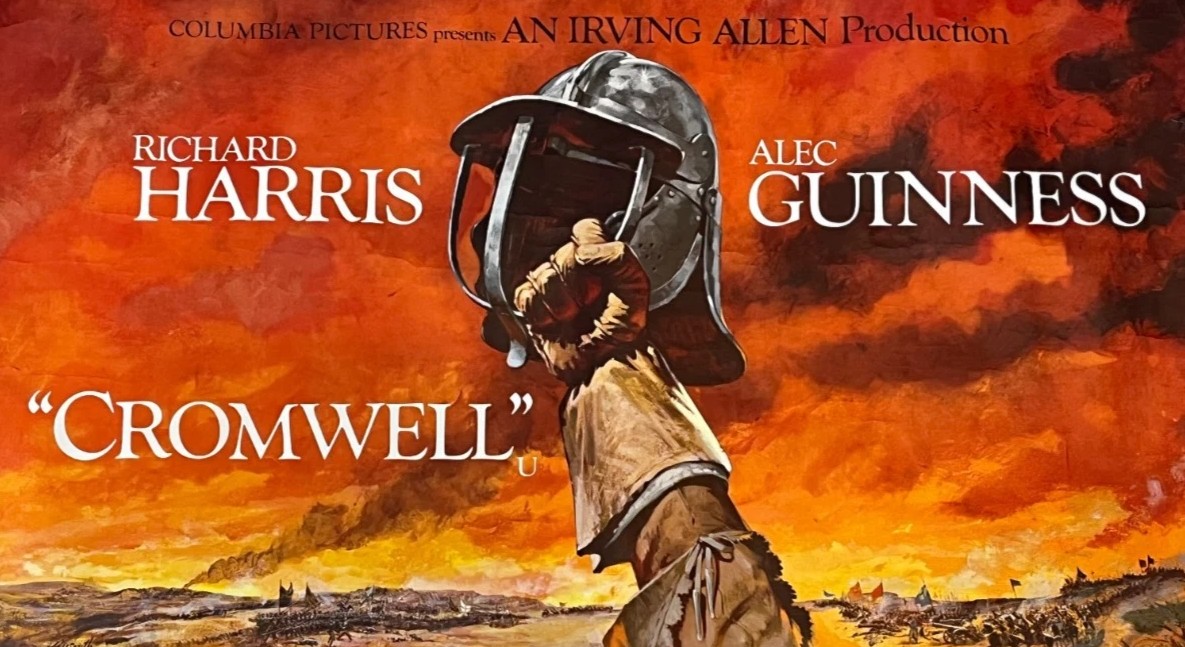
Odeon 1 had 1,124 seats including 64 luxurious pullman armchairs and projection facilities for both 35mm and 70mm. Odeon 2 had fewer seats with Odeon 3 limited to 555. The Odeon 1 launched with roadshow Cromwell starring Richard Harris and Alex Guinness. Odeon 2 featured the blockbuster Airport with Burt Lancaster, Dean Martin and Jacqueline Bissett heading the cast. Odeon 3 offered a more modest proposal, The Virgin and the Gypsy with Franco Nero and Joanna Shimkus.

The triplex completely altered city center cinemagoing. The three cinemas could afford to keep movies on for longer than before, even allow them to build an audience, rather than yanking them off screens before word-of-mouth had done its job.

Cromwell ran for nine weeks, Airport for six weeks and The Virgin and the Gypsy for three. But, gradually, the smallest of the three cinemas began to play a more important role in the operation. Roadshows that had question-marks against their potential longevity were able to open in Odeon 3 and be held over for longer than they might have been in Odeon 1.

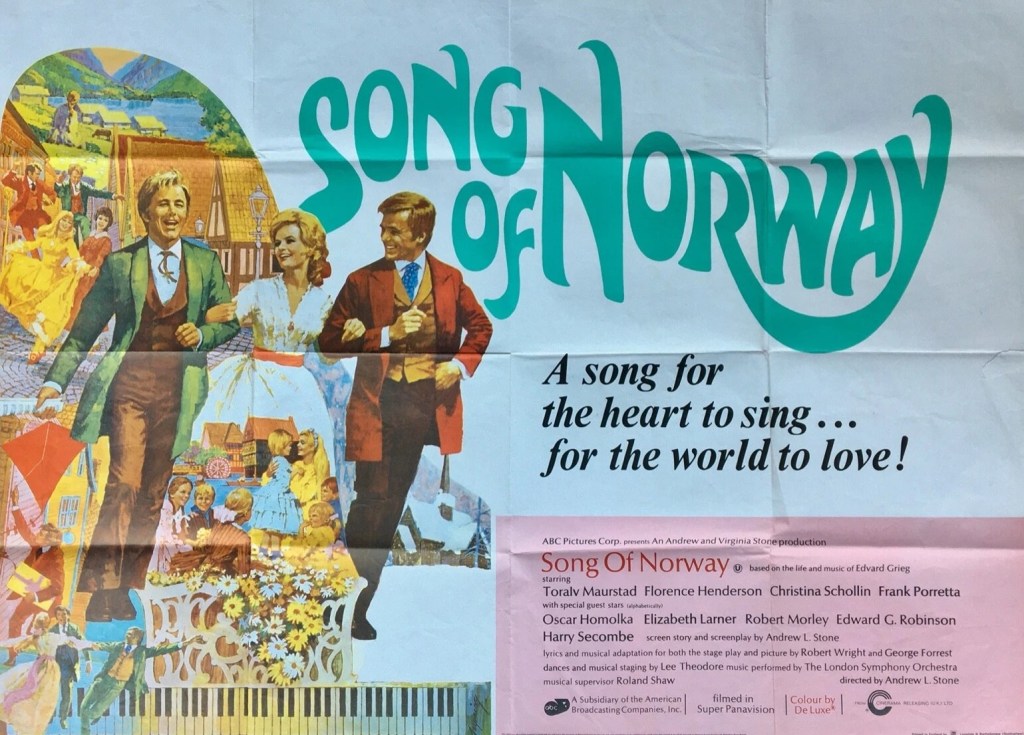
So musical Song of Norway, celebrating the work of classical composer Grieg but without a single marquee name, completed an 18-week run at the Odeon 3 while historical drama Franklin J. Schaffner’s three-hour epic Nicholas and Alexandra, again without a significant marquee names, managed 21 and Charles Jarrott’s Mary, Queen of Scots – at least with actors worthy of top billing in Vanessa Redgrave and Glenda Jackson – 16. Launched in the more competitive environment of the larger Odeon 1, none of these would have lasted even a month.

The movies could also drop through the gears.Previously, a hit might have had to be pulled to accommodate a new booking in the bigger cinema. But now it could be shifted down to the Odeon 3. Ralph Neslon’s bloody revisionist western Soldier Blue starring Candice Bergen ran for 10 weeks in Odeon and another four in Odeon 3. Both Diamonds Are Forever, Sean Connery’s brief return to James Bond, and Norman Jewison’s musical Fiddler on the Roof played for 12 weeks, in Odeon 2 and Odeon 1 respectively.

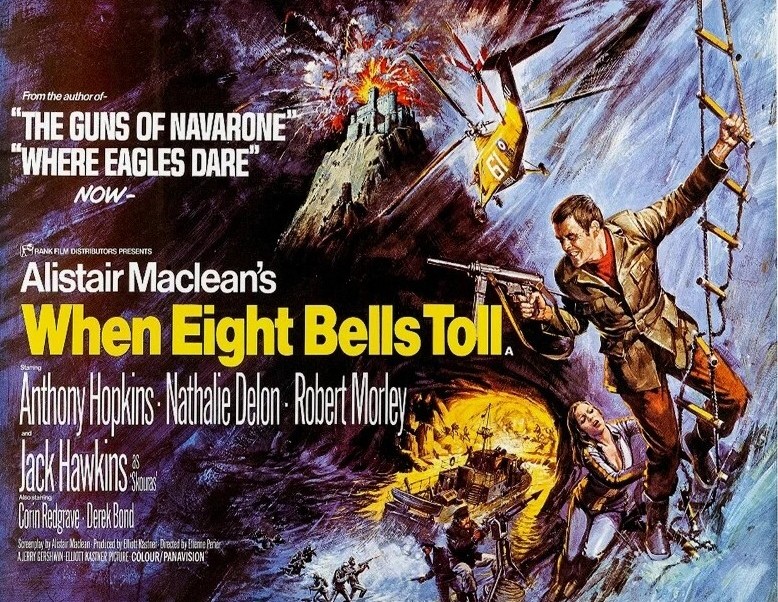
There was even room for sleepers, Stanley Long’s purported documentary Naughty! ran for seven weeks in Odeon 3; Anthony Hopkins in Alistair MacLean actioner When Eight Bells Toll notched up six weeks in Odeon 2 and a reissue of David Lean’s Lawrence of Arabia was good for four weeks in Odeon 3.

The ability of the triplex to absorb a hit was no better demonstrated in 1976 when Milos Forman’s One Flew Over the Cuckoo’s Nest starring Jack Nicholson racked up a record run of 24 weeks at the complex. But this was spread over the three cinemas. It broke down into 14 weeks at Odeon 1, six weeks at Odeon 2 and four weeks at Odeon 3.

For cinemagoers like me it was game-changer. In the past it was very rare for a movie to run even three weeks at the Odeon. If you missed it first time round, you had to scour the papers to see when it might end up in second run or your local nabe. Even then, you might be talking it remaining in cinemas for a total of three or four weeks.

Now, you could count of having two or three months to catch a big new film at the Odeon. This was a more leisurely approach to cinemagoing. And, roughly speaking, it’s what happens today.

Behind the Scenes: All-Time Top 40

Waterloo (1970) holds on to the top spot but the Alistair MacLean revival gathers pace. The Satan Bug (1965) makes the biggest surge, shooting up to second spot, with Ice Station Zebra (1968) in fourth spot past The Guns of Navarone (1961) which drops slightly to sixth.

I’ve extended this from a Top 30 to a Top 40 so there are a goodly number of new entries. The previous rankings are from December 2025.

  1. (1)Waterloo (1970). No doubting the effect of Ridley Scott’s Napoleon in increasing interest in this famous flop that had Rod Steiger’s French emperor squaring off against Christopher Plummer.
  2. (5) The Satan Bug (1965). The problems facing director John Sturges in adapting the Alistair MacLean pandemic classic for the big screen.
  3. (2) In Harm’s Way (1965). Otto Preminger takes off the gloves to expose problems in the American military around Pearl Harbor. John Wayne and Kirk douglas head an all-star cat.
  4. (7) Ice Station Zebra (1968). A complete cast overhaul and ground-breaking  special effects are at the core of this filming of another Alistair MacLean tale. Second Alistair MacLean outing for John Sturges.
  5. (3)  Man’s Favorite Sport (1964). Howard Hawks back in the gender wars with Rock Hudson being taken down a peg by Paula Prentiss.
  6. (4) The Guns of Navarone (1961). Alistair MacLean created the template for the men-on-a-mission war picture. Gregory Peck, David Niven and Anthony Quinn topline. Nominated for five Oscars including Best Picture, Best Director (J. Lee Thompson) and Screenplay (Carl Foreman) and enough jeopardy throughout the filming to qualify for a movie of its own.
  7. (8) Barbarella (1968). Jane Fonda was fourth choice after Brigitte Bardot, Sophia Loren and Ira von Furstenberg. Should never have been directed by Roger Vadim who was out of favor with Paramount. One of the first movies to be given a global simultaneous release.
  8. (6) Battle of the Bulge (1965). There were going to be two versions, so the race was on to get this one to the public first. A Cinerama number.
  9. (10) Mackenna’s Gold (1969). Tortuous route to the screen for Carl Foreman-produced roadshow western, filmed in 70mm Cinerama, with an all-star cast including Omar Sharif, Gregory Peck and Telly Savalas.
  10. (15) The Misfits (1961). Robert Mitchum turned down the male lead. Clark Gable failed the medical, both Montgomery Clift and Marilyn Monroe had drug problems. It went 40 days over schedule and half a million over budget.
  11. (24) The Wicker Man (1973) at the Box Office. A flop on initial release, U.S. release delayed, it took a long long time before the movie achieved both cult status and came out of the red.
  12. (9) Cast a Giant Shadow (1965). Producer Melville Shavelson wrote a book about his experiences and this and other material relating the arduous task of bringing the Kirk Douglas-starrer to the screen are told here.
  13. (12) The Sons of Katie Elder (1965). First envisioned nearly a decade before, Henry Hathaway western finally hit the screen with John Wayne and Dean Martin.
  14. (14) The Trouble with Angels (1966). Less than angelic Hayley Mills sparring with convent boss Rosalind Russell. Directed by one-time star Ida Lupino.
  15. (11) The Girl on a Motorcycle / Naked under Leather (1968). Cult classic starring Marianne Faithful and Alain Delon had a rocky road to release, especially in the U.S. where the censor was not happy.
  16. (13). Tora! Tora! Tora! (1970). Richard Fleischer dispenses with the all-star cast in favor of even-handed verisimilitude.
  17. (16) The Bridge at Remagen (1969). British director John Guillerman hits trouble filming World War Two picture starring George Segal and Robert Vaughn.
  18. (17) For a Few Dollars More (1965). Sergio Leone sequel to first spaghetti western brings in Lee van Cleef to pair with Clint Eastwood.
  19. (20) Bandolero! (1968). Director Andrew V. McLaglen teams up with James Stewart, Dean Martin and Raquel Welch to fight Mexican bandits.
  20. (20) The Collector (1963). William Wyler’s creepy adaptation of John Fowles’ creepy bestseller with Terence Stamp and Samatha Eggar.
  21. (13) Sink the Bismarck! (1960). Documentary-style British World War Two classic with Kenneth More exhibiting the stiffest of stiff-upper-lips.
  22. (18) Bandolero! (1968). Director Andrew V. McLaglen teams up with James Stewart, Dean Martin and Raquel Welch to fight Mexican bandits.
  23. (19) The Train (1964). John Frankenheimer replaced Arthur Penn in the directorial chair to steer home unusual over-budget World War Two picture with Burt Lancaster trying to steal art treasures from under the nose of German Paul Schofield.
  24. (17) How The West Was Won (1962). First non-travelog Cinerama picture, all-star cast and all-star team of directors tackling multi-generational western and all sorts of logistical problems.
  25. (New entry) The Way West (1967). Burt Lancaster, James Stewart and Gary Cooper were the original cast. Charlton Heston turned it down. Robert Mitchum couldn’t make up his mind. Director Andrew V. McLaglen claimed it had been savaged by the studio.
  26. (New Entry) The Stalking Moon (1968). Should never have been made, according to existing legislation, even with Gregory Peck’s participation long delayed in part due to original director George Stevens pulling out.
  27. (New Entry) “Barbieheimer” Recalls the Old Double Bill. The perfect double bill aimed to attract different segments of the audience.
  28. (New Entry) Judgement at Nuremberg (1961). Laurence Olivier was first choice to play the role taken by Burt Lancaster. United Artists was not at all keen on the proposition. Innovative use of the camera. Judy Garland and Montgomery Clift overcame personal problems while Marlene Dietrich was acquainted with one of men on trial.
  29. (New Entry) The Thomas Crown Affair (1968). Sean Connery, Jack Lemmon and Brigitte Bardot turned it down. Director Norman Jewison thought Steve McQueen “completely wrong” for the part.
  30. (New Entry) The Cincinnati Kid (1965). Sam Peckinpah was fired. Spencer Tracy quit. Sharon Tate declined.
  31. (New Entry) The Appointment (1969). Booed at the Cannes Film Festival. Denied a release in the U.S., even with Omar Sharif as star and after being heavily edited by MGM. Only shown on American TV. The biggest financial flop of Sidney Lumet’s career.
  32. (New entry) The Birds (1963). Hitchcock sets an apocalyptic tone as Rod Taylor and Tippi Hedren are trapped by feral flocks.
  33. (New entry). Number One (1969). Charlton Heston as ageing pro football player desperately trying to hold onto to fame and its trimmings. Directed by Tom Gries.
  34. (New entry) Hollywood Bloodbath. Why 200 movies were scrapped or shelved.
  35. (New entry) Breathless / A Bout de Souffle (1960). The French New Wave made its name on the back of Jean-Luc Godard’s thriller starring Jean-Paul Belmondo and Jean Seberg.
  36. (New entry) The Top 40 Movies at the 1950s Box Office.
  37. (New entry) The Man in the Middle / The Winston Affair (1964). Robert Mitchum is the titular guy in trouble.
  38. (New entry) Yul Brynner vs Kirk Douglas on Spartacus (1961). The battle to bring the Roman rebel to the screen.
  39. (New Entry) Puppet on a Chain (1970). More Alistair MacLean thrills. This time in Amsterdam and that boat chase.
  40. (New Entry) The Glass Is Greener (1960). Cary Grant, Deborah Kerr, Robert Mitchum and Jean Simmons play the infidelity games.

All-Time Top 100

After three years atop the All-Time List, Ann-Margret in The Swinger (1966) has been dethroned. And replaced by Ann-Marget in Stagecoach (1966), the remake of the John Ford western. The Swinger, I should add, hasn’t dropped by much, just down two places. Suzy Kendall as the spy Fraulein Doktor (1969) has shot up from sixth to second position.

In case it’s not obvious I should point out that the movies making the All-Time Chart are not necessarily my favorites, but yours, the movies most viewed since The Blog began six years ago. Since this little exercise is undertaken twice a year the rankings are compared to the previous standings in the all-time list from December last year.

New entries making a surprisingly high appearances including the controversial BBC television series Blackeyes (1989) – straight in at No 16 – while chase picture Vanishing Point (1971), action picture Operation Crossbow (1965) and twisty thriller Buddwing/Mister Buddwing (1966) all enter the top 30 with a bullet. Other notable new entries – thrillers The Gray Man (2022) and Stiletto, low-budget westerns Five Savage Men (1971) and Hot Spur (1969) and big-budget 100 Rifles (1969), Hayley Mills as Pollyanna (1960) and Charlton Heston in Planet of the Apes (1968)

Dean Martin is the most popular actor with five entries – all of them westerns – Five Card Stud (1968), 4 for Texas (1964), Bandolero! (1968), Rough Night in Jericho (1967) and The Sons of Katie Elder (1965). On four apiece are Raquel Welch, George Peppard, Hayley Mills and Charlton Heston

Welch made her splash in spy adventure Fathom (1967), westerns Bandolero! and 100 Rifles (1969) and  crime drama Lady in Cement (1968). Peppard was seen in war picture Operation Crossbow (1965), Rough Night in Jericho and under-rated thrillers Pendulum (1969) and House of Cards (1968).

Mills made her mark in The Family Way (1966), The Trouble with Angels (1966), The Chalk Garden (1964) and Pollyanna (1960). Charlton Heston headlined Planet of the Apes (1968), The War Lord (1965), Diamond Head (1962) and The Hawaiians/Master of the Islands (1970).

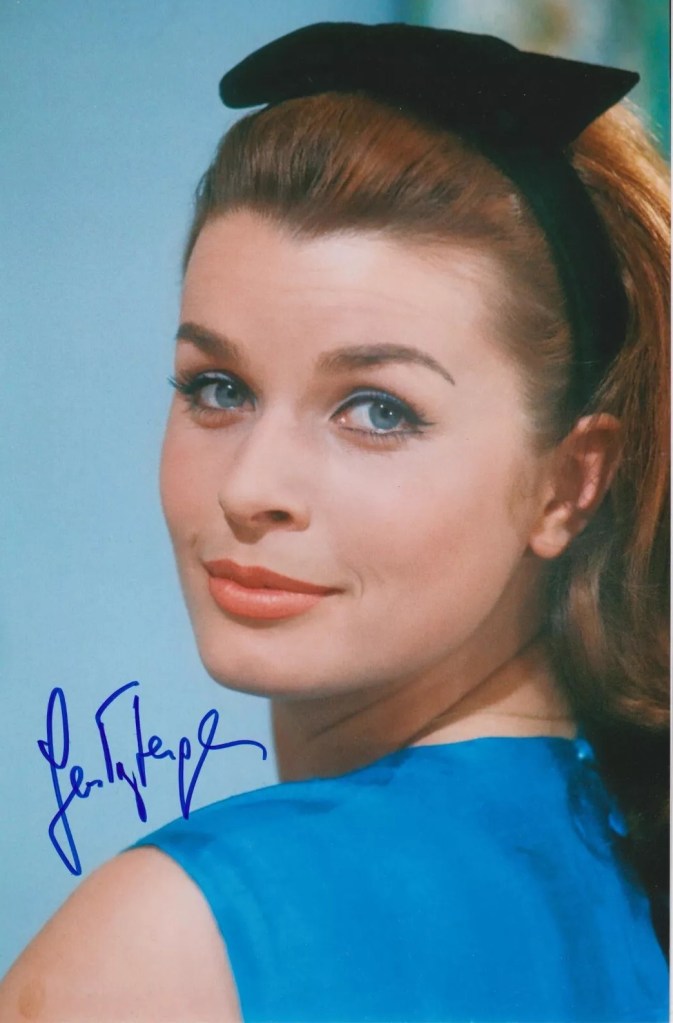
Chalking up three entries were John Wayne, Senta Berger (pictured above), Elke Sommer, Omar Sharif,  James Stewart, Inger Stevens, Claudia Cardinale, Gregory Peck and Alain Delon.

The figures in brackets represent the positions in December 2025 and New Entry is self-explanatory. .

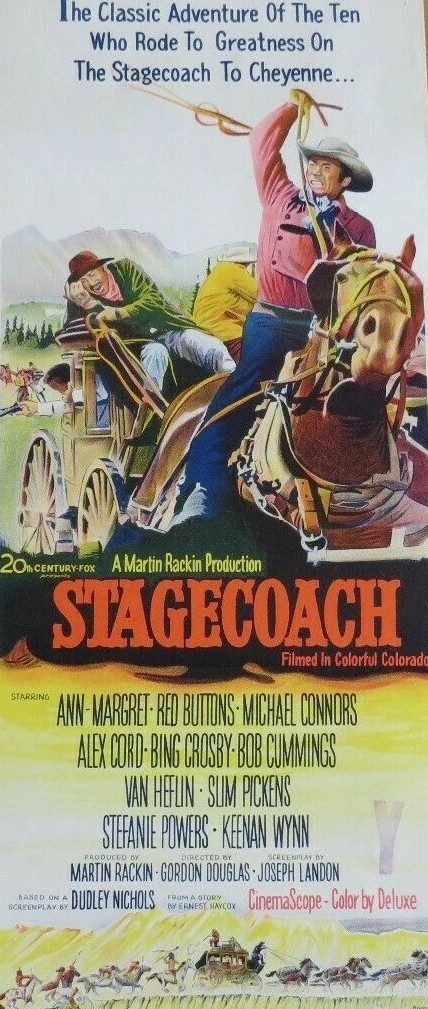
  1. (3) Stagecoach (1966). Under-rated remake of the John Ford western. But it’s Ann-Margret who steals the show ahead of Alex Cord in the role that brought John Wayne stardom. 
  2. (6) Fraulein Doktor (1969). Grisly realistic battle scenes and a superb score from Ennio Morricone help this Suzy Kendall vehicle as a World War One German spy going head-to-head with Brit Kenneth More and taking time out for romantic dalliance with Capucine.
  3. (1) The Swinger (1966). Despite shaking her booty as only she knows how, Ann-Margret brings a sprinkling of innocence to this sex comedy. 
  4. (2) Anora (2024). Mikey Madison’s sex worker woos a Russian in Oscar-winner.
  5. (4) In Harm’s Way (1965). Under-rated John Wayne World War Two number. Co-starring Kirk Douglas, Patricia Neal, Tom Tryon and Paula Prentiss, director Otto Preminger surveys Pearl Harbor and after.
  6. (9) Age of Consent (1969). Helen Mirren frolics nude in her debut as the freewheeling damsel drawn to disillusioned painter James Mason.
  7. (7) Squad 36 / Bastion 36 (2025). Corruption and interdepartmental rivalry fuel this French flic directed by Olivier Marchal.
  8. (8) Once Upon a Time in the West (1969). Along with The Searchers (1956) now considered the most influential western of all time. Sergio Leone rounds up Claudia Cardinale, Henry Fonda and Charles Bronson and that fabulous Morricone score.
  9. (16) The Appointment (1969). Inhibited lawyer Omar Sharif discovers the secrets of wife Anouk Aimee in under-rated and little-seen Italian-set drama from Sidney Lumet.
  10. (11) Our Man in Marrakesh / Bang! Bang! You’re Dead (1966). Humorous spy offering with Tony Randall and Senta Berger.
  11. (50) The Flight of the Phoenix (1965). When James Stewart, Richard Attenborough, Peter Finch and Hardy Kruger crash in the desert they come up with an ingenious plan to escape. Robert Aldrich directs.
  12. (10) A Dandy in Aspic (1968). Cold War thriller with Laurence Harvey as a double agent who wants out. Mia Farrow co-stars.  
  13. (48) Jason and the Argonauts (1963). Ray Harryhausen steals the show in cracking fantasy.
  14. (18) The Family Way (1966). Hayley Mills comes of age in this very adult drama. Co-starring her father John Mills and Hywel Bennett.
  15. (6) The Last Showgirl (2024). Pamela Anderson proves she can act and how in this touching portrayal of a fading Las Vegas dancer.
  16. (New Entry) Blackeyes (1989). Gina Bellman takes the titular role in British playwright Dennis Potter’s mind-bending tale with timelines and perspective all mixed up in an intoxicating brew.
  17. (25) Five Card Stud (1968). Gambler Dean Martin faces off against preacher Robert Mitchum and a serial killer in Henry Hathaway western also featuring Inger Stevens.
  18. (20) Young Cassidy (1965). Julie Christie came out of this best, winning her role in Doctor Zhivago as a result. Rod Taylor as Irish playwright Sean O’Casey.
  19. (31) They Came to Rob Las Vegas (1968). Gary Lockwood and Elke Sommer head up a heist thriller.
  20. (13) Baby Love (1969). Controversy was the initial selling point but now it’s morphed into a morality tale as orphaned Linda Hayden tries to fit into an upper-class London household.
  21. (33) Operation Crossbow (1965). George Peppard and Sophia Loren head up an all-star cast in World War Two in a daring mission into Occupied France. Director Michael Anderson takes a documentary-style approach. .
  22. (New entry) Vanishing Point (1971). Barry Newman tears across the country in fast-moving existential cult thriller. Directed by Richard C. Sarafian.
  23. (29) Fathom (1967). When not dodging the villains in an entertaining thriller, Raquel Welch models a string of bikinis as a skydiver caught up in spy malarkey.
  24. (39) The Double Man (1967). Yul Brynner is the target for a kidnapping plot in complex spy thriller co-starring Britt Ekland.
  25. (23) Istanbul Express (1968). Gene Barry plays a weird numbers game in spy thriller that sets him up against Senta Berger
  26. (New Entry) Buddwing / Mister Buddwing (1966). James Garner suffers memory loss in twisty thriller. Jean Simmons, Suzanne Pleshette and Katharine Ross are complications.
  27. (54) The Red Tent (1969). Sean Connery adds his weight to a rescue mission for an airship crashed in the Arctic. Based on a true story. Claudia Cardinale and Peter Finch co-star.
  28. (22) Signpost to Murder (1964). Joanne Woodward trapped in a millhouse with escaped lunatic Stuart Whitman in twisty thriller.
  29. (12) Fireball XL5. The famous British television series (1962-1963) from Gerry and Sylvia Anderson, now colorized. “My heart will be a fireball…”
  30. (17) Pressure Point (1962). Nazi extremist Bobby Darin causes chaos for psychiatrist Sidney Poitier. Stunning dream sequences.
  31. (21) The Sisters (1969). Incest rears its head as Nathalie Delon and Susan Strasberg ignore husbands and lovers in favor of each other. 
  32. (86) Mirage (1965). Compelling thriller with Gregory Peck convinced he’s suffering from amnesia.
  33. (65) Deadlier than the Male (1967). Richard Johnson as Bulldog Drummond in the clutches of femme fatales Elke Sommer and Sylva Koscina.
  34. (46) Once a Thief (1965). Ann-Margret again, in a less sexy incarnation, as a working mother whose ex-jailbird thief Alain Delon takes a detour back into crime.
  35. (37) Assignment K (1967). Stephen Boyd in spy caper tangles romantically with Camilla Sparv and is on the receiving end of some tough thugs.
  36. (52) Dark of the Sun / The Mercenaries (1968). Rod Taylor’s guns-for-hire break out the action in war-torn Africa. Jim Brown and Yvette Mimieux co-star.
  37. (58) Invitation to a Gunfighter (1964). Yul Brynner cleans up the town in under-rated western. Janice Rule adds interest.
  38. (38) Sands of the Kalahari (1965). Stanley Baker, Stuart Whitman and Susannah York are stranded in the desert. Instead of working together, it’s every person for themselves.
  39. (New Entry) The Gray Man (2022). Global assassin manhunt directed by the Russo Brothers features Ryan Gosling and Chris Evans.
  40. (14) The Chapman Report (1962). Jane Fonda, Claire Bloom and Shelley Winters lead this investigation into contemporary sexual mores.
  41. (19) Pharoah (1966). Polish epic set in Egypt sees the country’s ruler at odds with the religious hierarchy.
  42. (40) The Chalk Garden (1964). Wild child Hayley Mills, trying to break out of her Disney straitjacket, duels with governess Deborah Kerr.
  43. (42) Gunn (1967). Blake Edwards turns hit television series into a movie with star Craig Stevens.
  44. (44) 4 for Texas (1963). Only Frank Sinatra and Dean Martin survive from the Rat Pack, but Ursula Andress and Anita Ekberg more than compensate in Robert Aldrich fun western.
  45. (41) Diamond Head (1962). Over-ambitious hypocritical landowner Charlton Heston comes unstuck in love, politics and business in Hawaii. George Chakiris, Yvette Mimieux and France Nuyen turn up the heat.
  46. (New entry) The Animals/Five Savage Men (1971). Apache Henry Silva comes to the aid of Michele Carey after she is raped by five men.
  47. (30) Pendulum (1968). Fast-rising cop George Peppard accused of murdering unfaithful wife Jean Seberg
  48. (66) The Undefeated (1969). John Wayne and Rock Hudson duke it out in superb Civil War western directed by Andrew V. McLaglen.
  49. (New Entry) The Chase (1966). Marlon Brando is the beleaguered sheriff in Arthur Penn’s drama set in the Deep South and co-starring Jane Fonda and Robert Redford.
  50. (43) A Fine Pair (1968). Rock Hudson and Claudia Cardinale join forces for a heist picture.
  51. (18) Jessica (1962). Angie Dickinson doesn’t mean to cause trouble but as a young widow arriving in a small Italian town she causes friction, so much so the local wives for on a sex strike.
  52. (27) The Demon / Il Demonio (1963). Extraordinary performance by Daliah Lavi in Italian drama as she produces the performance of her career.
  53. (34) The Sins of Rachel Cade (1961) Angie Dickinson (again) as African missionary falling foul of the natives and Commissioner Peter Finch. Roger Moore (again) in an early role.
  54. (35) The Girl on a Motorcycle / Naked under Leather (1968). How much you saw of star Marianne Faithfull depended on where you saw it. The U.S. censor came down heavily on the titular fantasizing heroine, the British censor more liberal. Alain Delon co-stars.
  55. (67) Ten Little Indians (1965). Agatha Christie whodunnit. Hugh O’Brian and Shirley Eaton are among the suspects.
  56. (New entry) Stiletto (1969). Mafia assassin Alex Cord wants out. The syndicate won’t let him.
  57. (62) House of Cards (1968). Ex-boxer George Peppard gets tangled up in an international fascist conspiracy and with Ingrid Stevens. Orson Welles has a cameo.
  58. (58) The Trouble with Angels (1966). Hayley Mills has the nuns on the run as she causes chaos at a convent school run by Rosalind Russell.
  59. (59) Genghis Khan (1965). Omar Sharif as the titular warrior up against Stephen Boyd. Co-starring James Masion and Francoise Dorleac. Robert Morley is hilariously miscast as the Chinese Emperor.
  60. (36) The Battle of the Villa Florita (1965). Maureen O’Hara runs off to Italy to join lover Rossano Brazzi. When her kids follow, trouble ensues,
  61. (45) Farewell, Friend / Adieu L’Ami (1968). A star is born – at least in France, the States was a good few years behind in recognizing the marquee attractions of Charles Bronson. Alain Delon co-stars in twisty French heist thriller featuring Olga Georges-Picot and Brigitte Fossey.
  62. (74) Bandolero! (1968). James Stewart and brother Dean Martin team up with Raquel Welch to evade George Kennedy’s posse in another Andrew V. McLaglen under-rated western.
  63. (89) Two for the Road (1967). Audrey Hepburn and Albert Finney try to get their marriage off the rocks by retracing their romantic steps when younger.
  64. (32) Vendetta for the Saint (1969). Prior to James Bond, Roger Moor was better known as television’s The Saint. Two television episodes combined sees our hero tackle the Mafia.
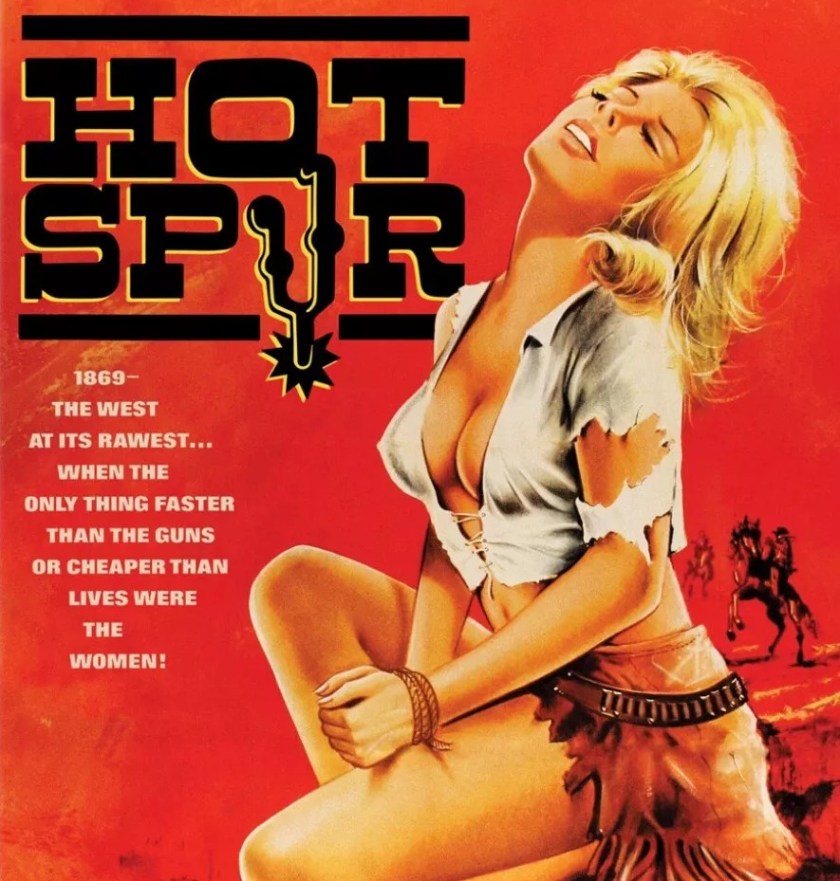
  65. (New entry) Hot Spur (1968). Kidnap, rape, revenge, director Lee Frost takes full advantage of the opportunities these provide.
  66. (26) Go Naked in the World (1961). Gina Lollobrigida finds that love for a wealthy playboy clashes with her profession (the oldest). Look out for highly emotional turn from the usually taciturn Ernest Borgnine.
  67. (28) Claudelle Inglish (1961). Diane McBain seeks revenge for being stood up at the altar in the Deep South.
  68. (98) Mackenna’s Gold (1969). J. Lee Thompson big-budget western treasure hunt starring Gregory Peck, Omar Sharif, Telly Savalas, Camilla Sparv, Eli Wallach, lee J Cobb, Edward G Robinson, Julie Newmar and Eli Wallach.
  69. (New entry) Marooned (1969). Gregory Peck and Gene Hackman are the astronauts trapped in space. Directed by John Sturges.
  70. (New entry) Pollyanna (1960). Hayley Mills makes her Disney debut in remake of much-loved tale, supported by a cast of actors who are either Oscar-winners or nominees.
  71. (57) Anatomy of a Fall (2024). Critically-acclaimed artie thriller starring Oscar-nominated Sandra Huller. The screenplay took the Oscar as well.
  72. (53) Moment to Moment (1966). Hitchcockian thriller set in Hitchcock country – the South of France – as unfaithful Jean Seberg is on the hook for the murder of her lover.  Also featuring Honor Blackman. 
  73. (61) Mickey One (1965). Cult Arthur Penn thriller with Warren Beatty as comedian on the run.
  74. (24) Thank You Very Much/ A Touch of Love (1969). Sandy Dennis dazzles as an academic single mother in London impregnated by Ian McKellen.
  75. (95) Titanic (1997). I saw this on reissue in 3D and was knocked out all over again.
  76. (72) La Belle Noiseuse (1991). Emmanuelle Beart is the mostly naked model taking painter Michel Piccoli to his artistic limits.
  77. (64) Rough Night in Jericho (1967). Corrupt lawman Dean Martin tangles with George Peppard in under-rated western Jean Simmons is the woman who comes between them.
  78. (56) The Sons of Katie Elder (1965). John Wayne and Dean Martin join forces to find out what happened to their mother in top-notch Henry Hathaway western.
  79. (49) The Golden Claws of the Cat Girl (1968). Cults don’t come any sexier than Daniele Gaubert as a French cat burglar.
  80. (New entry) 100 Rifles (1968). Mexican rebels Raquel Welch, Jim Brown and Burt Reynolds take on the government. Welch models a wet shirt.
  81. (75) Lady in Cement (1969). Raquel Welch models more bikinis as the gangster’s moll taken on as a client by private eye Frank Sinatra in his second outing as Tony Rome.
  82. (69) 633 Squadron (1964). You remember the soaring score more than the performances of Cliff Robertson and George Chakiris in World War Two aerial mission.
  83. (77) Lost Command (1966). Algerian War picture sets Anthony Quinn and Alain Delon against George Segal.
  84. (73) The Venetian Affair (1966). Robert Vaughn investigates spate of suicide bombs. Elke Sommer provides the glamor.
  85. (60) Horizon: An American Saga – Chapter 1 (2024). Kevin Costner’s majestic western that became one of the biggest flops of the year was underrated in my opinion.
  86. (New entry) Happy Ending (1969). Jean Simmons in May-December romance.
  87. (55) The Best House in London (1969). David Hemmings heads up a moralistic tale of rescuing sex workers in Victorian London.
  88. (New entry) Charade (1963). Cary Grant and Audrey Hepburn form a classic alliance in entertaining mystery.
  89. (New entry) Shoes of the Fisherman (1968). The election of the new Pope features Anthony Quinn, Laurence Olivier, Oskar Werner in 70mm roadshow directed by Michael Anderson.
  90. (New entry) Suspect / The Risk (1960). A cure for plague falls into the wrong hands in typical British B-movie.
  91. (95) Lonely Are the Brave (1962). Prison escape picture featuring cowboy Kirk Douglas who can’t cope with the modern world. Walter Matthau co-stars.
  92. (83) The Hawaiians / Master of the Islands (1962). Charlton Heston picks up where Hawaii (1966) left off and it’s chock full of corruption, racism and misogyny.
  93. (New entry) Sergeant Ryker (1968). Distributors take advantage of Lee Marvin’s sudden success to push out on the movie circuit a made-for-television drama.
  94. (New entry) Wonderwall (1968). Jane Birkin, psychedelia and a George Harrison score are the attractions in this cult oddity.
  95. (70) Black Butterflies (2022). Twisty French mini-series majoring on sex and murder in enjoyable film noir throwback.
  96. (51) Prehistoric Women / Slave Girls (1967). Martine Beswick attempts to steal the Raquel Welch crown as Hammer tries to repeat the success of One Million Years B.C. 
  97. (New entry) Circle of Deception (1960). Bradford Dillman is sent on a secret World War Two mission – in the hope that he will be captured by the Germans.
  98. (63) Can Heironymus Merkin Ever Forget Mercy Humpe and Find True Happiness? Fellini would turn in his grave at the self-indulgence of singer Anthony Newley who manages to lament that women falling at his feet cause him so much strife. Joan Collins co-stars.
  99. (New Entry) Planet of the Apes (1968). Charlton Heston is terrorized in Franklin J.Schaffner’s groundbreaking sci fi.
  100. (87) The War Lord (1965). Very realistic historical drama directed by Franklin J. Schaffner with Charlton Heston defending his land from invaders.

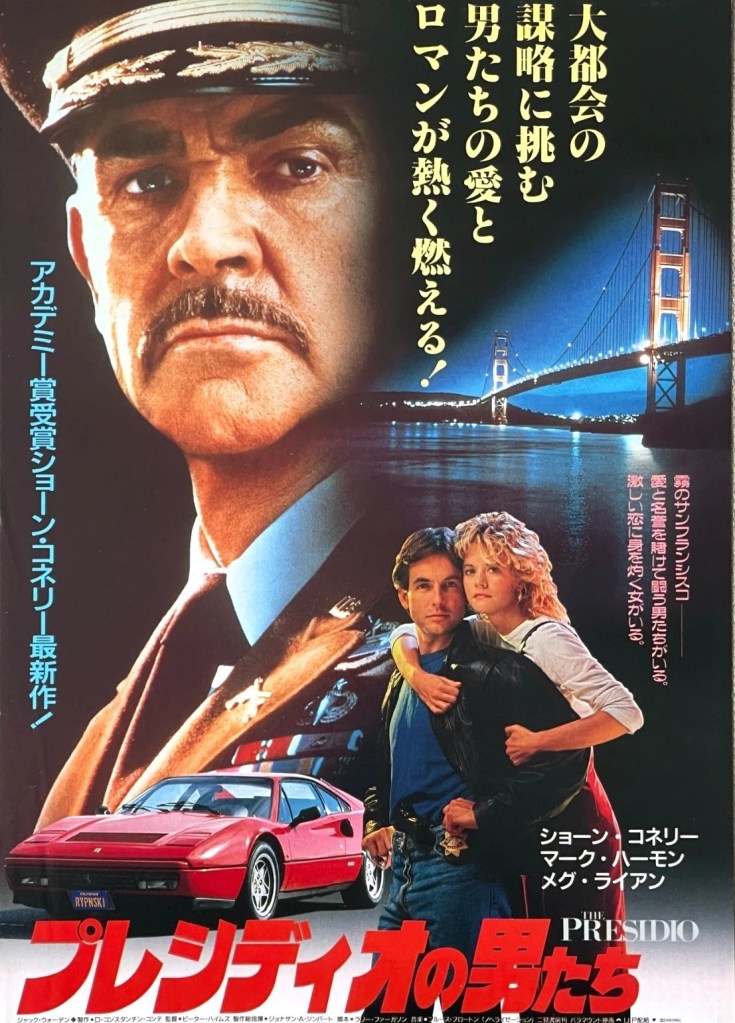
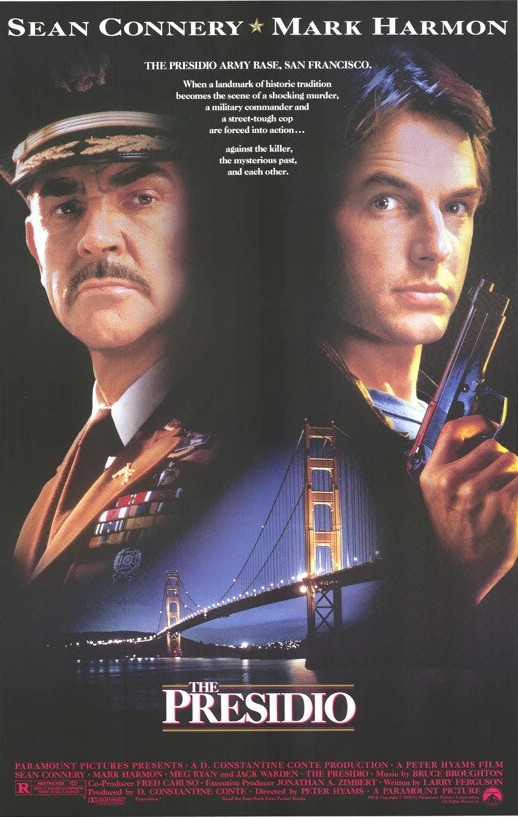
The Presidio (1988) ***

Blame the young whelp. Hollywood had form when it came to piggybacking a rising star on the back of an older established star. Go back to Montgomery Clift and John Wayne in Red River (1948) and you can see why it’s such a potent route to success. Young bucks like James Caan in another John Wayne number El Dorado (1967) fared less well. Tom Cruise got the hang of it, riding on the coattails of Paul Newman in The Color of Money (1986) and Dustin Hoffman for Rain Man (1988). Sean Connery was even known to help out – consider his mentoring of the characters played by Kevin Costner in The Untouchables (1987) or Wesley Snipes in Rising Sun (1993).

But sometimes it just doesn’t work. And that’s the main flaw here in an otherwise involving crime drama featuring unwilling partners that has the requisite car chases, a variety of smart moves, and a hefty load of emotional complication. Military cop Lt Col Alan Caldwell (Sean Connery) has daughter issues, daughter Donna (Meg Ryan) has daddy issues and commitment issues, while civilian cop Jay Austin (Mark Harmon) has authority issues.

Caldwell and Austin are forced to work together after a murder on San Francisco military base The Presidio.

Austin is altogether too volatile, too apt to go off at the mouth, and more important (in acting terms) hasn’t learned to rein it in, to reveal all through the eyes and bite off what snappy dialog comes his way rather than throwing stuff around and slamming doors and such. To complicate matters Austin and Caldwell have a past. To complicate matters even more – or to put it another way spice up proceedings – Austin and Donna get it together after a pretty neat meet-cute.

While in some ways Donna is cute, mostly she’s feisty, determined to put both dad and lover in their places. Both Caldwell and Austin have a top-class solo scene – the colonel when he turns the tables on a barroom bully, Harmon when he sweet-talks a secretary into providing vital information. The more experienced Caldwell tends to be one step ahead in terms of figuring out what’s going on. But in terms of the running, jumping and standing still stuff, it’s mostly Harmon who is dumped with the action, Caldwell the altogether cooler cat.

While Connery was coming off an Oscar for The Untouchables, I have to confess I’d never heard of Harmon. Turns out his rising stardom was on the back of a couple of television series –  Flamingo Road (1980-1982) and St Elsewhere (1983-1986) plus a turn as Ted Bundy in the mini series The Deliberate Stranger (1986). In terms of movies, he’d been top-billed in the lackluster thriller Let’s Get Harry (1986) and Carl Reiner surprise comedy hit Summer School (1987) which took in $15.7 million in rentals and placed 27th for the year, ahead of Kevin Costner in No Way Out and Bruce Willis in Blind Date.

Harmon was the replacement for Don Johnson who was on duty in Miami Vice. Whether Johnson would have been capable of taking on Connery is open to question. Harmon clearly struggled and Meg Ryan (Top Gun, 1986) ran away with what Connery left on the acting table.

This was an interesting role for Connery, not just coming to terms with his daughter but also with betrayal, and the climactic scene in a cemetery is a career highlight.

Back to the tale: under-rated director Peter Hyams (Capricorn One, 1978) keeps the action coming and in between ensures emotional tension holds sway. Apart from Harmon, what lets it down is the story – the real story I mean not the various personnel sorting out their private lives. It’s not that the conspiracy the pair uncover isn’t interesting, it’s just not interesting enough and I guessed from the minute he was introduced who the bad guy was.

But the dialog is meaty enough and Meg Ryan shows more promise and of course by this stage Connery is such an assured performer that he’s not going to put a foot wrong. I’m not sure that filming a car chase in the darkness on the city’s steep inclines was a good idea, apart from the white sparks zinging out of the darkness. A later Connery venture The Rock (1996) did it much better. Written by Larry Ferguson (The Highlander, 1986).

If you can ignore Harmon, a good evening’s watch.

NOTE: The movie didn’t do so well at the U.S. box office – just $10 million in rentals, but it took in nearly half as much again in Japan so my guess the Connery name in the global markets helped recouped the cost. But this was the beginning of the famous “long tail” when movies made a lot more after initial release and this was a case in point. Although it only placed 50th on Variety’s annual box office chart, it made the Top Ten for the year on video.

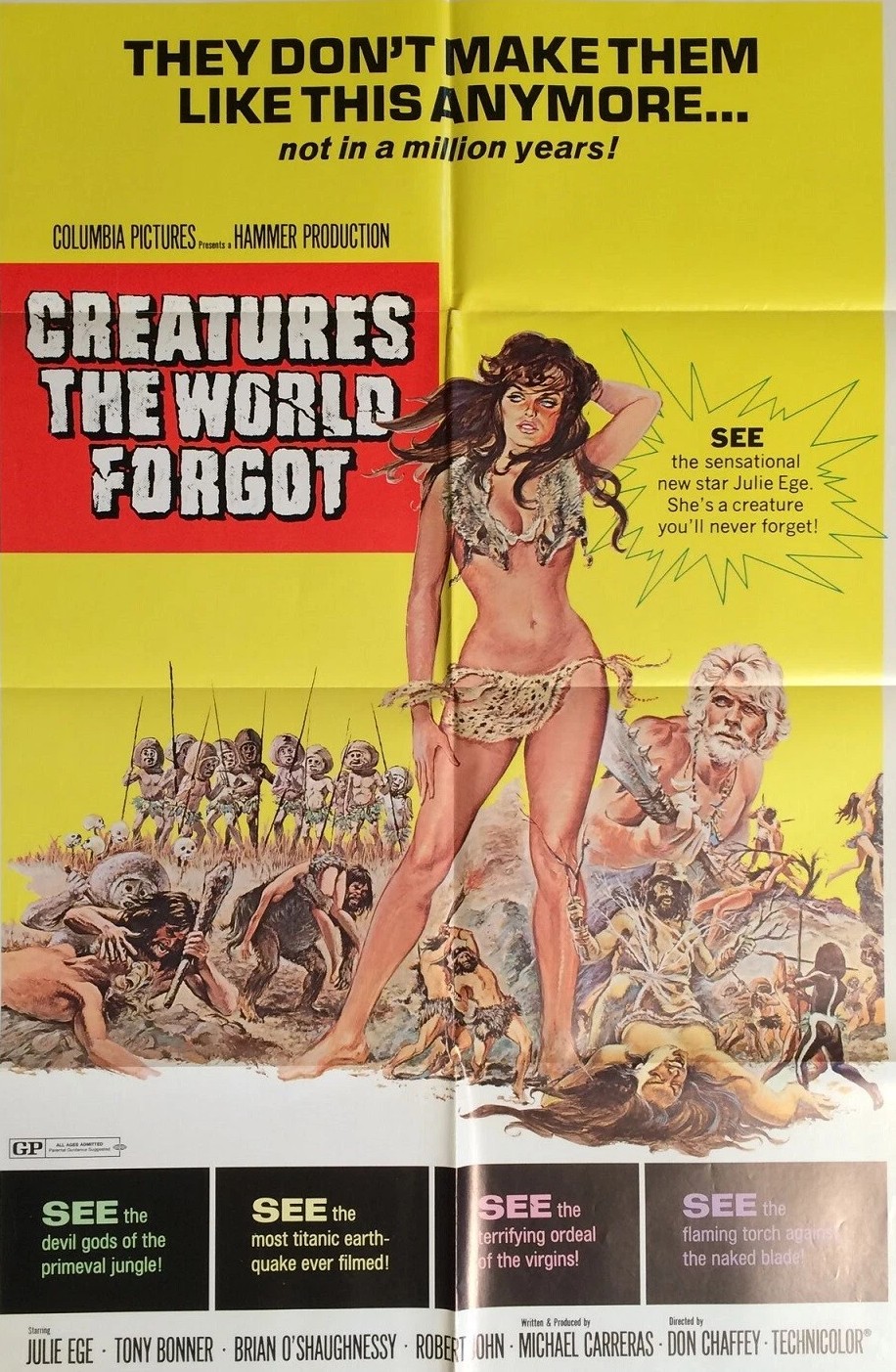
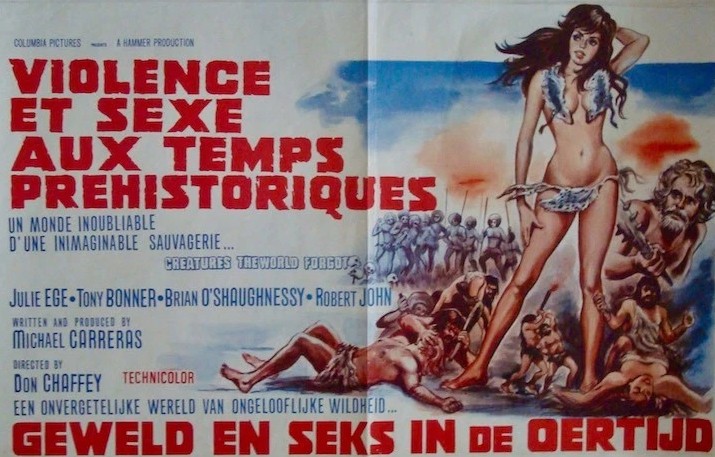
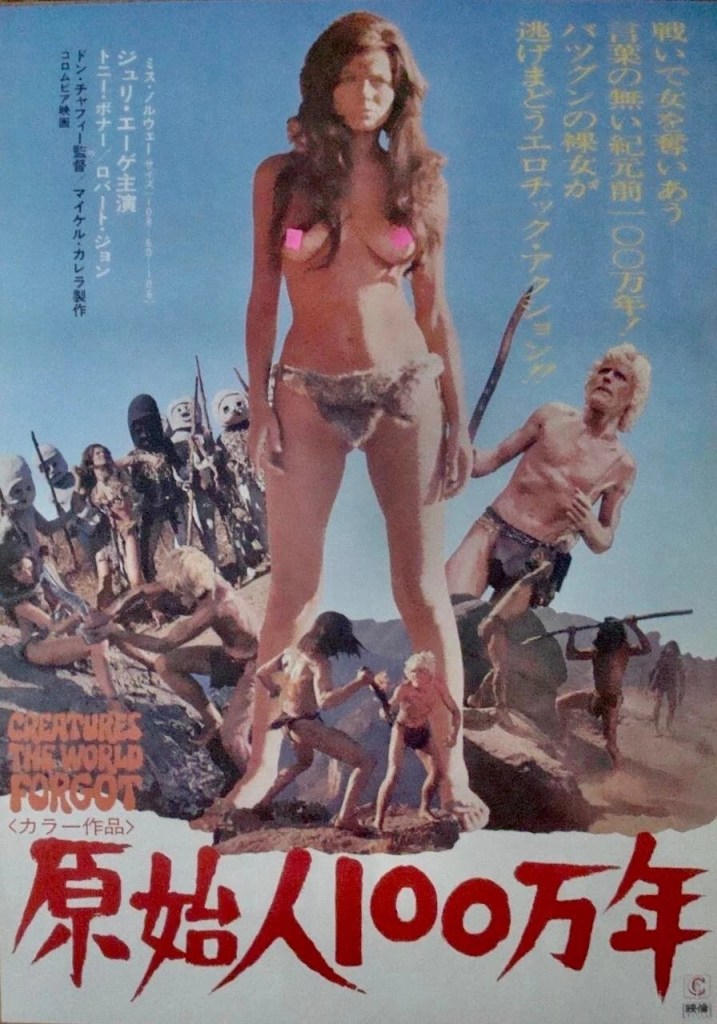
Creatures The World Forgot (1971) ***

Remove the minimal salacious elements (“Violence and Sex in Prehistoric Times” was the come-on for French audiences). Ignore the fact that there are few creatures to speak of (a bear, some warthogs and gazelles aren’t exactly going to terrify the audience). Set aside that denoted star Julie Ege (Every Home Should Have One, 1971) doesn’t appear until about halfway through.

Don’t bother, either, looking for that apparently indispensable item of female prehistoric attire – the fur bikini. Not a T Rex in sight and none of the Ray Harryhausen stop-motion animation that lit up previous forays into this world.  And you’re left with a surprisingly satisfying study of the ethnology of ancient civilizations.

There’s no dialog, nor subtitles for that matter to elucidate what’s going on, communication limited to grunts or, as likely, fists. Fighting – men vs men and women vs women – appears the most common pleasure. Although there’s also some primitive dancing. You’ve got a witch doctor but no idea what makes her so powerful.

The volcanic eruption that kicks off the narrative, forcing one tribe to search for another home, leading to unwelcome incursions into another tribe’s territory, is the least successful element although the subsequent earthquake is well done.

Outside of conflict and travel, what you’re left with is an interesting (if possibly inaccurate) taste of prehistoric life. Fall down a sand dune and you’ll die because you can’t scramble back up. Take on any horned beast and it’s likely their horns will tear you apart. If you can’t kill a gazelle, you’re going to have to make do with scorpions, snakes and rats. You certainly can’t alleviate your diet by growing anything, the land too poor and the notion of farming yet to revolutionize the world. Occasionally, you can protect yourself by dropping weighted spears from trees on your enemy.

The narrative roams around as much as the tribe. We kick off with a battle for power after a leader dies. Someone gives birth to twins, one easily recognizable by a scar on his chest. So then we jump to them as warring teenagers, fighting each other as much as trying to gain their father’s attention. The dark-haired one (Robert John) has more of the sheer physicality required to survive, the blond one (Tony Bonner) has more upstairs, capable of lassoing a porcupine for the sheer pleasure of developing his skills.

Then they’re grown up, and the blond one can trap warthogs using a net while the other, with less accurate spear-throwing, can’t catch anything. Eventually, they are battling over a deaf mute, who would ordinarily be killed at birth but survives due to the timely intervention of lightning, which is taken as a sign. Seduction isn’t on the cards either, and the dark-haired one attempts to rape the deaf mute (Marcia Fox).

She escapes but needs rescued from another tribe. That leads to the major action of the picture, a big battle in caves. The blond kills the enemy chief and takes as his reward the chief’s daughter (Julie Ege). That enrages the dark one who kidnaps the girl, planning to burn her on a pyre. The ending is pretty confusing, involving a python and the dark arts.

But take away the physical distractions of a Raquel Welch bursting out of a fur bikini and various monsters causing chaos and still there’s enough, almost in docu style, to maintain the interest.

Director Don Chaffey (One Million Years B.C., 1966) appears liberated by the focus being on ordinary mortals rather than sex symbols or Harryhausen. There’s a feeling of “what would David Lean do” when confronted with stark landscape or desert and here the composition is particularly good. Putting the focus on day-to-day survival provides all the narrative drive required. Beyond fairly basic characterization, there’s little to distinguish the characters.

You get the impression that if you edited out all the commotion and rivalry you might be left with an even better picture in the vein of those documentaries Hollywood used to churn out about foreign civilizations. This isn’t darkest Africa or darkest anywhere, the sun’s too strong an influence for that.

This was the final film in Hammer’s prehistoric quartet, whose main aim appeared to be to elevate the work of Harryhausen or give a rising female star a push into becoming a sex symbol, posters of whom could alleviate the drab lives of teenagers worldwide. While Harryhausen burnished his credentials, apart from Raquel Welch, neither Martine Beswick (Prehistoric Women/Slave Girls, 1967) nor Victoria Vetri (When Dinosaurs Ruled the Earth, 1970) made the grade on the marquee. Written by producer and Hammer head honcho Michael Carreras (The Lost Continent, 1968).

You might be surprised to find how engrossing a prehistoric movie can be minus the fur bikini or Harryhausen.

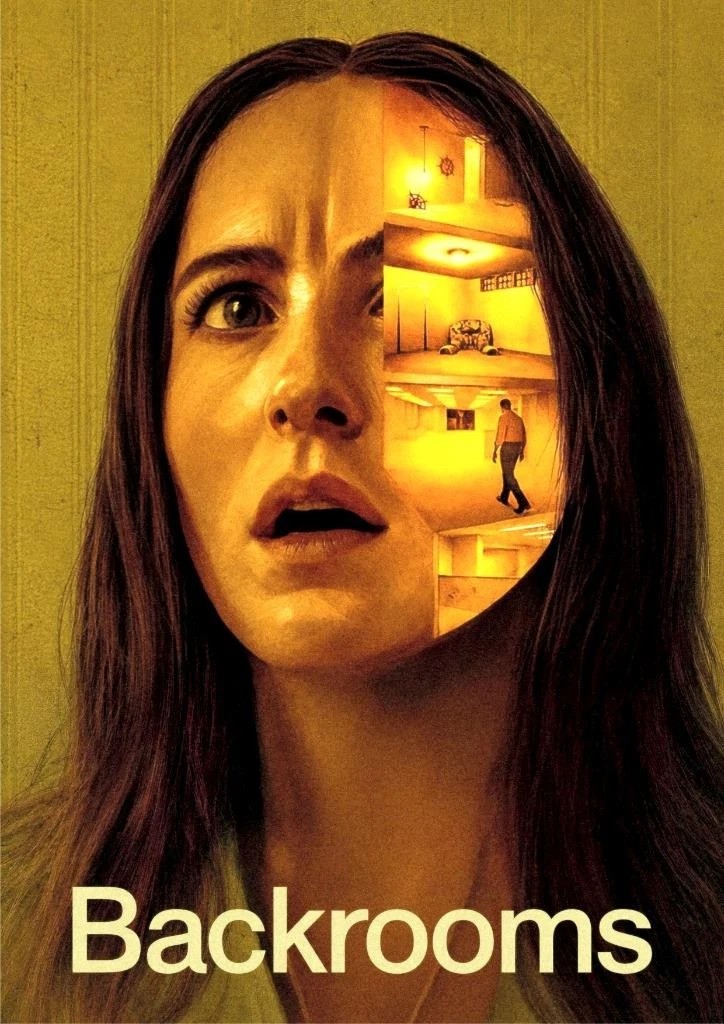
Backrooms (2026) ***** – Seen at the Cinema

Cinema is my oasis of calm. I go once a week on the same day (Monday), on my own, usually sit two rows from the front so I’m not interrupted by heads or popcorn or whispering, and sit in darkness for three or four hours, occasionally longer. It’s usually a seamless procession from car park to cinema. For a number of reasons, I hadn’t managed my weekly visit for a couple of weeks so I had a lot of catching–up to do so much so that a quadruple bill was on the cards. What could possibly go wrong to disturb my tranquillity.

For a start, my regular car park was shut for maintenance. So instead of a 10-minute walk from car park to cinema I had a 25-minute trudge. Access to the cinema proved more difficult than usual. The escalator was out of action and for some reason the people who make escalators make them with bigger steps so it’s always an awkward climb. Things didn’t look any better when I settled down for my first screening. There was no sound. We were shunted out and into another movie. I can’t even be bothered to tell you how bad it.

So my day required immediate redemption. I wasn’t so sure about Backrooms given I didn’t have the same ecstatic reaction to Obsession as others.

What is so astonishing about Backrooms is the tone. It’s not like other horror films built on a soundtrack of screams and visually propelled by jump starts and gore. The two main characters are, in the main, solid and observant. Failed architect and full-time misogynist Clark (Chiwetel Ejiofor) runs a struggling furniture store. He’s separated and apt to blame others for his situation, inclined to brush aside his heavy drinking and anti-feminism.

Mary (Renate Reinsve) is his therapist with a cruel past, her mother demented and paranoid. She often appears distant even in company, separated from the real world.

Trying to find out why his electricity bills are so high, Clark passes through a wall in his basement and finds another, peculiar, world, occupied primarily by pieces of furniture, in places stacked to the ceiling, or sinking at an angle into the floor as if the floor was sand, or disappearing into the ceiling. There are a host of corridors and doorways, some horizontal, some vertical, some sloping.

Using his architectural skills, Clark scopes out the labyrinthine space. He takes his findings to Mary who thinks he’s gone off his rocker. Clark enrols his two assistants to help him investigate the space further. But they come to a bad end. Shadows lurk, someone strong pulls on the end of a rope.

Eventually, Mary investigates her missing client and discovers this parallel world where people appear as only part of what they are, as if the maze remembers them in a different way.

There are some nods to horror but mostly this is psychological sci fi. It’s the unexplainable. Even scientists can’t explain it, relying on the experiences of those who returned to build up their knowledge of the other world.

But because director Kane Parsons in his debut is so restrained this has more of the hypnotic air of Last Year at Marienbad (1960) than anything in contemporary horror or sci fi. In the Alain Resnais film repeated dialog and repeated visuals did most of the work, but here it’s the endlessness, the implacability of the otherworld. Even the otherworldliness is understated, inanimate objects creating the disjointed mood. It’s like Planet of the Apes (1968) where escapee Charlton Heston discovers at the climax that he hasn’t escaped at all. Or Seconds (1966) where Rock Hudson can’t even escape.

One of the problems facing any sci fi or horror picture is the necessity to maintain the logic of the situation. Too often, a director or screenwriter, chasing another thrill, just slips out of the world they have created. That doesn’t happen here. This remains implacably, ruthlessly, logical so, although we have travelled through this strange world, we are no clearer at the end as to how it came into being or its purpose or how to avoid its trap.

There are no heroes and no heroics. Depending on your personality, the back rooms might provide succor. Or they might not.

It’s rare that you’d find two Oscar-nominated actors turning up in a low-budget horror picture. The impassive Renate Reinsve (Sentimental Value, 2025) comes off better than the more emotional Chiwetel Ejiofor (12 Years a Slave, 2014) but there’s not much between them. I’m sure the film’s unexpected box office success will stir demand for a sequel, but I hope not, for as it stands it’s every bit as outstanding a venture as the best of sci fi. Written by the director and Will Soodik, also making his movie debut.

If only Steven Spielberg had shown an ounce of this originality in Disclosure Day.

All hail Kane Parsons.

Discover WordPress

A daily selection of the best content published on WordPress, collected for you by humans who love to read.

The Atavist Magazine

by Brian Hannan

WordPress.com Blog

News, Tips & Website Tutorials