Behind the Scenes: “Two for the Seesaw” (1962)

Had already cost a bundle before one foot of film was shot. Mini-major Mirisch Bros, flush from the commercial success of West Side Story (1961), had forked out $600,000 (plus a percentage) for the screen rights to the Broadway hit by William Gibson. (this was $250,000 more than West Side Story fetched). Between another $500,000 (plus percentage) for star Elizabeth Taylor and likely $250,000 for Gregory Peck, the producers were already well over a million bucks out of pocket.

The play had run for nearly two years on Broadway, earning a $570,000 profit, a remarkable sum in those days, and also set records for a touring production. It marked the Broadway debut of both  Anne Bancroft, who won a Tony, and writer William Gibson. They re-teamed for The Miracle Worker both on Broadway and in the 1962 film.

Over-runs on Cleopatra (1963) put paid to Taylor’s involvement, Peck pulled out, temporarily replaced by Paul Newman. Producer Walter Mirisch presumably didn’t think Henry Fonda and Anne Bancroft who’d played the parts on stage had sufficient marquee heft, nor was he keen on Broadway director Arthur Penn, and instead pursued Shirley MacLaine who he’s turned into a star thanks to The Apartment (1960) with Robert Mitchum stepping in for Newman (leaving him free to make the first of his iconic pictures, The Hustler, 1961)  Robert Wise, director of West Side Story and looking for a less onerous gig, signed on to direct.

Despite being filmed on a 60-day schedule, the bulk of it on a sound stage, the budget had rocketed to $3 million, around half of which went on the main players and the screen rights.

Mitchum wasn’t too keen on the role, believing himself miscast from the outset. The lighter touch of James Garner, also considered for the role, might have worked better. Mitchum had turned down the movie twice, suggesting Mirisch would be better off with William Holden or Glenn Ford, for whom repression was a given.

MacLaine was on a roll, signed to a four-picture deal with Mirisch. She was given not one but two roles previously advertised with huge fanfare to have starred Elizabeth Taylor. As well as Two for the Seesaw, Taylor had been primed for Irma La Douce. The Taylor deal came unstuck in part due to her illness but also was attributed to her insistence that a role be found for her husband Eddie Fisher.

Wise and Mitchum had worked together earlier in their careers, in western Blood on the Moon (1948). And, no, this wasn’t the director hankering after working again with the actor. Noted Wise, “It was one of the few times I went on to a picture where the cast was already set. I don’t think Mitchum was quite right for the part. He was more believable in rougher, outdoor kinds of stuff.”

When they met at rehearsal, MacLaine was already a fan. Seventeen years younger than her co-star, she’d seen all his films, and was thrilled at working with one of her screen heroes. She was amazed at his photographic memory. He never had a problem with his lines. They certainly seemed to be getting on remarkably well for. Recalled Wise, “they got to ribbing and making jokes and making us all laugh so that the biggest problem we had was getting the two of them to settle down and get into the scene.” Added the director, “I had to have a closed set for a while. It was kind of embarrassed over what they were saying to each other. It was pretty spicy kidding, pretty ribald.2

Mitchum, apt to spout poetry, was revelation as a person far removed from his tough guy screen image. He was popular on set, very down to earth, mingling with all the crew and other actors. There was no entourage just a secretary bringing in lunch – and no hard liquor – for everyone.

What was going on between Mitchum and MacLaine was not obvious to everyone. Assistant director Jerome Siegel thought their light-heartedness was just a way of keeping tensions low on the set. “They were very subtle about it. You never saw anything where you could be sure there was a romance going on. but it didn’t surprise me when I did hear about it.” Needless to say, both actors were married at the time.

When Frank Sinatra and writer Malachy McCourt popped in to the set, Mitchum embarked on a drinking session that temporarily halted production, at least for the day. Wise infuriated his stars by using a stopwatch to time a kiss, one that was maybe going on too long with a pair of enamored characters. In his defense, Wise was just wary of the existing screen censorship, during which an overlong kiss would draw censure.

Wise had opened up the play with scenes set on Brooklyn Bridge and other parts accompanied by music suggesting the character was downcast. There’s a clever use of the split screen when the pair are on the telephone to each other.

The movie did well enough in first run New York and other big cities where the play had been performed but response outside those key sites and in the babes was muted. Most critics blamed the miscasting and Wise’s heavy direction.

SOURCES: Lee Server, Robert Mitchum, Baby I Don’t Cry (Faber and Faber, 2001); J.R. Jordan, Robert Wise, The Motion Pictures (BearManor, 2020); “Two Broadway Play Buys,” Variety, July 23, 1958;  “Seasaw Earned $570,000 Profit,” Variety, November 4, 1959; “Shirley MacLaine’s Creamy roles,” Variety, October 26, 1960; “Two for Seesaw Budget at $3-Mil,” Variety, February 14, 1962.

Two for the Seesaw (1962) ***

Whatever chemistry Robert Mitchum and Shirley MacLaine enjoyed in real life – they embarked on-set on an affair that lasted three years – does not come across on screen. Of course, we’re accustomed to the adage that opposites attract and this screen couple Jerry Ryan (Robert Mitchum), a lawyer running away from his marriage, and bohemian dancer Gittel Mosca (Shirley MacLaine) seem particularly ill-matched.

For a contemporary audience this gets off to the oddest of starts. There’s no meet-cute. If there’s something else we’re accustomed to these days it’s a clever, intriguing, smart or even dopey meet-cute. They barely acknowledge each other at first encounter, at the kind of party where intellectuals arguing obscure points of art or politics  mingle with what would pass in those days for the in-crowd.

He couldn’t be more out of place, turning up at a trendy event in a trenchcoat, and he’s only there because he is friends with party host, artist Oscar. They exchange one line. It’s not as though that’s a zinger either. But, on an odd pretext, he pursues her.

Now any ditzy dame is going to run a mile from a stranger who has made virtually no impression on her and can hardly make up his mind whether he wants to see her or not and to whom she only relents when he tells her what a lonely spud he is. So it’s a big narrative hole to dig the audience out of. We establish that she’s good-hearted, but we already know he traipses around the streets of New York doing nothing and lives in a shoddy apartment.

This derived from a Broadway hit and although director Robert Wise attempts to open it up it appears acutely stage-bound, but lacking the dialog zip that marked out such numbers as Barefoot in the Park (1967).

Despite MacLaine’s appealing screen personality, and the tremendous work she did establishing herself as a marquee name via The Apartment (1960), this is more of a romantic drama than a comedy, two ships (somewhat distantly) that pass in the night only to discover not only have they little in common and with opposite personalities but that he is having second thoughts about his impending divorce.

He doesn’t quite settle in New York and she hasn’t made it there. In some respects, they are too similar, emotional losers. She lacks the zap to make this work and he’s just too aggressive and quick with the put-downers to come across as a lonely guy. Once he found work – as an attorney – he’d have a swathe of dames on his trail.

Hard put to see the movie version qualifying as a “romantic delight”. On broadway it starred Henry Fonda and Anne Bancroft and was directed by Arthur Penn.

He commits the mortal sin of the meet-cute romance by slapping her around. Although by this point I doubt if audiences went much for the idea of the unlikely couple getting it on. With a little financial help from him, she manages to make a success of herself, but in a business rather than an artistic sense, and you get the impression she’s going to end up as the joke in a tale he’s going to tell his buddies when he gets back home to Omaha, Nebraska.

It just seems too contrived a set-up to work.  Turns out he’s going through a mid-life crisis – he spends a good deal of time just moping –  and has been too indulged most of this life.

She’s more convincing, the type of free-spirited gal who, though street-smart is other ways, always falls for the wrong guy, unable to rein in her generosity of heart and waste her emotions on men who demand too much of her, including that she rein in that generosity of heart and free spiritedness.

For a May-December romance (she’s 17 years younger) it’s too weighted down by the dour.  In recent years, Mitchum had appeared at his romantic best when up against a sprightly star like Deborah Kerr (Heaven Knows, Mr Allison, 1957, and The Sundowners, 1960) who could more than hold their own, rather than a relationship where, apart from his depression, he needs to have the upper hand.

Mitchum appears miscast and the flaw in the ointment. MacLaine, despite or because of the character’s flaws, is much more believable.  

Robert Wise (The Sound of Music, 1965) directs from a script by Isobel Lennart (The Sundowners) based on the William Gibson play.

Hard going. Fans of MacLaine should be satisfied enough. Fans of Mitchum less so.

Tuner (2026) **** – Seen at the Cinema

The only problem with going to the movies as much as I do is that you see all the trailers. And if you see all the trailers you know by now that trailers often spill the beans. So I knew before I came to this that the titular piano tuner had two particular sets of skills. Firstly, he had perfect pitch which meant he could unscramble, at first hearing, a tune note by note (apparently Elton John has the same gift so it might not be so rare). The second is that by some bizarre byproduct of his rare condition he can crack safes.

So given he is a safecracking piano tuner who, we guess from the trailer, is embarking on a romance, the question is: how long will it take before both worlds collide and what damage will it do to his relationship? Or, more interestingly, is he a natural-born crook who’s found his way into the safer haven of piano tuning but will jump out of that at any opportunity?

Is he a good guy driven by circumstance into occasionally playing the bad guy, or is he a congenital bad guy who’s managed to keep that part of his personality hidden?

Takes a heck of a long time to come to any conclusion as it wends its way through a smorgasbord of themes – child prodigy, wannabe composer, the Holocaust, romance, old guy losing his grip, crime, and a condition so rare it not only prohibits a person from hearing virtually any sound but confers on him the magical power of being able to obtains safes, courtesy of being able to identify the clicks as the tumblers go round. 

Perhaps the rarest element of this – and what sets it aside – is the tone. It’s set in a very low register. The two principals never raise their voices. Angst and all the insecurity that goes with that is virtually absent. Whatever afflicts apprentice tuner Niki (Leo Woodall) isn’t going to kill him so we’re not in the deadly disease meets romance territory. And wannabe composer Ruthie (Havana Rose Liu) finds sufficient emotional outlet in her music not to waste too much on the guy. She’s so restrained you’d have to torture her to conjure up a tear.  

The old fella is charming if voluble. The movie skips a few beats that might have helped and I’m not convinced that if a rich guy suddenly found a valuable watch missing from his impregnable safe he’d point the finger at the housekeeper. And it’d take some doing for a prodigy who’s not played the piano in twenty years to play a complicated composition without missing a beat, but then maybe that’s what defines a prodigy.

Apprentice tuner Niki rundles around New York with the older Frank (Dustin Hoffman) fixing pianos and listening to old man’s prattling on. Forgetful Frank can’t remember the code for his safe. The young man takes it home and after watching a YouTube tutorial cracks it open, at the same time as realizing this is an unusual gift. Later, while tuning a piano in the evening he comes across thieves making a racket. Due to his condition, he can’t concentrate with people making a racket so to stop them making a racket he turns to his newfound skill and helps them out. Later, still Frank is seriously ill and can’t pay his bills so Joe undertakes some part-time safecracking to help him out.

Meantime, helped along by matchmaker Frank, before he ended up in hospital, Joe hooks up with Ruthie, a pianist hoping to make it big as a composer.

You know Frank is going to die, hence the need for ready cash should disappear and equally that the crooks ain’t going to let their prize catch disappear. Equally, you reckon that at some point Ruthie is going to find out about his sideline. But these are low key tensions in the main and the chief element of tension is the various safecracking jobs, though, to be honest, one safe is very much like another, the stakes only raised by an occasional unusual locale or when something happens to prevent Niki being able to hear the tumblers tumbling, such as when he gets an airhorn blown in his ear.

At one point, it looks as if Niki might be able to cut and run, given he’s found a way to access a million bucks. But it takes the mother of all coincidences to trigger the good guy-bad guy climax. Joe has given Ruthie a watch he purloined from a safe. Turns out it belonged to the famous composer for whom Ruthie is auditioning for a job. I’m not going to go into the rudiments of how problem is solved but it does lead to the kind of finale that will leave audiences departing the cinema in wonder.

But my feeling is that big reveal came too late, as did Niki spelling out exactly what obstacles he had to overcome to live anything approaching a normal life.

Too much plot, not enough anything else. But the two principal characters are refreshing. Joe clearly has found his condition a drawback to forming relationships while Ruthie is suspicious of anything that might detract from her ambitions. Nothing new there, you might contend, but generally both those aspects are portrayed in a shout-from-the-rooftops manner, an overdose of angst or emotion, rather than moved along in a distinctly low key.

Leo Woodall (One Day TV series, 2024) is in the rising star category and this will enehnace his status as an actor who wants to act the part rather than fall back on a pre-determined screen persona. Havana Rose Liu (Lurker, 2025) is another contender for the big time and brings requisite tension to her part. Veteran Dustin Hoffman (Megalopolis, 2024) has the kind of role that looks like it’s making a bid for another Oscar nomination. But in the scene-stealing department he’d have to fend off Lior Raz (Gladiator II, 2024) as the chief burglar.

Directed by Daniel Roher (Blink, 2024) and written by him and Robert Ramsay (Soul Men, 2008).

I’d have enjoyed it much more if I’d not seen the trailer. But I did enjoy it.

The Horror of Frankenstein (1970) ***

Fanboys these days wouldn’t accept the sudden shift in the series without some far-fetched backstory. But in those days audiences never seemed to question why the new iteration of Frankenstein was less than half the age of the previous one (Frankenstein Must Be Destroyed, 1969). Call this a remake or a reimagining or just trying to pull a fast one on a loyal moviegoer.

In fact, this goes pretty much back to basics – and beyond the addition of sex and gore it’s claimed in some quarters to be little more than a retread of The Curse of Frankenstein(1957) – and without Peter Cushing to provide chilling gravitas. Instead, Hammer have corralled in a younger rising star in Ralph Bates – who had made his movie debut in Taste the Blood of Dracula (1970) and would form part of the studio’s horror stock company for the next few years – and in keeping with his age taken us back to the teenage Frankenstein, besting schoolmasters with his arrogance and scientific brain, before dropping out of university to concentrate on experiments with human life.

By this point he’s bumped off his father to inherit the fortune he requires to kit out his castle with the most modern equipment, including the not-so-advanced vat of acid. This time out there’s no suspicious cops breathing down his neck. And while there also no compromised youngsters representing innocence, his medical colleague goes along so easily with the ghastly experiments that his innocence would be called into question.

The tale is exceptionally lean, with none of the moral complexity of its predecessor. Primarily, the focus is on the baron building his monster piece by piece with the help of corpses delivered by unctuous graverobber (Dennis Price) though in an unusual gender twist for the period it’s his wife (Joan Rice) who does the actual work of digging up the graves.

Theoretically, there’s some sexual tension between Frankenstein’s mistress, housemaid Alys (Kate O’Mara). and the high-born Elizabeth (Veronica Carlson) who takes up residence with him after she’s left destitute following the death of her father.

Elizabeth had turned down over a dozen marriage proposals while waiting for Frankenstein to get down on bended knee, but he shows little interest in her and seems to thoroughly enjoy humiliating her by allowing her to stay but only as an employee.

Anyone who gets in Victor’s way ends up in the vat or is thrown to the monster. The monster (Dave Prowse) is the best thing in it. He looks like a real person, huge, tall and strong, and doesn’t react well to being chained up, preferring to go on a murderous rampage. No time is spent enlisting audience sympathy for any of the characters.

There’s an excellent twist at the end where the monster ends up in the vat, therefore relieving the authorities of anyone to blame for the serial killing, and priming, I would have thought, a sequel with Bates – Cushing returned in 1974 with Prowse again as the monster, though this Cushing appears to have managed to escape from the burning house in Frankenstein Must Be Destroyed. Go figure.

It was a big ask to expect Ralph Bates to step into the shoes of Peter Cushing. The movie is better viewed as Hammer’s attempt to revitalize its various horror franchises, and having dipped its toes into the world of the female vampire it would shortly invest in lesbian vampires and a sex-change Dr Jekyll (a concept light years ahead of its time).

None of the women auditioning for the title of Hammer Scream Queen have much to offer beyond cleavage. Kate O’Mara (The Vampire Lovers, 1970) has the better part, given she has the sense to try her hand at blackmail, but she’s generally insipid. In acting terms, Veronica Carlson hasn’t improved on Frankenstein Must Be Destroyed. It doesn’t take much for  Dennis Price to steal the show.

So, mostly a series of  scientific experiments with a modest amount of gore and none of the nudity Hammer threw into the revamped female vampire series.

I was surprised to find I preferred Michael Carreras’ take on the legend in Frankenstein Must Be Destroyed rather than that of writer-director Jimmy Sangster (Lust for a Vampire, 1971) making his directorial debut but with a bigger reputation as a writer among the horror cognoscenti. Hammer continued playing its role in blooding rising stars -this time round its Jon Finch (Frenzy, 1972).

I’ve seen this described as a parody but I didn’t find much to laugh about.

Frankenstein Must Be Destroyed (1969) ****

Hugely enjoyable, mainly because it throws away the standard template for this kind of horror picture. Long before Hollywood got into the habit or remaking or reimagining hit films, Hammer was constantly finding a reason to revive a character who in his previous iteration had met a sticky end. Even though Baron Frankenstein was not one of those villains who always managed to escape at the end of every episode, audiences had no trouble accepting him in whatever guise, era or location he turned up in.

But this is a considerable reinvention of the accepted characterization. Usually, Frankenstein is represented as somewhat academic arrogant scientist, not suffering fools gladly, but rarely has he been given such a wealth of finely tuned insults to offer. Nor has he ever exhibited what you might term passion. You’d never wonder, for example, who he fancied. But that’s all changed here. When he takes a woman here, it’s an extension of his power as much as his passion, and although the sex takes the form of rape, it does reveal him (if that’s not too awful to contemplate) as more human than before.

And the young couple in love, dragged into his web, are far from the usual innocents. On top of that, there are scenes of tremendous pathos when a wife cannot accept the husband brought back from the dead. And there’s quite a brilliant, if ironic, climax that you would not see coming.

In addition, at times the direction by Terence Fisher exhibits tremendous confidence, not just following a structure that brings out far more emotion than is generally accorded the genre, but surprises with flashes of humor and the kind of editing that would generate acclaim had it been in anything other than this.

This time round Baron Frankenstein (Peter Cushing) is in London, haunting the streets with a scythe to lop off the heads of passing pedestrians on dark nights. While he’s employed in this endeavor a burglar discovers the secrets of the baron’s cellar and inadvertently destroys the monster undergoing creation. Frankenstein hides out in a boarding house run by Anna (Veronica Carlson), whose fiancé Dr Holst (Simon Ward) is stealing drugs from the mental asylum where he works, thus making him easy prey for blackmail. The baron wants to kidnap asylum inmate and former colleague Dr Brandt (George Pravda) to find the secret formula for their previous work together.

With Holst soon knee-deep in murder, Anna an accessory to the drug theft, the “innocent” pair are dragged further into the baron’s web. When Holst pleads with Frankenstein, “Let her go, you don’t need here,” the baron replies in deliciously supercilious tones, “I need her to make coffee.”

During the escape from the asylum, Brandt has a heart attack so Frankenstein arranges to transplant his brain into the body of Professor Richter (Freddie Jones). Brandt’s wife Ella (Maxine Audley), initially delighted to find her husband not just alive but cured of insanity, nonetheless is later repulsed by this “creature”, even though in appearance he is not awful, just not the husband she knew.

The plot quickly turns. Frankenstein rapes Anna. In turn, she wounds the creature. And the baron murders Anna, meanwhile realizing that Holst cannot be trusted. The creature, turned away by Ella, and now determined to gain revenge, sets a fiery trap for Frankenstein and in a superb ending hauls the baron into a burning house.

As I said, the structure takes a considerable detour from the standard Frankenstein picture, in particular taking time out from the main plot of the “innocents” escaping and/or thwarting the baron in order to focus on the relationship between Ella and the creature. Her rejection of him, his disgust with his new appearance, and the emotional loss of his wife moves into territory you wouldn’t normally associate with the genre, much closer to the more contemporary reading of the original tale.

Every now and then we dip into a subplot of a police investigation aided by the thief and Ella as witnesses. At first the pompous Inspector Frisch (Thorley Walters) seems little more than a comedic diversion, but actually he’s more switched-on than you’d expect and his detective work adds more tension.

Making Frankenstein more human – even if it’s just him giving into evil impulse – works to the movie’s advantage, as it allows him to pepper his lines with rapier wit. Peter Cushing (The Skull, 1965) has never been better but Freddie Jones (Otley, 1969) as the victim steals the show with a performance of tremendous pathos.

Simon Ward should count himself lucky that Richard Attenborough overlooked his performance and saw something in him that made him the ideal candidate to play Young Winston (1972). Veronica Carlson (Hammerhead, 1968) became the latest Hammer Scream Queen.

Occasionally inspired direction from Terence Fisher (The Devil Rides Out, 1968) in allowing the characters to develop and relationships to foster. Screenplay by Bert Batt, in his debut, and producer Anthony Nelson Keys (Pirates of Blood River, 1962) and based, somehow, on the original by Mary Frankenstein.

Surprised how much I appreciated it.

Behind the Scenes: Sidney Lumet (“The Offence”, 1973) Talks Movies

There are plenty books about directors but remarkably few that explain with any coherence exactly what it is they do. Until now, the best book I’ve read upon the subject was by Edward Dmytryk, Oscar-nominated for Crossfire (1947) and shepherding home such triumphs as The Caine Mutiny (1954), Raintree County (1957), The Young Lions (1958) and more obviously commercial fare such as The Carpetbaggers (1964) and Mirage (1965). His book On Screen Directing covers every aspect, often with diagrams and instructions, of movie making.

Sidney Lumet takes a similar nuts-and-bolts approach in Making Movies. In turn, he focuses on the script, acting, camerawork, art direction, costumes, the actual shooting, dealing with rushes, editing, sound, and a vital element in the process that you’ve probably never heard of – the answer print.

Lumet has a heck of a portfolio. Five times Oscar-nominated, from debut 12 Angry Men (1957), through The Hill (1965), The Group (1966) and The Appointment (1969) and picking up the pace with The Anderson Tapes (1971), The Offence (1973), Serpico (1973), Murder on the Orient Express (1975), Dog Day Afternoon (1975), Network (1976), Equus (1977) and running through Prince of the City (1981), The Verdict (1982) and Family Business (1989) all the way up to Before The Devil Knows You’re Dead (2007).

The actual physical process begins in the rehearsal room, a “grungy” space in a big city. Key members of the production team will be present. The unit publicist will make a nuisance of themselves. Directors beware a star who arrives with an entourage. Sean Connery, with whom Lumet, made five pictures, arrives alone, bounds “up the steps two at a time, rapidly shakes hands all round, then plops himself down at a table, opens his script and starts studying.”  Paul Newman couldn’t be more different. He “treads slowly up the stairs, the weight of the world on his shoulders, puts drops in his eyes, and makes a bad joke.”

But first, of course, came the script. In the best screenplays, “character and story were one and the same. I think inevitability is the key,” the idea that, without removing the element of surprise,  the film will end up where the character’s actions insist.

Stars can ruin scripts. On The Verdict initial star Robert Redford’s insistence on changing the main character from a deadbeat drunk into someone more sympathetic had cost the studio a million dollars in scripts and rewrites before he exited the project and Paul Newman, perfectly happy to play an alcoholic, took his place.

Naturally, Lumet has beefs with critics and nowhere is that more heated than on their opposite definitions of style. Since critics don’t really know much about cinematic style, they’ll plump for the most obvious, something deriving from costume or period setting or some fancy camera gimmick. Lumet recalls no critic mentioning style in reference to Prince of the City, a movie he deems one of his most stylistic. Akira Kurosawa noticed it and talked to Lumet about it in some detail.

Lumet views stars as courageous. Called upon to reveal parts of themselves, or their bodies, it’s a never-ending series of demands on their skill-set. On the other hand, they can set out to test the director and make his life a misery. Like everyone else, he confesses to not knowing what makes a star, certainly appearance counts, but more often it’s more mysterious, some alchemy that jumps off the screen. But stars are well rewardd, as we know, but their perks can add substantially to the bottom line. In the 1990s one major star was getting an extra $320,000 in extras, which, in effect, cost the studio four times as much when taking into account how the box office take is broken down.

“Most actors have their best take early.” By Take 4 they’re given their best. But if something’s gone wrong, a faulty camera or light or someone coughing at the wrong time and they have to go again, actors are “emptied” and it can take several more takes to find the vital “refill.” Perseverance isn’t much fun when it takes 34 takes, as on The Fugitive Kind (1960), for Marlon Brando to get it right.

Camera tricks. At the end of 12 Angry Man, the camera was positioned higher and the lens wider. “The intention was to literally give us air, to let us finally breathe, after two increasingly confined hours.” Backlighting is “one of the oldest” devices used to make people look more beautiful. In The Hill, wide angle lenses were used to give the idea of character distortion. On The Deadly Affair (1967) “preflashing” made the backgrounds drab. The documentary feel of Dog Day Afternoon was enhanced by handheld cameras. Chiaroscuro achieved the “old” look of The Verdict.

When the movie starts shooting “the call sheet is our bible. If it’s not on the call sheet, we don’t need it.” But everything you do need, including actors, is itemized on the call sheet for each scene.

The answer print is the last element in the process. Before that can be created, the director calls in the guy from Technicolor. His job title is “timer.” In a darkened room, he watches the movie, relying on a counter beneath the screen. Reel by reel, he makes notes. “This shot is too dark, that too light, this too yellow, that too red,” and so on. Contrast, too, comes under the microscope. “Every scene, every shot, every foot of film is analysed.”

The Technicolor guy heads back to Technicolor where he sits in front of a machine called a “Hazeltine,” a computerized color analyser. “He feeds the negative into the machine and sees a positive image of the picture on a TV screen. Since electronic color is quite different from chemical color, his judgement is crucial.” He can vary the color balance or lighten or darken the image. Just as in photography, the positive stock moves into the chemical bath and the positive print emerges – the answer print.

It’s not as easy as it sounds. The director is looking for the lab to achieve the effects he requires. John Schlesinger had 13 attempts to get it right on Midnight Cowboy (1969).

The last job is to marry the sound track – known as the magnetic track – to the answer print.

That’s not the end of the story. The movie will be screened to a test audience and a report on dozens of points of detail produced. Maybe that will necessitate change – edits, a reshoot.

Then we get to see it without an idea of the effort it took to create.

SOURCE: Sidney Lumet, Making Movies, was published by Bloomsbury about 30 years ago. You should get a copy online easily enough.

Behind the Scenes: “The Offence” (1973)

“Vanity project” – two words to strike terror into the heart of a Hollywood studio boss. It meant some star or director had you over a barrel. In return for them condescending to make a movie for you, they expected you to fork out for a movie you knew would never make a dime. But, in this case, as far as United Artists was concerned, it was worth the risk if it that meant getting the Bondwagon back on track after the disappointing box office of On Her Majesty’s Secret Service (1969). It was a (relatively) small price to pay to get Sean Connery signing on for Diamonds Are Forever (1971).

There was still a financial downside. In the Connery deal, United Artists agreed to stump up two million bucks for two pictures. The actor would cost nothing, so that might be considered a bonus, Connery relying on the back end to recoup his fee and share of profits. But the movie would still need marketing and advertising, which might add up to another half a million dollars per picture.

Worse, this was what was known in the business as a “put picture.” According to director Sidney Lumet that meant the studio “had nothing to say about it. A budget was picked – and in this instance it was $1 million – and then whatever Sean wanted to do with that million he could do. They would have no approval of script, director, cast, what-have-you and that’s how The Offence happened.”

Connery wasn’t the first actor to think he knew better than the studio or who fancied backing his own judgement. That particular line went back to the silent days of Mary Pickford and Charlie Chaplin and later included the likes of John Wayne, Marlon Brando, Gregory Peck and Doris Day.

Connery planned to adapt a play by John Hopkins called This Story of Yours. He’d met Hopkins on Thunderball (1965) for which Hopkins had written the screenplay. UA might have been more interested had the play had been a whopping success in London’s West End and Broadway. But its London run was restricted to a few weeks at the Royal Court Theatre in 1968, so more arty than the general hit play.

Connery’s second choice for a “put picture” was an adaptation of Macbeth in which he would make his directorial debut.

“There was never a moment’s discussion,” noted Lumet, about how this would play with Connery’s global fanbase. “Sean knew exactly what he was getting into, shut his eyes and dived off the board without checking if there was any water in the pool.”

The budget was trimmed further following changes to the dollar-sterling exchange rate and Connery had only $900,000 to play with. But actually this wasn’t such a bad deal. Apart from three pictures, UA had limited budgetary exposure to $1.5 million for the rest of its slate. And Connery was flush, sitting on an estimated $6 million from his share of the proceeds of Diamonds Are Forever, his record fee of $1.2 million augmented by his 12.5 per cent share of $45 million in rentals.

Sidney Lumet, who had directed Connery in The Hill (1965) and The Anderson Tapes (1971) signed up. Ian Bannen, also from The Hill, took the main supporting role and Trevor Howard (The Long Duel, 1967), with just nine minutes screen time, added marquee lure. Lumet managed to bring the film in ahead of schedule, completing the film in just  28 days of shooting following a couple of weeks of rehearsal. The writer was on the set every day.

And UA hadn’t skimped on promotion either. Some of the 154 journos attending a junket for Man of La Mancha were shipped to London to cover The Offence.

Exteriors were shot in and around Bracknell in Berkshire in March and April 1972, making use of the Point Royal flats – the background made enough of an impression for a PhD student to use it for a thesis on the “brutalism” of modern architecture” – with interiors at Twickenham. The town’s library doubled as the film’s police station for exteriors.

The title was changed to Something Like The Truth – artwork was devised for this – and only switched to the “much more impactive” The Offence a month before the movie opened.

All Connery’s Bond hits had opened at big London West End theaters. So although this might have fared better in a smaller house, or a West End cinema known for more discretionary fare such as the Odeon Haymarket or a genuine arthouse like the Curzon, UA slotted it into the 1,993-seat Odeon Leicester Square in January 1974.

In opening week it took $17,900, a few hundred dollars short of the seventh week of the movie it replaced, Charles Bronson thriller The Mechanic, so “disappointing” was an understatement. According to a later article by Variety’s Peter Debruge, it only lasted four days. But it didn’t. It ran for five weeks. Week two brought in $13,700, the third stanza $10,200 and then $8,900 and a final sally of $7,300. But nothing like his Bond box office.

It transferred to the 139-seat Cinecenta – where it might more sensibly have opened and where demand would surely have outstripped supply and led to a lengthy run. In fact, the second week there improved on the first, $2,400 compared to $2,200. And it shifted over to the equally tiny Centa Cinema where its second week sat at $2,400. The Odeon chain gave it a circuit release, backed by a reissue of western Support Your Local Gunfighter (1971) starring James Garner.

The London figures resulted in a distinct lack of interest in the U.S. Not even Connery’s success as James Bond could induce any notable theater to take it on. U.S. reviews didn’t help. Among the New York critics, six were negative and only two positive. However, Women’s Wear Daily commented on the “beautiful acting by Sean Connery” and the Independentl Film Journal noted, “He is so much more right for this than any glossier star would be that he has an unbeatable advantage.”

Peter Debruge reckoned the poor London box office stalled its opening Stateside for a year. That wasn’t true either. Although it was slow out of the gate. It had received an “R” certificate in December 1974, which generally indicated an opening one month or so further on. Instead, the opening was delayed until 11 May 1973 at the 546-seat Festival in New York, by which point Connery was again in the news, having replaced  Burt Reynolds on Zardoz.

Again according to Debruge, the distributor “buried it in a bad house” in New York. That wasn’t true either. The Festival, a Walter Reade arthouse, was the ideal location for a difficult movie that needed to find its feet. Success there could lead to a long run. The movie it replaced, Ten from Your Show of Shows, an equally odd proposition being a compilation of sketches from a 1950s TV show, was coming to the end of a 10-week run.

The first five days at the Festival hauled in $9,500 but neither the second nor third week figures were reported, which meant they were dire. That three-week run was the limit of its American release, as far as I could detect after researching the pages of Variety. It may well have turned up somewhere on the drive-in circuit or as a support. Judging from available posters, it was released at least in Germany, Finland, Australia, Belgium and Spain

Apparently, it turned a profit after nine years but my guess that would take a considerable amount of sales to television to get anywhere near recouping the investment. United Artists reneged on its deal to make another “put picture” with Connery, though likely there was a loophole in the contract that facilitated that. Interestingly enough, that might not have prevented Connery going down the directorial route. He was slated to direct and star in The Drooping W, based on a Leo Marks script, for Twentieth Century Fox.

Both Sidney Lumet and Christopher Nolan, possibly attracted by the complex flashback structure, both asserted it was Connery’s best work.

SOURCES:  “About UA Financing,” Variety, May 19, 1971; “Connery Truth 1st of 2 for UA,” Variety, May 29, 1972; “Lumet Brings In UA’s Truth Ahead of Sked,” Variety, May 31, 1971;  “UA Backed Mancha,” Variety, June 28, 1972;  “Connery May Earn $6-Mil,” Variety, July 19, 1972; “R for Offence,” Variety, December 27, 1972; “Sean Connery Film Retitled,” Box Office, January 8, 1973; “Review,” Women’s Wear Daily, May 14, 1973; “Connery into Zardoz,Variety, May 16, 1973; “N.Y. Critics Opinion,” Variety, May 23, 1973; “Review,” Independent Film Journal, May 28, 1973; “Fox Out-Races Hounds of TV,” Variety, September 19, 1973; Peter Debruge, “Helmers Tap into Charisma and Wigs,” Variety, June 7, 2006. Box office figures: Variety 1973, Jan 24-March 14 and May 16-30.

The Offence (1973) ****

Surprised no one figured to put Sean Connery on the stage. I know he did some hoofing in his early days and no doubt lacking the classical training of a Richard Burton, Laurence Olivier or Peter O’Toole, the theater snobs might have objected. We know Connery had a commanding screen presence but generally there was never any need for him to be in long shot. Here, that’s exactly what director Sidney Lumet does, setting the camera out as if the set was a stage and allowing Connery to take charge in a theatrical fashion.

Lumet and Connery had worked before, on The Hill (1965) and The Anderson Tapes (1971), and they would work together again on Murder on the Orient Express (1974) and Family Business (1989), and generally when actors and directors align it’s because the director is looking for some specific quality the actor can supply, and mostly that’s kind of a shorthand, the presence of Denzel Washington, for example, in a Tony Scott picture gives you an idea just what to expect.

But on their first three pictures together, Lumet draws something different out of Connery every time. This was something of a vanity project for the actor, made for well under a million bucks, and presented the actor in a completely different light. It was a bold, not to say dangerous move, to move so far away from his screen persona.

Fans of Christopher Nolan will find much to admire. There’s a tricky structure, flashbacks and flash forwards intermingle, we begin at the end and work our way back to the beginning. As well as the audience trying to work out what’s going on, the main character, Johnson (Sean Connery), a detective sergeant, is also trying to work out what he’s doing, why he reacts the way he does and what do his actions (and words) mean about himself. So, tricky in an intriguing way.

There are some unusual aspects. For a start, the other cops try to prevent cop Johnson (Sean Connery) from getting too aggressive with suspect Baxter (Ian Bannen), accused of paedophilia – at a time when British cops were just as skillful as their Yank counterparts in getting prisoners to fall down stairs or accidentally bang their heads into doors.

There’s a slightly arthouse feel to Lumet’s direction. We begin with slo-mo, for goodness sake, and there’s a bright light that pops onto the screen every now and then.

Three stories develop in parallel. The first is that Johnson is close to burn-out, fleeting flashbacks fill us in on his memories of victims he may have failed. The second is that he’s so determined to get his man, so convinced of the suspect’s guilt, that he doesn’t stop to consider his innocence and becomes so infuriated at Baxter’s continued assertion of innocence that he turns to violence, the old adage of beating the truth out of the man. But the third and most disturbing element is that Johnson is closer to temptation than you’d think, skirting an uneasy border into fantasies of murder and rape.

You might as well have shuttered the movie. Who was going to believe in Sean Connery as a rapist? Worse, who was going to watch him play one? It’s a wonder this saw the light of day at all even on a miniscule budget.

This rises or falls on Connery’s performance. We’ve got no problem – on past screen performance – on viewing the actor as a tough guy, even one who plays hard and fast with the rules. But it’s much harder for him to convince as a man on the verge of the mental breakdown and someone willing to accept he is harboring malevolent thoughts.

If you don’t believe in Connery it won’t work at all. So it’s entirely down to him that it works so well.

This must be the greatest amount of dialog he has ever spouted, huge monologues, intense arguments, and doesn’t look for a moment as if he’s struggling. His intensity is awesome. But for all that it relies on speechifying, some of the best moments involve no words. Johnson flinches at the touch of another man, even if it’s a gesture of sympathy.

The cast is superb. Ian Bannen (Lock Up Your Daughters, 1969) is superb, especially when the tables are turned and he gets to crow over his assailant’s weakness. The ever-choleric Trevor Howard (Von Ryan’s Express, 1965) is at his best when he doesn’t have to rein it in and he doesn’t here. Vivien Merchant (Alfred the Great, 1969) has a small role as the disillusioned childless wife.

Sidney Lumet has the good sense to give Connery the freedom of movement and expression he needs. Written by John Hopkins (Thunderball, 1965) from his play.

This tends to be overlooked because of the darkness into which the character delves but it’s well worth a look just to see what else Connery has to offer.

A Man Could Get Killed (1966) ****

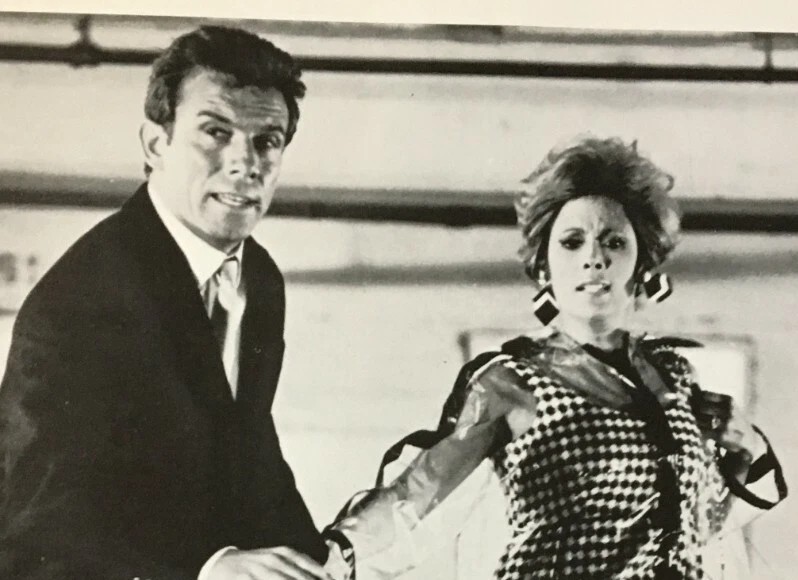
An unexpected delight. More farce than spoof and more Hitchcockian thriller than espionage adventure, but bursting with laughs. Spinning on the premise of mistaken identity, a New York banker becomes mixed up with diamond smugglers while being pursued by a posse of Europe’s shadiest characters and a very determined femme fatale. All the more enjoyable because identity confusion is very difficult to pull off unless you have a top class cast like Cary Grant and Eva Marie Saint in North by Northwest (1959).

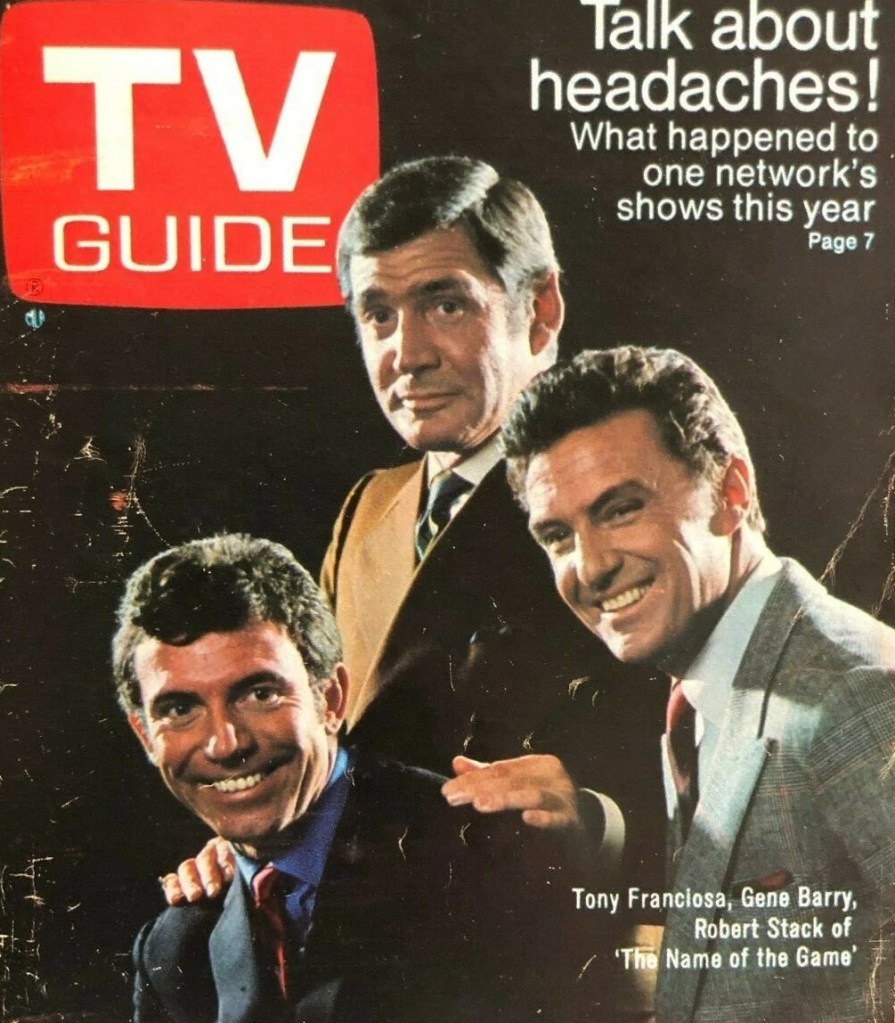
Landing in Lisbon, New York banker William Beddoes (James Garner) is mistaken for the emergency replacement for a recently-deceased British spy. It’s not just embassy officials like Hatton Jones (Robert Coote) who are afflicted by this notion, the villains are so determined to get rid of their man two bombs are planted in his car. Attending his supposed predecessor’s funeral brings Beddoes into contact with glamorous Aurora (Melina Mercouri). Smuggler Steve (Anthony Franciosca) offers his service to Beddoes to help recover $5 million in stolen industrial diamonds. To complicate matters, identity is also an issue for Steve, who while working under an assumed name is outed by Amy (Sandra Dee) who recognizes him as her family’s former gardener.

Unable to convince anyone he is not who he says he is, Beddoes is swept into the conspiracy, his every move under surveillance by rival villains, including Florian (Gregoire Aslan) and Milo the Murderer (Arnold Diamond), while Aurora attempts seduction to bring him to heel.  Eventually, while never ruling out double-cross, Beddoes, Aurora, Steve, Amy and embassy officials work together to decipher a series of clues revolving around rice, azaleas, a red pig and a man who sneezes, none of which align with obvious meanings and naturally are interpreted as something to do Red China or the Iron Curtain.

A picture based on a simple premise is better than a spoof that labors to create a plot and so it’s true here. Everything springs from the mistaken identity and the diamond hunt, and as one twist effortlessly follows another characters with conflicting agendas collide. Beddoes spends all his time trying to escape from kidnap, assassination or seduction. It’s helter-skelter stuff, so no surprise that chases, of the Buster Keaton variety, produce laughs. I found myself laughing out loud at the scene where Steve can’t find anywhere to sit in a café that is not next to a villain, Beddoes getting attacked by drapes, an ambassador (Cecil Parker) more concerned with knotty chess problems than espionage, and a great visual gag where Beddoes  wallops a cop. Escaping pursers, Steve takes a short cut that leads him straight back into danger.

Naturally, the whole enterprise is loaded with confusion, not least because making the wrong decision, taking the wrong turn and making the wrong assumption sets up the next gag. Throw in ambulance theft, Beddoes sitting in a row of hookers in jail, a tape recording turning up in a bread roll and you get the idea.

The cast could have been hand-picked for this kind of picture. James Garner (The Hour of the Gun, 1967) is the  natural successor to Cary Grant in the double-take department. This role is a play on previous ones where he was the trickster and not the patsy. He’s more stiff-upper-lip than the Brits. Comedy skills honed on this one that were put to terrific use in Support Your Local Sherriff (1969). And while Melina Mercouri (Topkapi, 1964) is more than a little over-the-top, the dominant woman from whom ordinarily Beddoes would run a mile, but also possessing the cunning survival instincts lacking in an innocent like him. One scene that depicts their contrasting characters so well is when she runs around half-naked to create a diversion and he chases after trying to cover her up, clearly no idea that distraction is necessary.

Tony Franciosca (The Swinger, 1966) leads with his teeth, his smarminess undercut by Sandra Dee reminding him he is a glorified gardener. Dee (Tammy and the Doctor, 1964), however, never manages to stray from her ingénue roots. An excellent supporting cast includes Robert Coote (The Swinger), Gregoire Aslan (Moment to Monet, 1966), Cecil Parker (A Study in Terror, 1965). This was British actress Dulcie Gray’s final film.

The movie had a fractured genesis. Original director Cliff Owen (The Vengeance of She, 1968) fell out with the stars and was shunted aside in favor of Ronald Neame (Gambit, 1966), more adept at male-female chicanery. The screenplay originated from comedic masters – Richard Breen (Do Not Disturb, 1965) and T.E.B. Clarke (The Lavender Hill Mob, 1951)  – based on the book Diamonds for Danger by David E. Walker. And there are many delightful lines. “I’m my own bait,” spouts Aurora. Trying to placate Amy, Steve explains “It’s unusual to find this many dead spies in one day.”

The movie failed to register with the public which was astonishing. At a time when theme songs helped turn other films like Alfie (1965) into successes, the movie contained the tune that would give Frank Sinatra his first number one single in over a decade, “Strangers in the Night.” Unfortunately, the movie did not carry Sinatra’s imprimatur. The music in the film was an instrumental. Had Sinatra’s voice been heard in the movie it might have turned it into a hit.

For a long time, this under-rated delightful comedy was hard to find. There still is not a Region 1 DVD, but you can find it on Region 2 and YouTube has kindly provided a free copy.

The Beekeeper (2024) **** – Seen at the Cinema Three Times

We’ve all felt that frisson, returning to a much-loved movie. Was your initial enthusiasm misplaced? Does what originally felt fresh and vibrant now revealed as tired and cliche? I’ve not seen this for over two years, not added it to my DVD collection, I noticed, so wondered if that in itself was a sign of misgiving. When it turned up last week on a streamer, I was definitely hesistant.

As it turned out, there was no reason for any apprehension. Below is my original review.

A franchise is born. John Wick may or may not rise again, Jason Bourne is dead in the water, so the gap exists. True, the new film certainly riffs on elements of that pair, the retired assassin, bare mention of whom elicits fearful reaction, who belongs to  a secret government elite, and is jolted into action by someone stupidly preying on  the sole beloved aspect of his lonely life.

Eqaully true, Jason Statham (Meg 2, 2023) is certainly viewed in many quarters as the poor man’s Bruce Willis, but, like Liam Neeson, he is one of the few action actors who you would not want to meet in person, on a dark night; he looks as though he growls in his sleep.

Not an obvious candidate for Imax but then neither was “John Wick 4” and that was certainly an experience in the hi-hat format.

But it touches on themes that will strike a chord – the data mining to which we all involuntarily subscribe and which governments and villains alike will employ for their own purposes; the computer nerd multi-millionaire; the politically powerful with overly entitled offspring; and those in control who discover not every annoying person can be easily swatted away.  

And the beekeeping part turns out also to have meaning, not too much gobbledegook about hives, which is just as well because most people we encounter haven’t a clue how honey is made, least of all pay attention to the intricate structure of that insect’s lifestyle, or that there could be a Queenslayer (and this doesn’t originate from Game of Thrones) whose purpose is to remove a dis-functioning head bee. And just when that metaphor looks as though it’s going to run dry, it turns out to have a deeper meaning.

Just as well, too, that we’re not expecting much finesse from re-awakened assassins. Like John Wick, Adam Clay (Jason Statham) takes no prisoners, but whereas the former confined his murderous activities to the underworld, the latter downs anyone who gets in his way, though in fairness, many of the supposed righteous are in the involuntarily thrall of the country’s justice departments. It helps, too, that F.B.I. investigators, Agents Parker (Emmy Raver-Lampman) and Wiley (Bobby Naderi), while not incompetent, are certainly slovenly and bicker like billy-o, and that Parker is inclined to set aside civil liberties.

So, a scammer steals a couple of million from an elderly woman, who has taken a maternal interest in her beekeeping neighbor. Since she is only caretaker of the cash, which belongs to a charity, in shame she commits suicide. Initially, the number one suspect, Clay has dark forces on his side, too, able to access secret information denied both the F.B.I. and the C.I.A.

And he takes route number one to resolving any issues, turning up at the first scammer operation armed with a couple of cans of gas and proceeding to drench any employee not smart enough to scarper. That’s, of course, after he’s disabled any security guards so low down the pecking order they wouldn’t even be aware of the name that should strike fear in their hearts.

Luckily, we’ve got retired C.I.A. chief Westwyld (Jeremy Irons) to explain enough about the government’s secret beekeeping operation to keep us on our toes. But quite why he’s involved with said nerdy multi-millionaire Danforth (Josh Hutcherson) is cleverly kept from us until the twists begin to mount. But as in the High Table, he can call in top-level assassins to rid him of an irritant.

There’s some clever comedy, too, as Danforth’s equally geeky underlings don’t quite realize exactly what they’re up against,  even while, like gameboys ramping up to participate in a computer game, they hire muscle. But, most of it is Clay daringly outwitting everyone in his path until he ends up at a Presidential hideaway and the extent of the corruption becomes clear.  

There’s nothing desperately new here, there rarely is, and scarcely an ounce of sophistication (and who cares about that). Remember that even John Wick (before it developed into the High Table malarkey) was a bare-bones riff on Bourne. But who needs anything that original, a believable character is all, because there will always be murk that needs cleaned up, and a hero who can take on all-comers. John Wick One, as I recall, was not such a big initial blockbuster, finding a bigger audience on DVD, and it was only when the makers went back to the well, with a bigger budget and expanded the concept, that it really took off.

I can see the same thing happening here. The big surprise of the weekend was not so much the heavily-promoted Mean Girls doing better than expected, but the scarcely-promoted The Beekeeper doing way better than expected, and when it comes to the foreign markets, the latter will blow the former out of the water, because, overseas, action speaks louder than lyrics.

Not entirely sure why this is so heavily pickled with Brits, but as well as Statham, we have Oscar-winner Jeremy Irons (House of Gucci, 2001) with his silky steely tones, Jemma Redgrave (I’ll Be There, 2003) in her biggest movie role in two decades and Minnie Driver  (Chevalier, 2002) as a hard-nosed slinkily-dressed top cat. I can see all three returning as the series develops.

I’ve a sneaky feeling the role of Parker, grieving daughter going all kick ass, was edited down as it became apparent Statham was going to kick all the ass any audience would need, but Emmy Raver-Lampman (graduating from the The Umbrella Academy TV series) brings a good dose of authenticity to the part, avoiding the usual glamor and potential romntic subplot.  

It’s in very capable hands, director David Ayer bringing a Fury (2014) directness to proceedings rather than being swamped all-ways-up by character overload as in The Suicide Squad (2016). Kurt Zimmer (Salt, 2010) has all the correct experience to layer this with more than eternal action beats.

Let’s hear it for the bee-busters.

Discover WordPress

A daily selection of the best content published on WordPress, collected for you by humans who love to read.

The Atavist Magazine

by Brian Hannan

WordPress.com News

The latest news on WordPress.com and the WordPress community.