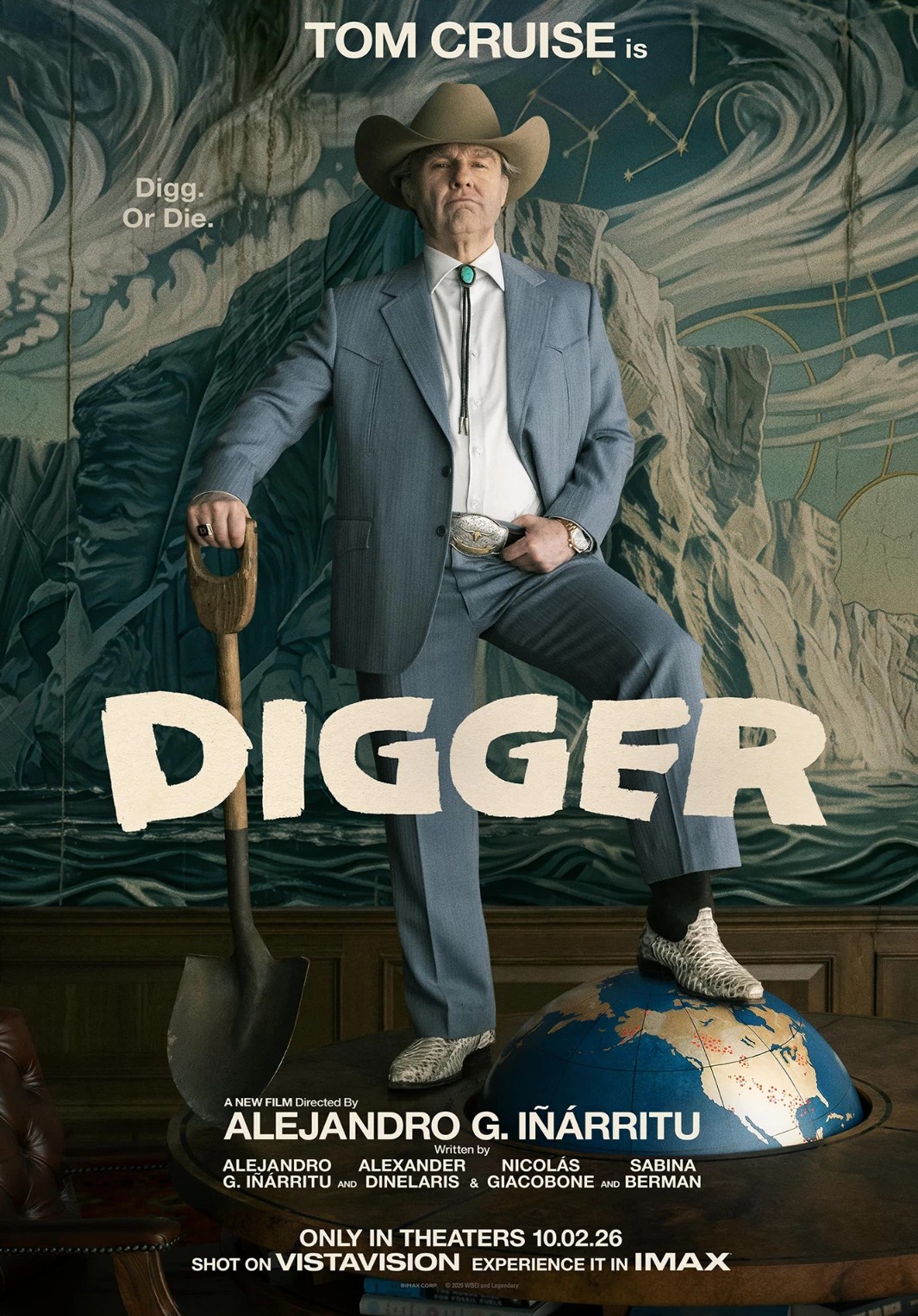
Digger (2026) * – Seen at the Cinema

This year’s Anora. Makes a heavy-handed Trump-sized point. Then makes it again. And again. And again. Until we’re reeling from a mega-budgeted bout of virtue signalling. Vanity project thy name is Digger. A couple of cinematic body swerves halfway in and, more potently, at the end can’t save this. And neither will streaming which occasionally digs a calamity out of its financial hole. Small-screen audiences are going to switch off in droves just as cinemagoers avoided it like the plague (I was the only person in my early evening screening on Monday).

We’re in standard disaster movie territory without any of the special effects, tidal waves, tsunamis etc which would normally account for the budget. Instead, it’s gone the other way, and more or less stuck us in endless rooms with the kind of politicians and money men scientists try to avoid like the plague.

It plays more like a bedroom farce without the sex, doors constantly opening and closing, people tripping over props (in this case a shovel) until you realize in what the director clearly thinks is a coup de theatre that it actually is a play, which partly explains the ultra-hammy performances, as if only the only idiots in power are shouty-shouty bombastic ones. So this is a play, that in itself given the staging and the huge cast, must have cost millions to put on, that concerns what happened years ago when billionaire oil magnate Digger (Tom Cruise) dug so deep into the Arctic ice shelf that he loosened an iceberg big enough to drift down into the North Sea and swamp most of Europe with, as we discover at the very end, global cataclysm.

In the “reality” part he’s obsessed with his cat, his oil, his billions and not taking the rap for exploitative exploration. In the play, Rockwell (Tom Cruise) playing Digger is obsessed with his daughter who has gone missing and with his understandable actor’s insecurity, constantly at war with the director. The ending, which is the best part, and not because this long trudge of a heavy-handed never-ending saga, is over has the audience don gas marks and emerge from the theater into a swamped city.
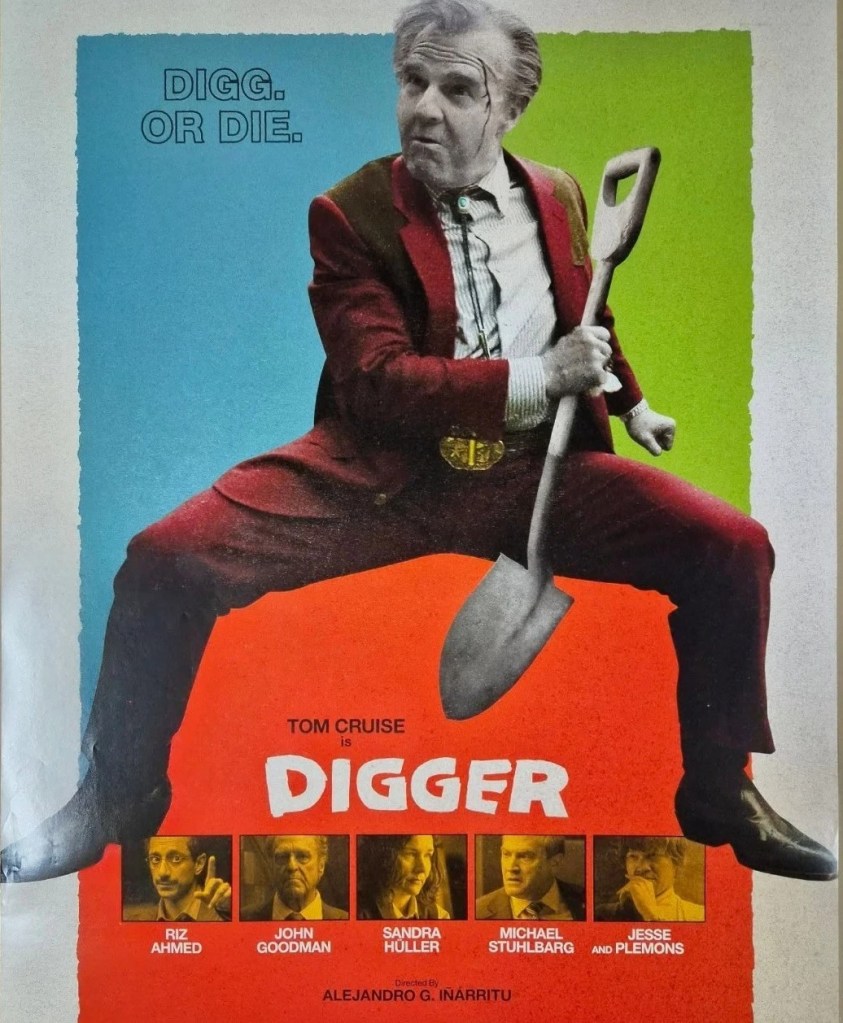
Tom Cruise has been here before, when he wanted to prove he was an “actor” and not just an action hero. Remember Lions for Lambs (2007), his first independent production, which targeted the U.S. Government’s involvement in Middle East wars and despite Cruise, Robert Redford and Meryl Streep sank like a stone because, guess what, audience don’t like to be lectured.

Guess what, audiences don’t like to be lectured to any more now. The interesting aspect is that audiences sniffed the wind well before this movie opened. Even suggestions in the media that Cruise was odds-on for an Oscar couldn’t tempt them in over the opening weekend. Had Warner Bros not already been taken over by Paramount Skydance, this is the kind of box office opening that could have sunk it, much as Michael Cimino’s misjudged western Heaven’s Gate (1980) did to United Artists.

So, yes, I can see this is making a point about eco threat and a plea not to allow the greed of nations and individuals to create catastrophe, but it’s not as if this is anything new. When Dr Strangelove (1964) warned about the dangers of nuclear warheads it had a lot more laffs.  This might have passed muster had it been populated with great jokes and laugh-out-loud lines but the jokes you can coming a mile off and the stagey playing kills off any chance the lines have of creating a laugh.

I’m not even sure why Tom Cruise had to put on a fat suit to play Digger, as if all rich megalomaniacs are fat. Steve Jobs, Elon Musk, paper thin the pair of them. Perhaps Cruise wanted to disguise the fact that he is, in fact, an old man. He’s 64 for goodness sake. The hairpiece and the kooky clothing would have done it.

So, sorry, this didn’t do it for me. I already knew this stuff and didn’t need someone spending $160 million to tell me.
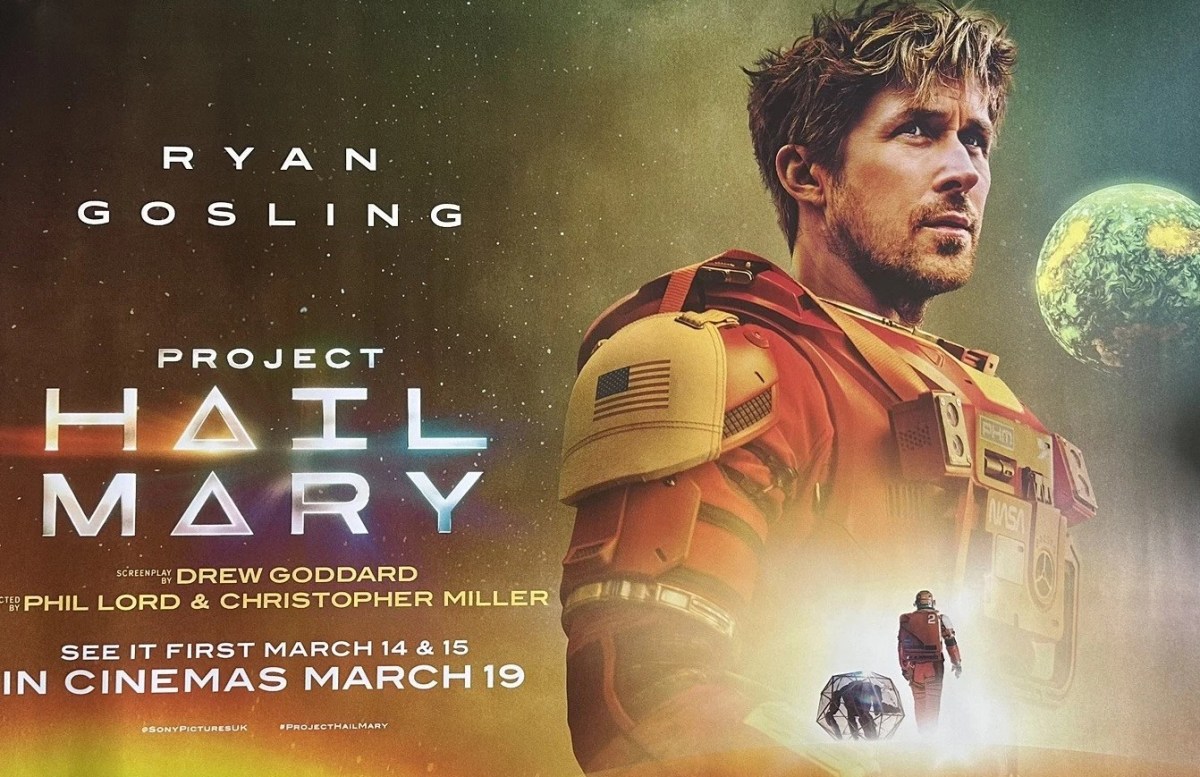
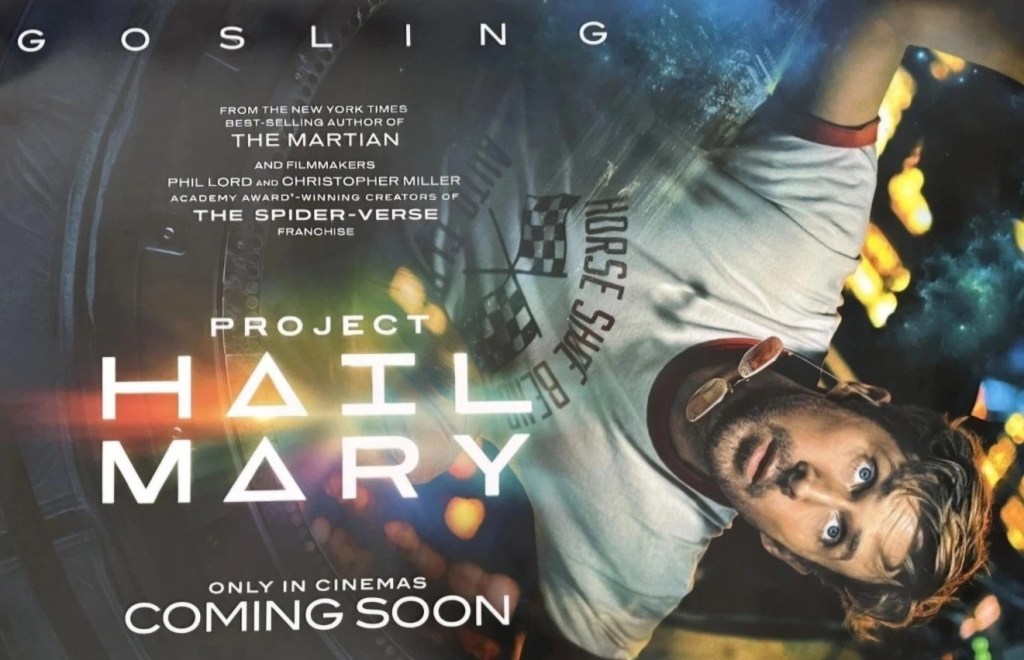
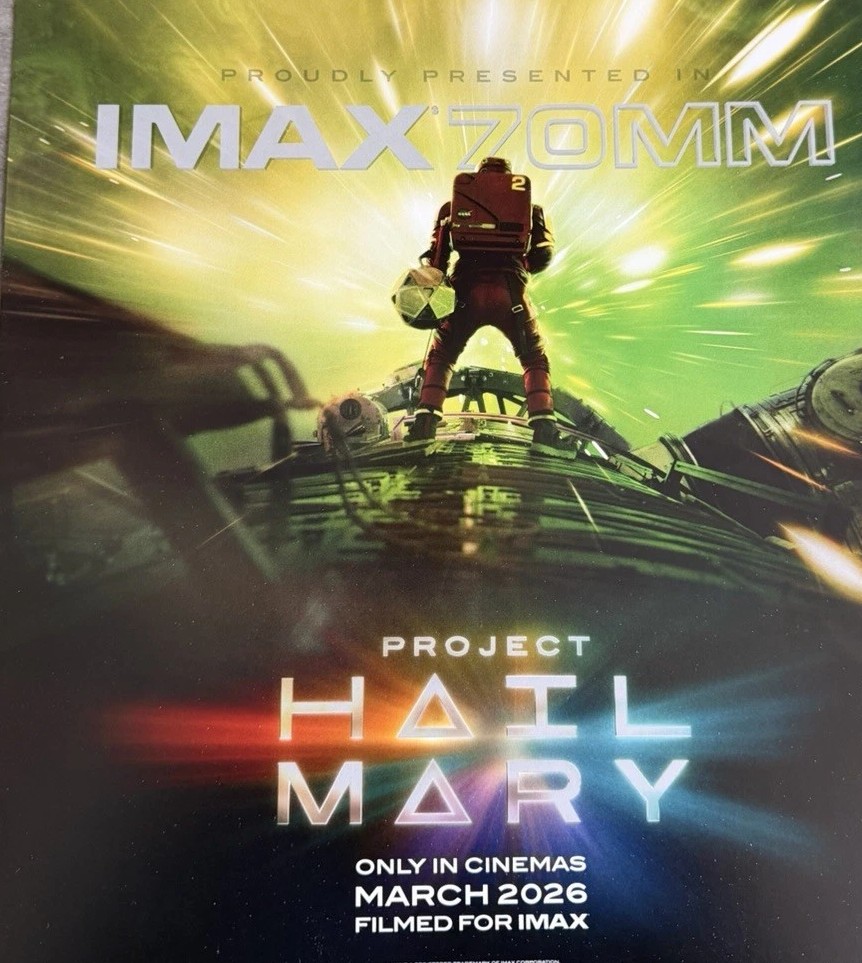
Project Hail Mary (2026) ***** – Seen (Three Times) at the Cinema

Excited as I was at the prospect of another film from the author of The Martian (2015), which I’ve seen at least half a dozen times, I was wary at the idea of spending so much time watching just one actor on screen, having been subjected to the hubris of Chris Pratt a few weeks back in Mercy (2026)  where I was bored out of my skull with staring at his visage for the best part of two hours. Sure, Tom Hanks managed to hold our attention virtually single-handed in Cast Away (2000) , but he’s a double Oscar-winner and if you can’t rely on someone of that stature to hold your attention, who can. Ryan Gosling has come nowhere near the Oscar circle though this bravura performance may change his fortunes.

Since I don’t have a scientific bone in my body I’m a sucker for these space pictures where astronauts have to tinker with all sorts of technology to save their lives or the world, the two are often inseparable. Here, the object of the exercise could not be bigger. Non-astronaut and unwilling volunteer Ryland Grace (Ryan Gosling) has to save the sun from being gobbled up by pesky microbes. Turns out our sun isn’t the only one at risk. Another sun in a distant galaxy is also at threat and Grace has to buddy up with an alien, whom he nicknames Rocky, to come up with a scheme to save both suns.

So, there’s a lot of science, but it made sense to me (though I’m no expert), and plenty setbacks and it’s touch-and-go whether our heroes will meet with success, bearing in mind that this is a suicide mission and the best Grace can hope for is a peaceful death because he knows he’s got no chance of reaching home nor surviving in space beyond a few years.

But, actually, at the core of the picture is the kind of relationship that would replicate that seen in Spielberg’s E.T. (1981) except that little Rocky is more of a big brother to Grace than a hapless alien.

Every now and then we flit back to Earth for a flashback which explains how high-school teacher Grace came to be selected for the mission and, given I’m not such a mean plot-spoiler, sets a high bar for humanizing our hero, explaining exactly how when he wakes up in the spaceship he doesn’t know why he’s there. Grace and Rocky are, for whatever reason, the only survivors of the crews of their respective spaceships. I’m not sure how to describe the alien spaceship, it seems to be made of something and nothing, while Rocky is capable of cladding himself in what resembles multi-sided plastic and can construct a steel fishing rod four miles long in the twinkle of an eye.

Just as Matt Damon learns how to grow potatoes on Mars, so our intrepid pair embark on a series of unusual activities in order to win the day. Back on Earth sour-faced boss Eva (Sandra Huller) has, literally, a show-stopping scene when she picks up the mic and warbles a karaoke tune.

You might quibble at the running time (157 minutes) but in an era of overblown over-long self-indulgent epics, this makes every minute count and I didn’t look at my watch once. Andy Weir knows his stuff, or can invent enough of it to make us believe in his concepts, so part of the process of this picture is going through what works of the technology and what doesn’t and alighting on the equivalent of the sling shot to see us home free.

And in an era of the overblown etc, how welcoming to find genuine emotion so underplayed back on Earth, the connection between Grace and Eva barely tickling along until she picks up the karaoke mic.

I’ve not been a huge fan of Ryan Gosling (Barbie, 2024) of the floppy hair and stupid grin, but when he’s thrown into a serious picture that lightweight personality works wonders. Rocky, too, is a great creation, a completely new idea of an alien.

Directed by Phil Lord and Christopher Miller (22 Jump St, 2014), this is a terrific experience. Written by Drew Goddard (The Martian).

The last time science met feel-good was E.T. and this doesn’t fall far short.  

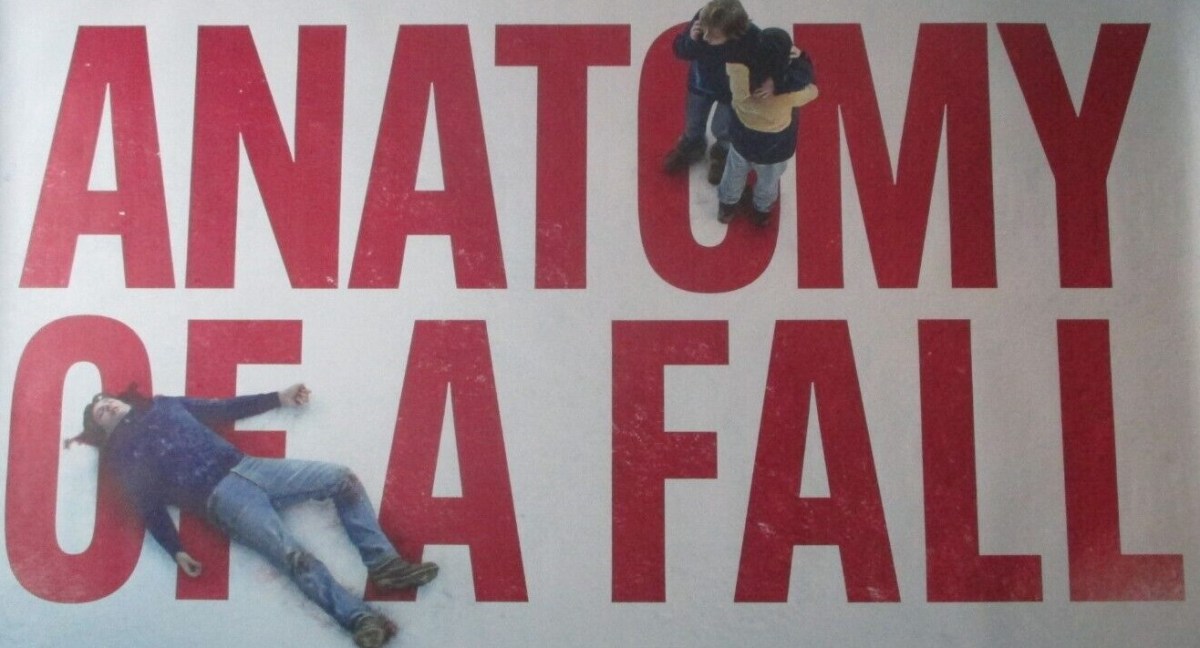
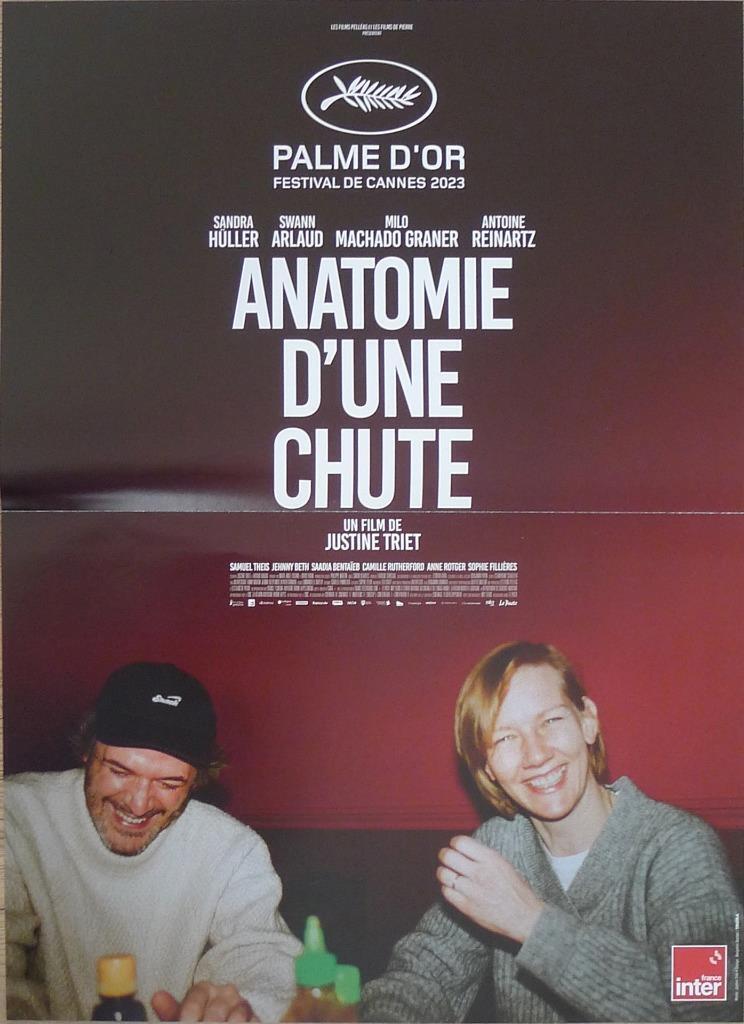
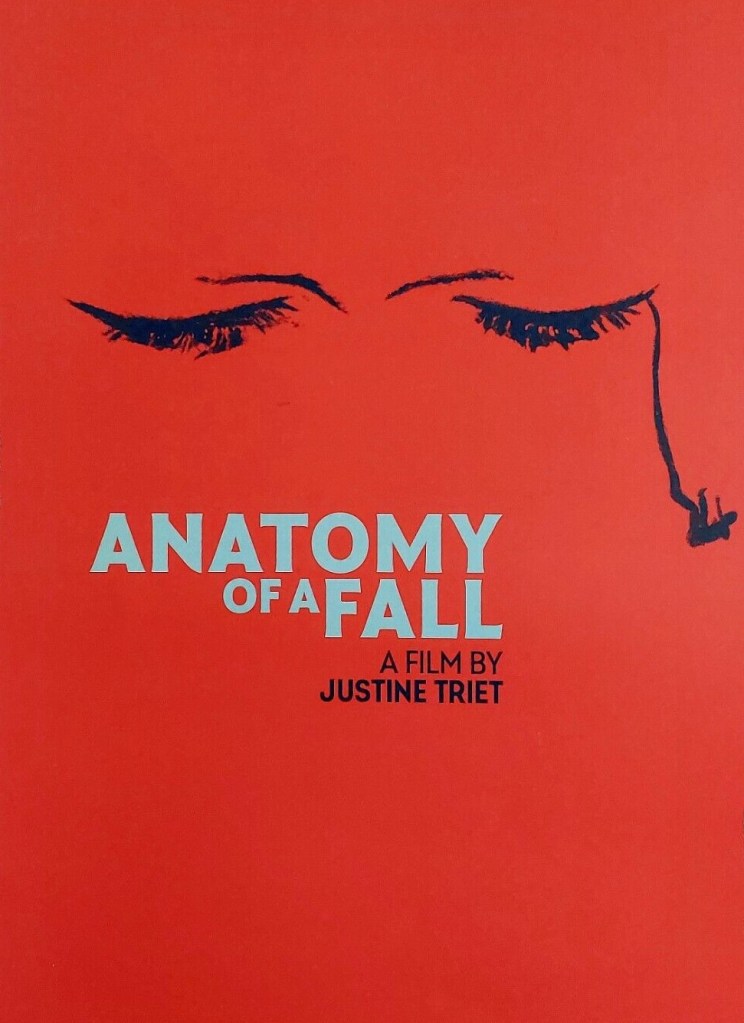
Anatomy of a Fall (2023) ***

I hate it when a mystery movie so blatantly cheats. Sure, we expect some sleight of hand, some vital piece of evidence retained, for the purposes of maintaining high tension, till the very end. Or a twist, a la Jagged Edge (1985), when a murderer, having got off scot-free, is revealed as the killer after all.

And while the central performances of accused, bisexual respected author and mother Sandra (Sandra Hueller), and accuser, smug unnamed prosecutor (Antoine Reinartz), are excellent and the exposition of the psychology of a marriage is well done, still the omission of the kind of critical forensic evidence that a modern audience would require works against the end result. Because otherwise, it plays like a 1940s courtroom drama, where the emphasis is solely on character rather than the weight of evidence.

So, here’s my complaint. The dead man has fallen from a window. Did he jump or was he pushed? Using forensics, the prosecution maintains he was hit by a heavy blow and some of the blood spatters down below were consistent with him losing blood when he was falling rather than when he hit the ground.

So we spend a great deal of time on examining how the body might fall and accounting for the blood, all of which appears to go against the accused, who is revealed as a not-so-nice person, possibly a sexual predator, possibly controlling, certainly a cheat – taking lovers while married and a heinous spot of plagiarism from her unpublished wannabe writer husband.

Only at the very end, when the half-blind child enters the loft space from which the father fell, do we realize that it would be impossible for this to be murder unless there was more evidence pointing to that eventuality. If the movie – prosecution and defence equally guilty of overlooking the obvious –  had spent a couple of minutes on the loft space both would have come to the conclusion not so much that murder could be counted out but that there would be clear evidence of it.  

The window is pretty small and an odd shape. But there was no evidence of a struggle, no scratches on the wood or glass, no tiny shred of material, and for the questionable spatters to end up where they did, the victim had to fall out backwards. So that means he needs to be pushed from the front and make no effort to save himself. The more obvious means of disposing of him – being thumped on the head from the back – was not consistent with the way he fell. And in any case, the space available for the wife to hit him with some heavy object would have meant leaving some evidence of that.

So, while it was certainly overlong, and could do with losing a good 15-30 minutes, I was happy to go along with the tale, held together as it was by the superlative performances and the usual courtoom duelling, though taking the last-minute evidence presented by the young boy as conclusive proof the father committed suicide seemed a step too far.

As a dissection of a marriage, of expectations of roles, and especially of the propensity for a failure to blame everyone else for their failings, it gets top marks. But it wears out its arthouse credentials by ignoring the forensic obvious.

I can’t also be the only one really annoyed that this Oscar-nominated performance basically skipped cinematic release. As far as I can work out, it was shown for one week in an arthouse in my neck of the woods way back last year and despite the Oscar nomination didn’t resurface except for a money-grab one-day showing two days (i.e. last night) before the Oscar ceremony. Like Maestro, it’s taken the streaming dollar and run, rather than allowed cinematic word-of-mouth to do what cinematic word-of-mouth is meant to do and build a groundswell of positive opinion prior to the awards.

So, yes, watch it for the psychology and the Oscar-worthy performance but don’t expect a contemporary approach to the mystery.

Discover WordPress

A daily selection of the best content published on WordPress, collected for you by humans who love to read.

The Atavist Magazine

by Brian Hannan

WordPress.com Blog

News, Tips & Website Tutorials