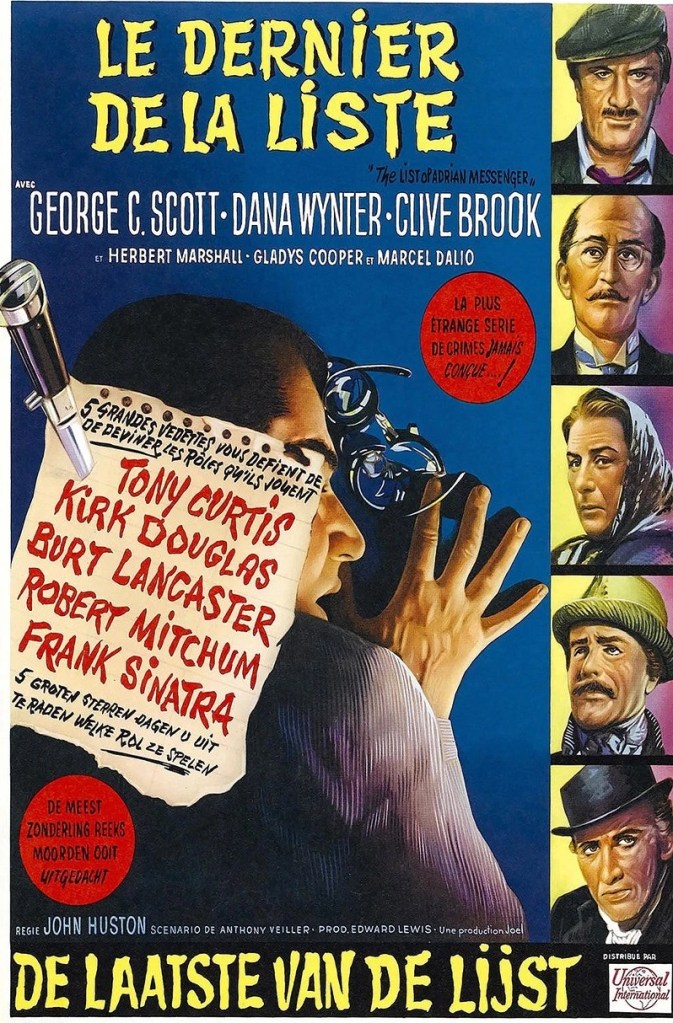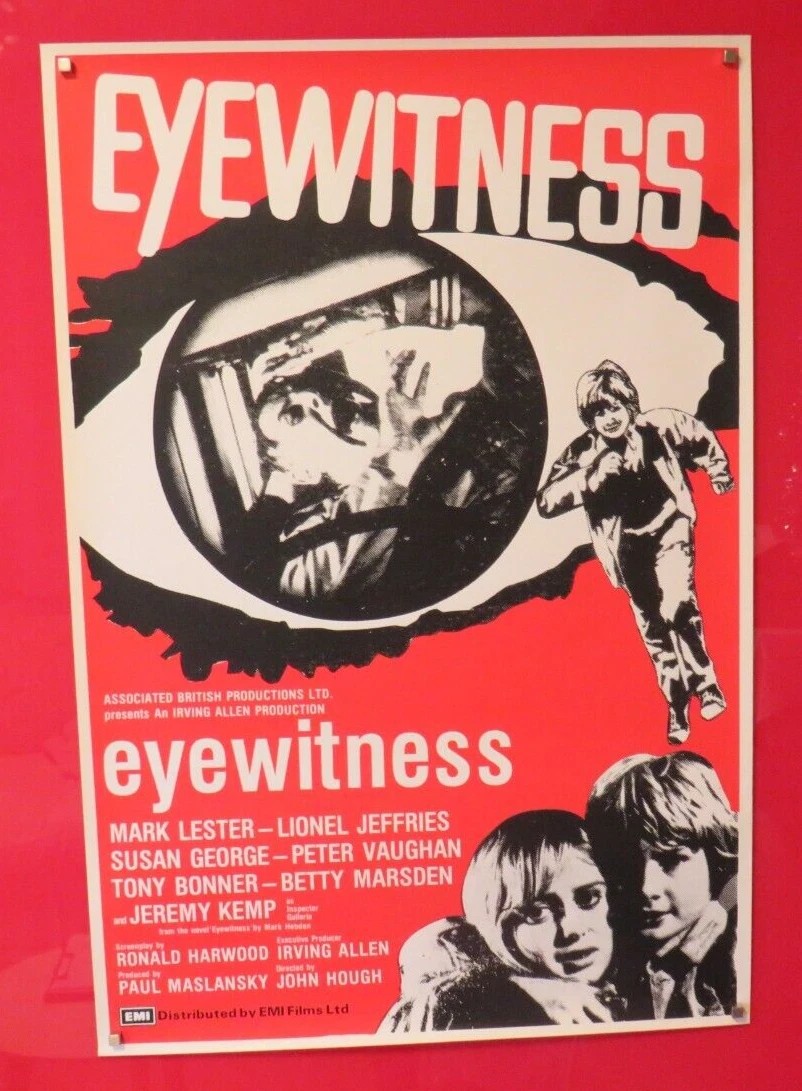
Eye Witness / Sudden Terror (1970) ***

Absolute cracking chase thriller spoiled by the central conceit and an overdose of whimsy. The standout chase is two cars, hemmed in by low walls, battering the hell out of each other at 50mph. We’ve also got motorbikes rattling down flights of stairs and a race through the catacombs.

There’s nothing new about a witness not being believed especially if he’s fingering a cop – check out a better version of this minus any of the thrilling chase sequences in Witness (1985). But when the witness, a child called Ziggy (Mark Lester), has an overactive imagination to the point of being considered a congenital liar and a grandfather (Lionel Jeffries) who encourages such playing about with the truth, it becomes a tougher watch, mostly because the bulk of the film is about the child squealing about not being believed whereas the deadly assassin he’s witnessed is scary enough – and a cop in a country where authority is not questioned – to make the whole picture fly with this complication.
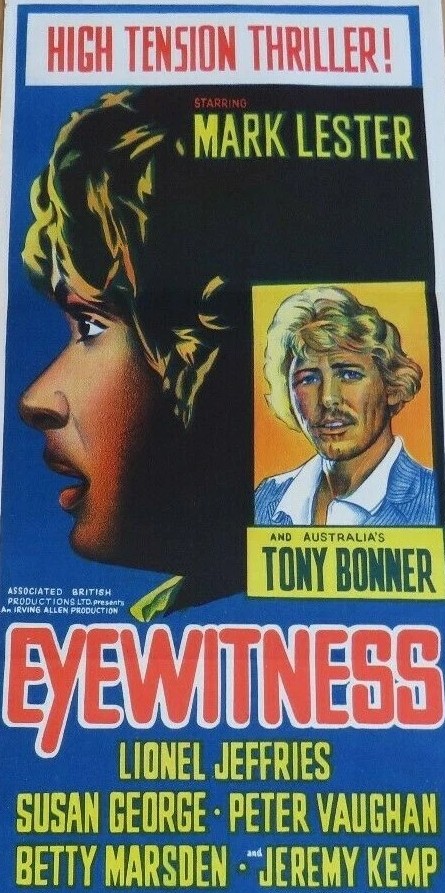
Sometimes a picture can just unintentionally come off the rails when railroaded into such a corner. Ziggy persuades his equally young pal Ann-Marie (Maxine Kalli) to go to the cops on his behalf and when in consequence she’s brutally murdered it feels like we’ve entered another movie entirely.

There’s an odd cop, Inspector Galleria (Jeremy Kemp), in charge of the investigation. A notorious bully, he constantly upbraids his underlings for not being as clever as himself, even though it takes forever for him to string the clues together. The inspector adds nothing to the story.

Ziggy has caught sight of assassin Paul Grazzini (Peter Vaughan) and the assassin has caught sight of him. Probably even if Ziggy hadn’t been a lying little toad, nobody would have believed him anyway given Paul and his complicit brother Victor (Peter Bowles) are both cops, especially as the Grazzinis are determined to eliminate him and anyone else who gets in their path – or even helps them, a confederate ends up being chucked over a cliff.

It’s quite hard for the picture to accommodate a burgeoning romance between Ziggy’s big sister Pippa (Susan George) and passing tourist Tom (Tony Bloomer), except for her ability to scream on cue and clip Ziggy around the ear. Quite why ex-soldier grandpa has to be such an oddball is unclear except that this is one of those movies where subsidiary characters are required to earn their keep by exhibiting unusual characteristics. His military experience comes in handy, though, when it comes to fending off the bad guys with Molotov cocktails.
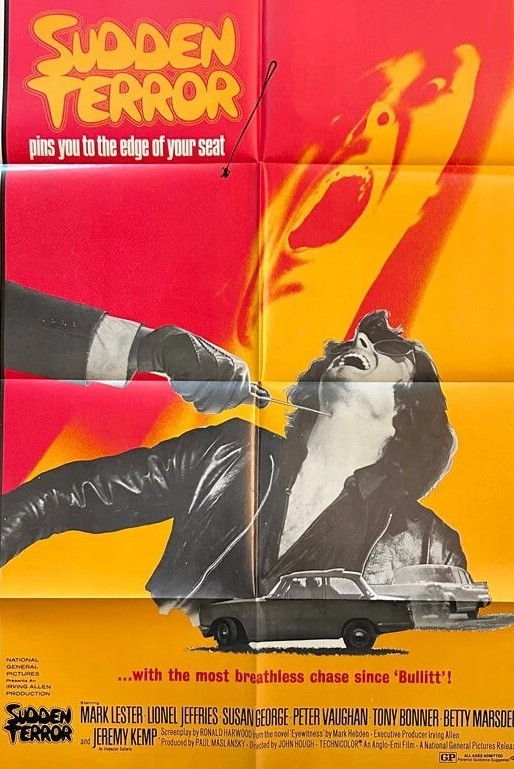
We soon realize why Tom, who’s done nothing much except upset stern housekeeper Madame Robiac (Betty Marsden), has been included in the plot – because he can drive like a maniac.

I wouldn’t say Mark Lester (Run Wild, Run Free, 1969) is out of his depth but the narrative is a bonkers version of the boy who cried wolf and given he’s spending so much of time crying wolf or running away, his character is never anchored.

Susan George certainly shines. She locked horns again with Peter Vaughan in the distinctly more venomous Straw Dogs (1971), a role that could not be more distant from the juvenile lead essayed here. Lionel Jeffries (Chitty Chitty Bang Bang, 1968) has been playing this role forever. I certainly wouldn’t want to cross Peter Vaughan on a dark night nor his sidekick Peter Bowles (Charge of the Light Brigade, 1968).

Director John Hough (Twins of Evil, 1971), in his debut,  is determined to make his mark visually with shots taken at odd angles or through spectacles etc but all that artistic effort is wasted given the adrenalin of the car chase, which must rank somewhere close to Bullitt (1968) and The Italian Job (1969). Written by Oscar-winning Ronald Harwood (A High Wind in Jamaica, 1965) from the book by John Harris.

I kept on thinking how well this would have worked if it hadn’t centered on a small boy. Apologies for being so picky but when you can create such a heart-pumping car chase as this surely it needs something stronger to fill in the gaps.
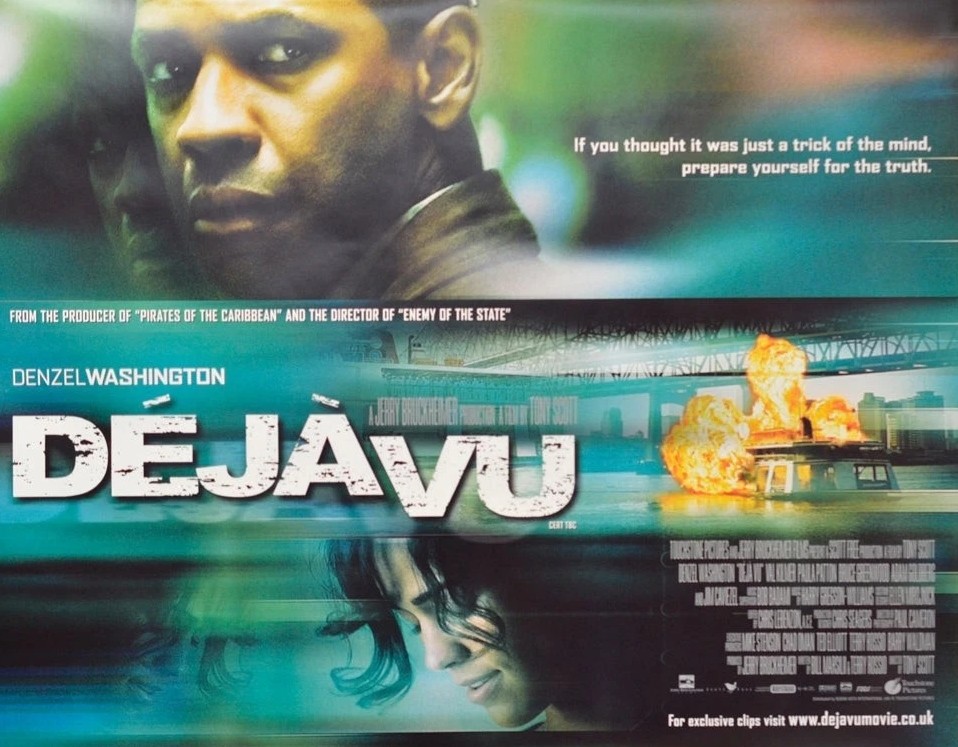
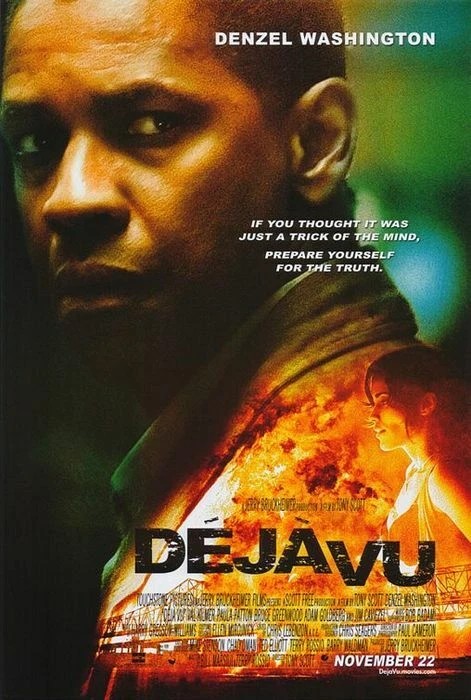
Deja Vu (2006) ****

Trying to get this made today the elevator pitch would be Enemy of the State Meets Interstellar. Of course, this was made nearly a decade prior to the Christopher Nolan space opera but whoever made the pitch was so successful that Twentieth Century Fox shelled out a record $5 million for the screenplay.

Fans of surveillance and, conversely, those who fear that the state is poking its nose too closely into everything, might view this as a window into the contemporary world while conspiracy theorists wouldn’t find it hard to convince themselves that in some Roswell-like breakthrough the authorities actually had created a device that could look into the past.

Admittedly, this is a limited peek, restricted to just over four days ago, but it’s enough to get ATF agent Doug Carlin (Denzel Washington), investigating the death of his work partner, interested.

There’s another link to Interstellar and various other high-concept sci fi pictures in that the science fiction is a little fuzzy around the edges but basically once our hero skips back in time it’s for the same reason as the Nolan, the wormhole idea, and demonstrated in exactly the same simplistic way as in Interstellar. And there’s certainly an uncomfortable moment as licentiousness takes hold as the surveillance cameras catch a woman in an intimate moment – some of the male watchers are engrossed, all the females repulsed.

Anyways, the men in black are chasing down a terrorist who blew up a ferry. Thanks to  Doug’s particular investigative skills, he’s invited to join the surveillance team. Doug has turned up the corpse of Claire (Paula Patton) but deduced that although her body was found near the scene of the crime she was killed beforehand, finger for some reason severed, by the terrorist. And it’s true Doug does have exceptional deduction skills that somehow whoever has put together the surveillance outfit, known as Snow White, has forgotten to recruit anything like an ace detective who can make connections rather than just watch.

A hop, skip and jump puts Claire in the eye of the surveillance team who, theoretically using a mountain of previous surveillance footage spawned from a million satellites, go back in time to link her to the terrorist. But if you hire a top detective you need to be wary of what he finds out about you. And it doesn’t take long for our man to work out that the shady guys can actually go back in time.

And, equally, a plotline beckons. Why not send a man back in time to stop the terrorist? But the men in black don’t appear to have taken that on board and it’s up to Doug, in a maverick move, to use the equipment to go back.

Oddly, that’s not because he wants to save hundreds of ferry boat passengers from being obliterated but because he wants to save Claire. Prior to this, except for Doug gazing fondly at images of Claire in a non-licentious manner, there’s been no emotion to speak of except the usual temper tantrums of people under pressure. But clearly there’s something personal going on between Doug and the woman, though what that may be is never teased out. It makes for some interesting twists when they do meet and seem to click.

Once he’s in the past the movie clicks into top gear and the narrative rattles through twist after stunning twist. And the final one – I’ll leave you to work that one out – works as a meet-cute.

This was the third collaboration out of five between Washington and action guru Tony Scott (The Taking of Pelham 123, 2009) and we know by now what the director brings to the table and his whizz-bang style certainly suits this concoction. But Washington continues to surprise. You think you’ve seen all his grins and chuckles and bursts of laughter, but they’re not always to do with humor, and here the grin is either an indication of resignation or determination, which shows just what an armory of expressions he has.

Paula Patton teamed up with Washington again in 2 Guns (2013) and you’ll find her in last year’s Finding Faith. She’s got the grit for the action stuff and the emotion required to make it all mean something.

A heck of a support cast led by a mature Val Kilmer (Top Gun: Maverick, 2022) and backed up by Jim Cavaziel (The Passion of Christ, 2004). Adam Goldberg (The Exorcism, 2024), Bruce Greenwood (The Fabulous Four, 2024) and Elle Fanning (Predator: Badlands, 2025).

The lucky guys collecting all that for dough for their screenplay were Bill Marsilii (Gunpoint, 2021) and Terry Rossio (Pirates of the Caribbean: Curse of the Black Pearl, 2023).

Cracking ride with an emotional kick.  

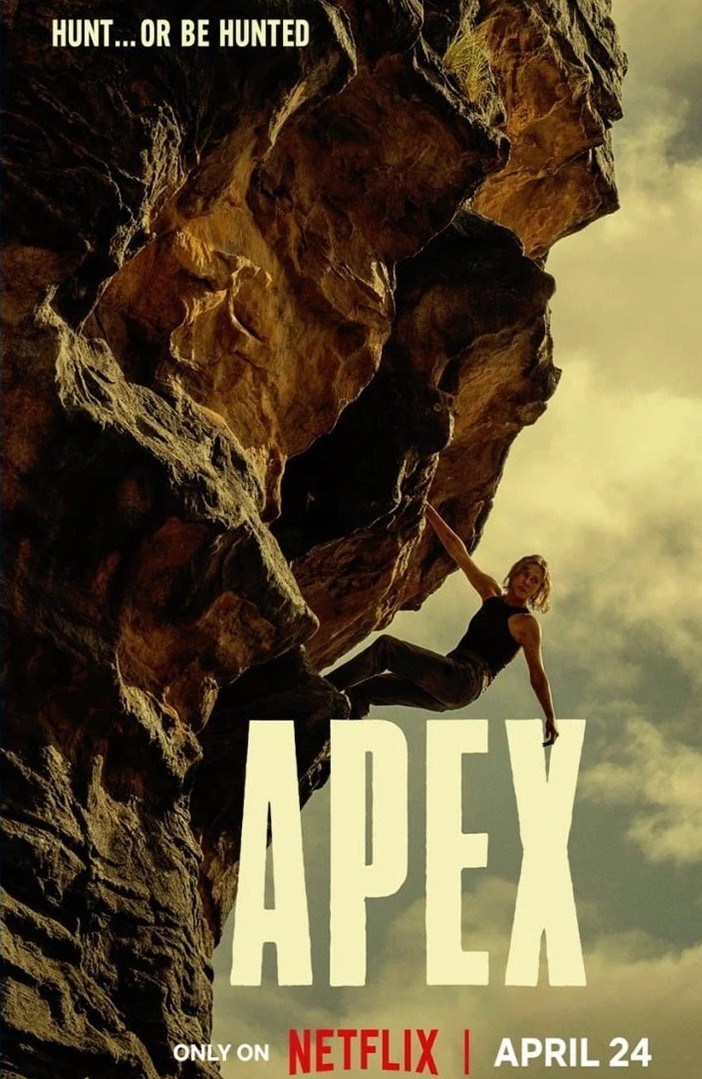
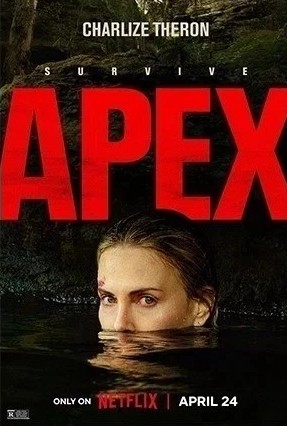
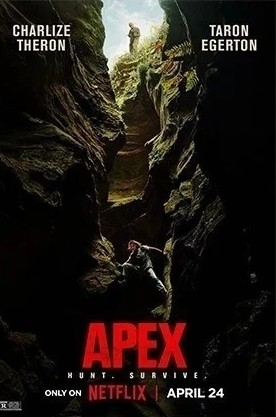
Apex (2026) ** – Seen on Netflix

Deliverance meets The Silence of the Lambs and that wouldn’t be an altogether bad elevator pitch except for constant interruptions from the Australian Tourist Board flogging adventure holidays. Takes forever to get going – and it’s only 95 minutes to begin with – and after a tight ten minutes somewhere around the one-hour work when it works up a bit of speed it then takes such a loopy turn that any narrative buoyancy gained suddenly evaporates.

Alternatively, it might work as Oscar-bait. You know, those kind of movies where the star goes through such physical trauma that the Academy voters seemed obliged to provide peer reward. And someone was given a drone for Xmas and every time you think the sensible approach is a close-up the camera goes flying back into the sky as if trying to set a record for the longest longshot.

What’s the story? Well you might ask. Bereft mountaineer Sasha (Charlize Theron), recovering from the death of boyfriend tommy (Eric Bana) on a Norwegian peak, heads for the Australian outback for a trip down the rapids. For whatever reason, she’s chosen a spot where dozens of people have gone missing – an event that appears to have received no media coverage whatsoever. For a moment you think we’re going to full-tilt-boogie into the Deliverance backwoods when in very mild fashion she beats back the overtures of a couple of rough Aussies. For about 20 minutes it’s nothing but travelog, Sasha racing through rapids, camping, walking.

Then she meets another Aussie, Ben (Taron Egerton), who seems straight out of Jeremiah Johnson, living off the land, finding some kind of liquid in trees, that kind of fella. However, he’s got the Deliverance bug and soon produces an archery device, this time a crossbow, and before long she’s on the run, pursued through even more scenic areas – of the adventure kind, but still distinctly tourist. Any time there’s any chance of tension, in comes Mr Drone to spoil things by pulling the camera back.

Eventually, as you might have guessed, she does get captured and is dragged into a hidden cave where Ben has hung up all his previous victims, tenderizing them before eating them with his perfectly sharpened teeth. There’s some nonsense about ritual that’s meant to add some meaning. Eventually, she escapes. Cue more scenic tourist stuff though you might just be wondering actually how long can people hold their breath underwater.

Eventually, she gets the upper hand. And then the plot goes loopy. She is handcuffed and tied to him by a long piece of rope. But he has a broken leg that in the heat is going to get infected as a bunch of flies starting dipping into the tasty morsels of bloodied flesh. So she does the obvious. She starts tugging on the rope – obviously he’d be hopping about in agony and toppling over every minutes – and drags him into the water and drowns him.

Nope, we’re barely past the hour mark, so a lot of time still to fill. She’s got a better idea. Why don’t we climb out of the canyon? She being the mountaineer would lead the way and she’d promise not to let him go halfway up. Apex predator that he is, he thinks, yes, why don’t I trust my enemy and put my life in her hands, the one I’ve been torturing and trying to kill all this while? But guess what? He’s the sucker. She drops him off the cliff.

This is advertised as running for 95 minutes but actually it’s closer to 88-89 minutes. It could have taken a swerve into proper horror what with all the cadavers strung up and Ben displaying his sharp teeth or if someone had applied a bit if elbow grease it could have turned into a decent thriller. Instead, it’s not much of anything.

Actually, this might have worked better in the cinema where the action sequences would have had more impact. But there’s just no tension.

Charlize Theron (Fast X, 2023) had six stunt doubles so she didn’t get as physical as I thought. Taron Egerton’s (Rocketman, 2019) teeth are presumably fake, too.

Directed by Baltasar Kormakur (Everest, 2015). Written by Jeremy Robbins (The Purge series, 2018-2019).

Netflix’s previous DTS (direct-to-streaming) offering Thrash at least had the compensation of accepting it was pure trash and making the most of it. This looks like someone thought there was something serious going on here.

Honestly, there isn’t.

Behind the Scenes: British Renaissance?

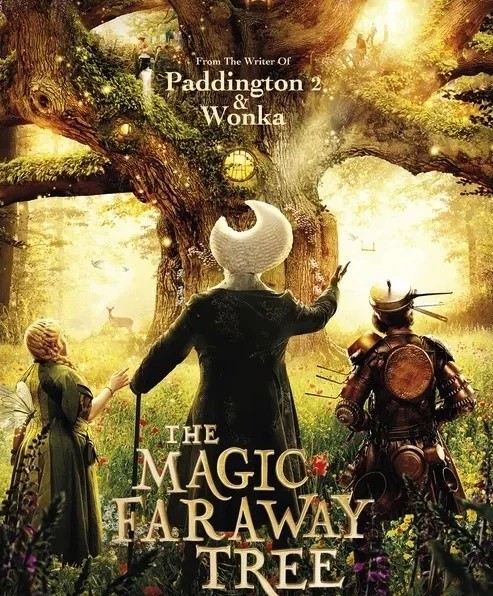
On a whim I looked up the box office of British-made The Magic Faraway Tree, assuming it was the usual sort of British dud we’ve become accustomed to. To my surprise it’s cast a spell to the tune of $23 million worldwide including $10 million in the UK and it’s still to open in most markets. And it got me thinking if perhaps British cinema was on the up and up.

We’ve been here before – too many times. From Colin Welland, Chariots of Fire Oscar unabashedly raised aloft declaring in 1982 that “The British Are Coming,” to every unlikely box office success from Four Weddings and a Funeral (1994) and Bridget Jones’ Diary (2001) to Paddington (2014) being acclaimed as a sign that British cinema is not just on the mend but bouncing back to greater heights.

It’s true that Britain has spawned one of the few contemporary directors to carry genuine box office cachet in Christopher Nolas while Ridley Scott occasionally still strikes commercial gold – Gladiator II (2024) made some dough but it was a long way from The Martian (2015) ballpark. And we can shout about action heroes like Daniel Craig, Jason Statham and Gerard Butler and claim Irishman Liam Neeson as our own. Two out of three Spidermen – Tom Holland and Andrew Garfield – have a British connection.

Throw in Daniel Day-Lewis, Anthony Hopkins, Gary Oldman, Helen Mirren, Olivia Colman and Eddie Redmayne and we’re not short of actors dining at the very top Oscar table.

But getting them all to interact together for the good of British cinema seems an impossible task. By and large the country seems to be in the business of spawning false dawns. The list of flops is immeasurably long.

However, few would argue that in the past year or so British cinema has been enjoying something of a renaissance at the box office.

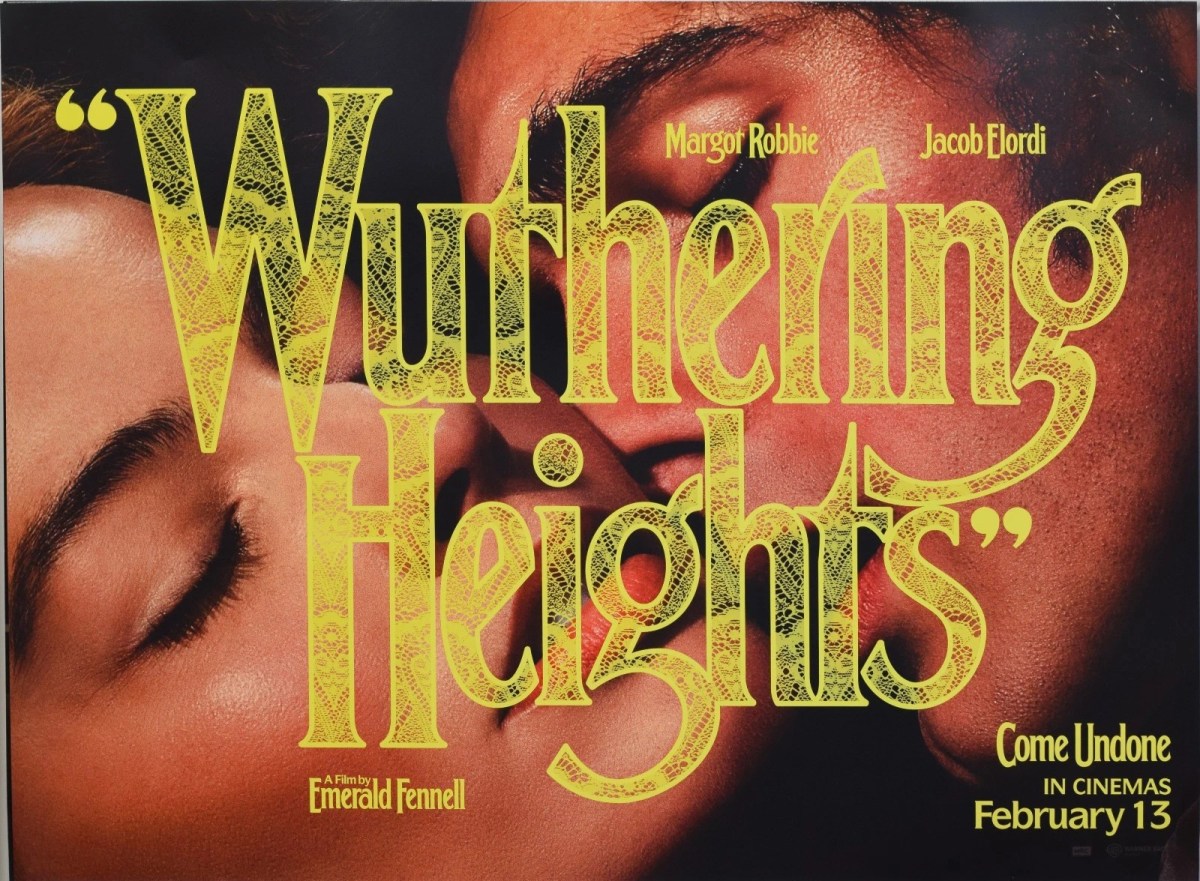
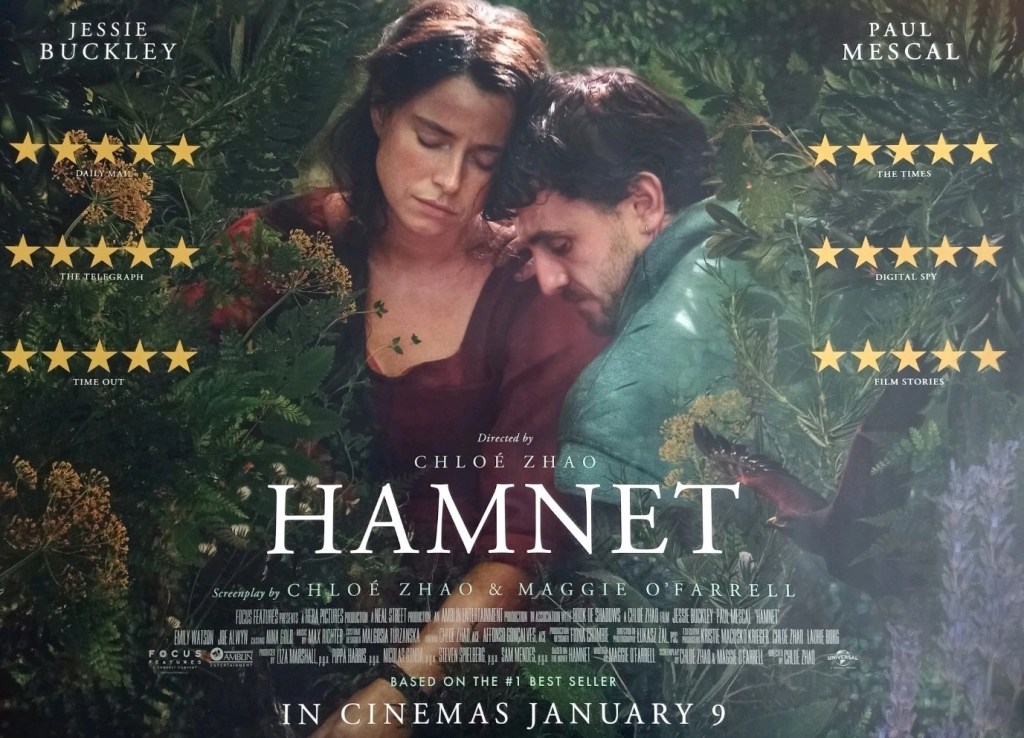
Emerald Fennell’s take on Wuthering Heights with Margot Robbie and Jacob Elordi knocked up $241 million  worldwide (UK contributing $33 million). Bridget Jones: Mad About the Boy, with Renee Zellweger in retread, clocked up $140 million (and that’s without a U.S. release) including $62 million from the UK., Chloe Zhao’s Oscar-nominated Hamnet starring an Oscar-winning Jessie Buckley and Paul Mescal was good for $106 million (UK – $25 million).

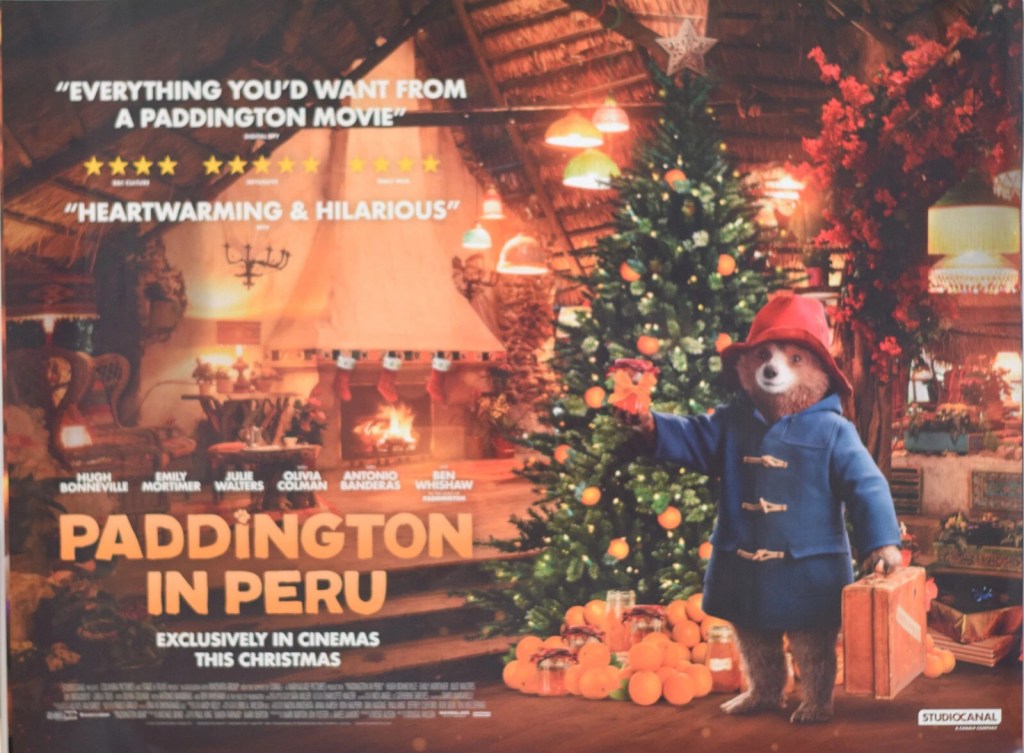
The world best-loved bear in his third iteration, Paddington in Peru, socked away $211 million (UK – $49 million) – a mere $1million behind Oscar-winner One Battle after Another.

Danny Boyle’s horror sequel 28 Years Later raced past $151 million including $21 million from the UK. The promised last hurrah, Downton Abbey: The Grand Finale, snapped up $103 million (UK – $24 million). Riz Ahmed as Hamlet took home $78 million.

That’s over $1 billion right there in global box office receipts.

In addition, blowing in under the radar have been unsung commercial successes like I Swear, already considered an Oscar contender for next year, with $11 million worldwide. Although threequel 28 Years Later: The Bone Temple disappointed it still stole away with $58 million. Except for truth being stranger than fiction The Salt Path wouldn’t have stalled at $21 million.

And let’s not forget Nolan’s next blockbuster The Odyssey with an all-star cast including Tom Holland is steaming home in the summer with Ridley Scott’s latest sci fi epic The Dog Stars due shortly after.

It’s worth noting that both Fennell and Zhao appear to have hit the current zeitgeist of female-friendly pictures. Although you could argue Wuthering Heights comes with an inbuilt IP, no movie version has been a commercial hit in over 80 years since the Laurence Olivier and Merle Oberon in William Wyler’s 1939 version. Commercially, Hamnet is within touching distance of the most recent of that genre, The Drama and Reminders of Him,  while Wuthering Heights has taken in three times as much as either.

No doubt Emerald Fennell can now write her own ticket. If British cinema is on the brink of a renaissance, much depends on what she does next.

The Magic Faraway Tree (2026) *** – Seen at the Cinema

Watching just one movie on my weekly jaunt to the cinema seems such a dereliction of duty that occasionally I’ll throw in a picture which was not at all high – or completely absent – from my must-see list. The presence of either Andrew Garfield (After the Hunt, 2025) or Claire Foy (H is for Hawk, 2025) would not have been enough to draw me in otherwise, especially as this was being sold as a children’s story and I knew from a trailer I’d seen ages ago that they weren’t popping up in the guise of fairies and elves, the usual inhabitants I had imagined of any magical world dreamed up by the likes of Enid Blyton.

I have to confess I was astonished to see Blyton’s name attached to this as I thought she had been cancelled a long time ago for having the temerity to set her stories in middle-class households. Though I had read The Famous Five and The Secret Seven as a child, I hadn’t been aware she had written a series set in the titular tree. Though I imagine her adult characters would not be inventing intelligent fridges nor determining to make a living by selling home-made pasta sauce, nor would social media play any part in the lives of the children. So whenever the original stories were set, they’ve undergone radical surgery.

I’m not sure how the target audience would take to the moralizing aspect i.e. that social media is bad, but that’s only if you assume that the target audience is children rather than the adults paying for the tickets who would most likely chime with those views. That’s notwithstanding the fact that mother-of-three Polly (Claire Foy) has been dabbling with intrusive technology, though she’s principled enough to quit when she realizes just how invasive.

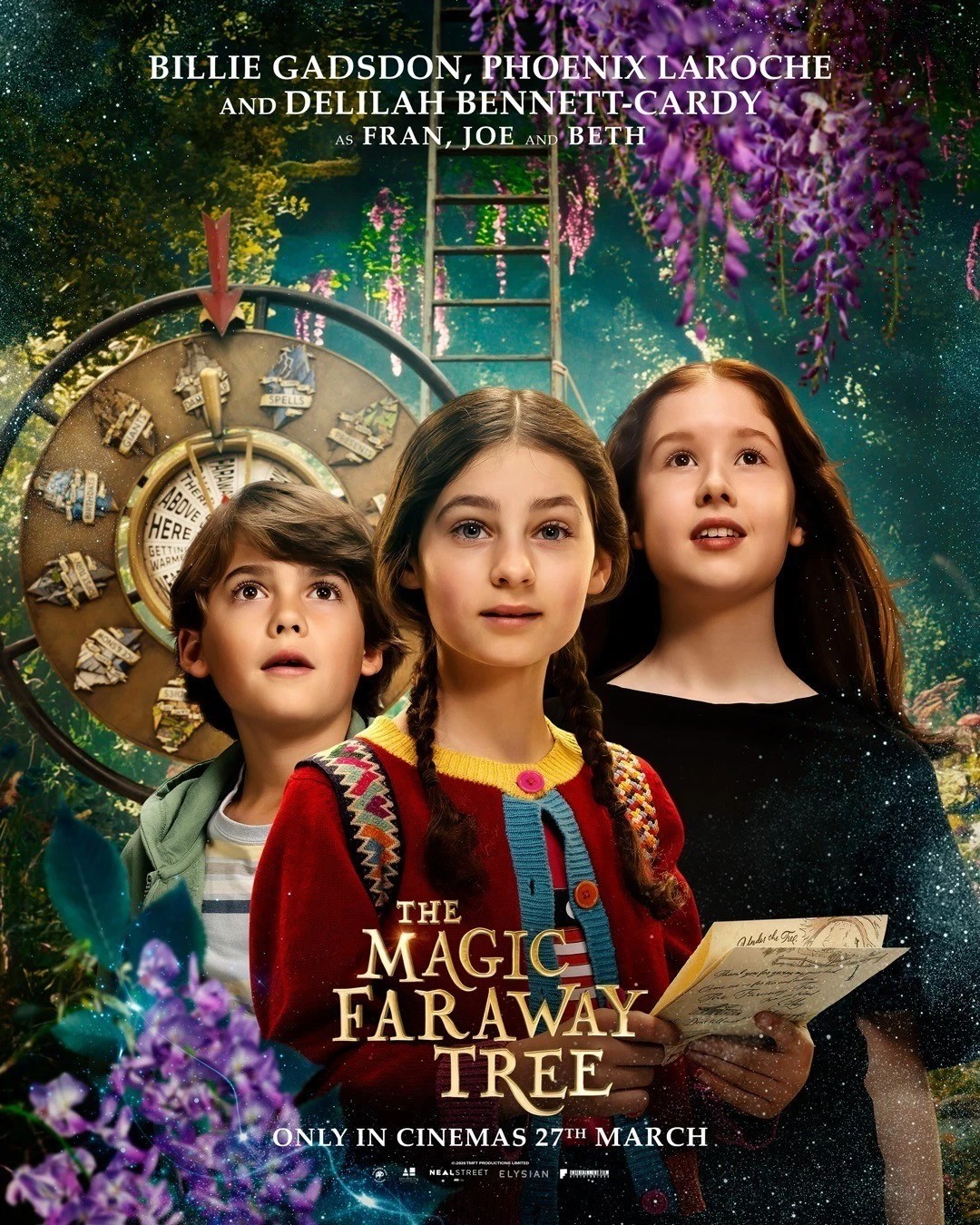
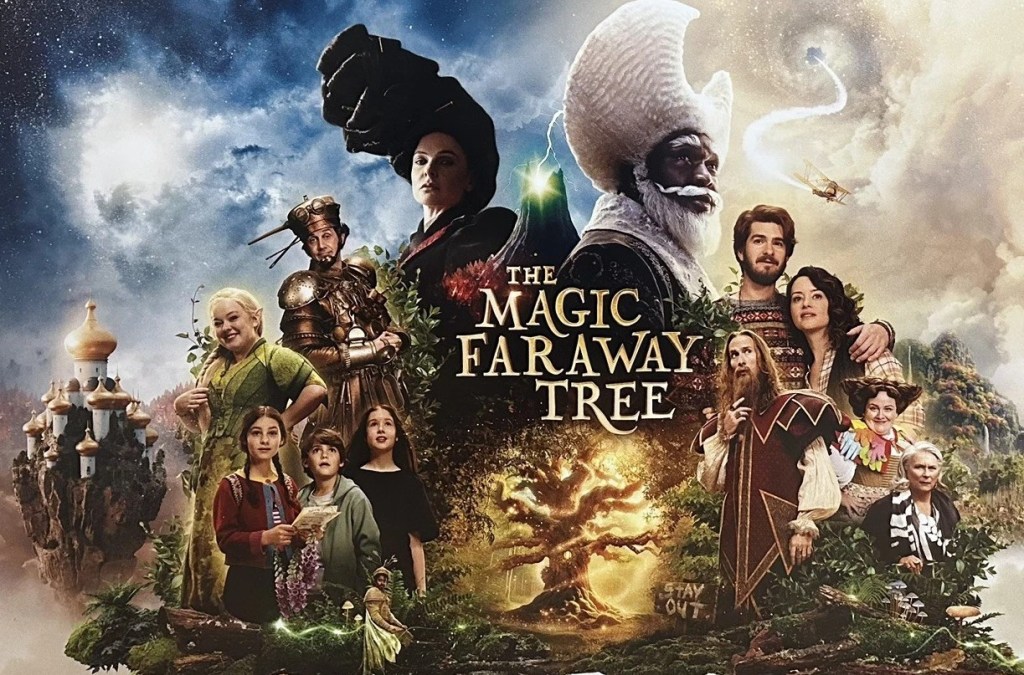
So minus a job and with stay-at-home husband Tim (Andrew Garfield) not contributing to the family coffers they embark on what seems at first a disastrous foray into “The Good Life”, living in a barn with no electricity or central heating and the children in open revolt at the lack of Wi-Fi. Eventually, the titular tree puts in an appearance and all the magic of childhood comes rolling back as the children, led by Fran (Billie Gadsen), discover its unusual properties and investigate a world that’s half-Lord of the Rings and half-Avatar peopled by fairies and odd creatures and villains living in the sky. There’s a nod to Toy Story, the idea that children too quickly abandon the joys of childhood.

It’s not all magic, or to put it another way, the magic sometimes backfires as when the children get to make a wish and discover they can’t undo the wish. But the invention is good fun – Moonface (Nonso Anozie), the Know-It-Alls and schoolteacher-from-Hell Dame Snap (Rebeca Ferguson) complete with ominous snaggle tooth. There’s the innocent-leaning-towards-the-vulnerable Silky (Nicola Coughlin), stroppy eldest child Beth (Delilah Bennett-Cardy), an airplane that stops flying when it gets tired and up in the clouds the kind of performers you’d find on a talent show and the greatest array of candy/sweets you could ever create what with marshmallow trees and sherbet flying saucers that actually fly.

There’s not much to the story, except believing in magic, and the climax is too earthbound to interest kids. Occasionally, the contemporary intrudes – Beth attacking Silky for defining herself by her beauty. But it’s just as well Beth is the lippy one, as it’s her ability to challenge that gets them out of scrapes, although her snarkiness is responsible for the family’s biggest problem.

Given this is gentle stuff, there are surprisingly potent emotional moments, though most revolve around Beth. She discovers that electricity comes in the form of a bicycle ridden by her exhausted father, that her snippiness does wound and that she is capable of destroying dreams.

In fact Delilah Bennett-Cardy is the standout with her expressive face and sharp retorts. Rebecca Ferguson (Dune: Part Two, 2024) wins out among the adults. Andrew Garfield is a goofy dad in the vein of Lionel Jeffries, Claire Foy the practical one.

The roster of television refugees includes Nicola Coughlin from Bridgerton (2020-2026), Jennifer Saunders from Absolutely Fabulous (1992-2012), Mark Heap from Friday Night Dinner (2011-2020) and Jessica Gunning (Baby Reindeer, 2024).

Ben Gregor (Fatherhood, 2018) directs with Simon Farnaby taking the plaudits/brickbats for modernizing Enid Blyton much as he did for tweaking Roald Dahl for Wonka (2023).

Much more enjoyable than I expected. Opening in the U.S. in August, so worth looking out for as counter-programming to the chunk of animation sequels heading your way.

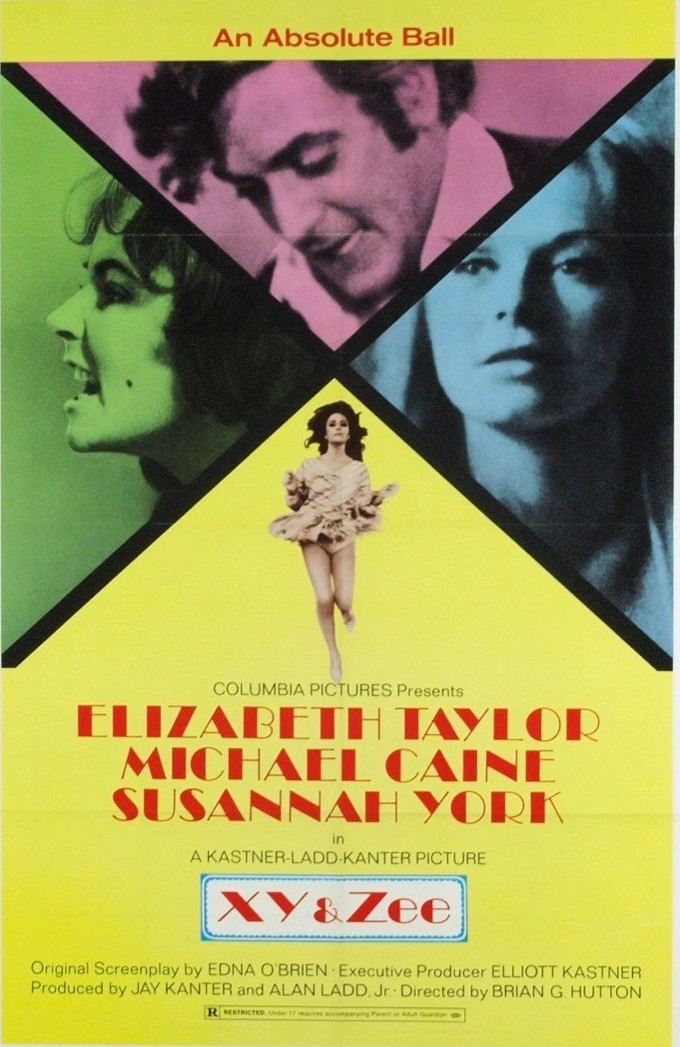
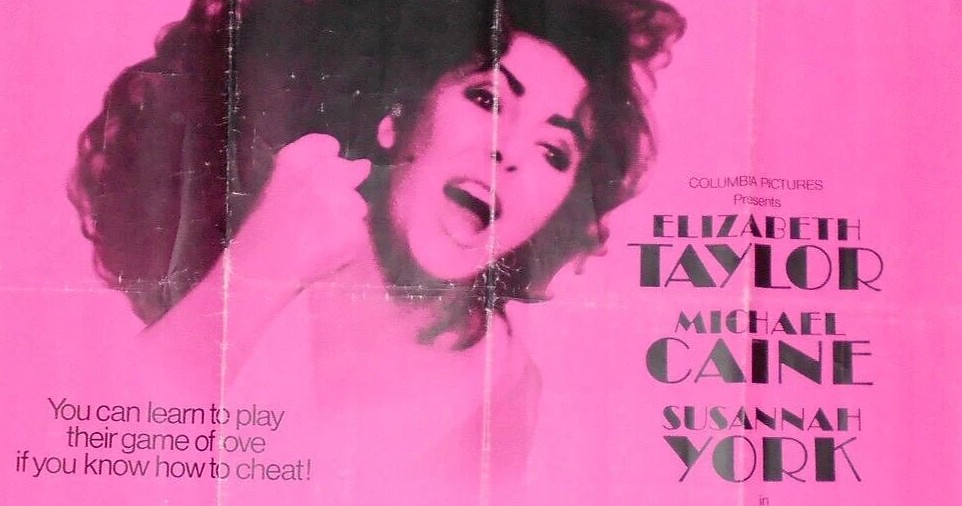
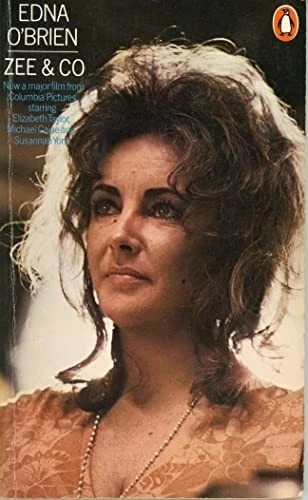
Zee & Co / X Y & Zee (1972) ****

I’ve seen Elizabeth Tayor glide along the floor, I’ve seen her stomp and stamp, I’ve seen her bellow and hiss, but, except at the outset of her career, I’ve never seen her indulge in anything vaguely athletic. So it’s a bold opening here to witness the actress playing table tennis with some venom, virtually dancing from one foot to the other, bouncing in triumph when she wins. Who the heck is this reincarnation?

The movie’s acquired a different dimension since original release, a pathos that emphasizes the actress’s vulnerability. In the 1960s she was considered the most beautiful woman in the world yet she married a man who had a wandering eye. She would accompany him to film sets so she could keep an eye on him and keep other women at a distance. Can you imagine the impact on her psychological make-up to know that she was not enough for handsome charismatic husband Richard Burton?

That’s much the same situation the childless Zee (Elizabeth Taylor) finds herself in, married to handsome wealthy architect Robert (Michael Caine) who acquires other women art the drop of a hat. He’s got three on the go here. When she arouses him, he still enjoys passionate sex with his wife, he has a thing going with his secretary and he home in on widowed mother-of-to Stella (Susannah York). He encourages the idea of an open marriage. Though it’s unclear how much she actually indulges, she’s capable of stimulating his jealousy through her imaginative tales of seduction.

While he’s sleek and slim, she’s showing the signs of wear, plastered in make-up and desperate to fit into dresses at least a size too small.

While this doesn’t enter the no-holds-barred marital hell of Who’s Afraid of Virginia Woolf, it’s mostly ugly. He’s a chauvinist pig, a bully, given to tantrums. While, verbally, she can give as good as him, she’s mostly kept dangling on a string, spending “his money” her only satisfaction, and although they live the good life of fancy house, parties and expensive restaurants, the only reason they are not divorced is it would be an inconvenience.

Clearly, his usual targets are “ladies of leisure” but Stella runs her own design business. Robert has the instincts of all predators, targeting the needy. However, Stella is different, appearing to offer the serenity missing from his life. Where he started looking for just another fling, he finds himself falling in love. It’s not entirely clear whether he intends to split form his wife or is merely setting up Stella in an apartment, but he buys and flat and they decorate it, though there’s no sign of her to boys living there.

Zee is accustomed to sabotaging his wanderings. She knows how to hit him where it hurts. She manages to trace him when he’s off enjoying a dirty weekend and fires him up by telling she’s crashed his beloved Rolls-Royce – whether she has or not is unclear, but it does the trick of spoiling his weekend.

And she’s got her own antenna, seeking out the weakness in the mistress whom she befriends well enough so that Stella confesses her dark secret. These days, that would take on a completely different complexion, and would be dealt with in a more sympathetic dramatic fashion. Stella was expelled for falling in love with a nun at her school, so clearly the victim of grooming. Zee exploits this, seducing the younger woman, ensuring Robert knows the secret, destroying his plans for a more idyllic future.

So on the one hand director Brian G. Hutton, moving away from his action comfort zone of Where Eagles Dare (1968) and Kelly’s Heroes (1970), has fashioned on of those crisp double-edged marital dramas where each partner strives for dominance but on the other has created a highly sympathetic portrait of men and women trying to offset their own frailties.

If you’ve only seen Michael Caine employ that steely-eyed mean street for a succession of tough good guys and villains as exemplified by The Italian Job (1969) and Get Carter (1971) you’re in for a treat. This is Caine’s fury in full force, though that is undercut by charm and vulnerability. But it’s Elizabeth Taylor (Butterfield 8, 1960) who has the more rounded character, seductive, mothering, calculating, equally vulnerable. Susannah York (The Killing of Sister George, 1969) has an equally challenging role, maintaining a calm and carefree exterior while seething underneath with desires she dare not admit.

In other hands, this could easily be handled in an exploitational manner, a love triangle, plenty sex with hints of domination, and lesbianism. But Hutton resists the temptation and it takes some time before we less in Who’s Afraid of Virginia Woolf territory than something like The Housemaid where the downtrodden individual turns out to hold the ace.

Written by Edna O’Brien (Three into Two Won’t Go, 1969) from her own novel, the screenplay is stagey at times, but the force of the screen personalities involved makes that irrelevant.  

I caught it on Talking Pictures TV and it’ll be repeated there soon.

Thoughtful, stylish, scabrous and intriguing.

Behind the Scenes: The Trade Magazines in the 1960s – Part Two – “Box Office”

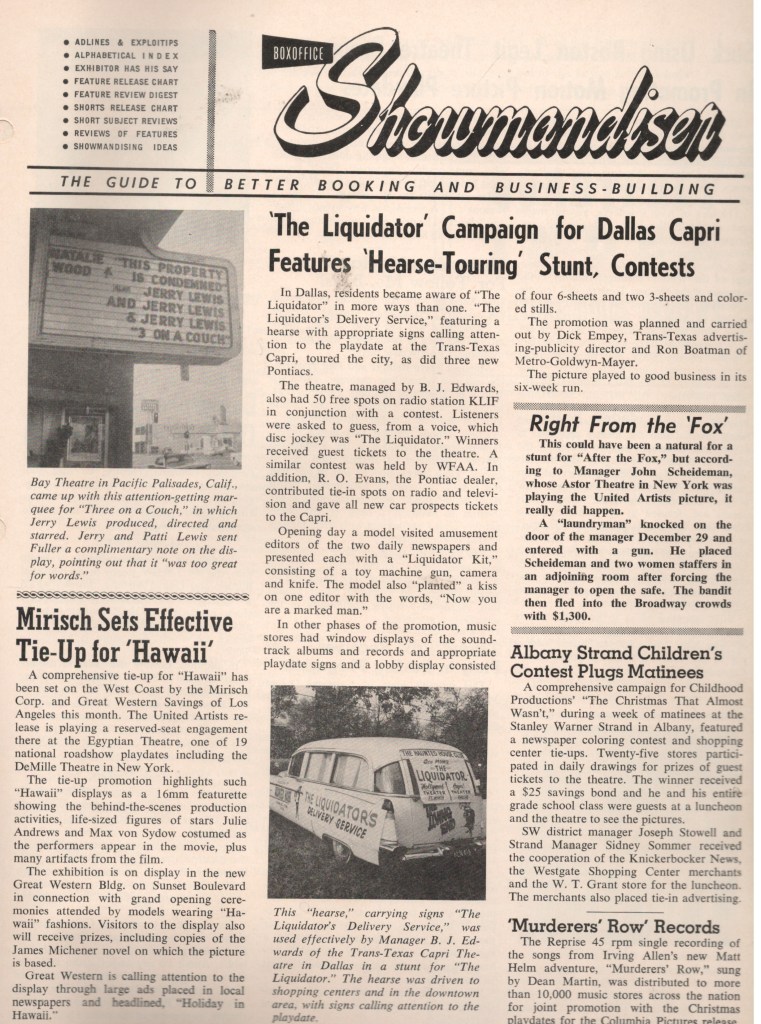
Where the weekly Variety devoted maybe a quarter of its pages in the 1960s to the film industry, the weekly U.S. trade magazine Box Office (it didn’t also run a daily) wrote about nothing but. And not just what we term the “film business” – the making and marketing of films – but also the business of running a cinema with all the detail that entails.

In 1920, aged just 18, Ben Shlyen founded The Reel Journal in Kansas City and changed the title in 1933 to Box Office. Where the front cover of Variety showed you how diverse it was going to be, the front cover of Box Office revealed that it had only one focus. Its covers didn’t feature industry news. Instead it was devoted to significant figures on the exhibition side or to photos of new cinemas or a still from a new film. It operated nine regional offices and one section of the magazine was changed every week to incorporate news from each of those regions.

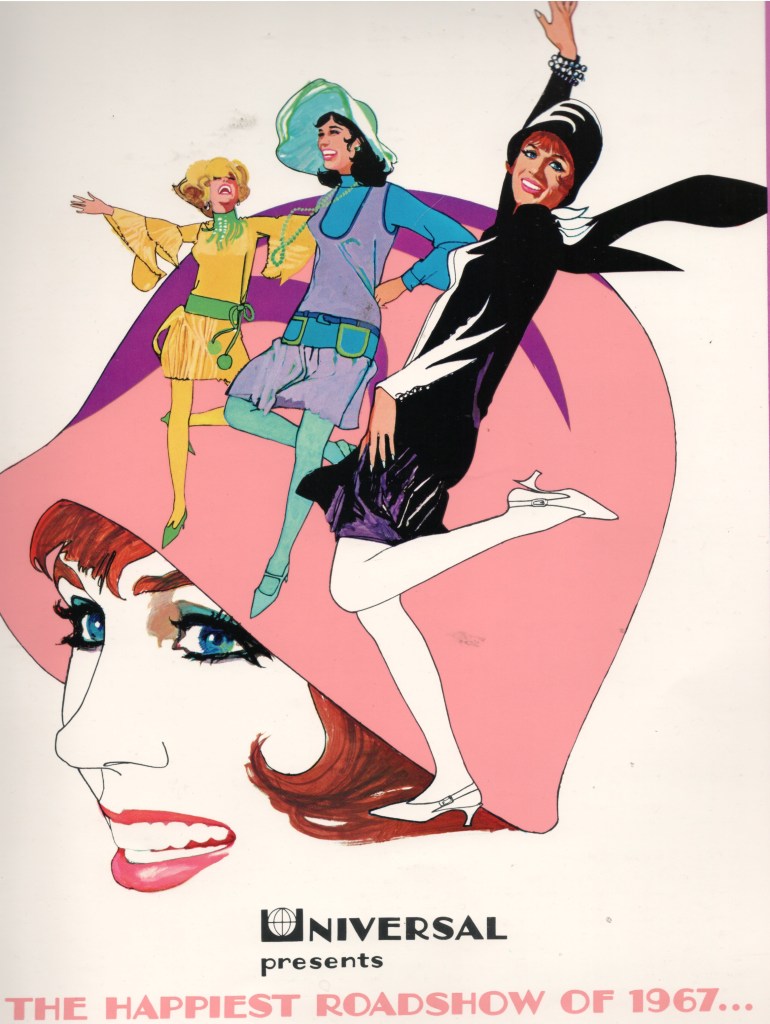
First page of the 4-page bound insert for “Thoroughly Modern Millie.”

Rather than its news pages driving the industry, it was its editorials. It took a stance on anything affecting the business, censorship, product shortages, exhibitor initiatives, studio flaws and new technological developments.

It had two distinct advantages over Variety in that it was printed on glossy paper and could incorporate full-color inserts which were generally printed on even heavier stock and glossier paper. Sometimes the easiest way for a smaller distributor to get their message across to the exhibitor was to stick a complete Pressbook/Campaign Manual in the middle of an issue – the issue of March 3, 1967 contained 16-page full-color Pressbook for The Devil’s 8 complete with double-page ad.

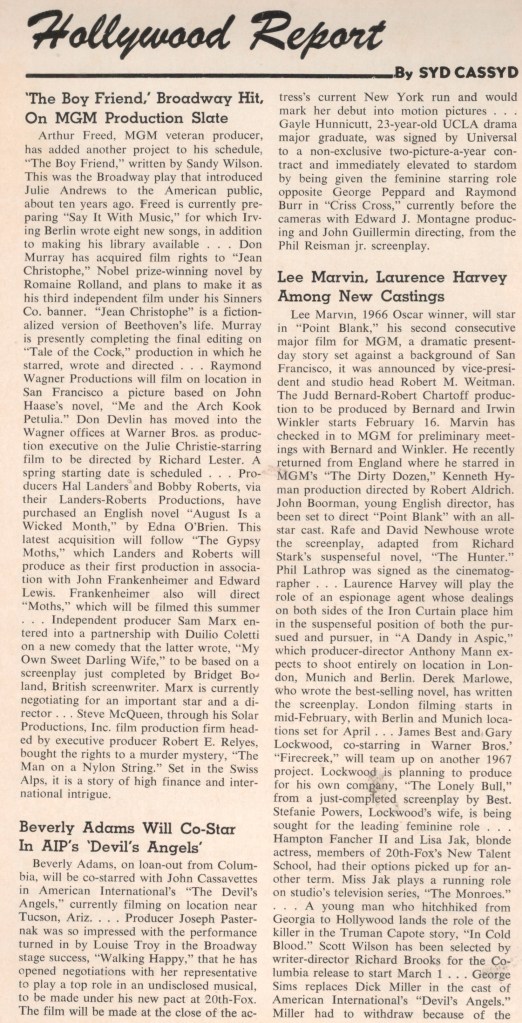
Box Office was divided into several sections. News came, of course, at the start but as much as it contained information on new movies and studio goings-on, it might also report on a new pension plan for cinema managers or sales taxes or investment in new cinemas (a record $120 million went into new construction in 1967). A page called “Hollywood Report” updated readers on new films and casting.

The regional section would comprise as much as eight or twelve pages. The section known as “C” for example had columns devoted to Kansas City and Chicago with other articles reporting on Denver, Omaha, Massachusetts and so on.

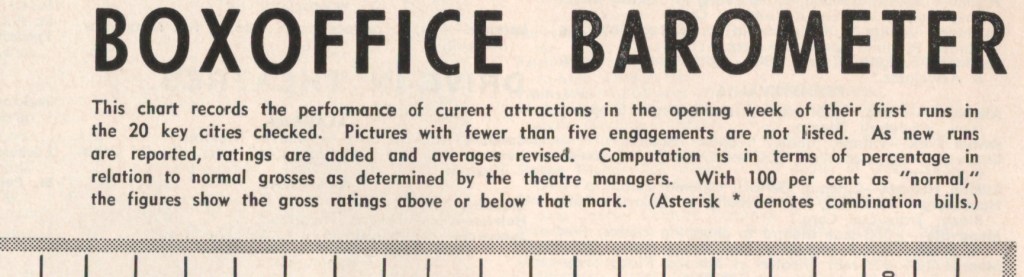
The magazine took a markedly different approach to reporting box office than Variety. Instead of concentrating on gross, the magazine ran a “Boxoffice Barometer” which showed how movies performed in relation to a cinema’s weekly average. This was done in terms of percentages. With the figure of 100 being the norm, After the Fox, for example, was rated as 450 in Cincinnati but only 90 in San Francisco. This helped exhibitors in various towns work out which result most reflected their business.

Another important section was “Showmanship” which celebrated the marketing ideas and stunts dreamed up by exhibitors and studios. These often featured window displays in stores, special marquees or lobbies and tie-ins with media or radio. Its review pages also carried hints on marketing. And there was a weekly chart showing all the films currently available from all studios, major and minor. And once a fortnight exhibitors could let rip over the quality and/or success/failure of films in its “Exhibitor Has His Say” feature.

But it also focused on the nuts and bolts of running a cinema in its “The Modern Theatre” section. This might include articles on new cinemas or major refurbishments; provide tips for projectionists on depth of focus and how to oil projectors; come up with new ideas on concession sales or how to make bigger profits from popcorn; how to plan a drive-in theatre, how new income tax rules could affect your business; and information of the latest pieces of equipment.

Box Office magazine wasn’t as readily available to laymen such as myself. I don’t recall it being available in newsagents in central London. I’m not sure if at that point in its development it was interested in the foreign market. So I was first introduced to the magazine from buying various issues on memorabilia auction sites.

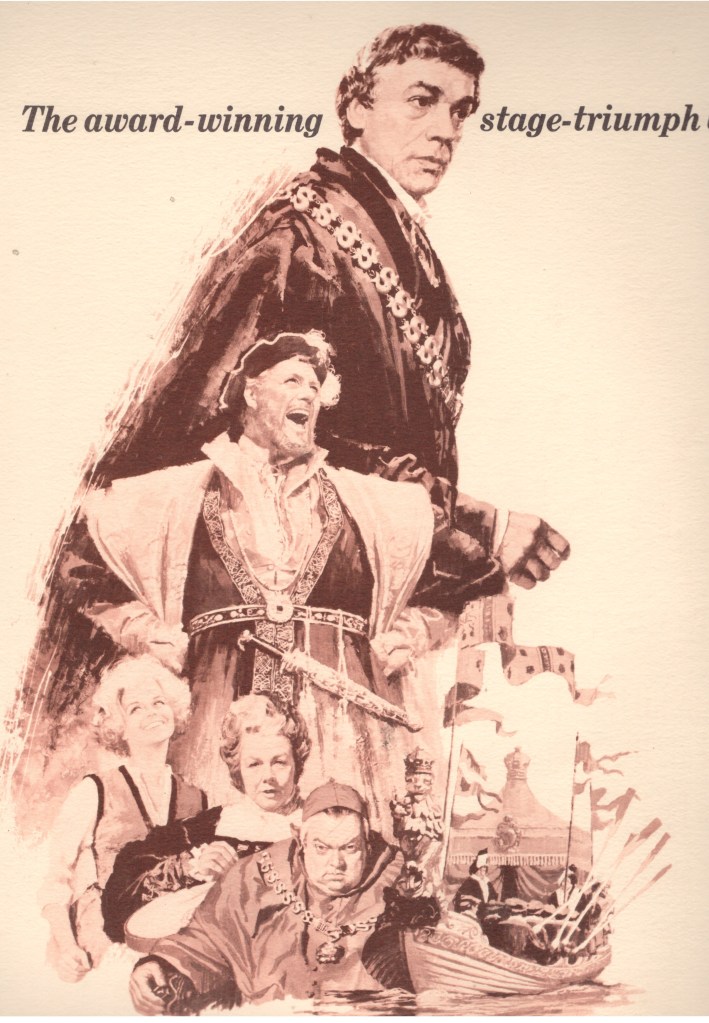
Second page of a 4-page bound insert for “A Man for All Seasons.”

It was the bound inserts that had me hooked. Where posters in the 1960s were printed on paper and Pressbooks were printed on glossier stock, the inserts were phenomenal and unique. You wouldn’t find these appearing in a normal ad campaign in ordinary newspapers. While mostly they were four pages long, I have some in my collection that top 16 pages.

There were two bound inserts in the issue of January 16, 1967. The first for Thoroughly Modern Millie was at least 400 gsm – four times the thickness of ordinary copier paper – full color and glossy as all get out. This was clearly specifically designed for the magazine and promoted the movie’s world premiere on March 22 at the Criterion in New York.

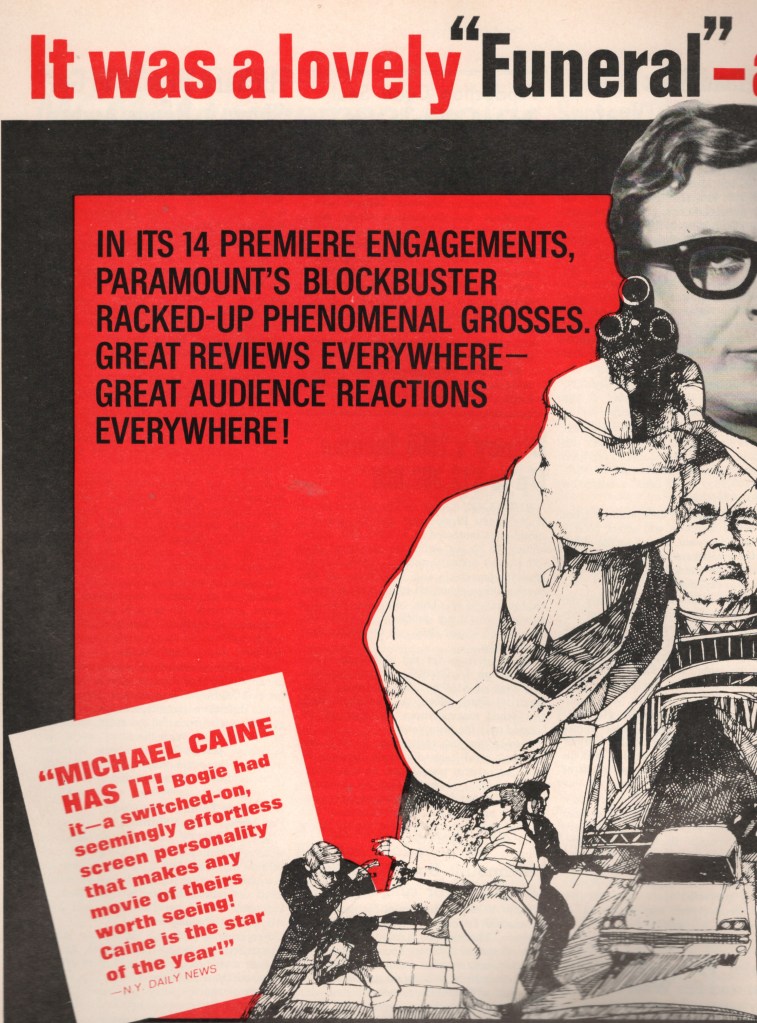
First page of a double-page spread using spot colour.

The other was for A Man for All Seasons, also four pages and also in full color. While the paper stock was as heavy, the design was more stylish, printed on card, the kind you used to get on businesses that wanted to impress you with the quality of their stationery. Pre-dating that year’s Oscars, the advert promoted the film being awarded the New York Film Critics Award and that the film  was playing “exclusive reserved seat engagements” in New York, Los Angeles and Toronto.

Most ordinary adverts were in black-and-white or spot color and often promoted movies you or I have never heard of but were doing good business somewhere. However, as if to demonstrate the overall quality of the product, it also carried a full-color advertisement for Kodak’s Eastman Color System with a photo that involved various shades of color in an intricate format.

Because of the inserts I have more cherished copies of this magazine than I do of Variety.

It is still going today as Box Office Pro.

Behind the Scenes: The Trade Magazines in the 1960s – Part One – “Variety”

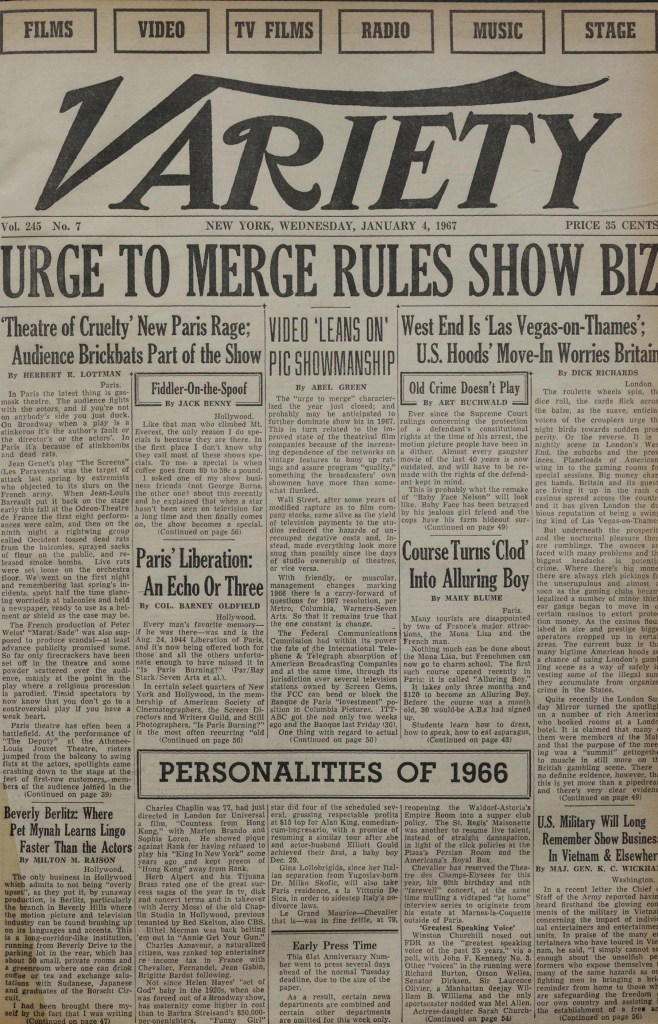
Perhaps the most famous logo in the history of newspapers. Unusually, I had a very slight connection to the magazine. When I was a journalist I worked for Reed Business Publishing which took over Variety in 1987 through its U.S. subsidiary Cahners and much later a colleague of mine Neil Stiles took over as publisher. When I lived in London, I’d make a detour on the way home once a week to pick up a copy of the weekly edition from a newsagent in Charing Cross Road or failing that in Old Compton St. So I’ve been familiar with the magazine for around 40 years. A decade or so back when I was a bit flush I treated myself to an annual subscription to its archive and trawled all the way back to its beginnings in 1905. Anyone who’s read any of my books will see how often I use the magazine for reference.

Obviously, movies weren’t on the editorial agenda when Sime Silverman founded the publication – the iconic logo hasn’t changed much in a century. As the title said, it covered everything within the entertainment industry and when movies grew in importance they acquired their own section with its own front page inside.

The strapline above the logo shows just how wide a market “Variety” tapped into.

From the outset, Variety targeted those actively involved in the business and as the movie section expanded that meant movie executives, financiers, actors and directors. I’ve no idea how Silverman managed to persuade stage theatres to allow him to publish their weekly takes, but when that included cinemas, the idea of box office as news was born.

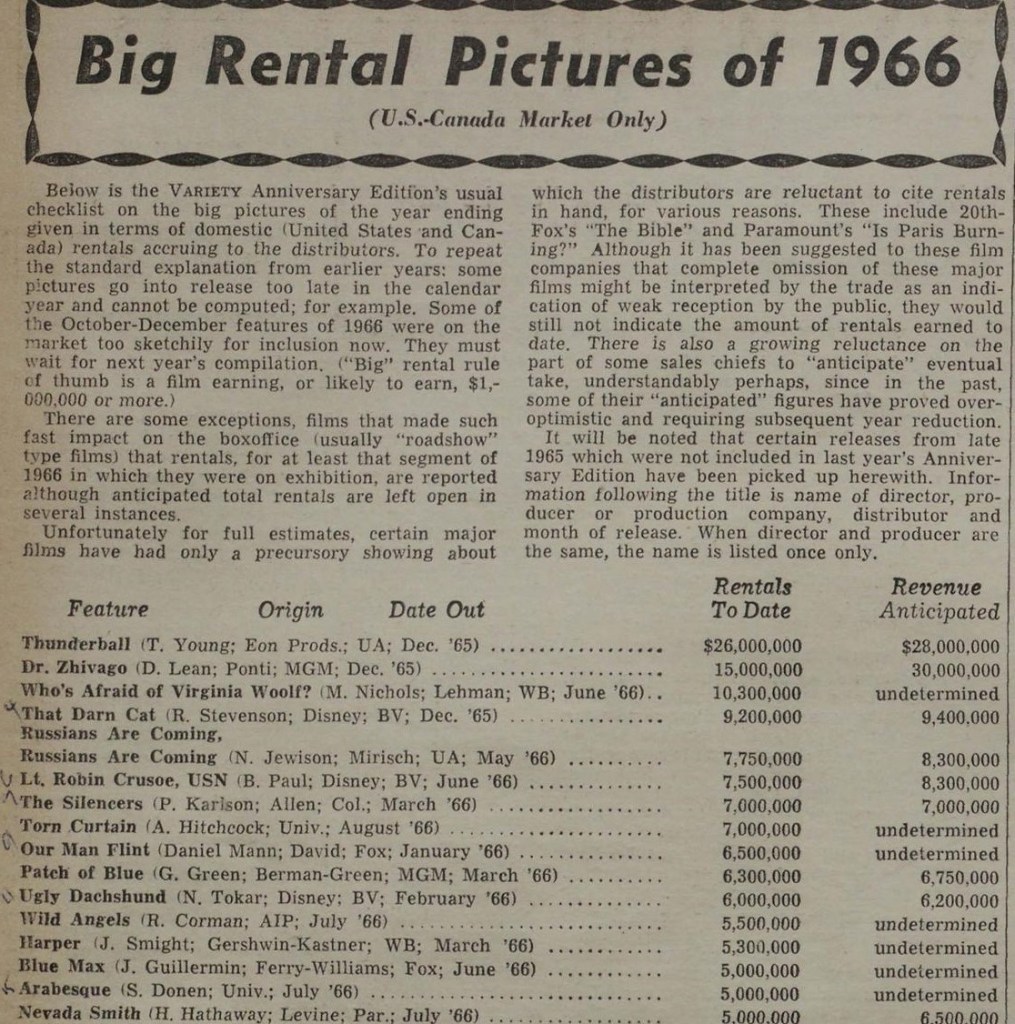
Generations of film scholars were grateful for a magazine that focused on the bottom line of the rentals rather than the glossier grossses which tended to be misleading in terms of profit.

Initially it was a weekly magazine, but then set up a smaller daily magazine headquartered in Hollywood which primarily reported on movie news. The two eventually ran side by the side, the weekly being the one that ended up at my London newsagent.

Variety was exceptionally unusual for a magazine in that it invented its own language known as “slanguage.” For example, “boffo” and “whammo” related to box office (often truncated to B.O.) that was on the big side; when someone was fired or quit a job they “ankled;” while “Cincinnati” was reduced to “Cincy.” “Hix” would “nix” the “pix” meaning people in the countryside didn’t go much for whatever movies had turned up locally. Projects were “greenlit.” A “hardtop” was an indoor movie theater while an “ozoner” referred to a drive-in. If you “inked a deal” it meant you signed up for something.

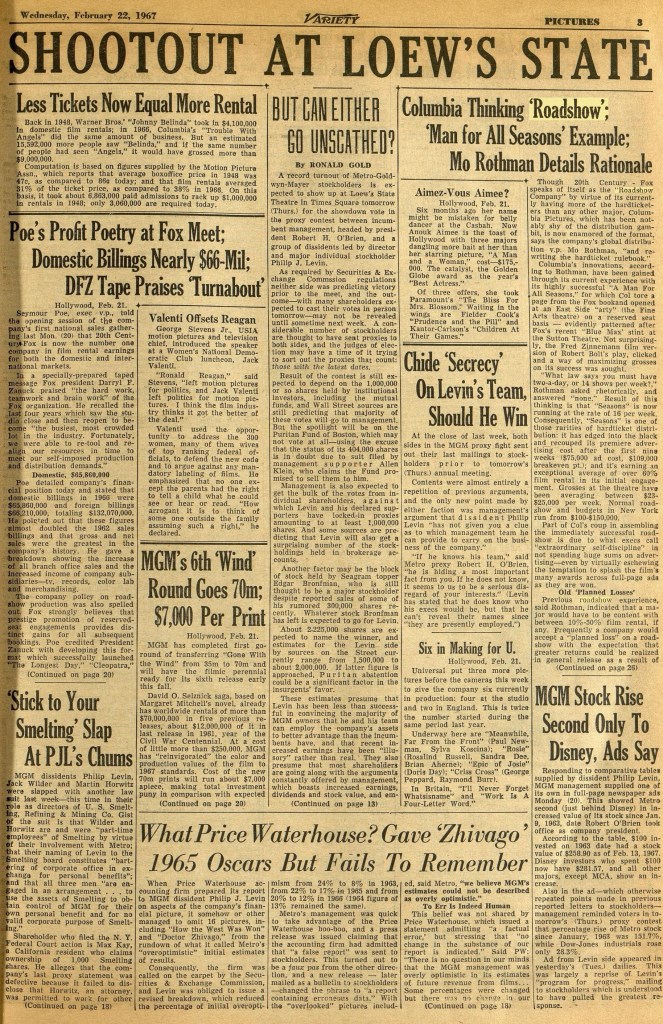
Articles tended to be long and sometimes ran over to another page.

It wasn’t very much bothered with the exhibitor side of the business though it was initially most useful to that sector for not just reviewing every picture released but passing judgement on its box office prospects. This saved cinemas, which might require eight or ten movies in a given week, from having to spend so much time in a screening theatre.

But it was very catholic in its coverage. If you look just above the logo on the front page I’ve reproduced from 1967 you’ll notice it sets out quite a substantial stall of interest – films, video (in those days that meant television not VHS), TV films (as opposed to movies made for the cinema), radio, music and stage. So, virtually, the entire field of entertainment. It also had a healthy section on books.

And it made a point of not favoring one particular element of the business. So on its front page, you’d find stories on each of the sectors it covered. However, by the 1960s, the front section of the magazine was devoted to movies and Variety was delighted to trumpet box office figures in news stories rather than just leaving it to the studios to highlight through adverts. Except that the magazine was exceptionally large in terms of page size, it wasn’t a great advertising vehicle. There was no color available unlike some of its competitors. The printing was more grainy than glossy.

However, it did become the market leader in box office figures. In the 1960s it published the weekly box office returns for hundreds of cinemas in the largest cities in the country, adding its own editorial comments on the performances of various films. (This also allowed cinemas further down the food chain to temper or raise expectations).Its headlines in this section often generated excitement, the oxygen any industry needed. When the blockbuster business began in the 1970s it was Variety that led the way in box office reporting, causing other mainstream media to follow suit.

And it was via Variety that studios started pitching their movies for Oscars, taking out advert after advert proclaiming the glories of a particular movie, triggering the marketing tsunami that occurs now in the run-up to the ceremony.

Weekly box was registered as gross, i.e. what the movie took in at each cinema. But Variety had another trump card to play. Once a year, it contacted the studios to ask them to provide not the cumulative gross for each release but the rental, i.e. the amount of dough returned to the studio after the cinema had taken its cut. That provided a more realistic basis for assessing how movies had actually performed in relation to their budgets.

And reporting in general was not PR-driven. Variety was as likely to lambast the industry or its stars for under-performing as much as for setting box office records. It reported on downturns as much as upturns. It saw in advance when and where trouble was looming. You got the impression that the journalists understood the business rather than writing about it as star-struck hacks.

In future years, when Variety became an intrinsic part of the Cannes Film Festival, its issue devoted to that event could top 300 pages, a good chunk of it filled with adverts from smaller companies promoting films seeking a distributor or punting films that had yet to be made. Often, these ads were nothing more than bait-and-switch, promising pictures with bankable stars that were little more than dreams in the imagination of a minor executive.

But the magazine had one significant flaw. In effect, entirely unintentionally because I said it stated it content plans upfront, it was pulling a fast one. When you picked up your copy, it felt like you were in for a hefty read. The weekly edition could often span 100 pages. But if you were in the film industry less than a quarter of the content would be relevant to you, the rest was devoted to the other areas shown on the masthead.

The magazine is still in business today although with the online element more prominent.

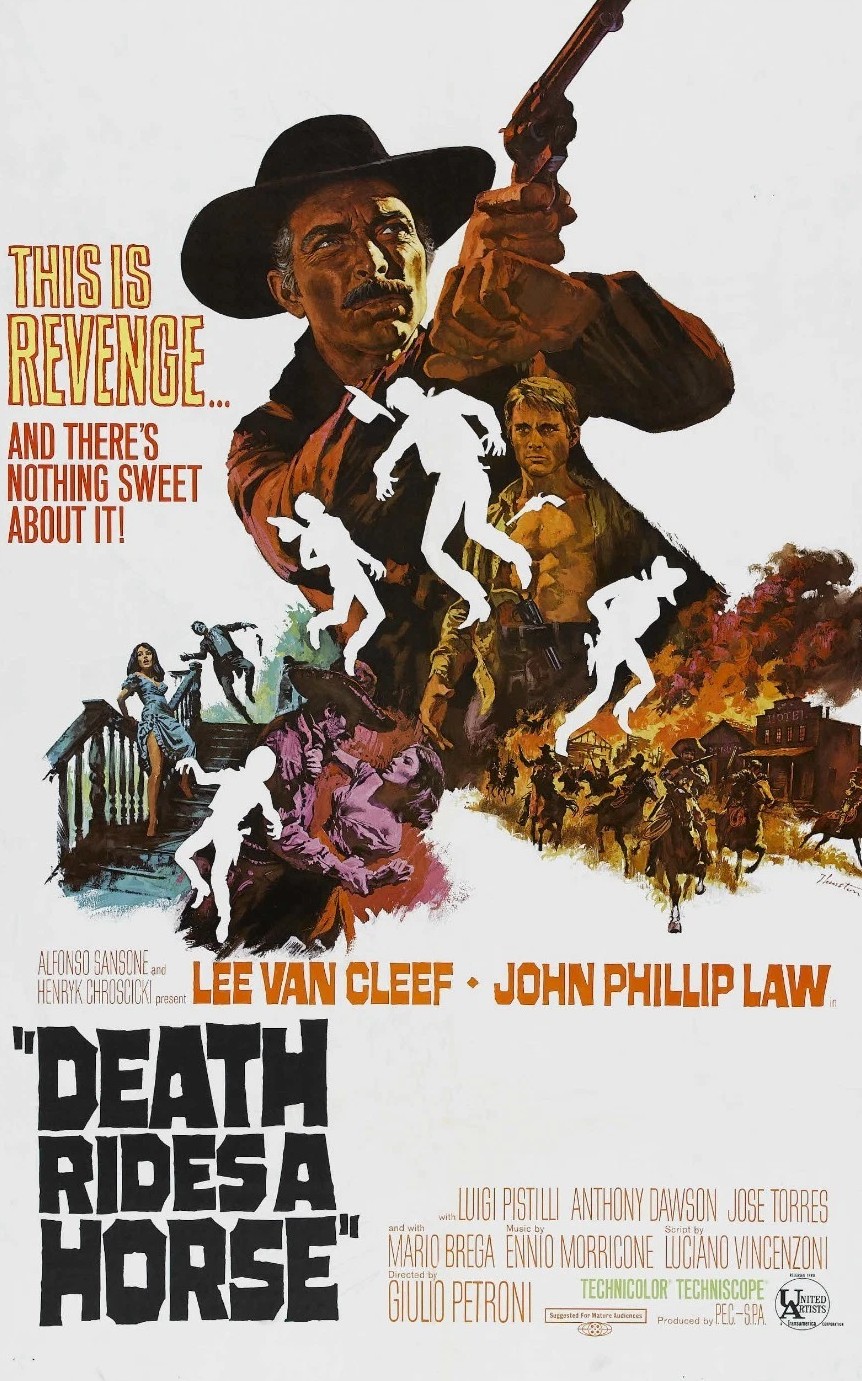
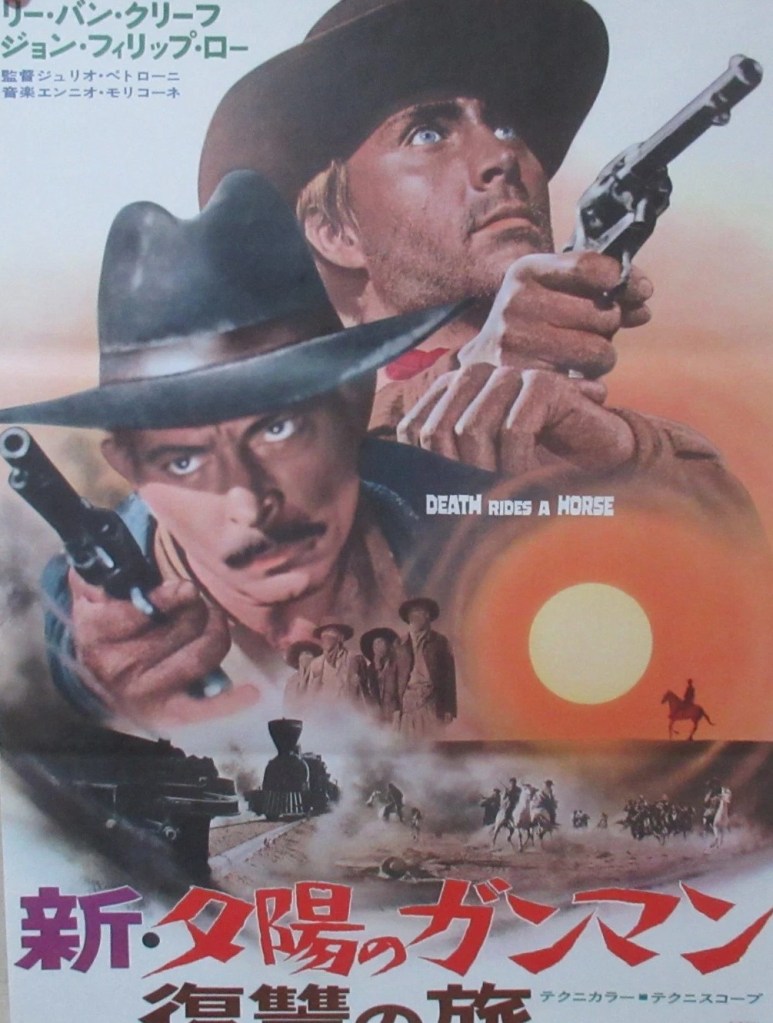
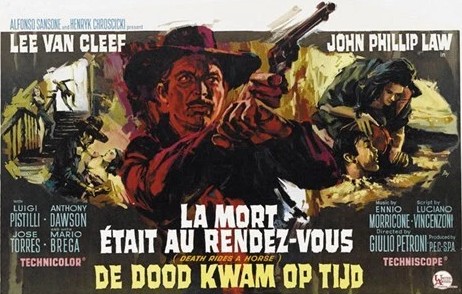
Death Rides A Horse (1967/1969) ****

Although Once Upon a Time in the West (1969) is my all-time favorite western and although the first X-certificate movie I sneaked into as a teenager was The Good, the Bad and the Ugly (1966/1968), I never had much interest in spaghetti westerns. For a start, by the time I started my serious cinemagoing – bear in mind I grew up in towns without picture houses – the spaghetti western sub-genre was long gone.

So I was surprised to find how stylish and intriguing this little number was. People had odd ideas about style: they think it’s about capturing a vista at sunset or the way a director moves the camera or some effect gained from the cinematography. But there are other, as important, aspects. And two, perhaps the smallest of the effective ingredients, are on show here.

The first comes with the opening shot. Some cowboys are braving torrential rain. Now movie rain doesn’t behave the same way as real rain. It’s directed and its force depends on something else beyond nature. It’s too consistent in the way that real rain isn’t. So to convince us that these dudes are enduring a storm, director Giulio Petroni has set up on the very edge of the screen a lamp that moves, twisting one way and the other as the wind shifts direction, flaring up and flickering down depending on the position it holds. That little thing was what it took to convince me this was a storm.

The second thing was the editing. Again, critics intend to focus on some unusual aspect. Fast-cutting, for example, as in The Wild Bunch (1969) or cutting between a match and a sunrise (Lawrence of Arabia, 1962)) or from one pillow to another in separate households (Zee & Co, X Y & Zee, 1972). But actually the biggest benefit of good editing is to keep the story moving and not waste time

So here we cut from our blue-eyed anti-hero Bill (John Philip Law) being told to meet a bad guy in his office. Next thing, Bill is entering a darkened room. Automatically, you think this is a trap, that he’s going into villainous saloon owner Cavanaugh’s (Anthony Dawson) office. Instead, he confronts the other anti-hero, criminal Ryan (Lee Van Cleef), just released from prison after 15 years. And without any dialog to otherwise explain the situation, we understand immediately from previous interaction that Bill has been hired by the bad guy to kill Ryan.

There’s countless examples of this kind of editing where action sets the tone rather than dialog, although in the latter regard some of the lines are filled with edge.

Bill and Ryan really should be working as a team. They both want revenge on the same gang of outlaws, Bill because, as a child, he witnessed the gang murder his family and rape his mother and sister, and Ryan because he was fitted up for the robbery the gang committed. But both want the sole satisfaction of carrying out the revenge.

Ryan is something of a mentor to the greenhorn, a skilled gunslinger without the smarts necessary to hold his own. Ryan constantly shows Bill how much he still has to learn about looking after himself and the teaching comes with sharp consequence, Bill left horseless on two occasions and having to tramp miles into the nearest town.

So they get in each other’s way. Bill kills Cavanaugh without realizing that the only reason the businessman is still alive is that Ryan wants reparation from him of $15,000 – $1,000 for each of the years he spent in prison. And now he saddles Bill with that debt.

Ryan knows exactly who he’s hunting down but Bill has to do it the hard way, following a series of clues, personal elements of the masked guys who slaughtered his family, someone who wears distinctive spurs, another with a tattoo on his chest and so on.

This proves a particularly good twist on the older guy-younger guy narrative device so often used in Hollywood. The rivalry rarely cools, Bill taking simple revenge on Ryan at any opportunity.

Eventually, they do agree to work together after Bill works out that Ryan was one of the gang, except that the older man arrived too late to take part in the massacre but just in time to save Bill from being consumed by a raging fire.

The last twist is saved for the climax.

United Artists waited until Sergio Leone’s “Dollars” trilogy had opened the box office doors in America before pushing this out in 1969 (hence the odd dating). Lee Van Cleeef essays a more considered version of his Man in Black persona from For a few Dollars More (1965/1967). John Philip Law (Barbarella, 1969) would never work out, unlike George Peppard, say, that the intensity of his gaze and the blueness of his eyes distracted from his acting.

Put me in mind to check out some of the other spaghetti westerns directed by Guilio Petroni such as A Sky Full of Stars for a Roof (1968). Written by Luciano Vincenzoni (The Good, the Bad and the Ugly).

Well worth a look.

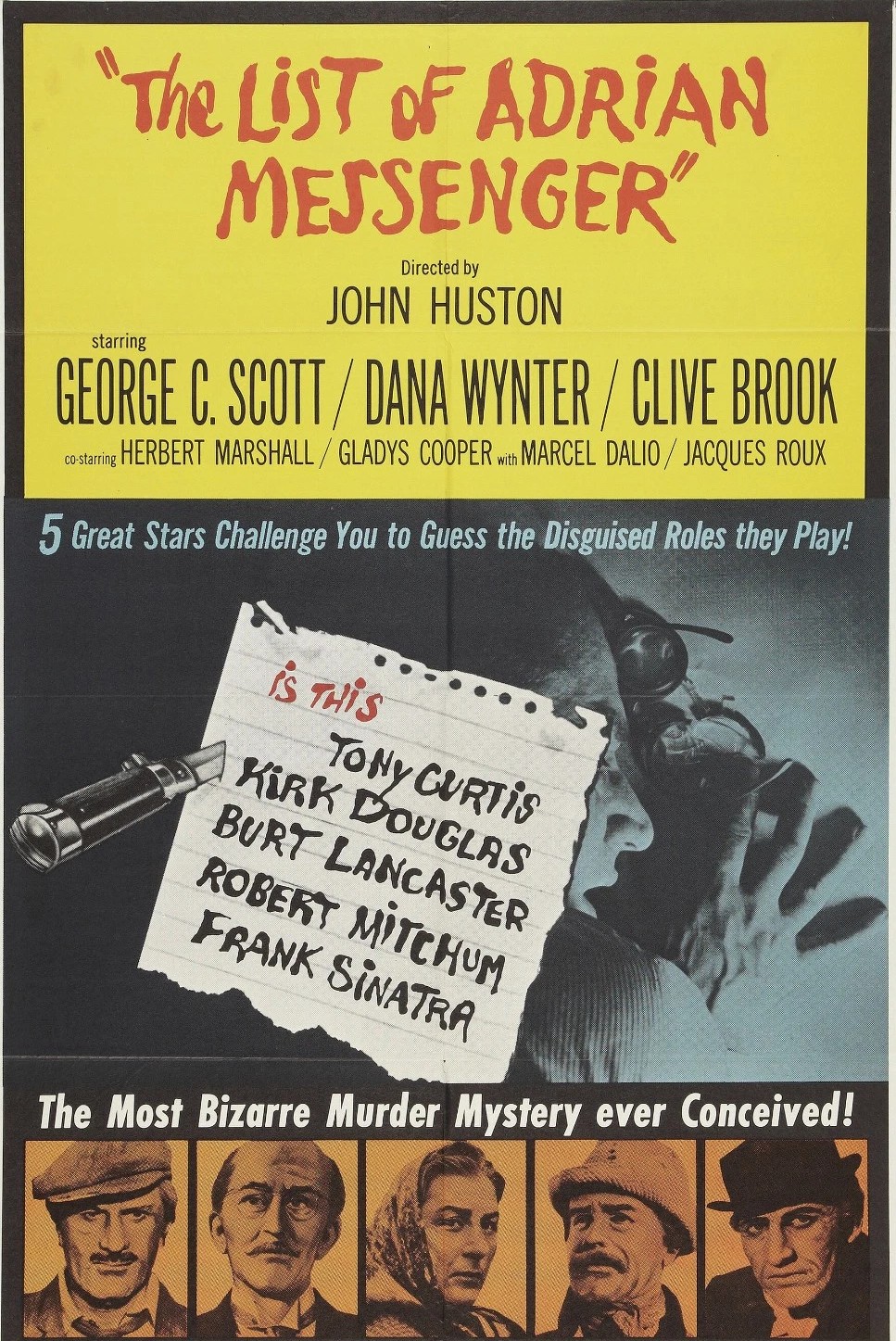
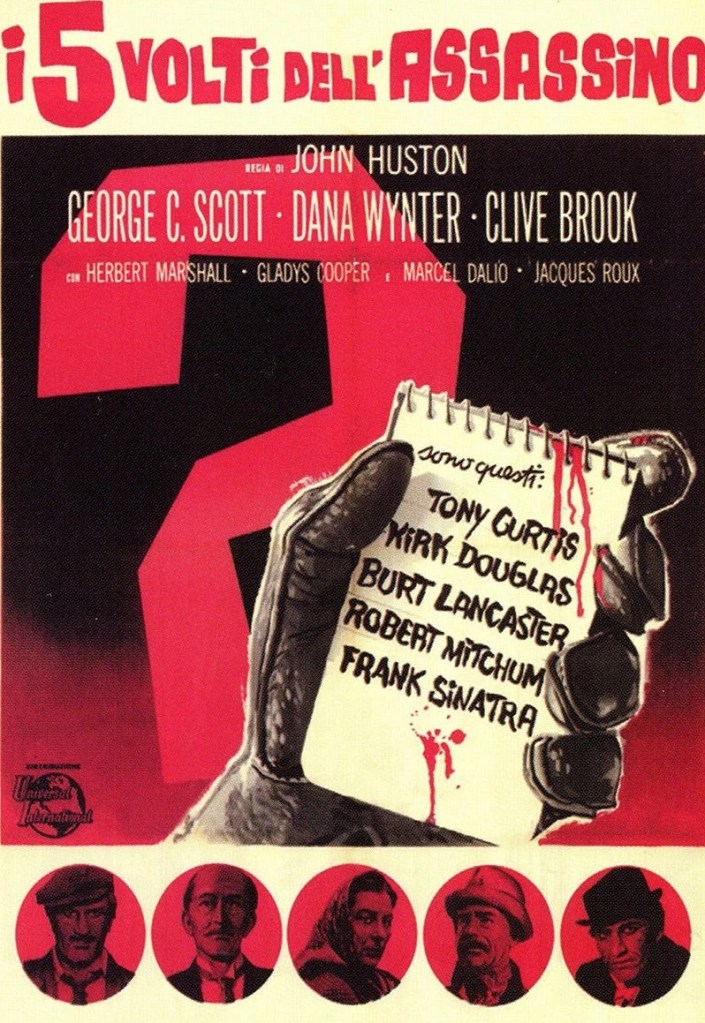
The List of Adrian Messenger (1963) ***

The gimmick of stars in disguise isn’t enough to spark this routine whodunit and the extended sequences of fox-hunting might deter the contemporary viewer but oddly enough something else of considerable interest is going on and enough to keep you hooked.

Given it’s an actor’s screen persona that tempts you to their movies, how are you going to respond when that’s gone AWOL? Actually, you get a more intriguing performance. Covered in slabs of make-up Kirk Douglas makes out like a latter-day Alec Guinness or Peter Sellers, essaying a number of quite different characters. So the jutting chin, the fierce eyes and the aggressive tone are all gone and in its place he shows he can act. His vicar is especially appealing.

But the same holds true of George C. Scott even though he’s not in disguise. Director John Huston, much as he did with his trio of star names in The Misfits (1961), gets Scott to tone down his screen idiosyncrasies. So the growl is tempered, the flaring eyebrows in cold storage for much of the time, and his jutting chin and aggression set to one side as he depicts a different character to his usual.

The Academy usually hands out Oscars to people who over-act or have some affliction to overcome, and they seem to wilfully ignore it when actors show how well they can act outside their comfort zone.

The story is the usual combination of clever deduction, red herrings and set pieces. Former spy Anthony Gethryn (George C. Scott) is hired by the titular character (John Merivale) to find out if a bunch of people on his list are still alive. Messenger himself is soon bumped off in a plane explosion but not before he leaves a garbled clue with sole survivor of the sabotage Raoul Le Borg (Jacques Roux). Gethryn soon discovers everyone on the list is dead. This may have something to do with the Second World War or it may be that the killer wants to cover up something now before potential scandal can ruin a promising future.

Meanwhile, the killer keeps bumping people off. And just to keep Gethryn from getting distracted by possible romance by Lady Bruttenholm (Dana Wynter) Le Borg pounces on her.

By this point the director was pursuing his dreams of becoming landed gentry with a stately home in Ireland and very keen on all the trimmings including fox-hunting which probably accounts for the length of time accorded the sport.

Kirk Douglas, who’s company produced the picture, thought – either to fire up public interest or to help along a fairly straightforward tale – he would ask a few of his movie star buddies to bury themselves in make-up and play bit parts. Whether audiences spent all their time when they should have been concentrating on Gethryn’s detection on carrying out their own sleuthing trying to detect which of the supporting characters might actually be Tony Curtis, Frank Sinatra, Robert Mitchum or Burt Lancaster is anybody’s guess. It does have to be pointed out that some of the make-up is unconvincing, some faces looking as though they’ve come out of a box.

Despite all this, I enjoyed seeing George C. Scott (Patton, 1970) and Kirk Douglas (Cast a Giant Shadow, 1966) playing decidedly against type and showing how easy it is to act if you’re not always having to adopt a screen persona.

John Huston looks as if he’s having a ball. Written by Anthony Veiller (Night of the Iguana, 1964) and Alec Coppel (Vertigo, 1958) from the book by Philip MacDonald.

A watchable curiosity.

Discover WordPress

A daily selection of the best content published on WordPress, collected for you by humans who love to read.

The Atavist Magazine

by Brian Hannan

WordPress.com Blog

News, Tips & Website Tutorials