Perhaps the most famous logo in the history of newspapers. Unusually, I had a very slight connection to the magazine. When I was a journalist I worked for Reed Business Publishing which took over Variety in 1987 through its U.S. subsidiary Cahners and much later a colleague of mine Neil Stiles took over as publisher. When I lived in London, I’d make a detour on the way home once a week to pick up a copy of the weekly edition from a newsagent in Charing Cross Road or failing that in Old Compton St. So I’ve been familiar with the magazine for around 40 years. A decade or so back when I was a bit flush I treated myself to an annual subscription to its archive and trawled all the way back to its beginnings in 1905. Anyone who’s read any of my books will see how often I use the magazine for reference.
Obviously, movies weren’t on the editorial agenda when Sime Silverman founded the publication – the iconic logo hasn’t changed much in a century. As the title said, it covered everything within the entertainment industry and when movies grew in importance they acquired their own section with its own front page inside.
From the outset, Variety targeted those actively involved in the business and as the movie section expanded that meant movie executives, financiers, actors and directors. I’ve no idea how Silverman managed to persuade stage theatres to allow him to publish their weekly takes, but when that included cinemas, the idea of box office as news was born.
Initially it was a weekly magazine, but then set up a smaller daily magazine headquartered in Hollywood which primarily reported on movie news. The two eventually ran side by the side, the weekly being the one that ended up at my London newsagent.
Variety was exceptionally unusual for a magazine in that it invented its own language known as “slanguage.” For example, “boffo” and “whammo” related to box office (often truncated to B.O.) that was on the big side; when someone was fired or quit a job they “ankled;” while “Cincinnati” was reduced to “Cincy.” “Hix” would “nix” the “pix” meaning people in the countryside didn’t go much for whatever movies had turned up locally. Projects were “greenlit.” A “hardtop” was an indoor movie theater while an “ozoner” referred to a drive-in. If you “inked a deal” it meant you signed up for something.
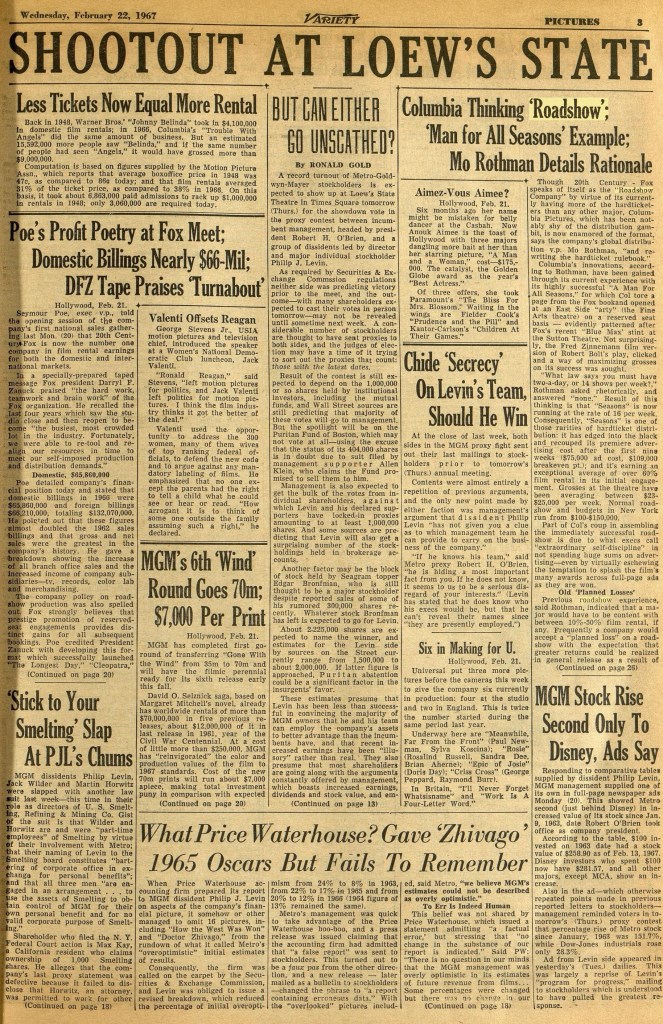
It wasn’t very much bothered with the exhibitor side of the business though it was initially most useful to that sector for not just reviewing every picture released but passing judgement on its box office prospects. This saved cinemas, which might require eight or ten movies in a given week, from having to spend so much time in a screening theatre.
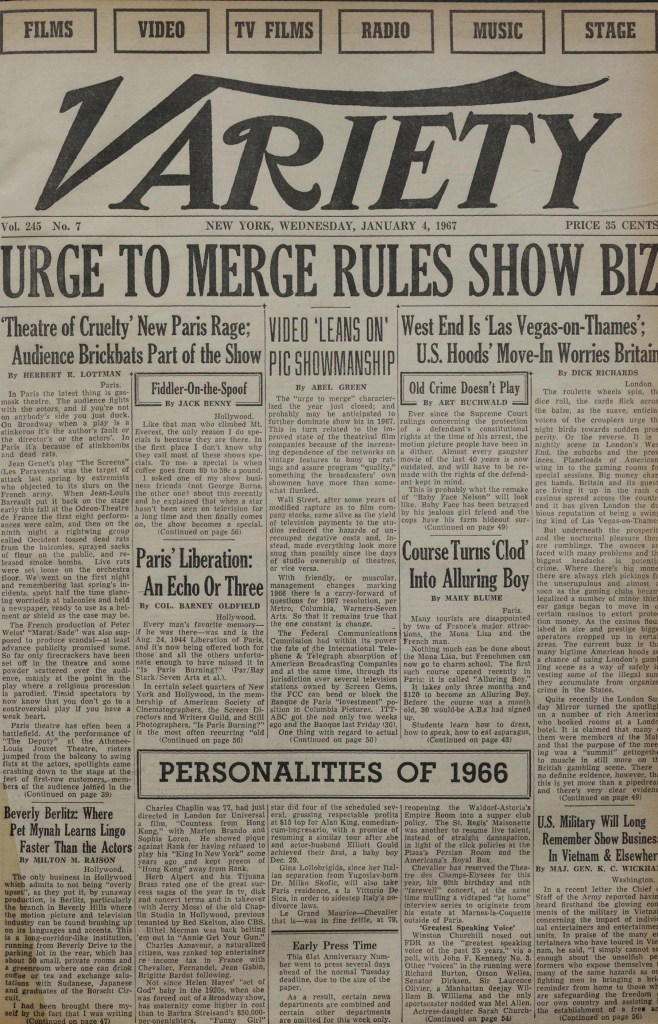
But it was very catholic in its coverage. If you look just above the logo on the front page I’ve reproduced from 1967 you’ll notice it sets out quite a substantial stall of interest – films, video (in those days that meant television not VHS), TV films (as opposed to movies made for the cinema), radio, music and stage. So, virtually, the entire field of entertainment. It also had a healthy section on books.
And it made a point of not favoring one particular element of the business. So on its front page, you’d find stories on each of the sectors it covered. However, by the 1960s, the front section of the magazine was devoted to movies and Variety was delighted to trumpet box office figures in news stories rather than just leaving it to the studios to highlight through adverts. Except that the magazine was exceptionally large in terms of page size, it wasn’t a great advertising vehicle. There was no color available unlike some of its competitors. The printing was more grainy than glossy.
However, it did become the market leader in box office figures. In the 1960s it published the weekly box office returns for hundreds of cinemas in the largest cities in the country, adding its own editorial comments on the performances of various films. (This also allowed cinemas further down the food chain to temper or raise expectations).Its headlines in this section often generated excitement, the oxygen any industry needed. When the blockbuster business began in the 1970s it was Variety that led the way in box office reporting, causing other mainstream media to follow suit.
And it was via Variety that studios started pitching their movies for Oscars, taking out advert after advert proclaiming the glories of a particular movie, triggering the marketing tsunami that occurs now in the run-up to the ceremony.
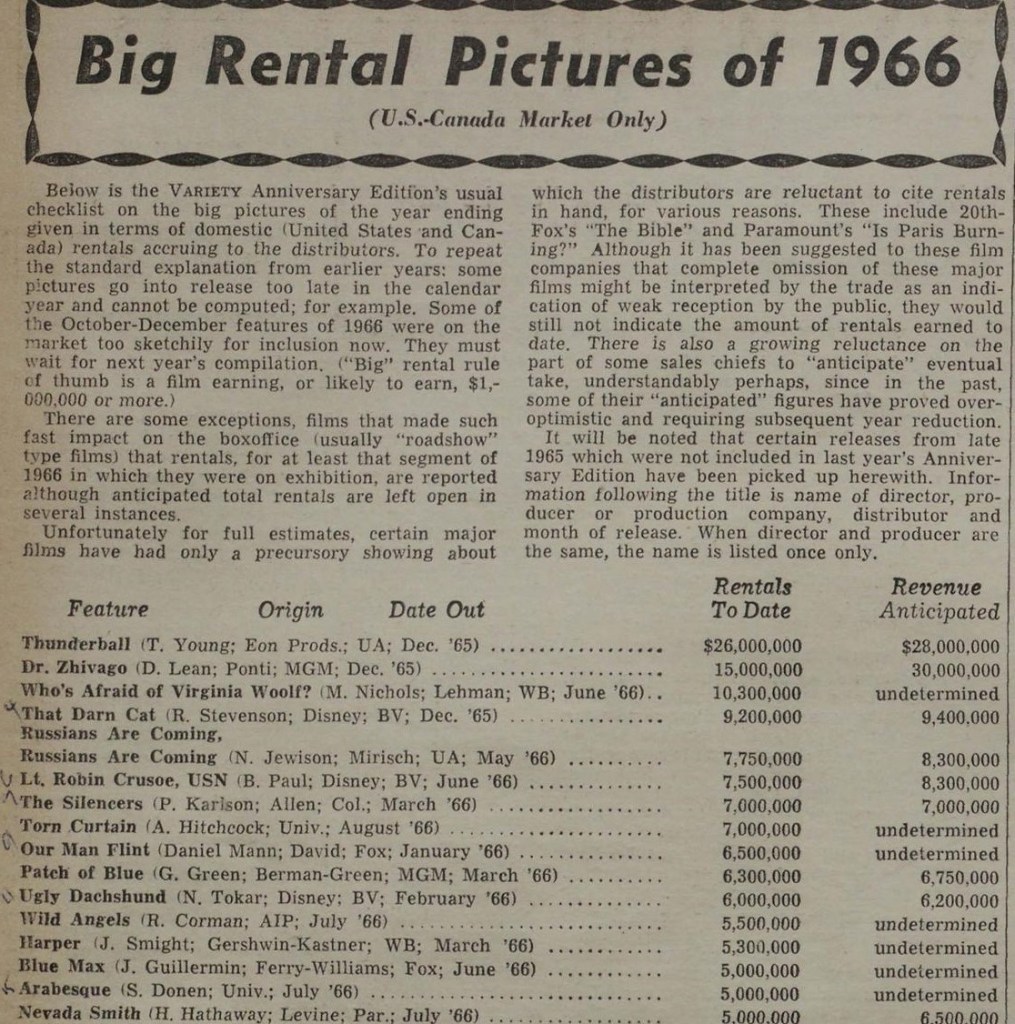
Weekly box was registered as gross, i.e. what the movie took in at each cinema. But Variety had another trump card to play. Once a year, it contacted the studios to ask them to provide not the cumulative gross for each release but the rental, i.e. the amount of dough returned to the studio after the cinema had taken its cut. That provided a more realistic basis for assessing how movies had actually performed in relation to their budgets.
And reporting in general was not PR-driven. Variety was as likely to lambast the industry or its stars for under-performing as much as for setting box office records. It reported on downturns as much as upturns. It saw in advance when and where trouble was looming. You got the impression that the journalists understood the business rather than writing about it as star-struck hacks.
In future years, when Variety became an intrinsic part of the Cannes Film Festival, its issue devoted to that event could top 300 pages, a good chunk of it filled with adverts from smaller companies promoting films seeking a distributor or punting films that had yet to be made. Often, these ads were nothing more than bait-and-switch, promising pictures with bankable stars that were little more than dreams in the imagination of a minor executive.
But the magazine had one significant flaw. In effect, entirely unintentionally because I said it stated it content plans upfront, it was pulling a fast one. When you picked up your copy, it felt like you were in for a hefty read. The weekly edition could often span 100 pages. But if you were in the film industry less than a quarter of the content would be relevant to you, the rest was devoted to the other areas shown on the masthead.
The magazine is still in business today although with the online element more prominent.

