Where the weekly Variety devoted maybe a quarter of its pages in the 1960s to the film industry, the weekly U.S. trade magazine Box Office (it didn’t also run a daily) wrote about nothing but. And not just what we term the “film business” – the making and marketing of films – but also the business of running a cinema with all the detail that entails.
In 1920, aged just 18, Ben Shlyen founded The Reel Journal in Kansas City and changed the title in 1933 to Box Office. Where the front cover of Variety showed you how diverse it was going to be, the front cover of Box Office revealed that it had only one focus. Its covers didn’t feature industry news. Instead it was devoted to significant figures on the exhibition side or to photos of new cinemas or a still from a new film. It operated nine regional offices and one section of the magazine was changed every week to incorporate news from each of those regions.
Rather than its news pages driving the industry, it was its editorials. It took a stance on anything affecting the business, censorship, product shortages, exhibitor initiatives, studio flaws and new technological developments.
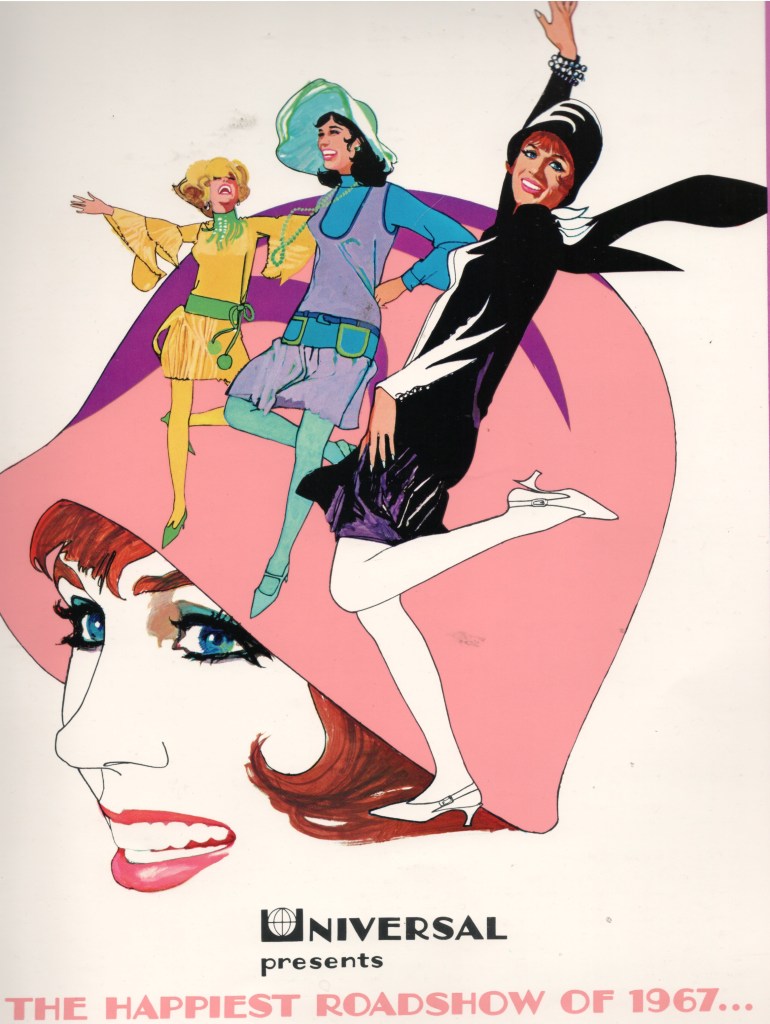
It had two distinct advantages over Variety in that it was printed on glossy paper and could incorporate full-color inserts which were generally printed on even heavier stock and glossier paper. Sometimes the easiest way for a smaller distributor to get their message across to the exhibitor was to stick a complete Pressbook/Campaign Manual in the middle of an issue – the issue of March 3, 1967 contained 16-page full-color Pressbook for The Devil’s 8 complete with double-page ad.
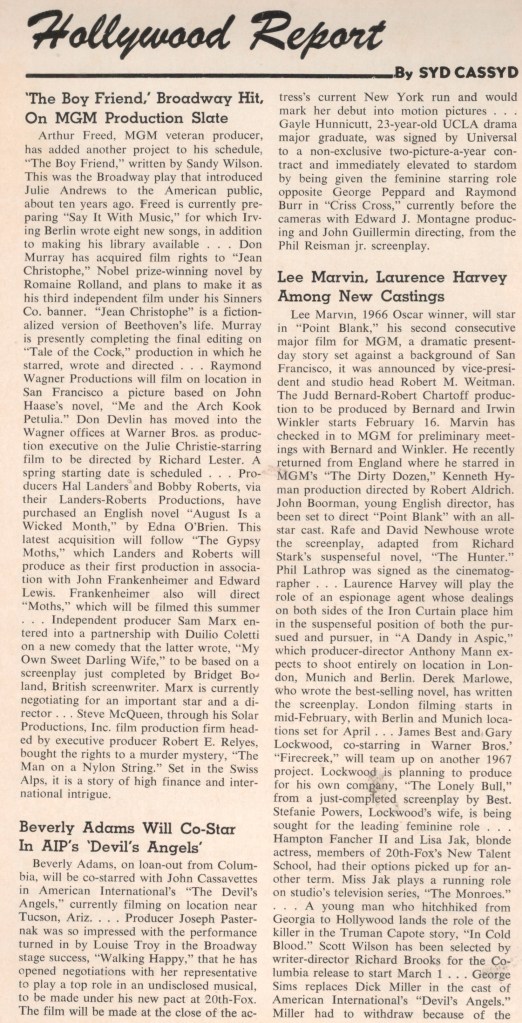
Box Office was divided into several sections. News came, of course, at the start but as much as it contained information on new movies and studio goings-on, it might also report on a new pension plan for cinema managers or sales taxes or investment in new cinemas (a record $120 million went into new construction in 1967). A page called “Hollywood Report” updated readers on new films and casting.
The regional section would comprise as much as eight or twelve pages. The section known as “C” for example had columns devoted to Kansas City and Chicago with other articles reporting on Denver, Omaha, Massachusetts and so on.
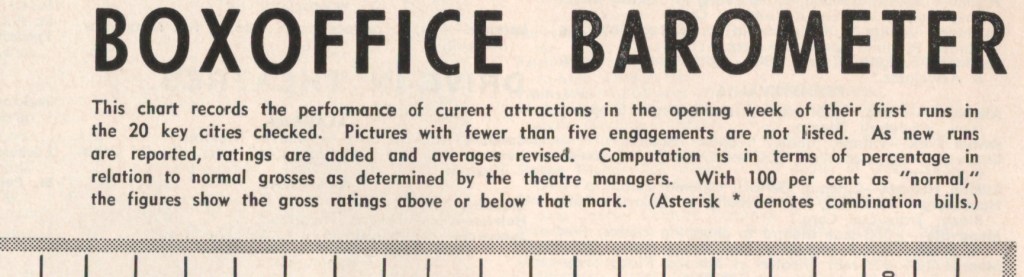
The magazine took a markedly different approach to reporting box office than Variety. Instead of concentrating on gross, the magazine ran a “Boxoffice Barometer” which showed how movies performed in relation to a cinema’s weekly average. This was done in terms of percentages. With the figure of 100 being the norm, After the Fox, for example, was rated as 450 in Cincinnati but only 90 in San Francisco. This helped exhibitors in various towns work out which result most reflected their business.
Another important section was “Showmanship” which celebrated the marketing ideas and stunts dreamed up by exhibitors and studios. These often featured window displays in stores, special marquees or lobbies and tie-ins with media or radio. Its review pages also carried hints on marketing. And there was a weekly chart showing all the films currently available from all studios, major and minor. And once a fortnight exhibitors could let rip over the quality and/or success/failure of films in its “Exhibitor Has His Say” feature.
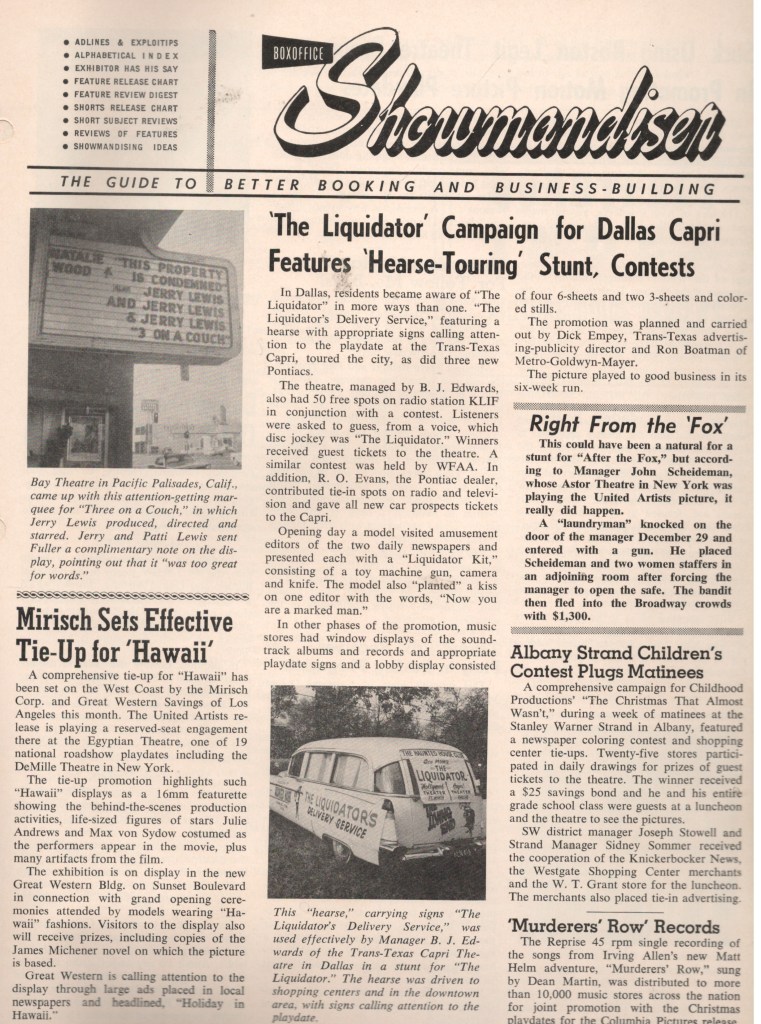
But it also focused on the nuts and bolts of running a cinema in its “The Modern Theatre” section. This might include articles on new cinemas or major refurbishments; provide tips for projectionists on depth of focus and how to oil projectors; come up with new ideas on concession sales or how to make bigger profits from popcorn; how to plan a drive-in theatre, how new income tax rules could affect your business; and information of the latest pieces of equipment.
Box Office magazine wasn’t as readily available to laymen such as myself. I don’t recall it being available in newsagents in central London. I’m not sure if at that point in its development it was interested in the foreign market. So I was first introduced to the magazine from buying various issues on memorabilia auction sites.
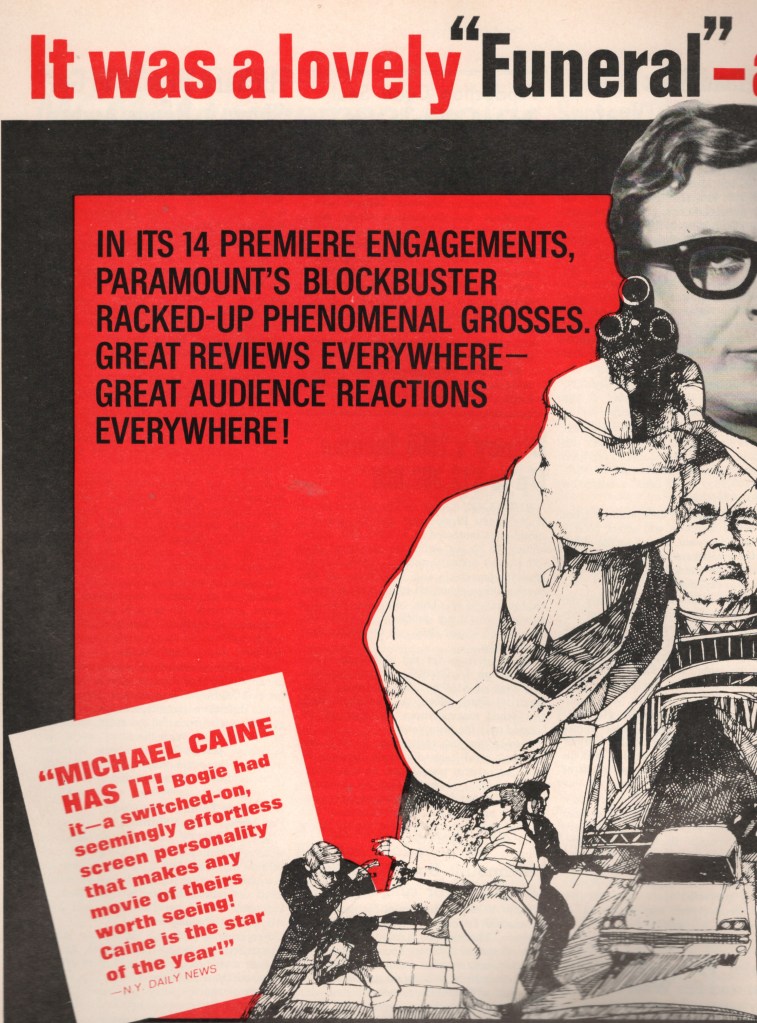
It was the bound inserts that had me hooked. Where posters in the 1960s were printed on paper and Pressbooks were printed on glossier stock, the inserts were phenomenal and unique. You wouldn’t find these appearing in a normal ad campaign in ordinary newspapers. While mostly they were four pages long, I have some in my collection that top 16 pages.
There were two bound inserts in the issue of January 16, 1967. The first for Thoroughly Modern Millie was at least 400 gsm – four times the thickness of ordinary copier paper – full color and glossy as all get out. This was clearly specifically designed for the magazine and promoted the movie’s world premiere on March 22 at the Criterion in New York.
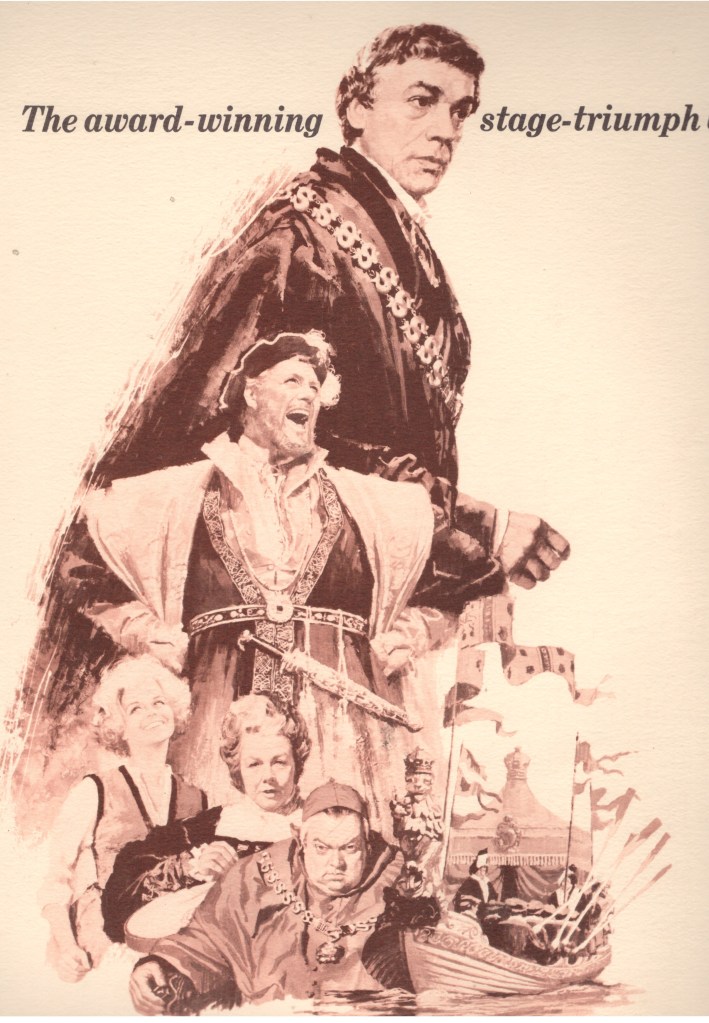
The other was for A Man for All Seasons, also four pages and also in full color. While the paper stock was as heavy, the design was more stylish, printed on card, the kind you used to get on businesses that wanted to impress you with the quality of their stationery. Pre-dating that year’s Oscars, the advert promoted the film being awarded the New York Film Critics Award and that the film was playing “exclusive reserved seat engagements” in New York, Los Angeles and Toronto.
Most ordinary adverts were in black-and-white or spot color and often promoted movies you or I have never heard of but were doing good business somewhere. However, as if to demonstrate the overall quality of the product, it also carried a full-color advertisement for Kodak’s Eastman Color System with a photo that involved various shades of color in an intricate format.
Because of the inserts I have more cherished copies of this magazine than I do of Variety.
It is still going today as Box Office Pro.


