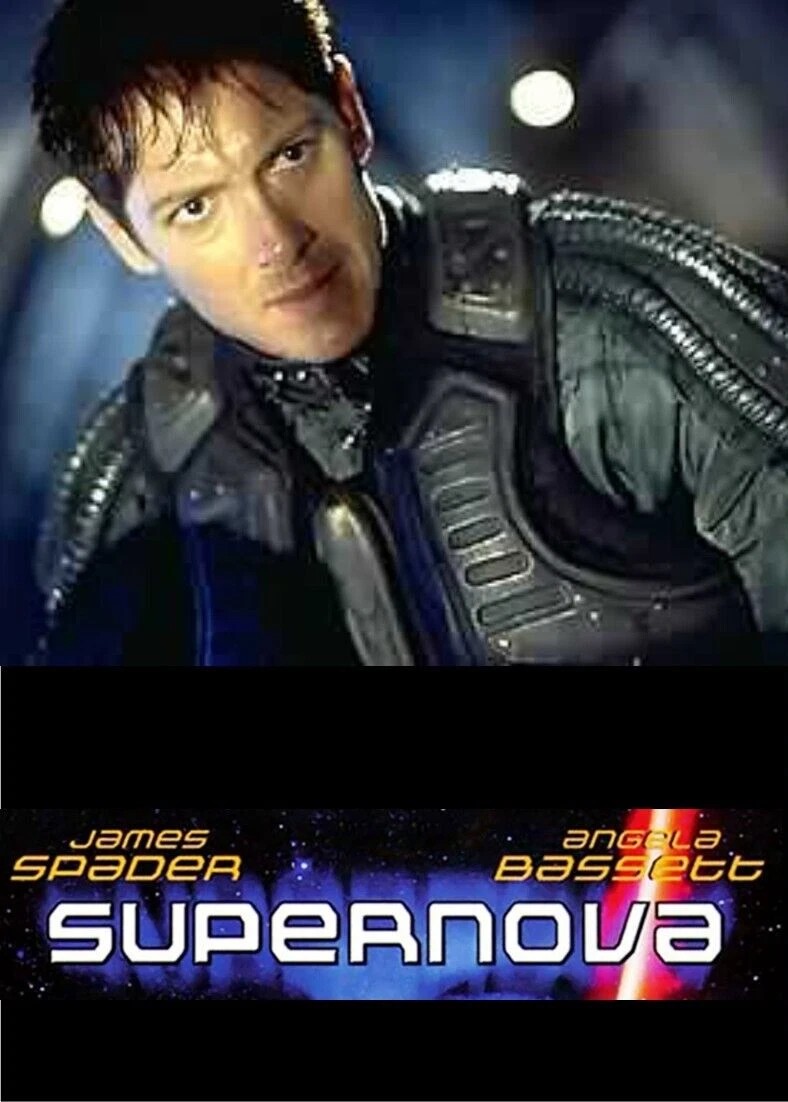
Behind the Scenes: “Supernova” (2000)

With both Walter Hill (48 Hrs, 1982) and Francis Ford Coppola (The Godfather, 1972) involved, you wouldn’t have expect this to emerge under the directorial aegis of one Thomas Lee. For the simple reason that Thomas Lee, at least in the movie directorial world, doesn’t exist. The name superceded that of Allan Smithee, the name attached to any  movie where the director had removed their name. This was the result of a DGA decree that no movie could be released without a director’s name being attached.

Smithee made his debut in 1955 – but only in television – and it wasn’t until 1969 that the pseudonym was called into practise for movies – for Don Siegel’s Death of a Gunfighter starring Richard Widmark and Jud Taylor’s Fade In starring Burt Reynolds. I’ve reviewed both of these and they’re not as terrible as having a pseudonym for director may sound. Thomas Lee entered the equation after the Arthur Hiller gave the game away with his satire starring Ryan O’Neal An Allan Smithee Film: Burn Hollywood Burn (1997).
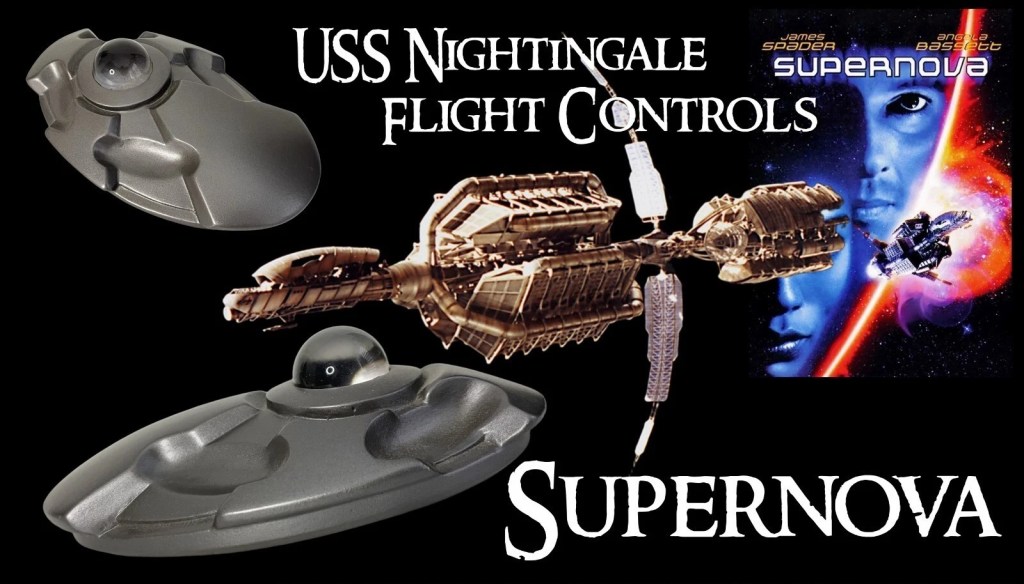
Here’s the toy version of the space ship. Collector’s item I’m sure.

Quite why Supernova turned in a mega-budget production ($60-90 million) is anyone’s guess given it had begun life as a more modest number sold as “Hellraiser or Dead Calm in outer space.” The original idea was that the artefact would be returned to Earth with devastating results. It had originally been developed under the title Dead Star in 1990 – utilizing some artwork by H.R. Giger of Alien fame – by director William Malone (House on the Haunted Hill, 1999) with a budget in the $5 million range. That budget proved out of reach for the original backers and was sold to MGM/UA.

You might not have welcomed a contribution from Coppola given the mess he made of Megalopolis (2024) but he was brought once Walter Hill departed the project. Hill had arrived at short notice after original director Geoffrey Wright (Romper Stomper, 1992) made a speedy exit with two months to go before production was scheduled and MGM was worried about an impending Actor’s Strike.

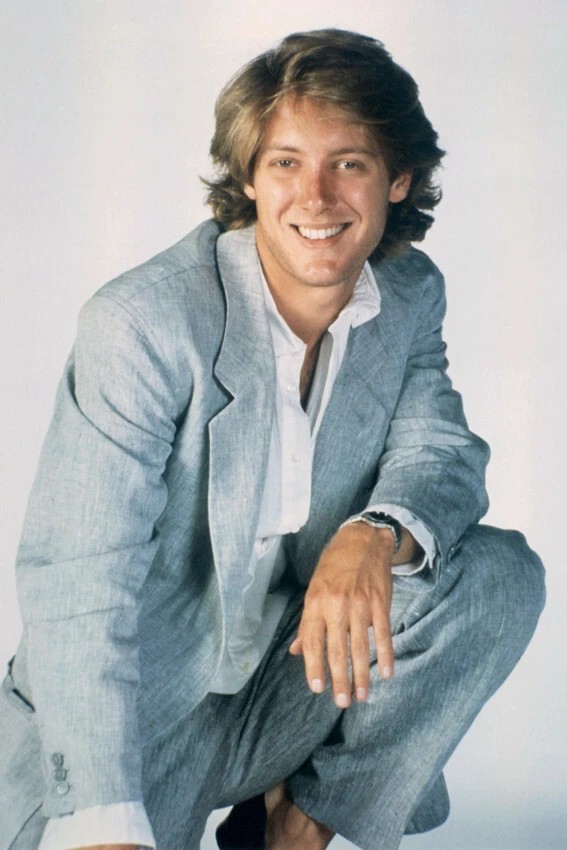
Wright wanted to shoot the entire film in zero gravity, one of many creative differences with the studio that led to him ankling the project. Along with him star Vincent D’Onofrio walked. Jack Scholder (The Nightmare on Elm St Part 2, Freddy’s Revenge, 1985) was briefly involved before MGM called upon the services of Hill who had co-written and produced Alien (1978) and two sequels. Hill did a re-write that removed most of the references to Alien. Both James Spader (Crash, 1996) and Lou Diamond Philips (La Bamba, 1987) signed up on the strength of Hill’s involvement. Angela Bassett (What’s Love Got to Do with It, 1993) turned down Monster’s Ball (2001) to do this instead, an ironic decision given Halle Berry won an Oscar for her performance in that film. It may have been the nudity that put her off and reputedly she refused to strip off along with the others when settling into their pods in Supernova. Robin Tunney (End of Days, 1999) and Peter Facinelli (The Big Kahuna, 1999) were in the rising star category.
MGM had big merch plans for the film. There was even a toy version of the spaceship Nightingale. Principal photography was completed in July 1998 and Hill spent 24 weeks in the editing suite.

Hill had much darker vision and a different ending in mind from the final film. MGM cut the special effects budget and, against the director’s wishes, showed to a test audience a version (the final version according to the studio) of the film minus the effects. When, predictably, the film tanked, Hill walked.

MGM returned to Jack Scholder now, worried about the negative reaction by the test audience.  He directed reshoots, added humor and character development, changed the voice of the ship’s computer so it was more emotional and re-edited the picture and although it tested better than Hill’s version, MGM shelved it for a year. They tried to bring back Hill but when he demanded $5 million for reshoots they turned for reasons best known to themselves (except that he was an MGM board member) to Coppola who had not enjoyed a hit in two decades. Still, he was what would be known these days as a “visionary” and the studio assumed he could wave a magic wand. That was another $1 million on the bottom line.

Coppola recut it. He had four different endings to choose from including one where Karl (Peter Facineeli) transforms into a demonic monster and one where they would be no reprieve, no extension of evolution, for Earth. He superimposed the faces of Bassett and Spader on those of Tunney and Philips in a love scene so that the commander and doctor could have sex. Hill initially planned to accept a credit if he agreed with Coppola’s edits. He didn’t and demanded his name be removed.

MGM wanted a PG-13 certificate in the USA rather than the R-rating that the Alien films attracted. So the bulk of the sex and nudity disappeared, although that allowed the DVD to claim it was the “uncensored version.”

There had been an upsurge of interest in sci fi in 2000. Two films about Mars appeared – Brian De Palma’s Mission to Mars with Tim Robbins and Red Planet starring Val Kilmer. That none of the three films did well suggests this was sci fi overload.

Supernova opened poorly in the USA and overall brought in $14.6 million in box office gross and was barely released elsewhere.
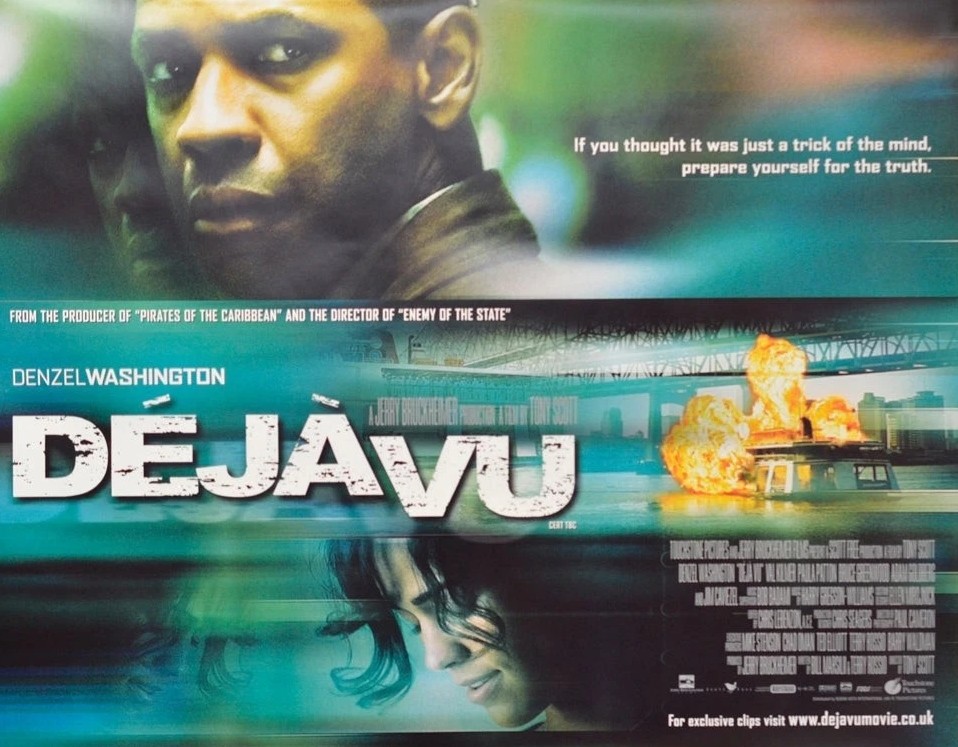
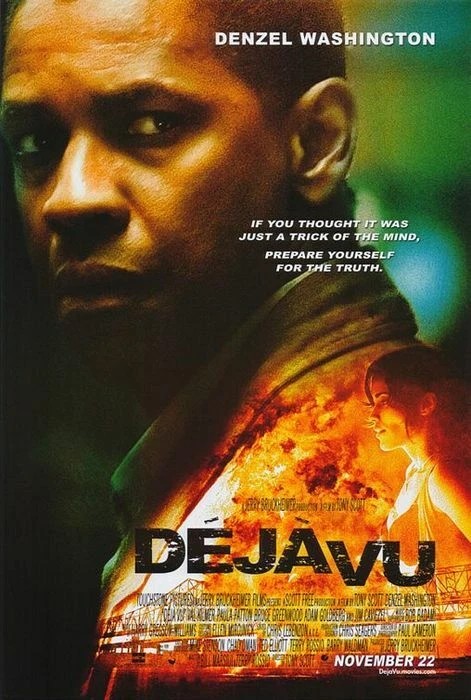
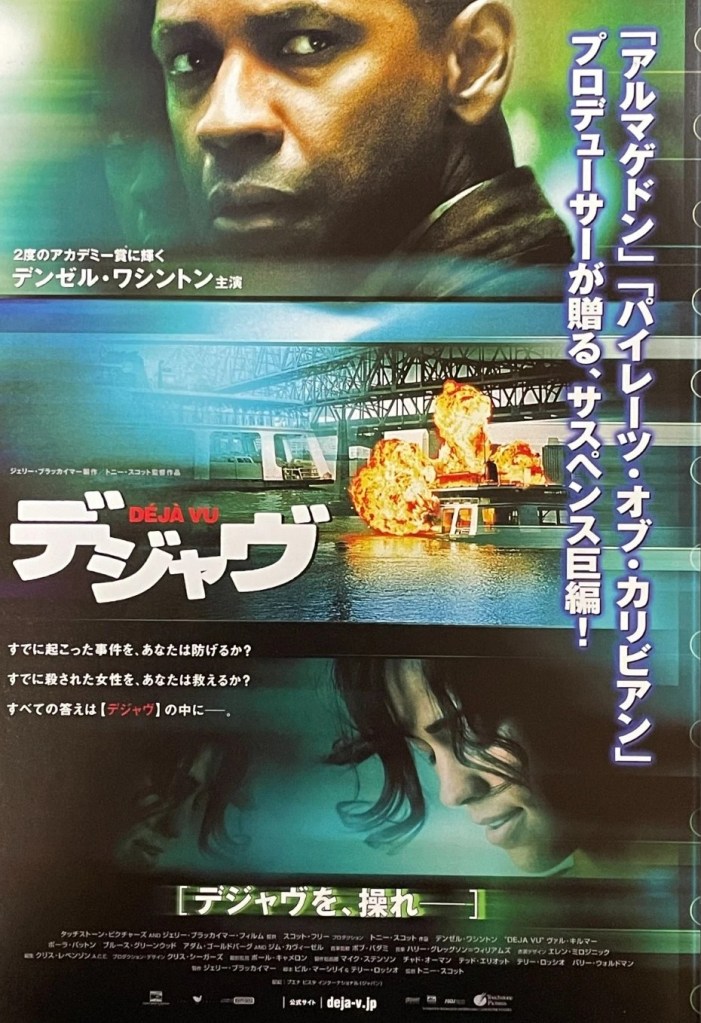
Deja Vu (2006) ****

Trying to get this made today the elevator pitch would be Enemy of the State Meets Interstellar. Of course, this was made nearly a decade prior to the Christopher Nolan space opera but whoever made the pitch was so successful that Twentieth Century Fox shelled out a record $5 million for the screenplay.

Fans of surveillance and, conversely, those who fear that the state is poking its nose too closely into everything, might view this as a window into the contemporary world while conspiracy theorists wouldn’t find it hard to convince themselves that in some Roswell-like breakthrough the authorities actually had created a device that could look into the past.

Admittedly, this is a limited peek, restricted to just over four days ago, but it’s enough to get ATF agent Doug Carlin (Denzel Washington), investigating the death of his work partner, interested.

There’s another link to Interstellar and various other high-concept sci fi pictures in that the science fiction is a little fuzzy around the edges but basically once our hero skips back in time it’s for the same reason as the Nolan, the wormhole idea, and demonstrated in exactly the same simplistic way as in Interstellar. And there’s certainly an uncomfortable moment as licentiousness takes hold as the surveillance cameras catch a woman in an intimate moment – some of the male watchers are engrossed, all the females repulsed.

Anyways, the men in black are chasing down a terrorist who blew up a ferry. Thanks to  Doug’s particular investigative skills, he’s invited to join the surveillance team. Doug has turned up the corpse of Claire (Paula Patton) but deduced that although her body was found near the scene of the crime she was killed beforehand, finger for some reason severed, by the terrorist. And it’s true Doug does have exceptional deduction skills that somehow whoever has put together the surveillance outfit, known as Snow White, has forgotten to recruit anything like an ace detective who can make connections rather than just watch.

A hop, skip and jump puts Claire in the eye of the surveillance team who, theoretically using a mountain of previous surveillance footage spawned from a million satellites, go back in time to link her to the terrorist. But if you hire a top detective you need to be wary of what he finds out about you. And it doesn’t take long for our man to work out that the shady guys can actually go back in time.

And, equally, a plotline beckons. Why not send a man back in time to stop the terrorist? But the men in black don’t appear to have taken that on board and it’s up to Doug, in a maverick move, to use the equipment to go back.

Oddly, that’s not because he wants to save hundreds of ferry boat passengers from being obliterated but because he wants to save Claire. Prior to this, except for Doug gazing fondly at images of Claire in a non-licentious manner, there’s been no emotion to speak of except the usual temper tantrums of people under pressure. But clearly there’s something personal going on between Doug and the woman, though what that may be is never teased out. It makes for some interesting twists when they do meet and seem to click.

Once he’s in the past the movie clicks into top gear and the narrative rattles through twist after stunning twist. And the final one – I’ll leave you to work that one out – works as a meet-cute.

This was the third collaboration out of five between Washington and action guru Tony Scott (The Taking of Pelham 123, 2009) and we know by now what the director brings to the table and his whizz-bang style certainly suits this concoction. But Washington continues to surprise. You think you’ve seen all his grins and chuckles and bursts of laughter, but they’re not always to do with humor, and here the grin is either an indication of resignation or determination, which shows just what an armory of expressions he has.

Paula Patton teamed up with Washington again in 2 Guns (2013) and you’ll find her in last year’s Finding Faith. She’s got the grit for the action stuff and the emotion required to make it all mean something.

A heck of a support cast led by a mature Val Kilmer (Top Gun: Maverick, 2022) and backed up by Jim Cavaziel (The Passion of Christ, 2004). Adam Goldberg (The Exorcism, 2024), Bruce Greenwood (The Fabulous Four, 2024) and Elle Fanning (Predator: Badlands, 2025).

The lucky guys collecting all that for dough for their screenplay were Bill Marsilii (Gunpoint, 2021) and Terry Rossio (Pirates of the Caribbean: Curse of the Black Pearl, 2023).

Cracking ride with an emotional kick.  

Maverick: Top Gun (2022) **** – Seen at the Cinema

And just like that Old Hollywood thumped a nose at super-heroes and jumped back to the top of the tree. Of course, that’s if you discount Tom Cruise as being a super-hero of box office dimensions and one with his own franchise Mission Impossible which at times has single-handedly kept his marquee value alive.

Unusually, for a sequel, this has taken account of the passing of time. No shoe-horning Maverick (Tom Cruise) into the role of current hot-shot pilot and there is a past he has to deal with, two relationships in fact, with Rooster (Miles Teller) the son of Goose, whose death Maverick is accused of causing, and with Penny (Jennifer Connelly), an on-again off-again affair too often too easily fractured. But, of course, the main thrust of the picture is Maverick taking on everybody, the top brass in the shape of Admiral Simpson (Jon Hamm) and Admiral Bates (Charles Parnell), his pupils and the unnamed bad guys.

It’s pretty nifty in using character flaw to justify the plot. That Maverick is anywhere near being recruited as teacher and not gainfully employed as a high-flying Admiral somewhere – as is former-rival-cum-buddy Iceman (Val Kilmer) – is down to the fact that he has resisted well-justified promotion in order to keep flying and because, well, he tends to piss off his superiors. But he still has the juice, in the opening sequence taking an experimental plane way beyond its capabilities (another plot point, by the way).

Somewhat older, not necessarily that much wiser, Maverick’s introduction to the Top Gun base is a tad humiliating, drummed out of Penny’s bar for not being able to pay his tab, watching wistfully as younger guns batter out his favorite tune on the piano, and aware that he has personal bridges to mend, that maybe, just this time, he might have the maturity to manage.

There’s the usual cocky bunch led by Hangman (Glen Powell), Phoenix (Monica Barbaro)  and Payback (Jay Ellis) plus Bob (Lewis Pullman), his call sign apparently a contraction of first name Robert but in reality standing for baby-on-board. In true reality television style there are heats, only four pilots making the cut to fly the desperate mission against the enemy.

And here’s where the picture takes off (pardon the pun). The aeronautics are just breathtaking and if you happen to catch it in Imax or an equivalent you’re going to be rocked by the sound  as well. It’s unbelievable stuff.  If there’s any CGI in there it’s not in the shapes of aliens, and looks distinctly old Hollywood. The kind of epic airplane stunts for which you run out of superlatives. And in best James Bond fashion the clock is ticking.

A resoundingly human story, relationships that looked cut-and-dried proving more fluid, until a band of brothers are properly worked up. Even as you wonder just how they are going to involve Maverick in a finale in which he should be a back-seat driver, a deft screenplay provides the answer. Maverick stands up for older guys everywhere, like an ageing pro brought back to save a football game.

Nostalgia has never been more vividly utilized. In terms of satisfactory denouement this is along the lines of the resolutions in Star Wars VII: The Force Awakens (2015) rather than the desultory reappearance of Decker (Harrison Ford again) in Blade Runner 2049 (2017). Some great scenes from the original have been touchingly reinvented, snippets of the original themes inserted at vital points plus a Lady Gaga offering.

It could easily have sunk not so much from the weight of expectations (and the long Covid-induced delay) but from a clunky re-boot, as producers determined, story be damned, to get all their ducks in line. Instead, there’s enough recycling to catch satisfy the previous generation of fans and sufficient whip-smacking wizardry to pull in the new generation,  which determinedly steers clear of anything non-CGI.  

Cruise is just superb, potentially an Oscar-nominated performance, as the guy who refuses to be jaded, who requires not one wingman but a whole team of them, with still the individuality and self-confidence that manuals cannot deliver. Given a job that set him up not to be a scene-stealer (teachers just ain’t action heroes) Cruise effortlessly steals the show, and its maturity more than double-balls-out cojones that does the trick.

Full marks to Joseph Kosinski (Oblivion, 2103) for fulfilling those weighty expectations, for keeping the movie focused when the temptation must have been to insert more romance, buff up issues facing the rest of the gang, add too much more when what this always needed was so much less, let the action show the way and Cruise carry the story. Much as I like Miles Teller in this I was hoping he would go on to better top-billed parts after Whiplash (2014).  Glen Powell (Everybody Wants Some, 2016) is another one Hollywood should be trying to make more of. I could say the same for the gutsy Monica Barbero (The Cathedral, 2021). This is the kind of movie to make the next generation of stars, especially as it solidified the reputation of the last of the older generation in Tom Cruise.

Incidentally, while I was at the cinema for this I saw a cracking trailer for the next Mission Impossible picture so cruise is going to continue his box office roll for a while.

Discover WordPress

A daily selection of the best content published on WordPress, collected for you by humans who love to read.

The Atavist Magazine

by Brian Hannan

WordPress.com Blog

News, Tips & Website Tutorials