Two or Three Things You Don’t Know About Me

Two or three things you don’t know about me. Firstly, I run a second-hand bookshop in Paisley, Scotland, called Abbey Books. Secondly, I have a massive collection of movie posters, pressbooks, magazines and what-have-you. And, thirdly, I’ve connected these interests in an exhibition of movie memorabilia on the walls and bookcases of the shop.
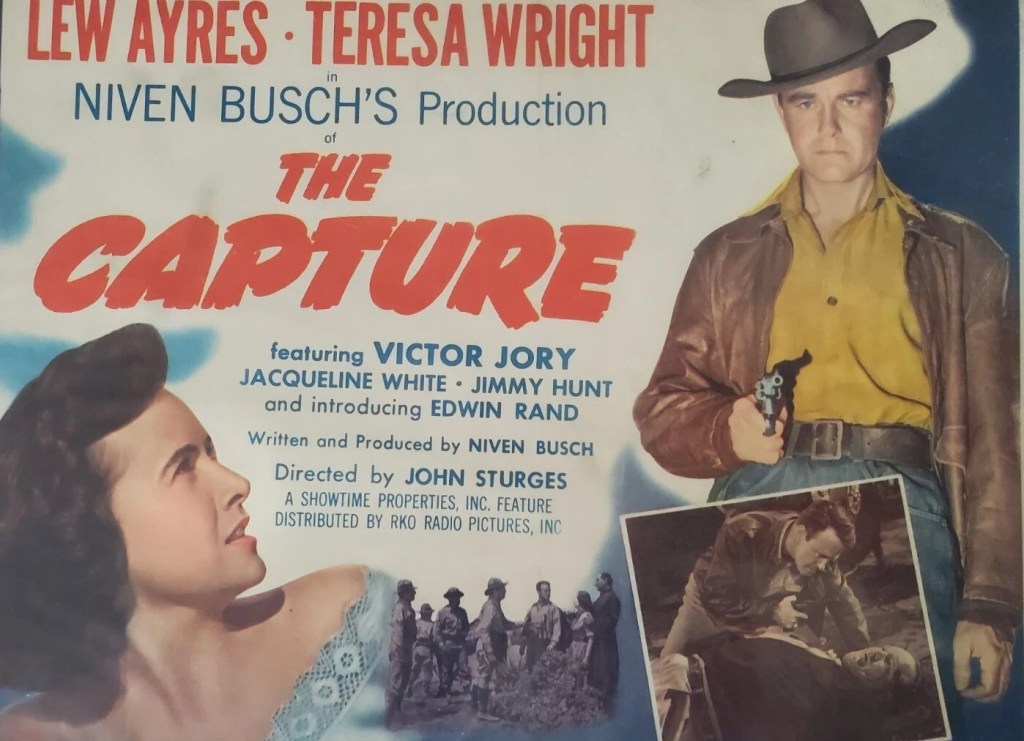
1950 window card.

You’ll probably have seen my various Behind the Scenes articles on Pressbooks relating to a particular movie and perhaps not realized I was able to write it because I had the Pressbook (also known as a Exhibitor’ Campaign Manual) to hand. I’ve also got a stack of trade magazines which contain very rare material – ads that never saw the light of day in consumer magazines or newspapers, many of them pop-up, gatefolds or fold-outs.
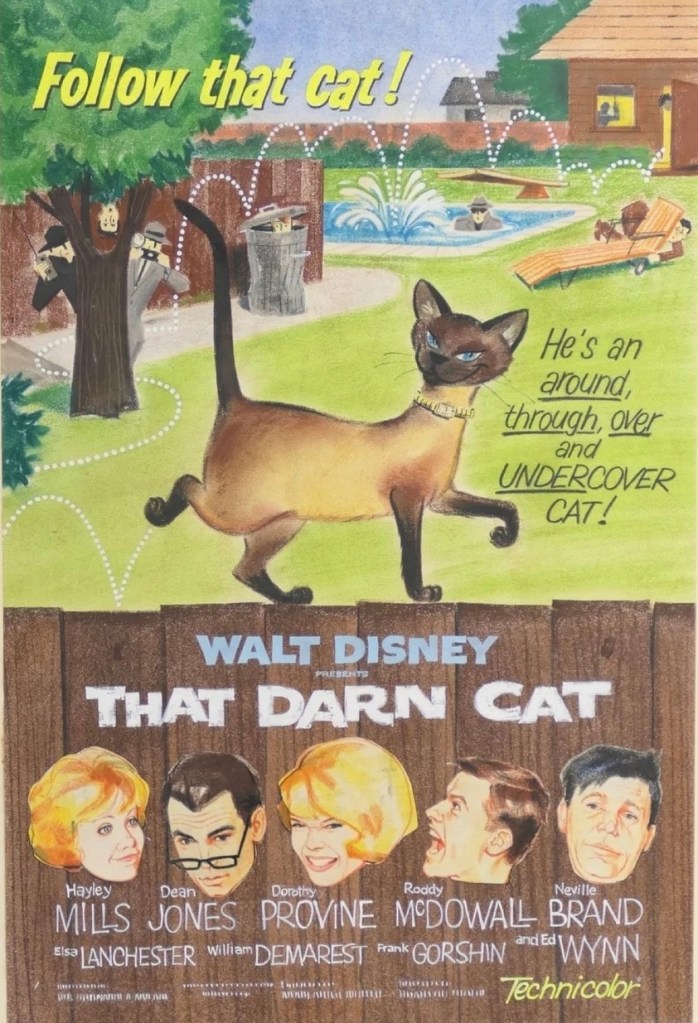
1965 insert poster.

My all-time favorite in that department is the four-page glossy pull-out teaser ad that ran in Box Office magazine in April 1977 that announced Close Encounters of the Third Kind would appear at Christmas 1977, unaware that by that point Star Wars would have rewritten the genre.
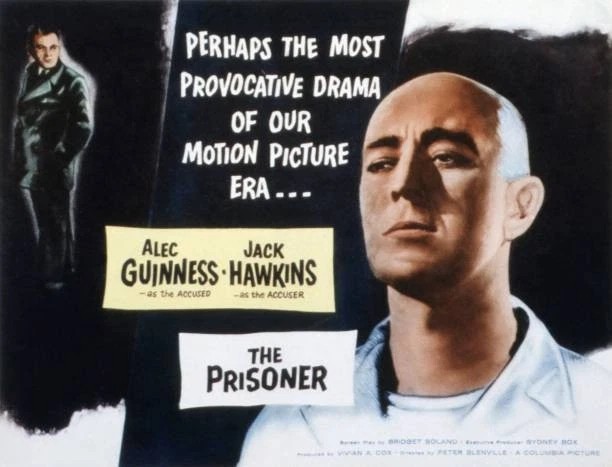
1955 quad poster.

I’ve got quads (both vertical and horizontal), half-sheets, insert posters, heralds, window cards, stills, pressbooks, double-page spread trade mag ads and souvenir programmes. Among my magazine selections are Box Office, Motion Picture Herald, Kine Weekly, ABC Film Review, Films & Filming, Focus on Film, Cinema Retro, Sight and Sound, Star Wars magazine and books, Lord of the Rings magazines and various MCU and DC comics and graphic novels.
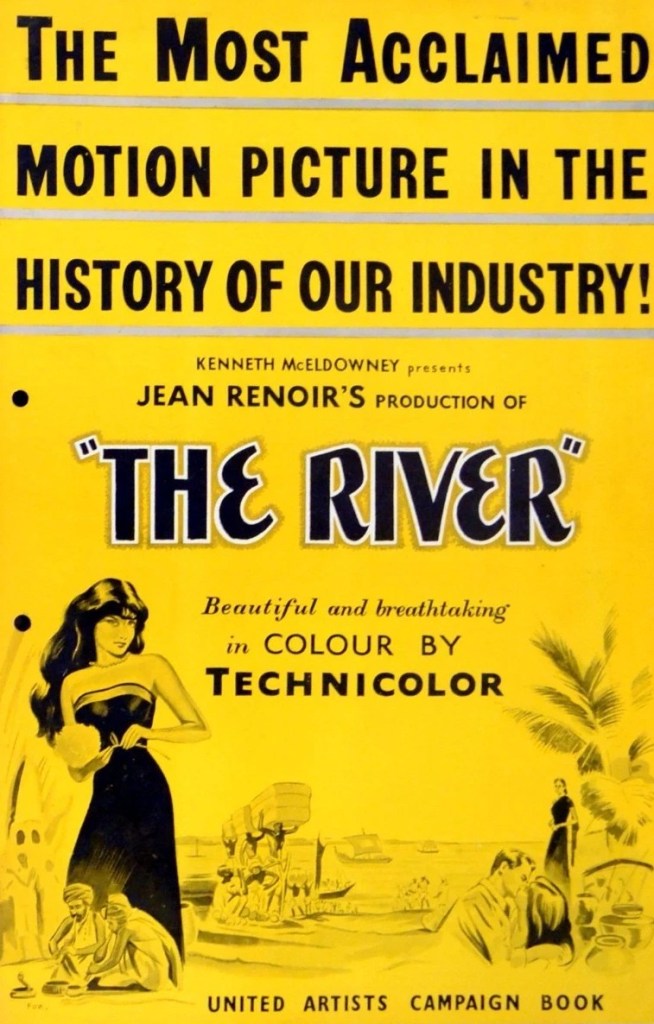
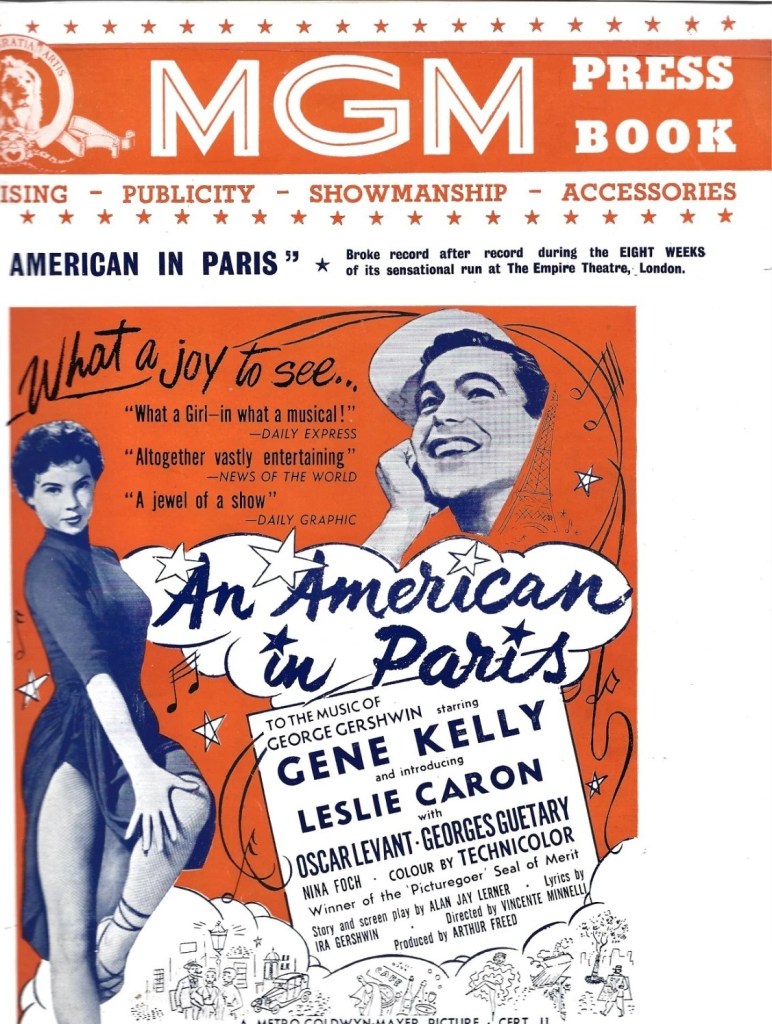
1951 Pressbook for Jean Renoir acclaimed picture.

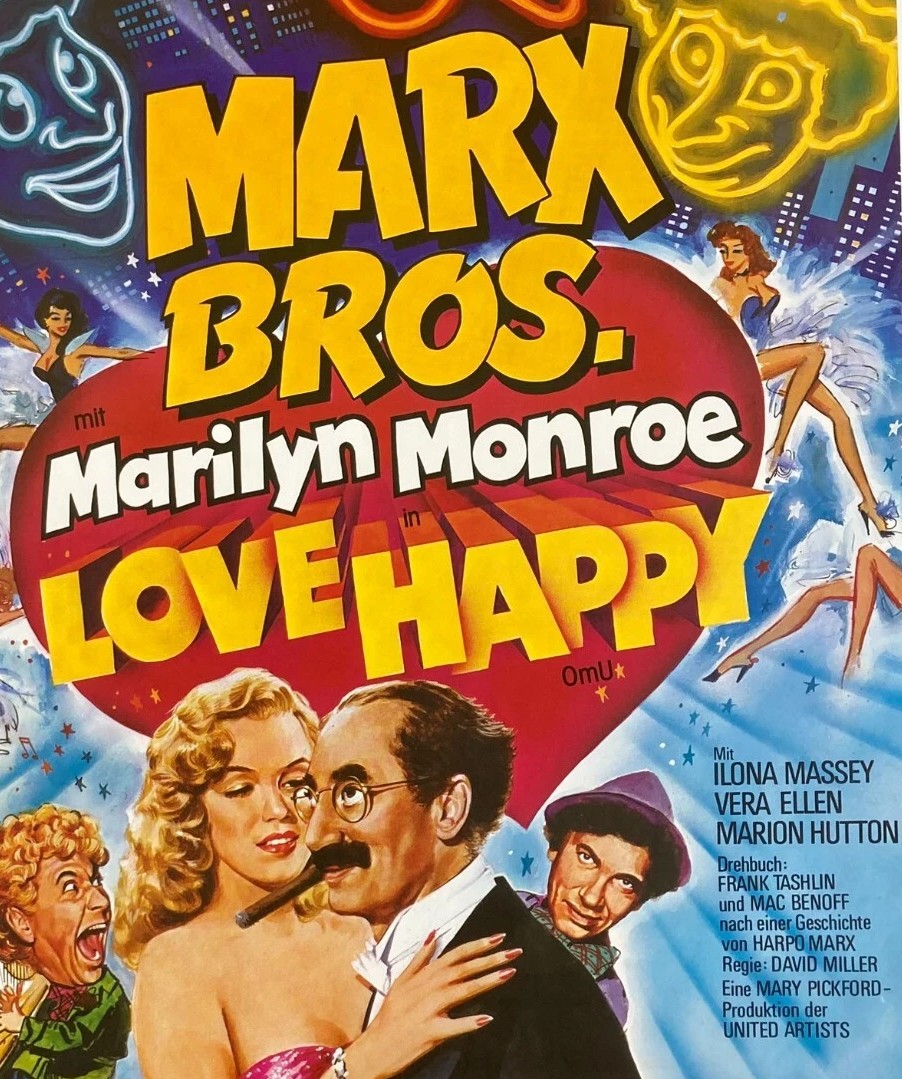
The exhibition covers the walls of the three rooms of the bookshop, so that’s around 12 walls of movie memorabilia. The oldest item is the Pressbook for Edward G. Robinson’s gangster picture Thunder in the City (1937). John Wayne in 1940 is represented by the insert poster for Dark Command and  window card for Seven Sinners with Marlene Dietrich. I’ve got a window card from For Whom the Bell Tolls (1943), the Pressbook for Love Happy (1949)  – Marilyn Monroe Meets The Marx Bros – and for the 1952 reissue of Hitchcock’s Rebecca, a half-sheet for The Rains of Ranchipur (1955) starring Lana Turner, and a quad for The Prisoner (1955) starring Alec Guinness.
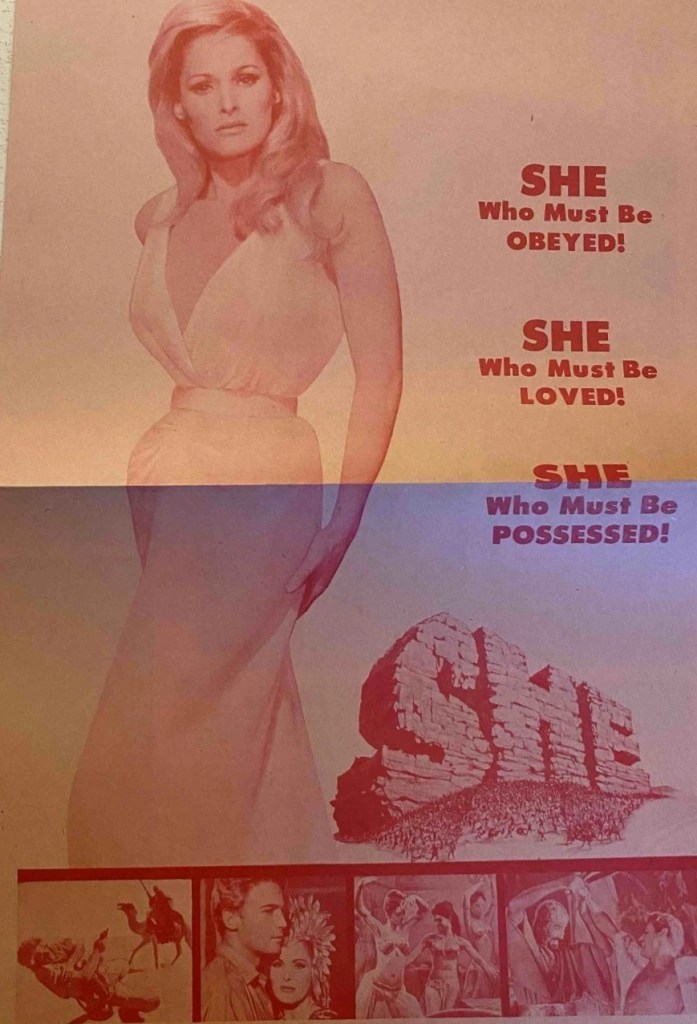
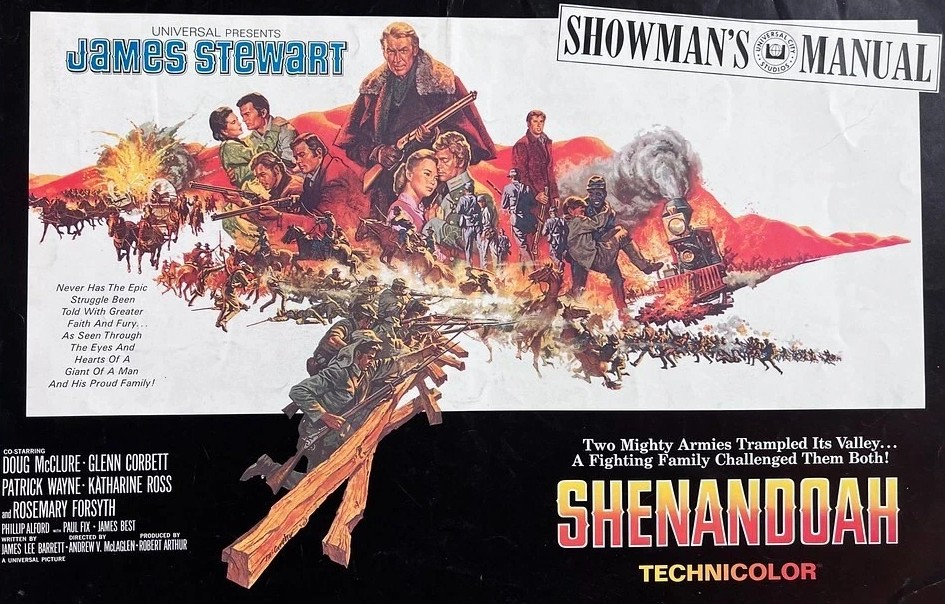
Four-page herald from 1965.

You might want to check out the Pressbook for Sudden Fear (1952) starring Joan Crawford  or Lady in Cement (1968) with Frank Sinatra tangling with Raquel Welch or window cards for another Gary Cooper effort Casanova Brown (1944) or Lew Ayres in early John Sturges western The Capture (1950). Or pressbooks for Dillinger (1973), The Female Bunch (1971), the original movie version of Westworld (1973), Clint Eastwood in The Beguiled (1971) and The Headless Ghost (1959).
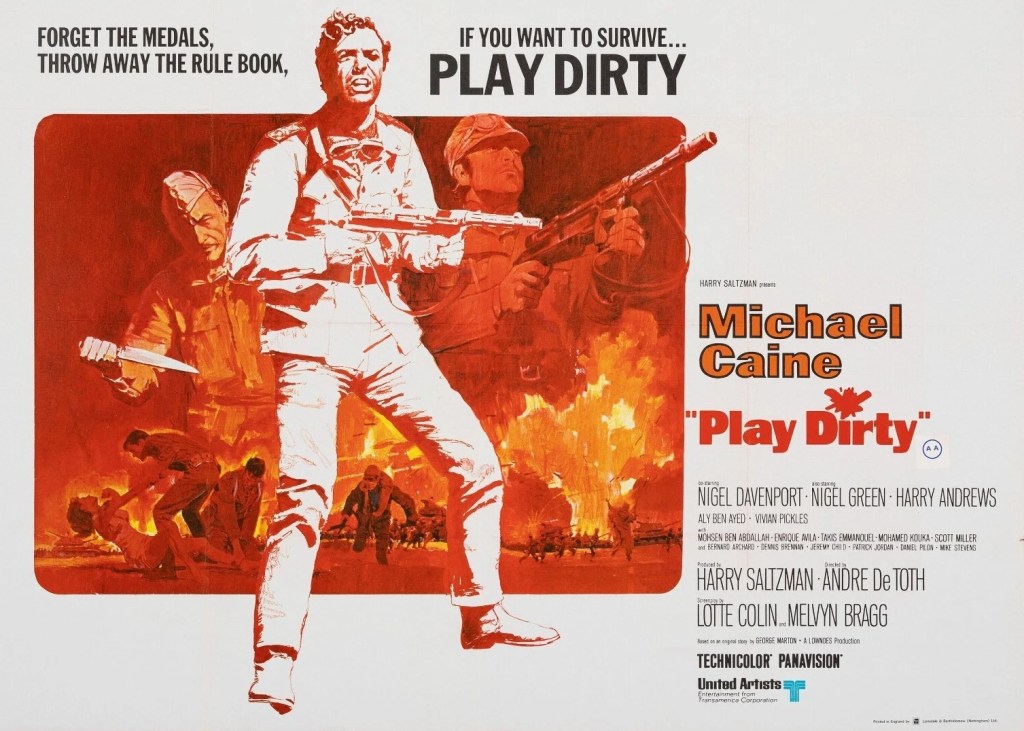
1968 quad poster

There also posters etc from Where Eagles Dare, She, War and Peace (1956), Bigger Than Life, Cat Ballou, That Darn Cat!, The Scalphunters, Marooned, Mackenna’s Gold, Lawrence of Arabia, Macao, Giant, Blindfold, Chinatown, Play Dirty, The Secret of Santa Vittoria, The Diary of Anne Frank, The Las Vegas Story, The Collector, Zulu Dawn, and so on and so on.
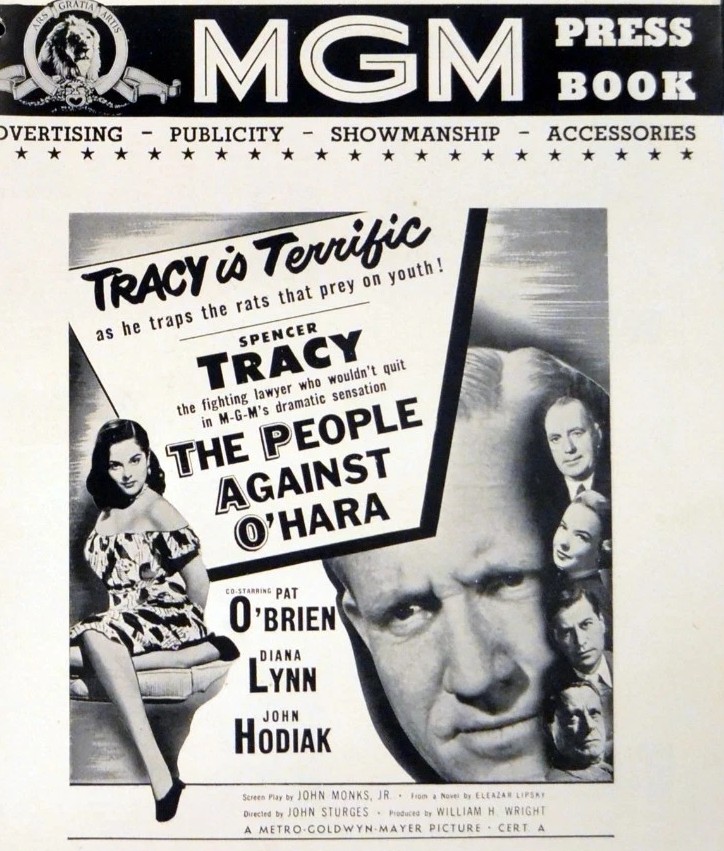
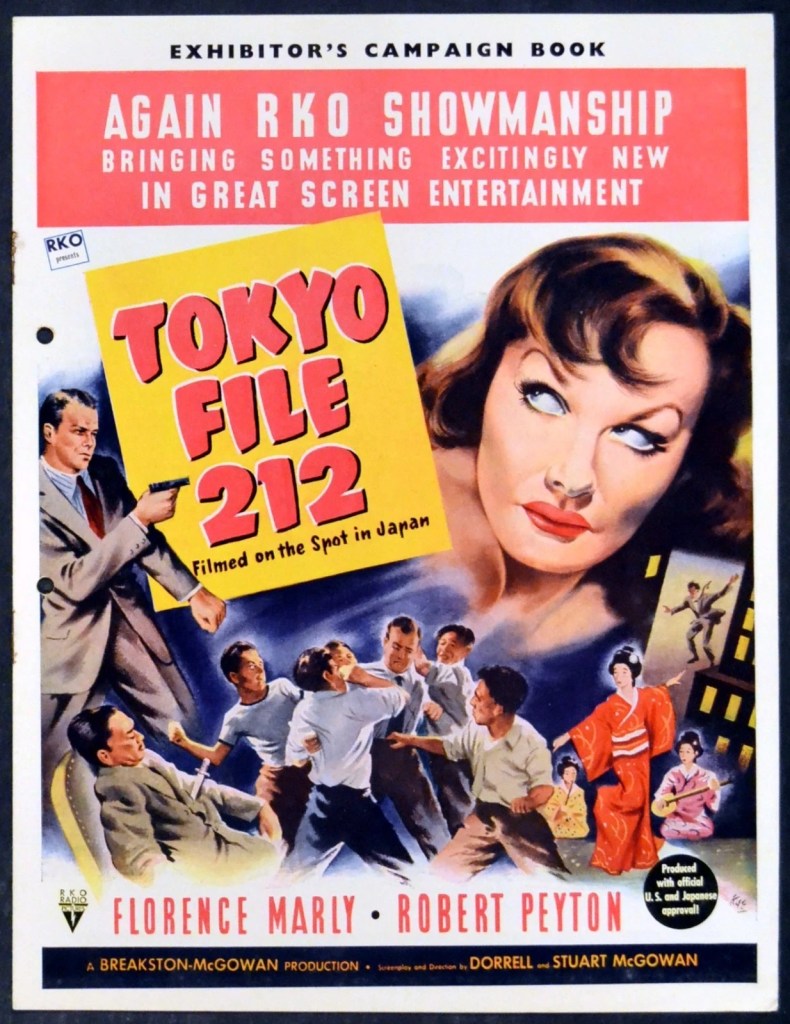
1951 Pressbook. Early film by John Sturges.

Among our selection of movie souvenir brochures are: The Guns of Navarone (1961), Lawrence of Arabia (1962), Isadora (1968), Paint Your Wagon (1969), El Cid (1961), The Agony and the Ecstasy (1965), Cleopatra (1963), Hawaii (1966), Cromwell (1970), Camelot (1967), Lord Jim (1965) and Far from the Madding Crowd (1967). I had imagined that souvenir brochures had disappeared at the end of the roadshow era but actually I have ones for The Horsemen (1971) and The Valachi Papers (1972).
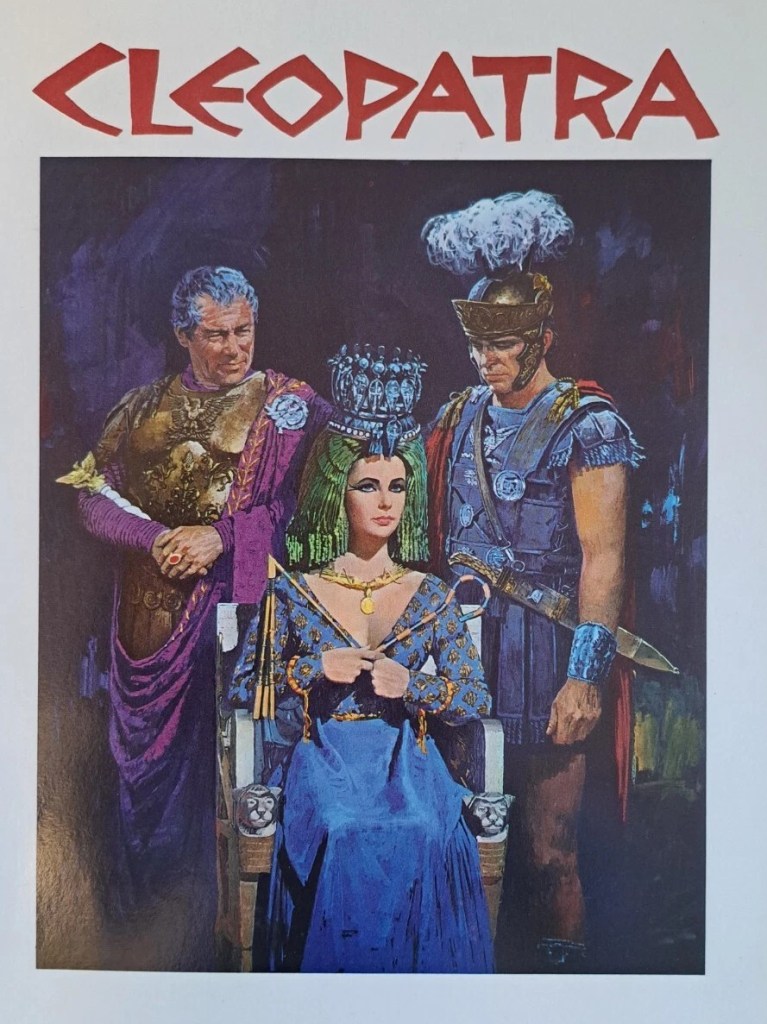
1963 souvenir brochure.

Famous illustrators featured throughout the collection include Tom Chantrell, Robert McGinnis and Howard Terpning.

As far as I can see there are precious few movie memorabilia shops left anywhere in the world. Most items are now sold online or at auction. So here’s a very rare chance to see these old posters and memorabilia relating to favored movies or ones that trigger a memory.
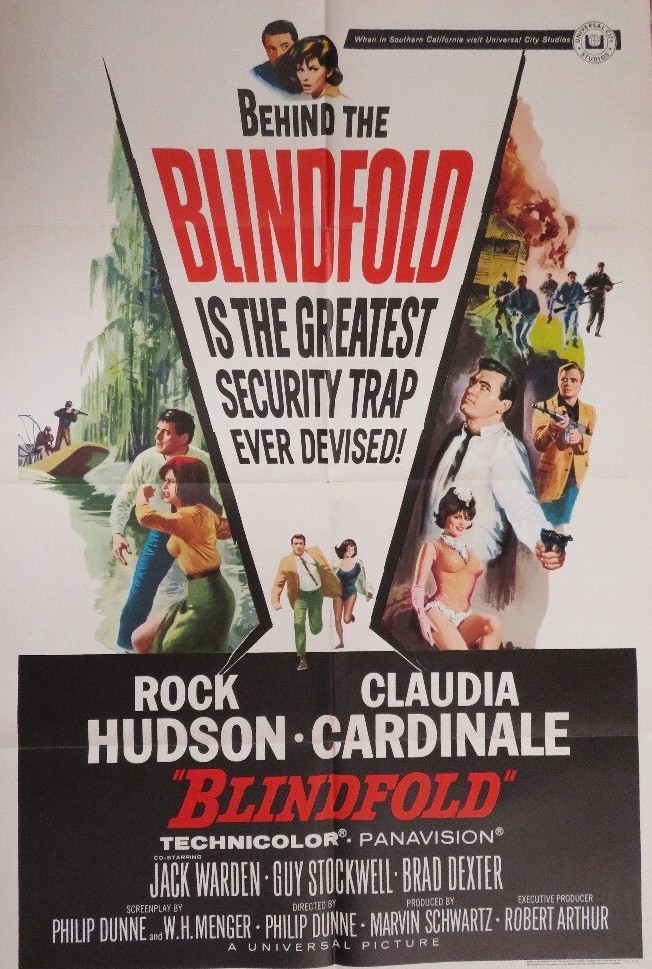
1966 insert poster.

Pop in and see the exhibition. Everything is for sale.

Abbey Books, 21 Wellmeadow St, Paisley PA1 2EF. Opening hours – Tue-Sat 10.15am-17.15pm.
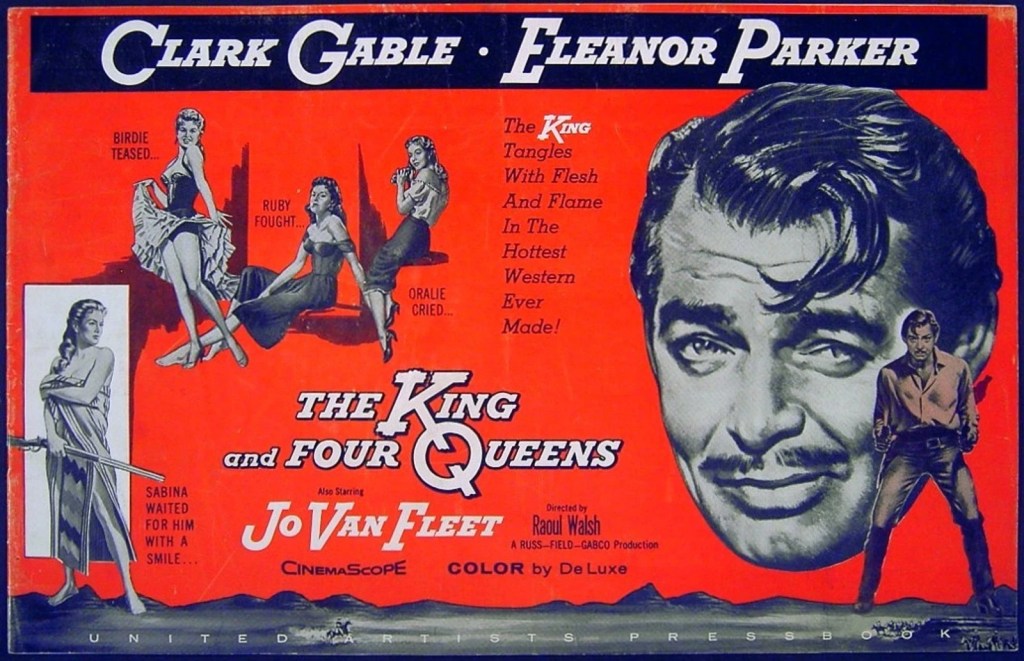
1956 window card.
1951 Pressbook.
1965 A3 pressbook.
1951 Pressbook.

Don’t wait.

Behind the Scenes: The Trade Magazines in the 1960s – Part One – “Variety”

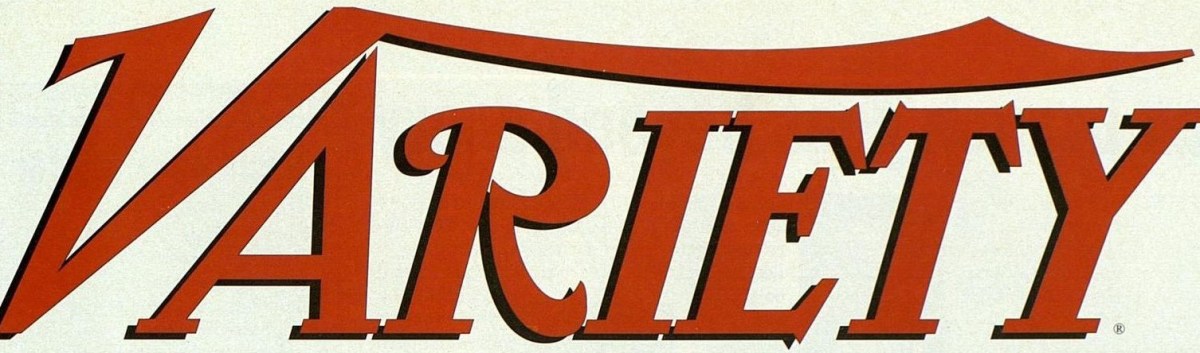
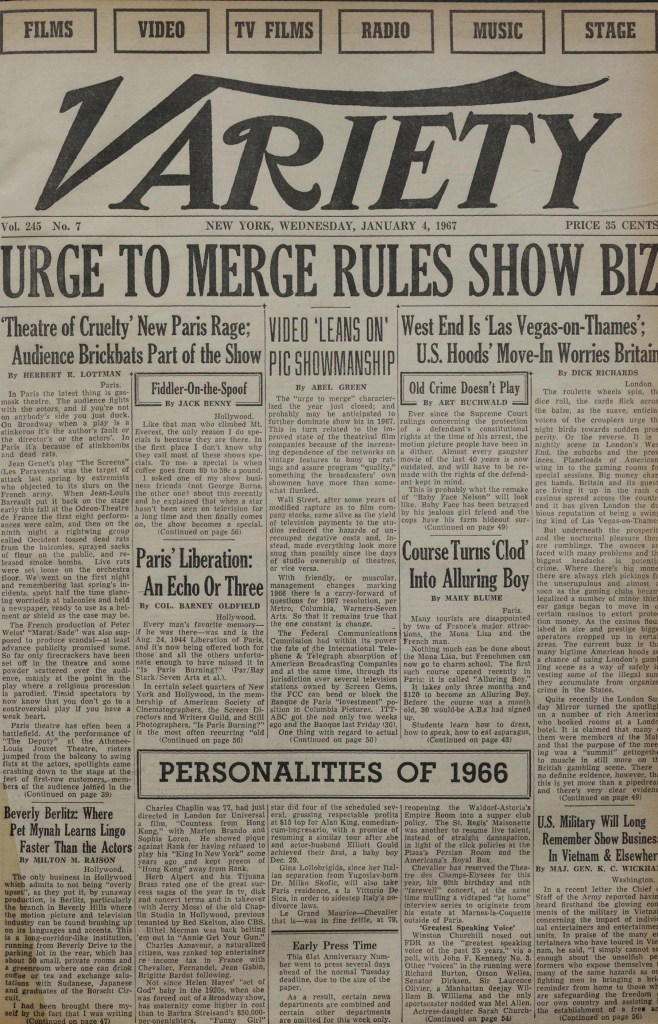
Perhaps the most famous logo in the history of newspapers. Unusually, I had a very slight connection to the magazine. When I was a journalist I worked for Reed Business Publishing which took over Variety in 1987 through its U.S. subsidiary Cahners and much later a colleague of mine Neil Stiles took over as publisher. When I lived in London, I’d make a detour on the way home once a week to pick up a copy of the weekly edition from a newsagent in Charing Cross Road or failing that in Old Compton St. So I’ve been familiar with the magazine for around 40 years. A decade or so back when I was a bit flush I treated myself to an annual subscription to its archive and trawled all the way back to its beginnings in 1905. Anyone who’s read any of my books will see how often I use the magazine for reference.

Obviously, movies weren’t on the editorial agenda when Sime Silverman founded the publication – the iconic logo hasn’t changed much in a century. As the title said, it covered everything within the entertainment industry and when movies grew in importance they acquired their own section with its own front page inside.

The strapline above the logo shows just how wide a market “Variety” tapped into.

From the outset, Variety targeted those actively involved in the business and as the movie section expanded that meant movie executives, financiers, actors and directors. I’ve no idea how Silverman managed to persuade stage theatres to allow him to publish their weekly takes, but when that included cinemas, the idea of box office as news was born.

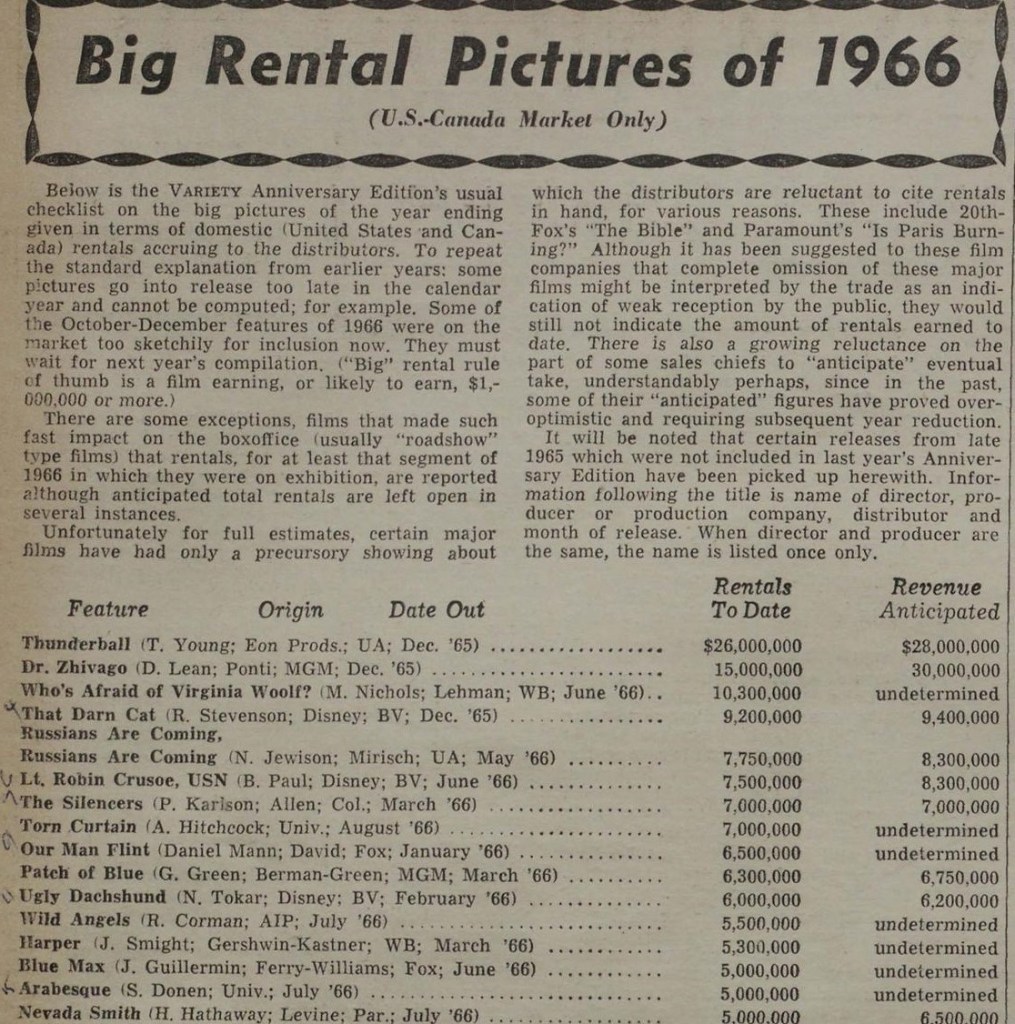
Generations of film scholars were grateful for a magazine that focused on the bottom line of the rentals rather than the glossier grossses which tended to be misleading in terms of profit.

Initially it was a weekly magazine, but then set up a smaller daily magazine headquartered in Hollywood which primarily reported on movie news. The two eventually ran side by the side, the weekly being the one that ended up at my London newsagent.

Variety was exceptionally unusual for a magazine in that it invented its own language known as “slanguage.” For example, “boffo” and “whammo” related to box office (often truncated to B.O.) that was on the big side; when someone was fired or quit a job they “ankled;” while “Cincinnati” was reduced to “Cincy.” “Hix” would “nix” the “pix” meaning people in the countryside didn’t go much for whatever movies had turned up locally. Projects were “greenlit.” A “hardtop” was an indoor movie theater while an “ozoner” referred to a drive-in. If you “inked a deal” it meant you signed up for something.

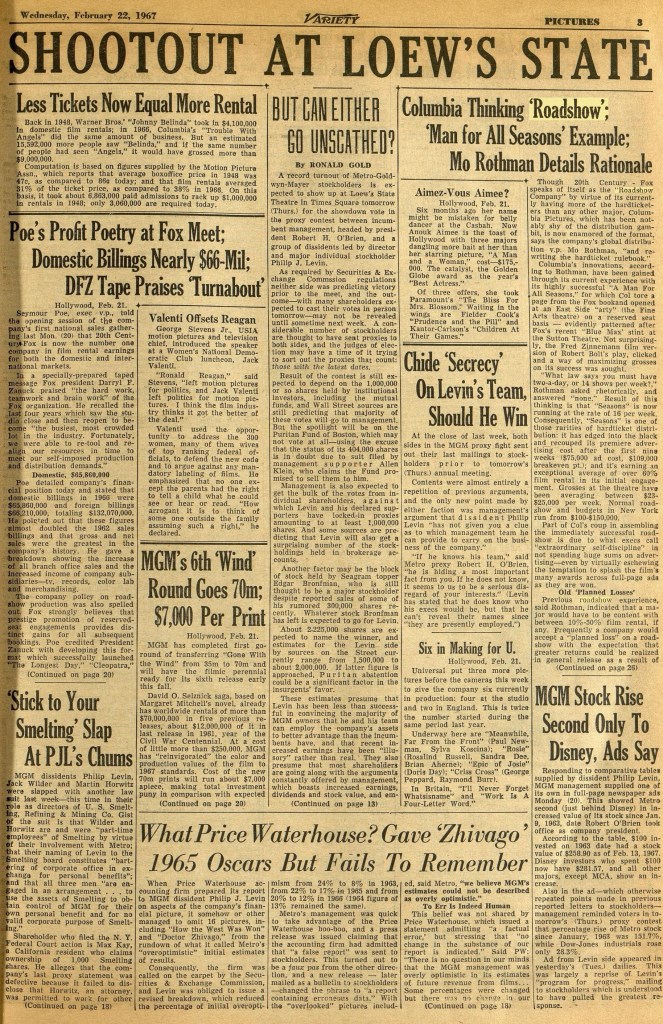
Articles tended to be long and sometimes ran over to another page.

It wasn’t very much bothered with the exhibitor side of the business though it was initially most useful to that sector for not just reviewing every picture released but passing judgement on its box office prospects. This saved cinemas, which might require eight or ten movies in a given week, from having to spend so much time in a screening theatre.

But it was very catholic in its coverage. If you look just above the logo on the front page I’ve reproduced from 1967 you’ll notice it sets out quite a substantial stall of interest – films, video (in those days that meant television not VHS), TV films (as opposed to movies made for the cinema), radio, music and stage. So, virtually, the entire field of entertainment. It also had a healthy section on books.

And it made a point of not favoring one particular element of the business. So on its front page, you’d find stories on each of the sectors it covered. However, by the 1960s, the front section of the magazine was devoted to movies and Variety was delighted to trumpet box office figures in news stories rather than just leaving it to the studios to highlight through adverts. Except that the magazine was exceptionally large in terms of page size, it wasn’t a great advertising vehicle. There was no color available unlike some of its competitors. The printing was more grainy than glossy.

However, it did become the market leader in box office figures. In the 1960s it published the weekly box office returns for hundreds of cinemas in the largest cities in the country, adding its own editorial comments on the performances of various films. (This also allowed cinemas further down the food chain to temper or raise expectations).Its headlines in this section often generated excitement, the oxygen any industry needed. When the blockbuster business began in the 1970s it was Variety that led the way in box office reporting, causing other mainstream media to follow suit.

And it was via Variety that studios started pitching their movies for Oscars, taking out advert after advert proclaiming the glories of a particular movie, triggering the marketing tsunami that occurs now in the run-up to the ceremony.

Weekly box was registered as gross, i.e. what the movie took in at each cinema. But Variety had another trump card to play. Once a year, it contacted the studios to ask them to provide not the cumulative gross for each release but the rental, i.e. the amount of dough returned to the studio after the cinema had taken its cut. That provided a more realistic basis for assessing how movies had actually performed in relation to their budgets.

And reporting in general was not PR-driven. Variety was as likely to lambast the industry or its stars for under-performing as much as for setting box office records. It reported on downturns as much as upturns. It saw in advance when and where trouble was looming. You got the impression that the journalists understood the business rather than writing about it as star-struck hacks.

In future years, when Variety became an intrinsic part of the Cannes Film Festival, its issue devoted to that event could top 300 pages, a good chunk of it filled with adverts from smaller companies promoting films seeking a distributor or punting films that had yet to be made. Often, these ads were nothing more than bait-and-switch, promising pictures with bankable stars that were little more than dreams in the imagination of a minor executive.

But the magazine had one significant flaw. In effect, entirely unintentionally because I said it stated it content plans upfront, it was pulling a fast one. When you picked up your copy, it felt like you were in for a hefty read. The weekly edition could often span 100 pages. But if you were in the film industry less than a quarter of the content would be relevant to you, the rest was devoted to the other areas shown on the masthead.

The magazine is still in business today although with the online element more prominent.

Discover WordPress

A daily selection of the best content published on WordPress, collected for you by humans who love to read.

The Atavist Magazine

by Brian Hannan

WordPress.com News

The latest news on WordPress.com and the WordPress community.