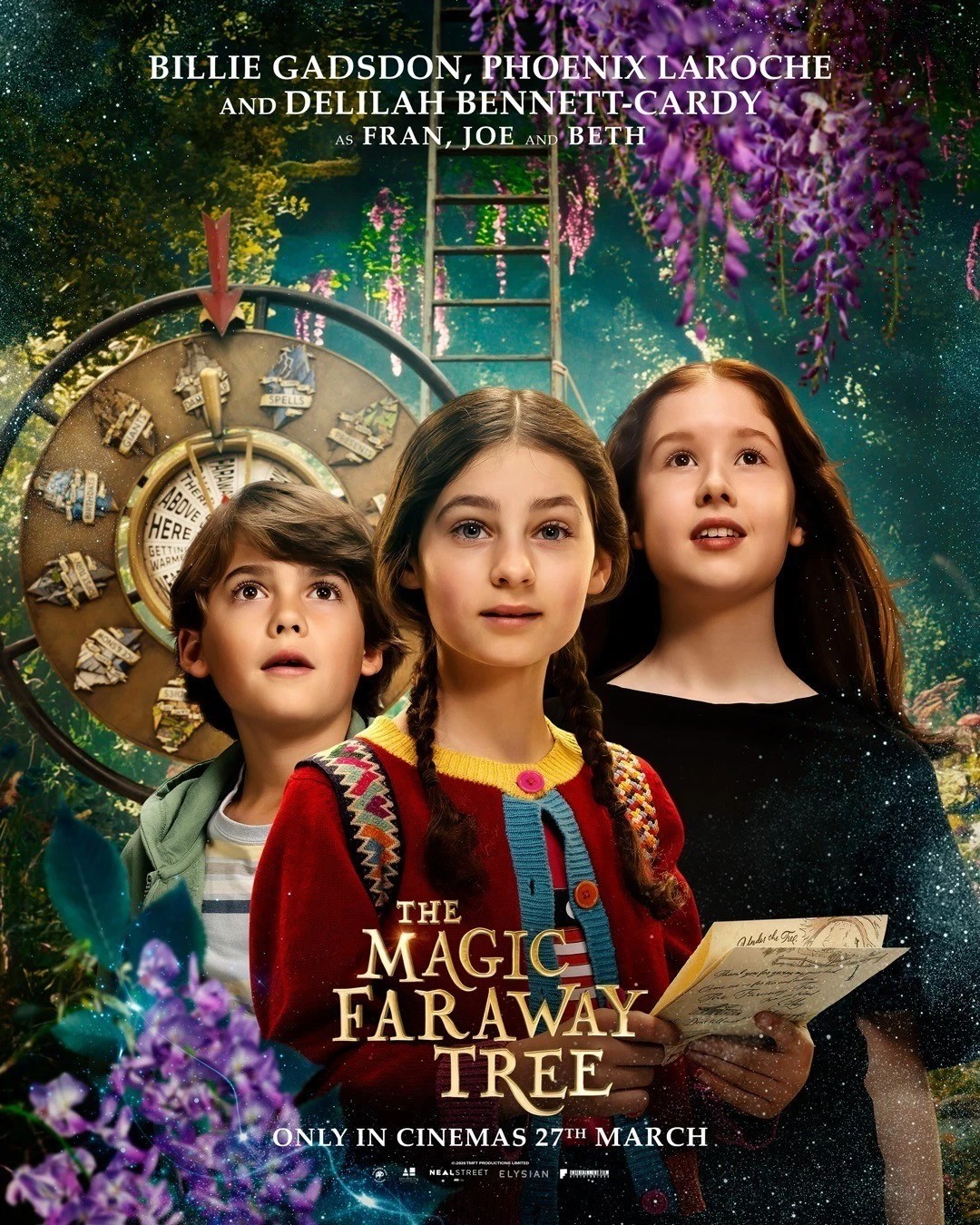
The Magic Faraway Tree (2026) *** – Seen at the Cinema

Watching just one movie on my weekly jaunt to the cinema seems such a dereliction of duty that occasionally I’ll throw in a picture which was not at all high – or completely absent – from my must-see list. The presence of either Andrew Garfield (After the Hunt, 2025) or Claire Foy (H is for Hawk, 2025) would not have been enough to draw me in otherwise, especially as this was being sold as a children’s story and I knew from a trailer I’d seen ages ago that they weren’t popping up in the guise of fairies and elves, the usual inhabitants I had imagined of any magical world dreamed up by the likes of Enid Blyton.

I have to confess I was astonished to see Blyton’s name attached to this as I thought she had been cancelled a long time ago for having the temerity to set her stories in middle-class households. Though I had read The Famous Five and The Secret Seven as a child, I hadn’t been aware she had written a series set in the titular tree. Though I imagine her adult characters would not be inventing intelligent fridges nor determining to make a living by selling home-made pasta sauce, nor would social media play any part in the lives of the children. So whenever the original stories were set, they’ve undergone radical surgery.
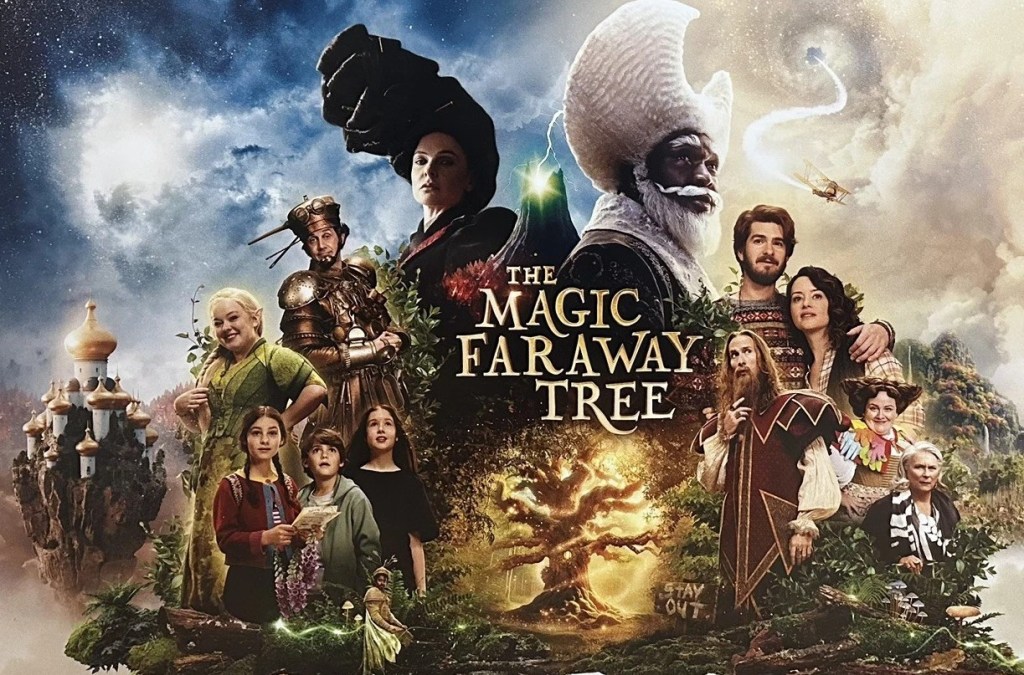
I’m not sure how the target audience would take to the moralizing aspect i.e. that social media is bad, but that’s only if you assume that the target audience is children rather than the adults paying for the tickets who would most likely chime with those views. That’s notwithstanding the fact that mother-of-three Polly (Claire Foy) has been dabbling with intrusive technology, though she’s principled enough to quit when she realizes just how invasive.

So minus a job and with stay-at-home husband Tim (Andrew Garfield) not contributing to the family coffers they embark on what seems at first a disastrous foray into “The Good Life”, living in a barn with no electricity or central heating and the children in open revolt at the lack of Wi-Fi. Eventually, the titular tree puts in an appearance and all the magic of childhood comes rolling back as the children, led by Fran (Billie Gadsen), discover its unusual properties and investigate a world that’s half-Lord of the Rings and half-Avatar peopled by fairies and odd creatures and villains living in the sky. There’s a nod to Toy Story, the idea that children too quickly abandon the joys of childhood.

It’s not all magic, or to put it another way, the magic sometimes backfires as when the children get to make a wish and discover they can’t undo the wish. But the invention is good fun – Moonface (Nonso Anozie), the Know-It-Alls and schoolteacher-from-Hell Dame Snap (Rebeca Ferguson) complete with ominous snaggle tooth. There’s the innocent-leaning-towards-the-vulnerable Silky (Nicola Coughlin), stroppy eldest child Beth (Delilah Bennett-Cardy), an airplane that stops flying when it gets tired and up in the clouds the kind of performers you’d find on a talent show and the greatest array of candy/sweets you could ever create what with marshmallow trees and sherbet flying saucers that actually fly.

There’s not much to the story, except believing in magic, and the climax is too earthbound to interest kids. Occasionally, the contemporary intrudes – Beth attacking Silky for defining herself by her beauty. But it’s just as well Beth is the lippy one, as it’s her ability to challenge that gets them out of scrapes, although her snarkiness is responsible for the family’s biggest problem.
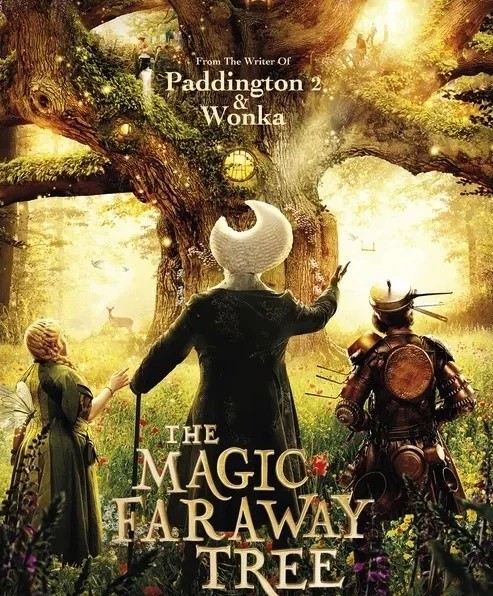
Given this is gentle stuff, there are surprisingly potent emotional moments, though most revolve around Beth. She discovers that electricity comes in the form of a bicycle ridden by her exhausted father, that her snippiness does wound and that she is capable of destroying dreams.

In fact Delilah Bennett-Cardy is the standout with her expressive face and sharp retorts. Rebecca Ferguson (Dune: Part Two, 2024) wins out among the adults. Andrew Garfield is a goofy dad in the vein of Lionel Jeffries, Claire Foy the practical one.

The roster of television refugees includes Nicola Coughlin from Bridgerton (2020-2026), Jennifer Saunders from Absolutely Fabulous (1992-2012), Mark Heap from Friday Night Dinner (2011-2020) and Jessica Gunning (Baby Reindeer, 2024).

Ben Gregor (Fatherhood, 2018) directs with Simon Farnaby taking the plaudits/brickbats for modernizing Enid Blyton much as he did for tweaking Roald Dahl for Wonka (2023).

Much more enjoyable than I expected. Opening in the U.S. in August, so worth looking out for as counter-programming to the chunk of animation sequels heading your way.
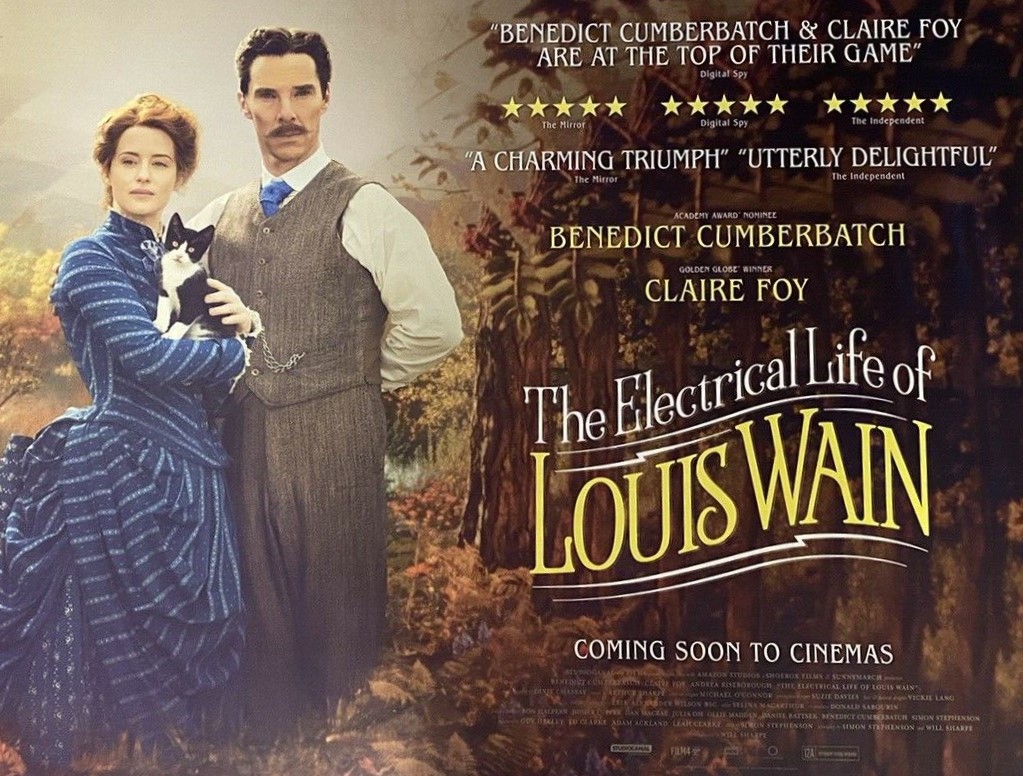
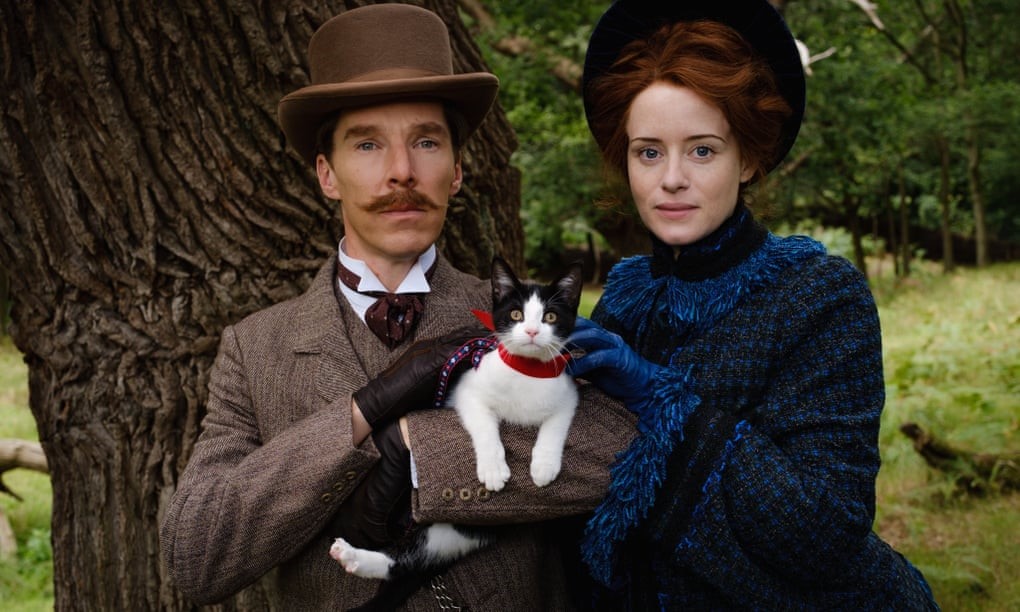
The Electrical Life of Louis Wain (2021) *** – Seen at the Cinema

Contender for worst title of this and any other year, this old-fashioned biopic covers both too much and too little of the life of the eponymous cat illustrator who ended up in a mental asylum. In addition, it’s afflicted by a breezy voice-over that you think belongs to one of the participants until all potential suspects have been killed off and you realise that for no apparent reason the narrative is being delivered by the ubiquitous Olivia Colman. The voice over also serves to cover up what director Will Sharpe fails to properly dramatize.

These deficiencies aside it’s a captivating story with some brilliant acting. Both Benedict Cumberpatch as Wain and Claire Foy as his wife Emily avoid the “strained seriousness” that they fell prey to in potential award-winning projects The Power of the Dog (2021) and a Very British Scandal (2021) in favour of more natural performances that bring both characters to charming life.

As well as inventor, all-round illustrator and amateur boxer Wain became the unlikely poster boy for an emerging generation of cat lovers. The movie also touches on some aspects of Victorian society which provide an interesting contrast to today’s more gender-equal times.  For although the man was the undisputed master of the household, the entire financial burden of bringing up a family fell to him. In Wain’s case, this was inherited, his father having died and left him in charge of a widow and five sisters, with expectations of maintaining a certain standard of middle-class life, and none of the siblings having the decency to get married to alleviate the financial strain.

And all very well from a male perspective if you could take advantage of such a position, with females on hand to meet your every need and never challenge your opinions. Not so easy to maintain if you were of an easy-going disposition with poor business skills and scandalized your siblings by marrying someone below your class, in this case an impoverished governess.

The strain of meeting family obligations, especially with a sister only too willing to remind him of his shortcomings, clearly proves too much for Wain, his earning power diminished by  interest in many other non-remunerative activities. Quite where or when electricity entered the equation is never quite made clear though ongoing nightmares about drowning and imagining he can overhear cats speaking certainly jeopardised his mental health.

By pure accident, at a time when dogs were the prime household pets and cats kept only for the purpose of catching mice, Wain’s cat illustrations became a phenomenon. He would have been wealthy had he retained the copyrights. He fell in love with the thankfully more direct governess and for a time they lived happily together. Ever after was not on the cards once she contracted cancer. The film takes on a different hue once she departs the scene. But eventually his obsession with electricity overcomes him and he ends up in a mental asylum.

The movie covers way too long a period, from his emergence as an artist in 1880 to his commitment in the 1920s. Although Emily features large in the trailer, she is gone too soon and the picture struggles to dramatize his later life. That said, that these shy human creatures emerge from their complicated circumstances to fabricate their own cocoon in the countryside with their beloved cat Peter is a touching tale. The madness that afflicts him may well run in the family, not just in their rampant entitlement, but with one sister carried off to the asylum and the older one a tad neurotic.

Cumberpatch is far better here than in The Power of the Dog where I found his character already too set. Both charming and lacking the guile required to maximize his earning potential, but with a manic nature he can no more soothe than his hair, he dominates the screen so well you are almost taken in by his bizarre theories. As good as he is in love, he is devastating as a man adrift on his own demons. Foy is excellent as the governess doomed to a lifetime of loneliness save for chance encounter with Wain.

Andrea Riseborough (Possessor, 2020) also strikes a chord as the neurotic sister determined to keep family and errant brother together. Toby Jones (Dad’s Army, 2016) plays Wain’s benefactor. The sisters include Sharon Rooney (Dumbo, 2019) and Hayley Squires from television series Adult Material (2020). Putting in a surprise turn as H.G. Wells is musician Nick Cave.

Discover WordPress

A daily selection of the best content published on WordPress, collected for you by humans who love to read.

The Atavist Magazine

by Brian Hannan

WordPress.com News

The latest news on WordPress.com and the WordPress community.