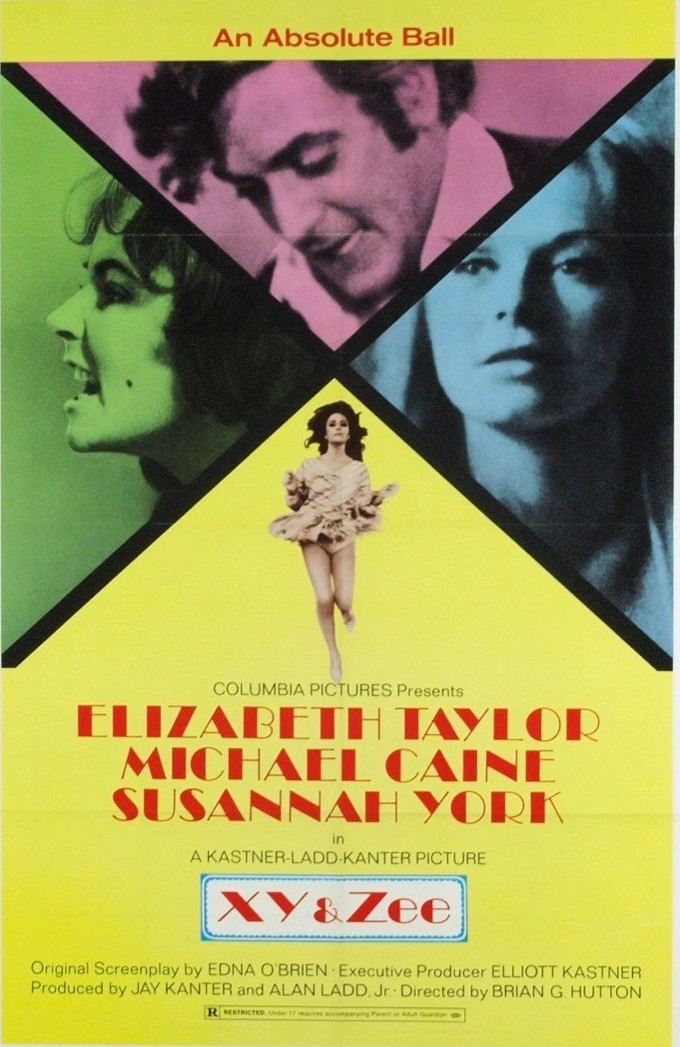
I’ve seen Elizabeth Tayor glide along the floor, I’ve seen her stomp and stamp, I’ve seen her bellow and hiss, but, except at the outset of her career, I’ve never seen her indulge in anything vaguely athletic. So it’s a bold opening here to witness the actress playing table tennis with some venom, virtually dancing from one foot to the other, bouncing in triumph when she wins. Who the heck is this reincarnation?
The movie’s acquired a different dimension since original release, a pathos that emphasizes the actress’s vulnerability. In the 1960s she was considered the most beautiful woman in the world yet she married a man who had a wandering eye. She would accompany him to film sets so she could keep an eye on him and keep other women at a distance. Can you imagine the impact on her psychological make-up to know that she was not enough for handsome charismatic husband Richard Burton?
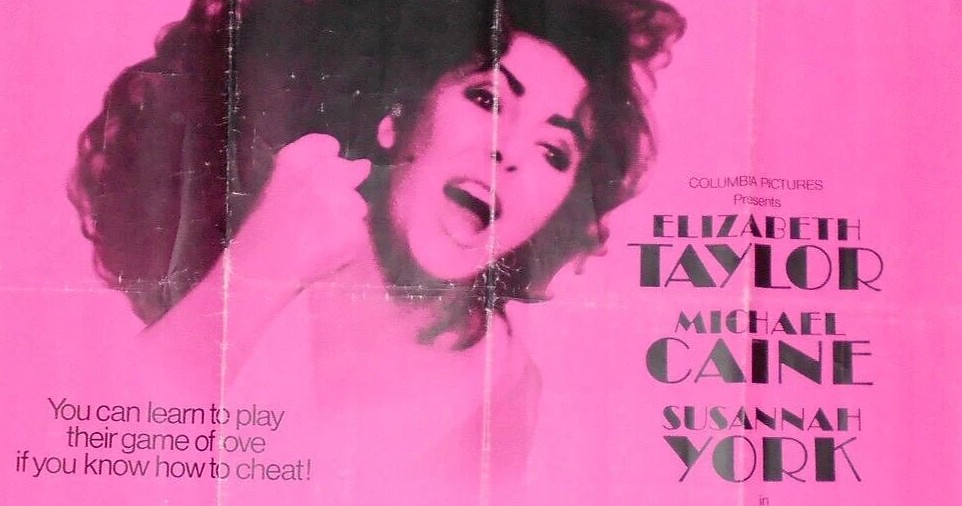
That’s much the same situation the childless Zee (Elizabeth Taylor) finds herself in, married to handsome wealthy architect Robert (Michael Caine) who acquires other women art the drop of a hat. He’s got three on the go here. When she arouses him, he still enjoys passionate sex with his wife, he has a thing going with his secretary and he home in on widowed mother-of-to Stella (Susannah York). He encourages the idea of an open marriage. Though it’s unclear how much she actually indulges, she’s capable of stimulating his jealousy through her imaginative tales of seduction.
While he’s sleek and slim, she’s showing the signs of wear, plastered in make-up and desperate to fit into dresses at least a size too small.
While this doesn’t enter the no-holds-barred marital hell of Who’s Afraid of Virginia Woolf, it’s mostly ugly. He’s a chauvinist pig, a bully, given to tantrums. While, verbally, she can give as good as him, she’s mostly kept dangling on a string, spending “his money” her only satisfaction, and although they live the good life of fancy house, parties and expensive restaurants, the only reason they are not divorced is it would be an inconvenience.
Clearly, his usual targets are “ladies of leisure” but Stella runs her own design business. Robert has the instincts of all predators, targeting the needy. However, Stella is different, appearing to offer the serenity missing from his life. Where he started looking for just another fling, he finds himself falling in love. It’s not entirely clear whether he intends to split form his wife or is merely setting up Stella in an apartment, but he buys and flat and they decorate it, though there’s no sign of her to boys living there.
Zee is accustomed to sabotaging his wanderings. She knows how to hit him where it hurts. She manages to trace him when he’s off enjoying a dirty weekend and fires him up by telling she’s crashed his beloved Rolls-Royce – whether she has or not is unclear, but it does the trick of spoiling his weekend.
And she’s got her own antenna, seeking out the weakness in the mistress whom she befriends well enough so that Stella confesses her dark secret. These days, that would take on a completely different complexion, and would be dealt with in a more sympathetic dramatic fashion. Stella was expelled for falling in love with a nun at her school, so clearly the victim of grooming. Zee exploits this, seducing the younger woman, ensuring Robert knows the secret, destroying his plans for a more idyllic future.
So on the one hand director Brian G. Hutton, moving away from his action comfort zone of Where Eagles Dare (1968) and Kelly’s Heroes (1970), has fashioned on of those crisp double-edged marital dramas where each partner strives for dominance but on the other has created a highly sympathetic portrait of men and women trying to offset their own frailties.
If you’ve only seen Michael Caine employ that steely-eyed mean street for a succession of tough good guys and villains as exemplified by The Italian Job (1969) and Get Carter (1971) you’re in for a treat. This is Caine’s fury in full force, though that is undercut by charm and vulnerability. But it’s Elizabeth Taylor (Butterfield 8, 1960) who has the more rounded character, seductive, mothering, calculating, equally vulnerable. Susannah York (The Killing of Sister George, 1969) has an equally challenging role, maintaining a calm and carefree exterior while seething underneath with desires she dare not admit.
In other hands, this could easily be handled in an exploitational manner, a love triangle, plenty sex with hints of domination, and lesbianism. But Hutton resists the temptation and it takes some time before we less in Who’s Afraid of Virginia Woolf territory than something like The Housemaid where the downtrodden individual turns out to hold the ace.
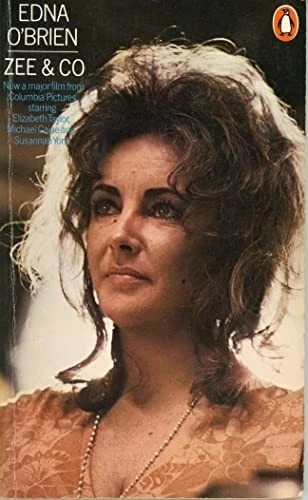
Written by Edna O’Brien (Three into Two Won’t Go, 1969) from her own novel, the screenplay is stagey at times, but the force of the screen personalities involved makes that irrelevant.
I caught it on Talking Pictures TV and it’ll be repeated there soon.
Thoughtful, stylish, scabrous and intriguing.


