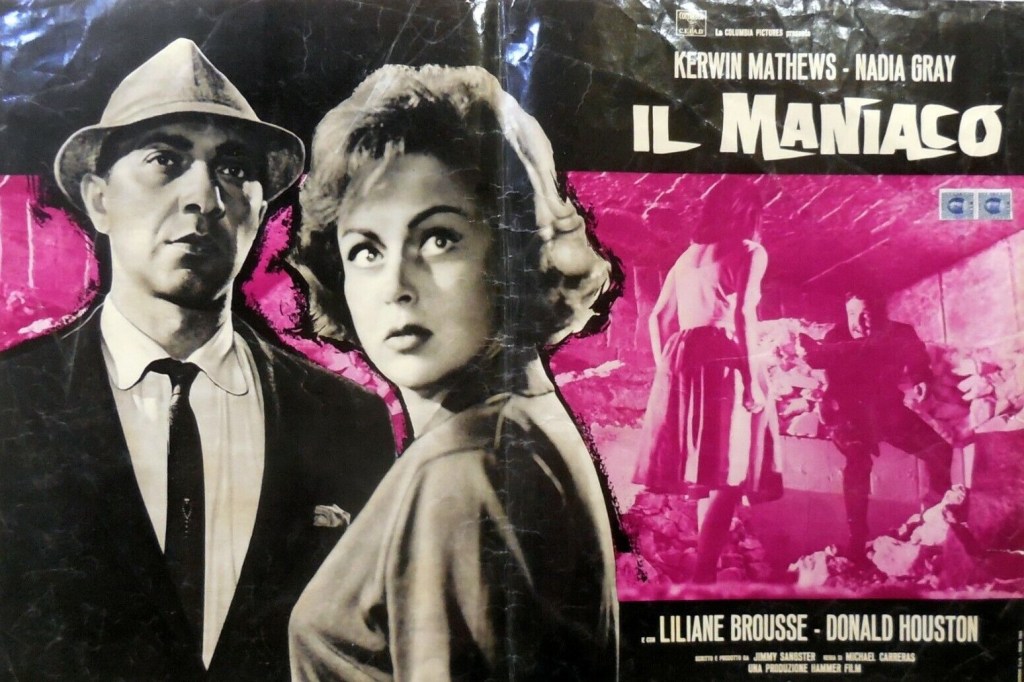
Maniac / The Maniac (1963) ****

Such an ingenious thriller you just have to applaud. Opening with a close-up of a predatory eye, this scarcely draws breath as it dashes through a latter-day film noir maze, spawning out auditory and visual cues, beautiful woman luring the dupe, twisting the expected narrative round her little finger.

Artist Jeff (Kerwin Mathews), setting up his easel in the Camargue, hardly one of the most tourist-friendly spots in France, eyes up Annette (Liliane Brousse), the daughter of a hotelier Eve (Nadia Gray), but, in extremely opportunistic style, settles for the mother. In true noir fashion she is using him, seducing him into a scheme to free her husband George (Donald Houston), incarcerated in a mental asylum for torturing and killing with a blowtorch the aforementioned predator who raped Annette four years before.
Eve convinces Jeff that in return for his freedom the madman will effectively give his blessing to their affair. It’s a deal only a besotted dupe would fall for. George has an ally inside the asylum, assisting his escape, but when George turns up, and Jeff drives him to Marseilles, he leaves behind the corpse of his criminal associate in the boot. Jeff dumps the body in the river.

Cue the start of a series of strange events. A fired-up blowtorch is discovered in the garage where Georges committed his initial crime. Annette, jealous of her mother’s relationship with Jeff, plans to leave and go with her father.  

And I’m sorry to say that in order to explain the attraction of this neat little picture I’m going to delve into SPOILER ALERT territory.  

All the while of course you are wondering whether George will keep to his side of the bargain, especially as Eve starts to get antsy with Jeff, and the investigating police inspector seems overly suspicious. And it being this kind of picture you expect a twist.

But not one this clever.

George, blowtorch at the ready, traps Jeff in the garage. He has fished the corpse out of the river. He plans to burn the garage to the ground, leaving behind two dead bodies, assuming the police will imagine that in a further bout of psychotic behavior the murderer gave in to his desires and killed again, but in the process accidentally killed himself.

But that’s not the final twist.

One of the victims survives. But which one? He is so badly mutilated as to be rendered unrecognisable and lies in a hospital bed covered head to foot in bandages. Has Eve’s plan backfired? Has she accidentally killed her lover?

But that’s not the final twist.

Eve knows who the man in the bed is. It’s not her lover. Because Jeff is just the dupe. The body dumped in the river was George. All the time Eve was visiting her husband in the mental asylum she was carrying on an affair with one of the guards. The guard killed George after the escape, retrieved the body from the river, left it in the garage and planned to kill off his competition at the same time.  If you’re going to be tabbed a maniac, you better behave like one.

It’s a shame you can’t see the shock on the face of poor Jeff because he is encased in bandages. And this isn’t just the clever villain unable to stop herself boasting about how clever she has been. This is Eve getting into the murder racket. She switches off his oxygen.

But that’s not the final twist.

Jeff ain’t dead. He wasn’t even on a life-support machine. He was just trussed up to tempt Eve in revealing herself. He had escaped the garage inferno and told the police what was going on. So you can guess the rest, but even then there’s one other ironic twist. Just like Jeff, the imposter George is as taken with the daughter as the mother.

The twists are so well done, the narrative so compelling, that would be enough to make a convincing case for entry into the category of cult. What makes an undeniable case is the directorial style. Sights and sounds drive the story as much as anything. The eerie bright light in the garage, the sound of blood dripping on the floor, the bold close-up of the eye, the advancing blow torch, setting it in a bleak rather than scenic area of France, are cinematic notions belonging to classic movies, not to a tawdry B-picture.

Although The Devil Rides Out (1968) is generally considered the top Hammer picture of the decade, I would argue this runs it a close second, and possibly even tops it.  Taking time off from his studio job Michael Carreras (The Lost Continent, 1968), later Hammer’s managing director, delivers a little masterpiece working to an effortlessly clever original screenplay by future director Jimmy Sangster (The Horror of Frankenstein, 1970).

It’s enough that Kerwin Mathews (The 3 Worlds of Gulliver, 1960) is playing against his screen persona as upright hero. The biggest advantage in casting Nadia Gray  (The Naked Runner, 1967) was that she was unknown and didn’t have the kind of onscreen presence that might have you doubting her motives from the start.  Liliane Brousse (Paranoic, 1963), in her penultimate movie, is initially too much all-arched-eyebrow and pout, only coming into her own when she becomes dutiful daughter rather than wannabe seducer. The pretend George, real name Henri, Donald Houston (A Study in Terror, 1965), hidden beneath dark glasses most of the time, is a dab hand at a pretend psychopath.

Surprisingly effective little gem.
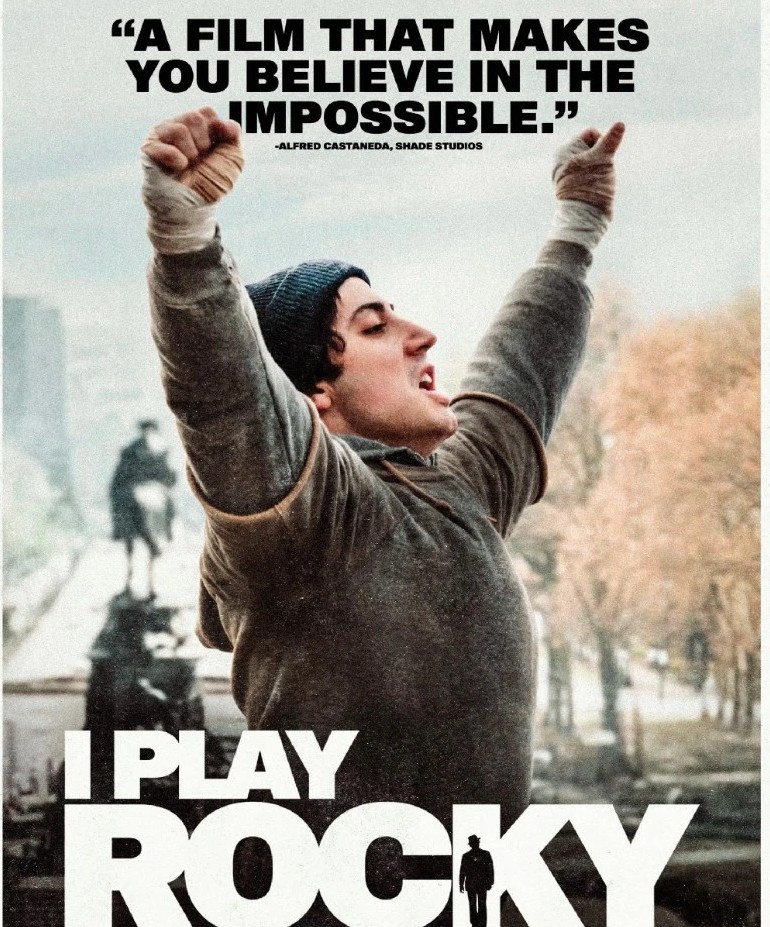
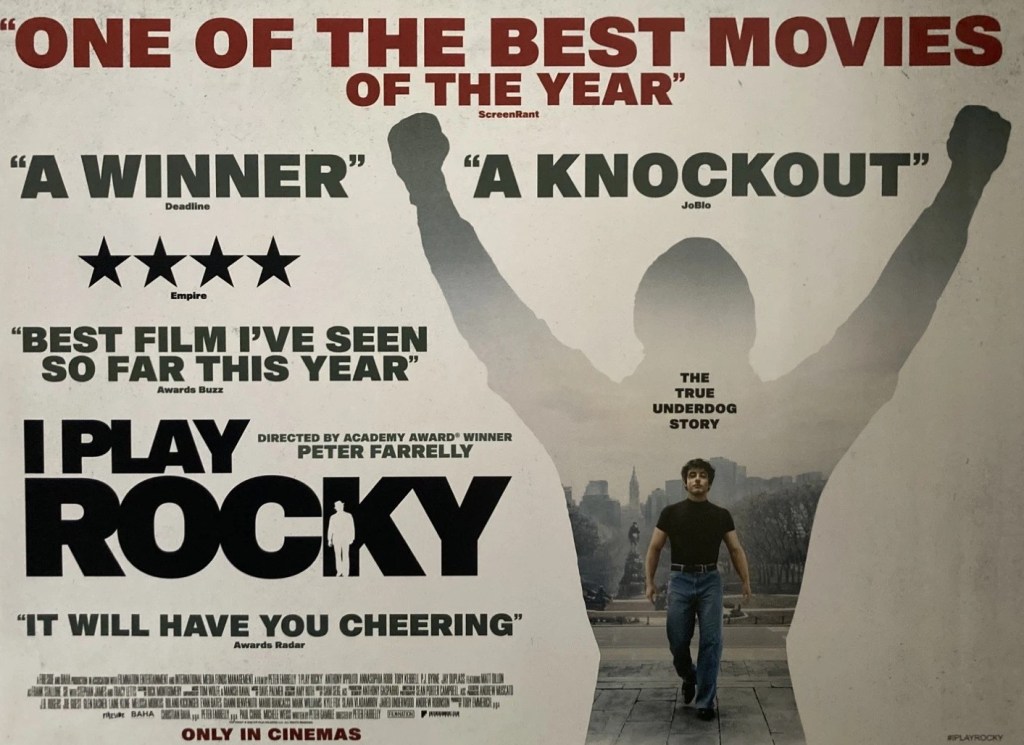
I Play Rocky (2026) **** – Seen at the Cinema

Of all the movie stars who might qualify for a biopic, I never thought I’d be watching The Sylvester Stallone Story. Nor enjoying it so much. Easily the best picture ever made about movie-making, in part because all the points it develops about the Hollywood process are drawn from real-life and not emanating from the fevered imagination of a screenwriter who has a point to prove or points to score.

I’ve not read Stallone’s autobiography which may well have covered this ground in print, so I came at with a fresh eye but also, I have to confess, a great deal of trepidation. I knew, of course, that the actor had famously held out to star in the movie he had written, but that was the extent of my knowledge.

Not the bad-mouthing of Stallone along the way, the fact that the budget was topped at just $1 million – a sum at the time barely sufficient for a B-movie – or that revolutionary use of the Steadicam was vital to the production, or that even such successful producers as Irwin Winkler and Robert Chartoff (with films as varied as They Shoot Horses, Don’t They, 1969, and The Mechanic, 1972, on their resume) were so beholden to the studio bosses.

My guess this was as low-budget a picture as Rocky (1976) itself. It has no stars whatsoever and director Peter Farrelly hasn’t had a well-received movie in nearly a decade, not since Green Book in 2018). But it’s not just the story of the making of Rocky that plays out almost as well as the film itself, but that the acting verges on the exquisite. The emotion in the scene where  Stallone (Anthony Ippolito) takes his girlfriend Sasha (AnnaSophia Robb) to meet his father (Matt Dillon) is carried through Sasha’s eyes.

Producers Winkler (P.J. Byrne) and Chartoff (Toby Kebbell) and director John Avildsen (Jay Duplass) are not just hard-nosed but very astute in movie-making and virtually every obstacle that Stallone meets is underlined by the realities of movie-making. There’s a fabulous scene when Avildsen explains to Stallone that he needs more from a particular scene without being able to explain what he wants except that the movie needs “the thing”, the undefinable acting element that makes a movie truly work.

Many scenes are the result of happenstance. Though initially set in New York, the story switched to Philadelphia because that was out of the reach of the unions. It’s Stallone who decides to dance around the top of the Philadelphia steps, Stallone who rejects the designated fight coordinator because the boxing scenes felt false, who breaks his hand because he didn’t realize that frozen meat was actually frozen so solid it was like punching cement. Neither Stallone nor Talia Shire (Kiki Seto) could ice-skate which put the kibosh on the way the scene was originally written.

I wasn’t aware either that movies Stallone made once he had the marquee power to make them, such as Paradise Alley (1978) and Fist (1978) were both written by him before Rocky and that the inspiration for making the boxing picture came from watching someone who shouldn’t have been in the ring with Mohammed Ali lasting so long in the ring that it roused the audience watching it on television in a bar.

This is just crammed with so many good moments that the narrative drive scarcely falters. The initial romance is endearing and well-written. Stallone’s recruitment for a soft porn feature is reflected through the eyes of the female casting  director who views him as male eye candy. The scenes with the dog that could have easily tripped off into sentiment are dragged out of it by reality. Studio head honcho Maddox (Tracy Letts) is driven by envy and revenge and clearly hopes the movie will flop so he can say I-told-you-so.

There’s a fairy tale element to this that could turn it into the feel-good picture of the year driven by word-of-mouth.

Anthony Ippolito (who played Al Pacino in TV mini series The Offer, 2022, which as an examination of Hollywood I found much inferior to this) is just superb, not just catching the way Stallone speaks but also the way he moves.  AnnaSophia Robb (Rebel Ridge, 2024) matches Stallone for emotional power. P.J. Byrne (The End of Oak Street, 2026) and Toby Kebbell (Salvable, 2025) are a superb double act, Jay Dupless (Other Mommy, 2026) exudes directorial steel and I could watch Tracy Letts (Ford v Ferrarri, 2019) all day long.

Peter Farrelly is back on top form and screenwriter Peter Gamble (Office Uprising, 2018)  has turned in a compulsively-viewable movie.

Without stars to provide marketing heft, this is ging to rely on word-of-mouth. It’s got my support for sure.

All In A Night’s Work (1961) ***

What wouldn’t Hollywood give now for a pair of personable players who could take as slight a piece of fluff as this and through sheer force of screen personality turn it into an enjoyable experience.  Based entirely around misconception, misunderstanding, characters at cross purposes and mild business satire this would have been hailed as a classic had it appeared in the golden age of the screwball comedy.  

Playboy Tony Ryder (Dean Martin) inherits a publishing empire from his uncle but discovers an unsavory fact about his relative’s demise that could severely damage the business. A naked woman was seen running from his hotel room. When hotel house detective Lasker (Jack Weston) identifies her as Katie Robbins (Shirley MacLaine), a lowly employee in the company, the suspicious minds of big business surmise that she intends to blackmail them.

The plot, such as it is, concerns Ryder and Co’s attempts to avoid this, by bribing her to shut up and at the same discrediting her. Ryder is conflicted, in part because he fancies her rotten, in part because he doesn’t quite believe she could be so duplicitous, and in part because he can’t afford to risk believing her. For some reason, as a researcher, she is involved in union negotiations, giving him the opportunity to get to know her better, as part of a “sub-committee of two” established to examine union claims more thoroughly.

So it’s basically one set-piece after another. A flashback explains why Katie came to be in the uncle’s bedroom – to escape in the same hotel the lustful attentions of the elderly wealthy guest Kirby Hackett (Johnstone White) whom she saved from drowning. Her behavior at the uncle’s funeral suggests she is stricken by his death. And unfortunately, she is the recipient from the grateful Hackett of a mink coat worth thousands of dollars which, on her meager salary, she can’t explain.

Katie is dithering over her planned wedding to dull vet Warren Kingsley Jr. (Cliff Robertson) and, aiming to discredit her with him, Ryder plants the seed that actually she is a showgirl on the side, arranging for her to receive five-star treatment at various nightclubs, inciting suspicion from her fiancé and his extremely conventional parents. In order to get to the bottom of everything, Ryder agrees to be bugged for a private meeting with Katie. You can imagine how that goes. But the outcome is never in doubt of course.

What the audience knows but the participants do not is that this couple is well-suited. Ryder is far from the playboy of his reputation, having started at the bottom of a rival publishing empire and worked his way up to the top, so he turns out to be a more astute businessman than the sycophants on the board anticipate – “you may not be much but you’re all we’ve got” typical of the welcome he receives. Far from being a good-time girl, Katie is a woman of principle, refusing to take the mink coat as a gift and determining to pay it off at the rate of $10 a week.

The humor derives almost entirely from the cross-purpose nature of the plot and the set-pieces work out well, especially when Ryder kidnaps a sheepdog as an excuse to visit the vet, and stumped for a reason comes up with the notion the animal is suffering from amnesia. “He gives me that ‘who are you’ look,” Ryder explains. As the tale unfolds Kingsley becomes more insufferable by the minute.    

There’s a romantic subplot involving Katie’s outgoing office chum Marge (Norma Crane) and the shy detective and some satirising of big business but that all plays out in relation to the main story.

If you remember Dean Martin from heavyweight dramas like The Young Lions (1958), Some Came Running (1958), Rio Bravo (1959) or the breezy Rat Pack comedies and the equally breezy Matt Helm spy pictures, you will probably not be aware he started his career in comedy, as one half of the Dean Martin-Jerry Lewis combo, a box office sensation in the early to middle 1950s. So, although he was primarily the straight man to the more obviously comedic Lewis, he was still well versed in the nuances of the genre. Nothing is ostensibly played for laughs, but he gets the laughs nonetheless.

Martin was always badly under-rated, in part because of the perma-tan, in part down to the his television show, and in part because he just wasn’t Frank Sinatra. But he was an accomplished actor, as this proves. One of the aspects of his performance I liked was that he moves with purpose. In most movies, characters cross a room or change position simply because a director calls the shots. But here, every time Martin moves it’s for a designated reason, to touch something, admire something, maneuver himself closer to someone else.

Shirley MacLaine is also refreshing, considerably less conniving or lovelorn than in her breakthrough role in The Apartment (1960), and coming to believe in her screen presence. She inhabits this character’s innocence very well, is suitably baffled on occasion, and exhibits a screen persona that simply lights up the screen. Together they are a great screen couple and in the charisma-starved Hollywood of today would be very welcome.

Cliff Robertson (The Honey Pot, 1967), almost unrecognizable without that hefty hunk of hair and the grandstanding he often effected, plays his small role to perfection. Norma Crane (Penelope, 1966) and Jack Weston (The Cincinnati Kid, 1965) – minus the screen tics he later exhibited – are quietly effective. Veteran Charles Ruggles (The Parent Trap, 1961) puts in a decent shift.    

Confident direction by Joseph Antony (The Rainmaker, 1956) in just his fourth film out of a grand total of five makes you forget this was based on a hit play by Margit Veszi and Owen Elford. The screen transition was down to Maurice Richlin (The Pink Panther, 1963), Edmund Beloin (Donovan’s Reef, 1963) and future bestselling author Sidney Sheldon (Billy Rose’s Jumbo, 1962).  

The real beauty of this piece is how effortless it all looks. The characters are grounded and believable, viewed from varying perspectives the plot remains logical, and there is enough daft invention to tickle your fancy.

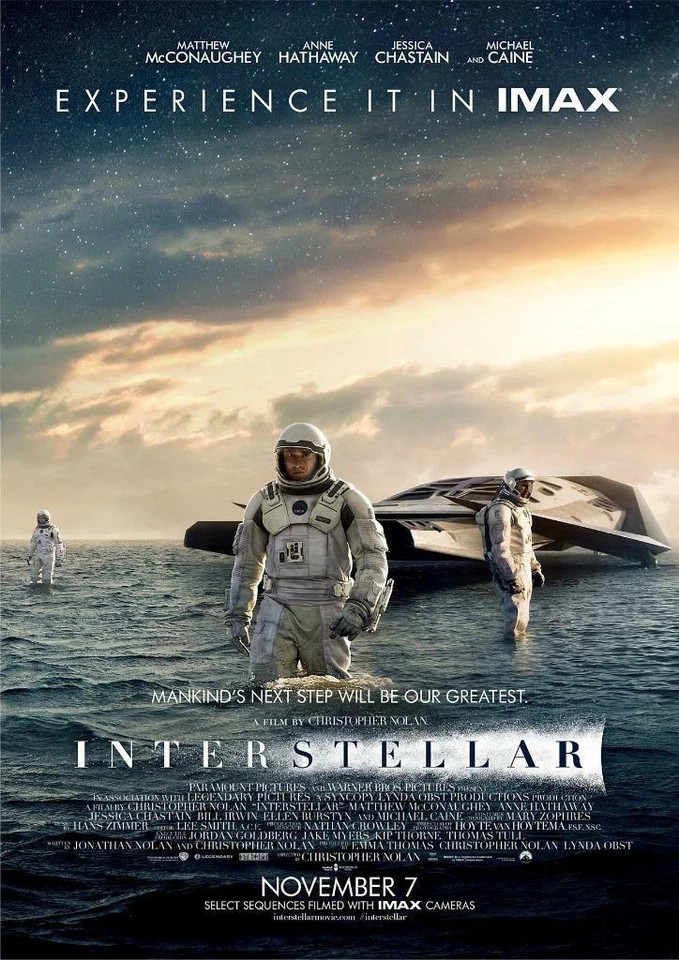
Interstellar (2014) ***** – Third Viewing in IMAX

I have to confess I wasn’t a big fan of Interstellar when it first came out. I’m not a big fan of Matthew McConaughey, with that aw shucks accent, and couldn’t get my head around the scientific mumbo-jumbo. But now it seems like a greatest hits package, scenes, sequences, dialog to savor and the bonus of one of Hans Zimmer’s best scores – what would the cornfield section be without his compelling repetitive music?

If you take director Christopher Nolan’s work as a whole this is the second in a quartet – Inception (2010), Oppenheimer (2023) and The Odyssey (2026) being the others – that expresses his artistic maturity. The conquering of new worlds comes at a personal price. The speech of Odysseus acknowledging that it’s a different man who returns from adventure, ideas of heroic stature stunted by what needed to be done to complete the task, encapsulates this cinematic philosophy.

In some respects, the key character here is the bit player. In the biggest piece of audience deception since Alfred Hitchcock killed off the female lead halfway through Psycho (1960), Nolan goes the other way, introducing a big star (Matt Damon) in an unbilled appearance. And what a doozy of a role. Audiences would have been more likely to accept McConaughey as the kind of character who always has a selfish side hustle, but not Matt Damon, who had grown into his generation’s Tom Hanks, the James Stewart guy-next-door role.

But it’s Damon’s character, Dr Mann, who goes off-piste in terms of commitment. He’s reneged on the original deal, to, if necessary, give up his life for the cause of scientific advancement and/or saving the world. Sure, in making that initial promise, glory would have gone to his head, but now, abandoned in the middle of the universe, with no hope of a future, he’s lost all that grandstanding humanity and doesn’t care who loses out as long as he gets to live. And you could argue that’s the starting point for Ryland Grace in Project Hail Mary (2026) who has to be pressganged into his mission,

Yes, Cooper (Matthew McConaughey) realizes at the end how much he’s going to lose – the scene of him begging his daughter back through time to prevent him leaving on the original voyage is one of the most moving scenes ever shot. The mumbo-jumbo still seems like mumbo-jumbo to me, even if it provides concrete proof of Einstein’s Theory of Relativity as it relates to time.

But that’s a minor quibble in what’s otherwise just a glorious picture. Even the big points Nolan wants to make are presented in typically minor fashion, that a right-wing lunacy has taken hold in a world on the brink of self-destruction that includes the official denial that the lunar landings ever took place.

The clues to the maps that will reveal the treasure to save mankind are initially distinctly old-fashioned, Morse Code, the binary system, the tracking of a spent drone, before we’re diving into the more advanced notions of wormholes and the fifth dimension. That eminent scientist Professor Brand (Michael Caine) would commit scientific fraud, concealing the results of his experiments because they clash with his desires, keeps us in the human loop. Man wants so much to make a breakthrough that he just pretends he has done so that the project will be greenlit.

Yes, the galaxy and the universe contains untold wonders and as many terrors – an ice-bound planet is no place to build a new community nor is one where waves reached the heights of skyscrapers. And the universe has a pretty hard time of it conforming to human desire or need when virtually all the major humans come with major emotional flaws that are liable to drive them as much off-piste as Mann.

Brand’s daughter Amelia (Anne Hathaway) is as prone as her father to adjusting the facts to fit her emotional demands, more desperate to land on the one planet which contains her lover than any other. And Murph (Jessica Chastain), Cooper’s daughter, is twice duped by the men she instinctively trusts the most, once by her father and once by Professor Brand. Her response to knowing that the mission has been successful is to tell her brother that her father hadn’t lied, but had abandoned them for justifiable cause.

One of the elements that’s common to this quartet is key to the Nolan style. His mastery of tension is second to none, and that builds towards a climax because there’s not one climax involved but generally two, sometimes three, as various events arrive at their conclusion at exactly the same time.

As you will well be aware, I’m one of those moviegoers that has a tendency to go back and see favored films again and again, drowning in sheer enjoyment. Sometimes, as recently with Ridley Scott’s Kingdom of Heaven (2005), I come to the point of a viewing too far and find my initial enthusiasm has dried up. So re-viewings always come with a certain amount of trepidation, that a whole shedload of wormholes will uncover flaws I had previously missed.

Luckily, this time round, that wasn’t the case.

Behind the Scenes: The Oscar Bait-and-Switch Trailer

You don’t mind if I have a little rant, do you?

I saw one trailer the other day which promoted the fact that the star was an Oscar winner. And another that heavily marketed that was laden down with Oscar winners, nominees and, heaven help us, a Golden Globe.  Automatically, to me, that has the effect opposite to what the marketing gurus imagine. To me, it means these upcoming movies have a good chance of being duds. It always seems to me a last-minute – or lazy – method of trying to retrieve a desperate situation. As if trailer-makers haven’t cottoned on to the fact that anyone entering the Oscar arena is as likely as anyone else to be unable to string two hits together in a row.

Here’s an unwelcome fact to lob into the equation. Over the last decade, the Oscars have produced 200 nominees. Yes, two hundred, counting in the odd character who has been elevated to these apparently auspicious ranks more than once. So what that makes the Oscars in terms of marketing is “ubiquitous.” Every man, woman and his dog had one.

When the Oscars are such common currency what’s the thinking behind proclaiming an actor as definitely worth seeing just because he or she is one of the (elevated) herd. And here’s another anomaly. The only way these days you’re going to get your name in letters on the screen during a trailer is if you are one of the “elevated.” If that’s not snobbery, I don’t know what is.

What’s more, trailer-makers have decided we don’t need to know who is starring in a picture – even if we’ve never heard of them. So many trailers these days don’t even mention who’s in the picture. so you’re sailing in there blind unless you’re such a regular cinemagoer that you can recognize every personage that passes over the screen.

But there’s one player in Hollywood who is much more worthy according to the trailer-makers of deserving to have their name in words plastered all over the screen. What’s more, they are given the ultimate accolade. One not bestowed by the Academy or even the Golden Globes. They weren’t awarded this distinction by their peers. Some marketing genius just dreamt it up.

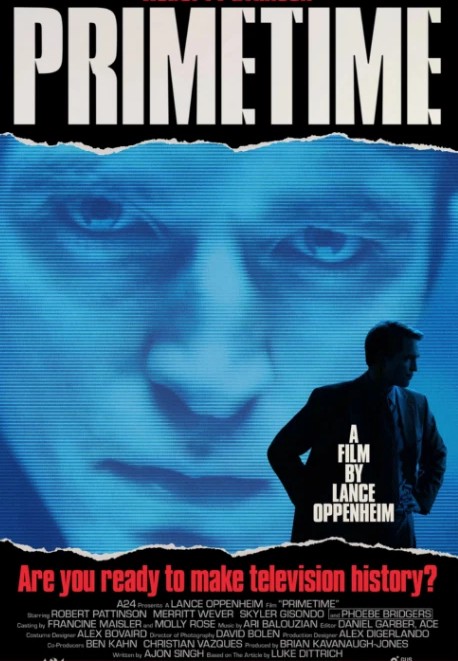
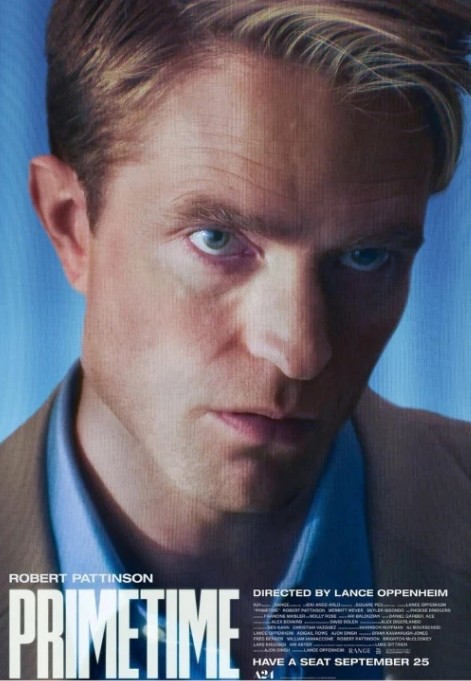
Yes, we’re talking about the “visionary” director which, in itself, comes without qualification. Is this a director whose few films have met with critical praise but been duds at the box office? Or someone whose vision is just so barmy that it’s what drives audiences away. I, for one, will be approaching Lance Oppenheim’s You Can See Everything (2026) with some trepidation having been totally turned off by his predilection for giant close-ups as shown by Primetime (2026).

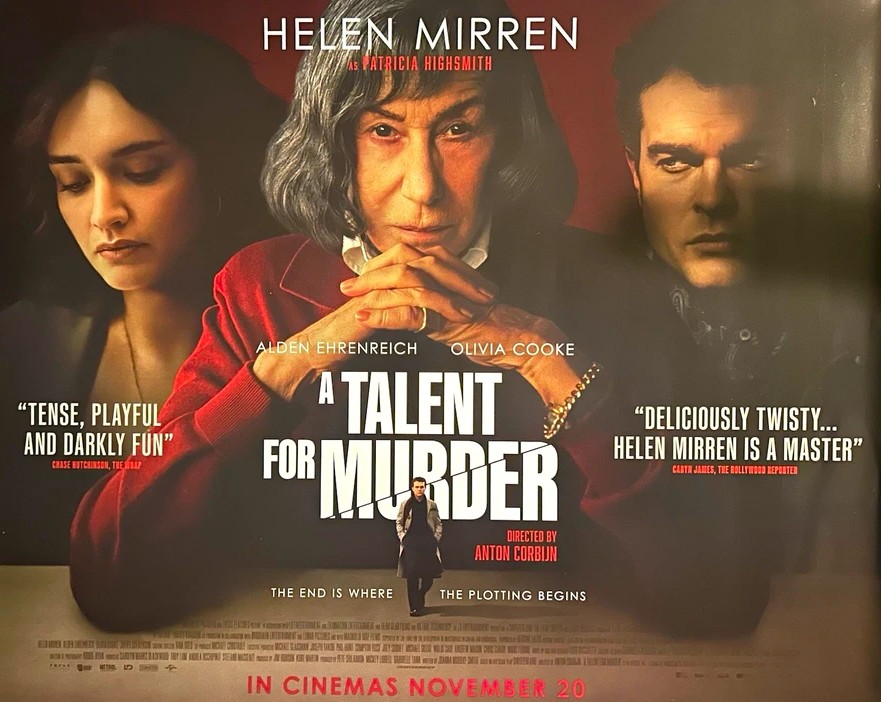
I’m not sure whether being tabbed “legendary” is one step up or one step below “visionary” in trailer terms but the fellow who directed the first movie I mentioned, A Talent for Murder, was provided with that “accolade” in the trailer. So I decided I’d see what this director had done in the past few years to make him “legendary.”

It turns out what’s legendary about this director is that he hasn’t made a feature film in the past decade. It’s been eleven years since any picture came out bearing his name, but if you’re a Depeche Mode fan you might be more familiar with his name since  directing their music videos is what he has done in the meantime.

His name is Anton Corbijn. He’s Dutch and he’s directed – wait for it – a total of five movies in his entire career. And he’s not a youngster either. He’s past 70. So you’re going to need to be nifty on your feet to remember him at all, never mind assign him legendary status. There are 119 credits on his Imdb account, but 114 of these are music videos, so maybe in that restricted world he might be better known.

For the record, he’s made pop music biopic Control (2007) starring Sam Riley, The American (2010) with George Clooney as an assassin, espionage yard A Most Wanted Man (2014) and another biopic Life (2015). So movies that are maybe worth a look but hardly cult breakouts or collecting the kind of box office figures that would make us remember them.

Admittedly, he has no Oscar mentions to his name, so presumably “legendary” was the easiest way out for the trailer-makers. Though I guess it’s just going to confuse the normal audience who won’t have a clue who he is and, unlike me, won’t be inclined to tap into Imdb to find out.

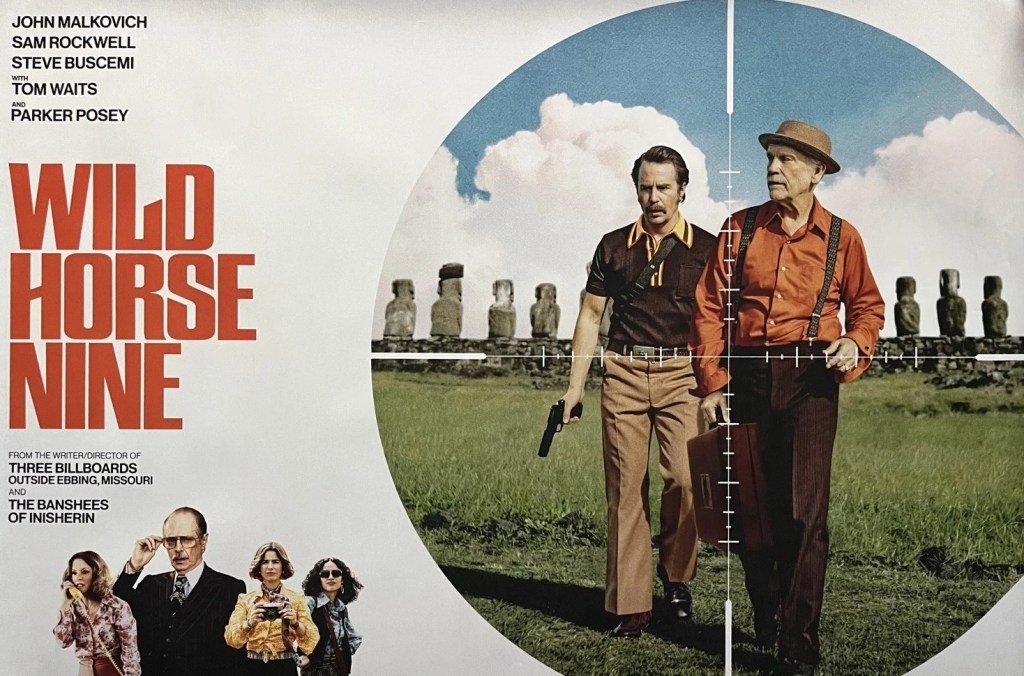
The other picture was Wild Horse Nine. And while it starred actors whom the general moviegoer would not get out of bed to see in a starring role,  the director has an Oscar, toplined star John Malkovich has two Oscar nominations and Sam Rockwell has won a Best Supporting Actor Oscar and Tom Waits accounts for the Golden Glone. But of the five films directed by Martin McDonagh I’ve only enjoyed one. I might have imagined I’d enjoy this more because the cast (including Steve Buscemi) all have oddball credentials, but once you start chucking all these Oscars at me I begin to entertain doubts.

And don’t get me started on the insane use of film festivals as a marketing tool. Very few filmgoers will even have heard of Cannes, never mind Venice or Sundance, and least of all events like TIFF.

I don’t usually use this column to rant. But there’s a first time for everything.

Primetime (2026) **** – Seen at the Cinema

Directorial entitlement comes close to derailing this fascinating tale where it’s not just the criminals who have lost their moral compass. I should have known what I was letting myself in for in terms of cinematic style as this movie was preceded by a trailer for Lance Oppenheim’s more acclaimed You Can See Everything (2026) which was filled with giant close-ups.

Giant heads abound here but these close-ups, much larger than normal, rarely provide the viewer with any more character information that ordinary-sized ones, and instead detract from the impact by effectively concentrating more on style than substance. Added to that the director has a predilection for the kind of grainy footage that was standard in 1970s crime pictures. Other throwbacks include just plain weird experiments with film exposure.

Which is a shame because it makes this movie, which in any case given the subject matter, a difficult watch an unnecessarily more difficult one. Nobody comes out of this well, not even the supposed good guys. Vigilantes, hounding paedophiles, have decided to fund their endeavors by filming the capture not for the purposes of evidence but to satisfy audience prurience by punishing offenders by putting their faces on television, the modern equivalent, we are smugly told, of those committing misdemeanours in the olden days being put in the stocks in the village square.

But you wonder just how many of the good guys would deserve a similar fate and to some extent stuffed full of arrogance and a complete lack of self-awareness virtually everything they film exposes them as venal characters.

Chris Hansen (Robert Pattinson), real-life host of the real-life To Catch a Predator series (2004-2007), is a mean-minded, occasionally deranged, unfaithful, ruthless operator who checks out himself on Google. Obsessed with becoming a bigger player on television, he’s carved himself out a career as an accountant’s version of Sylvester Stallone or Clint Eastwood in making the villains pay. Having snookered the offenders, he walks in on them like a presenter on This Is Your Life and confronts them with their crimes while parading them on national television.

Eventually, he catches the eye of the big boss at NBC who wants to upgrade his show and put it on primetime to compete with ABC’s megahit Lost (2004-2010). That means finding bigger bad guys and adding further pressure to a program already bursting at the anxiety seams.

While Hansen and producer Andie Bender (Merritt Weaver) view themselves as the good guys they see nothing meretricious in using as “Decoy Dan” young actor Dan Plum (Skyler Gisondo) who can effectively come across as much younger than his years with this freckled childish face and high-pitched voice teenager. Dan’s job is to play the unwitting child welcoming abusers into his home.

Neither Bender nor Hansen, more interested in filming as much shock as possible, explain to the young man exactly what he’s letting himself in for. That deception, as far as the principals are concerned, is worth it to see the look on Dan’s face when confronted with an erection.

Eventually, forced to look for bigger prey to satisfy the ratings, the producers locate the “big whale”, a nationally-known politician who, rather than give in to the indignity of appearing on the show, blows his brains out.

The big problem is that all the characters come over as shallow. We never find out the reason for Hansen’s obsession with exposing predators except some loony nonsense of seeing an actual monster in India. His home life is very sketchy as is his affair. Andie just comes over as a small-screen thug, life ruled by ambition.

So while this is very even-handed in casting as harsh a light on the good guys as much as the bad guys, the stylistic mess messes around with what should have been a more straightforward and more interesting picture.

Robert Pattinson (The Odyssey, 2026) is again excellent, probably the only topline actor making a thing out of playing creepy characters. Merritt Weaver (Christy, 2025) is superb as the producer with no idea how sleazy she comes across and Skyler Gisondo (Jimmy Olsen in Superman, 2025) is heart-breaking as the innocent lad witnessing depravity.

Written by debutant Ajon Singh based on an Esquire magazine article by Luke Dittrich.

Compelling, yes, but be warned about the stylistic intrusion.

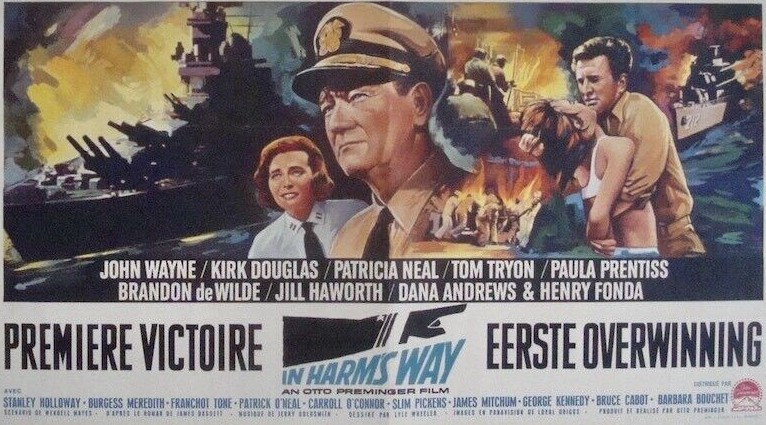
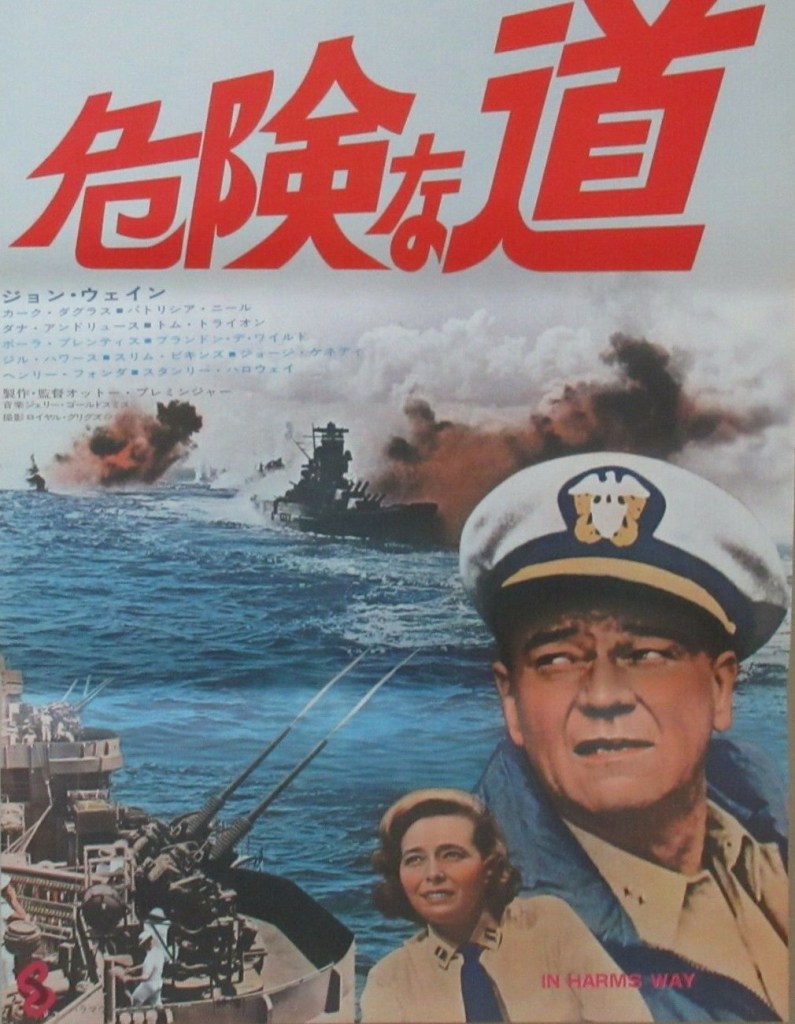
In Harm’s Way (1965) *****

Preminger at a peak, the more I watch this picture, not just the more impressed I become but the more I want to watch it again – three times, as it happens, for this review. A tale of heroism populated by morally wounded heroes, the undertone of critique for the Naval establishment dealt with in brilliant narrative fashion, terrific pacing, one of John Wayne’s very best performances, Kirk Douglas not far behind, great action scenes, and one of the few movies to fulfil this director’s original intent.

You can, of course, argue that it’s the height of political PR. Just as the Americans managed with The Alamo and the British with Dunkirk, the aim was to turn defeat into victory, so this moves beyond the humiliation of Pearl Harbor to the victories beyond. But in some sense Pearl Harbor is just the prologue to a stiffer examination of men at war, rather than sailors taken to task over the complacency that left them so open to cataclysmic attack.

And while there’s a number of sub-plots, these are more expertly handled than I can recall in many another lengthy big-budget picture, no endless cutting between major and minor characters, but the minor characters only entering the frame when they have a dramatic part to play.

Captain “Rock” Rockwell (John Wayne) falls foul of his superiors for basically being in command of a ship sunk by a torpedo. On a technical point, he’s stripped of command, and reduced to a desk job, a casualty of the peace-time hierarchy determined to find someone to blame, only returning to active duty – and promoted to Admiral – when more war-oriented figures are put in charge.

The desk job gives him time to romance feisty nurse Lt. Maggie Haines (Patricia Haines) who has the cojones to take charge of the budding relationship. She happens to share an apartment with another nurse, the much younger Ensign Annalee Dorne (Jill Dorne) who is dating entitled Ensign Jeremiah Torrey (Brandon de Wilde), Rock’s estranged son.

Jeremiah works for slimy glory-hunter Commander Neal Owynn (Patrick O’Neal), a former U.S. Congressman using his political skills to worm his way into the office of by-the-book Vice Admiral Brodick (Dana Andrews). Rock shares his apartment with Commander Egan Powell (Burgess Meredith), a thrice-married playboy, high up in Navy intelligence.

Rock’s second-in-command is Commander – junior to a captain in case you don’t understand the U.S. Navy ranking system – Paul Eddington, a hothead whose mourning for dead wife Liz (Barbara Bouchet) results in him also being reduced to a desk job and exiled to the Pacific. On the fringes of the story are Lt. Commander “Mac” MacConnell (Tom Tryon) and pregnant wife Beverley (Paula Prentiss).

How all these characters enmesh is the consequence of a quite brilliant screenplay by Wendell Hayes (Advise and Consent, 1962). Rockwell and Eddington both seek redemption, the former to prove his Naval worth and regain the affection of his son, the latter to absolve himself for his terrible actions.

You can always tell the hero in war films because they are so rarely a physical casualty of war, all the others are killed and wounded but hardly ever the hero, so it takes something for the Hollywood Hero of the Century to play a character who is wounded not once but twice, and for the early part of the picture walks around with his arm in his sling (not quite an echo of the way he holds his arm in The Searchers, but evoking the same internal conflict).

The only supposed out-and-out hero is MacConnell, but his inaction at the beginning of the movie fails to prevent the death of Eddington’s wife. And his heroism largely takes place off-screen and it’s worth noting that Rock doesn’t raise a rifle or pistol in anger (or even get into a punch-up as was the actor’s wont in other films). Being in charge he’s removed from the core action even if suffering the consequences of battle. In a marvellous touch of irony, Rockwell is the most passive hero to hit the screen. It’s an incredibly bold and self-confident director who would even think of luring audiences into an action picture starring the Hero of the Century and then denying him a single moment of screen glory.

Much has been written about the cinematic arc John Ford took in the beginning and ending of The Searchers, the symbolic opening and closing of doors, but since Preminger is long out of critical favor nobody’s has bothered to notice how much of this film concerns cinematic echo.

To take the most obvious example, the first witnesses of the airborne Japanese attack on Pearl Harbor are illicit pair Liz Eddington and her paramour (Hugh O’Brian) and towards the end it’s her husband Paul, by this point guilty of horrendous behaviour, who leads the airborne fightback against the enemy.

A beach – where Liz and escort make love – is how the director initially pushes the audience towards sympathising with the drunken Eddington. A beach is where we later learn to despise him, as he brutally rapes Ensign Dorne. And it doesn’t take much to work out that his wife’s exuberant wildness explains Eddington’s initial attraction to her, not realising that psychologically it provides him with an excuse for his own darker wildness, initially restricted to self-destruction but when it truly emerges it’s to the detriment of an innocent.

And that’s before we get on to Rockwell as the messenger of death, delivering the bad news to wives, and then being on the receiving end after his son dies in battle. And finally, the political peace-time high-ups get their come-uppance in actual war.

It’s insulting – as some have suggested – that the performance of John Wayne (The Hellfighters, 1968) is the result of undiagnosed cancer when in fact this is a finely nuanced role of a high-ranking figure living out in his life in regret, at times quite shamefaced about abandoning his son at a very early age. Preminger cracked down on Wayne’s habit of splitting his lines in two, so those typical pauses we have come to expect are in large part gone, and it helps the movie’s pacing. For most of the movie the character is saddled with consequence. That passivity that the director saw as essential to the role is virtually present all the time.

Preminger wrings a different performance, too, from Kirk Douglas (A Lovely Way to Die, 1968), equally laden with regret, but not enough to prevent him lashing out and the actor is accorded two quite stunning scenes, the first as he broods in silence over his wife, but for the second, prior to raping Ensign Dorne, the stone-cold look on his face suggests a serial killer held at bay for too long and now about to explode.

Burgess Meredith (Hurry Sundown, 1967) is another brought to directorial heel, his more common scene-stealing and vowel-stretching also eliminated, but in exchange given a larger-than-life character on which to expend screen energy. The entire cast is good-to-excellent and it’s jam-packed: Patricia Neal (Hud, 1962), Tom Tryon (The Cardinal, 1964), Paula Prentiss (Man’s Favorite Sport, 1963), Brandon De Wilde (Shane, 1953), Jill Haworth (Exodus, 1960), Dana Andrews (The Satan Bug, 1965), Franchot Tone (Advise and Consent, 1962), Patrick O’Neal (Stiletto, 1969), George Kennedy (Cool Hand Luke, 1967), Henry Fonda (Battle of the Bulge, 1965), Barbara Bouchet (Danger Route, 1967) and Stanley Holloway (My Fair Lady, 1964) Many of the supporting cast were also playing against type – Prentiss as the young wife falling to pieces, Andrews and O’Neal as slippery political types, Holloway  a guerrilla, and perhaps most interesting off Neal, not the typical woman left behind when the man goes off to war but, in her role as nurse, entering harm’s way herself.

And despite criticism of the miniatures used in sea scenes while that might have been obvious on the big screen you don’t notice it on the small screen. The action  scenes are very well-done for the time, and quite unusual in that by and large it’s the Americans who appear shell-shocked not the enemy.

Cramming this much narrative into the overall arch of Pearl Harbor and retaliation against the Japanese, while bringing so many different characters to the fore with clear dramatic purpose is an amazing achievement, screenwriter Wendell Mayes (Advise and Consent) doing the heavy lifting in this department.

But Preminger the director is very much to the fore, in his composition and use of the camera for long tracking shots (a particular favorite of mine) such as at the beginning. A riveting watch full of splendid acting. Shooting it in black-and-white might have at one time appeared to date the picture but instead it has rendered it ageless. Five stars without a doubt.

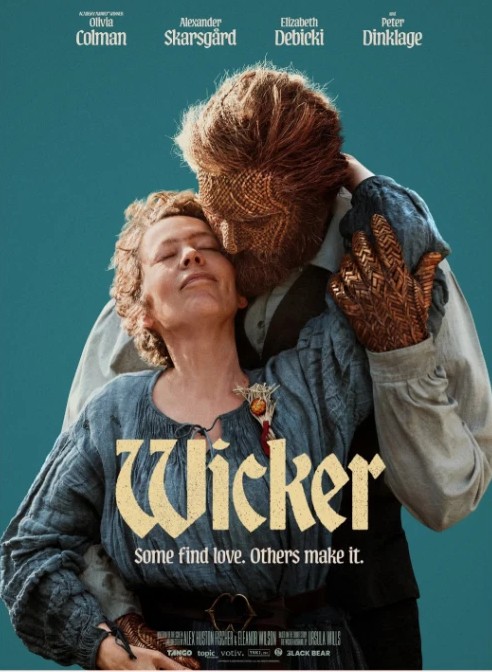
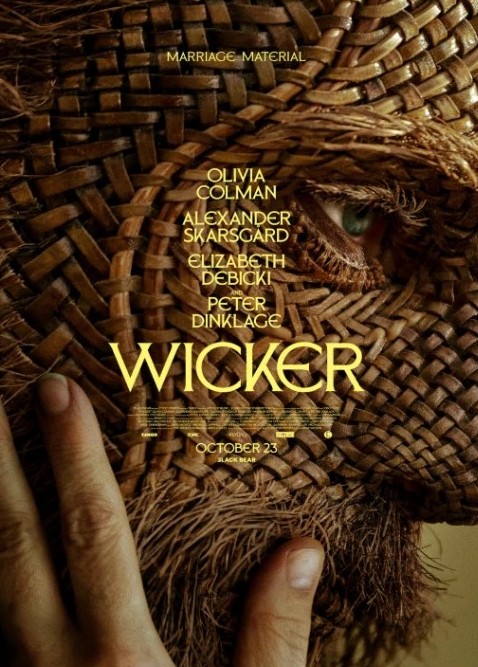
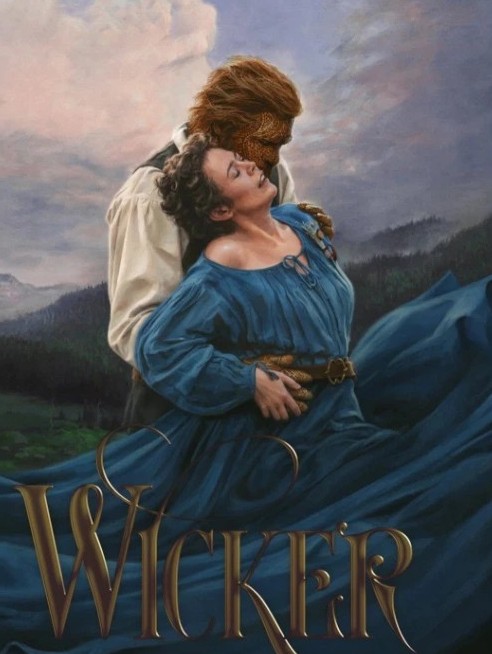
Wicker (2026) **** – Seen at the Cinema

I’ve been duped so many times before by well-meaning critics giving rave reviews to British pictures in a forlorn bid to support the domestic industry that I came at this with some trepidation. Maybe this is a taste of what we can expect when the biggest of the best-selling “romantasy” novels, the most successful genre in publishing at the moment, hits the screen and women take a fancy to all sorts of strange creatures. And in that context, a bit of harmless wood may be mild in comparison to what awaits us when the first romantasy hits the screen.

Think Grimm’s Fairy Tales before they were edited down for children’s consumption or perhaps Angela Carter whose The Company of Wolves (1984) certainly fell into the sexy romantasy category.

What’s particularly satisfying here is that the story develops. The initial concept doesn’t just sit there in the standard Hollywood tradition of wronged person winning out maybe after having to spend some time with a handful of dwarves or relegated to grimy kitchen duties.

And also, there’s a very contemporary feel to it, in that everyone is obsessed with sex, the men whether they are getting enough, the women with satisfaction issues.

The medieval setting is also purpose-built. All the characters are known simply by their occupation or their relationship to a male with an occupation. There are some clever twists on wedding rituals, for example, the bride fitted with a metal collar, and instead of a thrown bouquet indicating who might next walk down the aisle it’s a lovingly crafted wooden egg created by The Basketmaker (Peter Dinklage) who otherwise can commune with the supernatural and create The Wicker Husband (Alexander Skarsgard) to satisfy the desires of the lonely middle-aged Fisherwoman (Olivia Colman).

She’s something of an outcast, an orphan, living outside the village, only connecting with the villagers to sell her fish or be made fun of, especially by the snooty, condescending Tailor’s Wife (Elizabeth Debicki) who rules the roost.

Malice will out. Everyone is susceptible to suspicion. And lust? Well you can certainly hang your hat on that. So despite the wooden man’s gallantry and gentle nature, his actions stir deep emotions in the village. Whoever heard of a man saying romantic things to his wife? Or of fulfilling her night after night with such endeavor that he’s constantly breaking their bed?

The Tailor’s Wife sows the seeds of suspicion. She tells the Fisherwoman that her husband is unfaithful, that he’s been fixing the sexual problems of other lonely wives. Initially, she’s able to dismiss this as jealousy but when a married woman turns up on her doorstep bearing a Willow Baby she loses it. And in the grand tradition  of The Wicker Man she sets him afire. But there’s a very satisfying sting in the tale, orchestrated by The Basketmaker where domestic truths are outed and relationships sundered.

Subsidiary characters are well observed. The young maritally inexperienced Bottlewasher (Gustav Lindh) feels distinctly unloved when he solicits little response from his wife (Marli Siu) during lovemaking and hence to show how much he loves her he takes a leaf out of The Wicker Husband’s book and sets to mending the roof. When he falls through it and breaks his ankle that stirs in her the reaction he desires. Another couple improve their sex life by playing at wife and wickerman.

But none of this is delivering in the snigger-snigger Carry On style suggested by the trailer though certainly the sexual taunts are coarse and there’s an odd premarital ritual where a man with a carrot for a penis has it gobbled off by a goat. There’s a terrific dance routine that may well be resurrected in the manner of cult for movie lovers to perform at some function or other.

Olivia Colman adds a genuine comedic string to her bow, underplaying rather than overplaying as in The Roses (2025). Britain is surprisingly rich in female actors who can get films green lit – Helen Mirren (another new picture just coming up) and until recently Judi Dench and Maggie Smith being the others. Elizabeth Debicki (Maxxxine, 2024) is the other standout here along with Alexander Skarsgard (Lee, 2023) whose performance is anything but wooden, quite an achievement given his physical restrictions.

Directed by the double act of Alex Huston Fischer (Save Yourselves, 2020) and wife Eleanor Wilson (Save Yourselves) who also wrote the screenplay from the fable by Ursula Wills. How refreshing to discover new directing talent that can just put all the pieces together in the correct order without resorting to the gimmicky of the “visionary” now so ubiquitous.

Approach without trepidation.

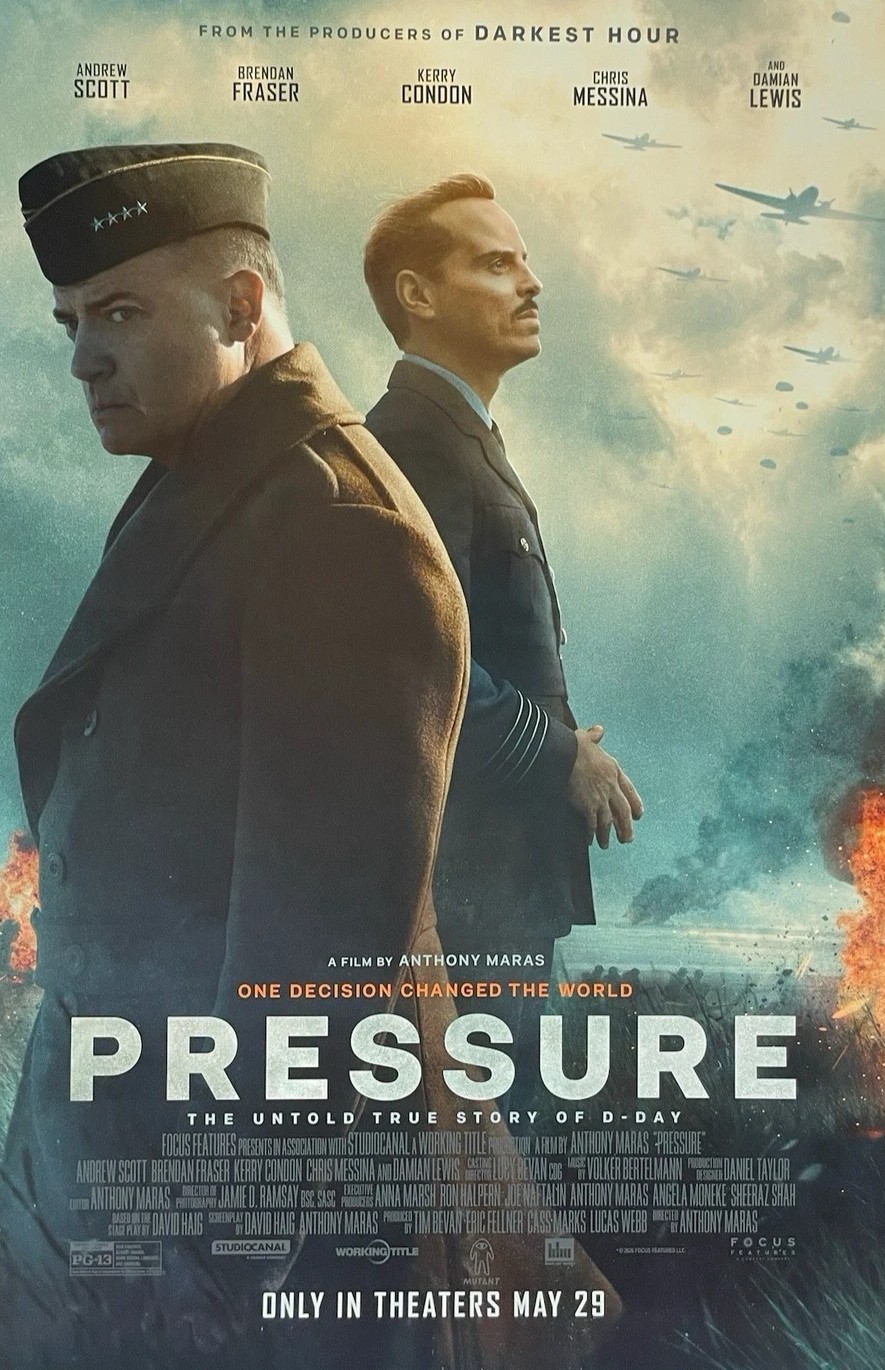
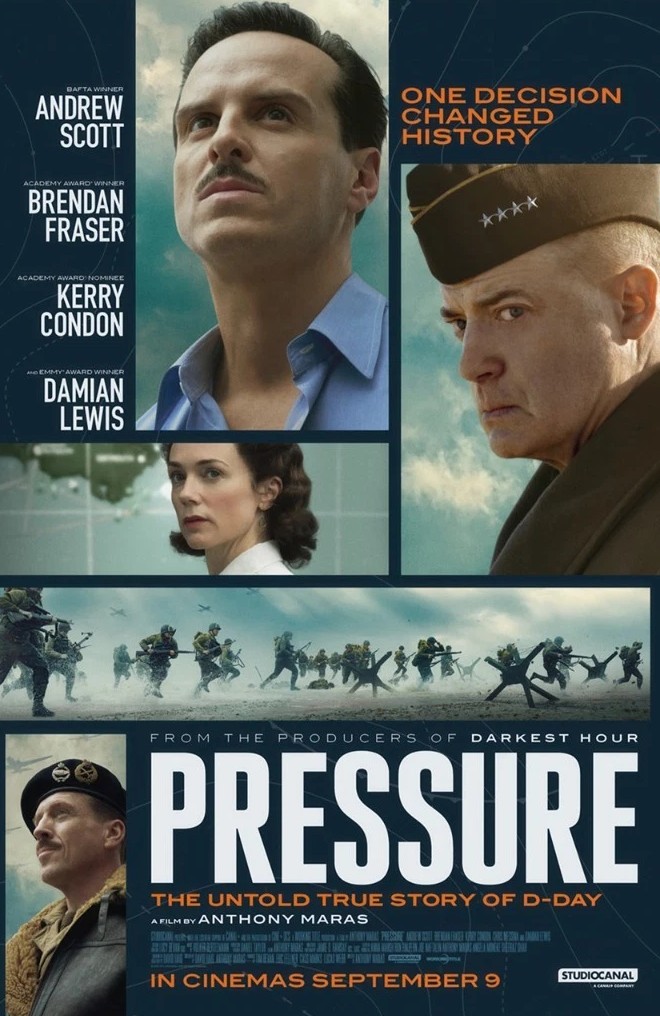
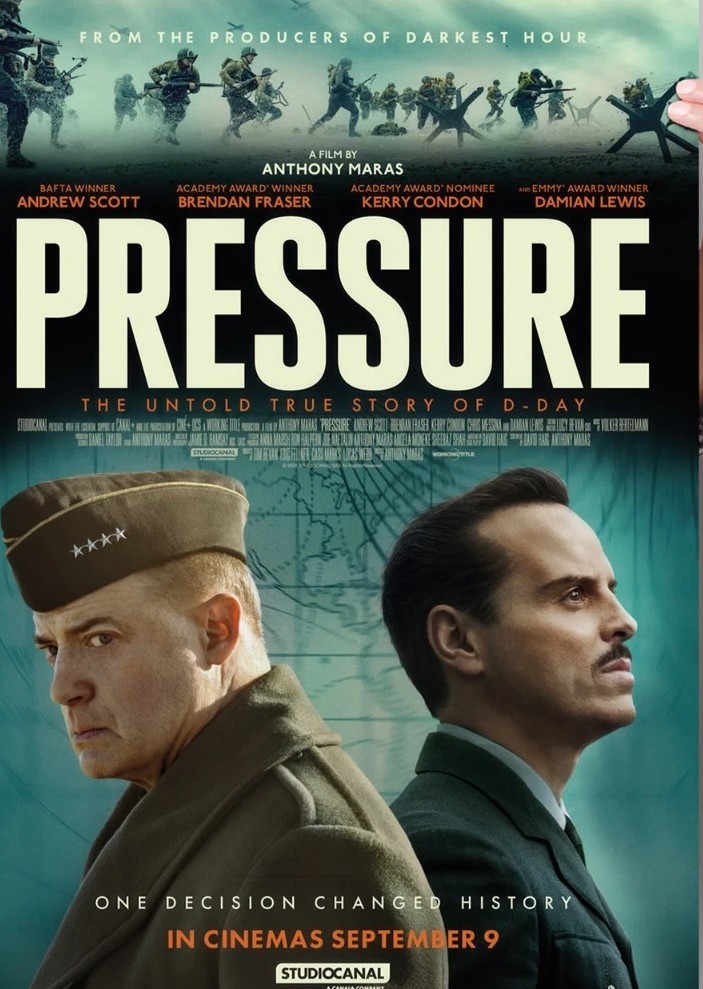
Pressure (2026) **** – Now Streaming

The producers sure misread the public for this one. As every moviegoer knows, weather is for chaos and destruction. We’re talking cyclones, hurricanes, twisters, roaming icebergs, ships in distress, cities swamped or frozen. The clue is in the title – Twister (1996), Twisters (2024), The Perfect Storm (2000), Hurricane (1979). The clue in the title here would have driven audiences away. We’ve spent half our lives listening to weather forecasters talk about pressure, low or high apparently, without having a clue what they’re on about.

Which is a shame because the title here is dual purpose. Yes, it’s about the weather front that could wreck D-Day but it’s also about the mental gymnastics undergone by all the generals, admirals and backroom staff as the Allies prepare for the greatest invasion ever known. Key to a successful landing is the weather. Too much weather, i.e. waves a few feet higher, and the landing troops will be swept away.

The Yanks involved are unfamiliar with the English concept of the stiff upper lip so they just verbally let loose on anyone getting in their way, including Scottish weather kingpin James Stagg (Andrew Scott). He’s been drafted in as a counterbalance to the gung-ho  American weather expert Irving Krick (Chris Messina) who has made any number of crucial interventions weather-wise, including not just the North African campaign but the filming of Gone with the Wind (1939).

Krick relies on history to make his calculations. If this happened in 1913 and 1931 with these conditions the consequences would be the same in 1944. James Stagg is not convinced. So that’s the first head-to-head battle. Luckily, Stagg isn’t the hapless kind of the backroom boy, and asserts his authority from the get-go.

But when Stagg’s calculations don’t go the way Allied Commander General Eisenhower (Brendan Fraser) wants then he’s got a raging boss to deal with not to mention an arrogant General Bernard Montgomery (Damian Lewis) who somewhere along the way lost his stiff upper lip and lets it all hang out rather than, like his countrymen, reining it in.

So it’s the lowly (in comparative terms) weatherman sticking to his guns in the face of a roomful of Army and Navy chiefs, on top of which his wife is in hospital dangerous ill after a German bombing raid.

Krick isn’t above sneaky manoeuvres to attempt to put Stagg in his place, and the Scot might as well have had a target pinned to his back for all the verbal abuse he takes. But his refusal to give way ranks with all the resilient greats over the centuries who had resisted taking the easy route and stood up for his principals and incessant belief that he is right and that if the bosses take any other action Germany will win the war. The stakes, let’s just say, couldn’t be higher.

Luckily, Eisenhower isn’t one to be persuaded by self-serving charlatans. He’s an interesting study here, well aware that he’s in charge of the greatest military show on earth while never having led an army into battle before. He is plagued with doubt as well. And his adulterous relationship with his assistant Kay Summersby (Kerry Condon) isn’t glossed over either, nor, interestingly, is he inclined to let romance get in the way of hard decisions.

In fairness, this is more of a chamber piece and opening up what began as a stage play to show ships in battle and the other actionable elements of D-Day isn’t really required and it might well have been better to scale down its ambitions because the inherent drama is more than enough.

Andrew Scott (Ripley TV series, 2024) comes out on top precisely because he’s got to rein it all in but Brendan Fraser (Rental Family, 2025) is convincing and, luckily, Kerry Condon (F1 The Movie, 2025) is giving more to do than just mop Eisenhower’s brow.

So, basically, it’s a very well-written and very well-acted drama. Directed by Andrew Maras (Hotel Mumbai, 2018) and co-written by him with David Haig, better known as an actor, who wrote the original play.

I saw this on the big screen but didn’t review it at the time. It’s not taken long to get into streaming. You can catch it on Apple and Amazon and others.

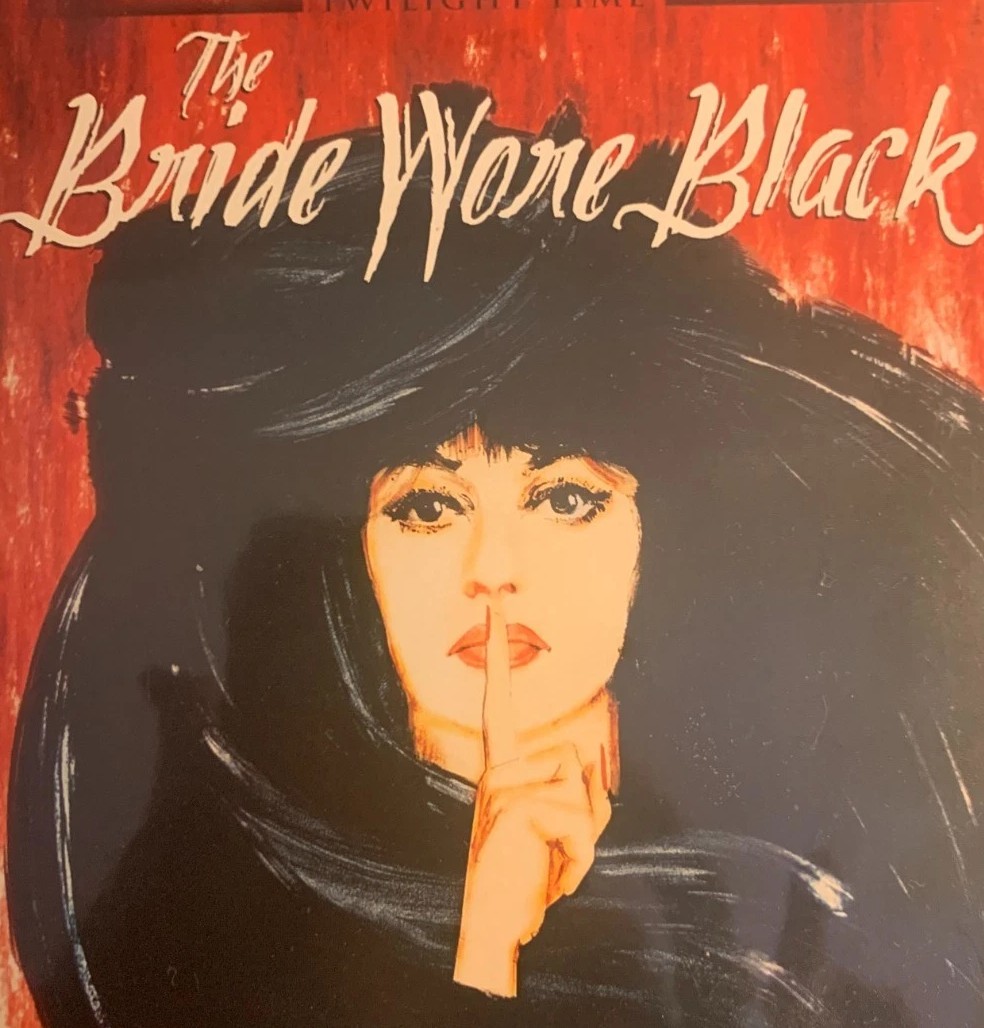
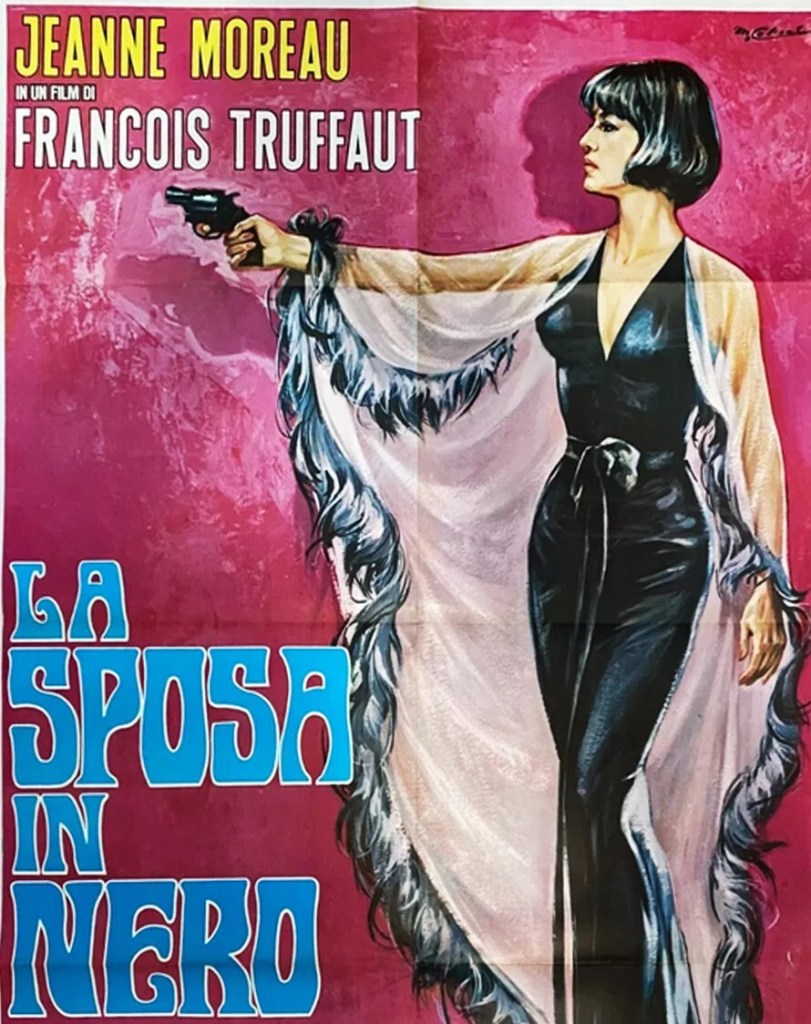
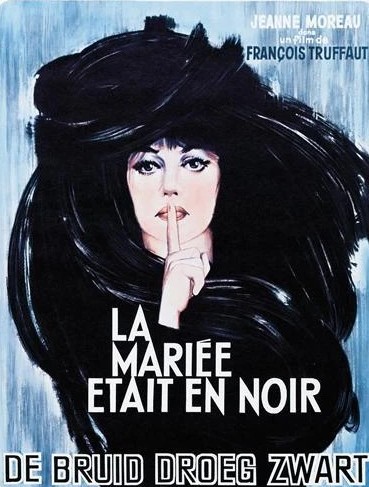
The Bride Wore Black (1968) ***

I viewed this and Francois Truffaut’s other Hitchcock homage Mississippi Mermaid (1969) the wrong way round, which is just as well, because on the evidence of his first venture into the Hitchcockian thriller I might not have been tempted into second helpings. This divided critics from the outset, receiving decided mixed reviews at the time, but now appearing to have gained more critical approval.

I can see why that might be. It’s certainly a stylish number. But it’s not much more than a more artistic version of the slasher movies, where you’re waiting to see how inventive a director can be in dispatching various victims. And you might be inclined to give this the benefit of the doubt if you see it as a female version of the John Wick revenge flick.

There are a couple of twists, but they don’t feed into the narrative particularly well. You discover why our bride Julie (Jeanne Moreau) is hell bent on her savage spree, though that’s not obvious at the start, where she switches from potential suicide to murderer.

Turns out she wasn’t a bride for more than a few minutes, just long enough to step out onto the church steps where her husband is shot dead. Quite how she divines that five men were responsible is never revealed. But she decides to take them out one by one, and in some senses, in ironic fashion as the deaths coincide with their flaws.

So here’s the Big Reveal. You expect her husband to be the victim of some conspiracy, knocked off for business or political reasons or maybe he was a gangster who stepped on too many toes or the opposite a cop getting too close to the crime hierarchy. But it’s none of these. The shooting was an accident. Five friends were playing around with a loaded gun near the church and it went off. Bit far-fetched, I know, but that’s the story.

Even when Julie learns the truth she’s not dissuaded from her intent, even though the quintet would probably have got banged up for the accident, had she gone to the police after learning the truth. But there you go, people with hidden homicidal tendencies are liable to indulge in them given the opportunity. You could say, well, why should she be punished, so racked with pain and lost love, that she thinks of taking her own life. But will she get succor from taking the lives of so many others? Apparently not.

Anyways, her first victim is womanizer Bliss (Claude Rich), so she comes upon him the guise of a seductress, an easy lay, and with a simple premise manages to get him to climb out on a high balcony, making it easy for her to push him off. Next up is lonely alcoholic bachelor Robert Coral (Michel Bouquet). She poisons his alcohol.

To gain access to the house of political wannabe Clement Morane (Michel Lonsdale), she pretends to be her son’s teacher. It takes a bit of wheeze to trap Clement in a small cupboard which she seals up with the duct tape to facilitate suffocation.

If you want to get close to an artist, what easier way than to volunteer to pose in the nude as his model for a painting of the huntress god Diana complete with bow and arrow. Better still, get Delvaux (Daniel Boulanger) him to fall in love with you before killing him in the back with your newfound archery skills.

The last victim is harder to gain access to, given Fergus (Charles Denner) is in prison. But no problem if you are also a prisoner, having confessed to the other four murders, and get locked up in the same penitentiary as your victim. Get yourself on the catering team and you’ll get easy access to a kitchen knife. And then your task is complete.

Jeanne Moreau (Viva Maria!, 1966) is quite superb, not just the sullen-faced lover of previous movies, but quite engaging as the inventive killer. The men are a roll call of rising French stars.

But too much of it doesn’t make sense and it’s all on the surface in the fashion of the modern slasher picture.

Again based on a novel by Cornell Woolrich (Mississippi Mermaid, 1969), Truffaut co-wrote it with Jean-Louis Richard (Fahrenheit 451, 1966).

Approach this as side hustle by the famous director, a dip into fun, and it’s more than acceptable. Look for anything else and you’ll get lost looking.

Discover WordPress

A daily selection of the best content published on WordPress, collected for you by humans who love to read.

The Atavist Magazine

by Brian Hannan

WordPress.com Blog

News, Tips & Website Tutorials