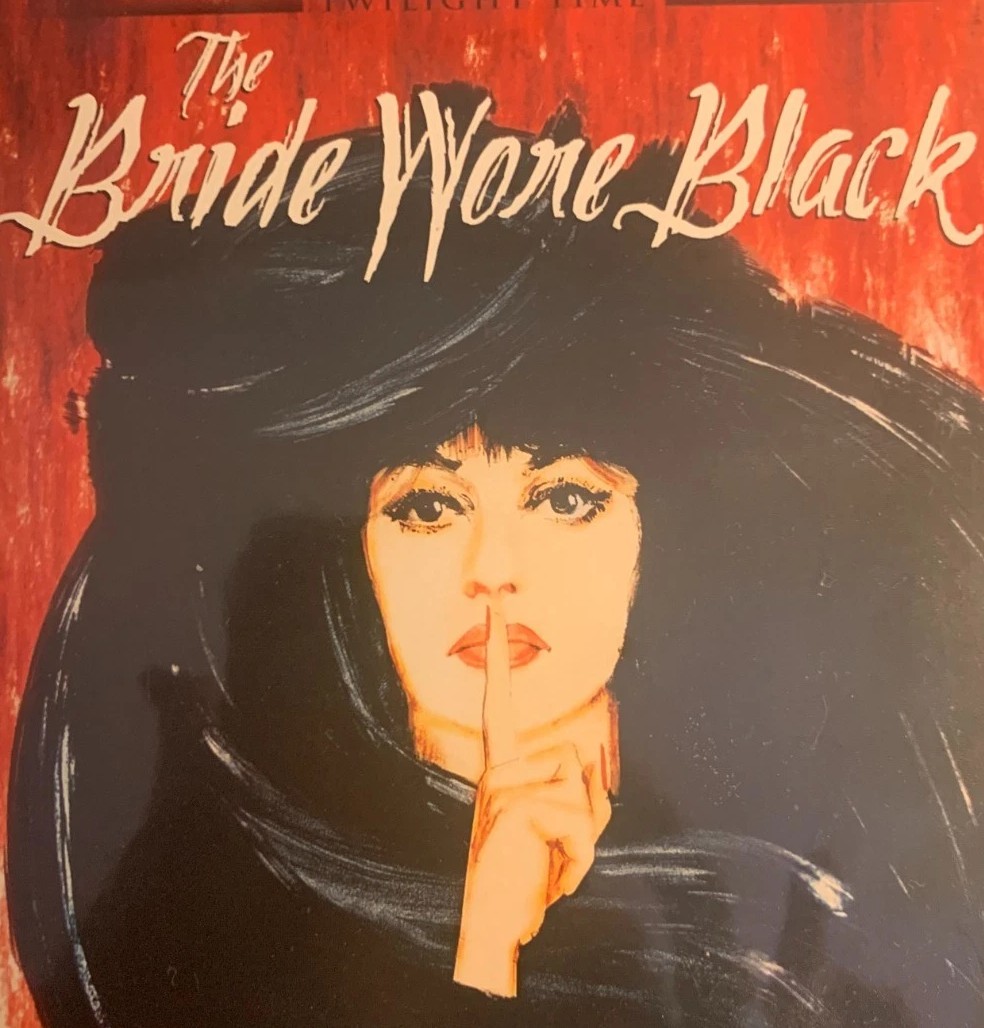
The Bride Wore Black (1968) ***

I viewed this and Francois Truffaut’s other Hitchcock homage Mississippi Mermaid (1969) the wrong way round, which is just as well, because on the evidence of his first venture into the Hitchcockian thriller I might not have been tempted into second helpings. This divided critics from the outset, receiving decided mixed reviews at the time, but now appearing to have gained more critical approval.

I can see why that might be. It’s certainly a stylish number. But it’s not much more than a more artistic version of the slasher movies, where you’re waiting to see how inventive a director can be in dispatching various victims. And you might be inclined to give this the benefit of the doubt if you see it as a female version of the John Wick revenge flick.
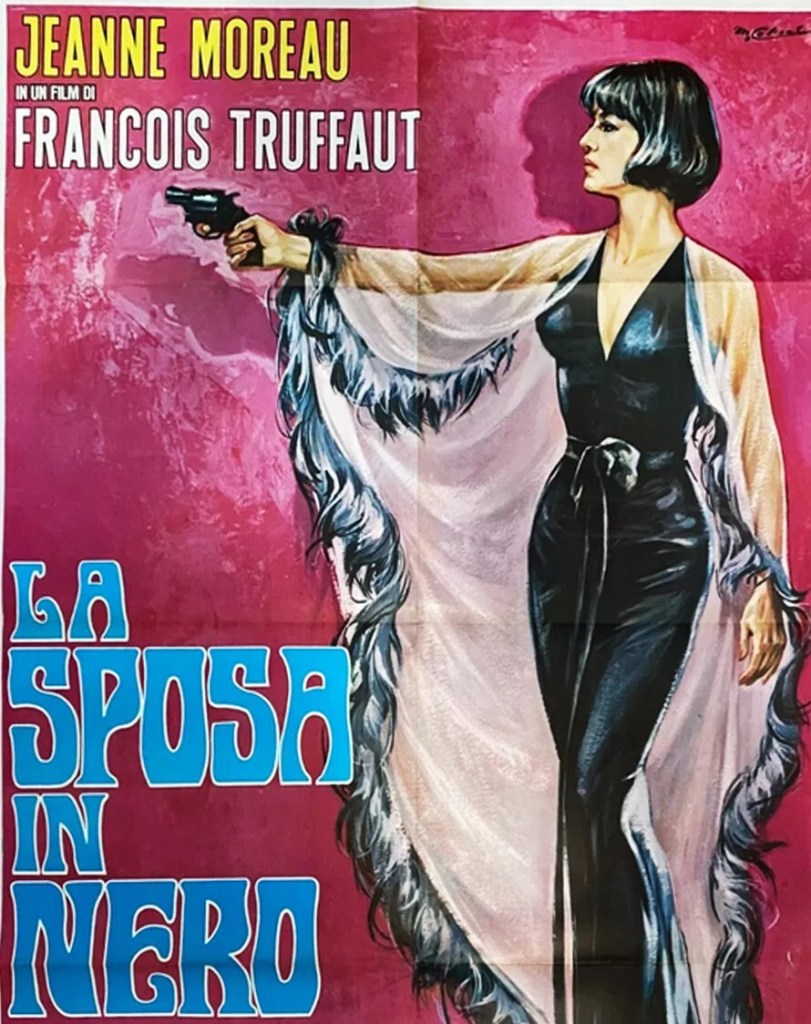
There are a couple of twists, but they don’t feed into the narrative particularly well. You discover why our bride Julie (Jeanne Moreau) is hell bent on her savage spree, though that’s not obvious at the start, where she switches from potential suicide to murderer.

Turns out she wasn’t a bride for more than a few minutes, just long enough to step out onto the church steps where her husband is shot dead. Quite how she divines that five men were responsible is never revealed. But she decides to take them out one by one, and in some senses, in ironic fashion as the deaths coincide with their flaws.

So here’s the Big Reveal. You expect her husband to be the victim of some conspiracy, knocked off for business or political reasons or maybe he was a gangster who stepped on too many toes or the opposite a cop getting too close to the crime hierarchy. But it’s none of these. The shooting was an accident. Five friends were playing around with a loaded gun near the church and it went off. Bit far-fetched, I know, but that’s the story.
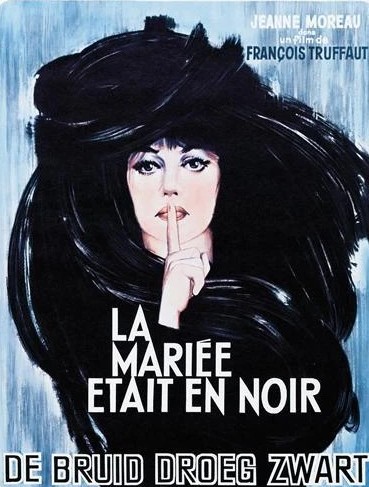
Even when Julie learns the truth she’s not dissuaded from her intent, even though the quintet would probably have got banged up for the accident, had she gone to the police after learning the truth. But there you go, people with hidden homicidal tendencies are liable to indulge in them given the opportunity. You could say, well, why should she be punished, so racked with pain and lost love, that she thinks of taking her own life. But will she get succor from taking the lives of so many others? Apparently not.

Anyways, her first victim is womanizer Bliss (Claude Rich), so she comes upon him the guise of a seductress, an easy lay, and with a simple premise manages to get him to climb out on a high balcony, making it easy for her to push him off. Next up is lonely alcoholic bachelor Robert Coral (Michel Bouquet). She poisons his alcohol.

To gain access to the house of political wannabe Clement Morane (Michel Lonsdale), she pretends to be her son’s teacher. It takes a bit of wheeze to trap Clement in a small cupboard which she seals up with the duct tape to facilitate suffocation.

If you want to get close to an artist, what easier way than to volunteer to pose in the nude as his model for a painting of the huntress god Diana complete with bow and arrow. Better still, get Delvaux (Daniel Boulanger) him to fall in love with you before killing him in the back with your newfound archery skills.

The last victim is harder to gain access to, given Fergus (Charles Denner) is in prison. But no problem if you are also a prisoner, having confessed to the other four murders, and get locked up in the same penitentiary as your victim. Get yourself on the catering team and you’ll get easy access to a kitchen knife. And then your task is complete.

Jeanne Moreau (Viva Maria!, 1966) is quite superb, not just the sullen-faced lover of previous movies, but quite engaging as the inventive killer. The men are a roll call of rising French stars.

But too much of it doesn’t make sense and it’s all on the surface in the fashion of the modern slasher picture.

Again based on a novel by Cornell Woolrich (Mississippi Mermaid, 1969), Truffaut co-wrote it with Jean-Louis Richard (Fahrenheit 451, 1966).

Approach this as side hustle by the famous director, a dip into fun, and it’s more than acceptable. Look for anything else and you’ll get lost looking.
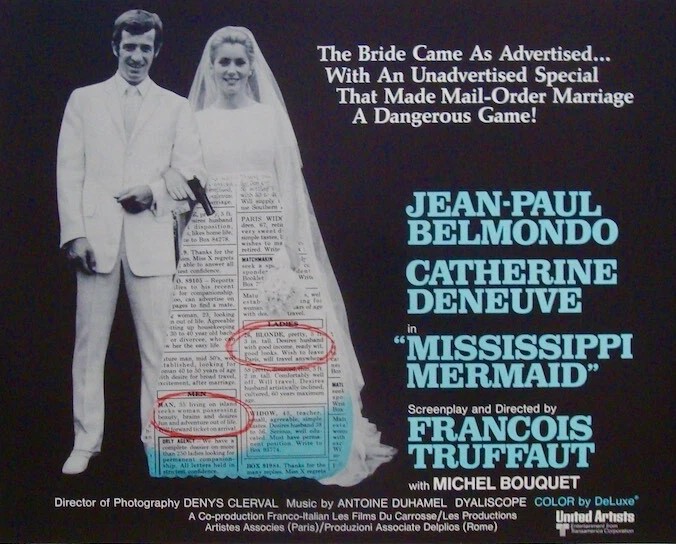
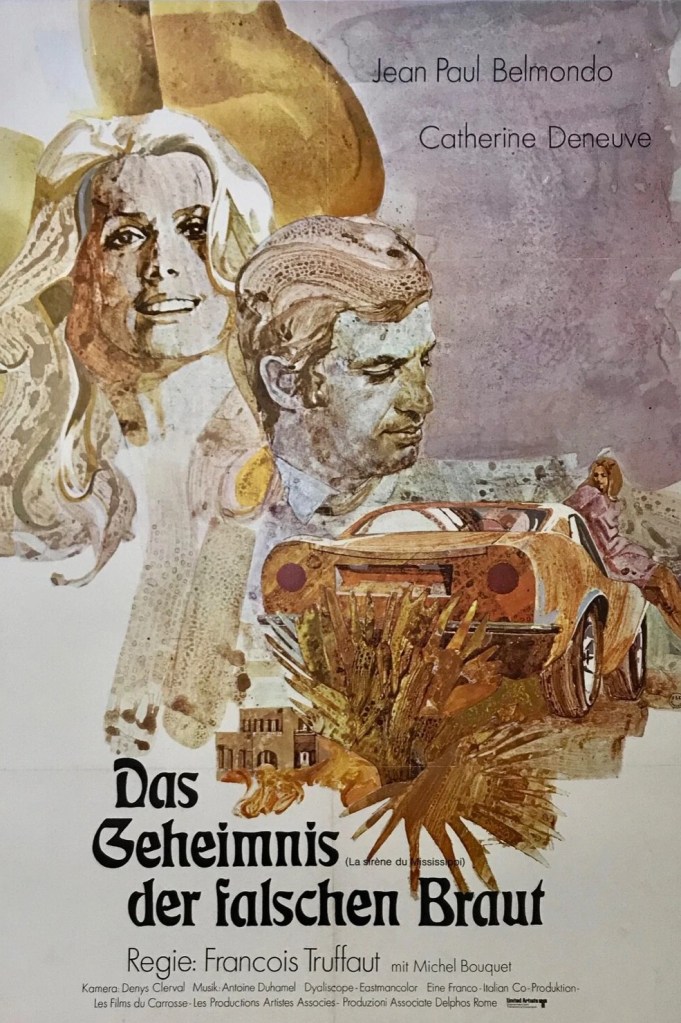
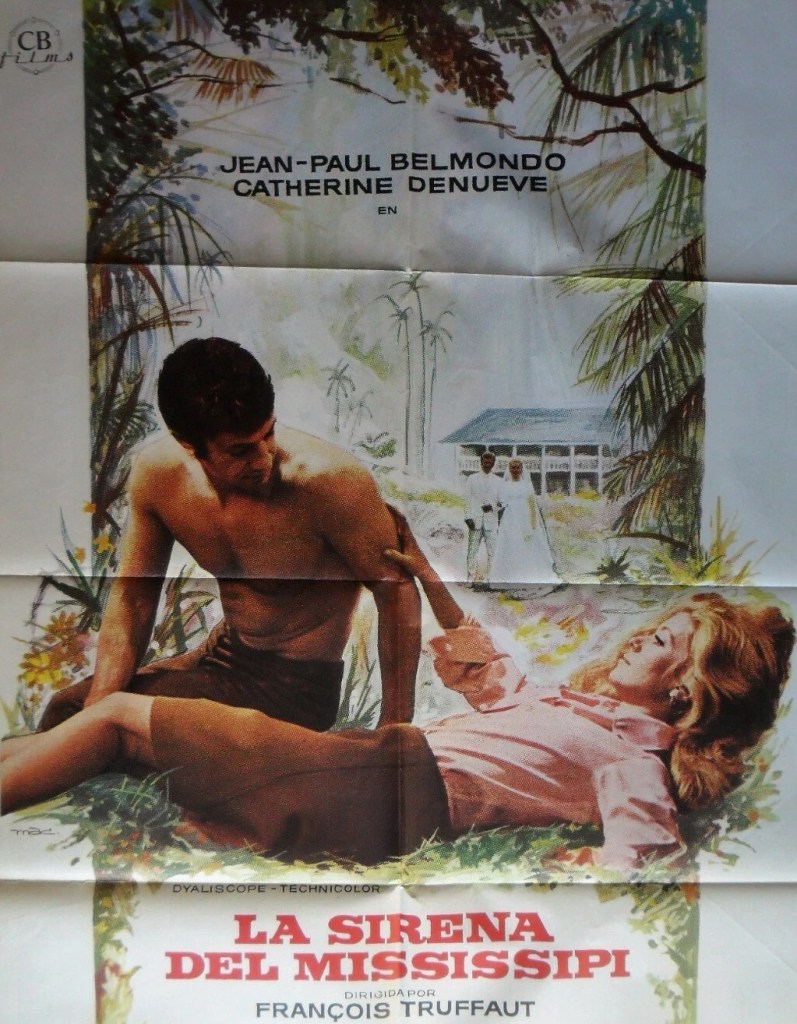
Mississippi Mermaid (1969) ****

The problem with deifying your heroes is that you might be tempted to imitate them. Celebrated French director Francois Truffaut (Fahrenheit 451, 1966) had just published his seminal book on Alfred Hitchcock, the first full-length work to treat him as a cinematic genius (an idea, it has to be said, largely dismissed at the time in the USA). Mississippi Mermaid is a homage to Vertigo (1958) with a hero in love with something which doesn’t exist, his idealized version of a woman.

Louis (Jean-Paul Belmondo) and Julie (Catherine Deneuve) couldn’t be more different. A factory owner, he’s got dough and wants a wife. She wants dough and will do anything to get it. She’s the queen of femme fatales and he’s the king of suckers. So it’s a bit of stretch at times, no matter how glamorous and sexy Julie is, for him to stick by her no matter what scheme, at his expense (literally), she comes up with.

There’s unexpectedly another element that will chime with the contemporary audience – the quick way of finding a partner. These days it’s online apps and Tinder and the like, but back in the day people sought romance through the classified adverts of newspapers. In five lines, as Louis points out, you had to pour out all your hopes and reveal your soul.

I don’t think the ending works at all and it’s a bit long, but otherwise as a study of infatuation a la Vertigo it does pretty well. His description of her features in geographical terms is one of the most lyrical romantic scenes of all time. Unfortunately, what he sees gets in the way of what she is.

For a start, she’s not Julie. Julie Roussel was the woman who had responded to his classified advertisement and after some correspondence – the old-fashioned kind via hand-written letters – had agreed to travel to the remote island of Reunion, just off the coast of Madagascar, to become his bride. Marion, a nightclub hostess, befriended Julie on the boat, discovered the purpose of her voyage, and passed this on to her boyfriend who came up with a clever plan. He would kill Julie while Marion would impersonate the dead woman and find a way of ripping off the mark.

Louis is so entranced with Julie, even though he suspects there’s been some of bait-and-switch, that he agrees to allow his new wife access to his bank accounts. It doesn’t take long for her to rook him and make off with his fortune. He hires private detective Comolli (Michel Bouquet) to find her. By coincidence, Louis beats the sleuth to it, coming across Marion dancing as a nightclub hostess in France.

But when he confronts her, she turns out to be a dupe, too, her boyfriend having made off with all the loot and then, sucker that he is, Louis falls in love with her all over again. Given she’s a wanted woman, they go on the run in France, living off his income from the factory. But when Comolli turns out to be too incorruptible for his own good and traces the couple and refuses to be bought off, Louis kills him and buries him in the cellar.

They’re planning now to hide out in Switzerland, out of French jurisdiction, and she persuades him to sell off the factory to fund their future. That only goes half according to plan, he gets the money but the discovery of Comolli’s corpse means most of the cash is stuck in an apartment surrounded by police. Still, they set off and hide out in an abandoned cottage a few miles from the Swiss borders where she starts to poison him.

And that’s where it should have ended, she trudging into Switzerland with what remains of his dough and snagging another sucker, him left for dead in a remote cottage deep in the snow. Except, that would be too heartless, apparently, for audiences of the period, so the whole finale is dressed up in redemption. Revelation is the key. She realizes that when he accepts his fate and calls on her to administer the poison quicker that actually that’s the moment when she falls in love with him. Crikey, what rubbish.

Luckily, the rest of this works because of the depth of Louis’ fixation on Marion. It’s a twist on Vertigo. Instead of the woman not living up to the man’s fantasy, here he refuses to see through the charade. At times, sure, he castigates her for leading him a merry dance and eating her way through his money, but mostly he acts as if in a romantic trance, as if whatever spell she’s cast on him can never be broken.

To protect her, he lowers himself to her level, believing murder is a fine way to get what you want. You can see what he sees in her. But also you can see through her wiles in a way that’s impossible for him.

Jean-Paul Belmondo (Breathless, 1960) is superb in a reversal of his usual male dominance as is Catherine Deneuve (Mayerling, 1968) as the beautiful woman who twists him round her finger but reveals sadder depths than normally associated in his eyes with beauty.

Written by the director based on a Cornell Woolrich (Rear Window, 1954) novel.

It’s certainly a fine effort by Monsieur Truffaut but mostly goes to show how difficult it is to carry off a Hitchcockian thriller.

Discover WordPress

A daily selection of the best content published on WordPress, collected for you by humans who love to read.

The Atavist Magazine

by Brian Hannan

WordPress.com Blog

News, Tips & Website Tutorials