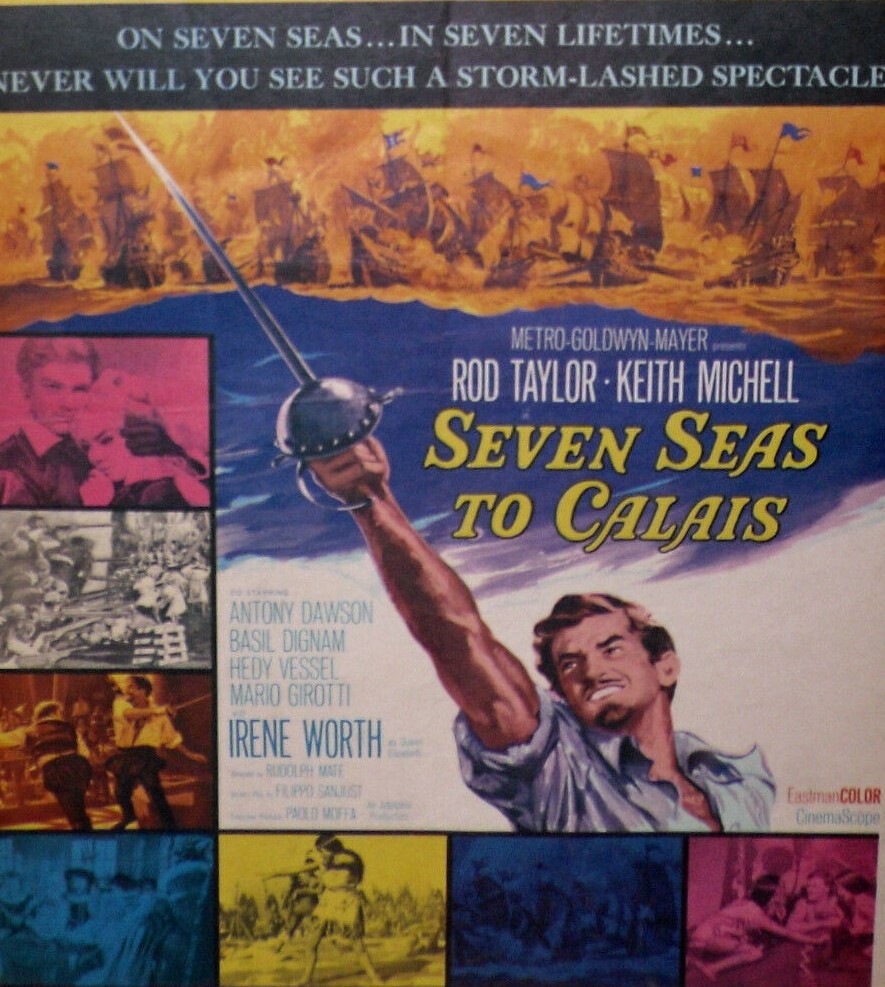
In between hi-hat Hollywood endeavors The Time Machine (1960) and The Birds (1963) Rod Taylor made a couple of pit stops in Italy. Here, he tries his hand at a swashbuckler and does a pretty good job of it, depicting famed English naval hero Sir Francis Drake, in a story that covers about a dozen years from him circumnavigating the globe to masterminding the defeat of the Spanish Armada in 1588.
Not content with glorifying tales of his derring-do as he robs the Spanish of their gold, the producers also mine a rich seam of political intrigue as the Spanish King Philip II seeks to nullify the English threat first by a treaty and then by conspiracy before embarking on full-blown invasion. Queen Elizabeth (Irene Worth) proves a political maestro, telling the Spanish what they want to believe and condemning Drake’s activities in public while in fact privately financing his expedition and relying on his booty to fund her navy.
After putting down a potential mutiny, most of Drake’s time is spent plundering Spanish galleons or gold mines. When not pillaging, Drake takes time out from his adventures to discover potato and tobacco and for a romantic dalliance with what appear to be Native Americans (judging from the feathers they wear) including a young woman called Potato (Rossella D’Aquino). It is left to his number two Malcolm Marsh (Keith Michell) to carry the main subplot which has French beauty Arabella (Edy Vessel) in his absence taking up with Babington (Terence Hill), a traitor with an eye to freeing the imprisoned Mary, Queen of Scots (Esmeralda Ruspoli).
There are more than enough swordfights for purists and Drake employs a certain amount of cunning and bravado in his various piratical enterprises. Clever filming makes the ships look realistic enough, though in long shot they do resemble toys. In making it look as though Drake has returned from his voyage in the nick of time to save Elizabeth from the Spanish aggressors, the producers neatly kaleidoscope the actual time frame. Elizabeth takes no prisoners and there are spicy exchanges between the queen and the pirate.
Rod Taylor presents a more muscular and athletic screen persona than in any of his previous pictures and his presence exudes authority but he also has that lightness of tone that would become a trademark. However, American stage actress Irene Worth just about plays him off the screen, her regal bearing hiding an agile mind. Keith Michell (The Hellfire Club, 1961) makes a strong impression as does future spaghetti western star Terence Hill, (They Call Me Trinity, 1970) credited here as Mario Girotti. Edy Vessel (The Thief of Baghdad, 1961) only made two more films, although one was Fellini’s 8½ (1963). This was the second film outing after Antonioni’s L’Avventura (1960) for Esmeralda Ruspoli
Strangely enough, given the part Drake played in English history, he has been dealt a poor hand in the movies. A British television series Sir Francis Drake (1961-1962) starring Terence Morgan was unlikely to have instigated this picture so it is odd to rely on Italy for the only picture, regardless of its veracity.
In the portfolio of veteran director Rudolph Mate (When Worlds Collide, 1951), this immediately followed on from The 300 Spartans (1962) but lacks that film’s rigor and vigor. The script was dreamt up by Filippo Sanjust (also Morgan the Pirate).
CATCH-UP: Rod Taylor pictures reviewed in the Blog are The Liquidator (1965), The Glass Bottom Boat (1966), Hotel (1967) and Dark of the Sun (1968).
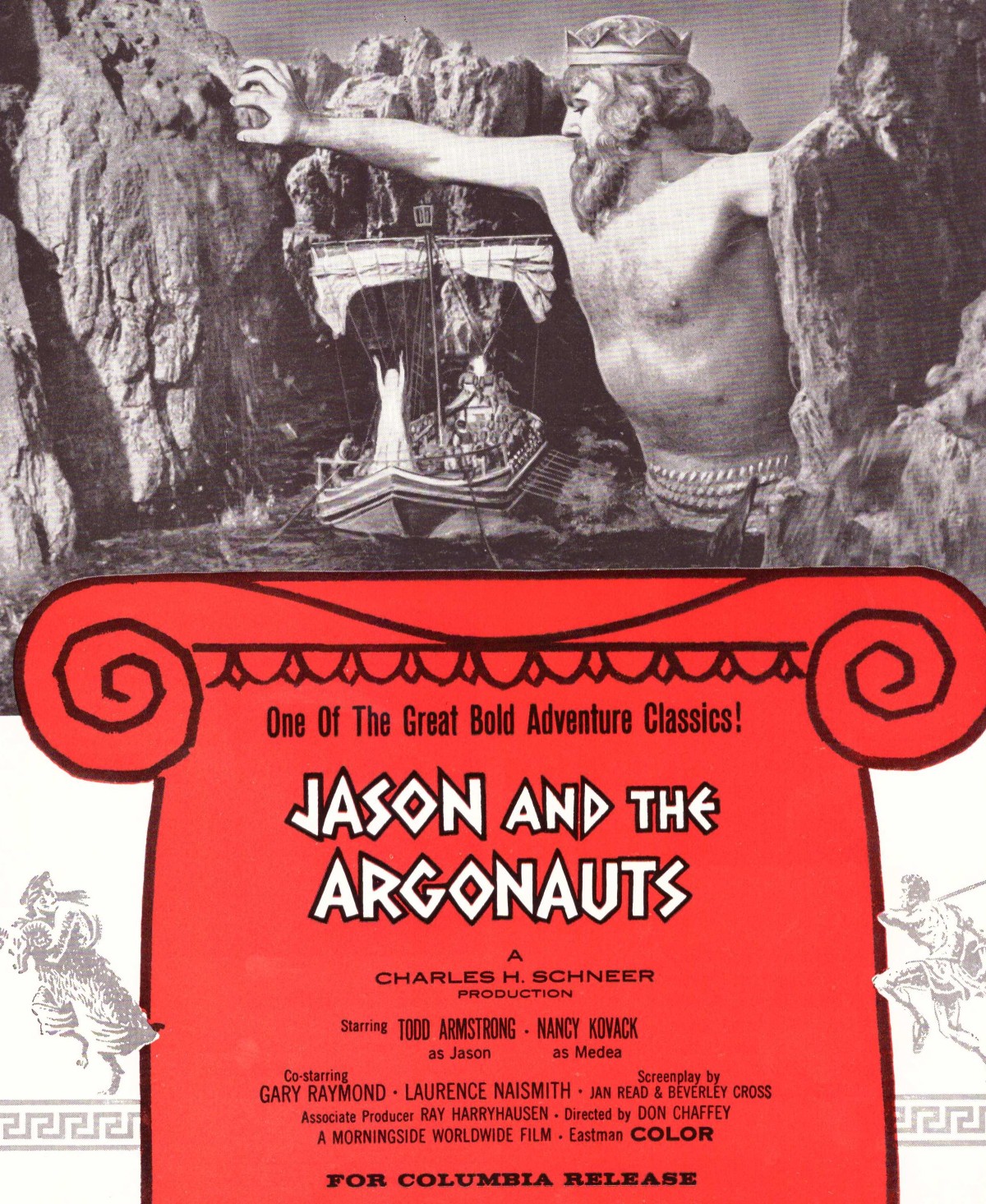
An absolute delight, great storytelling married to groundbreaking special effects produces an adventure picture of the highest order. Though mostly known for its Ray Harryhausen stop-motion animation, its success also relied heavily on the direction of Don Chaffey (The Viking Queen, 1967) and a great script. It’s one of the few films to benefit from not being viewed in its original size, the small screen minimizing the flaws of the special effects. In essence it’s a combination of three genres – the Italian peplum, the men-on-a-mission picture and the classic detective story. it was originally entitled Jason and the Golden Fleece (see below).
Plus there are interesting stabs at philosophy – if man refuses to believe in the gods do they cease to exist? And if the golden fleece brings peace and prosperity to a nation what will happen to that country when it is stolen? And if various people can call on their own gods for help will that not create conflict in heaven as much as on earth? And the ultimately question – what can man achieve without celestial interference?
While the episodic structure derives from the clues meted out piecemeal to hero Jason (Todd Armstrong) during his long voyage to find the golden fleece these often come minus vital pieces of information ensuring that surprise remains a key element.
Without doubt the special effects are the triumph, although some work better than others. The highlights for me were the towering bronze statue of Talos and the skeleton warriors. I can’t be the only one who thinks that some of the visuals in Game of Thrones were inspired by the sight of Talos astride two land masses separated by the sea. Talos is not so much a man-mountain as an actual mountain, first viewed coming round the corner of a cliff top, his head topping it. But where, except for cunning Jason, the crewmen are viewed primarily in miniature in relation to the giant Talos, the skeletons are the same size as the adventurers and that fight scene all the more impressive as the ensuing battle appears completely real.
Scale allows Harryhausen to wriggle out of the problems of contact. If the creatures are out of reach anyway, there’s little need to attempt to bring them into close proximity. The way the Harpies are utilised, close enough to strip clothes from a blind man but otherwise hovering just out of reach, is a classic example of clever direction. The multi-headed Hydra, on the other hand, is the least convincing monster simply because it is impossible for Jason to get close to the beast. Scale is also one of the film’s best weapons. The scenes where a miniaturized Jason is transported to Mount Olympus to face the gods are well done as are the occasions when the gods peer down on tiny man.
Outside of the special effects and the varying degrees of excitement aroused, in the background is constant intrigue. Jason is the son of the King of Thessaly slain by the usurper Pelias (Douglas Wilmer) and his crew includes Acastus (Gary Raymond), son of Pelias, whose task is to cause trouble and if Jason succeeds in his endeavor to kill him. On top of that, there is a heavenly battle over Jason’s fate. Jason, having defied Zeus (Niall MacGinnis) by first of all refusing to believe he exists and that his life is determined by fate, becomes enmeshed in a battle between the king of the gods and his wife Hera (Honor Blackman) who grants Jason a get-out-jail-free card, the ability to call on her help, but only five times.
Jason determines to recruit his own team and in the manner of The Guns of Navarone (1961) and The Professionals (1966) they are all experts in their fields but unlike that film and The Dirty Dozen (1967) are willing conscripts. The team also includes Hercules (Nigel Green) and Hylas (John Cairney) and in the first of the film’s many surprises and reversals, the weedy latter is able to beat the muscular former in a contest of strength.
There is enough incident to keep the story ticking along but Don Chaffey fills in the blanks with montage, the various essentials of a ship – sails, oarsmen, sides, stern, figurehead, pace set by drumbeat – and a full color palette from the bright blue sky, from dawn and dusk to sunset and night, a wonderful image of rowers at sunset on the sea the pick. He also makes great use of the sea – pounding surf, storms, the sea turned tempest by the clashing rocks, a shipwreck. And we have dancing girls, colorful costumes, ancient backdrops and the sense that the budget has been well spent
Some scenes call for immense skills in coupling special effects with real characters. For the clashing rocks sequence five elements are simultaneously in play: the crew in danger, a tempest, rocks crashing into the water, the ship itself and Neptune.
And the romance is well handled dramatically: if Jason rescues Medea (Nancy Kovack) then she too rescues him. Love produces conflict. To love Jason, Medea must betray her country. There is hardly a moment when Jason, confronted either by monsters or kings, does not face death.
In addition, there is a stunning score by Bernard Herrmann (Psycho, 1960).
Any top-notch acting would have been overshadowed in any case by the special effects. Which is just as well because the entire cast is drawn from the lower strata of the stardom ladder. Todd Armstrong, from the Manhunt tv series (1961), needs only not to mess up, which he manages adequately. Nancy Kovack (Diary of a Madman, 1963) does well to make an impact given she does not appear until the final third. This did not turn out to be much of a star-making vehicle for either. Honor Blackman drops the slinky persona with which she had made her name in The Avengers tv series (1962-1964) and instead plays a confident goddess willing to out-maneuver husband Zeus.
The rest of the cast comprises a regiment of future movie supporting actors – Nigel Green (Tobruk, 1967), Niall MacGinnis (The Viking Queen, 1967) and Douglas Wilmer (The Brides of Fu Manchu, 1966). Future television stars ranged from Patrick Troughton (the second Dr Who) and Scottish actor John Cairney (This Man Craig, 1966-1967) to Laurence Naismith (The Persuaders, 1971), Gary Raymond (The Rat Patrol, 1966-1968), Mike Gwynn (Poison Island, 1965) and Andrew Faulds (The Protectors, 1964).
The screenplay was written by Jan Read (First Men on the Moon, 1964) and Beverley Cross (The Long Ships, 1964), husband of Maggie Smith. Cross returned to ancient worlds again for producer Charles H. Schneer for Sinbad and the Eye of the Tiger (1977) and Clash of the Titans (1981)
Although the ending appeared to leave the door open for a sequel, none was made. A huge box office hit in Britain, it did not repeat its success elsewhere.
I first saw this film as a boy and was so enthralled I wouldn’t have noticed if there was anything awry with the special effects. I have not seen it since. Coming at it with some degree of scepticism I found that attitude misplaced for I was equally enthralled.
Catch-Up: Nigel Green’s portrayal of Hercules was a far cry from his normal screen persona of martinet. His movies previously reviewed in the Blog are The Skull (1965), Khartoum (1966), Tobruk (1967) and Africa Texas Style (1967).
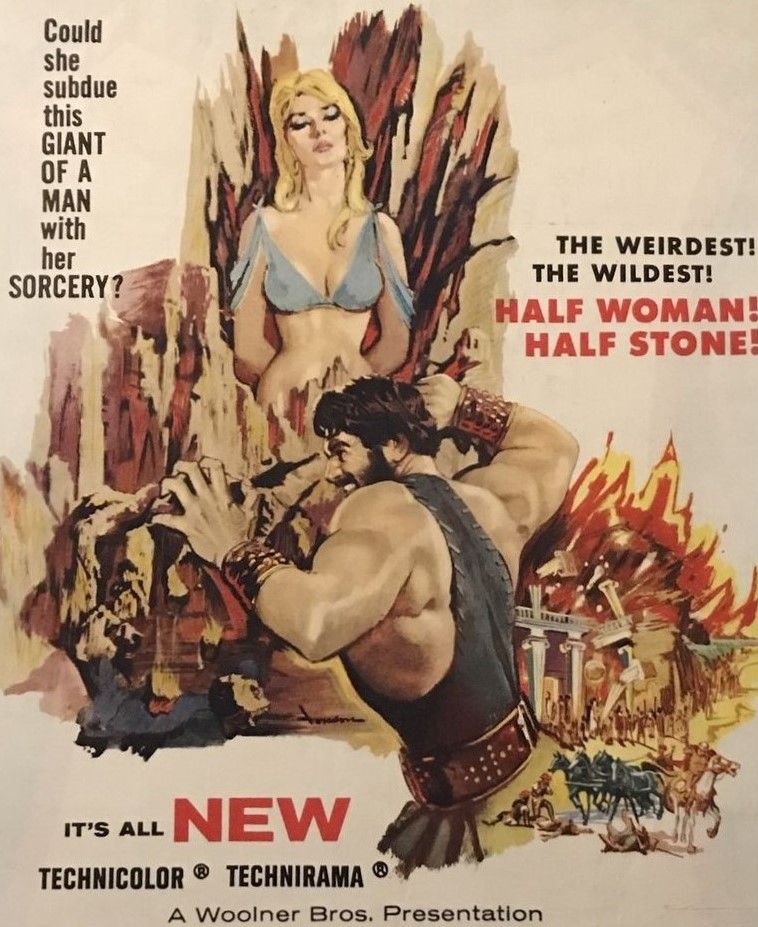
Something of a cult in the peplum vein in which Hercules (Reg Park), wanting to enjoy domestic life with his wife and son, is instead drugged by Androcles, King of Thebes (Ettore Manni), and spirited away by ship to Atlantis whose Queen Antinea (Fay Spain) is intent on global domination and the resurrection of the dethroned god Uranus to his rightful place in the heavens.
This isn’t your normal Hercules, not that keen on demonstrating his physical prowess, preferring to sleep or lie around. It’s not your normal ship either. Androcles, unable to persuade his Senate to properly fund the expedition, has crewed his vessel with renegades who are inclined to abandon Hercules on the nearest island And unbeknownst to Hercules, his son has come along for the ride.
Of course, nothing goes according to plan and Hercules is soon shipwrecked on an island where he finds Ismene (Laura Efrikian) imprisoned in rock as a sacrifice to the gods. Rescue never being simple, Hercules has to first withstand fire then tackle in quick succession snake, lion, eagle and a giant lizard. Ismene turns out to be Antinea’s daughter and the Queen, rather than being delighted at her return, is appalled, for, according to the way the ancient world works with all its prophecies and religious ritual, the girl must be sacrificed to prevent the destruction of Atlantis.
Nor is Atlantis your usual kingdom. Even setting aside the peculiarities that mark the Greek world, this is a place where abnormality rules. Hercules finds Androcles, whom he believed died in the shipwreck, but it turns out to be a vision, or some kind of shape-shifting being. The Queen believes she can subjugate nature and has a tendency to throw those who disappoint her into an acid bath. There is a fiery rock that controls life and death.
Like most of the peplum output, you have to accept a standard of production lower than the Hollywood norm, and the terrifying beasts sent to test the hero are not at all convincing, but on the plus side are feats of imagination that mainstream American studios would never conjure up, unless it was something that fitted into the swashbuckling genre. You pretty much have to go with the flow and accept what is offered in terms of narrative oddity. Bear in mind, too, that there is no one dressed in as skimpy or revealing a costume as suggested by the poster.
You also need to be get hold of a good copy. Several versions are available, some for free, where the colors are so washed out you can hardly determine what is going on never mind enjoy the costumes, creatures and sets as intended. This was filmed in Technirama 70, shot in 35mm but blown up to70mm widescreen for exhibition, so should generally be of a high technical standard – this was the process used by Spartacus (1960).
It’s not a film to fit into the so-bad-it’s-good category, but of course imagination too often exceeds budget which renders the filmmaking somewhat random at times and like the bulk of the peplums acting skill is not at a premium. As you might expect, the British-born Reg Park was a bodybuilder first – three times winner of the Mr Universe title – and an actor second. He played Hercules another three times and Maciste once but outside this narrow comfort zone made no other films. But he was Arnold Schwarzenegger’s inspiration, so that was probably enough.
American Fay Spain (The Private Life of Adam and Eve, 1960) never got beyond bit parts as a B-movie bad girl and television, although she was seen in The Godfather: Part II (1974). Italian Laura Efrikina made her debut here and you would later spot her as Dora in the Italian television mini-series David Copperfield (1966).
Director Vittorio Cottafavi was steeped in peplum, from The Warrior and the Slave Girl (1958) to Amazons of Rome (1961) but although he worked consistently in television made only one other piocture, 100 Horsemen (1964).
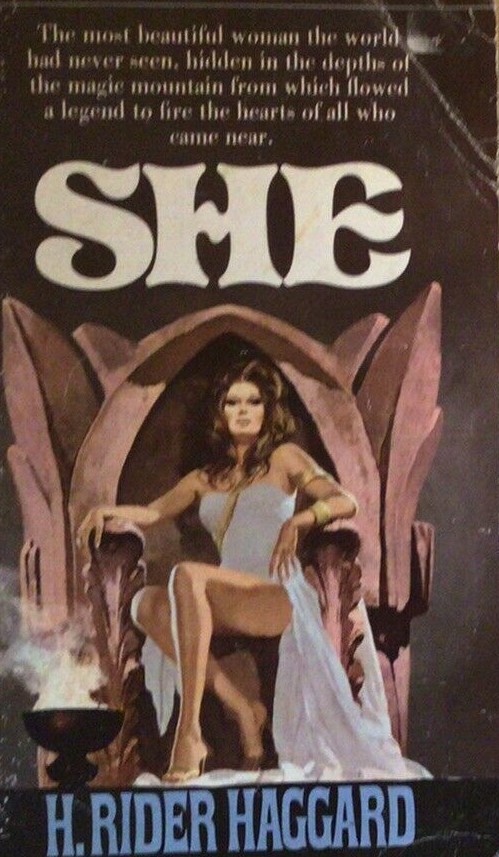
Hammer made a substantial number of changes for its version of She. For a start, H. Rider Haggard’s novel was published in 1886, three decades before the time in which the film which took place at the end of World War One. While the three main characters – Horace Holly (Peter Cushing in the film), his manservant Job (Bernard Cribbins) and the younger Leo (John Richardson) – remain the same, their relationships are significantly different, in that in the book Holly is the legal guardian of Leo.
The book is far more Indiana Jones than sheer adventure, the journey into the unknown instigated by a piece of parchment and a translation of a potsherd from the fourth century B.C. In the film the spur towards the journey into the unknown is a vision. But in the book the adventurers already know before they set off that ancient Egyptian high priest Kallikrates found Ayesha and the sacred flame and was killed by her because he loved another.
Unlike the film the book has no trek through the desert either which renders them hungry, thirsty and exhausted and leads to visions of Ayesha for Leo. Instead, they are shipwrecked. And their peril comes from swamps and wild animals such as lions and crocodiles. In fact, the filmmakers clearly resisted the opportunity to include one of the tropes of jungle adventure, namely a wild animal battle, in this case crocodile vs. lion, which was a feature of the book.
While they shoot a water buck for food, nonetheless they do later face exhaustion, only rescued by the sudden appearance of an Arab, who mentions She-Who-Must-Be-Obeyed and arranges for them to be transported in litters to a mysterious land in the heart of African darkness. This land is rich and fertile, with herds and plenty of food.
Two important elements introduced here shape the book but are ignored in the film. The first is that Leo, seriously ill at this point – and not capable of being strung up for the movie’s sacrifice – remains ill for the rest of the book so that it is Holly who enjoys most of the encounters with Ayesha. Secondly, and a rather advanced notion for the times, the women in this country are independent, neither considered chattels nor subordinate to men, and are free to choose their own lover. But it is only now that Leo meets Ustane (Rosenda Monteros) rather than in the film which brought them together almost immediately. Here, they also meet Billali (Christopher Lee) whom Holly rescues from a swamp.
With Leo still ill, it is Holly who first encounters Ayesha, who dresses as she will in the film, in a gauzy white material. In the writer’s eyes her beauty lay in her “visible majesty” as well as more obvious physical features, which could not be dwelt on at such length in a Victorian novel. Holly falls in love with her on the spot, even though he is “too ugly” to be considered a potential suitor, and learns of the fate of the earlier Killikrates and also catches a glimpse of her bemoaning her fate, imprisoned in immortality for two thousand loveless years.
“It is hard for a woman to be merciful,” proclaims Ayesha as she puts to death the villagers. Throwing them down the pit was invented by the screenwriters. By this point Leo is nearly dead and only saved by a phial administered by Ayesha. She also decrees that Ustane must die because “she stands between me and my desire.” In the film it is Leo who intervenes to attempt to save Ustane. But in the book it is Holly. He blackmails Ayesha, threatening to reveal her secret, that she had killed Killikrates in the past. Ustane claims she has taken Leo as her common-law husband. Ayesha promises to spare Ustane if she will give up her claim to Leo and go away. But Ustane refuses. In the book, there is an astonishingly visual and terrifying scene where, in revenge, Ayesha claws at Ustane’s black hair, leaving there the imprint of three white fingers.
It is the film that introduces the element of palace intrigue, with rebellious subjects and Billali believing he is entitled to immortality. That is not in the book.
When Leo finally wakes up, he is reunited with Ustane, but Ayesha catches them and kills Ustane, not by throwing her down the pit, but by her magic power. Despite being appalled, Leo cannot resist Ayesha. Even so, he is fully aware of his predicament, believing he has been “sold into bondage” and forced to love a murderess. But when she enters the sacred flame – naked, it has to be said, in the book, which was an exceptionally daring image for that era – she dies.
Holly in the book is more a narrator than a protagonist and shifting the emphasis more squarely back to Leo suits the film’s dramatic purpose. There was no real reason the film could not have followed the thrust of the book except that it would perhaps cost more costly to bring a jungle and swamps to life than a desert and arid mountains. More importantly, perhaps, was the need to introduce the physical Ayesha more quickly than in the book.
It is worth pointing out that the concept of She-Who-Must-Be-Obeyed was not so alien to British readers. After all, when the book was published, the country was ruled by a woman, Queen Victoria. And although democracy had reduced elements of her absolute power, the people still had to bow down before her. In addition, the British celebrated the rule of a previous female monarch, Queen Elizabeth I, who had been an absolute ruler, in the days before there was any notion of democracy and Parliament, and in those days anyone who opposed such a figure was liable to meet as swift a death as that meted out by Ayesha.
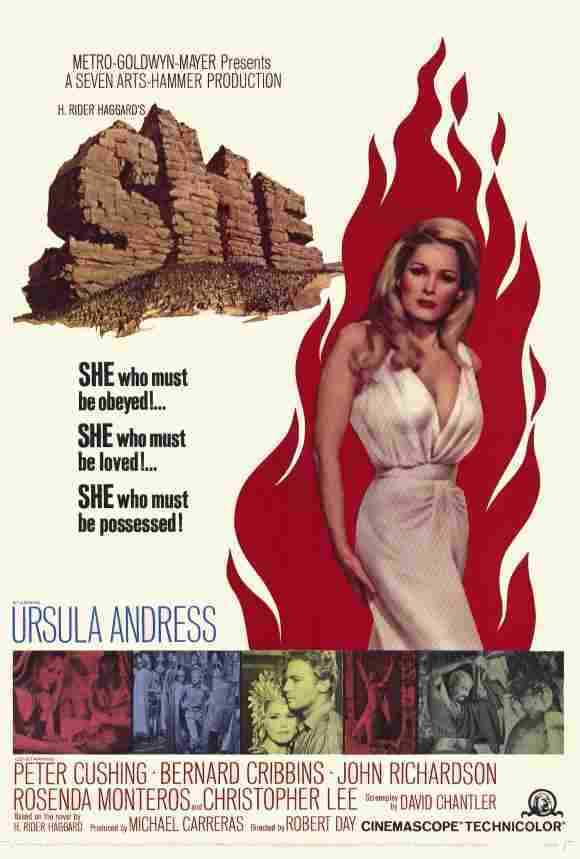
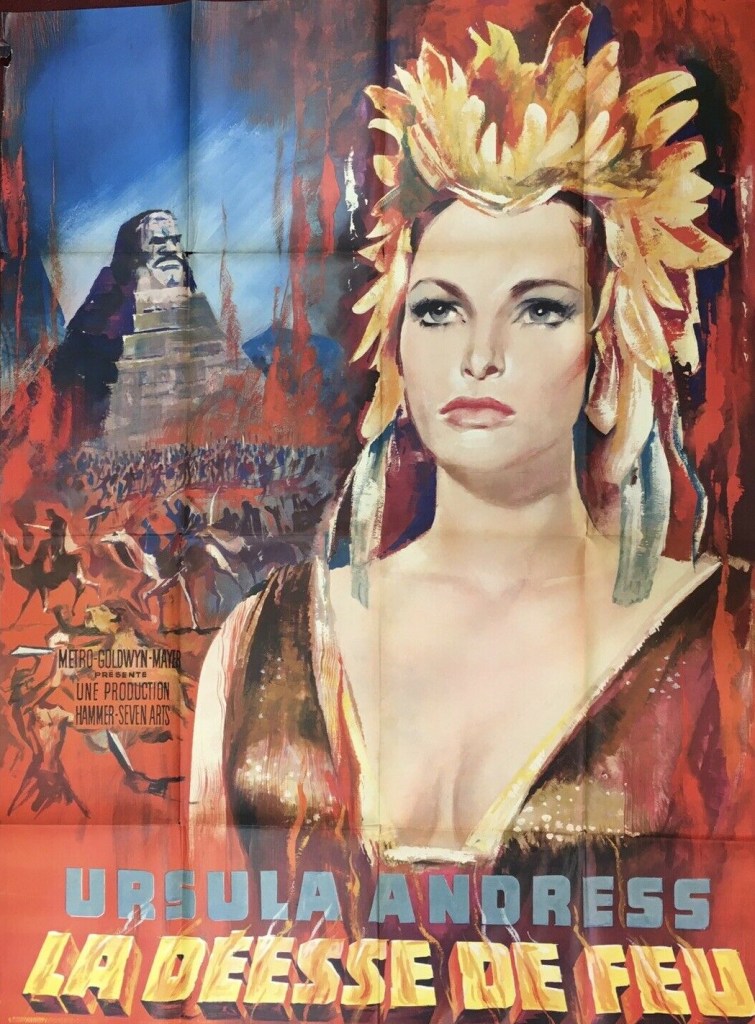
Ursula Andress certainly knows how to make an entrance. Emerging out of the sea in a bikini in Dr No (1962) proved a Hollywood calling-card but failed to put her center stage. She fixed that with She and dominates this superior adventure hokum. Studio Hammer lucked into a solid piece of storytelling, a classic, and all it had to do – with the help of a bit more finance than was usual for their productions courtesy of MGM – was not muck it up.
Three soldiers are celebrating the end of the First World War in a Palestinian night club and while archaeologist Holly (Peter Cushing) and his bowler-hatted valet Job (Bernard Cribbins) are tripping the light fantastic with belly-dancers, blond-haired Leo (John Richardson) is seduced away by Ustane (Rosenda Monteros) because he bears a stunning resemblance to an ancient medallion. Encountering a vision of Ayesha (Andress) he is urged to embark on a dangerous journey to the lost city of Kuma where she awaits.
Despite the theft of their camels and loss of water, the trio trek exhausted across desert and mountains, Leo sustained by his vision, by the fact that he seems to know the way and with the assistance of Ustane. But a savage tribe reckon Leo would make an ideal sacrifice to the gods. Just as the tribe are driving themselves into ritualistic frenzy, high priest Billali (Christopher Lee) comes to the rescue, escorting the explorers into Kuma.
The regal Ayesha is as beautiful in the flesh as in the vision, but more ruthless, condemning slaves to a terrible death for disobedience and, noting the attraction between Leo and Ustune, planning also to rid herself of her rival. Leo’s arrival will fulfil an ancient prophecy with the Englishman attaining immortality, and he seems to be able to “float through the sea of time” and remember events from two thousand years ago. However, Ayesha has a dubious past, providing one of several unexpected twists.
Most films of this sub-genre rely on improbable mumbo-jumbo and are loaded down with wearying amounts of exposition. But here is nothing but clarity, the ancient backstory tale told with minimum visuals and verbals and the intellectual sparring between Holly and Ayesha on the one hand and the archaeologist and the high priest on the other are intelligently-put, presenting opposing options for the development of civilisation, absolute monarchy vs. democracy and immutability vs. change.
But that takes place within a highly-charged drama, the enfolding romance between Ayesha and her chosen man both touching and perilous, while the battle for the life of Ustane is brilliantly presented. Lack of reliance on special effects and art direction utilizing the MGM millions – the mountain-sized statue outside Kuma (prefiguring perhaps Game of Thrones) and the set for Ayesha’s room especially magnificent, as is her golden crown – prevents the picture falling into the camp camp. Instead, it emerges as an adventure classic.
Ursula Andress (4 for Texas, 1963) is stunning, every inch a goddess and yet believably mortal. Her looks tended to mask her abilities and while she rarely received credit for her acting she holds her own in some redoubtable company. John Richardson (Black Sunday, 1960) doesn’t quite step up and remains more a creature of adoration. But the supporting cast more than compensates. Peter Cushing (The Skull, 1965) has had a persona transplant, replacing his normal grim demeanor with fun and enthusiasm, not lacking courage where required, and delivering a very fine performance. Bernard Cribbins (Crooks in Cloisters, 1964) provides the humor. And we still have Christopher Lee (The Gorgon, 1964), filled to bursting with self-entitlement, in malevolent form, Andre Morell (The Vengeance of She, 1968) and Rosenda Monteros, scandalously under-used in films since The Magnificent Seven (1960). It’s interesting to see Cushing and Lee, who dealt with immortality in the Dracula series, engage in conflict without coming to blows.
Director Robert Day (Tarzan’s Three Challenges, 1963) keeps up a brisk pace at the same time as focusing on character and provides Hammer with a marvelous adventure template for the future. Five features and two shorts had already been adapted from the H. Rider Haggard classic, but the last was in 1935, starring future U.S. House of Representatives member Helen Gahagan. This version presents the best shot at visual interpretation of the classic.
Catch-Up: Ursula Andress was reviewed in the Blog for 4 for Texas (1963), The Blue Max (1966) and The Southern Star (1969). Christopher Lee pictures already reviewed are: The Devil-Ship Pirates (1964), The Gorgon (1964), The Skull (1965), The Brides of Fu Manchu (1966), Five Golden Dragons (1967) and The Curse of the Crimson Altar/The Crimson Cult (1968).
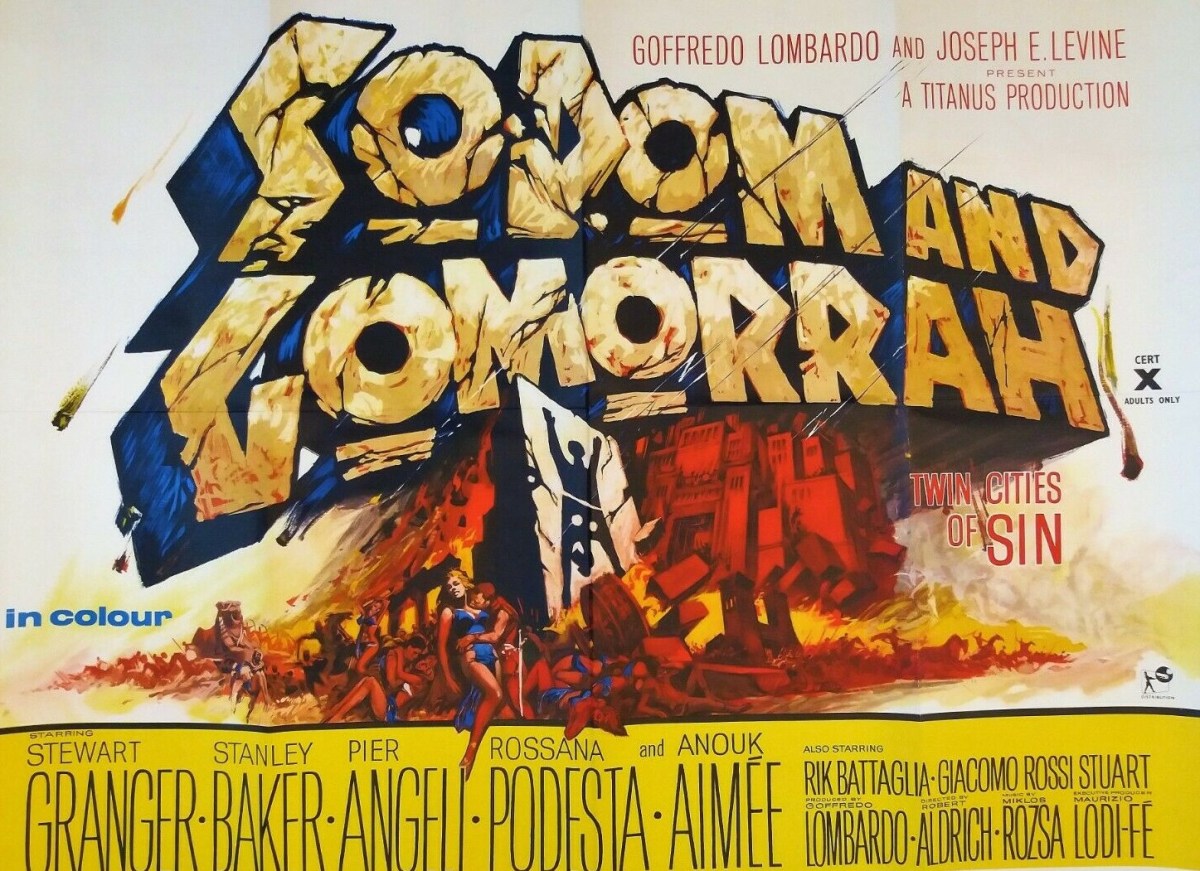
Setting aside the Biblical angle and the need to inject as much sin as the censor at that time would permit, this works very well as a historical drama filled with political intrigue, pivoting on the morality/sin axis, and with a terrific battle scene. The set up is superb. Bera (Anouk Aimee), Queen of the titular twin cities, allows Hebrew leader Lot (Stewart Granger) to settle his wandering tribe along the River Jordan in order to provide a buffer between her kingdom and the marauding Elamite tribe. Meanwhile, her treacherous brother Astaroth (Stanley Baker) intends using the Elamites to dethrone his sister.
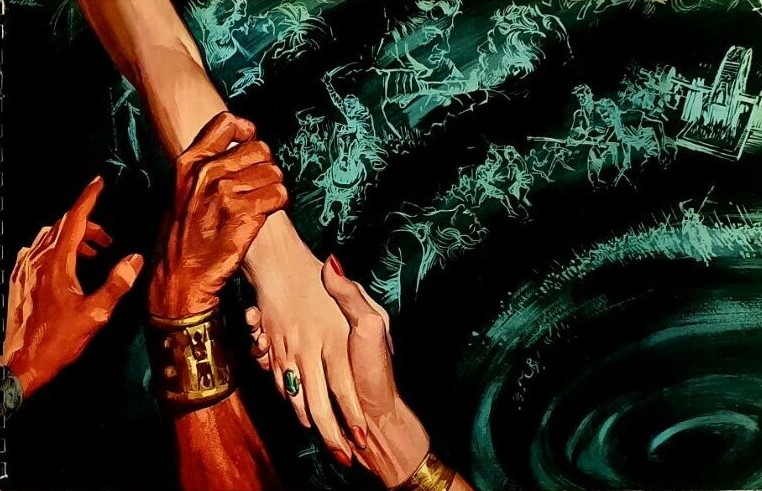
Stunning image from the Pressbook.
The Sodom-Hebrew arrangement is ugly from the start. Sodom owes its wealth to salt. And it relies for its salt mining and processing to thousands of slaves, literally worked to death, corpses piled high on wagons and dumped in the desert. The Hebrews abhor slavery. But having been homeless for so many years, Lot is in no position to argue and assumes that his people can live peacefully enough alongside the heathens, even accommodating Sodom to the point of returning fleeing slaves.
Another superb illustration from the Pressbook.
In fact, in agreeing to live in such close proximity to Sodom, Lot is already in the throes of seduction. In what appears a gesture to seal the deal, Bera presents Lot with her chief female slave Ildith (Pier Angeli). In reality this is a cunning move designed to undermine Hebrew culture. Naturally, Lot grants Ildith her freedom but her presence creates disharmony, Melchior (Rik Battaglia) leading the dissenters. Astaroth seduces both of Lot’s daughters Shuah (Rosanna Podesta) and Maleb (Claudia Mori).
Eventually, of course, the Hebrews succumb to many of the pleasures of Sodom, especially after discovering their own salt deposits which instantly make them wealthy, while Astaroth continues to stir up trouble. Lot the politician is more to the forefront than Lot the good and faithful servant, ignoring the slavery for the sake of peace. However, politics remain a sticky maneuver and, in the end, of course, it is God who intervenes, smiting the wicked.
There are surprising depths to the story. Ildrith initially rejects Lot’s overtures of marriage on the grounds that it will diminish his goodness. In trying to improve living conditions for the Hebrews, Lot does the opposite, jeopardizing their beliefs, his actions rendering virtually invisible the distinctions between the opposing cultures, especially when he is up close to the dancing female slaves and men being burned alive on a wheel. Queen Bera is a political genius, skilled at keeping her enemies closer, not just taking advantage of Lot’s weakness but ensuring that Astaroth never catches her cold.
It’s a very absorbing mix of power, politics, human weakness, the dangers of collaboration, sex and action. Although Lot takes center stage, it is only to watch his decline from man of principle to weak-willed politician, through the astute workings of Queen Bera, a far better manipulator of human emotions than her opposing number.
Images showing the capture of slave Tamar (Scilla Gabel)
Stewart Granger (The Secret Partner, 1961) is surprisingly good as the Hebrew leader. He might lack the physical presence of the likes of Charlton Heston but he proves himself no mean adversary in the various action scenes, two fights with Astaroth for example, the battle itself and in quickly dealing with dissent in the ranks. It would never have occurred to me that a shepherd’s crook was much of a weapon, but in Granger’s hands it proves very effective. He knows he is being seduced, first by Ildith, and then by Sodom, but, as a human being rather than figure of spirituality, is powerless to stop it. Stanley Baker (The Guns of Navarone, 1961) as the queen’s treacherous brother, on the other hand, just looks shifty and mean throughout.
Anouk Aimee (La Dolce Vita, 1960) is excellent as the politically astute monarch, and save for God’s intervention, would have got the better of everyone around her. Pier Angeli (The Angry Silence, 1960) is touching, initially angry at being cast out of Sodom, gradually warming to Lot, but only too aware that in succumbing to her charms he might spoil his own innate goodness, like a femme fatale only too wary of her own powers. Rosanna Podesta (Seven Golden Men, 1965) is good in a supporting role as is Rik Battaglia (Esther and the King, 1960) while Scilla Gabel (Colossus of the Arena, 1962) has a smaller part as the slave Tamar who meets a horrible death. Look out, too, for Gabrielle Tinti (Esther and the King, 1960), later best known for his marriage to Laura Gemser of the Black Emmanuelle series, and future spaghetti western anti-hero Anthony Steffen (Django the Bastard, 1969).
Novelisation of the screenplaywith a cover placing the focus strictly on sin.
Robert Aldrich (4 for Texas, 1963) creates an excellent addition to the genre, the pace of the drama, with various storylines, never slacking. As a historical picture this aims higher than mere pulp where sexiness and torture are the audience hooks. His battle sequence is outstanding, unusual in that the balance of power shifts throughout, in part through treachery, between the participants. Although Aldrich often disparaged this picture, he has done a really good job of working up the ingredients into a heady brew, notwithstanding the “deus ex machina” ending that met audience expectation. Ken Adam (Dr No, 1962) headed up the production design and Wally Veevers (The Guns of Navarone, 1961) among the half dozen experts contributing to the special effects. Mention also to Maurice Binder for the credit sequence and Miklos Rosza (Ben-Hur, 1959) for a nuanced score.
Catch-Up: Reviewed previously in the Blog are Robert Aldrich’s 4 for Texas (1963) and The Flight of the Phoenix (1965), Stewart Granger in The Secret Partner (1961) and The Secret Invasion (1964), and Stanley Baker in The Guns of Navarone (1961) and The Girl with a Pistol (1968).
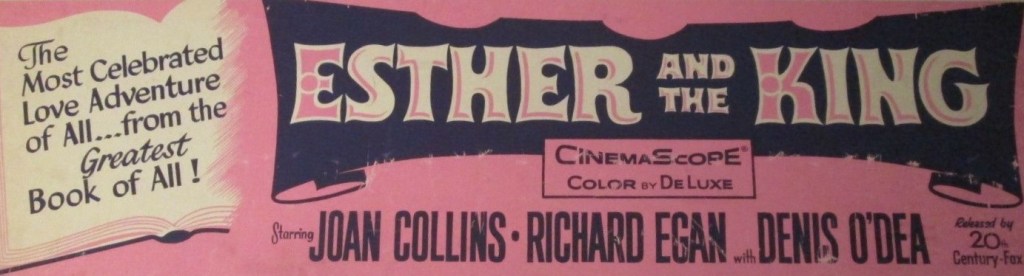
Taking a Biblical tale as a starting point, veteran director Raoul Walsh (White Heat, 1949) stirs up heady brew of intrigue, rebellion, politics and romance. Returning home victorious, King Ahasuerus (Richard Egan) discovers his wife Queen Vashti (Danielle Rocca) has committed adultery and that his minister Klydrathes (Renato Baldini) has been squeezing the people blind with punitive taxes, hanging them for non-compliance.
Casting his wife aside, the king seeks a new bride. Since he has conquered all the known world except Greece, marriage to make a political alliance is not an option, so, given women are treated as mere chattels and the king is all-powerful, all the likely virgins are rounded up including Hebrew Esther (Joan Collins) on her wedding day.
Her husband-to-be Simon (Rik Battaglia) kicks off, attacks Klydrathes and becomes a wanted man. The queen’s lover and the king’s chief minister Prince Haman (Sergio Fantoni) attempts to fix the bridal selection, inserting his hardly-virginal choice Keresh (Rosalba Neri) into the proceedings while attempting to murder clear favorite Esther. When that fails, Haman plots to usurp the crown. With the Hebrews facing possible annihilation, Esther is put in the position of giving in to the king in order to save her people. As her serenity soothes the savage beast, her initial hate turns to growing attraction.
Meanwhile, Simon is on a rescue mission and Prince Haman cooks up a devilish plot that will see the Hebrews blamed for passing on military secrets to the king’s enemies. Naturally, all hell eventually breaks loose.
More a drama than a typical big-budget DeMille offering, with battles taking place off-screen, action is limited to a few chases and skirmishes. There is a fair amount of sin on show what with a tribe of concubines at the king’s disposal, a whipping, a striptease by Vashti in a last gasp attempt to win back the king, and some very seductive dancing routines by female slaves who, at times, look as if they were coached by Busby Berkeley. Substantial amounts appear to have been spent on costumes and production design, so historical atmosphere is well captured.
Once you realize there’s not going to be any kind of big battle or major action centerpiece common to the Biblical genre, it’s easy to sit back and enjoy the political machinations, the initial torment of Esther, introduced as a rebellious soul, and the king, more at home with soldiers, shaking off his despondency at marital betrayal as he responds to Esther’s coaxing.
It was 1961 before it reached Britain.
Top-billed British actress Joan Collins (Seven Thieves, 1960) has a difficult role. Normally, you would expect expressions of passion or depths of anguish, but the rebellion she displays at the start soon disappears when she enters the palace and is helpless to change the situation except by, initially against her will, accepting the king’s desires. In that sense, her portrayal is understandable but the understated performance gets in the way of a woman who is supposed to be devastated by the loss of her husband and then trapped by the needs of her people into making the marriage.
Taking second billing, Richard Egan (300 Spartans, 1964) makes a thoughtful king, showing very little temper, possibly because he doesn’t need to with everyone, beyond the conspirators, cowering in his presence. Regal and stately suits him fine rather than the more common explosions we are accustomed to seeing from people in that line of work.
Both stars were in need of box office redemption. It should have been a screen pairing made in heaven, both Collins and Egan coming to the fore in the mid-1950s, and if they had sustained their early promise, it would have been a star-studded picture. As it was, Collins had been billed above Richard Burton in The Sea Wife (1957) and above Jayne Mansfield in The Wayward Bus (1957) but had gradually drifted down the pecking order, in her previous outing credited behind Edward G. Robinson and Rod Steiger in Seven Thieves (1960).
Egan’s career had followed a similar trajectory – top-billed in pictures as diverse as drama The View from Pompey’s Head (1955), western Tension at Table Rock (1956), film noir Slaughter on 10th Avenue (1957), and romance A Summer Place (1959) but for his previous film, Pollyanna (1960) billed behind both Jane Wyman and Hayley Mills.
While Egan would enjoy a career resurgence it was the end of the line, at least temporarily, for Joan Collins. She was coming to the end of her seven-year Twentieth Century Fox contract but fell out with the studio after being rejected for Cleopatra, and on the evidence here you can see why. After leaving Fox, she only made five more films during the decade. This was the final picture for Irish actor Dennis O’Dea (The Fallen Idol, 1948). Director Raoul Walsh made only another two.
Sergio Fantoni (Von Ryan’s Express, 1965) excels as the spurned lover and Rik Battaglia (The Conqueror of the Orient, 1960) as the schemer. Rosalba Neri (Top Sensation, 1969) and Danielle Rocca (Behold a Pale Horse, 1964) both make striking appearances. Look out also for Gabriele Tinti (Seven Golden Men, 1965).
I’ve been writing this Blog now for one year, beginning July 2020, so I thought I’d take a look at which posts proved the most popular (in terms of views) with my readers. So here’s the annual top 30 films, ranked in order of views.
The Secret Ways (1961) – Richard Widmark and Senta Berger – making her Hollywood debut – behind the Iron Curtain in gripping adaptation of the Alistair Maclean thriller.
Ocean’s 11 (1960) – Frank Sinatra, Dean Martin, Sammy Davis Jr. and the Rat Pack in entertaining heist movie set in Las Vegas.
It’s Not All Rock’n’Roll (2020) – remarkable documentary about the other side of the music business as ageing rocker Dave Doughman tries to keep his dreams alive.
Age of Consent (1969) – British actress Helen Mirren makes her movie debut as the often naked muse for painter James Mason in touching drama directed by Michael Powell.
The Venetian Affair (1966) – Robert Vaughn shakes off his The Man from Uncle persona in taut Cold War thriller also starring Elke Sommer as his traitorous wife and Boris Karloff in a rare non-horror role.
The Golden Claws of the Cat Girl / La Louve Solitaire (1968) – French cult thriller starring Daniele Gaubert as sexy cat burglar forced to work for the government.
Pharoah / Faron (1966) – visually stunning Polish epic about the struggle for power in ancient Egypt.
The Swimmer (1968) – astonishing performance by Burt Lancaster as a man losing his grip on the American Dream.
Stiletto (1969) – Mafia thriller with hitman Alex Cord and and illegal immigrant girlfriend Britt Ekland hunted by ruthless cop Patrick O’Neal.
The Naked Runner (1967) – after his son is taken hostage businessman Frank Sinatra is called out of retirement to perform an assassination.
Marnie (1964) – Sean Connery tries to reform compulsive thief Tippi Hedren in Alfred Hitchcock thriller.
Our Man in Marrakesh / Bang! Bang! You’re Dead (1966) – Entertaining thriller sees Tony Randall and Senta Berger mixed up in United Nations plot involving the likes of Klaus Kinski and Herbert Lom.
The Happening (1967) – Anthony Quinn locks horns with Faye Dunaway and a bunch of spoiled rich kids in kidnapping yarn.
Dark of the Sun / The Mercenaries (1968) – Rod Taylor and Jim Brown head into the heart of darkness in war-torn Africa with a trainload of diamonds and refugees including Yvette Mimieux.
The Guns of Navarone (1961) – men-on-a-mission Alistair Maclean World War Two epic with all-star cast including Gregory Peck, David Niven, Anthony Quinn, Anthony Quayle, Stanley Baker, Irene Papas, James Darren and Gia Scala.
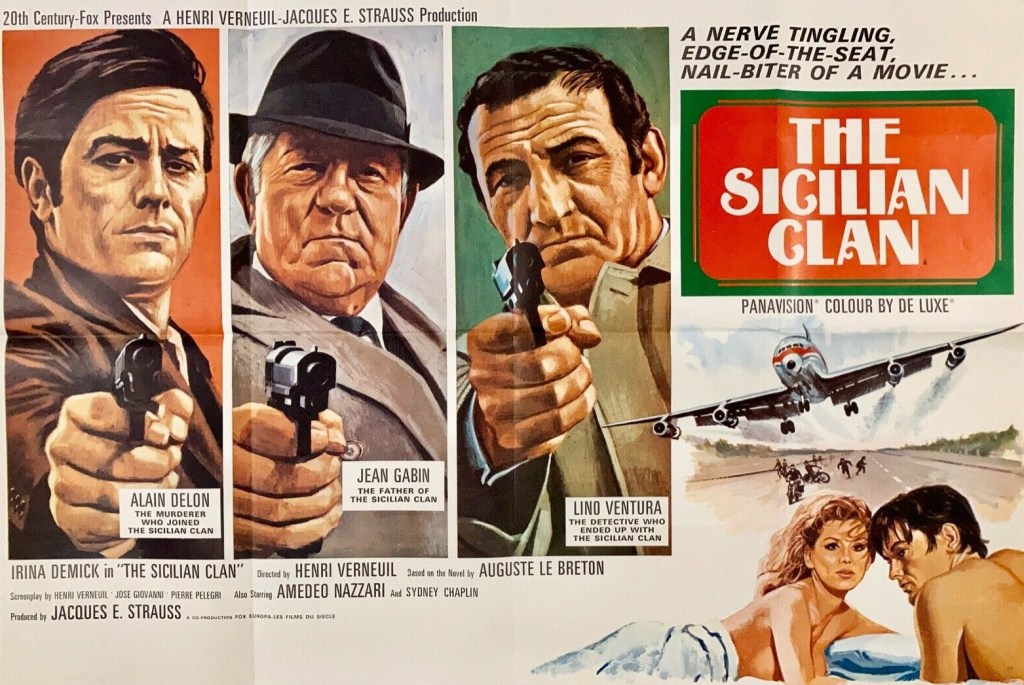
The Sicilian Clan (1969) – three generations of French tough guys – Jean Gabin, Lino Ventura and Alain Delon – clash in Mafia-led jewel heist.
4 for Texas (1963) – Frank Sinatra and Dean Martin as double-dealing businessmen in highly entertaining Robert Aldrich Rat Pack western starring Ursula Andress and Anita Ekberg.
Five Golden Dragons (1967) – Innocent playboy Robert Cummings becomes enmeshed with international crime syndicate led by Christopher Lee, George Raft and Dan Duryea.
Duel at Diablo (1966) – James Garner and Sidney Poitier team up to protect Bibi Andersson in Ralph Nelson western.
Move Over Darling (1963) – after years marooned on a desert island Doris Day returns to find husband James Garner just married to Polly Bergen.
Pressure Point (1962) – prison psychiatrist Sidney Poitier is forced to treat paranoid racist inmate Bobby Darin.
Wonder Woman 84 (2020) – in one of the few films to get a cinematic screening during lockdown, Gal Gadot returns as mythical superhero to battle supervillain Kristen Wiig.
Genghis Khan (1965) – Omar Sharif as the Mongol warrior who conquered most of the known world, tangling with rival Stephen Boyd and Chinese mandarin James Mason on the way.
A Fever in the Blood (1961) – Warner Bros wannabes Efrem Zimbalist Jr, Angie Dickinson, Jack Kelly and veteran Don Ameche in tough political drama.
The Prize (1963) – Paul Newman and Elke Sommer investigate murder in the middle of the annual Nobel Prize awards in Sweden.
In Search of Gregory (1969) – wayward Julie Christie embarks on pursuit of Michael Sarrazin who may – or may not – be a figment of her imagination.
Justine (1969) – Dirk Bogarde and Michael York become entangled in web woven by Anouk Aimee in corrupt pre-World War Two Middle East.
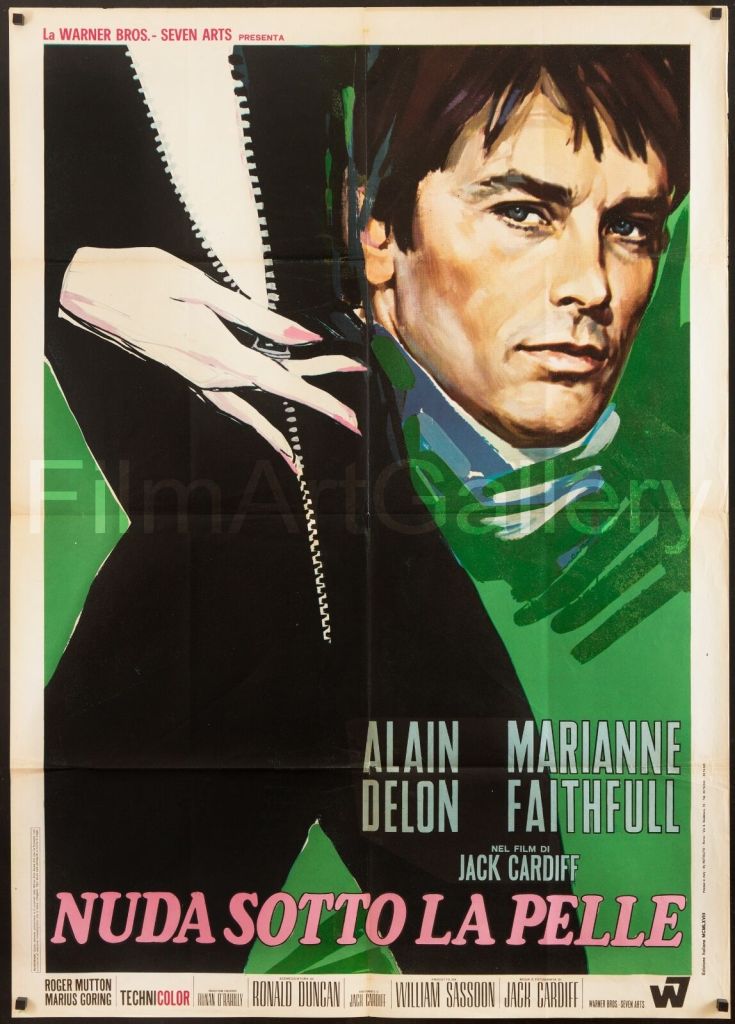
The Girl on a Motorcycle (1968) – singer Marianne Faithful in a hymn to the open road and sexual freedom.
Blindfold (1965) – psychiatrist Rock Hudson and dancer Claudia Cardinale in highly entertaining mystery thriller about missing scientists.
Hammerhead (1968) – secret agent Vince Edwards and goofy Judy Geeson on the trail of evil mastermind Peter Vaughn.
It’s a been a fabulous year for watching the movies and my pictures of the year (the first full year of the Blog running from July to June, I hasten to add) make up an eclectic collection ranging from historical epics, dramas and westerns to horror, thrillers and comedy. Although this is my chosen decade, many of the films I was seeing for the first time so it was interesting to sometimes come at a film that had not necessarily received kind reviews and discover for one reason or another cinematic gems. There was no single reason why these pictures were chosen. Sometimes it was the performance, sometimes the direction, sometimes a combination of both.
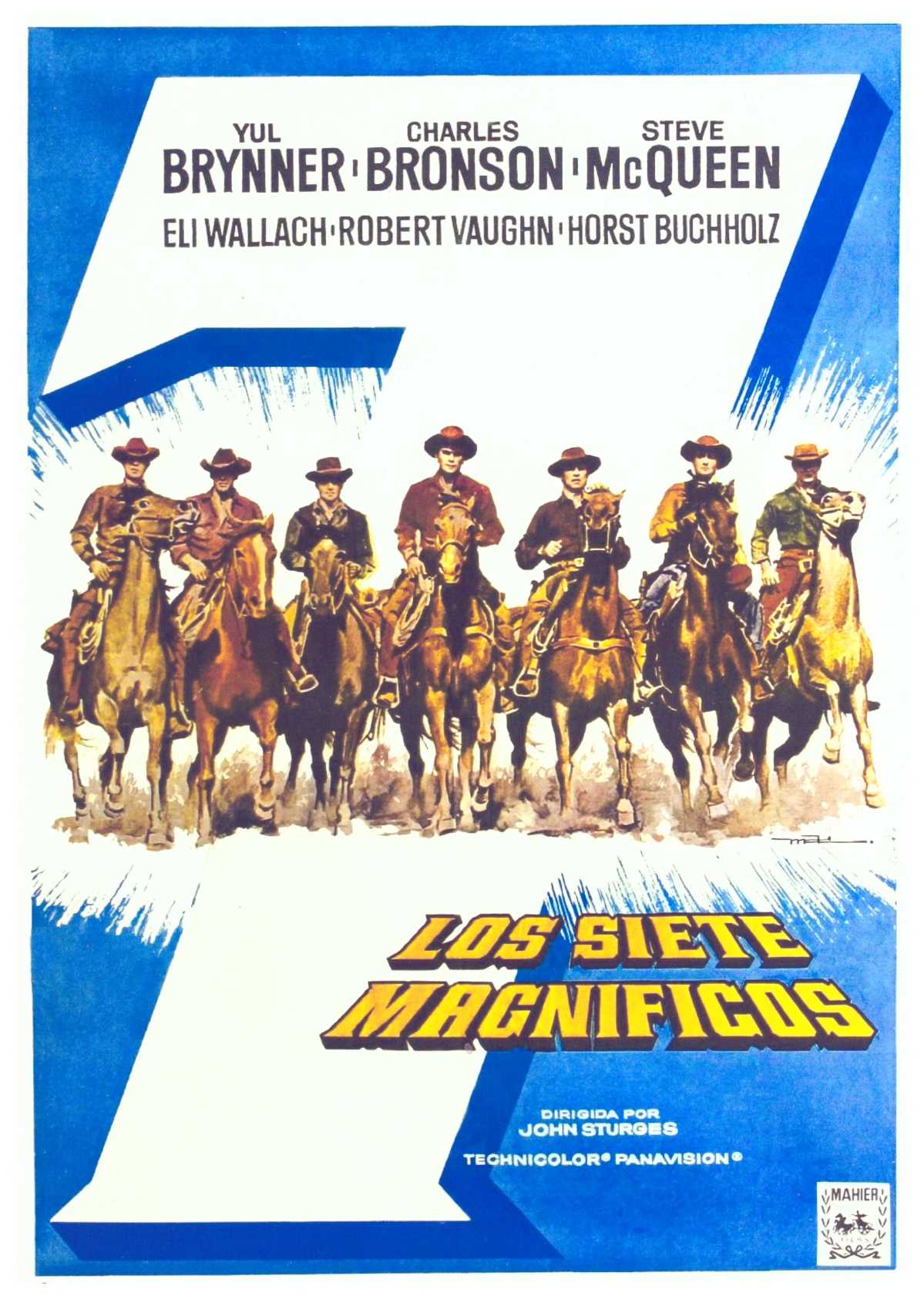
The westerns I most enjoyed came from either ends of the decade – John Wayne and Rock Hudson in magnificent widescreen spectacle The Undefeated (1969) and Yul Brynner, Steve McQueen, Charles Bronson, James Coburn and the team in The Magnificent Seven (1960).
There was another ensemble all-star cast in J. Lee Thompson war film The Guns of Navarone (1961) one of the biggest hits of the decade with Gregory Peck, Anthony Quinn, David Niven, Stanley Baker et al.
Horror brought a couple of surprises in the shape of Daliah Lavi as the Italian peasant succumbing to The Demon (1963) and Peter Cushing menaced by The Skull (1965).
Not surprisingly perhaps Alfred Hitchcock headed the ranks of the five-star thrillers, but surprisingly to some, this was in the shape of Marnie (1964) with Sean Connery and Tippi Hedren rather than some of his decade’s more famous / infamous productions. Heading the romantic thrillers was the terrifically twisty Blindfold (1965) with Rock Hudson and Claudia Cardinale teaming up to find a missing scientist. The Sicilian Clan (1969) proved to be a fine heist picture in its own right as well as a precursor to The Godfather with a topline French cast in Alain Delon, Lino Ventura and Jean Gabin.
Only one comedy made the five-star grade and what else would you expect from Billy Wilder’s Some Like It Hot (1959), slightly outside my chosen remit of films from the 1960s, but impossible to ignore the chance to see Marilyn Monroe, Tony Curtis and Jack Lemmon strutting their stuff on the big screen. For the same reason I had the opportunity to re-evaluate Ridley Scott’s Oscar-winning historical epic The Gladiator (2000) that gave Hollywood a new action hero in Russell Crowe. Stylish contemporary sci-fi chiller Possessor (2000), from Brandon Cronenberg, was another one seen on the big screen, one of the few in this year of the pandemic.
Most people would certainly put Paul Newman as prisoner Cool Hand Luke (1967) in this elevated category but, to my surprise, I found several other dramas fitted the bill. The clever sexy love triangle Les Biches (1968) from French director Claude Chabrol made his name. Burt Lancaster turned in a superlative and under-rated performance in the heart-breaking The Swimmer (1968) about the loss of the American Dream. Rod Steiger, on the other hand, was a hair’s-breadth away from picking up an Oscar for his repressed turn as The Pawnbroker (1964).
Two films set in the Deep South also made the list – Marlon Brando in Arthur Penn’s depiction of racism in small-town America in The Chase (1966) with an amazing cast also featuring Jane Fonda and Robert Redford, and Michael Caine as a more than passable arrogant southerner in Otto Preminger’s Hurry Sundown (1967) opposite rising star Faye Dunaway. Dennis Hopper and Peter Fonda’s hymn to the freedom of the motorbike in Easy Rider (1969) turned into a tragic study of attitudes to non-conformity.
For only eighteen films out of a possible two hundred to make the cut indicates the high standards set, and I am looking forward to as many, if not more, brilliant films in the year to come.
I came at this picture with some trepidation and in truth only watched it at the cinema because I had seen everything else worth a look in the few weeks since the picture houses have reopened. Although initially attracting Oscar buzz, that failed to materialize when it mattered and it was left out of the Oscar loop. While kate Winslet was a proven commercial box office draw, this appeared to have arthouse sensibilities and the few reviews I had read promised a turgid evening.
The reality was something different and as a result of what I can only describe as the magic of the big screen. Watching a film in a cinema is automatically more involving than on the small screen: there are fewer distractions, the dominating size of the screen is unavoidable and it is dark. Had I watched it at home I could well have switched it off after fifteen minutes in reaction to the slow pace. But in a cinema, slowness did not matter, and until it widened out in the final few scenes it was like an absorbing chamber piece, featuring a handful of characters. In approach it was closest to a film about an artist, Pollock (2000) and Mr Turner (2014) come to mind, where obsession is the driving force, narrative and plot merely subservient. We are exposed to considerable detail about the character’s archaeological work, which is often filthy and undertaken outside in all sorts of weather, requiring the constitution of a miner or farmer rather than a painter, as well as the patience of a saint to brush, wash or poke clean her discoveries.
Mary Anning (Kate Winslet) was not an attractive personality, downright truculent and rude for the most part, given that she depended for her living on selling the archaeological items she had found in the Lyme Regis area to tourists and collectors. That her major archaeological discoveries resided in the British Museum brought no personal satisfaction because thanks to the male archaeological hierarchy they were presented there under the names of the purchasers rather than the finder. What she earned for major pieces could keep herself and her ageing and infirm mother (Gemma Jones) for a year. By and large, they lived in poverty, existing on soup mostly, the mother at least as obsessive as the daughter with her collection of knick-knacks, one for each of her eight children who had died prematurely, which she washed and polished every day. Mary spurned any male overtures and indeed appeared to resent any friendship, the hint of some kind of betrayal in brief scenes with Elizabeth Philpot (Fiona Shaw), a local worthy.
Mary is hired by wannabe archaeologist Roderick Murchison (James McArdle) to look after his insipid, annoying, depressed wife Charlotte (Saoirse Ronan). Gradually a friendship forms, leading to desire. Nothing is more illustrative of the Victorian attitude to sex than that the idea of a lesbian relationship ran counter to all imagination. Perhaps one of the more refreshing aspects of the picture is that while Victorian women clearly resented having sex with their husbands that was largely down to the fact the men had no idea how to satisfy a woman. That is not the case here and though the sex scenes have been criticised in places as “too strong” I thought it was essential just to be sure that the women did know what they were doing and clearly derived enormous satisfaction from the sexual act if properly performed. A chaste kiss and cuddle would hardly do justice to the passion suddenly erupted.
While Mary experiences jealousy when Charlotte is entranced by Elizabeth, romance does not produce complete fulfilment and when Charlotte, as if she were a man, appoints herself Mary’s protector that independence for which the archaeologist had fought so hard is imperilled. Love miraculously changes Charlotte’s outward demeanour, the same is not true of Mary.
This isn’t the picture-postcard version of a Victorian seaside town, rather its harsher cousin. Writer-director Francis Lee (God’s Own Country, 2017) refuses to soften the rude edges of life and the best a true romanticist can expect is that the storms occasionally abate and the surf does not pound so heavily.
Powerful roles have been in short supply of late for Kate Winslet (Blackbird, 2019) and she is superb as the stoic woman in a male-dominated world, unable to express passion except in whittling away at pieces of ammonite. Saoirse Ronan (Little Woman, 2019) moves from bitter and confused child-woman to finding joy and from then to taking charge. Veteran British character actors Gemma Jones (Rocketman, 2019) and Fiona Shaw (My Left Foot, 1989) are impressive while James McArdle (Mary, Queen of Scots, 2018) and Alec Secareanu (Amulet, 2020) offer different interpretations of the entitled male.
To be sure there is no conclusive proof that Mary Anning was this way sexually inclined but in these days of Hollywood reinvention or reimagining for little more than comic-book glory it would be hard not to allow the director some leeway in providing his love story with an interesting backdrop and a fascinating character. At times it is a painful watch, but a rewarding one.