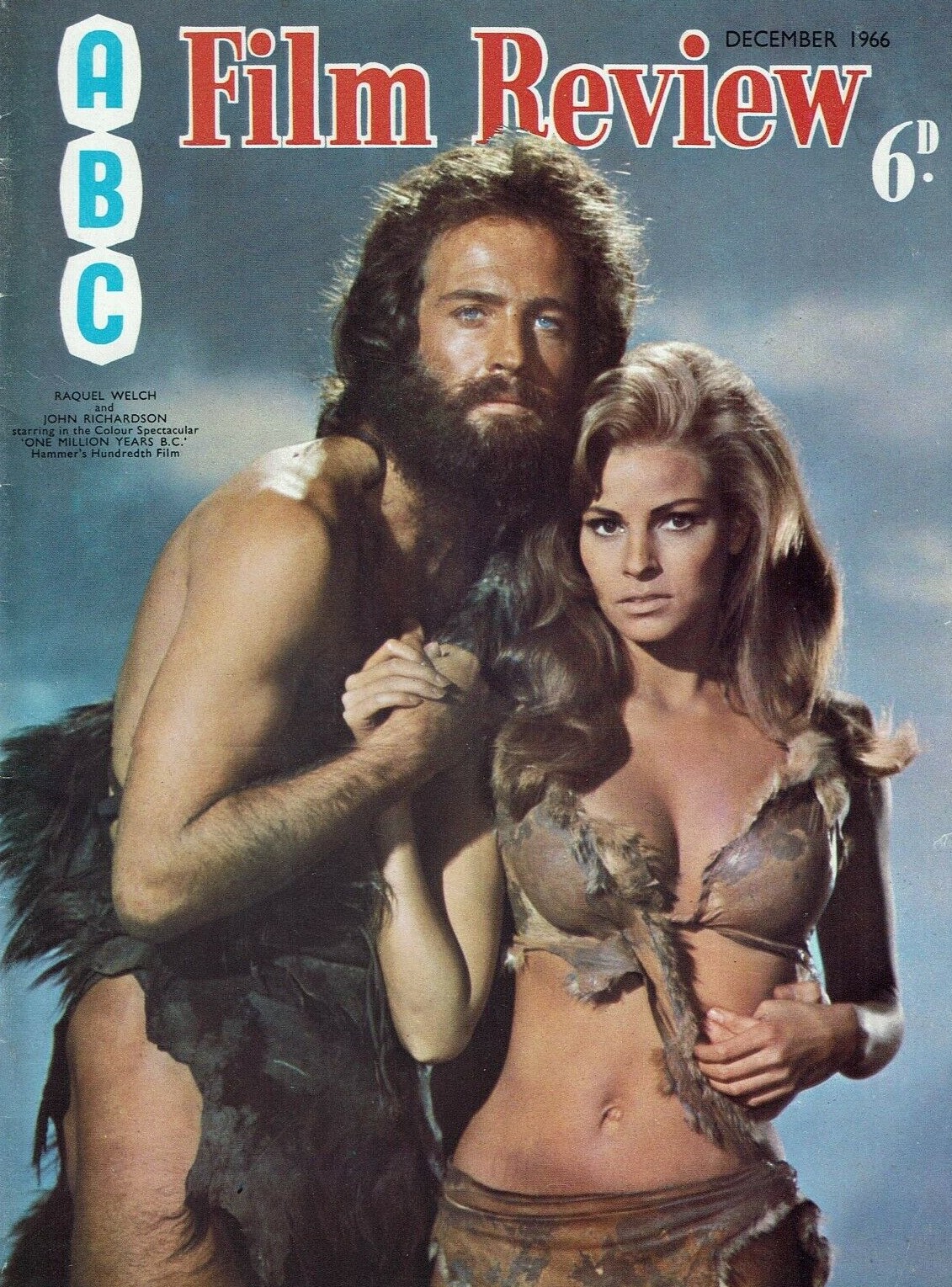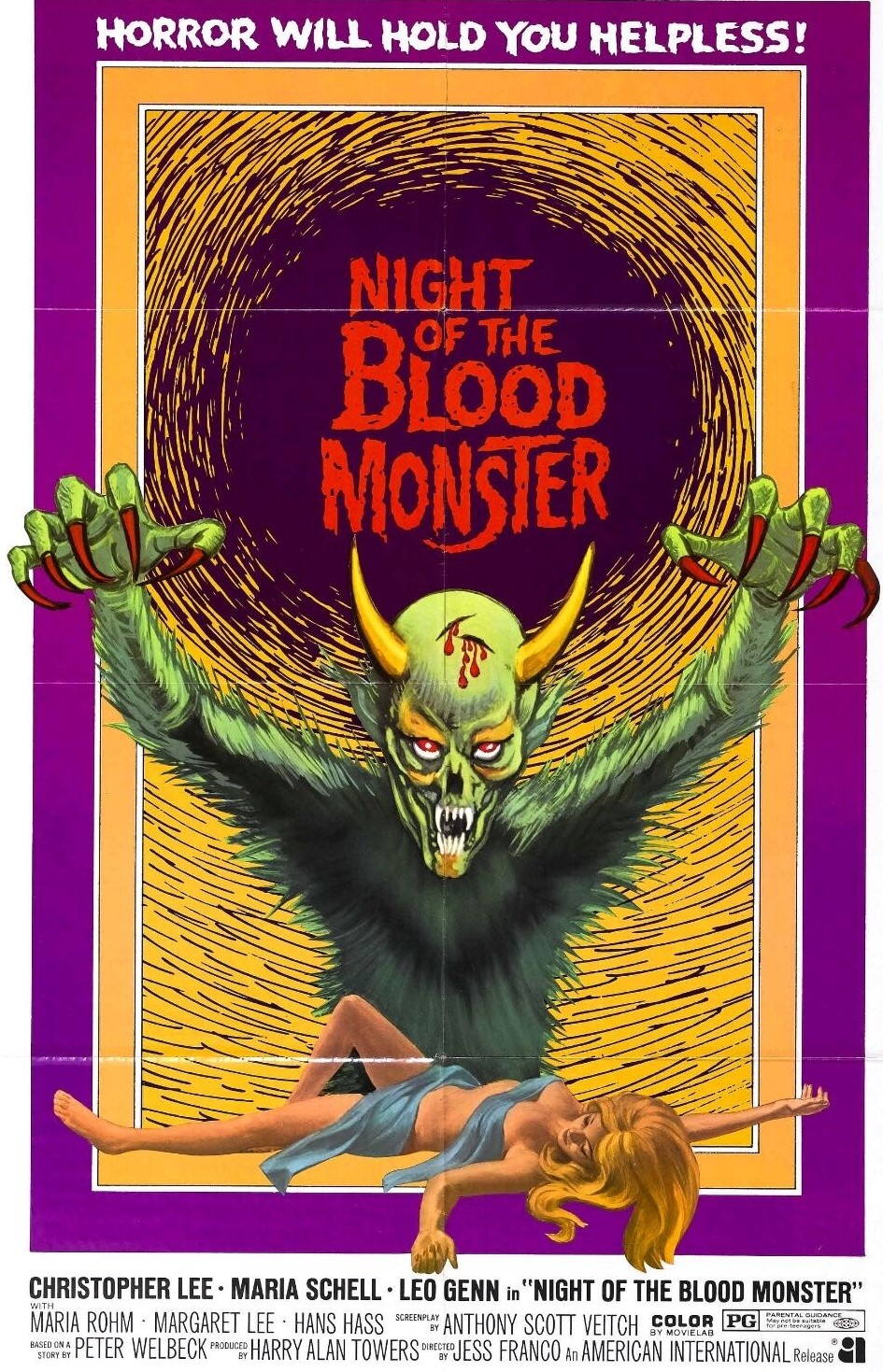
Hannibal (1960) ***

Inconvenient truth never bothered Hollywood scriptwriters when it came to history and here the prospect of solving the “Great Hannibal Mystery” proved irresistible. For in 218 B.C. this invader from Carthage (modern-day Tunisia) had crossed the Alps, battered the Roman army into submission and had Rome at his mercy. But one of the greatest generals of all time did not attack Rome. Why? Love was the answer, according to the filmmakers, following the Romeo and Juliet template.  

I have to admit I didn’t have that on my mind. I was seduced by the poster, the involvement of cult director Edgar G. Ulmer (The Black Cat, 1934), the prospect of an action-packed adventure with marauding elephants and the fact that although familiar with the name Hannibal I had no idea who he was and why he crossed the Alps when surely it would have easier to take a ship from Tunisia to Italy. But I guess star Victor Mature (Samson and Delilah, 1949) was also duped into thinking that if an American nobody like Steve Reeves (Hercules, 1958) could make it big in Italy then so could surely the original Hollywood Mr. Muscles. Mixing the new-look sword-and-sandals genre with the old-style historical epic appeared a potential winner. But I should have guessed that the lean running time of 103 minutes meant an “epic” was out of the question.

The British Trade Descriptions Act would have a field day with the way the posters promoted the elephants. The much-vaunted “army” is scarcely seen in battle and the great beasts looked more cuddly than anything, striding along linked trunk-to-tail.

The picture does take a good while to warm up although the movie begins with a sense of the epic, otherwise how to explain the 15 minutes before Hannibal hoves into view, the preceding period of invaders crossing the Alps short of dramatic incident beyond a couple of men falling to their deaths and the elephants becoming a bit restive. Endless lines of soldiers, in this case stretching into the snowbound horizon, almost becomes a motif, too much valuable time wasted on too many marches.  

Hannibal turns out to be a clever commander, wanting to conquer Rome more by fear than battle, reckoning that if the Italians believed he possessed an unstoppable force they would rush to the negotiating table rather than engage in open battle and risk the destruction of their cities. He sends the captured niece Sylvia (Rita Gam) of Senator Fabius (Gabriele Ferzetti) back to her uncle with frightening tales. This doesn’t fool Fabius who views the woman as a traitor and realizes the pitfalls of surrender. Hannibal and Sylvia getting it together causes discord not just in Rome but in the Carthaginian camp, the delay in attacking the city put down to their romantic dalliance.   

The initial battle scenes come up short, presented primarily in montage, little snippets of fighting here and there, rather than opposing forces facing each other, no sign either of elephants striking terror into the hearts of their opponents. But the later battle more than recompenses. One of the greatest assets of historical and war pictures is the detail given over to strategy. And if filmed properly, you can see plans executed. Hannibal demonstrates his genius by drawing the main Roman phalanxes into a trap, attacking them from both sides and forcing them back towards a river from which there is no escape. Superbly filmed, it’s a bloody conflict (for movies of the period), arms hacked off, faces and bodies weeping with blood. There’s a tragic end to the romance.

Oh, and by the way, Hannibal loses an eye – but it’s not in battle but from conjunctivitis.

I should point out, having done my own digging, but there was a sounder reason than love for Hannibal not advancing on Rome. Simply put, he lacked the machinery to do it. The only way to conquer a city was by siege and to achieve that you needed siege machines which Hannibal lacked. But no matter how much he later tried to draw the Roman armies into the open, he was denied that opportunity by the wily Fabius who, instead, waged a war of attrition.

Hannibal was, in fact, an irritant to Rome for a decade, so this tale is heavily truncated. Although the tale of the strong man brought to his knees by passion is a Hollywood trope – look no further than Samson and Delilah – the lovers fail to strike the necessary sparks, in part because initially Hannibal views Sylvia merely as a tool to achieve a political end and in part because their time together is too limited. This is no grand passion in the vein of Doctor Zhivago (1965).

And that’s a shame because despite (or perhaps because of) his muscles, Victor Mature was no slouch in the romantic sweepstakes, having dallied in the past with the like of Janet Leigh (Safari, 1956), Susan Hayward (Demetrius and the Gladiators, 1954) and Jane Russell (Las Vegas Story, 1952). Here, Mature is better as a leader than a lover. The svelte Rita Gam (The Thief, 1952) – first wife of director Sidney Lumet –  was the opposite of the more voluptuous Italian screen queens of the Sophia Loren/Gina Lollobrigida variety and her career had not really taken off, only eight films prior to Hannibal and only two in the next decade. Paradoxically, she is better battling her uncle and accepting her fate than a woman in the grip of passion.

Gabriele Ferzetti (Once Upon a Time in the West, 1968) makes the most of a complex character. Look out for Rik Battaglia (Sodom and Gomorrah, 1962) as Hannibal’s brother and, as Fabius’s son, Terence Hill (God Forgives…I Don’t, 1967) and in a smaller role his future sidekick Bud Spencer.   

Directorial credit was split between Ulmer and Carlo Ludovico Bragaglia  (Amazons of Rome, 1961) with Mortimer Braus (The Son of Dr Jekyll, 1951), Sandro Continenza (The Inglorious Bastards, 1978) and Ottavia Poggi (Queen of the Nile, 1961) involved in the screenplay.

The Amorous Adventures of Moll Flanders (1965) ***

The Husband-Hunting Adventures of Moll Flanders” might have been a more accurate title and if you were seeking a template for a multi-character eighteenth-century Olde English picturing majoring on sexual shenanigans here would be a very good place to start, rather than the shambolic recently-reviewed Lock Up Your Daughters (1969). Of course, Tom Jones (1963) was the precursor but told the story from the male perspective and here it is from the more vulnerable female point-of-view. Despite the hilarity and the sexual proclivities on show, it remains abundantly clear that marriage remains a refuge, where the un-titled can gain either security or status, but also a contract, a means of further enrichment for the already wealthy.

So orphan housemaid Moll Flanders (Kim Novak) has a difficult time of persuading the elder brother (Daniel Massey) of her wealthy employer to marry her. Instead, he takes her as his mistress, leaving her no option but to marry the drunken fool of a younger brother (Derren Nesbitt) and instantly regret her decision. When he drowns, you would have thought that would solve her problems. But this was the eighteenth century and a widow with no fortune (and therefore power) of her own can easily be tossed out penniless.

A widowed banker (George Sanders) might be a prospect especially as she has the wits to prevent him being entirely robbed by highwayman Jemmy (Richard Johnson). Plans to marry him thwarted, she takes a job for food and lodgings with Lady Blystone (Angela Lansbury) and her husband, an impoverished Count (Vittorio De Sica), who are constantly pursued by debt collectors. Meanwhile Jemmy has taken the decision to marry a rich woman and become a kept man.

But this set of characters becomes enmeshed, rather than going off in sundry directions as with Lock Up Your Daughters, so the tale unfolds in classic fashion. Assuming Moll to be moneyed, Jemmy masquerades as the owner of three ships. Nothing, of course, works out for anybody, certainly not those pretending to be something they are not while aspiring to wealth beyond their reach, but it all concludes in propitious fashion as the actions of the various principals become embroiled.

While certainly having an inclination towards the amorous, Moll wishes for that within the context of true love, rather than selling her physical wares to the highest bidder. So for a picture sold on immorality – the “rollicking ribaldry” of the poster – there is an unsung moral standpoint. Finding safe passage into affluence proves very tricky indeed. And what appears at first glance to be merely a picaresque episodic tale turns out to be very well structured indeed. And those looking for cleavage will find it here in abundance, as if some kind of rationing had been imposed on clothing, or that it was matters of economy that dictated that the area around the bosom be left unclothed. Being the lusted-after heroine it falls to Moll Flanders to shed even more of her attire from time to time.

You are more likely to laugh out loud at the moments of offbeat humour – a flotilla of ducks heading in Moll’s direction when she cries for help in a lake, the Count while acting as a butler demanding a tip – but it is more of a gentle satire. There is some of the expected bedroom farce but, mercifully, no recourse to a food fight. It is handsomely-mounted and meets the highest expectations of the costume drama.

Kim Novak (Of Human Bondage, 1964) easily passed the English-accent-test and carries the picture with ease. Richard Johnson (Deadlier than the Male, 1967) reveals a rakish side so far hidden in his more dramatic works to date. And there is a fine supporting cast including George Sanders (The Quiller Memorandum, 1966), Angela Lansbury (Harlow, 1965), Vittorio De Sica (The Shoes of the Fisherman, 1968), Lili Palmer (The Counterfeit Traitor, 1962) as Jemmy’s mistress, Leo McKern (Assignment K, 1968) as Jemmy’s sidekick going by the name of Squint, Daniel Massey (Star!, 1968) and Derren Nesbitt (Nobody Runs Forever/The High Commissioner, 1968). In bit parts looks out for Cecil Parker (Guns at Batasi, 1964), Dandy Nichols later of Till Death Us Do Part television fame and Carry On regular Peter Butterworth.

All directed with some style by Terence Young (Mayerling, 1968) and adapted from the lengthy Daniel Defoe novel by Denis Cannan (A High Wind in Jamaica, 1965) and Roland Kibbee (Valdez Is Coming, 1971).

An old-fashioned romp with, if you can bothered to look, a moral center. You catch this on Amazon Prime. I’m not sure why they have chosen a black-and-white illustration since the film is shot in glorious color.

Lock Up Your Daughters (1969) **

Worth seeing for all the wrong reasons prime example being Christopher Plummer with a false nose and almost unrecognisable as an eighteenth century periwigged English dandy in a pure squalor of a coastal town. The best reason is the very realistic background, all mud, missing teeth, drunkenness, cockfighting, poverty, debtors strung up in baskets – not the usual bucolic image of Olde England. But everything gets bogged down in an indecipherable plot. Robert Altman mastered the multi-character narrative in such gems as Nashville (1975) but here debut director Peter Coe most demonstrably did not.

This started life as a modestly successful London West End stage musical and probably for budgetary reasons the songs were discarded. All that’s left is plot. And plot and plot. All to do with sex as it happens. Husbands exist only to be cuckolded. Cleavage is obligatory for women. Young women lusting after sex have been brought up in contradictory fashion to view it as dirty. And no eighteenth century tale is complete without a regimen of long-lost daughters and sons.

Guess who?

It starts promisingly enough in early morning with a town crier (Arthur Mullard) filling us in on the predilections and problems of various prominent citizens, most notably Lord Foppington (Christopher Plummer), the foppest of the fops, gearing up for an arranged marriage to Hoyden (Vanessa Howard). As a virgin not wanting to come to his wedding night bereft of the necessary skills, he employs strumpet Nell (Georgia Brown) to bring him up to speed.

Meanwhile, it’s “lock up your daughters” time as a ship’s crew, at sea for ten months, given two days leave, start charging through the town, fondling and kissing any woman of any age who happens to stand still for a moment. Among this randy bunch are Ramble (Ian Bannen), Shaftoe (Tom Bell) and Lusty (Jim Dale). Ramble is given the eye by married Lady Eager (Fenella Fielding), Shaftoe takes a fancy to Hilaret (Susannah York) while old flame Nell is targeted by Lusty (Jim Dale). Mrs Squeezum (Glynis Johns) seeks sex anywhere and there’s maid Cloris (Elaine Taylor) also seeking physical fulfilment.

Of course, the whole purpose of the narrative is to thwart true and illicit love, husbands and fathers returning at inconvenient times. And had the storyline stuck to the tried-and-tested formula devised very successfully for Tom Jones (1963) and The Amorous Adventures of Moll Flanders (1965) it might well have worked. But the instinct to make meaningful comment by way of satire takes the story in very unlikely directions, an extended court scene with a barmy judge the worst of such excesses, though a food fight comes close.

It’s meant to play as a farce, the men climbing (literally) in and out of bedrooms, the town’s apparently only ladder put to continuous use. But what would work on stage sadly falls down here, and not just because the occasional song might have come as light relief. There is an element of the female confusion over sex, natural instinct going against education, and so ill-informed that at the slightest chaste kiss they are likely to cry rape, but that’s as close as the movie gets to anything that makes sense.  A movie that needed a sense of pace just becomes one scene tumbling into another.

Christopher Plummer (Nobody Runs Forever/The High Commissioner, 1968) makes by far his worst screen choice. He’s so concealed in his clothing that movement is inhibited and most of his acting relies on overworked eyeballs. Susannah York (Sands of the Kalahari, 1965) is pretty much lost in the shuffle. Ian Bannen (Penelope, 1966) is the pick, largely because he is required not to play villain, grump or idiot, and his Scottish charm and confidence works very well. Tom Bell (The Long Day’s Dying, 1967) is not cut out for comedy whereas Jim Dale (Carry On Doctor, 1967) who very much is does not get enough.  

The movie wastes the talents of a terrific supporting cast headed by former British box office queen Glynis Johns (The Chapman Report, 1962) plus Roy Dotrice (A Twist of Sand, 1968), Vanessa Howard (Some Girls Do, 1969), Elaine Taylor (Casino Royale, 1967), Roy Kinnear (The Three Musketeers, 1973), Kathleen Harrison (Operation Snafu, 1961), Fenella Fielding (Arrivedeci, Baby, 1966) and singer Georgia Brown (A Study in Terror, 1965).

Keith Waterhouse and Willis Hall (Billy Liar, 1963) wrote the screenplay based on, as well as the original musical, a number of sources drawn from the works of Henry Fielding (author of Tom Jones) and John Vanbrugh. Peter Coe never directed another movie.

Hard to find so Ebay will be the best bet.

A Tale of Two Duds – The Northman (2022) ** / Fantastic Beasts: The Secret of Dumbledore (2022) ** – Seen at the Cinema

Hamlet goes Viking is basically as much of a story as “visionary director” Robert Eggers (The Witch, 2015) can be bothered with. Yes, there some Viking lore and for all I know this has been exceptionally well-researched but what it amounts to is the same kind of gobbledy-gook that makes no more sense than your average horror picture, with a ton of underdeveloped occult elements. Once our hero is freed from being hung from the rafters by crows beckoned, I presume, by some unexplained mystical power, pecking at the rope – and with a sword handily discarded in the vicinity – I was even more convinced this was a load of old cobblers.

So, basically a revenge saga. Amleth (Alexander Skarsgard) – pronounced Amlet for punters too stupid to get it – manages to escape when his uncle Fjolnir (Claes Bang) murders his brother King Aurvandil (Ethan Hawke). Vowing revenge, he is next seen “years later” as part of a raiding party slaughtering a village. He discovers that his uncle has been dethroned by a bigger king and sent into exile in Iceland. So he hauls himself off there, pretending to be part of a chain gang. He has every opportunity in the world to kill his uncle – and save his mother (Nicole Kidman) who has been carried off – but there is always a really dumb reason why he can’t.

Revenge delay seems a pretty odd way of stringing out a movie. Of course, when he gets round to saving his mother it turns out she doesn’t want to be saved and – a la Hamlet – was in on the plan to kill her husband. He falls in love with fellow prisoner Olga (Anya Taylor-Joy) who spouts a lot of witch-type stuff that is no less convincing than any of the other spiritual malarkey.

There’s a lot of bloody violence, but the sexual violence is kept to a minimum on screen though Olga has clearly been abused by Fjolnir. And there’s a game that seems close to the Irish game of hurling and whole bunch of oddities thrown in there wholesale as if such a joblot will add depth to the movie. A misconceived art picture that looks more like a top-of-the-range direct-to-DVD movie that might have cost around $40 million rather than the $90 million quoted.  

There’s a smorgasbord of dodgy accents and everybody speaks in stilted English, not far short of the “thee” and “thou” dialogue that critics used to make fun of. Alexander Skarsgard (Godzilla vs Kong, 2021) and Claes Bang (Locked Down, 2021) look rugged enough but neither has the screen presence of Schwarzenegger or even Stallone and it ends up Conan-lite. Anya Taylor-Joy (Last Night in Soho, 2021) looks as if she wondered how she managed to get talked into this. Nicole Kidman (Being the Ricardos, 2021) who has a plum scene towards the end offers the only acting of any distinction.

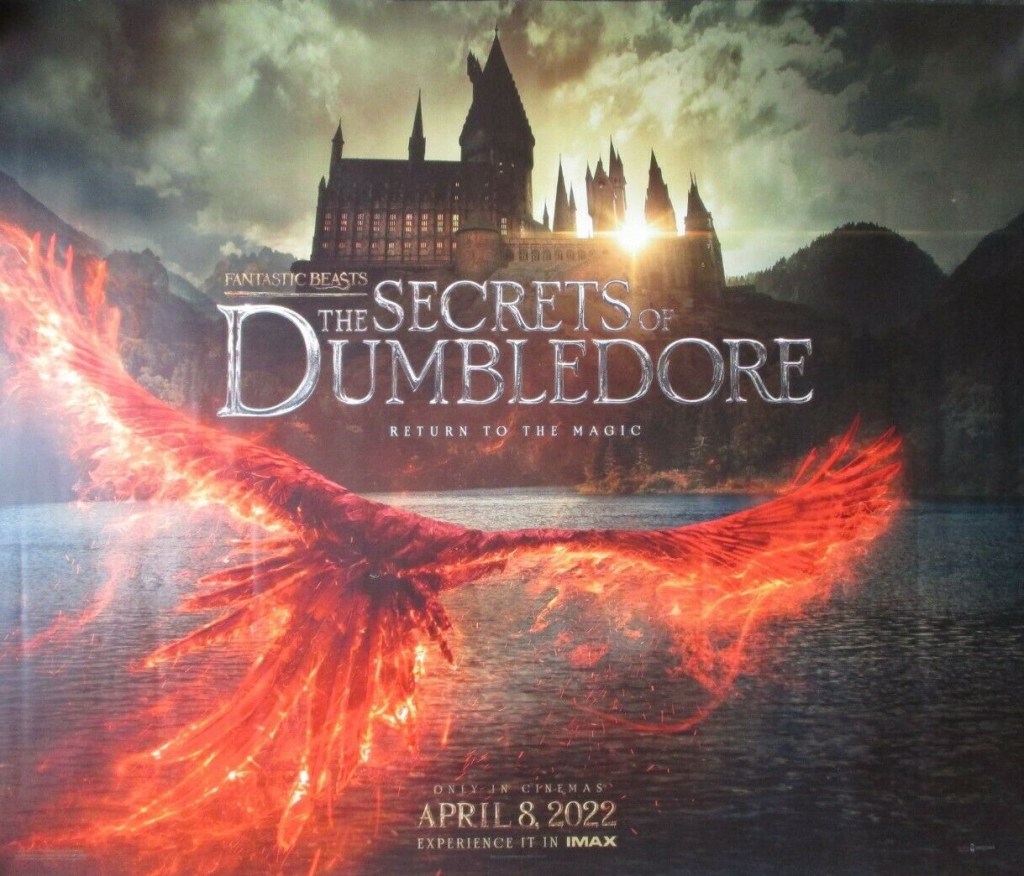
Fantastic Beasts: The Secret of Dumbledore

I kid you not, this is about an election. Yep, someone’s greenlit a $200 million fantasy picture about an election. Whatever delightful element the original entry to this series possessed has been destroyed not just by a preposterous storyline – this is for kids, remember – but a very somber tone. Everyone talks in a low voice, it is very darkly lit and there are those awful meaningful pauses.

The story they pretend is about to occur never happens. Something about “counter-sight” if I got that bit correct and how our heroes had to act together to “confuse” the bad guy because he could see into the future. There’s never any sign of him seeing in the future and most of the confusion arises because there are just way many characters.  With a piece of Hollywood wizardry Grindelwald has completely changed his appearance, no longer Johnny Depp but Mads Mikkelson. You will be aware of the reason for this but Mads has taken on an impossible task. There already was an over-large contingent of players – Newt Scamanger (Eddie Redmayne) and his brother Theseus (Callum Turner), Albus Dumbledore (Jude Law) and his brother Abeforth (Richard Coyle), Credence Barebone (Ezra Miller), Jacob (Dan Fogler) and assorted characters who have a romantic interest in the principals.

But basically – hold your breath – Grindelwald is trying to crash an election party. Two candidates are already in contention to be, I presume, Chief Wizard. He kidnaps something that might be called a “chillin” – a mythical creature that looks like a gryphon – which like the wands in Harry Potter has a way of choosing the best person for the job. There’s very little CGI for a fantasy picture. One monster, a bunch of dancing lobsters (maybe scorpions, I couldn’t work it out) and the usual contents of Newt’s suitcase is just about it. The wands are now used more like light sabers or pistols. You won’t be surprised to learn there’s not much in the secrets department either.

There’s not enough Newt and he’s not as delightful as he once was and there’s far too much of boring electioneering, huge crowds gathered for rallies in favor of their candidates. This one cost $200 million and I have no idea what that was spent on. Certainly not the script. A franchise-killer if ever I saw one.

RRR (2022) ***** – Seen at the Cinema

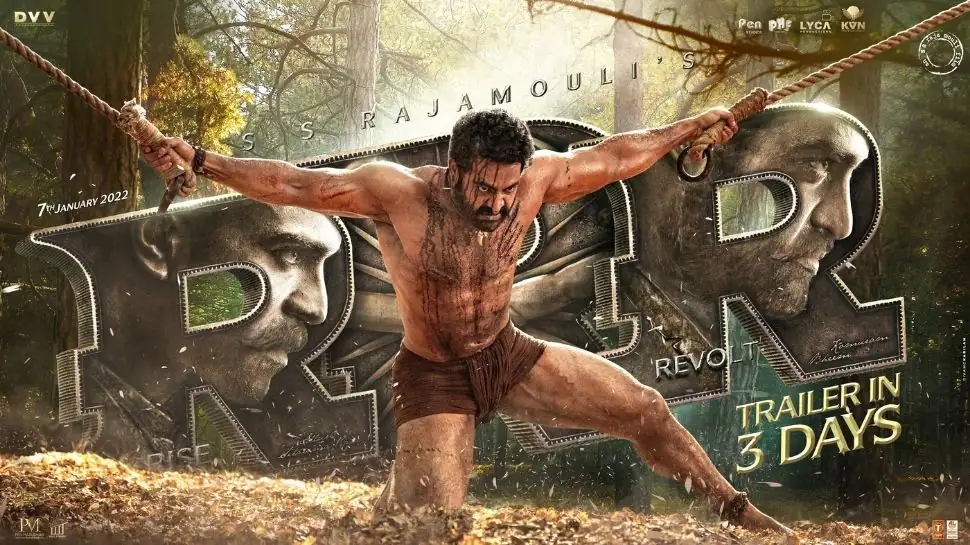
Easily the most extraordinary epic I have seen in a long time. Hitting every action beat imaginable, a stunning tour de force that ranks alongside the best Michael Bay or Steven Spielberg can offer. As if Rambo or John Wick had turned up a century ago. If films could go from 0 to 100 in ten seconds, this would be the prime contender. Astonishing sequences include a cop taking on a mob single-handed with only a stick for a weapon, a villager acting as bait for a tiger, wild animals leading an attack on a fort, a savage beating with a nail-studded whip, and the unforgettable image of one man mounted on another spraying bullets with two rifles.  

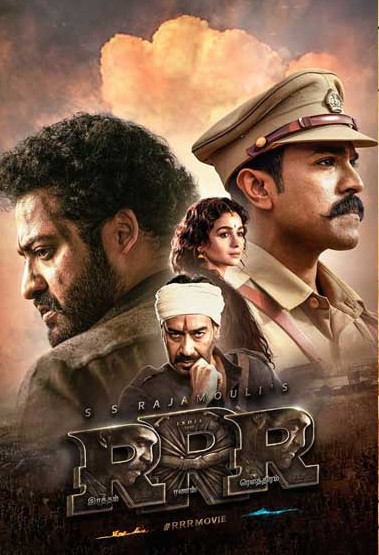
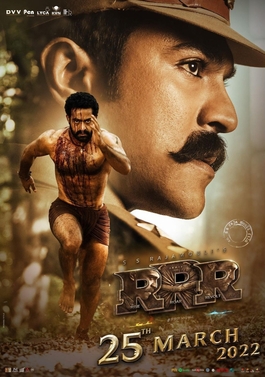
Following the virtual abduction of a native girl Milla, two friends are on a collision course in the oppressive British regime in India in 1920. Technically, it doesn’t count as a kidnapping because the British Governor Scott Buxton (Ray Stevenson) committed the crime, taking the child as a gift for his wife (Alison Doody). Villager Bheem (N.T. Rama Rao Jr.) is tasked with bringing the girl back, ambitious undercover cop Raju (Ram Charam) with stopping him. The two men, befriending each other in Delhi, are unaware of the other’s plan. That both are immensely likeable, if quite opposite, characters, creates terrific charisma, and their bromance is entirely believable.

Bheema has to connect both ends of the rope in order to keep a tiger trapped.

Everything in this picture is big and bold except when it is intimate and small. There is a beautifully-observed romance between Bheema and a kind British woman Jenny (Olivia Morris), the development of which, faced with the obstacle of neither understanding the other’s language, with Raju acting as matchmaker, could have been a film on its own. There are two brilliant pieces of screenwriting, phrases repeated throughout that acquire deeper meaning as the story unfolds. The British continually kill by brutal means rather than waste an expensive bullet; “Load. Aim. Shoot,” is a mantra taught the young Raju by his revolutionary father; both come into play at the climax.

The British are horrific. The Bheema-Jenny meet-cute occurs when the native is beaten for inadvertently embarrassing a British soldier. Lady Buxton is a sadist, determined to see a man whipped till he bleeds to death. By contrast, the two heroes are often far from heroic, Bheema unable to find the girl, Raju forced into terrible violence as a consequence of ambition. And in the midst of all this ramped-up violence perhaps the best scene of all, albeit one of conflict, is an energetic dance-off between the two men and the scions of the British upper class, the fantastic “Naatu Naatu” sequence, that demonstrates the superior stamina of the natives.

Director S.S. Rajamouli (Baahubali: The Beginning, 2015) makes as bold a use of narrative structure as Tarantino in Pulp Fiction, withholding until the last third of the movie a flashback which tilts the story in a completely different direction. But there is nothing lumbering about this epic, it has an incredible drive, an energy to set your head spinning. Even so, Rajamouli utilises a classic three-part structure and the three-hour-plus running time is anything but sprawling. In among a host of character-driven scenes he knows how to build a sequence, as the heroes successively triumph and fail with every passing minute, and among the introductory sequences for both main characters are some inspired images. Cleverly seeding the story creates a variety of twists, turns and reversals.

I was expecting not to like the traditional dancing sequences, which you would thought ill-fitting in a picture of this scope, but the “Naatu Naatu” sequence is treated as virtually a rebellion with tremendous dramatic impact. Although the two leads are muscular in Schwarzenegger/Stallone mold it does not prevent them channelling their inner Gene Kelly.

Except that it is set a century ago, this has all the bravura hallmarks of MCU, an exceptional adventure told at top speed that does not put a foot wrong.  N.T. Rama Rao Jr  (Janatha Garage, 2016) has the more difficult role, in that he switches from full-on action hero to romantic klutz. But the intensity of Ram Charam (Vinaya Vidheya Rama, 2019) should have Hollywood calling. The characters played by Ray Stevenson (Accident Man, 2018) and Alison Doody (Indiana Jones and the Last Crusade, 1989) are more one-dimensional but no less terrifying for that. In her movie debut, Olivia Morris is quietly effective.

On energy and cinematic imagination alone, this would more than pass muster but S.S. Rajamouli has also created a brilliant piece of entertainment with greater depths than you might imagine. There’s no other word for it: this is a knock-out.

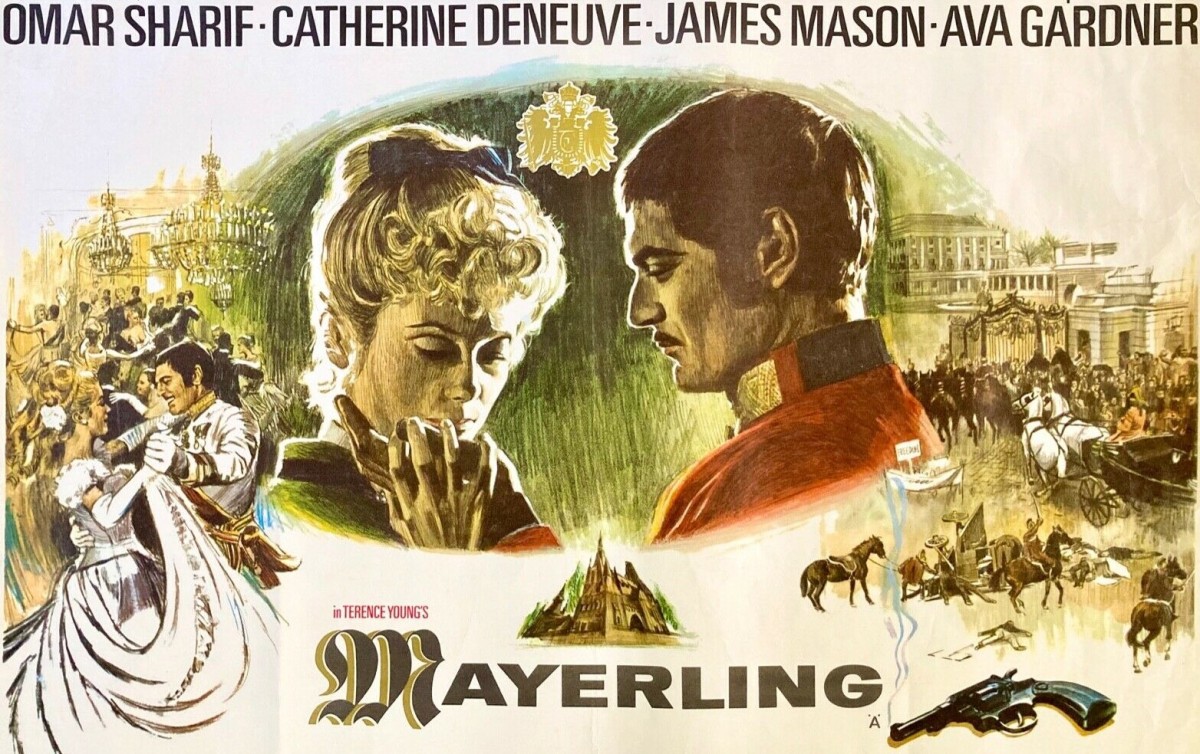
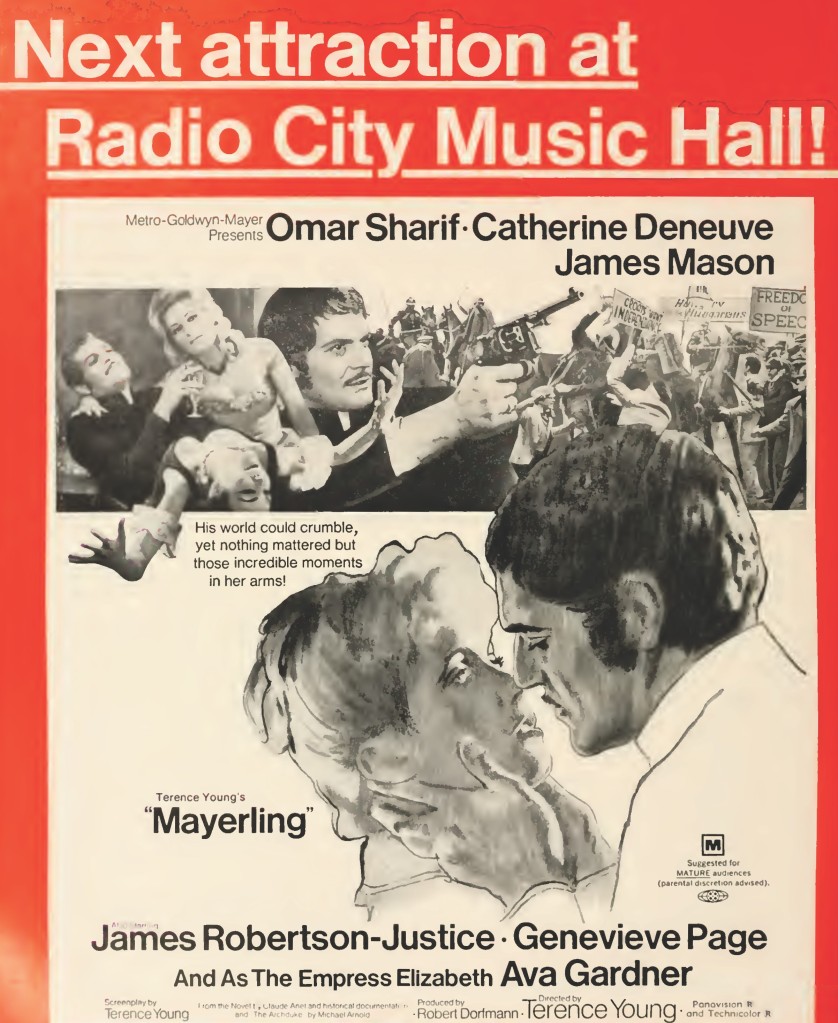
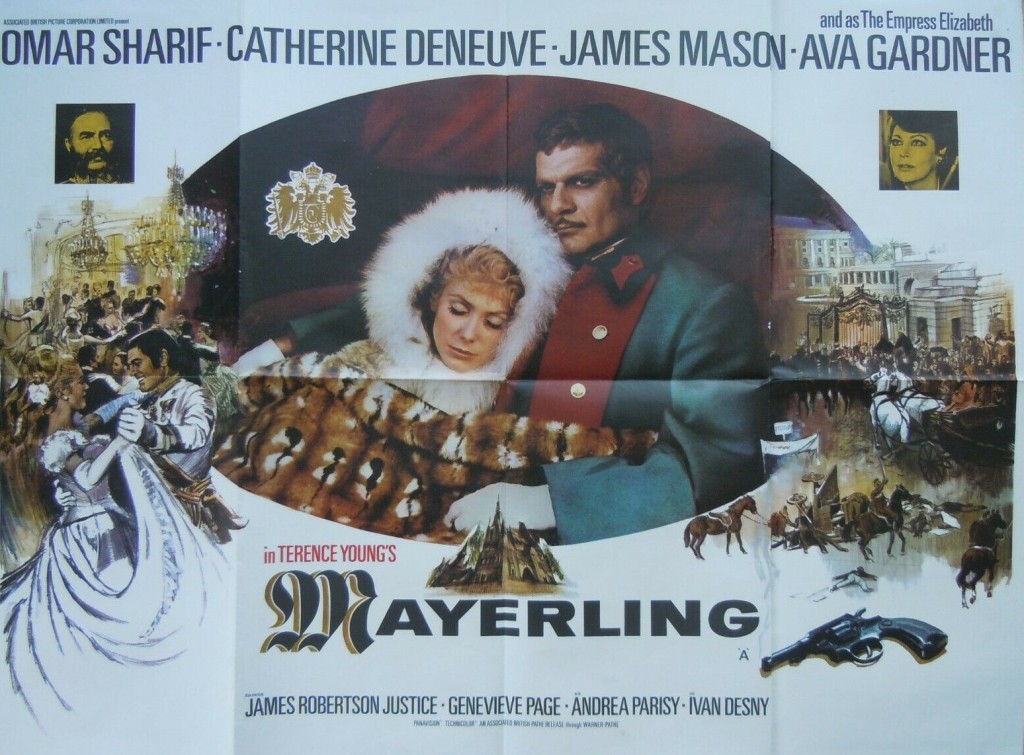
Mayerling (1968) ****

Sumptuous historical romantic drama set in a fading European empire awash with political intrigue and incipient revolution. Archduke Rudolf (Omar Sharif), married heir to the throne and constantly at odds with rigid father Emperor Franz-Josef (James Mason), sympathizes so strongly with Hungarian dissidents that he threatens to tear apart the Austro-Hungarian Empire. However, when he falls in love with Maria (Catherine Deneuve) and wants to marry her instead that, too, threatens to throw the empire into disarray.

Although dissolute, a mistress (or two) on the side, and addicted to morphine, that is not the way Rudolf is introduced to the audience. Instead, he is one of a string of bloodied men arrested after a demonstration giving his name to an officer in a police station who, once he is recognized, orders all other prisoners be released. He is the poster boy for good royalty. The Hungarians, agitating for independence, want him to become their king.

Beautifully mounted with lavish sets and enough in the way of balls, ballet, processions,  horse riding and sleighs to keep up a steady parade of visually interesting distractions, the films steadily builds up an undercurrent of tension, both between father and son and between rebels and ruler. The emperor is a political genius, not just spying on his son, but full of devious devices to hold together whatever threatens to break up the empire.

The romance develops slowly and with true historical perspective, the first kiss they share is not on the lips, Rudolf kisses both her cheeks, she kisses his palm. Yet, there is a real sense that, no matter his power, they can still both be trapped in roles they despise, separated at the whim of parents. Rudolf, as he understands true love for the first time, finds the self-belief to challenge political certainties.

The regal aspects are well done, arguments about the rule of monarchy come over as heated conversation rather than boring debate, the political realities unavoidable. Rudolf, desperate to avoid a future where someone has to die before he has a reason to live. Escape is not an option.

There is a wonderful bitchy atmosphere in the court, where ladies-in-waiting disparage each other behind their backs, one dress described as “wallpaper,” and are forever seeking advancement. Countess Larish (Genevieve Page) is a self-appointed procurer-in-chief for Rudolf, not caring what chaos she causes.

I should add, if you are as ignorant of your European history as myself, that Mayerling is a place not a person. I tell you this so that you don’t make my mistake of waiting for a Mayerling character to appear. The film pointedly avoids a history lesson but it could have spared a minute to explain that the events depicted take place just 20 years after the Austro-Hungarian Empire, the second largest land-mass in Europe, and among the top two or three nations. That would have helped clarify why Franz-Josef was in such a constant state,  worried about forces that could break up the empire, and as concerned that his son, living such a debauched life, lacked the personal skills to hold it together after his father’s death.

It is ironic that Rudolf does prove his worth as a result of being briefly separated from Maria, taking the army to task for its incompetent officers and poor maintenance of everything from weaponry to horses.

To his credit director Terence Young (Dr No, 1962) does not rely on Omar Sharif’s soulful brown eyes and instead allows action to convey character and looks and touch the meaning of his love. This is probably Omar Sharif’s best role, one where he clearly made all the acting decisions rather than being over-directed by David Lean as in Doctor Zhivago (1965). Catherine Deneuve is equally impressive as a far-from-docile innocent, especially given the wide range of more sexually aware characters she has created for Repulsion (1965) and Belle de Jour (1967).

James Mason (Age of Consent, 1969) is superb as the conniving emperor, so rigid he will not approve a change of buttons for the army, so cunning that an apparent rapprochement with his son has unseen strings attached. Ava Gardner (55 Days at Peking, 1963) sweeps in briefly as an empress protective of her son and making the best of life in a gilded cage. Also impressive are Genevieve Page (Grand Prix, 1966) and James Robertson Justice (Doctor in Distress, 1963) as the high-living British heir nonetheless under the thumb of his mother Queen Victoria.

Terence Young also wrote the literate, often amusing script, although Denis Cannan (A High Wind in Jamaica, 1965) and Joseph Kessel (Night of the Generals, 1967) are credited with additional dialogue. While Francis Lai (The Golden Claws of the Cat Girl, 1968) wrote the score he relies heavily on classical music from Aram Khachaturian’s Spartacus.

If you come at this not expecting a David Lean style affair full of striking compositions, but an old-fashioned drama advancing at leisurely pace, you will not be disappointed.

The Last Duel (2021) **** – Seen at the Cinema

A surprisingly contemporary core, bolstered by a quartet of excellent performances, drives Ridley Scott’s bold Rashomon-style historical tale. Despite its length it’s less of a historical epic in the style of Gladiator (1999) and more of an intimate and intricate exploration of power – and its lack. Each of the main characters, including and especially the women, while exerting some kind of power nonetheless are in thrall to a superior being whose word is absolute law. Challenging that authority could result in instant death. It’s a slow-burn for sure but exerts a tenacious grip as the story unfolds from three points-of-view to a double climax, both riveting for different reasons.   

And it’s far from typical Ridley Scott except in attention to historical detail. The battle scenes are almost perfunctory – in fact few end in victory – and except to demonstrate bravery do not follow the usual heroic template. There’s none of the trademark Scott cinematic sweep although the duel itself is exceptional.

Scarred to the point of facial disfigurement Damon has never played a character like this before.

In 14th century France Marguerite (Jodie Comer), wife of Sir Jean de Carrouges (Matt Damon), accuses Jacques Le Gris (Adam Driver) of rape, the accusation finally settled by duel to the death. All three characters are given the chance to give their version of the story and this is where it becomes fascinating as shades of personality are filled in.

At the outset Jean comes across as brave, impulsive, marrying Marguerite to save her honour (her father is a traitor), and when wronged willing to challenge authority. But as other perspectives unfold he is revealed as blustering, ambitious, more interested in his wife’s sizeable dowry than her honour, over-proud, and a poor manager of his estate. While brave, educated and charming Le Gris turns out to be a greedy, conniving bed-hopper. Initially presented as a grateful wife and little more than an adornment Marguerite is revealed as the most courageous of all, an able estate manager, challenging the King, accepting the prospect of death rather than, as was apparently the custom of the times, allowing the rape to go unremarked.

Comer is a revelation and you could argue she steals the picture from her more experienced colleagues. There is an astonishing scene where she realises that, her husband’s bravery notwithstanding, he has condemned her to a terrible death should he lose the duel.

The sexual mores of the era are examined in depth, the worst examples of male prerogative sometimes just touched upon in passing, for example, since a wife is her husband’s property, in law he is the one besmirched not her. In taking sexual power as his central theme rather than the triumphs and woes of the men, Scott takes a huge risk in alienating a following expecting more action and cinematic bravura, but the bold story-telling pays off and although starting with Alien (1979) the director has a record of strong female characters this has more in common with Thelma and Louise (1991) where wronged women are backed up into a cul de sac.

Rejecting the heroism route allows Scott to present far more rounded characters. None of the four principals conforms to type. Damon is neither the common man nor the action hero, but a boor. Driver is neither charming seducer nor outright villain but somewhere in between, living on his wits. Comer cannot rely on female machismo or cleverness but must remain stout in the face of an onslaught of humiliation. And mention must be made of Ben Affleck as Pierre d’Alencon, employer of Le Gris and master of Carrouges, who is cocky, immoral, amoral, greedy, shifty and cunning. Other standout performances feature Alex Lawther (The Imitation Game, 2014) as a gleeful king and Harriet Walter (Atonement, 2007) as a loathsome and cruel mother-in-law. I just hope Oscar voters recognise at least some of these perfomances.

A blond and goateed Affleck as you have never seen him before, cockiness running riot, with a mean streak a mile wide, the epitome of Middle Ages entitlement.

It’s worth paying attention to the screenplay by Nicole Holofcener (Oscar-nominated for Can You Ever Forgive Me, 2018) and Damon and Affleck (their first joint effort since Good Will Hunting, 1997) and note how the language the characters employ changes according to the perspective. Words that we imagine in one section that appear to be spoken by one character in another section are delivered by someone else entirely.

I am a huge fan of Ridley Scott and while I came looking for adventure in the style of Gladiator (2000) or his other historical masterpiece Kingdom of Heaven (2005) I came away more than satisfied in the way he altered his style to suit the story almost in the same manner as he had done with American Gangster (2007), another picture about power.

You will probably be aware by now that this has been a colossal box office bomb and although the film has enormous merit you can see why audiences looked the other way. Oddly enough, I think it will acquire a bigger audience through small-screen streaming since it is really a drama.  I would still recommend catching it at the cinema but there’s fair chance it will not last for its full 45-day window.

I tend to judge directors not by critical acclaim but by a more rudimentary measure – how often I watch their pictures. I have seen Alien, Blade Runner (1982), Thelma and Louise, Gladiator, Kingdom of Heaven, American Gangster, the Martian (2015)  and even the flawed Prometheus (2012) and Black Hawk Down (2001) more than half a dozen times each – often three or four times at the cinema – and I have a notion that The Last Duel will comfortably fit into this elite.

Seven Seas to Calais (1962) ***

In between hi-hat Hollywood endeavors The Time Machine (1960) and The Birds (1963) Rod Taylor made a couple of pit stops in Italy. Here, he tries his hand at a swashbuckler and does a pretty good job of it, depicting famed English naval hero Sir Francis Drake, in a story that covers about a dozen years from him circumnavigating the globe to masterminding the defeat of the Spanish Armada in 1588.

Not content with glorifying tales of his derring-do as he robs the Spanish of their gold, the producers also mine a rich seam of political intrigue as the Spanish King Philip II seeks to nullify the English threat first by a treaty and then by conspiracy before embarking on full-blown invasion. Queen Elizabeth (Irene Worth) proves a political maestro, telling the Spanish what they want to believe and condemning Drake’s activities in public while in fact privately financing his expedition and relying on his booty to fund her navy.  

After putting down a potential mutiny, most of Drake’s time is spent plundering Spanish galleons or gold mines. When not pillaging, Drake takes time out from his adventures to discover potato and tobacco and for a romantic dalliance with what appear to be Native Americans (judging from the feathers they wear) including a young woman called Potato (Rossella D’Aquino). It is left to his number two Malcolm Marsh (Keith Michell) to carry the main subplot which has French beauty Arabella (Edy Vessel) in his absence taking up with Babington (Terence Hill), a traitor with an eye to freeing the imprisoned Mary, Queen of Scots (Esmeralda Ruspoli).

There are more than enough swordfights for purists and Drake employs a certain amount of cunning and bravado in his various piratical enterprises. Clever filming makes the ships look realistic enough, though in long shot they do resemble toys. In making it look as though Drake has returned from his voyage in the nick of time to save Elizabeth from the Spanish aggressors, the producers neatly kaleidoscope the actual time frame. Elizabeth takes no prisoners and there are spicy exchanges between the queen and the pirate.

Rod Taylor presents a more muscular and athletic screen persona than in any of his previous pictures and his presence exudes authority but he also has that lightness of tone that would become a trademark. However, American stage actress Irene Worth just about plays him off the screen, her regal bearing hiding an agile mind.  Keith Michell (The Hellfire Club, 1961) makes a strong impression as does future spaghetti western star Terence Hill, (They Call Me Trinity, 1970) credited here as Mario Girotti. Edy Vessel (The Thief of Baghdad, 1961) only made two more films, although one was Fellini’s (1963). This was the second film outing after Antonioni’s L’Avventura (1960) for Esmeralda Ruspoli

Strangely enough, given the part Drake played in English history, he has been dealt a poor hand in the movies. A British television series Sir Francis Drake (1961-1962) starring Terence Morgan was unlikely to have instigated this picture so it is odd to rely on Italy for the only picture, regardless of its veracity.

In the portfolio of veteran director Rudolph Mate (When Worlds Collide, 1951), this immediately followed on from The 300 Spartans (1962) but lacks that film’s rigor and vigor. The script was dreamt up by Filippo Sanjust (also Morgan the Pirate).

CATCH-UP: Rod Taylor pictures reviewed in the Blog are The Liquidator (1965), The Glass Bottom Boat (1966), Hotel (1967) and Dark of the Sun (1968).

Jason and the Argonauts (1963) *****

An absolute delight, great storytelling married to groundbreaking special effects produces an adventure picture of the highest order. Though mostly known for its Ray Harryhausen stop-motion animation, its success also relied heavily on the direction of Don Chaffey (The Viking Queen, 1967) and a great script. It’s one of the few films to benefit from not being viewed in its original size, the small screen minimizing the flaws of the special effects. In essence it’s a combination of three genres – the Italian peplum, the men-on-a-mission picture and the classic detective story. it was originally entitled Jason and the Golden Fleece (see below).

Plus there are interesting stabs at philosophy – if man refuses to believe in the gods do they cease to exist? And if the golden fleece brings peace and prosperity to a nation what will happen to that country when it is stolen?  And if various people can call on their own gods for help will that not create conflict in heaven as much as on earth? And the ultimately question – what can man achieve without celestial interference?

While the episodic structure derives from the clues meted out piecemeal to hero Jason (Todd Armstrong) during his long voyage to find the golden fleece these often come minus vital pieces of information ensuring that surprise remains a key element.

Without doubt the special effects are the triumph, although some work better than others. The highlights for me were the towering bronze statue of Talos and the skeleton warriors. I can’t be the only one who thinks that some of the visuals in Game of Thrones were inspired by the sight of Talos astride two land masses separated by the sea. Talos is not so much a man-mountain as an actual mountain, first viewed coming round the corner of a cliff top, his head topping it. But where, except for cunning Jason, the crewmen are viewed primarily in miniature in relation to the giant Talos, the skeletons are the same size as the adventurers and that fight scene all the more impressive as the ensuing battle appears completely real.

Scale allows Harryhausen to wriggle out of the problems of contact. If the creatures are out of reach anyway, there’s little need to attempt to bring them into close proximity. The way the Harpies are utilised, close enough to strip clothes from a blind man but otherwise hovering just out of reach, is a classic example of clever direction. The multi-headed Hydra, on the other hand, is the least convincing monster simply because it is impossible for Jason to get close to the beast. Scale is also one of the film’s best weapons. The scenes where a miniaturized Jason is transported to Mount Olympus to face the gods are well done as are the occasions when the gods peer down on tiny man.

Outside of the special effects and the varying degrees of excitement aroused, in the background is constant intrigue. Jason is the son of the King of Thessaly slain by the usurper Pelias (Douglas Wilmer) and his crew includes Acastus (Gary Raymond), son of Pelias, whose task is to cause trouble and if Jason succeeds in his endeavor to kill him. On top of that, there is a heavenly battle over Jason’s fate. Jason, having defied Zeus (Niall MacGinnis) by first of all refusing to believe he exists and that his life is determined by fate, becomes enmeshed in a battle between the king of the gods and his wife Hera (Honor Blackman) who grants Jason a get-out-jail-free card, the ability to call on her help, but only five times.

Jason determines to recruit his own team and in the manner of The Guns of Navarone (1961) and The Professionals (1966) they are all experts in their fields but unlike that film and The Dirty Dozen (1967) are willing conscripts. The team also includes Hercules (Nigel Green) and Hylas (John Cairney) and in the first of the film’s many surprises and reversals, the weedy latter is able to beat the muscular former in a contest of strength.

There is enough incident to keep the story ticking along but Don Chaffey fills in the blanks with montage, the various essentials of a ship – sails, oarsmen, sides, stern, figurehead, pace set by drumbeat  – and a full color palette from the bright blue sky, from dawn and dusk to sunset and night, a wonderful image of rowers at sunset on the sea the pick. He also makes great use of the sea – pounding surf, storms, the sea turned tempest by the clashing rocks, a shipwreck. And we have dancing girls, colorful costumes, ancient backdrops and the sense that the budget has been well spent

Some scenes call for immense skills in coupling special effects with real characters. For the clashing rocks sequence five elements are simultaneously in play: the crew in danger, a tempest, rocks crashing into the water, the ship itself and Neptune.

And the romance is well handled dramatically: if Jason rescues Medea (Nancy Kovack) then she too rescues him. Love produces conflict. To love Jason, Medea must betray her country. There is hardly a moment when Jason, confronted either by monsters or kings, does not face death.  

In addition, there is a stunning score by Bernard Herrmann (Psycho, 1960).

Any top-notch acting would have been overshadowed in any case by the special effects. Which is just as well because the entire cast is drawn from the lower strata of the stardom ladder. Todd Armstrong, from the Manhunt tv series (1961), needs only not to mess up, which he manages adequately. Nancy Kovack (Diary of a Madman, 1963) does well to make an impact given she does not appear until the final third. This did not turn out to be much of a star-making vehicle for either. Honor Blackman drops the slinky persona with which she had made her name in The Avengers tv series (1962-1964) and instead plays a confident goddess willing to out-maneuver husband Zeus.

The rest of the cast comprises a regiment of future movie supporting actors – Nigel Green (Tobruk, 1967), Niall MacGinnis (The Viking Queen, 1967) and Douglas Wilmer (The Brides of Fu Manchu, 1966). Future television stars ranged from Patrick Troughton (the second Dr Who) and Scottish actor John Cairney (This Man Craig, 1966-1967) to Laurence Naismith (The Persuaders, 1971), Gary Raymond (The Rat Patrol, 1966-1968), Mike Gwynn (Poison Island, 1965) and Andrew Faulds (The Protectors, 1964).

The screenplay was written by Jan Read (First Men on the Moon, 1964) and Beverley Cross (The Long Ships, 1964), husband of Maggie Smith. Cross returned to ancient worlds again for producer Charles H. Schneer for Sinbad and the Eye of the Tiger (1977) and Clash of the Titans (1981)

Although the ending appeared to leave the door open for a sequel, none was made. A huge box office hit in Britain, it did not repeat its success elsewhere.

I first saw this film as a boy and was so enthralled I wouldn’t have noticed if there was anything awry with the special effects. I have not seen it since. Coming at it with some degree of scepticism I found that attitude misplaced for I was equally enthralled.

Catch-Up: Nigel Green’s portrayal of Hercules was a far cry from his normal screen persona of martinet. His movies previously reviewed in the Blog are The Skull (1965), Khartoum (1966), Tobruk (1967) and Africa Texas Style (1967).

Hercules and the Captive Women / Hercules Conquers Atlantis (1961) ***

Something of a cult in the peplum vein in which Hercules (Reg Park), wanting to enjoy domestic life with his wife and son, is instead drugged by Androcles, King of Thebes (Ettore Manni), and spirited away by ship to Atlantis whose Queen Antinea (Fay Spain) is intent on global domination and the resurrection of the dethroned god Uranus to his rightful place in the heavens.

This isn’t your normal Hercules, not that keen on demonstrating his physical prowess, preferring to sleep or lie around. It’s not your normal ship either. Androcles, unable to persuade his Senate to properly fund the expedition, has crewed his vessel with renegades who are inclined to abandon Hercules on the nearest island  And unbeknownst to Hercules, his son has come along for the ride.

Of course, nothing goes according to plan and Hercules is soon shipwrecked on an island where he finds Ismene (Laura Efrikian) imprisoned in rock as a sacrifice to the gods. Rescue never being simple, Hercules has to first withstand fire then tackle in quick succession snake, lion, eagle and a giant lizard. Ismene turns out to be Antinea’s daughter and the Queen, rather than being delighted at her return, is appalled, for, according to the way the ancient world works with all its prophecies and religious ritual, the girl must be sacrificed to prevent the destruction of Atlantis.

Nor is Atlantis your usual kingdom. Even setting aside the peculiarities that mark the Greek world, this is a place where abnormality rules. Hercules finds Androcles, whom he believed died in the shipwreck, but it turns out to be a vision, or some kind of shape-shifting being. The Queen believes she can subjugate nature and has a tendency to throw those who disappoint her into an acid bath. There is a fiery rock that controls life and death.

Like most of the peplum output, you have to accept a standard of production lower than the Hollywood norm, and the terrifying beasts sent to test the hero are not at all convincing, but on the plus side are feats of imagination that mainstream American studios would never conjure up, unless it was something that fitted into the swashbuckling genre. You pretty much have to go with the flow and accept what is offered in terms of narrative oddity. Bear in mind, too, that there is no one dressed in as skimpy or revealing a costume as suggested by the poster.

You also need to be get hold of a good copy. Several versions are available, some for free, where the colors are so washed out you can hardly determine what is going on never mind enjoy the costumes, creatures and sets as intended. This was filmed in Technirama 70, shot in 35mm but blown up to70mm widescreen for exhibition, so should generally be of a high technical standard – this was the process used by Spartacus (1960).

It’s not a film to fit into the so-bad-it’s-good category, but of course imagination too often exceeds budget which renders the filmmaking somewhat random at times and like the bulk of the peplums acting skill is not at a premium. As you might expect, the British-born Reg Park was a bodybuilder first – three times winner of the Mr Universe title – and an actor second. He played Hercules another three times and Maciste once but outside this narrow comfort zone made no other films. But he was Arnold Schwarzenegger’s inspiration, so that was probably enough.

American Fay Spain (The Private Life of Adam and Eve, 1960) never got  beyond bit parts as a B-movie bad girl and television, although she was seen in The Godfather: Part II (1974). Italian Laura Efrikina made her debut here and you would later spot her as Dora in the Italian television mini-series David Copperfield (1966).

Director Vittorio Cottafavi was steeped in peplum, from The Warrior and the Slave Girl (1958) to Amazons of Rome (1961) but although he worked consistently in television made only one other piocture, 100 Horsemen (1964).

Discover WordPress

A daily selection of the best content published on WordPress, collected for you by humans who love to read.

The Atavist Magazine

by Brian Hannan

WordPress.com News

The latest news on WordPress.com and the WordPress community.