Fuze (2026) *** – Seen at the Cinema

We often complain that movies are dumbing down, but audiences aren’t as stupid as you would think, which is why it takes half the film before this one catches fire. Can’t be a coincidence that on the very day when an unexploded bomb is discovered in London that a major bank robbery is taking place within the vicinity that’s been closed-off. Or that the finger is going to point at maverick bomb disposal expert Will (Aaron Taylor-Johnson). So while Sky has invested some bucks in having the streets and parks crawling with people and cops, it’s skimmed on the screenplay. And recruiting three potential James Bonds isn’t enough to make a difference.

My antenna were up long before an eagle-eyed subordinate noticed a few anomalies on the bomb, not enough rust for a start to qualify for a leftover from World War Two. So it’s not until the double-crossing of the second half begins that the movie takes off. Even then, we’re alerted to the possibility of double-crossing because one of the thieves, Karalis (Theo James), is clearly doubted by the unnamed robbery leader (Sam Worthington).

The robbery is well-executed though nothing we’ve not seen before except for the use of drones to spirit the haul (jewels and cash only to limit the weight) away over the rooftops. The chase would be more convincing if the pursuing cops had decided not to go any further up the sewer tunnel where some bad guys were hidden. And if the surveillance team had noticed the obvious heat signature indicating the use of power when the electricity cables had been cut by the authorities to assist the bomb disposal. However, the dust from the explosion is eerily similar to 9/11, huge cloud of dust rising over the city streets.

So the big twist is in the double cross. Karalis has stashed a package away on a rooftop chimney so he’s up to something alright. What I didn’t expect was for another gang to burst in on the robbers and steal the loot. Or that the fella who funded the robbery is going to become suspicious of Karalis, not so surprising when he discovers the jewels are fake. While Karalis is hauled away in the boot of a car, fate only too obvious, the robbers escape. Mr Anonymous escapes and gives chase and ambushes the bad-guy thieves. But before he can get away with the bounty a conveniently-placed sniper mows him down.

And then it all comes together and I have to say in somewhat surprising fashion, though the main twist is left to the very last scene. Karalis and Will are in cahoots and Will, having done a stint in Afghanistan, is well-placed for sniper duties. There’s a third member of the team, whom the camera has picked out often enough in the mayhem for audience suspicions to rise, immigrant Raheem who turns out to have been Will’s translator in Afghanistan.

The cops, led by Ms Anonymous (Gugu Mbatha-Raw), haven’t been too sharp all the way through so it’s pretty easy for the clever crooks to evade pursuit, though you would have thought an all-borders alert at airports would not have been so easily avoided by the simple device of hopping on a different plane than the ones the cops were expecting.  

If you want to know how fleeting fame can be look no further than Sam Worthington, at one time the next big thing after Terminator Salvation (2009) and the original Avatar (2009) but even though he’s starred in the billion-dollar sequels to Avatar he’s only third banana here. Aaron-Taylor Jonson (Kraven the Hunter, 2024) and Theo James (The Monkey, 2025) are both apparently (though that might be down to good publicity experts working a compliant media) contenders for the vacant James bond crown and in the light of that both acquit themselves well in the action field.

Directed by David Mackenzie (Hell and High Water, 2016) from a script by Ben Hopkins (Inside, 2023).

On  a slack week at the cinema, this was an acceptable watch and maybe it will remain so when it rolls up on a television screen near you in a couple of weeks’ time. Apple and Amazon have set a high bar for a streamer with the release of F1:The Movie and Project Hail Mary and if old stagers like Sky want to keep up they’ll have to up their game.

The Drama (2026) * – Seen at the Cinema

Today’s stars – and that’s an ever-decreasing category – seem to want to get into the kind of edgy material that used to be the province of the arthouse. They might even cut their fees to get a beloved project off the ground. I couldn’t remotely begin to understand what was going through the minds of Zendaya (Challengers, 2024)  and Robert Pattinson (Die My Love, 2025) to make them think this had any value whatsoever. It skirts the only important subject in the whole picture, trying to fashion a rom-com-gone-bad in order to come up with, after an inordinate amount of time, a happy ending.

The premise, probably understandable in these suspicious times is: what secret is your partner hiding? Could they be bigamists? Have they changed gender? Have they been in prison? Nope, it’s much worse than that.

Emma (Zendaya) confesses that as a 15-year-old she was so fascinated by guns that she intended to slaughter her schoolmates. She didn’t go through with it because on the appointed day someone else had stolen her potential thunder. So what you might expect is that we backtrack and dig into the reasons why. But apart from a superficial stab at what turns an ordinary girl into a serial murderer and the notion that thousands of people would fall into the same category if they could ever get up the courage to do so.

Instead, this information is set against a rom-com backdrop and is used as narrative ammunition to derail her upcoming wedding to soft-hearted museum curator Charlie (Robert Pattinson). Po-faced pals Rachel (Alana Haim) and Mike (Mamadou Athie) get into an almighty snit over this, never mind that they have been guilty of heinous acts themselves. Bear in mind that Emma never actually injured anyone. But this pair who (Mike) used their previous girlfriend as a human shield against a ferocious dog and (Rachel) locked a mentally handicapped child in a cupboard in a remote house in the wood and ran away and didn’t fess up when a search party was formed.

Nobody thinks to send Rachel for counselling to ensure that whatever issues drove her to murder have been resolved. Instead, all concerned get agitated, and start examining Emma’s past and current life to see if she is going to go off on one. She’s certainly tougher than her wuss of a boyfriend, no problem sacking the DJ on the eve of the wedding or removing Rachel from a project.

Just to make sure Emma gets some audience sympathy she’s deaf in one ear and Charlie, on the edge of a mental breakdown, makes an unwise move on Misha (Hailey Gates), a member of his staff, which permits her boyfriend to give Charlie, literally, a bloody nose at the actual wedding.  

You would hardly believe after all this nonsense and out of the detritus of the calamitous wedding that writer-director Kristoffer Borgli (Dream Scenario, 2023) manages to fashion a happy ending. This is witless stuff. And Hollywood at its hypocritical worst. I couldn’t begin to count how many people Pattinson has killed in his various movies and Zendaya in Dune has begun to express her violent tendencies. What’s that except glorifying violence and yet they still turn up in movies pontificating against violence.

There’s not a single likeable character. Charlie does his floppy-haired best and, supposedly, has such charm that he can get away with reading the same literary book as Emma – that’s the lame meet-cute – only to admit he hasn’t read a single word. Liar, liar, pants on fire appears to be a line that’s never entered Emma’s vocabulary, no doubt because, at 28, she’s never been in love (that in itself would be worth a piece of psychological digging).

This is one of the laziest attempts to provide contemporary stars with the “edge” they appear to so desperately seek as they try to emulate the Hollywood legends who genuinely did tackle important issues.

A mess.

Reminders of Him (2026) **** – Seen at the Cinema

Author Colleen Hoover pulls a fast one on admirers of It Ends with Us (2024) and Regretting You (2025). Audiences had come to expect sophisticated romances that played to feminist mores. While there’s certainly romance involved, it’s more about ex-con Kenna (Maika Monroe) trying to re-connect with the daughter Diem (Zoe Kosovic) she lost after being imprisoned. The situation is complicated because she was jailed for killing her fiancé Scotty (Rudy Pankow) in a car accident while under the influence. You can picture the scene: “Hi, Diem, meet your mother…she killed your father.”

I liked this film instantly because within five scenes it had set out its dramatic stall. Kenna gets out of a taxi taking her to Laramie, Wyoming, to rip out of the ground a makeshift cross marking where Scotty died. She can’t get a job because she ticks the “previous conviction” box in a job application. She is sent to a discount store to try there but a flashback reveals the meet-cute with Scotty who was driving an orange-painted truck. Another man, Ledger (Tyriq Withers) owner of a local bar, takes Diem for school. In the bar she flirts with Ledger until noting his truck she realizes this is her dead fiance’s best friend, whom she’d never met, because during her short courtship with Scotty, Ledger was off trying to make his career in football.

Kenna’s realistic enough but driven by a sliver of romanticism that ends in a relationship with Diem. There’s nothing but obstacles in the way, Ledger for one, who has occasion to physically remove her from temptation, which curdles their growing relationship. The still-grieving grandparents Grace (Lauren Graham) and Patrick (Bradley Whitford) fear Kenna might kidnap the girl and that eventually drives a wedge between them and Ledger, to whom they had grown incredibly close.

Everything about this is slow-burn. And there’s not an ounce of tear-jerking either. Kenna does not cry herself to sleep, doesn’t stand hidden under a tree or peek through a hedge or hover at a school gate trying to catch a glimpse of Diem. She doesn’t complain life’s unfair. Lacking a bed in her miserly accommodation, she sleeps on the couch, and is reduced to bagging groceries for a living.

There’s none of the usual misery memoir beats, nor does it take some miraculous piece of derring-do (saving Diem from drowning or a fire or from being knocked down in the street or – screenwriters have come up with worse – preventing her being kidnapped by someone else) to achieve a breakthrough. Nor is she baited in the street nor run out of town by people furious that she killed the well-liked Scotty.

Slow and contemplative would hardly be the best tone for a contemporary romance, and that takes a long time to get going thanks to the various complications. Resolution is provided with  something of a get-out-of-jail-free car. As well as the DUI, Kenna was convicted for leaving the scene of the accident while (unknownst to her) her fiancé was still alive. The accident had occurred in a remote area and she had walked such a distance to get help and was herself in poor shape after the crash that she fell asleep in a barn only to discover Scotty had survived the accident only to die later.

In the old days you’d have called this a woman’s picture, but that category seems to have been taken over the excessively emotional Hamnet or Wuthering Heights, so it’s fairer to just class it as a more than decent picture for adults.

Both Maika Monroe (Longlegs, 2024) and Tariq Withers (Him, 2025) underplay to the benefit of the movie and there are interesting roles for Lauren Graham (Bad Santa, 2003), Bradley Whitford (The Handmaid’s Tale, 2018-2025) and Monika Myers in her debut. Directed with commendable restraint by Vanessa Caswill (Love at First Sight, 2023) from a screenplay by Hoover and producer Lauren Levine.

Like Regretting You, it’s not going to be a blockbuster, but quietly rewarding just the same.

Penelope (1966) ***

Comedic twist on the heist movie with Natalie Wood (This Property Is Condemned, 1966) as a kleptomaniac. Given its origins in a tight little thriller by E.V. Cunningham, pseudonym of Howard Fast (Mirage, 1965), it’s an awful loose construction that seems to run around with little idea of where it wants to go. Wood, of course, is a delightfully kooky heroine who takes revenge on anyone who has ignored or slighted her by stealing their possessions.

The picture begins with her boldest coup. Cleverly disguised as an old woman, she robs the newest Park Avenue bank owned by overbearing husband James (Ian Bannen). This prompts the best comedy in the movie, a man with a violin case (Lewis Charles) being apprehended by police, the doors automatically locking after a clerk falls on the alarm button, James trapped in the revolving doors losing his trousers in the process.

In flashback, we learn that she turned to thievery after a rape attempt by Professor Klobb (Jonathan Winter), her college tutor, and while half-naked managed to make off with his watch fob. She stole a set of earrings from Mildred (Norma Crane) after suspecting she is having an affair with James. “Stealing makes me cheerful,” she tells her psychiatrist, Dr Mannix (Dick Shawn) and while admitting to dishonesty denies being a compulsive thief. After the bank robbery she even manages to relieve investigating officer Lt Bixby (Peter Falk) of his wallet.

Nobody suspects her, certainly not her husband who could not conceive of his wife having the brains to carry out such an audacious plan. Bixby is a bit more on the ball, but not much. Clues that would have snared her in seconds if seen by any half-decent cop are missed by this bunch. And generally that is the problem, the outcome is so weighted in Penelope’s favor. The plot then goes all around the houses to include as many oddballs as possible – boutique owners Sadaba (Lila Kedrova) and Ducky (Lou Jacobi), Major Higgins (Arthur Malet) and suspect Honeysuckle Rose (Arlene Golonka). Naturally, when she does confess – to save the innocent Honeysuckle – nobody believes her in part because everyone has fallen in love with her. Bixby, just as smitten, nonetheless makes a decent stab at the investigation.

Howard Fast under the pseudonym of E.V. Cunningham wrote a series of thrillers with a woman’s name as the title. He was on a roll in the 1960s providing the source material for Spartacus (1960), The Man in the Middle (1964), Cheyenne Autumn (1964), Sylvia (1965), Mirage (1965) and Jigsaw (1968).

Taken as pure confection it has its attractions. It’s certainly frothy at the edges and there are a number of funny lines especially with her psychiatrist and the slapstick approach does hit the target every now and then. The icing on the cake is top class while the cake itself has little of substance. It strikes a satirical note on occasion especially with the Greenwich Village cellar sequence. It doesn’t go anywhere near what might be driving this woman towards such potential calamity – that she gets away with it is only down to her charm. There has probably never been such a pair of rose-tinted spectacles as worn by Penelope, even though her every action is driven by revenge.

Without Natalie Wood it would have sunk without trace but her vivacious screen persona is imminently watchable and the constant wardrobe changes (courtesy of Edith Head) and glossy treatment gets it over the finishing line. It’s one of those star-driven vehicles at which Golden Age Hollywood was once so adept but which fails to translate so well to a later era. Ian Bannen (Station Six Sahara, 1963) is in his element as a grumpy husband, though you would wonder what initially she saw in him, and Peter Falk (Robin and the 7 Hoods, 1965) delivers another memorable performance.  Dick Shawn (A Very Special Favor, 1965) is the pick of the supporting cast though screen personalities like Lila Kedrova (Torn Curtain, 1966), Jonathan Winters (The Loved One, 1965) and Lou Jacobi (Irma la Douce, 1963) are not easily ignored.  Johnny Williams a.k.a John Williams wrote the score.

Director Arthur Hiller (Tobruk, 1967) delivers as much of the goods as are possible within the zany framework. Veteran Oscar-winner George Wells (Three Bites of the Apple, 1967) wrote the screenplay but it’s a far cry from the far more interesting source material and I would have to wonder what kind of sensibility – even at that time – could invent a comedy rape (not in the book, I hasten to add).

The Amorous Adventures of Moll Flanders (1965) ***

The Husband-Hunting Adventures of Moll Flanders” might have been a more accurate title and if you were seeking a template for a multi-character eighteenth-century Olde English picture majoring on sexual shenanigans here would be a very good place to start. Of course, Tom Jones (1963) was the precursor but told the story from the male perspective and here it is from the more vulnerable female point-of-view. Despite the hilarity and the sexual proclivities on show, it remains abundantly clear that marriage remains a refuge, where the those without a title can gain either security or status by contrast, such a contract is viewed as a means of further enrichment for the already wealthy.

So orphan housemaid Moll Flanders (Kim Novak) has a difficult time persuading the elder brother (Daniel Massey) of her wealthy employer to marry her. Instead, he takes her as his mistress, leaving her no option but to marry the drunken fool of a younger brother (Derren Nesbitt) and instantly regretting her decision. When he drowns, you would have thought that would solve her problems. But this was the eighteenth century and a widow with no fortune (and therefore power) of her own can easily be tossed out penniless.

A widowed banker (George Sanders) might be a prospect especially as she has the wits to prevent him being entirely robbed by highwayman Jemmy (Richard Johnson). Plans to marry him thwarted, she takes a job for food and lodgings with Lady Blystone (Angela Lansbury) and her husband, an impoverished Count (Vittorio De Sica), who are constantly pursued by debt collectors. Meanwhile Jemmy has taken the decision to marry a rich woman and become a kept man.

But this set of characters becomes enmeshed, so the tale unfolds in classic fashion. Assuming Moll to be moneyed, Jemmy masquerades as the owner of three ships. Nothing, of course, works out for anybody, certainly not those pretending to be something they are not while aspiring to wealth beyond their reach, but it all concludes in propitious fashion as the actions of the various principals become embroiled.

While certainly having an inclination towards the amorous, Moll wishes for that within the context of true love, rather than selling her physical wares to the highest bidder. So for a picture sold on immorality – the “rollicking ribaldry” of the poster – there is an unsung moral standpoint. Finding safe passage into affluence proves very tricky indeed. And what appears at first glance to be merely a picaresque episodic tale turns out to be very well structured indeed. And those looking for cleavage will find it here in abundance, as if some kind of rationing had been imposed on clothing, or that it was matters of economy that dictated that the area around the bosom be left unclothed. Being the lusted-after heroine it falls to Moll Flanders to shed even more of her attire from time to time.

You are more likely to laugh out loud at the moments of offbeat humour – a flotilla of ducks heading in Moll’s direction when she cries for help in a lake, the Count while acting as a butler demanding a tip – but it is more of a gentle satire. There is some of the expected bedroom farce but, mercifully, no recourse to a food fight. It is handsomely-mounted and meets the highest expectations of the costume drama.

Kim Novak (Of Human Bondage, 1964) easily passed the English-accent-test and carries the picture with ease. Richard Johnson (Deadlier than the Male, 1967) reveals a rakish side so far hidden in his more dramatic works to date. And there is a fine supporting cast including George Sanders (The Quiller Memorandum, 1966), Angela Lansbury (Harlow, 1965), Vittorio De Sica (The Shoes of the Fisherman, 1968), Lili Palmer (The Counterfeit Traitor, 1962) as Jemmy’s mistress, Leo McKern (Assignment K, 1968) as Jemmy’s sidekick going by the name of Squint, Daniel Massey (Star!, 1968) and Derren Nesbitt (Nobody Runs Forever/The High Commissioner, 1968). In bit parts look out for Cecil Parker (Guns at Batasi, 1964), Dandy Nichols later of Till Death Us Do Part television fame and Carry On regular Peter Butterworth.

All directed with some style by Terence Young (Mayerling, 1968) and adapted from the lengthy Daniel Defoe novel by Denis Cannan (A High Wind in Jamaica, 1965) and Roland Kibbee (Valdez Is Coming, 1971).

An old-fashioned romp with, if you can bothered to look, a moral center.

Splitsville (2026) ** Seen at the Cinema

Might have worked back in the day when you could have enlisted the likes of Jack Lemmon and Walter Matthau whose grouchy sniping sparked The Odd Couple (1968) and Grumpy Old Men (1993). At a pinch might have stood a chance with Will Ferrell (Anchorman, 2004) and Vince Vaughn (The Wedding Crashers, 2005) and others of similar ilk, who might be oiks but had some charm. Starring writer-director Michael Angela Covino (The Climb, 2019) and his writing partner Kyle Marvin (The Climb) as the male leads, this has no chance at all, especially as this pair are responsible for the whole mess.

Theoretically, Dakota Johnson (Madame Web, 2024) is the star but given she only acts with her lips and not her eyes, it’s not much of a step-up. Whenever the narrative gets in trouble, which is most of the time, the movie resorts to the crudest kind of slapstick fights where furniture only exists to be broken and windows and even goldfish tanks to be smashed.

The odd thing is this might have worked a treat if the perspective had shifted from the out-of-their-league Carey (Kyle Marvin) and Paul (Michael Angelo Corvino) to their glossy, sexy, partners, Julie (Dakota Johnson) and Ashley (Adria Arjona). The casting looks like wishful thinking in the first place, the nerds snaring gorgeous women, but what really sinks the project as we learn as the movie progresses is that the feminist attitudes of the women are a bad thing, and that their inclination to take on multiple partners outside their marriages, with the tacit approval of their husbands, and the independence inherently expressed, should not be celebrated and that the sooner the errant women come to appreciate their faithful men the better – at least that’s what the happy ending says.

I only laughed out loud once and that was a crude bit. I’m not sure if Kyle Marvin has it written into his contract, or is taking advantage of his position as a co-writer, that his large schlong gets a good few outings – though maybe this is a modern ironic twist in that it’s the naked male rather than the naked female we see in the shower – but it was the appearance of his privates in an embarrassing situation that got the laugh.

The story is bonkers. Lively Ashley wants a divorce because her dull teacher husband isn’t sexually imaginative. He scuttles off to hunker down with best friend Paul, a millionaire property developer, and wife Julie only to discover they have an open marriage, of which he takes advantage, only to find that he has crossed a line with Paul. Meanwhile, Ashley has taken up with nay number of ripped hunks, that Carey accommodates, so desperate is he to maintain any kind of relationship with her. For some reason – narrative insanity perhaps – all of Ashley’s lovers take the same approach, once dumped they can’t bear to leave their apartment and Carey, being the accommodating sort, ends up cooking and cleaning for them all.

When Ashley’s business goes bust and he’s imprisoned for fraud, he determines to turn over a new leaf and that might work except that’s a fraud. He’s got no reason to turn over a new leaf since, apparently, he only went along with the open marriage idea to placate his wife and has been faithful all the time. Given the already shaky premise, this makes the edifice tumble along with Ashley’s revelation that she’s realized just how much better Carey is suited for her than all her other men. There’s a ramshackle climax where various people conspire to make other people jealous in the hope of winning back their true love. Naturally, this goes all slapstick – by this point you’re wondering if there’s anything left to break.

Three questions are left dangling: what attracted Dakota Johnson to the script given she’s got so little to do; why the movie took such an old-fashioned tack instead of one where the faithful have to work out how to hold onto their unfaithful free-spirited women; and how this was greenlit in the first place.

It’s the kind of movie that appears promising and you think it’s going to improve as it goes along. I was foolish enough to believe it would. The couple next to me gave up after three-quarters of an hour.

The Ipcress File (1965) *****

Stylish take on the espionage genre when it was still in its infancy and could accommodate stylish directors like Sidney J. Furie (The Appaloosa, 1966). Eschewing the bombastic effects and villains of the James Bond series, relying more on intrigue and the elements of betrayal that other practitioners of the dark arts such as John Le Carre espoused, this is as much a character study and presents in some cases a fairer picture of the class struggle in Britain than most kitchen-sink dramas. So it’s either going to put you off entirely or make you appreciate the film more when I tell you that my favorite scene is the fistfight between Harry Palmer (Michael Caine) and shaven-headed thug Housemartin (Oliver MacGreevy) outside the Royal Albert Hall in London that is shot entirely through the windows of a traditional red telephone box. You can’t say bolder than that.

The credit sequence, more famously ripped off by William Goldman for private eye saga Harper/The Moving Target (1966), is equally inspired. An alarm clock wakes Palmer, he reaches out for the girl who shared his bed last night to discover she is gone and then punctiliously and as if time-shifted to the twenty-first century when it would be the norm proceeds to grind fresh coffee beans, fill a cafetiere with only as much liquid as would constitute a small espresso, dresses and last but not least searches among the disturbed bedclothes for his gun.

Palmer is transferred from dull surveillance duties to a team hunting for missing scientists. Given both his insolent and insubordinate manner, he is not expected to fit in to a service riddled with the upper-classes. His new superior Dalby (Nigel Green), a “passed-over major,” owes his present situation to Palmer’s former boss Colonel Ross (Guy Doleman) and both sport three-piece suits, bowler hats and umbrellas and speak in those clipped tones that invariably carry undertones of menace. Where James Bond’s front, the import-export business, is rather more upmarket, here the background is considerably downmarket, Dalby masquerading as the owner of an employment agency and distributor of fireworks. It is insatiably bureaucratic, reams of forms to be filled in. What Palmer has in common with James Bond, beyond fisticuffs, is the ability to think outside the box and in this case picks the brains of a policeman friend to track down the wanted villain, code-named Bluejay (Frank Gatliff)  

As in the best post-Bond espionage, there are traitors everywhere, and the departments employing spies tend to employ other spies to spy upon them, though in this case Palmer has the luck to draw the sexy Jean (Sue Lloyd). When Palmer picks up the trail of Ipcress, the plot thickens. There is no shortage of action, a gun battle, fisticuffs, but it presents a different approach to modern espionage, with a properly rounded hero – one who can cook (as did author Len Deighton who wrote a cookery column) for a start – while the ladies, with whom he shares a roving eye with Bond, are not required to turn up in bikinis.

There is deft employment of that favorite British cultural emblem – irony – and one wonderful scene takes place in a park where Dalby taps his cane in appreciation of a brass band. Throw in a bit of brainwashing and it’s a completely different proposition to Bond who could escape such a dilemma in a trice. There is a clever ending.

Michael Caine (Hurry Sundown, 1967), complete with spectacles, is superb as Palmer, making enough of an impression that the series ran for another  four episodes. The stiff-upper-lip brigade have a field day in Nigel Green (Jason and the Argonauts, 1963) and Guy Doleman (Thunderball, 1965), the latter shading it with his purported sense of humor. Sue Lyon (Corruption, 1968) is excellent as the seemingly unattainable gal who falls within Palmer’s purvey but not entirely due to his charm. The villains, too, are not from the James Bond school of cut-outs, but come across as equally human, and the chief rascal you could argue has the most finely developed sense of humor of the lot. Throw in Gordon Jackson (Danger Route, 1967) and Freda Bamford (Three Bites of the Apple, 1967) as the bureaucratic attack-dog Alice and you have a very well cast movie.

Sidney J. Furie divided critics. Some believed he was ahead of his time, others that he was in thrall to arty French directors, and a reasonable number who didn’t give a stuff as long as he delivered the goods. But his predilection for odd angles here proves a strength, his  compositional excellence also spot-on, one scene in particular where in a library Palmer looks down on the villain with Housemartin on a landing between. And he takes great delight in emphasizing the class distinctions, both bosses have huge offices with a small desk in the corner, and when Ross places briefcase, umbrella and bowler hat on the desk of Dalby it could not be a more clear invasion.

And you can’t forget the score by espionage doyen John Barry (Goldfinger, 1964). W.H. Canaway (A Boy Ten Feet Tall, 1963) and James Doran, making his movie debut, adapted Len Deighton’s classy bestseller but a fair amount of polish was added by thriller writer Lionel Davidson (Hot Enough for June, 1964), Johanna Harwood (Dr No, 1962), Lukas Heller (The Dirty Dozen, 1967) and Ken Hughes (Arrivederci, Baby, 1966).    

A spy classic.

The Strip Tease Murder (1961) ***

A treat in so many ways. A killer who could be the evil twin of Q, James Bond’s gadget supremo. A denouement worthy of Hercule Poirot. A femme fatale whose villainous boyfriend thinks he’s in charge until he learns, to his cost, she’s far smarter. A hero who’s just an ordinary bloke, derided for the most part, who enjoys none of the brio of the good guy who wins out because he can’t get over his loss.

And all this packed into an exceptionally slim running time once you deduct time for half a dozen striptease routines. Given the era the title is bait-and-switch, not much to see here that the censor of the times would permit.

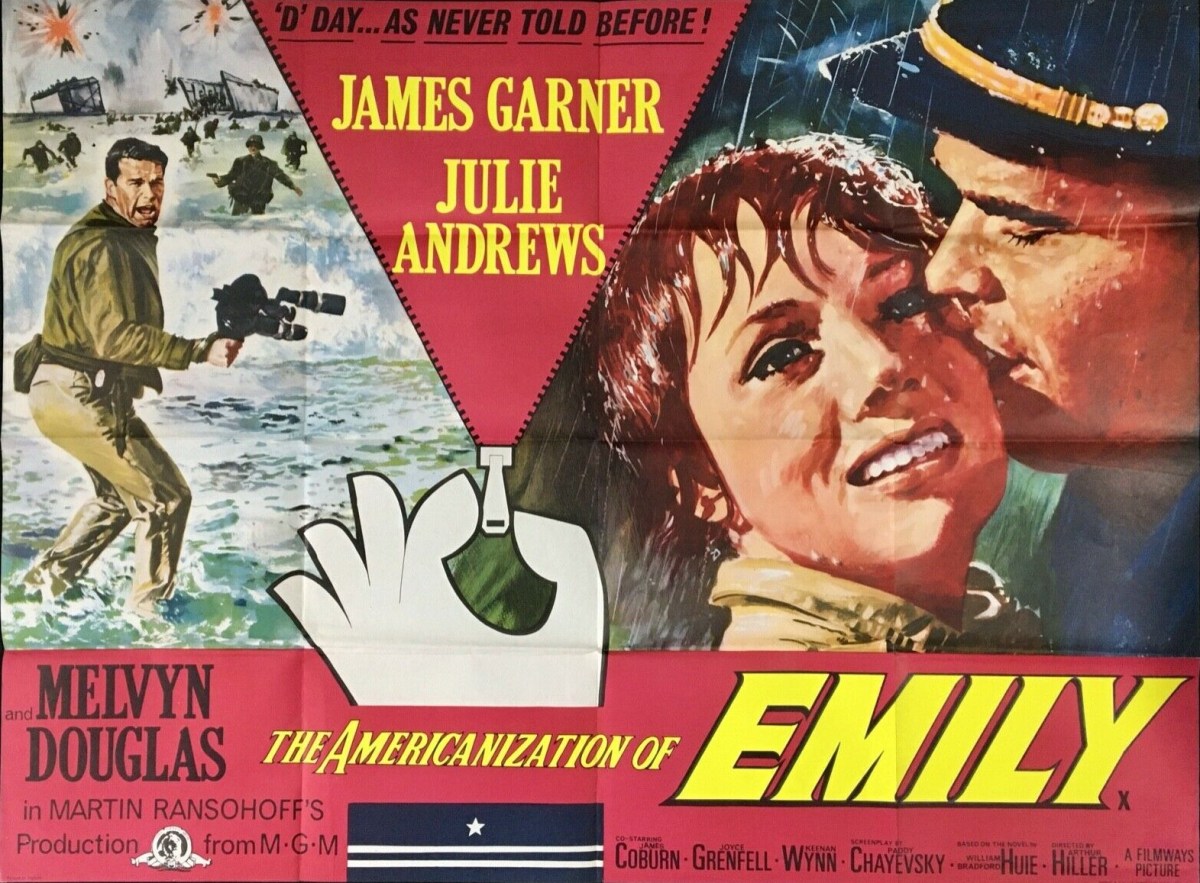
I confess to having employed a bit of bait-and-switch. Neither this illustration – by the world’s most famous stripper – nor the poster at the top are anything to do with this film. In my defence, I couldn’t find a poster or lobby card in color and feared the review would be ignored for that reason.

In The Flamingo Club in London’s Soho, businessman Branco (Kenneth J. Warren) is being blackmailed by former mistress Rita (Ann Lynn), a stripper. What he doesn’t know is that she’s set her sights on more than blackmail and she’s not become his mistress for the few scraps of nice clothing and fancy jewels he can bestow on her. She’s set out deliberately to seduce him so she can get the inside gen on his operation with a view to moving in.

Branco, sensing imminent threat, goes to sound engineer Perkel (Peter Elliott) for the answer. Perkel, in a manner that would delight Q, has rigged up a mic that, via a transistor and remote control, will electrocute the singer at the switch of a button. Only problem is, inadvertently, he kills the wrong girl, Diana (Jean Muir), wife of hapless M.C. Bert (John Hewer), an alcoholic former comedian down on his luck.

The cops aren’t interested in his theories of dirty dealing especially when the autopsy returns a verdict that suggests nothing untoward except bad luck for someone so young. But Bert’s found something unusual. Diana’s corpse is cold except for her ear, which is warm, which gets him to thinking. He tracks down Diana, only to be beaten up by her boyfriend Rocco (Carl Duerring), but when he calls on his inner Poirot he alights on Perkel.

This is the real thing.

Diana reveals her true plan to the astonished Branco, who is shot by Rocco, with the entrepreneurial woman taking over his drug-running operation. Then with the help of the strippers and waiters at the club, Bert brings the villainous trio to the club where he enacts a potential second killing with the cops looking on.

So some very well-drawn characters make this worth more than the meager plot suggests. Perkel is a beaut. It’s worth remembering that Q was hardly a harmless inventor, and that most of his gadgets were meant to kill the enemy, such actions deemed justified because the bad guys are Russians or intent on global domination. Perkel is of the same boastful persuasion as Q, demanding that his ingenuity be recognized, willing to carry out murder for free just for the opportunity of proving that his weapon can kill more than snakes or horses. He is easily flattered and even when being arrested believes the cops are more interested in his invention – who knows, maybe it would end up in Q’s laboratory.

Diana, too, is something of a surprise, shifting from being apparently nothing more than a gangster’s moll to becoming the kind of ambitious gangster her boyfriend could not hope to emulate and more ruthless.

And Bert, while dogged for sure, and dumping the booze after his wife’s death, never finds a moment’s solace. Solving the murder won’t bring back the victim. Unusually, in this respect, reality intrudes in the world of crime fiction.

John Hewer (Three Spare Wives) went on to become a British television fixture, ironically as an M.C., host of variety show The Pig and Whistle (1965-1977). Ann Lynn (Piccadilly Third Stop, 1960) had a more varied career in television and film with a notable turn as the wife with lesbian tendencies in Baby Love (1969). Kenneth J. Warren was the bad guy with too much imagination in The Saint: The Fiction Makers (1968). Peter Elliott (Village of Daughters, 1962) steals the show as the meek killer who thinks genius excuses murder.

This was put together by the Danzigers, American producer brothers, who were prolific creators of B-pictures designed for the supporting feature slot in the days when audiences demanded double bills. Directed by Ernest Morris (Echo of Diana, 1963) from a script by Paul Tabori (Doomsday at Eleven, 1962).

Had this been made today, with hopefully the stripper element not played for exploitation, critics would have been pointing to the unusual depth of character.

It’s short enough to be well worth a look.

The Spy with a Cold Nose (1966) ***

Surprisingly good fun for a flop. A horde of brilliant visual gags, some of considerably subtlety, keep the ball rolling on what must be the most deliriously barmy concept ever – though, you never know, it’s so ingenious someone in the espionage game might well have tried it out.

The problem for audiences back then was that nobody was going to pay good money to see supporting actor Lionel Jeffries (Chitty Chitty Bang Bang, 1968) hog the screen. It’s not as if he is merely scene-stealing. For most of the picture, it’s like the billing has been reversed. Third-billed Jeffries seems to be actually the star, the character around whom the tale revolves, with the top-billed Laurence Harvey (A Dandy in Aspic, 1968) and Daliah Lavi (Some Girls Do, 1969) relegated to the background and their expected sexual combustion a long time coming.

It’s also a particularly British concoction, belonging to the bureaucratic form-filling world of The Ipcress File (1965) rather than the free-wheeling James Bond series. Middle-aged spy Stanley Farquhar (Lionel Jeffries), with little to show for his decades in the Secret Service and no sign of, as he laments, a naked girl in his bedroom, come up with the clever idea of sticking a tiny microphone up the nose of the British bulldog being presented as a gift by the British prime minister to the Russian supremo (Colin Blakely).

Takes a while for Stanley’s snooty bosses to go along with the idea because, don’t you know, it’s just not cricket. The Russian premier is so taken with the dog it accompanies him everywhere and the Brits are soon smashing Russian spy rings. Eventually, the Russians sent their top spy Princess Natasha Romanova (Daliah Lavi), who has half the Russian hierarchy in her seductive pocket, to find out who’s behind this state of affairs.

She alights first on Stanley and naturally seduction turns into male embarrassment as he’s caught with his trousers down for the whole world to see. Eventually, and more than an hour into the picture, she sets her sights on dog whisperer and dog groomer par excellence Francis Trevelyan (Laurence Harvey) who, of course, is nothing to do with the Secret Service but has been blackmailed into fitting the mic into the canine spy.

The tale is so slight and nutty that you’d be heading for the exist doors within 15 minutes except that the movie is propelled along, very nicely thank you, with a string of visual gags. Stanley, being the type of high-ranking official whose briefcase is handcuffed to his wrist, is so distracted by the torments of his kids, that when we first meet him he affixes said briefcase to said hand before he’s put his arm through his jacket, thus being forced to conceal it under a bulky overcoat all the way to the office.

That means driving one-handed and making his colleagues think he has lost an arm. He’s also arrived at work minus his car roof which he’s managed to burn off after mistakenly using the cigarette lighter which has been turned into a flamethrower by the boffins. When he’s handed his instructions at work, he can’t read them. Don’t we have any ordinary pens around here, snaps his boss, realizing at the same time as the audience does, that he’s used a pen with invisible ink. There’s a lovely gag involving the Queen’s corgis. Another of the gadgets, an umbrella that flowers into a parachute, is brought into play at the wrong time.

And his awful children are straight out of the Just William playbook, stealing his breakfast from under his nose and dropping worms into his open mouth when he dozes off in the garden. Aftet the much-publicized episode of his encounter with the Princess, Stanley is landed with a suspicious wife (June Whitfield) accompanying him on his missions.

As you might expect, there’s some slapstick, but except in the case of Wrigley (Eric Sykes), Stanley’s associate, who overdoes it, it’s generally underdone to great effect, the Princess requiring one of her lovers to push out of the door another of her lovers who refuses to accept his time is up. However, the titular dog, thankfully, makes no attempt to steal scenes and remains a very minor figure in the proceedings.

But the idea of the likes of Stanley either getting the better of the Princess or even understanding the notion of being seduced means that, no matter how hilarious the scene, audiences feel hoodwinked at the lack of top-billed male-female action. When Trevelyan eventually gets to make a major contribution it’s too little too late.

But if you go along with it, and are not frustrated by the lack of screen time afforded Harvey and Lavi, it’s a got a good deal to recommend it. Lionel Jeffries’s acting was acknowledged by the Golden Globes, as was the film itself.

Laurence Harvey shows a keen eye for the comic and Daliah Lavi, as ever, steals every scene she’s in. Denholm Elliott (Maroc 7, 1967)  and Colin Blakely (The Vengeance of She, 1968) are the pick of the supporting actors.

Directed by Daniel Petrie (Stolen Hours, 1963) from a screenplay by Galton & Simpson (The Wrong Arm of the Law, 1963).

Great fun and worth a look.

None but the Brave (1965) *****

Frank Sinatra’s sole stab at direction is an astonishing piece of work and deserves to be revisited in a more positive frame of mind than it encountered on original release.  Maybe critical acclaim depends on your name, and most critics were already tearing into Ol’ Blue Eyes because his acting in the 1960s scarcely matched his work in the 1950s – From Here to Eternity (1953), The Man with the Golden Arm (1955), Guys and Dolls (1955), High Society (1956) and Pal Joey (1957).

On the other hand critics were all over themselves when John Boorman and Clint Eastwood went down a similar route in Hell in the Pacific (1968) and the double header Flags of Our Fathers (2006) and Letters from Iwo Jima (2006), respectively, and American audiences griped about the even-handedness of Tora! Tora! Tora! (1970).

Not only is this primarily presented from the Japanese point-of-view, opening and closing with scenes involving the Japanese, but it is not so much even-handed as presenting the opposing sides in exactly the same manner, so that the “enemy” is never viewed as such but as a rag-tag collection of ordinary men thrust into warfare.

While there’s certainly courage on show, there’s also more than a war movie’s normal share of rashness and stupidity, disobedience, the flouting of orders, the challenging of the line of command and that taboo subject – death from friendly fire. There are clever maneuvers and outwitting the opposition.

The composition of both sides could be echoes of each other. Both have calm leaders in Capt Dennis Bourke (Clint Walker) and Lt Kuroki (Tatsuya Mihashi) who both struggle to keep in line intemperate subordinates, Second Lieut Blair (Tommy Sands) and Sgt Tamuro (Takeshi Kato) who tend to issue orders at a scream and in the latter instance with a slap in the face. Both lieutenant and sergeant, career soldiers, bristle at having to accept orders from less experienced officers.

None of the recruits are worth a button as soldiers. On the Japanese side we have a Buddhist priest, on the American side guys who wouldn’t recognize a trap even when they fell into it. Bourke also has to contend with loudmouth Sgt Bleeker (Brad Dexter), itching to start a fight.

The Americans have one trump card – and it’s not weaponry. They have someone with the medical skill to save a badly wounded Japanese soldier. And although he’s only a pharmacist (Frank Sinatra) he’s got enough knowledge to carry out an amputation. The Japanese have their own trump cards – food and water. And the two leaders effect a truce. You know it won’t last, of course, which leads to a savage ending, though a touching climax.

There’s plenty action, more than you might expect, since generally in this kind of war movie we spend ages getting to know the soldiers long before there’s any reason to fire a shot or explode a bomb. All we know about the Americans is that they shouldn’t be here, they were flying elsewhere when their plane crash-landed on a remote island they believe is unoccupied. All we know about the Japs is that they’re trying to get off the island by building a boat.

Foolish soldiers on either side upset the leader’s strategies so the bullets soon fly. The Japanese on sighting an American warship cruising close by have the cleverest notion, running up a Japanese flag, which the sailors take to mean the island is under Japanese control and begin a bombardment which kills Americans. The Yanks, on the other hand, manage to steal the Japanese boat, but only for a short time before a grenade puts paid to any notions of escape.

In most war movies that pay any attention to the lives of the soldiers, that usually concentrates on sentiment, women left behind, families abandoned and so forth and while this strays into that territory once, the bulk of the time we see character revealed by current action, which is a more difficult thing to achieve, but far more rewarding.

Given his duties behind the camera, Frank Sinatra (Robin and the 7 Hoods, 1964) wisely plays a largely supporting role, restricted to the occasional wisecrack, but allocated one big central scene so that audiences don’t feel they’ve not had their money’s worth. But, actually, he relinquishes the most important scene to someone else. An armed American soldier coming across an unarmed half-naked Japanese who has been catching fish can’t bring himself to shoot him because you shouldn’t shoot a good fisherman.

There’s not much in the way of visuals or composition to write home about, but this film didn’t require such virtuosity, the director more than makes it work by sticking to the knitting, and concentrating on the humanity and refusing to allow the enemy to be portrayed as such.  

Clint Walker (Sam Whiskey, 1969) and Tatsuya Mihashi (Tora! Tora! Tora!) carry the picture effortlessly while their rebellious underlings, singer Tommy Sands (Ensign Pulver, 1964) and Takeshi Kato (Yojimbo, 1961) do their best to steal the picture. Look out for Brad Dexter (The Magnificent Seven, 1960) and future producer Tony Bill (The Sting, 1973).

Written by John Twist (A Distant Trumpet, 1964), Katsuya Susaki (Way Out, Way In, 1970) and the film’s producer Kikumaru Okuda.

Not to be missed. A war classic.

Discover WordPress

A daily selection of the best content published on WordPress, collected for you by humans who love to read.

The Atavist Magazine

by Brian Hannan

WordPress.com News

The latest news on WordPress.com and the WordPress community.