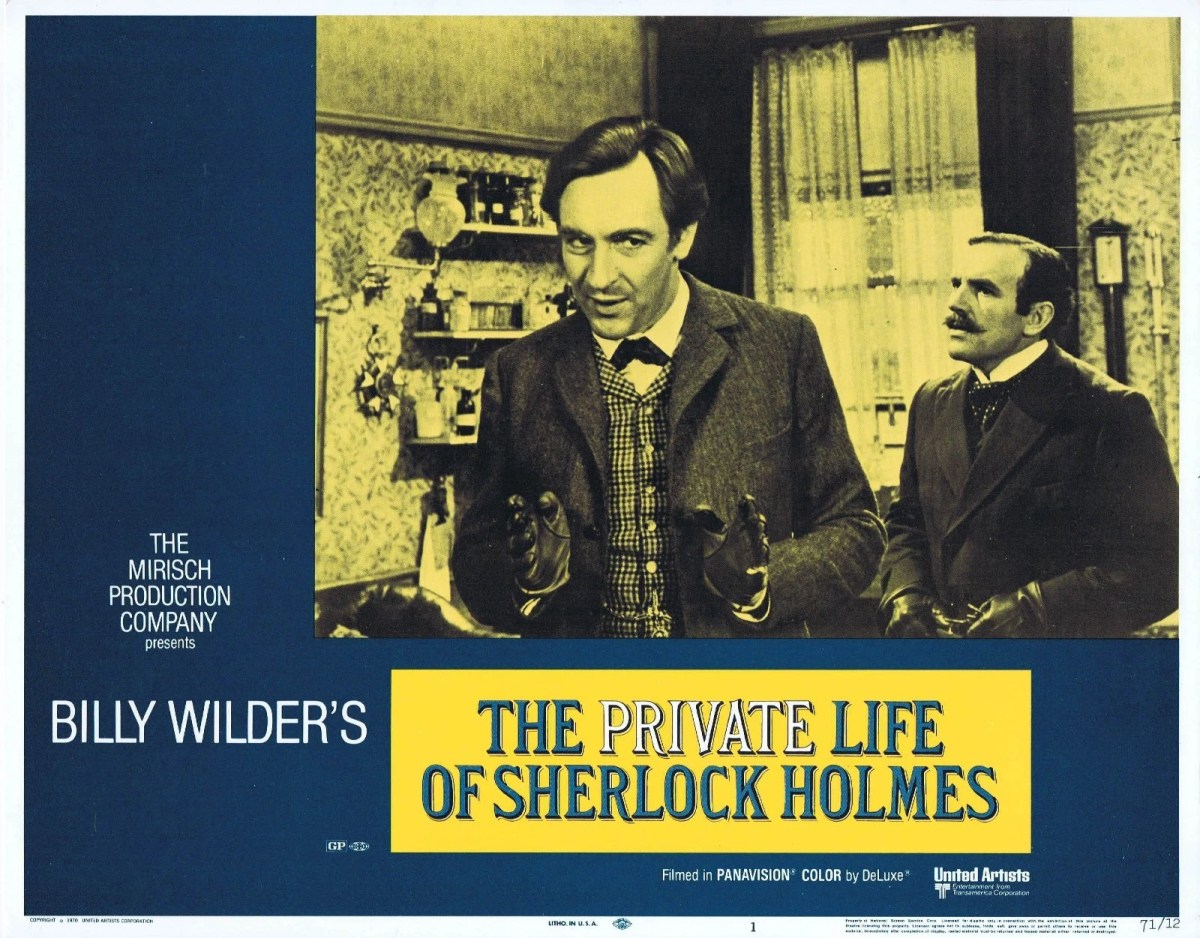
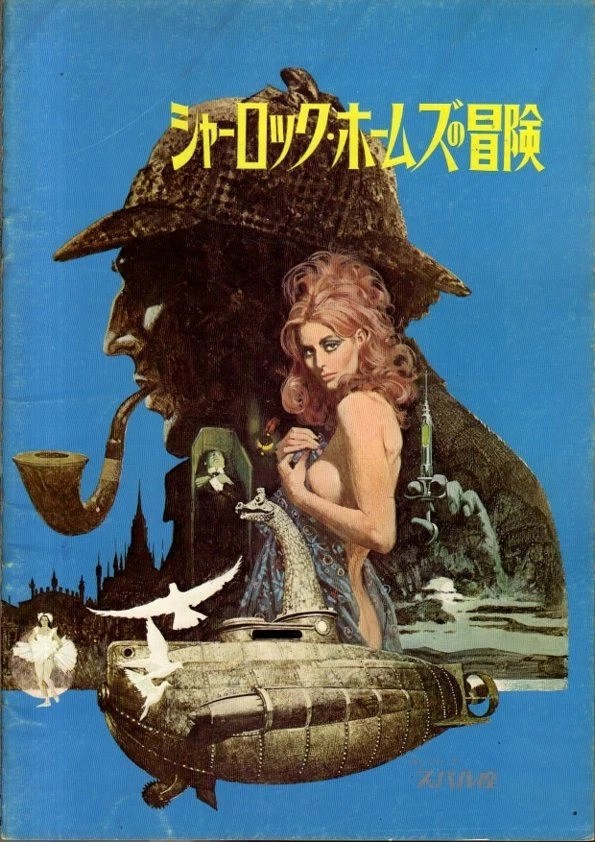
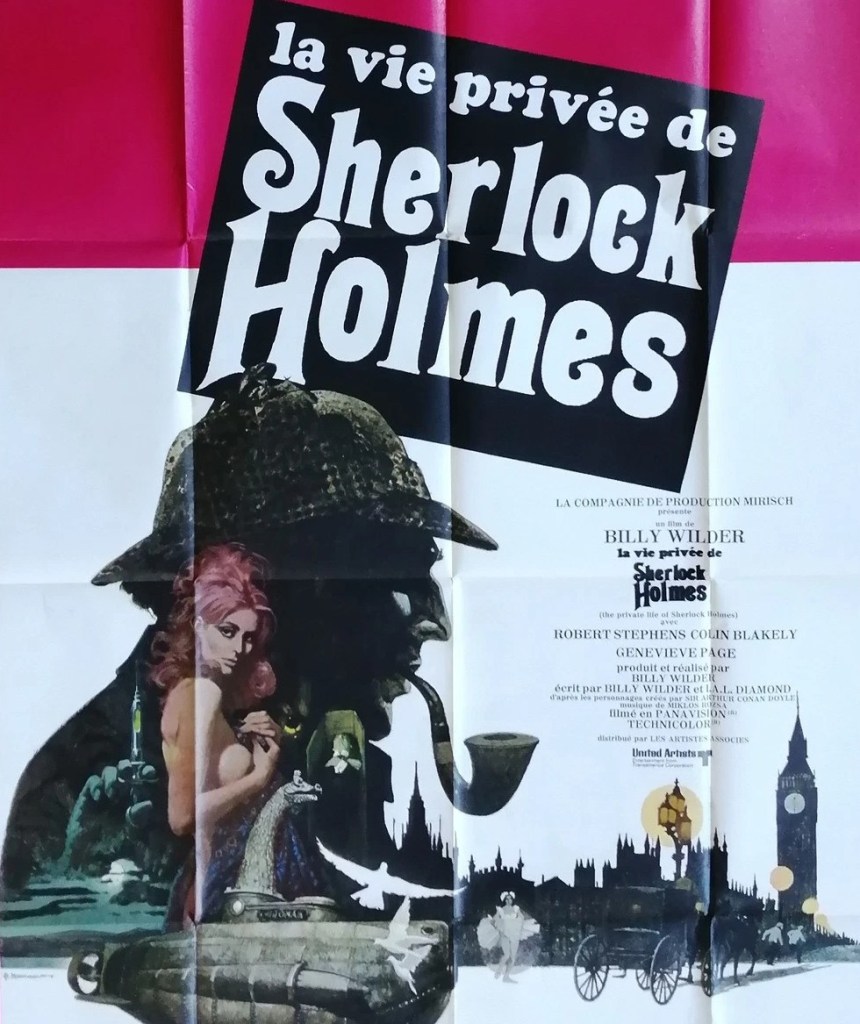
Behind the Scenes: “The Private Life of Sherlock Holmes” (1970)

Although Billy Wilder had written a script based on The Life of Sherlock Holmes (in fact he had three versions of the project running in his head, initially conceiving of the movie – twice – as a musical) by the time it came round to seeking funding in the early 1960s  he was not originally considered as its director. Mirisch was looking to contain the budget to around the region of $2 million, which would rule out any big star. However, at this early stage of the production, there were issues with the Conan Doyle Estate which was in the process of firing up other movies based on Sherlock Holmes, A Study in Terror (1965) being the most recent and also had another Conan Doyle property The Adventures of Gerard (1969) in mind.

A Study in Terror had been the brainchild of producer Henry Lester (who was also behind The Adventures of Gerard) and perhaps to general astonishment these days Mirisch had  agreed Lester would be allowed to make more Sherlock Holmes pictures as long as they remained very low-budget, on the assumption, presumably, that the marketplace would treat them as programmers rather than genuine competition.

However, Mirisch and UA retained the upper hand as regards the Conan Doyle Estate and “could cut him (Lester) off at such time as we have made definite plans to proceed.”

There was another proviso to the deal. The Estate would agree to forbid any further television productions unless Mirisch decided it wished to go down the small screen route itself. It was odd that Mirisch had eased Billy Wilder out of the frame given the mini-major had enjoyed considerable success with the director on Some Like it Hot (1959) and The Apartment (1960), a commercial partnership that would extend to The Fortune Cookie (1966).

Instead, Mirisch lined up British director Bryan Forbes who would be contracted to write a screenplay based on the Wilder idea. The sum offered – $10,000 – was considered too low, but it was intended as enticement, to bring Forbes into the frame as director. If Forbes refused to bite, “the only other name suggested and agreed upon was that of John Schlesinger.”  Although David Lean was mooted, UA were not in favour. Mirisch didn’t want to risk paying for a screenplay before there was a director in position.

The offer of the Sherlock Holmes picture was seen as a sop to Forbes. Mirisch had canned The Egyptologists, a project which Forbes believed had been greenlit. And why would he not when he was being paid $100,000 for the screenplay. In bringing the project to an untimely close Mirisch hoped to limit its financial exposure to two-thirds of that  fee.

Should Forbes balk at Sherlock Holmes, he was to be offered The Mutiny of Madame Yes, whose initial budget was set at $1.5 million, plus half a million for star Shirley Maclaine. Another Eady Plan project, this was aimed to go before the cameras the following year. If Forbes declined, then Mirisch would try Norman Jewison with Clive Donner and Guy Hamilton counted as “additional possibilities.”

As for Billy Wilder he had much bigger fish to fry. He was seeking a budget of $7.5 million to adapt into a film the Franz Lehar play The Count of Luxembourg to pair Walter Matthau and Brigitte Bardot. Should Matthau pass, Wilder would try for Cary Grant (whose retirement had not yet been announced) or Rex Harrison. Both sides played negotiation hardball. UA currently in the hole for $21 million for The Greatest Story Ever Told (1965) and Mirisch, having pumped $13 million into the yet-to-be-release Hawaii (1966), didn’t want to commit to another unwieldy expensive project.

So Mirisch insisted the project advance on a “step basis” allowing UA to reject the project after seeing the screenplay. Wilder countered by insisting that if it went into turnaround he, rather than the studio, would have the right to hawk it elsewhere (generally, studios tried to recover their costs if a movie was picked up by another studio). But Wilder was also in placatory mood and even if UA rejected this idea he was willing to work with the studio on a Julie Andrews project called My Sister and I.

However, UA and Mirisch were all show. “After Billy left the meeting,” read the minutes, “it was agreed we would not proceed with The Count of Luxembourg since we did not want to give Billy the right to take it elsewhere if United Artists did not agree to proceed.” Harold Mirisch was detailed to give Billy the bad news, but use a different excuse.

Initial casting had mooted Frenchman Louise Jourdan (Made in Paris, 1966) as the detective with Peter O’Toole or Peter Sellers as Dr Watson. Jourdan had worked, anonymously as it happened, for Wilder before, providing the uncredited voice for the narrator of Irma La Douce (1963).

By 1967, the Sherlock Holmes business was heating up. MGM was planning an adaptation of Broadway musical Baker Street and Paramount had on the cards The Man who Was Sherlock Holmes. Mirisch was also ramping up production, with $20 million invested in five properties, its busiest period ever.

Although Walter Matthau had been mooted for a supporting role, presumably Mycroft Holmes (the part ultimately played by Christopher Lee), wilder had decided the new picture would have no stars, to keep down the mushrooming budget – the eleven-month shoot would cost $10 million – and so that audiences would not come to the film with preconceived ideas. A future Holmes, Nicol Williamson (The Seven Per Cent Solution) was considered but rejected in favor of Robert Stephens (The Prime of Miss Jean Brodie, 1969) and Colin Blakely (Alfred the Great, 1968). All three effectively qualified as unknowns though by the time the movie appeared, Stephens, by default, had a stronger marquee name.

Although it was know that Rex Harrison (My Fair Lady, 1964) was desperate to play Sherlock, wilder stuck to his guns and opted for the lesser-known names. James Robertson Justice (Mayerling, 1968) and George Sanders (The Best House in London, 1969) were originally tapped for the role of Mycroft but were replaced by Christopher Lee (The Devil Rides Out, 1968).

There was extensive location work including several sequences set in Scotland. Baker Street was reconstructed on the Pinewood lot, where filming began on May 5, 1969.

Problems began after Mirisch viewed the first cut which ran to an epic three hours and 20 minutes. After a disastrous preview, Walter Mirisch kicked Wilder off the picture and carved one-third out of the picture, restructuring it, removing several episodes where Holmes solves various crimes and focusing on the Russian ballerina subplot and then the Belgian woman looking for her missing husband which takes Holmes to Loch Ness.

Naturally, the deletions altered the entire tone of the picture but as it stood it resembled little more that half a dozen 30-minute episodes, the kind of thing audiences could get for nothing on television.

United Artists did its best to make a big splash. It opened in November 1970 at the Radio City Music Hall in New York, the biggest and most prestigious house in the U.S., and that was to be followed by a Xmas release. However, the result at the Music Hall were deemed “dame” – just $150,000 from the 6,000-seat auditorium. Elsewhere it faltered, a “dim” $9,000 from five houses in Baltimore, a “pale” $5,000 in Boston, a “dismal”  $3,500 in Cleveland and a “light” $5,000 in Kansas City. It came nowhere near covering its costs.

A gala royal premiere at the Odeon Leicester Square – the biggest and most prestigious cinema in London’s West End – did little to bring in the public and it opened to a distinctly underwhelming £7,000.

SOURCES: United Artists Archive, Wisconsin Center for Film & Theater Research; Walter Mirisch,  I Thought We Were Making Movies, Not History (University of Wisconsin Press);  “Billy Wilder Return from Great Silence,” Variety, May 19, 1965; “New Sherlock Holmes Pix,” Variety, January 21, 1967; Box office – Variety November 1970-January 1971.

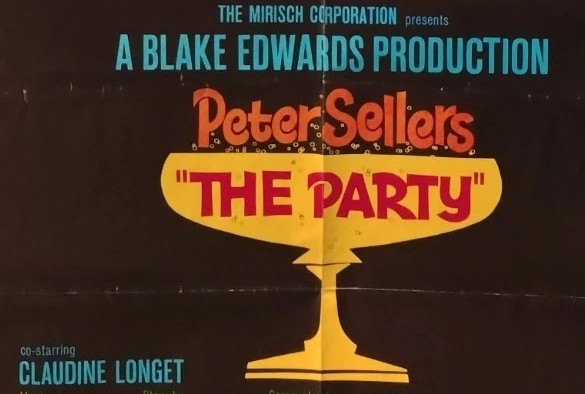
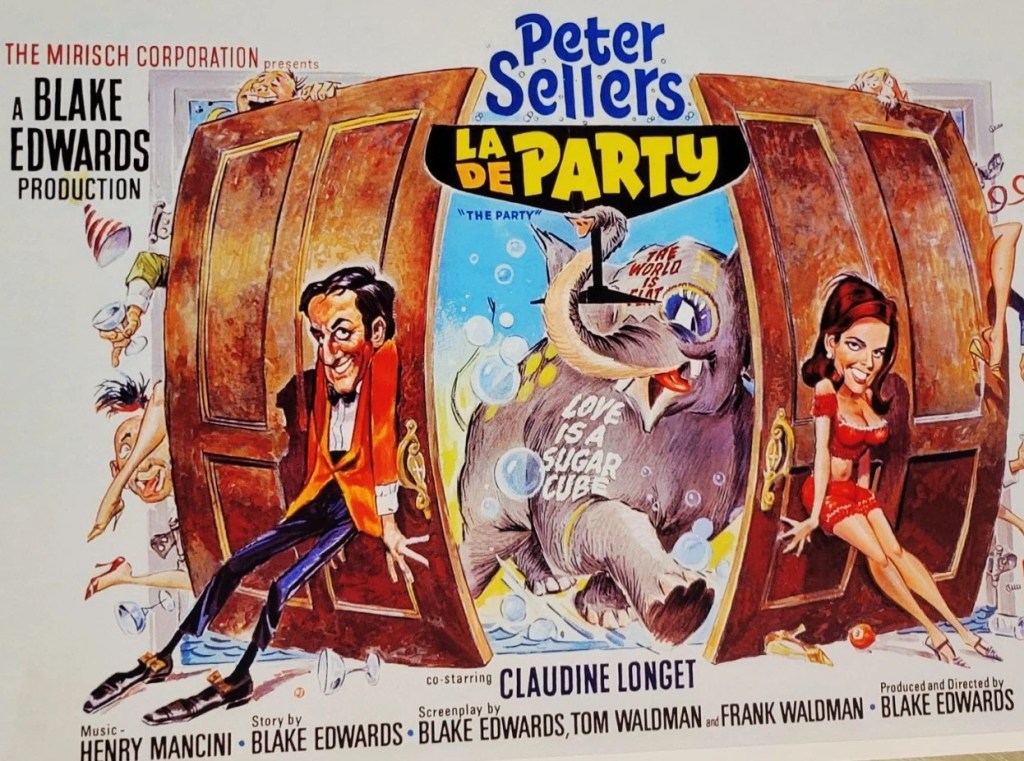
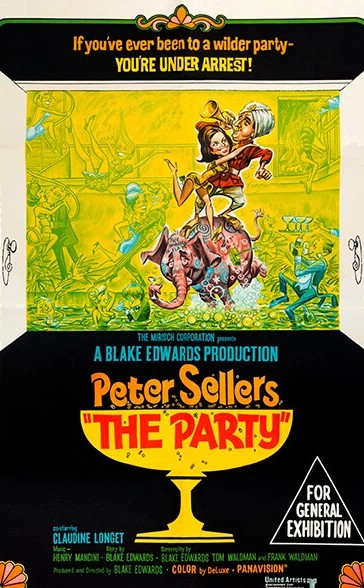
The Party (1968) ***

Had director Blake Edwards (The Pink Panther, 1963) stuck to his guns and followed his instinct and gone down the silent film route, this would have emerged in better shape. Blame star Peter Sellers (The Pink Panther) for deciding “brownface” had worked so well in The Millionairess (1960) that it was ripe for a repeat and that dialog was essential to the audience empathizing with his character.

On reflection, the fish-out-of-water concept would have been more acceptable with a character originating from anywhere but India which would have still permitted the star to adopt one of the zany voices that were his trademark.

The script was originally 58 pages long which would have delivered a finished product running just short of an hour. The extra time would have been made up by the actor’s improvisation.

His character probably didn’t need to be actor either to find himself at bigwig’s party in Los Angeles. When Sellers is at his inventive best this just purrs along. Some of the ideas are priceless – trying to retrieve a shoe from a pond, meddling with a electronics system, getting his tie stuck in an unlikely spot, spraying all with water.  But when he opens his voice, it drags.

Part of the problem is that Hrundi V. Bakshi (Peter Sellers) lacks lines with any zap. He just mumbles along, repeating the same humorless drivel. And while other characters make fools of themselves through dialog, that’s rarely with incisive wit either, the audience just laughing at their inflated opinions of themselves.

Bakshi is an incompetent Indian actor who manages to blow up the expensive set on costume epic Son of Gunga Din movie set at the height of the British Raj. He should have been blacklisted, but instead elementary error sees him invited to the party of studio boss General Clutterbuck (J. Edward McKinley) where he encounters a drunken starlet, an alcoholic waiter determined to steal the slapstick high ground, pompous western star “Wyoming Bill” (Denny Miller) and French singer Michele Monet (Claudine Longet) trying to avoid the advances of movie producer Divot (Gavin MacLeod).

Although this was reputedly shot in sequence, the running order doesn’t really matter. Set Peter Sellers in his pomp down in any situation and chaos will ensure. Wigs will come off, shoes will rocket around a room, anything on a plate, bowl or tray will fall off, anyone in the vicinity will be drenched or battered. Tempers will rise until they are nicely cooking and set to explode.

Quite where a Russian ballet troupe and a painted elephant fit into this is anyone’s guess except that both were intended as cues for further hilarity. When guests aren’t tumbling into the pool they’re soaked in soap suds. Naturally, Bakshi’s ineptitude triggers gentle romance with Michele.

This would certainly have built up a good head of steam if seen in a cinema with an audience. But the cinema audience would have encountered the same problem as anyone watching it at home. For every sequence that hits a comedic bulls-eye, others just fall flat. When the movie relies on the star’s charm rather than his ineptitude it falls apart.

It’s almost a highlights reel and my guess is that if it was cut back to the original one-hour length we might well have a classic on our hands. As it is, padded out, it doesn’t come close.

While at one time it acquired cult status my guess is that the contemporary audience won’t find enough to compensate for the offensive Brownface.

Certainly there are moments of genius, the shoe sequence and the electronics section are huge fun. But too much just doesn’t work.

You might end up fast forwarding every time Sellers opens his mouth. He is a master at finding fun in the inanimate, less impressive when dealing with people. Didn’t do anything for Claudine Longet, no more movies after this. And that was not surprising. Everyone was just a stooge to Sellers.

I apologize for falling back on that old analogy of the curate’s egg – good in parts – but that pretty much defines it.

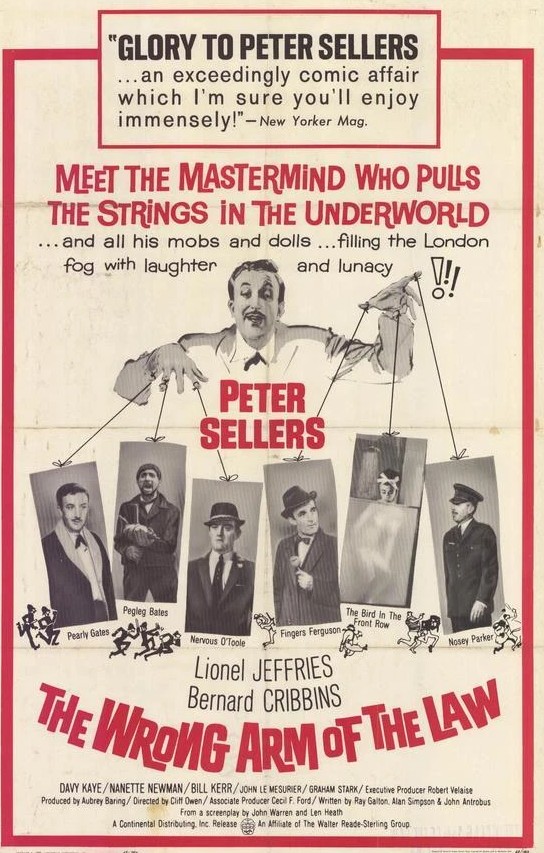
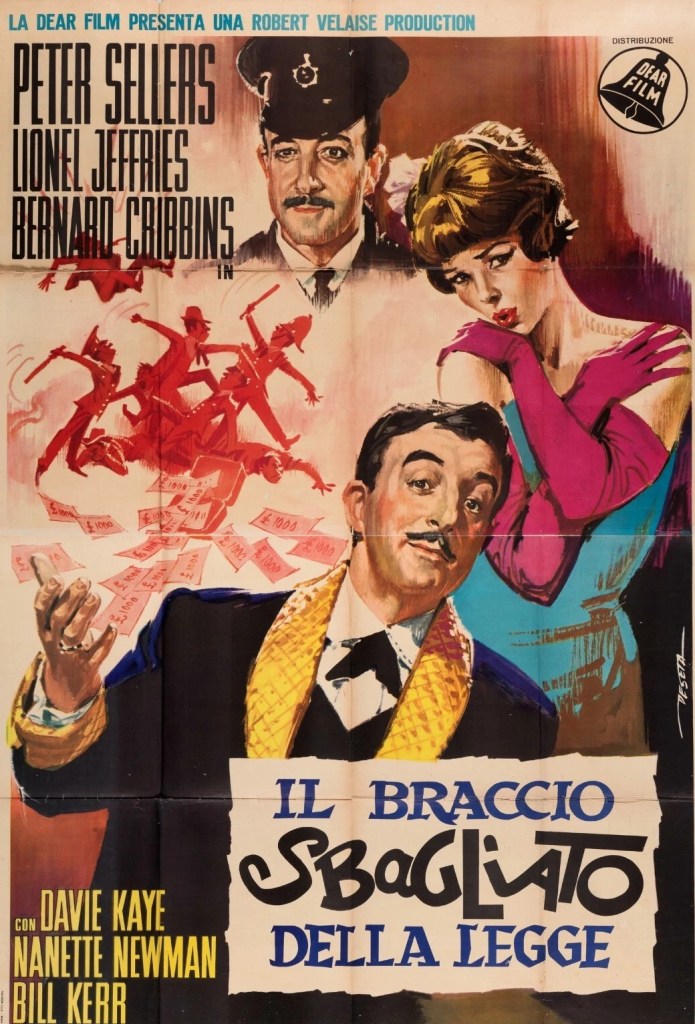
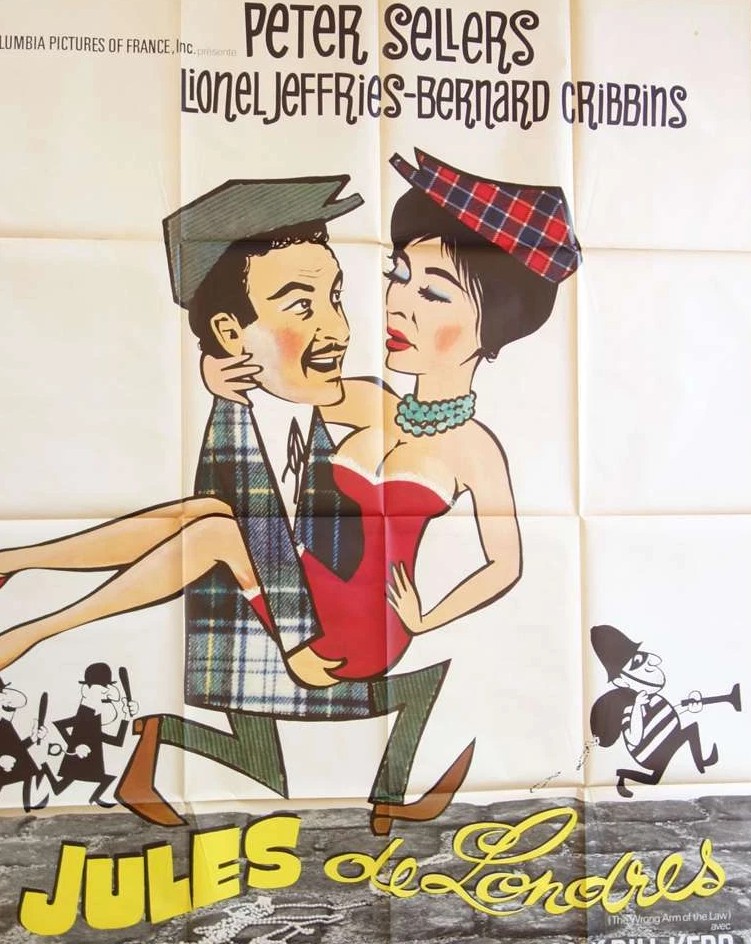
The Wrong Arm of the Law (1963) ***

Effortless stuff from Peter Sellers – funny accents and all – that put into sharp perspective his later strained performances in vehicles like What’s New Pussycat (1965) coupled with one of those delicious tales replete with countless twists that sets bad guy against bad guy. An on-from Sellers dominates any picture and here he’s at the top of his game and all you can do is sit back and wallow in the pleasure of watching him.

Theoretically, he’s playing two roles – poncy French fashion house owner Jules and London crime mastermind Pearly Gates. But the Frenchman is a role he’s adopted. In that capacity he garners information from a gullible clientele only too happy to boast about where they’ve stashed their jewels or where someone else is putting on an ostentatious display of wealth. This is relayed back to the gang who go and steal it.

The first twist is that the gang itself is being duped. Another mob, Australians, posing as cops (known as the I.P.O. mob – Impersonating Police Officers) arrest the thieves and make off with the loot. Gates is furious and is convinced it must be an inside job, he’s got a grass on his team. He is correct. But, twist number two, he’s the blabbermouth, unwittingly passing on details of his next criminal coup to girlfriend Valerie (Nanette Newman), adept at playing on his arrogance to winkle out the information.

As the gangsters are operating under a city-wide syndicate with gangs allocated territories and not treading on each other’s shoes, Gates’s first suspicions fall on rival gang leader “Nervous” O’Toole (Bernard Cribbins). But when that proves a bust, the syndicate teams up with the real cops led by Inspector “Nosey” Parker (Lionel Jeffries) with the approval of his boss (John le Mesurier) and establish a 24-hour no-robbing arrangement while trying to flush out the IPO outfit.

Together, they set in motion a major crime, assuming the information will be passed on to the IPO team, and the cops can catch them in the act. Twist number three, Gates doesn’t see why he should go to all that trouble without adequate reward and plans to make off with the stolen money.

The terrific cast doesn’t let Sellers have it all his own way. Lionel Jeffries (Chitty Chitty Bang Bang, 1968), Bernard Cribbins (She, 1965) and John Le Mesurier (Dad’s Army television series, 1968-1977) can scene-steal with the best of them. Nanette Newman (The Wrong Box, 1966) is a revelation and the supporting cast is bumped up with the likes of Graham Stark (The Magic Christian, 1969) and Bill Kerr (Doctor in Clover, 1966) and if you’re quick you’ll spot a pre-fame Michael Caine (Zulu, 1964).

Not all the jokes are good but they come so thick and fast that you don’t care. And in the midst of this we have a rather enlightened and vulnerable Gates. He is a considerate employer, looking after his team in bad times, paying them well and generally acting as a paternal figure, while away from the gang he can unwind with Valerie and let his true feelings and the pressures he’s under be known.

Director Cliff Owen (The Vengeance of She, 1968) hardly stops to take breath. Screenplay by the due of Ray Galton and Alan Simpson (The Spy with a Cold Nose, 1966) working in conjunction with John Antrobus (The Big Job, 1965).

Avoid the snigger territory of the Carry On pictures, this is probably the last British comedy that could get away with such innocence and was rewarded with huge box office numbers in Britain.

Sheer enjoyment.

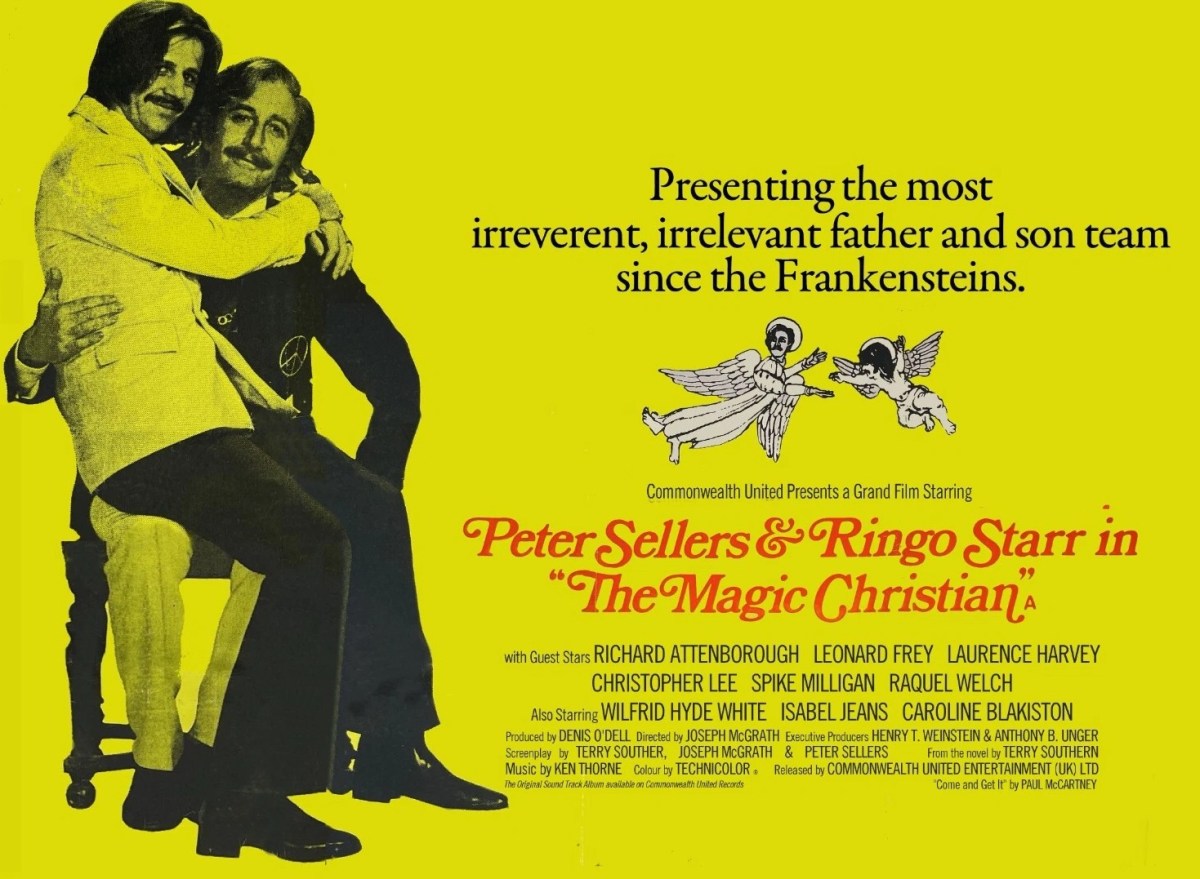
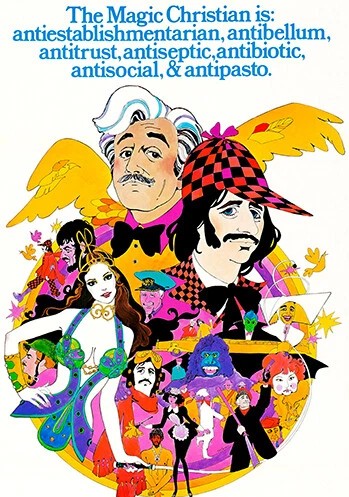
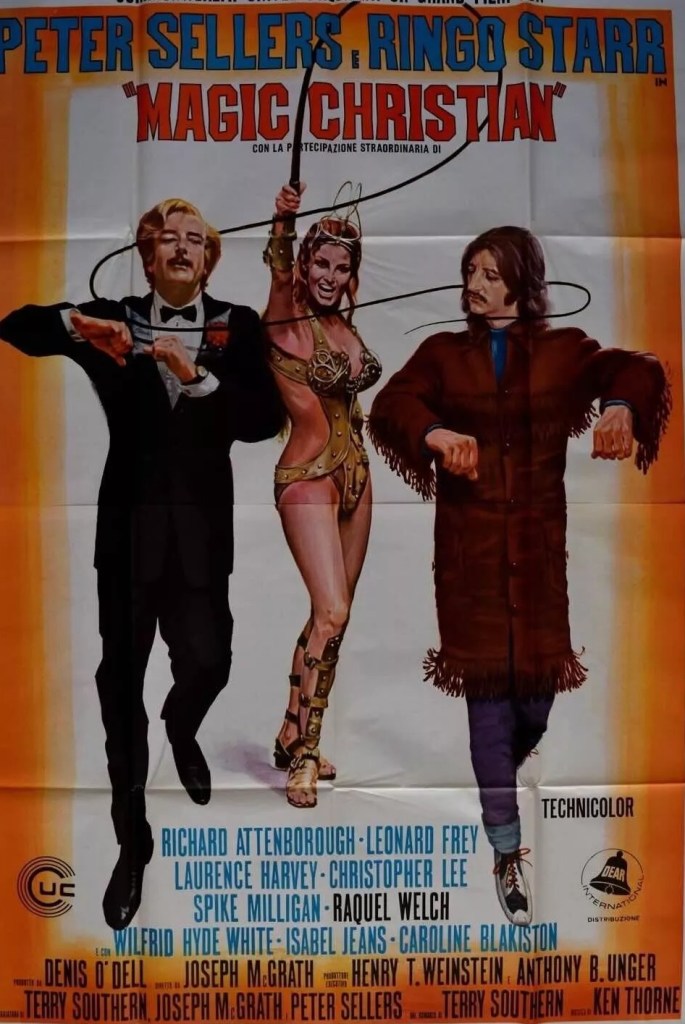
The Magic Christian (1969) ***

Substitute contemporary artwork/installation/performance art for practical joke and this will come up trumps. Taken in the artistic sense, where artists are pillorying society, there are gems – a stage Hamlet performing a striptease, feeding scraps of money to the ducks, ship passengers experiencing an apparent voyage when the vessel hasn’t left land, cutting up a famous work of art. Although I have to point out this will inevitably be remembered by some for a bikini-ed Raquel Welch cracking the whip over a galley of topless oarswomen.

Effectively a series of comedy skits loosely tied together under the theme of money, mostly in the form of bribery. Billionaire Sir Guy Grand (Peter Sellers) sets out to teach adopted son Youngman (Ringo Starr) just what money can buy. Could you pay one of the teams sufficient dough in the annual Boat Race for them to ram the other? Would a parking warden (Spike Milligan) eat the parking ticket he has just issued? In the spirit of fair play is it okay to down a pheasant with an anti-aircraft gun?

When the going slows down, surrealism enters the equation: ship’s captain kidnapped by a gorilla, vampire waitperson, black head on white body, urine-soaked banknotes given away to a crowd, the occasional nun or Nazi, newspapers where apologies are written in Polish.

Plot-wise, there’s not much to it and the satire is merely repetitive as Sir Guy embarks on educating Youngman on the perverse uses of money. It has the feeling not of following a storyline but of “what can we get up to next” and attempting to layer shock upon shock in the manner, it has to be said, of some contemporary directors.

But there’s neither sufficient bite to the satire nor punch to the shock so it remains an elaborate series of disconnected sequences. Luckily, nobody’s having to pretend to put in an acting shift which is just as well because Ringo Starr proves he can’t act.

And it’s not much helped by a host of cameos – Laurence Harvey (A Dandy in Aspic, 1968), Richard Attenborough (Guns at Batasi, 1964), Christopher Lee (Dracula, Prince of Darkness, 1965), Raquel Welch (Bandolero!, 1968), director Roman Polanski (Rosemary’s Baby, 1968), Wilfred Hyde-White (P.J. / New Face in Hell, 1967), comic Spike Milligan and various members of the future Monty Python team including John Cleese (A Fish Called Wanda, 1988) and Graham Chapman.  Harvey and Welch make the biggest splash.

Excepting Dr Strangelove, Hollywood had failed to capture the essence of offbeat novelist Terry Southern (Candy, 1968) and despite input from Chapman, Cleese and Sellers, this never really gets off the ground.

Peter Sellers (The Pink Panther, 1963) was in something of a career rut where very little struck home at the box office and he would continue a dismal losing streak until resuscitating The Pink Panther franchise in 1975.

Director Joseph McGrath’s (The Bliss of Mrs Blossom, 1967) record was spotty. Best known for music videos for The Beatles, he was only well served when his cast was filled with strong actors.

No more than an occasionally humorous trifle with an equally occasional target hitting the bullseye.

What’s New Pussycat? (1965) ***

Being this was the age of the Lothario, what with James Bond and Matt Helm and Co surrounded by adoring women, you were hardly going to find many males in the audience feeling that sex addiction was a bad thing. Nor was commitment phobia likely to be high in the agenda of the females in the audience.

Really, there’s no real reason to go to any trouble to come up with justification for bedroom farce that borders just occasionally on screwball comedy. Let men be caught with their trousers down and women in various stages of deshabille and let’s hope there are enough jokes in between to keep the pot boiling.

The main problem here is that while Peter O’Toole shows a fine and unexpected gift for comedy, the two actors for whom comedy is supposed to be their metier mostly fall flat, Peter Sellers resorting to over-acting and Woody Allen in his movie debut trying to steal every scene and the best lines (he wrote the script) to boot.

There are a couple of cracking set-ups. In one a language teacher who gets her class of foreigners to repeat what she says finds that they are parroting every word of a crazy fight she is having with her lover. And a strip club, even one as high-falutin as The Crazy Horse in Paris, has rarely provided so many laffs. And in an echo of Cyrano de Bergerac, a man wakes up an entire apartment block trying to woo the lover of his friend.

Michael James (Peter O’Toole) seeks advice from psychiatrist Dr Fassbender (Peter Sellers in a dreadful wig) as to how to temper his sexual instincts. He is under siege from lover Carole (Romy Scheider) who is desperate to marry him. The repressed married doctor is mad keen on Renee (Capucine) but the minute she sets eyes on Michael she can’t get enough of him.

To make Michael jealous Carole flirts with Viktor (Woody Allen), her nervous wreck of a chum.

Soon Michael is juggling four lovers, Liz (Paula Prentiss) and Rita (Ursula Andress) as well as Carole and Renee. Eventually, for no great reason except it must have seemed a good idea at the time and it’s the ideal location for a bedroom farce, they all end up in a small hotel, where Michael has his work cut out, dashing from room to room, to assuage all his lovers, while Fassbender and Viktor try to snap up his leftovers.

This all takes place against a background of La Dolce Vita involving a revolving cast of fashionistas and disco dancers. Michael drives an antique car straight out of Chitty Chitty Bang Bang (1968) and he carries off style with great elan. Wherever he is, Michael is the center of attention, in a disco resorting to striptease, and you can hardly blame him for being unable to resist so many gorgeous women throwing themselves at him.

While Peter O’Toole (The Lion in Winter, 1968) seamlessly holds it together, Peter Sellers (The Pink Panther, 1963) and Woody Allen (Annie Hall, 1977) threaten to pull the flimsy structure apart, the latter in particular determined to turn it into a Woody Allen picture. But Peter O’Toole is sheer delight and, as misogynistic as it sounds, carries off with aplomb the central conceit of a poor fellow who just can’t get enough of women. His comedy instinct is first-rate, far better employed here than in How to Steal A Million (1966) and his drunken scene is a joy.

Peter Sellers appears to be spoofing himself while Woody Allen, years away from solidifying his screen persona, is, as usual, just himself.

It’s left to the female cast to add depth and virtually all come out of the experience with bonus points, Romy Scheider (Otley, 1969) and Paula Prentiss (Man’s Favorite Sport, 1964) in particular while Ursula Andress (She, 1966) and Capucine (Fraulein Doktor, 1968) raise the glamor stakes to a new high.

Director Clive Donner (Alfred the Great, 1958) does his best to keep the picture on an even keel while allowing it to lurch sideways whenever the comedy requires. Written by Woody Allen.

Good fun in parts.

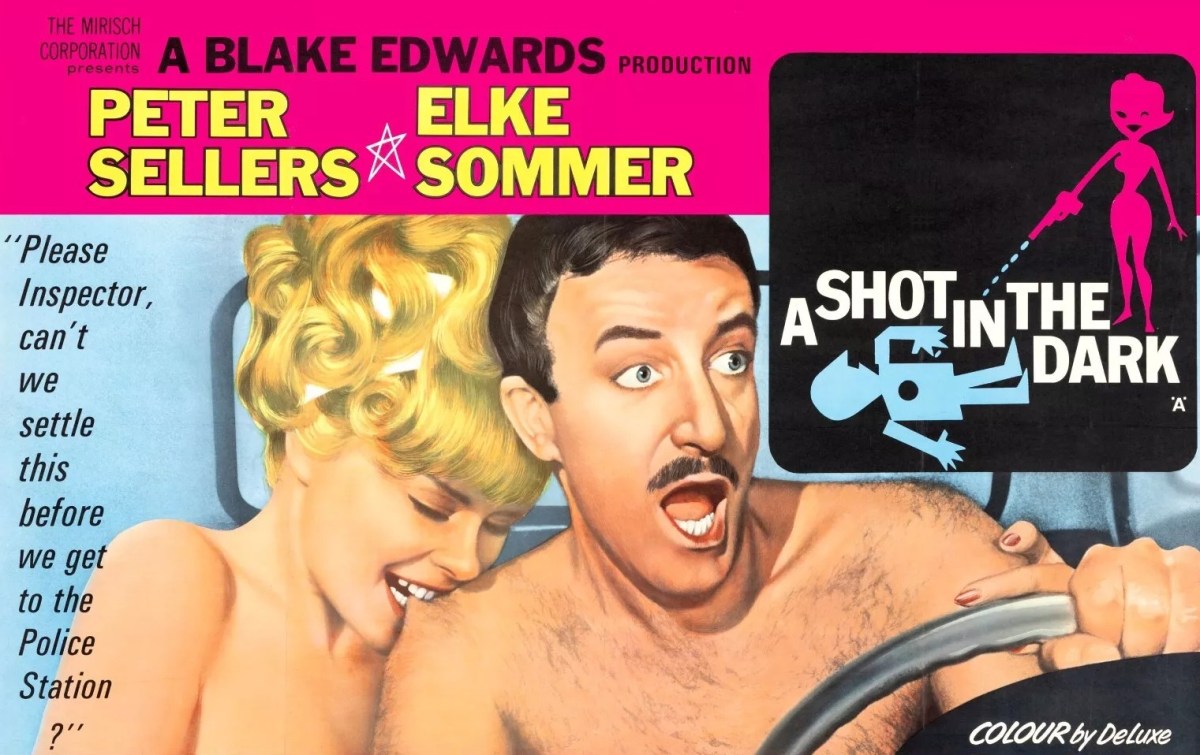
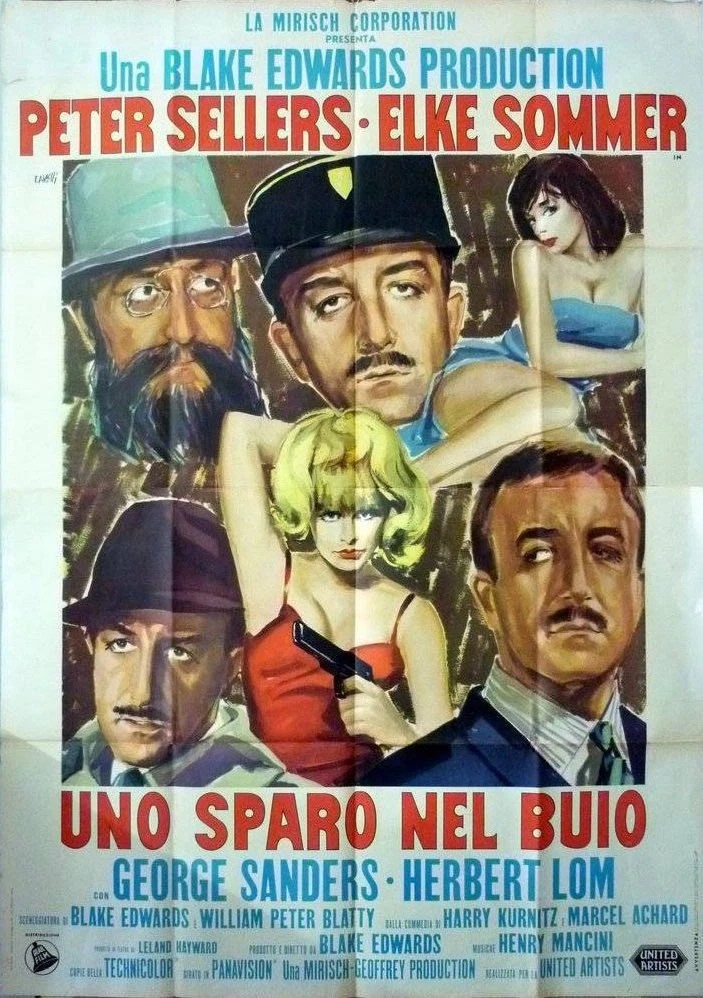
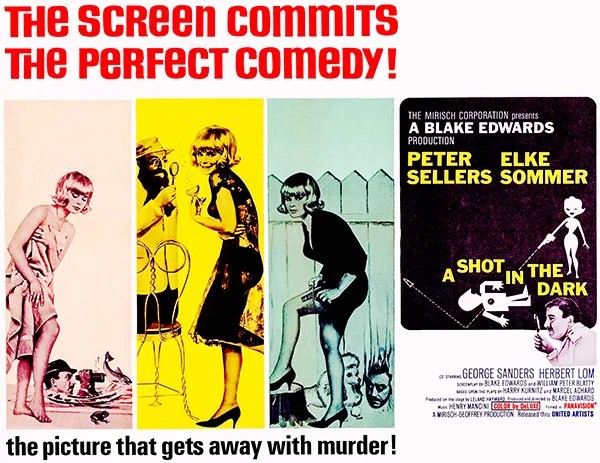
A Shot in the Dark (1964) ***

A pratfall still works wonders. An open door or window, anything that happens to be on the floor, or for that matter any object of any description – billiard cues, for example – within easy reach offers the opportunity for havoc – and a steady stream of laffs. Which is just as well, because this complicated farce, which might get a few extra brownie points today for its satire on serial killers, doesn’t do the movie any favors.

Inspector Clouseau (Peter Sellers) has acquired a more pronounced French accent than since his last incursion in The Pink Panther (1963) but it’s nothing like as excruciatingly hilarious as would be in later episodes. He still falls in love at the drop of a hat though this time the object of his affection is maid Maria (Elke Sommer) who, unfortunately, happens to be the prime murder suspect. She should be in jail but she is constantly released. Clouseau should be sacked for incompetence, but he is constantly reinstated.

The repertory team of his frustrated boss Dreyfus (Herbert Lom) and karate teacher (Burt Kwouk) interrupt proceedings from time to time but don’t really add to the laugh quotient. A bit more effective is the satire on French bureaucracy, a running gag on the need for an official permit, for example, before you could think of selling balloons on the street or trying to earn a buck as a street artist.

I won’t go into the plot since it’s a series of baffling murders and you could argue that Peter Sellers needs neither plot nor love interest. All he needs is an open door beckoning.

I was astonished how often I laughed out loud at something I knew was coming. The minute someone walked through a door you knew Clouseau would be the other side of it waiting to be buffeted. Any open window and he’d be through it and likely as not water would await.

He doesn’t just get tangled up in words but ask him to replace a billiard cue and you’d think billiard cues had declared war on him. He’s forgetful to the point of forgetting to switch off his cigarette lighter and naturally ignores the signs that he’s set his coat on fire.

For those more censorious times, there’s a foray into a nudist colony which is primarily an exercise in the various ways that private parts can be hidden from the camera while suggesting the salacious opposite. Clothed or unclothed you can rely on Clouseau to fall down. The only hilarious scene that doesn’t involve him falling down is when Maria miraculously appears in his office and when an attached key tears a whole in his trousers.

The various twists – Dreyfus is the assassin stalking Clouseau – and the lax French attitude to adultery keep the plot going and when the narrative slackens you can always stick a bomb into the mix.

From the outset, there is plenty opportunity for farce, the wrong people entering the wrong doors, continuous mix-up, plenty occasions for the innocent person to be caught red-handed clutching the murder weapon.

It almost looks as though the two aspects of the picture are clashing. Director Blake Edwards (The Pink Panther) appears to be helming a farce within which Inspector Clouseau is encased. You might think there’s a limit to the number of pratfalls you can stick in a picture, but my answer is “try me”.

With Peter Sellers so dominant, the only way the supporting cast could compete was by over-acting (Herbert Lom) or under-acting (all the rest).  Elke Sommer (The Prize, 1963) needs do little more than look winsome.

Written by Edwards and William Peter Blatty (Gunn, 1967) based on the play by Harry Kurnitz.

Occasionally drags but lifted by the genius of Sellers.

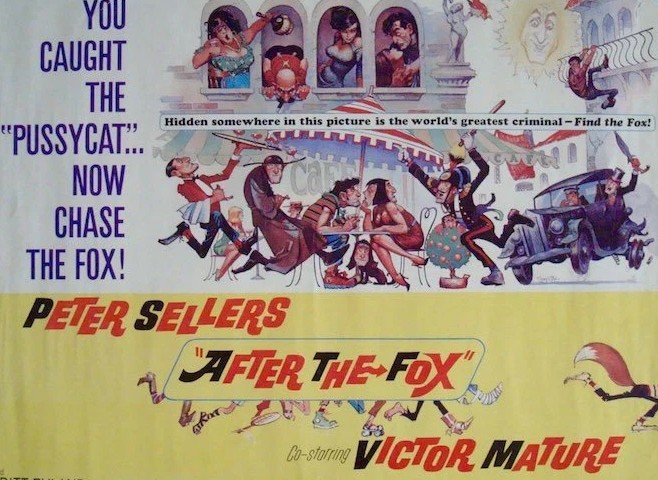
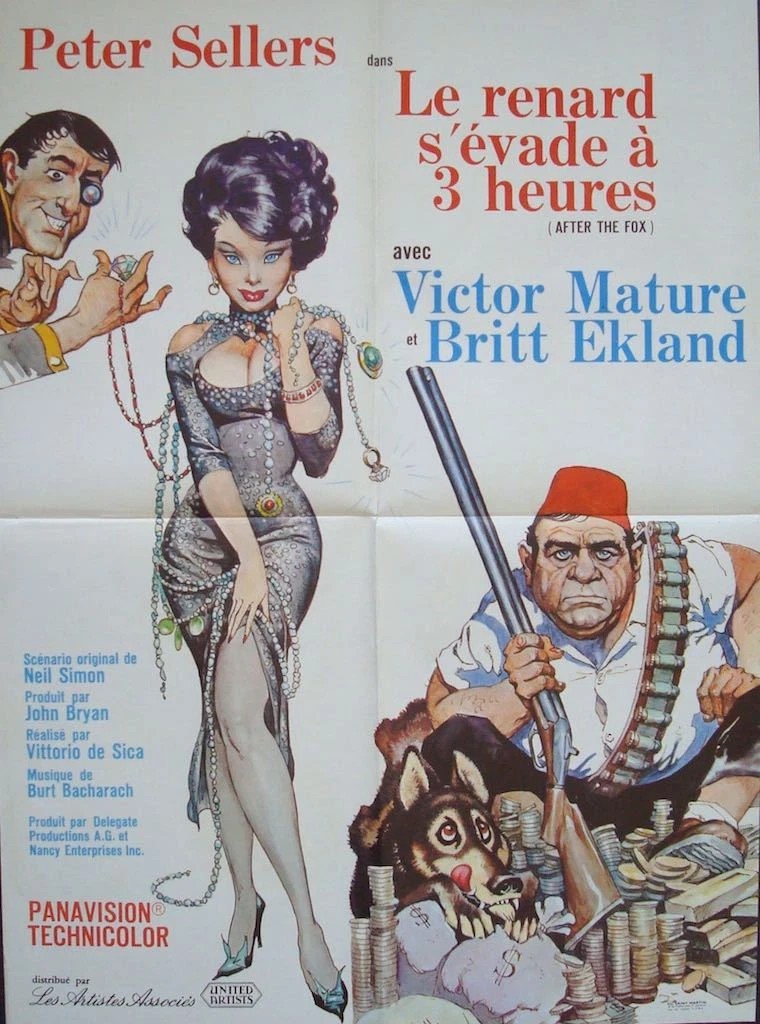
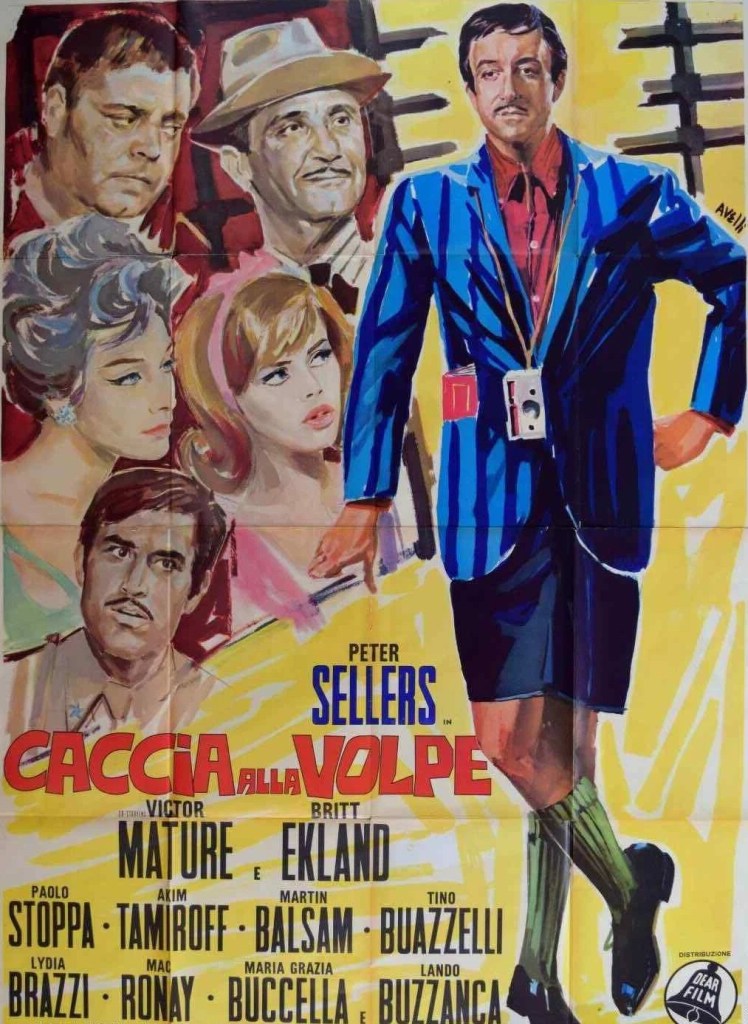
After the Fox (1966) ****

There’s a classic MacGuffin in here somewhere, but I can’t make out if it’s the heist serving the satire on movies or the satire on movies serving the heist. Whatever, this is about the funniest picture you’ll watch on the movie business (much better than Paris When It Sizzles two years earlier). You can keep your royalty and your top politicians dropping in from every corner of the globe, but it’s hard to beat Hollywood landing on your doorstep to transform everyone into a sycophant. To facilitate filming, individual streets and solid blocks will be closed and even businessmen whose businesses are threatened will stick their nose out into the road in the hope of being captured by a stray camera. Everyone wants to be in the movies and how brazenly the movies exploit such naked need.

Before we get to the movie part of the story, we find imprisoned top criminal Aldo Vanucci aka “The Fox” (Peter Sellers) escaping from confinement so that he can assist robber Okra (Akim Tamiroff) transport 300 solid gold bars from a heist in Cairo to Italy. Though the heist is deceptively simple (and might even have influenced The Italian Job, 1969), for a time it looks as if this will canter along going nowhere fast while we get bogged down in a subplot concerning the burgeoning acting career of Vanucci’s sister Gina (Britt Ekland). There’s a whole bunch of standard Italian comedy tropes – the dominant Mama, the incompetent crooks and the brother too controlling of his sister.

But once Vanucci hits on a movie shoot as the ideal way to disguise the bringing ashore of the loot into the Italian island of Ischia, he strikes pure comedy gold. The townspeople who might otherwise easily see through a con man are putty in his hands. The local cop comes onside when persuaded he has the cheekbones of actor. Aging vain star Tony Powell (Victor Mature) wearing a trademark trench coat like a latter-day Bogart is an easy catch once you play upon his vanity and even hard-nosed agent Harry (Martin Balsam) is no match for the smooth-talking Vanucci.

Vanucci has mastered the lingo of the film director and can out-lingo everyone in sight. The very idea that he has a hotline to Sophia Loren goes undisputed and Powell is even persuaded that Gina, who has never acted in her life, is the next big thing.

Pick of the marvelous set-pieces is the scene in a restaurant where Vanucci is astonished to find a peach of a girl (Maria Grazia Buccella) speaking in a deep male voice because while she’s opening her mouth the words are being supplied by Okra seated behind her. Not all the best scenes involve Vanucci. Harry tartly batting away Tony’s vanities is priceless while the theft of film equipment while a film director (played by the movie’s director) calls for more dust in a sandstorm is great fun.

Also targeted is the self-indulgence of the arthouse filmmaker determined to add meaning to any picture. Vanucci’s versions of such tropes as lack of communication or a man searching for identity and running away from himself are a joy to behold and one scene of Tony and Gina sitting at opposite ends of a long table at the seashore just about sums the kind of pointless but picturesque sequence likely to be acclaimed in an arthouse “gem.” And you might jump forward to villagers hiding the wine in The Secret of Santa Vittorio (1969) for the sequence where townspeople load up gold into a van, singing jauntily all the time.

Most of all Sellers (A Shot in the Dark, 1964) hits the mark without a pratfall in sight – the only pratfall in the picture is accorded Harry. Unlike The Pink Panther, Sellers doesn’t have to improvise or be funny. He just follows the script and stays true to his character and the one he has just invented of slick director. There’s even a great sting in the tail.

Sellers shows what he can do with drama that skews towards comedy. Though criticized at the time for, effectively, some kind of cultural appropriation – she was a Swede playing an Italian, what a crime! – Britt Ekland (Stiletto, 1969) is perfectly acceptable. Victor Mature (Hannibal, 1960) has a ball sending up the business as do Akim Tamiroff (The Vulture, 1966) and Martin Balsam (The Anderson Tapes, 1971).

Vittorio De Sica (A Place for Lovers, 1969) does pretty well to merge standard Italian broad comedy with several dashes of satire. The big surprise is that Neil Simon (Barefoot in the Park, 1967) wrote the script, helped out by De Sica’s regular collaborator Cesare Zavattini (A Place for Lovers).

I saw this and A Shot in the Dark on successive nights on Amazon Prime. I hadn’t seen either before. They had been received at either ends of the box office spectrum, the Clouseau reprise a big hit, the Hollywood satire a big flop, so I expected my response might reflect that. But, in reality, it was the other way round. I appreciated this one more.

Go figure.  

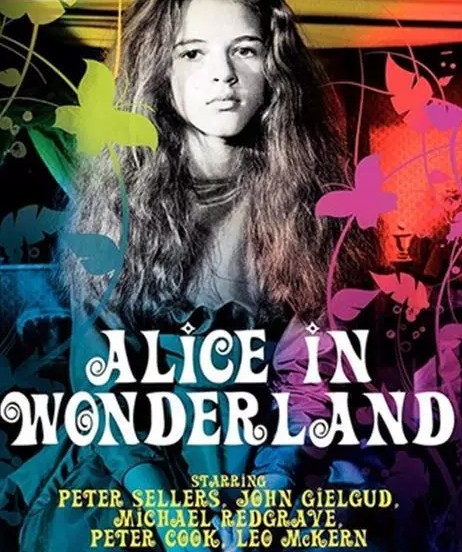
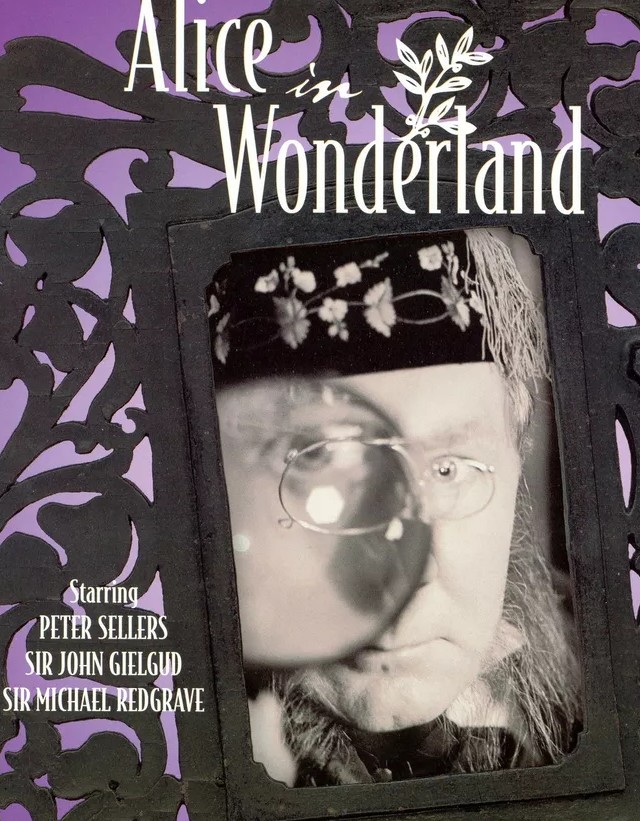
Alice in Wonderland (1966) **

Young bucks wanting to make a bigger splash are apt to rampage through sacred texts and treat unwary audiences to avant-garde notions. Thus, Jonathan Miller (Take a Girl Like You, 1970), in his debut, set aside all expectations and in fairness purists had decried Walt Disney’s 1951 telling of the Lewis Carroll classic. In truth audiences weren’t so in love with the Disney version either, an unusually low hitter for the company, and one that only really found its niche when reissued to catch a whiff of the stoned hippies who had drooled over 2001: A Space Odyssey (1968).

This 1966 reimagining might have been buried in the vaults after its initial showing except that Jonathan Miller went on to become something of a British institution, renowned directed of opera and stage plays, writer and presenter of a number of highly-regarded television projects and a regular on the talk show circuit. That his career had begun in sensational fashion, one of the hands on the tiller of the satirical Beyond the Fringe stage show (a hit in the West End and Broadway) and television program, meant that when he decided to spread his wings into the movies, no expense was spared.

Big stars flocked. What other neophyte could attract stars of the caliber of Peter Sellers (The Pink Panther, 1964), John Gielgud (Khartoum, 1966), Michael Redgrave (Goodbye, Mr. Chips, 1969), Leo McKern (Bunny Lake Is Missing, 1965), Peter Cook (The Wrong Box, 1966) and playwright Alan Bennett (The Madness of King George, 1994)? All admittedly in small parts but that was the nature of the all-star enterprise.

And that would have been fine if they had all been employed to supply the voices. Or if audiences had the fun of trying to determine who was who when hidden under the ton of make-up required to turn them into White Rabbits or Mock Turtles or Caterpillars or Lobsters cutting a quadrille.

But Miller had determined that not only was the Disney version short of the mark but for too long readers had missed the entire point of the Lewis Carroll book. He decided the point of the story wasn’t humor at all, nor a succinct exploration of the pitfalls of language, but about a young girl adrift in a adult world of confusion. So that was bye-bye to the cuteness.

He even broke a cardinal role. Alice doesn’t fall down a rabbit hole. The whole thing is a dream.

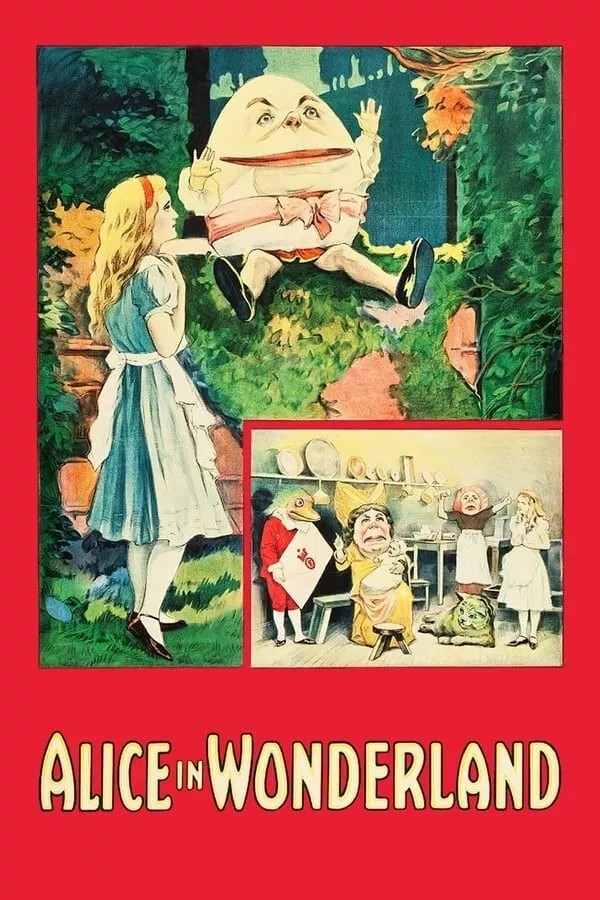
They’ve been adapting the book since the early days of cinema. This poster dates from 1915.

So you need to listen carefully to find out, with the lack of make-up, which actor is playing which fantasy character. And this isn’t set in any fantasy world either, certainly far removed from the famous illustrations that accompanied the book. It takes place in Victorian times which, yes, reflects the era in which the book was written, but, no, seems an extremely odd decision to give what is still fantasy some kind of realism.

It’s as if the director didn’t really have the courage of his convictions. That said, if he was catering to the arthouse mob, it’s got that kind of cinematic sensibility, with voice-over and unusual compositions.

Just to help you out, let me tell you that Peter Sellers plays the King of Hearts, John Gielgud the Mock Turtle, Michael Redgrave the Caterpillar, Alan Bennett the Mouse, Finlay Currie the Dodo, Leo McKern the Duchess and Peter Cook the Mad Hatter. The part of Alice went to 13-year-old Anne-Marie Mallik who never made another movie.

While it retains enough of the original to be recognizably based on the book – with all the catchphrases, “off with their heads” etc – the locale is just totally at odds with the story. And while it’s a tonic to hear the mellifluous tones of John Gielgud uttering the author’s immortal words, it would have been better just to hear his voice.

My guess is this is only still available because Miller made such a name for himself. You can catch it on Talking Pictures.

Curiosity or mess, it’s hard to decide.

https://www.facebook.com/TalkingPicturesTV/videos/easter-on-tptv/654499693946106

Behind the Scenes: “The Man Who Haunted Himself” (1970) – The British Are Coming, Part One

The Man Who Haunted Himself (1970) appeared as part of new British production strategy. In fact, the British had been trying to dominate the global film industry since the silent era when  the population of its Commonwealth exceeded that of the United States. At various points, the British had launched various distribution attacks on Hollywood – aligning with U.S. cinema chains, organizing their own distribution system (Gaumont-British in the 1930s for example) and even taking over major Broadway houses as a launch platform for new releases. Come the end of the 1960s , Britain had lost its production grip on the world stage. Though movies were still being made in Britain they were often funded by Hollywood, or were B-movies or genre-specific such as Hammer horror.

In 1969, Associated British Picture Corporation, following a takeover by EMI, relaunched as a major production entity, aiming to provide increased programming for its own 270-strong ABC cinema chain as well as hitting the export market. Bernard Delfont, chairman of ABPC, set up two production strategies that he intended to run in parallel. He brought in director Bryan Forbes (King Rat, 1965) as production chief of ABPC while Nat Cohen, head of ABPC subsidiary Anglo-Amalgamated, would augment that effort.

Full page ads (above and below) were taken in “Variety” to promote the MGM-EMI slate.
Of the 26 features planned, only 15 were made.

Forbes took on the role after initially signing a three-picture deal with Delfont which developed into “something wider…at a time of real crisis.” Forbes explained his motivation: “I think if you’ve been a critic as I have over the years…you’ve got to put up or shut up. And if the job is offered to you, you can’t turn it down and then go on criticising.”

The initial slate was being made with no guarantee of foreign distribution. Even getting a foothold in Britain was difficult. “We are very dependent…on getting West End outlets. There’s a long queue and we don’t have any particular pull.”

(In Britain at this point, roadshow – which to a large extent was no longer the favoured release device for big budget pictures in the U.S. – still dominated the West End and the type of picture being envisaged was more targeted towards the circuit. But a West End run was always seen as a mark of quality. The downside of the West End release was that it delayed movies reaching the provinces and by the time they did all the initial media interest was long forgotten.)

Budgets were being assessed to meet the prospect that a very successful film could recover its negative costs on a British release alone, with anything else pure profit. Trying to appeal to the international and/or U.S. market at the outset was too complicated and expensive a proposition. And there was always the prospect that with the production well running dry in American, that a distributor, with a hole to fill, would come calling.

ABPC allocated a total budget of £36 million to make 28 pictures, with Forbes’ outfit taking the lion share, leaving Nat Cohen only $7 million to make 13 movies. According to Delfont, it was the “most ambitious” program ever scheduled by a British company. While certainly an overstatement given the investment by Rank, ABPC and Gaumont-British in the past, it nonetheless captured media attention.

The Forbes project didn’t go according to plan. Hoffman (1970) with Peter Sellers, thriller And Soon the Darkness (1970), The Man Who Haunted Himself (1970) starring Roger Moore, The Breaking of Bumbo (1970) and Mr Forbrush and the Penguins (1971) headlining John Hurt and Hayley Mills all flopped, despite costing a lot less than originally expected. The Railway Children (1971) was the only undeniable hit while The Tales of Beatrix Potter (1971) made a profit. Raging Moon / Long Ago, Tomorrow (1971), with Forbes directing Malcolm McDowell and Nanette Newman, and Dulcima (1971) with John Mills and Carol White also ended up in the red. 

Forbes fared much better heading up MGM-EMI, a co-production unit set up in 1970, which produced hits The Go-Between (1971) and Get Carter (1971). Forbes resigned in 1971.

Nat Cohen, while pandering to a lower common denominator, enjoyed more straightforward success with sex-change comedy Percy (1971), and big screen versions of On the Buses (1971), Up Pompeii (1971) and Steptoe and Son (1972) – and their various sequels –  Richard Burton as Villain (1971), Fear Is the Key (1972), and Stardust (1974) while Murder on the Orient Express (1974) with an all-star cast was a huge global hit.

In 1976 Michael Deeley and Barry Spikings became joint managing directors of EMI and aiming for an international audience fronted part of the finance for The Deer Hunter (1978), Sam Peckinpah’s Convoy (1978) and Walter Hill’s The Driver (1978) and had significant investment in Columbia pictures like Close Encounters of the Third Kind (1977) and The Deep (1977).

But the British invasion amounted to very little in the end, as Hollywood, led by gargantuan hits of The Godfather (1972), Jaws (1975) and Star Wars (1977) swept all before them and made it impossible for British-made films to compete either on a commercial or artistic basis.

The experiment was a massive flop. EMI failed to break into the American market and, in fact, the box office achieved was on the dismal side. Best performers were Get Carter and The Go-Between both estimated to achieve rentals of just under $2 million. Tales of Beatrix Potter didn’t reach $1 million and Villain not $750,000. The Railway Children couldn’t manage $500,000 nor Percy $250,000 and none of the others even crossed the $100,000 mark. It was considered such a footnote in British movie history that it didn’t merit a mention in Sarah Street’s Transatlantic Crossing, British Feature Films in the USA (Continuum, 2002).

SOURCES: Alexander Walker, Hollywood England, (Orion paperback, 2005) p426-440; Advert, Variety, January 21, 1970, p12-13; Derek Todd, “The Emperor of Elstree’s First 300 Days,” Kine Weekly, March 7, 1970, p6-8, 19; “MGM-EMI In Joint Deal On British Filmmaking,” Box Office, April 27, 1970, p7; “MGM Setting EMI CoProds,” Variety, June 10, 1970, p3; “MGM-EMI To Produce 12 Films Annually,” Box Office, July 6, 1970, p6; “From $10-Mil and Up, Rentals, to $100,000 and Less,” Variety, November 12, 1972, p5.

Never Let Go (1960) ****

Under-rated British film noir classic. All the principals playing against type. Comedian Peter Sellers (The Millionairess, 1960) as the villain, British hero Richard Todd (The Dam Busters, 1955) comes seriously unstuck, pop star Adam Faith (Beat Girl / Wild for Kicks, 1960) tosses away his cuddly image. One of the earliest scores by John (James Bond) Barry. First grown-up role for Carol White (Daddy’s Gone A-Hunting, 1969). As much savage violence as the censor would allow at the time.

Down-on-his-luck salesman John (Richard Todd) has his car stolen. It’s uninsured. Without it he can’t get to his appointments on time. The police aren’t interested. So he has to investigate. That leads first to dodgy Teddy Boy Tommy (Adam Faith) who steals cars to order for supposedly legitimate businessman Lionel (Peter Sellers) and makes a play for Lionel’s young mistress Jackie (Carol White).

The interest lies not so much in the investigation as how those involved deal with pressure. John, hardly able to support wife Anne (Elizabeth Sellars) and two kids, has a history of failure, squandering money on get-rich-quick schemes, and apt to blow his top at clients who complain when he fails to keep appointments.

Doesn’t take long for him to lose his job. But instead of knuckling down and finding another, he stubbornly refuses to abandon his investigation, upsetting Scotland Yard Inspector Thomas (Noel Willman) who has much bigger fish to fry.

Lionel is a cocky gangster not afraid to lash out. In fact, he seems to enjoy battering people with his fists, feet and broken bottle. He treats Jackie with contempt, reminding her she’d be a sex worker if it wasn’t for him. He’s got a nice little empire and has kept his nose clean. He pays off corrupt cops.

But the last thing he expects is to be pursued by a loser like John who’s not cut from the John Wick template. Not does he possess the very particular set of skills that appear to be the prerequisite of anyone embarking on a mission of revenge.

If director John Guillermin (El Condor, 1970) hadn’t been obliged to tag on a happy ending, this would have been a downbeat tour-de-force, with the good guy losing everything in order to win back his self-respect.

It just sizzles with tension. Lionel belongs to the generation that spawned the likes of Harold in The Long Good Friday (1980) or the Kray Twins, a simmering, stewing piece of work, all gloss on the outside, a tinderbox on the inside.  

There’s fabulous photography, eyes trapped in pools of light, overhead camera staking out victims, and seedy London picked out in detail. Newspaper vendor Alfie (Mervyn Johns), of pensionable age, the only witness to the crime, has his bedsit ransacked, the tiny terrapin he treasures crushed underfoot, when inadvertently he gives too much away.

Tearaway Tommy isn’t such a tough guy when Lionel comes battering on his door. Jackie is the only one who not so much stands up to Lionel as treats his idea of romance with disdain. Even when John fingers Lionel, Inspector Thomas bluntly tells him he’s too small fry and the cops aren’t interesting in chasing after his plebeian vehicle.

Lionel is the kind of gangster who is never going to realise he can’t always get away with it, that he might have to trim back his ambition until the coast is clearer. Instead, he batters on regardless, determined to terrify everyone into acquiescence.

As the movie progresses, the more you learn about John, the less you sympathise. His wife has stood by him through mostly thin, and will stick by him even if unemployed, but draws the line at antagonising a gangster who doesn’t know when to draw a line. John isn’t Gary Cooper in High Noon. He’s not a principled defender of the law. He’s almost as bad as the gangster, in that he doesn’t know when to stop, regardless of the danger this places his family.

Understandably, Peter Sellers attracted most of the critical plaudits, but this is the role of a lifetime for Richard Todd, who detonates his screen image, battered and bloodied almost beyond recognition, not hiding behind a stiff upper lip. Carol White, too, is superb as the mistress who just about recognises that this is not a good deal, and that she’s a chattel, not a loved one.

John Guillermin’s direction is superb. Coupled with the insistent, jazzy John Barry score, this is British film noir (admittedly, that’s not large pool to draw on) at its best.

https://amzn.to/3GoA77M

Discover WordPress

A daily selection of the best content published on WordPress, collected for you by humans who love to read.

The Atavist Magazine

by Brian Hannan

WordPress.com News

The latest news on WordPress.com and the WordPress community.