Two films demonstrating the art of making a very good point in a not very good film.
I feel obliged to cut these pictures more slack than normal because of their subject matter and then considerably less slack because of their simplistic points of view.
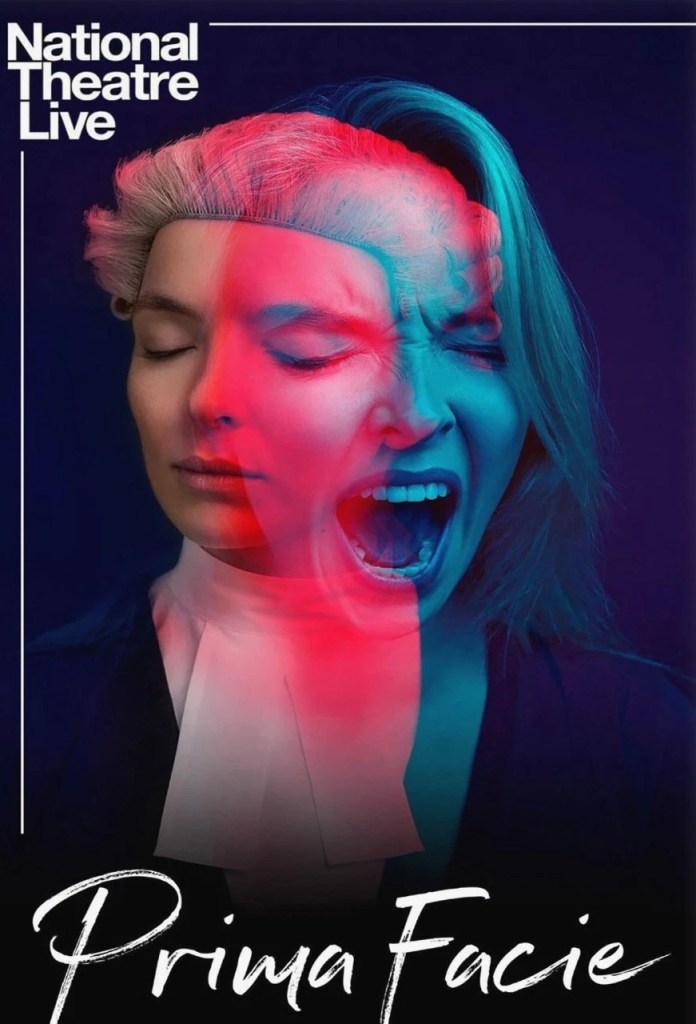
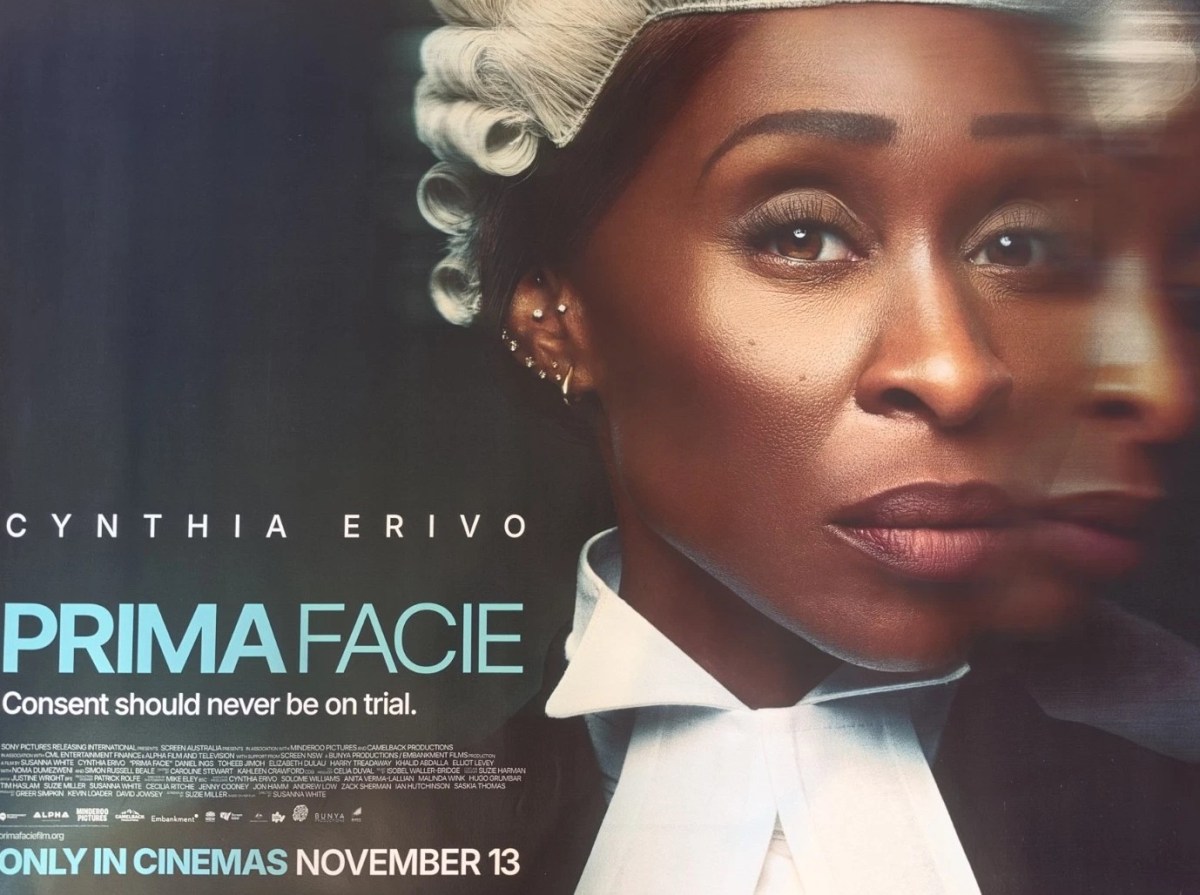
Prima Facie is the less simplistic in its conclusion because – as the Russell Brand court case has shown – the victims of sexual violence are often hung out to dry by the legal system. In this case the victim, ambitious young lawyer Tessa (Cynthia Erivo) – who, ironically, has managed to game the system and get rapists off – doesn’t get justice, once she’s been raped, against her perpetrator, fellow defense lawyer Julian (Daniel Ings).
But in a legal twist she’s allowed to state her case directly to the audience. And that makes the point that rape victims should not be judged on the peripherals of the attack but on the impact of the violence that they will never forget.
Unfortunately, we wait a heck of a long time for this outcome. The movie-making itself is often primitive. We’re assailed by sound and light effects that add little. It also assumes a very low bar of the audience. In case we didn’t know what a thoroughbred was, every time the word is mentioned we cut away to a rearing stallion or neighing one or both.
And for reasons that escaped me, despite being nominated for a top legal award and being poached by a very prestigious law firm, we’re for some reason led to believe that she’s having a hard time job-wise. From beginning life as a one-woman stage play, this has been fleshed out too much, and not in a good way.
What kind of daughter doesn’t know her mother prefers a sugar free fizzy drink? Who thinks, in any case, that the best present a high-earning daughter can bring her low-earning mother is a large bottle of a fizzy drink that’s not called Prosecco. Worse, when the mother gives a mild moan about this lack of observation, she’s the one taken to task.
The voice-overs also get in the way. Show not tell should be the mantra. We can do without the smugness as Tessa explains how clever she is in court. Outside of her testimony, the court scenes are just awful. Unbelievable. When she invokes the legal device of “voir dire” it sounds more like Keira Knightley in Pirates of the Caribbean (2003) when she invokes some ancient pirate law. And in any case, as far as I can make out, she doesn’t use it properly. It’s just a device to let the audience hear what the judge won’t let the jury hear.
There’s another major flaw in my estimation. Tessa never shows the slightest remorse for defending rapists, many of whom, it would appear, get off scot-free because she’s the kind of defense lawyer that can shred a witness (i.e. female rape victim) to pieces.
I never saw the one-woman play by Suzie Miller (who also wrote the screenplay) on which this is based but my guess is the film robs it of the intensity that brought acting awards to Jodie Comer. Director Susanna White (Our Kind of Traitor, 2016) should have known better and brought much more to the filmization than rely on the get-out-of-jail-free card at the end.
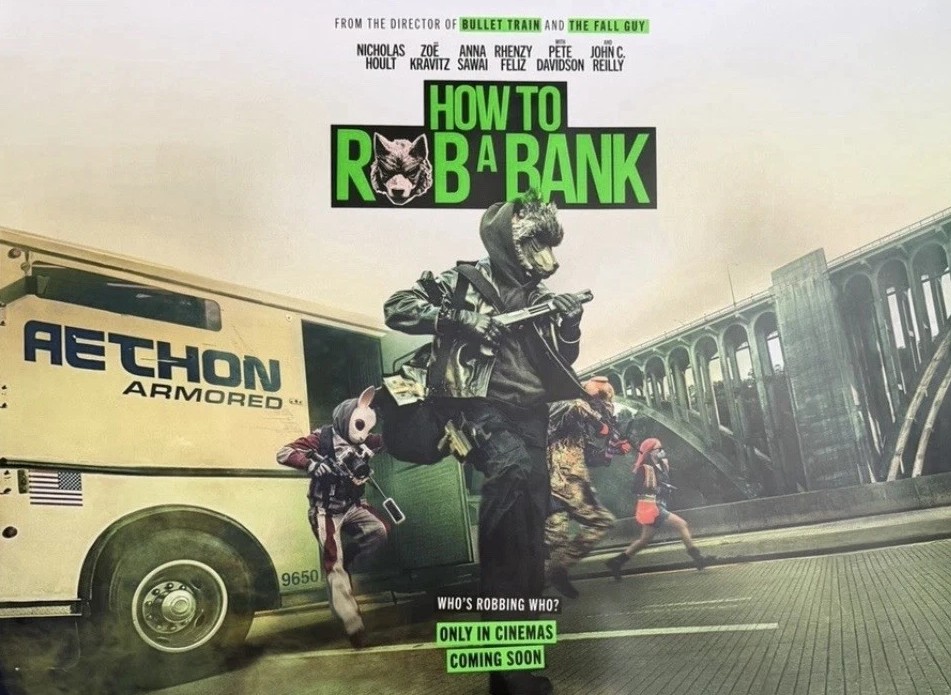
Evil bankers are the target of How To Rob A Bank. But like Donald Trump, they’re an easy – and lazy- target. The idea that if you steal money from banks and give it away to charitable causes and hope that social media response will help create a revolution is simplistic in the extreme. It’s the old mantra – rob anyone because insurance will pay. Yeah, until it’s you that’s robbed or your home burgled and then it doesn’t feel like indulging criminals is such a good idea.
Gang leader Ryan (Nicholas Hoult) has a score to settle with big banks. But a lot of this is flashy Insta or Facebook or Tiktok visuals. The more interesting characters are cop West (John C. Reilly) and reformed crook Reagan (Zoe Kravitz). But the director is having too much fun showing off to develop the characters beyond the most basic characterisation.
But whatever clever detection West and co-opted Reagan show, the cops are always presented as inferior to the crooks. You’d have thought, given the worldwide depression created after the last bank scare, the last thing any sensible person would want would be to bring down the banks, because, in an instant, people would not only lose their life savings but also their businesses and houses they have mortgaged.
If you want rich people to pay more in taxes to alleviate poverty that’s one thing, but to go after the people who make it possible through loans and mortgages for ordinary people to buy their own homes or set up their own businesses, seems absurd in the extreme.
This looks either like director David Leitch (The Fall Guy, 2024) or studio lost their nerve or set out to make a pointless point that would have been better served by a documentary on the banking crash. What was wrong with a bunch of clever bank robbers just being one step ahead of the FBI and the normal mental duel between criminal and cop?
Written by debutant Mark Bianculli.
The flashiness and the social media bombast get in the way of creating tension. This is far better made than Prima Facie but with a lot less to say.

