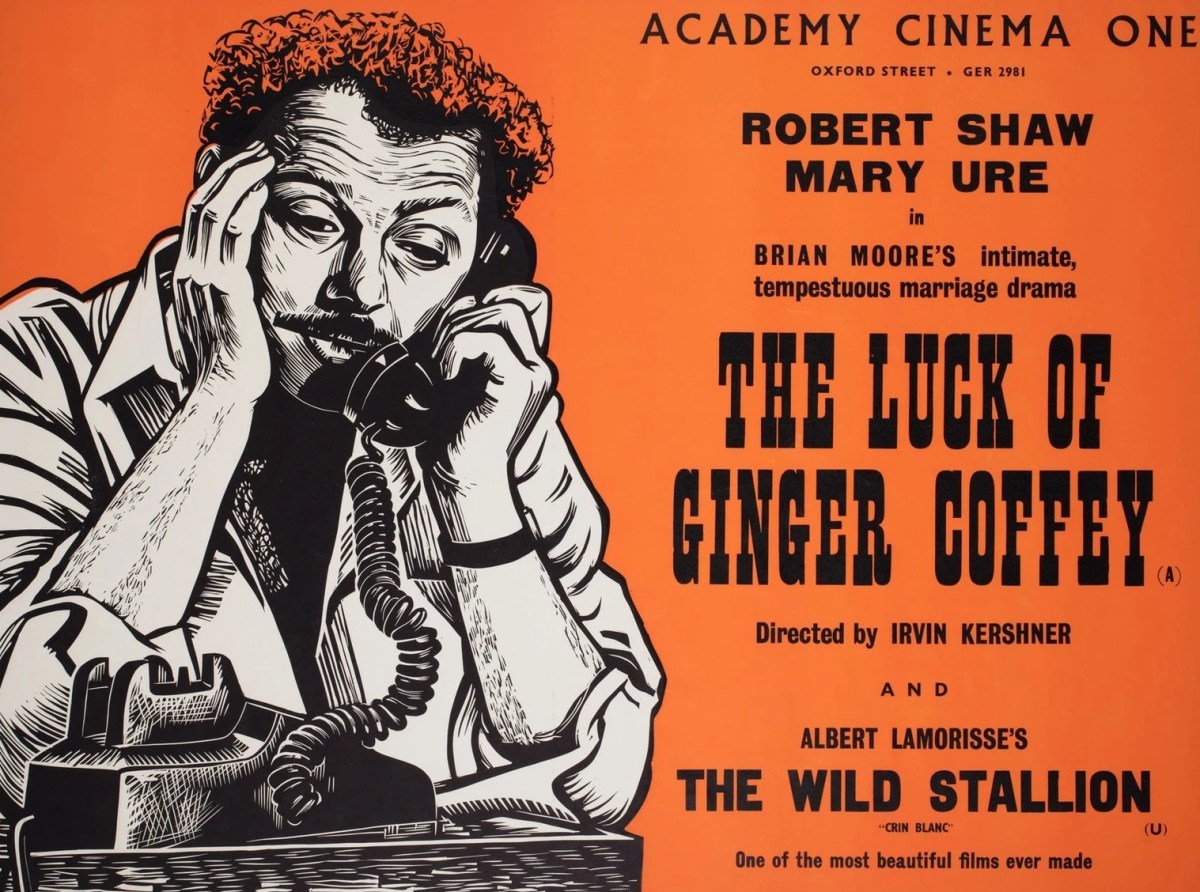
The Luck of Ginger Coffey (1964) ***

The feckless in movies usually have charm to see them through. The titular Ginger (Robert Shaw) is remarkably deficient on that front. He’s the wishful-thinker par excellence though his wishes are off the scale and he seems to be also deficient on the thinking front. After 14 years in the Army in Ireland, he’s emigrated with wife Vera (Mary Ure) and daughter Paulie (Libby McLintock) to Canada where he has notably failed the make the grade.

He’s eminently employable, just not at the type of job to which he thinks he is entitled, if not directly in the managerial line then something where promotion is guaranteed. He’s always got an excuse for quitting a job after a few weeks.
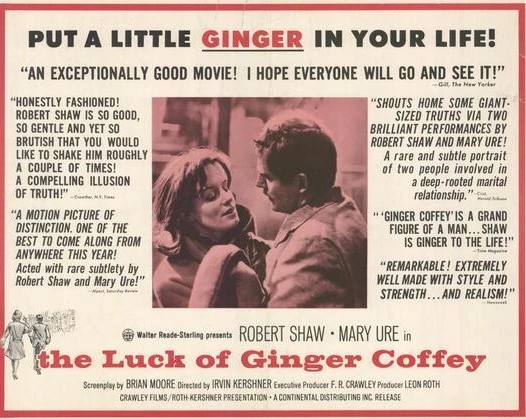
This would fall into the “kitchen sink drama” sub-genre except that Ginger is not exactly on the breadline and if poverty threatens it’s through his own self-destructive and selfish tendencies. His wife has given up so Ginger has to lie to her about having already bought the boat tickets home.

He’s so unsympathetic, self-deluded and dishonest that you are virtually shouting hurrah for Vera when she takes up with another man, Joe (Tom Harvey), a journalist and ostensibly Ginger’s best friend. That shocks him out of his malaise, and he takes up a job delivering diapers. Even getting in at the bottom of the newspaper business, working as a proofreader, isn’t enough for his inflated ambition. But he’s been kicked out his apartment, sleeping now at the YMCA. Further humiliations ensue, sufficient for him to accept his shortcomings and try to change.

While he’s confident in his own potential, nobody else is and the movie basically trudges along with him until he comes to his senses. This isn’t an emigrant’s tale in the normal cinematic sense because he’s not ostracized because of his nationality, not barred from jobs, in fact there’s a whole system set up by the Government to help him find a job.
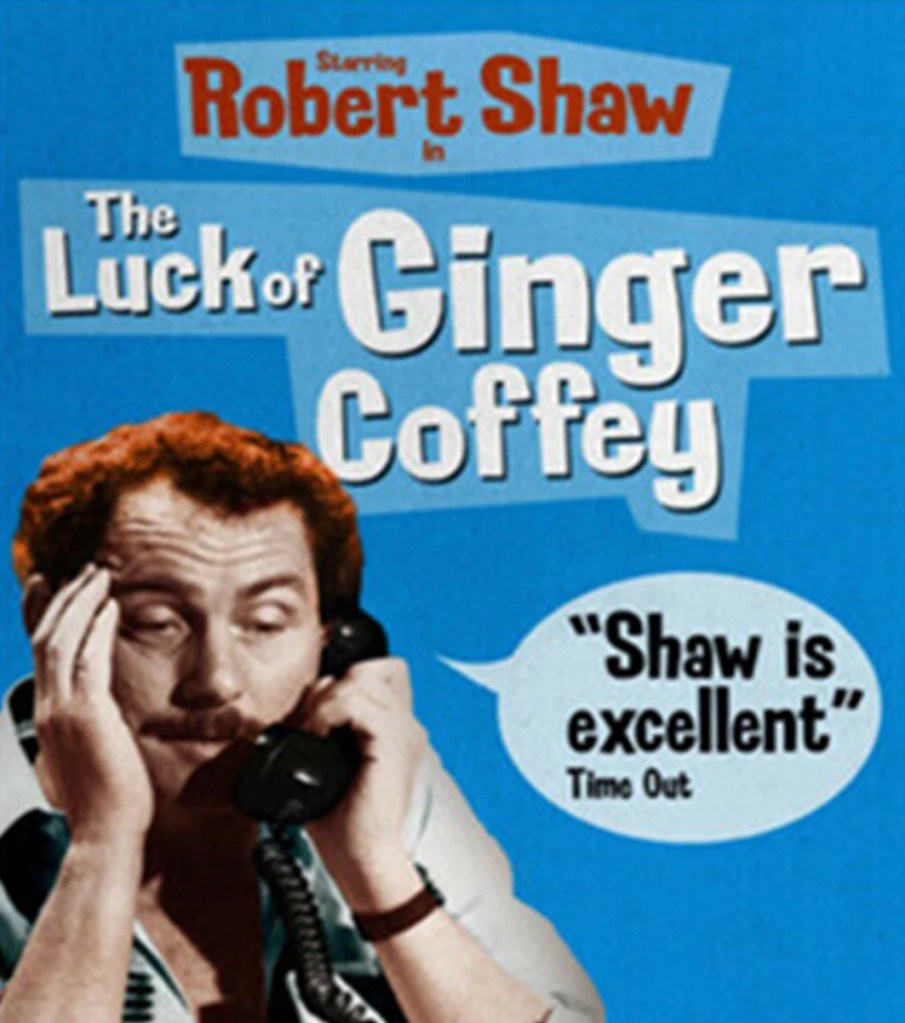
It takes his wife quite a while to cotton on to his constant deception

Quite why such a downbeat picture ever got made is a mystery. The novel by Brian Moore, on which it was based was certainly a literary and commercial success, and it was funded by Frank Crawley, possibly the biggest of the Canadian independents, on a $500,000 budget. It ended up on arthouse release in the UK.

Richard Harris was originally nailed-on for the part but he swapped it for Sam Peckinpah’s Major Dundee (1965). Harris would have brought more immediate physical energy and a sense of danger to the role, rather than the sense of an oaf just bumbling along.

Possibly the best thing about it is the realism. Yes, it’s really the star crossing icy roads, just avoiding oncoming traffic in scenes that were clearly set on Montreal roads and not on the safety of a sound stage.

Shaw and Ure were married, so were both tagged as rising stars, the husband coming off From Russia with Love (1963), but there was argument to put that she was already the bigger marquee name after Look Back in Anger (1959), Sons and Lovers (1960) and female lead in The Mind Benders (1963).

This really had not much going for it other than worthiness, the chance for a decent film with some reasonable names to come out of Canada, and to give another rising star, director Irvin Kershner (A Fine Madness, 1966), a chance. Written by Moore (Torn Curtain, 1966).

Well-made but too dour for me.

Amazon Prime has it. In fact, it was recommended to me on that channel because I had watched Two Gentlemen Sharing.
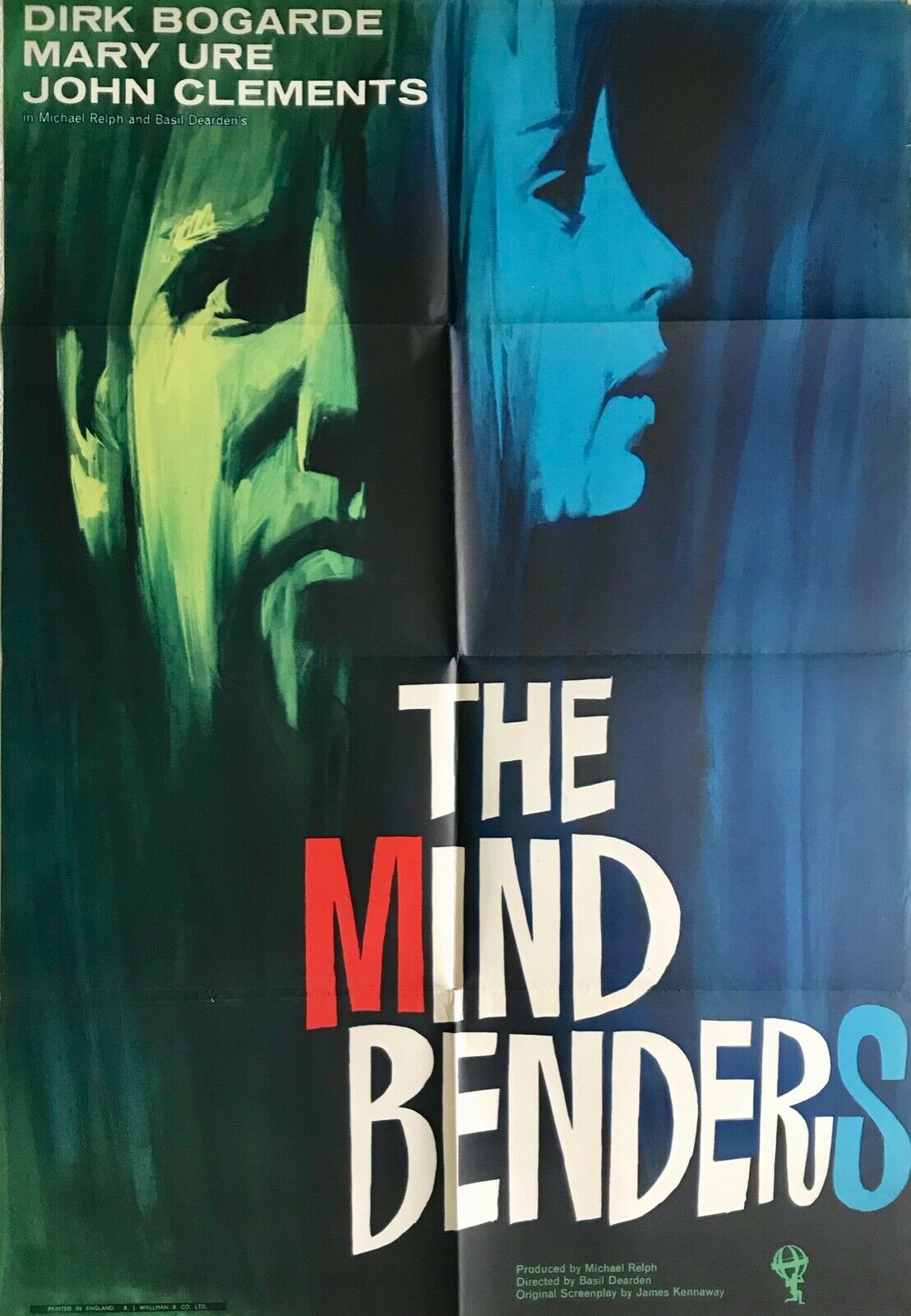
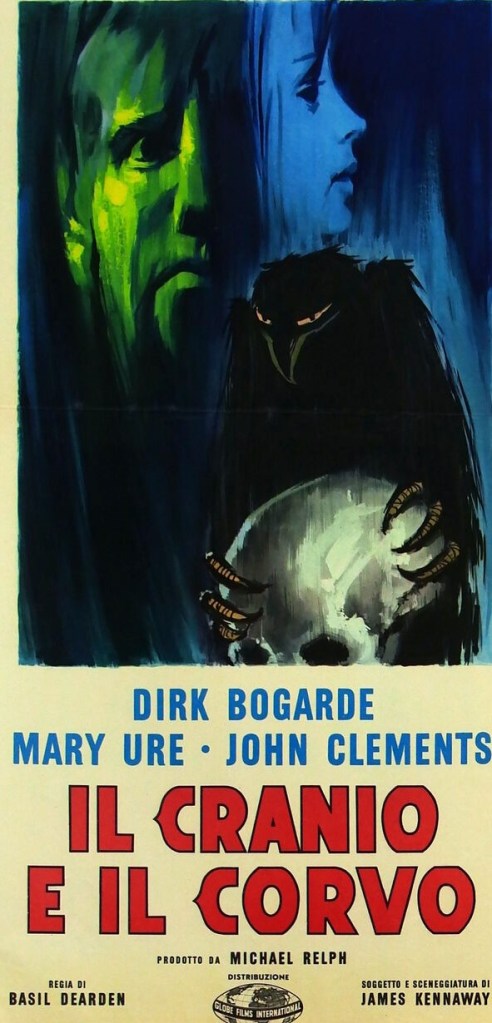
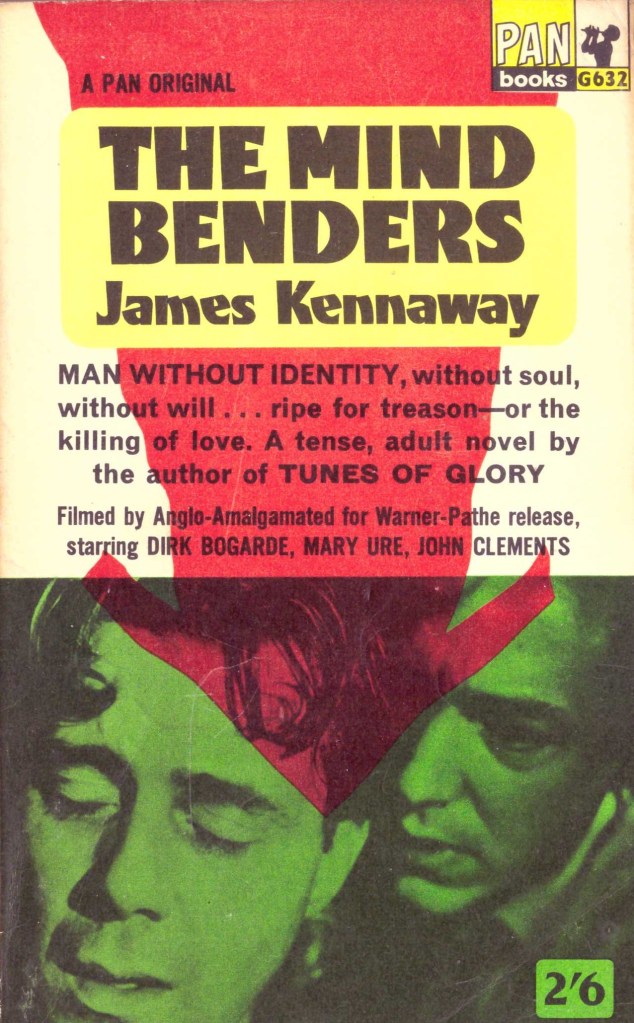
The Mind Benders (1963) ****

As far as Hollywood was concerned brainwashing was ascribed to foreigners intent on disrupting democracy as with The Manchurian Candidate (1962). Such inherent hypocrisy will come as no surprise since scientists at McGill University in Canada had been carrying out C.I.A.-funded sensory deprivation experiments in the 1950s. Where the John Frankenheimer paranoia thriller went straight down the political route, The Mind Benders, based on the McGill tests, is more interested in the personal cost, although ruthless politicians and unscrupulous scientists still abound.

The suicide of renowned scientist Professor Sharpey (Harold Goldblatt), possibly selling secrets to the Russians, sends MI5 agent Major Hall (John Clements) to Oxford to investigate sensory perception tests. The guinea pigs have all been volunteers, keen to expand knowledge of human mental endurance. The latest volunteer, Dr Longman (Dirk Bogarde), is on leave recovering from his participation. To avoid branding Sharpey a traitor it is proposed that he was actually brainwashed by long immersion in a water tank and subsequent sensory deprivation.

In order to prove the point, Longman, a driving force behind the research having shifted the focus from sub-zero temperatures to water, is the unknowing guinea pig, a jealous colleague Dr Danny Tate (Michael Bryant) who fancies his wife Oonagh (Mary Ure) suggesting that the experiment would be deemed a success if Longman was turned against his wife. It transpires that sensory deprivation has already had an effect on Longman, his wife complaining his lovemaking has grown rough.

The callousness with which this stage of research is undertaken, the disregard not so much for human life but emotion and love, in a country that prides itself on honor and fair play, sets up a different register to the Frankenheimer film where at issue is the assassination of the most important person in the United States. Longman, fed lies about his wife’s infidelity, becomes a different character, distrustful, aggressive, embarking on an affair of his own, putting in jeopardy the happiness he has constructed.

Ahead of its time in analyzing the importance of the hidden persuaders (as television advertising would later be termed) and lacking a thriller element to drive the narrative, nor devised as a self-indulgent experiment like the later Altered States (1980), nonetheless this achieves tremendous power through the deliberate dislocation of individual life, personalizing in a way that others in the paranoia thriller genre do not the dangers of tampering with the unknown.

And perhaps because it is so British, with the Longman family living in a big rambling house, the children involved in myriad games, the scientist a loving husband, that the outcome is so horrible. Brainwashing was seen as a form of torture, with subjects susceptible to ideas they may have once opposed, almost forming a new identity.

The structure here sucks in the audience. It’s ostensibly initially about spies, outing a traitor, a notion that every British citizen would go along with, the film especially relevant in the wake of the Kim Philby affair the year of the film’s release, when the idea of “spies among us” took root. Then we move on to a scientific account of the deprivation experiment, the first one taking place in the Arctic Circle, footage of a volunteer emerging in a fugue state. When Longman does another experiment, himself the guinea pig, to show what is involved, the various changes the body and mind undergo, it still seems far removed, captivating and intriguing though it may be, from any human horror.

James Kennaway wrote the movie tie-in paperback based on his original screenplay.

But when Longman becomes the unknowing victim, the audience becomes privy to the worst aspects of the brainwashing. The personal price paid would put every member of the audience off endorsing its use.

This is a very measured film, cunning in its construction, that puts the viewer at the heart of the story. Without spelling out the psychological terror, the implications are nonetheless clear, a nightmare from which there is no escape, no guarantee the process could be reversed, men turned into different personalities at the behest of government for who knows what end.

Dork Bogarde (Hot Enough for June, 1964) does this kind of role so well, the well-meaning person whose life is thrown into disarray. Mary Ure (Where Eagles Dare, 1968) is superb as the fun-loving wife, fighting for her husband, Michael Bryant excels as the sly friend, determined to win his wife by illicit means. Michael John Clemens only made two films this decade and his portrayal of the MI5 agent, as dispassionate as any scientist, putting country above individual, is almost as frightening as the experiment he provokes.

The idea came from an original screenplay by Scottish novelist James Kennaway (Tunes of Glory, 1960) who had come across the Canadian research. He was adept at placing stories within institutions in some respect with their own sacrosanct traditions and while the army barracks of Tunes of Glory could not be further removed from Oxford academe both reek of unchallenged hierarchy, of sacrifice to a cause.

Basil Dearden (Woman of Straw, 1964) directs this brilliantly, the attractive countryside location in contrast with the gloom of the experimental rooms, the warmth of a happy marriage evaporating in the face of insidious threat. He returned to the theme of identity in The Man Who Haunted Himself (1970).

This is one of these films that lives on in the mind long after the viewing has ceased and will  strike a contemporary note where identity, and its shifting values, is such an issue.

Custer of the West (1967) ****

Far grittier than I expected for a portrayal of one of America’s greatest, if flawed, western heroes. Far darker, with a two-fisted take on the endemic corruption at the highest level that fuelled the Indian Wars. Revisionism with a punch. And bold enough to turn Cinerama tropes on their head.

We should deal with the last first because that reveals the extent of the bitterness that seeps through a biopic in which a soldier’s great skills are put to unwarranted use. You may recall that from its earliest days, Cinerama relied on thrills of a specific nature, one that like 3D put  viewers in the driver’s seat, only to scare the pants off them. You were always racing towards danger, whether that be down the rapids in How the West Was Won (1962) or downhill along twisting roads in The Battle of the Bulge (1965). There always seemed a runaway train to hand. Whatever, it was just a thrill ride, occupants escaping unhurt.

Not so here. The men on the runaway wagon have been tied to it. It careens downhill all right, at one point from an upside down point-of-view, but it ends up over the cliff, no escape for the men. A soldier rides a log river to escape Native Americans. He manages that but is killed on dry land by an arrow all the same. A runaway train falls into a burning bridge. The normal thrills, then, with a realistic edge.

The reward for the great hero, Custer (Robert Shaw), gallant leader of sixty dashing cavalry charges during the Civil War, is a commission with the 7th Cavalry in the Dakotas on a mission described by General Sheridan (Lawrence Tierney) as “plain robbery,” the blatant theft of land from Native Americans.

That’s virtually the first scene, a brutal analysis on the American West, greedy land-guzzling settlers requiring protection, a soldier in obeying orders tacitly agreeing to wage an unholy crusade, not a justified war against slavery.

And Custer doesn’t inherit your John Ford cavalry unit, where every drunk has redeeming features, if only to provide some comedy. His second-in-command, Major Reno (Ty Hardin) is an alcoholic, nearly an entire battalion of malingerers on sick parade. Although later spouting chivalrous nonsense about hating machines, it’s the cannon Custer brings to bear on the enemy that provides initial victory, permitting the boast that 255 men conquered the Cheyenne nation. But, of course, such triumphalism proves premature, the Cheyenne and Sioux taking revenge on defenceless towns.

Custer is presented with ambivalence, but granted something of a free pass given his intolerance of alcohol, antipathy to the war and whistleblowing that points the finger at government officials and corrupt businessmen. On the other hand he is the chief marketeer of his own image, vainglorious, not least in his determination to win the Battle of the Little Big Horn on his own, arriving a day ahead of other assigned forces.

He is both ruthless and comforting. Instead of upbraiding a mutinous soldier for stealing water during a trip over the desert, he tells him to wait till sundown when his thirst will be quenched. But, despite repeated broken treaties, he lacks sympathy for Native American chief Dull Knife (Kieron Moore) for failing to comprehend that a superior power will always win. There’s a bit too much crammed into a relatively short running time. A Russian appears to point out that the United States is negotiating to buy Alaska. Railroads enter the equation and an early version of a tank. An anonymous prospector has gold teeth because he likes “the taste of gold.” Robert Ryan makes a cameo appearance as a deserter.

All that is redundant when the venality confronting Custer is dealt with in one brilliant scene when gold prospectors start digging up the fort in the hope of finding the precious mineral.

I’m no expert on the historical accuracy but by and large whether this portrayal of the life and times of General Custer is actually true it certainly rings true.

British actor Robert Shaw (Battle of the Bulge), with his mean shifty eyes and trademark tight-lipped side-of-the-mouth delivery, doesn’t quite bring enough shade to the characterisation, but possibly that’s the fault of the screenplay, which has cast him, outside of the final calamitous engagement, as even more heroic in the political arena than on the battlefield. As his wife, Mary Ure (Where Eagles Dare, 1968) appears only fitfully and has little to do. Lawrence Tierney (Reservoir Dogs, 1992) is excellent as the self-serving Sheridan. Just like the later Cinerama epic Krakatoa East of Java (1968) this suffers from lack of recognizable stars.

Director Robert Siodmak (The Crimson Pirate, 1952) creates a literate, revisionist, western that ensures intelligence is not swamped by action. Bernard Gordon (Krakatoa East of Java) and Julian Zimet (Circus World/The Magnificent Showman, 1964) are credited with the screenplay.

A worthy attempt to use a legend to explore the greater issues of the day.

Discover WordPress

A daily selection of the best content published on WordPress, collected for you by humans who love to read.

The Atavist Magazine

by Brian Hannan

WordPress.com Blog

News, Tips & Website Tutorials