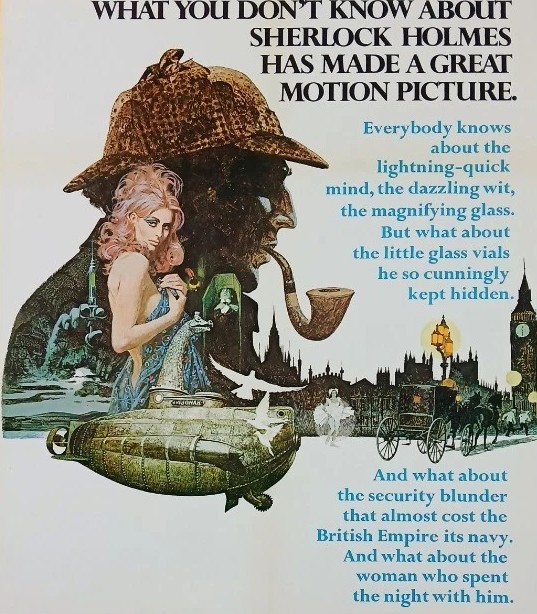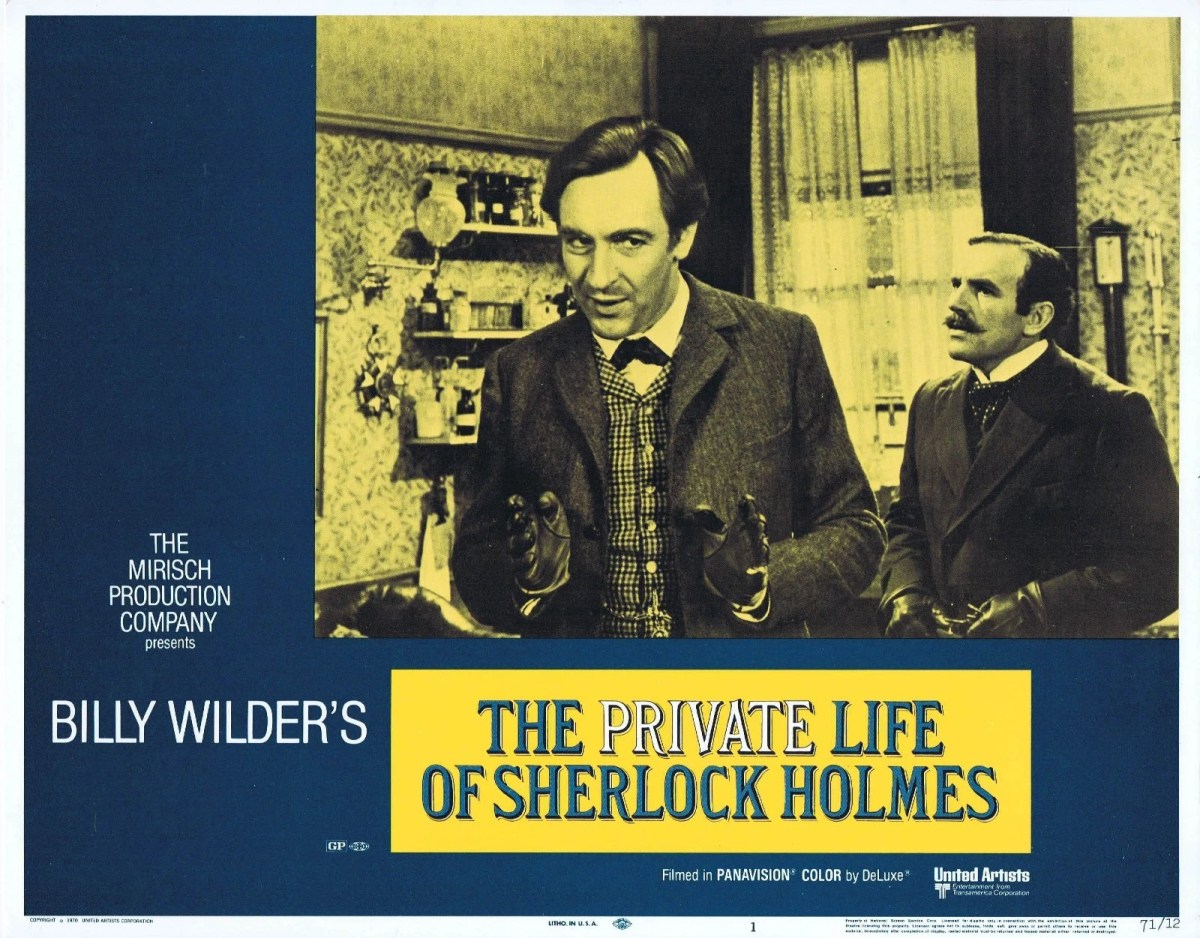
Behind the Scenes: “The Private Life of Sherlock Holmes” (1970)

Although Billy Wilder had written a script based on The Life of Sherlock Holmes (in fact he had three versions of the project running in his head, initially conceiving of the movie – twice – as a musical) by the time it came round to seeking funding in the early 1960s  he was not originally considered as its director. Mirisch was looking to contain the budget to around the region of $2 million, which would rule out any big star. However, at this early stage of the production, there were issues with the Conan Doyle Estate which was in the process of firing up other movies based on Sherlock Holmes, A Study in Terror (1965) being the most recent and also had another Conan Doyle property The Adventures of Gerard (1969) in mind.

A Study in Terror had been the brainchild of producer Henry Lester (who was also behind The Adventures of Gerard) and perhaps to general astonishment these days Mirisch had  agreed Lester would be allowed to make more Sherlock Holmes pictures as long as they remained very low-budget, on the assumption, presumably, that the marketplace would treat them as programmers rather than genuine competition.
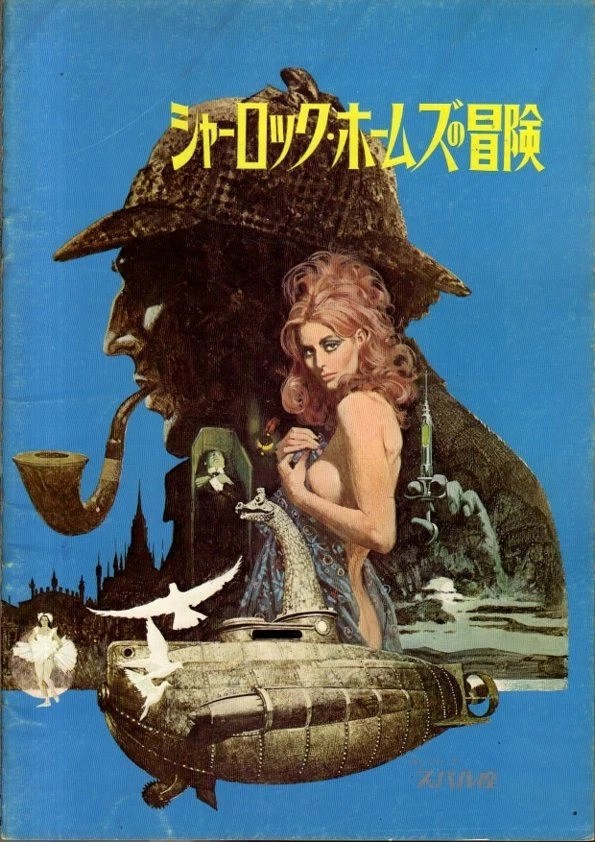
However, Mirisch and UA retained the upper hand as regards the Conan Doyle Estate and “could cut him (Lester) off at such time as we have made definite plans to proceed.”

There was another proviso to the deal. The Estate would agree to forbid any further television productions unless Mirisch decided it wished to go down the small screen route itself. It was odd that Mirisch had eased Billy Wilder out of the frame given the mini-major had enjoyed considerable success with the director on Some Like it Hot (1959) and The Apartment (1960), a commercial partnership that would extend to The Fortune Cookie (1966).

Instead, Mirisch lined up British director Bryan Forbes who would be contracted to write a screenplay based on the Wilder idea. The sum offered – $10,000 – was considered too low, but it was intended as enticement, to bring Forbes into the frame as director. If Forbes refused to bite, “the only other name suggested and agreed upon was that of John Schlesinger.”  Although David Lean was mooted, UA were not in favour. Mirisch didn’t want to risk paying for a screenplay before there was a director in position.

The offer of the Sherlock Holmes picture was seen as a sop to Forbes. Mirisch had canned The Egyptologists, a project which Forbes believed had been greenlit. And why would he not when he was being paid $100,000 for the screenplay. In bringing the project to an untimely close Mirisch hoped to limit its financial exposure to two-thirds of that  fee.
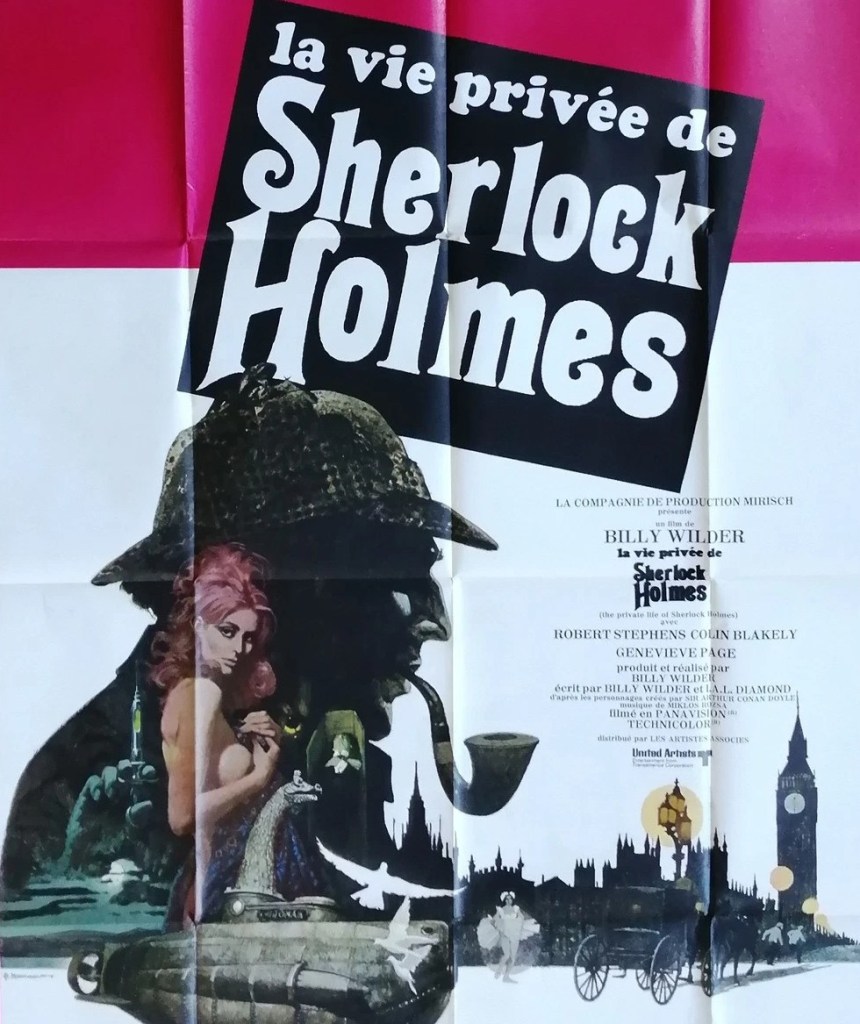
Should Forbes balk at Sherlock Holmes, he was to be offered The Mutiny of Madame Yes, whose initial budget was set at $1.5 million, plus half a million for star Shirley Maclaine. Another Eady Plan project, this was aimed to go before the cameras the following year. If Forbes declined, then Mirisch would try Norman Jewison with Clive Donner and Guy Hamilton counted as “additional possibilities.”

As for Billy Wilder he had much bigger fish to fry. He was seeking a budget of $7.5 million to adapt into a film the Franz Lehar play The Count of Luxembourg to pair Walter Matthau and Brigitte Bardot. Should Matthau pass, Wilder would try for Cary Grant (whose retirement had not yet been announced) or Rex Harrison. Both sides played negotiation hardball. UA currently in the hole for $21 million for The Greatest Story Ever Told (1965) and Mirisch, having pumped $13 million into the yet-to-be-release Hawaii (1966), didn’t want to commit to another unwieldy expensive project.

So Mirisch insisted the project advance on a “step basis” allowing UA to reject the project after seeing the screenplay. Wilder countered by insisting that if it went into turnaround he, rather than the studio, would have the right to hawk it elsewhere (generally, studios tried to recover their costs if a movie was picked up by another studio). But Wilder was also in placatory mood and even if UA rejected this idea he was willing to work with the studio on a Julie Andrews project called My Sister and I.

However, UA and Mirisch were all show. “After Billy left the meeting,” read the minutes, “it was agreed we would not proceed with The Count of Luxembourg since we did not want to give Billy the right to take it elsewhere if United Artists did not agree to proceed.” Harold Mirisch was detailed to give Billy the bad news, but use a different excuse.

Initial casting had mooted Frenchman Louise Jourdan (Made in Paris, 1966) as the detective with Peter O’Toole or Peter Sellers as Dr Watson. Jourdan had worked, anonymously as it happened, for Wilder before, providing the uncredited voice for the narrator of Irma La Douce (1963).

By 1967, the Sherlock Holmes business was heating up. MGM was planning an adaptation of Broadway musical Baker Street and Paramount had on the cards The Man who Was Sherlock Holmes. Mirisch was also ramping up production, with $20 million invested in five properties, its busiest period ever.

Although Walter Matthau had been mooted for a supporting role, presumably Mycroft Holmes (the part ultimately played by Christopher Lee), wilder had decided the new picture would have no stars, to keep down the mushrooming budget – the eleven-month shoot would cost $10 million – and so that audiences would not come to the film with preconceived ideas. A future Holmes, Nicol Williamson (The Seven Per Cent Solution) was considered but rejected in favor of Robert Stephens (The Prime of Miss Jean Brodie, 1969) and Colin Blakely (Alfred the Great, 1968). All three effectively qualified as unknowns though by the time the movie appeared, Stephens, by default, had a stronger marquee name.

Although it was know that Rex Harrison (My Fair Lady, 1964) was desperate to play Sherlock, wilder stuck to his guns and opted for the lesser-known names. James Robertson Justice (Mayerling, 1968) and George Sanders (The Best House in London, 1969) were originally tapped for the role of Mycroft but were replaced by Christopher Lee (The Devil Rides Out, 1968).

There was extensive location work including several sequences set in Scotland. Baker Street was reconstructed on the Pinewood lot, where filming began on May 5, 1969.

Problems began after Mirisch viewed the first cut which ran to an epic three hours and 20 minutes. After a disastrous preview, Walter Mirisch kicked Wilder off the picture and carved one-third out of the picture, restructuring it, removing several episodes where Holmes solves various crimes and focusing on the Russian ballerina subplot and then the Belgian woman looking for her missing husband which takes Holmes to Loch Ness.

Naturally, the deletions altered the entire tone of the picture but as it stood it resembled little more that half a dozen 30-minute episodes, the kind of thing audiences could get for nothing on television.

United Artists did its best to make a big splash. It opened in November 1970 at the Radio City Music Hall in New York, the biggest and most prestigious house in the U.S., and that was to be followed by a Xmas release. However, the result at the Music Hall were deemed “dame” – just $150,000 from the 6,000-seat auditorium. Elsewhere it faltered, a “dim” $9,000 from five houses in Baltimore, a “pale” $5,000 in Boston, a “dismal”  $3,500 in Cleveland and a “light” $5,000 in Kansas City. It came nowhere near covering its costs.

A gala royal premiere at the Odeon Leicester Square – the biggest and most prestigious cinema in London’s West End – did little to bring in the public and it opened to a distinctly underwhelming £7,000.

SOURCES: United Artists Archive, Wisconsin Center for Film & Theater Research; Walter Mirisch,  I Thought We Were Making Movies, Not History (University of Wisconsin Press);  “Billy Wilder Return from Great Silence,” Variety, May 19, 1965; “New Sherlock Holmes Pix,” Variety, January 21, 1967; Box office – Variety November 1970-January 1971.
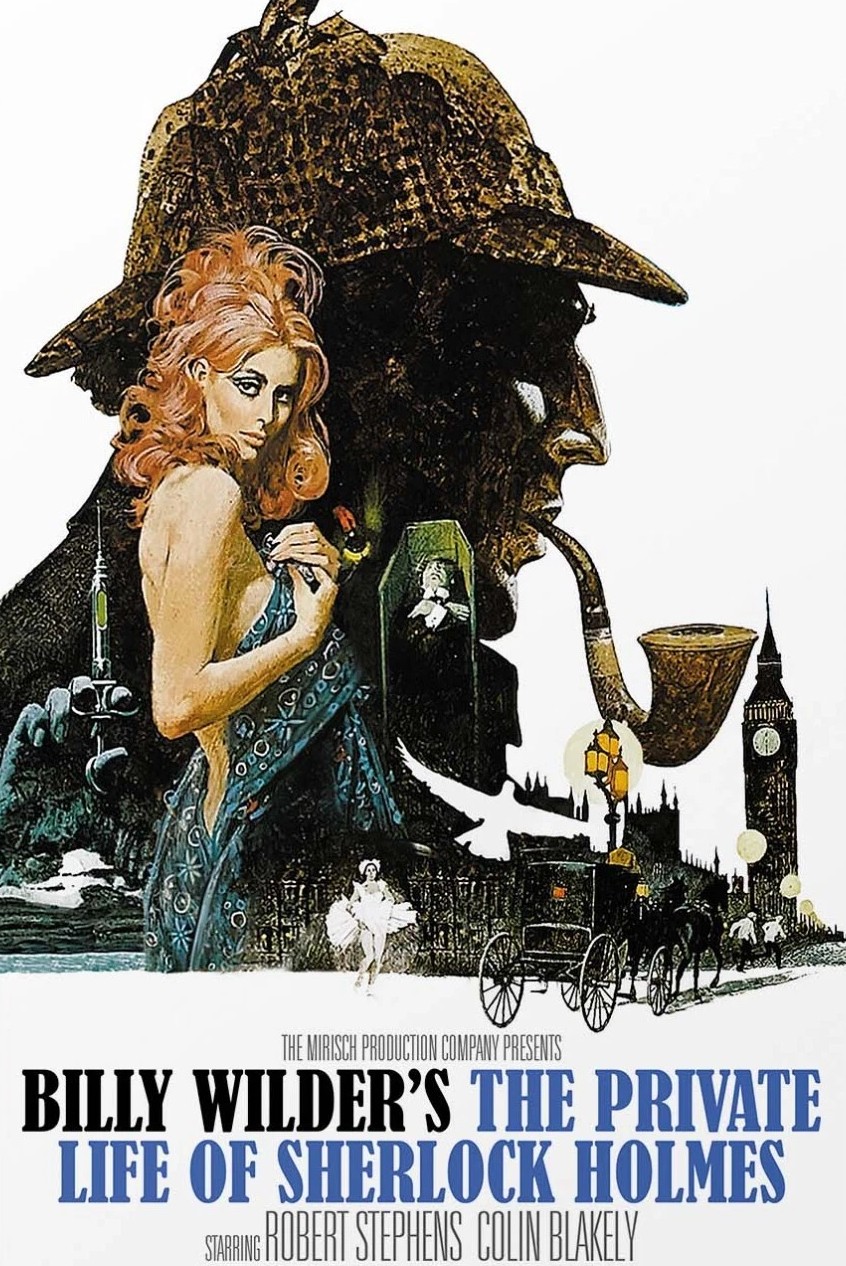
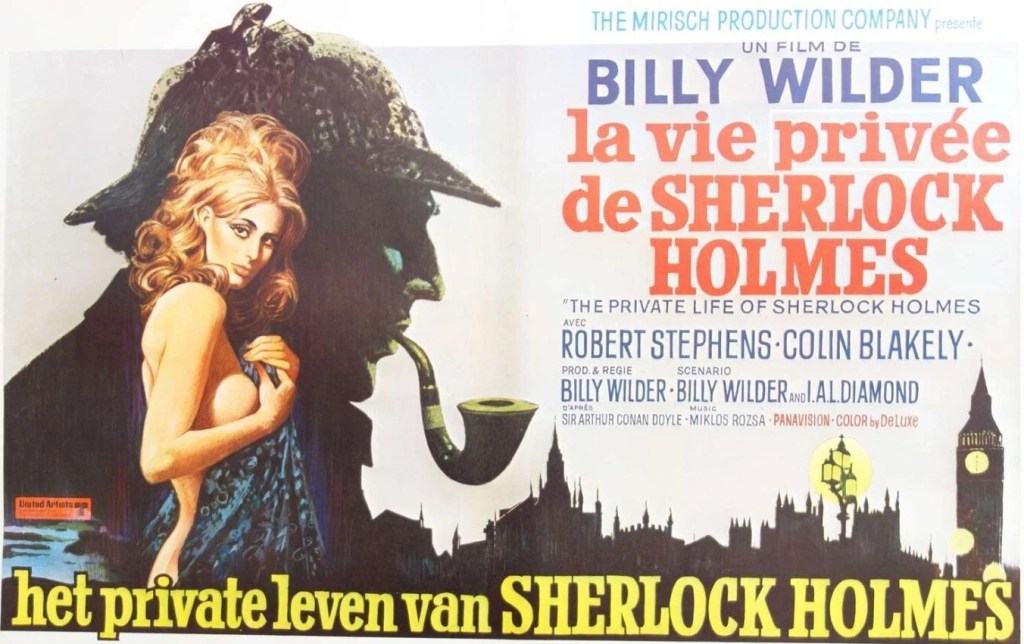
The Private Life of Sherlock Holmes (1970) **

The word is that you can’t blame director (and producer and co-writer) Billy Wilder for this disaster because it was taken out of his hands by studio United Artists and drastically re-cut. But when you learn that Wilder’s version ran three hours and counting and even in the shortened version looks a preposterously bad bet, you can see why UA felt the need to take charge.

Wilder had been the poster boy for sexual identity after the frolics of Tony Curtis and Jack Lemmon as cross-dressing musicians hankering after Marilyn Monroe in Some Like it Hot (1959). Whether Sherlock Holmes was a closet gay would have been a minor footnote to the author’s massive fanbase, and to put it so upfront looks, especially for a contemporary audience, like a massive misstep.

The first part of the movie largely consists of Dr Watson (Colin Blakely) being accused of over-mythification of Sherlock Holmes (Robert Stephens). Turns out (according to the Wilder version) that Holmes is a couple of inches shorter than Watson (his narrator in the Conan Doyle stories) had claimed and never wore the deerstalker. Blimey, lock that man up. Shock horror! Holmes’s other predilection, a regular injection of cocaine (I’ve no idea what a seven per cent solution would be in today’s money) is no invention, however.

But whether Holmes is attracted to the opposite sex forms the focus of the first section of this (even at just over two hours) unwieldy movie. A famous Russian ballerina Madame Petrova (Tamara Toumanova) wants to make him the father of her child. The only way Holmes can get out of this predicament is to pretend to be gay.

Eventually, after exhausting this joke (!), we get the proper mystery. Mysterious Belgian Gabrielle (Genevieve Page), just fished out of the Thames by a passing cab driver, turns up soaking wet at 221B Baker St and (eventually) Holmes is inveigled to find her missing husband.

In other circumstances this would have probably been a relatively straightforward case for the ace detective although there would have been, of necessity, ample opportunity for him to demonstrate his special set of skills. But this being of a more lumbering project, the investigation involves monks, midgets and the Loch Ness Monster. Yes, you heard right.

That should have killed off the project at the start. Like whether Holmes is gay or not, the Loch Ness Monster is another minor footnote. Apart from being a tourist attraction and keeping the conspiracy theorists going and competing with Roswell for public attention, it’s the dumbest of notions, even if, as the audience will expect, that it’s not the real monster (if there is such a thing) but a Macguffin of considerable dimensions.

I might have been happy to go along with a narrative that ran close to spoof except I didn’t take to either of the principal actors. I’ve no idea what made Billy Wilder believe that Robert Stephens (The Prime of Miss Jean Brodie, 1969) would make a good Holmes. I’m not one of those traditionalists who believe a specific actor was the quintessential Holmes, but it’s a part that’s far easier to get wrong than get right. And I think Stephens with his wafting loose style got his characterization spectacularly wrong.

Colin Blakely (Alfred the Great, 1968) is one of those actors who generally knows how important it is to rein it in, because if the ham in him is given an inch he will most certainly take a mile and he’s so over-the-top you think he’s going to disappear over the nearest horizon.

This was a huge flop and no wonder. And Billy Wilder, given he wears the three hats vital to a film’s creativity, must take the blame. It’s a rubbish story badly done. Like any other great director, we tend to remember Wilder’s successes – Hollywood drama Sunset Boulevard (1950), media excoriation Ace in the Hole (1951), POW camp thriller Stalag 17 (1953), comedy The Seven Year Itch (1955), Some Like it Hot and sexual satire The Apartment (1960) – and we tend to forget that he often, especially in the 1960s, fell flat on his face. One Two Three (1961) and Kiss Me Stupid (1964) were colossal miscalculations, the result as much of miscasting as of script.

This stands as even worse than that pair. Wilder had got way too big for his boots and at a point where a studio had to cut him down to size. But even the truncated version isn’t much cop. And the only thing that keeps it from attracting a one-star review is that it’s better than Orgy of the Dead (1965).

Steer clear.

Behind the Scenes: The Mirisch Meltdown

Independent production company Mirisch had enjoyed spectacular success in the 1960s both at the box office and the Oscars. Commercial successes included The Magnificent Seven (1960) and sequels, The Apartment (1960), West Side Story (1961), The Great Escape (1963), Hawaii (1966) despite its huge budget, and In the Heat of the Night (1967). Walter, who did the legwork on the production side – his brothers Harold and Marvin were more backroom boys – picked up the Oscar for In the Heat of the Night and two other films he was involved in won Best Picture. Their films were solely distributed through United Artists, with whom they had a profitable relationship for most of the decade. But cracks were beginning to show in the 1970s and in the final reckoning after a meltdown at the box office Mirisch and UA went their separate ways in 1974. Harold had died in 1968 and Marvin pulled back, leaving Walter to go it alone with Universal, with some success – Midway (1976) and Same Time, Next Year (1978).

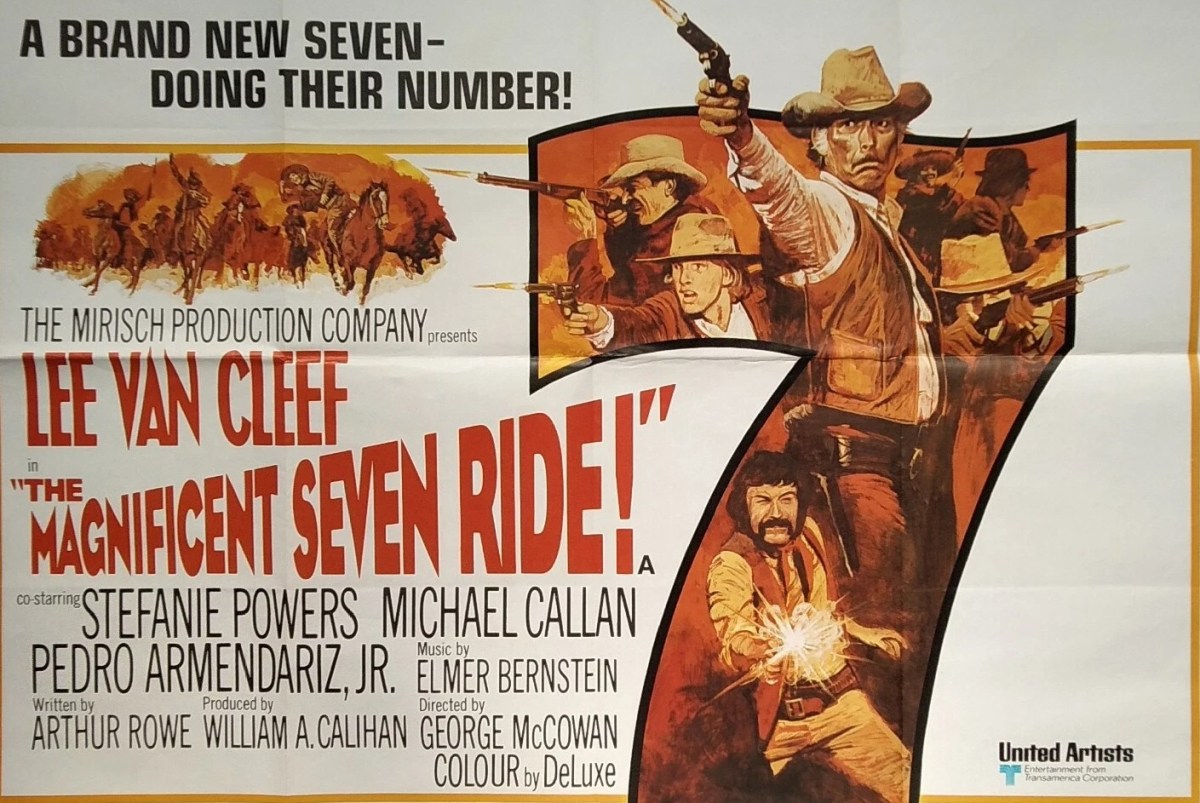
The demise of the original Mirisch came as their business was spiralling out of control. With a total loss of $32.6 million covering 13 films made for United Artists between 1966 and 1972, it was small wonder it spelled the end of the road for the independent company. Norman Jewison musical Fiddler on the Roof, an adaptation of the Broadway hit, was one of only three movies to end up in the black, clocking up $6.8 million profit. Return of the Seven (1966) starring Yul Brynner earned a meager $37,000 in profit from cinema exhibition and its overall profitability of $588,000 depended on $1.6 million from sales to television. The Magnificent Seven Ride! (1972) with Lee Van Cleef only made a small profit of $236,000 thanks to television and even counting in sales to the small screen Guns of the Magnificent Seven (1969) didn’t reach that benchmark.

Television played a significant role in keeping losses down to $32.6 million. Fiddler on the Roof went to television for $3 million, The Hawaiians / Master of the Island (1970) starring Charlton Heston, a sequel to Hawaii, and They Call Me Mister Tibbs for $1.3 million and The Organization $1.1 million, respectively, the latter two films relying on Sidney Poitier reprising his role from In the Heat of the Night.

Various deductions, not always obvious to outsiders, come off the top of rentals and television sales. First there are the distribution fees paid to United Artists, then marketing costs, finance, and profit shares – Brynner and Poitier were on percentages as was Jewison (on a whopping 20 per cent), and these were often paid out against overall rentals rather than actual profits.

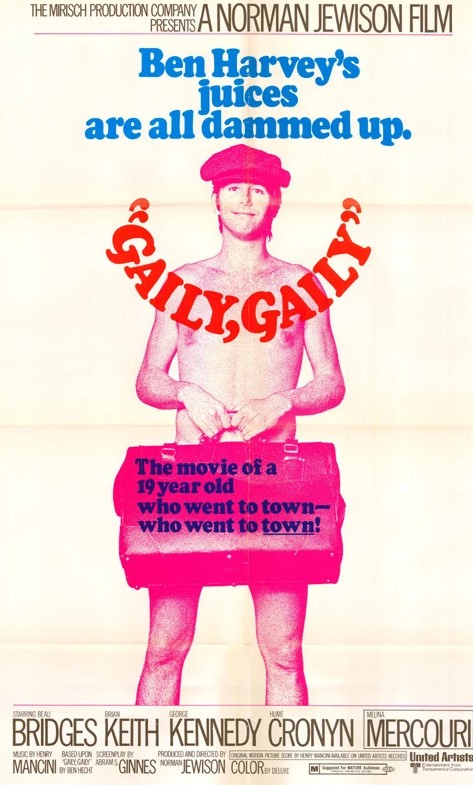
In an alarming shift from the glory days of the 1960s, Mirisch presided over some out-and-out disasters. Jewison’s rites-of-passage Gaily, Gaily / Chicago, Chicago (1969) starring newcomer Beau Bridges (The Fabulous Baker Boys, 1989) in his first top-billed role and Greek Oscar nominee Melina Mercouri (Topkapi, 1964) went completely down the tubes, racking up a colossal $10.3 million loss. The Hawaiians / Master of the Islands directed by Tom Gries (Will Penny, 1968) wasn’t far behind – $8.3 million in the red.

The Billy Wilder (The Apartment) touch couldn’t save The Private Life of Sherlock Holmes (1970) starring Robert Stephens (The Prime of Miss Jean Brodie, 1969) from plummeting to a $7.5 million deficit. George Peppard western Cannon for Cordoba (1970) co-starring Giovanni Ralli (Deadfall, 1968) haemorrhaged $3.1 million. Heist comedy Some Kind of Nut (1969), directed by the renowned triple Oscar nominee Garson Kanin (Where It’s At, 1969) and toplining Dick Van Dyke (Divorce American Style, 1967) and Angie Dickinson (Jessica, 1962) faced a shortfall of $3 million.

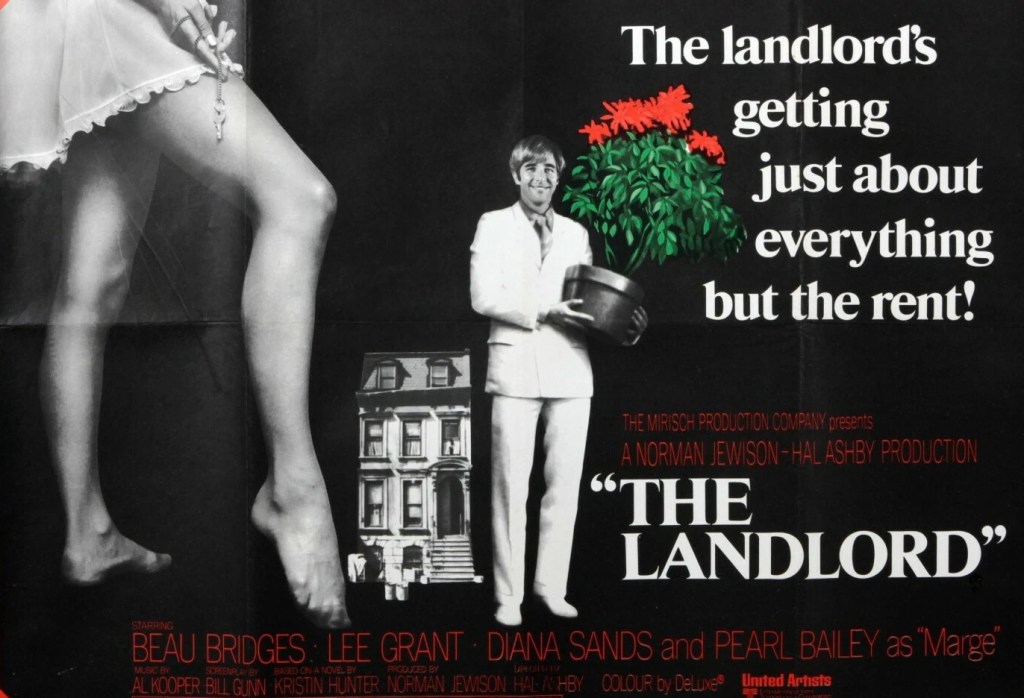
Beau Bridges was also the luckless star of Hal Ashby’s debut The Landlord (1970) which went down to the tune of $2.5 million. School drama Halls of Anger (1970) starring Calvin Lockhart (Cotton Comes to Harlem, 1970) as a tough teacher was $1.8 million in the red. Jacqueline Bisset (Bullitt, 1968) in her first top-billed role in The First Time (1969) wasn’t a big enough attraction to prevent this tumbling into a $973,000 quagmire.

Even Sidney Poitier at the peak of his fame was no hedge against box office calamity. They Call Me Mister Tibbs was $1 million below breakeven and The Organization $500,000.

It didn’t help the Mirisch bottom line that it had invested $5.1 million in projects that were never made, although half of this was accounted by The Bells of Hell Go Ding-A-Ling-A-Ling, a Gregory Peck (Mackenna’s Gold, 1969) starrer directed by David Miller (Lonely Are the Brave, 1962) that was abandoned in 1966 in the face of extreme weather conditions with $2.7 million already spent. The studio has also lavished $1.2 million on I Do, I Do without a single foot of film shot. John Sturges spent $267,000 unsuccessfully trying to put together The Yards of Essendorf in 1969 that would have, variously, starred Steve McQueen or Warren Beatty (plus Ursula Andress and Jean-Paul Belmondo) in another World War Two venture. Sturges also wasted $68,000 on Richard Sahib to feature  Spencer Tracy and Alec Guinness and $15,000 on The Artful Dodger, a sequel to The Great Escape.

Other projects sucking the well dry with nothing to show for it were Bandoola with an elephant as an unlikely World War Two hero to be filmed in Pakistan ($208,000 spent), Chinese Detective Story ($82,000) aka The Dragon Master with George Peppard lined up, The Egyptologist ($140,000), The Judgment of Corey ($185,000) with director Peter Yates (Bullitt), The Mutiny of Madame Yes ($110,000) with Ronald Neame (The Prime of Miss Jean Brodie)  attached, Nothing to Lose ($92,000) to be helmed by Franklin Schaffner (Planet of the Apes, 1968), Andrew V. McLaglen (Bandolero! 1968) signed up for Warhorse ($39,000) and Snatch ($239,000).

The poor run continued into 1972 when Billy Wilder’s Avanti (1972) with Jack Lemmon, while not in the dire financial straits of the famous sleuth, still dropped $1.8 million.

SOURCE: William Bernstein, “United Artists Office Rushgram,” July 16 1973 (United Artists Archive, Wisconsin University.)

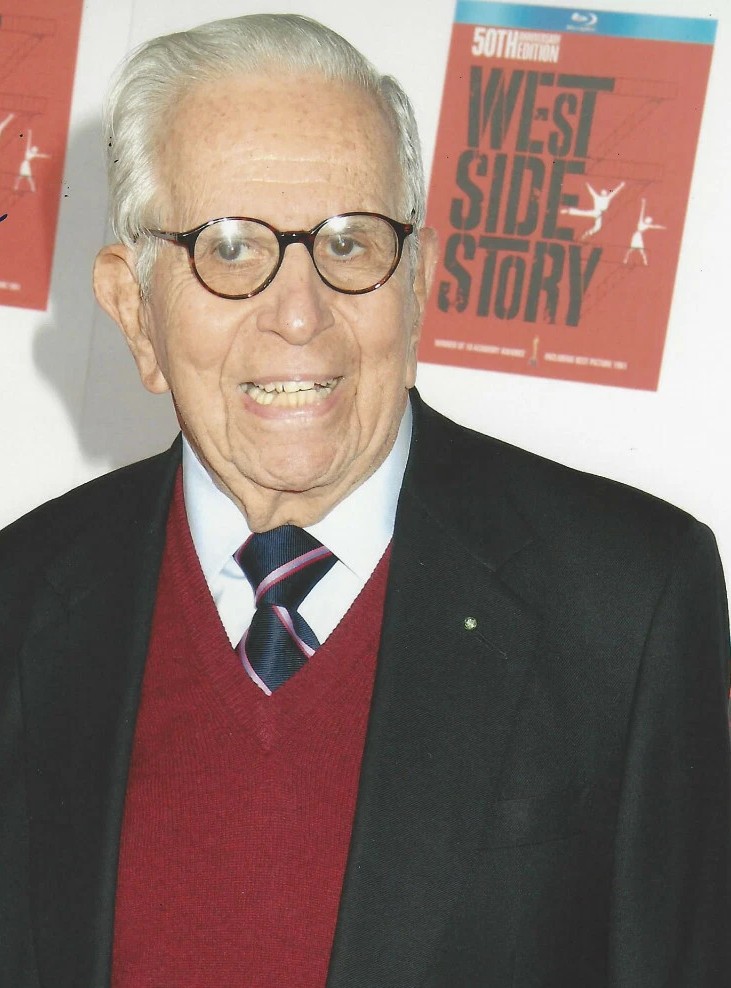
Behind the Scenes: Becoming a Producer, Part One – The Walter Mirisch Story

You don’t just waltz into Hollywood and start churning out classics like Some Like it Hot (1959), The Magnificent Seven (1960), West Side Story (1961) and The Great Escape (1963). Usually, there’s a long apprenticeship, especially for a producer. Walter Mirisch spent nearly a decade at the B-picture coalface. And before that  a year as a gofer, working his way up in the business, but on one of the smallest rungs of all, at Monogram.

Born in 1921, the of a Polish immigrant tailor specializing in custom-made garments, one of whose customers was George Skouras, owner of a cinema chain, Walter, not surprisingly in the Hollywood Golden Age, started out an even lower rung, as an usher in the State Theater in Jersey City, owned by Skouras, an hour’s commute from his home in the Bronx, earning 25 cents an hour. He was quickly promoted to ticket checker.

His older brother Harold was a film booker, receiving an education in negotiation, and then as a cinema manager in Milwaukee flexed his entrepreneurial muscles by starting a concession company. After the family moved to Milwaukee, Walter attended the University of  Wisconsin and then Harvard Business School. Physically unfit for active duty during the war, he worked for Lockheed in Los Angeles on its aircraft program in an administrative capacity.

While Harold was a highflyer at RKO, acting as chief buyer and then managing its cinema chain, Walter entered at a lower level in 1946 as a general assistant to Steve Broidy, boss of Monogram, maker of B-pictures of the series variety – Charlie Chan, The Bowery Boys, Joe Palooka, shot within eight days and at budgets under $100,000.

After badgering Broidy for a bigger opportunity, he was granted permission to hunt for a property he could produce. For $500 he found a Ring Lardner short story about a boxer, but Broidy felt the main character was unsympathetic. Stanley Kramer did not and snapped it up to make Champion (1949). 

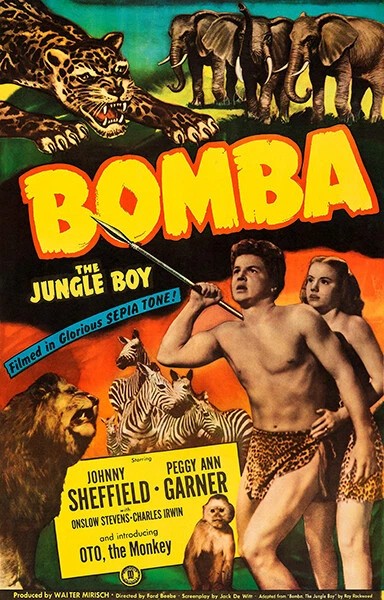
Walter’s first ventures were in film noir. Fall Guy (1947), based on a story by Cornell Woolrich,  made for $83,000, broke even. I Wouldn’t Be In Your Shoes (1948) followed, from a Woolrich novel but there was a drawback to being a producer. He was taken off the payroll and his $2,500 producer’s fee didn’t compensate for the loss of a $75 weekly salary. The answer was to invent his own series, ripping off the Tarzan pictures for Bomba the Jungle Boy (1949), starring Johnny Sheffield who had played Tarzan’s son and utilizing stock footage from Africa Speaks. Apart from his fee, Walter had a 50 per cent profit share.

For six years, these appeared at the rate of two a year, earning Walter a minimum of $5,000 and he soon branched out into other genres, sci fi like Flight to Mars (1951) and westerns such as Cavalry Scout (1951) and Fort Osage (1951), both starring B-movie stalwart Rod Cameron.

Monogram had decided to move upmarket with the introduction in 1951 of Allied Artists, its sales division run by Walter’s brother Harold, with Walter acting as an executive producer and other brother Marvin as treasurer, turning out solid B-picture-plus hits like Riot in Cell Block 11 (1954).

When the threat from television hit the B-picture market Allied went properly upscale, investing in William Wyler western Friendly Persuasion (1956) and Billy Wilder’s Love in the Afternoon (1957), both starring Gary Cooper. Their failure at the box office sent  Monogram back to basics.

But the Mirisches wanted more of the big time. The three brothers turned to United Artists and negotiated a  deal for that studio to finance four pictures a year, cover the brothers’ overhead and salaries and throw in a profit share. The Mirisch Company was born and their creative credit within the industry was so high – and the deals they offered, it has to be said,  so advantageous to their creative partners – that soon they were scooping up big names like Wilder (he made his next eight pictures for Mirisch), William Wyler, Gary Cooper, Tony Curtis, Doris Day, Audrey Hepburn and Lana Turner. One of the first pictures announced was a remake of King Kong (1933). Wilder planned My Sister and I with Hepburn. John Sturges was attached to 633 Squadron. Doris Day would star in Roar Like A Dove and there were two-picture deals with Alan Ladd and Audie Murphy.

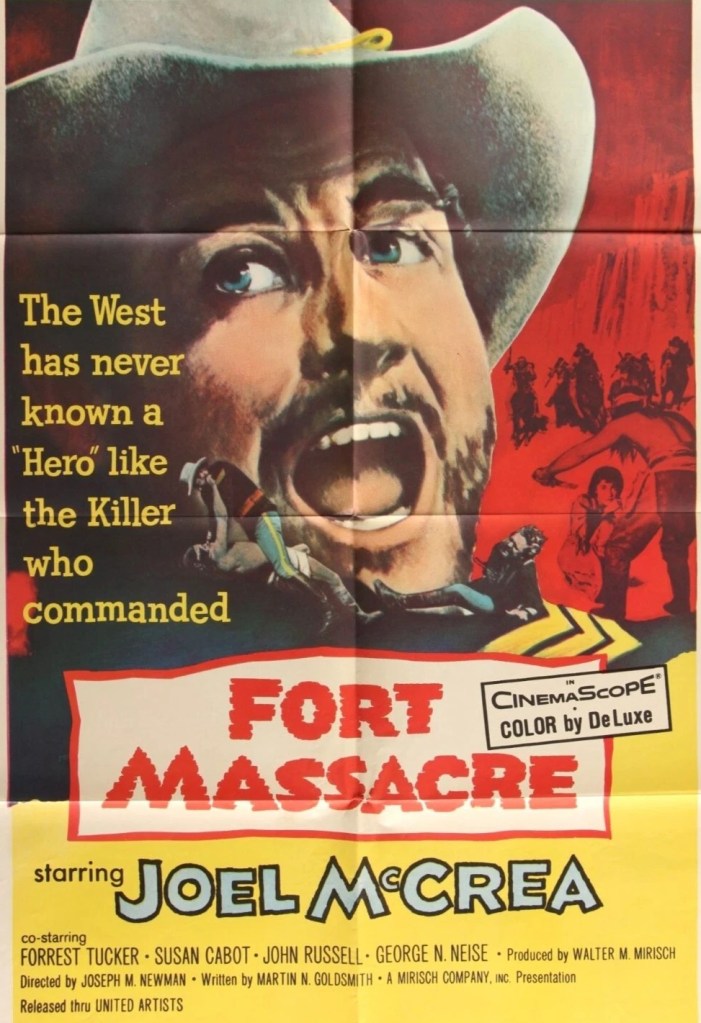
Their first two efforts didn’t break the budget bank, Fort Massacre (1958) starring Joel McCrea, and Man of the West (1958) headlined by Cooper, but neither were they hits. Hoping to provide ongoing financial sustenance, Walter turned to television, turning Wichita (1955) into the series Wichita Town (1959), and further television contributions were mooted for UA Playhouse but that and Peter Loves Mary and The Iron Horseman failed.

Movies proved a better bet and Walter struck gold with the third picture in the Mirisch-UA deal, Some Like it Hot (1959), costing $2.5 million, an enormous financial and critical success and tied down a triumvirate of top talent in John Wayne, William Holden and John Ford for western The Horse Soldiers (1959), the actors pulling down $750,000 apiece.

Such salaries sent the nascent company on a collision course with traditional Hollywood. The majors “screamed” that independents were overpaying the talent, hefty profit shares accompanying the salaries.

On top of that in 1959 in the space of two weeks Mirisch spent a record $600,000 pre-publication on James Michener blockbuster Hawaii and tied up a deal to film Broadway hit West Side Story. Within two years of setting up, Walter Mirisch announced a $34.5 million production slate, earning the company the tag of “mini-major,” as part of a shift in attitude to a “go for broke” policy. By the start of the new decade it was by far the biggest independent the industry had ever seen, handling $50 million worth of product, including The Magnificent Seven and The Apartment (1960). Average budgets had risen from $1.5 million to $3.5 million.

To outsiders, assuming the Mirisch venture was Walter’s first, it might look as if Walter had knocked the ball out of the park in a very short space of time, but, in reality, by the time he produced Some Like it Hot, he had been responsible for thirty-three pictures. Not bad for a “beginner.”

Explained Walter Mirisch, “Producing films is a chancy business. To produce a really fine film requires the confluence of a large number of elements, all combined in the exactly correct proportions. It’s very difficult and that’s why it happens so infrequently. It takes great attention to detail, the right instincts, the right combinations of talents and the heavens deciding to smile down on the enterprise. Timing is often critical.”

What would have happened to Allied Artists, for example, had Wilder made Some Like it Hot there instead of Love in the Afternoon?

Added Walter, “Where is the country’s or the world’s interest at that time? What is the audience looking for? Asking them won’t help because they themselves will tell you they don’t know what they’re looking for. They don’t know what it is until they’ve seen it. All the elements must come together at exactly the right time. So to say one embarks with great certainty on such an endeavor is an exaggeration.”

After 33 films Mirisch hit a home run with Some Like It Hot and continued to do so throughout the 1960s chalking up further critical and commercials hits like The Pink Panther (1964), In the Heat of the Night (1967) and The Thomas Crown Affair (1968) and vacuuming up a stack of Oscars.

SOURCES: Walter Mirisch, I Thought We Were Making Movies, Not History (University of Wisconsin, 2008); “Mirisch Freres Features Outlet Via United Artists,” Variety, August 7, 1957, p16; “3 Mirisch Bros Set Up Indie Co for 12 UA Films,” Variety, September 11, 1957, p7; “RKO vs Mirisch Kong,Variety, September 11, 1957, p7; Advertisement, “United Artists Welcomes The Mirisch Company,” Variety, November, 13, 1957, p13; “Brynner, Mirisch Pledge UA TV Tie,” Variety, January 1, 1958, p23; “Mirisch Freres 6 By Year-End,” Variety, March 19, 1958, p3; “Majors Originated Outrageous Wages,” Variety, December 10, 1958, p4; “UA-Mirisch’s  $600,000 For Michener’s Hawaii,Variety, August 26, 1959, p5; “Mirisch West Side Story,” Variety, September 2, 1959, p4; “Mirisch Takes on ‘Major’ Mantle With 2-Yr $34,500,000 Production Slate,” Variety, October 21, 1959, 21; “Mirisch Sets $50,000,000 14-Pic Slate; Biggest for Single Indie,” Variety, August 17, 1960, p7.

The Fortune Cookie / Meet Whiplash Willie (1966) ***

It’s the miracle of cinema. A supporting actor whom you might have glimpsed in a variety of roles over the preceding years suddenly appears as if by magic in a new screen persona and is hailed as a new star. One such was Walter Matthau. From the lecherous neighbor in Strangers When We Meet (1960), good guy in Lonely Are the Brave (1962), bad guy in Charade (1963) and Mirage (1965) and tetchy arrogant analyst in Fail Safe (1964), as if undergoing metamorphosis he creates the slimy, grouchy, crouchy, greedy lawyer duping his brother-in-law in Billy Wilder’s too-obvious satire The Fortune Cookie, beating the top-billed  Jack Lemmon (How To Murder Your Wife, 1965) into a cocked hat.

It doesn’t help Lemmon that this most physical of actors is physically constrained for the bulk of the picture, trussed up within an inch of his life as the key ingredient in a million-dollar insurance scam. And Matthau makes the most of the opportunity, dominating the screen not just with his octopus-like arms, but with his facial expressions, his snarling and growling and snapping, as if this was in fact a one-man movie. He’s so dominant that you almost forget Lemmon, an unavoidable force in most of his movies, is there.

And it’s true that television cameraman Harry Hinkle (Jack Lemmon) is a patsy, duped by his adulterous wife Sandy (Judi West), conned by ambulance-chasing lawyer Willie Gringrich (Walter Matthau) into believing that exaggerating the injury he suffered from colliding with pro football player Boom Boom (Ron Rich) will bring her scurrying back. Never mind that while on the phone apparently going with her ex-husband’s fantasies, we can see her current boyfriend in the background lying abed or taking a shower.

But then Willie has everyone figured out. He can play highball or lowball, he knows every trick in the book and if you try to challenge him he can quote chapter and verse on every personal injury claim over the last century that would favor the victim. And he expects his opposite numbers to play dirty too, and uses to his own advantage the microphones and cameras they have planted in the apartment where Harry is purportedly recuperating.

There’s not much more to the picture than to enjoy Willie hoodwinking everybody in sight. But he’s such a performer to watch that you will be rooting for him rather than his sad sack brother-in-law who you know has paid-up membership of the Suckers Union.

Not for the first time, foreign distributors felt they were saddled with an unworkable title so in
the UK it became Meet Whiplash Willie even though the idea of the con of the whiplash
injuries in supposed car accidents was more prevalent in the US than Britain.

There’s some neat observations of the way law firms work, and the way medical experts refuse to commit in case they are later sued for a wrong diagnosis, and there’s some cute stuff about nuns with the gambling habit and seeing Boom Boom fall apart with guilt. But given the movie’s running time and the talent involved – script by Billy Wilder and I.A.L. Diamond (Some Like it Hot, 1959) and directed by the said Wilder –  it’s not as funny as it could be and sometimes it feels like they’re scraping the barrel to squeeze out an unfunny joke.

But it hardly matters. This could be Fail Safe and with this Walter Matthau persona on the loose you wouldn’t care tuppence if the Russians bombed the hell out of everyone as long as Matthau was in the middle of the action, working out how to chisel a bigger piece for himself, and playing everyone for the dumb schmucks they are.

After this Walter Matthau – as unlikely a mainline star as Lee Marvin or Charles Bronson – never looked back. Unlike other major stars he never had to be completely trustworthy and was almost virtually responsible for bringing a severe dose of cynicism to the forefront of American acting. He could charm you if he set out to do so, but you better keep your wits about you because the chances are he would be robbing you blind.

If The Odd Couple (1967) set the seal on one of Hollywood’s greatest comedy partnerships, The Fortune Cookie was where it all began. Lemmon isn’t bad, just out-acted, and we’ve seen his whiny/forlorn/dumb act many times before. Judi West (A Man Called Gannon, 1968) has the other plum role as the blonde who is anything but dumb and would have proved an ideal partner for Gringrich except he would have seen through her too easily. Ron Rich (Chubasco, 1968) plays the only other character who isn’t spun out of a cliché.

Below par Wilder redeemed by heavenly performance by Matthau.

What the Exhibitor Did

Movie studio publicity teams bombarded exhibitors with gimmicky promotions via the Pressbooks used to publicize movies. Some of the ideas were so outlandish it is easy to imagine that exhibitors’ eyes glazed over at the prospect.

But that would be to misunderstand the character of the cinema manager/owner on the 1960s. They often referred to themselves as “showmen” (ignore the gender slip) because they saw themselves as hustlers of the old school, required to come up with all sorts of schemes to ensure moviegoers were aware of what was showing.

So they weren’t short of coming up with their own ideas.  To promote Billy Wilder comedy The Apartment (1960) with Jack Lemmon and Shirley Maclaine, Loews State in New Orleans set up a replica three-room apartment within the Hurwitz-Minze furniture store in the city. A female model was hired to live there for a week during opening hours. She cooked, washed dishes, watched television and listened to records. “Her daytime routine was complete even to changing her clothes – behind a screen, of course.” The store advertised her presence daily and explained why there was model in the window. The Monteleone Hotel joined in the promotion by providing the model with free accommodation.

Handcuffs were handed out to customers going in to see Psycho (1960) at Proctor’s Theatre in Schenectady, New York, on the basis that it would be advantageous for patrons to handcuff themselves to their seats in case nerves got the better of them and they tried to dash out before the end.

Of course, that was a long way from offering patrons a dead body, raffled off in the intermission between the movies on a midnight horror program, as carried out by the Super 422 Drive-In in Pittsburgh. A dead body was given away – it just turned out to be a turkey.

Exhibitors pushing a horror picture might plant a coffin in the lobby – more effective if there was a hand sticking out – or, as indicative of the terrors that lay ahead, have a white-coated nurse prominently positioned or park an ambulance outside. Certificates of bravery might be issued to attendees.

To promote Macumba Love (1960) – starring Ziva Rodann from The Giants of Thessaly – which featured cannibals and shrunken heads, Loews State in Cleveland put their own shrunken head on display in the lobby behind reducing glass which made it seem even smaller.   

Love takes people the strangest places. Two cycling enthusiasts planning to get married were persuaded by Twentieth Century Fox to travel from New York to Juneau, Alaska, a mere 4,776 miles to promote john Wayne picture North to Alaska (1960).They were paid, of course, and had the honor of being married by the Governor of the state, William Egan. They passed through a hundred towns and cities, stopping off to talk to interested media about their unusual adventure and, in case anyone missed the point, their bikes were plastered with publicity material for the film.

SOURCES: “The Midnight Show,” Box Office, Aug 1, 1960, p64-65; “Girl Keeps House in Window for a Week Prior to Opening of The Apartment,” Box Office, Aug 8, 1960, 118; “Handcuffs Go to Patrons in Advance of Psycho,” Box Office, Oct 3, 1960, 103; “Couple in Bicycle Trip North for To Alaska,” Box Office, Nov 14, 1960, 73.

Discover WordPress

A daily selection of the best content published on WordPress, collected for you by humans who love to read.

The Atavist Magazine

by Brian Hannan

WordPress.com News

The latest news on WordPress.com and the WordPress community.