Nostalgia – and reappraisal – rule. Every bit as worthy a contender for a Father’s Day crown as the more favored likes of The Great Escape, 1963), The Dirty Dozen (1967) and Die Hard (1988). One of the reasons why Britain wasn’t in the thrall of DC and Marvel was that we had grown up with Dr Who and the Gerry and Sylvia Anderson portfolio of sci fi marionettes – Fireball XL5, Supercar, Stingray, Thunderbirds, Joe 90 and Captain Scarlet.
And while most of the nostalgia for the period goes the way of Ray Harryhausen, the Andersons’ achievements not so much with their puppetry but the miniaturization should not be underestimated.
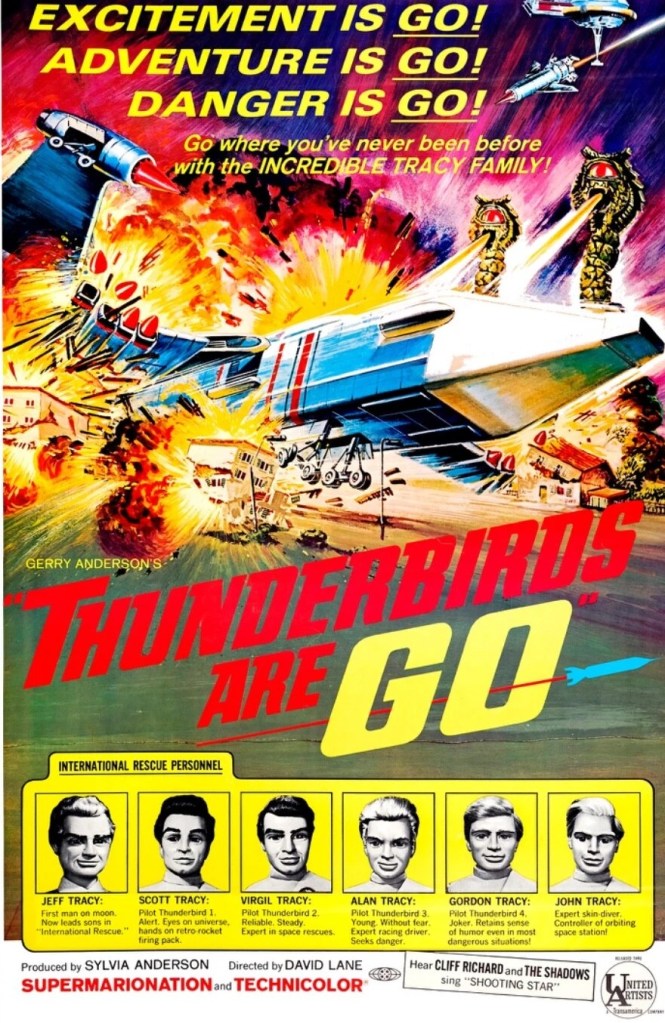
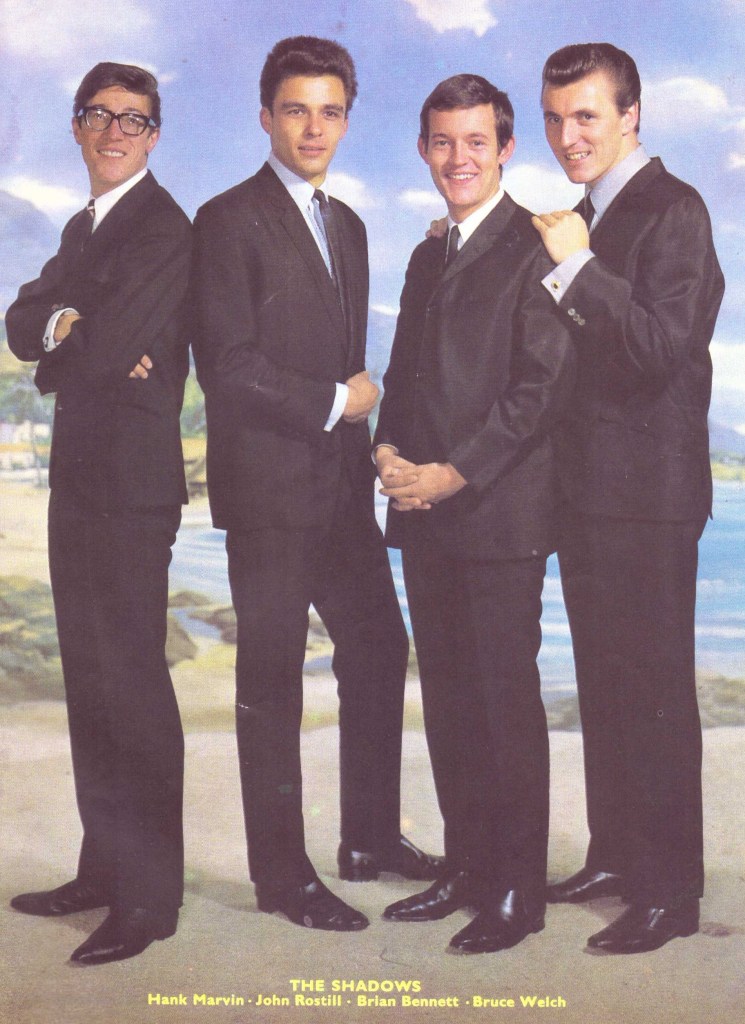
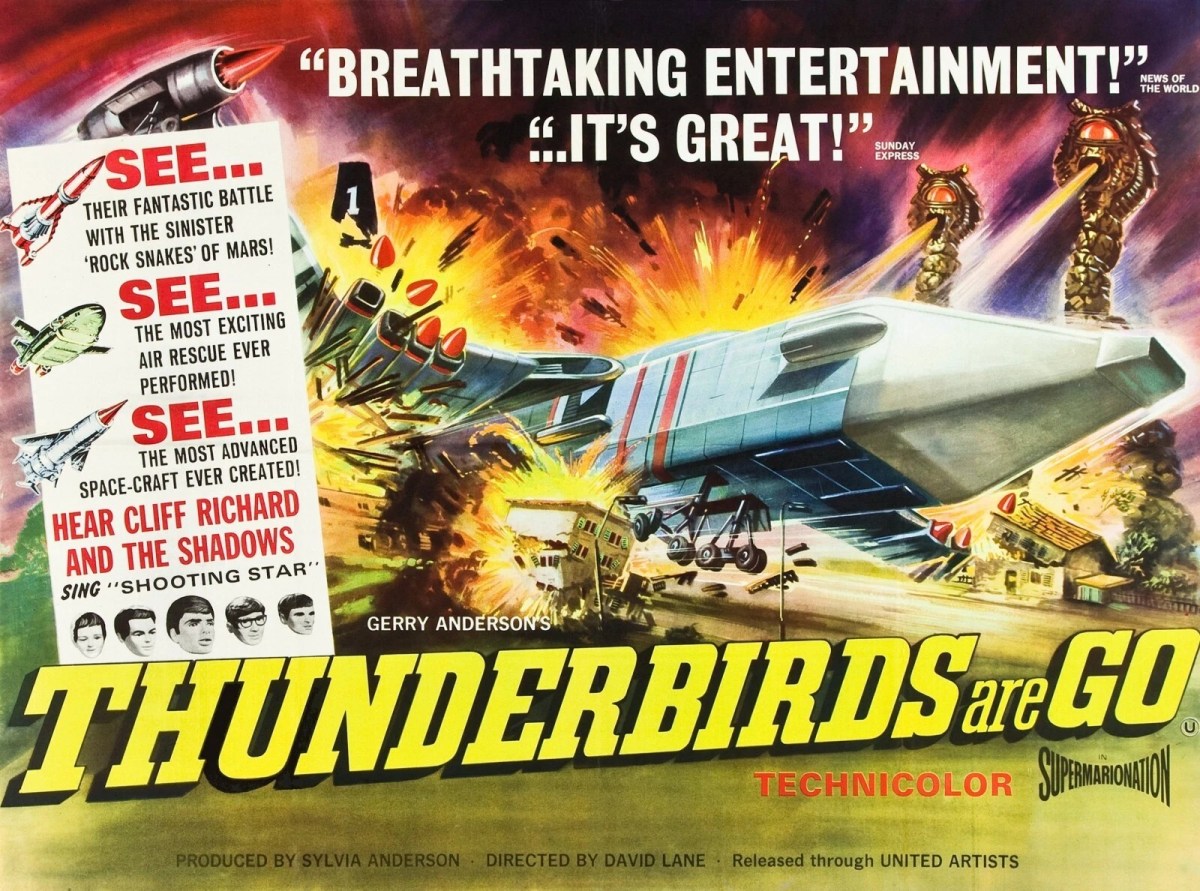
It wouldn’t be too much of a call, for example, to guess that Stanley Kubrick learned a lot about the joy of spaceships coming together or moving around from Thunderbirds Are Go where a good chunk of the action is watching spaceships shift around one way or another. To top it all, and another one in the eye of Mr. Kubrick, the Andersons beat him to the psychedelia, a dream sequence set upon a “Swinging Star” and involving puppet versions of Cliff Richard and the Shadows, still a big noise in the pop world at the time despite the arrival of The Beatles and The Rolling Stones. Their appearance would be the equivalent to Bruce Willis, for example, doing a guest turn in Friends.
With a bigger budget, the Andersons made two crucial changes from the TV series on which this was based. They managed to erase all sight of the puppet strings and they stopped them walking around so much which always made them look most like just puppets.
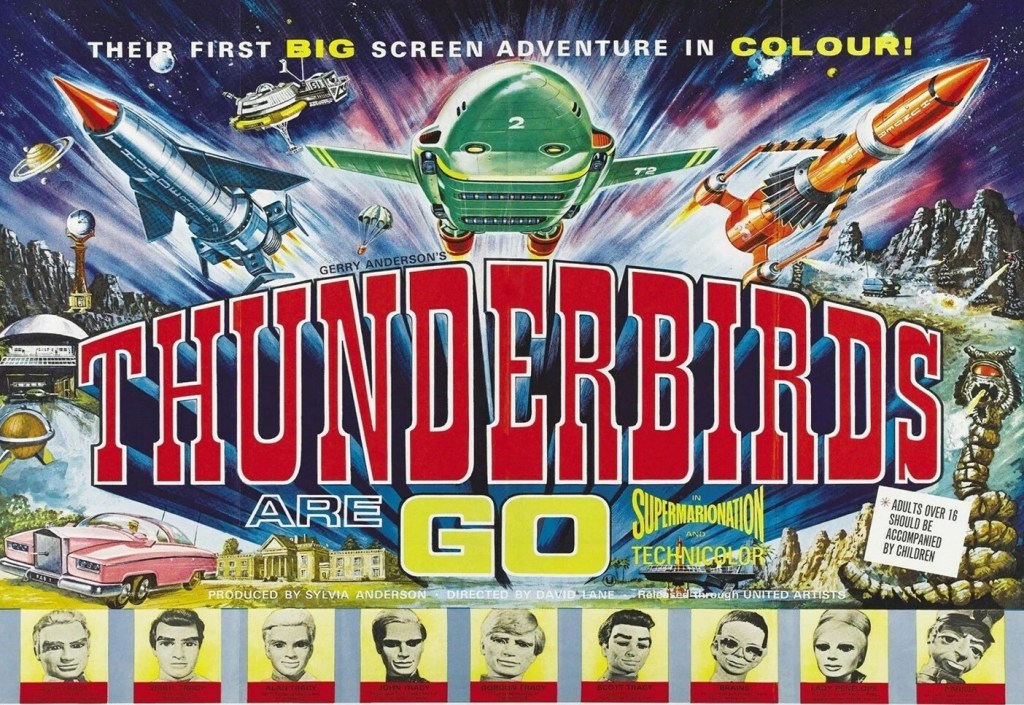
This is space as we should adore it. None of the manky, worn-down, dirty cargo ships that litter modern sci fi epics. Not only is every ship gleaming but they are also colorful, not to mention color-coded. When they move it’s with the majesty that Kubrick used to great effect in 2001: A Space Odyssey (1968). And as Kubrick also proved, when it came to space, you didn’t need much in the way of characterization or narrative. He follows the same rule as monster pictures, focus on the big beasts as much as possible.
But Kubrick, in his wildest dreams, could never imagine as sultry a character as blonde goddess Lady Penelope, and though she’s on the side of the angels as cunning as any femme fatale. Equally iconic is her pink Rolls Royce and the chauffeur Parker which his obedient “Yes, m’ lady.” Not to mention the glorious catchphrase “eff ay bee” – in other words FAB, the catchphrase for a generation. There’s another catchphrase that only means something to Londoners who would hear this warning every day on the Underground – “mind the doors.”
The narrative is relatively thin. Zero-X is trying to fly to Mars but the flight is sabotaged and crash-lands. When a second flight is planned, this time International Rescue (the Thunderbirds team in case you are unaware) is on standby with Lady Penelope employed to seek out the saboteur.
This flight does succeed but on Mars encounters venomous snake-like rocks and scarpers quickly only to hit trouble on re-entry to Earth that requires Thunderbirds to the rescue. There are some modest attempts at characterization, Zero-X doesn’t like the idea of needing help, and the youngest of the Tracy family is frightened of failing.
I’ve never seen this before. I probably thought I was above such childish things when it first came out and it was only when I spotted it on Amazon Prime that I thought to give it go, remembering how much I had enjoyed the revamped Fireball XL5.
I sat enthralled. The first section has no sign of the International Rescue team and just like those mesmerizing minutes watching Kubrick’s spaceship revolve in space this simply involved putting together the constituent parts of the Zero-X rocket ship prior to launch.
You had to hand it to these sci-fi whizzes. You only needed one fella in the control room. Each of the Thunderbirds required only a solo pilot. You could be whisked electronically from a seat in the waiting area to the spaceship and arrive there on the same seat or go along some kind of travelator. These guys had thought of everything.
Directed by David Lane and written by the Andersons with Sylvia doubling up to provide the voice of Lady Penelope
With the removal of the strings and every miniaturization so stunning, this would look great on the big screen. The 60th anni would be December this year so here’s a call-out to an enterprising cinema.
NOTE: today is British Father’s Day. It may not be Father’s Day where you are.