We tend to view movie marketing as the business of selling movies to the general public. What we forget is that in order for a cinemagoer to attend a showing of an individual film in a particular cinema, that the movie has to be rented by said cinema and before that can happen someone has to convince the cinema manager to take on the picture.
The most common method of selling movies to exhibitors was via the Pressbook/Campaign Manual. But this had three drawbacks. In the first place cinemas were flooded with Pressbooks that might arrive in the post at the rate of 10-15 a week. The other downside was that such items were generally only useful once a cinema had signed on to screen a particular movie and manager would turn to the Pressbook for hints on publicizing the movie and for the advertising blocks required to run a campaign in a local newspaper. The final problem was that Pressbooks appeared fairly close to a film’s launch so not that helpful in driving up interest.
So the studios turned to the trade magazines. They might embark on a well-planned long-term campaign running upwards of a year. It would kick off with an advert announcing a movie was being made or close to completion – Universal placed a four-page bound insert for Isadora in June 1968, five months prior to the world premiere. Then it would produce some artwork that was close to the posters being prepared for public consumption.
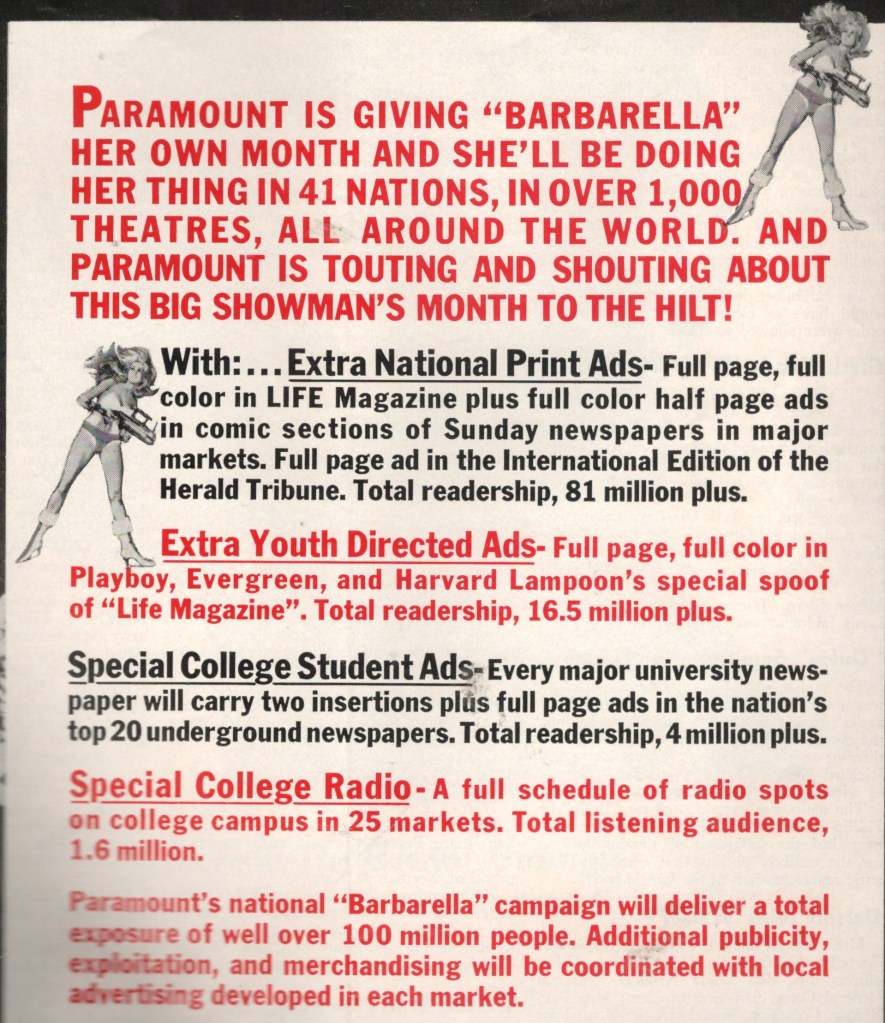
Then it would generate more material that explained how confident the studio was in the picture, demonstrating that money that had been spent on promotion in newspapers, magazines and television, and various tie-ins. The back page of a four-page ad for The Green Berets (1968) was devoted to the promotional activities surrounding its immediate upcoming launch. The sameheld true for Barbarella (1968).
After that it would harness the fact that the film was opening simultaneously in an exclusive number of first run houses in the major cities or that it was scheduled for a huge number of cinemas again simultaneously. These were intended to show that other exhibitors had demonstrated faith in the product, suggesting you had better get in line quick. The final avenue was advertising the box office figures that usually suggested the film was breaking some record or another.
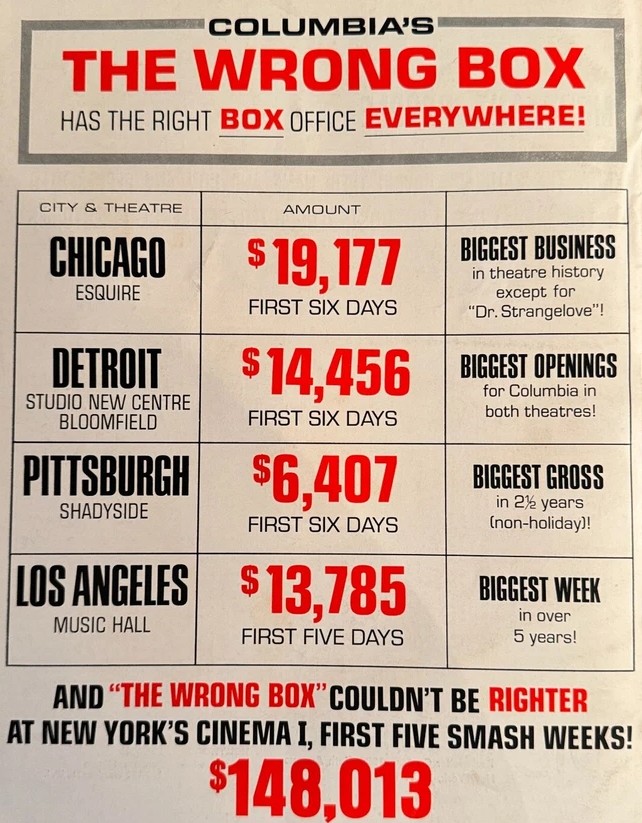
Not all campaigns took all of these steps. In fact, most selected just two or three of them. And they were not always presented in the same fashion. The box office ads tended to be just printed on the same kind of paper as usual, perhaps with color or spot-color (i.e. some part of the ad picked out in blue or red and the rest in black-and-white).
But the ads used in the general build-up would be of a more expensive material. These would employ thicker glossier paper. They would usually be specially designed. They might run to four- six- or eight-pages and they might have some version of a gatefold (not just opening horizontally but potentially vertically). These adverts were printed separately and then inserted into the magazine at the production stage so were known as “bound inserts” meaning they weren’t loose inside the pages but part of the magazine.
There was a major, immediate, bonus from going down this route. I’ve got a massive collection of trade magazines and I always know the moment I pick up an issue whether it contains a bound insert. Not only does the magazine feel heavier but it automatically opens at the insert.
Sometimes, smaller distributors just stuck an entire Pressbook inside a magazine – The Devil’s 8 (1969) a gangster version of The Dirty Dozen (1967) – was promoted in this fashion and the 8-page insert for Doctor Zhivago (1965) contained nothing but promotional ideas and details of tie-ins.
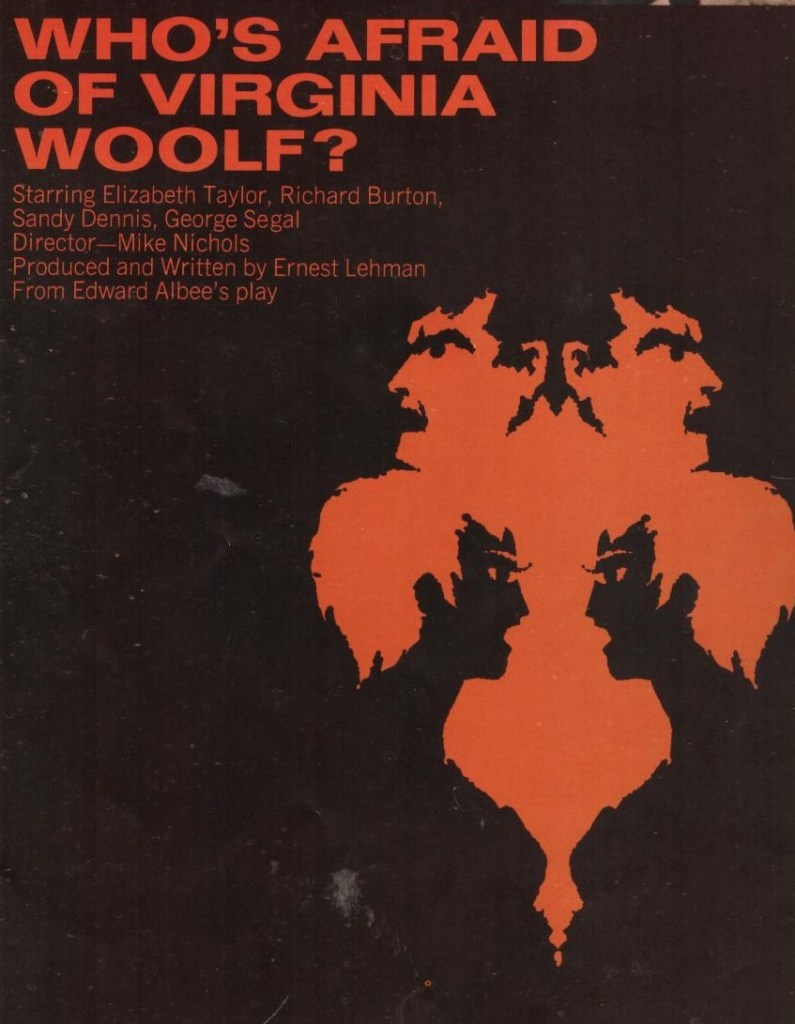
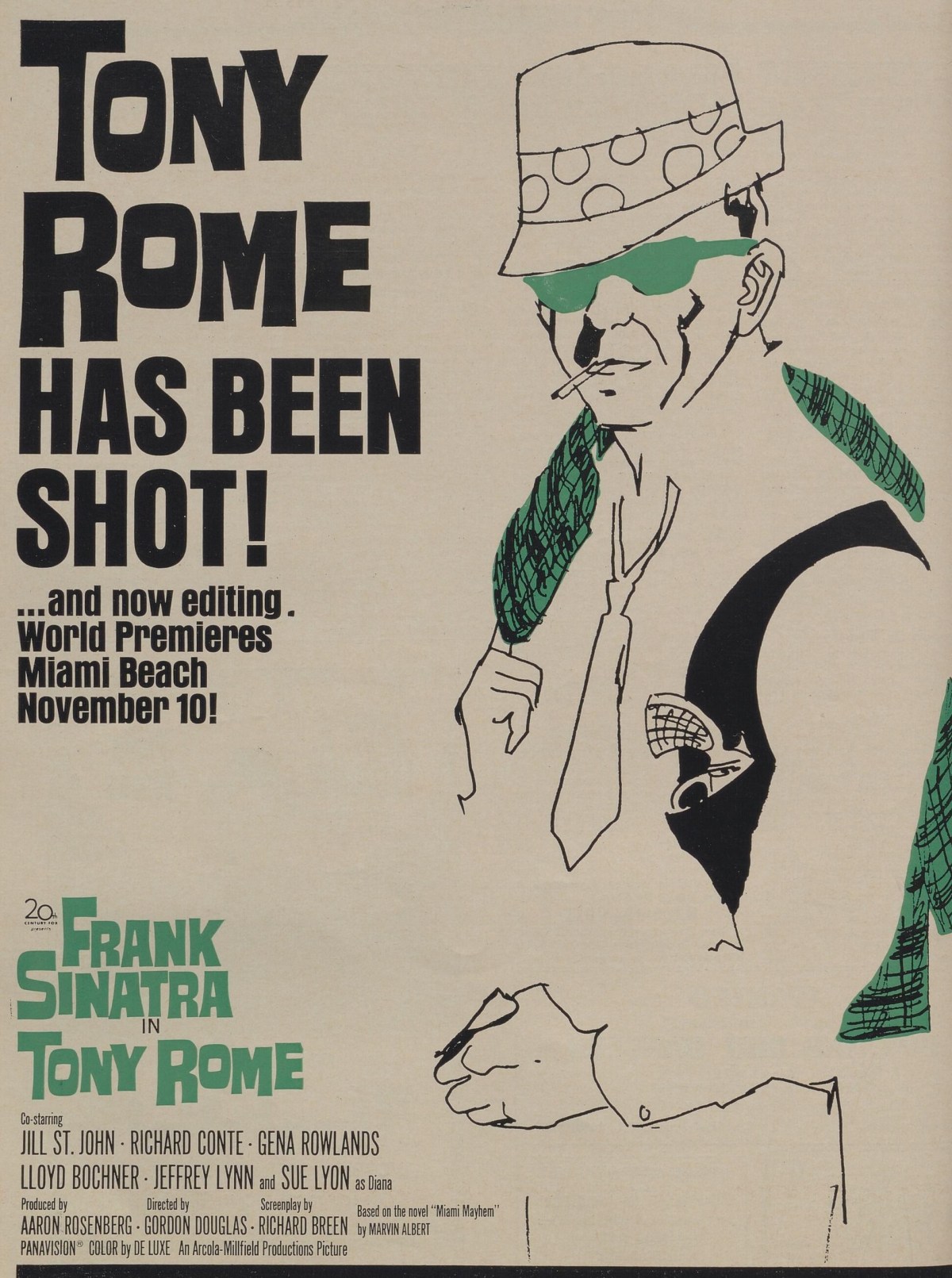
Sometimes adverts that appeared in the trades were try-outs for the kind of poster ideas being considered by the marketing department for public distribution, the illustrations shown here for Tony Rome (1968) and Who’s Afraid of Virginia Woolf (1966) a good example.
Other times studios got it into their heads that, just as had occurred in the Hollywood Golden Age, that the studio name was somehow an imprimatur for good business and that if you stuck with MGM, for example, you couldn’t go wrong and to prove its point it would cross-reference in one advert films as disparate as Doctor Zhivago, Blow-Up (1966) and Grand Prix (1966).
It was pretty obvious to keen observers that studios sometimes placed movies in cinemas with smaller seating capacities in the hope that demand would outstrip supply and consequently they could crow about the box office. Often, studios chose specific outlets deliberately as a guide to other cinemas which were similar. But, mostly, it was just to have something to give a movie a boost.
You might have needed an adding machine (calculators not a thing then) to calculate from figures presented just how well a film was doing, but even just presenting the box office was seen as a sign of studio confidence and exhibitors, presented with a set of box office figures in a trade advertisement, tended not to question their validity.
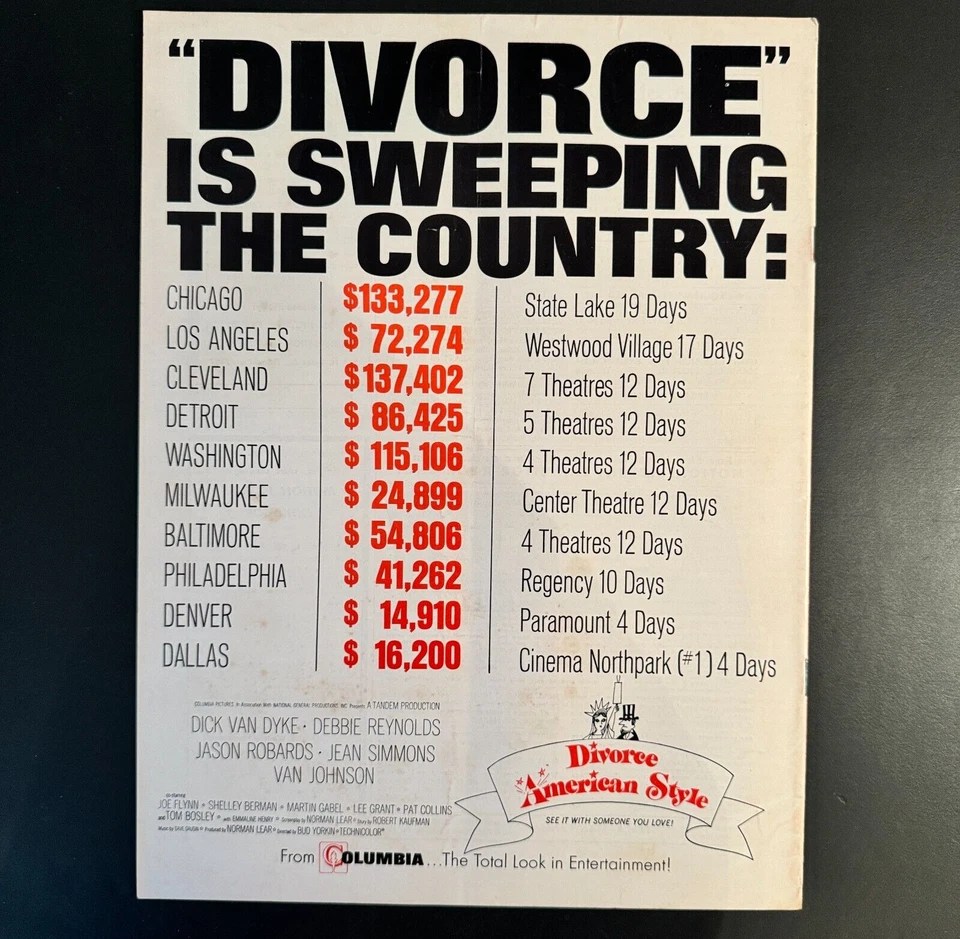
The one shown for The Sand Pebbles (1966) was also in the nature of a teaser – here’s what’s it done in selected openings, guess what it’ll do for you – whereas for Divorce, American Style (1967) the range was much wider, suggesting the movie would do just as well in cinemas around your way, whether playing in first run or simultaneously in suburban showcase.
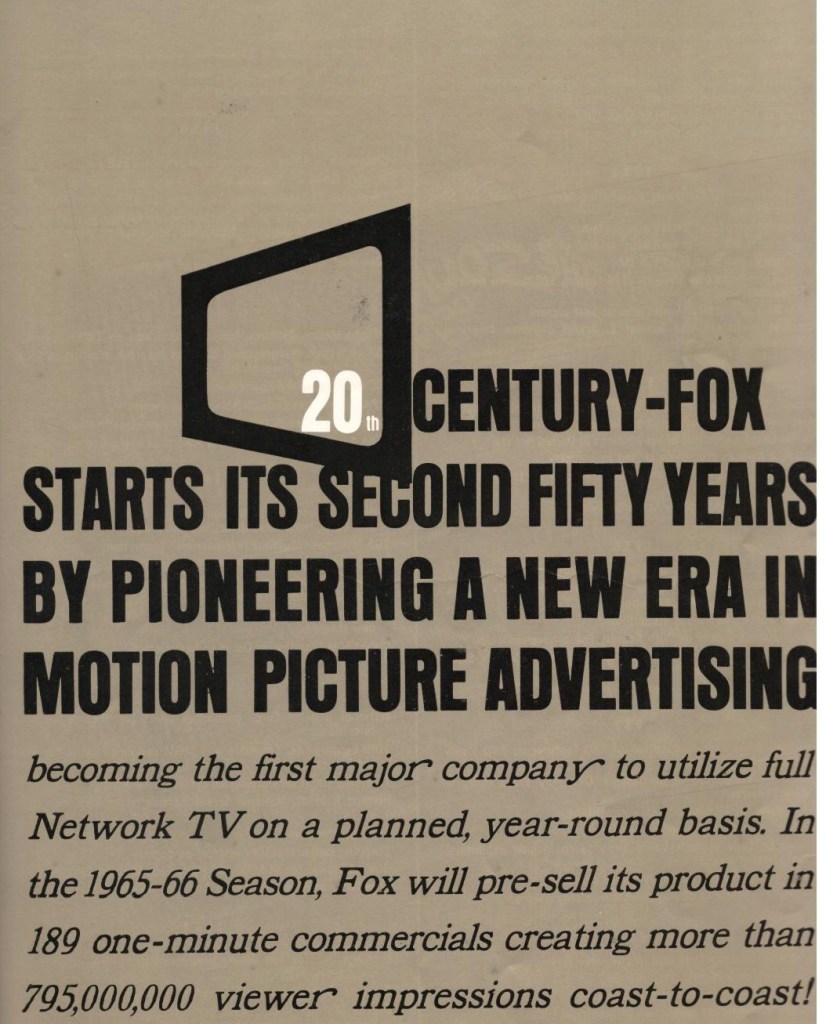
Occasionally, there would be more strategic purpose involved. When, in 1965, Twentieth Century Fox got ahead of the game in terms of television promotion and wanted to show exhibitors they were committed to this kind of advance, that was what dominated their 4-page insert in Box Office magazine’s “anniversary issue.” The studio claimed it was “pioneering a new era” promising to use network television (i.e. the “Big Three” of CBS, ABC and NBC) on a year-round basis.
It had committed to purchasing 189 one-minute commercials that would cumulatively attract nearly 800 million “viewer impressions” in 191 cities nationwide. Just to make sure cinema owners exhibitors were in no doubt about the importance of this development in their favor, the studio pointed out it was “the kind of continuing deep-sell no other company in the industry offers exhibitors


