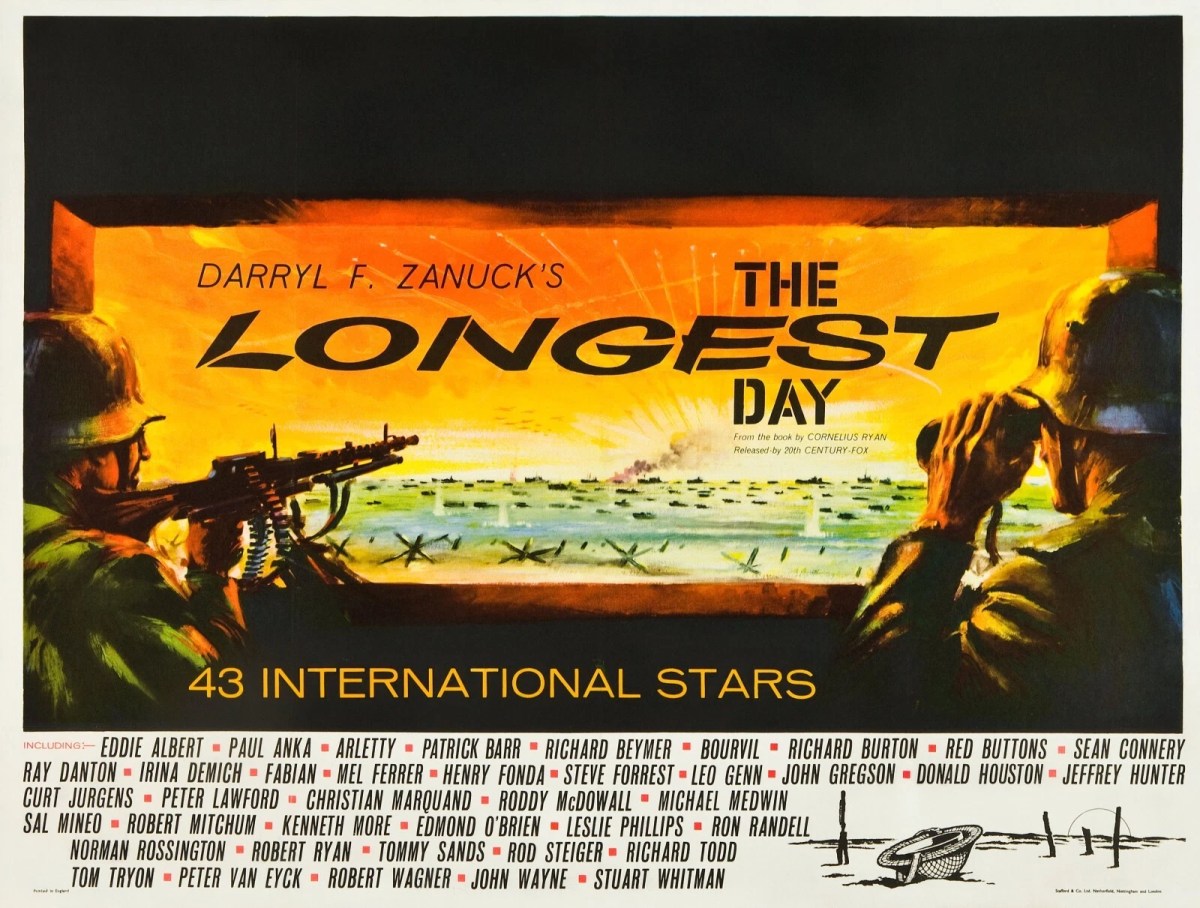
The Longest Day (1962) *****

When critics applauded the inspired use of a reaction shot via Omar Sharif to convey the horror of a massacre on the Mocow streets in Doctor Zhivago (1965), they omitted to mention that the technique had been used to similar stunning effect – and twice – in The Longest Day. The first comes when the camera cuts to Red Buttons dangling from a parachute down a building witnessing a massacre in the square below. The second, oddly enough, in virtually the same locale, when John Wayne arrives and views the aftermath.

Emotion was generally not considered a requisite of this epic war picture about the D-Day landings. The general consensus these days is that at best it’s a docudrama or at worst a star-a-minute mess with a dozen storylines vying for supremacy. In fact, it’s neither, but a surefooted and even-handed depiction of a complex battle, concentrating as much on the backroom staff as the soldiers in the line of fire.
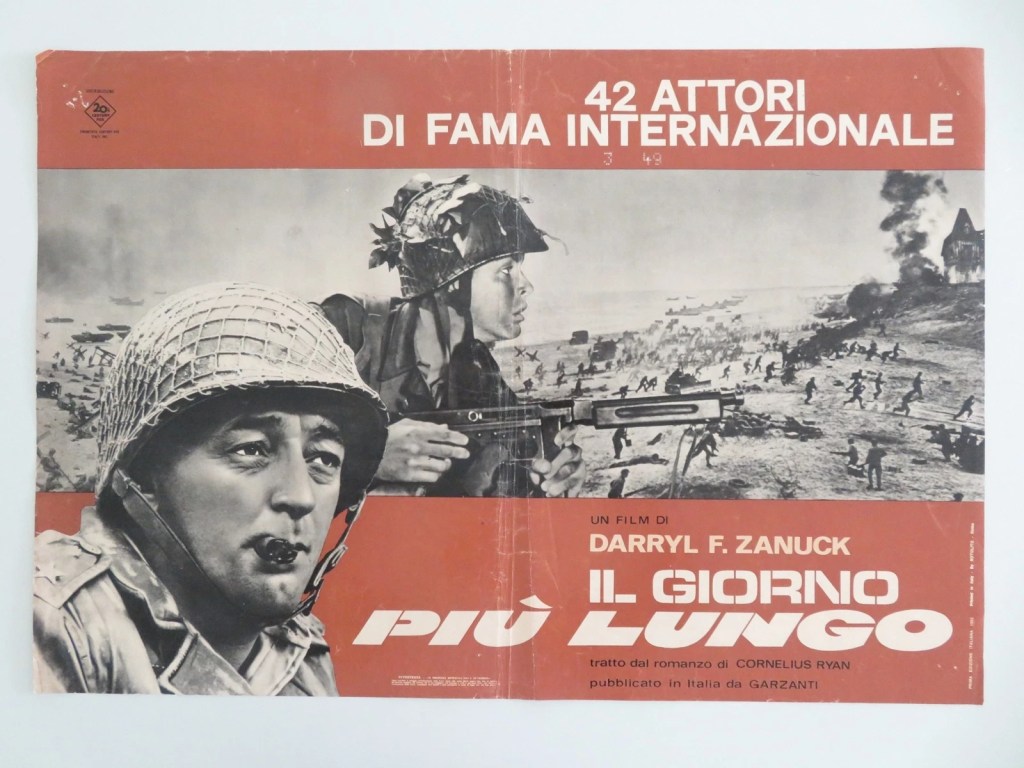
Except for German complacency, the Allied forces would have faced fiercer opposition. The German troops had no air cover except for two planes and the Panzers had been pulled back in reserve. High-ranking officers had high-tailed it out of German HQ to enjoy a night on the town. Yes, the Germans expected the invasion to come from Calais rather than Normandy, but once their mistake became obvious, they did little to counter the attack, spending too much time arguing with each other and being too frightened to wake Hitler from his beauty sleep to trigger the tanks and planes.

Producer Darryl F. Zanuck covered his back by enrolling 40 stars for his venture. While most had varying marquee appeal, he had drawn on leading actors and actresses from countries other than Britain and the USA. And there was clearly a calculated decision to make audiences wait for the two major stars, John Wayne and Robert Mitchum, to put in an appearance. It’s a good 15 minutes before we spot Wayne, that time spent setting up the event from British, French, German and American perspectives.

Unusually for major stars, Wayne and Mitchum are not averse to carrying exposition, something generally left to the supporting cast, Wayne in particular spelling out the pitfalls of his particular parachute drop situation. Incidentally, two of the best sequences took a good less time to show – as later explained in feature-length detail in A Bridge Too Far – the dangers inherent in parachuting into enemy territory and trying to capture and hold vital bridges.

The picture could easily have been titled A Gamble Too Far because Zanuck was betting the future of Twentieth Century Fox, facing a financial burnout, on its box office outcome.

While covering the planning for the landings in sweeping terms, the movie concentrates on three major actions – Omaha Beach and the scaling of the impenetrable Pointe du Hoc featuring the Americans headed up by Brig General Norman Cota (Robert Mitchum), a British commando raid led by Major John Howard (Richard Todd) on the Pegasus Bridge and the parachute drop led by Lt Col Benjamin Vandervoort (John Wayne).   

By today’s standards the bloodletting is non-existent but the brutality of combat hits hard. Flight Officer David Campbell (Richard Burton) heads up the victims, knowing he is going to die but trying to keep up his spirits. French peasant Janine (Irina Demick) distracts German soldiers with her beauty. Lord Lovat (Peter Lawford) goes into battle accompanied by bagpipes and beachmaster Capt Maud (Kenneth More) tries to keep troops moving on the beach.. Comic interludes are provided by Private Flanagan (Sean Connery) and his buddy and German Sgt Kaffekanne (Gert Frobe).

Many of the commanders that would feature in later World War Two pictures –  Lt Gene Omar Bradley (Patton, 1970) and Brig General James Gavin and General Sir Bernard Montgomery (A Bridge Too Far, 1977), played respectively by Arthur Hill, Robert Ryan, and Trevor Reid. German General Rommel had already had his shot at Hollywood fame through The Desert Fox (1951) and Desert Rats (1953) and was the American nemesis in Patton.

Given the amount of rubbernecking by the audience, it’s worth noting the number of actor in small parts who eventually made good including Sean Connery (Dr No had just appeared by the time The Longest Day opened in the U.K.), Christian Marquand (The Corrupt Ones/The Peking Medallion, 1967), George Segal (Bridge at Remagen, 1969), Tom Tryon (The Cardinal, 1964) and Robert Wagner (Banning, 1967).

You could do an entire review just listing who played who. But in spreading the field and covering French and German activities alike Zanuck brings a wider understanding of the proceedings.

Five directors were involved and unlike most anthology pictures where individual styles clash, here everyone follows the same playbook. Ken Annakin (Battle of the Bulge, 1965), Andrew Marton (Africa, Texas Style, 1967), Gerd Oswald (Agent for H.A.R.M, 1966), Bernhard Wicki (The Visit, 1964) and Darryl F. Zanuck all took a turn at the helm.

While author Cornelius Ryan (A Bridge Too Far) was credited with the screenplay he received help in the shape of Frenchman Romain Gary (Birds in Peru, 1968) , American novelist James Jones who wrote From Here to Eternity, and British screenwriters  David Seddon and Jack Pursall (The Blue Max, 1966). Remains an awesome experience, one I’d just love to see in 70mm
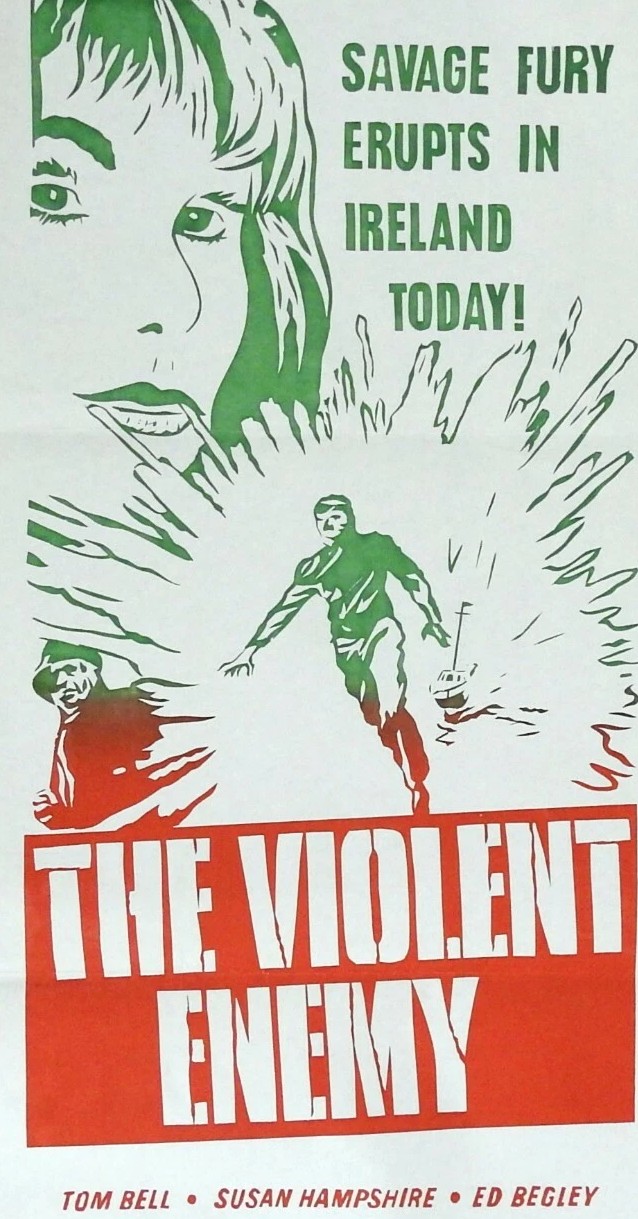
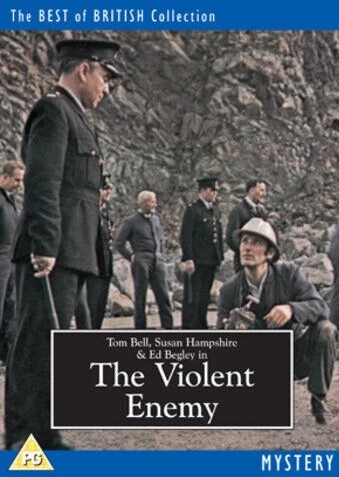
The Violent Enemy (1967) ****

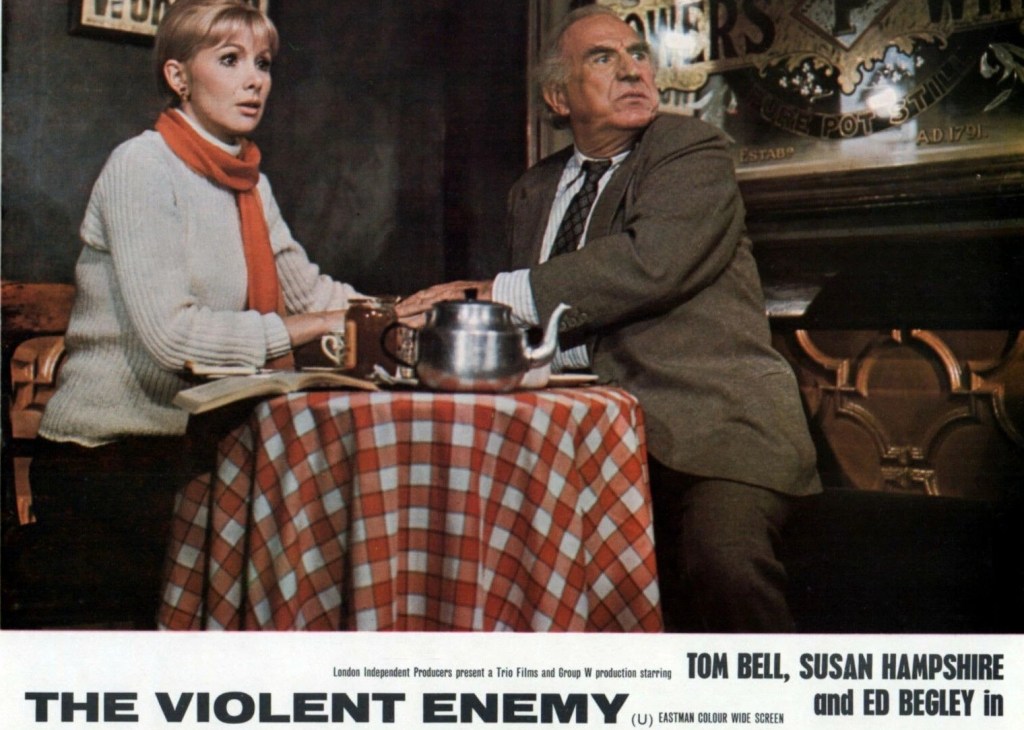
Surprisingly even-handed and thoughtful with more twists than The Housemaid. Rising star Tom Bell makes a bid to fill the spot in the British movie hierarchy vacated by Michael Caine who had gone to greater things while Susan Hampshire is trying to escape the screen persona foisted upon her by Walt Disney in such innocuous fare as The Fighting Prince of Donegal (1967). Australian director Don Sharp was hoping to add some gravitas to a portfolio that included The Face of Fu Manchu (1965) and Our Man in Marrakesh (1966). To some extent, all three achieve their aims.

Irish terrorist Sean Rogan, learning he has been refused parole and has another seven years of a 15-year sentence to serve, breaks out of jail, assisted by Hannah (Susan Hampshire), scion of an IRA legend. Twist number one, back in Ireland, Sean tells his boss Colum O’More (Ed Begley) that he’s going to go straight. Ireland having no extradition treaty with the United Kingdom for political prisoners he’s safe. Twist number two, Colum threatens to dump him over the border to Northern Ireland where he could be arrested.

O’More wants Sean, an explosives specialist, to blow up an electronics plant that services British armament factories and in doing so restore pride in a fading political force. Sean agrees to plan the job but not carry it out, leaving it to underling Austin (Jon Laurimore). Sean also, surprisingly, has scruples, wanting to limit the charge so that it doesn’t affect people living in caravans below the factory. Meanwhile, Inspector Sullivan (Philip O’Flynn) turns up with a killer piece of information. He tells Hannah, who’s grown sweet on Sean, that the escapee was deliberately misled – his parole had been granted. Hannah refuses to pass this along, her loyalty to the cause greater than her feelings for Sean.

As the deadline approaches for the sabotage, it becomes apparent Austin has a different project in mind. Instead of blowing up the plant he’s going to use the blackout caused by the dynamite to rob the factory, forcing Sean to come along so he can be rendered unconscious and take the fall.

The final twist is that Sean foils the robbers.

Apart from the sabotage and the heist there’s a lot to savor here. Old hands are deserting the cause to enjoy prosperity. The idea of ruining local livelihoods by terminating the plant is anathema to some. Many are just tired of fighting a war that’s not been won. Others, like Sean, believe they have done their bit and are entitled to peace and quiet.

Die-hards like Colum are easily duped by the unscrupulous – one of the best scenes the shock on his face when he realizes he’s been took and he lacks the authority to stop what might be deemed organizational malpractice – while Austin takes advantage of the money-making opportunity that supposed fealty to the cause creates. Hannah, too, has to change her attitude. Sean’s spent enough time in prison to appreciate what he’s lost.

There’s little remorse but equally there’s little tub-thumping and the movie largely steers clear of the political issues and sentimentality. There’s nothing glamorous or romantic in this Ireland, no glorious scenery, just dreich wet streets, and the flag isn’t tied to the mast but  employed to package the loot. The heist is well done and there’s an unusual climax. Possibly the most imaginative section is the flight after the initial escape with Sean disguised as a chauffeur driving a Rolls-Royce. It’s probably a plus point that nobody attempts an Irish accent that they’d mess up anyway.

Possibly because of the subject matter, the movie flopped. Neither Tom Bell nor Susan Hampshire ascended to the higher echelons though Don Sharp returned to Ireland for Hennessey (1975) and went on to direct Bear Island (1978). Written by Edmund Ward (Goodbye Gemini, 1970) from an early novel by Jack Higgins (The Eagle Has Landed, 1976 ) who both revisited the Troubles for Mike Hodges A Prayer for the Dying (1987) with Mickey Rourke.

In between the action beats plenty to mull over.

Reminders of Him (2026) **** – Seen at the Cinema

Author Colleen Hoover pulls a fast one on admirers of It Ends with Us (2024) and Regretting You (2025). Audiences had come to expect sophisticated romances that played to feminist mores. While there’s certainly romance involved, it’s more about ex-con Kenna (Maika Monroe) trying to re-connect with the daughter Diem (Zoe Kosovic) she lost after being imprisoned. The situation is complicated because she was jailed for killing her fiancé Scotty (Rudy Pankow) in a car accident while under the influence. You can picture the scene: “Hi, Diem, meet your mother…she killed your father.”

I liked this film instantly because within five scenes it had set out its dramatic stall. Kenna gets out of a taxi taking her to Laramie, Wyoming, to rip out of the ground a makeshift cross marking where Scotty died. She can’t get a job because she ticks the “previous conviction” box in a job application. She is sent to a discount store to try there but a flashback reveals the meet-cute with Scotty who was driving an orange-painted truck. Another man, Ledger (Tyriq Withers) owner of a local bar, takes Diem for school. In the bar she flirts with Ledger until noting his truck she realizes this is her dead fiance’s best friend, whom she’d never met, because during her short courtship with Scotty, Ledger was off trying to make his career in football.

Kenna’s realistic enough but driven by a sliver of romanticism that ends in a relationship with Diem. There’s nothing but obstacles in the way, Ledger for one, who has occasion to physically remove her from temptation, which curdles their growing relationship. The still-grieving grandparents Grace (Lauren Graham) and Patrick (Bradley Whitford) fear Kenna might kidnap the girl and that eventually drives a wedge between them and Ledger, to whom they had grown incredibly close.

Everything about this is slow-burn. And there’s not an ounce of tear-jerking either. Kenna does not cry herself to sleep, doesn’t stand hidden under a tree or peek through a hedge or hover at a school gate trying to catch a glimpse of Diem. She doesn’t complain life’s unfair. Lacking a bed in her miserly accommodation, she sleeps on the couch, and is reduced to bagging groceries for a living.

There’s none of the usual misery memoir beats, nor does it take some miraculous piece of derring-do (saving Diem from drowning or a fire or from being knocked down in the street or – screenwriters have come up with worse – preventing her being kidnapped by someone else) to achieve a breakthrough. Nor is she baited in the street nor run out of town by people furious that she killed the well-liked Scotty.

Slow and contemplative would hardly be the best tone for a contemporary romance, and that takes a long time to get going thanks to the various complications. Resolution is provided with  something of a get-out-of-jail-free car. As well as the DUI, Kenna was convicted for leaving the scene of the accident while (unknownst to her) her fiancé was still alive. The accident had occurred in a remote area and she had walked such a distance to get help and was herself in poor shape after the crash that she fell asleep in a barn only to discover Scotty had survived the accident only to die later.

In the old days you’d have called this a woman’s picture, but that category seems to have been taken over the excessively emotional Hamnet or Wuthering Heights, so it’s fairer to just class it as a more than decent picture for adults.

Both Maika Monroe (Longlegs, 2024) and Tariq Withers (Him, 2025) underplay to the benefit of the movie and there are interesting roles for Lauren Graham (Bad Santa, 2003), Bradley Whitford (The Handmaid’s Tale, 2018-2025) and Monika Myers in her debut. Directed with commendable restraint by Vanessa Caswill (Love at First Sight, 2023) from a screenplay by Hoover and producer Lauren Levine.

Like Regretting You, it’s not going to be a blockbuster, but quietly rewarding just the same.

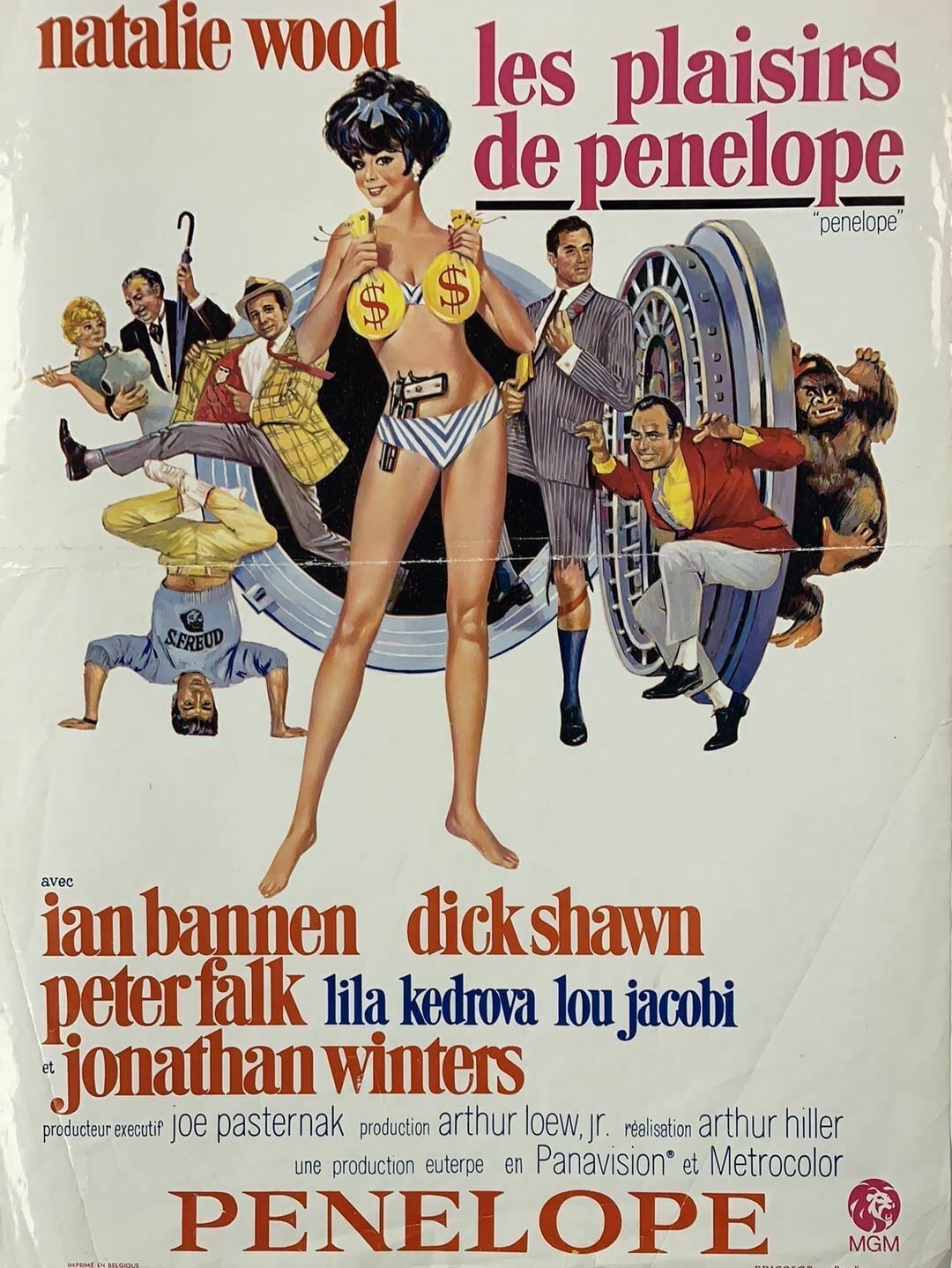
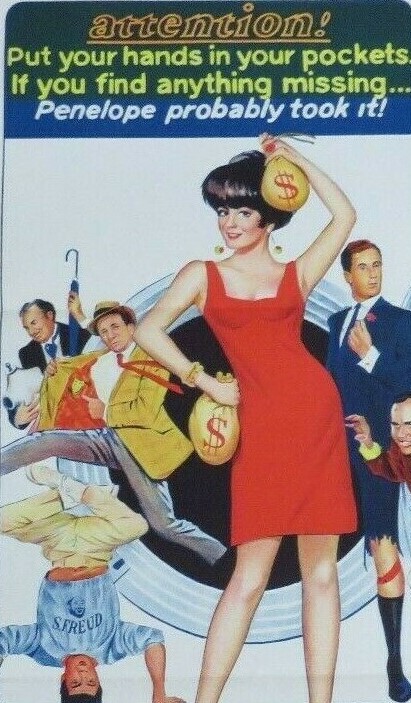
Penelope (1966) ***

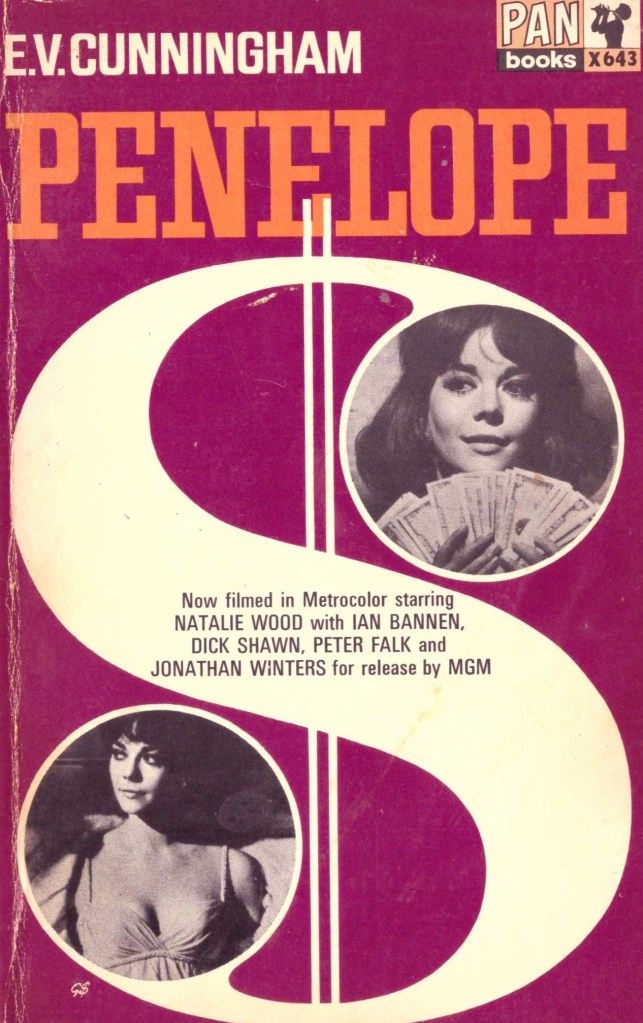
Comedic twist on the heist movie with Natalie Wood (This Property Is Condemned, 1966) as a kleptomaniac. Given its origins in a tight little thriller by E.V. Cunningham, pseudonym of Howard Fast (Mirage, 1965), it’s an awful loose construction that seems to run around with little idea of where it wants to go. Wood, of course, is a delightfully kooky heroine who takes revenge on anyone who has ignored or slighted her by stealing their possessions.

The picture begins with her boldest coup. Cleverly disguised as an old woman, she robs the newest Park Avenue bank owned by overbearing husband James (Ian Bannen). This prompts the best comedy in the movie, a man with a violin case (Lewis Charles) being apprehended by police, the doors automatically locking after a clerk falls on the alarm button, James trapped in the revolving doors losing his trousers in the process.

In flashback, we learn that she turned to thievery after a rape attempt by Professor Klobb (Jonathan Winter), her college tutor, and while half-naked managed to make off with his watch fob. She stole a set of earrings from Mildred (Norma Crane) after suspecting she is having an affair with James. “Stealing makes me cheerful,” she tells her psychiatrist, Dr Mannix (Dick Shawn) and while admitting to dishonesty denies being a compulsive thief. After the bank robbery she even manages to relieve investigating officer Lt Bixby (Peter Falk) of his wallet.

Nobody suspects her, certainly not her husband who could not conceive of his wife having the brains to carry out such an audacious plan. Bixby is a bit more on the ball, but not much. Clues that would have snared her in seconds if seen by any half-decent cop are missed by this bunch. And generally that is the problem, the outcome is so weighted in Penelope’s favor. The plot then goes all around the houses to include as many oddballs as possible – boutique owners Sadaba (Lila Kedrova) and Ducky (Lou Jacobi), Major Higgins (Arthur Malet) and suspect Honeysuckle Rose (Arlene Golonka). Naturally, when she does confess – to save the innocent Honeysuckle – nobody believes her in part because everyone has fallen in love with her. Bixby, just as smitten, nonetheless makes a decent stab at the investigation.

Howard Fast under the pseudonym of E.V. Cunningham wrote a series of thrillers with a woman’s name as the title. He was on a roll in the 1960s providing the source material for Spartacus (1960), The Man in the Middle (1964), Cheyenne Autumn (1964), Sylvia (1965), Mirage (1965) and Jigsaw (1968).

Taken as pure confection it has its attractions. It’s certainly frothy at the edges and there are a number of funny lines especially with her psychiatrist and the slapstick approach does hit the target every now and then. The icing on the cake is top class while the cake itself has little of substance. It strikes a satirical note on occasion especially with the Greenwich Village cellar sequence. It doesn’t go anywhere near what might be driving this woman towards such potential calamity – that she gets away with it is only down to her charm. There has probably never been such a pair of rose-tinted spectacles as worn by Penelope, even though her every action is driven by revenge.

Without Natalie Wood it would have sunk without trace but her vivacious screen persona is imminently watchable and the constant wardrobe changes (courtesy of Edith Head) and glossy treatment gets it over the finishing line. It’s one of those star-driven vehicles at which Golden Age Hollywood was once so adept but which fails to translate so well to a later era. Ian Bannen (Station Six Sahara, 1963) is in his element as a grumpy husband, though you would wonder what initially she saw in him, and Peter Falk (Robin and the 7 Hoods, 1965) delivers another memorable performance.  Dick Shawn (A Very Special Favor, 1965) is the pick of the supporting cast though screen personalities like Lila Kedrova (Torn Curtain, 1966), Jonathan Winters (The Loved One, 1965) and Lou Jacobi (Irma la Douce, 1963) are not easily ignored.  Johnny Williams a.k.a John Williams wrote the score.

Director Arthur Hiller (Tobruk, 1967) delivers as much of the goods as are possible within the zany framework. Veteran Oscar-winner George Wells (Three Bites of the Apple, 1967) wrote the screenplay but it’s a far cry from the far more interesting source material and I would have to wonder what kind of sensibility – even at that time – could invent a comedy rape (not in the book, I hasten to add).

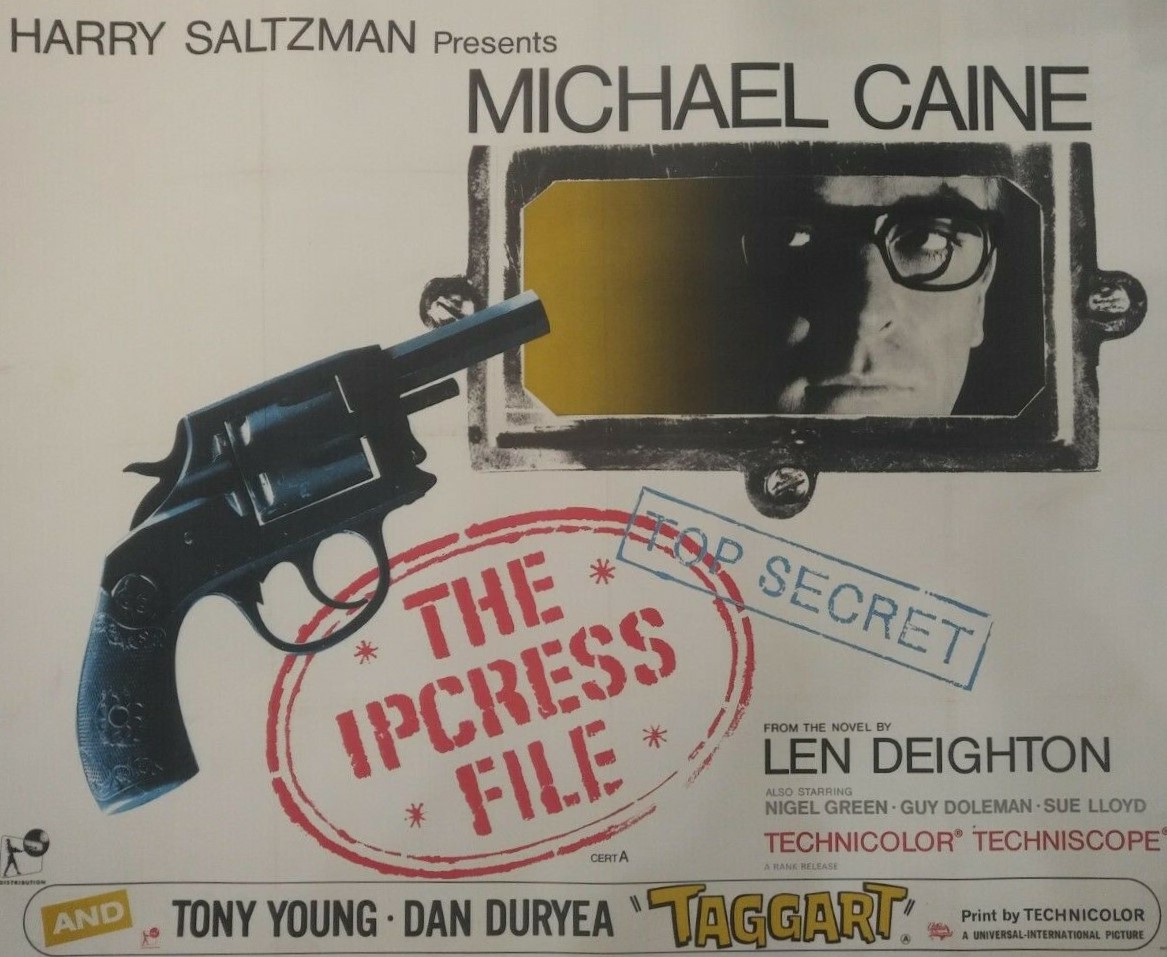
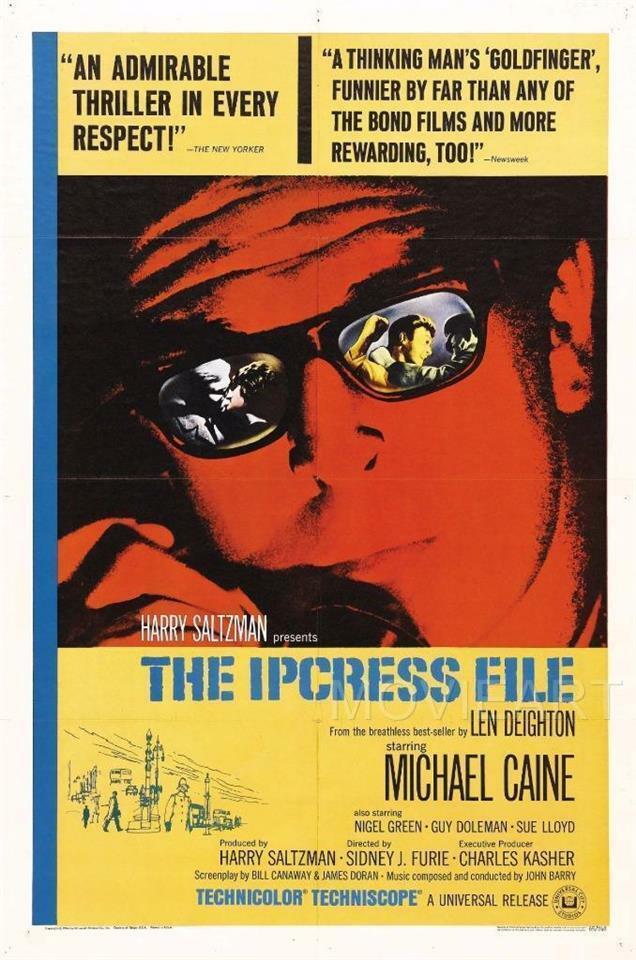
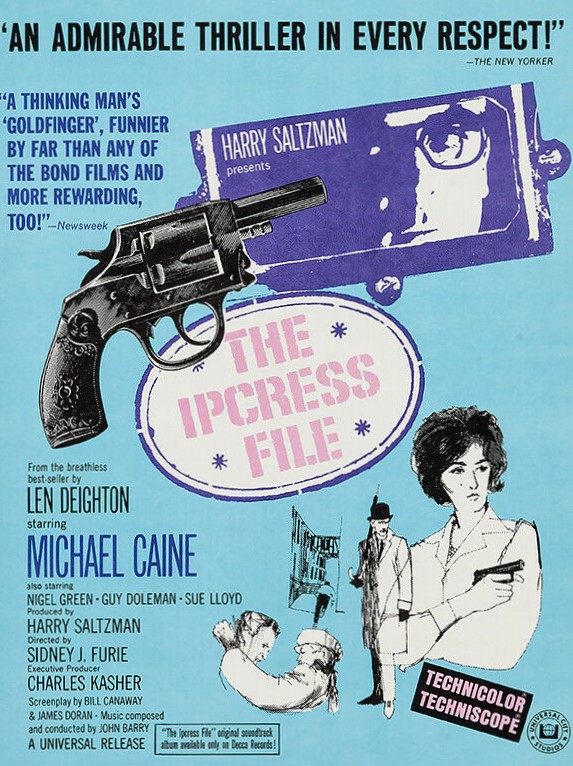
The Ipcress File (1965) *****

Stylish take on the espionage genre when it was still in its infancy and could accommodate stylish directors like Sidney J. Furie (The Appaloosa, 1966). Eschewing the bombastic effects and villains of the James Bond series, relying more on intrigue and the elements of betrayal that other practitioners of the dark arts such as John Le Carre espoused, this is as much a character study and presents in some cases a fairer picture of the class struggle in Britain than most kitchen-sink dramas. So it’s either going to put you off entirely or make you appreciate the film more when I tell you that my favorite scene is the fistfight between Harry Palmer (Michael Caine) and shaven-headed thug Housemartin (Oliver MacGreevy) outside the Royal Albert Hall in London that is shot entirely through the windows of a traditional red telephone box. You can’t say bolder than that.

The credit sequence, more famously ripped off by William Goldman for private eye saga Harper/The Moving Target (1966), is equally inspired. An alarm clock wakes Palmer, he reaches out for the girl who shared his bed last night to discover she is gone and then punctiliously and as if time-shifted to the twenty-first century when it would be the norm proceeds to grind fresh coffee beans, fill a cafetiere with only as much liquid as would constitute a small espresso, dresses and last but not least searches among the disturbed bedclothes for his gun.

Palmer is transferred from dull surveillance duties to a team hunting for missing scientists. Given both his insolent and insubordinate manner, he is not expected to fit in to a service riddled with the upper-classes. His new superior Dalby (Nigel Green), a “passed-over major,” owes his present situation to Palmer’s former boss Colonel Ross (Guy Doleman) and both sport three-piece suits, bowler hats and umbrellas and speak in those clipped tones that invariably carry undertones of menace. Where James Bond’s front, the import-export business, is rather more upmarket, here the background is considerably downmarket, Dalby masquerading as the owner of an employment agency and distributor of fireworks. It is insatiably bureaucratic, reams of forms to be filled in. What Palmer has in common with James Bond, beyond fisticuffs, is the ability to think outside the box and in this case picks the brains of a policeman friend to track down the wanted villain, code-named Bluejay (Frank Gatliff)  

As in the best post-Bond espionage, there are traitors everywhere, and the departments employing spies tend to employ other spies to spy upon them, though in this case Palmer has the luck to draw the sexy Jean (Sue Lloyd). When Palmer picks up the trail of Ipcress, the plot thickens. There is no shortage of action, a gun battle, fisticuffs, but it presents a different approach to modern espionage, with a properly rounded hero – one who can cook (as did author Len Deighton who wrote a cookery column) for a start – while the ladies, with whom he shares a roving eye with Bond, are not required to turn up in bikinis.

There is deft employment of that favorite British cultural emblem – irony – and one wonderful scene takes place in a park where Dalby taps his cane in appreciation of a brass band. Throw in a bit of brainwashing and it’s a completely different proposition to Bond who could escape such a dilemma in a trice. There is a clever ending.

Michael Caine (Hurry Sundown, 1967), complete with spectacles, is superb as Palmer, making enough of an impression that the series ran for another  four episodes. The stiff-upper-lip brigade have a field day in Nigel Green (Jason and the Argonauts, 1963) and Guy Doleman (Thunderball, 1965), the latter shading it with his purported sense of humor. Sue Lyon (Corruption, 1968) is excellent as the seemingly unattainable gal who falls within Palmer’s purvey but not entirely due to his charm. The villains, too, are not from the James Bond school of cut-outs, but come across as equally human, and the chief rascal you could argue has the most finely developed sense of humor of the lot. Throw in Gordon Jackson (Danger Route, 1967) and Freda Bamford (Three Bites of the Apple, 1967) as the bureaucratic attack-dog Alice and you have a very well cast movie.

Sidney J. Furie divided critics. Some believed he was ahead of his time, others that he was in thrall to arty French directors, and a reasonable number who didn’t give a stuff as long as he delivered the goods. But his predilection for odd angles here proves a strength, his  compositional excellence also spot-on, one scene in particular where in a library Palmer looks down on the villain with Housemartin on a landing between. And he takes great delight in emphasizing the class distinctions, both bosses have huge offices with a small desk in the corner, and when Ross places briefcase, umbrella and bowler hat on the desk of Dalby it could not be a more clear invasion.

And you can’t forget the score by espionage doyen John Barry (Goldfinger, 1964). W.H. Canaway (A Boy Ten Feet Tall, 1963) and James Doran, making his movie debut, adapted Len Deighton’s classy bestseller but a fair amount of polish was added by thriller writer Lionel Davidson (Hot Enough for June, 1964), Johanna Harwood (Dr No, 1962), Lukas Heller (The Dirty Dozen, 1967) and Ken Hughes (Arrivederci, Baby, 1966).    

A spy classic.

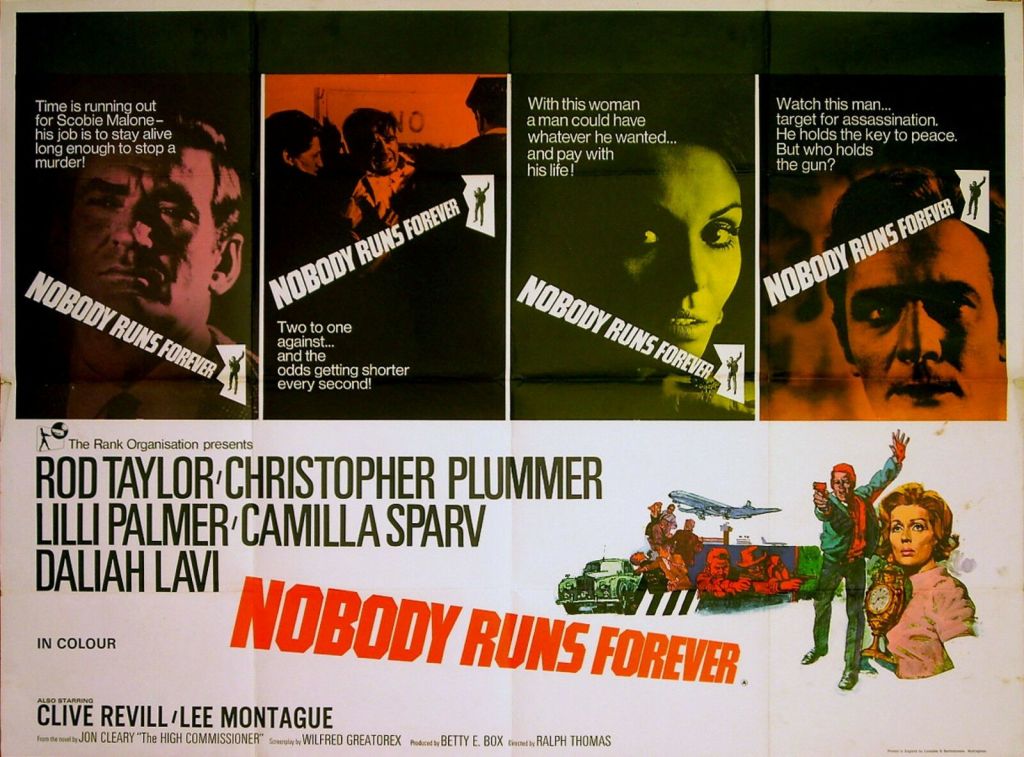
Nobody Runs Forever (1968) / The High Commissioner ****

Character-driven intelligent thriller ripe for re-evaluation. And not just because it stands out from the decade’s genre limitations, neither hero threatened by mysterious forces in the vein of Charade (1963) or Mirage (1965) nor, although espionage elements are involved, fitting into the ubiquitous spy category. Instead, it loads mystery upon mystery and leaves you guessing right to the end.

And a deluge of mystery would not work – even with the London high-life gloss of cocktail parties, casinos and the Royal Box at Wimbledon – were it not for the believable characters. Rough Aussie Outback cop Scobie Malone (Rod Taylor) is despatched to London at the behest of New South Wales prime minister (Leo McKern) to bring home Australian High Commissioner Sir James Quentin (Christopher Plummer) to face a charge of murder.

Probably a better title than either “Nobody Runs Forever”
or “The High Commissioner.”

Unlike most cop pictures, Malone is not sent to investigate a case, he is merely muscle. While he may have his doubts about the evidence against Quentin, suspected of murdering his first wife, he resists all attempts to re-open the case. Arriving in the middle of a peace conference hosted by the principled Quentin, he agrees to investigate security leaks from Australia House and along the way turns into an impromptu bodyguard when Quentin’s life is endangered. But Quentin’s wife Sheila (Lilli Palmer) and secretary Lisa (Camilla Sparv) are not taken in by the deception and so Malone himself forms part of the mystery.

With a preference for cold beer to expensive champagne, you might expect Malone to be a bull in a china shop. Instead, dressed for the part by the solicitous Quentin, Malone fits easily into high society, taking time out from his duties for a dalliance with the elegant Madame Chalon (Daliah Lavi). The background is not the gloss but the passion the Quentins still feel for each other, she willing to do anything (literally) to save her husband, he losing the thread of an important speech when worried about his wife.

While there is no shortage of suspects for all nefarious activities, red herrings abound and cleverly you are left to make up your own mind, rather than fingers being ostentatiously pointed. There is some delicious comedy between Malone and Quentin’s uptight butler (Clive Revill), enough punch-ups, chases and clever tricks to keep the movie more than ticking along but at its core are the relationships. Malone’s growing respect for Quentin does not overrule duty, Lisa’s evident love for Quentin cannot be taken the obvious further step, Sheila’s overwhelming need to safeguard her husband sends her into duplicitous action.

The politics are surprisingly contemporary, attempts to alleviate hunger and prevent war, and while there was much demonstration during the decade in favor of world peace, this is the only picture I can think of where a politician’s main aim is not self-aggrandisement, greed or corruption. There are some twists on audience expectation – the dinner-jacketed Malone in the casino does not strike a James Bond pose and start to play, he is seduced rather than seducer, and remains a working man throughout.

Rod Taylor (Dark of the Sun, 1968) and Christopher Plummer (Fall of the Roman Empire, 1964) are terrific sparring partners, red-blooded male versus ice-cool character, their jousts verbal rather than physical. The rugged Taylor turns on the charm when necessary, a throwback to his character in Fate Is the Hunter (1964). Thoughts of his wife soften Plummer’s instinctive icy edge. Lilli Palmer (The Counterfeit Traitor) is superb as yet another vulnerable woman, on the surface in total control, but underneath quivering with the fear of loss. Two graduates of the Matt Helm school are given meatier roles, Daliah Lavi (The Silencers, 1966), as seductress-in-chief is a far cry from her stunning roles in The Demon (1963) and The Whip and the Body (1963) – and it still feels a shame to me that she was so ill-served in the way of roles by Hollywood. Camilla Sparv (Murderers Row, 1966) has a more low-key role.

Clive Revill (The Double Man, 1967) has another scene-stealing part and look out for Calvin Lockhart (Dark of the Sun), Burt Kwouk (The Shoes of the Fisherman, 1968) and, shorn of his blond locks, an unrecognizable Derren Nesbit (The Naked Runner, 1967) and in his final role Hollywood legend Franchot Tone (Mutiny on the Bounty, 1935).

Ralph Thomas (Deadlier than the Male, 1967) directs with minimum fuss, always focused on character, although there is a sly plug for Deadlier than the Male in terms of a cinema poster. (Speaking of posters, I couldn’t help notice this interesting advert at an airport for a VC10 promoted as “10derness.”) Wilfred Greatorex (The Battle of Britain, 1969) made his screenplay debut, adapting the bestseller by Jon (The Sundowners) Cleary. This may not be quite a true four-star picture but it is a grade above three-star.

CATCH-UP: Rod Taylor films reviewed in the blog so far are Seven Seas to Calais (1962), Fate Is the Hunter (1964), The Liquidator (1965), The Glass Bottom Boat (1966), Hotel (1967) and Dark of the Sun (1968).

Project Hail Mary (2026) ***** – Seen (Three Times) at the Cinema

Excited as I was at the prospect of another film from the author of The Martian (2015), which I’ve seen at least half a dozen times, I was wary at the idea of spending so much time watching just one actor on screen, having been subjected to the hubris of Chris Pratt a few weeks back in Mercy (2026)  where I was bored out of my skull with staring at his visage for the best part of two hours. Sure, Tom Hanks managed to hold our attention virtually single-handed in Cast Away (2000) , but he’s a double Oscar-winner and if you can’t rely on someone of that stature to hold your attention, who can. Ryan Gosling has come nowhere near the Oscar circle though this bravura performance may change his fortunes.

Since I don’t have a scientific bone in my body I’m a sucker for these space pictures where astronauts have to tinker with all sorts of technology to save their lives or the world, the two are often inseparable. Here, the object of the exercise could not be bigger. Non-astronaut and unwilling volunteer Ryland Grace (Ryan Gosling) has to save the sun from being gobbled up by pesky microbes. Turns out our sun isn’t the only one at risk. Another sun in a distant galaxy is also at threat and Grace has to buddy up with an alien, whom he nicknames Rocky, to come up with a scheme to save both suns.

So, there’s a lot of science, but it made sense to me (though I’m no expert), and plenty setbacks and it’s touch-and-go whether our heroes will meet with success, bearing in mind that this is a suicide mission and the best Grace can hope for is a peaceful death because he knows he’s got no chance of reaching home nor surviving in space beyond a few years.

But, actually, at the core of the picture is the kind of relationship that would replicate that seen in Spielberg’s E.T. (1981) except that little Rocky is more of a big brother to Grace than a hapless alien.

Every now and then we flit back to Earth for a flashback which explains how high-school teacher Grace came to be selected for the mission and, given I’m not such a mean plot-spoiler, sets a high bar for humanizing our hero, explaining exactly how when he wakes up in the spaceship he doesn’t know why he’s there. Grace and Rocky are, for whatever reason, the only survivors of the crews of their respective spaceships. I’m not sure how to describe the alien spaceship, it seems to be made of something and nothing, while Rocky is capable of cladding himself in what resembles multi-sided plastic and can construct a steel fishing rod four miles long in the twinkle of an eye.

Just as Matt Damon learns how to grow potatoes on Mars, so our intrepid pair embark on a series of unusual activities in order to win the day. Back on Earth sour-faced boss Eva (Sandra Huller) has, literally, a show-stopping scene when she picks up the mic and warbles a karaoke tune.

You might quibble at the running time (157 minutes) but in an era of overblown over-long self-indulgent epics, this makes every minute count and I didn’t look at my watch once. Andy Weir knows his stuff, or can invent enough of it to make us believe in his concepts, so part of the process of this picture is going through what works of the technology and what doesn’t and alighting on the equivalent of the sling shot to see us home free.

And in an era of the overblown etc, how welcoming to find genuine emotion so underplayed back on Earth, the connection between Grace and Eva barely tickling along until she picks up the karaoke mic.

I’ve not been a huge fan of Ryan Gosling (Barbie, 2024) of the floppy hair and stupid grin, but when he’s thrown into a serious picture that lightweight personality works wonders. Rocky, too, is a great creation, a completely new idea of an alien.

Directed by Phil Lord and Christopher Miller (22 Jump St, 2014), this is a terrific experience. Written by Drew Goddard (The Martian).

The last time science met feel-good was E.T. and this doesn’t fall far short.  

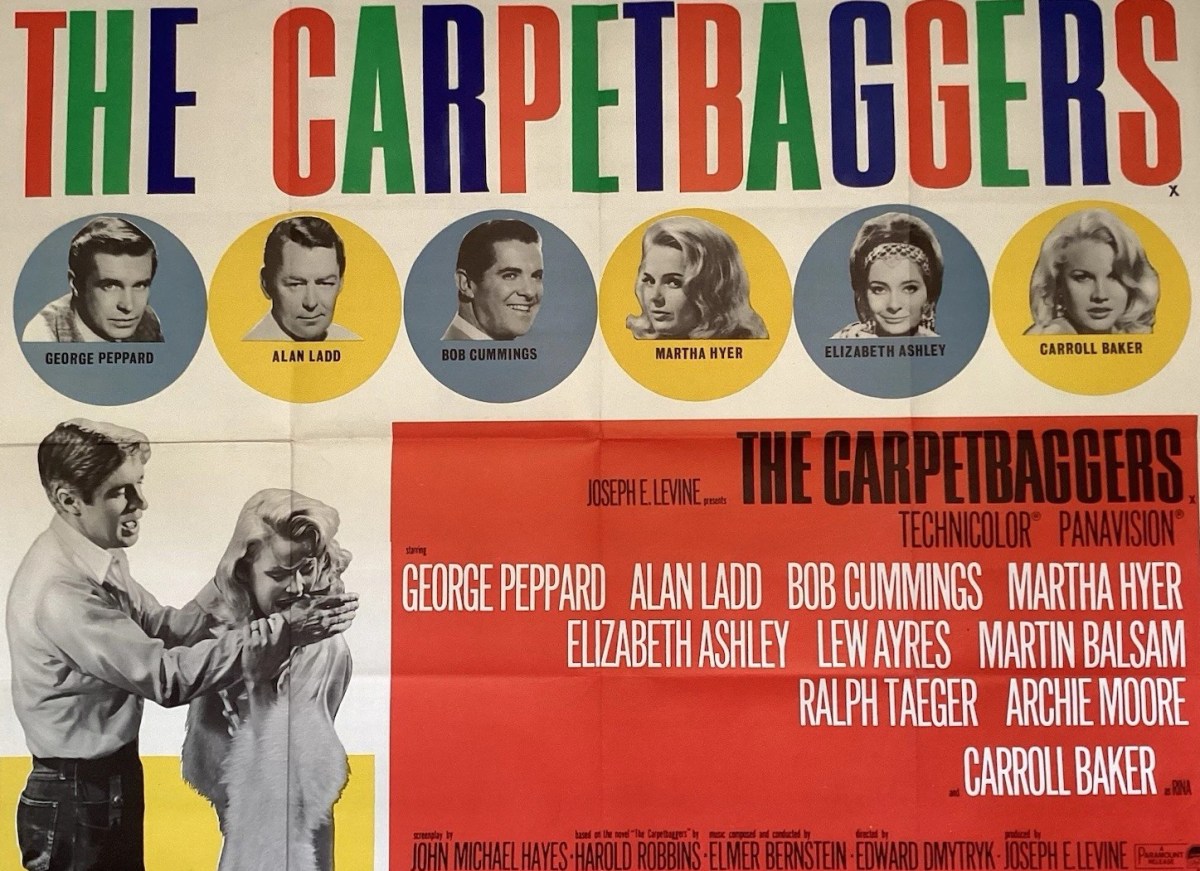
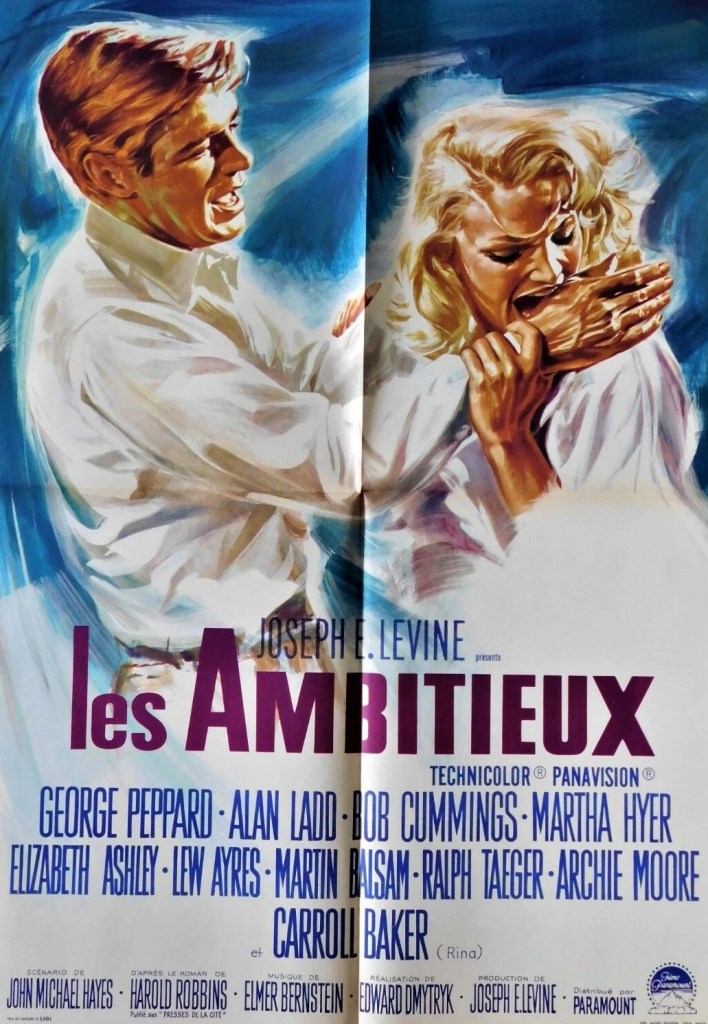
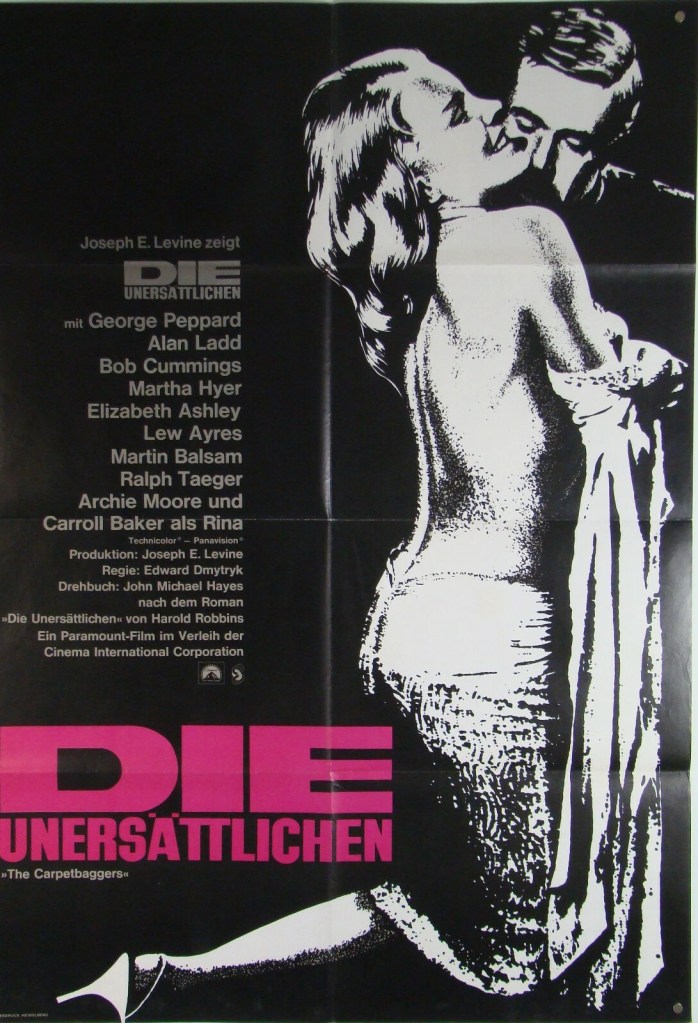
The Carpetbaggers (1964) ****

Likely because the gigantic bestseller by Harold Robbins (Stiletto, 1969) on which this was based made it impervious to critics, the critics determined to slaughter it. Which was a great shame because if they had been at all open-minded, not to mention fair, they would have recognized, outside of a terrific tale with a spellbinding performance by George Peppard (The Blue Max, 1966), a master class in screenwriting from double Oscar nominee John Michael Hayes (Butterfield 8, 1960).

There’s hardly a slack line in the entire ensemble and given he was adapting a monster of a book he cuts to the chase with infinite guile. Scenes demonstrate instant characterization and are littered with quotable lines and the story, even at two-and-half-hours, is told at breakneck speed.

No sooner are we introduced in the opening two scenes to the reckless, arrogant and bedhopping Jonas Cord (George Peppard) than his father has dropped dead and Cord has not only inherited the company but immediately turned from louche spoiled brat into hard-nosed businessman, not just tough but determinedly mean especially in the area of revenge. In a superb scene with his father’s widow Rina (Carroll Baker), we learn that she dumped Jonas for his richer father, and although Jonas appears to be leading her on, that’s only until he can humiliate her by exposing her innate greed.  

Despite her wayward sexuality, Rina is a savvy businesswoman, enough to make sure she is set up for life, although the other men she gravitates towards are not as weak as Jonas’s father, nor as nasty as Jonas, and Nevada Smith (Alan Ladd) has the wisdom to led her down gently when he enters her seductive web. The Nevada Smith backstory, which takes up a hefty chunk of the novel, is dealt with in one clever scene, which could act as a trailer for the later film starring Steve McQueen.

And early on there’s a superb scene, akin to the madwoman in the attic, where Jonas opens a locked door containing a derelict bedroom strewn with children’s toys that belonged to his brother. The reason for the locking away is never explained but it’s the only time Jonas gives in to his vulnerable side.

Both Rina and Nevada segue into successful film careers and eventually have an affair. Cord becomes a movie mogul.

Though it certainly enters soap territory in the second half it’s so true to the characters that it plays out in hugely enjoyable fashion. Jonas remains ruthless – and unhappy – while Rina powers her way through men and booze, the latter leading to her death. Nevada doesn’t turn into a superstar, Jonas abandons wife Monica (Elizabeth Ashley) and child, begins an affair with former porn star Jennie (Martha Hyer) and destroys her.

You will be surprised to learn this has a happy ending. I can’t confess to have read the book so no idea whether or not this was tacked on to keep the studio happy. Whatever, it’s a terrific ride, full of punchy lines and sharply-wrought scenes and enough of the pell-mell structure of the book to keep an audience riveted.

This proved the career breakthrough for George Peppard – Breakfast at Tiffany’s (1961) had done considerably less for his career than it had for Audrey Hepburn – and he offered Hollywood mavens a new kind of hero, not just a tough guy in the Steve McQueen mold, but a mean tough guy that would open the door for the likes of Lee Marvin.

As you will know I’ve got a soft spot for Peppard, who’s generally been under-rated as an actor. This performance, despite the depths he showed, was equally dismissed, but it’s the turn of this career.

Carroll Baker (Harlow, 1965), too, has a part with real meat and makes the most of it, not just a slinky sex god, but devious and smart, and vulnerable. Alan Ladd (Shane, 1953) in his final picture is well out of his comfort zone and might have looked forward to an extended career playing a different kind of character except for his untimely demise.

The females are uniformly good, especially as they all have underlying reasons for their attraction to the wealthy Jonas, Monica desperate to save her father’s business, Jessica desperate to hide her past.

Edward Dmytryk (Mirage, 1965) doesn’t put a foot wrong, allowing insecurities in tough characters to creep through, but the star of the show for me is John Michael Hayes who turns what could have been a routine blockbuster with a built-in audience into a cracking entertainment.

One to catch.

Bunny Lake Is Missing (1965) ****

Otto Preminger (Hurry Sundown, 1967) returns to his film noir roots (Laura, 1944; Whirlpool, 1950) for this crisply-told tale, mixing police procedural with psycho-drama,  of a missing child who may the figment of her mother’s imagination. It’s beautifully filmed and for anyone brought up on modern cinema of short takes and the camera bouncing from one close-up to the next, it will be a revelation, as Preminger favors classic Hollywood style,  long takes, in a single shot the camera often following a person in and out of several rooms, and equally classical composition, scenes containing three or four characters where everyone acts within the frame.

Single-mother Ann (Carol Lynley) turns up to collect her four-year-old daughter Bunny from her first day at a London nursery only to discover not just the child gone but nobody has any recollection of the child being there in the first place. That is, apart from the school cook (Lucie Mannheim), who promised to look out for the child but who has subsequently disappeared. Ann is anxious anyway because she is moving house and in her new apartment has an encounter with her creepy landlord Horacio (Noel Coward), a master of the innuendo and the casual stroke of the arm.  

It’s a very English school with stiff-upper-lip not to mention snippy teachers. “We mustn’t get emotional,” school administrator Miss Smollett (Anna Massey) warns the distraught mother. Ann’s brother Steven (Keir Dullea), a journalist, kicks up more of a stink, arguing with staff, and with a very threatening manner. Things get creepier still. Upstairs, they hear voices but it’s just the school’s founder Ada (Martita Hunt) who records children talking about nightmares. Steven seems over-protective towards his sister, which is understandable, and somewhat over-affectionate, which is not.

Detective Superintendent Newhouse (Laurence Olivier) and sidekick Sgt Andrews (Clive Revill) investigate. He is an unusual cop. A university graduate but not of the excitable Inspector Morse persuasion for one thing, and reasonable to an irritating degree in that he keeps all his options open. But the cops are thorough, descriptions of the missing child issued, search of the premises and surrounding area undertaken. But it turns out there is no record of Bunny in the school ledger, no sign of her existence in the flat, and it transpires that as a child herself Ann had an imaginary companion called Bunny.  

As Steven becomes more obstreperous and the intense Ann verges on the hysterical, not helped by the unwanted attentions of the landlord, a BBC performer with a melodious voice he believes irresistible to women and more than a passing interest in sadism, the case appears to be heading in the direction of a quick visit to a psychiatry ward. The usual anchor in these situations, the policeman, is not as definite as normal, Newhouse not pushing the investigation in a direction the audience will find acceptable, but largely standing back, as if yet to make up his mind, which adds to the sense of mystery.

Carol Lynley with the potential landlord from hell Noel Coward.

Preminger isn’t in the business of piling twist upon twist, but as these arrive in due course, the options they offer are even more psychologically damaging. And from setting off at a steady pace with everything apparently settled down by the steady superintendent, the minute he departs the scene, the story takes on a different dimension and there are three superb chilling scenes, one in hospital, another in a doll’s hospital and the last in a garden as the question of just who is unhinged becomes more apparent. There is certainly madness in the movie but it comes when you least expect it and from a direction you may not have considered. On another level, the world of children is entirely alien to the adult and the reconciliation between the two worlds impossible to bridge.

Preminger extracts a performance from Laurence Olivier (Khartoum, 1966) that cuts the character to the bone, eliminating many of the actor’s tropes and tics, but at the same time making him perfectly human, unable to resist, for example, a traditional school pudding, and finding ways to curb Steven’s excesses while comforting Ann.  By controlling the actor who always exerts screen presence, Preminger makes him come across with even greater authority. It’s an achievement in itself to ensure that Olivier never raises his voice.

Carol Lynley (The Pleasure Seekers, 1964) is excellent as the distraught mother, one step away from losing her mind and Keir Dullea (The Fox, 1967) constantly raises the stakes. Noel Coward (The Italian Job, 1969) possibly does the best job of the lot, his normal high levels of sophistication eschewed in favour of the downright creepy.  In supporting roles look out for Clive Revill (Kaleidoscope, 1966), Finlay Currie (Vendetta for the Saint, 1969), Anna Massey (De Sade, 1969) and Adrienne Corri (The Viking Queen, 1967). Pop group The Zombies featuring Rod Argent and Colin Blunstone put in an appearance.  

Husband-and-wife team John Mortimer (John and Mary, 1969) and Penelope Mortimer (The Pumpkin Eater, 1964) wrote the screenplay from the besteller by Evelyn Piper. But it is most assuredly an Otto Preminger production. He has a surprisingly good grasp of British custom and character, shot all the movie on location, but in black-and-white so it is not dominated by the tourist London of red buses or red pillar boxes, and his probing camera and long takes are a marvel for any cinematic scholar.

Discover WordPress

A daily selection of the best content published on WordPress, collected for you by humans who love to read.

The Atavist Magazine

by Brian Hannan

WordPress.com Blog

News, Tips & Website Tutorials