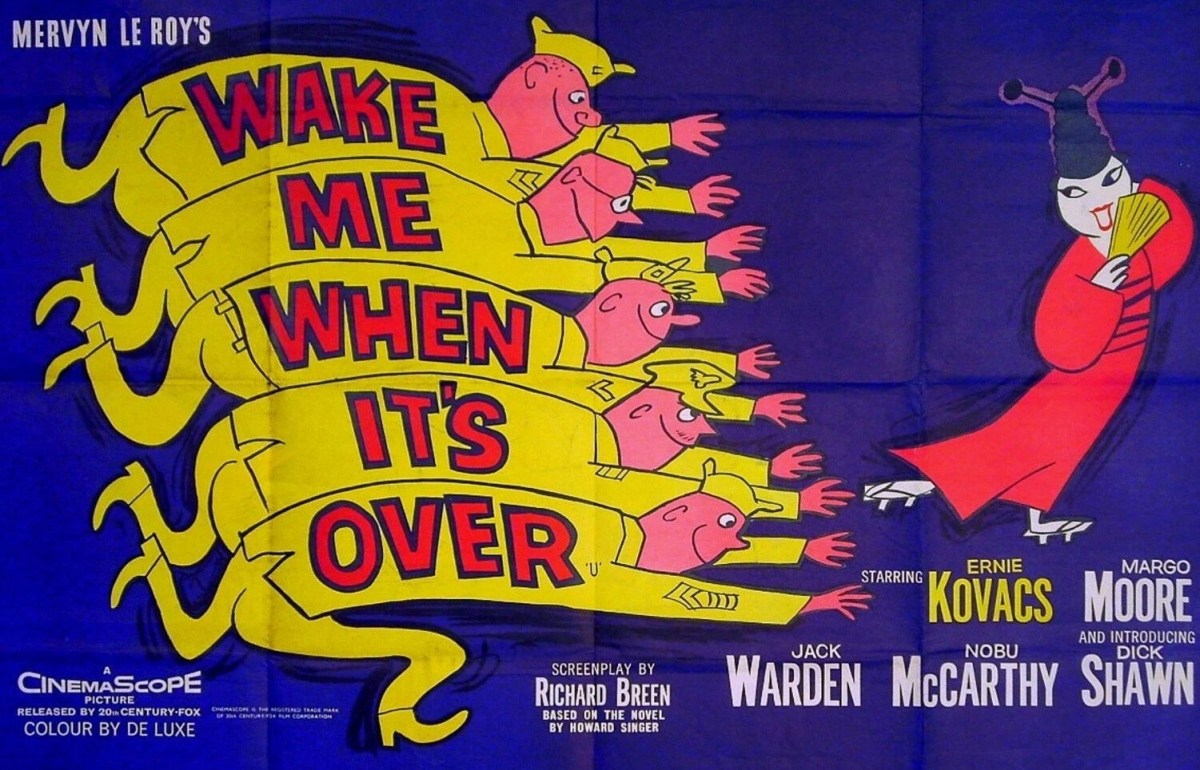
Wake Me When It’s Over (1960) ***

You could scarcely find a better example of the pleasant undemanding fare that constituted Hollywood’s bread-and-butter than this mild comedy. It takes 20 minutes to even get to first base, setting our hero on his journey to a distant land, and another 20 minutes before the narrative sets out a purpose, from which various romantic and dramatic complications can arise. It doesn’t boast any stars.

If top-billed Ernie Kovacs (North to Alaska, 1960), in his third movie (and first as the headline act) had any marquee attraction it was to a television audience following his output in various comedy shows, but those would carry no weight abroad.  The second-billed Dick Shawn (A Very Special Favor, 1965) carried even less appeal. He was best known as a guest star liable to pop up on television shows. Both comics were an acquired taste, belonging to the avant-garde, so their styles were not guaranteed to necessarily go down well. Not like, for example, more established comedians such as Bob Hope or Jerry Lewis.
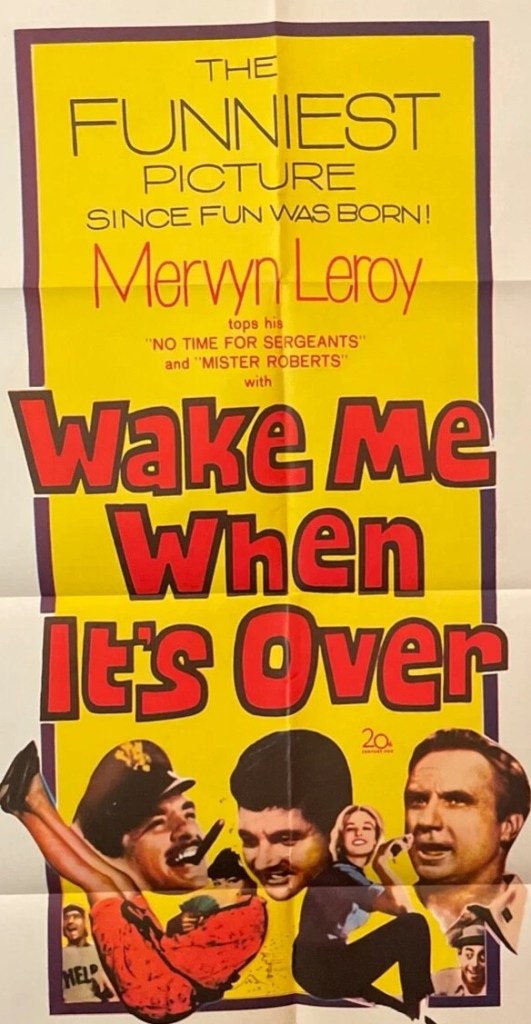
The public was even less familiar with female lead Margo Moore (The George Raft Story, 1961). She only made three movies in total, this being the middle one.

This probably was greenlit thanks to director Mervyn Leroy who had helmed two very successful service comedies, Mister Roberts (1955), replacing John Ford, and No Time for Sergeants (1958), both based on hit Broadway plays.

Through a bureaucratic error, unassuming Gus Brubaker (Dick Shawn) is re-drafted into the U.S. military and dispatched to a remote island near Japan where, this being in the aftermath of the Korean War, there is nothing for the soldiers to do except laze around. Capt Stark (Ernie Kovacs), the unit commander, is as intent on doing nothing as anyone else.

Brubaker hits on the idea of utilizing the natural hot springs of the area to build a hotel using materials acquired very cheaply in order to capitalize on this wonder, offering hot spa treatments to visitors and recuperating soldiers.
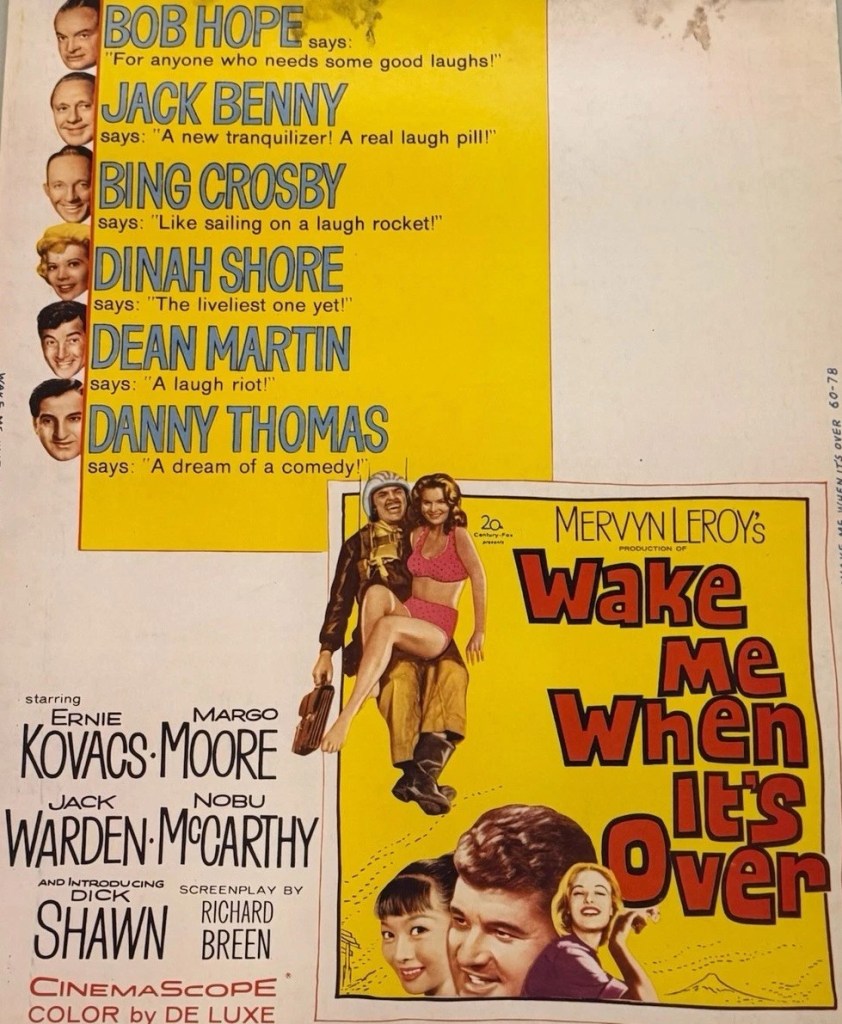
The soldiers, including resident medic Capt Farrington (Jack Warden), sign on, seeing it as a business opportunity, involvement in which, somehow, does not run contrary to military regulations. Just when you’re waiting for the picture to develop some snap – it’s not going to be romance between Brubaker and Ume (Nobu McCarthy), daughter of the local mayor, because he’s already happily married to Marge (Noreen Nash) – up pops Lt Nora McKay (Margo Moore), bringing a female sensibility to the project and in charge of hiring the 40 local women to staff Hotel Shima.

With Brubaker off limits, it’s up to Stark and McKay to make romantic hay, though that ultimately encounters complication. Building the hotel would be the modern equivalent of a corporate team building operation because the solders soon revert to proper military ways and bond.

But word misleadingly gets out that far from being known for its healing properties, the hotel is actually a front for sexual encounters and Brubaker is court-martialed, leading to all sorts of shenanigans. After being found guilty, he is let off the hook due to the original bureaucratic error that led him to be re-drafted in the first place.

Once it gets going – and that’s quite a long time – it turns into harmless enjoyment and the two stars have ample opportunity to show they are not run-of-the-mill comedians. There are some good visual jokes, The cans of beer Brubaker has dropped in a pool to cool explode to demonstrate the water is actually a hot spring, the MacGuffin of the piece. On finding himself on the island, Brubaker plans to immediately submit a request to leave. The filing cabinet for a simple request is half-full, the one seeking a transfer full and the one demanding he be viewed as a special case overflowing.

Charming in its own way. Didn’t turn anyone into a star but proved that Hollywood could make this kind of small picture – what we’d call a “sleeper” – with enough going on to maintain interest.  
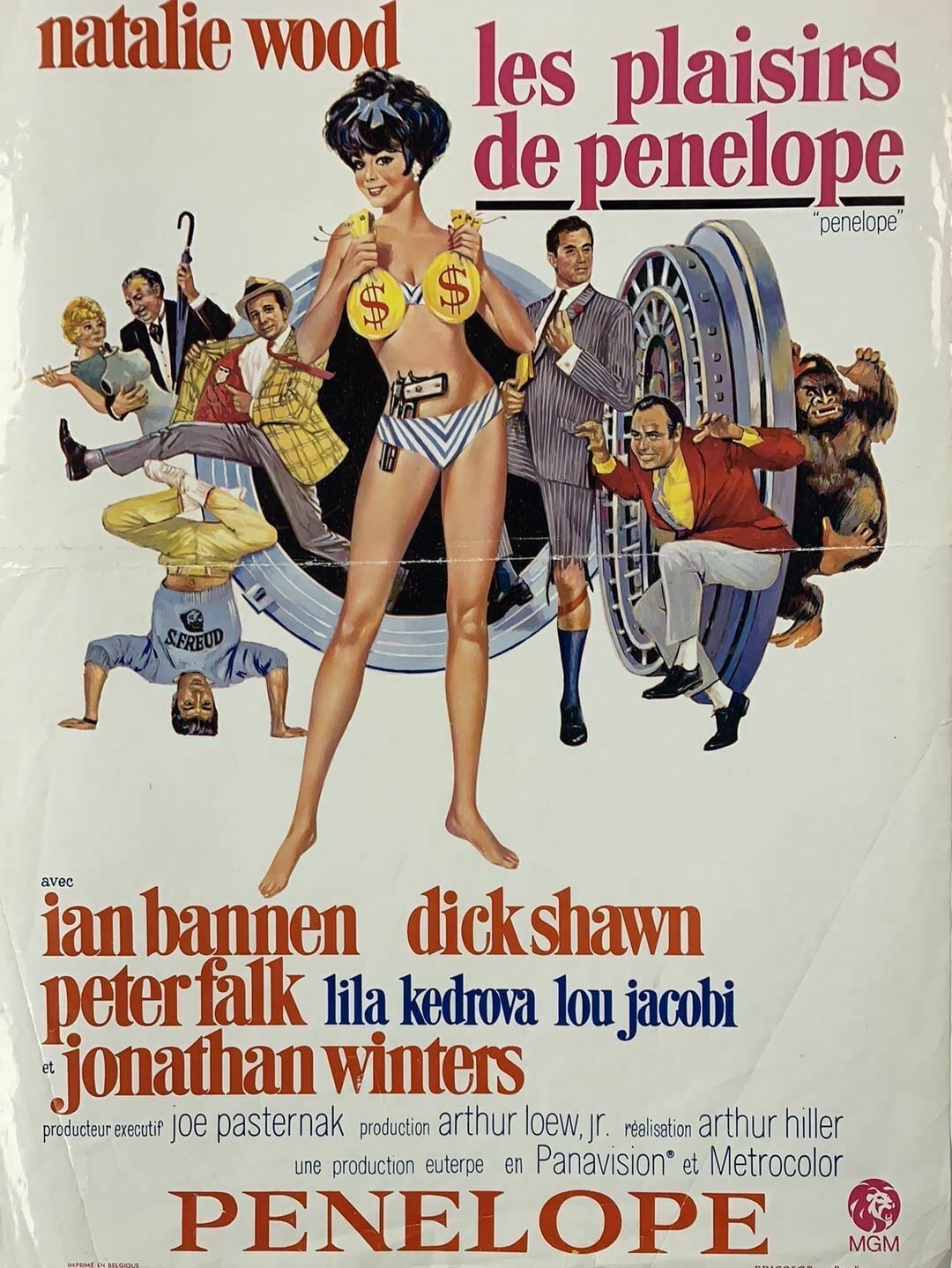
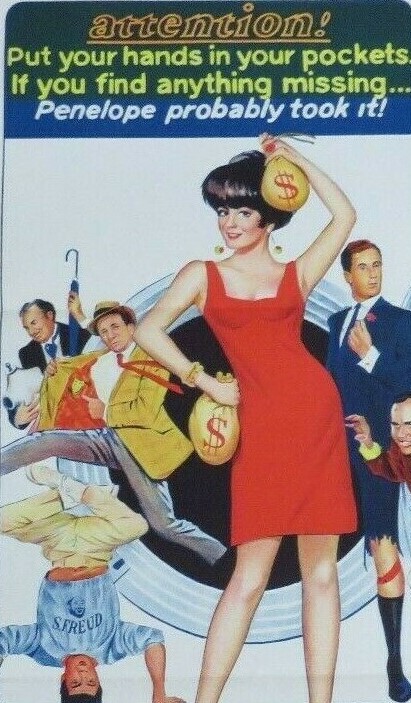
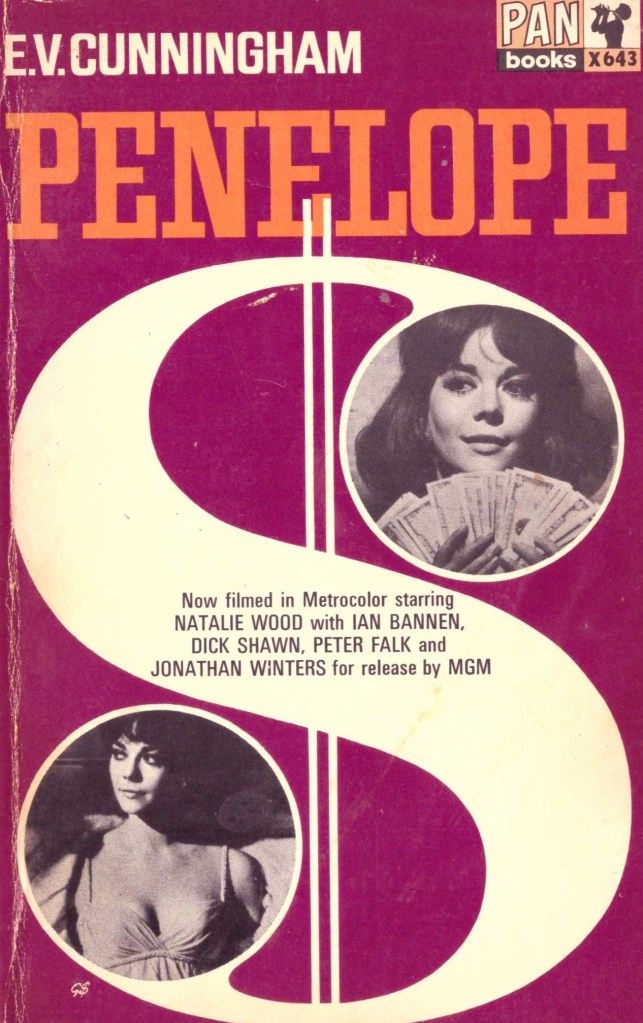
Penelope (1966) ***

Comedic twist on the heist movie with Natalie Wood (This Property Is Condemned, 1966) as a kleptomaniac. Given its origins in a tight little thriller by E.V. Cunningham, pseudonym of Howard Fast (Mirage, 1965), it’s an awful loose construction that seems to run around with little idea of where it wants to go. Wood, of course, is a delightfully kooky heroine who takes revenge on anyone who has ignored or slighted her by stealing their possessions.

The picture begins with her boldest coup. Cleverly disguised as an old woman, she robs the newest Park Avenue bank owned by overbearing husband James (Ian Bannen). This prompts the best comedy in the movie, a man with a violin case (Lewis Charles) being apprehended by police, the doors automatically locking after a clerk falls on the alarm button, James trapped in the revolving doors losing his trousers in the process.

In flashback, we learn that she turned to thievery after a rape attempt by Professor Klobb (Jonathan Winter), her college tutor, and while half-naked managed to make off with his watch fob. She stole a set of earrings from Mildred (Norma Crane) after suspecting she is having an affair with James. “Stealing makes me cheerful,” she tells her psychiatrist, Dr Mannix (Dick Shawn) and while admitting to dishonesty denies being a compulsive thief. After the bank robbery she even manages to relieve investigating officer Lt Bixby (Peter Falk) of his wallet.

Nobody suspects her, certainly not her husband who could not conceive of his wife having the brains to carry out such an audacious plan. Bixby is a bit more on the ball, but not much. Clues that would have snared her in seconds if seen by any half-decent cop are missed by this bunch. And generally that is the problem, the outcome is so weighted in Penelope’s favor. The plot then goes all around the houses to include as many oddballs as possible – boutique owners Sadaba (Lila Kedrova) and Ducky (Lou Jacobi), Major Higgins (Arthur Malet) and suspect Honeysuckle Rose (Arlene Golonka). Naturally, when she does confess – to save the innocent Honeysuckle – nobody believes her in part because everyone has fallen in love with her. Bixby, just as smitten, nonetheless makes a decent stab at the investigation.

Howard Fast under the pseudonym of E.V. Cunningham wrote a series of thrillers with a woman’s name as the title. He was on a roll in the 1960s providing the source material for Spartacus (1960), The Man in the Middle (1964), Cheyenne Autumn (1964), Sylvia (1965), Mirage (1965) and Jigsaw (1968).

Taken as pure confection it has its attractions. It’s certainly frothy at the edges and there are a number of funny lines especially with her psychiatrist and the slapstick approach does hit the target every now and then. The icing on the cake is top class while the cake itself has little of substance. It strikes a satirical note on occasion especially with the Greenwich Village cellar sequence. It doesn’t go anywhere near what might be driving this woman towards such potential calamity – that she gets away with it is only down to her charm. There has probably never been such a pair of rose-tinted spectacles as worn by Penelope, even though her every action is driven by revenge.

Without Natalie Wood it would have sunk without trace but her vivacious screen persona is imminently watchable and the constant wardrobe changes (courtesy of Edith Head) and glossy treatment gets it over the finishing line. It’s one of those star-driven vehicles at which Golden Age Hollywood was once so adept but which fails to translate so well to a later era. Ian Bannen (Station Six Sahara, 1963) is in his element as a grumpy husband, though you would wonder what initially she saw in him, and Peter Falk (Robin and the 7 Hoods, 1965) delivers another memorable performance.  Dick Shawn (A Very Special Favor, 1965) is the pick of the supporting cast though screen personalities like Lila Kedrova (Torn Curtain, 1966), Jonathan Winters (The Loved One, 1965) and Lou Jacobi (Irma la Douce, 1963) are not easily ignored.  Johnny Williams a.k.a John Williams wrote the score.

Director Arthur Hiller (Tobruk, 1967) delivers as much of the goods as are possible within the zany framework. Veteran Oscar-winner George Wells (Three Bites of the Apple, 1967) wrote the screenplay but it’s a far cry from the far more interesting source material and I would have to wonder what kind of sensibility – even at that time – could invent a comedy rape (not in the book, I hasten to add).

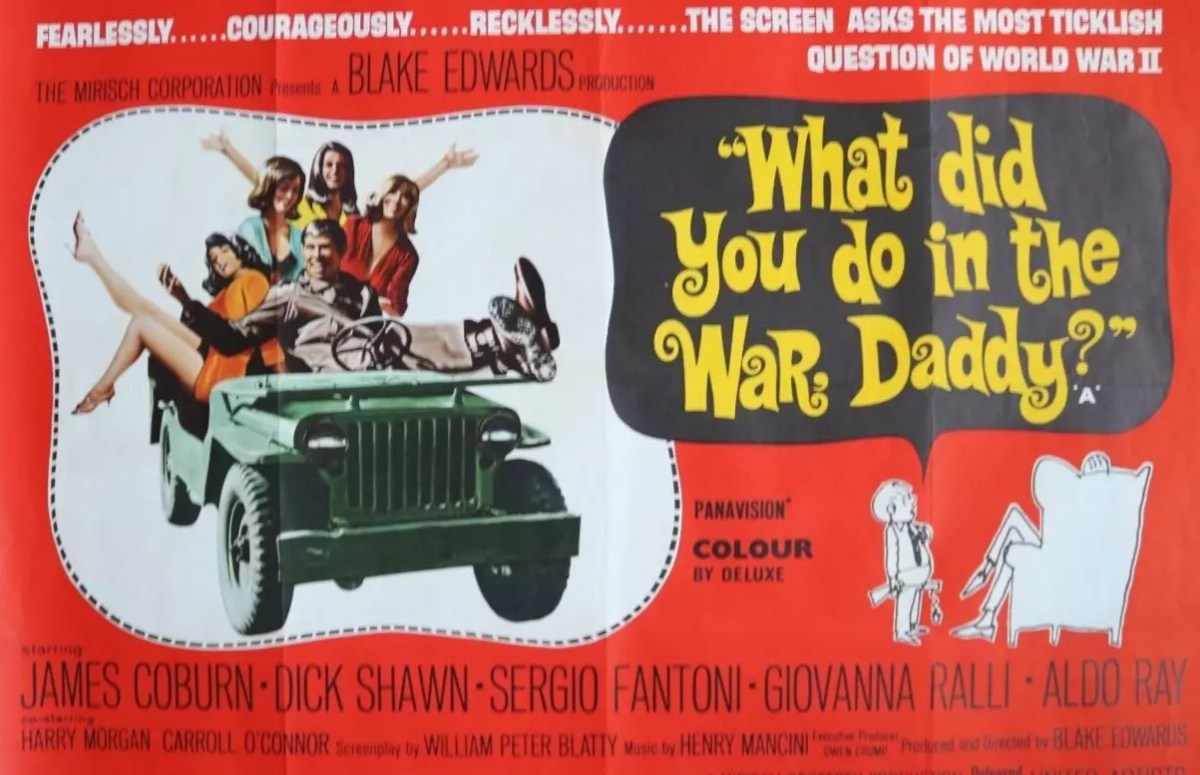
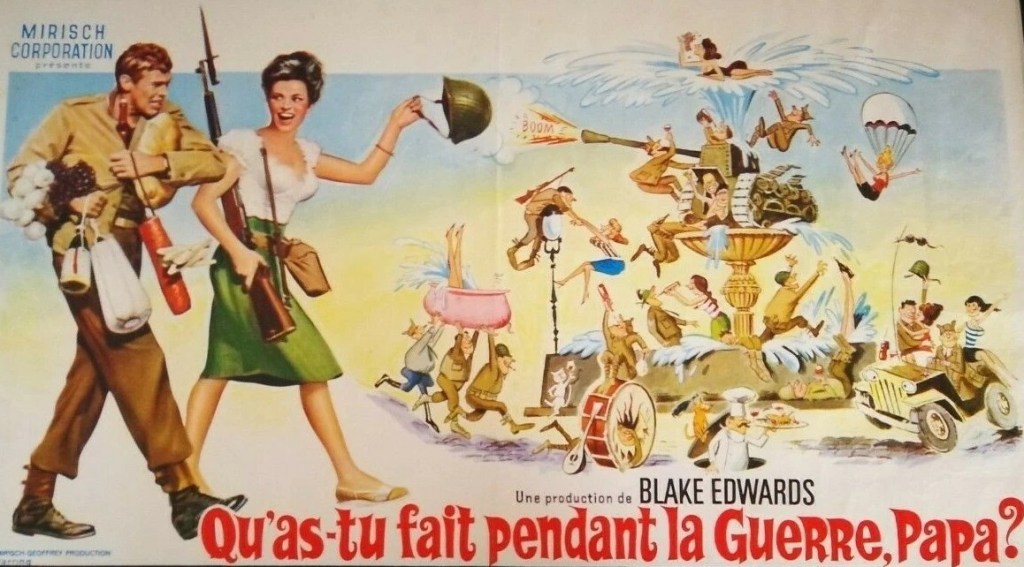
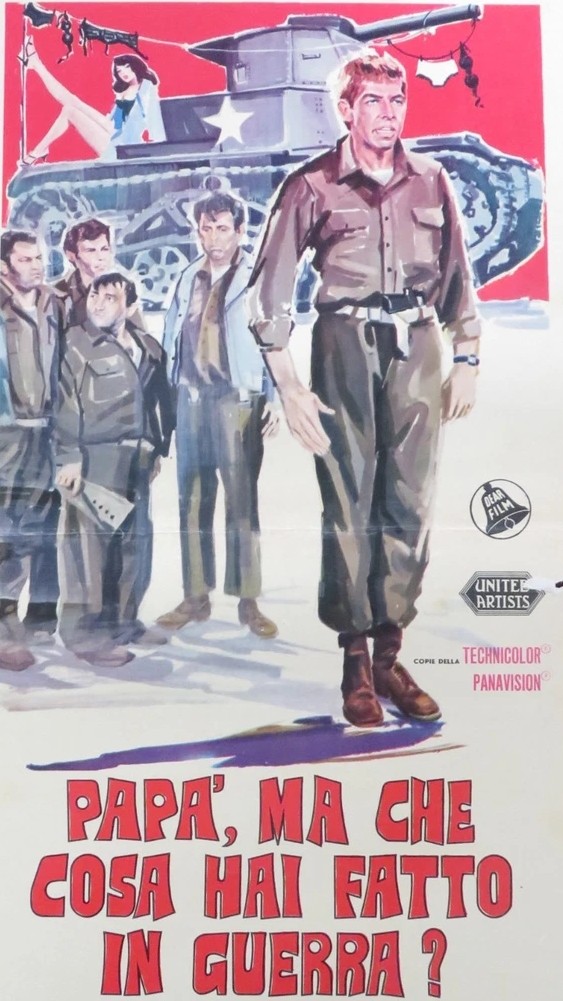
What Did You Do in the War, Daddy? (1966) **

How on earth did James Coburn get mixed up in this mess? I’m assuming that having suddenly been elevated from supporting actor to top billing as a result of Our Man Flint (1966) he took the first job that came along that reflected his ideas about salary. Director Blake Edwards was, to some extent, at something of a loose end. United Artists had passed on The Great Race (1965) and another project with the director had fallen by the wayside. Apparently, this movie was the result of a question asked by his son. During World War Two, Edwards had served in the U.S. Coastguard which meant he did not see active service though did suffer a back injury. Writer William Peter Blatty (A Shot in the Dark, 1964) was too young for World War Two and though he joined the US Air Force he didn’t see active service either, being employed in the psychological warfare division.

So this exercise wasn’t going to be based on personal experience. The mid-1960s wouldn’t exactly lend itself to poking fun at war, although Vietnam was fair game.

You might have thought Coburn, on reading the script, would have realized he’s not much in the movie for the first 20 minutes or so and then is at the mercy of a bundle of subplots.

During the invasion of Sicily in 1943, stickler for discipline Captain Cash (Dick Shawn) is handed command of a disorganized unit headed by Lt Christian (James Coburn) and instructed to take a strategic village from the Germans. Turns out the enemy is long gone and the resident Italian soldiers, commanded by Capt Oppo (Sergio Fantoni), are only too happy to surrender as long as they can continue to enjoy la dolce vita which in this case involves an annual wine festival. Most of the early part of the picture revolves around getting Cash to loosen up, and after imbibing copious amounts of liquor and being seduced by the mayor’s daughter Gina (Giovanni Ralli) he relents.

There are only two obstacles to the merry party. Oppo objects to his girlfriend Gina being used as a makeweight to make Cash see things the Italian way and Cash’s boss General Bolt (Carroll O’Connor) asks to see proof of their success. So, since not a shot has been fired and they can’t boast of a camp full of Italian POWs, they decide to invent the proof and start filming phoney footage.  Bolt reckons they need support and sends up reinforcements. Which is just as well because the Germans, either realizing what they’ve been missing or being nudged back into action, decide to reappear. And given the slovenly chaotic opposition it’s not hard for them to re-take control of the town which results in Cash hiding out in drag.

Theoretically, it’s a reasonable idea. There’s been no shortage of swindlers or con-men or black marketeers in war movies – think James Garner in The Great Escape (1963) and The Americanization of Emily (1964) – and various armies have been filled with shysters ranging from Sgt Bilko to the shifty recruits in British films up to all sorts of wheezes or doing their best to stay out of the line of fire.

But once the point has been made that it’s better to make love not war and drink as much wine as possible and become friends with the enemy, the point is made over and over again. There isn’t a single joke that isn’t belaboured and not many laffs to begin with. Going over-the-top is fine for slapstick like The Great Race but it doesn’t work here.

James Coburn has too little to do and Dick Shawn (A Very Special Favor, 1965) too much. Giovanni Ralli (Deadfall, 1968) and Sergio Fantoni (Hornet’s Nest, 1970 ) are wasted. Carroll O’Connor (Warning Shot, 1966) is the pick of a supporting cast that includes Aldo Ray (The Power, 1968) and Harry Morgan (The Mountain Road, 1960) but that’s only because he has a clever reversal of a role as a general who wants to be treated as an individual.

I should point out this has something of a cult following but I won’t be joining the fan club.

Must have seemed a good idea at the time.

Discover WordPress

A daily selection of the best content published on WordPress, collected for you by humans who love to read.

The Atavist Magazine

by Brian Hannan

WordPress.com Blog

News, Tips & Website Tutorials