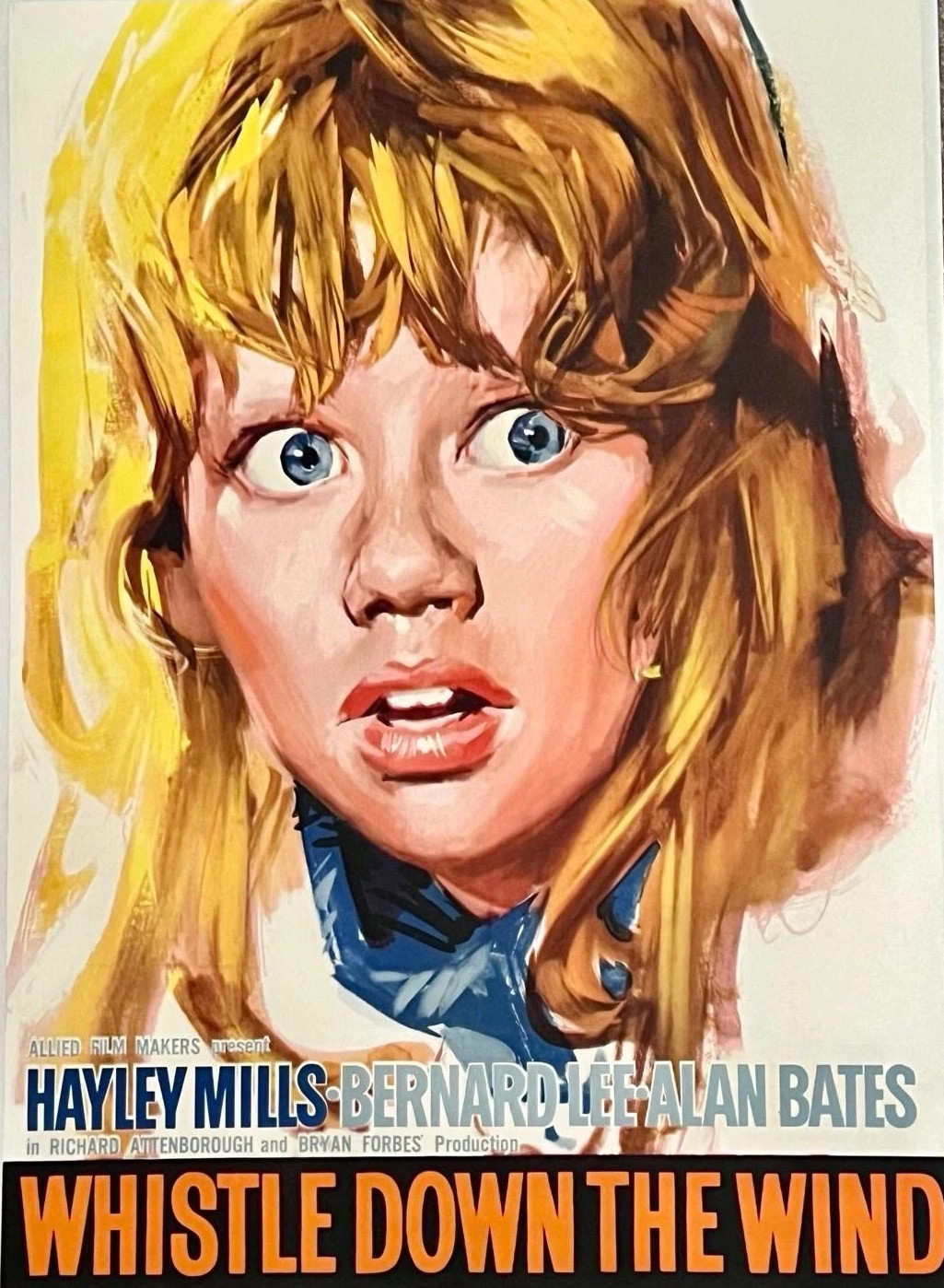
Sheer coincidence that within the space of a week I’m watching three films that deal with the power of a child’s imagination. While The Magic Faraway Tree disappeared into the realms of fantasy and Eye Witness / Sudden Witness a lonely child’s fervid alternative realities, Whistle Down the Wind examines the ability of children to become involved in something that makes complete sense to them while keeping adults out of the picture.
And not just for the religious allegory is Whistle Down the Wind streets ahead. While the children in the other films are believable enough, this is much more down-to-earth. A farm here isn’t a refuge from the city and a place to indulge dreams, it’s muddy and cold and wet. Everyone trudges around in wellies. Adults drown kittens, are overly pious and view children as mostly a nuisance. The children wouldn’t dare be cheeky to those in authority.
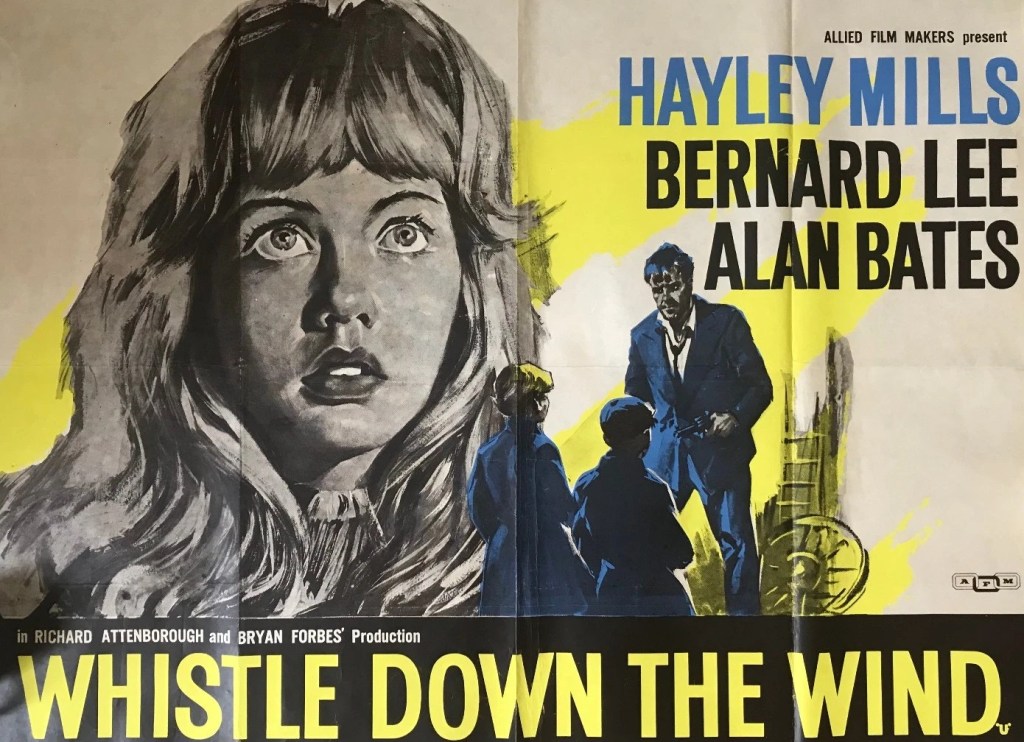
And their belief in something that defies belief is both touching and understandable given the circumstances. They are convinced they have found a reborn Jesus (Alan Bates) in their barn. Perhaps it’s only a child, with all that innocence, who could actually be persuaded that, as stated in the Bible, Jesus will come again.
The characters are very well-drawn. Kathy Bostock (Hayley Mills), eldest of three siblings, motherless, is the leader, saving the drowning kittens, stealing to feed the man, and guiding her flock in taking care of him. Youngest child Charlie (Alan Barnes) is instinctively more cynical. Mr Bostock (Bernard Lee) has his hands full dealing with his kids and his snippy sister Dorothy (Elsie Wagstaff) resents having to act as housekeeper.
The religious allegory elements include of course finding Jesus in a barn (doubling for the stables at Bethlehem), bringing him gifts as if the kids were the Magi, feeding him bread and wine (a bottle of port stolen from a cupboard), treating him with adoration and denying him thrice (Judas Iscariot). Even when the first crack appears in the façade after Jesus has allowed a kitten left in his care to die, Kathy battles to keep the dream alive, pestering the local vicar to explain how Jesus could allow this and finding an answer that does the trick.
The enterprise collapses when a child is spotted secreting an extra piece of birthday cake for the man. By this time he has managed to secure a gun and we know he’s wanted for murder.
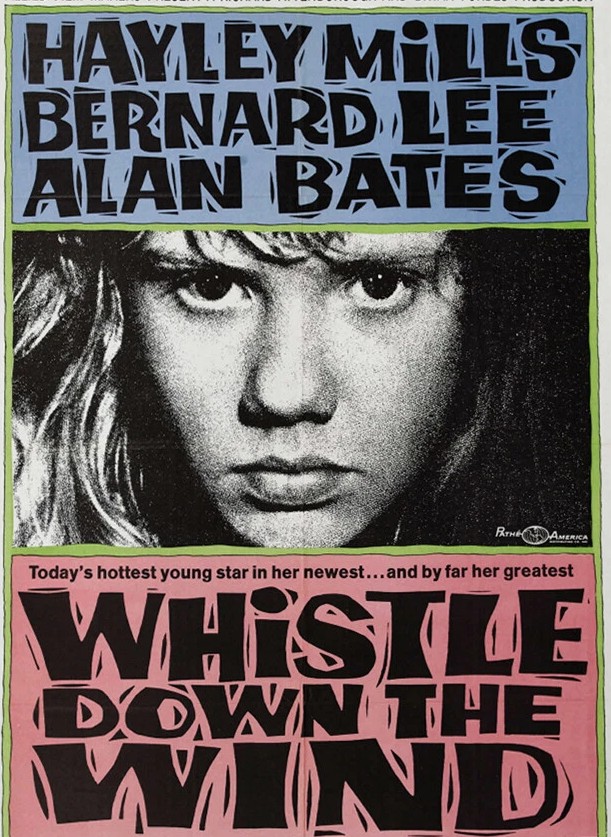
Even so, Kathy refuses to let go of her belief, promising to a younger child, saddened by the man’s capture, that Jesus will come again.
The allegorical aspects would have worked better at a time when fantasy was not all the rage. But the current diminution of Christian belief means that the ideas spelled out in the New Testament might well sound fantastical to a contemporary audience. Certainly, the idea of stumbling, by circumstance, onto a magical character forms part of the fantasy trope.
Understanding childhood from the remove of adulthood takes some doing. We are apt to forget how our younger minds worked. Children desperately want to believe in something else that lifts them from the gloom of the day-to-day. But, equally, they want to keep their childhood dreams secure from adult interference. No youngster really wants to entertain the cool dad who is “down with the kids.”
And the secret is something to savour. The local bully is disconcerted when a playground full of kids taunt him with “we know something that you don’t.” That fear of exclusion is highly potent.
Unlike The Magic Faraway Tree there is no complicit adult who will back up the fantasy. Here, the kids instinctively know adults will seek to destroy it, especially after the Sunday School teacher clearly can’t come to terms with the idea of Christ coming again any time soon and the vicar uses any interaction with children as an opportunity to blame them for something.
I was surprised this worked as well as it did. The viewer knows full well it’s only an accident of circumstance that there is a man in the barn and that the conjecture that he is Jesus Christ relies on his use of that word as a swear word (as it would be at the time). So we’re not being asked to believe in fairies or elves, as we are by now attuned to do after Lord of the Rings and Harry Potter etc. We are watching the reaction of the children to wondrous mystery.
By this point Hayley Mills was being turned into the standard vanilla child star by Walt Disney – Pollyanna had just confirmed that status – and I’m sure Disney was appalled that he had not secured her to an exclusive contract. Instead, every year she made a movie that, perhaps while capitalizing on the fame Disney was paying for, offered a more challenging role.
She’s not coiffed and clothed as in the Disney ventures, more an ordinary scruffy child, and she gives a superb performance. In some respects, given the acting intelligence exhibited, no one should have doubted she would make the crossover into the adult star of The Family Way (1966). The questioning Alan Barnes (The Victors, 1963) is a treat. Bernard Lee (The Secret Partner, 1961) is the pick of the adults. Alan Bates (The Running Man, 1963) has less to do than you might imagine.
Bryan Forbes (King Rat, 1965) made an auspicious directorial debut, not just wrangling the kids expertly but using the visual to complement the narrative, the bleak landscape a million miles away from the more commonly seen blooming English countryside. Written by the team of Keith Waterhouse and Willis Hall (The Winston Affair, 1964) from the book by the star’s mother Mary Hayley Bell (Sky West and Crooked / Gypsy Girl, 1966).
Despite the unlikely premise, draws you in.


