Della (1964) ***

At this point in her career Joan Crawford was more of a holy terror than a femme fatale. So audiences came at her movies expecting the worst even when she was still dolled up to the nines, hair coiffed within an inch of its life, outfits immaculate or someone would pay the price. Oddly enough, unlike most actresses of her generation, she had embraced age. Her hair was a solid grey, not an ounce of original color. So, given her propensity to tweaking her screen persona, expectation might be that on initial appearance she could still be more femme than fatale, only to later trap an unsuspecting victim.

The convoluted opening to this one is explained by it being a pilot for a television series that was never aired so the producers just pitched it out onto the cinema screen. It’s surprising it wasn’t picked up by a television network because the theme was one – family conflict in big business – that later made television studios absolute fortunes (Dallas etc) and retains a hold on the small screen today, witness Succession.

This autobiography left out the bits the media pounced upon in her daughter’s memoir Mommie Dearest published in 1978 and filmed in 1981 starring Faye Dunaway.

Once the narrative settles down it’s a twist on Wild River (1960),  the titular Della (Joan Crawford) appearing immoveable in the face on necessary community progress, and a hint of Mildred Pierce (1945) with an over-protective mother guarding daughter Jenny (Diane Baker) from potential suitor Barney Stafford (Paul Burke), an attorney. Jenny must be the only person in the annals of Hollywood who, shunning daylight, does not have a vampiric tendency.

Rich recluse Della owns most of the local town, but developers want to shake things up. In the past she had a fling with Barney’s father Hugh (Charles Bickford). At first she resists all moves by Barney who’s working for the developers but changes her tune when she notices how much Barney brings her daughter out of her shell. Eventually, we realize Jenny’s daylight intolerance is due to a rare skin condition.

The twin elements, the clash of big businesses and the nascent romance, would be enough fuel for this particular fire but given the movie did not originate as a feature film but as the first episode in a television series – to be called Royal Bay after the name of the town –  it was duty bound to rope in a lot of other characters, ignite various personality clashes, and feed the audience on other issues that would resolved further down the line.

Joan Crawford starred in “Rain” in 1932.

So, quickly, we learn that, tough as she is, Della is exceptionally vulnerable when it comes to her daughter and tough as Barney would like to be his business snse goes haywire after touching base with Jenny. Della’s skirmishes with Barney are old-school, but the holy terror part is kept to a minimum, while if the femme fatale appears at all it’s only to hook Barney to care for her daughter.

Naturally, not much goes to plan. Della can’t control her daughter once romance enters her head, nor can she put the squeeze on Barney. But, for his part, the attorney thinks he’s smarter than he is and miscalculates just how right the mother is in protecting the daughter from herself. Once Jenny rebels, there’s tragic consequence.

Top Hollywood female stars hadn’t imposed themselves on television yet. Barbara Stanwyck’s sojourn as the matriarch in The Big Valley was still a year off and although Lucille Ball turned into a television entrepreneur of considerable note (producing a bunch of major series apart from I Love Lucy) she did not have the movie marquee stature of Crawford. How much Crawford would have featured in further episodes is unclear but a running battle between herself and Barney, who she was likely to blame for her daughter’s death, would be standard material for such soaps.

Joan Crawford (Whatever Happened to Baby Jane, 1962) is in her element, serving up a ruthless operator with a softer side. Paul Burke (Daddy’s Gone A-Hunting, 1969) lacks the screen persona to take her on while veteran Charles Bickford (A Big Hand for the Little Lady, 1966) doesn’t get to tangle with her often enough. Hitchcock protege Diane Baker (Mirage, 1965) continues to show promise.

Directed by Robert Gist (An American Dream / See You in Hell, Darling, 1966) does better with Crawford than the rest of the cast. Written by Richard Alan Simmons (Juggernaut, 1974).

It’s lean on the running time but Crawford is worth it.

Battle of the Bulge (1965) ***** – Seen at the Cinema in Cinerama and 70mm

Cinerama was the IMAX of the day and far superior in my view in many aspects not least the width of the screen. IMAX goes for height but I’m not convinced that compensates for lack of the widest screen you could imagine. So the chance of seeing this in the original Cinerama print, 70mm and six-track stereo, at the annual Bradford Widescreen Festival yesterday was too good to miss. And so it proved. A thundering experience. Much as I enjoyed it on DVD, this was elevated way beyond expectation.

Superb even-handed depiction of war, far better than I remembered. Most war films of this era and even beyond showed the action primarily from the view of the Americans/British – even the acclaimed The Deer Hunter (1978) and Apocalypse Now (1979) show nothing of the skills of the Vietnam forces that would prove victorious. And while The Longest Day (1962) shows reaction to the invasion, the Germans are revealed as caught on the hop. Given the basis for this picture is the unexpected German offensive in the Ardennes, France, in December-January 1944-1945, you might expect the Germans to be accorded some attention. But hardly, given as much of the picture as this, so that in the early stages the Germans are portrayed as powerful, clever and patriotic while the Americans are slovenly and complacent, their greatest efforts expended on preparing for Xmas.

With tanks the main military focus, Cinerama is deployed brilliantly, the ultra-wide screen especially useful as the unstoppable vehicles rampage through forests and land and allowing true audience involvement when opposing armies meet head-to-head. Of course, it being Cinerama, there are a couple of scenes that play to the strength of this particular screen, a car careening round bends and a train racing along twisting tracks, the kind of scenes that previously would have had the audiences out of their seats with excitement, but here mainly used to raise the tension in the battle.

It’s to the film’s benefit that the all-star cast doesn’t feature a single actor who is truly a star in the John Wayne/Gregory Peck/Steve McQueen mould so that prevents the audience rubbernecking to spot-a-star that afflicted The Longest Day. The biggest name, technically, is Henry Fonda, and although he received top billing in many pictures, you would have to go back to The Wrong Man (1956) to find an actual box office hit. The only previous top billing for Robert Shaw (From Russia with Love, 1963) had been in The Luck of Ginger Coffey (1964), a flop few had seen. And the top-billing days of Robert Ryan (Horizons West, 1952) and Dana Andrews (Laura, 1944). In fact, the actor with the biggest string of hits was Disney protégé James MacArthur (Swiss Family Robinson, 1960). Anybody who had seen The Magnificent Seven (1960) and The Great Escape (1963) would recognise Charles Bronson in a supporting role. So fair is the movie that it’s the blond-haired Shaw who steals the show with a dynamic performance.

So it helped the almost documentary-style of the film that it was filled with familiar faces rather than dominant stars and the director was not bound to give a star more screen time or provide them with one brilliant scene after another, or establish a redundant love story in order to provide them with more emotional heft. In fact, the only romance goes to a sly black marketeer who views his relationship more as a business asset.

Initially, the role of Lt. Col. Kiley (Henry Fonda), a former cop, seems only to be to rile his superiors General Grey (Robert Ryan) and Colonel Pritchard (Dana Andrews), his pessimistic view contrasting with the accepted notion that the Germans are well and truly defeated and the war would be over soon. On airplane reconnaissance he takes a photograph of an officer later identified as Panzer tank genius Colonel Hessler (Robert Shaw). While Grey and Pritchard over-ride his conclusions, the movie concentrates on the German build-up, their discipline, efficiency, leadership and determination juxtaposed to the American inefficiency and sloppiness.

Where the Americans just want to get home, Hessler – more charismatic than any of the dull Yanks – is in his element, wanting the war to never end, convinced at least that a tank-driven assault would drive a wedge between the Allied forces, and reaching the target Antwerp in Belgium in the north would extend the war by another year by which time Germany’s V2 rockets would give them greater firepower. The Germans also have a clever idea, the type that the British were always coming up with and would make a film of its own, of parachuting American-born Germans behind enemy lines, dressed in American uniforms to carry out vital sabotage and hold crucial bridges across the River Meuse.

In one of the best scenes in the film, his tank commanders spurt spontaneously into a patriotic song with much stamping of boots. And while Hessler’s immediate superior (Werner Peters) , ensconced in a superior bunker, can enjoy a comfortable lifestyle, no more illustrated by the fact that he has courtesans to hand, one of whom, offered to Hessler, is furiously dismissed. And the clock is ticking, the Germans have limited supplies of fuel and must reach the enemy’s supply dumps before they run out of gas.

The maverick Kiley manages to be everywhere – the River Meuse bridge, in the air in the fog determinedly hunting for the panzers he believes are hidden, is the one who realises how critical the fuel situation is for the enemy, and at the fuel depot for the movie climax. Otherwise, the picture uses its cast of supporting characters to cover other incidents, the massacre of prisoners of war at Malmedy, the chaos  as the Germans over-run American-held towns.

Best of all is the human element. It would be easy on a picture of this scope to lose emotional connection, as you would say was the prime flaw of The Longest Day. Not only is Kiley the outsider trying to beat the system, but we have the cowardly Lt Weaver (James MacArthur) who would rather give up without a fight than lose his life, the weaselly Sgt. Guffy (Telly Savalas) representing the worst instincts of the grunts, the confused General Grey can’t make up his mind how to respond to the sudden attack, and Hessler’s driver   Conrad (Hans Christian Blech) who is fed up with paying the price of war.

The action scenes are outstanding. If you’ve never been up against a tank in full flight, you will soon get the idea how fearsome these metal battering rams are, as the rear up, crash over trees, race across open fields, and either with machine gun or shells wreak havoc. As with the best war films, you are given very precise insights into the battles, the tactics involved, the ultimate cost. Wolenski (Charles Bronson) is in the thick of the fighting.  

While Robert Shaw is easily the biggest screen personality, Henry Fonda is solid, and holds the various strands of the picture together, while Charles Bronson enjoys a further scene-stealing role. But the pick of the acting, mostly thanks to bits of improvisation, is Telly Savalas (The Slender Thread, 1965) as the thieving Guffy. In one memorable scene he kicks out in resentment at his collection of hens and in another shakes his body at the tanks. No one else, beyond Shaw, comes close to his infusing his character with elements of individual personality.

Pier Angeli (Sodom and Gomorrah, 1962) as Guffy’s mistress and Barbara Werle (Krakatoa, East of Java, 1968) as the courtesan are inexplicably billed above Charles Bronson, Telly Savalas and James MacArthur perhaps in a ploy to deceive audiences into thinking there was more female involvement.

Full marks to British director Ken Annakin (The Biggest Bundle of Them All, 1968) for visual acumen and for simplifying a complicated story and peppering it with human detail. His battles scenes are among the best ever filmed. Credit for whittling down the story into a manageable chunk goes to Philip Yordan (The Fall of the Roman Empire, 1964), Milton Sperling (The Bramble Bush, 1960) and John Melson (Four Nights of the Full Moon, 1963).

A genuine classic, with greater depth than I ever remembered.

Murder in Eden (1961) ***

Had there been the budget to spare for more stylish cinematography and a director more inclined to tip the wink to the audience, this would have been recognized as a late addition to film noir. As it is, thanks to keeping the viewer largely in the dark, there’s an almighty twist at the end that aficionados of the unexpected climax would relish.

Although aficionados of another kind might have been happy to sit through a less-well-worked thriller for the sake of watching a “bubble car” in all its glory. In some eyes, the three-wheeler Italian-made Isetta should take center stage. Or you might consider an early appearance by Irish actor Ray McAnally (My Left Foot, 1990) an extra bonus.

The Isetta bubble car.

An investigation revolving round art forgery might seem initially less than an interesting starting point. But when the expert who pointed out the forgery is bumped off and Inspector Sharkey (Ray McAnally) is called in, the investigation seems to take second place to his budding romance with French journalist Genevieve (Catherine Feller) especially after a meet-cute where she, literally, falls into his arms.

Suspicion falls upon gallery owner Arnold Woolf (Mark Singleton), art dealer Bill Robson (Jack Aranson) and paintings restorer Michael Lucas (Norman Rodway). A fellow called Frenchman Jack (Noel Sheridan) might also have made it onto the suspect short list except he is murdered.

Sharkey isn’t much of an ace detective and the investigation plods along except to throw out the occasional red herring. Director Max Varnel (A Question of Suspense, 1961) spends most of the picture keeping his powder dry. Much of what we learn seems incidental.

So what if Arnold’s glamorous wife Vicky (Yvonne Buckingham) is having a fling with Lucas? So what if Genevieve seems a shade too industrious for a journalist working for a newspaper whose trademark is soft features about the rich, famous and glamorous? So what if this looks like a plan to stitch up and bankrupt Arnold? And what are we to make of what might these days be called a “panic room,” a secret part of a house hidden behind a two-way mirror?

When the denouement comes it looks like Varnel has sold us short, kept us out of the loop about what’s been going on behind the scenes when Genevieve is revealed not just as a femme fatale but a dupe herself. The last five minutes is a story all by itself, of betrayal, lust and revenge.

It’s one of these films where at the end you look back and think it was much better than you imagined and the director has been too slick for you.

Especially as there’s been a certain innocence about the proceedings. Although the background, as we eventually discover, is decidedly murky, this appears to take place in a world where upright cops don’t just jump into bed with seductive Frenchwomen but have to go about wooing her the old-fashioned way.

Ray McAnally, who in his later screen persona, was a much tougher character, comes over as a juvenile lead, a rising star in an era that was full of them. The gravitas that was later a significant part of his onscreen presence is nowhere in evidence and in stringing him along Catherine Feller (Waltz of the Toreadors, 1962) is not permitted to be as seductive as she is later revealed to be while the role of Yvonne Buckingham (The Christine Keeler Story, 1963) appears to have been edited down so as to not give the game away.

The bubble car looks like it’s been included as product placement. You enter it from the front, literally peeling back the entire front of the car, engine in the rear a la Volkswagen, and it can whiz into the tightest of parking spaces, never mind race along main road.

Written by John Haggarty (The Killer Likes Candy, 1968) and, in his sole screenplay, E.L. Burdon. Won’t take up much more than an hour of your time.

Another welcome contribution from the Renown B-picture crime portfolio which has found a home on Talking Pictures TV.

The Stripper (1963) ***

Can’t shake off its stage origins though Joanne Woodward is riveting as the eternally optimistic but ultimately luckless showgirl of this tawdry tale. For a while it looks like it’s going be another examination of small town morals but those who want to break free of social constriction come from such different parts of the world that the two tales –  teenage rite-of-passage and older woman trying to recapture her innocent youth – don’t mesh while the background for both is routine and stale.

Magician’s assistant Lila (Joanne Woodward) returns to her home town and meets up with old neighbour Helen Baird (Claire Trevor) and her pump jockey son Kenny (Richard Beymer). He reminds Lila of Helen’s dead husband on whom Lila had a teenage crush. Abandoned by lover/manager Ricky (Robert Webber), she finds a safe berth with Helen. Kenny, annoyed at principled girlfriend Miriam (Carol Lynley), soon, as you might expect, falls for Lila. For a time she enjoys the security of small town life.

But, as you would expect, Ricky returns. He beats her up and drags her off to become a stripper. Kenny gets to witness her more degrading employment. Lila manages to quit Ricky and sets off with another suitcase full of delusions.

Despite Lila’s effervescence lacks the emotional punch to make this more than a re-tread of a standard Hollywood trope. Lila’s an eternal wannabe, not deterred by crushed dreams, but failing to understand the limitation of her talent, her most treasured possession a few strips of film from a screen test, and undone by her taste in men. She calls Ricky “daddy” and he punishes her with his belt.

The most effective sequence is the one with leering men reaching forward with lighted cigarettes to burst the balloons that cover her modesty while she strips. That tells a different story to the one we’ve sat through, the degrading endgame, the price paid for falling in with the wrong man or for believing you can live on illusion.

There would have been no shortage of better role models when she grew up, but dreams of stardom derailed that. In some respects, Ricky is rebelling against the same upbringing, requiring excitement (and sex) rather than the life he has been brought up to respect. He’s over-mothered for sure, but lacks ambition and probably needs marriage to give him some direction.

But there’s too many cliché characters, beginning with mother and girlfriend and rough lover. There’s nothing new about Ricky and no depth and while Lila is happily shallow that doesn’t help the story.

As I said, Joanne Woodward (Big Hand for the Little Lady, 1966) more than holds the film together but that’s not really enough. Richard Beymer (West Side Story, 1961) doesn’t rise above juvenile lead. Clare Trevor (The Cape Town Affair, 1967) has little to do but Carol Lynley (Bunny Lake Is Missing, 1965) acts against type.

Solid directorial debut I guess you would call it from Franklin J. Schaffner (Planet of the Apes, 1968). Screenplay by Meade Roberts (Danger Route, 1967) from a play by William Inge (Bus Riley’s Back in Town, 1965).

Worth it for Woodward but not much else.

Hokum (2026) **** – Seen at the Cinema (on release May 1)

Spoiler alert: there’s no gore. None of the slicing-and-dicing of so many in the horror genre. Astonishingly, only one corpse. What we have here is nothing more than an old-fashioned chiller. If “nothing more” sounds derogatory, it’s not intended, for some of the best horror films work by infecting your mind, making your brain rather than your eyes do all the work. With your emotions not sapped by jump scares, you’ve got all the time in the world to ponder just what is going on and if there really is a witch sequestered in the attic of a rural Irish hotel.

Any movie that begins with a father’s survival depending on killing his son sets a sensationally high bar. That action is one of the possible outcomes for alcoholic writer Ohm Bauman as he considers the ending for his best-selling trilogy. He’s in Ireland to scatter the ashes around a redwood tree in the woods near the hotel where his parents spent their honeymoon. From the way he tips the ashes out, you can tell he prefers the mother to the father.

Although there’s only one corpse, there are three murderers present and a person with suicidal tendencies. Two of the murders took place in the past – a creepy tramp in the woods who is on the run after knocking off his wife in a mercy killing and Ohm who got rid of his mother after playing with his father’s gun. And who knows what the witch got up to that’s she’s imprisoned in the hotel, a lot to do with dragging victims around in chains.

The owner of the hotel is also creepy, terrorizing young children with tales of infants losing ears and eyes to unseen monsters. The hotel manager Mal (Peter Coonan) has a short fuse, inclined to shoot a bolt from a crossbow through goats climbing onto the bonnets of guests’ parked cars.

Ohm is the opposite of the normal handsome upstanding hero. He’s nerdy, very snippy, hates his fans so much he’s inclined to deter them with some vicious unexpected action. But when hotel receptionist Fiona (Florence Ordesh) disappears, he decides to investigate.

Never a good idea. Not only does he go upstairs to the attic of a haunted house, he foolishly decides to descend into its secret basement. He’s not the type to do anyone a good deed, much less turn detective, but it turns out Fiona was the one who saved him from suicide.

There’s layers of incipient creepiness. The locked attic is actually the suite where his parents spent their honeymoon, so there’s a suggestion that somehow their lives – and therefore that of their son – were affected. The tramp gets high on magic mushrooms, as do, apparently, the goats. Even bellboy Alby (Will O’Connell) looks a shade underdone. And there’s one of those old-fashioned staff-summoning bells at reception that never rings – until it does. There are disembodied voices. The owner keeps the key to the attic hidden. Halloween briefly intrudes.

But there’s also a simplicity here of Hitchcock-shredding dimensions. When trapped in the haunted room, Ohm is nerdy enough to know how to use a knife to prize loose a screw to a hidden door to effect an escape. Trouble is, there’s two screws, and the second is impossible to work free. The bell-pull, his only other way of attracting attention, comes away in his hand. Theoretically, in Irish folklore, according to all the books at least, drawing a chalk circle around yourself will provide a safe haven. Yet if that’s the case, how come Ohm finds his hands encased in chains.

As with a number of the recent horror excursions which have broken new ground like Weapons (2025), Longlegs (2024) and Smile (2022), this turns convention upside down. The twists are rarely shocking, but cleverly build upon each other to entrap. There are two brilliant twists at the end, neither of which you will see coming, but are of the emotional rather than the shocking kind.

Best of all is the character of Ohm. If you wonder just what type of writer could dream up an ending where a father would kill his child, then watch how he gets rid of annoying fans – he heats up a teaspoon over a candle and then plunges it into his victim’s hand.

I’m not at all familiar with Adam Scott. I never saw any of the 96 episodes of Park and Recreation (2010-2015) in which he appeared and his role in Madame Web (2024) was so small he passed me by. Judging by this, he’s a real find. His delivery is spot-on and his sour demeanor brings an edge to the character.

Will O’Connell (Anniversary, 2025) as a wannabe author is the pick of the supporting cast. The parts are so well-written, each character having unusual depth, that you might well go round applauding Peter Coonan (Hidden Assets TV series, 2021), David Wilmott (Hamnet, 2025) and Brendan Conroy (The Lightkeeper, 2026) as well while Florence Ordesh (Hidden Assets TV series, 2025) is more in the fiery Maureen O’Hara vein than a simple unaffected colleen.

Written and directed by Damian McCarthy (Oddity, 2024).

If you need jump shocks to float your boat, give this a miss, but if you welcome intelligent horror it will be right up your street.

Whistle Down the Wind (1961) ****

Sheer coincidence that within the space of a week I’m watching three films that deal with the power of a child’s imagination. While The Magic Faraway Tree disappeared into the realms of fantasy and Eye Witness / Sudden Witness a lonely child’s fervid alternative realities, Whistle Down the Wind examines the ability of children to become involved in something that makes complete sense to them while keeping adults out of the picture.

And not just for the religious allegory is Whistle Down the Wind streets ahead. While the children in the other films are believable enough, this is much more down-to-earth. A farm here isn’t a refuge from the city and a place to indulge dreams, it’s muddy and cold and wet. Everyone trudges around in wellies. Adults drown kittens, are overly pious and view children as mostly a nuisance.  The children wouldn’t dare be cheeky to those in authority.

And their belief in something that defies belief is both touching and understandable given the circumstances. They are convinced they have found a reborn Jesus (Alan Bates) in their barn. Perhaps it’s only a child, with all that innocence, who could actually be persuaded that, as stated in the Bible, Jesus will come again.

The characters are very well-drawn. Kathy Bostock (Hayley Mills), eldest of three siblings, motherless, is the leader, saving the drowning kittens, stealing to feed the man, and guiding her flock in taking care of him. Youngest child Charlie (Alan Barnes) is instinctively more cynical. Mr Bostock (Bernard Lee) has his hands full dealing with his kids and his snippy sister Dorothy (Elsie Wagstaff) resents having to act as housekeeper.

The religious allegory elements include of course finding Jesus in a barn (doubling for the stables at Bethlehem), bringing him gifts as if the kids were the Magi, feeding him bread and wine (a bottle of port stolen from a cupboard), treating him with adoration and denying him thrice (Judas Iscariot). Even when the first crack appears in the façade after Jesus has allowed  a kitten left in his care to die, Kathy battles to keep the dream alive, pestering the local vicar to explain how Jesus could allow this and finding an answer that does the trick.

The enterprise collapses when a child is spotted secreting an extra piece of birthday cake for the man. By this time he has managed to secure a gun and we know he’s wanted for murder.

Even so, Kathy refuses to let go of her belief, promising to a younger child, saddened by the man’s capture, that Jesus will come again.

The allegorical aspects would have worked better at a time when fantasy was not all the rage. But the current diminution of Christian belief means that the ideas spelled out in the New Testament might well sound fantastical to a contemporary audience. Certainly, the idea of stumbling, by circumstance, onto a magical character forms part of the fantasy trope.

Understanding childhood from the remove of adulthood takes some doing. We are apt to forget how our younger minds worked. Children desperately want to believe in something else that lifts them from the gloom of the day-to-day. But, equally, they want to keep their childhood dreams secure from adult interference. No youngster really wants to entertain the cool dad who is “down with the kids.”

And the secret is something to savour. The local bully is disconcerted when a playground full of kids taunt him with “we know something that you don’t.” That fear of exclusion is highly potent.

Unlike The Magic Faraway Tree there is no complicit adult who will back up the fantasy. Here, the kids instinctively know adults will seek to destroy it, especially after the Sunday School teacher clearly can’t come to terms with the idea of Christ coming again any time soon and the vicar uses any interaction with children as an opportunity to blame them for something.

I was surprised this worked as well as it did. The viewer knows full well it’s only an accident of circumstance that there is a man in the barn and that the conjecture that he is Jesus Christ relies on his use of that word as a swear word (as it would be at the time). So we’re not being asked to believe in fairies or elves, as we are by now attuned to do after Lord of the Rings and Harry Potter etc. We are watching the reaction of the children to wondrous mystery.

By this point Hayley Mills was being turned into the standard vanilla child star by Walt Disney – Pollyanna had just confirmed that status – and I’m sure Disney was appalled that he had not secured her to an exclusive contract. Instead, every year she made a movie that, perhaps while capitalizing on the fame Disney was paying for, offered a more  challenging role.

She’s not coiffed and clothed as in the Disney ventures, more an ordinary scruffy child, and she gives a superb performance. In some respects, given the acting intelligence exhibited, no one should have doubted she would make the crossover into the adult star of The Family Way (1966). The questioning Alan Barnes (The Victors, 1963) is a treat. Bernard Lee (The Secret Partner, 1961) is the pick of the adults. Alan Bates (The Running Man, 1963) has less to do than you might imagine.

Bryan Forbes (King Rat, 1965) made an auspicious directorial debut, not just wrangling the kids expertly but using the visual to complement the narrative, the bleak landscape a million miles away from the more commonly seen blooming English countryside. Written by the team of Keith Waterhouse and Willis Hall (The Winston Affair, 1964) from the book by the star’s mother Mary Hayley Bell (Sky West and Crooked / Gypsy Girl, 1966).

Despite the unlikely premise, draws you in.    

All Fall Down (1962) ***

Both an easy sell and a tough sell for today’s audience. Easy because, this early in the decade, we’ve got a succession of independent sexually liberated women for whom handsome hunks like Berry-Berry (Warren Beatty) are collectibles. Tough because our ostensible hero is a serial abuser, beating up women.

The tale is somewhat complicated by the narrative which, rather than putting Berry-Berry  and Echo (Eva Marie Saint) together early on, gets more involved in the travails of Berry-Berry‘s innocent young brother Clinton (Brandon De Wilde), leading us to believe this is going to be more of a coming-of-age saga than a more mature romance, especially when the young lad is besotted by the 31-year-old Echo who appears to foolishly encourage him though he’s not much past the age of consent.

Or that it’s one of those stories when the adoring sibling realizes that big brother is not worthy of any adoration and far from looking as if he rules the world with his drinking and womanizing that he’s a pitifully small part of it.

Given the era, only a fraction of the sleazy world explored in the bestselling source novel by James Leo Herlihy (Midnight Cowboy, 1969) can find its way onto the screen. Still, in the first few scenes were are introduced to hookers, strippers and corrupt cops (who steal the cash Clinton planned to spend setting his brother up in the shrimp business).

Berry-Berry hasn’t a protective gene in his body, abandoning Clinton when a rich married woman beckons. It’s not just the unhappily married who alight on Berry-Berry but otherwise respectable schoolteachers. For a contemporary audience this might have been a more instructive avenue to go down, how such women, not all with money to burn, have the confidence to pick up men from a position of authority. Sure, Berry-Berry’s not one, ultimately, to remain at anyone’s beck-and-call but it’s interesting to see just who’s first to do the beckoning.

This is also the kind of picture that comes over more like a stage play and all the hidden secrets that entails  – Echo’s previous boyfriend committed suicide. Clinton’s parents, however, let it all hang out, the father an alcoholic, the mother controlling.

By the time Berry-Berry and Echo manage to get it together, you can tell which way this is heading and even if Echo hadn’t died in a car accident, it’s doubtful given Berry-Berry’s personality whether he could have handled commitment.

Warren Beatty (Kaleidoscope, 1966) comes over like a latter-day James Dean, all quiff and male arrogance and winning smile, but there’s not an ounce of depth to his characterization albeit that he wants to have it all and can’t deal with entanglement and treats women as punchbags when he wants out of a relationship.

Eva Marie Saint  (36 Hours, 1964) is better value, expectation already beaten out of her after having put up with the depressed boyfriend all this time and willing to embark on an affair with Berry-Berry because she hopes that eventually he will come to love her. Her ideal lover, it has to be said, looks like being the sweet-natured Clinton. But Saint leans into her feyness too often.

Much better value are Karl Malden (Billion Dollar Brain, 1967) and Angela Lansbury (The Manchurian Candidate, 1962) as the bickering parents. Malden has never looked as unkempt and he retains a marvelous innocence, inviting three bums to the house in the spirit of Xmas.

Too much rests on the shoulders of Brandon De Wilde (In Harm’s Way, 1965) and, in truth, the narrative could have excised him and still arrived at its destination and it seems somewhat preposterous to have him so involved in the final scenes.

The structure emulates F. Scott Fitzgerald’s The Great Gatsby where much of what we see is through the prism of a secondary character who in the novel acts as narrator. They junked that aspect for any of the screen versions and they’d have been better off doing the same here.

John Frankenheimer (The Manchurian Candidate) directs from a William Inge (Splendor in the Grass, 1961) script.

A contemporary audience might find more interesting the parts that the film only covers in passing. “They ought to have highways stacked with guys like you,” is the come-on of one rather forward lady.

Eye Witness / Sudden Terror (1970) ***

Absolute cracking chase thriller spoiled by the central conceit and an overdose of whimsy. The standout chase is two cars, hemmed in by low walls, battering the hell out of each other at 50mph. We’ve also got motorbikes rattling down flights of stairs and a race through the catacombs.

There’s nothing new about a witness not being believed especially if he’s fingering a cop – check out a better version of this minus any of the thrilling chase sequences in Witness (1985). But when the witness, a child called Ziggy (Mark Lester), has an overactive imagination to the point of being considered a congenital liar and a grandfather (Lionel Jeffries) who encourages such playing about with the truth, it becomes a tougher watch, mostly because the bulk of the film is about the child squealing about not being believed whereas the deadly assassin he’s witnessed is scary enough – and a cop in a country where authority is not questioned – to make the whole picture fly with this complication.

Sometimes a picture can just unintentionally come off the rails when railroaded into such a corner. Ziggy persuades his equally young pal Ann-Marie (Maxine Kalli) to go to the cops on his behalf and when in consequence she’s brutally murdered it feels like we’ve entered another movie entirely.

There’s an odd cop, Inspector Galleria (Jeremy Kemp), in charge of the investigation. A notorious bully, he constantly upbraids his underlings for not being as clever as himself, even though it takes forever for him to string the clues together. The inspector adds nothing to the story.

Ziggy has caught sight of assassin Paul Grazzini (Peter Vaughan) and the assassin has caught sight of him. Probably even if Ziggy hadn’t been a lying little toad, nobody would have believed him anyway given Paul and his complicit brother Victor (Peter Bowles) are both cops, especially as the Grazzinis are determined to eliminate him and anyone else who gets in their path – or even helps them, a confederate ends up being chucked over a cliff.

It’s quite hard for the picture to accommodate a burgeoning romance between Ziggy’s big sister Pippa (Susan George) and passing tourist Tom (Tony Bloomer), except for her ability to scream on cue and clip Ziggy around the ear. Quite why ex-soldier grandpa has to be such an oddball is unclear except that this is one of those movies where subsidiary characters are required to earn their keep by exhibiting unusual characteristics. His military experience comes in handy, though, when it comes to fending off the bad guys with Molotov cocktails.

We soon realize why Tom, who’s done nothing much except upset stern housekeeper Madame Robiac (Betty Marsden), has been included in the plot – because he can drive like a maniac.

I wouldn’t say Mark Lester (Run Wild, Run Free, 1969) is out of his depth but the narrative is a bonkers version of the boy who cried wolf and given he’s spending so much of time crying wolf or running away, his character is never anchored.

Susan George certainly shines. She locked horns again with Peter Vaughan in the distinctly more venomous Straw Dogs (1971), a role that could not be more distant from the juvenile lead essayed here. Lionel Jeffries (Chitty Chitty Bang Bang, 1968) has been playing this role forever. I certainly wouldn’t want to cross Peter Vaughan on a dark night nor his sidekick Peter Bowles (Charge of the Light Brigade, 1968).

Director John Hough (Twins of Evil, 1971), in his debut,  is determined to make his mark visually with shots taken at odd angles or through spectacles etc but all that artistic effort is wasted given the adrenalin of the car chase, which must rank somewhere close to Bullitt (1968) and The Italian Job (1969). Written by Oscar-winning Ronald Harwood (A High Wind in Jamaica, 1965) from the book by John Harris.

I kept on thinking how well this would have worked if it hadn’t centered on a small boy. Apologies for being so picky but when you can create such a heart-pumping car chase as this surely it needs something stronger to fill in the gaps.

Deja Vu (2006) ****

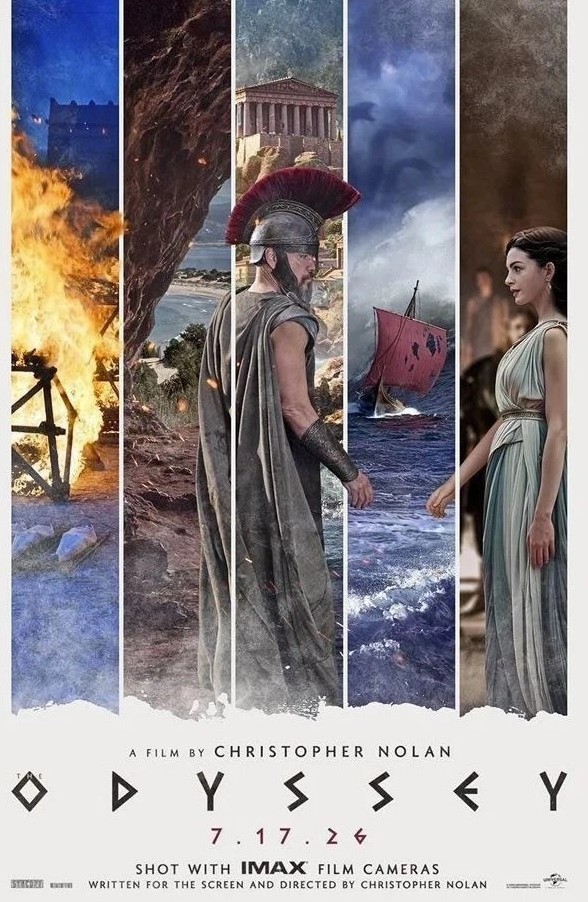
Trying to get this made today the elevator pitch would be Enemy of the State Meets Interstellar. Of course, this was made nearly a decade prior to the Christopher Nolan space opera but whoever made the pitch was so successful that Twentieth Century Fox shelled out a record $5 million for the screenplay.

Fans of surveillance and, conversely, those who fear that the state is poking its nose too closely into everything, might view this as a window into the contemporary world while conspiracy theorists wouldn’t find it hard to convince themselves that in some Roswell-like breakthrough the authorities actually had created a device that could look into the past.

Admittedly, this is a limited peek, restricted to just over four days ago, but it’s enough to get ATF agent Doug Carlin (Denzel Washington), investigating the death of his work partner, interested.

There’s another link to Interstellar and various other high-concept sci fi pictures in that the science fiction is a little fuzzy around the edges but basically once our hero skips back in time it’s for the same reason as the Nolan, the wormhole idea, and demonstrated in exactly the same simplistic way as in Interstellar. And there’s certainly an uncomfortable moment as licentiousness takes hold as the surveillance cameras catch a woman in an intimate moment – some of the male watchers are engrossed, all the females repulsed.

Anyways, the men in black are chasing down a terrorist who blew up a ferry. Thanks to  Doug’s particular investigative skills, he’s invited to join the surveillance team. Doug has turned up the corpse of Claire (Paula Patton) but deduced that although her body was found near the scene of the crime she was killed beforehand, finger for some reason severed, by the terrorist. And it’s true Doug does have exceptional deduction skills that somehow whoever has put together the surveillance outfit, known as Snow White, has forgotten to recruit anything like an ace detective who can make connections rather than just watch.

A hop, skip and jump puts Claire in the eye of the surveillance team who, theoretically using a mountain of previous surveillance footage spawned from a million satellites, go back in time to link her to the terrorist. But if you hire a top detective you need to be wary of what he finds out about you. And it doesn’t take long for our man to work out that the shady guys can actually go back in time.

And, equally, a plotline beckons. Why not send a man back in time to stop the terrorist? But the men in black don’t appear to have taken that on board and it’s up to Doug, in a maverick move, to use the equipment to go back.

Oddly, that’s not because he wants to save hundreds of ferry boat passengers from being obliterated but because he wants to save Claire. Prior to this, except for Doug gazing fondly at images of Claire in a non-licentious manner, there’s been no emotion to speak of except the usual temper tantrums of people under pressure. But clearly there’s something personal going on between Doug and the woman, though what that may be is never teased out. It makes for some interesting twists when they do meet and seem to click.

Once he’s in the past the movie clicks into top gear and the narrative rattles through twist after stunning twist. And the final one – I’ll leave you to work that one out – works as a meet-cute.

This was the third collaboration out of five between Washington and action guru Tony Scott (The Taking of Pelham 123, 2009) and we know by now what the director brings to the table and his whizz-bang style certainly suits this concoction. But Washington continues to surprise. You think you’ve seen all his grins and chuckles and bursts of laughter, but they’re not always to do with humor, and here the grin is either an indication of resignation or determination, which shows just what an armory of expressions he has.

Paula Patton teamed up with Washington again in 2 Guns (2013) and you’ll find her in last year’s Finding Faith. She’s got the grit for the action stuff and the emotion required to make it all mean something.

A heck of a support cast led by a mature Val Kilmer (Top Gun: Maverick, 2022) and backed up by Jim Cavaziel (The Passion of Christ, 2004). Adam Goldberg (The Exorcism, 2024), Bruce Greenwood (The Fabulous Four, 2024) and Elle Fanning (Predator: Badlands, 2025).

The lucky guys collecting all that for dough for their screenplay were Bill Marsilii (Gunpoint, 2021) and Terry Rossio (Pirates of the Caribbean: Curse of the Black Pearl, 2023).

Cracking ride with an emotional kick.  

Apex (2026) ** – Seen on Netflix

Deliverance meets The Silence of the Lambs and that wouldn’t be an altogether bad elevator pitch except for constant interruptions from the Australian Tourist Board flogging adventure holidays. Takes forever to get going – and it’s only 95 minutes to begin with – and after a tight ten minutes somewhere around the one-hour work when it works up a bit of speed it then takes such a loopy turn that any narrative buoyancy gained suddenly evaporates.

Alternatively, it might work as Oscar-bait. You know, those kind of movies where the star goes through such physical trauma that the Academy voters seemed obliged to provide peer reward. And someone was given a drone for Xmas and every time you think the sensible approach is a close-up the camera goes flying back into the sky as if trying to set a record for the longest longshot.

What’s the story? Well you might ask. Bereft mountaineer Sasha (Charlize Theron), recovering from the death of boyfriend tommy (Eric Bana) on a Norwegian peak, heads for the Australian outback for a trip down the rapids. For whatever reason, she’s chosen a spot where dozens of people have gone missing – an event that appears to have received no media coverage whatsoever. For a moment you think we’re going to full-tilt-boogie into the Deliverance backwoods when in very mild fashion she beats back the overtures of a couple of rough Aussies. For about 20 minutes it’s nothing but travelog, Sasha racing through rapids, camping, walking.

Then she meets another Aussie, Ben (Taron Egerton), who seems straight out of Jeremiah Johnson, living off the land, finding some kind of liquid in trees, that kind of fella. However, he’s got the Deliverance bug and soon produces an archery device, this time a crossbow, and before long she’s on the run, pursued through even more scenic areas – of the adventure kind, but still distinctly tourist. Any time there’s any chance of tension, in comes Mr Drone to spoil things by pulling the camera back.

Eventually, as you might have guessed, she does get captured and is dragged into a hidden cave where Ben has hung up all his previous victims, tenderizing them before eating them with his perfectly sharpened teeth. There’s some nonsense about ritual that’s meant to add some meaning. Eventually, she escapes. Cue more scenic tourist stuff though you might just be wondering actually how long can people hold their breath underwater.

Eventually, she gets the upper hand. And then the plot goes loopy. She is handcuffed and tied to him by a long piece of rope. But he has a broken leg that in the heat is going to get infected as a bunch of flies starting dipping into the tasty morsels of bloodied flesh. So she does the obvious. She starts tugging on the rope – obviously he’d be hopping about in agony and toppling over every minutes – and drags him into the water and drowns him.

Nope, we’re barely past the hour mark, so a lot of time still to fill. She’s got a better idea. Why don’t we climb out of the canyon? She being the mountaineer would lead the way and she’d promise not to let him go halfway up. Apex predator that he is, he thinks, yes, why don’t I trust my enemy and put my life in her hands, the one I’ve been torturing and trying to kill all this while? But guess what? He’s the sucker. She drops him off the cliff.

This is advertised as running for 95 minutes but actually it’s closer to 88-89 minutes. It could have taken a swerve into proper horror what with all the cadavers strung up and Ben displaying his sharp teeth or if someone had applied a bit if elbow grease it could have turned into a decent thriller. Instead, it’s not much of anything.

Actually, this might have worked better in the cinema where the action sequences would have had more impact. But there’s just no tension.

Charlize Theron (Fast X, 2023) had six stunt doubles so she didn’t get as physical as I thought. Taron Egerton’s (Rocketman, 2019) teeth are presumably fake, too.

Directed by Baltasar Kormakur (Everest, 2015). Written by Jeremy Robbins (The Purge series, 2018-2019).

Netflix’s previous DTS (direct-to-streaming) offering Thrash at least had the compensation of accepting it was pure trash and making the most of it. This looks like someone thought there was something serious going on here.

Honestly, there isn’t.

Discover WordPress

A daily selection of the best content published on WordPress, collected for you by humans who love to read.

The Atavist Magazine

by Brian Hannan

WordPress.com News

The latest news on WordPress.com and the WordPress community.