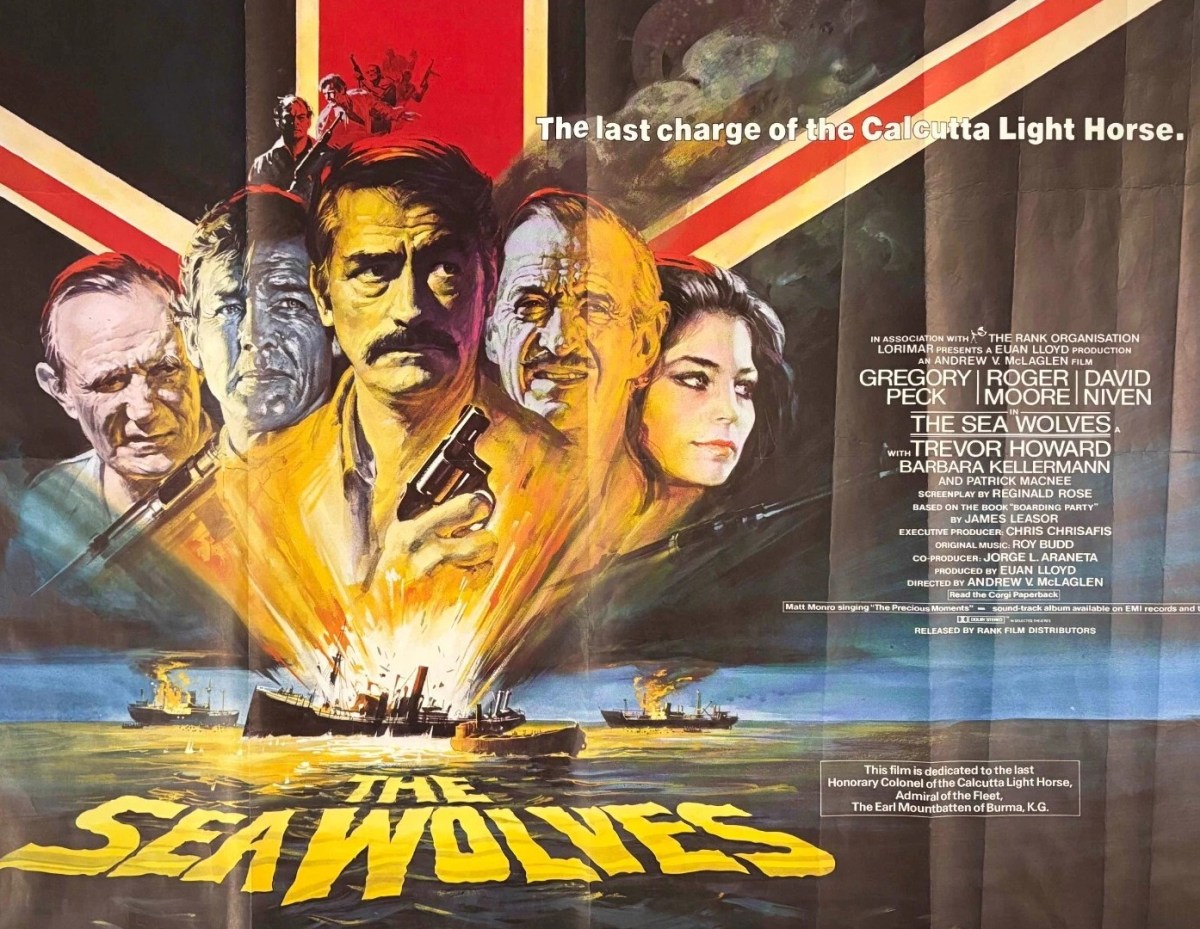
The Sea Wolves (1980) ***

Francis Ford Coppola and Michael Cimino between them put paid to the more traditional “high adventure” war picture. The realism of Apocalypse Now (1979) and The Deer Hunter (1978), which came out months apart and gobbled up critical appreciation and Oscar nominations, spelled a more troubled release for the likes of Alistair MacLean’s Force 10 from Navarone (1979) and The Sea Wolves, which in part followed the MacLean template.

However, The Sea Wolves has never been properly appreciated for one important element – a more realistic portrayal of age and its limitations than was common in Hollywood. We tend to take it for granted that actors when not portraying superheroes can still in the action line have a special set of skills that allows them to throw themselves about or run and chase as if they were men 30 years younger. Liam Neeson was 73 when he was still taking down bad guys in Ice Road: Vengeance (2025), Tom Cruise a decade younger in the final episode of the Mission Impossible franchise in 2025 and Keanu Reeves a year short of 60 when committed to acrobatic action in John Wick Chapter 4 (2023). Jason Statham will be 60 when the sequel to The Beekeeper arrives next year.
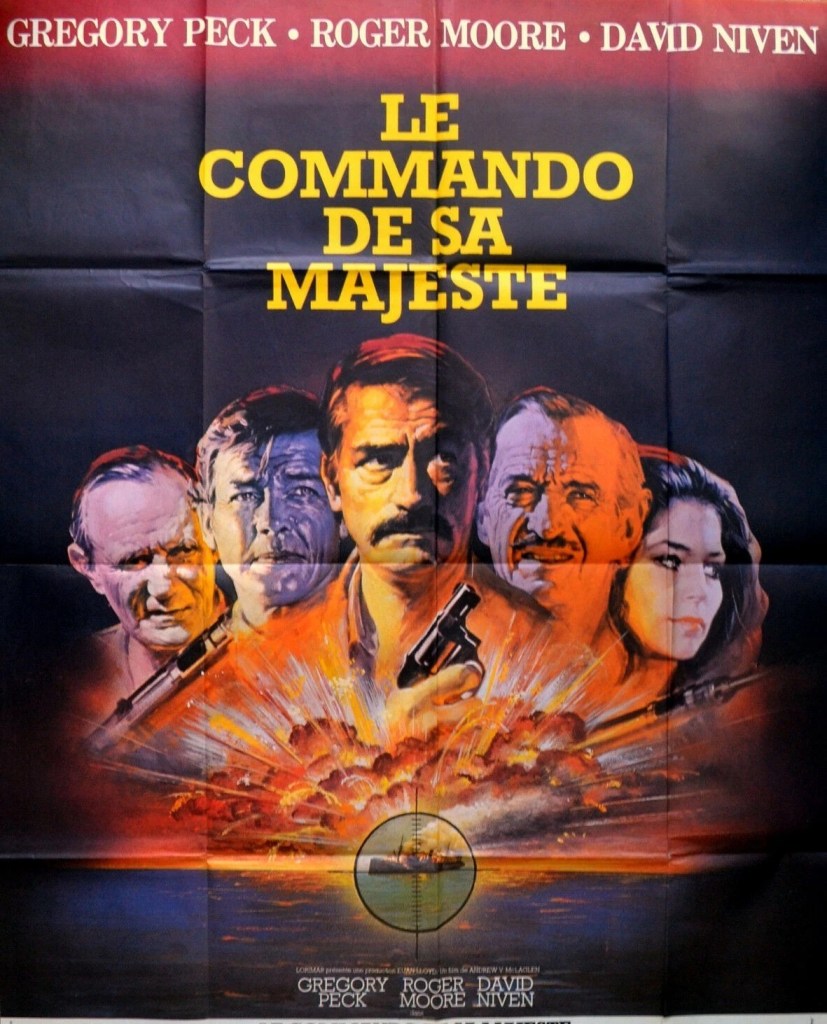
In the action world, age never seemed to catch up with or limit the heroes. In The Sea Wolves age is by far the biggest obstacle. The three pre-eminent heroes are played by actors aged between 52 and 71. Their characters are fallible.

SOE operatives Col Lewis Pugh (Gregory Peck) and Capt Gavin Stewart (Roger Moore), going undercover in neutral Goa in World War Two, prove unable to unravel the mystery that results in German submarines destroying British destroyers. Any time they get hold of a likely suspect, they have the bad habit of killing them. And Stewart, prone to over-indulgence in the opposite sex even in the midst of a critical operation, is duped by femme fatale Mrs Cromwell (Barbara Kellerman) who proves not only to be the German spy they are hunting but capable of knifing men to death.

It’s only because the pair fail in their initial mission that Pugh is forced to call on a rag-bag bunch of ageing ex-soldiers from India led by Col Grice (David Niven) and undertake a more difficult operation to infiltrate a Goa harbor, sink German ships and silence radio communication. This bunch are never going to complete the kind of training program served up to The Dirty Dozen (1967) or The Devil’s Brigade (1968) so that aspect is mostly treated for laughs.

Vulnerabilities abound. They are violently seasick en route or they can’t get the boat’s engine to work or are likely to mistake a distant shark for a U-boat.
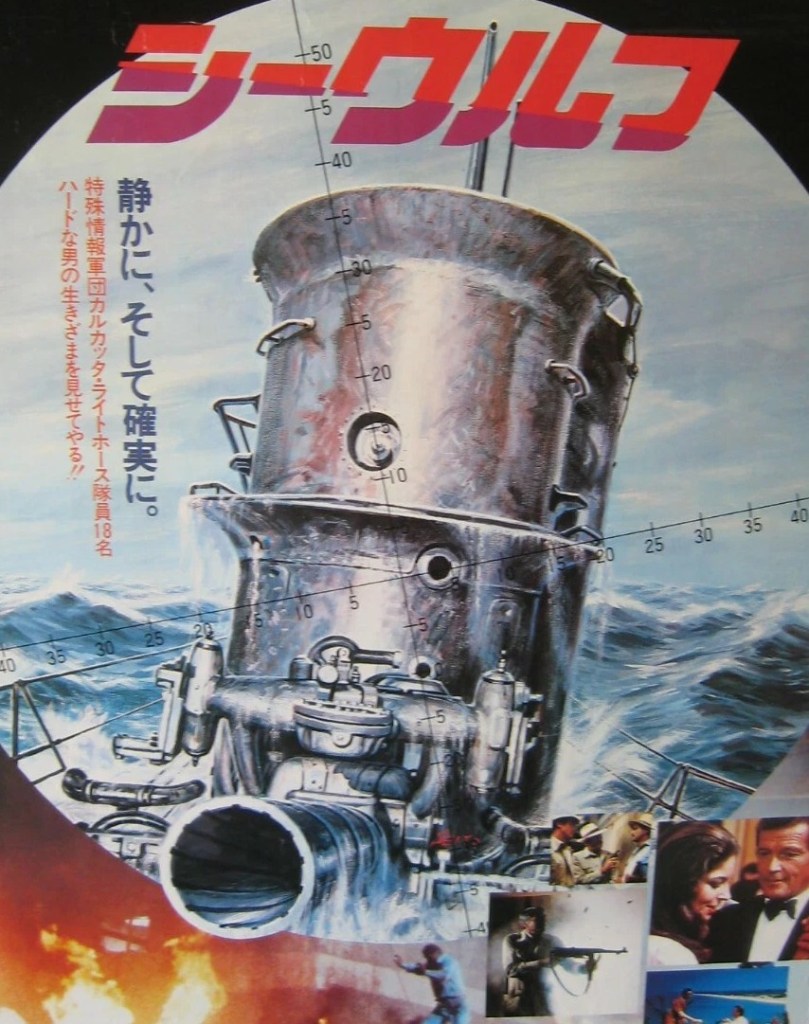
And there’s another unusual aspect of war that complicates proceedings. In most war films – and a feature of the current The Odyssey (2026) – the dead are left behind. Here, because the British are attacking a neutral territory, they can’t leave behind evidence of their involvement in the shape of  corpses or wounded.  

The actual plan is clever. Any sailors or officials in the target harbor who could possibly interfere are rendered incapable by the simple trick of getting them all drunk, a move sponsored by the British government. The battle itself is too long in coming and there are too many supporting characters involved for us to be committed to any of them and therefore the emotional impact of their deaths is minimal.

Sufficient tension is still generated but given the battle action only lasts about 20 minutes rather than the 150 minutes of Where Eagles Dare (1968), for example, it doesn’t quite qualify for the high adventure sub-genre.

Even the greatest of directors would fail to make work an action movie based on the type of people who should never be allowed near a machine gun or asked to join in fisticuffs, so that element is indeed a stretch. On the other hand, the frailties of those involved, determined not to admit to weakness, make this work.

By this point Gregory Peck’s career had received a second (or third) wind thanks to The Omen (1976) and The Boys from Brazil (1978). Roger Moore’s career had been revitalized by James Bond and he had just made Moonraker (1979), his most successful contribution to the series. David Niven was not in their marquee league but anyone who remembered him from The Guns of Navarone (1961) would go in with high expectations. Barbara Kellerman (The Quatermass Conclusion, 1979) is up to scratch as the cunning spy.

There’s a host of British supporting stars including Trevor Howard (Von Ryan’s Express, 1965), Patrick Macnee (The Avengers TV series 1961-1969), Patrick Allen (Puppet on a Chain, 1971) and Kenneth Griffith (The Lion in Winter, 1968).

Directed by Andrew V. McLaglen (Where Eagles Dare) from a script by Reginald Rose (Twelve Angry Men, 1957) based on the novel by James Leasor which recounted a true incident.   

Not quite in the top drawer of the high adventure sub-genre but if you accept the approach and view this as something of an antidote to the standard war film you will find much to appreciate.

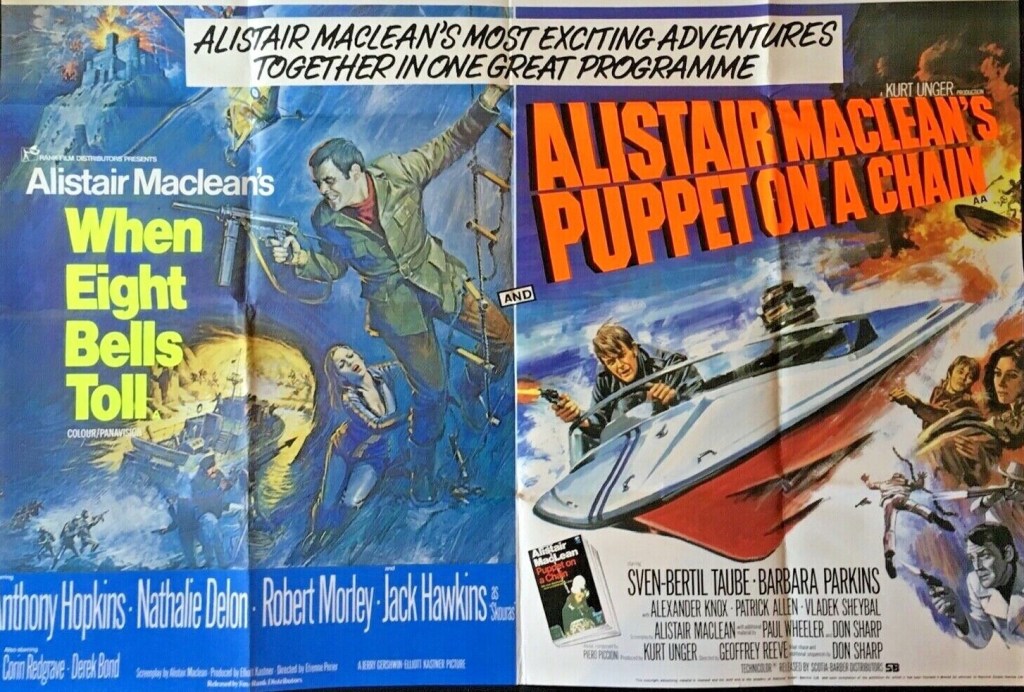
Puppet on a Chain (1970) ****

The spy genre was dying on its feet, even James Bond slipping into spoof territory, and it was left to Alistair MacLean to revive the genre with believable heroes and settings not just chosen for their scenic potential, fitting somewhere between the gritty policiers of Bullitt (1968) and The French Connection (1971) and with an emphasis on violence that Sam Peckinpah would be proud of.

Stylish bullet-ridden opening, crackerjack climax. In between depicting Amsterdam scenery and depravity side by side comes betrayal, duplicity, drugs, heinous deaths, plenty action, and as much as Bullitt (1968) reinvented the car chase this did the same for speedboats.

Tracking point of view follows an assassin into a house where he kills three people and removes something from the pendulums of clocks. U.S. narcotics agent Sherman (Sven Bertil-Taube) flies in to Amsterdam but before he can collect vital information from colleague Duclos he is murdered.

Top Dutch cops Col De Graaf (Alexander Knox) and Inspector Van Gelder (Patrick Allen) are helpless to stop the growing heroin traffic. Van Gelder, with addicted niece Trudi (Penny Casdagli), knows only too well the personal cost.The police force is riddled with leaks, the heroin gang out to stop Sherman from the get-go.

But Sherman has his own nasty medicine to deal out, and hands out beatings and death to those who get in his way. Helped by colleague Maggie (Barbara Parkins) and, inadvertently by Duclos’s girlfriend Astrid (Ania Lemay), the trail leads to the Morgenstern warehouse, which stocks all sizes of puppets, and a church run by shady pastor Meegeren (Vladek Sheybal) which has re-purposed Bibles.

Sherman has no sooner escaped one attempt on his life than he encounters another, so the action never lets up. Meanwhile, clues lead him to a boat in the harbor and he discovers how the heroin is being shipped. Maggie, on hand to offer romantic consolation, shares his tough assignment and questions his methods.

Although revivals were usually sold on the weight of a star, but by this point MacLean was a box office commodity and, let’s face it, neither Hopkins nor Bertil-Taube had much of a calling card.

The trail isn’t that hard to follow but the obstacles are considerable. Meegeren and pals take hanging to the extreme, strangling victim on steel chains, dangling them high as a warning to others. So, mostly, leavened, depending on your point of view, by titillating views of the Dutch capital and a sexy dance troupe that would put Bob Fosse to shame, its fist- and gun-fights all the way.

Except for his dalliance with Maggie, a romance that has to be kept under wraps, Sherman fits the tough Alistair MacLean template with a ruthless streak wide enough to have won plaudits from Where Eagles Dare team He gets a good dousing in the sea and is an unwilling candidate for a brainwashing technique that combines tradition with a personalized version of the sonic boom.

But the highlight without doubt is the high-speed speedboat chase through Amsterdam, beginning in the wider Zuider Zee before racing through the narrow twisty Dutch canals.

For the Dutch Tourist Board it was a game of two halves, organ music aplenty, cobbles and canals, and people dressed in traditional garb promoting the city as a desirable destination but the unsightly addicts and the sex trade as likely to put overseas visitors off (although for many that may well be the icing on the cake).

It was rare at this point, in a polished Hollywood-style picture, to dig so deeply into the seamy side of a city, but his one pulls no punches, nitty-gritty winning out over gloss, and where Easy Rider (1969) and others of that ilk opted to canonize drugs this favored grim consequence. 

It seems particularly difficult to get the casting right for an Alistair MacLean movie of the lone wolf variety – the all-star war pictures by contrast having no trouble attracting major players – and if you turned up your nose at Richard Widmark in The Secret Ways (1961), George Maharis in The Satan Bug (1965) and Barry Newman in Fear Is the Key (1972) you might quibble at Swede Sven Bertil-Taube (The Buttercup Chain, 1970). But he makes a fairly decent stab at the standard dour character.

Barbara Parkins (Valley of the Dolls, 1967), way out of her comfort zone, does well as the tough woman with a soft center. But, all told, you would say it benefits from largely casting unknowns as it prevents the audience arriving with preconceptions. In her only movie Penny Cadagli is the pick of the support, especially as her role in the movie is to play a role.

Although Geoffrey Reeve (Caravan to Vaccares, 1974) hogs the directing credit, the speedboat chase, other action scenes and the tightening up of the picture was the work of Don Sharp (Bang! Bang! You’re Dead, 1966). And Alistair MacLean didn’t, as he might have expected, receive sole screenwriting credit either, sharing it with Sharp and Paul Wheeler (Caravan to Vaccares, 1974).

Not only plenty of bang for your buck, but a riveting chase and one of the first sightings of heroin supply as the key driver of the narrative.

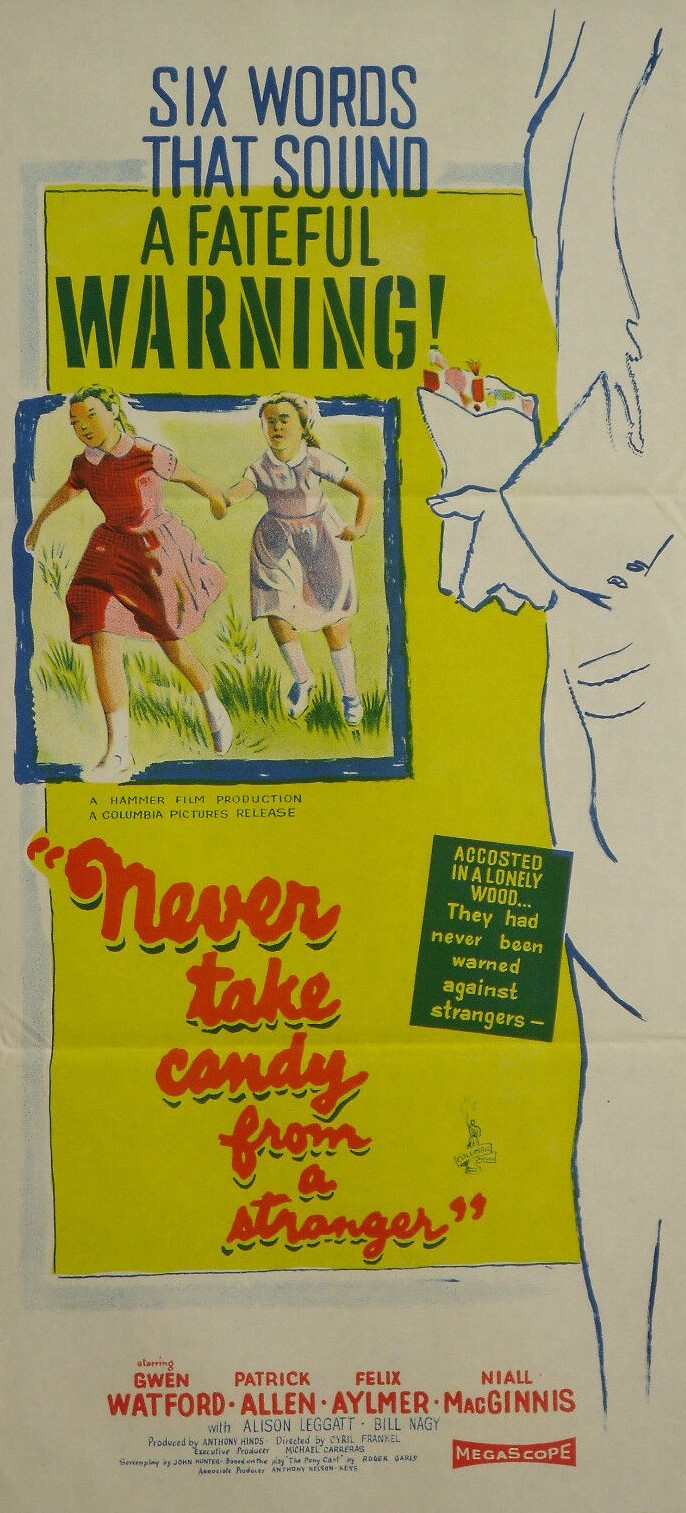
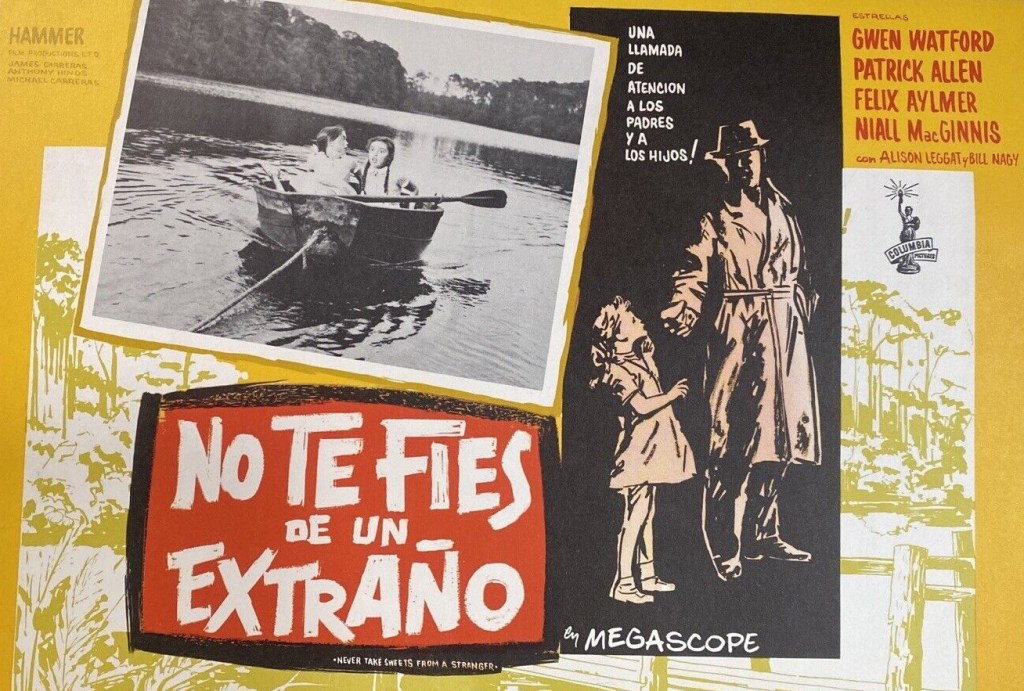
Never Take Candy/Sweets From a Stranger (1960) ****

Banned in the U.S., box office flop in Britain, consigned to the vaults for over three decades,  and when revived and you wonder how everyone could have been so wrong. A sensitive portrayal of a family caught up in local Canadian politics when their daughter accuses a dignitary of molestation, it carefully avoids the exploitation trap. At times tense, thrilling and heart-rending, with dynamic use of sound – sirens, footsteps, tracking dogs – it’s probably the best Hammer picture of the decade.

Young Lucille (Frances Green) takes her new friend Jean (Janina Faye), daughter of newly-arrived immigrants Peter (Patrick Allen) and Sally Carter (Gwen Watford), to visit an old man Clarence Olderberry Sr (Felix Aylmer). When the child returns home, not initially perturbed by what occurred, it transpires that, in return for a handful of candy (sweets in British parlance), she danced naked.

Sally’s mother Martha (Alison Leggatt), conscious of the disruption accusations might cause, tries to play it down. Sally reports the incident to the police chief Hammond (Budd Knapp) who is reluctant to pursue a case against the town’s most important person. Clarence Jr. (Bill Nagy) warns Peter of disastrous consequences. Lucille’s parents send her away so she cannot back up Jean’s story.

There follows trial by town, the whole family receiving the enmity of the local populace, while Jean is destroyed in the witness box by the prosecutor (Michael Gwynn), ending up so distraught her parents throw in the towel, the accused walking released scot free. Rancour is such Peter quits his job but as they prepare to quit the town, Jean goes off playing in the woods again with Lucille.

Stalked by the old man, they race terrified through the woods and into a rowing boat on the water only for the assailant to grab the tow-line and pull them back.

Movie tie-in by the author of the original play.

What could have easily pandered to the worst possible taste is incredibly well done. Strangers arousing the ire of a local populace is a trope as old as the hills so none of the consequence of their action was surprising. Nor, for the time, was the disgust expressed that such an accusation could be cast, not even if the old man has a history of mental illness, a voluntary patient whose records have conveniently vanished.

Whether the son has any inkling of the truth, or whether he is equally appalled, is never made clear as he is in any case duty bound to defend the family’s good name.  But compromise is the name of the game. And whereas you can understand Lucille’s father not wanting to risk his job, Sally’s mother falls into a different category, the uptight Englishwoman who dare not challenge the existing order. There’s a terrific scene when she is suddenly made aware that she is in the wrong but is too frightened to admit it.

Jean’s experience could easily be repeated today, thousands of women refusing to accuse in case they end up slandered or defamed, or find themselves taking on powerful men with powerful friends. We all know how easy it is for an unscrupulous lawyer to embark on witness character assassination. Initial corruption of innocence can be heightened by testifying in a witness box.

The sub-text of the film, while never remotely explicit, is that adults were only too aware of the existence of paedophiles, regardless of trying to write them off as harmless as Martha does, and it was virtually impossible is those more innocent times to explain to a child the dangers of taking candy from a friendly stranger.

Director Cyril Frankel (Operation Snafu, 1961) has done an excellent job of opening up the stage play by Roger Garis, and yet imposed quite a claustrophobic feel to the enterprise. Having escaped a potential captor, Jean is a prisoner of consequence, initially disbelieved, paraded in front of a hostile town, belittled by the prosecutor, despised by the jury, and let down in the end by her fearful parents who, having put her through the court ordeal, decide it is too much. And when she is free it is only to fall prey once again.

Patrick Allen (The Traitors, 1962) is custom-made for this kind of principled role, but Gwen Watford (Taste the Blood of Dracula, 1970) makes the most of a rare top-billed part, caught between conscience and status quo, battling an entrenched male hierarchy, undone by her own mother. Janina Faye (Day of the Triffids, 1963), only a couple of years older than the character she was playing and hopefully had little knowledge of the background to her role, is excellent as the young girl who discovers that innocence has a guilty side.

Well worth a watch with, unfortunately, a story that still rings true today.

Discover WordPress

A daily selection of the best content published on WordPress, collected for you by humans who love to read.

The Atavist Magazine

by Brian Hannan

WordPress.com Blog

News, Tips & Website Tutorials