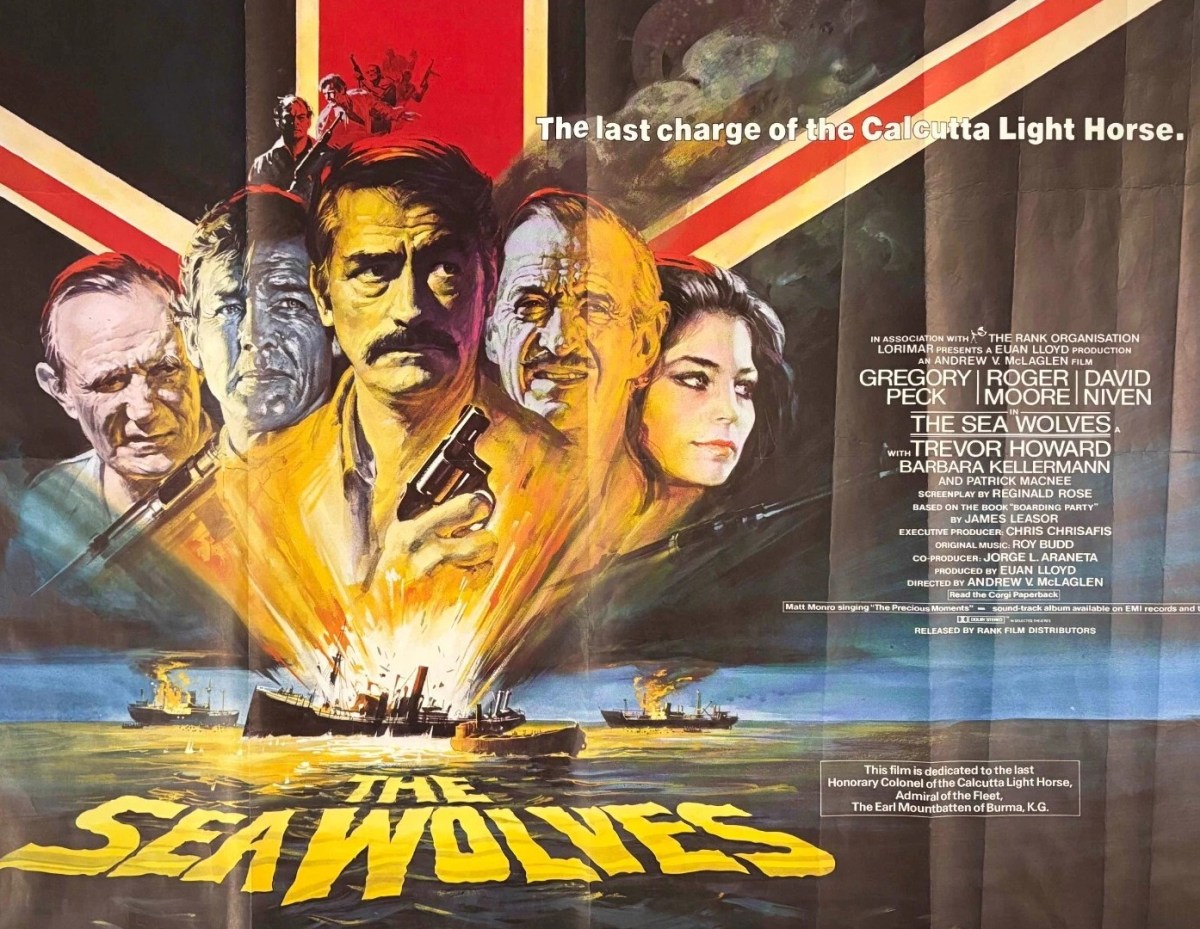
Francis Ford Coppola and Michael Cimino between them put paid to the more traditional “high adventure” war picture. The realism of Apocalypse Now (1979) and The Deer Hunter (1978), which came out months apart and gobbled up critical appreciation and Oscar nominations, spelled a more troubled release for the likes of Alistair MacLean’s Force 10 from Navarone (1979) and The Sea Wolves, which in part followed the MacLean template.
However, The Sea Wolves has never been properly appreciated for one important element – a more realistic portrayal of age and its limitations than was common in Hollywood. We tend to take it for granted that actors when not portraying superheroes can still in the action line have a special set of skills that allows them to throw themselves about or run and chase as if they were men 30 years younger. Liam Neeson was 73 when he was still taking down bad guys in Ice Road: Vengeance (2025), Tom Cruise a decade younger in the final episode of the Mission Impossible franchise in 2025 and Keanu Reeves a year short of 60 when committed to acrobatic action in John Wick Chapter 4 (2023). Jason Statham will be 60 when the sequel to The Beekeeper arrives next year.
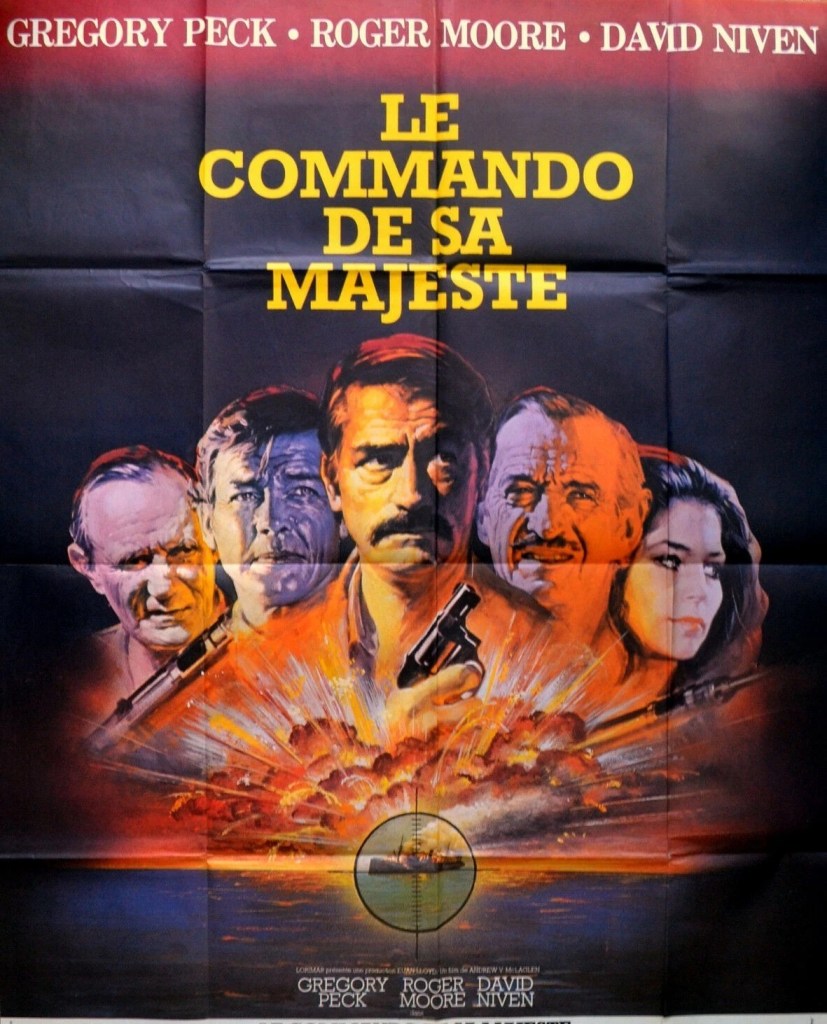
In the action world, age never seemed to catch up with or limit the heroes. In The Sea Wolves age is by far the biggest obstacle. The three pre-eminent heroes are played by actors aged between 52 and 71. Their characters are fallible.
SOE operatives Col Lewis Pugh (Gregory Peck) and Capt Gavin Stewart (Roger Moore), going undercover in neutral Goa in World War Two, prove unable to unravel the mystery that results in German submarines destroying British destroyers. Any time they get hold of a likely suspect, they have the bad habit of killing them. And Stewart, prone to over-indulgence in the opposite sex even in the midst of a critical operation, is duped by femme fatale Mrs Cromwell (Barbara Kellerman) who proves not only to be the German spy they are hunting but capable of knifing men to death.
It’s only because the pair fail in their initial mission that Pugh is forced to call on a rag-bag bunch of ageing ex-soldiers from India led by Col Grice (David Niven) and undertake a more difficult operation to infiltrate a Goa harbor, sink German ships and silence radio communication. This bunch are never going to complete the kind of training program served up to The Dirty Dozen (1967) or The Devil’s Brigade (1968) so that aspect is mostly treated for laughs.
Vulnerabilities abound. They are violently seasick en route or they can’t get the boat’s engine to work or are likely to mistake a distant shark for a U-boat.
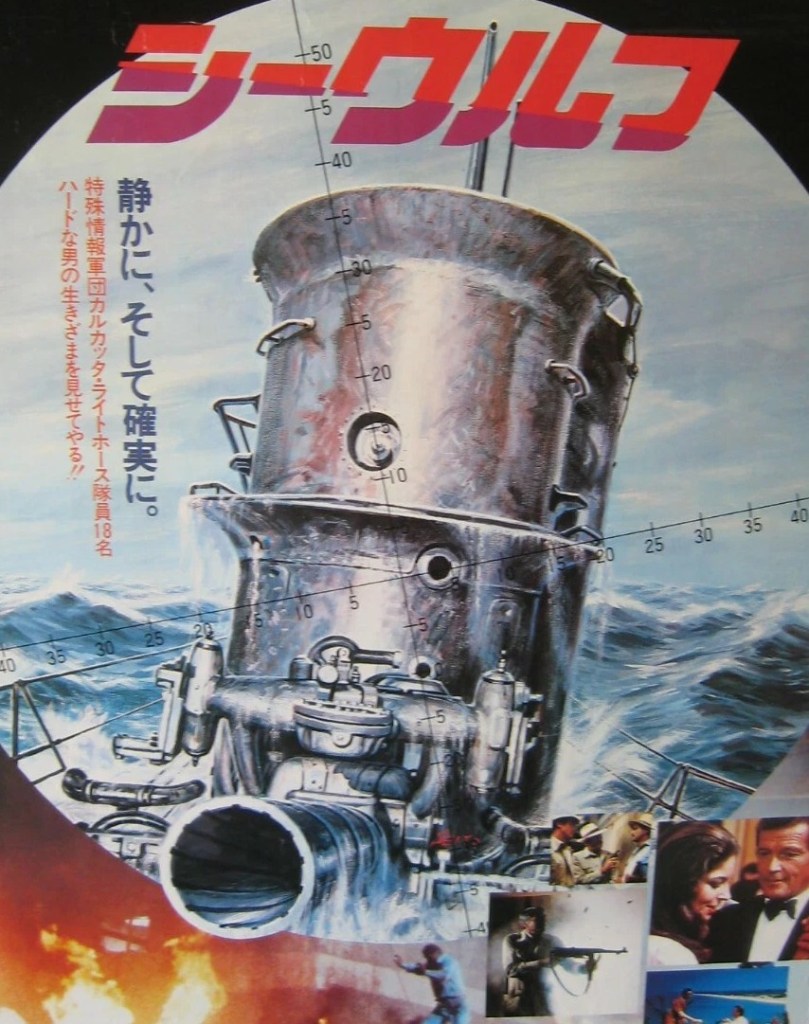
And there’s another unusual aspect of war that complicates proceedings. In most war films – and a feature of the current The Odyssey (2026) – the dead are left behind. Here, because the British are attacking a neutral territory, they can’t leave behind evidence of their involvement in the shape of corpses or wounded.
The actual plan is clever. Any sailors or officials in the target harbor who could possibly interfere are rendered incapable by the simple trick of getting them all drunk, a move sponsored by the British government. The battle itself is too long in coming and there are too many supporting characters involved for us to be committed to any of them and therefore the emotional impact of their deaths is minimal.
Sufficient tension is still generated but given the battle action only lasts about 20 minutes rather than the 150 minutes of Where Eagles Dare (1968), for example, it doesn’t quite qualify for the high adventure sub-genre.
Even the greatest of directors would fail to make work an action movie based on the type of people who should never be allowed near a machine gun or asked to join in fisticuffs, so that element is indeed a stretch. On the other hand, the frailties of those involved, determined not to admit to weakness, make this work.
By this point Gregory Peck’s career had received a second (or third) wind thanks to The Omen (1976) and The Boys from Brazil (1978). Roger Moore’s career had been revitalized by James Bond and he had just made Moonraker (1979), his most successful contribution to the series. David Niven was not in their marquee league but anyone who remembered him from The Guns of Navarone (1961) would go in with high expectations. Barbara Kellerman (The Quatermass Conclusion, 1979) is up to scratch as the cunning spy.
There’s a host of British supporting stars including Trevor Howard (Von Ryan’s Express, 1965), Patrick Macnee (The Avengers TV series 1961-1969), Patrick Allen (Puppet on a Chain, 1971) and Kenneth Griffith (The Lion in Winter, 1968).
Directed by Andrew V. McLaglen (Where Eagles Dare) from a script by Reginald Rose (Twelve Angry Men, 1957) based on the novel by James Leasor which recounted a true incident.
Not quite in the top drawer of the high adventure sub-genre but if you accept the approach and view this as something of an antidote to the standard war film you will find much to appreciate.

