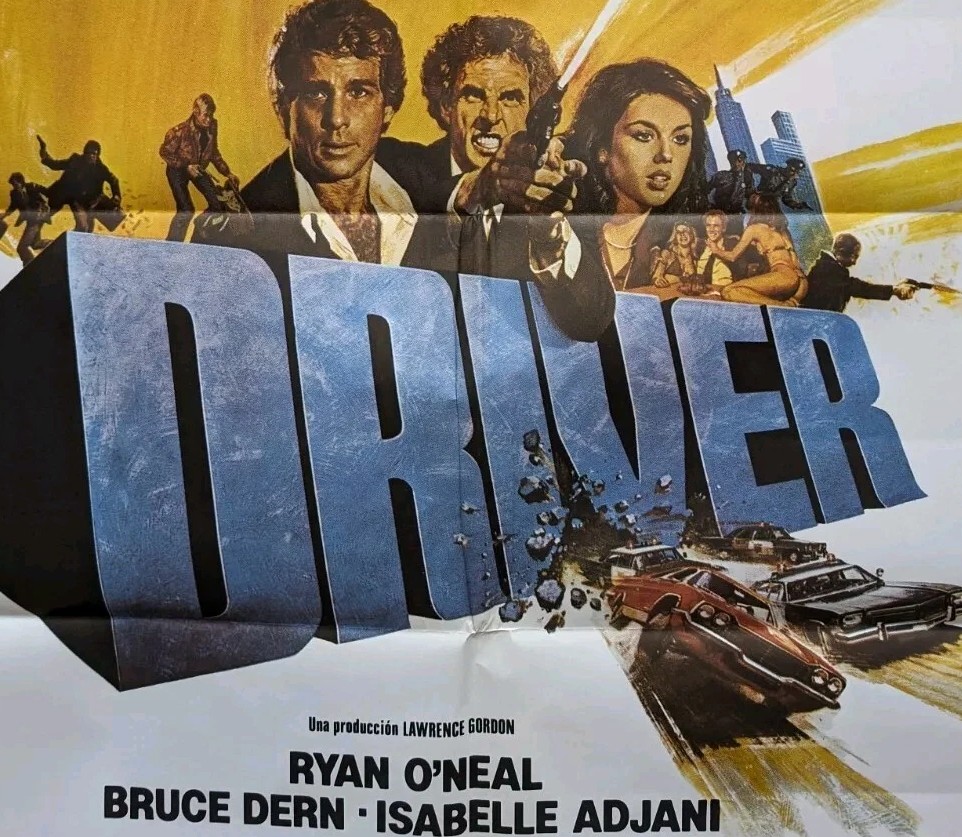
The Driver (1978) ***

Blasphemy I know but I went to see this back in the day not because of director Walter Hill, certainly not for star Ryan O’Neal, but for the wonderfully edgy Bruce Dern (Smile, 1975). You never knew what Dern would do next. Even his hairstyles tended to be offkey. Without having the choleric demeanor of, say, Trevor Howard, he was never far short of exploding. Although he had a couple of top-billed roles, his position as an out-and-out leading man never took off and he was relegated to second male lead. But having him in your cast could transform a picture, especially if you let him off the lead.

My guess is that Walter Hill was aiming for the monosyllabic essence of a Clint Eastwood, Steve McQueen or Charles Bronson in casting the main role. But no matter how often Ryan O’Neal screws up his eyes or issues dialog through a sullen mouth he lacks the edginess his existential character requires, like those French guys Alain Delon or Jean-Paul Belmondo who were kings of edginess.
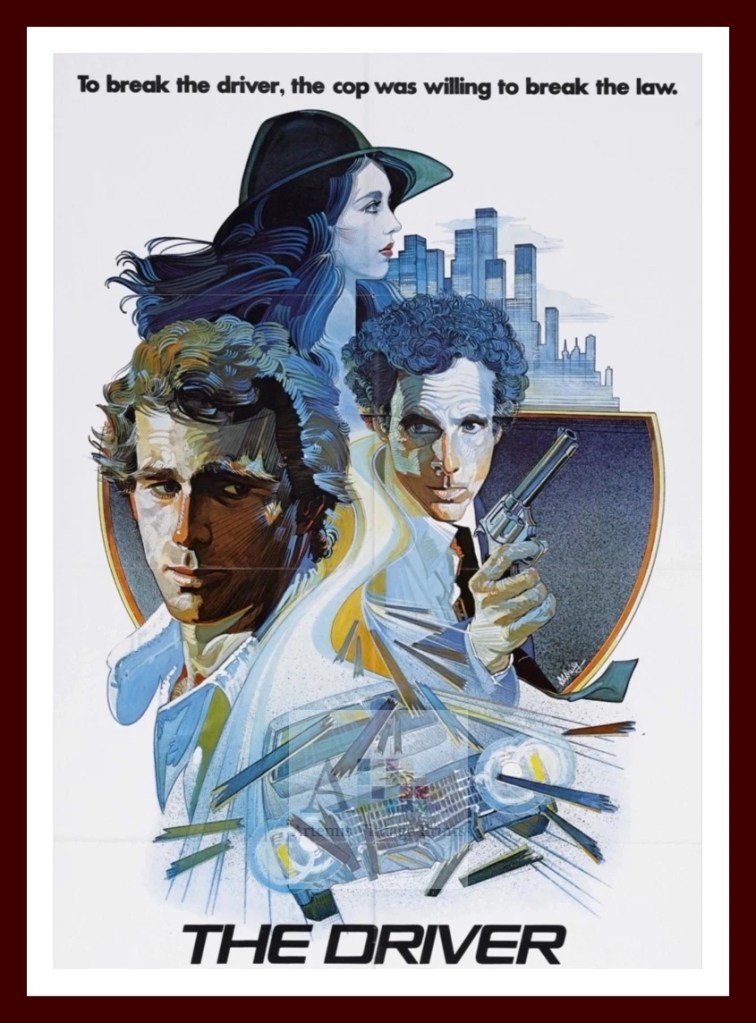
Instead, we’re stuck with O’Neal, and I don’t entirely blame the actor, he’s not always sappy, look at his work in The Thief Who Came to Dinner (1973). But the director does him no favors by failing to provide him not only with a background but any sense of a contemporary life – no partner, no kids – apart from a fondness for country music. Whatever he’s salting away his hefty earnings as a getaway driver for we never find out. So, unfortunately, bearing in mind O’Neal’s screen presence limitations, what we’re left with is a cipher.

All we know about the unnamed driver (Ryan O’Neal) is that he doesn’t like guns – and that proves to be a bit of a clever red herring. The unnamed detective (Bruce Dern) is much better value. Theoretically, he’s the good guy but back in the day cops had carte blanche to play the bad guy and this one decides to trap the driver by setting up his own bank robbery, planning to enrol the driver.

Into this mix comes “the player” (Isabelle Adjani – an actress who has a definite Gallic edge), a poker player, a kept woman, who happens to catch sight of the driver during a robbery at a small-time casino and then demands payment for not picking him out of a line-up. There is a smattering of burgeoning romance but you wouldn’t trust her not just to be after you for your wallet.

I’ve not mentioned the car chases, of which there are several. I’ve not mentioned them because they are all the same and except for ripping off a Lee Marvin scene from Point Blank (1967) lack the edginess and invention of the famous predecessors Bullitt (1968), The French Connection (1971), Fear Is the Key (1972) and any James Bond picture you care to mention. All the chases take place on the flat and maybe duke into the occasional alley but mostly stick to the main roads where tires can screech and let off sparks. And that’s it really. Once in a while someone has to duck to avoid bullets, but after the first chase, it’s basically repetition. Okay for the petrol-heads but a tad boring for the rest of us.

So back to the clever dick cop. Even by the standards of the rogue cop, the plot point seems imminently ridiculous. The detective is hiring a gang of robbers known to like using their guns to scare off any innocent bystanders. So what are the chances of that going wrong and some poor bank customer or employee being knocked off. Explain that to your employers, Mr. Detective. Trying to catch a getaway guy is not going to wash as the excuse.

Plus, of course, your clever plan relies on being able to get back the stolen dough. In those days, of course, you didn’t have to worry about the PTSD of anyone caught up in a violent robbery or think of compensating a bank for damage to property and some such and since this is Hollywood where all dreams come true, even one as barmy that that hatched by Walter Hill (he’s the screenwriter, too), you can just carry on regardless.
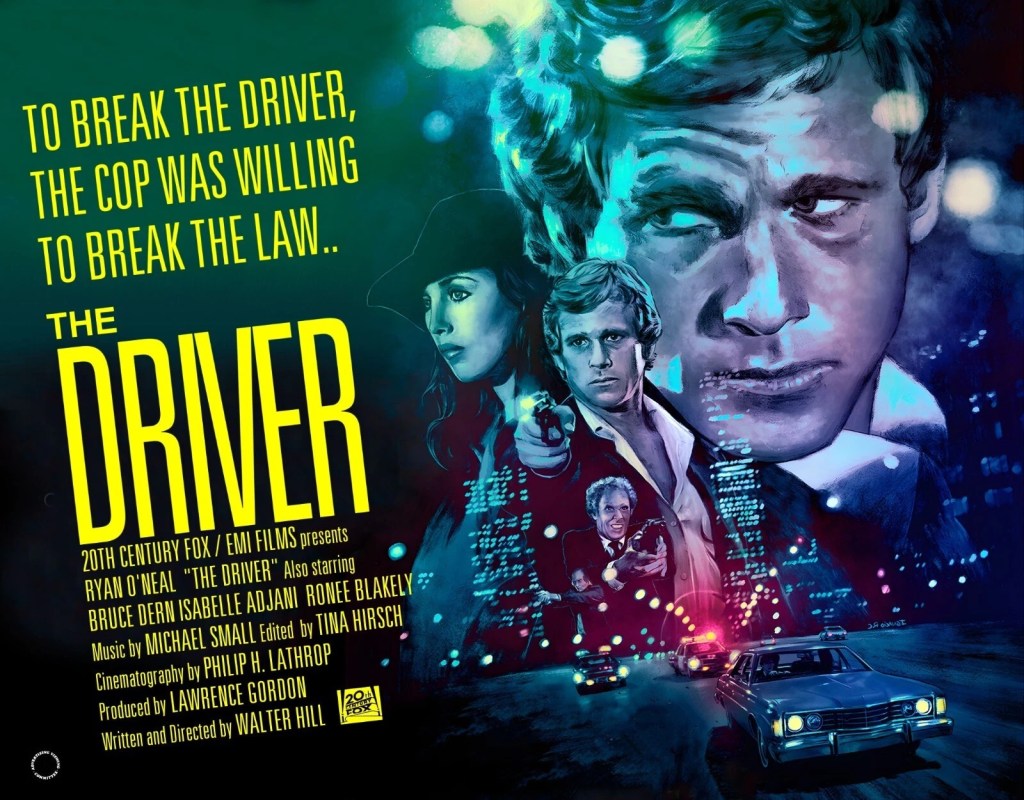
The best part of the picture is the non-vehicle getaway. The driver has to use a fence to get rid of the hot cash and is willing to trade it in at a substantial loss. This involves left luggage, keys, double crossing, the detective chasing down two sets of cash, the player, and a final stand-off.

Talking Pictures TV which has a habit of finding gold in old pictures out of circulation for a long time has this to view for free. I had wanted to check it out to correct my earlier estimation and for the pleasure of seeing Bruce Dern in one of his best roles. But I didn’t end up altering my opinion.

Bruce Dern steals the show. It’s worth comparing what little Isabelle Adjani (The Story of Adele H, 1975) does to what little Ryan O’Neal does. She wins hands down.

Walter Hill would go onto to win a certain regard among critics. But the only pictures of his I like undeservedly are Streets of Fire (1984) with another monosyllabic main character and 48 Hrs (1982) but the latter mainly because Eddie Murphy knocks spots off the monosyllabic sour Nick Nolte.

Worth a watch for all the wrong reasons. Not Walter Hill or car chases, but Bruce Dern and Isabelle Adjani.

By the way, Bruce Dern is a guest at this year’s Edinburgh Film Festival so we might get a showing of Silent Running (1972) or Smile (1975).
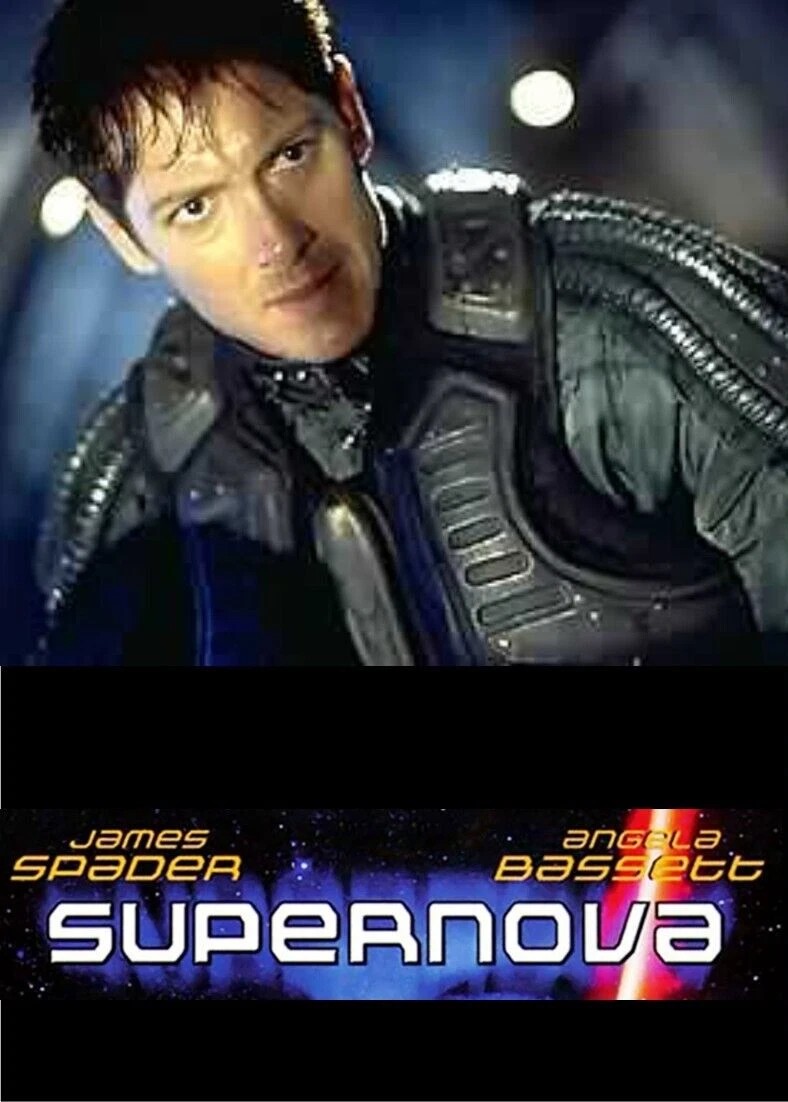

Behind the Scenes: “Supernova” (2000)

With both Walter Hill (48 Hrs, 1982) and Francis Ford Coppola (The Godfather, 1972) involved, you wouldn’t have expect this to emerge under the directorial aegis of one Thomas Lee. For the simple reason that Thomas Lee, at least in the movie directorial world, doesn’t exist. The name superceded that of Allan Smithee, the name attached to any  movie where the director had removed their name. This was the result of a DGA decree that no movie could be released without a director’s name being attached.

Smithee made his debut in 1955 – but only in television – and it wasn’t until 1969 that the pseudonym was called into practise for movies – for Don Siegel’s Death of a Gunfighter starring Richard Widmark and Jud Taylor’s Fade In starring Burt Reynolds. I’ve reviewed both of these and they’re not as terrible as having a pseudonym for director may sound. Thomas Lee entered the equation after the Arthur Hiller gave the game away with his satire starring Ryan O’Neal An Allan Smithee Film: Burn Hollywood Burn (1997).

Here’s the toy version of the space ship. Collector’s item I’m sure.

Quite why Supernova turned in a mega-budget production ($60-90 million) is anyone’s guess given it had begun life as a more modest number sold as “Hellraiser or Dead Calm in outer space.” The original idea was that the artefact would be returned to Earth with devastating results. It had originally been developed under the title Dead Star in 1990 – utilizing some artwork by H.R. Giger of Alien fame – by director William Malone (House on the Haunted Hill, 1999) with a budget in the $5 million range. That budget proved out of reach for the original backers and was sold to MGM/UA.

You might not have welcomed a contribution from Coppola given the mess he made of Megalopolis (2024) but he was brought once Walter Hill departed the project. Hill had arrived at short notice after original director Geoffrey Wright (Romper Stomper, 1992) made a speedy exit with two months to go before production was scheduled and MGM was worried about an impending Actor’s Strike.

Wright wanted to shoot the entire film in zero gravity, one of many creative differences with the studio that led to him ankling the project. Along with him star Vincent D’Onofrio walked. Jack Scholder (The Nightmare on Elm St Part 2, Freddy’s Revenge, 1985) was briefly involved before MGM called upon the services of Hill who had co-written and produced Alien (1978) and two sequels. Hill did a re-write that removed most of the references to Alien. Both James Spader (Crash, 1996) and Lou Diamond Philips (La Bamba, 1987) signed up on the strength of Hill’s involvement. Angela Bassett (What’s Love Got to Do with It, 1993) turned down Monster’s Ball (2001) to do this instead, an ironic decision given Halle Berry won an Oscar for her performance in that film. It may have been the nudity that put her off and reputedly she refused to strip off along with the others when settling into their pods in Supernova. Robin Tunney (End of Days, 1999) and Peter Facinelli (The Big Kahuna, 1999) were in the rising star category.

MGM had big merch plans for the film. There was even a toy version of the spaceship Nightingale. Principal photography was completed in July 1998 and Hill spent 24 weeks in the editing suite.

Hill had much darker vision and a different ending in mind from the final film. MGM cut the special effects budget and, against the director’s wishes, showed to a test audience a version (the final version according to the studio) of the film minus the effects. When, predictably, the film tanked, Hill walked.

MGM returned to Jack Scholder now, worried about the negative reaction by the test audience.  He directed reshoots, added humor and character development, changed the voice of the ship’s computer so it was more emotional and re-edited the picture and although it tested better than Hill’s version, MGM shelved it for a year. They tried to bring back Hill but when he demanded $5 million for reshoots they turned for reasons best known to themselves (except that he was an MGM board member) to Coppola who had not enjoyed a hit in two decades. Still, he was what would be known these days as a “visionary” and the studio assumed he could wave a magic wand. That was another $1 million on the bottom line.

Coppola recut it. He had four different endings to choose from including one where Karl (Peter Facineeli) transforms into a demonic monster and one where they would be no reprieve, no extension of evolution, for Earth. He superimposed the faces of Bassett and Spader on those of Tunney and Philips in a love scene so that the commander and doctor could have sex. Hill initially planned to accept a credit if he agreed with Coppola’s edits. He didn’t and demanded his name be removed.

MGM wanted a PG-13 certificate in the USA rather than the R-rating that the Alien films attracted. So the bulk of the sex and nudity disappeared, although that allowed the DVD to claim it was the “uncensored version.”

There had been an upsurge of interest in sci fi in 2000. Two films about Mars appeared – Brian De Palma’s Mission to Mars with Tim Robbins and Red Planet starring Val Kilmer. That none of the three films did well suggests this was sci fi overload.

Supernova opened poorly in the USA and overall brought in $14.6 million in box office gross and was barely released elsewhere.

Discover WordPress

A daily selection of the best content published on WordPress, collected for you by humans who love to read.

The Atavist Magazine

by Brian Hannan

WordPress.com Blog

News, Tips & Website Tutorials