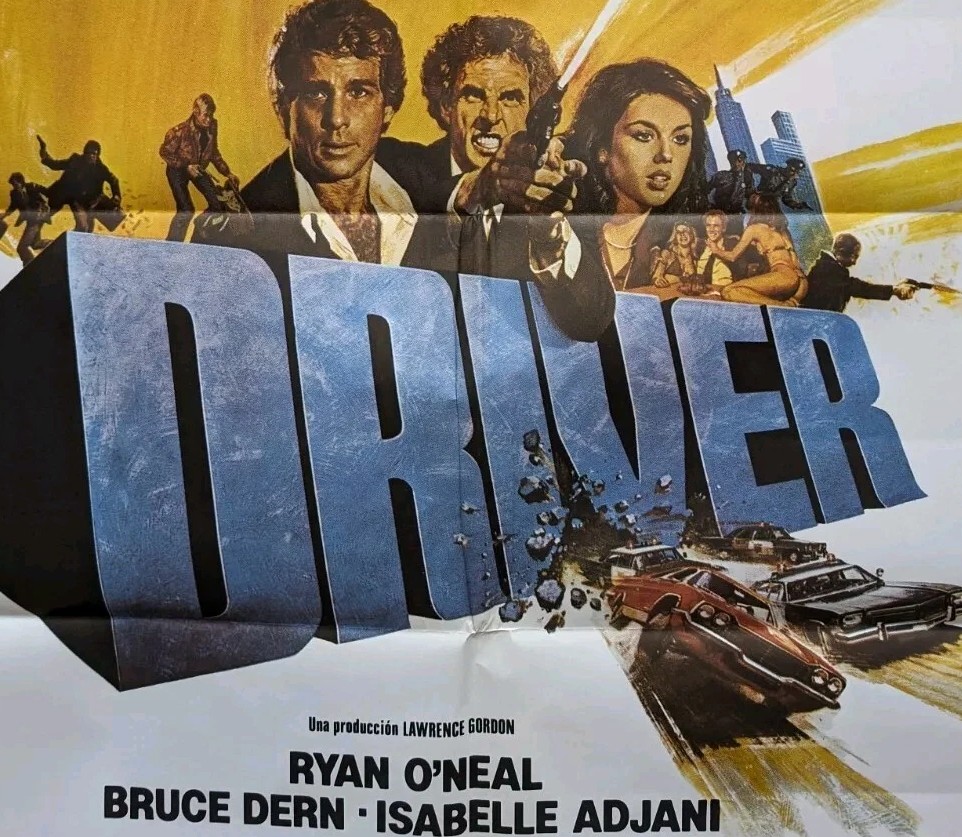
The Driver (1978) ***

Blasphemy I know but I went to see this back in the day not because of director Walter Hill, certainly not for star Ryan O’Neal, but for the wonderfully edgy Bruce Dern (Smile, 1975). You never knew what Dern would do next. Even his hairstyles tended to be offkey. Without having the choleric demeanor of, say, Trevor Howard, he was never far short of exploding. Although he had a couple of top-billed roles, his position as an out-and-out leading man never took off and he was relegated to second male lead. But having him in your cast could transform a picture, especially if you let him off the lead.

My guess is that Walter Hill was aiming for the monosyllabic essence of a Clint Eastwood, Steve McQueen or Charles Bronson in casting the main role. But no matter how often Ryan O’Neal screws up his eyes or issues dialog through a sullen mouth he lacks the edginess his existential character requires, like those French guys Alain Delon or Jean-Paul Belmondo who were kings of edginess.
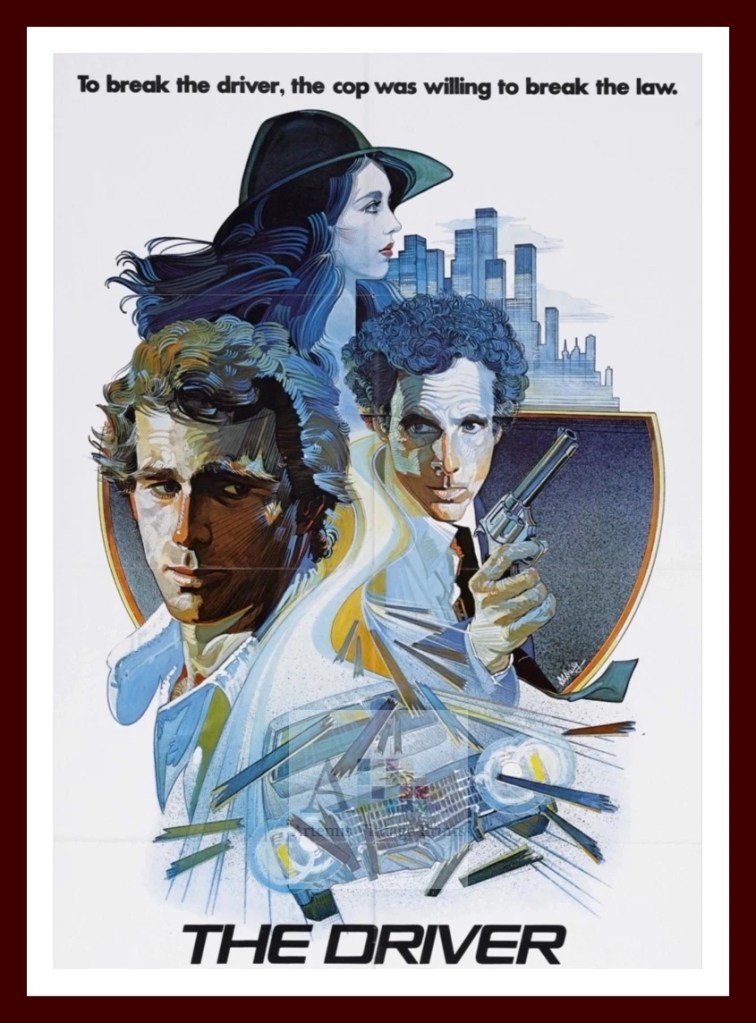
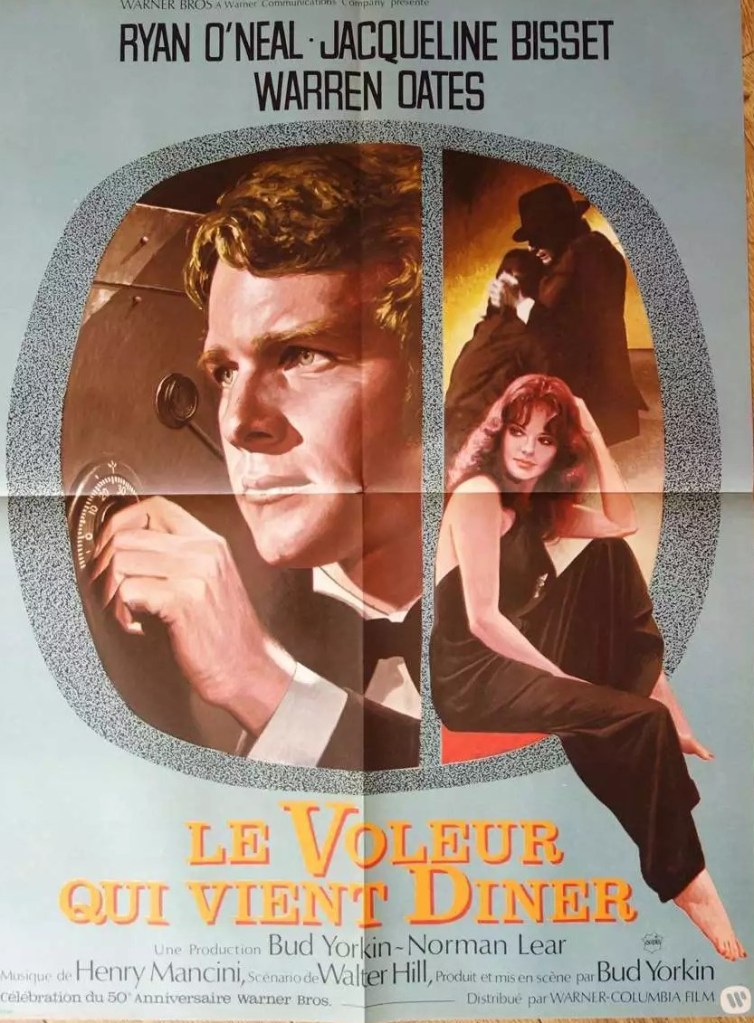
Instead, we’re stuck with O’Neal, and I don’t entirely blame the actor, he’s not always sappy, look at his work in The Thief Who Came to Dinner (1973). But the director does him no favors by failing to provide him not only with a background but any sense of a contemporary life – no partner, no kids – apart from a fondness for country music. Whatever he’s salting away his hefty earnings as a getaway driver for we never find out. So, unfortunately, bearing in mind O’Neal’s screen presence limitations, what we’re left with is a cipher.

All we know about the unnamed driver (Ryan O’Neal) is that he doesn’t like guns – and that proves to be a bit of a clever red herring. The unnamed detective (Bruce Dern) is much better value. Theoretically, he’s the good guy but back in the day cops had carte blanche to play the bad guy and this one decides to trap the driver by setting up his own bank robbery, planning to enrol the driver.

Into this mix comes “the player” (Isabelle Adjani – an actress who has a definite Gallic edge), a poker player, a kept woman, who happens to catch sight of the driver during a robbery at a small-time casino and then demands payment for not picking him out of a line-up. There is a smattering of burgeoning romance but you wouldn’t trust her not just to be after you for your wallet.

I’ve not mentioned the car chases, of which there are several. I’ve not mentioned them because they are all the same and except for ripping off a Lee Marvin scene from Point Blank (1967) lack the edginess and invention of the famous predecessors Bullitt (1968), The French Connection (1971), Fear Is the Key (1972) and any James Bond picture you care to mention. All the chases take place on the flat and maybe duke into the occasional alley but mostly stick to the main roads where tires can screech and let off sparks. And that’s it really. Once in a while someone has to duck to avoid bullets, but after the first chase, it’s basically repetition. Okay for the petrol-heads but a tad boring for the rest of us.

So back to the clever dick cop. Even by the standards of the rogue cop, the plot point seems imminently ridiculous. The detective is hiring a gang of robbers known to like using their guns to scare off any innocent bystanders. So what are the chances of that going wrong and some poor bank customer or employee being knocked off. Explain that to your employers, Mr. Detective. Trying to catch a getaway guy is not going to wash as the excuse.

Plus, of course, your clever plan relies on being able to get back the stolen dough. In those days, of course, you didn’t have to worry about the PTSD of anyone caught up in a violent robbery or think of compensating a bank for damage to property and some such and since this is Hollywood where all dreams come true, even one as barmy that that hatched by Walter Hill (he’s the screenwriter, too), you can just carry on regardless.
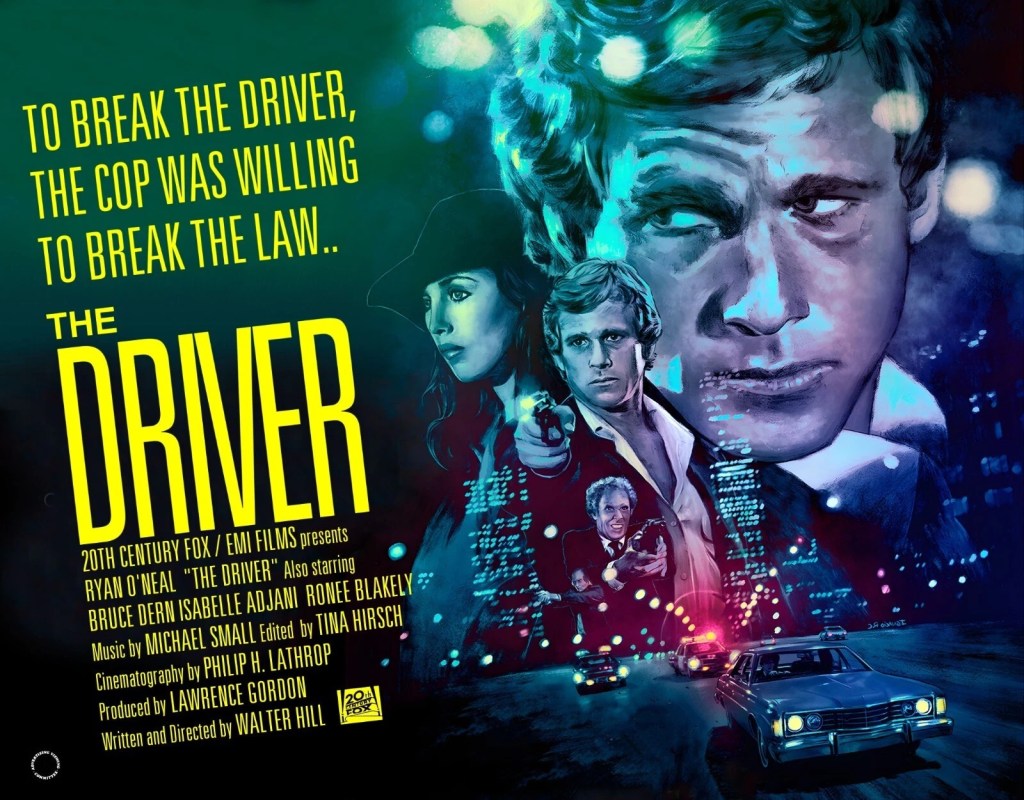
The best part of the picture is the non-vehicle getaway. The driver has to use a fence to get rid of the hot cash and is willing to trade it in at a substantial loss. This involves left luggage, keys, double crossing, the detective chasing down two sets of cash, the player, and a final stand-off.

Talking Pictures TV which has a habit of finding gold in old pictures out of circulation for a long time has this to view for free. I had wanted to check it out to correct my earlier estimation and for the pleasure of seeing Bruce Dern in one of his best roles. But I didn’t end up altering my opinion.

Bruce Dern steals the show. It’s worth comparing what little Isabelle Adjani (The Story of Adele H, 1975) does to what little Ryan O’Neal does. She wins hands down.

Walter Hill would go onto to win a certain regard among critics. But the only pictures of his I like undeservedly are Streets of Fire (1984) with another monosyllabic main character and 48 Hrs (1982) but the latter mainly because Eddie Murphy knocks spots off the monosyllabic sour Nick Nolte.

Worth a watch for all the wrong reasons. Not Walter Hill or car chases, but Bruce Dern and Isabelle Adjani.

By the way, Bruce Dern is a guest at this year’s Edinburgh Film Festival so we might get a showing of Silent Running (1972) or Smile (1975).

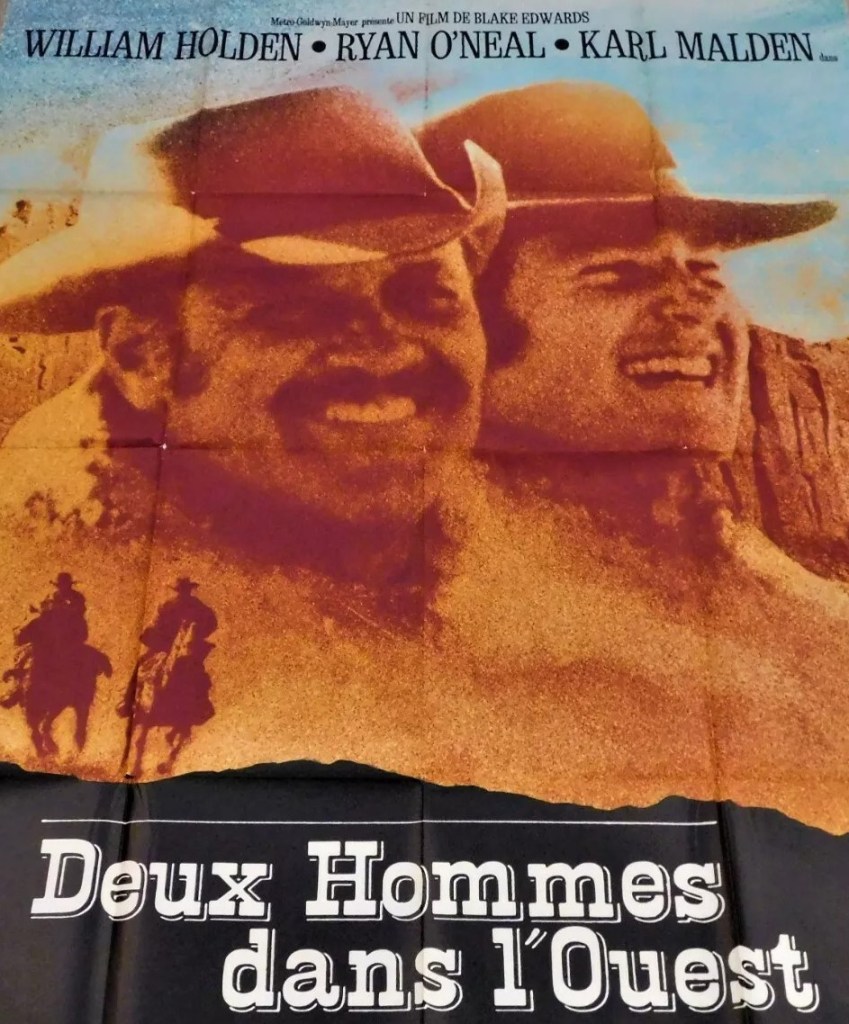
Wild Rovers (1971) ****

An unlikely candidate for redemption. Savaged by studio MGM, thoroughly trashed by critics, and ignored by audiences. MGM, having just called time on Fred Zinneman’s big-budget Man’s Fate and alarmed by the budgetary excesses on Ryan’s Daughter (1970), wasn’t in the mood for a three-hour elegiac western about nothing much. Reputedly, there was a first version that went out at two hours seventeen minutes, but the trade critics reviewed the version that went out on  general release and came in 30 minutes shorter.

Scorn was the most common reaction. It seemed excessively indulgent to allow director Blake Edwards (The Great Race, 1965) anywhere near a western when his forte was gentle or slapstick comedy and the one time he had ventured out of his comfort zone – for musical Darling Lili (1970) –  he had turned in a commercial and critical disaster. The first poster for Wild Rovers, the stars cuddled up on a single horse, suggesting home-erotic overtones, was widely derided.

Hollywood was fearful of pictures without a female prominent in the cast. And while William Holden had revived his career with The Wild Bunch (1969), there wasn’t exactly a long queue for his services, not after the disaster that was The Christmas Tree (1969). By the time he had another hit, five years later, it was in a supporting role in Towering Inferno (1974).

There were question marks also over co-star Ryan O’Neal. Despite the commercial success of Love Story (1970), and an Oscar nomination to boot, it seemed insane to opt for what was in some regards a buddy picture sorely lacking in the crackling dialog and hip approach to the nascent genre that made Butch Cassidy and the Sundance Kid (1969) such a success.

This is a very small story on a not-much-bigger canvas. Sure the scenery is splendidly shot, but close-ups are scant, most of the movie filmed in long shot, faces covered by beards and hats pulled down. Unless you were familiar with his distinctive voice, you wouldn’t, for example, recognize Karl Malden. We’re back in the cowboy realism of Will Penny (1968) but where that narrative helped Charlton Heston by transforming him into a stand-up good guy coming to the aid of a widow and subtle romance thrown in, this just about has the dumbest plot ever conceived. 

What makes this work is that the characters ring true, no matter how dumb they appear. These are generally people at the end of the line, or at the beginning of one and realizing it’s going nowhere, or with their small patch in danger of being overrun.

The local sheriff holes up in the whorehouse, there’s a range war brewing – sheep farmers invading valuable pastures –  a cowboy could be killed in a flash, not from a rampant gunfighter, but from a spooked horse trampling him to death, the upstanding turn out to be corrupt.

Fifty-year-old Ross Bodine (William Holden), no wife or family to berth him, has hooked up with Frank Post (Ryan O’Neal), half his age. They live on a ranch, eating and sleeping in a communal bunkhouse, and when one of their colleagues suddenly accidentally dies, they take to brooding on the unachievable future, one that seems to be drifting fast away from the older man, still a brass ring within potential grasp for the younger.

They decide to rob a bank. But not in the normal fashion of bursting in with guns blazing in the middle of the day. Instead, they do it at night, Frank holding bank manager’s wife Sada (Lynn Carlin) hostage while her husband Joe Billings (James Olsen) fills Bodine’s pockets to the tune of $36,000. They should get away with it. By daybreak they should have put an enormous distance between themselves and any pursuers and once over the state line would be out of the jurisdiction of local sheriff or marshal. Probably, they’d throw a chunk of it away in gambling, women and booze but they still reckon on having enough left to stake themselves to a small ranch, hiring a manager to do the dirty work.

Not wanting to leave their employers out of pocket, Bodine hands the bank manager back £3,000 to return to ranch owner Walter Buckman (Karl Malden). But the money is diverted along the way by Sada. So Buckman attaches sons Paul (Joe Don Baker) and John (Tom Skerritt) to the posse with the instructions not to turn back at the state border. Walter remains behind waiting for the sheepmen to trespass.

Except for the elegiac scenery, the tone appears uneven at the start, and you might think this is going down comedy lines, what with our heroes being drenched with buckets of ordure and generally being knocked around slapstick fashion. But it quickly settles and you realize you’re watching a couple of losers every bit as believable as the pair in Midnight Cowboy (1969). They’ve got nowhere to go and in making the most of what they have liable to make a hash of it. They don’t win saloon brawls, are on the wrong end of a shoot-em-up, squeal like a pig, to coin a phrase, when called upon to be manly and stoical when a bullet needs dug out of a wound, stare into space after making love because they can sense the inevitable. I found myself warming to them much more than I expected.

Frank may be a mean shot and a heck of a gambler but he’s a little boy at heart, picking up a stray puppy while on ransom duty. There’s a fabulous scene – and my guess what attracted Holden to the picture – when Ross talks to his friend about their friendship. Hell, you think, that’s sailing close to the wind, don’t tell me these guys are getting all emotional. Until you realize the only time Ross could ever speak so openly is if his pal is beyond hearing. Because he’s dead.

Beautifully shot, as I mentioned, boldly envisioned with the emphasis on long shot, and in the end more moving than I expected. I’ve no idea what kind of masterpiece lurked in the lost three-hour version, but MGM may have done Edwards a service because this edited version hits the mark.

Written and directed by Edwards. Both Holden and O’Neal, who was generally panned, have never been better. Host of new talent in the wings includes Tom Skerritt (Top Gun, 1986), Joe Don Baker (Walking Tall, 1973), James Olsen (The Andromeda Strain, 1971), Moses Gunn (Shaft, 1971), and Victor French (Little House on the Prairie, 1974-1977). Unexpected appearances from British pair Rachel Roberts (Doctors Wives, 1971) and Charles Gray (The Devil Rides Out, 1968). 

Check this one out. Reassessment urgently required.

The Thief Who Came to Dinner (1973) ****

Very unusual entry into the cat burglar subgenre since it plays like a bromantic version of The Thomas Crown Affair (1968), investigator and investigated striking up some sort of relationship, though with an elegant dame on the sidelines to take care of the jewel thief’s sexual needs. Might be surprised to see Bud Yorkin – better known at the time for comedy – helming this classy thriller and Walter Hill, not yet known for tough thrillers, relegated to screenplay duties.

Webster (Ryan O’Neal) quits his job as a computer geek to go into the thieving business. He’s pretty business-like about it, too, setting up a deal with fence Deams (Ned Beatty) before he gets started, and none of this no honor among thieves nonsense. The first break-in, to the house of politician Henderling (Charles Cioffi),  delivers a handy bonus of uncovering documents relating to corruption so Webster’s able to blackmail the victim into providing him with an entrée into high society where he can scope the jewellery on show at various parties, and where he meets Laura (Jacqueline Bisset) who appears to be in the same line of work, if at a much lower level.

We never see Laura at work and mostly she hovers in the background, there’s no angst in this relationship, she’s the kind of thief who steals because she’s the bored kind of rich gal looking for kicks. Most of the thieving is interesting one way or another. On his first gig, though Webster had invested in one of those devices that hold onto the glass once you’ve nefariously released it from the frame, he’s so inexperienced the glass breaks.

Instead of quieting guard dogs with doped meat, he sends in a bitch to distract them. He has to deal with illicit lovers turning up in the middle of a robbery. And, of course, with an amazing diamond on show, he just has to organize a way of stealing it.

So with Laura not providing any of the tension, not the usual refusal to become entangled with a criminal, not just the normal lovers’ tiffs, it’s left to insurance investigator Dave (Warren Oates) to provide the friction. He’s not the confident, cocky, kind of detective and it’s diligence that leads him to consider Webster his main suspect. And so begins the cat-and-mouse element, the cat often subverted since Webster knows when he’s being tailed and can lead Dave a merry dance. But, mostly, Webster seems to enjoy the battle of minds.

Webster, and a psychiatrist would have a field day here, leaves a calling card at every robbery in the shape of a chess move, guaranteed to get him the headlines he presumably craves of “The Chess Burglar Strikes Again” variety, which only serves to ratchet up the pressure on the supposed incompetence of his pursuers.

Dave has the bright idea of getting a chess expert Zukovsky (Austin Pendleton) to take the thief up on the game, thus introducing a splendid subsidiary character primarily for comic effect, Zukovsky unaware that Webster’s moves are plotted by computer.

Dave and Webster do spend a lot of time together one way or another, Webster even visiting the detective when he’s hospitalized, and an element of mutual respect evolves. Once their relationship is established, Laura has less to do than be an accomplice, arranging ingenious escapes and so forth, so she’s not entirely out of the picture.

But the most interesting relationship is certainly between thief and ersatz cop. There are some excellent individual scenes, most of the thefts contain some unique element, the confrontations between the two principals play out like a low-key chess game, while the originally cocky Zukovsky, initially relishing the publicity, is reduced to fury at being beaten by an amateur. Webster’s ex-wife (Jill Clayburgh) relishes the change in his personality.

But mostly this is Ryan O’Neal (The Big Bounce, 1969) at the top of his game. No smirking and no screwball comedy. He’s given a well-developed character to play – physically fit, able to hold his own in the boxing gym, capable of cutting a deal with underworld figures – and the screenplay cleverly withholds the one element that all crime movies fall down on, the explanation of why anyone would turn to crime, so Webster weaves a sense of mystery. Jacqueline Bisset (The Detective, 1968) makes an excellent partner. And this is a stripped-down Warren Oates (The Wild Bunch, 1969), eliminating the meanness or exuberance that were his screen trademarks. Jill Clayburgh (An Unmarried Woman, 1978) has a cameo.

Bud Yorkin, who at the time was producer of the top three television comedies on U.S. television, foregoes comedy for tension and thrills. Walter Hill (48 Hrs, 1982) sneaks in some of the elements that would later become trademarks.

Great watch.

Book Into Film – “The Big Bounce” (1969)

A seminal example of the art of screenwriting, setting aside for the moment that in the future disgruntled novelist Elmore Leonard deemed it “an awful movie.” Which it isn’t, by the way. Not great, but far from awful.

Screenwriter Robert Dozier (The Cardinal, 1963) had his work cut out trying to make something cinematic out of the author’s debut crime novel. At that point Leonard had not been acclaimed as inheriting the mantle of Raymond Chandler and Dashiell Hammett. In fact, as far as critical acceptance went, he was pretty much an unknown. Six novels in nigh on two decades was not guaranteed to attact attention. If he had any reputation at all it rested on providing the source material for the Paul Newman hit Hombre (1967).

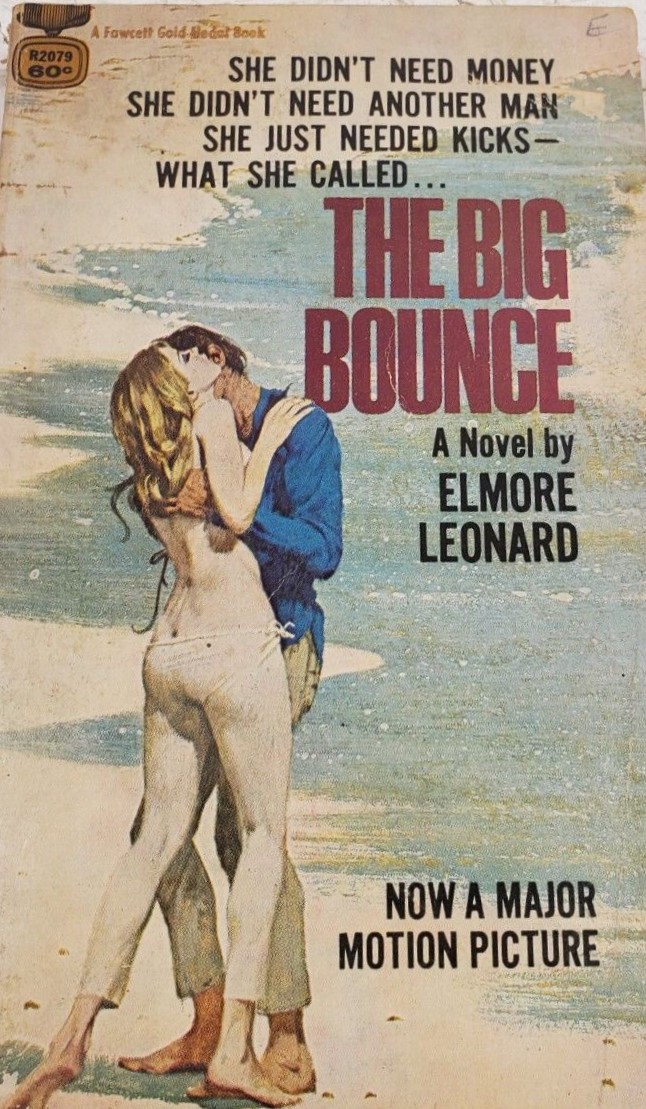
One of the reasons he remained so much under the critical radar was that he hadn’t written a novel in eight years, and all his previous output fell into the western category, a genre staunchly ignored by critics, and heavily reliant, commercially, on the pulp paperback. The Big Bounce wasn’t heralded on arrival, no hard cover printing, just a paperback movie tie-in that didn’t even go to the trouble of using a scene from the film or pictures of the stars.

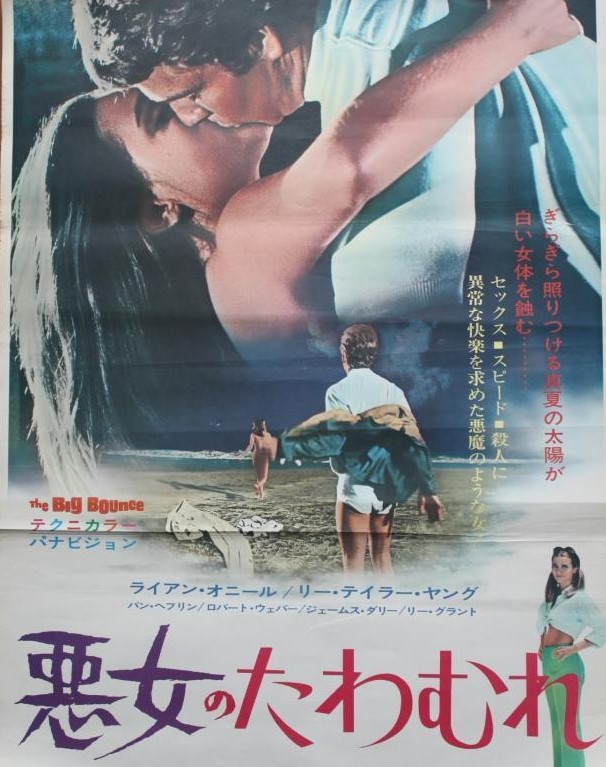
Once again, the foreign distributor produces a better title than the original.

It was up to Robert Dozier to make the source material acceptable to the moviegoer. The book, as written, would never fly. Leonard’s novel lacked a Vietnam veteran, sex in the graveyard, and a nude statue. They were all Dozier’s inventions to bring a character to life who for the most part existed in the novelist’s backstory.

When the novel opens Nancy (Leigh Taylor Young) is due in court to answer the charge of dangerous driving. So rather than leaving that in her backstory, to be dealt with by dialog, Dozier makes that a key element of the film, the episode where Jack (Ryan O’Neal) wonders if he is in over his head as Nancy, annoyed by some pranksters, proceeds to drive a car off the road.

Nor in the book does Jack enjoy a brief dalliance with Joanne (Lee Grant), the single mother renting one of cabanas at the hotel where Jack works as a handyman. In fact, once he knows she has a child in tow, he pointedly avoids making any moves on the mother. His target, as far as the female holidaymakers go, is a single woman Virginia whose look of terror as he seduces her he mistakes for wild passion. The act isn’t consummated as she is struggling too much and it’s only on reflection that Jack, misreading the signals, realizes he had been on the point of raping her.

Jack has been fired from his job as pickle laborer, but he has no Army record. So all the talk about what it’s like to be at war is the screenwriter’s invention. Jack is a failed baseball player (a movie cliché – so that’s left out) and when he loses his job on the pickle farm and prior to hotel handyman turns to a spot of burglary.

He does get a job with hotel owner Sam (Van Heflin) who is also the Justice of the Peace. But Sam’s surname is not Mirakian. It’s – wait for it – Mr Majestyk. Hold on, was there not another movie featuring a guy with that name, starring Charles Bronson? Yep, that appeared in 1974, with Bronson as a melon farmer taking on The Mob. Maybe Robert Dozier thought it was too odd a name for a supporting character, maybe Leonard thought it too good a name to let go. Whatever, Mr Majestyk was left to fight another day.

Where Dozier has been exceptionally clever – rather than just sexing up the movie – is to take sections of the book (as with the car crash scene) and replant them to greater effect. In the book Nancy isn’t pimped out to a Senator by her wealthy lover Ray, but the line that it would take him “oh, a week” to find a replacement mistress comes from the book. In the book Nancy doesn’t swim naked in front of lustful married man Bob (Robert Webber). But she does swim naked in front of a character in the novel who is trying to blackmail her and he envisages holding out a towel to her naked body as she wraps her arms, to pay off her blackmailing debt, around him, rather than that being further teasing of the hapless Bob as in the film.

Dozier has rightly worked out the blackmailing angle would be a sub-plot too many. But it’s the blackmailer she shoots instead of Jack rather than the Comacho (Victor Paul) that Jack has hospitalized at the start of the movie and comes, rather late in the day in the movie, looking for revenge.

Quite a lot of dialog – because Leonard was hot on dialog, and it’s where much of his reputation derives – was taken intact from the book. But there was no way without lots of tedious dialog telling us what we already knew from her teasing Bob and running naked through a graveyard and driving cars off the road that Nancy was a piece of work who took enormous pleasure out of using her sexuality to get the better of men.

The novel explains that as a teenage babysitter she used to come on to the fathers driving her home and if they responded in any way she would blackmail them. One other time when there weren’t enough kicks in letting the neighbors’ kids see her naked, she took fifty bucks apiece from them to have sex with her. And she was always on the look-out for the “big bounce,” the action that would both be exciting and risky and also make her rich.

The Jack in the book is good bit less dumb than in the movie. He is aware that she is using him. He balks at the idea of carrying a gun because that would turn a simple burglary or heist into armed robbery for which, if caught, the sentence was much stiffer.

So, going back to Elmore Leonard’s critique of the movie, I’d be inclined to revise that to an “awful difficult book” to turn into a movie.     

The Big Bounce (1969) ***

Femme fatale Nancy (Leigh Taylor-Young) makes a fair bid for the coveted Bunny Boiler of the Year Award. Had she chanced upon the right wrong guy who could channel her inherent viciousness she could have turned into Bonnie Parker. The only thing that holds her back from being a feminist icon, taking revenge for male betrayal, is her lack of independence.

Mistress to rich farmer Ray (James Daly), she teases the hell out of his head honcho Bob (Robert Webber), makes love in a graveyard, and fuels her amorality by going from breaking windows, attempted burglary and big-time heist to driving cars off the road and murder.

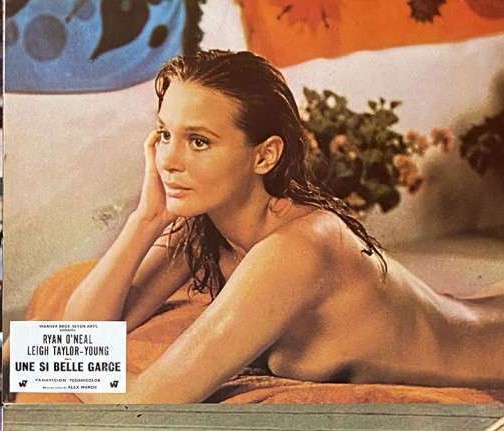
Temptation – Nancy-style.

Dupe is Vietnam vet Jack (Ryan O’Neal) who works as a hotel handyman and happily two-times her with single mother Joanne (Lee Grant).

Although easy with her charms, it’s sex that comes back to bite her when Ray explains that all this heady living comes at a price, pimping her out to a Senator he wants to impress. Whether that turns her against all men, including the dupe who she suspects of making out with Joanne, or whether she is plotting simple revenge against Ray isn’t made clear, but like the best femme fatales she has her eye on the loot that could bring her freedom and doesn’t much care what it costs to get it.

Nobody much cared for this picture, either, but I can’t see why. Sure, too much time is spent on Jack – he gets slung out of a job picking pickles for getting into a fight, and he lands on his feet with a friendly hotel owner Sam (Van Heflin) who buys him beers and even makes his breakfast, and pretty much could have the pick of any girl who walks into a bar. But that’s the usual narrative for film noir, pointing out, usually over and over, what an easy mark he is for a determined woman.

Unusual for the foreign title to be better than the original but this certainly captures the character better.

Nancy could have been less obvious, but she uses her perceived availability as a potent weapon – the scene where she holds her naked body just enough away from the panting Bob while probing him about his wife and children, is a classic – and she doesn’t make it easy for Jack either, although his reward is a drawn-out striptease. She’s the typical bored young woman looking for kicks, and like Pretty Poison (1968) you have to suspect that there’s considerable calculation behind what appear like spur-of-the-moment decisions, trying to work out just how far the dupe will go to retain her favors.

So while she races through the gears, Jack seems stuck on the starting grid, as his apparent good luck turns into confusion. And although he’s got the looks to attract women, he hasn’t the brains to understand them. He’s so dumb you just want Nancy to get away with it. If there’s a weak spot in the movie it’s that he just isn’t interesting enough to spend any screen time with. He boasts of having committed misdemeanours and he’s got a temper when roused but actually he’s your typical lost Sixties character looking for more stability in his life.

Unusually for a movie that’s drawn so much criticism, the supporting characters are quite appealing.  Sam is also a very worldly Justice of the Peace. Ray, far from being an easy conquest, is a hardass, the scene where he deadpans a line that it would take him, oh, a week to replace her if she fails to sleep with the Senator is priceless. There’s also some decent stuff about war, how Jack never even saw the enemy he was killing. And Joanne is a great study, another woman endlessly drawn to the wrong men, who can keep her dangling while never committing.

And beyond the scene where Nancy poses as a naked statue in a graveyard that is obviously unforgettable, there’s a marvellous scene where Jack wakes up in a strange house to the sound of tapping. When, finally, he opens his eyes, he sees a small girl tapping her cup at the breakfast table;  Joanne has a daughter she omitted to mention.

This was the first of Elmore Leonard’s crime novels to be adapted for the movies. But he wasn’t a Hollywood unknown. He supplied the source material for 3.10 to Yuma (1957) and Hombre (1967). And at this point he was keen on setting his stories in poorer areas, as well as pickle farming here,  the Kentucky backwoods are the setting for The Moonshine War (1970) and melon farming for Mr Majestyk (1974). There’s not a million miles between Mr Majestyk reaching for his gun when threatened and Nancy for one when betrayed, but somehow he’s in the right and she’s in the wrong.

And while you’re at it you might as well reflect on the complexities of Hollywood. Leigh Taylor-Young (I Love You, Alice B. Toklas, 1968) carries this picture and despite what the posters show was top-billed. But she didn’t get one more starring role. Two flops in a row – this and The Games (1970) – and Ryan O’Neal gets Love Story (1971) and he’s king of the hill.

Definitely worth a look.

Discover WordPress

A daily selection of the best content published on WordPress, collected for you by humans who love to read.

The Atavist Magazine

by Brian Hannan

WordPress.com Blog

News, Tips & Website Tutorials