With both Walter Hill (48 Hrs, 1982) and Francis Ford Coppola (The Godfather, 1972) involved, you wouldn’t have expect this to emerge under the directorial aegis of one Thomas Lee. For the simple reason that Thomas Lee, at least in the movie directorial world, doesn’t exist. The name superceded that of Allan Smithee, the name attached to any movie where the director had removed their name. This was the result of a DGA decree that no movie could be released without a director’s name being attached.
Smithee made his debut in 1955 – but only in television – and it wasn’t until 1969 that the pseudonym was called into practise for movies – for Don Siegel’s Death of a Gunfighter starring Richard Widmark and Jud Taylor’s Fade In starring Burt Reynolds. I’ve reviewed both of these and they’re not as terrible as having a pseudonym for director may sound. Thomas Lee entered the equation after the Arthur Hiller gave the game away with his satire starring Ryan O’Neal An Allan Smithee Film: Burn Hollywood Burn (1997).
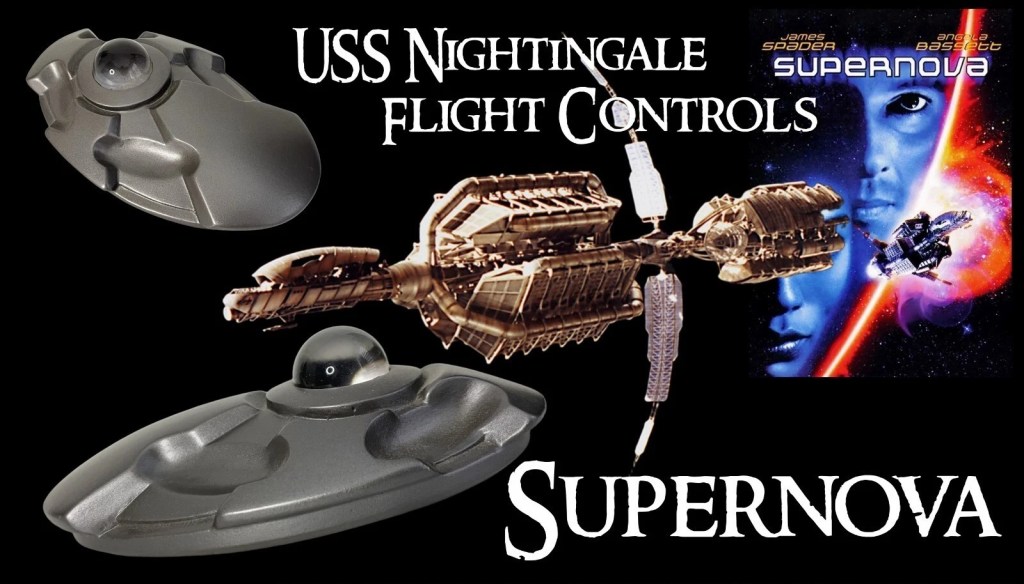
Quite why Supernova turned in a mega-budget production ($60-90 million) is anyone’s guess given it had begun life as a more modest number sold as “Hellraiser or Dead Calm in outer space.” The original idea was that the artefact would be returned to Earth with devastating results. It had originally been developed under the title Dead Star in 1990 – utilizing some artwork by H.R. Giger of Alien fame – by director William Malone (House on the Haunted Hill, 1999) with a budget in the $5 million range. That budget proved out of reach for the original backers and was sold to MGM/UA.
You might not have welcomed a contribution from Coppola given the mess he made of Megalopolis (2024) but he was brought once Walter Hill departed the project. Hill had arrived at short notice after original director Geoffrey Wright (Romper Stomper, 1992) made a speedy exit with two months to go before production was scheduled and MGM was worried about an impending Actor’s Strike.
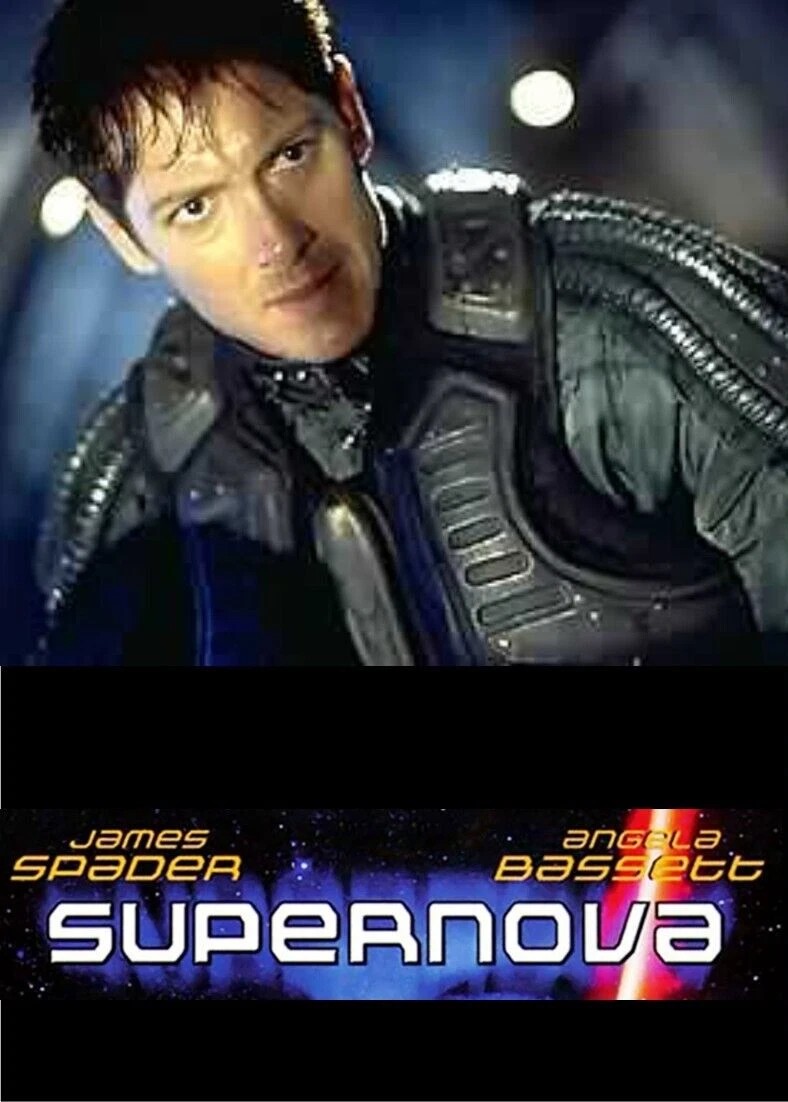
Wright wanted to shoot the entire film in zero gravity, one of many creative differences with the studio that led to him ankling the project. Along with him star Vincent D’Onofrio walked. Jack Scholder (The Nightmare on Elm St Part 2, Freddy’s Revenge, 1985) was briefly involved before MGM called upon the services of Hill who had co-written and produced Alien (1978) and two sequels. Hill did a re-write that removed most of the references to Alien. Both James Spader (Crash, 1996) and Lou Diamond Philips (La Bamba, 1987) signed up on the strength of Hill’s involvement. Angela Bassett (What’s Love Got to Do with It, 1993) turned down Monster’s Ball (2001) to do this instead, an ironic decision given Halle Berry won an Oscar for her performance in that film. It may have been the nudity that put her off and reputedly she refused to strip off along with the others when settling into their pods in Supernova. Robin Tunney (End of Days, 1999) and Peter Facinelli (The Big Kahuna, 1999) were in the rising star category.
MGM had big merch plans for the film. There was even a toy version of the spaceship Nightingale. Principal photography was completed in July 1998 and Hill spent 24 weeks in the editing suite.
Hill had much darker vision and a different ending in mind from the final film. MGM cut the special effects budget and, against the director’s wishes, showed to a test audience a version (the final version according to the studio) of the film minus the effects. When, predictably, the film tanked, Hill walked.
MGM returned to Jack Scholder now, worried about the negative reaction by the test audience. He directed reshoots, added humor and character development, changed the voice of the ship’s computer so it was more emotional and re-edited the picture and although it tested better than Hill’s version, MGM shelved it for a year. They tried to bring back Hill but when he demanded $5 million for reshoots they turned for reasons best known to themselves (except that he was an MGM board member) to Coppola who had not enjoyed a hit in two decades. Still, he was what would be known these days as a “visionary” and the studio assumed he could wave a magic wand. That was another $1 million on the bottom line.
Coppola recut it. He had four different endings to choose from including one where Karl (Peter Facineeli) transforms into a demonic monster and one where they would be no reprieve, no extension of evolution, for Earth. He superimposed the faces of Bassett and Spader on those of Tunney and Philips in a love scene so that the commander and doctor could have sex. Hill initially planned to accept a credit if he agreed with Coppola’s edits. He didn’t and demanded his name be removed.
MGM wanted a PG-13 certificate in the USA rather than the R-rating that the Alien films attracted. So the bulk of the sex and nudity disappeared, although that allowed the DVD to claim it was the “uncensored version.”
There had been an upsurge of interest in sci fi in 2000. Two films about Mars appeared – Brian De Palma’s Mission to Mars with Tim Robbins and Red Planet starring Val Kilmer. That none of the three films did well suggests this was sci fi overload.
Supernova opened poorly in the USA and overall brought in $14.6 million in box office gross and was barely released elsewhere.