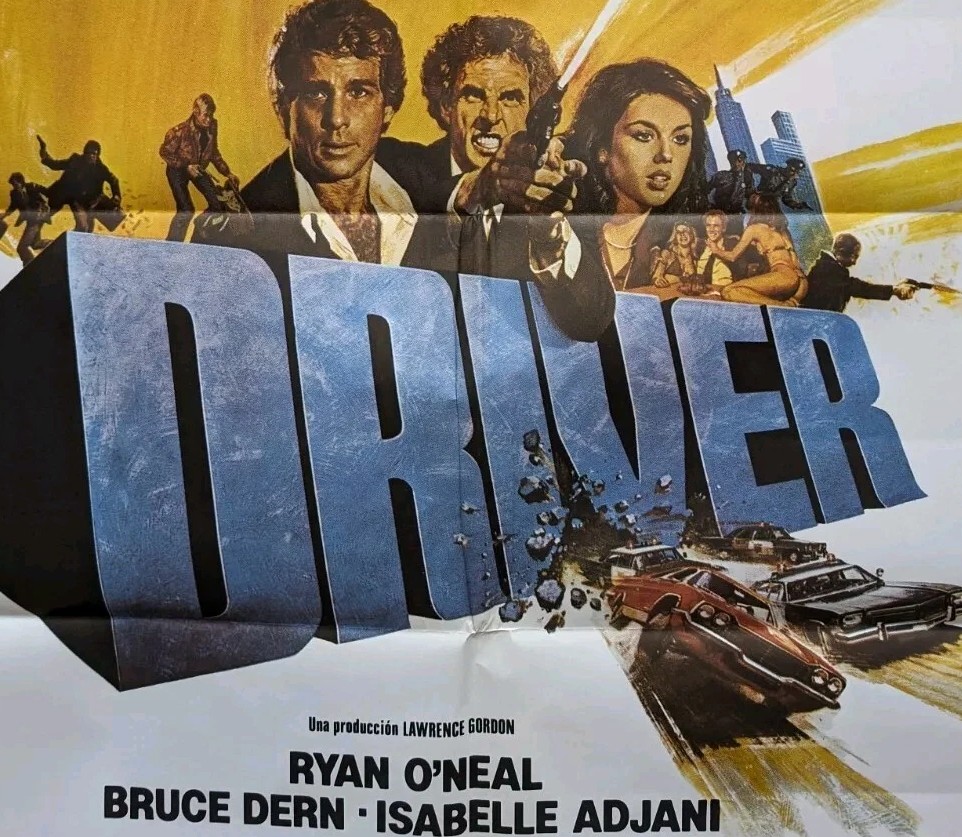
Blasphemy I know but I went to see this back in the day not because of director Walter Hill, certainly not for star Ryan O’Neal, but for the wonderfully edgy Bruce Dern (Smile, 1975). You never knew what Dern would do next. Even his hairstyles tended to be offkey. Without having the choleric demeanor of, say, Trevor Howard, he was never far short of exploding. Although he had a couple of top-billed roles, his position as an out-and-out leading man never took off and he was relegated to second male lead. But having him in your cast could transform a picture, especially if you let him off the lead.
My guess is that Walter Hill was aiming for the monosyllabic essence of a Clint Eastwood, Steve McQueen or Charles Bronson in casting the main role. But no matter how often Ryan O’Neal screws up his eyes or issues dialog through a sullen mouth he lacks the edginess his existential character requires, like those French guys Alain Delon or Jean-Paul Belmondo who were kings of edginess.
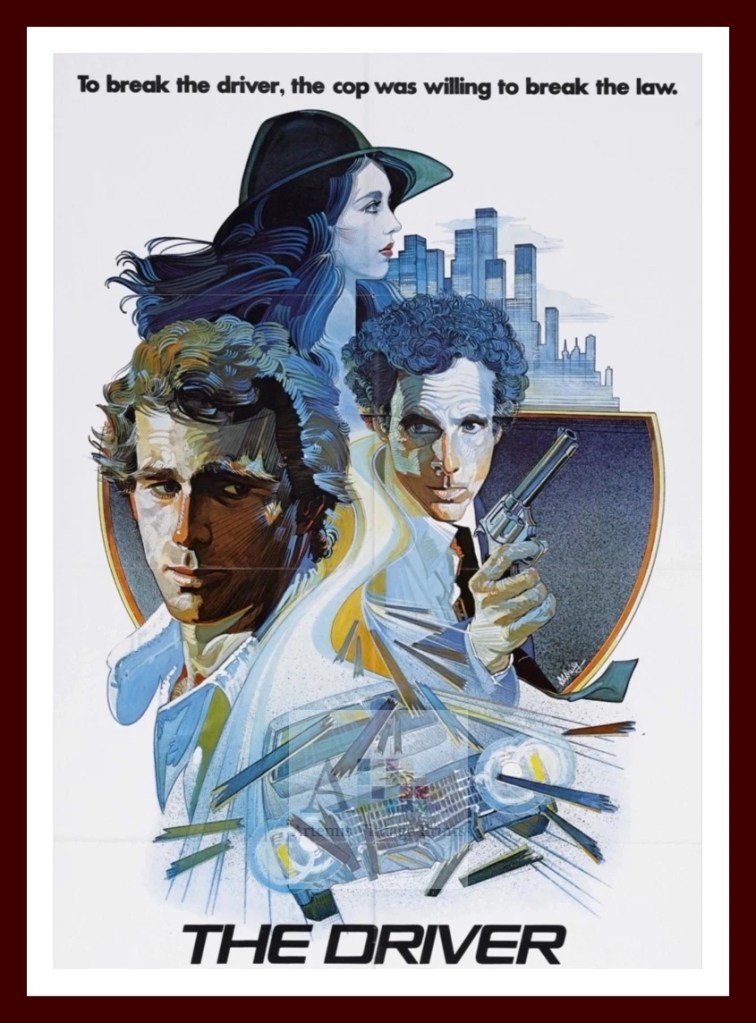
Instead, we’re stuck with O’Neal, and I don’t entirely blame the actor, he’s not always sappy, look at his work in The Thief Who Came to Dinner (1973). But the director does him no favors by failing to provide him not only with a background but any sense of a contemporary life – no partner, no kids – apart from a fondness for country music. Whatever he’s salting away his hefty earnings as a getaway driver for we never find out. So, unfortunately, bearing in mind O’Neal’s screen presence limitations, what we’re left with is a cipher.
All we know about the unnamed driver (Ryan O’Neal) is that he doesn’t like guns – and that proves to be a bit of a clever red herring. The unnamed detective (Bruce Dern) is much better value. Theoretically, he’s the good guy but back in the day cops had carte blanche to play the bad guy and this one decides to trap the driver by setting up his own bank robbery, planning to enrol the driver.
Into this mix comes “the player” (Isabelle Adjani – an actress who has a definite Gallic edge), a poker player, a kept woman, who happens to catch sight of the driver during a robbery at a small-time casino and then demands payment for not picking him out of a line-up. There is a smattering of burgeoning romance but you wouldn’t trust her not just to be after you for your wallet.
I’ve not mentioned the car chases, of which there are several. I’ve not mentioned them because they are all the same and except for ripping off a Lee Marvin scene from Point Blank (1967) lack the edginess and invention of the famous predecessors Bullitt (1968), The French Connection (1971), Fear Is the Key (1972) and any James Bond picture you care to mention. All the chases take place on the flat and maybe duke into the occasional alley but mostly stick to the main roads where tires can screech and let off sparks. And that’s it really. Once in a while someone has to duck to avoid bullets, but after the first chase, it’s basically repetition. Okay for the petrol-heads but a tad boring for the rest of us.
So back to the clever dick cop. Even by the standards of the rogue cop, the plot point seems imminently ridiculous. The detective is hiring a gang of robbers known to like using their guns to scare off any innocent bystanders. So what are the chances of that going wrong and some poor bank customer or employee being knocked off. Explain that to your employers, Mr. Detective. Trying to catch a getaway guy is not going to wash as the excuse.
Plus, of course, your clever plan relies on being able to get back the stolen dough. In those days, of course, you didn’t have to worry about the PTSD of anyone caught up in a violent robbery or think of compensating a bank for damage to property and some such and since this is Hollywood where all dreams come true, even one as barmy that that hatched by Walter Hill (he’s the screenwriter, too), you can just carry on regardless.
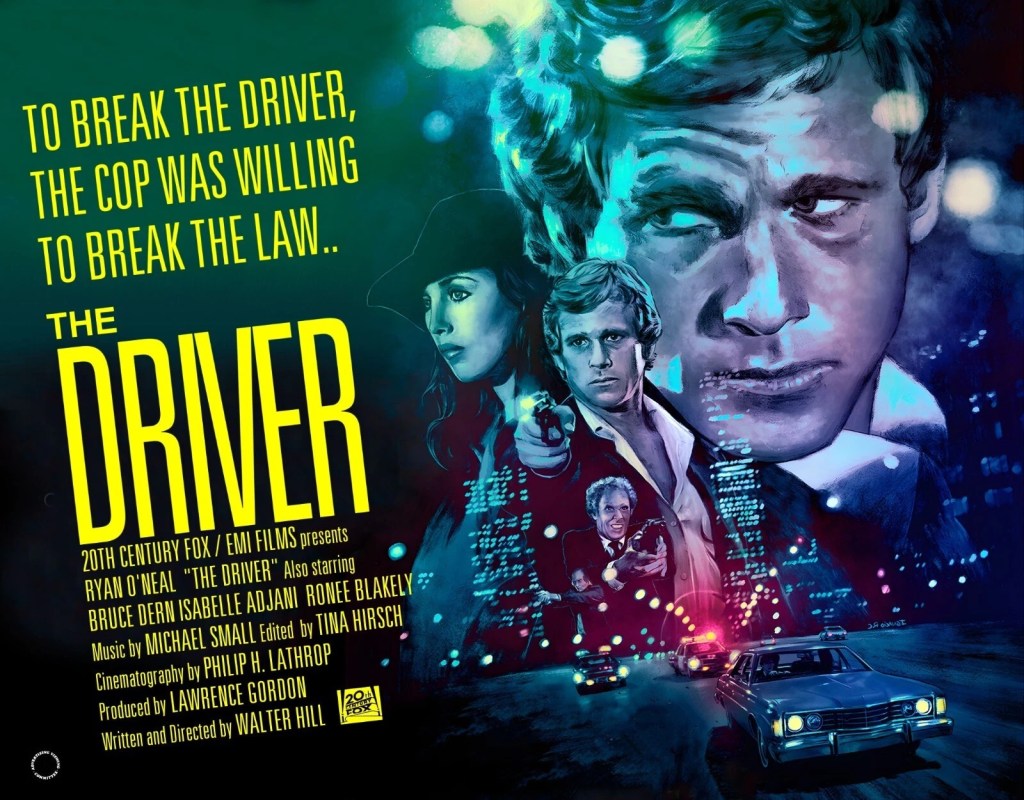
The best part of the picture is the non-vehicle getaway. The driver has to use a fence to get rid of the hot cash and is willing to trade it in at a substantial loss. This involves left luggage, keys, double crossing, the detective chasing down two sets of cash, the player, and a final stand-off.
Talking Pictures TV which has a habit of finding gold in old pictures out of circulation for a long time has this to view for free. I had wanted to check it out to correct my earlier estimation and for the pleasure of seeing Bruce Dern in one of his best roles. But I didn’t end up altering my opinion.
Bruce Dern steals the show. It’s worth comparing what little Isabelle Adjani (The Story of Adele H, 1975) does to what little Ryan O’Neal does. She wins hands down.
Walter Hill would go onto to win a certain regard among critics. But the only pictures of his I like undeservedly are Streets of Fire (1984) with another monosyllabic main character and 48 Hrs (1982) but the latter mainly because Eddie Murphy knocks spots off the monosyllabic sour Nick Nolte.
Worth a watch for all the wrong reasons. Not Walter Hill or car chases, but Bruce Dern and Isabelle Adjani.
By the way, Bruce Dern is a guest at this year’s Edinburgh Film Festival so we might get a showing of Silent Running (1972) or Smile (1975).


Walter Hill wanted McQueen, but of course he turned him down. So he went with O’Neal. Personally I like O’Neal in the role. I saw it in “78. Loved it. Love it today. Lean and mean it is.
LikeLiked by 1 person
I came to dislike Hill films because the main characters always seemed the same.
LikeLike
This film was really pretty dreadful, mostly.
I think the scene that I enjoyed the most was the one where the driver’s former fence was killed. That was slow and interesting. More interesting than most of the movie.
Adjani is breathtaking, even if not terribly interesting.
And yes, like in so many other films, Dern is a fascinating actor who can make do with a lousy script.
LikeLiked by 1 person
Big fan of Dern. Hope to catch up soon with Smile.
LikeLike